Art & Design
Agency and
Participation in Public Space
Conference Proceedings
ISBN: 978-1-910642-18-4
EDITOR
Saba Golchehr
CO-EDITORS
Rosa Ainley
Adrian Friend
Cathy Johns
Karolina Raczynska
GRAPHIC DESIGN
Karimah Hassan
www.karimahhassan.comPUBLISHED BY
Royal College of Art Kensington Gore, London SW7 2EUUK
www.rca.ac.uk
MEDIATIONS
Art & Design Agency and Participation in Public Space
Royal College of Art, London,
United Kingdom,
21-22 November 2016
CONFERENCE PROCEEDINGS
HOSTED BY
TRADERS - short for ‘Training Art and Design Researchers for
Participation in Public Space’ - is an EU FP7 Marie Curie Multi-ITN funded project that focuses on developing and testing a methodological framework on which art and design researchers can rely when working on public space projects in participatory ways -
Art & Design Agency and Participation in Public Space
EXTERNAL
Dr. Pablo Abend
University of Cologne
Dr. Erling Bjorgvinsson
University of Gothenburg
Dr. Andrea Botero
Aalto University Finland
Prof. David Chandler
University of Westminster
Prof. Maria Hellström Reimer
Malmö University
Dr. Sophia Krzys Acord
University of Florida
Dr. Sybille Lammes
University of Warwick
Dr. Lieselotte van Leeuwen
University of Gothenburg
Dr. Diana Tanase
Royal College of Art
Joaquim Tarrasó
Chalmers University of Technology
TRADERS
Dr. Henric Benesch
University of Gothenburg
Prof. Catharina Dyrssen
Chalmers University of Technology
Adrian Friend
Royal College of Art
Prof. Susannah Hagan
Royal College of Art
Dr. David Hamers
Design Academy Eindhoven
Prof. Hilde Heynen
KU Leuven
Dr. Liesbeth Huybrechts
University Hasselt
Prof. Frank Moulaert
KU Leuven
Jessica Schoffelen
LUCA School of Arts, KU Leuven
Dr. Veerle Van der Sluys
LUCA School of Arts, KU Leuven
SCIENTIFIC COMMITTEE
INDEX
09 .
INTRODUCTION
11
WHO SHOULD BE IN CONTROL OF THE DATA CITY?
12 .
THE DESIGN OF DIGITAL SHADOWS
Co-Speculating Presents That Might Already Have Come True S. Rosenbak and H. Feckenstedt
29
ART & DESIGN INTERVENTIONISM AND LONG-TERM
PARTICIPATION
AN UNEASY RELATION?
30 .
Place.People.Praxis
Collective Engagements Towards Mediated Urban Futures D. Chopra
44 .
Nautilus Конструкт
Building an Open Stage for Skopje D. Kokalevski & E. Filipovska 58 .
THE INTERMEDIAL SCENOGRAPHIC SCREEN Performing ‘Loveness’
D. Hannah 71 .
Urban interventions
Reshaping the Public Space in Palestine M. Sayrafi
83 .
CONTEXTUALISING CITIZENS
Design-Led Approaches To Visualising Community Ecologies, Building Interventions And Mobilising Citizen Participation P. Smith and C. Broadley
100
PUBLIC PLAY
101 .
Play as a democratic means to reconfigure the politics of space A. P. Assis
112 .
TO PLAY, OR NOT TO PLAY? THAT’S THE QUESTION!
Exploring A Child-Perspective On Play To Negotiate Power Relations In Participatory Design Processes Involving Children.
S. Schepers, K. Dreessen, and N. Kosten 124 .
Exploring Play as a Generative and Transformative Process J. Wong and I. Mulder
136
MULTIVOCALITY, DESIGN AND PUBLIC SPACE
137 .
NARRATIVE-BASED ART AS MEANS OF DIALOGUE AND EMPOWERMENT
S. Miettinen, M. Sarantou, and D. Akimenko 149 .
The dramaturgical pattern of public space The use of ‘as if’ Space in Vali’Asr Mosque N. Amini
162 .
IN PURSUIT OF THE VOICES WITHIN SOCIAL DESIGN DISCOURSE M. H. Buğali, S. Fairburn, R. Halsall
172 .
BUILDING SPATIAL CAPACITIES TO RETROFIT THE DISPERSED CITY
Exploring The Role Of Design O. Devisch and L. Huybrechts 185 .
DESIGN PROCESS AS POLITICAL POSSIBILITY C. Mancke
199 .
Visualising Multivocality through Participatory Painting A. Mlicka
214 .
232
MULTIPLE PERFORMATIVE MAPPING
A WAY TO CHALLENGE SPATIAL CONFIGURATIONS
233 .
Hacking Buiksloterham
How Self-Builders Are Making Their City M. Lange and M. Waal
240
THE CURATORIAL
NAVIGATING KNOWLEDGE BOUNDARIES
241 .
Orchestrated public space
The Curatorial Dimensions Of The Transformation Of London’s Southbank Centre
A. Jones 255 .
How to Play the Environment Game J. Kei
INTRODUCTION
Over the last decade the notion of citizen participation has (re)gained momentum, both in the realm of national and local politics – partly driven by advances in digital technologies, such as civic platforms – as well as outside the institutional domain. Several art and design practitioners have embraced this participatory turn, aiming to empower citizens to reclaim agency in the public realm. At the same time, various (conceptual) models of participatory democracy have been explored through numerous political theories.1 There are, however, very few theories that mediate between such conceptual models and actual participatory art and/or design practices in a meaningful and rigorous way [i].
The TRADERS2 project, and the MEDIATIONS conference as an extension of it, aims to operate within this ambiguous territory. TRADERS focuses on enabling an exchange of experiences and knowledge in the field of participation in art and design. Working collectively and individually through workshops, performances, exhibitions and publications, six early-career researchers have explored different approaches including intervention, mapping, data mining, play, dialogue and curating. While these six research projects vary in their thematic approach and deploy different art and design-based research methods, they all contribute to a collective deconstruction and problematisation of the notion of citizen participation in art and design, particularly within the context of public space.
Operating within this context means dealing with discrepancies between a multiplicity of forces (political, economical, environmental, legal, etc.), concerns (social justice, privatisation, digitalisation, etc.) and actors (citizens, policy makers, urban planners, etc.). Artists and designers who aim to empower citizens in often ‘agonistic’ spaces [ii] need to mediate between various aspirations in order to help bring about desired social and/or political change. Such mediation can take shape in many ways: through mediating between different stakeholders, between the client and the public, between different publics, between top -down and bottom- up, between theory and practice, between ideas and action, between imaginaries and reality, and so on.
1 Some examples include deliberative democracy, associative democracy and agonistic pluralism (resp. Habermas, J., 1996. Between Facts and Norms. Cambridge: Polity Press; Hirst, P., 1994. Associative Democracy: New Forms of Economic and Social Governance. Cambridge: Polity Press; Mouffe, C., 2000. ‘For an Agonistic Model of Democracy’ in (ed) Martin, J., 2013. Hegemony, Radical Democracy and the Political, Oxon: Routledge)
2 TRADERS - short for‘Training Art and Design Researchers for Participation in Public Space’ - is an EU FP7 Marie Curie Multi-ITN funded project (tr-aders.eu)
In this conference we explore six possible approaches to mediation for artists and designers that aim for civic empowerment:
- Data Mining – data -driven methods to mediate between the top- down and bottom -up to promote citizen empowerment in the ‘Data City’;
- Intervention – a method to mediate between ephemeral actions and long- term effects on civic participation in public space;
- Play – mediating between realities and imaginaries of children and adults in their experience of, and participation in, public space;
- Modelling in Dialogue – mediating between different actors and voices by modelling multivocality within participatory processes;
- Multiple Performative Mapping – performative and participatory mapping as a method to mediate power configurations in the digital-physical urban landscape;
- Curating - exploring if and how the curatorial negotiates and mediates between knowledge boundaries in art and design.
During this conference we interrogate the means, modes and/or practices artists and designers can employ to mediate between multiple actors with diverse agencies. How can they use their own agency to empower citizens to bring about desired social or political change? And how can artists and designers ‘make a difference’ [iii] within existing/established distributions of power? These questions, and more, are explored through different paper, exhibition, keynote and reflection sessions, examining ‘matters of concern’ [iv] in art and design practices by analysing material, e.g. artefacts, as well as immaterial components, e.g. relationality, positionality, etc., of real-life participatory projects. We aim to scrutinise the ethical implications – such as artists’ and designers’ accountability – that are inherent to participatory processes, yet often remain underexplored by researchers and practitioners when working with, or in the service of, the public. The conference therefore explores how artists and designers can become critically aware of their agency in the pursuit of empowering publics in decision- making for, and co- creation of, public space(s).
[i] Krivý, M. and Kaminer, M., 2013. The Participatory Turn in Urbanism. Footprint, Issue 13, Vol. 7(2). Autumn 2013. pp.1-6.
[ii] Mouffe, C., 2000. Deliberative Democracy or Agonistic Pluralism. Political Science Series 72, C. Neuhold (Ed.). Vienna: Department of Political Science, Institute for Advanced Studies (IHS).
[iii] Giddens, A., 1984. The Constitution of Society: Outline of the Theory of Structuration. Berkeley, California: University of California Press. P.14.
In this session we aim to explore notions of design and agency in the data city and question current decision-making processes in data aggregation and analysis in so-called ‘smart cities’. What is the alternative to algorithmic governance aimed at efficiency and resilience? And how can socially engaged designers embrace this data deluge and redirect it to empower citizens and help enable social innovation? Smart cities are increasingly under scrutiny for their top-down digital control and monitoring mechanisms. This is a consequence of ‘smart’ systems using algorithms to help inform decision-making aimed at increasing the efficiency of urban processes. However, Big Data analytics such as pattern-recognition are also instrumentalised to predict or uncover unusual events or behaviours in the city, resulting in a call for action to prevent certain undesirable activities from happening. In today’s smart cities, the world illustrated in the film Minority Report is closer to fact than fiction, where we are all watched by ‘Big Brother’ and where data privacy seems like a notion of the past.
At the same time, due to the diminishing role of the state (e.g. the ‘Big Society’ in the UK or the ‘Participation Society’ in the Netherlands), city governments are welcoming technological solutions to promote civic participation through various software applications. These civic apps aim to encourage users to participate in the development of public services, and with that enhance civic engagement to ultimately increase citizens’ social capital. Opening up their governmental data sets has been the first step in providing opportunities for tech-savvy entrepreneurs working for the government to develop data-driven ways of making government’s communication and services more accessible to citizens. Outside business and government, digital movements that are closely related to daily urban life are emerging. Activists, technologists and citizens concerned with everyday problems in the city often lead these bottom-up technological developments. This has taken shape for instance through hackathons, in which socially engaged software developers tackle urban problems with technological solutions, or through non-profit organisations that develop virtual platforms to improve citizens’ access to public goods. Some examples include apps for addressing issues in citizens’ local built environments, for supporting entrepreneurship or for protecting nature in local public spaces.
In this session we question whether these two seemingly opposing positions of top-down control through monitoring and surveillance, and bottom-up civic engagement in urban decision-making, can be reconciled as part of the same ‘smart’ city? Chairs: Adrian Friend & Saba Golchehr (School of Architecture, Royal College of Art)
WHO SHOULD BE IN CONTROL OF THE DATA CITY?
12
As a response to the recent surveillance disclosures made by Edward Snowden and other whistleblowers, this paper presents and discusses a key experiment from Meta(data)morphosis, a design research project aimed at heightening public metadata awareness in a low-key, local setting. The paper begins by unpacking metadata and exploring the qualities of ‘the digital shadow’, and then goes on to describe the experiment. Based on the design ethnographic extraction of personal metadata from several members of the public, each metadata set is transformed into a short film script template through speculative design. In a concluding workshop, each participant co-speculates on top of someone else’s script template, producing a narrative of an alternative present which is finally read back to the participant whose metadata the template was based upon. This is the uncanny moment when participants face their digital shadows: plausible, perhaps more tedious, perhaps more disturbing, versions of themselves. Based on this experiment, the particular methodological bridging between the traditions of speculative and participatory design is traced. As part of the discussion of the workshop results, the paper concludes by outlining the characteristics of the agonistic space that was opened up in the process of co-designing and mediating the digital shadows. Building on the insights gathered through the experiment, the Design Theatre of the Absurd is finally imagined as a future venue for further explorations.ABSTRACT
Keywords: Surveillance, Metadata, Speculative Design, Participatory Design, Pataphysics
S. Rosenbak and H. Feckenstedt
THE DESIGN OF DIGITAL SHADOWS
Co-Speculating Presents That Might Already Have Come True
13
1.1 THE STUFF OF DIGITAL SHADOWS ANDWHY IT MATTERS
Meta(data)morphosis, the central project outlined and discussed in this paper, revolves around the figure of the digital shadow. Before we begin to unpack what we mean by digital shadows, I would like to take a step back and first describe what they consist of (they are inherently plural, as we’ll discover later on). This question is by no means trivial. In order to start understanding how digital shadows are brought into existence, how they operate, let alone how they can be designed and mediated, let’s first turn to the stuff of digital shadows, the material that constitutes them: data and, in this particular project, metadata specifically.
Data is being collected on an unprecedented scale in history – notably by governments and corporations but also by NGOs, data brokers, hackers, artists, designers, and so on. Big data has immense value, both as a financial asset and as tool of governance, intelligence: in short, power. All this is thoroughly uncontroversial in 2016. The surveillance disclosures by Snowden, and the whistleblowers before and after him, continue to provide insights into how exactly data is being collected and how it is being used. While intelligence agencies such as NSA, GCHQ,1 etc., can access most kinds of data, metadata (‘the fact that a communication occurred’ (VICE on HBO, 2016), for instance timestamps of when you called a friend, your physical location in that moment, how long you spoke on the phone etc.) continues to be of special importance.
First of all, from an economic perspective, metadata is much cheaper to collect in bulk through algorithms, rather than employing costly in-person/selector-based surveillance for extraction of data (as well as metadata). In fact, this is one of the key arguments for the wide uptake of encryption measures, as
1 Respectively, the USA’s National Security Agency and the UK’s Government Communications Headquarters
this would simply render bulk collection of data economically unfeasible (Appelbaum, 2016; Schneier, 2015). In terms of the information/intelligence, metadata has a further edge. Composed of call logs, social media interaction, GPS locations, etc., metadata weave an increasingly fine-grained net of interconnected profiling of citizens, providing a detailed portrait of each person along with the relations between them. This social, collective aspect is important. From becoming complicit in our own surveillance through voluntarily handing over our data to social media such as Google and Facebook, in exchange for optimised services (Frank, 2015), we also entangle our social network within this process. Encryption measures too have this collective aspect, as they can perform as an act of solidarity: if dissidents, critical journalists, whistleblowers, etc., are the only individuals employing encryption, they become easy, very visible targets in the matrix of mass surveillance. As cryptographer and security specialist Bruce Schneier puts it, in his call for ubiquitous encryption: ‘Every time you use encryption, you’re protecting someone who needs to use it to stay alive’ (Schneier, 2015:3).
Understood as a rich frame surrounding the data itself, not unlike a portrait frame, one of the key qualities of metadata is its speculative nature. Not only is it possible, and indeed preferable (Poitras and Risen, 2013), to draw an accurate current portrait from the frame (Cole, 2014), it is also possible to extrapolate this portrait into the future by leveraging the past, for example, by asking a question such as: How likely is this person to become a terrorist? As NSA General Counsel Stewart Baker has explained, ‘metadata absolutely tells you everything about somebody’s life. If you have enough metadata, you don’t really need content …[It’s] sort of embarrassing how predictable we are as human beings’ (Rusbridger, 2013). When Law Professor David Cole brought this quote with him to a debate at the Johns Hopkins University on 1 April 2014, his opponent, former director of the NSA and the CIA, General Michael Hayden added: ‘We kill people based on metadata’ 1. BACKGROUND AND MOTIVATION
14
(Cole, 2014). Of course, ‘terror’ is but onefilter – the same metadata and algorithms can be tweaked and used for a range of different purposes and ends, such as a dating service (how likely are these two people to fall in love?) or for assessing prospective students (how likely is this student to graduate?).
In terms of surveillance, we have seen a profound shift from in-person surveillance such as wiretapping, to the current, normative state of bulk collection of data such as PRISM2 through intercepting satellites, fibre cables, etc. Through this vast, dizzying structure of analogue and digital infrastructure,3 metadata becomes a highly valuable, intangible resource. In the project Meta(data)morphosis, I was interested in making metadata more graspable, essentially thinking about the metadata as a material, not unlike clay or wood. If you put a ball of clay on a table in front of people, everyone would be able to tell you approximately how heavy it is, how it feels slightly wet and cold, what it might be used for, etc. I was fascinated with considering metadata in this sense: what is on the table before us? It has an inherent intangibility that, consequently, leads to our inability to describe what it is, let alone its properties, possible uses or consequences. Thus, one goal of the project was to somehow bring metadata closer to this state of being a familiar material, and by doing so freeing it from its purely digital, technological (and, for most people, entirely obscure) existence. This becomes an educational question of heightening public metadata awareness, a question that exists in a larger context of programming/computer literacy. As Douglas Rushkoff, Codevangelist
2 PRISM was one of the very first, then secret, NSA surveillance programs to be undisclosed publicly (7 June 2013 in The Guardian), following Snowden’s release of surveillance documents. The program allows NSA to directly target and collect material including search
history, the content of emails, file transfers and live chats from a range of service providers without having to make any requests to said service providers and without having to obtain individual court orders (Greenwald and MacAskill, 2013).
3 See Paglen, 2016 for an indepth account of planetary scale surveillance.
at Codecadamy, puts it ‘[becoming code fluent] is a way to become familiar with the operating system on which the human drama is playing itself out’ (Rushkoff, 2013). This connection between human drama and code (in this project metadata specifically) is one of the key concerns that I hoped to explore through the lens of the digital shadow. Before describing this central figure in greater detail, let’s quickly turn towards the design space in which Meta(data)morphosis (from here on referred to as ‘M(D)M’) operates.
While platforms like the Intercept4 and Wikileaks5 (and the array of global news outlets and social media that channel their content) continue to drive the larger critical discourse on surveillance in a global context, I am struck by the lack of more low-key, local engagements running in parallel. This is not to say that this space is uninhabited. Cryptoparty, ‘a decentralized, global initiative to introduce basic tools for protecting privacy, anonymity and overall security on the Internet to the general public’6 is an excellent example of an initiative that very much operates in this space. However, considering the scale of mass surveillance and the societal ramifications of the metadata power hegemony, both for the individual and for various collectives, I believe we need to see a much stronger, diverse and critical response from the design discipline in this space.
1.2 DIGITAL SHADOWS
At this point let’s return to the central figure of the digital shadow. The vast majority of people leave an extensive trail of digital traces behind, such as when we visit a website, call a friend or simply change our geographical location. One way to talk about this is a digital footprint. Much like how we can talk of a CO2 footprint, this term builds on the idea of leaving a trace behind. However, perhaps
4 https://theintercept.com/ 5 https://wikileaks.org/ 6 https://www.cryptoparty.in
15
due to the abstract nature of the topic andthe way it operates across societal domains and disciplinary domains, we find a host of alternative terms in use, such as digital shadow,7 digital ghost,8 data double or data doppelgänger (Appelbaum, 2016), phantom bodies (Crawford, 2016), and more. While it is beyond the scope of this paper to uncover and discuss the differences between all these various terms in great detail (through etymology or disciplinary discourses, for example), I want to briefly traverse some of the key terms in use and argue for the use of digital shadow in this context. In this process I will begin unravelling and discussing some of the key qualities of this central figure. While the data double clearly establishes a singular relationship between the subject and the double (similar to the stand-in or the doppelgänger), a shadow might equally be one of many (as when we cast several shadows due to a myriad of light sources and their possible reflections). Hence, rather than one evil digital twin or a ghost, we can think of a multitude of shadows across the server farms of intelligence agencies, corporations, data brokers, etc. In other words, the version of you that Facebook operates with in order to render your newsfeed and provide you with optimal targetted ads, is most likely significantly different from the version that GCHQ uses for determining the potential threat you pose to the national security level in the UK. Both these digital shadows are intensely real, in the sense that they bring about ripples of real-life consequences for you and your surroundings. Also, both are in a perpetual state of flux, as you click and move and interact throughout the world.
Another point lies in affect and irrationality – while the relationship between the subject and her digital shadow(s) might of course be ignored, passively accepted or even cherished, the recent sweep of surveillance disclosures by Edward Snowden has brought 7 https://myshadow.org
8 http://streetghosts.net/
a somewhat sobering wave of well-grounded public paranoia, uproar and anger over the non-transparency in this unfolding dynamic (as beautifully captured in Laura Poitras and Kate Crawford’s call for divorcing your metadata (2015). Importantly, with this new knowledge we also got a host of new opportunities, such as a heightened ability to engage in counter surveillance or playful subversion. While the power relationship between the individual citizen (or even a collective) versus an adversary like NSA or Google is intensely asymmetrical, citizens (and designers) do have some level of agency and possibilities at hand, also with regards to our digital shadows.9 Thus, if anything, at this point we might say that the relationships to our digital shadow(s) are complicated. Here, each digital shadow is not simply a static accumulation of digital traces left behind (like a trail of footprints), but rather an ever-shifting character, whose very raison d’être is inseparably tied to its speculative and thus highly dynamic nature. The dialectics between subject and digital shadow(s) further unfolds across past, present and future, in ways that defy the linear notion so deeply embedded in the concept of leaving footprints behind (by walking onwards): ‘Your voice is unique. Your typing is unique. The websites you visit and the systems you use to interface with the world are unique. The pattern of travel you take through the city, the consumption of electrical power tied to your daily routines: those paying attention to you as an element of a larger picture and to you specifically will try to predict everything from the patterns of data you leave behind’ (Appelbaum, 2016).
From here on, we can continue along the gaze of what Pasquinelli has named the blind eye of the algorithm (2015), starting to understand how the various human biases and irrationalities that inevitably go into the design, use, misuse, etc. of any algorithm start forming an entirely ungraspable system of ‘… algorithms in conflict, algorithms locked
9 For example, framed through the lens of obfuscation tactics in Brunton and Nissenbaum, 2015.
16
in loops with each other, without any humanoversight …’ (Slavin, 2011). This raises important questions, not only concerning surveillance, but also, for example, in relation to financial algorithmic trading (famously causing the 2010 flash crash at the New York Stock Exchange, which saw $1 trillion momentarily evaporate) and predictive policing (using algorithms to predict crime). As another example of human irrationality, in this case love, we can consider the famous case of NSA officers caught spying on love interests (Peterson, 2013). How do events such as these affect our digital shadows?
If we buy into Rushkoff’s notion of code as the operating system on which the human drama is playing itself out (2013), then it’s worth also pausing briefly at the dramatic element in this statement. Senior Editor at Triple Canopy, Sam Frank argues: ‘When government agencies and private companies access and synthesize our data, they take on the power to novelize our lives. Their profiles of our behavior are semi-fictional stories, pieced together from the digital traces we leave as we go about our days. No matter how many articles we read about this process, grasping its significance is no easy thing. It turns out that to understand the weird experience of being the target of all this surveillance — how we are characters in semi-true narratives constructed by algorithms and data analysts — an actual novel can be the best medium’ (Frank, 2015; emphasis added). In this quote, Frank not only frames a large part of the motivation for M(D)M, but also provides some useful clues regarding the fictional construct of the digital shadow. While agreeing with the premise laid out, as well as the value of novels in understanding the massively complex issues of mass surveillance, I would argue that design offers a radically different mode of engagement. The following sections describe this designerly path in greater detail through the case of a key experiment within M(D)M.
2. EXPERIMENT FRAMEWORK M(D)M is a larger project within my PhD studies, and thus consists of several different experiments. The experiment I will focus on in this paper ran as part of the annual event of JVEA,10 a platform for theory, art and design in Berlin. The key event in the experiment was a design workshop that took place in Or Gallery, Berlin, July 31 2015, and was facilitated by Søren Rosenbak, Henrike Feckenstedt and Régis Frias (with Régis also acting as a participant). The event was free of charge and open to anyone who wanted to join. We announced the call for participation in advance, as part of the JVEA annual event program, and further pitched the workshop at another open JVEA event prior to the workshop. We also put up a poster out in front of the gallery, to allow for curious passers-by to walk in and join. The workshop itself ended up having four participants (including Régis) and lasted throughout the afternoon, around 2.5–3 hours. Finally, the gallery space in which the workshop took place was also hosting a specially curated M(D)M exhibition, with five invited artists exhibiting artworks that somehow related to the themes of the larger project.
Having provided some background and motivation behind the project as well as outlined the practical setup, I will now describe the larger framework for the M(D) M experiment, structured into three stages: extraction, transformation and co-speculation (chronologically as a beginning, middle and end). Here I will break down the cycle of participation, staying true to the chronological order. This breakdown will form the basis for the following discussion around methodology, and (A), (B) and (C) will from hereon after refer back to the various stages.
(A) First we extract a snippet of metadata (for this experiment we used ‘yesterday from when you woke up till when you went to bed’) from a participant’s life. This is done in a
18
transparent, participatory manner through amix of qualitative interview (involving questions such as: when did that happen, where were you, with whom) and technological extraction aids, such as Immersion from MIT Media Lab,11 which maps your social networks, connections, etc.
(B) Now we transform the metadata into a standardised short film script format. Metadata such as GPS locations in this way become locations in the script, friends you have been contacting on social media become characters, and so on. Importantly, no content is reproduced. Thus, at this point a series of script templates are designed with large parts of text missing: dialogues, descriptions, etc. (what we could call ‘drama’ in the Ancient Greek sense, recalling Rushkoff’s quote from earlier). It is important to note that this is a design process requiring a great deal of precision both in terms of curation and fictionalisation. As the template is put together, the participant quite literally gets framed, in both senses of the word. Many concerns need balancing at this point: the potential in recognisability for the participant whose life the template is based on and thus reflects (it should provide enough recognition), the potential for co-participants to speculate freely on top of the template (it should provide enough creative freedom), and so on (see Figure 1). As a conclusion to this step, the script templates are printed and distributed. (C) Finally participants fill out each other’s templates, making sense of the many blank spots by writing out the missing dialogue, descriptions, etc. This is the co-speculative part of the project where participants get to exploit the speculative qualities of metadata by means of interpretation and sensemaking. After the participants have finished filling out the missing parts, the now finished scripts are read back (performed back) to the participants whose metadata the scripts are based on, not unlike when actors do the first read-through of a script together. In this way participants
11 https://immersion.media.mit.edu/
end up dynamically drifting across the roles of object (the surveilled) and subject (the surveyor) as the reading session unfolds. This is the point where participants are confronted with a parallel, perhaps much more plausible, perhaps tedious, perhaps disturbing, version of themselves acting out a tiny part of their everyday life back to them. In this potentially uncanny moment they face one particular digital shadow, one of the infinite possible versions of themselves that reside in distant server farms around the world.
3. METHODOLOGY
At its very base, M(D)M is a critical,
exploratory and experimental design project in the tradition of research through design. Like the preceding section on the experimental framework, it is worth clarifying that the following discussion on methodology too will focus on the M(D)M workshop in question, and not the entire research project.
One entry point for digging deeper could be a closer examination of the spectrum between speculation and participation, with the extraction (A) being highly participatory (as such it can be viewed as a quick-and-dirty design ethnographic prelude to the workshop), the transformation (B) being highly speculative (I would argue that the script templates produced are speculative design artifacts) and the final co-speculation (C) employing a mix of the two.
When discussing (C) in particular, it is of course crucial to acknowledge that participatory and speculative design each have their distinct traditions, methodological foundations, communities and discourses. While the space in-between these two trajectories is not uninhabited, there is a challenge in precisely articulating what goes on in this gap. As an example, Carl DiSalvo, in unpacking speculative interventions, an exploratory future-oriented practice at the overlap of design and anthropology, identifies a resulting ‘methodological mess that is not yet defined, which calls for our imagination
19
and reflection to make sense of it’ (DiSalvo,2016:140). While I won’t be able to give any exhaustive account of this methodological mess in relation to M(D)M here, I will use the hinge of ‘what-if’ between the respective traditions, to attempt to shed light on some of the key methodological insights produced in this project.
Both speculative design and participatory design put emphasis on the propositional and imaginative what-if. Within speculative design, this is the central question from which weak signals of the here and now are extrapolated and designed into profound futures (or alternative presents and pasts), only to boomerang back into our lives, at best facing us with important questions such as how we best navigate the possible roads ahead. In discussing speculative design as a methodology, James Auger points to the delicate nature of this undertaking by describing ‘the perceptual bridge’ as ‘a bridge to exist between the audience’s perception of their world and the fictional element of the concept’ (2013:2). Going deeper into the nature of this bridging, he goes on to discuss the role of the uncanny (subtitled ‘desirable discomfort’), pointing to the risk of, on one hand, too much familiarity in the speculative design solution resulting in an unnoticed assimilation, and on the other, too much provocation resulting in an outright shock. Auger concludes by stating that ‘[t]he design solution is complex and contradictory: provocative whilst at the same time familiar’ (2013:4).
These concerns were highly present in (B), where a complex set of metadata was designed into a narrative skeleton. In the design process, the speculative component presented itself two-fold, both in the curation/ fictionalisation of the metadata from (A) into a standardised short film script format (B), and also in the anticipation of the content produced through co-speculation by other participants in (C). Drawing on previous experiments with prototyping the script templates, a range of parameters was considered in this process, for example, the use of white space to
nudge content (as when one character has consistently more white space than the other in a dialogue – how come?) and the strategic utilisation of plausible background information such as how two characters started to increasingly share the same location at some given point in time (see Figure 1). Interestingly, this process is more than anything a matter of leaving out (the right!) information from the extraction (A), a critical filtering of sorts. What is left (through the design work in (B) is a plausible, confined, and yet open enough frame for creative exploration in (C). Put differently, we can think of this design process as building the foundations for the perceptual bridges, which the participants finish in (C). The balance of familiarity (secured through the narrative skeleton) and provocation (explored through the imaginative co-speculation) is key to establish the uncanny effect of facing your digital shadow.
Within the Scandinavian participatory design tradition, notably working towards the heightened involvement of the user in the design practice, the role of drama, theatre and performance has come to play a significant role (see, for example, Ehn’s discussion of Bertold Brecht’s Verfremdungseffekt in Ehn, 1988; Brandt and Grunnet, 2000; Halse and Clark, 2008; Buur and Larsen, 2010; Halse, 2010). In the context of using drama and props to engage users in the design process, Eva Brandt and Camilla Grunnet quote Soviet-Russian actor-director-teacher Konstantin Stanislavski’s ‘the magic if’ as an inspiration in their design work. Through understanding ‘the magic if’ as that ‘[which] brings us out of reality into a world of art which is full of questions’ (Brandt and Grunnet, 2000:12), they highlight the close affinity between the questions posed in theatre (an actress contemplating: ‘what if my character won the lottery, what would she do?’), empathic design (‘what if the user was in this situation – how would she solve the problem …’) and metaphorical design (‘[w] hat if the library was a warehouse, a store or a meeting place, etc.’; 2000:12; Kensing and Madsen, 1991 via ibid:12). Binder and Foverskov (2010) elaborate further: ‘To see design as performance is precisely to connect
20
the multi-faceted role-playing of the everydaywith the playful exploration of the ‘what-if’ of the theatre.’
Joachim Halse and Brendon Clark make a distinction between theatrical performance theory and the post-structuralist understanding of performance as an ontological condition precisely through the subjunctive: the famous ‘what if’ (2008:135), focusing their main argument around the latter. Positioning themselves in-between ethnography and design, and drawing significantly on Victor Turner, Richard Schechner and Erving Goffman, they argue for the design workshop as a performative event with the stated goal of ‘creating a design space that is at once open for exploring the everyday practice of a given setting or group of people, and at the same time to bring about a lively sense of what it might become in light of the given resources’ (2008:135).
Read in the context of the participatory design tradition, it is clear that M(D)M includes a degree of ethnographic fieldwork (A) and further involves the participants in the design process through co-speculation (C). Other more specific considerations stand out, for example Brandt and Grunnet’s discussion of the role of creative constraint from Keith Johnstone's improvisation techniques (Johnstone, 1993), in which they emphasise that ‘restrictions or guidelines give the users or designers something to hold on to from which they have to design’ (2000:12). This echoes some of the major concerns discussed earlier in relation to (C).
As a way to start bridging the two strands, let’s turn our attention towards (B). Viewed from a participatory design perspective, we can look at (B) as the fine-tuning of the right amount of creative constraint in the co-design of the digital shadows. This is a notoriously non-participatory design phase, where design decisions are driven by a critical analysis of the metadata set, carefully considering the craft of storytelling while maintaining a sense of plausibility from what we now know about global mass surveillance, thanks to
Snowden and others. Finally, (C) presents us with a somewhat different notion of theatre, drama and performance than we find in much participatory design literature, for example, Halse and Clark (2008) and Halse (2010). Rather than a rehearsal of the future, the M(D) M experiment is a read-through session, a speculative rehearsal of alternative everyday presents that might already have come true. Let’s unpack this a bit further. Contrary to Halse and Clark’s workshop ‘explicitly [being] about driving design processes forward by generating new ideas and producing useful concepts for new artifacts’, no useful concepts for new artifacts are being produced in M(D)M. To stress this point, let’s momentarily imagine that this was indeed the case. We could then picture outcomes such as the Cryptoparty workshop format, Julian Oliver’s Transparency Grenade12 or the TOR browser13 surfacing from the workshop in embryonic states. However, while all these projects are completely valid, in fact excellent, responses to the massive issues and threats from global mass surveillance, the stated goal of M(D)M – heightening public metadata awareness – exists at a much more basic level by comparison. Within a discourse of critical design practice, M(D)M rather finds its call for action in one of the basic tenets of critical theory: namely, the exposure of hidden forces within society that condition and determine our lives (Bardzell and Bardzell, 2013:5). Indeed, faced with an (until very recently) semi-hidden force like global mass surveillance, pretty much unparalleled in complexity, power and reach, it seems that the task of basic exposure is equally massive, especially when we consider the non-tech savvy part of the public.14 Indeed, rather than attempting to solve any problems, M(D)M can be said to ‘critically rethink the parameters of the problem itself’ (Mazé and Redström,
12 http://transparencygrenade.com/
13 https://www.torproject.org/projects/torbrowser.html.en 14 A survey done as part of another M(D)M experiment suggests that metadata is highly obscure, even to tech-savvy groups like design students.
21
2011:11).154. DISCUSSION OF RESULTS The experiment was successful in
co-designing and instantiating a series of different digital shadows on top of each script template. The limited number of participants allowed us to have three different scripts/digital shadows produced/performed from each participant/ template. This turned out to be a great advantage, as the highly divergent narratives on top of each metadata set greatly enriched discussions concerning the nature of metadata and the behaviour of digital shadows. During the experiment, a full loop was carried out with all participants, from extraction (A) to transformation (B) to co-speculation (C). The extraction (A) was carried out across various venues, with a member of the research team and the individual meeting up in private. The research team members carried out the transformation (B) over the course of a couple of days, and the co-speculation (C) took place one afternoon in Or Gallery with all participants and team members present.
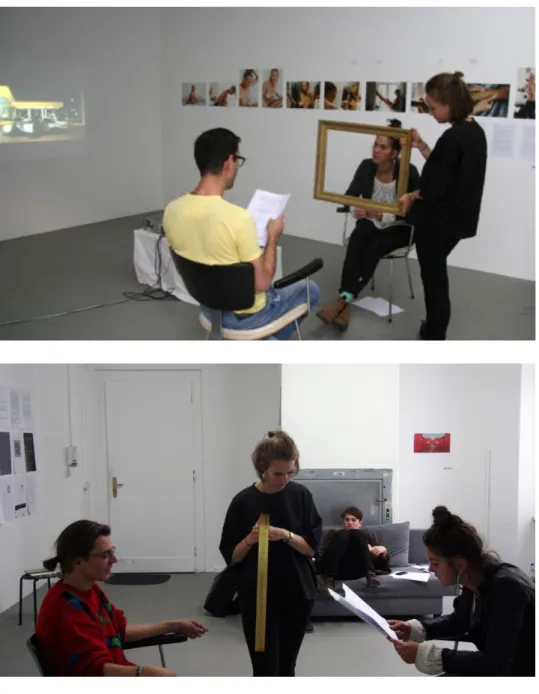
Physically, the final read-through was organised in a setup centred in the gallery space consisting of two chairs where two participants would sit facing each other, a golden portrait frame suspended in air between them, to literally and metaphorically frame the session, as well as set the stage (see Figure 2).
Structurally, the final read-through was an open session where participants were encouraged to self-organise and take the stage, either in the role of the embodied digital shadow or the subject of speculation, the reader or the listener, the surveyor or the 15 In this way we could go a step further and characterise the project as a somewhat ‘idiotic encounter’, following Mike Michael’s notion of ‘the idiot’ (drawing on Isabelle Stenger’s figure of ‘the idiot’, which again is derived from Deleuze and Dostoevsky) as a lens through which to reframe the public engagement in Science and Technology Studies (STS) through a speculative design perspective (2012). While this is a promising tangent, it is too extensive to develop in this paper.
surveyed. Various different constellations would organically form as a result, with one participant wanting to experience all her three digital shadows one after the other, and two participants staying on the stage in two consecutive sessions, swapping roles between them. This shifting dynamic not only served to harmonise the relationships between the participants, but also brought a critical awareness to the fact that each participant simultaneously inhabited the double-role of surveyor and surveilled, building empathy for both extreme ends of this spectrum.16 Another point lies in the stark contrast between the momentary performative agency held by participants during the workshop, as contrasted by the notorious lack of agency in the mass surveillance society (and thus also in this workshop).
The setup (constituted by a conceptual and physical space) could be characterised by a strong sense of agonism (Mouffe, 2013), as a range of more or less conflicting digital shadows (and thus alternative presents) would come to life during the unfolding read-through. The plurality of equally valid, yet profoundly different (we might consider going as far as saying conflicting or even mutually exclusive) digital shadows enacted and performed in a cascading disarray, highlights the absence of any definitive answers or any kind of truth. Rather than any solid content (‘who does Facebook really think I am?’), participants are left with a frame that seems comfortably, and eerily, able to hold close to anything. In this sense the digital shadow presents itself as a faux entity, a proxy digital identity.
The session concluded with a shared reflection session where the research team received valuable, positive feedback. Participants characterised the experience of having their digital shadow read out/performed as ‘strange’ (recalling the role of the uncanny in speculative design), highlighting the fact 16 Compare with the fundamentally asymmetric and static power relationship that is the basis of Sophie Calle’s The Address Book (2012), a project that in many other ways can be read as an analogue analogy to the present experiment.
Figure 2 Read-through (C) in Or Galler
2
3
23
that the constant stream of authentic, plausiblemetadata throughout the read-through would keep you firmly in the flow of the unfolding narrative, even if the storyline diverted along some highly imaginative, absurd tangents at times (in other words maintaining ‘the perceptual bridge’ (Auger, 2013:2). This was particularly true for one script template, in which Henrike had prototyped an anomaly, by including an authentic tweet sent by the respective participant/protagonist at the very end of the script. This exception to the rule of only using metadata (and not the data, or in other words, content) in the design of the script templates, worked incredibly well in producing a strong uncanny pay-off for this particular storyline.
Based on their introduction of drama into design, Brandt and Grunnet argue for the importance of users improvising scenarios in their own settings, as it enables designers and users to meet on more equal terms (2000:19). As a response to this, one could ask what the settings of digital shadows are? While the technically accurate answer would of course be a hidden server farm like the one in St Ghislain in Belgium (Veermäe, 2014), I would argue that one of the main results of the M(D)M experiment precisely is the opening of such a space for citizens to make sense through design. As a local pop-up stage for citizens to materially engage, perform and negotiate with each other over issues of privacy, surveillance and the intangible nature of their digital shadows, I think of the set-up in Or Gallery in ways analogous to the table with a ball of metadata clay. In this sense it presents a possible way of mediating between the deliberately intangible/speculative and the all-too material/real.
Of course this mediation could have happened in many other places, as the natural ground for making sense of digital shadows can essentially be considered a non-place of sorts (Augé, 1995). Thus, while the event, like the other JVEA events taking place, was open to the public, it is definitely possible to argue for a less art-centric, less ‘festivalesque’ and more widely accessible mainstream public space for
future iterations of the project.
As as a low-key, local engagement designed to supplement the parallel high-level societal discourse on surveillance by addressing the fundamental issue of obscurity (what is metadata/digital shadows and why should I care?), there is a further question of how the participant’s design and encounters with the digital shadows loop back into their everyday lives, let alone the larger, dire reality of global mass surveillance, as outlined in the introduction.
In addition to the issue of obscurity, I would argue the M(D)M workshop also pointed towards an important possible reframing of the issue of apathy (‘resistance is futile’) into a playground of performing and thus embracing the absurdity (‘life is futile’) that pervades much of the mass surveillance society. In describing the Theatre of the Absurd, Martin Esslin writes: ‘The Theatre of the Absurd shows the world as an incomprehensible place. The spectators see the happenings on the stage as entirely from the outside, without ever understanding the full meaning of these strange patterns of events, as newly arrived visitors might watch life in a country of which they have not yet mastered the language (…) For while the happenings on the stage are absurd, they yet remain recognizable as somehow related to real life with its absurdity, so that eventually the spectators are brought face to face with the irrational side of their existence’ (Esslin, 1960:5). Can we invite the spectators on to this stage, not only to see the happenings from within, but also to engage more intimately, critically and imaginatively with the absurdity of life through design? How could this Design Theatre of the Absurd play out?
5. CONCLUDING REMARKS
This paper has been concerned with the complicated relationship we have to our digital shadows, understood as ever-shifting, intangible figures, that still continue to have profound and yet non-transparent real-life consequences.
24
By acknowledging the speculative nature ofthe metadata that largely constitutes the matter of digital shadows, the craft of co-speculation was brought into a design experiment that took participants through a cycle of design ethnographic extraction of personal metadata, critical transformation of this metadata into short film script templates, and finally co-speculation and performance on top of these templates. Thus, the experiment utilised a mix of speculative and participatory design methodology, exploring the methodological mess in the space between the two by using the hinge of what if.
Concluding with a final read-through session, in which the designed digital shadows were performed, mediated and thus brought forth on to the collective stage, the experiment too was a way to negotiate between reality and imaginaries, across politics and poetics. Addressing the complexity, obscurity and common absurdity of global mass surveillance, the experiment succeeded in opening up an agonistic space for participants to playfully, yet critically engage in the topic matter, not by attempting to solve any problems or produce any solutions, but by simply starting to grasp and reframe the problem itself.
Building on the insights gathered from the M(D)M experiment, we can imagine The Design Theatre of the Absurd as a venue, not strictly for facing digital shadows, but as a space for a wider exploration of co-creation in speculative design as a method for generating public understanding of present(s).
Thanks to all the participants from the M(D)M Berlin workshop, as well as everyone else who took part in the other M(D)M experiments. A big thanks to Régis Frias for his collaboration and dedication. We are grateful to the anonymous reviewers, Carl DiSalvo, Johan Redström, Aditya Pawar, Jamer Hunt, and everyone else who have offered valuable feedback, wild ideas and useful references along the way. Finally, thanks to the great people who make JVEA happen, and to Kempefonden for their financial support.
BIOGRAPHY
Søren Rosenbak is a design researcher currently pursuing a PhD in design as critical practice at Umeå Institute of Design in Sweden. His research explores how pataphysics can infuse and advance a critical design practice.
Henrike Feckenstedt is an interaction designer currently working at R/GA in London. She graduated from Umeå Institute of Design in 2015.
REFERENCES
Appelbaum, J., 2016. ‘Letter to a Young Selector’, in L. Poitras (ed), in: Astro Noise. Whitney Museum of American Art & Yale University Press.
Augé, M., 1995. Non-lieux. London: Verso. Auger, J., 2013. ‘Speculative Design: Crafting the Speculation’ in: Digital Creativity, 24(1), pp.11–35.
Bardzell, J. and Bardzell, S., 2013. ‘What is “Critical” About Critical Design?’ in: Proceedings of the SIGCHI Conference on Human Factors in Computing Systems. CHI ’13. ACM, pp.3297–306.
Brandt, E. and Grunnet, C., 2000. ‘Evoking the Future: Drama and props in user centered design’, in Proceedings of Participatory Design Conference (PDC 2000), pp.11–20.
Binder, T. and Foverskov, M., 2010. ‘Design as Everyday Theater. Re-thinking Co-Design as Social Drama’, in: Halse, J., (ed), Rehearsing the future. Copenhagen:Danish Design School Press. Brunton, F. and Nissenbaum, H., 2015. Obfuscation: A User’s Guide for Privacy and Protest. Cambridge, Mass.: MIT Press.
Buur, J. and Larsen, H., 2010. ‘The Quality of Conversations in Participatory Innovation’ in: CoDesign, 6(3), pp. 121–38. Calle, S., 2012. The Address Book. Los Angeles: Siglio.
Cole, D., 2014. ‘We kill people based on metadata’ in: The New York Review of Books. Available at: http://www.nybooks. com/daily/2014/05/10/we-kill-people-based-metadata/.
Crawford, K., 2016. ‘Asking the Oracle’, in: L. Poitras (ed) in: Astro Noise. Whitney Museum of American Art & Yale University Press.
https://www.cryptoparty.in.
DiSalvo, C., 2016. ‘The Irony of Drones for Foraging: Exploring the Work of Speculative Interventions’ in: R. C. Smith, K. T. Vangkilde, T. Otto, J. Halse, M. G. Kjaersgaard and T. Binder, (eds) Design Anthropological Futures, Bloomsbury Publishing.
Ehn, P., 1988. Work-oriented Design of Computer Artifacts. PhD thesis. Arbetslivscentrum.
Esslin, M., 1960. ‘The Theatre of the Absurd’ in: The Tulane Drama Review, pp.3–15.
Frank, S., 2015. ‘How Novels Tell the Truth of Surveillance’ in: The Intercept. Available at: https://theintercept.com/2015/06/28/ orwells-triumph-novels-tell-truth-surveillance/.
Halse, J., (ed) 2010. Rehearsing the Future. Copenhagen: Danish Design School Press.
Halse, J. and Clark, B., 2008. ‘Design Rituals and Performative Ethnography’ in Ethnographic Praxis in Industry Conference Proceedings. 2008(1), pp.128–45.
Greenwald, G. and MacAskill, E., 2013. ‘NSA Prism program taps into user data of Apple, Google and others’ in: The Guardian. Available at: https://www. theguardian.com/world/2013/jun/06/us-tech-giants-nsa-data.
Johnstone, K., 1993. Impro: improvisation og teater, (in Danish – English title: Impro: Improvisation and theater). Hans Reitzels forlag.
http://www.jvea.org/2015-2/. Kensing , F. and Madsen, K. H., 1991. ‘Generating Visions: Future Workshops and Metaphorical Design’ in: L. Erlbaum and M. Kyng, Design At Work – Cooperative design of Computer Systems. Boca Raton, Florida: CRC Press.
Mazé, R. and Redström, J., 2007. Difficult forms: critical practices of design and research. IASDR 2007 Proceedings: Emerging Trends in Design Research. Hong Kong Polytechnic University. Michael, M., 2012. ‘“What Are We Busy Doing?” Engaging the idiot’ in: Science, Technology & Human Values, 37(5), pp.528–54.
Mouffe, C., 2013. Agonistics. London: Verso.
https://myshadow.org.
Paglen, T., 2016. ‘Listening to the Moons’, in L. Poitras (ed) Astro Noise. Whitney Museum of American Art & Yale University Press.
Pasquinelli, M., 2015. ‘The Blind Eye of the Algorithm’ in: transmediale/magazine Issue #3. CAPTURE ALL. transmediale. Peterson, A., 2013. ‘LOVEINT: When NSA officers use their spying power on love interests’ in: The Washington Post. Available at https://www.washingtonpost. com/news/the-switch/wp/2013/08/24/ loveint-when-nsa-officers-use-their-spying-power-on-love-interests/.
Poitras, L. and Crawford, K., 2015. ‘Divorce Your Metadata: A conversation between Laura Poitras and Kate Crawford’ in: Rhizome. Available at: http://rhizome. org/editorial/2015/jun/9/divorce-your-metadata/.
Risen, J. and Poitras, L., 2013. ‘N.S.A. Gathers Data on Social Connections of U.S. Citizens’ in: New York Times Available at: http://www.nytimes.com/2013/09/29/ us/nsa-examines-social-networks-of-us- citizens.html.
Rusbridger, A., 2013. ‘The Snowden leaks and the public’. Available at: http:// www.nybooks.com/articles/2013/11/21/ snowden-leaks-and-public/.
Rushkoff, D., 2013. ‘The NSA, Code Literacy, and You’ Codecadamy blog post. Available at: https://www.codecademy. com/blog/83.
Schneier, B., 2015. Foreword. Why We Encrypt. In: A. Crowe, S. Lee and M. Verstraete, Securing Safe Spaces Online: Encryption, online anonymity and human rights. Privacy International, ARTICLE 19 and The International Human Rights Clinic (IHRC) at Harvard Law School.
Slavin, K., 2011. How Algorithms Shape our World. [video] TEDGlobal. TED. Stanislavskij, K., 1940. An Actor works on Himself (Danish version: En skuespillers arbejde med sig selv; Nyt nordisk Forlag Arnold Busck, 1988).
http://streetghosts.net/.
https://www.torproject.org/projects/ torbrowser.html.en.
http://transparencygrenade.com/. Veermäe, I., 2014. Crystal Computing (Google Inc., St Ghislain). Available at: http://www.ivarveermae.com/CRYSTAL-COMPUTING/.
VICE on HBO, 2016. State of Surveillance. Available at: https://www.youtube.com/ watch?v=ucRWyGKBVzo.
This track inquires how interventions can contribute to long-term participatory processes that address public space and public issues. Design and art interventions in public space are often driven by a wish to reclaim the common right to it and regularly use a ‘hit-and-run tactic’ (Gielen, 2013; Markussen, 2013). Besides art and design, other contexts (such as applied psychology) often use the concept of ‘intervention’ to refer to processes of acting upon and improving a perceived critical situation. Most definitions of interventions entail a traditional autonomous model, in which one person or a selected group of people decide whether a situation asks for a certain action with which they – unannounced, unadvertised and not commissioned – enter into a context (Markussen, 2013). Other approaches make use of the concept of intravention, with a special focus on the ‘intra-‘ to avoid creating a rupture in the context by initiating the actions from within (Altés & Lieberman, 2013). The nature of interventions, thus seems to be in contrast with the more horizontal approaches of participatory processes. Despite this apparent contradiction, interventions are frequently used by artists and designers in durational practices (O’Neill & Doherty, 2010).
Interventionist approaches in specific (local) settings have the potential to democratize innovation by opening up spaces for inquiry and possibilities, rather than giving answers and solutions (Björgvinsson, Ehn & Hillgren, 2010). We want to explore different ways in which interventions contribute to these processes of democratisation of innovation (in public space) and address issues of public interest.
References
Altés Arlandis, A., & Lieberman, O. (2013). Intravention, durations, effects: notes of expansive sites and relational architectures.
Björgvinsson, E., Ehn, P., & Hillgren, P. A. (2010, November). Participatory design and democratizing innovation. In Proceedings of the 11th Biennial Participatory Design Conference (pp. 41-50). ACM. Gielen, P. (2013). Artistic Praxis and the Neoliberalization of the Educational Space. The Journal of Aesthetic Education, 47(1), 58-71.
Markussen, T. (2013). The disruptive aesthetics of design activism: enacting design between art and politics. Design Issues, 29(1), 38-50.
O’Neill, P., & Doherty, C. (Eds.) (2011). Locating the Producers: Durational Approaches to Public Art. Antennae Series 4. Amsterdam: Valiz.
Chairs: Liesbeth Huybrechts (University Hasselt) & Pablo Calderón Salazar (LUCA KU Leuven)
ART & DESIGN INTERVENTIONISM AND LONG-TERM PARTICIPATION
AN UNEASY RELATION?
30
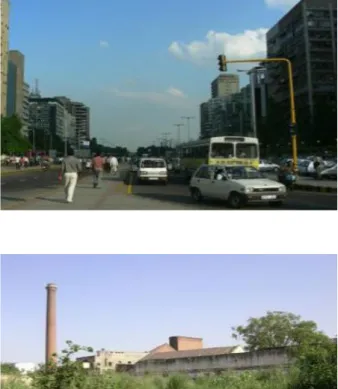
With its overarching focus on issues at the macro-scale, Delhi’s urban planning process has remained disengaged with everyday conditions in the city, resulting in visible disparities across social, physical and environmental realms. To connect the existing formal city planning process with multiple actors and their diverse aspirations at local level, a strategy for mediation incorporating alternative art and design practices can be explored through the idea of a creative urban development framework. This paper discusses public art practices that exemplify the purpose of engaging communities with local place specificities, larger environmental concerns and connected citizen aspirations, set within the socio-political backdrop of specific everyday urban spaces in the city,Situated within two different locations in Delhi that represent varied contestations around the question of environment vs. development, the paper emphasises how public art installations can become a primary tool for collective association, especially within the milieu of multiple claims on urban space. The paper further reveals that contextually responsive, community oriented public art practices could offer valuable contributions to making and/or reconnecting ‘places for people’. While highlighting different modes of civic engagement such as mobilisation and awareness, empowerment, engagement and co-development through these art practices, the paper explores the possibility of participative dialogue for decision-making in the re-imagining of urban futures.
ABSTRACT
Keywords: Everyday City, Urban Space, Public Art, Civic Engagement
D. Chopra
PLACE.PEOPLE.PRAXIS
Collective Engagements Towards Mediated Urban Futures
31
‘Contemporary urban India exists in a momentthat is framed by multiple transformations: liberal market reforms initiated in 1991 that have led to a profound economic and social restructuring; the emerging notion of “world class cities” at a time of increasing global interaction and a media explosion; and a changing aspirational and economic landscape for the non-poor’ (Bhan, 2009) As one surveys the trajectory of Delhi’s growth and change, contemporary urban discourse finds this to be city of many cities a palimpsest, wanting to transact its multi-layered hybrid existence with a new singular identity, moving feverishly towards realizing its dream of being a global city. Prevailing development practices, influenced by external forces of globalisation and the internal dynamics of change, are primarily oriented towards the creation of exclusive domains through large-scale urban projects, suggesting an evident shift towards an alignment with private interest, forsaking the public good. There have been clear fallouts from this approach, specifically with respect to the social and environmental health of the city, visible through increasing environmental degradation, physical displacement, spatial polarisation, and the progressive rupturing of social bonds.
While the formal planning process continues to address urban issues at the macro scale, the everyday city at the micro scale is overlooked, resulting in visible disparities between planning objectives and realities on the ground. Against such a disengaged process, civic imaginations could use the everyday nuances of urban spaces as the starting point for a differentiated approach towards the future of the city for a more socially responsive urban condition. The idea that urban spaces form the pivotal arenas of characteristic urban life, with all its complexities, becomes the central position from which the city is encountered, interpreted and discussed. This
method of re-engagement with the city-space presupposes an intimate immersion in varied urban realms in order to enable a grounded, bottom-up perspective of the constituent parts of the city as against a generalised totality. A perceptible shift within the city-making process that allows for the inclusion of multiple voices in decision-making has become an inescapable necessity. What is of importance is the connection that multiple stakeholders could establish with city spaces, bringing forth into public domain latent aspects of everyday existence. Engaging the community as a collective creative resource in this process of cooperative city-building is required, in which citizens come together to create and build their spaces, not just manage them. Co-design and development initiatives through local ‘place-making’ would also foster association and attachment to the city while entailing a sense of ownership and belongingness of the community towards their created environment. This paper examines how art practices positioned within everyday urban space could foster collective engagement and citizen participation as an essential ingredient for decision-making within our city building processes. As Suzanne Lacy says, ‘New genre public art – visual art that uses both traditional and non-traditional media to communicate and interact with a broad and diversified audience about issues directly relevant to their lives – is based on engagement’ (Lacey, 1994). Using specific cases of artworks from a public art festival held in the city, this paper highlights different modes of civic engagement initiated through public art and its potential contribution to the addressing of the generic concerns of our urban environment, as well as specific issues of identified urban spaces in the city. THE EXISTING TRAJECTORY OF URBAN