3XEOLF
/LDELOLW\&ODLPV
0DQDJHPHQW
5HVHDUFK5HSRUW
Commonwealth of Australia 2002 ISBN 1 74037 109 7
This work is subject to copyright. Apart from any use as permitted under the Copyright Act 1968, the work may be reproduced in whole or in part for study or training purposes, subject to the inclusion of an acknowledgment of the source. Reproduction for commercial use or sale requires prior written permission from the Department of Communications, IT and the Arts. Requests and inquiries concerning reproduction and rights should be addressed to the Commonwealth Copyright Administration, Intellectual Property Branch, Department of Communications, IT and the Arts, GPO Box 2154, Canberra ACT 2601. This publication is available in hard copy or PDF format from the Productivity Commission website at www.pc.gov.au. If you require part or all of this publication in a different format, please contact Media and Publications (see below).
Publications Inquiries: Media and Publications Productivity Commission
Locked Bag 2 Collins Street East Melbourne VIC 8003 Tel: (03) 9653 2244 Fax: (03) 9653 2303 Email: [email protected] General Inquiries: Tel: (03) 9653 2100 or (02) 6240 3200
An appropriate citation for this paper is:
Productivity Commission 2002, Public Liability Claims Management, Research Report, Canberra.
The Productivity Commission, an independent Commonwealth agency, is the Government’s principal review and advisory body on microeconomic policy and regulation. It conducts public inquiries and research into a broad range of economic and social issues affecting the welfare of Australians.
The Commission’s independence is underpinned by an Act of Parliament. Its processes and outputs are open to public scrutiny and are driven by concern for the wellbeing of the community as a whole.
Information on the Productivity Commission, its publications and its current work program can be found on the World Wide Web at www.pc.gov.au or by contacting Media and Publications on (03) 9653 2244.
TERMS OF REFERENCE
III
Terms of reference
Benchmarking Australian Insurers’ Claims Management Practices
PRODUCTIVITY COMMISSION ACT 1998
The Productivity Commission is requested to undertake a research study into Australian Insurers’ claims management practices in the public liability class of insurance and benchmark them against world’s best practice.
In undertaking this study, the Commission is to:
1. Benchmark Australian insurers’ claims management practices against world standards, having regard to:
(a) differences in legal processes between States and Territories in Australia; (b) the impact of litigation on claims costs;
(c) the proportion of claims settled out of court and the factors determining which claims are settled out of court, and the size of these claims;
(d) whether insurers collate claims history and what criteria for collation are used;
(e) the time taken to finalise claims and factors determining this time;
(f) the incidence of claims as a proportion of policies written and changes in the average size of claims over time;
(g) the cost of claims management relative to the size of payouts, and the factors influencing this; and
(h) any connection between claims management practices and the
affordability, and the availability of public liability insurance.
2. Take account of recent substantive studies relevant to the study, including those by Trowbridge Consulting.
3. Consult with key interest groups, including insurance companies, as well as any other relevant parties.
The Commission is to report by 31 December 2002 and the report is to be published.
IAN CAMPBELL 26 July 2002
FOREWORD V
Foreword
In May 2002, a Ministerial Meeting on Public Liability agreed on a package of measures aimed at reducing claims costs and increasing the transparency of insurance industry practices through better data collection. As part of this package, Ministers agreed that the Productivity Commission be asked to benchmark Australian insurers’ claims management practices against world standards.
This report is the Commission’s response to that request. The Commission found limited scope for international benchmarking to be instructive in this area. However, the Commission’s assessment of insurers’ operations and their market environment is consistent with them having efficient claims management practices.
The Commission benefited from information and views received from the major insurers and other industry participants, including at a workshop held to discuss preliminary findings. The report also drew on a range of published sources, including studies by the ACCC and Trowbridge Consulting.
The study was overseen by Commissioner Judith Sloan and conducted within Inquiry B branch under Herb Plunkett. The Commission is grateful to all those who contributed to the report.
Gary Banks Chairman December 2002
CONTENTS VII
Contents
Terms of reference III
Foreword V
Abbreviations X
Key points XII
Overview XIII Findings XXIV 1 Introduction 1 1.1 Background 1 1.2 The reference 3 1.3 Related inquiries 3
1.4 The Commission’s approach 4
1.5 Structure of the report 7
2 Public liability insurance 9
2.1 What is public liability insurance? 10
2.2 How is public liability insurance provided? 15
2.3 Self insuring for public liability claims 19
2.4 Public liability insurance activity 21
2.5 Regulation of insurance 30
3 Public liability insurance — market characteristics 33
3.1 Market definition and structure 34
3.2 Barriers to entry and exit 37
3.3 Other market conditions 41
4 Claims management practices 51
4.1 Strategic approaches to claims management 51
4.2 Operational approaches to claims management 57
4.3 Feedback loops 68
4.4 Data and technology 76
5 Legal costs and processes 83
5.1 Legal costs 83
5.2 Litigation and court judgments 87
5.3 Court-based case management 91
5.4 Recent or proposed changes in public liability regimes 94
A Conduct of the study 101
Consultation with individuals and organisations 101
Roundtable 102
References 103
BOXES
1 International comparisons and claims management XVII
2.1 Changes in the general insurance market 17
3.1 A selection of views on the state of competition 34
3.2 Insuring offshore 35
3.3 Interpreting market share data 37
3.4 APRA regulation of insurers 38
3.5 Options for insurance provision 42
3.6 Combined ratios 45
3.7 Profits in the public liability insurance business 46
3.8 Price gouging? 48
4.1 Best and bad practice for claims managers 60
4.2 Claims leakage 64
4.3 Settlement conferences 65
4.4 International comparisons and claims management 69
4.5 Reinsurers and claims management 71
4.6 The control cycle 75
CONTENTS IX
4.8 Opportunities for e-commerce in the insurance industry 81
5.1 Legal costs 85
5.2 Mediation and arbitration 91
5.3 ADR in Western Australia 93
5.4 Structured settlements 96
FIGURES
1 Insurers’ claims management process — a schematic outline XV
1.1 Levels of benchmarking 5
2.1 The insurance cycle 15
2.2 Claims management: the key players 16
2.3 Annual changes in premium rates since 1994 23
2.4 Public liability premiums per $’000 of private sector GDP 24
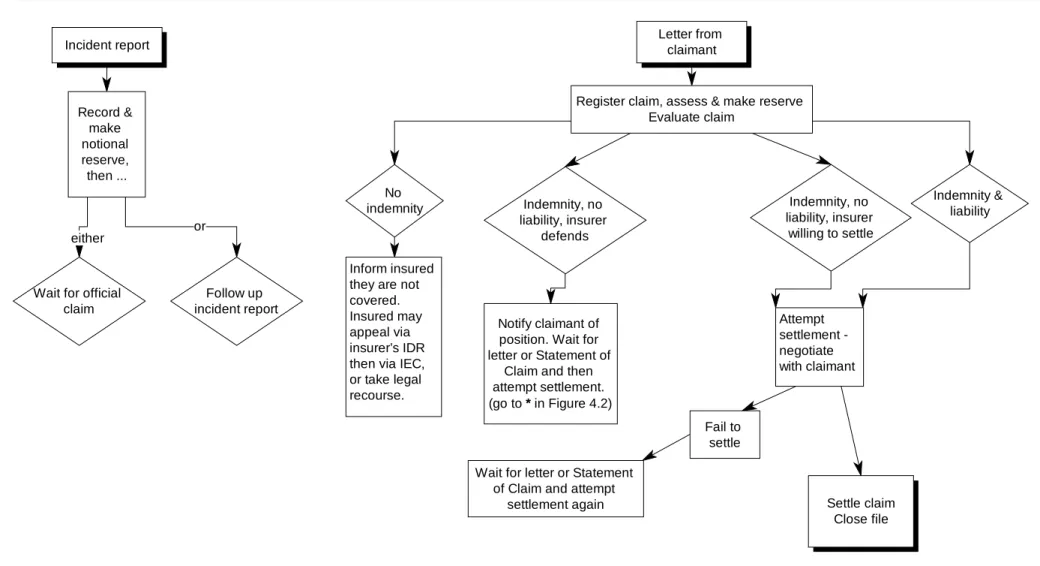
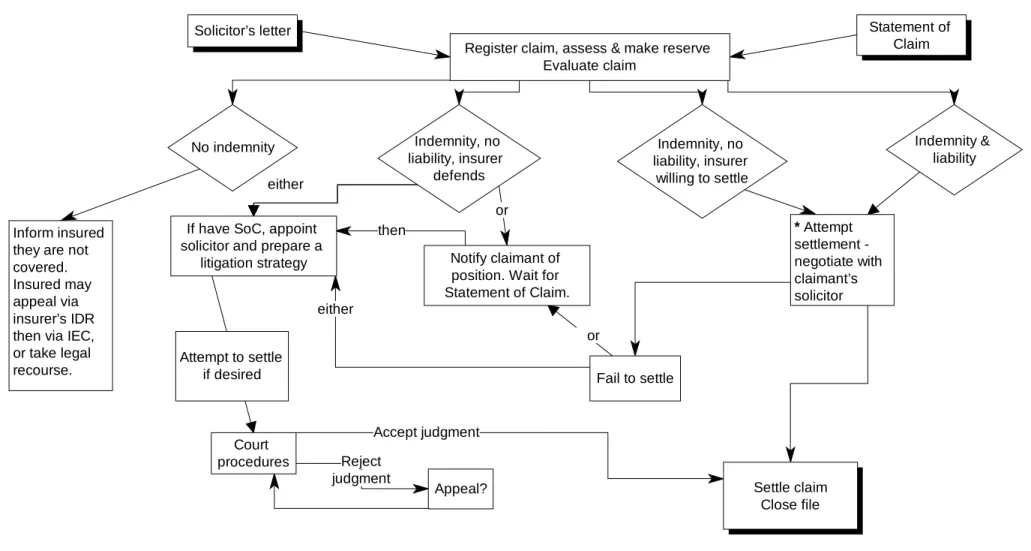
4.1 The claims management process 1 62
4.2 The claims management process 2 63
TABLES
1 Cost components of a public liability premium XVI
2.1 Cost components of a public liability premium 22
2.2 Public liability claims by type 29
5.1 Legal costs as a proportion of settlement costs 86
Abbreviations
ABI Association of British Insurers
ACCC Australian Competition and Consumer Commission
ACT Australian Capital Territory
ADR Alternative dispute resolution
APLA Australian Plaintiff Lawyers Association
APRA Australian Prudential Regulation Authority
CTP Compulsory third party motor vehicle insurance
IAG Insurance Australia Group
IBNR Incurred but not reported
IBNER Incurred but not enough reported
IC Industry Commission
ICA Insurance Council of Australia
ISA Insurance Statistics Australia
ITR Insurance trading result
LCA Law Council of Australia
PC Productivity Commission
SCRCSSP Steering Committee for the Review of Commonwealth/State
Key points
• The nature of public liability insurance has precluded the type of benchmarking the Commission has previously undertaken with economic infrastructure. The heterogeneous nature of the risks covered, as well as differences in institutional arrangements and regulatory regimes, limit the scope for policy-relevant, like-with-like comparisons between Australian insurers and with overseas insurers.
• The broad steps involved in managing claims are fairly common across the industry. Differences arise because, for example, the portfolios of public liability risks underwritten by insurers differ, and require different claims handling processes. It is widely recognised that there is no single best practice for public liability claims management.
• Insurers generally have sufficient information to manage their own claims effectively. But better use of claims data could be made by some insurers for a range of other purposes, such as premium setting and risk management.
• There is some state variation in claims management costs due to differences in statute law, legal representation costs and court procedures and costs.
• The involvement of lawyers in public liability claims has increased. Litigation, in the sense of the commencement of court-related processes, has also been increasing, although most cases are settled prior to trial.
• Setting premiums for public liability insurance is very difficult because of its ‘long-tailed’ nature (claims costs occur over many years) and the wide range of risks it covers. Since the mid 1990s, public liability insurance has operated at a loss.
• The market environment in which public liability claims are managed remains competitive and should provide sufficient incentives for insurers to make their claims management practices efficient and cost effective.
• There is nothing inherent in Australian insurers’ claims management practices, or the environment in which they are undertaken, which would prevent the benefits from government initiatives to improve the availability and affordability of public liability insurance from being passed onto consumers.
OVERVIEW XIII
Overview
Following public concern about the availability and affordability of public liability insurance, in early 2002 the Commonwealth, State and Territory Governments agreed on a package of measures to help alleviate the problem. These included: exploring options for tort law reform; pooling and group insurance for non-profit organisations; and the introduction by the Commonwealth of legislation to allow self assumption of risk for people who elect to participate in risky activities.
In response to concerns that the benefits of the measures may not be reflected in premiums, the Australian Competition and Consumer Commission (ACCC) was asked to extend its price monitoring of insurance premiums for a further two years and the Productivity Commission was asked to benchmark Australian public liability insurers’ claims management practices against world standards.
Public liability insurance
Public liability insurance protects individuals, businesses and organisations against the financial risk of legal liability to third parties for death or injury, loss or damage to property, or ‘pure economic’ loss, in areas not covered by workers’ compensation, motor vehicle compulsory third party (CTP), professional indemnity or product liability. The situations where such liability can arise are many and varied.
The available data on public liability insurance are incomplete and potentially misleading. Official data from the Australian Prudential Regulation Authority (APRA) are generally acknowledged to be inadequate to provide a meaningful picture of public liability insurance in Australia. The major insurers had difficulty in providing specific information for this study to the Commission, in part as a result of the HIH collapse and recent mergers and acquisitions.
While incomplete, insurance survey data obtained by the ACCC (2002b) included 13 selected insurers (including the six largest) which provided public liability insurance. Those insurers were estimated to provide 63 per cent of the written premiums of the public and product liability market as estimated by APRA. In 2001, they wrote some 1.5 million public and product liability policies and collected almost $600 million in premiums. Substantial amounts of public liability cover are
also written offshore, as is a large volume of reinsurance. In addition, significant self insurance is undertaken, typically by larger organisations with high ‘deductibles’. In 2001, those 13 selected Australian insurers settled some 22 000 claims at an average settlement of around $15 000 per claimant. Trowbridge estimated that, while some three-quarters of the number of all claims were for property damage, bodily injury comprised 65 per cent of the total cost of settlements.
In setting premiums for public liability insurance, insurers rely on forecasts of future claims costs and investment earnings. This process is associated with considerable uncertainty, in large part because of the long time it takes — typically, three to five years — after the premiums have been received before reasonably accurate estimates can be made of the costs related to the cover provided. Hence, developments over time in elements of those costs can have dramatic effects on insurance profitability that are not immediately apparent.
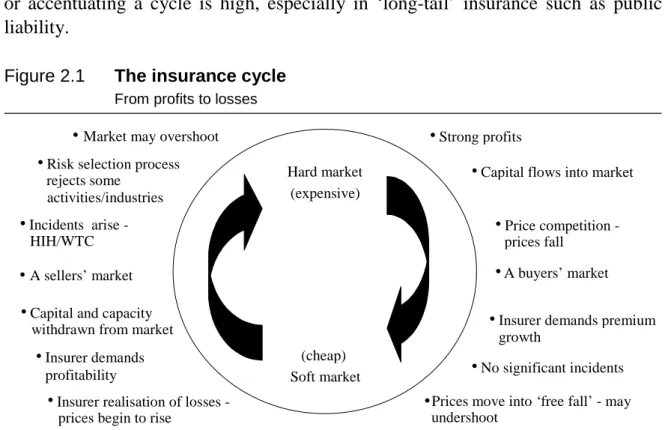
The insurance industry is known to be affected by cyclical behaviour. At present, public liability insurance is regarded as being in the ‘hard market’ stage of the cycle, when insurance cover is difficult to obtain and expensive. Accentuating this hard market have been the rapid escalation in the cost of personal injury settlements since the mid 1990s, greater legal involvement, the hardening of the reinsurance market following, in particular, the 11 September catastrophe and the collapse of HIH, a major domestic provider of public liability insurance.
What is claims management?
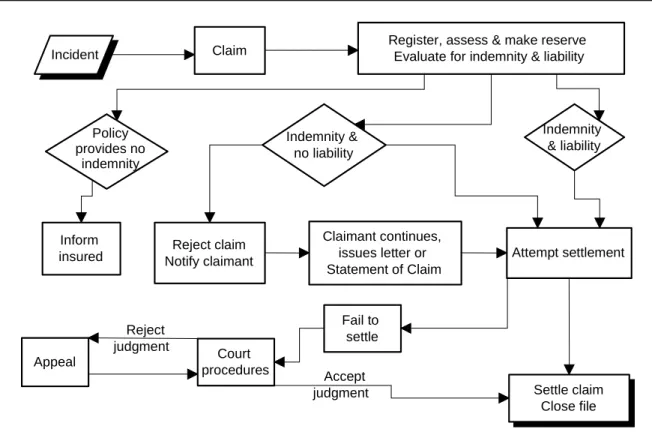
Claims management forms an integral part of public liability insurers’ operations, together with marketing, underwriting and investing. It encompasses a range of activities from the receipt and registration of a claim, to investigation of the circumstances of the claim, to negotiation about indemnity and liability and the extent of the injured party’s loss, through to settlement. A schematic outline of the processes involved is given in figure 1. As indicated, there are many possible pathways to resolving a claim.
The key objective of claims management is to provide policyholders with the contracted protection from the financial consequences of legal liability in an efficient and cost-effective manner. In practice, this entails containing costs by assessing the veracity of the claim and the insured’s responsibility, and by settling claims expeditiously. To succeed, a claimant needs to demonstrate the existence of a duty of care, a breach of that duty and consequential material damage. This is undertaken within the legal framework set by the common law tort of negligence.
OVERVIEW XV Figure 1 Insurers’ claims management process — a schematic outline
Register, assess & make reserve Evaluate for indemnity & liability
Policy provides no indemnity Indemnity & no liability Indemnity & liability Inform
insured Notify claimantReject claim Attempt settlement
Court procedures Appeal Incident Reject judgment Claim Claimant continues, issues letter or Statement of Claim Fail to settle Settle claim Close file Accept judgment
The adversarial nature of the legal framework has a major influence on claims management practices, and heavily influences the costs and time taken to handle claims. Only some 2 to 5 per cent of claims are settled by the courts. Nonetheless, those decisions provide the parameters within which negotiations over claims take place and settlements are reached.
Over recent years, legal involvement in public liability has increased. Insurers report that about 80 per cent of the claims they handle are now accompanied by a solicitor’s letter, compared with about half that level a decade ago. Greater use of lawyers may reflect a greater inclination by injured parties to claim, greater awareness of claimants’ rights, or easier access to lawyers through ‘no win, no fee’ services. It may also reflect difficulties some people face in getting insurers to recognise their legitimate claims. Litigation — the commencement of court-related adjudication processes, irrespective of whether the case ends up in court — has also been increasing. However, these trends may be overstated as many small claims which do not involve legal representation are now managed by firms under self-insurance arrangements.
Typically, the cost of payouts to claimants (which include personal injury, property damage, economic loss, legal costs, investigation, etc) represents some 65 per cent of the net premium received by an insurer, or some 54 per cent of the purchase price
or premium paid by a customer (see table 1). Administration expenses, which include insurers’ legal and other costs of managing claims, account for some 22 per cent of an insurer’s premium.
Table 1 Cost components of a public liability premium Per cent
Item
Proportion of the net premium received by the insurer Proportion of the premium paid by the customer Cost of claims 65 54 Commission/brokerage 15 12 Administration expenses 22 18
Investment income credita –10 –8
Target profit margin 8 7
Premium to insurer 100 83
GSTb 10 8
Stamp dutyc 11 9
Purchase price of premium to customer 121 100
a Allows for investment earnings on funds retained to pay claims. b Gross, as includes no allowance for refund of GST paid on purchased inputs. c Recently, some States and Territories have moved to reduce the amount of stamp duty charged on public liability premiums for some groups.
Source: Based on Trowbridge (2002a, p. 29).
The notion of benchmarking
Benchmarking is a process that helps firms identify ‘best practice’. It involves firms making systematic comparisons of their procedures and outcomes with those of other domestic or international firms.
Benchmarking is most useful for public policy purposes when it involves comparisons of firms that operate in broadly similar circumstances and similar ways, and that produce like outputs. It is commonly used to compare the performance of public utilities and infrastructure — for example, electricity distributors, water supply authorities, ports and airports. However, benchmarking is more problematic in industries where heterogeneous goods or services are produced, mainly because it is difficult to make meaningful like-with-like comparisons.
In the case of public liability insurance, there is significant variation in the profile of the organisations and the public liability risks that they underwrite. Much more than other forms of insurance, the size, nature and complexity of claims vary enormously — from minor property damage to catastrophic bodily injury, perhaps involving
OVERVIEW XVII
multiple defendants. On closer inspection, even superficially similar claims can involve sufficient differences in circumstances to make benchmarking uninformative. Thus, while at one level insurers tend to progress claims through a similar sequence of processes, the detail of each process varies between both claims and insurers. There are also differences between jurisdictions in court procedures and the costs of legal representation. Any comparisons with overseas insurers are further confounded by differences in institutional arrangements and legal regimes across and within countries (box 1).
Box 1 International comparisons and claims management
Among common law countries with similar legal and regulatory systems, there are important differences in statutory requirements and legal rules and procedures that affect the incentives faced by plaintiffs and insurers and influence approaches to claims management.
• There are statutory differences on such matters as caps on payouts, the size of legal fees in specified circumstances and the situations where strict liability must apply. These also vary within countries (for example, there are significant differences between American states and between Canadian provinces).
• Community concerns about liability insurance in the United States of America and Canada in the 1980s led to changes in legal and regulatory regimes for liability cases. However, some recent or proposed changes (such as class action reforms and caps on damages) are being reviewed and debate about the tort liability system continues.
• In most European countries, civil litigation generally follows the ‘English rule’, whereby the loser pays the winner’s legal fees. In contrast, the ‘American rule’, which requires each side to pay its own legal fees, still applies to most civil litigation in that country. This influences the incentives to settle or to litigate.
• In contrast to Australia, Canada and the United Kingdom, jury trials are common in American liability cases. Its legal system also allows for the awarding of punitive damages.
• Attitudes towards litigation differ across countries, while advertising by lawyers and the availability of ‘no win, no fee’ legal services varies considerably between jurisdictions.
• Access to alternative dispute resolution procedures also varies. In the United Kingdom, for example, the Woolf reforms discourage litigation and encourage the use of alternative dispute resolution and sharing of information. However, if settlement is not achievable, there are requirements to ensure the parties are prepared to comply with court timetables and procedures.
These differences do not imply that some forms of benchmarking of claims management practices are not possible. At the level of day-to-day practices and
procedures, insurers can (and do) learn by comparing their activities to their own past performance, and to those of other local insurers, as well as to other areas of insurance, such as workers’ compensation and CTP. They also adopt techniques and ideas from overseas insurers in countries with similar tort-based legal systems and regulatory arrangements.
However, in the light of the circumstances outlined above, it is doubtful if a single best-practice approach exists. Variations observed in practice between two insurers can simply represent efficient ways of managing the different ‘parcels’ of claims each handle. Claims managers told the Commission that, even between claims, the best practice process for one claim may not be best practice for another. In public liability claims management, flexibility is important and there is no ‘world class benchmark’ — a view widely supported by the full range of participants. The Commission agrees with this assessment. Hence, while potentially useful for insurers to undertake in relation to aspects of their own products, processes and practices, benchmarking has little meaning at the industry-wide level. Accordingly, it has little public policy significance.
For these reasons, the Commission concluded that it is not possible to undertake comprehensive and meaningful benchmarking of the type that has been undertaken in most of its other benchmarking studies (which have mainly related to economic infrastructure).
Nevertheless, in view of concerns about the efficiency of insurers’ claims management operations, the Commission has reviewed the processes by which claims are managed to identify practices and objectives commonly pursued by Australian insurers and to canvass views about what might constitute best practice for different types of claims. It also examined the processes by which insurers review their own claims management processes. In addition, it considered the market environment in which Australian public liability insurers operate to help understand the incentives which the industry faces to manage claims in the most efficient and cost-effective fashion.
Is the market competitive?
In a competitive market, rivalry between firms, as well as the threat of new entrants, provides incentives for firms to operate efficiently in order to preserve or improve their market share and earn a commercial rate of return. Structural characteristics of the industry (for example, the number of suppliers), barriers to entry and exit, and market outcomes are commonly considered to provide an indication of the competitiveness of a market.
OVERVIEW XIX
• Notwithstanding some recent mergers, there are still six large Australian-based general insurers that provide public liability insurance, plus a larger number of smaller firms. In many market segments, there is also competition from large overseas insurers and, increasingly, from (mainly large) firms that elect to self insure substantial layers of their risk.
• Recent developments indicate that barriers to entry and exit are relatively low. For example: there have been some mergers and acquisitions (such as the takeover of GIO by Suncorp-Metway); HIH exited in 2001; IAG has indicated that, conditional on further legislative reform, it may provide stand-alone public liability insurance; and QBE and others are now seeking to provide public liability insurance to not-for-profit agencies via a collective arrangement.
• Although there are some data shortcomings, both Trowbridge and the ACCC have reported negative returns for public liability insurance over recent years. While some customers are having difficulties in obtaining insurance cover, this need not be inconsistent with a competitive market. Even though the industry is currently operating in a ‘hard market’, the scope for ‘price gouging’, a concern of some as premiums have risen, is minimal.
The Commission agrees with the judgment of the ACCC and APRA that the public liability market in Australia remains competitive, notwithstanding a reduction in the number of insurers offering this form of underwriting in recent years. There is competition between the major general insurers, new players may commence underwriting public liability risks at any time, and customers can (and do) insure overseas or self insure. There is also competition in the supply of claims management services, which can be provided by in-house claims management teams or by other insurance companies, or purchased from independent claims management companies or brokers.
Competition in the supply of public liability insurance provides incentives for insurers to make their claims management practices, and other facets of their business, efficient and cost effective.
Claims management practices
Even for claims that are ostensibly similar, their management needs to be tailored to deliver cost-effective outcomes in the light of the specific circumstances of each claim. The broad steps involved in claims management (see figure 1) are fairly similar across Australia, the United Kingdom and the United States of America. As noted above, differences between insurers in the execution of those steps, both
within Australia and overseas, relate to the detail of the procedures followed and the manner in which they are implemented.
In relation to the procedures:
• Although there are strong commercial incentives for insurers to settle claims expeditiously, there is significant variation in the time taken to resolve different types of claims. While property damage claims can usually be resolved relatively quickly (for example, within three to six months), personal injury claims can take much longer — often three to five years.
• While there was general agreement that claims management should be proactive, there are differing views as to what this entails. For insurers, being proactive relates to dealing with claimants in a timely manner and in progressing claims so as to avoid unnecessary delays in reaching a settlement. In contrast, for firms that self insure, a proactive approach focuses on minimising adversarial legal involvement by obtaining and acting on incident reports, and by using claims information for accident prevention.
• Some insurers have a detailed manual of procedures, some issue occasional guidelines and rely on in-house training and the experience of their staff, and others use key performance indicators to implement their claims management approach.
• The compilation and use of data from claims management are integral parts of insurers’ financial reporting and management control systems. However, the extent to which claims data are available and used for other purposes varies across insurers.
– Specialist claims managers pointed to the crucial role that claims data play in their operations, from internal control and reporting, to analysis and use of the data in providing information for their clients’ internal risk management. – Some considered that insurers could do more to use their data to facilitate risk
management by insured parties.
• There are differences of view as to whether, and in the degree to which, claims management operations are integrated into other parts of insurers’ operations, such as marketing and underwriting. Some considered that formal separation of functions adds to the integrity of their individual and overall operations. But others felt that there were major benefits to be gained from developing a structured flow of information between them. They considered that this was one of the lessons Australian insurers could learn from the United States insurance companies.
OVERVIEW XXI
In relation to implementation:
• The extent of geographic centralisation of claims management activity differs between insurers. Some consider that the economies of size and scope associated with centralising operations in one or two locations outweigh the benefits of having a more intimate knowledge of local conditions and legal systems. Other insurers hold the opposite view.
• Most, but not all, insurers employ specialised staff to handle public liability claims separately from other forms of liability insurance, where statutory provisions dictate many of the claims processing procedures. Some allocate claims according to difficulty and the expertise of staff, whereas others allocate claims as they come and, if needed, provide back-up support to less experienced staff.
• Some insurers make more extensive use of outsourcing than others. The degree to which insurers outsource claims management activities is driven by a number of factors, including:
– corporate policy towards outsourcing of different functions, such as legal services, investigators and loss adjusters;
– the stage which the claim assessment has reached;
– the need for legal representation in particular jurisdictions; and – the expertise of existing claims management staff.
• The use of information technology to aid claims management differs among insurers. It is typically far less extensive than is used by specialist claims managers, where on-line reporting systems are routinely used with some accounts (for example, with higher frequency accounts covering ‘slips and trips’). It appears that the sheer diversity and lower frequency of claims, and the relatively small size of the public liability claims management units, have meant that public liability claims areas have been one of the last areas of insurance to move from the tried and true paper-based systems.
Notwithstanding the differences in procedures and implementation, there was fairly universal agreement that good claims management seeks to: be proactive in recognising and paying legitimate claims; assess accurately the reserve associated with each claim; report regularly; minimise unnecessary costs; avoid protracted legal disputation; deal with claimants courteously and; wherever possible, handle claims expeditiously.
Review procedures
Insurers have a range of procedures in place to help ensure the efficient operation of their claims management activities. These vary from relatively simple administrative processes (for example, weekly checks of claims ‘to do’ lists and the preparation of monthly ‘claims status’ reports) to comprehensive reviews of a sample of claims and internal audits. These appear to be used by all insurers.
In many cases, staff assessments and bonuses are based on their performance in settling claims (for example, initiative taken in settlement, time taken and costs), reserving and following procedures. Most performance comparisons are against similar claims in previous years, although some insurers also set targets for particular types of claims (suitably adjusted for complexity).
Insurers’ claims management operations are also subject to more extensive external reviews. For example, APRA requires insurers to implement risk management procedures in their claims management processes. And much more so than in the past, reinsurers now carefully review the claims management (and underwriting) practices of insurers whose risks they carry. Typically, they audit an insurer’s internal processes and activities as part of the assessment of their own exposure. Such arrangements provide a valuable external check by firms with a clear commercial interest in ensuring that claims management activities are efficient and cost effective. They can also generate a two-way flow of information and ideas between the two groups, and help ensure that Australian practices remain internationally competitive. Typically examined are:
• delegations and authorities, including authority to settle claims;
• adherence to agreed company processes for claims handling (perhaps laid down in manuals or guidelines);
• progress in handling individual claims (for example, alerts for inactive claims and claims status reports);
• movements (and correctness) of amounts reserved as future liabilities;
• claims leakage (for example, payments for risks not covered by the policy, failing to make appropriate recoveries from reinsurers, spending on unnecessary investigations and excessive payments on claims); and
• performance assessment of claims managers.
Ideas, techniques and new information are also routinely disseminated via the international links which insurers have through ownership and reinsurance arrangements. Exchanges of staff, international conferences and the like further
OVERVIEW XXIII
encourage this. Insurers can also purchase the services of specialist insurance consultants.
In conclusion, the Commission considers that there is nothing inherent in insurers’ claims management practices, or the environment in which they are undertaken, which would prevent the benefits of other measures taken, or planned, by governments to improve the availability and affordability of public liability insurance from being passed onto consumers.
Findings
Chapter 1: Introduction
The Commission has not been able to carry out the traditional type of benchmarking analysis it has previously undertaken of economic infrastructure. The heterogeneous nature of the public liability insurance market and procedures for claims management limit the scope for making policy-relevant, like-with-like comparisons between Australian insurers. Differences in institutional arrangements and regulatory regimes create additional difficulties for international comparisons.
Chapter 2: Public liability insurance
Setting premiums for public liability insurance is very difficult because of its ‘long-tailed’ nature (claims costs occur over many years) and the wide range of risks it covers. Since the mid 1990s, public liability insurance has operated at a loss.
The industry is subject to cyclical behaviour and public liability insurance is now in the ‘hard market’ stage of the cycle. This has been exacerbated by the collapse of HIH and other shocks, including a series of insurance company mergers in Australia and overseas. Insurers are under pressure to review more critically the public liability risks they underwrite, the premiums they charge and how they manage claims.
Public data on public liability insurance and claims are incomplete and potentially misleading. There is widespread acceptance of the need for better industry data, and processes have been set in train to achieve this.
Chapter 3: Market characteristics
The public liability insurance market remains reasonably competitive, new players may commence underwriting public liability risks at any time, and customers can
FINDING 1.1
FINDING 2.1
FINDING 2.2
FINDING 2.3
OVERVIEW XXV
insure overseas or self insure. There appears to be sufficient competition to provide normal commercial incentives for insurers to make their claims management practices efficient and cost effective.
Chapter 4: Claims management practices
Fundamental to public liability claims management is the need to establish liability and the quantum of damages within an adversarial common law system. This has a major influence on the costs and time taken to handle public liability claims in Australia.
Claims management practices are driven by commercial incentives for insurers to meet their contractual obligations to their customers in a cost-effective manner. The broad steps involved in managing claims are fairly common across the industry. Differences arise because, for example, the portfolios of public liability risks underwritten by insurers differ and require different claims handling processes.
There is no single best practice for claims management — no ‘one size fits all’. Management of claims for ‘slips and trips’, for example, can require significantly different approaches to claims for property damage or catastrophic bodily injury. Claims management needs to be tailored to deliver cost-effective outcomes in the light of the specific circumstances of each claim.
The international links which insurers have through ownership and reinsurance arrangements, for example, encourage dissemination of ideas and techniques with respect to best practice in claims management. Exchanges of staff, international conferences and the like further encourage this.
Insurers generally have sufficient information to manage their own claims effectively. But better use of claims data could be made by some insurers for a range of other purposes, such as premium setting and risk management.
FINDING 4.1
FINDING 4.2
FINDING 4.3
FINDING 4.4
Chapter 5: Legal costs and processes
Legal costs are a necessary part of a well-functioning public liability system based on the need to prove or deny liability and determine damages under the common law tort of negligence. While efficiencies that lead to lower legal, and hence lower claims management costs, are desirable, unduly limiting spending on legal services is not necessarily appropriate and may lead to unsatisfactory outcomes.
The involvement of lawyers in public liability claims has increased, with many insurers reporting that about 80 per cent of the claims they received are now being lodged by lawyers, compared with about half that level a decade ago.
Litigation, in the sense of the commencement of court-related processes, has also been increasing, although most cases are settled prior to trial. The proportion of cases resulting in a judgment remains at about 2 to 5 per cent of cases.
All jurisdictions have some form of court-based caseload management and alternative dispute resolution processes. There are cost incentives in place to encourage adherence to these new processes. While similar in broad intent and structure, there are differences in operation between jurisdictions. It is not clear the extent to which these have produced better outcomes in public liability cases.
There is some variation between jurisdictions in claims management costs due to differences in statute law, legal representation costs, and court procedures and costs. If current state and territory reviews of arrangements for public liability insurance lead to greater differences, claims management costs to some insurers could rise further.
FINDING 5.1
FINDING 5.2
FINDING 5.3
FINDING 5.4
INTRODUCTION 1
1
Introduction
Following a Ministerial meeting in May 2002, the Commonwealth, State and Territory Governments agreed, amongst other things, to ask the Productivity Commission to benchmark Australian public liability insurers’ claims management practices against world standards. This introductory chapter provides a brief background to, and details of, that request. It also outlines the Commission’s approach.
Recent problems in the public liability insurance market have resulted in some organisations and individuals facing either substantial increases in public liability insurance premiums or being unable to obtain cover.
Public concern about the availability and affordability of public liability insurance resulted in two meetings in early 2002 of Commonwealth, State and Territory Governments and the President of the Australian Local Government Association (the Ministers). In a joint communique from the second Ministerial meeting, the Productivity Commission was asked to benchmark Australian public liability insurers’ claims management practices against world standards. The Ministers noted that some measures had already been initiated in the jurisdictions and agreed on a range of further measures to be undertaken — for example, an exploration of options for tort law reform and facilitating pooling and group insurance for non-profit organisations. The meeting also agreed to a range of other measures including the introduction by the Commonwealth of legislation to allow self assumption of risk for people who elect to participate in risky activities and the appointment of an expert panel to review the law of negligence.
1.1
Background
A range of factors have been cited as contributing to concerns about public liability insurance. However, there has been disagreement about whether some of the factors identified really have affected the price and availability of public liability insurance, and about the relative significance of some factors that are generally agreed to have contributed to the changed market conditions. Information and data outlined in subsequent chapters of this report shed light on some of those issues, although many are beyond the scope of this study.
Although in recent months some insurers have signalled their intention to offer public liability insurance, it is evident that there has been a reduction in the number of suppliers over the last few years. In this context, a significant factor was the collapse in March 2001 of HIH, the second largest insurer in Australia and a major provider of public liability insurance. Mergers and takeovers within the industry over recent years have also reduced the number of major insurers offering this class of insurance.
Insurers contend that increasing costs have contributed significantly to premium increases. Sources of cost increases are said to include:
• an increase in the number of claims (see chapter 2);
• an increase in the average value of claims, especially for personal injury (see chapter 2); and
• rising reinsurance costs — in part related to the 11 September 2001 terrorist attacks which led to the largest insurance payout in history. (Reinsurance allows a direct insurer to manage its own risk by ‘offloading’ part of the risk it has accepted to another insurer (called a ‘reinsurer’).)
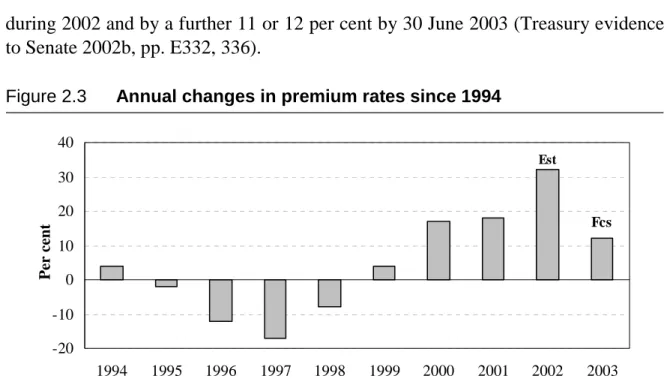
Overlaying these developments, competition between domestic insurers during the mid to late 1990s meant that, while costs were increasing, real premium rates reduced steadily. As a result, many insurers experienced financial losses from this class of insurance. The average return to insurers for public and product liability insurance has been negative in recent years and the Australian Competition and Consumer Commission (ACCC) regards the outlook for rates of return for this class of insurance to be low (ACCC 2002b, p. vii).
The movement of most classes of insurance into the ‘hard market’ part of the insurance cycle in the past two years has also influenced availability and premiums (see section 2.1). (A hard market relates to higher premium rates and stricter conditions for underwriting risk, both in the direct market and the reinsurance market.) Traditionally, in this part of the cycle, insurers are cautious about growth opportunities, adopting a more conservative attitude to accepting risk and a greater focus on profitability. New capital adequacy requirements that were introduced from 1 July 2002 by the insurance regulator, the Australian Prudential Regulation Authority (APRA), and a decline in investment earnings as a result of a fall in the sharemarket, have placed further pressures on insurers.
The situation in Australia is not without precedent. For example, during the first half of the 1980s, the cost of all types of liability claims in the United States of America increased at rates exceeding 10 per cent per annum (Trowbridge 2002a, p. 74). As this was not recognised by insurers for several years, premiums remained
INTRODUCTION 3
flat or in some instances declined. In 1985 and 1986, massive increases were made in claim reserves required to be put aside by insurers and in premium rates across the whole industry. Many insurers pulled out of the market and many customers could not obtain insurance at all, including some schools, hospitals, doctors, accountants, governments and corporations. Similarly, Canada experienced problems with liability insurance in the mid 1980s, leading to the establishment of mutual insurance pools for municipal authorities (Trowbridge 2002b, p. 54).
Adjustment to changes in public liability market conditions can be slower than for many other insurance markets. In large part, this is because liability insurance is so-called ‘long tail’ business where there is often a lengthy time period between both the injury and the claim, and the claim and settlement. It can take many years after a policy is written to determine the final result of claims originating in any year. Further, claims can be made many years after a policy has expired. This creates uncertainty for liability insurers who may pay a claim based on a premium charged years before.
These matters are discussed in this report to the extent that they impinge on claims management practices.
1.2
The reference
The Commission’s study focuses on only one aspect of public liability, namely the claims management practices of Australian insurers. Specifically, it was asked to benchmark Australian insurers’ claims management practices against world standards. In doing so, it was required to take account of a range of issues, including such matters as the cost of claims management relative to payouts, the cost of litigation, the impact of differences in state legal processes and the time taken to finalise claims. The Commission was also asked to take account of recent studies, including those by Trowbridge (2002a, 2002b), which was engaged to assist the Insurance Issues Working Group of Heads of Treasuries formed to support the Ministerial meetings held during the first half of 2002.
The terms of reference are at page III. The Commission was asked to report by 31 December 2002 and this report is to be published.
1.3
Related inquiries
The Commission’s study is limited and should be seen in the context of a number of related actions and inquiries set in train to address public and government concerns.
• The Senate Economics References Committee conducted an inquiry into the impact of public liability and professional indemnity insurance cost increases on small business, community and sporting organisations. The inquiry was to have regard to the cost of such insurance, reasons for the increase in premiums and schemes, arrangements or reforms that can reduce the cost of such insurance and/or better calculate and pool risk. The Committee reported on 22 October 2002 (Senate 2002d).
• A panel chaired by the Hon. Justice David Ipp, Acting Judge of Appeal, Supreme Court of New South Wales reported in August (Ipp 2002a) and September (Ipp 2002b) following its examination of the law of negligence, including its interactions with the Trade Practices Act 1974. The review also considered the liability of public authorities, and joint and several liability.
• The ACCC reported to Government in March 2002 on recent changes in the insurance market and specifically on the upward movement of insurance premiums, including public liability insurance premiums (ACCC 2002a). Subsequently, the Commonwealth asked the ACCC to update this report, and to monitor general insurance premiums on a six-monthly basis over the next two years, to ensure that savings that result from reform measures are passed through to consumers in the form of lower premiums. The second ACCC report was released in September 2002 (ACCC 2002b).
1.4
The Commission’s approach
Benchmarking claims management
Claims management encompasses a range of operations from the receipt and registration of the claim, to the investigation of the circumstances of the claim and the setting of reserves, to negotiation about liability and the extent of the injured party’s loss, through to settlement.
Benchmarking involves making systematic comparisons between firms, both domestically and with overseas firms, of procedures and outcomes. It aims to shift an organisation towards ‘best practice’ by drawing together information that illustrates how the firm compares with its peers, in order to pinpoint areas where improvement is possible. A variety of areas of business can be benchmarked, including business strategy, processes and products.
Firms undertake benchmarking as part of their search for better ways of operating in a competitive business environment. The nature of the benchmarking they
INTRODUCTION 5
undertake can vary from simple ad hoc observations of other firms to complex comparisons of processes and outcomes with specifically chosen firms (figure 1.1).
Figure 1.1 Levels of benchmarking
• Ad-hoc observation of competitors
• Comparison against budget or last year’s performance
• Comparison between various sites of the firm (domestic and offshore)
• Detailed comparison against parent, associates and competitors in similar industries
• Detailed comparison of processes and outcomes against world’s best, both in and out of the industry
Simple
Complex
Source: AMC (1994, p. 43).
For public policy purposes, benchmarking is commonly undertaken of public infrastructure and utilities, such as electricity distributors, water supply authorities, ports and airports. Typically, it involves detailed inter-firm comparisons of processes and/or costs between operators in different jurisdictions, domestic and overseas. Such comparisons work best when they involve firms that operate in broadly similar ways, using similar inputs to produce a similar range of outputs. The use of benchmarking is, however, more problematic where heterogeneous goods or services are produced as it is difficult to make useful like-with-like comparisons. Public liability claims management falls into this category, as the types of claims incurred and the circumstances under which they are managed differ substantially between insurers (see chapters 2 and 4). Those differences directly affect the manner and cost of managing claims. In addition, the legal and regulatory environments applying in Australian jurisdictions differ somewhat from each other and, more significantly, from those applying in common law based jurisdictions overseas.
Consequently, there is little scope for industry-level benchmarking. Participants took the same view, telling the Commission that there is no ‘world’s best practice’ against which the Australian industry could be benchmarked. According to local insurers, best practice for one claim may not be best practice for another — it depends on the individual circumstances of each claim and the environment in
which it is incurred. Indeed, differences observed in practice between two insurers could simply represent efficient ways of managing the different ‘parcels’ of claims each handles. Even within an insurer, there can be no best practice applicable to all claims. Different types of claims are best handled in different ways, and each insurer has to develop its own set of best practices (see chapter 4).
This does not mean that inter-firm comparisons of procedures and outcomes are not useful for insurers seeking to improve particular aspects of their internal processes and practices. Such comparisons may allow an insurer to take and adapt processes it observes elsewhere to its own benefit. But it does mean that detailed benchmarking of one insurer against another for matters of current public concern such as how long it takes to settle a claim, the average size of payouts or the proportion of cases that go to court, can have little normative significance for public policy purposes.
The Commission has not been able to carry out the traditional type of benchmarking analysis it has previously undertaken of economic infrastructure. The heterogeneous nature of the public liability insurance market and procedures for claims management limit the scope for making policy-relevant, like-with-like comparisons between Australian insurers. Differences in institutional arrangements and regulatory regimes create additional difficulties for international comparisons.
Nevertheless, because of concerns about the cost and availability of public liability insurance, it is apparent that the community is seeking some assurance that public liability insurers are handling claims efficiently, particularly given that the industry stands to benefit from current and proposed legislative changes. The Commission has sought to address this underlying concern more directly. It has reviewed the processes by which claims are managed, to identify what many in claims management considered to be best practice for different types of claims, and has looked at the incentives which the industry has to manage claims in the most efficient and cost-effective manner.
Conduct of the study
On receipt of the terms of reference, the Commission advised interested parties by letter seeking their input into the matters raised in the reference. Wherever possible, material that was already available was used to aid in its analysis. As there is a lack of comprehensive and reliable data about the industry, the Commission has relied heavily on survey data obtained by Trowbridge, the work done by the ACCC and on submissions prepared for the various other studies and inquiries mentioned in section 1.3.
INTRODUCTION 7
In attempting to understand what constituted best practice in claims management for Australian insurers, the Commission met with a range of individuals and organisations with knowledge of and experience with public liability claims management, including insurers, reinsurers, brokers, specialist claims managers, self insurers, plaintiff and defence lawyers, insured parties and professional organisations involved in the industry (see appendix A).
Through structured interviews with the six leading insurers in the Australian market, the Commission sought qualitative evidence and data on current claims management practices in public liability. While the discussions were helpful, attempts to gather quantitative data from the insurers were only moderately successful. The difficulties posed by the fallout from the HIH collapse, multiple computer systems within insurers and inconsistencies across time as a result of merger activity severely limited the collection of meaningful data.
Indeed, as noted in later chapters, much of the data provided to the Ministerial meetings and used in the broader public debate on public liability insurance is imprecise and at times impressionistic.
On 18 November 2002, the Commission held a roundtable in Sydney to obtain feedback on a draft working paper outlining some preliminary findings.
The Commission records its thanks to all those who contributed to this research project and provided feedback on the Commission’s work.
1.5
Structure of the report
The remainder of the report is structured as follows:
• Chapter 2 outlines what public liability insurance is and how it is provided, gives some indication of recent public liability insurance activity and summarises Commonwealth and State responsibilities and powers in this area.
• Chapter 3 deals with the public liability industry structure and market, and examines the competitiveness of the industry.
• Claims management practices, and views of best practice in this area, are discussed in chapter 4.
• Chapter 5 explores the importance of legal costs in managing claims, provides some indication of the impact of litigation and court processes on claims costs and outlines some differences between jurisdictions.
PUBLIC LIABILITY INSURANCE
9
2
Public liability insurance
Public liability insurance protects individuals, businesses and organisations against the financial risk of legal liability to third parties for death or injury, loss or damage to property, or ‘pure economic’ loss in areas not specifically excluded or covered by statutory schemes (workers’ compensation and motor vehicle compulsory third party (CTP)), professional indemnity and product liability.
Within the public liability insurance industry there are a number of players, including insurers, claims management firms, reinsurers and brokers. Each is involved in claims management to a greater or lesser extent. The amount of self insurance in the market is increasing, as insurers reconsider the risks they underwrite, the premiums they charge and the level of deductibles they require.
Although the data have some limitations, it appears that the frequency of public liability claims has been steady, but that the average size of claim has increased, particularly for bodily injury claims.
Liability for personal injury or property damage can arise in many contexts, including in the workplace, in respect of a matter covered by a contract, or as a result of a motor vehicle or other accident. Various types of liability insurance are available to reduce the exposure of organisations and individuals to such risks. Public liability insurance is commonly taken out by owners and operators of a wide range of commercial and non-commercial activities, including homes and businesses, shopping malls, swimming pools, surf lifesaving clubs and local carnivals. In some cases, public liability insurance is required by law before a business can operate or a service be provided (ACCC 2002b, p. 44).
Public liability insurance protects individuals, businesses or organisations against the financial risk of being found liable to a third party for death or injury, loss or damage of property, or ‘pure economic’ loss resulting from negligence by the
insured. However, public liability insurance policies exclude many areas of potential liability,1 such as those covered by:
• motor vehicle insurance (third party cover is compulsory under state and
territory legislation);
• workers’ compensation insurance (compulsory under state/territory legislation);
• medical and other professional indemnity insurance (for professional services
offered by the insured); and
• product liability insurance (for losses attributable to products manufactured or
sold by the insured).
These four areas account for most of the personal injury litigation in Australia: Nearly all personal injury litigation arises out of motor vehicle collisions, industrial accidents, product defects and professional malpractice, where the usual cause of action is negligence, and the damages are paid by an insurer or corporate employer. (Luntz 2002, p. 4)
Compulsory third party and workers’ compensation schemes are often termed ‘statutory’ schemes because insurance is compulsory under legislation, and such matters as benefit entitlements and how claims are handled are defined by statute. Benefits under those two schemes comprise a mix of common law entitlements and statutory benefits. In contrast, public liability claims are handled primarily under common law processes, with the background of court judgments as to heads of damages and payout amounts.
This chapter looks at what is covered by public liability insurance arrangements, provides some indication of recent public liability insurance activity and summarises the regulatory roles of the Commonwealth, State and Territory Governments. As such, it provides background information for subsequent chapters.
2.1
What is public liability insurance?
Insurance as a pooling of individual risks
As with other kinds of insurance, the principle underpinning the offer and pricing of public liability insurance is that of transferring the potential costs of individual risks
1 Public liability policies are typically open-ended, in that they cover all liability in respect of a particular activity or location, other than circumstances specifically excluded by the policy. Policies are generally limited by exclusions, rather than by listing what is included.
PUBLIC LIABILITY INSURANCE
11
for a certain fee, and the pooling of premiums to meet individual events as they occur:
Insurance is the gathering of a pool by way of premiums to meet claims/liabilities that might arise. People and organisations that wish to protect their property and liability subscribe to the fund. The premium pool must have sufficient funds to meet claims that arise along with the insurers’ operational expenses and profit requirements. Depending on the number of claims and their quantum amount, premiums are set. (ICA 2002b, p. 1)
A key element is that the policyholder (the insured) is able to transfer to others much of the financial risk which is necessarily present in all activities that it would otherwise face alone:
Without insurance, the risk of an adverse event may not be affordable to individuals or groups, and so some economic and social activities may not take place. (Treasury 2002, p. 1)
In the case of public liability, the risk arises from the application of the common law tort2 of negligence, under which legal liability can arise if a member of the public suffers personal injury or property damage that is attributed to the insured. Risks may vary from a largely predictable number of, for example, ‘frequency’ events (such as ‘slip and trip’ accidents in a supermarket) to the highly unpredictable, such as claims arising from a major accident.
As noted in chapter 1, the insurer may subsequently transfer some of the financial risk it carries via reinsurance.
Determining liability
While ‘strict liability’ can be specified under contracts, or is required by laws such as those covering occupational health and safety or consumer protection, a public liability claim usually seeks financial compensation by arguing that the injury or loss sustained arose because of a breach of the ‘duty of care’ owed to the third party by the insured.
To succeed, an injured party needs to demonstrate: • the existence of a duty of care;
• a breach of that duty; and
• material damage as a consequence of the breach of duty.
The existence and scope of duty of care is a matter determined by the courts applying common law principles. The Law Council of Australia said that:
… broadly, negligence requires someone who has a duty of care to take reasonable care to protect against forseeable harm. What is reasonable is decided on balancing the likelihood and severity of an injury that may occur on the one hand, and the cost and inconvenience of obviating that risk on the other hand. (2002a, pp. 25–6)
Some states have recently passed legislation dealing with some aspects of public liability claims, including payouts and processes. But this aside, there is little legislative guidance as to how liability is to be judged and compensation determined:
Claims are dealt with under ‘common law’ principles established through a long history of case law and, if litigated, are made by way of civil actions in the relevant jurisdiction. (Trowbridge 2002a, p. 3)
Consequently, the extent of damages and the matters considered in arriving at that estimate are also matters for the courts. The general principle upon which the courts operate is that:
… the damages to be recovered are in money terms no more and no less than the plaintiff’s actual loss. (Luntz 2002, p. 4)
However, while the principle is widely accepted, there can be considerable difficulty in practice in deciding the quantum of damages (see Luntz 2002). For example, following the 1997 High Court decision in Griffiths v Kerkemeyer, the heads of damages for public liability were expanded to include payments for personal care by relatives. Over time, payouts have also been affected by such developments as the introduction of compulsory superannuation in 1993, increased life expectancies leading to higher awards for future care and the greater number of persons involved in high risk activities (Cumpston Sarjeant 2002, p. 6).
Liability does not have to be proven in court and, in practice, few public liability claims are resolved this way (chapter 5). Most are settled by negotiation and agreement, with or without the involvement of legal representatives, without resort to court determination (Trowbridge 2002a, p. 2). Nevertheless, court decisions provide the parameters within which negotiations take place and settlements are reached.
Pricing public liability risk: the ‘long tail’
Public liability insurance is often referred to as ‘long-tail’ insurance, as many years may pass between the period for which cover was provided and the date at which
PUBLIC LIABILITY INSURANCE
13
claims arising from incidents during that period are finally settled.3 The delay may occur because, for example, injured people may wait until their injury stabilises before making a claim. Upon receipt of a claim, the insurance firm must then investigate the claim, negotiate with the client and perhaps seek an outcome through the legal system.
Depending on statutes of limitations, which vary by jurisdiction, claims can be made for some years after an accident, even if the policy has expired. For example, the Insurance Council of Australia said:
If a child of one year of age in NSW was injured, legal action could be commenced some 25 years after a policy has expired. There is no need to commence legal action until 18 years of age and the Statute of Limitations of 3 years applies. A further extension of 5 years may also be granted. (ICA 2002b, p. 4)
Trowbridge noted that:
It takes three to five years before a reasonably accurate estimate can be made of the cost of claims from a given year of insurance. (2002a, p. 3)
In contrast, most claims for damage to motor vehicles or homes tend to be made in the year for which cover is provided. This simplifies the estimation of the loss parameters.
Public liability risks may also be ‘fat tailed’:
… in the sense that the probability of very high pay-out events is large relative to the probability of such events in the case of other insured risks. (ACCC 2002b, p. xii)
Thus, while the likely number, size and nature of claims are central to the setting of public liability premiums, insurers find it difficult to predict how big future public liability claims might be. And, over time, injuries, claims information and the legal environment can change. As the Insurance Australia Group observed:
… a policy written today is not priced on the basis of the current cost of claims but on an estimate of claims costs when claims under that policy will, on average, be paid out. … Premiums are therefore based on the expected growth of average claims costs over the average duration of the claim, and then discounted for the expected investment earnings on claim reserves over that period. Under-pricing (and potentially over-pricing) occurs when these estimates prove to be seriously inaccurate. (2002, pp. 1–2)
Consequently, setting the ‘right’ premium is difficult at the best of times. The Institute of Actuaries said:
3 Other forms of long-tail insurance include medical indemnity insurance, workers’ compensation and CTP.