University of Massachusetts Boston
ScholarWorks at UMass Boston
Graduate Doctoral Dissertations Doctoral Dissertations and Masters Theses
6-1-2013
Experiences of Latina First Generation College
Students: Exploring Resources Supporting the
Balancing of Academic Pursuits and Family Life
Hercilia B. Corona-OrdoñezUniversity of Massachusetts Boston
Follow this and additional works at:https://scholarworks.umb.edu/doctoral_dissertations Part of theClinical Psychology Commons, and theEducation Policy Commons
This Open Access Dissertation is brought to you for free and open access by the Doctoral Dissertations and Masters Theses at ScholarWorks at UMass Boston. It has been accepted for inclusion in Graduate Doctoral Dissertations by an authorized administrator of ScholarWorks at UMass Boston. For more information, please [email protected].
Recommended Citation
Corona-Ordoñez, Hercilia B., "Experiences of Latina First Generation College Students: Exploring Resources Supporting the Balancing of Academic Pursuits and Family Life" (2013).Graduate Doctoral Dissertations. 108.
EXPERIENCES OF LATINA FIRST GENERATION COLLEGE STUDENTS: EXPLORING RESOURCES SUPPORTING THE BALANCING OF ACADEMIC
PURSUITS AND FAMILY LIFE
A Dissertation Presented by
HERCILIA B. CORONA-ORDOÑEZ
Submitted to the Office of Graduate Studies, University of Massachusetts Boston,
in partial fulfillment of the requirements for the degree of
DOCTOR OF PHILOSOPHY
June 2013
2013 by Hercilia B. Corona-Ordoñez All rights reserved
EXPERIENCES OF LATINA FIRST GENERATION COLLEGE STUDENTS: EXPLORING RESOURCES SUPPORTING THE BALANCING OF ACADEMIC
PURSUITS AND FAMILY LIFE
A Dissertation Presented
by
HERCILIA B. CORONA-ORDOÑEZ
Approved as to style and content by:
____________________________________________________________ Ester R. Shapiro, Associate Professor
Chairperson of Committee
____________________________________________________________ Laurel Wainwright, Senior Lecturer
Member
____________________________________________________________ Melissa Pearrow, Associate Professor
Member
_________________________________________ Alice S. Carter, Program Director
Clinical Psychology Program
_________________________________________ Jane Adams, Professor and Chairperson Psychology Department
ABSTRACT
EXPERIENCES OF LATINA FIRST GENERATION COLLEGE STUDENTS: EXPLORING RESOURCES SUPPORTING THE BALANCING
OF ACADEMIC PURSUITS AND FAMILY LIFE
Hercilia B. Corona-Ordoñez, M.A., University of Massachusetts Boston
Directed by Professor Ester Shapiro
This study used a qualitative interview approach and thematic analysis (Braune and Clark, 2006) to interview first generation college student Latinas, exploring their experiences with higher education, their navigation/negotiation of resources for academic success and for wellness of self and family, and barriers they face as they attempt to both safeguard self and family wellness and reach their academic goals. It also directly
explored the potential resources participants would find useful and ways in which colleges/universities might support them in these pursuits.
With this method, this study identified 6 major themes in the lives of first generation college student Latinas: 1) Contextual stressors / systemic disadvantage, involving the tendency for participants to be at a disadvantage within higher education than mainstream society, including participant’s being the targets of racism/negative stereotypes, complications related to documentation concerns, their need to navigate the college environment without a map, their family's limited understanding of higher education, their need to carry a heavy work load, and their need to attend to family obligations; 2) education as an obligation to family-motivation, involving participant's tendency to think of a college education as the passport to family socioeconomic mobility
and wellness, as a way to repay their parents for their sacrifices, and as a way to complete a goal their mothers started but were unable to finish; 3) the chosen one/to be a role model- motivation, involving the tendency for participants to hold a sense of
responsibility to live up to high expectations as the first in their families to enter college, to break negative stereotypes about Latinas and higher education, and to serve as positive role models to their family, community, and their own children; 4) Children, present and future, involving the tendency for participants with parental obligations to place these obligations above all else and to identify their children as a principal source of
motivation, and the tendency for participants to postpone having children until after they achieve their academic goals; 5) impact of important encounters, involving participants' tendency to identify positive and negative encounters they experienced as important in their development and in the balancing of family and educational goals, to identify the importance of influences of external cultures in their educational trajectory, and to voice a need for mentorship in higher education; and 6) inner strengths and goals, involving the tendency for participants to turn to their faith for spiritual support and turn to their church for social support and as a source of trustworthy help, and identify personal qualities they experienced as sources of strength, including Paciencia (patience), Perseverancia (perseverance), orgullo (Pride), rebeldia (rebelliousness/defiance), and sacrificio (ability to sacrifice). These conclusions highlight the ways that, for the Latinas interviewed, education is thought of in intergenerational terms, where there are legacies of the past and future. Participants expressed an understanding of what they owe their families, and also consider what they will be able to offer their children and how they might contribute to their family’s future.
DEDICATION
This thesis is dedicated to my husband, Sergio, and to our son, Santiago. Sergio unwaveringly supported me in pursuing my education—seeing potential in me that no
one else did. I will forever be grateful. Santiago accompanied me through this thesis, learning too soon how to share me with this work. You are both my inspiration.
TABLE OF CONTENTS
DEDICATION ... vii
LIST OF FIGURES & TABLES ... ix
CHAPTER Page 1: INTRODUCTION ... 1
Specific Aims ... 1
Background and Significance ... 3
Focus on the special experience of Latino Women ... 4
Latina First Generation College Students ... 10
Massachusetts Educational Climate for Latinas ... 15
From Deficits to Cultural Strengths: Models and Methods Exploring Resources for Educational Resilience and Wellness ... 17
2: METHODS AND PROCEDURES ... 26
Recruitment Procedures ... 26
Incentives ... 27
Participants ... 27
Procedure ... 27
Informed consent and participant protection ... 27
Interview Procedure ... 28
Post-interview Procedure ... 31
Data Analysis Procedures ... 32
3: RESULTS ... 38
Overview of Major Themes ... 42
Summary of Themes: ... 116
4: DISCUSSION ... 119
Recommendations ... 123
APPENDIX 1. RECRUITMENT MATERIALS ... 127
2: SAMPLE INTERVIEW QUESTIONS ... 128
3: PERSONAL BACKGROUND INFORMATION FORM ... 130
4: INFORMED CONSENT FORM/UMB INSITUTIONAL REVIEW BOARD... 131
LIST OF FIGURES & TABLES
Figure Page
1: Guiding Initial Questions ... 30 2: Major Themes and Dimensions of Themes ... 44
Table Page
CHAPTER 1 INTRODUCTION
Specific Aims
The study used in-depth interviews and thematic analysis to explore the experiences of Latina first generation college students with higher education, their navigation/negotiation of resources for academic success and for wellness of self and family, and the barriers participants face as they attempt to both safeguard self and family wellness and reach their academic goals. It also directly explored the potential resources participants would find useful and ways in which colleges/universities might support them in these pursuits.
This study adopted sociopolitically informed cultural and ecosystemic models, along with participatory methods, with the goal of documenting the voices of an
ordinarily understudied community of women, and bringing these voices to the scientific community’s knowledge base (Dalton, Elias & Wandersman, 2001). This guiding
ecosystemic framework highlights the influence of unequal exposure to stressors and unequal barriers to resources, interacting in multiple systems, on both adaptive and maladaptive outcomes (Perreira et al, 2006; Prilleltensky, 2012; Prilletensky and Prilleltensky, 2003, 2006; and Shapiro, 2005, 2008). Through in-depth interviews, this project documented the experiences of Latina first generation college students in their
meaning these experiences have for them, and their strategies for successfully navigating educational and family worlds. Consistent with Dill and Zambrana’s work in
intersectionality (Dill & Zambrana, 2009; Zambrana & Dill, 2006; Zambrana & MacDonald 2009), the study addressed the need to explore the variation in the lived experience of women of color, examining intersections of race, ethnicity, culture, socioeconomic status, immigration history, documentation status, and gender,
reformulating familiar thinking about Latina’s experiences in higher education. Differing from previous studies exploring Latina educational achievement, this study considered first generation college student Latina’s experiences in higher education, their exposure to stressors and access and use of resources as they impact their educational pursuits and family obligations simultaneously. This approach conceptualized stressors and resources as impacting these women’s ability to successfully balance/negotiate these two important life domains. Further, through thematic analysis, this study highlighted coping themes, and specific resources needed at the college/university level to support these women in successfully balancing family obligations and educational aspirations for their academic success.
Aim 1 : To document the narratives of Latina first generation college students’ gendered experiences with balancing family and educational aspirations.
Aim 2 : To explore participants’ navigation/negotiation of resources for balancing academic pursuits and the safekeeping of self and family wellness.
Aim 3 : To document the barriers these women face and the resources/supports they turn to as they attempt to balance safeguarding wellness of self and family and reaching their academic goals.
Aim 4: To explore potential resources that these women would find useful and ways in which colleges/universities might support these students in their attempt to simultaneously reach their academic goals and fulfill their family obligations. Background and Significance
Latinos, representative of a heterogeneous group diverse in both ethnic and racial make-up, are rapidly changing the ethnic composition of the United States. They have replaced African Americans as the largest racial/ethnic minority group, constituting 16% of the U.S. population with a population of 50.5 million people, and accounting for more than half of the growth in the total US population between the years 2000 and 2010 (U.S. Census Bureau, 2010). This demographic trend is expected to continue burgeoning as Latinos are also the fastest growing racial/ethnic group in the United States, projected to constitute 20.1% of the U.S. population by 2030 and 30% by 2050 (U.S. Census Bureau, 2008).
Latino’s enrollment in higher education also continues to grow. Latinos represented 11% of students enrolled in higher education in 1990, experienced a 30% increase in enrollment between the years 2000 and 2005, a 24% increase between 2009 and 2010, and a 15% increase from 2010 to 2011 alone. With this marked increase, Latinos accounted for almost 75% of the growth in college student enrollments between 2010 and 2011 (Fry & Lopez 2012; Fry, 2011; National Center for Education Statistics (NCES), 2007b). The increase experienced between 2010 and 2011 also make Latinos the largest group of ethnic minorities in higher education, for the first time replacing Black students. Also for the first time, Latino’s representation in higher education matches their representation in the overall population, as they now make up 16.5% of the nation’s
18-2006 Latinos accounted for only 11% of 18-24 year old college students. This shift in college enrollment follows record breaking numbers of young Latino students eligible for college, with similar growth experienced in high school completion (Fry & Lopez 2012; Swanson, 2012).
Given this marked increase in Latino’s college enrollment, Latino’s unfavorable completion rates are alarming. One longitudinal study found that over 80% of Latinos who enrolled in a 4 year college or university left before receiving their degree (Solberg, Scott & Villareal, 1997). Less than 10% of Latinos graduated from a 4 year college or university in the year 2000 (Solorzano & Yosso, 2000), and only 8.3% of bachelor’s degrees awarded in 2009 were awarded to Latinos, compared to 9.8% awarded to African Americans and 73.8% awarded to white students (College Board Advocacy and Polidy Center, 2011). This figure has only slightly improved to 9% of bachelor degrees awarded to Latino students in 2010, compared to 71% awarded to non-Hispanic Whites, 10% to non-Hispanic Blacks and 7% to non-Hispanic Asian/Pacific Islanders (Snyder & Dillow, 2012). In fact, in 2009 the proportion of Latinos graduating from colleges and
universities had not improved since 1990, unlike improved completion rates for both European Americans and Black Americans (Gloria, 2009). Similarly, recent reports suggest that Latino college completion stands at 19.2%, compared to the national average of 41.1% (College Board Advocacy & Policy Center, 2011). These alarming statistics draw attention to a system that has fallen short of meeting the needs of this growing population.
Of Latinos, women have increased in their representation in higher education more rapidly than their male Latino counterparts, accounting for 60% of all Latinos in higher education (Fry & Lopez 2012; NCES, 2006). Women have also been repeatedly identified as carrying a disproportionate burden when it comes to family wellbeing, “bearing a greater responsibility for the care of others with fewer resources throughout the life cycle” (Shapiro, & Santa, 2005). They are usually not only responsible for their own wellness needs, but are also the ones primarily responsible for fulfilling these wellness needs for their children and family (Chavira-Prado, 1992; Sy & Romero, 2008). In addition, Latina students often experience conflicts around familial expectations and gender-roles, as traditionally the primary expectation for women is getting married and having children (Villarruel, Carlo, Grau, Azmitia, Cabrera, & Chahin, 2009 & Hurtado, Saenz, Santos & Cabrera, 2008). In fact, recent research has identified these culturally driven gender role conflicts as contributors to Latinas’ increased risk for suicide attempts, where one in five Latinas attempts suicide, double the rate than African American and White peers (Zayas, Lester, Cabassa, and Fortuna, 2005). Yet feminist Latina
perspectives also suggest that the confrontation and creative resolution of these gendered cultural complexities can result in distinctive strengths that have also been underexplored in the social science literature (Gloria and Castellanos, 2012).
Gender based expectations and obligations experienced by Latinas are often described in the psychology and educational literature through the important cultural constructs of Familismo and Marianismo. Familismo refers to the importance of "solidarity towards members of the family, as well as the notion of the family as an extension of self" (Calzada et al, 2012; Cortes, 1995, Villarruel, et al., 2009). While
family cohesion can serve as a resource, family conflict seems to undermine familismo’s protective qualities (Calzada et al, 2012; Smokowski et.al., 2007). The related construct of Marianismo, a counterpart to stereotyped male gender roles of “machismo”, describes a set of cultural norms that dictate the role of females within traditional Latino culture. Marianismo is said to hold up Latinas to the standard of the Virgin Mary, in Catholic tradition (Rivera-Marano, 2000). It encompasses the concepts of sacrifice and self-renouncement, sacred duty to family, passivity, honor, sexual morality, caretaking and the Latina’s role as a mother (Rivera-Marano, 2000; Cofresi, 2002). Marianismo’s call for Latina women to sacrifice their personal goals and aspirations for the benefit of their family, to place marrying and having children as a priority, to not “become an old maid”, and to unwaveringly ensure the wellbeing of their families. Recent work on marianismo emphasizes the diversity and complexity of Latina experiences depending on immigration and acculturation status, religious background, sexual preferences, education and other factors. However, even for more acculturated Latinas, the literature suggests that these cultural constructs continue to influence gendered cultural expectations and potentially to impact their experiences within higher education (Gil & Vasquez, 1996; Cofresi, 2002 & Villarruel, et al., 2009).
Related to these important cultural constructs, research exploring the experience of undocumented Mexican immigrant undergraduates found that Latina students
experience the negotiation of gender roles with their parents as a stressor (Muñoz, 2008). Additional stressors include home environments where Latina students are expected to care for younger children (Olverez, 2006), exposure to violence near their homes and schools, and attending under-resourced schools where 4-year-college going rates were
less than 10% (Abrego, 2006). Not surprisingly, Latina undergraduates have repeatedly been found to endorse significantly higher distress levels than their male counterparts (Gandara & Osugi, 2004 & Perez, 2009). This research begins to make clear that although Latinas have increased their college enrollment rates more rapidly than Latino males, they also face substantial stressors and demands.
Key psychosociocultural stressors that have emerged in the research literature as important in the experience of Latina college students can be organized into three areas of concern: cultural incongruity, institutional marginalization, and documentation-related concerns. At the heart of cultural incongruity concerns lay Latina’s cultural values consistent with both Familismo and Marianismo (Zayas, L., Gulbas, L., Fedoravicius, N. & Cabassa, L., 2010). These cultural value sets often leave Latina college students with the challenge of negotiating the inherent cultural incongruity between a university’s values, based on European-American male values, and their own personal culturally-influenced values (Gloria & Rodriguez, 2000). While many Latinas value collectivism, cooperation, and family ties (Santiago-Rivera et al., 2002), they must negotiate this value set with the contrasting values of academia that reward competition and individualism (Gloria & Castellanos, 2003; Torres, 2001). This divergence in values has been shown to have a negative impact on Latina’s wellbeing and academic achievement. The stress associated with this conflict promotes feelings of alienation, despondence and isolation for Latina students. It has also been linked to academic non-persistence (Gloria,
Castellanos, Lopez & Rosales, 2005; Gloria, 1997).
While Latinas work towards integrating their personal values with those of academia they are often faced with an additional challenge, feelings of marginalization.
Key characteristics that unify Latinas are often devalued both in university settings and society as a whole. These include: their ethnicity, race, gender, socioeconomic status, bilingualism, biculturalism, the education level of their parents, among others. The specific ways that Latinas experience marginalization within the university setting include experiences with racism, sexism, stereotyping, and a broad misunderstanding of their culture and challenges (Rodriguez, 2000). When entering academia, a
male-dominated world that has been historically European-American, Latinas are bombarded with explicit and subtle messages reminding them that they do not belong, because of their gender, their ethnicity, their socioeconomic status, etc. The intersection of these multiple race--, class--, and gender-based negative messages lead to an experience of “multiple marginality” (Cuadraz, 1996).
Research on the impact of institutional marginalization on Latinos has confirmed that Latinos feel that they don’t belong in the college community (Jones, Castellanos, & Cole, 2002). Studies by Hurtado (1994) and the more recent work of Gonzalez (2002), also found that Latinos felt a general lack of understanding and tolerance of Latino culture on their campus. In Hurtado’s (1994) study, almost 70% of participants endorsed feeling unwelcome because of their culture. This finding is consistent with Cardoza’s (1991) study with Latinas, which found that students felt that their institution discounted culture, which resulted in their feeling unwelcomed and alienated. In a review of Latino student educational experiences, Hurtado, Cervantes and Eccleston (2010) emphasize the importance of seeing linguistic and cultural diversity as educational strengths and sources of success rather than deficits and reasons for exclusion.
Latinas’ academic performance and their wellbeing. For Latina students, especially, stereotype-driven low expectations and antagonistic attitudes within a university setting can serve to trigger existing insecurities regarding their academic preparation (Rodriguez, 2000)—sabotaging Latina’s chances for academic success. The alienation resulting from institutional marginalization can also grow into feelings of loneliness, depression, anxiety, and even suicidal behavior (Castillo et al, 2004).
For a subgroup of Latina students, documentation concerns intensify feelings of alienation. The recent Presidential Executive decree that undocumented young people (up to age 32) brought to the United States by their parents and enrolled in college or the army would qualify for deferred deportation has brought attention to this population of students. Pew Hispanic Center (2012) estimates that as many as 1.7 million young Latinos qualify for this category. Further, an additional Latino subgroup, citizen children of undocumented parents, experiences significant barriers to accessing social resources (Suarez-Orozco et al, 2011). Some states, including Florida and New Jersey, require that students confirm their parent’s legal documentation status before they can qualify for in-state college tuition. Undocumented students, or students with undocumented loved ones, live in constant fear of being discovered. Recent research indicates that over half of all Latinos live in fear that someone close to them could be deported (NCLR, 2010).
The tendency for young adults to learn about their undocumented status for the first time as they transition to adulthood can have a profound impact on young Latina’s life trajectory, where many are faced with having to manage what Gonzales (2011) calls “learning to be illegal”. This critical transition has been identified as a period of increased distress, as young adults begin to understand new limitations in the context of secrecy
and fear. This transition also places many undocumented young adults at risk of not only being deported but also becoming involved with the justice system as they are forced to make decisions like obtaining false driver’s licenses and social security numbers (Suarez-Orozco, Yoshikawa, Teranishi & Suarez-(Suarez-Orozco, 2011). Learning of these new
limitations undoubtedly has an impact on Latina’s academic and professional aspirations. In a recent study, Gonzalez (2011) interviewed 150 undocumented Mexican immigrants and explored what he conceptualizes as three transitional periods, discovery of status, “learning to be illegal”, and coping. He found that while some of the participants of his study lowered their goals after learning of documentation related limitations, others where able to access resources to overcome the barriers created by their documentation status. Abrego’s (2006) study of undocumented Latino adolescents similarly found that some students reported lowering their aspirations and a drop in their motivation and academic performance after learning about their legal status. These students described fearing that their documentation status would lead to undesirable jobs and limited options, regardless of their academic efforts. Previous research exploring undocumented students’ college experiences has also highlighted worrisome emotional concerns of undocumented Latino college students, including: fear, loneliness, isolation, depression, frustration, helplessness, and shame (Dozier, 1993; DeLeon, 2005 & Muñoz, 2008, in Perez, 2009).
Latina First Generation College Students
This study focused specifically on Latina women who are also first generation college students, a group demanding of additional attention. While research confirms that the enrollment of first generation college students has sharply increased since the 1920s,
little has been written on the experiences of these students (Orbe, 2004). Latinos, specifically, are more likely to be first generation college students, with 71% of Latinos enrolled in college during the 2003-2004 school year being the first in their families to strive for a bachelor’s degree (Santiago & Cunningham, 2005). What is more, first generation college students in general are subject to less than favorable educational outcomes—they are more likely to drop out during their first semester, not return for a second year, and have lower first-semester grades than students whose parents have a college education (Orbe, 2004). It should be noted that these patterns do not occur in a vacuum, and are highly impacted by these students’ unique situation, which will be discussed at length in the next section.
Latina first generation college students often face a number of challenges related to being an ethnic minority, women, and the first in their families to enter higher
education. These challenges set the stage for a unique, and disproportionately
burdensome, college experience. Latina’s experience of incongruence, discussed at length above, is further amplified for Latinas who are also the first in their family to enter higher education. Research on first generation college students supports the idea that these students often feel like “outsiders at school as well as at home”, where their constant balance of home and college life leads to “trying to live simultaneously in two vastly different worlds” (Orbe, 2004, Pg. 133). Concerns of institutional marginalization are also amplified for first generation college student Latinas, since first generation college students are always forced to “negotiate issues of marginality—on both ends—as they work to bridge the worlds of their homes/families/neighborhoods and college life” (Orbe, 2004). In addition, this special group of students is often faced with a lack of parental
guidance regarding academic pursuits, a substantial financial burden, familial obligations, and sometimes limitations that are raised by their immigration status.
As the first in their families to enter higher education, these students lack the benefit of having parental experience to serve them as a guide. This puts them at a disadvantage both when preparing to initially enter college and throughout their college experience, when they might benefit from guidance regarding what is expected of them (Orbe, 2004; Riehl, 1994).
Beyond lacking parental guidance regarding academic pursuits, first generation college students, Latinos in particular, are more likely to be impacted by financial difficulty and burdensome workloads. Latinas are negatively impacted by the significant disparities in socioeconomic status still plaguing this minority group, with almost 30% of Latino families living below the poverty line (US Census Bureau, 1997). For Latinas specifically, Young (1992) found that female Mexican American college students reported encountering substantial financial limitations, and needing to take time away from school to work. This is consistent with what we know about the employment patterns of first generation college students in general, who spend twice as much time working than do students with parents who graduated from a university/college (Orbe, 2004).
It is notable that disparities in socioeconomic status begin to negatively impact Latina’s college experiences well before they enter a college/university setting. These socioeconomic conditions give way to the segregation of school aged Latinos within the public school system, where Latinos are often destined to attend poorly financed schools in their neighborhood. In fact, Latinos are the most segregated ethnic/racial group in the
nation (Chapa & Valencia, 1993). This segregation too often leads to an inadequate college preparation that sets Latinos up for difficult transitions even when they are able to beat the odds and access higher education (Rodriguez, Guido-DiBrito, Torres & Talbot, 2000).
Closely related to Latina first generation college students’ disproportionate financial burden, these women are substantially more likely to be directly financially responsible for dependents. Over one third of Latinas attending college during the 2003-2004 school year reported being responsible for a dependent (Santiago, et. al., 2005). Familial obligations do not end here. Young (1992) reported that, as family caregivers, and consistent with the cultural construct of Marianismo, Latinas had constant
disruptions to attend to family matters at home, and were severely limited in the time they could dedicate to study. This is consistent with what we know about women more
generally, who spend dramatically more hours doing unpaid domestic labor than their male counterparts, which creates a situation where Latinas are forced to divide their time and attention across multiple obligations. Some researchers argue that these hours spent in gender-stereotyped roles have a strong and negative impact on educational progress (Chacon, Cohen, & Strover, 1986).
The final special factor impacting Latina’s college experience discussed here is that of immigration status. For undocumented Latinas, their immigration status deeply and negatively impacts their lives, including while they pursue higher education. Undocumented college students report emotional concerns like fear of deportation, loneliness, shame, frustration, helplessness, and depression (Dozier, 1993 & Gonzalez, Plata, Garcia, Torres, & Urrieta, 2003). In addition to emotional distress, immigration
status limits undocumented student’s ability to obtain work, or gain work that is not exploitative. To add to the financial impact of being unauthorized to work, undocumented students also do not qualify for federal financial student aid, private loans or state aid (in most states).
Further, undocumented students are more likely to live in conditions that are not conducive to study. These conditions include living in crowded living quarters and being primarily responsible for the care of younger siblings. Over 60% of students in Oliverez’s (2006) study of Latino college-bound high school students reported living in crowded homes with six people or more, further, about 90% reported living in studio apartments were everyone slept in the same room (Perez, 2009). Being undocumented has also been shown to negatively impact students’ motivation. Some of the undocumented students who participated in Abrego (2006) qualitative study reported a dramatic drop in
motivation and academic performance after learning of their legal status. They described being disillusioned, fearing that even if they excelled in school they would end up with few employment options, and lowering their aspirations.
In a context where research specifically about undocumented Latina/o college students is limited, Contreras’ (2009) conducted a qualitative study consisting of twenty semi-structured interviews with undocumented Latina/o students in the state of
Washington, where the DREAM Act was passed in 2003 allowing undocumented students who met residence requirements to pay in-state tuition. This study aimed to document the experiences and challenges faced by these students in higher education, and to explore the processes by which they pursue higher education and fulfill their academic goals. This study identified five themes:
“(1) the pervasive presence of fear in the lives of undocumented students, for themselves and their families, especially regarding the prospect of separation; (2) the financial difficulty of paying for college with limited access to financial aid; (3) campus experiences that were often discriminatory, as well as exposure to resources and supportive individuals who students could trust to help them navigate college: (4) the will to persist, as seen in the determination to overcome challenges in their personal and academic lives as well as the determination to give back to their communities; and (5) concerns about the future” (Contreras, 2009, pg.9).
Contreras’ (2009) study begins to address the need to include undocumented Latina/o students’ experiences in research and begins to reveal important themes in these experiences.
Massachusetts Educational Climate for Latinas
Given the variability in educational climates across states, this section discusses important issues impacting students in Massachusetts in order to further contextualize the experiences of participants in this study. While Massachusetts’ public school system is often touted as one of the best in the nation, great disparities exist across school districts. As discussed at length in previous sections, Latino students are often destined to attend under-resourced schools within their neighborhoods due to the segregation of school-aged children based on socioeconomic conditions.
In addition to being zoned into poorly financed schools, Latino children who are entering the Massachusetts school system as English learners face additional hardship due to the "English for the Children" initiative, passed during the 2002 elections. Massachusetts was the third state to approve this initiative, following California (1998) and Arizona (2000). The “English for the Children” initiative mandates an all-English structured immersion program, where English learners are limited to one school year in
this program before being required to join mainstream English-only classrooms (rethinking schools organization, 2003; Baker 2006; Basurto, et al., 2006). This
legislation has resulted in anti-child policies that essentially outlaw bilingual education in Massachusetts, taking away children’s right to learn in their native-language (Baker 2006; Basurto, et al., 2006).
On a national level, the federal Elementary and Secondary Education Act (ESEA) includes additional anti-bilingual components that negatively impact bilingual students in all states and serves to further threaten bilingual education in states approving state level referenda, including Massachusetts. Building on public anti-immigrant sentiment, ESEA forces bilingual schools to focus on English over native-language instruction by requiring that English Language Learners (ELL) take standardized tests in English within three years of entering the U.S. school system. Limiting the amount of bilingual education students receive not only leaves them with an insufficient amount of time to achieve academic English proficiency, it limits their ability to master other material by denying equal access to curriculum in student’s native-language.
Together, this context places many Latino students entering the Massachusetts public school system at a great disadvantage, limiting their ability to master academic skills. This context can also help explain the Latino Paradox in education. The “Latino Paradox” (sometimes referred to as the “Immigrant paradox” or the “healthy migrant paradox”) summarizes the tendency for Latino immigrants to demonstrate better than expected outcomes when first arriving in the US, and to suffer from more negative outcomes in health, mental health, and education, the longer they spend in the US. According to this finding, immigrants experience cultural, familial, and institutional
protective factors associated with their spending more time during their individual development in their home country, despite sociodemographic markers otherwise associated with suboptimal outcomes (like lower levels of wealth, employment, and socioeconomic status) (Garcia Coll & Marks, 2012; Comas-Díaz, 2006; Rios-Ellis et al, 2005). In education, Latino immigrant students might benefit from spending more time in their home country before entering the US educational system, in part, because they are able to master material in their native language instead of being forced to attend
mainstream English-only classes before they have achieved academic English
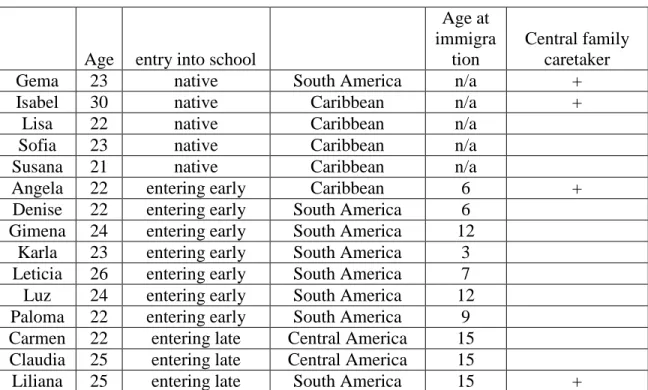
proficiency. Additionally, researchers in the field of education suggest that prolonged exposure to discrimination in the US context and identification with peer cultures engaging in high-risk behaviors and failure to support educational success along with erosion of protective factors such as family cohesion contribute to these findings (Garcia Coll & Marks, 2012; Zambrana, 2011). Given the importance of this contextual variable, participants in this study were mapped according to their point of entry into the US educational system and culture in the demographic table presented in the results section below.
From Deficits to Cultural Strengths: Models and Methods Exploring Resources for Educational Resilience and Wellness
The strategies and resources used by Latinas to cope with the aforementioned psychosociocultural stressors and barriers have also received little attention. What is more, most of the existing literature exploring Latina’s responses suffers from a
preoccupation with decontextualized, individual-level, factors. These include the coping “approaches” taken by students, marital status, number of children, and students’
adherence to gender-roles (Aranda, Castaneda, Pey-Jinan & Sobel, 2001; Castillo & Hill, 2004; Gárcia-Vásquez, Vásquez, & Huang, 1998; Gloria, 2005; Gloria, Castellanos, Lopez, & Rosales, 2005; Gloria, Castellanos & Orozco, 2005; Gloria, 2009). Latina/o students consistently report taking both a planned approach and talking to others about their problems (Mena, et al., 1987; Vásquez & García-Vásquez’s, 1995; Gárcia-Vásquez, Vásquez, & Huang, 1998, Gloria, 2009). The other protective factors can simply be understood as the absence of individual-level risk factors. That is, where being the parent of more children is conceptualized as a risk factor, being the parent of fewerchildren has been reported as a protective factor (Lasher, 2010).
This disproportionate focus on individually based, decontextualized causes for distress and undesirable outcomes has been described as a “person-blame causal
attribution bias in psychological research” (Caplan & Nelson, 1973). This bias results in our tendency to ascribe causal significance to individual-level variables, essentially blaming individuals for their distress, academic failure or difficult situation. By focusing on individual factors, explanations that are situation-centered are overlooked, allowing systemic and structural inequalities to continue unchecked and permitting accountable agencies to escape responsibility.
Much of the existing research is also limited by its reliance on a comparative paradigm that attempts to understand people of color in the U.S. by using a deficit model that focuses on the lower rate at which people of color access higher education when compared to the native-born European-American majority, or differences in educational outcomes comparing first generation college students to students whose parents have a college education. This deficit-driven comparative approach, together with a
person-blame approach, not only fails to bring us closer to contextualizing findings—it
perpetuates racist ideologies. Whaley (2003) makes an excellent point, asking, “what type of individual level intervention should be employed to address “being black” as a risk factor for adverse health outcomes?” The same could be said about Latinos and unwanted educational outcomes. What type of individual level intervention should be employed to address being “Latino/Hispanic” as a risk factor for undesirable educational outcomes? This approach to capturing culturally/racially/ethnically-influenced variability does little to move us towards truly understanding the academic challenges of Latinas (Whaley, 2003).
Alternatively, work in intersectionality, defined by Dill and Zambrana as a field of study that “provides a critical analytic lens to interrogate racial, ethnic, class, ability, age, sexuality and gender disparities and to contest existing ways of looking at these structures of inequality, transforming knowledge as well as the social institutions in which they have found themselves” (Dill & Zambrana, 2009, xii)”, conceptualizes disparities as occurring in patterns along major social divisions, including race, gender, class, sexuality, nationality, and immigration status. Intersectional analysis challenges traditional ways of studying these inequalities in isolation, arguing that this tendency leads to simplistic explanations that fail to “accurately represent or explain the lived experiences of poor and racialized women and men in US society” (Dill & Zambrana, 2009, pg.275) and leads to “the experience of whole groups [being] ignored,
misunderstood or erased, particularly those of women of color” (Dill & Zambrana, 2009, pg.1). Alternatively, intersectional analyses aim to understand disparities and social problems as a result of a complex interconnection of multiple dimensions, and this
critical analytic lens is conceptualized as serving social justice (Zambrana & Dill, 2006; Zambrana & MacDonald, 2009).
Exemplifying this critical analytic lens, Frausure and Williams (2009) apply an intersectional analysis to the investigation of the marked decline in civic engagement and political participation in the US. Unlike traditional research on political engagement, which views the political system as uniformly encouraging citizen participation, this perspective begins to explore racial and economic inequalities and their structural origins as contributors to political and civic participation. This intersectional lens reveals that the US political system has historically limited civil participation precisely through the exclusion of groups of people, including the property-less, non-protestant, women, youth, and people of color. What is more, groups were further excluded by the use of
disingenuous schemes, like English-only ballots and literacy test requirements, strategies which were sadly utilized as recently as the November 2012 election. In addition to identifying ways that the political system has worked to discourage civic participation, this intersectional analysis reveals how the present system continues to impact
inequalities in families, neighborhoods and races by way of policy decisions, policies that continue to create disadvantage, isolation, and lack of resources. Finally, this approach highlights ways that social and economic policies contribute to lower civic participation rates among people of color directly, including the present home mortgage structure, zoning decision, taxation, research funding, etc. In one concrete example, the authors describe the clear connection between residential stability and civic participation rates, suggesting that policies that encourage home ownership would positively impact political participation. The intersectional analysis used in this study recognizes the web of social
structural factors impacting lived experiences of education as they impact educational outcomes, recognizing that factors such as home ownership or belief that one can have a voice and vote in civic life create both direct and indirect effects contributing to
interrelated educational, health and mental health outcomes.
The present study addresses the need to explore the variation in the lived experience of Latinas in higher education, examining intersections of race, ethnicity, culture, socioeconomic status, immigration history, documentation status, and gender. In doing so, it differs from studies that focus on individual factors like race or gender to understand Latina’s disparate rates of educational attainment, reformulating familiar thinking about Latina’s experience in higher education.
In addition, traditional research with a preoccupation with risk factors also has a clear over-focus on deficits at the neglect of investigation of cultural strengths. Recent research has captured a number of important constructs that are believed to play a critical role in Latino’s behavior, and which have been explored for their possible protective role. These constructs include respeto and familismo (Comas-Díaz, 2006). Respeto refers to the importance placed on teaching children the appropriate level of courtesy required in different social contexts. Familismo, discussed as a potential burden above, can also be protective, as Latinas turn to family for support. In fact, family cohesion has been
repeatedly cited as a factor enhancing mental health and academic outcomes (Perez, et.al. 2009, Smokowski, et al., 2007 & Rivera, et al., 2008). Additional protective qualities within the Latino community include: aguantarse (the ability to endure difficult conditions), confianza (intimacy/trust in a relationship), personalismo (personal
Roche, 2002). This emerging work begins to address the unquestionable need for an understanding of the Latino population that includes both unequal exposure to stressors and culturally influenced strengths.
One recent study by Ojeda, Flores & Navarro (2011), focuses on these culturally based social cognitions, while at the same time , acknowledging the importance of these cultural strengths in contexts of environmental supports and resources to academic success. Notably, this study focuses on the positive psychological functioning of Mexican American college students with the goal of identifying individual and cultural strengths. This study was the first to test the validity of Lent’s (2004) social cognitive model of wellbeing with a sample of Mexican American college students (N=457). Lent’s social cognitive model of wellbeing
“unites cognitive, behavioral, social, personality, and affective variables to determine well being. Lent suggested that (a) personal control beliefs, (b)
outcome expectations, and (c) goals are significant contributors to well being. The model proposes that (a) personality traits and affective dispositions are related to environmental supports and resources, self-efficacy, domain-specific satisfaction, and overall life satisfaction; (b) environmental supports and resources are linked to self-efficacy, outcome expectations, and goal progress; (c) self-efficacy is related to outcome expectations, goal progress, and domain-specific satisfaction; (d) outcome expectations are proposed to influence goal progress and domain-specific satisfaction; (e) goal progress is related to domain-domain-specific satisfaction and overall life satisfaction; and (f) domain-specific satisfaction is linked to overall life satisfaction. In addition, Lent posited bidirectional paths in that overall life satisfaction would relate to domain-specific satisfaction and that goal progress would influence self-efficacy and outcome expectations” (Ojeda, et.al., 2011, pg.2).
To test the model, this study included a series of person-level factors
conceptualized as potentially influencing Mexican American college students’ wellbeing, which were predicted to relate positively: Positive affect, captured by the 10-item
Clark & Tellegen, 1988); enculturation and acculturation, captured by the 30-item Acculturation Rating Scale for Mexican Americans II (Cuellar, Arnold & Maldonado, 1995); College self-efficacy, captured by the 20-item College Self-Efficacy Inventory (Solberg, O’brien, Villareal, 1993); College outcome expectations, captured by the 19-item College Outcome Expectation Questionnaire (Flores, Navarro & DeWitz, 2008); Academic goal progress and academic satisfaction, captured by a 7-item scale developed by Lent (Lent, et al.,2005); and life satisfaction, captured by the 5-item Satisfaction With Life Scale (Diener, Emmons, Larsen & Griffin, 1985). The study confirmed the
applicability of Lent’s (2004) social cognitive model of wellbeing to Mexican American college students of both sexes. It also acknowledged the importance of gender, by examining potential gender differences. In doing so, they found that women were more acculturated and had higher college outcome expectations than Mexican American men.
Research moving beyond the identification of risk/protective factors, centered on students’ backgrounds and individual characteristics, has also highlighted important protective factors at the university/college level. These include on-campus extracurricular activities and mentoring activities, which have been proven protective, as students feel a sense of belonging (Perez, 2009). The important role of university climate, staff, and faculty has also been repeatedly identified. Zea, Jarama, and Bianchi (1995) found that the perception of a supportive social context predicted the successful college adjustment of minority students. The special impact of supportive faculty and staff has been
documented by the work of de Leon (2005). Inaddition to finding that students were negatively impacted by the negative treatment of faculty, de Leon (2005) found that college staff and faculty had the potential of serving as important resources of
information and guidance for the undocumented Latino college students in his study. These findings highlight the need for research that explores Latina first generation college students full range of experience in higher education, including: educational challenges and triumphs, barriers and resources, distress and wellness. This exploration must also examine students’ integration of traditional resources with culturally relevant resources, and the socio-political and culturally relevant factors that impact this resource use.
Moving towards an understanding of Latina students’ academic and wellness needs that include situational-factors in balance with individual-factors begins to hold institutions of higher learning partially responsible for the success of its students. Further, using both participatory and empowerment principles ensures that needs and barriers are identified by those impacted. This shift represents an important first step in the
development of an educational environment that supports Latina first generation college students in successfully balancing their family life and academic pursuits.
In sum, this study explored the following aims
Aim 1 : To document the narratives of Latina first generation college students’ gendered experiences with balancing family and educational aspirations.
Aim 2 : To explore participants’ navigation/negotiation of resources for balancing academic pursuits and the safekeeping of self and family wellness.
Aim 3 : To document the barriers these women face and the resources/supports they turn to as they attempt to balance safeguarding wellness of self and family and reaching their academic goals.
Aim 4: To explore potential resources that these women would find useful and ways in which colleges/universities might support these students in their attempt to simultaneously reach their academic goals and fulfill their family obligations.
CHAPTER 2
METHODS AND PROCEDURES
Recruitment Procedures
Because of the delicate nature of discussing experiences with higher education within a university setting, recruitment procedures for this study were especially designed to ensure the privacy of participants. Study advertisements (See Appendix 1 for
Recruitment Materials that include sample announcements) were placed around the university and participants and university contacts (peers, professors, students, etc) were invited to refer other participants who might potentially be interested in the study
(snowballing). Perhaps speaking to the importance of social networks as vehicles for establishing “confianza” or trust in this population, all participants were recruited through the referral method, while study advertisements yielded no response. Individuals who learned about the study from a professor or a fellow student and stated they were
interested in learning more about the study were given a brief general description. Those interested in participating were then screened to ensure that they met inclusion criteria. Individuals that both met the established criteria and were interested in sharing the ways in which they balance their educational goals and family lives and the ways
Incentives
In order to acknowledge that participants were volunteering valuable time, they received a gift card for each interview in which they participated. The amount of each gift card was $20, an amount that is both respectful and not coercive. This gift card served as a token of appreciation.
Participants
Participants in this study included sixteen women currently enrolled at UMass
Boston. Women who identified as Latina first generation college students, were at least 18 years old, and expressed an interested in sharing the ways in which they balance their educational goals and family lives and ways universities/colleges could be
supportive of their goals, were invited to participate. Immigration status played no role in participant selection and was not included in the questions asked. Potential
participants were screened with a list of inclusion/exclusion questions in order to ensure that they met all criteria for this study prior to the.
Procedure
Informed consent and participant protection
Before beginning each research interview, participants were provided with a written informed consent form approved by the human subjects review boards of the University of Massachusetts, Boston (See Appendix 4). Once participants had an opportunity to read over this consent form they were guided through its contents by the interviewer. During this overview the interviewer highlighted that interviews would be audio recorded and transcribed. Participants were also explicitly informed of their right
no penalty. No participants chose to exercise these rights. Following this overview participants were given the opportunity to ask questions. Only after all questions had been answered, and the consent form signed, did the interview begin.
For participant protection, several precautions were taken to ensure participant confidentiality. Each participant was assigned a pseudonym, which was used in all transcripts, text citations, and team discussions. In no instance were participant names included in interview recordings, transcripts, or team discussions. Further, interviews were transcribed verbatim, but included no identifying information (like work place, residence, etc.). Audio recordings were destroyed once transcription was complete. As an added precaution, all study related files (audio recordings, transcripts, notes, etc.) were stored electronically and password protected, and consent forms were kept in a locked filing cabinet containing no interview data.
Interview Procedure
After informed consent, participants were asked to complete a simple demographic form for the purpose of describing participants and helping the investigator frame the context (i.e., understand participants' background) for the interview (See Appendix 3). It is important to note that this form did not ask
information regarding participants’ immigration status. Once this demographic form was completed, audio recording began along with the interview. Interviews were both exploratory and open-ended, while the same areas of inquiry were addressed across interviews. This allowed participants to generate contextualized, process-oriented and detailed narratives, providing this project with rich data. In addition to investigating each area of inquiry by asking open-ended questions, whenever possible, participants
were encouraged to elaborate on their responses spontaneously. When necessary, follow up questions were asked regarding particular emerging themes or responses participants contributed, and to clarify or probe for more detailed responses, with careful attention given to the clarification of implied meanings. When possible, these follow up questions were asked in ways that were inclusive of all options, for example, asking questions such as, “could you say more about that?” This is in contrast to asking questions that might be potentially leading, or asking participants to confirm or deny working hypotheses.
Immediately after interviews, participants were encouraged to ask further questions. Finally, participants were once again reminded that all information is confidential and were thanked for their participation in the study.
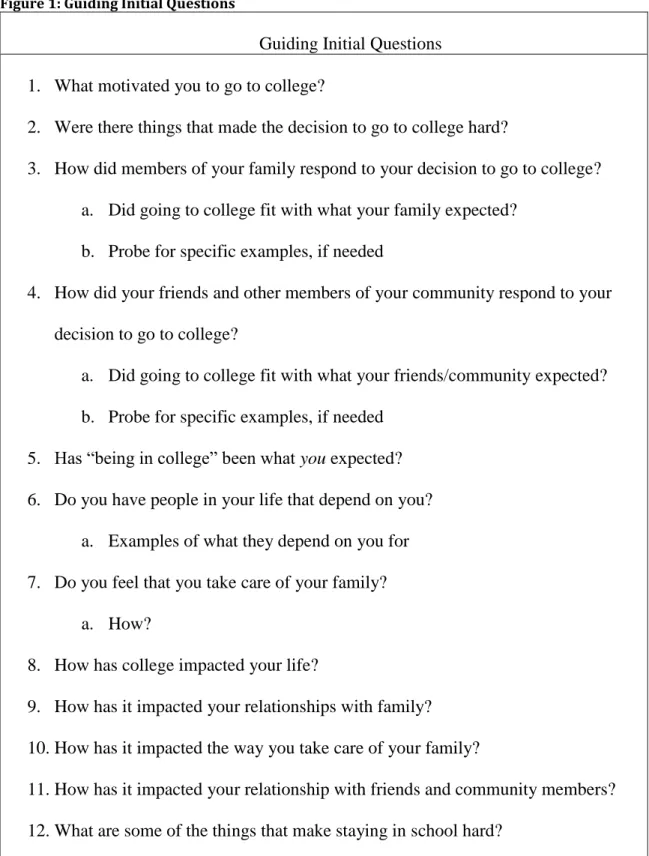
All interviews were conducted by the primary researcher and one bi-lingual and bi-cultural Latina research assistant selected by the UMass Boston Health Promotion Research Team, who was both CITI certified and trained in interview procedures by the primary researcher. Interviews took place in private offices on the UMass Boston campus. Consistent with this study’s participatory approach, interviews were conducted in a way that followed participant’s narrative. Areas of inquiry were therefore pursued differently with each participant based on the individual responses they contributed. It should also be noted that in some cases questions addressed multiple areas of inquiry simultaneously. These interviews ranged from approximately 45 minutes to one and a half hours. Of the sixteen interviews conducted, 14 participants chose to tell their story predominantly in English, while two chose to complete their interviews primarily in Spanish. A brief description of guiding initial questions, which define general areas of
inquiry, are outlined in Figure 1: Guiding Initial Questions (see additional guiding questions & probes in Appendix 2).
Figure 1: Guiding Initial Questions
Guiding Initial Questions 1. What motivated you to go to college?
2. Were there things that made the decision to go to college hard?
3. How did members of your family respond to your decision to go to college? a. Did going to college fit with what your family expected?
b. Probe for specific examples, if needed
4. How did your friends and other members of your community respond to your decision to go to college?
a. Did going to college fit with what your friends/community expected? b. Probe for specific examples, if needed
5. Has “being in college” been what you expected? 6. Do you have people in your life that depend on you?
a. Examples of what they depend on you for 7. Do you feel that you take care of your family?
a. How?
8. How has college impacted your life?
9. How has it impacted your relationships with family? 10.How has it impacted the way you take care of your family?
11.How has it impacted your relationship with friends and community members? 12.What are some of the things that make staying in school hard?
13.What are some of the things that make studying and getting good grades hard? 14.How do you balance family and school?
15.Have you felt welcome on this campus? 16.Do you feel that you “belong” here?
17.Do you feel that people you encounter “expect” you to do well in school? a. Probe for specific examples, in needed
18.What are some of the things that help you keep coming to school? 19.What are some of the things that help you get good grades? 20.What/who do you turn to when things get hard?
21.What would make it easier for you to do well in school?
22.What would make you feel more comfortable and connected on campus?
Post-interview Procedure
After the completion of interviews, in addition to encouraging participants to ask further questions, the interviewer also reminded participants that it was possible that they might experience some unexpected thoughts or feelings following the interview. The interviewer also described different options participants had if these thoughts or feelings were uncomfortable, long lasting, or might required professional help for alleviation. Specifically, the interviewer encouraged participants to contact either the primary researcher or the researcher’s faculty supervisor (who is a licensed clinical psychologist) for help if they experienced any distress following their interview. Both the researcher and her faculty supervisor were prepared to make clinical referrals for
participants if this became necessary. No participants contacted the primary researcher or her faculty member for such support.
Interview audio recordings were promptly transcribed by either the primary investigator or a bi-lingual and bi-cultural research assistant selected by the UMass Boston Health Promotion Research Team, who was trained in transcription, CITI certified, and who maintained complete confidentiality of interviews. Once these interviews were transcribed and verified by the interviewer the audio recording was permanently erased. Transcriptions were then assigned a pseudonym and de-identified for participant protection. Demographic forms were also coded with the same
pseudonym and de-identified. Coded and de-identified transcriptions, demographic forms, and notes were then stored electronically and password protected.
Data Analysis Procedures
In this study, data was organized using thematic analysis. Woodward and Joseph (2003) have described thematic analysis as “part of the interpretive phenomenological approach . . . in that the emphasis is on participants’ own views of the phenomena under investigation. Interpretative phenomenological analytic techniques are increasingly being used in the field of psychology in a bid to understand the participant’s personal view of the phenomena under investigation” (Woodward & Joseph, 2003) (p. 270). Further, Davidson (2003) reminds us that, “For qualitative research to be most useful in informing the development of interventions… studies need to be based on the actual experiences of people living with the conditions of interest, and as much from their own perspective and in their own terms as possible” (p.29). Thematic analysis involves the exploration of qualitative data/interview transcripts with the goal of finding repeated patterns of
meaning. These repeated patterns are organized through the creation of codes, which are later used to identify main themes and sub-themes in the qualitative data (Braun & Clarke, 2006). The study also used an inductive approach, allowing themes to emerge from the narratives, rather than being derived in a pre-conceived way from the existing literature or hypotheses. This approach to data analysis allows patterns to emerge from the voices of participants; particularly appropriate for exploring the experiences of this understudied population. It respects participants as experts of their own experiences, and places an emphasis on description and understanding rather than explanation and
prediction (Garko, 1999). In addition, consistent with Prilleltensky and Pilleltensky’s variation of an ecosystemic model, this analysis conceptualized wellness in broad terms that include both psychological health and physical health, and acknowledges issues of power, privilege, and the socially rooted nature of health and illness (Prilleltensky & Pilleltensky, 2003).
With this approach, this author analyzed the data for emerging themes using NVivo, a qualitative research analysis software that supports the identification and organization of themes and sub-themes. The first step in data analysis involved a reflection on the data. After participant interviews, the primary researcher reflected on each interview independently and noted immediate reactions. Once the majority of data was collected, the primary researcher began reflecting on the data, including on emerging themes and patterns across interviews. Thematic analysis of the data then moved to the identification of an initial list of emergent themes using the qualitative research analysis software NVivo. These initial themes were then reduced to themes related to this study’s
areas of inquiry and to areas that emerged in the thematic analysis as particularly salient to the participants.
The researcher then moved to present this version of themes, along with transcribed interviews, to the UMass Boston Health Promotion Research Team for feedback and discussion. Narratives were then reviewed for conceptually meaningful patterns with members of the research team, who were intimately involved with the project and who reviewed interview transcripts as well as multiple draft summaries of themes. What emerged from this group process was the identification of additional themes and the clarification of presented themes and their relationship. After multiple research team discussions, a list of concrete main themes was produced (see Figure 2 for a list of these main themes). Once these themes were determined, data was re-coded.
This approach to data analysis was based on feminist and cultural narrative analysis methods, which theorize that narrative analysis in the study of lives is especially appropriate for underrepresented narratives such as those of diverse women (Stewart, 1994) and gay fathers (Armesto, 2005; Armesto and Shapiro, 2012). These methods of narrative analysis are consistent with a number of principles of the strengths based sociopolitical approach applied in this research, considered especially important in addressing Latina experiences to include gender, culture and other intersecting
dimensions (Dill & Zambrana, 2009; Gloria and Castellano 2012). These methods strive to analyze narratives to achieve descriptions emerging in collaboration with the
participants being studied, and respecting participants’ experiences. However, Stewart (1994) argues that studying underrepresented populations requires specific strategies in
the interview and analysis process. A number of strategies recommended by this culturally informed feminist theoretical orientation were applied in this study.
One of these strategies was to identify participants’ strengths as well as their vulnerabilities, by framing interview questions to explore the creative strategies Latino first generation college students utilize while balancing their academic pursuits and their family lives. Identifying both strengths and vulnerabilities not only led to a more holistic view of these women’s individual experiences, but captured the “critical and contextual struggles” of participants. This research approach avoids treating participants as
“objects” of study, and allows them to speak to us, and us to see them, as exercising agency and as active participants in constructing their experiences and sharing these within the research process (Fine, 1992).
A second strategy involved resisting the dominant definitions of those who are being studied, with the purpose of bringing the life experiences of marginalized groups closer to the center of both political and academic discourse (Stewart, 1994). Consistent with this strategy, this study recognized the complex experience of these women within higher education and within their family and community contexts.
An additional strategy consistent with this study is to avoid producing a unified and coherent experience from participant interviews. This strategy posits that every individual interviewed experiences contexts uniquely and expresses these in a “different voice”. This literature cautions against attempting to present these different voices emerging both from unique contexts and unique interpretations of shared contexts as one coherent experience by imposing overly restrictive organizing structures (Lawrence-Lightfoot & Davis, 1997; McAdams, 1988; Stewart, 1994). That is, this study attempted
to capture each individual’s voice, and suggested patterns or themes that permitted a great deal of variability in individual expression. The results strive to organize these
experiences into themes in a way that avoids presenting a single homogeneous account of the experiences of being a “Latina first generation college student”, and preserve unique aspects of each participant’s experiences of contexts and responses to these contexts.
Finally, because of the nature of qualitative research, careful monitoring of the impact of the researcher’s perspective on emergent themes was necessary. This is
consistent with a strategy that emerges from feminist and gender-equitable men’s studies, which suggests that researchers should analyze their own role/position as it impacts all aspects of the research process (Connell, 1995, 1998; Kimmel, 1997; Marsiglio, 1995, 2003; Scanzoni & Marsiglio, 1993; Silverstein, 1996; Silverstein & Auerbach, 1999; Silverstein et al., 2002). Since the researcher acknowledges that she is shaped by her own personal and political history, including her own educational journey, and her
experiences with family and community, steps were taken to reflect on the impact of her perspective on themes developed. Sharing the experience of being a Latina first
generation college student gave the researcher added sensitivity to the issues addressed by this study and informed the questions asked of the psychology literature. However, this “insider” sensitivity (Naples, 2003) also called for a method that would allow for the researcher’s assumptions to be continuously questioned, challenged and shaped by both study participants and research team members. Steps taken to reflect on the impact of the researcher’s perspective included the researcher keeping a detailed journal documenting her careful reflection on and active monitoring of her own point of reference and