Doctoral Dissertations University of Connecticut Graduate School
5-4-2017
Learning to Self-Regulate: Crafting Co-Regulation
Experiences in an Online Learning Environment
Rasis A. AlanaziUniversity of Connecticut - Storrs, [email protected]
Follow this and additional works at:https://opencommons.uconn.edu/dissertations Recommended Citation
Alanazi, Rasis A., "Learning to Self-Regulate: Crafting Co-Regulation Experiences in an Online Learning Environment" (2017).
Doctoral Dissertations. 1374.
Rasis A. Alanazi, Ph.D. University of Connecticut, 2017
Abstract
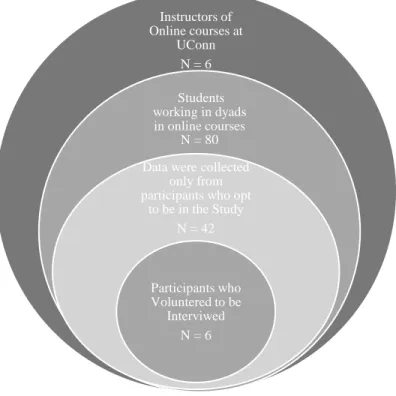
This mixed methods study aims to describe and explain the effects of co-regulation on students’ self-regulation, which is hypothesized to lead to better learning. Students (N = 42) in six online undergraduate and graduate courses worked in dyads for six weeks on shared
activities. Variables of interest included students’ self-regulated learning, co-regulated learning, and students’ perceptions of the online course delivery based on a Community of Inquiry
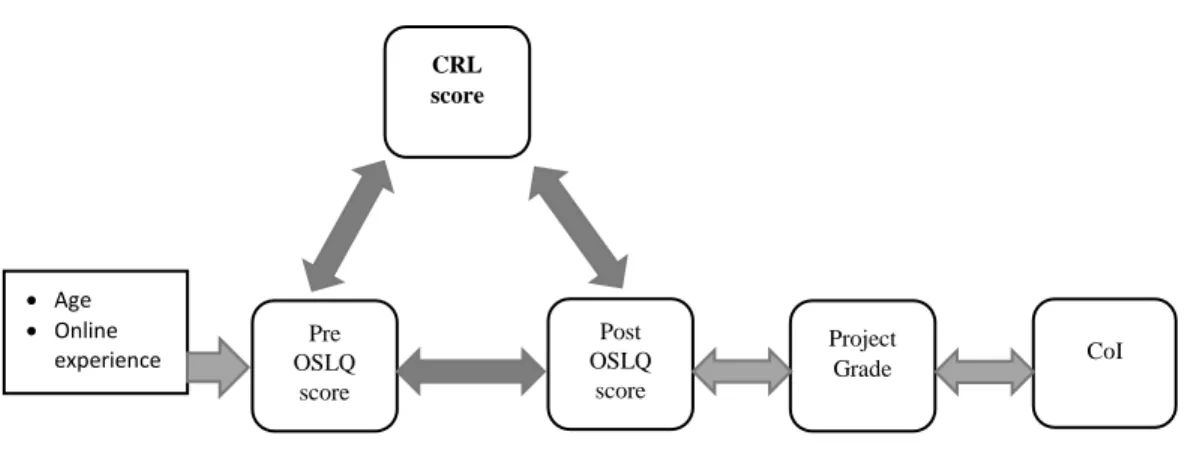
framework. Six students were also interviewed about their experiences in the dyads. A mediation analysis was conducted to detect if co-regulation mediated the relationship between students’ self-regulation before and after working in dyads. A second mediation analysis was proposed to explore if post-OSLQ mediated the relationship between CRL and dyads’ project grades. The results indicated that students’ self-regulation prior to that dyad activity was not a significant predictor of students’ co-regulated learning. However, co-regulated learning was a significant predictor of student regulation after dyads activity. Results indicated that students’ self-regulation after dyad activities was a significant predictor of the online course delivery. Results of mediation analysis did not support the mediating role of co-regulation between students’ self-regulation prior and after the shared activities and the second mediation analysis could not be conducted due to little variability in dyads’ project grades. Analyses of the interview data suggest that dyads co-regulation experience was impacted by instructional factors, technical factors, environmental factors and students’ social factors. Implications for instruction and future research are discussed.
i
Crafting Co-Regulation Experiences in an Online Learning Environment
Rasis A. Alanazi
B.A., King Saud University, 2009 M.A., Arabian Gulf University, 2012
M.A., University of Connecticut, 2016
A Dissertation
Submitted in Partial Fulfillment of the Requirements for the Degree of
Doctor of Philosophy at the
University of Connecticut
ii
©Copyright by Rasis A. Alanazi
iii
APPROVAL PAGE
Doctor of Philosophy Dissertation
Learning to Self-Regulate:
Crafting Co-Regulation Experiences in an Online Learning Environment
Presented by
Rasis A. Alanazi, B.A., M.A.
Major Advisor ___________________________________________________________________ Scott W. Brown, Ph.D. Associate Advisor ___________________________________________________________________ Bianca, Montrosse-Moorhead, Ph.D. Associate Advisor ___________________________________________________________________ Jae-Eun, Joo, Ph.D. University of Connecticut 2017
iv
ACKNOWLEDGEMENTS
My doctoral degree journey has changed me in many ways. It taught me strength,
persistence, and patience. I would like to thank all who have guided me throughout the process.
My major advisor Dr. Scott Brown; If it was not because of you, I would not be where I am now. You have given me the chance and opportunity to get into the program and be on this path. You have always been there for me in my doctoral degree journey. Your support and guidance are the main reasons I overcame many obstacles and difficulties. You knew when I needed to be pushed and when I needed to be encouraged. I want you to know that not only you opened the door for me to be who I am, but you taught me to be the best version of me. I know that the day have come where I am on my own in the real world without you looking across the office. I will make sure that I succeed in every path I take because my success will always be the reflection of yours. You dedicated your time to me whenever I needed so. Thank you for being who you are, and for being a great advisor.
My advising committee; Dr. Bianca Montrosse-Moorhead and Dr. Jae-Eun Joo: I would like to thank you for the time and energy that you dedicated for my study to make it better. Dr.,
Montrosse-Moorhead you have always provided me with feedback and resources that helped me through my analyses. Dr. Joo, you were there every time I felt that I could not make it, you supported me and always encouraged me to finish what I started. Your passion about online learning have always inspired me.
Dr. Michael Young; thank you for all the open conversations that we had about my study and other topics. Every time I had a conversation with you about my study, you made me re-think and helped me brain storm. I think that you always challenged me to get beyond my comfort
v
zone and think deeper about topics. You always supported me by providing thorough comments and feedback on my work that helped me. Thank you so much.
Dr. Suzanne Wilson; I cannot thank you enough for the amount of work you have done helping me edit my dissertation. I am honored and appreciative to have your insights and guidance. Your genuine care and support kept me going.
To my father Abdullah Alanazi, and mother Hind Alotishan; Dad, since I was five-years old you have always called me Dr. Rasis and told me that I will take care of your heart. Well, I am not a medical doctor but I was able to make your dream come true. I was lucky to have you as my father, as open and understanding to what I always wanted. If it was not for you, I might not had this opportunity to purse my degree. I had endless love, support and care from you.
Mom, your prayers and conversations with me always calmed me down in this process. It was hard for me to leave you, but I knew that at the end it will be rewarding. You constantly pushed me and made sure that I know you were always there when I needed you.
My grandma, brothers, sisters, aunts, uncles, and cousins; Thank you for everything you have done to me to support me in this path. I am lucky to have such a loving and caring family. To my grandfather’s; Abdullah Alotishan, and Atallah Alanazi; I dedicate my work and success to your souls as I was not able to say goodbye to both of you.
vi
TABLE OF CONTENTS
APPROVAL PAGE ... iii
ACKNOWLEDGEMENTS ... iv
TABLE OF CONTENTS ... vi
LIST OF APPENDICES ... ix
LIST OF TABLES AND FIGURES ... x
Tables ... x
Figures ... xi
CHAPTER I: OVERVIEW OF THE STUDY ... 1
Statement of the Problem ... 1
Background ... 4
Self -Regulated Learning ... 4
Co-Regulated Learning ... 6
Theoretical Framing ... 7
Sociocultural Theory ... 7
Community of Inquiry Framework ... 9
CHAPTER II: LITERATURE REVIEW ... 13
Introduction ... 13
Online Learning in Higher Education ... 13
Regulation and Learning ... 16
Views of Regulation ... 17
Self-Regulated Learning Strategies ... 18
Self-Regulation and Academic Achievement ... 22
Measuring Self-Regulation ... 25
Co-regulation ... 26
Co-regulation in Online Learning ... 28
When Co-Regulation Fails ... 33
Future Research on Co-Regulation ... 35
Measuring Co-Regulation ... 36
Summary ... 37
CHAPTER III: RESEARCH METHODOLOGY ... 38
vii
Research Questions ... 38
Setting and Participants ... 41
Setting ... 41
Participants and Recruitment ... 42
Instrumentation... 45
Measuring Students’ Online Self-Regulation ... 46
Measuring Dyad Members Co-Regulation ... 47
Measuring Community of Inquiry ... 47
Research Methods ... 48
Quantitative Design ... 48
Qualitative Design ... 49
Data analysis. ... 50
Procedures ... 54
Dyad activities in Online Courses... 55
Summary ... 57
CHAPTER IV: RESULTS ... 58
Quantitative Results: Exploring the Factors Shaping CRL and SRL ... 58
Data Screening ... 59
Measuring Previous Online Experience... 61
Students’ Age Variable ... 61
Research Question 1 (RQ1) ... 62 RQ1 Findings. ... 63 Research Question 2 (RQ2) ... 65 RQ2 Findings. ... 65 Research Question 3 (RQ3) ... 67 RQ3 Findings. ... 67 Research Question 4 (RQ4) ... 69 RQ4 Findings ... 70 Research Question 5 (RQ5) ... 71 RQ5 Findings. ... 72 Research Question 6 (RQ6) ... 73 RQ6 Findings ... 73
viii
Qualitative Analysis ... 73
Students’ Perceptions of their Dyad Experiences ... 73
RQ7 Findings. ... 74
Finding from Coding Cycles ... 75
Thrivers ... 76
Battlers ... 83
Self-Regulation Time-Management... 87
Limitations ... 88
Summary ... 90
CHAPTER V: DISCUSSION AND CONCLUSIONS ... 92
Introduction ... 92
Findings ... 93
Self-Regulation Strategies ... 95
CRL within Shared Activities ... 97
Fostering Students’ SRL through CRL ... 99
Students’ Perception of the Online Courses ... 102
Recommendations for Online Instructors ... 105
Educational Implications and Conclusions ... 107
References ... 110
ix
LIST OF APPENDICES
Appendix A: IRB-Approval and Information Sheet ... 132
Appendix B: Study Instruments- Online Self-Regulated Learning ... 138
Appendix C: Course Instructors Willingness to Participates letters ... 144
Appendix D: IRB-Preapproval Letter ... 149
Appendix E: Letter of Support from the Center for Excellence in Teaching and Learning (CETL) at UConn ... 150
Appendix F: Dyad/groups Interaction Guidelines ... 151
Appendix G: Dyads’ Activities ... 152
Appendix H: Code-Book ... 155
Appendix I: Qualitative Data analysis ... 159
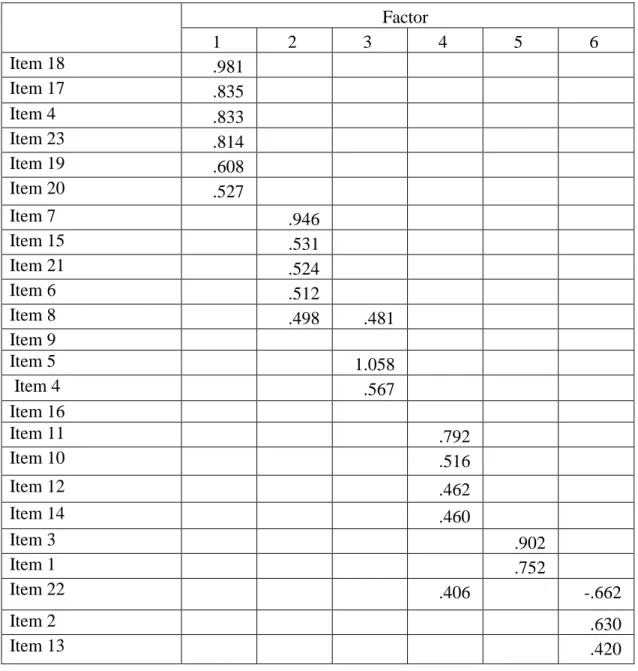
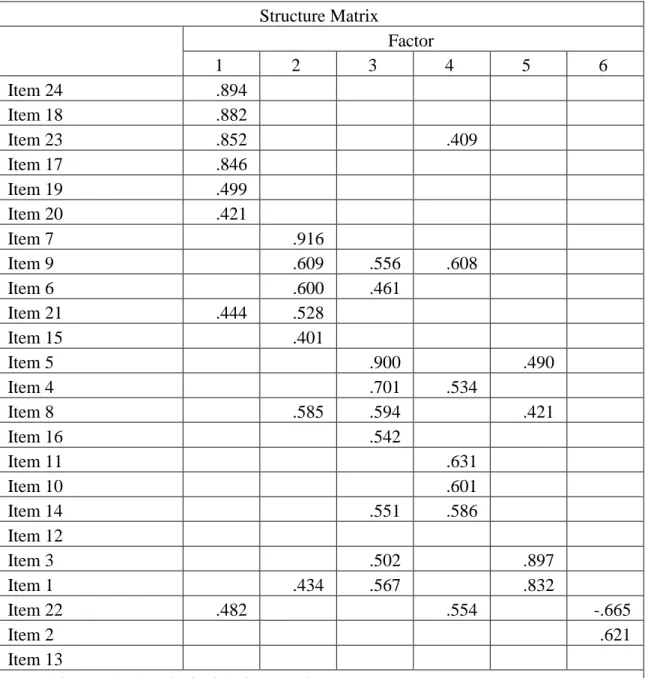
Appendix J: Factor Analysis and Subscale Reliabilities Estimates ... 163
Appendix K: CRL scale-Approval letter from Authors ... 172
Appendix L: CoI-Approval letter from Authors ... 173
x
LIST OF TABLES AND FIGURES
Tables
Table 2.1 Description of different types of course delivery (adapted from Allen & Seaman
[2013])... 14
Table 2.2 Distance and Online Course Data for Academic Years 2014-2016 for UConn ... 15
Table 3.1 The recruited courses for the study, total of potential students enrolled and total number of research study participants enrolled ... 43
Table 3.2 Examples of the raw data, and the first cycle coding. ... 51
Table 3.3 Examples of the raw data, and the second cycle coding. ... 52
Table 4.1 Means and SD of Items 4 and 12 ... 59
Table 4.2 Test for Normality on the Study Variables ... 60
Table 4.3 The Means and Standard Deviations of the Pre-OSLQ and Post-OSLQ ... 62
Table 4.4 Coefficients for the RQ1 Second Regression Model where Previous online experience, Age and Pre-OSLQ were the Independent Variables ... 64
Table 4.5 Pearson Correlation Matrix among Post-OSLQ, Age, Previous online experience, and Pre-OSLQ ... 64
Table 4.6 The Means and Standard Deviations of the Pre-OSLQ, and CRL (N = 42)... 65
Table 4.7 Coefficients for RQ2 Regression Model ... 66
Table 4.8 Pearson Correlation Matrix between CRL, Age, Previous online experience, and Pre-OSLQ Variables ... 66
Table 4.9 The Means and Standard Deviations of the Pre-OSLQ, and CRL (N = 42)... 67
Table 4.10 The Regression Model with Age, Previous online experience, and CRL as Predictors of Post-OSLQ ... 68
Table 4.11 Pearson Correlation Matrix between Post-OSLQ, Age, Previous online experience, and CRL Variables ... 68
Table 4.12 The Means and Standard Deviations of the Post-OSLQ, and CoI (N = 28) ... 70
Table 4.13 Coefficients for RQ4 Final Regression Model ... 70
Table 4.14 Pearson Correlation Matrix between CoI, Age, Previous online experience, and Post-OSLQ Variables ... 71
xi
Figures
Figure 1.1 The relationship between community of inquiry social, cognitive, and teaching
presence (adapted from Garrison, Anderson, & Archer [2000]) ... 10
Figure 2.1 Cyclic Model-- Phases and Process of SRL (adapted from Zimmerman, 2002) ... 20
Figure 3.1 Conceptual representation of the study elements ... 40
Figure 4.1 Students’ Previous Online Experience Percentages ... 61
Figure 4.2 Age Percentages of the Study’s Participants ... 62
Figure 4.3 Factors that were found to have an impact on dyads’ CRL ... 88
CHAPTER I
OVERVIEW OF THE STUDY
Introduction
With the emergence and rapid expansion of online education, teachers and instructional designers are increasingly interested in understanding and improving the most effective
instructional methods for such settings. Online courses have been used increasingly in higher education: estimates suggest that in the U.S.A., 20 percent of college students took at least one course online in 2013 (Deming, Goldin, Katz, & Yuchtman, 2015).
Online learning offers potentially rich resources for college students to learn from, with the guidance of the instructor or independently. In online environments, for example, learners can exercise more control over their learning by choosing when, what, and where to learn. The nature of the interactions between teachers and learners can also shift (Artino & Jones, 2012), as the online environment relies more on interactions that occur asynchronously than synchronously (Ku & Chang, 2011) compared to traditional face-to-face, synchronous learning environments. This can lead to instructors shifting from providing information to facilitating students’ analysis and synthesis.
Statement of the Problem
While online learning holds much promise, there are also associated perils, for example, high dropout rates (Lee & Choi, 2011). Thus, despite numerous advantages of online learning -- flexibility, open resources, and accessibility among them -- not all students may have the
necessary skills to accept the new responsibilities and opportunities online learning offers. Some research suggests that students in online environments are more likely to succeed in college if
they can use a range of learning strategies (Liu, Lin, Jian, & Liou, 2012; Wadsworth, Husman, Duggan, & Pennington, 2007). Students who are independent and self-directed, as well as
willing and able to manage, control, and regulate their own learning, are also more apt to succeed in such environments (Serdyukov & Hill, 2013). Furthermore, self-reliance, persistence, and determination are characteristics associated with more success in online learning environments (Shea & Bidjerano, 2012).
Scholars have focused on the concept of self-regulated learning (SRL) -- the self-beliefs that enable learners to be motivated and proactive in a collaborative environment (Winters & Azevedo, 2005) – as a unifying concept for this set of characteristics. Although there is some variability in how researchers define the concept, it is generally used to refer to processes that students can use – metacognitive, motivational, and behavioral (Zimmerman, 1986) -- to manage their learning. One goal of online learning is to prompt students’ active involvement. Thus, instructors and instructional designers need to have a better understanding of what engages students on line, including how to sustain students’ different levels of regulation as needed.
Previous research has conceptualized SRL as an individual activity, with a focus on individual differences that are linked to SRL. Recent research has shifted to understanding SRL within a social context of learning (Hadwin, Järvelä, & Miller, 2011). According to Zimmerman and Schunk (2001), self-regulatory behaviors are “highly context dependent” (p. 125). Thus, self-regulatory behaviors and processes differ from one context to another. Different approaches that investigate SRL have used social cognitive or sociocultural perspectives (Zimmerman, 1986), highlighting the role that social interactions between peers and the more knowledgeable other (MKO) plays in fostering and internalizing regulating learning process (e.g., Vygotsky, 1978). This has led some researchers to propose “co-regulated learning” (CRL) (McCaslin &
Hickey, 2001) – or the “manifestation of emergent interaction within a zone of proximal development” (Panadero & Järvelä, 2015, p. 191) – as an important step in a student’s progress toward self-regulation.
In the context of online learning, creating opportunities for students to co-regulate may enable students’ success. For example, as students collaboratively work on solving a problem task, one student can address peers’ questions, clarifications, and confusions. Other peers can help answer questions by discussing the task and sharing thoughts. It is hypothesized that this process – one that promotes co-regulation (CR) -- has positive effects on SRL (DiDonato, 2013). Volet, Summers, and Thurman (2009) defined CR as related “to individuals working together as
multiple self-regulating agents socially regulating each other’s learning” (as cited in Chan, 2012, p. 64). Co-regulation also has been influenced by socio-cultural theory, in which the learners share common problems and tasks through interpersonal interaction (Hadwin, Wosney & Pontin, 2005; McCaslin & Hickey, 2001).
While previous studies in the online learning context have focused on SRL and its relation to successful learning outcomes, the purpose of the study upon which this dissertation is based is to describe and explain the effects of co-regulation on students’ self-regulation, which is hypothesized to lead to better learning. A mixed-methods design was used to assess CRL and SRL processes in relation to project grade and students’ sense of community using qualitative and quantitate methods at different stages.
In the remainder of this chapter, relevant research is briefly summarize before describing the theories that inform the study’s conceptual framework.
Background Self -Regulated Learning
Considerable research on SRL has been conducted by Zimmerman (1989), who defined SRL as the degree to which students are “meta-cognitively, motivationally, and behaviorally active participants in their own learning process” (p. 329). Schunk and Zimmerman (1994) further defined self-regulation as “self-generated thoughts, feelings, and actions which are systematically oriented toward attainment of their goals” (p. ix). Over the past 20 years, researchers have investigated SRL by examining how students master their own academic learning in face-to-face and online learning environments. Some of that research has examined the affective dimensions of the process (Zimmerman, 2001), including training students to be SR learners, otherwise referred to as “strategy training.”
However, training learners to self-regulate their own learning is complex (Zimmerman, 1990). Examples of SRL strategies include planning, monitoring, strategy use, task difficulty, help seeking, self-instruction, self-recording, and goal setting. Students switch from one strategy to another, depending on the task, content, and context. In addition, some might need to seek help on a project while others would not.
A growing body of research on SRL has led to the creation of different SRL models and measures. Several different instruments have been developed to measure SRL in different contexts and educational settings, such as online and face-to-face learning environments (Azevedo 2005, 2007; Azevedo et al., 2010; Azevedo & Cromley 2004; Hadwin, Nesbit, Jamieson-Noel, Code, & Winne 2007; Kramarski & Gutman 2005; Schraw 2007).
To succeed in online classes, students need to master certain strategies (Liu et al., 2012; Usta, 2011); some research suggests that self-regulated learners are more likely to be
comfortable in online courses than their peers who are less self-regulated (Moore, 1993, p. 32). As previously noted, Zimmerman (2000) identified different learning strategies that learners implement to succeed in their learning such as planning, monitoring, evaluating, and regulating. Learners’ achievement has been found to be related to their elective use of self-regulation (Thoresen & Mahoney, 1974).
Learners with low self-regulation skills face many obstacles due to the lack of adequate skills, such as planning, and not due to the lack of sufficient intelligence (Zimmerman, 1990). Learners with low selfregulation skills in comparison to those with high selfregulated skills -- perform lower in online learning environments (Eom & Reiser, 2000; Yang, 1993; Young, 1996). A more extensive summary of this literature is presented in chapter 2.
Ultimately, researchers wish to identify strategies that are essential for learners to improve their overall achievement level (Boekaerts, Pintrich, & Zeidner, 2000). Students’ achievement and success are focus areas in every educational setting. In online learning
environments, students’ success relies heavily on the ability of students to control their learning (Wang, Shanonn, & Ross, 2013). Often, successful learners are shown to be in control of their learning (Zimmerman, 2008) when they learn the importance of planning, monitoring,
evaluating, and regulating their behavior. Online environments require students to take control of their own learning, as the nature of the settings endorses self-directed learning (Serdyukov & Hill, 2013). Self-directed learning has been found to be highly valuable when learners have the ability and willingness to manage, regulate and plan their learning process (Ally, 2004). For example, some online course instructors evaluate students’ participation by their written posts in the discussion board. Students need to plan their time and regulate their learning to ensure their active participation. As researchers have become more interested in how self-regulation is
developed in students, some have proposed that co-regulated learning is a natural step on the way to the more independent state of self-regulated learning (McCaslin & Hickey, 2001).
Co-Regulated Learning
Co-regulated learning originated from Vygotsky’s idea of internalization, defined as the “internal reconstruction of an external operation” (1978, p. 56). According to this theory, learners internalize what they are exposed to – for example, different social tools such as language and norms of interaction. This constitutes learning, all the skills, strategies, and
knowledge to which the learner has been exposed, having been internalized, can then be applied in new settings. Co-regulation is a relatively new idea that is rooted in a sociocultural approach to learning theory. Fogel (1993) defined co-regulation as a “continuous unfolding of individual action that is susceptible to being continuously modified by the continuously changing actions of the partner” (p. 29). The emphasis here is on the social environment in which learning occurs, not the individual learner in isolation. Cole and Wertsch (2001) claimed that without the existence of a social context, the “development of mind is impossible” (p. 4). Thus, CRL is defined as, “cultural, social, and personal sources of influence that together challenge, shape, and guide co-regulated identity” (McCaslin, 2009, p. 137).
Researchers have investigated several different social activities designed to foster co-regulation. For example, Hadwin, Wozney, and Pontin (2005) examined changes in the ownership of self-regulatory activity from teacher to student dialogue in a task completion process. Ten graduate students worked on developing a graduate level research portfolio. After conducting a qualitative analysis of teacher-student dialogue, the researchers found a decrease in incidents of teacher-regulation and an increase in student self-regulation.
This study builds upon and extends the previous and current research on SRL and, more significantly, CRL. The theoretical frameworks underpinning the study will be presented. Then the study research questions, hypothesis, and data collection procedures will be addressed.
Theoretical Framing
As previously noted, co-regulation is based on the sociocultural theory of learning (Vygotsky, 1978). A brief description of the sociocultural theory, and then describe the study’s conceptual framework will be presented.
Sociocultural Theory
The founder of sociocultural theory is the Russian psychologist Lev Vygotsky. The theory is rich and complex; the focus here will be on the implications of the theory in learning and teaching.
Vygotsky’s work impacted many scholars after the publication of his writings in Mind in Society (Vygotsky, 1978). Vygotsky believed that human development relies on the
internalization of experiences with other individuals who have more experience. Vygotsky placed learning within a social and cultural context. After interacting with more knowledgeable others, the learner takes over her own learning in joint activity (Lave & Wenger, 1991). In order for cognitive development to happen, learners need to interact with each other using “tools” that would facilitate the learning process. Some “psychological” tools that are used in learning are signs, symbols, text, language and mnemonic techniques (Vygotsky, 1978 p. 53). Central here is the idea of semiotic mediation, which is essential for constructing knowledge. Put simply,
symbol systems; works of art; writing; schemes, diagrams, maps and mechanical drawings; all sorts of conventional signs and so on” (Vygotsky, 1981, p. 137).
In order for learning to be internalized from social processes, Vygotsky emphasized participation (Bruner, 1984). Mental functions are developed through the social and individual activities that are mediated by tools and signs in the learning context. For example, computer screens, concept maps, text, and charts. With the rapid development of technology and learning settings, new tools are constantly emerging. These developments have led to changes in the learning process. Learning is developed in online learning environments mainly through text-based interactions such as discussion boards, blogs and forums for collaborative knowledge construction between learners, with the guidance of the instructor. It is through mediated tools that establish social interactions and communication that behaviors are self-regulated by
reflection that leads to internalization. Internalization is the process where learners take the new information and knowledge gained from a social interaction and later use the necessary skills to apply the information obtained in a different independent learning activity. Inner speech is an important step for internalization.
In Vygotsky’s social cultural theory, learning is more effective when instructors offers students the opportunity to interact with their peers, as a way to help students develop and grow intellectually. The opportunity of interaction between peers has the potential to create a Zone of Proximal Development (ZPD) by Vygotsky (1978), and is defined as the distance between the learner’s current knowledge “actual development level” and the desired level of development or performance that happens with the assistance from the more capable peer (Vygotsky, 1978, p. 86). Assessment of this concepts would be focused on the learning process that happens with
scaffolding. The more capable peer, such as instructors or other students would provide some learners with unique guidance within their ZPD and that would be an ideal learning practice.
In sum, from a Vygotsky-ian perspective, in any learning setting, learners use signs and symbols in interaction. For example, the use of computers is considered to be a vehicle that can mediate the learning between students. Scaffolded learning is a term that has emerged from sociocultural theory. It refers to the various ways of support that are provided to the learner to help in the completion of any problem-solving task that the learner would not be able to solve without the support of an expert of more capable other. The form of support in the online learning environments could be by providing hints to learners, guidance, questions, prompting, or further elaboration. The support that the learner receives may be enough to allow the learner to engage in any activity and eventually, and gradually, removed so that the student can then work on her own.
Community of Inquiry Framework
The present study focuses on fostering student’s co-regulation and self-regulation in an online learning environment. The learning environments in this study are online college courses where students interacted and co-regulated their learning as dyads. It is important to note that the researcher did not have control over the design and delivery of the online courses.
Figure 1.1. The relationship between community of inquiry social, cognitive, and teaching
presence (adapted from Garrison, Anderson, & Archer [2000]).
The CoI framework was developed by Garrison, Anderson, and Archer (2000) as a dynamic model to guide researchers interested in better developing teaching and learning online (see Figure 1.1). Learners “strive to recreate the social and knowledge building processes by negotiation of meaning found in the classroom” (Shea et al., 2009, p. 10); much of this meaning is made in the context of a “community of inquiry.” This involves three overlapping “presences”: teaching, social, and cognitive. Teaching presence is the instructional design and content
organization by the instructor to encourage learning and engagement (Anderson, Rourke,
Garrison, & Archer, 2001). The social presence is a construct that has been previously studied by researchers to better understand how learners in the computer-mediated environment, project themselves as being real by establishing a sense of belonging and trust within the environment. Lastly, cognitive presence is based on Dewey’s idea of reflective thought, where learning is grounded in a process of a reflective inquiry.
Several studies have examined CoI presence separately in different contexts. Rourke, Anderson, Garrison, and Walter (2007) assessed students’ social presence in asynchronous test- based computer conferencing by conducting a content analysis of students’ discussion posted online. They found that high levels of social presence are important in supporting meaningful learning. In addition, teaching presence was examined by Shea, Li and Pickett (2006) who surveyed 1067 students using the Teacher Presence Scale. The results indicated that there is a connection between perceived teaching presence and students’ sense of learning community. Students who reported high levels of a learning community have also reported effective instructional design and organization.
The concept of learning with the help of more knowledgeable other in a social context has expanded by theorizing about learning as distributed (Cole & Engestrom, 1993), interactive (Chang-Wells & Wells, 1993), context-specific (John-Steiner, Panofsky, & Smith, 1994), and as an outcome of learners’ active participation and engagement in a community of practice (Rogoff, 1994).The study conducted here involves examining dyads’ interaction embedded in online courses that fosters CRL and SRL. As the nature of the interaction between dyads is a key element in this study; the study uses a Community of Inquiry Framework (CoI) (Garrison, Anderson, & Archer, 2000) to theorize the experiences in the dyads. The framework reflects students’ experiences through three elements; the social, cognitive, and teaching presence which creates a meaningful learning experience in online courses.
In sum, this study is based both on the broader sociocultural theories of learning, as well as the specific Community of Inquiry framework to investigate the effects of online learning experiences on students’ CRL and SRL.
In the chapters that follow, a review of the research, study design, and study findings are presented. In chapter 2, a more comprehensive summary of relevant literatures is described. Chapter 3 describes the study’s design, methodology, and methods. The results of the study are presented in Chapter 4, and in Chapter 5, is a return to the study’s theoretical framing, as well as a discussion the study’s implications for future work.
CHAPTER II
LITERATURE REVIEW Introduction
In this chapter, online learning is briefly discussed. Then, research that investigates SRL in online learning context and the different views of SRL is reviewed. SRL strategies that are related to this study and are presented and the relationship between SRL and academic
achievement are discussed. A brief discussion of SR measures is also presented. Several research studies examining CR in an online context and different models and measures of CR are also addressed.
Online Learning in Higher Education
Many universities have adopted online learning in one form or another. In “single mode” institutions, all faculty to staff members work remotely, offering courses in which most or all of the content is delivered online. For example, the Open University in England is one of the largest institutions in United Kingdom that offers different degrees for undergraduate and graduate students. Although, single mode institutions have been globally adopted, they are not favored in the U. S. public sector (Moore & Kearsley, 2011).
Dual-mode institutions offer the traditional face-to-face delivery mode and online learning. For example, the University of Connecticut offers traditional courses, hybrid courses, and online courses for students. Instructors and faculty members work with instructional designers to develop courses that align with their teaching practice and department’s needs. In the traditional courses, the content is delivered orally and in written format. As for the hybrid courses, they combine a face-to-face component and dedicate some of the course content
proportion to be delivered online. Therefore, students attend their regular classes and meet their instructors and colleague face to face. In addition, students may have online discussion boards to work on as a part of the course requirement. In the online courses, the delivery of the course content is offered fully online. Learning in the online courses (also called e-learning) takes place in a learning management system, where instructors document and deliver their content
electronically.
According to the 2015 Online Report Card, the number of graduate and undergraduate distance education students enrolled in private institutions are 61% and 27%, respectively. The definitions of three different types of course delivery modes and the proportion of the content delivered online are listed in Table 2.1.
Table 2.1
Description of different types of course delivery (adapted from Allen & Seaman [2013])
Proportion of Content
Delivered Online Type of Course Typical Description
0% Traditional
Courses where no online technology used. Content is delivered in writing or orally.
30 to 79% Blended/Hybrid
Courses that blends online and face-to-face delivery. Substantial proportion of the content is delivered online, typically uses online
discussions, and typically has a reduced number of face-to-face meetings.
80% Online
A course where most or all of the content is delivered online. Typically have no face-to-face meetings. In the U.S.A., at least five states have included online learning as a high school graduation requirement, including Arkansas, Virginia, Florida, Michigan, and, Alabama
(National Conference of State Legislatures, 2016). In addition, numerous institutions in U. S. higher education have rapidly increased their online offerings. Allen and Seaman (2013) reported that, in 10 years, there was a growth in online offerings: in 2002, only 34.5% online courses, in 2012, 62.4% reported offering fully online programs (p. 20).
The University of Connecticut, the site of this study, defines distance learning as “courses taught using a videoconference (interactive television) system, which enables students and the instructor to see and hear each other in real time” (Distance Learning & Online Courses, 2015). Online instruction is defined as “all required contact hours are internet-based. Contact includes instruction, learning activities, and interactions both student-student and/or student-instructor” (Distance Learning & Online Courses, 2015). Distance learning courses at UConn include hybrid or blended learning experiences, and the proportion of content delivered online can range from 30% to 80%. The online courses at UConn are the courses that deliver its content mostly online ranging from 80% to 100%.
In the academic year 2014-15, UConn offered 335 distance courses; in 2015-16, it offered 312. In contrast, there were 292 online courses in 2014/2015 and 243 in 2015-16. It has been widely reported that online courses have a significantly higher student dropout rate
compared to the face-to-face courses. This can be seen in the UConn statistics: In 2014-15 and 2015-16, the students’ dropout rate was 2.49%, and the D/Fail/withdraw rates (DFW) was 16.91% in all of the courses (see Table 2.2). These results suggest that there is a need to examine possible ways to decrease student dropout rates and to find alternative methods to assist students who are at risk in online learning context.
Table 2.2
Distance and Online Course Data for Academic Years 2014-2016 for UConn
Academic Years Total of Distance Courses Graduates & Undergraduates enrolled in Distance Courses
Dropout Rate DFW rate
2014/15 335 5205 3.84% 28.82%
2015/16 312 9755 2.36% 28.18%
2014-16 -Total 647 14960 2.88% 28.4%
Academic Years Total of Online Courses
Graduate & Undergraduate enrolled in Online
Courses
Dropout Rate DFW rate
2014/15 292 6892 2.53% 15.88%
2015/16 243 7561 2.45% 16.47%
2014-16 -Total 535 14453 2.49% 16.91%
Regulation and Learning
Although, online learning in higher education has been widely adopted, there is a need for further examination of online learning and teaching to identify factors that impact students’ success and failure, as well as identifying successful online teaching practices (Carr, 2000; Levy, 2007; Tello, 2007; Willging & Johnson, 2004). Research suggests that students who drop out of online courses may experience diminished self-efficacy and self-esteem, prohibiting them from taking online courses in the future (Poellhuber, Chomienne, & Karsenti, 2008).
Students need to practice certain skills to have a successful online learning experience. Several researchers argue that self-regulated learning (SRL) (Zimmerman & Schunk, 1989) is essential for students to take the responsibility for their education and reach their goals.
Self-regulation (SR), as defined by Zimmerman (1986), includes metacognitive, behavioral, and motivational processes that learners use in their learning. The metacognitive processes refer to students’ self-awareness about their own thinking. The behavioral processes refer to each students’ ability to use their skills and strategies to regulate their learning and plan for their goals. The strategies that students employ to attain their goals are an aspect of motivation. Motivation explains student’s engagement and persistence in any educational tasks (Puzziferro, 2008).
Although self-regulation is necessary in any learning context, it has been emphasized as a necessity in online learning because of the nature of the learning environment. In online courses, learners are expected to fully take charge of their learning by accessing the virtual environment on their own time, following up with the course requirements, and maintaining active
participation in their discussion blogs and forums. Self-regulatory behaviors are important for online courses because of their association with positive outcomes, such as student retention, student achievement, and student satisfaction (Howland & Moore, 2002).
Views of Regulation
The literature on regulation (self-regulation, shared regulation, and co-regulation) has mainly focused on socio-cognitive and sociocultural perspectives (McCaslin & Hickey, 2001; Zimmerman, 1989, 2000). Researchers who have adopted the social cognitive view, focused their attention on social factors and their relation to SR (Zimmerman, 1989). In particular, several researchers adopted Bandura’s triadic reciprocal determinism model, that describes human functioning a result of the interaction of personal, behavioral, and environmental factors. Students’ attempts to self-regulate their learning are influenced by the personal, behavioral, and environmental events in a reciprocal manner. Bandura (1986) identified three sub-processes that
interact with each other in SR: self-observation, self-judgment, and self-reaction. Students observe their progress and judge task quality, which leads to several personal and behavioral reactions (Schunk, 1995).
Sociocognitive theorists contributed to the development of the individual-in-context perspective in regard to regulation. Sociocultural theorists interested in regulation have
emphasized the social system that the individual is part of while learning. This led researchers to develop co-regulation as a concept that looked at regulation in a social system (Hickey, 2003; McCaslin, 2004, 2009; McCaslin & Hickey, 2001). Hickey and McCaslin (2001) were
influenced by Vygotsky’s (1962) views of SR in terms of internalization, which posited that the social context in which learners and instructors interact with each other help learners internalize behaviors. From this perspective, self-regulation occurs through the interaction between learners and their instructors at an interpersonal level, then SR is internalized gradually by learners. In sum, SR is no longer seen as a fixed trait but rather a selective context-specific trait shaped by interactions with others (Zimmerman, 1998).
The development of co-regulation processes is complex because the field is still emerging and there is a need for in-depth exploration of the processes that emerge from the social system that individuals transfer. Several scholars applied SR strategies to understand both self- and co-regulation.
Self-Regulated Learning Strategies
Different strategies have been identified that promote students’ SR. SRL strategies as defined by (Zimmerman, 2001), “refer to actions and processes directed at acquisition of information or skills that involve agency, purpose, and instrumentality perceptions by learners” (p. 5). Learners can exercise SR processes and move from one process to another depending on
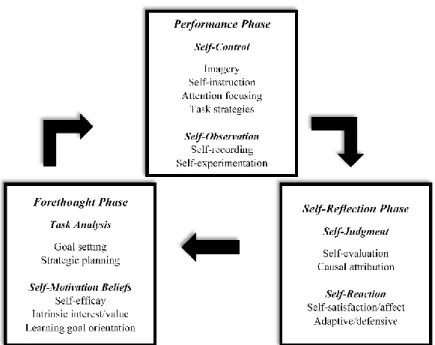
their needs. Zimmerman (2000) created a SR cyclic model that categorized the SR process into three phases: forethought, performance, and self-reflection. In the first phase, students
predetermine a set of cognitions (e.g., goal setting and planning) and beliefs (e.g., self-efficacy) that will help them to accomplish their tasks. Then in the performance phase, students actively engage in behaviors that lead them to accomplish their goals. For example, students use certain strategies during their learning such as highlighting important topics in their assigned reading chapters to help them retain information. Last, in the self-reflection phase, students evaluate their learning outcomes and identify possible ways to improve their performance (see Figure 2.1).
Several processes have been identified under each phase of this model. In this following section, six processes have been selected to be further examined as they are related to the focus of this study, including goal setting and planning, environment structuring, task strategies time-management, help-seeking, and self-evaluation.
Goal Setting and Planning. Students’ motives to achieve and accomplish their learning is
what Zimmerman (1998) identified as goal setting. It answers the question, “why” students are learning; goal setting is accomplished when students are “capable of choosing whether and how much to study” (Zimmerman, 1998, p. 74). When students set their goals, they specify the actions and outcomes they desire. Zimmerman (1998) provided an example to this process, stating that writers, athletes, musicians, and students determine their goals by either setting a daily word goal, specific training goals, practice sessions, or making lists of topics or tasks.
After learners set their goals, they plan their learning task accordingly. Planning happens is three phases: (1) setting educational goals, (2) adopting strategies in attaining educational goals, and (3) making decisions on how much time will be needed to accomplish the goals (Zimmerman, 2011, p. 10).
Environment structuring. Environment structure is linked “to the way that students regulate their physical environment” (Zimmerman, 1998, p. 75). It is the place and setting where students choose to study. Students who are self-regulated, are highly aware of the conditions under which they work best. For example, the use of mobile devices to check social media can cause many distractions, especially if the user gets constant notifications about others’ updates and activities. A well self-regulated learner makes sure to turn off the mobile device or
Task Strategies. Learners use task strategies to reach their desired goals. This dimension
is associated with “how” students learn. For example, some students adopt verbal strategies when memorizing names of different theorists (Zimmerman, 1998). Others write down the main points and summarize their readings or use concept maps while studying to have a better
understating of the content. Whatever the strategies learners prefer and use, what matters is that learners achieve their educational goals.
Time management. This dimension answers the questions about “when” learning
happens (Zimmerman, 1998, p. 74). The better students are in regulating their learning, the more effort they put into managing their time. In most online learning environments, there are different tools that help learners to manage time. One example is the use of Google Calendar that allows learners to link the course calendar to their own personal calendar. Online learners can use tools that can make time management more effective, thereby increasing their success.
Help seeking. Help seeking is a social aspect of learning and answers the question “with whom” learning is most effective. Online self-regulated learners seek other colleagues or
instructors to ask for help, if needed, without being afraid of how others would interpret their questions or concerns. This is an important aspect in maximizing learning resources in online environments. SR students “are aware of how study partners, coaches, or instructors can help or hinder their learning, and they can be readily identified by their sensitivity and resourcefulness in seeking help” (Zimmerman, 1998, p. 75).
Self-Evaluation. Self-evaluation is the student’s explicit behavioral performance:
“Learners must be able to choose, modify, and adapt their form of response particularly from the feedback it produces” (Zimmerman, 1998, p. 75). Good self-regulators make sure that they go over grading rubrics after finishing an assignment, checking that they have met the criteria of the
assignment. Instructor feedback provides learners the opportunity to improve their learning by identifying their areas of strength and weakness. Successful SR learners use feedback to improve their learning.
Self-Regulation and Academic Achievement
Researchers have linked to positive academic and nonacademic outcomes, such as
successful leaning measured by grades and students’ attitudes about online learning (Howland & Moore, 2002). Schunk (2005) stated, “self-regulated learning is seen as a mechanism to help explain achievement differences among students and as a means to improve achievement” (p. 85). Several researchers examined SR in relation to academic achievement (e.g., Boekaerts et al., 2000; Nota, Soresi, & Zimmerman, 2004; Zimmerman, 2008; Zimmerman & Schunk, 2001). In the traditional learning environment, the use of SRL processes and strategies usually predicts higher academic achievement (Wang, Shannon, & Ross, 2013). Consider some representative studies.
In a longitudinal study conducted by Nota, Soresi, and Zimmerman (2004) on high achieving students in their fifth and final high school year in Italy, researchers used a structured interview known as the Self-Regulated Learning Interview Schedule (SRLIS; Zimmerman & Martinez-Pons, 1986). Regression analyses were conducted to identify SR strategies that predicted students’ grades. Researchers found that organization and transformation information strategy predicted students’ school grades in Italian, mathematics, and technical subjects, accounting for 23% of the variance in students’ mathematic grade, 73% of the variance in their Italian grade, and 83% of the variance in their grades in technical subjects. Moreover, the same students who relied on transformation information and organization strategy did significantly better on university examinations two years later, and had significantly higher grades. The
researchers argue that SRL strategies may be a good predictor of students’ academic achievement.
Fisher and Baird (2005) examined the integration of web-based social media technology in an online course and its impact on students’ retention, motivation, and perceived learning. Participants were graduate students in an educational technology program. The researchers found that students’ retention was positively influenced by their sense of community. In addition, the increase of students’ self-regulatory behaviors was associated with the support that students received. The study results suggest that students’ involvement in collaborative group project work allowed students to construct knowledge both individually and collectively. Moreover, students’ collaboration provided support to students by regulating their participation in online learning classroom.
A classic study conducted by Pintrich and De Groot (1990) examined the correlation between students’ motivational orientation, self-regulated learning, and their academic
performance in a small city in southeastern Michigan. One hundred and seventy-three seventh grade students who were taking either science or English classes completed the Motivated Strategies for Learning Questionnaire (MSLQ), an instrument used to measure students’ self-regulation. Students’ academic performance was measured by in-class work, including
homework, tests, exams, essays, reports, and two semester grades. The results revealed that high levels of self-regulation significantly correlated with a high level of academic performance. Two variables were highly correlated with higher level of cognitive strategy use: self-efficacy (r = .33) and intrinsic value (r = .63). Furthermore, higher levels of self-efficacy (r = .44) and intrinsic value (r = .73) were correlated with higher levels of self-regulation. Prior achievement was a significant predictor of SR (r = .17).
Lynch and Dembo (2004) examined self-regulation skills that were used by students in a blended learning context that predicted academic success. Data were collected from 94
university students, 47 males and 47 females, enrolled in a blended undergraduate marketing course. The course delivery was 75% online and 25% face-to-face. In the online portion of the course, students had access to lectures and assignments on the course online platform and were expected to complete assigned activities. Students also participated in a 45-minute session with the course instructor once every two weeks.
Students’ academic performance was measured by using their final grades scaled as a percentage in relation to six predictor variables that were chosen based on a literature review of the hypothesized variables for performance in an online blended learning context. The five self-regulation variables were intrinsic goal orientation, self-efficacy for learning and performance, time management and study environment management, help-seeking, and internet self-efficacy, all of which were measured by the MSLQ (Pintrich, et al., 1991). A sixth variable -- internet self-efficacy -- was measured by the Internet Self-Efficacy Scale (Eastin & Le Rose, 2000).
Researchers also used a 50-item word meaning measurement from the Schubert’s (1986) General Ability Battery to measure students’ verbal IQ. The researchers conducted a
non-experimental correlational research design using non-random sampling. A regression analysis revealed that only self-efficacy and verbal ability were significantly related to performance.
Barnard, Paton, and Lan (2008) examined whether self-regulatory learning behaviors mediate the relationship between students’ perceptions of online course communication and collaboration with academic achievement. Data were collected from 204 students enrolled in online courses at a public university in the southwestern U.S. who self-selected to complete an online survey. Student academic achievement was measured by their cumulative grade point
averages (GPAs) at the time. Students’ perception of online course communication and collaboration was measured with an 11-item scale with a 5-point Likert-type response format (Rose, 2006). Self-regulation in online learning was measured by the short form of the Online Self-regulated Learning Questionnaire (OSLQ) (Barnard, Lan, To, Paton, & Lai, 2010).
Data were analyzed using structural equation modeling in MPlus (v. 4.20). Results revealed that SR in an online learning environment positively mediated the relationship between students’ perceptions of online course collaborative communication and their achievement. The indirect effects of SR in online learning between students’ perception of the online course communication, collaboration, and GPA was a standardized path coefficient value of 0.13, at a 0.05 significance level.
In sum, there is a growing body of research that investigates the role that self-regulation plays in online learning environments. In general, the data suggest that self-regulation skills help students, both in terms of their achievement and their attitudes. That said, there is a need for more empirical research that investigates SRL in different educational settings, including the broad range of ways in which online learning environments are designed and implemented (Schworm & Gruber, 2012).
Measuring Self-Regulation
Most research on SRL has relied on self-report instruments and performance measures. Both qualitative and quantitative measures have been widely used to capture processes of SRL that are correlated with academic achievement. Two types of self-report methods have been used to serve this purpose: questionnaires and interviews. These approaches have provided valuable information on what processes and strategies are used by successful learners, how they adapt
their learning, and by providing predictors of students’ learning achievements (e.g., Pintrich & DeGroot, 1990).
A number of reliable self-report measures have been developed to detect aspects of SRL, such as the MSLQ (Pintrich, et al., 1991), that has been widely used to measure SR and
motivational constructs. The MSLQ consists of an 81-item based questionnaire of six motivation subscales and nine learning strategies subscales. Another example is the Learning and Study Strategies Inventory (Weinstein, Schulte, & Palmer, 1987). The OSLQ (Barnard et al., 2008) has
been developed to examine SRL in an online context and has been validated across two samples of learners. Results revealed satisfactory psychometric properties in both online and blended learning environments (Barnard, Lan, To, Paton, & Lai, 2009). The instrument revealed acceptable psychometric properties when examined with epistemological beliefs and academic achievement (Barnard, Lan, Crooks, & Paton, 2008), and acceptable psychometrics properties when used in identifying the relationship between self-regulation skills and online course communication(Barnard, Paton, & Rose, 2007).
The disadvantage of only using self-report measures is that they are static. Often, one-time assessments may not capture students’ context-sensitive applications and dynamic adaptation of SRL in their learning process; this is especially relevant when conceptualizing regulation through a sociocultural lens. Therefore, different methods of measurement, such as qualitative analysis, can provide a broader vision of SRL (Zimmerman, 2001). Issues of measuring SRL are discussed further in chapter 3.
Co-regulation
The focus of SRL is on individual changes to create more personally meaningful
of SRL examine interpersonal, social, and cultural influences variables separately. In contrast, scholars who adopted socio-cultural approaches to SRL believe that SRL is fostered and developed in a social context and through student’s interaction and engagement. Therefore, the term co-regulated learning (CRL) has emerged to convey the social aspect in understanding learner’s acquisition of cognitive, motivational and behavioral strategies. Models of CRL assume that motivation to learn “standards” and “values” are constructed socially (Hickey, 2003). Over time, standards and values are presumed to be internalized by learners. CR expands SR by incorporating both cognitive and social attributes.
One key factor in improving self-regulation is a student’s capability to interact with others by listening and observing them. Although the construct self-regulation implies an individualistic phenomenon, we cannot neglect the social aspect of it (Salonen, Vauras, & Efklides, 2005). Social experiences impact cognition, which in turn, impacts social experiences (Hacker & Bol, 2004). Therefore, co-regulation “assumes that the standards and values presumed to motivate learning are socially constructed” (Hickey, 2003, p. 409). According to McCaslin and Good (1996):
When the student has internalized the social structural support, she is capable of relatively self-regulated learning in that particular domain. Thus, although the ultimate goal may be self-regulation, co-regulation is the process by which social/instructional environment supports or scaffolds the individual via her relationships within the
classroom, relationships within teacher and peers, objects and setting, and ultimately the self. (As cited in Hickey, 2003, p. 410).
The logic of co-regulation argues that learners first experience and eventually internalize social supports provided in the learning environment, which then enables them to regulate their
learning (McCaslin & Good, 1996). In particular, CRL draws upon Vygotsky’s (1962/1978) ZPD. Sociocultural theory situates human mental development within contexts (Wertsch, 1990). Thus, individuals and social context are elements of an interacting system (Cole, 1985).
Vygotsky asserted that, conscious behavior that enables humans to plan, set goals, and direct actions towards goals are all activated in an individual’s social connection with the surroundings within a community of learners (McCaslin & Hickey, 2001).
Co-regulation in Online Learning
In most online learning courses, learners are expected to collaborate, engage, and participate in different discussion threads that are designed to support higher-level thinking. Through collaboration, learners need to use processes such as time-management, goal setting, and ongoing evaluation to succeed in their task completion. These processes appear to be a strong indicator to SRL and CRL. Given the nature of online learning, then, it is vital to examine students’ SRL and CRL as it relates to their success in online learning courses.
Some research on CRL examines how the design of specific learning tasks might lead to the transition from CRL to SRL. A number of studies employed SRL scaffolding through CR among dyads and peers, with a focus on how the dyads use strategies of CRL in their interaction (De Jong, Kollöffel, van der Meijden, Staarman, & Janssen, 2005; Winters & Azevedo, 2005). Others looked into how CRL is fostered within specific tasks that were designed to increase CRL (DiDonato, 2013). Despite the different goals of these studies (De Jong et al., 2005; DiDonato, 2013), they all raise the question: How do students coregulate their learning collaboratively? Although, the number of students assigned to work on a collaborative tasks in CRL research has mainly been conducted in dyads, and in some studies in triads, studies have varied in regard to the group size.
For example, DiDonato (2013) examined the use of collaborative interdisciplinary
authentic tasks as a context in which middle school students develop and use SRL processes for a nine-week period. Two self-report measures were used: the SRL questionnaire adapted from SRL scales (Martinez-Pons 1999; Wolters et al., 2005) and the CRL questionnaire developed by (DiDonato, 2013). In addition, case study analysis was used to provide a description of how co-regulated efforts may lead to increases in self-regulation within one collaborative. DiDonato’s results indicated that students’ SRL scores increased over the course of nine weeks and that CRL scores moderate this relationship positively and significantly. This may reveal that, high-SRL tasks that are complex and personally meaningful promoted SRL and are effective contexts to measure and promote co-regulation, as well.
In another study, De Jong, Kollöffel and colleagues (2005) examined student SRL and its effects on performance in a computer-supported collaborative learning context. Three separate studies of students’ regulation of learning were examined. In the first study, 36 Dutch pre-university students in their first year of high school in the Netherlands were selected based on students’ national achievement scores (i.e., CITO performance). Ten boys and 10 girls were selected on the basis of high academic performance to participate in the study. Also, 11 boys and five girls were selected on the basis of low academic performance as participants. The average age of the participants was 12 years old. The study materials consisted of texts on probability problems. The learning task revolved around reading comprehension and problem solving skills. The test consisted of nine probability calculation problems and one knowledge question.
Participants were involved in two preparation sessions, a half hour each, to help them learn the think-aloud procedure. A week later, students worked on the learning task and took a test. Students were reminded that they should “learn out loud” and that the think-aloud would be
audiotaped. Two weeks later students completed the same test but with a different question order. Four raters analyzed the data by coding the audiotapes following a coding scheme that examined the four regulative processes of orienting, process monitoring, directing, and testing and two categories of transforming and intervention. Interrater reliability among coders was high with an average of 0.98 (SD = 0.11; df = 52; p = 0.001). The results indicated that regulation of learning activities occurred in every learning context, and that learning the complex task started with information-processing skills, gradually shifting to “testing activities” such as summarizing, hypothesizing, and checking. Testing activities were found to occur more toward the end of the learning process than information-processing and concomitant directing activities.
Although the study results suggest that different SRL strategies occurred in different stages of learning, there is a need to further explore SR strategies and their relation to positive learning outcomes. The study focused on SR strategies use in different phases of learning but did not look into the correlation between SR and academic achievement.
In a second study, De Jong et al. (2005) examined the self-regulation strategies that students used while working on a divergent task in a computer-supported collaborative learning (CSCL) environment. Six students in tenth grade and twelfth grade from two different Dutch pre-university high schools participated. The students worked collaboratively at a distance in three dyads on an open task within a CSCL environment. Coding categories in the first study were revised to fit with the collaborative aspect of the study context. The study duration was four weeks, and participants were given information on how to use Active Worlds, a computer
environment that allows users to create virtual 3D objects such as houses. The instruction was provided on how to collaboratively plan, design, and create a virtual exhibition. Different pieces
of textual information on Andy Warhol were given to students and they were asked to create a virtual exhibition. One student from each dyad was selected to guide a tour for an art teacher.
Two researchers analyzed the data consisting of chat logs of students’ online discussions posts. Nine categories of self-regulation were included in the coding schema: orienting, planning, instructing, grounding, monitoring, testing, evaluating, other regulation, and off-task. In addition, a cognitive category was included in the coding scheme to identify any cognitive processes that occurred during collaboration, such as explanation and asking questions. Data analyses results indicated that the most often used strategy was grounding (32%) – which involves trying to maintain a common ground reflecting cognitive strategies (16.9%), off-task behavior (16.6%), followed by monitoring (9.2%) and planning (6.9%).
The study results revealed that the high use of grounding might have been due to lack of nonverbal and social context cues in CSCL environments. Previous researchers demonstrated that lacking social presence in communications may lead to a greater need for grounding (Short, Williams, & Christie, 1976). Students used grounding to ensure that their peers understood each other. As for monitoring, it revealed that students were tracking their task performance. Since students’ task activities and content of the collaborative meetings were specified to students prior to the task, this may have affected other regulation strategies such (i.e., orienting, planning, instruction, testing, and evaluation) and manipulated the frequency of these regulation strategies.
Although the study results supported dyad collaborative work and suggests that dyad collaboration can promote students’ use of different SR process, the research does not provide evidence to whether dyads’ collaborative work impacted students’ learning outcomes. The researchers pointed out that the dyads have successfully created exhibitions but with no other reference to students’ use of SR strategies and its relation to their performance.
In a third study, De Jong et al. (2005) explored the regulative activities and strategies of elementary school children working in a CSCL environment. The study differed from the previous one in that students worked in their familiar classroom and with classmates whom they knew. Students worked in a “shared place” without 3D elements. The shared spaces were text-based with an advanced knowledge-building facility rather than the Active Worlds chat feature. Students worked for four one-hour lessons on 30 computers to discuss “horror stories” and to develop a common knowledge about the topic. Students’ written contributions were analyzed, and the analysis of the computer-mediated discussions exposed 98 of the 154 notes contained passages of a regulative nature, which means that students have used regulatory processes throughout their interaction. Common ground was the most frequent used processes in the regulative activities (62.6%) with 22.5% evaluation of the content and notes on task
requirements. Evaluation remarks mainly concerned notes written by others and by students on their own written contributions (2.9%). Students made an effort to establish common ground in their notes either by addressing a note to a particular person (30.3%) or by stating explicit agreement or disagreement with a statement from others (28.4%). In addition, instruction of other students -- in the form of suggestions to edit and improve contributions -- was used by almost seven percent of the time. Monitoring their own learning process was shown to be used less by students in this study than in previous studies. Students monitored the collaborative process and evaluated it in terms of group and task goals.
In another study, Fisher and Barid (2005) found that students engaging in dyad communication online tended to feel motivated to meet their peers’ expectations and be
felt that they were evaluated by their peers. Fisher and Barid (2005) highlighted the importance of collaboration and group activities in online learning environments.
Overall, studies suggest the positive impact of CR on students SR skills after working with dyads. Didonato’s (2013) study supported that CRL scores mediated positively the increase in students SRL scores. De Jong, Kollöffel et al.’s (2005) studies have documented students using different regulation strategies across settings.
When Co-Regulation Fails
The results of these studies indicate that students’ gains increased after working in dyads with instruction scaffolding (Azevedo et al., 2004), and that CRL moderated positively learners’ increased scores on SRL after working in dyads on authentic tasks (DiDonato, 2013). Students supported each other in regulating their learning while working collaboratively (De Jong et al., 2005; Winters & Azevedo 2005), but the two key elements to successful collaboration depends highly on students’ use of self-regulatory skills as needed and their prior knowledge of the topic (Azevedo et al., 2004). While the previous studies indicated that CRL positively correlated with positive gains and better self-regulation, some empirical evidence suggests that this is not always the case.
Salonen, Vauras, and Efklides (2005) have proposed that co-regulation can have a
negative impact on students. Instructors, for example, could contribute to unsuccessful CR due if instructors are inflexible or unresponsive. In addition, instructors’’ implicit theories of students’ ability could affect their judgment of students’ practice and learning (Salonen, Vauras, & Efklides, 2005, p. 201). Instructors, they argue, may believe that ability is something that the students either have or do not have. Instructors may choose to focus their awareness and
![Figure 1.1. The relationship between community of inquiry social, cognitive, and teaching presence (adapted from Garrison, Anderson, & Archer [2000])](https://thumb-us.123doks.com/thumbv2/123dok_us/10621503.2949508/23.918.277.640.105.391/figure-relationship-community-cognitive-teaching-presence-garrison-anderson.webp)