Theses and Dissertations
2017
School district technology awareness: a descriptive study
School district technology awareness: a descriptive study
identifying implications for the 21st-century teaching and learning
identifying implications for the 21st-century teaching and learning
Alex N. SediqueFollow this and additional works at: https://digitalcommons.pepperdine.edu/etd
Recommended Citation Recommended Citation
Sedique, Alex N., "School district technology awareness: a descriptive study identifying implications for the 21st-century teaching and learning" (2017). Theses and Dissertations. 953.
https://digitalcommons.pepperdine.edu/etd/953
This Dissertation is brought to you for free and open access by Pepperdine Digital Commons. It has been accepted for inclusion in Theses and Dissertations by an authorized administrator of Pepperdine Digital Commons. For more information, please contact [email protected] , [email protected].
Pepperdine University
Graduate School of Education and Psychology
SCHOOL DISTRICT TECHNOLOGY AWARENESS: A DESCRIPTIVE STUDY IDENTIFYING IMPLICATIONS FOR THE 21ST- CENTURY TEACHING AND LEARNING
A dissertation submitted in partial satisfaction of the requirements for the degree of Doctor of Education in Learning Technologies
by
Alex N. Sedique May, 2017
This dissertation, written by
Alex N. Sedique
under the guidance of a Faculty Committee and approved by its members, has been submitted to and accepted by the Graduate Faculty in partial fulfillment of the requirements for the degree of
DOCTOR OF EDUCATION
Doctoral Committee:
Linda Polin, Ph.D., Chairperson Paul Sparks, Ph.D.
© Copyright by Alex N. Sedique (2018) All Rights Reserved
Page
LIST OF TABLES ... vi
LIST OF FIGURES ... viii
ACKNOWLEDGEMENTS ... ix
ABSTRACT ... x
Chapter 1: Background of the Study ... 1
Statement of the Problem ...7
Statement of the Purpose ...8
Research Questions ...9
Methodological Overview ...9
Definition of Terms ...10
Assumptions, Limitations, and Delimitations ...12
Chapter Summary ...13
Chapter 2: Review of the Literature ... 15
Education Technology for the 21st Century ...16
Digital Citizenship ...44
Content Curation ...47
Blended and Online Learning ...49
Informal Learning and the Maker Movement ...52
Global Citizens ...54
Connections between the ISTE Standards for Students and Other Education Initiatives ...54
Consideration for School District Leadership (Planning & Budgeting) ...55
Chapter Summary ...59
Chapter 3: Methodology ... 61
Sample and Population ... 63
Instrumentation ... 66
Survey Validity and Reliability ...68
Data Collection Process ... 69
Protection of Human Subjects ... 70
Data Analysis ... 71
Chapter 4: Results ... 73
Findings (Part I) - Presentation of Data and Descriptive Analysis ...74
Familiarity with New Technology ... 74
Technology knowledge acquisition ... 99
Findings (Part II) Answering of Research Questions ...107
Awareness of current technology trends: ... 107
The interplay of technology with pedagogy and curriculum: ... 114
Challenges with policy and practice ... 117
Chapter 5: Conclusions and Suggestions for Future Research and Action ... 121
Key Findings ...121
K12 school districts’ technology awareness ... 121
Implementation of technology using a framework ... 123
Obstacles that impede technology implementation ... 124
Implications to practice ...124
K12 school districts’ technology awareness ... 124
Knowledge acquisition for technology preparedness ... 126
District technology plan ... 126
Minimum technology readiness ... 128
Limitations and recommendation for future research ...129
Final thoughts ... 131
REFERENCES ... 134
APPENDIX A: Data Table from Chapters 3 and 4 ... 154
APPENDIX B: Survey Development ... 172
APPENDIX C: IRB Approval Documentation ... 179
LIST OF TABLES
Page
Table A1 District Setting And Classification Distribution ... 154
Table A2 District Administrator Position Distribution ... 154
Table A3 Student Demographics ESL & Title I ... 154
Table A4 Reported Years of Technology Experience ... 154
Table A5 Reported Years of Education Experience ... 155
Table A6 School District Size Distribution ... 155
Table A7 Survey Planning Organizer ... 155
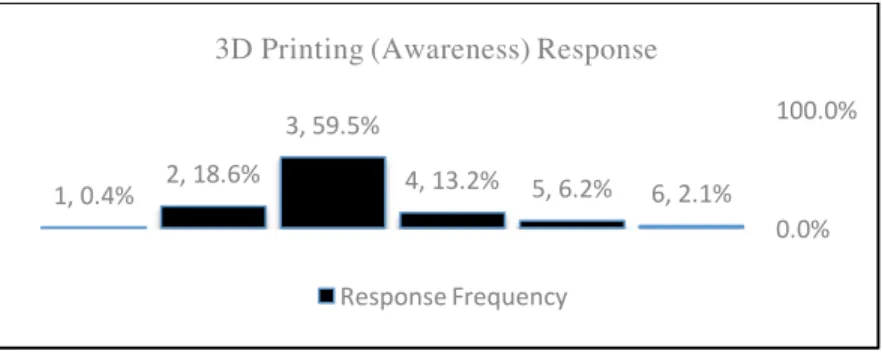
Table A8 3D Printing ... 156
Table A9 3D Video ... 156
Table A10 Adaptive Learning ... 157
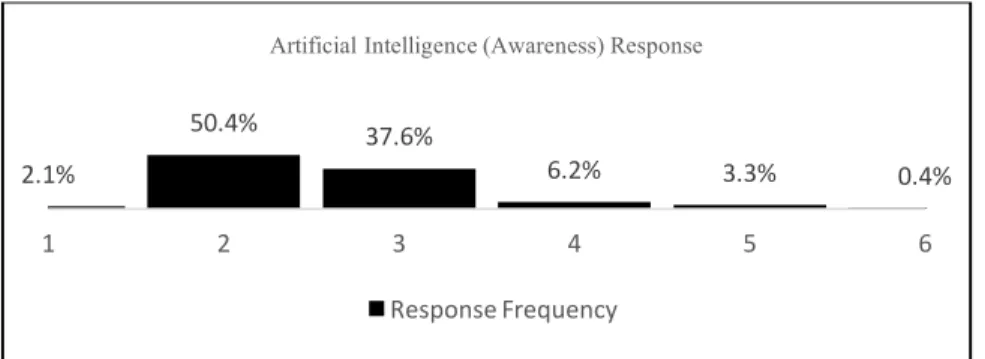
Table A11 Artificial Intelligence ... 157
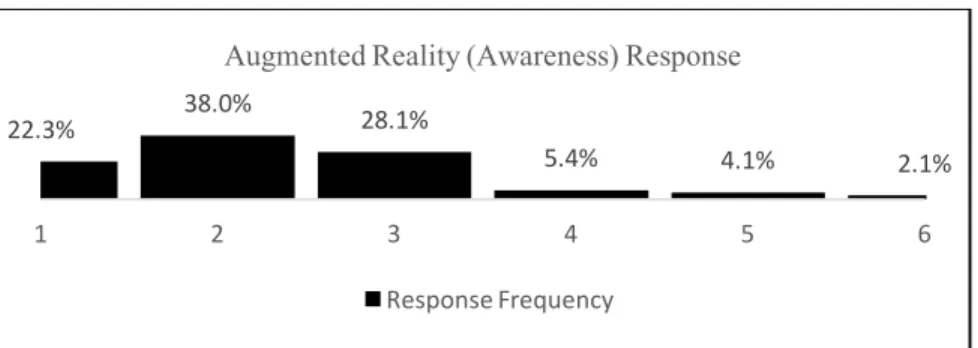
Table A12 Augmented Reality ... 157
Table A13 Bring Your Own Device (BYOD) ... 157
Table A14 Cloud Computing ... 158
Table A15 Coding ... 158
Table A16 Computational Thinking ... 158
Table A17 Crowdsourcing Response ... 158
Table A18 Data Analytics ... 159
Table A19 Digital Badges ... 159
Table A20 Flipped Classrooms ... 159
Table A21 Information Visualization ... 159
Table A22 Internet Of Things ... 160
Table A23 ISTE Standards ... 160
Table A24 Learning Analytics ... 160
Table A25 Learning Management Software (LMS) ... 160
Table A26 Location Intelligence ... 161
Table A27 Machine Learning ... 161
Table A28 Mobile/Handheld Computing ... 161
Table A29 Online Learning Response ... 161
Table A30 Open Hardware ... 162
Table A31 Robotic Tools ... 162
Table A33 Virtual Laboratories ... 162
Table A34 Virtual Reality ... 163
Table A35 Visual Data Analysis ... 163
Table A36 Volumetric/Holographic Display ... 163
Table A37 Wearables ... 164
Table A38 Overall Technology Awareness Data ... 164
Table A39 Digital Strategies and Maker Movement ... 164
Table A40 Combined Digital Strategies And Maker Movement ... 165
Table A41 Technology Knowledge (TK) ... 165
Table A42 Technological Pedagogical Skills (TPK) ... 166
Table A44 Framework Training Response Distribution ... 167
Table A47 Curriculum Standards Training ... 167
Table A48 Constraints That Limits Technology Implementation ... 168
Table A49 Type Of Internal Support For Technology ... 168
Table A50 Policy Problem(s) That Impedes Technology Implementation ... 168
Table A51 Perceived Constraints ... 169
Table A52 Policy And Practice That Impede Technology Utilization & Adoption ... 169
Table A53 Per Student Expenditure ... 170
Table A54 Per Student Expenditure ... 170
Table A55 Knowledge Of Internet Bandwidth ... 170
Table A56 Internet Reliability ... 170
LIST OF FIGURES
Page
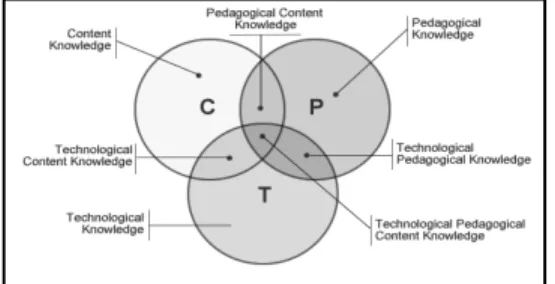
Figure 1. The TPACK framework and its knowledge components. ... 32
Figure 4. Adaptivelearning – Response ... 77
Figure 5. Artificial intelligence ... 78
Figure 6. Augmented reality ... 79
Figure 7. Bring youro own device ... 79
Figure 8. Cloud computingr esponse ... 80
Figure 9. Coding response distribution ... 81
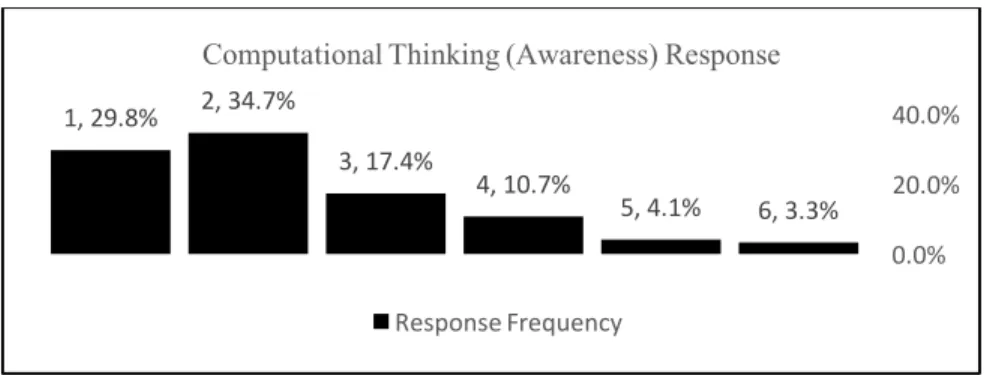
Figure 10. Computational thinking response ... 82
Figure 11. Crowdsourcing response ... 83
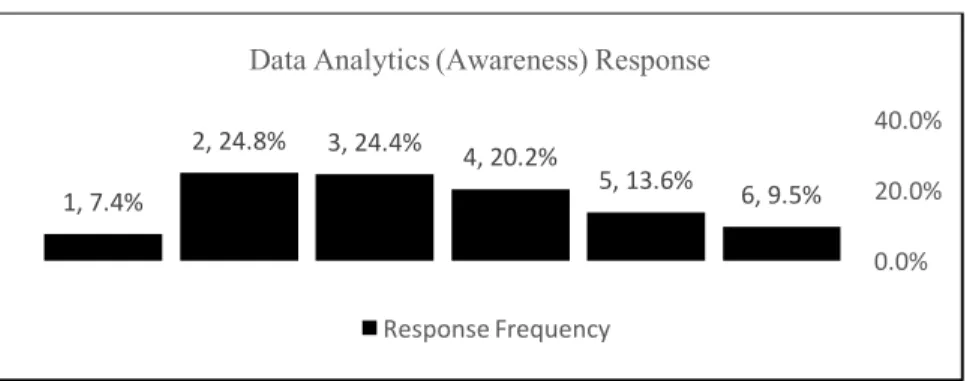
Figure 12. Data analytics ... 83
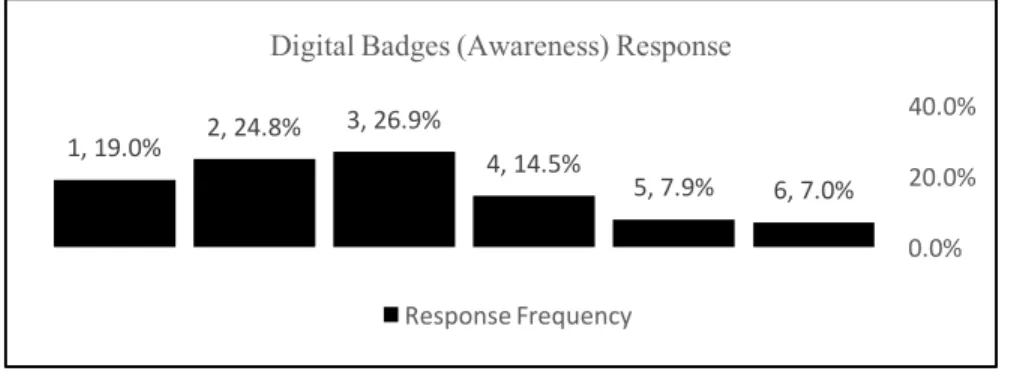
Figure 13. Digitalb badges ... 84
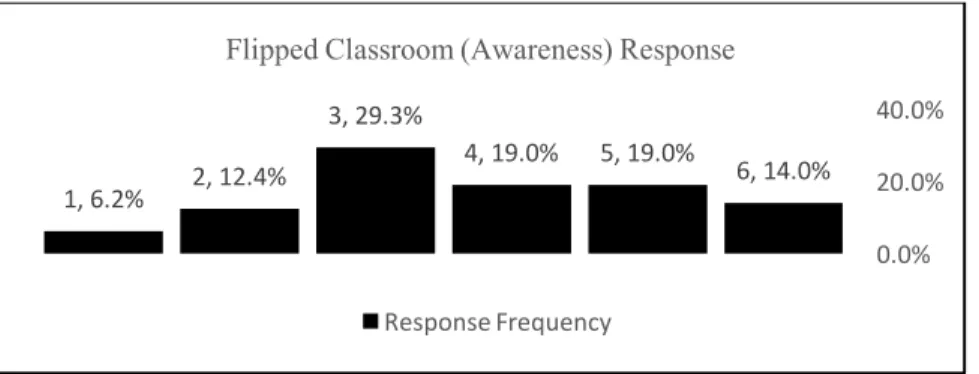
Figure 14. Flipped classroom response ... 85
Figure 15. Information visualization response ... 86
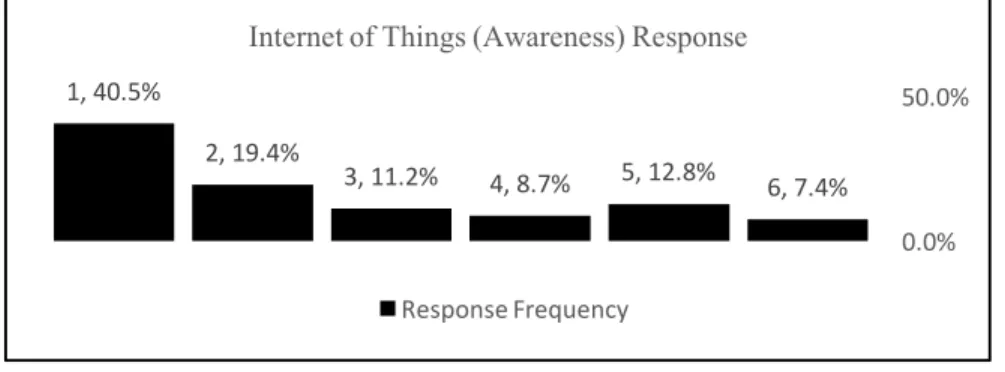
Figure 16. Internet of things response ... 86
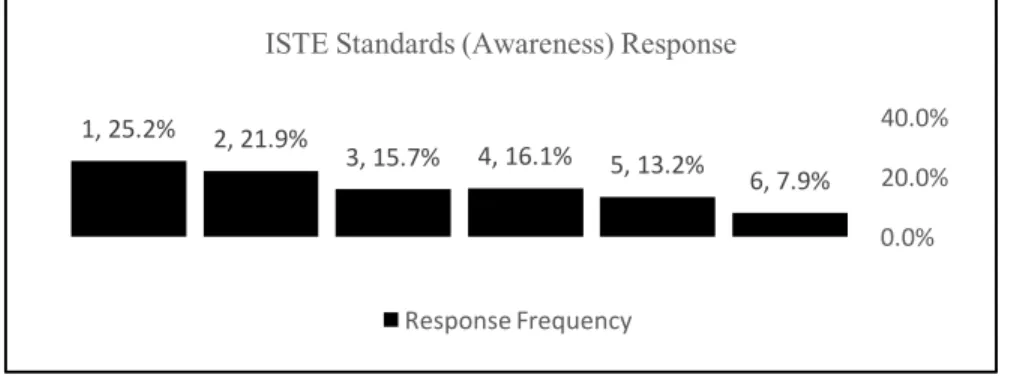
Figure 17. ISTE standards response ... 87
Figure 18. Learning analysis response ... 88
Figure 19. Learning management system ... 88
Figure 20. Location Intelligence Response ... 89
Figure 21. Machine learning Response ... 90
Figure 22. Mobile/Handheld Response ... 90
Figure 23. Online Learning Response ... 91
Figure 24. Open hardware response ... 92
Figure 25. Robotic Tools Response ... 93
Figure 26. Social Networks Response ... 94
Figure 27. Virtual Laboratories Response ... 94
Figure 28. Virtual Reality Response ... 95
Figure 29. Visual Data Analysis Response ... 96
Figure 30. Volumetric & Holographic Display Response ... 97
Figure 31. Wearables Response ... 97
Figure 32. Consolidated overall technology awareness response ... 98
Figure 33. Professional organization membership ... 99
Figure 34. Professional conference participation ... 100
Figure 35. Job related professional training ... 100
Figure 38. Academic standards familiarity ... 103
Figure 37. District’s main source of funding for technology ... 106
ACKNOWLEDGEMENTS
In earning this doctorate, many individuals played significant roles. First, I would like to thank my Dissertation Chair, Dr. Linda Polin for her guidance to keep me grounded since day one, and my committee members, Drs. Sparks and Davis for their valuable advice, who graciously gave of their time and expertise in guiding me through this dissertation journey. To my University colleagues who provided valuable advice and support. Next, I would like to say thank you to my amazing wife Amy and my children Michael, Eric, Sean and Michelle, who provided me with their unconditional love and support.
ABSTRACT
Preparing students for 21st-century learning is a great responsibility and a challenge for many school districts across the country. A large body of research suggests that a school district’s level of awareness with regards to education technology and particularly those technologies that are on a positive trend correlates with a successful technology implementation program. District Administrators that lead the charge of developing technology policies and oversee the various aspect of the technology implementation must possess a solid awareness of modern education technologies and their interplays with curriculum and pedagogy. In addition, district
Administrators must have the technological skill to overcome network infrastructure capabilities constraints as well as the leadership skill to prioritize technology.
This study used a survey as its main method of data collection; the survey was guided by three research questions that helped gain valuable insight about California K12 school district Administrators’ familiarity with most relevant modern technologies and strategies for educating students in the 21st-century, knowledge of intermediation between (technology, pedagogy, curriculum), as well as what Administrators perceive as constraints that impede effective technology implementation. The data shows that majority of district Administrators reported to having insufficient knowledge of modern and emerging technologies or digital strategies that are most reliant on technology, in addition, the data suggest that district Administrators are finding funding, training, and infrastructure as main factors that impede implementation of technology appropriate for a 21st-century education. The results of this study propose recommendations that have implications for K12 school districts’ technology awareness, knowledge acquisition for technology preparedness, district technology plan, and minimum technology readiness requirement for school district Administrator positions for the 21st-century.
Chapter 1: Background of the Study
School districts in the U.S. are finding that preparing students for the digital age is a responsibility that needs to be tackled with a comprehensive action plan. The plan that a school district develops for its technology implementation is mostly referred to as a district technology plan, which is written for about 2-5-years. There are many drivers that are instrumental in getting school districts to improve their exposure to technology such as a greater need for computers to assist with facilitation of individualized learning using digital content and smart software and many new curricular and pedagogical shifts that are taking place due to greater demand for advanced uses of technology in the work place. Educators are increasingly finding that immersive media technologies that allow students to interact with and manipulate virtual objects are becoming a necessity for teaching and learning within the context of the latest academic standards such as Common Core State Standards (CCSS) or the Next Generation Science Standards (NGSS) that with every update pushes for greater rigor and depth for learning that can only be done with the use of technology. Students now depend on their mobile devices more than ever before to stay connected with the world and to access information mostly wirelessly via the Internet, which require a more robust district network infrastructure. A thorough examination of current research and how school districts get informed about of technology trends, and how technology implementation impacts curricular and pedagogical practices can help guide how school districts provide for technology, and how districts cope with constraints related to budget, training, infrastructure, and other realities of an ever-changing landscape of teaching and learning with technology.
This study focuses on school district technology leaders and their awareness of current technology trends, their involvement with pedagogical and curricular practices, and challenge
related to planning, budgeting, and implementation. About one-third of school districts in
California during the 2017 academic year had at least 1000 students enrolled within each district. This study focuses on assessing district Administrators who are primarily district
Superintendents, district directors, and site Administrators who are involved to some extent with planning and implementation of technology. The theoretical underpinning of this study relies primarily on current education technology research as well as the ISTE standards, which draws from current and relevant research focused primarily on enabling teaching and learning with technology for the 21st century. Also, the survey tool developed for this study relies on the recommendation from National Education Technology Plan (NETP), and the Technological Pedagogical Content Knowledge (TPACK) framework.
There are thousands of school districts across the U.S.; in California alone, there were 1,204 school districts with 10,477 schools across grades P/K-12 serving 6,228,235 students, according to California Department of Education’s (n.d.) statistics for the 2016-2017 school year. The largest 283 school districts in California account for over 80% of the 6,228,235 students that are enrolled in the state. The data obtained in this study sheds light on school districts’ level of preparedness to meet the need of digital natives via their awareness of current trends in technology, understanding of the interplay between (technology, pedagogy,
curriculum), as well as identification of some challenges related to funding, training, infrastructure with implication on future policy and practice for more effective technology implementation.
The National Education Technology Plan and the technology plan framework by the California Department of Education encourage every school district to develop and implement a relevant technology plan that can meet or exceed suggested baselines for technology readiness
and infrastructure. Current state and national guidelines reference ISTE standards as an essential consideration and basis in education technology research for planning, development, and
implementation of a school district technology plan that can successfully accommodate the implementation of CCSS, NGSS with a technology implementation framework, such as the TPACK. The ISTE standards suggest that the role of a district technology lead is getting far more complex and require a great deal of awareness of the latest technologies and other skills that relate to leadership, planning, budgeting and implementation within a complex environment that is continually shifting structurally due to changes and the tensions that exist between the various technology initiatives and student needs.
Many school districts are trying to find ways to use technology in the best way possible; however, implementation varies widely for myriad reasons, such as commitment of sufficient resources for technology, staff development and availability of qualified staff, funding or reallocation of funds from other competing priorities, and determining how to best develop an information technology network infrastructure that can support the growing need for technology are just some of the examples. Technology leaders’ ability to cope and keep up with challenges that different technology implementations require is another consideration, which can improve district technology implementation and planning. Complacency on the part of district leadership or not having a viable technology plan that is sufficiently robust and scalable can place a school district at great risk of losing student enrollment to other neighboring districts or other competing schools. For example, many online programs and other non-traditional learning opportunities in the P/K-12 space can now easily compete with traditional brick-and-mortar school districts and the encroachment can easily threaten the traditional brick-and-mortar business model and may potentially force restructures that often cause major consolidations or closures of sites or
programs due to already existing struggles that districts are facing with federal and state funding. For a modern school district, technology awareness and a clear technology plan are necessities that can play a pivotal role in how the district operates or competes for students in an era of growing competition from pure online and blended learning models of education that allows access to educational resources without being tied to any particular district’s geographical boundary.
For this study, a survey was developed to gain insight as to what is the level of district Administrators technology awareness, what do they know about emerging technologies, what is their involvement or understanding of teaching and learning, and what are some constraints that impede technology implementation due to funding, training, and infrastructure. The survey uses critical elements that ISTE has deemed necessary for school districts and technology leaders to consider, so that modern application of technology is more effectively leveraged for learning. These elements can help determine the level of alignment of a school district’s technology preparedness and awareness of those that make technology decisions with regard to such factors as the development of a district shared vision, stakeholder access to technology, comprehensive plans for professional development, provisioning and planning for technical assistance and support to educators, implementation of metrics to monitor evidence and the mechanisms for ongoing evaluation of the intermediation between technology and instruction, development and execution of policies that promote student-centered teaching, mechanisms for community support and involvement, and fiscal policies to support technology initiatives that promote teaching and learning. The school district contact information for this study was obtained from the California Department of Education’s (n.d.) website, which publishes the most current statistics about each California public school in operation during each school year.
The increased focus nationally by districts on the currently administered CCSS and NGSS assessments provides each school district with an impetus to have adequate technology infrastructure. Preparedness for the state-mandated CCSS and NGSS assessments present both challenges and opportunities for many school districts across the country. It is simply not an easy task for most district technology leaders to use the technology buildup that they are required to make for state assessment readiness as an opportunity to further enhance their technology utilization for non-testing purposes. District technology leaders’ familiarity with daily teaching and learning can significantly improve each district’s ability to align infrastructure buildup from the testing and quickly leverage and repurpose for their vision of technology; as timely
technology integration is extremely vital for the digital age education (Venter & Bezuidenhout, 2008).
ISTE (2016) standards provide school districts a clear technology integration roadmap for an increasingly digital world and offer guidelines for practice and efficient use of technology in education. The National Council for Accreditation of Teacher Education (NCATE, 2010) endorses ISTE standards for teacher preparation through its current accreditation process. Often overlooked is the fact that education is not new to technological innovations; just as once
papyrus, paper, chalk, and the overhead projectors were the focus of attention, today tools such as networked digital computers, mobile computing, e-learning, websites, blogs, podcasts, wikis, and social networking are taking the center stage until replaced by some other next generation of technological tools and innovations. Students now have access to a worldwide network of users and information databases of all types, which makes the case that information in and of itself is becoming the primary source of value in society (Castells, 2011). For instance, today access to scientific research depends highly on data that is mostly available online (Beetham & Sharpe,
2013). It is widely evident that the way in which society is evolving with technology is causing a dramatic shift in the way school district staff should interact with technology. For example, teachers may argue that technology does not determine educational practice; however, if learning is deeply rooted in social and cultural contexts, then the adoption of digital tools by educators due to the strong forces from society’s adoption of technology will challenge old ways of thinking and influence both pedagogical and curricular activities.
McLuhan and Lapham (1994) argued that the old medium is the content for the new medium until we are challenged to develop new ways of doing things in the new medium. For instance, the initial use of the Internet was limited due to low bandwidth and some rudimentary applications such as email, but now teachers can use the Internet to engage students with an array of collaborative, constructivist transactions that involve a variety of software that uses multi-mediated activities. Specifically, high-speed Internet and more robust network connectivity enable teachers to use valuable learning tools such as rich multimedia experiences,
visualizations, and other educational uses for greater collaboration across the globe through social networking, and other mechanisms such as asynchronous and synchronous communication outlets. The use of intelligent tutoring software, virtual laboratories, speech recognition tools, biometrics-authentication, and many other mechanisms for delivering rich lesson content are now possible. The emergence of such technological tools affords students opportunities to engage in more authentic learning experiences with wider community participation that connects a wide range of learners across the globe (Lombardi, 2007). Nevertheless, with all the advances that we have so for experienced, the definitive influence of digital technologies on the various aspects of education has yet to be quantified (Garrison & Anderson, 2000). However, disruptive technologies of today such as e-learning, cloud computing, augmented and virtual reality, and 3D
printing, which appears to the potential to fundamentally alter the entire landscape of teaching and learning as we know it (Garrison, 2011). What is widely expected today is that technology is here to stay and its adoption is accelerating at an increasing speed within the various aspects of education, which follows a similar trajectory already evident with the modernization of the society at large with technology adoption.
School districts that want to be future ready with their technology plans can take full advantage of the current education technology research to gain awareness about how and when technology can be implemented to maximize student outcomes, and quickly curtail declining enrollment by keeping teachers’ pedagogical practices relevant for today’s digital generation. The ISTE standards and the NETP are supported by an extensive body of relevant education technology research and provide the criteria for the evaluation of a school district technology plan and provide a clear roadmap for district technology leaders’ level of awareness and
readiness. The latest report from New Horizon identifies various education technologies in areas such as consumer electronics, Internet, social media, visualization, and digital strategies to have great significance for teaching and learning, and within each technology domain the report points to specific emerging technologies that will have a great impact on strategies for future planning of education technology implementation that district technology leaders need and the district to be well versed in.
Statement of the Problem
The latest research identifies general trends within the domain of emerging
technologies and conditions that must exist within a school district’s technology plan that can pose significant challenges for school districts. A large body of research suggest that many of the challenges that districts face is often due to their lack of awareness of technology trends,
and how they use technology once they acquire it. Some of the challenges can impede district’s ability to achieve improvements in areas of equity, accessibility, and usability of technology. Additional research that identifies (a) district awareness of technology trends, (b) its understanding of a technology implementation framework such as the TPACK, (c) and district Administrators’ knowledge of the constraints that impede technology implementation, which can contribute to the body of research that further identifies additional problems or implications that are useful for districts to consider regarding their technology awareness and implementation.
Statement of the Purpose
The purpose of this descriptive research study is to determine the extent to which school districts leadership is aware of relevant 21st century education technologies, modern practices, and relevant policies that conform to the latest education technology research and standards, such as those established by ISTE; this study also examines district technology leaders’ familiarity with the intermediation between technology, pedagogy, and curriculum, which is an important consideration for district technology preparation for implementation. Also, this study probes to understand the kinds of constraints, supports, problems, or issues related to policy and practice district Administrators perceive that impacts a district’s ability to plan, budget and adopt the technology.
The data from this study can be used to identify potential gaps in current research and establish a baseline from which school districts can guide and improve the effectiveness of their technology implementation. The findings can also be used to provide insight into what roles and responsibilities district technology leaders may play in order to expand or refine their existing district technology plans and to gain strategic advantage in areas of technology planning, policy
development, leadership capacity building, development of strategies for professional development, and prioritization of district resources for a more effective technology implementation and utilization.
Research Questions
The survey process aims to address the following research questions:
1. How aware is the district technology leadership with the trends in current technology? 2. How aware is the district technology leaders of the intermediation between
technology, pedagogy and curriculum?
3. What constraints, supports, problems, or issues related to policy and practice does the district technology leaders perceive that will affect district’s ability to plan, budget and adopt technology?
Methodological Overview
The theoretical framework for the development of the survey tool used in this study is based on an extensive review of the latest literature, with a focus on the 21st-century learning that explores trends in emerging technologies and school districts’ constraints with regards to such factors as funding, planning, implementation, policy, and practice. This descriptive
research study uses a convenience sampling method designed to examine technology awareness of district technology with current technology trends and uses of emerging technologies for curricular and pedagogical practices, as well as roles and responsibilities that district leadership undertakes with regards to planning, budgeting, and implementation of technology. The survey is guided by latest research, as well as recommendations found in the latest release of the 2016 ISTE standards, the latest New Media Consortium (NMC) Horizon Report, and the 2016 updated U.S. Department of Education’s NETP. The development of the survey is further guided by the
essential conditions that are recommended by the ISTE 2016 standards, as well as
recommendations from the 2016 NETP plan, and other research on technology planning and implementation. Additionally, the NMC’s Horizon Report has influenced the survey questions regarding technology awareness concerning emerging technologies that are relevant in 2017 and should be considered for teaching and learning. The scope of this study is limited to California school districts with the student population of least 5000 students that serve grades from preschool to 12th grade.
Definition of Terms
Emerging Technologies: technologies that are in the early stage of adoption (Cervone, 2015).
3D Printing: process used to create a three dimensional object by using various materials layer by layer, 3D printing is also known as additive manufacturing (McMenamin, Quayle, McHenry, & Adams, 2014).
Adaptive Learning: is an educational method, which uses software to continuously customize and mediate resources according to the individual need of each user (Steichen, Carenini, & Conati, 2013).
Artificial Intelligence: artificial Intelligence is a simulation of human type intelligence by software or machines (Timms, 2016).
Augmented Reality: computer generated images like graphics or GPS data are superimposed on real-world environments to create an augmented realty (Billinghurst & Duenser, 2012).
Cloud Computing: an information technology paradigm refers to enabling technologies to access shared pools of computing resources over the Internet (Mell & Grance, 2011).
Coding: coding makes it possible to create software applications for computing purposes (Rubinstein & Chor, 2014).
Crowdsourcing: it is a process of getting people over the Internet to fund or solve a problem (Porcello & His, 2013).
Digital Badges: digital badges are used to validate accomplishment for different online participation (Gibson, Ostashewski, Flintoff, Grant, & Knight, 2015).
Flipped Classrooms: it is an instructional strategy used to reverse the traditional learning environment by delivering most of the instructional content online, and allowing students to do their traditional homework assignments in class (Lo & Hew, 2017).
Internet of Things: it is a network of physical devices like appliances that are embedded with electronics and software that can be connected with each other and exchange data (Castells, 2011).
Machine Learning: it is the ability for computers to learn without explicit programing (Michalski, Carbonell, & Mitchell, 2013).
Online Learning: it is also referred to E-Learning a method of acquiring knowledge using an online network or the Internet (Picciano & Seaman, 2010).
Open Hardware: refers to hardware design specifications that are published and can be created, modified or distributed by others (Mondada et al., 2017).
Virtual Reality: it is a three-dimensional simulated image or environment that can be interacted with (Glanz, Rizzo, & Grapp, 2003).
LMS: it is a learning management system that allows for distribution and management of online learning (ISTE, 2016)
Computational Thinking: it refers to the thought processes that involve methods or instructions that a computer or machine can carry out logically (Bers, 2010).
Digital Citizenship: Activities that involve information technology to engage in society for various reasons (Ribble, 2015).
Curation: it refers to digital perseveration, handling, processing and manage of online content (Beagrie, 2008).
Blended Learning: blended learning is a educational methodology that involves formal and informal learning where both online and classroom instruction is used in some proportion (Anohah, Oyelere, & Suhonen, 2017).
Maker Movement: is an umbrella term used to included independent inventors, designers and thinkers (Halverson & Sheridan, 2014).
Assumptions, Limitations, and Delimitations
Assumptions: It is assumed that survey respondents are accurately completing the survey questions; as the survey asks for respondents to reveal their weaknesses or strengths in some of the questions. Limitations: The survey may be limited in gaining exact geographic scope of participants. The minimum size of student population per district has limited the results to mostly medium to large sized school districts in California. Some respondents may find the number of questions on the survey to be too many or time-consuming, which may impact their participation consistency throughout the sections. Delimitation: California school districts with the student population of mostly over 5000 students were surveyed. District technology leaders include Superintendents, IT Directors, Education Technology Directors, Site Principals, and
other District Technology Leaders. At most 978 school districts were contacted to participate, of which 272 districts participated.
Chapter Summary
As technology plays an important part in helping school districts enhance their offers for the digital age students, school districts need to consider technology implementation strategies that can help improve their ability to improve their district operations with regards to
implementation. There is a wide body of research that proposes important considerations for school districts to meet the need of their 21st-century students. The purpose of this descriptive research study is to determine the extent to which school districts leadership is aware of relevant 21st century education technologies, modern practices, and relevant policies that conform to the latest education technology research and standards, such as those established by ISTE; this study also examines district technology leaders’ familiarity with the intermediation between
technology, pedagogy, and curriculum, which is an important consideration for district
technology preparation for implementation. Also, this study probes to understand the kinds of constraints, supports, problems, or issues related to policy and practice districts perceive that impacts a district’s ability to plan, budget and adopt the technology. The theoretical foundation for this study is based on an extensive body of research that identifies trends within the domain of emerging technologies and conditions that must exist within a school district for successful implementation of technology. The data from this study can be used to identify potential gaps in current research and establish a baseline from which school districts can guide and improve the effectiveness of their technology implementation. The survey for this study is guided by latest research, as well as recommendations found in the latest release of the 2016 ISTE standards, the latest New Media Consortium (NMC) Horizon Report, and the 2016 updated U.S. Department
of Education’s NETP. Additionally, the NMC’s Horizon Report has influenced the survey questions regarding technology awareness concerning emerging technologies that are relevant in 2017 and should be considered for teaching and learning. The scope of this study is limited to California school districts with the student population at least 1000 within a wide range of demographics.
Chapter 2: Review of the Literature
It is widely acknowledged that the use of technology can greatly enhance many
educational initiatives, individual student potential while giving teachers more options to harness affordances of different technologies. Use educational technology strategies that leverage such things as cloud computing, makerspace, mobile learning, 3D printing/rapid prototyping,
intelligent software, information analytics and visualization, digital badges/microcredits, computational thinking, coding, wearables, and many other technology strategies seems to be changing both teaching and learning with increasing speed. School districts have the intent to engage their teachers with regards to their technology integration initiatives. However, building teacher capacity in uses of education technology through policy and practice cannot be done arbitrarily or without a well-engineered plan. It is known that districts often attempt to get teacher buy-in for many of their initiatives through pilots, demos or some internal assessment such as a survey; however, technology implementation cannot just be narrowed to meet the need of just a few that participate in some survey. Technology readiness assessments or other formal means can be useful in helping districts gain situational awareness and to establish a baseline for prioritization of resources to include all teachers at their individual level. Often districts do not have the resources to act on the information that they gather because of other competing
priorities or other fiscal related constraints. In recent years there have been many discussions within academic circles and education technology conferences about how school districts need to orient their focus towards new digital strategies or technologies such as computational thinking, digital literacy, gamification, augmented reality, virtual reality, 3D printing, cloud computing, and online learning. New technologies are emerging at an increasing rate, and research suggests that teacher success highly depends on a school district’s ability to keep up with their awareness
of what is trending with technology, and what type of technology implementation strategies is best for their use. Additionally, every new technology requires that districts commit to providing high-quality training and continuous support for its staff.
Education Technology for the 21st Century
The emergence of newer technologies continues to transform the landscape of education; therefore, it is important that districts realize that they need to develop their abilities to rapidly test, adopt and get ready for the next innovation to be used for solving pedagogical or curricular problems that would advance teaching and learn for the digital age. District technology leaders such as an IT director can greatly benefit by knowing what the current education technology trends are to benefit the curricular and pedagogical applications.
In 2017 there were many technologies and digital strategies that are being discussed. Computational thinking and digital literacy are commonly used terms in many education technology circles. Computational thinking refers to algorithmic thinking or a step by step mental processes that involve many levels of abstractions in devising problems and solutions in such a way that an information-processing agent like a computer software can use as instructions to produce an output (Wing, 2006). Lately, many school districts have been trying to instruct students to learn computational thinking via basic computer programming courses at their schools due to increase in discourse about the topic within many academic circles, which promise to give students an extra set of tools to solve problems and design useful systems that rely on simple to complex algorithmic processes. Opportunities for computational thinking lessons seem to be emerging everywhere, including in biology, economics, engineering, and even in the arts and humanities (Astrachan, Hambrusch, Peckham, & Settle, 2009; Denning, 2009; Rubinstein & Chor, 2014; Wing, 2006). As we continue to drown in data, computational
thinking will become more useful for the development of computational processes and
techniques that can make sense of the vast amounts of information that continues to pile up, and it will be instrumental to paving new paths, leading to discoveries or innovations. For students to succeed in modern society, they must be exposed to some level of computational thinking within their academic context (Wing, 2008). Thus, according to current technology trends and
trajectory, school districts can greatly benefit their students when they introduce them to computational thinking and make computational thinking an integral part of their teachers’ practice.
Today districts are discovering that their students are preparing for jobs of the future, many of which will require coding skills, and it is important that district technology leaders gain that awareness and understand the importance to push for greater implementation. For example, in 2017 emerging topics such as nano-computing, bio-computing, quantum computing, and so many other new topics that assist with handling of data are now appearing as a topic of
discussion in many academic circles and are tickling in the newer textbooks, which serve as drivers that are pushing for greater student exposure to computational thinking and digital literacy for many school districts to start getting ready and prepare their technology
infrastructure to accommodate the increase in demand. Young children as early as Pre-K are exposed to curricular material that expects them to construct objects using known design processes that professional engineers use; in many cases young children are given opportunities to interact with robotics and complex systems with interacting parts in most cases; these types of engagements require following one or more sets of logical instructions such as those taught in computational thinking (Bers, 2010). Professional development (PD) will allow teachers to engage in conversations with peers for greater exposure to new ideas and to witness best
practices for gaining confidence in starting their journey towards the integrate computational thinking into their daily practice and improve their readiness for requirements of the various emerging academic topics such as coding. Today there is a growing number of school districts that partner with organizations as Code.org to start their first computer programming courses; for instance, the Code.org model allows teachers to work with other teachers across other districts in the country to facilitate collaboration and access to relevant computer science curricular material, which can support different academic goals (Kalelioğlu, 2015). It is also commonly known today that many districts are piloting coding curriculums such as Google’s CS First at their elementary schools to help students obtain experience with coding via child-friendly and relatively easy to use coding platforms like Scratch, ScratchJr, or Snap! (Resnick et al., 2009). In 2017 many educators see coding as a viable emerging new literacy and software such as ScratchJr from Massachusetts Institute of Technology or Snap! from UC Berkeley offers the potential to allow teachers to expose young students to programming via interactive stories and to engage them with new academic topics that require computational thinking (Prensky, 2008).
It is widely known that digital natives tend to get bored easily with outdated pedagogical practices of yesteryears. District leader’s knowledge of what digital natives prefer to learn with or from can greatly improve student retention rates and improve the overall academic
performance and engagement. Making learning fun is one of the top priorities for most teachers who want to achieve better student outcomes (Huang & Soman, 2013). There is evidence to suggest that many teachers do try to incorporate such things as gameplay into their daily lesson plans within different curricular context (Takeuchi & Vaala, 2014), some studies show that gaming increases student engagement and provides students with a variety of physiological benefits (McGonigal, 2011). For example, chemicals that gaming stimulates in the brain such as
epinephrine, dopamine, and norepinephrine promote positive feelings and make users more eager to learn (Gutierrez, 2012). Many researchers would agree that many academic subjects such as mathematics, science, and social studies would benefit greatly from the integration of gaming activities that have the potential to develop problem-solving abilities, spatial thinking, and decision-making, all of which can potentially improve student outcomes. District technology leadership’s understanding of computer games that can provide an alternative to usually
mundane lectures and paper worksheets would spark more interest across the district from both teaching and learn prospective; with the understanding that gaming would provide for more ways to engage learners through goal-oriented mechanisms that gaming can provide (Rahn, 2009). Today, district technology leaders can get involved by supporting provisioning of a district network infrastructure that can support a more robust bandwidth that gaming requires for teachers to confidently start gamifying some of their lessons, which would eventually pave the path for greater integration across different curricular activities and subjects. Teachers can take full advantage of educational affordances of different gaming genres; for instance, games provide goals that students can pursue, challenges that can range in level of difficulty and customizations that will allow students to personalize their experience, while teachers monitor clear progression to mastery through the real-time feedback that many gaming platforms offer. The social engagement, meaningful rewards, visible status, control of levels, autonomous decision making, tools to express oneself, switching roles, and a host of other opportunities for the students and teachers make gaming a worthwhile pursuit (Huang & Soman, 2013). Today, gaming is one opportunity that continues to improve with advancement in software and hardware each year, based on the results of several empirical studies, the effect of game elements on education remains somewhat unknown; however, many recent studies suggest that gamification
has the potential to improve learning if used correctly (Dicheva, Dichev, Agre, & Angelova, 2015). Advanced gaming platforms that use technology-mediated simulations, will allow students to reflect on and discover the intersection between their real-world identities and virtual or game identities; as such, their virtual identities can be leveraged to help shape their real-world identities (Gee, 2003). For instance, today’s technology leaders can introduce teachers to
gaming technologies through some relatively easy to access software, like Microsoft’s Minecraft, to start the process of experimenting integration of gaming with their teaching within such topics as science, mathematics or social studies. This will allow for simulating places, systems, and structures to tell stories or improve understandings of complex events and sequences; as many lessons will greatly benefit from affordances that gaming provides through collaboration using virtual models while keeping the level of academic rigor and learner engagement at a very high level, which can go far beyond what was traditionally possible through many classical or non-digital means (Short, 2012). School districts’ understanding of what the current gamification technology trends are, and what is appropriate for their curricular application can greatly improve the integration process of gaming for all students and teachers.
Other technologies that are starting to get attention in many academic circles such as augmented reality (AR) have improved vastly during the early part of the 21st century and more specifically from 2013 to 2017. Augmented reality is an example of a technology that wasn't well known five years ago, but today it is emerging as one of those technologies that can take hold and substantially transform teaching and learning. Researchers understood years back from 2017 that technologies such as AR would allow for projection of digital materials onto real-world objects someday and would provide learning opportunities in ways that were not possible before (Azuma, 1997). It is important for district technology leaders to develop awareness of
what opportunities emerging technologies, like AR, can offer and how it can be appropriately used for modernization of pedagogical practices with technology. Technology such as AR allows students to imagine the world through a virtual overlay that opens another dimension and extends the capabilities of another known emerging technology called virtual reality (VR), which is capable of completely immersing the user’s senses in an artificial environment. Students can experience learning by overlaying objects that will coexist within the real-world environment and may include text, animation, images, videos, sound, and 3D models. A large body of research suggests that AR type technologies have enormous potential in the future as computing capabilities continue to get better and that AR can improve teaching methodologies and learning outcomes (Bower, Howe, McCredie, Robinson, & Grover, 2014). For example, today one benefit of AR for teachers is that it allows for the rescaling of virtual objects from molecules to planets, which affords students the ability to manipulate and make sense of concepts that
otherwise would have been difficult to grasp (Johnson, Adams, & Cummins, 2010). Significant barriers such as time and technical skills for the implementation of AR can be resolved if the district first understands what the technology is used for and then provide the means for technical support or training for teachers through a well-researched framework to facilitate better
technology integration with curricular and pedagogical activities at its core (Billinghurst & Duenser, 2012). Many emerging technologies such as AR are complex; therefore, users will gain more confidence during the process of integration if they receive insights from district leadership and have access to other users through opportunities that the school district can facilitate for collaboration. District technology leaders’ understanding of the complexities and uses of the different technologies such as AR will help greatly with the planning,
AR, lesson demonstrations by master teachers that are coupled with observations of what teachers can relate to within their specific curricular application can have a profound impact on the adoption process. Today, with technology such as AR, teachers will be able to provide their students with access to contextually relevant multimedia experiences that many 21st-century curricular activities require.
Another technology that has picked up traction in education since 2015 is Virtual Reality(VR) enabling technologies. VR type technologies, use image processing, graphics rendering, and multimedia technologies (Knott, 2000). Like most other emerging technologies, VR has increasingly become more affordable and has overcome many of its limitations tied to hardware, software and the cost. For instance, significant improvement in computer processing and display technologies have led to dramatic increases in research and development in related technologies that can continually improve the infrastructure, hardware, and software that a technology such as VR continues to dependent on (Glanz et al., 2003). Many emerging technologies can quickly mature, for example, high definition simulations through VR is now possible that can add tremendous value with significant implications for many curricular applications in education (Johari, 2005; Saleeb & Dafoulas, 2011; Wasson, 1997). A virtual classroom can be held in cyberspace and offer advanced features that are nearly impossible to achieve within the traditional classroom settings. Support for integration of VR type
technologies within many curricular activities has also come a long way for educators due to advances in Internet bandwidth, software, the computer processor, and hardware capabilities. Consequently, district awareness that VR can be used for such uses as conducting virtual laboratory experiments, provide distance learning, or help students with technical training virtually can position the district to take advantage of such technology better to further their
educational offerings. Through an extensive meta-analysis of various recent research studies, Merchant, Goetz, Cifuentes, Keeney-Kennicutt, and Davis (2014) found that VR is highly effective in making content more accessible and fun. As it is commonly known, the price performance of technology nearly doubles each year. Just five years ago, the cost of a rudimentary VR system was highly prohibitive; however, in recent years, the increasing
popularity of related innovative products such as Google Cardboard VR, Oculus Rift, and HTC Vive have made adoption of VR more affordable, and there is more incentive for districts to consider integration of VR into their instructional practices (Choi & Varian, 2012). Technology, like VR, seems to have enormous potential today and have been shown to improve cognitive skills as well as access to certain curricular activities that only such technology can provide. For instance, this type of technology is allowing students to build 3D objects or tackle abstract concepts with different subjects (Merchant et al., 2014). For example, students in a biology class can see how a beating heart looks like the inside of the human body, or how tiny electrons move within an electrical circuit. Studies show that teachers can use VR to teach abstract concepts in science, mathematics, and other subjects via virtual encounters that are typically outside of the normal human experience (McGrath, Wegener, McIntyre, Savage, & Williamson, 2010).
Today, other technologies such as 3D printing come with the promise of revolutionizing the manufacturing industry by creating durable and safe products in large quantities using digital information to make physical objects; the printers are quickly becoming more useful and could be used in new ways that can impact our everyday life. It appears that the technologies that are associated with the 3D printing will play a key role in starting the next industrial revolution (Nov, Arazy, & Anderson, 2011). Educator’s awareness of 3D printing presents opportunities and potential for pedagogical practices that weren’t possible just a few years ago. Today,
students can use the additive manufacturing process or 3D printing that involves fusing one layer of a printing material at a time to make a 3D object; the process is usually controlled by a design software such as Autodesk’s Computer Aided Design (CAD) software. Within the past three years there has been a noticeable increase in the number of 3D printers across many school districts; today it is not difficult to find at least one teacher on every campus that has given 3D printing a try or have heard of it. Teachers that have a 3D printer are often happy to show off their students’ work; often students tackle more complex and innovative printing jobs as both the students and their teachers gain experience with the process of printing and experiment with new materials and design concepts. It is important for districts to know that this type of technology is accessible today, and it allows for students to be engaged in hands-on problem-based learning while they wrestle with concepts that are connected directly to the curriculum (Gershenfeld, 2005; Martinez & Stager, 2014).
Teachers are now seeing greater implications for technologies like 3D printing in the new academic standards: specifically, this type of technology today allows for, printing such objects as prosthetic limbs, custom-made musical instruments, and machinery parts that can help teachers deliver more effective lessons where their students can gain a better understanding of concepts they are learning. The 3D printing technology continues to mature, and the range of possible uses for this type of technology is promising; today, multiple materials can be used to print such items as cells and tissues, giving educators myriad opportunities in this new
revolutionary dimension that wasn’t imaginable just one decade ago (McMenamin, Quayle, McHenry, & Adams, 2014).
District awareness of the new generation of learners who are also referred to as digital natives is important because these students have already adapted to tremendous connectivity and
collaboration with their computing devices like their cell phones. Papert, Tyack, and Cuban (1997) argued that social penetration of communication and information technologies can help teachers develop new ways of educating their students, and a technology such as 3D printing can just do that by giving students the opportunity to invent and innovate, as their growth remains rooted in their experience (Papert, 1993). It is also good news for teachers that there is broad availability of open source materials for popular technologies such as 3D printing, which can enhance the application of the technology and improve student outcomes by giving students and teachers more opportunities to experiment with and learn using the technology (Benkler, 2006). A district can provide more opportunities through district technology plans to further teachers’ knowledge of technologies such as 3D printing and highlight the curricular and pedagogical implications for their practice. Reduction in cost and improvement of 3D printing technologies is expected to increase utilization across different subject areas such as math and science; the makerspace movement is also picking up momentum in many school libraries and media centers where the 3D printers seem to serve as one of the main focal points.
Today there is a great push by many school districts to reduce the digital divide and equip teachers with as many technologies and training as possible. For example, one such technology that is often mentioned involves cloud computing tools that offer the potential to improve
efficiency, scalability, and reliability of software deployment within existing hardware resources (Kurbel, 2001). Cloud computing enables ubiquitous, easy, on-demand network access, which allows for shared and customizable computing and academic resources (Mell & Grance, 2011). Today, many curricular activities are encouraging teachers to use virtualized resources and software to increase productivity, access, and real-time collaboration. Districts can plan to use today’s available cloud services such as Google Apps for Education (GAFE), Office 365 from
Microsoft, and many other to enable their teachers, students, and staff with tools while substantially reducing deployment time and expenditure. Today, big players that offer cloud services like Google, Amazon, Microsoft, and Adobe are pushing for modernization of data centers that includes greater virtualization of IT infrastructures and more implementation of subscription-based cloud software; the general growth trend for cloud technologies adoption seems to be on a positive trajectory (Johnson, Adams Becker, Cummins, & Estrada, 2012). IT directors’ awareness of the various cloud services for education can well-position the district to leverage the technology to meet specific district objectives.
Today many teachers are already familiar with or have heard about such technologies as e-learning, video streaming, and systems or objects simulations; cloud computing technologies are known to improve access to those opportunities for teachers so teachers can provide better educational experiences for their students (González-Martínez, Bote-Lorenzo, Gómez-Sánchez, & Cano-Parra, 2015). District awareness and plan that includes ongoing teacher development and support for cloud services will allow better implementation and efficient dissemination and use of digital curricular materials for the classroom.
School districts would greatly benefit from exploration to find as many technology opportunities that fit their context. Technologies that are enabling online learning is helping to expand and shape district offerings in response to the growing demand for hybrid and virtual learning from those students and parents that require the flexibility of access without being bound to space or time (R. Cole, 2000). Today, technologies that enable blended learning and fully online instruction are experiencing a surge in demand as Internet connectivity, and software advancement continues to improve; it is often the case when technologies that appear to provide opportunities continue to be in demand in education (Volery & Lord, 2000). Many districts are
now realizing that keeping their services confined to obsolete strategies of past years such as keeping the 100% brick-and-mortar model may not be a viable strategy for the future. For example, today a considerable percentage of students are already participating in homeschooling programs across the nation, where instruction is delivered through a hybrid model as some or most of the instruction is delivered using some form of a modern technology strategy. Hybrid and online models of today rely heavily on Learning Management Software (LMS) technologies such as Moodle, Schoology, Canvas, Blackboard and many others, which allow for online lesson delivery, assessment management and implementation through synchronous and asynchronous communication with the students. Furthermore, other features of the LMS allow for educators to collect student data and to personalized learning. In recent years, there has been a notable and study increase in the percentage of high school instruction that is offered online (Christensen & Horn, 2008). Due to the rapid expansion of network bandwidth, Internet speed, and advances with cloud software it is expected that the percentage of students in the P/K-12 space that are receiving online instruction will continue to increase (Picciano & Seaman, 2010). As these online programs continue to grow, school districts’ technology plans must be aware of such trends to meet their teachers’ need for training so that the district can continue to expand their offerings and improve learning experiences for their students through technologies such as an LMS of their choice or other software that can facilitate their online initiatives. District would benefit if its technology leaders and staff take part in planning with teachers, so they are always involved and can help determine the scope of technology support for the teachers, while teachers should be given the opportunity to collaborate and figure out the appropriate level of blended instruction and how the lessons can be made ready with some of the today’s popular software like Moodle, Schoology, or Canvas that are designed to manage online content and delivery.
Furthermore, the district will gain knowledge from teachers’ input and their leaderships’ involvement of how the topic of online learning will impact its operation; such awareness will also help with clarification of some challenges that involve meditation between technology, pedagogy, and curricular activities. Each emerging and established technology have features or characteristics that can influence or shape the pedagogical moves teachers can make and affects the nature of the content that can be represented, created, or shared within various curricular contexts. District’s technology department and its intimate involvement with the district
technology plan that specifies the use of each technology and related support and training for the teachers would ensure that a reasonable set of considerations are in place for each technology that the district uses.
Today, school districts around the nation are in a race to increase technology utilization due to many drivers. In recent years’ government policy related to E-Rate funding and the, Every Student Succeeds Act (ESSA) of 2015 is supporting school districts’ initiatives to align their educational programs to meet the 21st-century academic content standards such as the Common Core State Standards. According to the World Economic Form (2016), 65% of grade school students will work in careers that are not yet been invented, and the Institute for the Future (IFTF, 2014) asserts that future drivers in health, agriculture, security, infrastructure, manufacturing, retail, and media will create new classes of jobs such as data nurses, soil programmers, pre-crime analysts, smart-grid debuggers, bionic tailors, gut florists, and rationality technicians, to name just a few. Many districts are now realizing that survival of a school district will most likely hinge on their robust technology strategies that can support many of the emerging careers that are on the horizon for not too distant future.
awareness of standards for technology can help guide planning and implementation of
technology appropriately within the context of district’s curricular and pedagogical initiatives. It is commonly known today that district is seeking greater engagement with technologies that deliver a more individualized learning experience to empower their students. Through research-based technology implementation standards such as ISTE and a framework like TPACK, districts will have a better chance of appropriately integrating technologies that can empower their students and help prepare them for a future that requires citizens to be technologically savvy. ISTE standards were developed using established practice within the field of education technology that is grounded in extensive research and input from a wide range of experts and practitioners. The development process of the ISTE standards mirrors the process used by the Council for Accreditation of Educators Preparation (CAEP), the American Library Association (ALA), the National Board for Professional Teaching Standards, and others in the field (ISTE, 2016).
District technology leader’s understanding of the interplay between content, pedagogy, and technology can play a critical role in helping to shape district’s direction with regards to technology implementation. It will not be easy for school districts to eliminate the isolation of content, pedagogy, and technology from the practice of teaching and suddenly divert attention to mediation among these different domains of knowledge, as there are complexities within each knowledge component as well as within the relationships, tensions, or interdependencies with one another (Graham, 2011). Through a systematic and planned effort by the district, it will be possible to guide each teacher toward achieving a dynamic equilibrium with the three domains of knowledge, as each knowledge area (content, pedagogy, and technology) will have a role to play individually as well as together (Herring, Mishra, & Koehler, 2014). A district technology plan
needs to account for the fact that changes in practice will require serious leadership, continuous collaboration, ongoing monitoring, and a great deal of effort by all the stakeholders. According to Herring et al. (2014), it is difficult to integrate technology into teaching because of the ill-structured nature of teaching and learning itself. J. Gibson (1977) reiterates that each
technology has its specific affordances and constraints, suggesting that teachers must understand where and when to integrate a technology; and district technology leaders’ awareness of content and pedagogy can significantly help the district remove some of the constraints and make integration of each type of technology easier and more relevant.
This study has examined the data gathered from 189 school districts to gain an overall perspective of districts’ technology leadership’s awareness of current technology trends that help shape a school district’s technology vision and plan for technology implementation. The
analysis of this study is guided by current education technology research including the ISTE standards, which promises a well-researched technology integration methodology for a 21st-century school district that continually strives to close achievement gaps with consideration to equity, personalize learning, and greater access to technology. Analysis of this study is further grounded by research that suggests incorporating a framework such as TPACK can greatly help teachers understand technology intermediation with pedagogy and content according to (Herring et al., 2014). The TPACK framework builds on Lee Shulman’s (1987) construct of pedagogical content knowledge (PCK), extending the research by Mishra and Koehler to allow for
technology knowledge (Herring et al., 2014). This framework allows teachers and school administrators to think and to learn about the interplay of their knowledge of pedagogy, content, and technology with their teaching practice, and more specifically how to integrate technology into the practice of teaching appropriately (Mishra & Koehler, 2006). District awareness that a
technology plan should be based on promoting good teaching that follows recent research methodologies is important; good teaching is not necessarily measured by how much pedagogy one knows, the amount of content knowledge one possesses, or how much one understands about technology, but rather by how the three domains of knowledge correctly interact with one
another to become useful in practice of teaching by individual learners. The three areas of knowledge (content, pedagogy, technology) are constantly overlapping by mediation amongst each other, and the intersection of what is being mediated forms that overlap called technology, pedagogy, and content knowledge or TPACK (Herring et al., 2014; Mishra & Koehler, 2006). Districts need to also acknowledge through their policy and practice consideration that accounts for social and contextual effects that are present and will continue to challenge teaching and learning (Lave, 1996). Learning is socially constructed (Lave & Wenger, 1991); knowledge is distributed over symbolic and physical environments as well as people (M. Cole &
Engeström, 1993; Lave, 1988). According to Lave (1993a), there is no such thing as learning, but rather it is changing participation in culturally designed settings, suggesting that learning does not occur in a vacuum through some random transfer, but rather through a change in participation; this is an important consideration for district technology plan development, so districts always keep the social and contextual effects that relate to technology integration in mind. This notion implies that teachers cannot remain in isolation but instead need to collaborate and interact with one another. For instance, district technology leaders would benefit teachers by facilitating a network of interpersonal relations that teachers can use and through which they can share information and learn from one another. The technology plan should also account for instances where teachers are loosely networked and facilitate opportunities for teachers to share resources and act as a community of learners. The technology plan should push for wider