Open Research Online
The Open University’s repository of research publications
and other research outputs
Generating knowledge graphs by employing Natural
Language Processing and Machine Learning techniques
within the scholarly domain
Journal Item
How to cite:
Dessì, Danilo; Osborne, Francesco; Reforgiato Recupero, Diego; Buscaldi, Davide and Motta, Enrico (2021).
Generating knowledge graphs by employing Natural Language Processing and Machine Learning techniques within the
scholarly domain. Future Generation Computer Systems, 116 pp. 253–264.
For guidance on citations see FAQs.
c
2020 Elsevier B.V.
Version: Submitted Version
Link(s) to article on publisher’s website:
http://dx.doi.org/doi:10.1016/j.future.2020.10.026
Copyright and Moral Rights for the articles on this site are retained by the individual authors and/or other copyright
owners. For more information on Open Research Online’s data policy on reuse of materials please consult the policies
page.
Generating Knowledge Graphs by Employing Natural
Language Processing and Machine Learning Techniques
within the Scholarly Domain
Danilo Dess`ıa,b,c,∗, Francesco Osborned, Diego Reforgiato Recuperoa, Davide
Buscaldie, Enrico Mottad
aDepartment of Mathematics and Computer Science, University of Cagliari, Cagliari, Italy bFIZ Karlsruhe - Leibniz Institute for Information Infrastructure, Germany
cKarlsruhe Institute of Technology, Institute AIFB, Germany dKnowledge Media Institute, The Open University, Milton Keynes, UK
eLIPN, CNRS (UMR 7030), University Paris 13, Villetaneuse, France
Abstract
The continuous growth of scientific literature brings innovations and, at the same time, raises new challenges. One of them is related to the fact that its analysis has become
difficult due to the high volume of published papers for which manual effort for
an-notations and management is required. Novel technological infrastructures are needed
to help researchers, research policy makers, and companies to time-efficiently browse,
analyse, and forecast scientific research. Knowledge graphs i.e., large networks of
en-tities and relationships, have proved to be effective solution in this space. Scientific
knowledge graphs focus on the scholarly domain and typically contain metadata de-scribing research publications such as authors, venues, organizations, research topics, and citations. However, the current generation of knowledge graphs lacks of an explicit representation of the knowledge presented in the research papers. As such, in this pa-per, we present a new architecture that takes advantage of Natural Language Processing and Machine Learning methods for extracting entities and relationships from research publications and integrates them in a large-scale knowledge graph. Within this research work, we i) tackle the challenge of knowledge extraction by employing several state-of-the-art Natural Language Processing and Text Mining tools, ii) describe an approach for integrating entities and relationships generated by these tools, iii) show the advan-tage of such an hybrid system over alternative approaches, and vi) as a chosen use case,
we generated a scientific knowledge graph including 109,105 triples, extracted from
26,827 abstracts of papers within theSemantic Webdomain. As our approach is
gen-eral and can be applied to any domain, we expect that it can facilitate the management, analysis, dissemination, and processing of scientific knowledge.
∗Corresponding author. Tel.+39-070-675-8756.
1. Introduction
Nowadays, we are seeing a constant growth of scholarly knowledge, making the ac-cess to scholarly contents more and more challenging through traditional search meth-ods. This problem has been partially solved thanks to digital libraries which provide scientists with tools to explore research papers and to monitor research topics. Nev-ertheless, the dissemination of scientific information is mainly document-based and mining contents requires human manual intervention, thus limiting chances to spread knowledge and its automatic processing [1].
Despite the large number and variety of tools and services available today for ex-ploring scholarly data, current support is still very limited in the context of sensemak-ing tasks that require a comprehensive and accurate representation of the entities within a domain and their semantic relationships. This raises the need of more flexible and fine-grained scholarly data representations that can be used within technological in-frastructures for the production of insights and knowledge out of the data [2, 3, 4]. Kitano [5] proposed a similar and more ambitious vision, suggesting the development of an artificial intelligence system able to make major scientific discoveries in biomed-ical sciences and win a Nobel Prize.
Among the existing representations, knowledge graphs i.e., large networks of enti-ties and relationships, usually expressed as RDF triples, relevant to a specific domain or an organization [6], provide a great method to organize information in a structured way. They already have been successfully used to understand complex processes in various domains such as social networks ego-nets [7] and biological functions [8].
Tasks like question answering, summarization, and decision support have already benefited from these structured representations. The generation of knowledge graphs from unstructured source of data is today key for data science and researchers across various disciplines (e.g., Natural Language Processing (NLP), Information Extraction, Machine Learning, and so on.) have been mobilized to design and implement method-ologies to build them. State-of-the-art projects such as DBPedia [9], Google
Knowl-edge Graph, BabelNet1, and YAGO2build Knowledge Graphs by harvesting entities
and relations from textual resources (e.g., Wikipedia pages). The creation of such knowledge graphs is a complex process that typically requires the extraction and inte-gration of various information from structured and unstructured sources.
Scientific knowledge graphs focus on the scholarly domain and typically contain metadata describing research publications such as authors, venues, organizations,
re-search topics, and citations. Some examples are Open Academic Graph3,
Scholarly-data.org [10], Microsoft Academic Graph4[11] (MAG), Scopus5, Semantic Scholar6,
1https://babelnet.org/ 2https://www.mpi-inf.mpg.de/departments/databases-and-information-systems/ research/yago-naga/yago/ 3https://www.openacademic.ai/oag/ 4https://www.microsoft.com/en-us/research/project/microsoft-academic-graph 5https://www.scopus.com/ 6https://www.semanticscholar.org/
Aminer [12], Core [13], OpenCitations [14], and Dimensions7. These resources
pro-vide substantial benefits to researchers, companies, and policy makers by powering data-driven services for navigating, analyzing, and making sense of research dynam-ics. However, the current generation of knowledge graphs lacks of an explicit repre-sentation of research knowledge discussed in the scientific papers. This is usually only described by not machine-readable metadata, such as natural language text in the title and abstract, and in some cases a list of topics or keywords from a domain vocabulary
or taxonomy (e.g., MeSH8, ACM Digital Library9, PhySH10, CSO11). These data are
useful to some degree, but do not offer a formal description of the nature and the
re-lationships of relevant research entities. For instance this representation does not give us any information about what ”sentiment analysis” is and how it interlinks with other entities in the research domain. It would be much more useful to know that this is a sub-task of Natural Language Processing that aims at detecting the polarity of users opinion by applying a range of machine learning approaches on reviews and social media data such as twitter posts.
A robust and formal representation of the content of scientific publications that types and interlinks research entities would enable many advanced tasks that are not supported by the current generation of systems. For instance, it would allow to formu-late complex semantic queries about research knowledge such as ”return all approaches and benchmarks that are used to detect fake news”. It would also support tools for the
exploration of research knowledge by allowing users to navigate the different semantic
links and retrieve all publications associated with specific claims. It could also en-able a new generation of academic recommendation systems and tools for hypothesis generation.
The Semantic Web community has been working for a while on the generation of machine-readable representations of research, by fostering the Semantic Publishing paradigm [15], creating bibliographic repositories in the Linked Data Cloud [16], generating knowledge bases of biological data [17], formalising research workflows [18], implementing systems for managing nano-publications [19, 20] and micropubli-cations [21], and developing a variety of ontologies to describe scholarly data, e.g.,
SWRC12, BIBO13, BiDO14, FABIO15, SPAR16, CSO17, and SKGO18[23]. Some
re-cent solutions, such as RASH19[24], and the Open Research Knowledge Graph20[25]
7https://www.dimensions.ai/ 8https://www.nlm.nih.gov/mesh/meshhome.html 9https://dl.acm.org/ 10https://physh.aps.org/ 11https://cso.kmi.open.ac.uk/home 12SWRC -http://ontoware.org/swrc 13BIBO -http://bibliontology.com 14BiDO -http://purl.org/spar/bido 15FABIO -http://purl.org/spar/fabio 16SPAR -http://www.sparontologies.net/[22] 17CSO -https://cso.kmi.open.ac.uk/[?] 18SKGO -https://github.com/saidfathalla/Science-knowledge-graph-ontologies 19RASH -https://github.com/essepuntato/rash 20ORKG -https://www.orkg.org/orkg/
highlighted the advantages of describing research papers in a structured manner. How-ever, the resulting knowledge bases still need to be manually populated by domain experts, which is a time consuming and expensive process. We still lack systems able to extract knowledge from large collection of research publications and automatically generate a comprehensive representation of research concepts.
It follows that a significant open challenge in this domain regards the automatic generation of scientific knowledge graphs that contain an explicit representation of the knowledge presented in scientific publications [25], and describe entities such as approaches, claims, applications, data, results reported in each paper. The resulting knowledge base would be able to support a new generation of content-aware services for exploring the research environment at a much more granular level.
Most of the relevant information for populating such a knowledge graph might be derived from existing textual elements of research publications. To such an aim, in the last years, we assisted to the emergence of several excellent Machine Learning and NLP tools for entity linking and relationship extraction [26, 25, 27, 28, 29]. However, integrating the output of these tools in a coherent and comprehensive knowledge graph is still an open issue.
For instance, different tools may use different lexical resources, named-entity
recog-nition approaches, and training sets and thus will often label the same entities with
different names and disagree on the relation between them.
In this paper, we present a novel architecture that uses an ensemble of NLP and Ma-chine Learning methods for extracting entities and relationships in form of triples from research publications, and then integrates them in a knowledge graph using Semantic Web best practices. The main hypothesis behind this work is that an hybrid framework combining both supervised and unsupervised methods will produce the most compre-hensive set of triples (i.e., high recall) while still yielding a good precision.
Within our work, we refer to an entity as a statement that indicates an object (e.g., a topic, a tool name, a well-known algorithm, etc.). We create a relation between two entities when they are syntactically or semantically connected. As an example, if a tool
Temploys an algorithmA, we may build the triple<T,employ,A>. We compared our
approach versus alternative methods on a manually annotated gold standard covering the Semantic Web domain.
The main contributions of the research presented in this paper are therefore the following:
• we propose an architecture that combines various tools for extracting entities and
relations from research publications;
• we employ Semantic Web best practices, statistics, NLP, and Machine Learning
techniques for integrating these entities and triples;
• we show the advantage of an hybrid approach versus methods that are only
fo-cused on supervised classification (e.g., Luan Yi et al. in [29]) or NLP tools (e.g., OpenIE);
• we carry out an evaluation of the resulting triples in terms of precision, recall,
• we generated a gold standard of manually annotated triples that can be used as benchmark for this task.
In this paper we focus on the Semantic Web as main domain, but the resulting ap-proach is general and can be applied to any other domain. The code of the framework, the extracted triples, and the gold standard used in the evaluation are available through
a GitHub repository21.
The remainder of this paper is organized as follows. Section 2 formalizes the prob-lem we addressed. The proposed methodology is detailed in Section 3. The evaluation and its discussion are reported in Section 4. Section 5 discusses the related work and
highlights the main differences with the proposed approach. Finally, Section 6
con-cludes the paper, explains limitations that still exist, and defines future research works.
2. Problem Statement
Given a large collection of research papers, we want to generate a large-scale knowledge base, that will include all relevant entities in a certain domain and their relationships.
More in detail, given a set of scientific documentsD = {d1, . . . ,dn}, we build a
modelγ: D → T, whereT is a set of triples (also referred as relationships) (s,p,o)
wheresandobelong to a set of entities Eand pbelongs to a set of relations labels
L. Each triple needs also to be associated with the set of papers it was extracted from,
allowing to assess how the claim is supported in the original collection of documents.
The resulting knowledge graph can be employed for different problems of new
research fields (e.g., detection of research communities, their dynamics and trends, forecasting of research dynamics using sentiment analysis, measuring fairness of open access datasets, etc.), and, in general, as a support resource for scientists in conducting scientific research.
3. Methodology
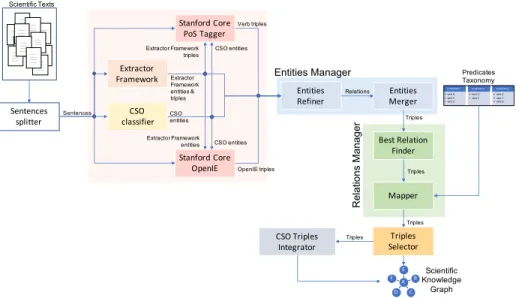
In this section, we describe the approach that we applied to produce a scientific knowledge graph of research entities. The workflow of our pipeline is shown in Fig-ure 1. In short, our framework includes the following steps:
1. Extraction of entities and triples, which exploits an ensemble of several NLP and machine learning tools to extract triples from text.
2. Entity refining, in which the resulting entities are merged and cleaned up. 3. Triple refining, in which the triples extracted by the different tools are merged
together and the relations are mapped to a common vocabulary.
4. Triple selection, in which we select the set of ”trusted” triples that will be in-cluded in the output by first creating a smaller knowledge graph composed by triples associated with a good number of papers and then enriching this set with
Extractor Framework Stanford Core OpenIE CSO classifier Extractor Framework entities & triples CSO entities OpenIE triples Stanford Core PoS Tagger CSO entities Extractor Framework triples Entities Merger predicate 0 • verb 0 • verb 1 • verb 2 predicate 1 • verb 4 • verb 5 predicate 2 • verb 6 • verb 7 • verb 8 Predicates Taxonomy Best Relation Finder Mapper Triples Triples Triples Selector Triples A E B C D F Knowledge Scientific Graph Sentences splitter Sentences ______ ______ ______ ______ ______ ______ ______ ______ ______ ______ ______ ______ ______ ______ ______ ______ ______ ______ ______ ____________ ______ ______ ______ ______ ______ ______ ______ ______ ______ ______ ______ ______ ______ ______ ______ ______ ______ ______ ______ ______ ______ ______ ______ ______ ______ ______ ______ ______ ______ ______ ______ ______ ______ ______ ______ Scientific Texts Verb triples Entities Refiner CSO entities Relations Extractor Framework entities CSO Triples Integrator Triples Entities Manager R el at io ns M an ag er
Figure 1: Workflow of our approach for building a scientific knowledge graph from scientific textual re-sources.
other semantically consistent triples. In the following subsection we will de-scribe the architecture in more details and discuss the specific NLP and machine learning tools that we used in the implementation of our prototype.
3.1. Extraction of Entities and Relations
For extracting entities and relations, we exploited the following methods:
• The extractor framework [29]designed by Luan Yi et al. that we modified and embedded within our pipeline. It is based on Deep Learning models and provides modules for detecting entities and relations from scientific literature. It detects
six types of entities (Task, Method, Metric, Material, Other-Scientific-Term, and
Generic) and seven types of relations among a list of predefined choices ( Com-pare, Part-of, Conjunction, Evaluate-for, Feature-of, Used-for, Hyponym-Of).
For the purpose of this work, we discarded all the triples with relation
Con-junction, since they were too generic. In particular, the extractor framework uses feed-forward neural networks over span representations of the input texts to
com-pute two scoresv1andv2. The scorev1is computed on single spans and measures
how likely a span may be associated to an entity type. The second scorev2is a
pairwise score on a pair of span representations and measures how likely spans are involved in a relation. Therefore, for a given pair of span representations,
let’s say (t1,t2), the scoresvt11,v
t2
1, andv
(t1,t2)
2 are computed. If bothv
t1
1 andv
t2 1
meet a thresholdtentity, andv(2t1,t2) meets a thresholdtrelationthen the span
repre-sentationst1 andt2are labelled as entities, and their pair as relationship (t1,t2).
itself. Similarly, a pair (t1,t2) is associated to the type of relationrwhere the pair
has the highest value ofv2, yielding the triple (t1,r,t2). For example, from the
following sentence “We propose a new web recommendation system based on
reinforcement learning.”, this framework detectedweb recommendation system
as aTask,reinforcement learningas aMethod, and the relationUsed-forbetween
them, yielding the triple<reinforcement learning, Used-for, web
recommenda-tion system>. We refer to this framework as Extractor Framework.
• The CSO Classifier [30]22, a tool for automatically classifying research papers
according to the Computer Science Ontology (CSO)23 [31], which is a
com-prehensive automatically generated ontology of research areas in the field of Computer Science. The current version of CSO describes 14K research topics arranged in a nine level polyhierarchical taxonomy. The CSO classifier
identi-fies topics by means of two different components, the syntactic module and the
semantic module. Thesyntactic moduleremoves English stop words and
col-lects unigrams, bigrams, and trigrams. Then, for each n-gram, it computes the Levenshtein similarity with the labels of the topics in CSO. Finally, it returns all research topics whose labels have a similarity score equal to or higher than a
threshold to one of the n-grams. Thesemantic moduleuses part-of-speech
tag-ging to identify candidate terms composed of a proper combination of nouns and adjectives and maps them to the ontology topics by using a Word2Vec model trained on titles and abstracts of 4,5M English papers in the field of Computer Science from MAG. Then, the module computes a relevance score for each topic in the ontology by considering the number of times the topic was iden-tified within the retrieved words. The CSO classifier combines the outputs of these two modules and enhances the resulting set by including all relevant
super-topics according to thesuperTopicOf24relationship in CSO. For instance, if an
article was tagged with the topicneural networks, it would also be associate to
its super-topicsmachine learning,artificial intelligence, andcomputer science.
This latter functionality is not used in the extraction stage, since it would not be possible to map super-topics with other entities in the sentence. However, we used a similar process in the last phase of the process (Knowledge Graph Enhancement, see Section 3.5) for generating further triples by exploiting CSO hierarchical relationships.
• OpenIE [32]provided by the Stanford Core NLP suite. It detects general entities and relations among them. Relations are detected by analyzing clauses (i.e., groups of words that contain at least a subject and a verb) which are built by exploring the parse tree of the input text. In the first stage, the methodology produces clauses from long sentences which stand on their own syntactically and semantically. For doing so, it uses a multinomial logistic regression classifier to recursively explore the dependency tree of sentences from governor to dependant
22
https://github.com/angelosalatino/cso-classifier
23http://cso.kmi.open.ac.uk
nodes. Then, it applies logical inferences to capture natural logic within clauses by using semantics dictating contexts. Doing so, OpenIE is able to replace lexical items with something more generic or more specific. Once a set of short entailed clauses is produced, it segments them into its output triples. In our approach we keep triples where entities match those found by the Extractor Framework and the CSO Classifier, so that we caught only those triples that refer to entities of the target domain.
• The Stanford Core NLP PoS tagger25which extracts predicates between the enti-ties identified by the Extractor Framework and the CSO Classifier. More
specif-ically, for each sentencesiit detects all verbsV={v0, . . . ,vk}between each pair
of entities (em,en) of that sentence and generates triples in the form<em,v,en>
wherev∈V.
Our goal was to detect the most used verbs between two entities at the cost of producing some noisy relations. Indeed, this approach is able to return several additional relationships that were missed by the other tools. In the following sections we describe how we handled and validate these triples in order to reduce the noise.
We processed each sentence from all the abstracts and used the tools and methods
above to assign to each sentencesia list of entitiesEiand a list of triplesRi.
First, we run the extractor framework to extract both entities Ei and triples Ri.
Secondly, we used the CSO Classifier to extract all Computer Science topics, further
expandingEi. Thirdly, we processed each sentencesiwith OpenIE, and retrieved all
the triples composed by subject, verb, and object in which both subject and object
matched the entities resulting from the previous steps. Finally, for each sentencesiwe
took all the verbs within two entities through the PoS Tagger, yieldingRi thoroughly
expanded.
3.2. Entities Manager
During the extraction process it might happen that different entities inEimay
ac-tually refer to the same concept with alternative forms, or may represent too generic concepts that do not carry meaningful information. In this section, we briefly describe which steps we have performed by the Entities Refiner and Entities Mapper modules in order to address these issues.
3.2.1. Entities Refiner Module
Many of the entities resulting from previous steps can be noisy, ambiguous, and too generic.
For example, entities like “approach” and “method” are too abstract and thus not very useful for our purpose. Their presence simply add noise to the the knowledge graph.
The goal of this module is to preprocess the entities, merging alternative labels, dis-carding ambiguous and generic entities, and splitting the ones that include compound expressions.
Cleaning up entities. First, we removed punctuation (e.g., dots and apostrophes) and stop-words (e.g., pronouns) from entities. We also removed some words that might be
mixed up (e.g.,itmight be the pronounitor the acronym ofinformation technology)
by using a blacklist.
Splitting entities. Some entities actually contained multiple compound expressions,
e.g., Machine Learning and Data Mining. Therefore, we split entities that contain
the conjunctionand. Referring to our example, we obtained the two entitiesMachine
LearningandData Mining.
Handling Acronyms.Acronyms are usually defined, appearing the first time near their
extended form (e.g.,Web Ontology Language (OWL)) and then by themselves in the
rest of the abstract (e.g.,CSO). In order to map acronyms with their extended form in a
specific abstract we use a regular expression. We then substituted every acronym (e.g.,
OWL) in the abstract with their extended form (e.g.,Web Ontology Language). Since
acronyms can be ambiguous, we perform this operation only on entities from the same abstract.
Detection of Generic Entities. Entities might be too generic for the purpose to
de-scribe the knowledge of a domain (e.g.,content,time,study,article,input, and so on).
We discard these kind of entities by applying a frequency-based filter which compares their frequency in three sets of documents:
• the set of publications of the Semantic Web.
• a set of the same size coveringComputer Sciencedomain, but notSemantic Web.
• a set of the same size containing papers from various domains, but not about
Semantic Webnor theComputer Science.
For each entity e, we computed the number of times it appeared in the above
datasets, so that we had three different countsc0e,c00e,c000e. We normalized the counts by
dividing them with the number of words of the set where they were computed. Then
we computed the ratiosre0 = c
0 e c00e andr00e = c 0 e c000e
. If the ratior0emet a thresholdt0e=2, and
the ratior00emet a thresholdte00 =10, the entityewas included in the graph. Thresholds
were empirically defined by manually evaluating which entities were saved/discarded.
In addition, we automatically preserved all the entities within a whitelist that in-cludes CSO topics and the author’s keywords of all the papers in the input dataset.
3.2.2. Entities Merger Module
We merge entities with the same meaning by using both a lemmatizer and the CSO ontology. Singular and plural forms are combined by using the Lemmatizer available
in the SpaCy26 library. Then we exploited the alternative labels described by CSO to
merge entities that refer to the same research topic (e.g., ”ontology alignement” and
”ontology matching”). More specifically, given an entitye∈Ethat is known by CSO, letAe ={e0, ...,ek−1}be the set of alternatives ofein CSO. The module first finds the
longest labelelongest ∈ Ae, theneis replaced byelongest. The same process is repeated
for each entity f ∈E.
3.3. Relations Manager
This step aims at (i) finding the best relation predicate for each pair of entitiesei,ej
where a relation exists (each element inR), and (ii) mapping all the relations within a
table we have defined.
3.3.1. Best Relation Finder Module
Here, the set of triplesRpresents three different types of triples: those extracted
by the Extractor Framework, let us sayREF, those coming from OpenIE, let us say
ROIE, and those detected with the PoS tagger, calledRPoS. We performed the following
operations on these sets:
• On the set of triples inREFwe acted as follows. Given a pair of entities (ep,eq)
inREF, we merged into a listLrall relations’ labelsrisuch that (ep,ri,eq)∈REF.
Then we chose the most frequent relationrmost f requent ∈ Lr, and built a single
triple (ep,rmost f requent,eq). Triples so built formed the setTEF. Clearly, the size
of the setTEFis lower than the size of the setREF.
• On the setROIEwe performed a deeper merging operation. Similarly to the work
performed onREF, given a pair of entities (ep,eq) inROIE, we first merged into a
listLrall relations’ labelsrisuch that (ep,ri,eq)∈ROIE. InROIEall triples have
a verb as relation predicate. Hence, we assigned eachrito its word embedding
wi from the word embeddings built on the MAG dataset, yielding the listLw.
With the word embeddings in Lwan averaged word embeddingwavg was built.
Then, the relationri with the word embeddingwinearest towavg according to
the cosine similarity was chosen as final relation for the pair (ep,eq), yielding the
triple (ep,wi,eq). The same procedure was also applied onRPoS. The execution
of this procedure onROIEandRPoS yielded the setsTOIEandTPoS, respectively.
• Finally, for the setsTEF,TOIE, andTPoS, we saved for each triple (ep,ri,eq) the
number of papers where the pair of entities (ep,eq) appeared. We refer to this
number as thesupportof triples.
3.3.2. Mapper Module
From the previous step, a large number of verb relations resulted. However, the majority of relations have a common meaning with others, i.e., many relations were
represented by synonyms. For example, the relationsuses,utilizes,adopts, and
em-ploysmay be used to express the same concept within a triple with only a slight change in meaning. Within our triples set, there were a good number of triples that represented
the same information such as<ontology alignment, uses, ontology>and <ontology
alignment, utilizes, ontology>. Hence, in order to reduce the number of redundant
relations, we built a mapM :verb relation→verb relationrepresentativewhere
adopts,employswere mapped to the same representative relation uses). In order to do this, we first retrieved all word embeddings that represented verb relations from
setsTOIE andTPoS. The rationale behind this is that word embeddings represent
se-mantic and syntactic properties of the words and, therefore, verb relations with similar word embeddings have similar semantics and meaning. Then, we used the
hierarchi-cal clustering algorithm provided by the SciKit-learn library27, which uses (1−cosine
similarity) as distance to group together similar verb relations. The cosine similarity
quantifies the angle between two vectors. Its formula applied on two vectorsv1andv2
can be observed in (1).
Cosine similarity(v1,v2)=
v1·v2 kv1k · kv2k
(1) The resulting clustering dendrogram was cut by an empirically determined threshold
of the averaged Silhoutte-width=0.65. Values of Silhouette width range from−1 to
1. When the value is closer to 1, it means that the clusters are well separated; when
the value is closer to 0, it might be difficult to detect the decision boundary; when
the value is closer to -1, it means that elements assigned to a cluster might have been
erroneously assigned. Its formula is computed as shown in (2), where given a clusterc,
w(c) represents the average dissimilarity of elements inc, ando(c) is the lowest average
dissimilarity of elements ofcto any other cluster.
s(c)= o(c)−w(c)
max{o(c),w(c)} (2)
Subsequently, we manually revised the clusters and built the mapM, where each verb
relations of each cluster was mapped to the representative relation identified by the
cluster centroid. For example, each verb relation of the cluster{builds,creates,
pro-duces,develops, makes, constructs, etc.}was mapped to the centroidproduces.
Fi-nally, the relations used in the setTEFwere manually integrated within the mapM. All
triples from the union ofTEF,TOIE, andTPoS were mapped by usingM(e.g., the triple
<knowledge construction, creates, ontology integration platform>was transformed in
<knowledge construction, produces, ontology integration platform>), so that a well-defined set of relations was used within our final resulting triples.
3.4. Triples Selection
In this section the method we employed to choose only certain triples is presented.
We also define what we mean with the wordsvalidandconsistentassociated to our
triples in order to build the scientific knowledge graph.
3.4.1. Valid Triples
For the purpose of including meaningful triples within our knowledge graph, we first define a smaller knowledge graph composed of ”valid” triples. These can be
de-fined in different way according to the performance of the tools in the first step and the
number of papers supporting a certain triples.
In the current prototype we define as valid the following triples:
• We considervalidall the triples obtained by the Extractor Framework (TEF) and
the OpenIE tool (TOIE).
• All triples associated with at least 10 papers (indicating a fair consensus).
There-fore, we considervalidthe triples that were detected by the PoS tagger associated
with at least 10 papers. We refer to this set asTPoS0 such thatTPoS0 ⊆TPoS.
The union ofTT F,TOIE, andTPoS0 composed the set of all valid triplesTvalid.
3.4.2. Consistent Triples
The set of triples not inTvalid, that we labelTinvalid, may still include several good
triples that were not associated to sizable number of papers. More specifically, con-sensus of the community about scientific claims is built over time and, hence, new discoveries might not have a high support. However, these triples are still important since they can suggest the ways to go along to rapidly explore the most recent research
trends. We thus use the triples inTvalidas examples to learn which triples are consistent
with the valid ones and could still be included in the final outcome. Specifically, we
trained a classifierγ: P→ LwherePis a set of pair of entities blue inTvalidandLis
the set of relations used inM (e.g.,uses,provides,supports,improves), with the aim
of comparing the actual relation with the one returned by the classifier. The intuition
is that a triple consistent withTvalid would have its relation correctly guessed by the
classifier. In order to do so, we performed the following steps:
1. We generated word embeddings of size 300 by processing with the Word2vec algorithm [33, 34] all the input abstracts. For multi-word entities we replaced white spaces with underscore characters within our abstracts texts (e.g., the entity
semantic webbecomessemantic web).
2. We trained a Multi-Perceptron Classifier (MLP) to return the relation between a couple of entities. We used the concatenation of the embeddings of subject and object entities as input and the relation as output.
3. The validation step was performed by applying the classifier on all the triples
(ep,r,eq) inTinvalidand comparing the actual relationrwith the relation returned
by the classifierr0. Ifr =r0then the triple (e
p,r,eq) was considered valid and
added toTvalid. Otherwise we computed the cosine similaritycos simand the
Wu-Palmer28 similarity between the embedding ofrandr0. If the average
be-tweencos simandwup simwas higher than a thresholdt(empirically set at 0.5)
then the triple (ep,r,eq) was considered valid and added toTvalid.
3.5. Knowledge Graph Enhancement
In order to increase the amount of the resulting information, we added to the pro-duced knowledge graph the additional triples that could be inferred by exploiting the
hierarchical relations in CSO. More precisely, given a triple (e2,r,e1), if in CSO the
entitye3issuperTopicOf of the entitye1and there is no triple involvinge2ande3, we
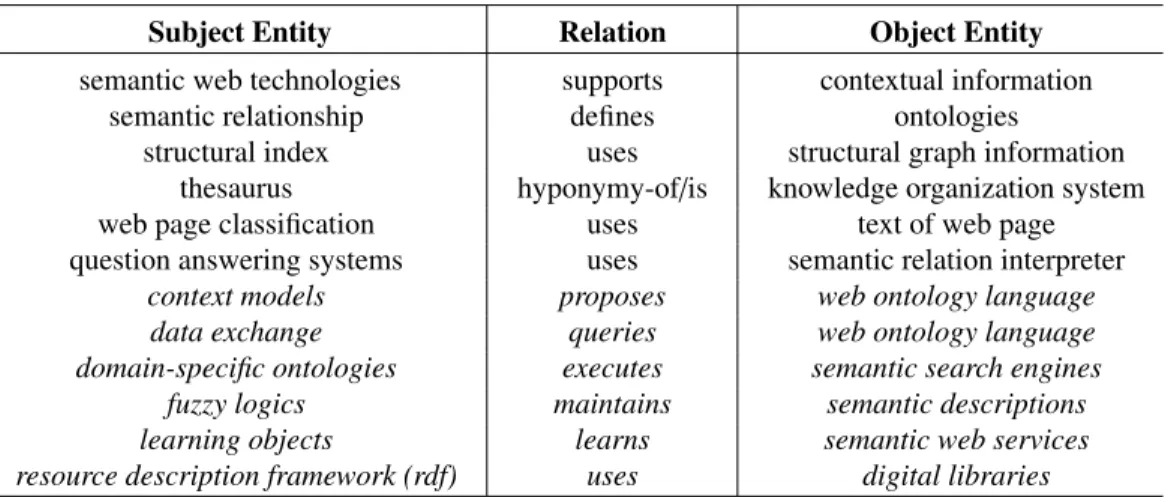
Table 1: Examples of triples that our pipeline detects. InItalicsome examples of triples that were discarded by our pipeline.
Subject Entity Relation Object Entity
semantic web technologies supports contextual information
semantic relationship defines ontologies
structural index uses structural graph information
thesaurus hyponymy-of/is knowledge organization system
web page classification uses text of web page
question answering systems uses semantic relation interpreter
context models proposes web ontology language data exchange queries web ontology language domain-specific ontologies executes semantic search engines fuzzy logics maintains semantic descriptions learning objects learns semantic web services resource description framework (rdf) uses digital libraries
also infer the triple (e2,r,e3). For instance, given the triple<nlp systems, uses,
named-entity recognition>, ifartificial intelligenceissuperTopicOf named-entity recognition,
we can infer the triple<nlp systems, uses, artificial intelligence>.
This last step was performed by the CSO Triples Integrator module in the pipeline. Finally, the triples are converted to RDF and returned.
4. Results and Discussion
This section details the scientific knowledge graph we have produced and shows how we have validated it.
4.1. The Semantic Knowledge Graph
Here we report the result of our framework, focusing on theSemantic Webdomain.
We used an input dataset composed by 26,827 abstracts of scientific publications
about this domain that was retrieved by selecting publications from the Microsoft
Aca-demic Graph dataset29. It is a knowledge graph related to the scholarly domain that
describes more than 200 million scientific publications through metadata such as title, abstract texts, authors, venue, field of study and so on. For our purpose we considered only abstracts that were classified under Semantic Web by the CSO Classifier [30]. This dataset has also been used for exploring the relationship between Academia and Industry by Angioni et al. [35].
A few examples of retrieved triples as well as of triples that were discarded by our pipeline can be seen in Table 1.
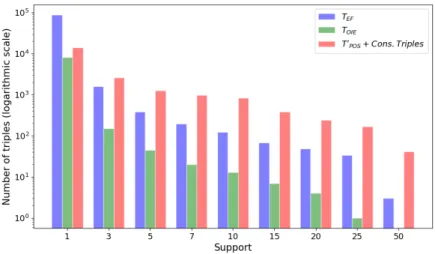
Figure 2: Comparison of the distribution of the support of the three methods.
The resulting knowledge graph includes 109,105 triples: 87,030 from the
Extrac-tor Framework (TEF), 8,060 from OpenIE (TOIE), and 14,015 from the PoS tagger
method and classifier (T0PoS +Cons. Triples).
However, the raw number of triples extracted by each method can be misleading. In fact, some triples are supported by a large number of papers, suggesting a large consensus of the scientific community and more in general a claim that can easily be trusted, while some other appear in one or very few papers
Figure 2 reports the distribution of the support of the triples produced byTEF,TOIE
andT0
PoS +Cons. Triples.
WhileTEF produces the most sizable part of those triples, most of them have a
very low support. In fact, 80,030 of them are supported by a single paper and 1,580
by only three papers. They may thus contain claims that did not reach yet a consensus
in the community. For all the other support values, the setTPoS0 +Cons. Tripleshas
a higher number of triples thanTEFandTOIE and, hence, it is possible to assume that
TPoS0 triples may be more in accordance within the community ofSemantic Web. For
instance, if we take in consideration only the triples whose support is equal or greater
than 5, only 393 triples are provided by the setTEF, 45 byTOIE and, 1,268 byTPoS0
+Cons. Triples. It is also worth to note that when the support is very high (e.g.,
equal or greater than 50) there are not triples provided by the setTOIE, and few triples
provided byTEF. This still stresses the fact that those triples might not express valuable
knowledge or have consensus within theSemantic Webcommunity.
4.2. Gold Standard Creation
We first used several different approaches to generate triples from the 26,827
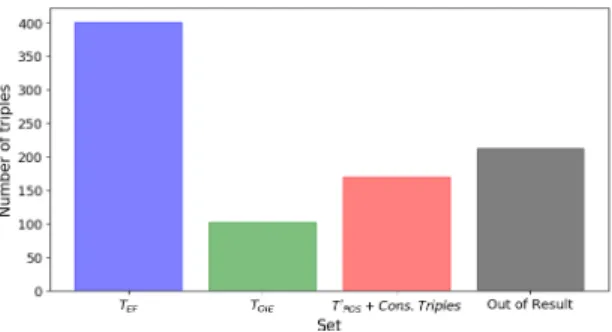
Figure 3: Distribution of triples within the gold standard.
TEF(i.e., the Extractor Framework), 2)TOIE (i.e., OpenIE), 3)TPoS0 (considering only
the triples with support≥10), andTPoS0 +Cons. Triples.
The resulting set of 109,105 triples would be unfeasible to manually annotate,
since it is very large and includes terms related to very different areas of expertise.
We thus focused only on 818 triples which contain (as subject or object) at least one
of the 24 sub-topics30of Semantic Web and at least another topic in the CSO ontology.
This set contains 401 triples fromTEF, 102 fromTOIE, 60 triples fromTPoS0 and 110
relevantCons. Triples. In order to measure the recall, we also added 212 triples that
were discarded by the framework pipeline. The reader notices that the total number
of triples (818) is slightly less than the sum of various sets (401+102+60+110+212)
because some triples have been derived by more than one tool. The triples distribution of the gold standard can be observed in Figure 3.
We recruited five researchers in the field of Semantic Web and asked them to
an-notate each triple either astrueor false. In order to do so, they assessed each triple
according to their expertise of the field. They were also allowed to search concepts on the web and in the literature when they were not familiar with a specific entity.
The averaged agreement between experts was 0.747±0.036, which indicates a high
inter-rater agreement. We then created the gold standard using the majority rule ap-proach. Specifically, if a triple was considered relevant by at least three annotators, it was labeled as true, otherwise as false.
The purpose of this gold standard is twofold. First, it allows us to evaluate the pro-posed pipeline to extract triples from scholarly data and, second, it provides a resource which will facilitate further evaluations.
4.3. Precision, Recall, F-measure Analysis
For evaluating our methodology, we performed a precision, recall, F-measure anal-ysis considering various combinations of relations sources. Measures are computed as shown by equations (3), (4), and (5).
P= T P T P+FP (3) R= T P T P+FN (4) F=2· P·R P+R (5)
In equations (3) and (4)T P(true positive) indicates the number of triples labelled
as good and returned by our pipeline, FN (false negative) is the number of triples
that were labelled asgoodbut not returned by our pipeline, andFP(false positive) is
the number of triples that have been erroneously returned by our pipeline (i.e., triples
were labelled asbad in the gold standard but our pipeline picked up them as good
triples). The F-measure is computed as the harmonic mean of (3) and (4) as shown in equation (5).
We tested eight alternative approaches:
• The Extractor Framework from Luan Yi et al. [29] (EF) described in section 3.1.
• OpenIE, from Angeli et al. [32] (OpenIE) described in section 3.1.
• the Stanford Core NLP PoS tagger described in section 3.1, after merging the
relevant triples as described in section 3.3.1 (T0
PoS). We considered only the
triples with support≥10.
• The previous approach enriched by consistent triples as described in section 3.4.2
(TPoS0 +Cons. Triples).
• The combination of EF and OpenIE (EF+OpenIE).
• The combination of EF andTPoS0 +Cons. Triples (EF+TPoS0 +Cons. Triples).
• The combination of OpenIE andT0
PoS+Cons. Triples (OpenIE+T
0
PoS +Cons.
Triples).
• The final framework that integrates all the previous methods (OpenIE+EF+
TPoS0 +Cons. Triples).
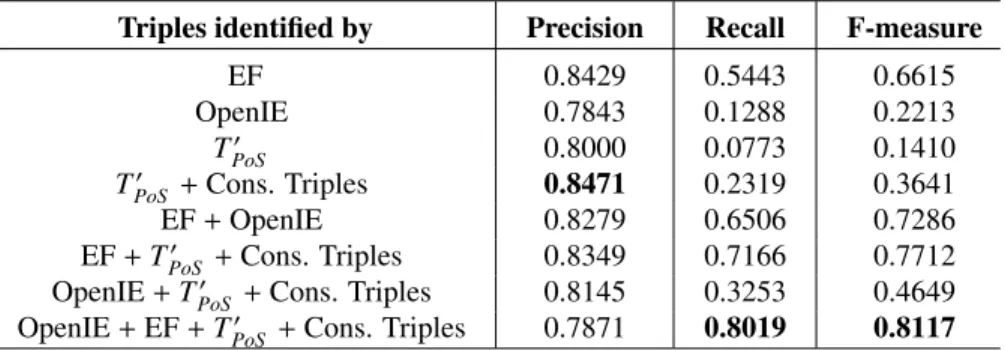
Table 2 reports precision, recall, and F-measure of all the methods.
EF obtains an high level of precision (84.3%), but a recall of only 54.4%. OpenIE
andTPoS0 shows a slightly lower level of precision and an even lower recall. T0PoS +
Cons. Triples obtains the best precision of all the methods (84.7%), highlighting the advantages of using a classifier for selecting consistent triples. Overall, all these basic
methods produce triples with good precision, but suffer in term of recall.
Combining them together generally raises the recall without paying too much in
term of precision. EF+OpenIE yields a F-measure of 72.8% with a recall of 65.1%
and EF+T0
PoS+Cons. Triples a F-measure of 77.1% with a recall of 71.6%. The final
version of our framework, which combines all the previous methods, obtains the best recall (80.2%) and F-measure (81.2%) and yields also a fairly good precision (78.7%).
This seems to confirm the hypothesis that an hybrid framework combining supervised and unsupervised methods would produce the most comprehensive set of triples and the best performance overall.
4.4. Examples and considerations about the Scientific Knowledge Graph
In this section, we show some sample of the triples extracted for the Semantic Web Knowledge Graph and discuss benefits and limitations of our output.
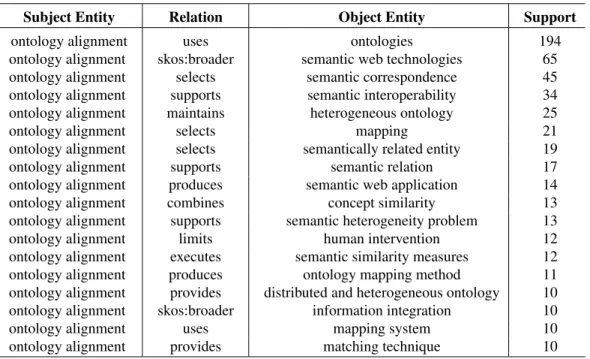
Table 3 shows a selection of the triples about the research topicontology alignment,
ranked bysupport. It is easy to see that many of these triples define the fundamental
characteristics ofontology alignment. The topic is contextualized (via ”skos:broader”
relations) within the areas ofsemantic web technologiesandinformation integration.
Ontology alignmentis defined as an entity that usesontologies, selectssemantic corre-spondences, and supportssemantic interoperability.
Several other triples add further details, such as thatontology alignmentfinds
se-mantically related entities, adopts semantic similarity measures, and limits the need for human intervention. Naturally, the representation also suffers from some issues
that we plan to address in future work. For instance, the triples<ontology alignment,
selects, mapping>and<ontology alignment, supports, semantic relations>appear too ambiguous. This may be either a limitation of our vocabulary of relations or an issue in the methodology used for merging together the triples from the PoS tagger. Similarly, in<ontology alignment, produces, semantic web application>the predicate does not appear to be correct, maybe ”support” would be a better choice in this case. We thus plan to work further on our approach for merging triples and select the best predicate between two entities.
The triple<ontology alignment, produces, semantic web application>shows
an-other typical issue. In the knowledge graph we have both ”distributed and heteroge-neous ontology” and ”heterogeheteroge-neous ontology” but no link between the two. In the future we need to be able to detect that ”distributed and heterogeneous ontology” is actually a sub-concept of ”heterogeneous ontology”.
Table 2: Precision, Recall, and F-measure of each method adopted to extract triples. To note that the last row identified the triples extracted using the full pipeline.
Triples identified by Precision Recall F-measure
EF 0.8429 0.5443 0.6615
OpenIE 0.7843 0.1288 0.2213
TPoS0 0.8000 0.0773 0.1410
T0
PoS +Cons. Triples 0.8471 0.2319 0.3641
EF+OpenIE 0.8279 0.6506 0.7286
EF+T0
PoS +Cons. Triples 0.8349 0.7166 0.7712
OpenIE+T0
PoS +Cons. Triples 0.8145 0.3253 0.4649
OpenIE+EF+T0
Table 3: Examples of triples from the Semantic Web Knowledge Graph.
Subject Entity Relation Object Entity Support
ontology alignment uses ontologies 194
ontology alignment skos:broader semantic web technologies 65
ontology alignment selects semantic correspondence 45
ontology alignment supports semantic interoperability 34
ontology alignment maintains heterogeneous ontology 25
ontology alignment selects mapping 21
ontology alignment selects semantically related entity 19
ontology alignment supports semantic relation 17
ontology alignment produces semantic web application 14
ontology alignment combines concept similarity 13
ontology alignment supports semantic heterogeneity problem 13
ontology alignment limits human intervention 12
ontology alignment executes semantic similarity measures 12
ontology alignment produces ontology mapping method 11
ontology alignment provides distributed and heterogeneous ontology 10
ontology alignment skos:broader information integration 10
ontology alignment uses mapping system 10
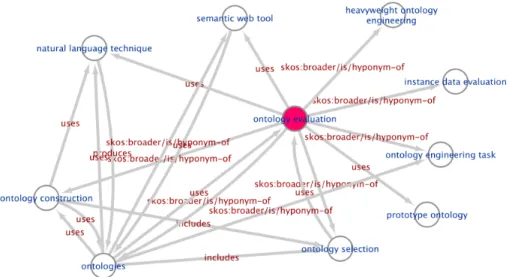
Figure 4: The subgraph of the entity ”ontology evaluation” with related relationships in our Scientific Knowl-edge Graph within the Semantic Web domain.
Figure 4 shows a graphical representation of the research topicontology evaluation.
It is interesting to notice how this representation is also fairly interpretable by human users. Some examples about the information that can be derived includes:
• ontology evaluation uses natural language techniques. It suggests that there might be tools or methodologies that exploit textual resources written in natural language that have been involved in ontologies evaluation.
• ontology evaluationis hyponym of the entityontology constructionindicating
that a specialized task within ontology constructioninvolves the evaluation of
the produced ontologies.
• ontology evaluation is hyponym of instance data evaluation which shows in
which more general task theontology evaluationfalls.
Finally, it is also interesting to consider an entity that is not so much represented
in the input dataset. Figure 5 shows the subgraph of the entity supervised machine
learning. This representation is useful to highlight which topics and kind of resources
are employed bysupervised machine learningwithin theSemantic Webdomain. As
an example, it is easy to see that this entity uses bothstructured data modelandrich
semantics, and how these two entities are related as well. In the example, only two
types of relations appear (i.e.,usesandincludes). They seem too generic, in fact, it is
not clear howsupervised machine learningadopts the other linked entities. This can
indicate that our taxonomy of predicates may be too general and we may have to adopt a more fine grained representation in future work.
Overall, the knowledge graph seems to contain triples of good quality that well represent the main characteristics of research entities within the context of the input
Figure 5: The subgraph of the entity ”supervised machine learning” with related relationships in the produced Scientific Knowledge Graph within the Semantic Web domain.
dataset. We thus believe that this version may already be used for enhancing the rep-resentation of research items and supporting users in understanding and navigating research outcomes.
Specifically, we see four main applications of the knowledge graph. The first re-gard intelligent systems for navigating research publications, such as Open Knowledge
Maps31, which could further characterize entities according to their types and
relation-ships and thus interlinking articles according to a variety of new facets and generating more semantically consistent clusters of articles. The knowledge graph should also be of interest for the growing area of graph embeddings. Indeed, we received several queries by research groups interested in running methods for producing graph embed-dings on our output in order to generate a representation of the research entities that could be easily fed to machine learning algorithms and link detection techniques.
Sys-tems for recommending research papers (e.g., Mendeley32, CORE33) could also take
advantage of this knowledge base for improving and explaining their suggestions ac-cording to the entities in the articles. Finally, trend detection systems (e.g., Augur [36], ResearchFlow [37]), which typically identify entities of interest from a vocabulary or a domain taxonomy and monitor them across time, will benefit by having a large knowl-edge base of well-defined and interlinked research entities.
4.5. Applicability in other domains
In this section, we discuss which the current limitations of our pipeline to be used within other domains are, and suggest some developments that are required to capture other domain peculiarities. To start with, the current version of the proposed pipeline exploits both computer science-tuned modules (e.g., the extractor framework and the CSO classifier) and others more general ones that do not depend on the domain (e.g.,
31https://openknowledgemaps.org/ 32https://www.mendeley.com/ 33https://core.ac.uk/
OpenIE and the PoS Tagger extractors). Moreover, the handling of entities and rela-tions does not depend on the target domain and, therefore, the pipeline is limited to the computer science field only by some tools employed in the extraction phase. More specifically, the extractor framework was trained on a corpus of computer science sci-entific papers, and the ontology employed only embraces computer science topics. As a matter of principle, this implies that the current pipeline can be exploited in any com-puter science sub-field without limitations. To use the pipeline on other domains, the main challenges are the substitution of the Extractor Framework and the Computer Sci-ence Ontology. However, this limitation can be easily tackled in many domains where there already exist tools that can be used to parse the domain scientific resources. To
name an example, the SciSpacy34 model can be used to parse scientific text within
the biomedical domain to detect the research entities that characterize it. In the same
way, most scientific disciplines offer domain ontologies or taxonomies that could be
used in alternative to CSO. These includes the Medical Subject Heading (MeSH)35and
SNOMED-CT36in Biology, the Mathematics Subject Classification (MSC)37in
Mathe-matics, and the Physics Subject Headings (PhySH)38in Physics. Broadly speaking, the
tools we used to detect the first entities and relations can be replaced by existing tools that have been already developed in other domains to capture domain specific informa-tion. One more point to be considered is that ontological resources are today being de-veloped for many specific domains and use cases such as the Cultural Heritage domain
(e.g, ArCO [38]), Robotics [39], Bio-Medicine39, Computer Science (e.g., AIDA [40]),
and so on. Therefore, the main efforts might be due to the developments of interfaces
to feed our pipeline with new extraction resources output.
5. Related Work
Many information extraction approaches for harvesting entities and relationships from textual resources can be found in literature.
First, entities in textual resources have been detected by applying Part-Of-Speech (PoS) tags. An example is constituted by [41], where authors provided a graph based approach for Word Sense Disambiguation (WSD) and Entity Linking (EL) named Ba-belfly. Later, other approaches started to exploit various resources (e.g., context infor-mation and existing knowledge graphs) for developing ensemble methodologies [28]. Following this idea, we exploited an ensemble of tools to mine scientific publications and get information out of them. Then, we designed and implemented a software pipeline for the purpose of creating a scientific knowledge graph that organizes enti-ties and their relations. Relations extraction is not a novel task and has been already
addressed in literature in order to connect information coming from different pieces of
34https://allenai.github.io/scispacy/
35Medical Subject Heading -https://www.ncbi.nlm.nih.gov/mesh 36http://www.snomed.org/snomed-ct/five-step-briefing 37Mathematics Subject Classification -https://mathscinet.ams.org/msc 38Physics Subject Headings -https://physh.aps.org/
39
text. FRED40 is a machine reader developed by [27] on top of Boxer [42]. It links
elements to various ontologies in order to represent the content of a text in a RDF representation. Among its features FRED extracts relations between frames, events, concepts and entities. However, integrating its extracted knowledge for specific do-main applications still redo-mains an open challenge due to the unpredictable and too
generic type of knowledge that is extracted, making difficult the use of its entities and
relations for modelling scholarly contents. Moreover, FRED only considers a single
text at a time and does not consider domain dependent characteristics that different
sources may have. Differently from Gangemi et al. [27], our approach aims at
pars-ing specific type of textual data and, moreover, at combinpars-ing information from various textual resources. For this purpose, we combined results of open domain information extraction tools with information related to the scholarly domain. Furthermore, within our approach more scientific papers are parsed in order to come up with knowledge resulting from the synthesis of various pieces of texts that refer to the same topic. With our approach the resulting scientific knowledge graph represents the overall knowledge presented within the input scientific publications.
Researchers have already targeted scientific publications as a challenge domain where to extract structured information [43, 44]. Furthermore, within the scholarly do-main, extraction of relations from scientific papers has recently raised interest within theSemEval 2017 Task 10: ScienceIE - Extracting Keyphrases and Relations from Sci-entific Publications[45] and SemEval 2018 Task 7Semantic Relation Extraction and Classification in Scientific Paperschallenge [46], where participants had to face the problem of detecting and classifying domain-specific semantic relations. Since then, extraction methodologies for the purpose to build knowledge graphs from scientific pa-pers started to spread in literature [47, 48]. For example, Al-Zaidy et al. [49] employed syntactical patterns to detect entities, and defined two types of relations that may exist
between two entities (i.e.,hyponymyandattributes) by defining rules on noun phrases.
Another attempt to build scientific knowledge graphs from scholarly data was per-formed by Yi and colleagues [29], as an evolution of authors’ work at SemEval 2018 Task 7. First, authors proposed a Deep Learning approach to extract entities and re-lations from scientific literature. Then, they used the retrieved triples for building a
knowledge graph on a dataset of 110,000 papers. Although our work takes inspiration
from that, we propose different strategies to address open issues for combining
enti-ties and relations. For example, for solving ambiguity issues that regard the various representations of entities, Yi and colleagues [29] considered clusters of co-referenced entities to come up with a representative entity in the cluster. On the contrary, we adopted textual and statistics similarity to solve the ambiguity. Furthermore, they only used a set of predefined relations that might be too generic for the purpose of yielding insights from the research landscape. Within our approach we tried to detect relations that imply an action of an entity toward another one, making our results more precise and fine-grained.
6. Conclusions
In this paper we designed and developed a pipeline for representing the knowledge of scientific publication into a structured graph that we called scientific knowledge graph. We employed various state-of-the-art NLP tools and machine learning, and provided a workflow to merge their results. Moreover, we integrated the knowledge coming from many scientific publications into a single knowledge graph with the
pur-pose to represent detailed knowledge of the scientific literature about theSemantic Web
domain. The evaluation proved that this solution is able to automatically produce good
quality scientific knowledge graphs and that the integration of different tools yields a
better overall performance.
There are a number of limitations that need to be still addressed in future work. In the first instance, the current version does not take full advantage of the semantic characterization of the research entities to verify the resulting triples. For instance, it is
currently possible for an entity of kindMaterialto include a entity of kindTask, which
may be semantically incorrect. For this reason, we plan to develop a more robust se-mantic framework that could drive the extraction process and discard triples that do not follow specific constraints. For example, we could state that a material could include another material, but not a task or a method. These requirements could be enforced and verified with the use of specific semantic technologies for expressing constraints
such as SHACL41. A second limitation is that the current prototype can only extract
one relationship between two entities. This is not completely realistic since two en-tities can be linked by many kinds of relationships. This could also lead to a higher
number of relationships that could suggest different applications or uses of entities,
in-creasing the probability of finding unconsidered issues and solutions within a research field. We intend to explore this possibility in future work. Additionally, we will thor-oughly investigate the conjunction construct which might hide rich knowledge about
the relationship that frequently occurs between two research entities (e.g., machine
learninganddata mining). We also plan to improve the knowledge graph by consid-ering cross document relations (e.g., citations) to further link our entities, in order to better support tools for scientific inquiry. A third limitation regards our ability to rec-ognize synonyms that are not defined in existent knowledge bases, such as CSO. For
instance, the current version may still fail to recognize that two quite different strings
(e.g., Radial Basis Function Neural Network and RBFNN) actually refer to the same entity. We intend to address this issue by computing the semantic similarity between word and graph embeddings representing the entities in order to detect and merge
syn-onyms more effectively. A fourth limitation regards the scalability of our pipeline. The
current implementation presents a few bottlenecks that could make difficult to apply
it on very large-scale datasets. First, the Extractor Framework requires a lot of hard disk space. This entails that data must be sampled to be processed. Second, the current pipeline only adopts the Stanford Core NLP server with just one thread, which requires a long time to mine textual resources sentence-by-sentence. However, this is not a big issue since it would be possible to run the Stanford Core NLP server in multi-thread
mode, speeding up the extraction process. An important next step will also be to
per-form an extrinsic evaluation of the proposed knowledge base within different tasks. In
particular, we would like to assess how AI tasks such as those tackled by recommender systems or graph embeddings creation strategies can benefit from it.
Acknowledgements
Danilo Dess`ı acknowledges Sardinia Regional Government for the financial sup-port of his PhD scholarship (P.O.R. Sardegna F.S.E. Operational Programme of the Au-tonomous Region of Sardinia, European Social Fund 2014-2020). This work has also been partially supported by a public grant overseen by the French National Research Agency (ANR) as part of the program “Investissements d’Avenir” (reference: ANR-10-LABX-0083). It contributes to the IdEx Universit´e de Paris - ANR-18-IDEX-0001. We gratefully acknowledge the support of NVIDIA Corporation with the donation of the Titan X Pascal GPU used for this research.
References
[1] M. Y. Jaradeh, S. Auer, M. Prinz, V. Kovtun, G. Kismih´ok, M. Stocker, Open research knowledge graph: Towards machine actionability in scholarly commu-nication, arXiv preprint arXiv:1901.10816 (2019).
[2] D. Buscaldi, D. Dess`ı, E. Motta, F. Osborne, D. Reforgiato Recupero, Mining scholarly data for fine-grained knowledge graph construction, in: CEUR Work-shop Proceedings, Vol. 2377, 2019, pp. 21–30.
[3] J. P. Tennant, H. Crane, T. Crick, J. Davila, A. Enkhbayar, J. Havemann, B. Kramer, R. Martin, P. Masuzzo, A. Nobes, et al., Ten hot topics around schol-arly publishing, Publications 7 (2) (2019) 34.
[4] D. Buscaldi, D. Dess`ı, E. Motta, F. Osborne, D. R. Recupero, Mining scholarly publications for scientific knowledge graph construction, in: The Semantic Web:
ESWC 2019 Satellite Events, 2019, pp. 8–12. doi:10.1007/978-3-030-32327-1 2.
[5] H. Kitano, Artificial intelligence to win the nobel prize and beyond: Creating the engine for scientific discovery, AI magazine 37 (1) (2016) 39–49.
[6] L. Ehrlinger, W. W¨oß, Towards a definition of knowledge graphs., SEMANTiCS (Posters, Demos, SuCCESS) 48 (2016).
[7] C. Lan, Y. Yang, X. Li, B. Luo, J. Huan, Learning social circles in ego networks based on multi-view social graphs, arXiv preprint arXiv:1607.04747 (2016). [8] D. Dess`ı, J. Cirrone, D. R. Recupero, D. Shasha, Supernoder: a tool to discover
over-represented modular structures in networks, BMC bioinformatics 19 (1) (2018) 318.
[9] J. Lehmann, R. Isele, M. Jakob, A. Jentzsch, D. Kontokostas, P. N. Mendes, et al., Dbpedia–a large-scale, multilingual knowledge base extracted from wikipedia, Semantic Web 6 (2) (2015) 167–195.
[10] A. G. Nuzzolese, A. L. Gentile, V. Presutti, A. Gangemi, Conference linked data: the scholarlydata project, in: ISWC, Springer, 2016, pp. 150–158.
[11] K. Wang, Z. Shen, C. Huang, C.-H. Wu, Y. Dong, A. Kanakia, Microsoft aca-demic graph: When experts are not enough, Quantitative Science Studies 1 (1) (2020) 396–413.
[12] Y. Zhang, F. Zhang, P. Yao, J. Tang, Name disambiguation in aminer: Clustering, maintenance, and human in the loop., in: Proceedings of the 24th ACM SIGKDD International Conference on Knowledge Discovery & Data Mining, 2018, pp. 1002–1011.
[13] P. Knoth, Z. Zdrahal, Core: three access levels to underpin open access, D-Lib
Magazine 18 (11/12) (2012) 1–13.
[14] S. Peroni, D. Shotton, Opencitations, an infrastructure organization for open scholarship, Quantitative Science Studies 1 (1) (2020) 428–444.
[15] D. Shotton, Semantic publishing: the coming revolution in scientific journal pub-lishing, Learned Publishing 22 (2) (2009) 85–94.
[16] A. G. Nuzzolese, A. L. Gentile, V. Presutti, A. Gangemi, Semantic web confer-ence ontology-a refactoring solution, in: European Semantic Web Conferconfer-ence, Springer, 2016, pp. 84–87.
[17] F. Belleau, M.-A. Nolin, N. Tourigny, P. Rigault, J. Morissette, Bio2rdf: towards a mashup to build bioinformatics knowledge systems, Journal of biomedical in-formatics 41 (5) (2008) 706–716.
[18] K. Wolstencroft, R. Haines, D. Fellows, A. Williams, D. Withers, S. Owen, S. Soiland-Reyes, I. Dunlop, A. Nenadic, P. Fisher, et al., The taverna workflow suite: designing and executing workflows of web services on the desktop, web or in the cloud, Nucleic acids research 41 (W1) (2013) W557–W561.
[19] P. Groth, A. Gibson, J. Velterop, The anatomy of a nanopublication, Information Services & Use 30 (1-2) (2010) 51–56.
[20] T. Kuhn, C. Chichester, M. Krauthammer, N. Queralt-Rosinach, R. Verborgh, G. Giannakopoulos, A.-C. N. Ngomo, R. Viglianti, M. Dumontier, Decentralized provenance-aware publishing with nanopublications, PeerJ Computer Science 2 (2016) e78.
[21] J. Schneider, P. Ciccarese, T. Clark, R. D. Boyce, Using the micropublications ontology and the open annotation data model to represent evidence within a drug-drug interaction knowledge base, 2014.
[22] S. Peroni, D. Shotton, The spar ontologies, in: International Semantic Web Con-ference, Springer, 2018, pp. 119–136.
[23] S. Fathalla, S. Auer, C. Lange, Towards the semantic formalization of science, in: Proceedings of the 35th Annual ACM Symposium on Applied Computing, 2020, pp. 2057–2059.
[24] S. Peroni, F. Osborne, A. Di Iorio, A. G. Nuzzolese, F. Poggi, F. Vitali, E. Motta, Research articles in simplified html: a web-first format for html-based scholarly articles, PeerJ Computer Science 3 (2017) e132.
[25] S. Auer, V. Kovtun, M. Prinz, A. Kasprzik, M. Stocker, M. E. Vidal, Towards a knowledge graph for science, in: Proceedings of the 8th International Conference on Web Intelligence, Mining and Semantics, ACM, 2018, p. 1.
[26] S. Mesbah, C. Lofi, M. V. Torre, A. Bozzon, G.-J. Houben, Tse-ner: An itera-tive approach for long-tail entity extraction in scientific publications, in: ISWC, Springer, 2018, pp. 127–143.
[27] A. Gangemi, V. Presutti, D. R. Recupero, A. Nuzzolese, et al., Semantic Web Machine Reading with FRED, Semantic Web 8 (6) (2017) 873–893.
[28] J. L. Martinez-Rodriguez, I. Lopez-Arevalo, A. B. Rios-Alvarado, Openie-based approach for knowledge graph construction from text, Expert Systems with Ap-plications 113 (2018) 339–355.
[29] Y. Luan, L. He, M. Ostendorf, H. Hajishirzi, Multi-task identification of entities, relations, and coreference for scientific knowledge graph construction, in: Pro-ceedings of the EMNLP 2018 Conference, 2018, pp. 3219–3232.
[30] A. A. Salatino, F. Osborne, T. Thanapalasingam, E. Motta, The cso classifier: Ontology-driven detection of research topics in scholarly articles (2019). [31] A. A. Salatino, T. Thanapalasingam, A. Mannocci, F. Osborne, E. Motta, The
computer science ontology: a large-scale taxonomy of research areas, in: ISWC, 2018, pp. 187–205.
[32] G. Angeli, M. J. J. Premkumar, C. D. Manning, Leveraging linguistic structure for open domain information extraction, in: Proceedings of the 53rd Annual Meeting of the ACL and the 7th IJCNLP, Vol. 1, 2015, pp. 344–354.
[33] T. Mikolov, K. Chen, G. Corrado, J. Dean, Efficient estimation of word
represen-tations in vector space, arXiv preprint arXiv:1301.3781 (2013).
[34] T. Mikolov, I. Sutskever, K. Chen, G. S. Corrado, J. Dean, Distributed represen-tations of words and phrases and their compositionality, in: Advances in neural information processing systems, 2013, pp. 3111–3119.