Risk analysis and prioritisation
For invasive and non-native species in Ireland and Northern IrelandWritten by: John Kelly, Colette O’Flynn and Cathy Maguire Date: March 2013 Status: Final
Prepared for:
The Northern Ireland Environment Agency and the National Parks and Wildlife Service As part of:
Acknowledgements:
The authors would like to acknowledge the input of Sarah McClean, Kevin Gallagher, Patrick O’Shea and the Invasive Species Ireland Steering Group for their input and comments during the development of this report.
The Client Officers for the Invasive Species Ireland contract are John Early (NIEA) and Gerry Leckey (NPWS).
More information can be found at
www.invasivespeciesireland.com.
Recommended citation: Kelly, J., O’Flynn, C., and Maguire, C. 2013. Risk analysis and prioritisation for invasive and non-native species in Ireland and Northern Ireland. A report prepared for the Northern Ireland Environment Agency and National Parks and Wildlife Service as part of Invasive Species Ireland.
EXECUTIVE SUMMARY
Many non-native species contribute greatly to our economies and society at large however, those species that do become invasive, and their genetic material, can have a major impact on
biodiversity. Article 8h of the Convention on Biological Diversity requires signatories to ‘prevent the introduction of, control or eradicate those alien species which threaten ecosystems, habitats or species’.
Recognising which species will become invasive in a particular area is a notoriously difficult task. Additionally, managing species which are currently presenting ecological problems in a co-ordinated and joint up manner requires an informed policy response which proceeds in a transparent manner open to public scrutiny. Provision of a system(s) to meet such requirements is needed.
Risk assessment is one tool that can allow governments to make decisions in a transparent and traceable manner. Risk assessment however is not a clear cut process. Risk assessment means very different things to different people and is also context dependant. A two tiered system of risk assessment has been developed for Ireland and Northern Ireland:
The first is the prioritisation risk assessment. This assessment is key to understanding the relative risk associated with a larger array of species. This assessment is required primarily for
prioritisation and informing decisions that do not have an impact on trade. The prioritisation risk assessment was carried out for 377 non-native species recorded in Ireland and 342 non-native species not known to present in Ireland. These species were assessed, scored and ranked into impact categories of high, medium and low.
The second assessment is essentially a more detailed assessment of the risks and uncertainties surrounding a particular species, group of species or pathway of concern. The purpose of this risk assessment is to gather additional information on a particular species of concern when there is an identified need to do so. This will be used, where required, for the purpose of supporting any trade restrictions. It is important to note that undertaking a detailed risk assessment will not necessarily result in trade restrictions.
Recommendations are made in relation to both risk assessments and how they might operate in the future. It is also recommended that both assessments are subject to continuous development as more data on invasive species becomes available and the regulatory framework evolves in Ireland, Northern Ireland, United Kingdom and at the European Union level.
TABLE OF CONTENTS
Executive Summary ... i
Table of Contents ... ii
1. Background ... 1
1.1 Origin of this report ... 3
1.2 Key achievement ... 3
2. Risk analysis metodology for Ireland and Northern Ireland ... 4
2.1 Overview of proposed risk assessment process ... 4
3. Prioritisation risk assessment process ... 6
3.1 Overview of methodology ... 6
3.1.1 Structure ... 6
3.1.2 Species selection ... 8
3.1.3 Recorded species data sources ... 8
3.1.4 Potential species data sources ... 10
3.1.5 Overview of database structure ... 10
3.2 Risk communication ... 14
3.3 Results ... 14
3.3.1 Risk summary... 15
3.4 Results of risk assessment of potential species ... 20
4. Detailed risk assessment ... 26
4.1 Risk assessment and prevailing trade laws ... 26
4.2 Proposed detailed risk assessment schema for Ireland and Northern Ireland ... 26
4.2.1 Structure of the proposed Detailed Risk Assessment ... 27
5. Discussion ... 29
5.1 Key lessons from the prioritisation risk assessment ... 29
5.2 Key lessons from the detailed risk assessment development ... 30
5.3 Recommendations ... 30
5.3.1 Relating to risk assessment ... 30
5.3.2 Management of invasive species ... 31
5.3.3 Knowledge gaps ... 32
Appendix 1: Species not reassessed following assessment in ISI 1 ... 33
Appendix 2: Ireland and Northern Ireland Non-native Species Risk Assessment MS Word version ... 39
List of figures Figure 1: Flow chart showing a generalised overview of the two risk assessment methodologies for Ireland and Northern Ireland. ... 5
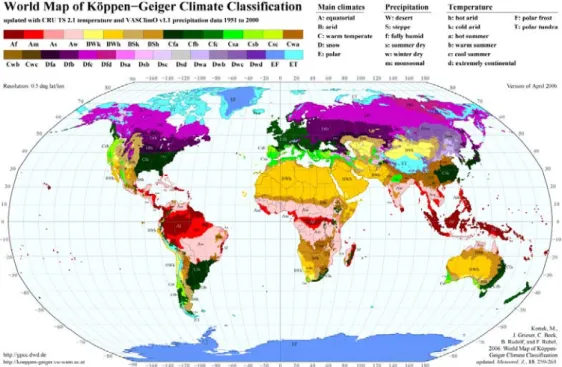
Figure 2: The Köppen climate classification map used in the risk assessment to help determine if Ireland provides suitable climate match for potential invasive species
(http://koeppen-geiger.vu-wien.ac.at/)... 12
Figure 3: An example of a Generated Niche Model produced from the Global Biodiversity Information Facility to help determine if Ireland provides suitable environmental conditions for a potential invasive species (http://data.gbif.org/welcome.htm). ... 12
Figure 4: Number of recorded species per impact category ... 15
Figure 5: Percentage of species assessed in each impact category ... 15
Figure 6: Distribution of scores for recorded species assessed. ... 15
Figure 7: Intentional pathways associated with species recorded in Ireland and/or Northern Ireland. ... 17
Figure 8: Intentional pathways associated with species recorded in Ireland and/or Northern Ireland excluding low risk species. ... 18
Figure 9: Unintentional pathway associated with species recorded in Ireland and/or Northern Ireland ... 19
Figure 10: Recorded species unintentional pathways of introduction and spread continued ... 19
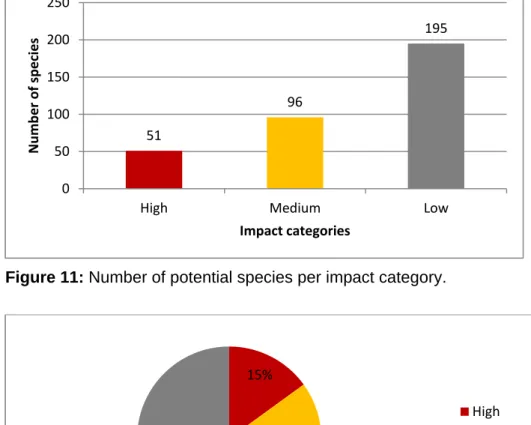
Figure 11: Number of potential species per impact category. ... 20
Figure 12: Percentage of potential species in each impact category. ... 20
Figure 13: Distribution of scores for potential species assessed. ... 21
Figure 14: Intentional pathways associated with species not recorded in Ireland and/or Northern Ireland excluding low risk species. ... 23
Figure 15: Intentional pathways associated with species not recorded in Ireland and/or Northern Ireland excluding low risk species excluding low risk species. ... 23
Figure 16: Unintentional pathways associated with species not recorded in Ireland and/or Northern Ireland Part 1 (continued in Figure XX). ... 24
Figure 17: Unintentional pathways associated with species not recorded in Ireland and/or Northern Ireland Part 2. ... 24
Figure 18: Screen shot of the Non-native species APplication based Risk Analysis (NAPRA) system opening page. ... 27
Figure 19: Screen shot of Question 3.01 to illustrate how the risk assessment looks within the NAPRA system. ... 28
List of Tables Table 1: Assessment criteria and scoring system for species that have been recorded in Ireland and/or Northern Ireland (‘Recorded Species’). ... 7
Table 2: Assessment criteria and scoring system for species that have not been recorded in Ireland and/or Northern Ireland (‘Potential Species’). ... 7
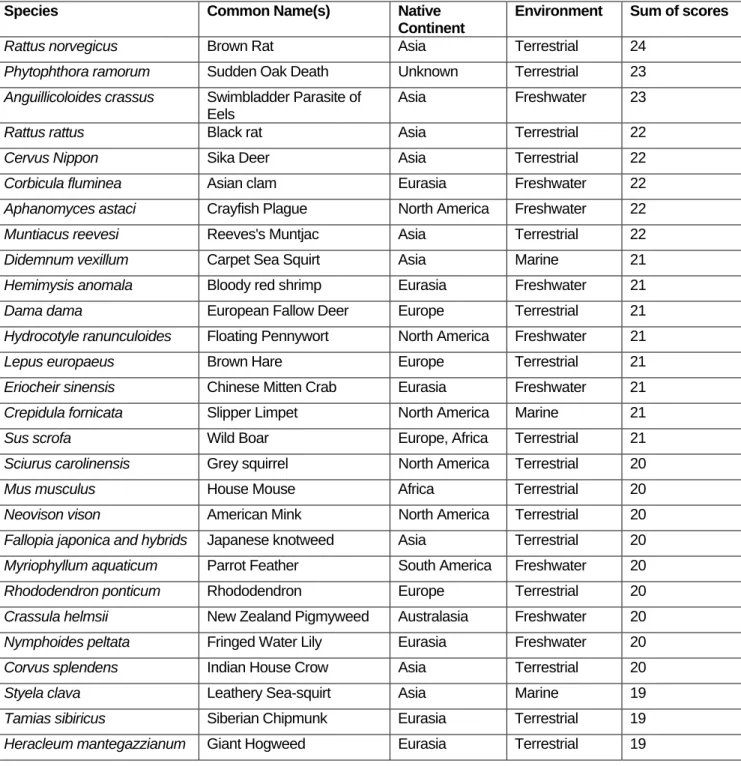
Table 3: High risk recorded species, their native continent, environment and final score. ... 16
Table 4: High risk species not recorded from Ireland or Northern Ireland (potential species), their native continent, environment and final score. ... 21
1. BACKGROUND
When managing invasive species, policy decision makers are, more often than not, faced with escalating pressures in terms of which species to manage coupled with ensuring effective and responsible expenditure of public resources to protect native species and ecosystems. There are many non-native (a.k.a. alien) species already present in Ireland and Northern Ireland, some of which negatively impact on biodiversity while others do not. At present, it is beyond our capability to manage all of the species which have an impact. It is also beyond our capability to prevent all invasive species from arriving to Ireland.
Many non-native species contribute greatly to our economies and society at large however, those species that do become invasive, and their genetic material, can have a major impact on
biodiversity. Invasive species can transform ecosystems (e.g. Slipper limpet), and threaten native (e.g. rats predating on nesting seabirds) and endangered species (e.g. white-clawed crayfish threatened by non-native crayfish species). The problems caused by invasive species are so serious that the introduction of these species is identified as one of the main causes of
biodiversity loss worldwide1. This has been recognized in decisions on alien species agreed by the contracting parties to the Convention on Biological Diversity (CBD), including Ireland and the United Kingdom2.
Article 8h of the Convention on Biological Diversity requires signatories to ‘prevent the
introduction of, control or eradicate those alien species which threaten ecosystems, habitats or species’. The island of Ireland is just one example of where a co-ordinated joined up approach to achieve effective management and prevention of species invasions is needed. International co-operation is vital as there are protected sites which span the border; there is a need for early detection and a coordinated response to new invasions; plus management of existing invasive species to reduce their threat and further spread.
Europe is a major market for import and export in international trade, and this commerce has facilitated the spread of non-native and invasive species into and within the region through a variety of means3. The majority of species introductions to islands originate through patterns of trade flow; therefore many introductions to the island of Ireland have originated from Great Britain, due to its close proximity and frequent trade interactions4. The impacts of invasions may be seen locally, but the drivers of biological invasion are, to an increasing degree, global5.
To date, there have been no complete authoritative estimates of the number of non-native species recorded in Ireland. Some resources do exists such as the Catalogue of Alien Plants in Ireland6 and also the work carried out by DAISIE7. Equally, there are no authoritative lists of
1 IUCN (The World Conservation Union). (2000) IUCN Guidelines for the Prevention of Biodiversity Loss caused by Alien Invasive
Species. Fifth Meeting of the Conference of the Parties to the Convention on Biological Diversity. (Nairobi, Kenya 15-26 May 2000). 2 Stokes, K., O'Neill, K. & McDonald, R.A. 2006. Invasive species in Ireland. Report to Environment & Heritage Service and National Parks & Wildlife Service by Quercus, Queens University. Environment & Heritage Service, Belfast and National Parks & Wildlife Service, Dublin.
3 Hulme, P. 2007. Biological Invasions in Europe: Drivers, Pressures, States, Impacts and Responses. Issues in Environmental Science and Technology. 25, 56-80. 4 Ermgassen, P.S.E. and Aldridge, D.C. 2009. Patterns of Invasion in Western Europe: Can We Predict Which Aquatic Invaders to Expect in Britain and Ireland? Presentation given at the 16th International Conference on Aquatic Invasive Species, Montreal, Quebec, Canada.
5 Front Ecol Environ 2008; 6(9): 485–492, doi:10.1890/070064
native species in trade that could become established in the wild in Ireland or Northern Ireland, posing a threat to native biodiversity, conservation goals, economic development and social interests. The Invasive Species in Ireland report provides a review of the impacts associated with invasive species in Ireland and Northern Ireland. In Ireland, the most prominent of the negative impacts appears to be direct competition with native biota, whilst alteration to habitats and the influence of parasites and pathogens are also important. Specific habitat types currently under threat in Ireland from invasive species include freshwater river systems, ponds, mesotrophic lakes, native woodland, lowland heath, coastal floodplain, coastal salt marsh and coastal sand dunes.
Once an invasive species becomes established, it is often difficult and in some cases nearly impossible to eliminate them. Interception or removal of pathways is probably the only effective strategies for reducing future impacts. With limited funds, establishing priorities is key so that money allocated for prevention of invasions is well spent. Prioritising actions requires knowing which species are likely to be most harmful to native ecosystems, current distributions of these species, and how they are likely to be transported to new regions.
Structured and transparent evaluation techniques that both determine and justify management decisions are needed to effectively deal with introduced species in both an ecological and socio-political sense. Coupling this need with knowledge, resource and data limitations has led decision makers to use risk assessment as a means to direct their actions8.
Risk Analysis (which includes the stages of: Risk Assessment, Risk Management and Risk Communication) is a vital component of any invasive species decision-making process. With respect to invasive species, risk analysis is a key tool to assist decision makers in making informed decisions despite the often large element of uncertainty9.
The risk analysis process includes:
1. the assessment of the consequences of the introduction and of the likelihood of establishment of an alien species using science-based information (i.e., risk assessment), and
2. to the identification of measures that can be implemented to reduce or manage these risks (i.e., risk management), taking into account socio-economic and cultural
considerations. (CBD) (note: different definitions are used in other frameworks, but the intent is similar).
This report focuses on the first element of risk analysis which is risk assessment. The purpose of the risk assessment process is to identify risks and inform management decisions. It is not intended to inform a cost/benefit analysis associated with the introduction of any non-native species.
7http://www.europe-aliens.org/regionFactsheet.do?regionId=IRE-IR#
8 Campbell, ML (2009) An overview of risk assessment in a marine biosecurity context. In: Biological Invasions in Marine Ecosystems. Ecological Studies (Vol. 204 ). Springer, Heildelberg, Germany, pp. 353-373. ISBN 978-3-540-79235-2
Risk assessment of invasive species is the evaluation of the likelihood of entry, establishment or spread of a pest or disease within the territory of an importing Member according to the sanitary or phytosanitary measures which might be applied, and of the associated potential biological and economic consequences; or the evaluation of the potential for adverse effects on human or animal health arising from the presence of additives, contaminants, toxins or disease-causing organisms in food, beverages or feedstuffs10.
1.1
Origin of this report
The risk assessment detailed in this report was developed and carried out by Invasive Species Ireland which is a cross border initiative funded by both governments through the Northern Ireland Environment Agency and National Parks and Wildlife Service. This report contributes, either fully or partially, to the following requirements in the Invasive Species Ireland programme of work: Requirement 8.1 Review and refine the existing risk assessment methodology if necessary. Requirement 8.2 Re-run the risk assessment procedure for all known established and
potential non-native invasive species where new information is available. Requirement 8.3 Carrying out a more detailed risk assessment, for the purposes of banning
for sale of those species requested by the Project Steering Group. This element will require direct liaison with relevant organisations in GB. Requirement 9.1 Carry out pathway vectors risk assessment analysis.
Requirement 9.2 Produce management strategies for high risk pathways.
1.2 Key
achievement
The risk assessment was carried out for 377 native species recorded in Ireland and 342 non-native species not known to present in Ireland. These species were assessed, scored and ranked into impact categories of high, medium and low risk.
10
2.
RISK ANALYSIS METODOLOGY FOR IRELAND AND NORTHERN
IRELAND
Recognising which species will become invasive in a particular area is a notoriously difficult task. Additionally, managing species which are currently presenting ecological problems in a co-ordinated and joint up manner requires an informed policy response which proceeds in a transparent manner open to public scrutiny. Provision of a system(s) to meet such requirements is needed.
2.1 Overview
of
proposed risk assessment process
To date, the risk assessment process for Ireland and Northern Ireland has been an evolving framework. The strength of the framework is that it allowed the cost effective prioritisation of invasive species and development of lists of species which are of concern allowing state
agencies to better direct their efforts. However, weaknesses in this framework is that the previous assessment was never formally reported on and that while it could inform actions to take, it was never intended to underpin legislation measures directly or any trade restrictions.
The lack of an accompanying report has been corrected in the current risk assessment with this report. However; since the development of the previous assessment, the need for more detailed risk assessment suitable to underpin legislation developments with any potential implications for trade has become more prominent. This reflects the new regulations in both Ireland and Northern Ireland (see Wildlife (Northern Ireland ) Order 1985 (as amended) and the European
Communities (Birds and Natural Habitats) Regulations 2011). There is now a need for a two tiered system of risk assessment for Ireland and Northern Ireland:
The first is the prioritisation risk assessment as outlined in Section 3 of this report. This assessment is key to understanding the relative risk associated with a larger array of species. This assessment is required primarily for prioritisation and informing decisions that do not have an impact on trade.
The second assessment is essentially a more detailed assessment of the risks and uncertainties surrounding a particular species, group of species or pathway of concern. The purpose of this risk assessment is to gather additional information on a particular species of concern when there is an identified need to do so. This will be used, where required, for the purpose of supporting any trade restrictions. It is important to note that undertaking a detailed risk assessment will not necessarily result in trade restrictions.
The approach detailed in this document is disaggregated into two separate assessment processes:
1. Prioritisation risk assessment process (discussed in Section 3); 2. Detailed risk assessment (discussed in Section 4).
This report details the results and our analysis of the prioritisation risk assessment. It also introduces the detailed risk assessment process, its structure and recommended uses. A generalised overview is provided for in Figure 1.
Figure 1: Flow chart showing a generalised overview of the two risk assessment methodologies for Ireland and Northern Ireland.
Note that the prioritisation assessment is to inform government decisions and actions while the more detailed risk assessment is intended to support trade restrictions, legislative developments and greater understanding of risks and options open to government to take. Undertaking a detailed risk assessment may not result in trade restrictions been brought forward. Usually, detailed risk assessments will be subject to consultation while the prioritisation risk assessment will be open for public input to allow improvements on www.invasivespeciesireland.com but not as a formal consultation process.
Prioritisation risk
assessment
High Medium
Low or data deficient
ISI Steering
Group review
lists and decide
prioirties.
Review available
species lists Undertakeprioritisation
Detailed Risk
Assessment. Draft Assessment Review. Consultation. Review. Publication.
Risk Assessor
appointed by NIEA ,
NPWS or ISI.
Oversight by ISI or other appropriate body
Risk assessment
panel
Risk assessment
3.
PRIORITISATION RISK ASSESSMENT PROCESS
It is simply not viable to undertake a detailed risk assessment of all non-native species in Ireland and Northern Ireland. To undertake such a task would require substantial resources both in terms of continuous capital investment and person hours. Additionally, risk assessment is a tool to inform management and policy decisions; it is not the end point in the process.
A risk assessment methodology was developed by Invasive Species Ireland in 2007. The
development of the risk assessment methodology was a pro-active measure as there was a need for a system that enabled both governments to prioritise management actions for invasive
species that were already established in Ireland and ones that were likely to invade and impact on native biodiversity in the future. The aim of this exercise was to prioritise non-native species already present on the island of Ireland and to also conduct a horizon scanning exercise for species not yet recorded here. The purpose of which is to inform prevention strategies and an early warning system. This was the first attempt to risk assess and prioritise invasive species in Ireland or Northern Ireland. This risk assessment resulted in a series of lists for species of
concern which were then in some cases the subject of practical action, education and awareness activities, greater data gathering on distribution and the establishment of an alert list for high impact species not yet recorded in the wild in Ireland or Northern Ireland.
The 2007 methodology, which was not the subject of an accompanying report, formed the basis of the methodology discussed herein. The now updated methodology supersedes the previous version which is withdrawn from public circulation.
3.1 Overview
of methodology
3.1.1 Structure
This risk assessment was developed using MS Access. It consists of answering ten questions designed to assess the relative level of risk and allocate the species into high, medium and low risk categories. Scores are justified with a comment or reference to published evidence. Each species was scored by an assessor and the risk rating was calculated from the sum of the
responses given by assessors. The results from the initial round of assessments were plotted in a frequency bar chart and the cut off point for each category was decided in conjunction with policy makers:
High risk species scored 18 and above; Medium risk species 14 – 17; and Low risk species scored 0 – 13.
Separate assessments are carried out for species recorded (Table 1) on the island of Ireland and species which have not yet been recorded in the wild (hereafter referred to as ‘potential species’) (Table 2). While the recorded and potential species risk assessments are similar they evaluate the risk from different stages of the invasion process:
For species recorded in Ireland, the risk assessment is based on questions relating to the species current status here, its ability to colonise successfully, invasion history, associated impacts, and management.
For potential invasive species the risk assessment includes the likelihood of a species arriving in Ireland and Northern Ireland, its ability to survive in respect to suitable climate and habitat, its ability to spread and have an impact on the conservation goals and economy of an area.
Both the recorded and potential species assessments take into account control measures and societal factors that may limit or facilitate the spread of the species.
Table 1: Assessment criteria and scoring system for species that have been recorded in Ireland and/or Northern Ireland (‘Recorded Species’).
Factor Assessment criteria Maximum score
Invasion history Does the species currently have a widespread recorded distribution on the island of Ireland?
3 Is the species currently expanding its range on the island of Ireland? 2 Is the species in its present range (including Ireland) known to be invasive i.e. to threaten species, habitats or ecosystems?
2 Species spread
potential
Is there potential for this species to be spread intentionally or unintentionally across Ireland?
2 Availability of
suitable habitats
How widespread are suitable habitats to allow establishment of the species?
2
Impact assessment
Where the species has become established has it impacted upon the conservation objectives for the area?
4 Is the species poisonous, or does it pose a risk to plant and animal health?
2 Is the species poisonous, or does it pose a risk to human health due to its parasites, pathogens or other intrinsic factor?
2 Has the species directly or indirectly caused economic losses in
Ireland or elsewhere?
3 Management Are there acceptable and effective control method/s that can be
applied? Assessors are asked to consider control methods for similar or related species in their assessment.
3
Table 2: Assessment criteria and scoring system for species that have not been recorded in Ireland and/or Northern Ireland (‘Potential Species’).
Factor Assessment criteria Maximum score
Identification of nearest donor region
In which of the following donor regions is the nearest population to the island of Ireland?
3
Occurrence in similar climate
Does the species occur in a similar climatic region to the island of Ireland? (click appropriate map below)
2 Pathway of
introduction
Is there a realistic pathway for unintentional introduction to Ireland? 2 Is there potential for this species to be introduced intentionally? 2 Suitability of Are habitats in Ireland and/or Northern Ireland suitable to allow 2
Factor Assessment criteria Maximum score
habitats establishment of the species? Impact
assessment
Where the species has become established has it impacted upon the conservation objectives for the area?
4 Is the species poisonous, or does it pose a risk to plant and animal health?
2 Is the species poisonous, or does it pose a risk to human health due to its parasites or pathogens or other intrinsic factor?
2 Has the species directly or indirectly caused economic losses at its home range or where it has become invasive?
2 Management Are there acceptable and effective control method/s that can be
applied?
3
3.1.2 Species selection
Species lists were compiled by searching international, European and domestic online and published (grey and peer reviewed sources) databases and literature on invasive species distributions and impacts.
A variety of relevant databases were examined for information on species already recorded in Ireland and species likely to arrive. Sources used were: ALARM (Assessing Large scale Risks for biodiversity with tested Methods), DAISIE (Delivering Alien Invasive Species Information for Europe), GISP (Global Invasive Species Project), ISSG (Invasive Species Specialist Group), EPPO (European and Mediterranean Plant Protection Organisation) alert lists (EPPO 2008), Alien Plants in Ireland database, National Biodiversity Data Centre, and Habitas. Additional sources of information were reference literature on individual taxonomic groups.
The DAISIE, NOBANIS, and GISP databases were interrogated for potentially invasive native species that are present in neighboring North Western European regions. Data on non-native species found in GB but not in Ireland or Northern Ireland was also obtained from the GB NNSS and reports published on their website (www.nonnativespecies.org).
3.1.3 Recorded species data sources
Not all non-native species present in Ireland were included in the database and subject to a risk assessment. Additionally, some species that are not currently recorded from the wild but are known to be in trade, either in Ireland or Northern Ireland, were included in the risk assessment under the recorded species. This approach recognises that it is not always possible to define at what state in the invasion process a species is at particularly in the absence of baseline datasets or surveys to assess individual species populations/viability.
A species is considered as established as soon as it is able to reproduce consistently in the wild and sustain populations over several life-cycles through sexual or asexual modes without direct intervention by man (self-perpetuating populations)11. However, particularly when referring to
11
species at an early stage in the invasion process, it is not always clear if a self-sustaining population is present in the wild. Once a species is in trade within the risk assessment area it increases the relative risk of that species escaping and becoming established.
3.1.3.1 Native or non-native species
For many species, we do not have sufficient data to decide with certainty if a species arrived in Ireland by natural means or was facilitated by man. This refers to both historic times (for example see Woodman, 199712 for information on mammalian species) and current times (some
invertebrate species arriving to Ireland in recent times may be natural colonisers or associated with human activity). This situation is not unique to Ireland. For other species, the arrival associated with human activities is clear and unequivocal (Muntjac deer could not have arrived here via natural dispersal). Some species have attained cultural and ecological significance and are now widely accepted to be part of the native flora and fauna of Ireland (example; red deer (see Carden, 201213)). It is not the purpose of this report to shed light on the natural colonisation of Ireland. Rather, this report will set out the current understanding of the biota of Ireland in terms of policy in both Northern Ireland and Ireland.
Whether a species should be considered as a native species once it has been extirpated from Ireland and has since been re-introduced to Ireland is another key question. Wild boar (Sus scrofa) was found on this island in the past. Although widely regarded as a native species its natural history here is by no means certain. This species is included in this risk assessment process and covers feral pigs whether they be wild boar or wild boar hybrids. The question of whether or not it was once native to the island of Ireland is not the focus of this report. The reports of wild boar/feral pigs in Ireland are as a result of unlicensed release into the wild and not as part of a planned re-introduction programme. Licensed introductions into the wild, of any species, will not generally fall under the remit of ISI.
3.1.3.2 Natural coloniser from Europe or a non-native species
The question of natural colonisation from Europe is one that must be considered carefully. Under environmental or climatic change, it is expected that species will begin to shift their ranges in order to find suitable conditions. However, a certain amount of confusion can arise when
considering this. Should we consider this species native or non-native? The approach that will be taken by Invasive Species Ireland is to acknowledge that species will arrive here from continental Europe. Some of these species may have impacts on native species and ecosystems. Species that will fall under the remit of ISI will be those whose introduction/s are facilitated by human activity. This is intended to be a pragmatic approach. This will also encompass species whose introduction to Europe in the first instance was by human activity but which may spread to Ireland via natural dispersal (for example, the Sacred Ibis and the ruddy duck). This is known as
secondary introduction.
12
Woodman, P.C., McCarthy, M., Monaghan, N., 1997. The Irish Quaternary faunaproject. Quaternary Science Reviews 16, 129 13
Carden RF,McDevitt AD, Zachos FE, Woodman PC, O'Toole P, Rose H, Monaghan NT, Campana MG, Bradley DG, Edwards CJ (2012)
Phylogeographic, ancient DNA, fossil and morphometric analyses reveal ancient and modern introductions of a large mammal: the complex case of red deer (Cervus elaphus) in Ireland.Quaternary Science Reviews42:74-84.
3.1.3.3 Native species entering new environments
An additional consideration which is receiving an increasing amount of attention is what happens when a species that is clearly native to a country or region gets translocated by human activity to another area within the same country where they would not have been able to get to otherwise. These species are termed translocated natives. There is clear overlap in the measures to prevent the spread of invasive species which have applicability to preventing the unplanned movement of native species. Despite this, these species will lie outside of the remit of ISI and will not appear in this assessment.
3.1.4 Potential species data sources
For potential invasive species, lists of invasive species from sources such as GISP, NOBANIS and EPPO were compiled. Species from the GISP list of the 100 of the World’s Worst Invaders were also included if they were found in areas with similar eco-climatic conditions. Invasive species known from Britain were included. The resulting lists were checked for duplications within datasets and between potential and recorded species.
Species that were assessed as low risk during the previous risk assessment methodology were not reassessed.
3.1.5 Overview of database structure
This section details the purpose of the individual parts of the risk assessment. The various elements can be accessed in the database and are not replicated here.
3.1.5.1 Basic Information
The basic information section has been designed to facilitate the collection of information for each species in a standard format.
3.1.5.2 Habitat data
The risk assessment has been designed to gather information on what habitats invasive species are likely to invade in a systematic way. The intention here is to provide policy makers and managers with information on habitats most likely to be invaded by a particular invasive species or a set of invasive species. This approach is based on the EUNIS Habitat Classification System. More information on EUNIS is available from http://eunis.eea.europa.eu/.
3.1.5.3 Intentional Introductions/Unintentional introductions
The methodology aims to gather information on the possible pathways an invasive species arrives in Ireland or can spread once here. The assessment was intended to enable us to identify the most common pathways for the species that have been assessed which can inform action plans.
In order to capture pathway data in a manner that can inform effective management decisions, we needed a system that categorised both pathways and vectors at an appropriate level. The pathway of introduction and vectors of spread used in the assessment follows that proposed by Maguire (2011)14.
3.1.5.4 Introduction or spread
An attempt was made to disaggregate the pathways by which species arrive in Ireland and how they spread once here. During the population of this database and the subsequent attempt to analyse this dataset, it became apparent that often there exists limited reliable datasets which can categorically state how a species first arrived to Ireland or Northern Ireland. Many papers state how the experts believe the species first arrived but more often or not this can amount to an educated guess and the primary pathway of introduction is unclear. Given the uncertainty surrounding the primary method of introduction and how species are spread, we have not presented these results. This omission in our analysis highlights the need for research programmes into pathways of introduction to help better understand risks associated with pathways. It also highlights a need to systematically collect data on new introductions and their pathways which can be analysed in future assessments.
3.1.5.5 Climate match
For potential species, climate match is also considered. The primary mechanism is by viewing the Koppen Geiger global climate classification map as produced in Figure 2. Additional sources such as the Generated Niche Model on the Global Biodiversity Information Facility was also consulted. A model is reproduced in Figure 3 (species details are not provided as this is not the purpose of this report).
14
Figure 2: The Köppen climate classification map used in the risk assessment to help determine if Ireland provides suitable climate match for potential invasive species (http://koeppen-geiger.vu-wien.ac.at/).
High Probability
Low Probability Figure 3: An example of a Generated Niche Model produced from the Global Biodiversity Information Facility to help determine if Ireland provides suitable environmental conditions for a potential invasive species (http://data.gbif.org/welcome.htm).
3.1.5.6 Uncertainty
Uncertainty must be considered when undertaking any risk assessment process. However, there are different types of uncertainty in any risk assessment process. For example, uncertainty can be due to the natural unpredictability of a species and/or uncertainty can arise due to a lack of evidence or information on a particular species. How uncertainty is measured is key to the interpretation of any risk assessment and it’s results. The approach taken in the current risk assessment attempts to account for uncertainty in both information available and the uncertainty in the assessment made. The measure of uncertainty is intended to be consistent and
measureable in a way that attempts to remove assessor bias. In all species assessed, uncertainty is identified in the individual assessments. This has been done consistently by adding uncertainty as a distinct assessment answer. This is relevant when there is simply no data on which to base the assessment on. The second measure of uncertainty is in the overall level of data contributing to the assessment itself. Rather than requiring the assessor to rank their uncertainty in the assessment, an assessment of their level of confidence has been developed. This is as follows:
Documented – Where there is reliable documented evidence to support the assessment made. Relevant references are added to the reference database. Expert Opinion – Where the assessors knowledge of a species, or that of an
identified expert, provides sufficient information to support an assessment. Probable – Where the evidence consulted or the species characteristics indicate
that the described impact could reasonably occur in Ireland or Northern Ireland. Uncertain – Where there is insufficient evidence to confidently make an assessment
of a species.
3.1.5.7 Impact summary terminology
The impact summary terminology is derived from that used by the NOBANIS system. This is as follows:
Decomposition: Entering the local food web by being a new decomposer (vertical effects).
Predation: Entering the local food web by being a new predator (vertical effects). Herbivory: Entering the local food web by being a new herbivore (vertical effects). Resource allocation: Is a new resource for native or introduced species (for
herbivores, predators or decomposers) (vertical effects). Toxic: Is toxic for local species, thereby displacing these.
Competition: Competes with other organisms filling the same niche in the food chain (horizontal effect), physical disturbance.
Disease transmission: Is a parasite or pathogen or is a reservoir for parasites or a vector for pathogen.
Abiotic changes: Modification of fire regime, succession, hydrology, nutrient availability.
Genetic: Hybridising with a related species or varieties, may lead to extinction by gene flow or dilution of locally adapted genepool.
Human health: Human health effects by being toxic, causing diseases or allergies. Socio-economic: Fouling, clogging of waterways, leading to increased
Extinction: Extinction of native species, extirpation of local populations. None: Preferably based on some kind of scientific knowledge.
Not known: No evidence to identify impacts or categorically state that there are no impacts.
3.2 Risk
communication
Risk communication is one of the most important aspects of risk assessment. Information in large databases must be distilled in a manner which can be understood by policy makers,
stakeholders, industry interests and the general public. Without an effective risk communication strategy the prioritisation process would be inaccessible and less effective at achieving its goals. To communicate risks, the following outputs are produced:
This report;
Publication of the risk assessments for those species listed as high risk on
www.invasivespeciesireland.com website;
Publication of the Most Unwanted section of the website for species specifically aimed at members of the public; and
Production of ‘amber lists’ for both potential invasive species and recorded invasive species which have a medium risk species and could represent a threat to
conservation goals.
3.3 Results
The results presented here relate only to the species overall risk rating, as defined by the scoring system, and their association with pathways. The analysis of habitats, pathways, date of
introduction and other factors will be the subject of an additional report prepared by the National Biodiversity Data Centre and ISI15.
15
O’Flynn. C. and Kelly, J. (2013) Trends in introductions of invasive and non-native species in Ireland. National Biodiversity Data Centre, Ireland
3.3.1 Risk summary
Figure 4: Number of recorded species per impact category
Figure 5: Percentage of species assessed in each impact category
Figure 6: Distribution of scores for recorded species assessed. 48 79 250 0 50 100 150 200 250 300
High Medium Low
Number of species Impact categories High Medium Low 12% 21% 66% High Medium Low 0 5 10 15 20 25 30 35 40 45 50 1 2 3 4 5 6 7 8 9 10111213141516171819202122232425 Number of species Risk score
In terms of prioritising species for action, this assessment has achieved what it set out to do with 12 % of species falling into the high risk category. These species are spread across marine (5), freshwater (15) and terrestrial (24 + 3 hybrids of Fallopia) environments. High risk species are detailed in Table 3. It is interesting to note that some of these species have a very restricted distribution and may represent prime candidate for rapid response while others are more widespread and will require long term management programmes to prevent further spread and ecological degradation associated with them. Other species such as the harlequin ladybird which still have a restricted distribution, do not lend themselves to rapid response owning to the lack of effective management measures.
Table 3: High risk recorded species, their native continent, environment and final score.
Species Common Name(s) Native
Continent
Environment Sum of scores Rattus norvegicus Brown Rat Asia Terrestrial 24
Phytophthora ramorum Sudden Oak Death Unknown Terrestrial 23 Anguillicoloides crassus Swimbladder Parasite of
Eels
Asia Freshwater 23
Rattus rattus Black rat Asia Terrestrial 22
Cervus Nippon Sika Deer Asia Terrestrial 22
Corbicula fluminea Asian clam Eurasia Freshwater 22 Aphanomyces astaci Crayfish Plague North America Freshwater 22 Muntiacus reevesi Reeves's Muntjac Asia Terrestrial 22 Didemnum vexillum Carpet Sea Squirt Asia Marine 21 Hemimysis anomala Bloody red shrimp Eurasia Freshwater 21 Dama dama European Fallow Deer Europe Terrestrial 21 Hydrocotyle ranunculoides Floating Pennywort North America Freshwater 21 Lepus europaeus Brown Hare Europe Terrestrial 21 Eriocheir sinensis Chinese Mitten Crab Eurasia Freshwater 21 Crepidula fornicata Slipper Limpet North America Marine 21 Sus scrofa Wild Boar Europe, Africa Terrestrial 21 Sciurus carolinensis Grey squirrel North America Terrestrial 20 Mus musculus House Mouse Africa Terrestrial 20 Neovison vison American Mink North America Terrestrial 20 Fallopia japonica and hybrids Japanese knotweed Asia Terrestrial 20 Myriophyllum aquaticum Parrot Feather South America Freshwater 20
Rhododendron ponticum Rhododendron Europe Terrestrial 20 Crassula helmsii New Zealand Pigmyweed Australasia Freshwater 20
Nymphoides peltata Fringed Water Lily Eurasia Freshwater 20 Corvus splendens Indian House Crow Asia Terrestrial 20 Styela clava Leathery Sea-squirt Asia Marine 19 Tamias sibiricus Siberian Chipmunk Eurasia Terrestrial 19 Heracleum mantegazzianum Giant Hogweed Eurasia Terrestrial 19
Species Common Name(s) Native
Continent
Environment Sum of scores Elodea canadensis Canadian-Pondweed North America Freshwater 19
Carpobrotus edulis Hottentot fig Africa Terrestrial 19 Harmonia axyridis Harlequin Ladybird Eurasia Terrestrial 19 Gunnera tinctoria Giant Rhubarb South America Terrestrial 19 Dreissena polymorpha Zebra Mussel Europe Freshwater 19
Mustela furo Feral Ferret Europe Terrestrial 19
Elodea nuttallii Nuttalls Pondweed North America Freshwater 19 Lagarosiphon major Curly waterweed Africa Freshwater 19 Branta canadensis Canada Goose North America Terrestrial 18
Leuciscus cephalus Chub Europe Freshwater 18
Prunus laurocerasus Cherry Laurel Europe, Africa Terrestrial 18 Arthurdendyus triangulatus New Zealand flatworm Australasia Terrestrial 18 Spartina anglica Common Cord Grass Europe Marine 18 Oxyura jamaicensis Ruddy Duck North America Freshwater 18 Impatiens glandulifera Himalayan balsam Asia Terrestrial 18 Varroa destructor Honey Bee Varroa Mite Asia Terrestrial 18
Sargassum muticum Wire Weed Asia Marine 18
Fallopia sachalinensis and hybrids
Giant Knotweed Asia Terrestrial 18
Figure 7: Intentional pathways associated with species recorded in Ireland and/or Northern Ireland. 0 20 40 60 80 100 120 140 160 Number of species Pathway Low risk Medium risk High risk
Figure 8: Intentional pathways associated with species recorded in Ireland and/or Northern Ireland excluding low risk species.
Pathway of introduction is the means by which a species arrives in Ireland and/or Northern Ireland in the first instance. Many species have multiple pathways of introduction. Additionally, some species are introduced both for legitimate trade purposes but can also contaminate trade unintentionally or can be released accidentally.
It is not surprising that horticulture is presenting as the main pathway of introduction for non-native species. This reflects not just the activity along this pathway both in recent times and in previous centuries but also reflects the availability of very reliable datasets on non-native plants (see Reynolds 2002 (http://www.botanicgardens.ie/glasra/aliens.htm) and
http://alienplants.ekru.eu/search.php). While it is important to note that the vast majority of plants associated with horticulture are actually ranked as low risk (91) for Ireland and Northern Ireland, it is also important to note that this pathway has contributed a high number of high and medium risk species when viewed alongside other pathways excluding low risk species (Figure 5).
When horticulture is excluded from the assessment, we can see that the main pathways of introduction are other key economic sectors such as pet trade, agriculture, forestry, and fisheries. One key pathway that appears to have contributed a disproportionate number or high risk species is the wildfowl and game stocking pathway with 7 out of the 10 species identified as associated with this pathway been considered high risk to conservation objectives.
0 10 20 30 40 50 60 Number of species Pathway Medium risk High risk
Figure 9: Unintentional pathway associated with species recorded in Ireland and/or Northern Ireland
Figure 10: Recorded species unintentional pathways of introduction and spread continued Escape from captivity is the key unintentional pathway of introduction to Ireland and Northern Ireland. Species are originally brought for legitimate trade purposes and escape from the confines they are kept in. Sometimes known as hopping the garden fence. Examples include, escapes from farms and pets, or other activity.
The activities of the key economic sectors such as agriculture, horticulture and aquaculture can contribute to the unintentional introduction and spread of invasive species through contamination. It is apparent that solutions are needed to help these sectors mitigate the risk of introducing a species unintentionally. Usually this will involve development of guidance, standard operating procedures and training where required.
0 10 20 30 40 50 60 70 80 90 Number of species Pathway Low Medium High 0 10 20 30 40 50 60 70 80 90 Number of species Pathway Low Medium High
There emerged no evidence of species stowing away on airplanes for Ireland or Northern Ireland. We suggest that this represents an under reporting in the scientific literature and publically
available databases rather than indicating that the risk of introducing a new species along this pathway is low. For natural dispersal, species such as birds and insects, and species with marine life stages have been implicated.
3.4
Results of risk assessment of potential species
Figure 11: Number of potential species per impact category.
Figure 12: Percentage of potential species in each impact category. 51 96 195 0 50 100 150 200 250
High Medium Low
Number of species Impact categories 15% 28% 57% High Medium Low
Figure 13: Distribution of scores for potential species assessed.
Similar to the recorded species assessment, in term of prioritising species for action, the assessment has achieved its goal. 15% of species assessed fall into the high risk category. These are spread across marine (7), freshwater (22 with extra 4 as semiaquatic) and terrestrial (18) environments. Species are detailed in Table 4.
Since the time of carrying out the assessment, raccoon and the alpine newt have been recorded in Ireland but it is not known yet if these represent an extant population. These species are therefore retained on this list until further data becomes available. However, the sighting of both these species in the wild highlights the activity of the pet pathway and either the unintentional (escape) or intentional (‘setting free’) release of these high risk species.
Table 4: High risk species not recorded from Ireland or Northern Ireland (potential species), their native continent, environment and final score.
Species Common Name(s) Native
Continent
Environment Final Score Alexandrium catenella A toxin-producing
dinoflagellate
North America Marine 24
Sander lucioperca Zander Europe Freshwater 22
Orconectes limosus Spinycheek Crayfish North America Freshwater 22 Pacifastacus
leniusculus
Signal Crayfish North America Freshwater 22
Ondatra zibethicus Muskrat North America Semiaquatic 22 Pseudorasbora parva Topmouth Gudgeon Asia Freshwater 21
Lymantria dispar Gypsy Moth Eurasia Terrestrial 21 Dikerogammarus
villosus
Killer Shrimp Europe Freshwater 21 Pimephales promelas Fathead minnow North America Freshwater 21 Procambarus clarkii Red Swamp Crayfish North America Freshwater 21 Batrachochytrium
dendrobatidis
Frog Chytrid Fungus Unknown Freshwater 21 Thaumetopoea
processionea
Oak Processionary Moth
Europe Terrestrial 20
Gyrodactylus salaris Salmon fluke Europe Freshwater 20 Ludwigia peploides water primrose North America,
South America Freshwater 20 0 10 20 30 40 50 1 2 3 4 5 6 7 8 9 10 11 12 13 14 15 16 17 18 19 20 21 22 23 24 25 Number of species
Ludwigia grandiflora Water primrose North America, South America
Freshwater 20
Myocastor coypus Coypu South America Semiaquatic 20 Psittacula krameri Ring-Necked Africa Terrestrial 19 Nyctereutes
procyonoides
Raccoon dog Asia Terrestrial 19 Undaria pinnatifida Japanese kelp Asia Marine 19 Alytes obstetricans Midwife Toad Europe Freshwater 19 Mesotriton alpestris Alpine Newt Europe Semiaquatic 19 Cercopagis pengoi Fishhook Waterflea Europe Freshwater 19 Cameraria ohridella Horse chestnut leaf
miner
Europe Terrestrial 19
Diabrotica virgifera Western corn rootworm
North America Terrestrial 19 Procambarus
marmorkrebs
Marbled crayfish North America Freshwater 19 Callinectes sapidus Blue Crab North America,
South America
Marine 19 Myiopsitta monachus Monk Parakeet South America Terrestrial 19
Threskiornis aethiopicus
Sacred Ibis Africa Terrestrial 18 Chattonella cf.
verruculosa
None identified Asia Marine 18
Carassius auratus Edible Goldfish Asia Freshwater 18 Bemisia tabaci Tobacco Whitefly Asia Terrestrial 18
Vespa velutina Asian hornet Asia Terrestrial 18 Rapana venosa Rapa whelk Asia Marine 18 Callosciurus
erythraeus
Pallas's squirrel Asia Terrestrial 18 Corbicula fluminalis Asian Clam Asia Freshwater 18 Hylastes ater Black Pine Bark
Beetle
Eurasia Terrestrial 18
Bombus terrestris sp. Bumble Bee Eurasia Terrestrial 18 Capreolus capreolus Roe Deer Europe Terrestrial 18
Astacus astacus Noble Crayfish Europe Freshwater 18 Astacus leptodactylus Turkish Crayfish Europe Freshwater 18 Diuraphis noxia Russian wheat aphid Europe Terrestrial 18 Geomyces destructans bat white nosed
syndrome (WNS)
Europe Terrestrial 18
Neogobius melanostomus
Round Goby Europe Marine 18
Dreissena bugensis Quagga Mussel Europe Freshwater 18 Rana catesbeiana North American
Bullfrog
North America Semiaquatic 18
Procyon lotor Raccoon North America Terrestrial 18 Orconectes rusticus Rusty crayfish North America Freshwater 18
Orconectes virilis Virile Crayfish North America Freshwater 18 Homarus americanus American lobster North America Marine 18 Salvelinus fontinalis Brook trout North America Freshwater 18 Frankliniella
occidentalis
Figure 14: Intentional pathways associated with species not recorded in Ireland and/or Northern Ireland excluding low risk species.
Figure 15: Intentional pathways associated with species not recorded in Ireland and/or Northern Ireland excluding low risk species excluding low risk species.
From the species lists gathered during this exercise and the analysis of the pathways associated with them, it appears that both the pet and horticulture trade represent significant risk in terms of introducing new species to Ireland. Additionally, we can see that live food trade may become more important in the future as species such as crayfish and non-native fish are traded live thus presenting a risk as an invasive species.
These datasets highlight the need for a risk assessment procedure to be put in place prior to allowing species be freely traded without restriction. However, it is clear that this needs co-ordination at an EU level given the influence of free trade laws.
0 10 20 30 40 50 60 Number f species Pathway Low Medium High 0 5 10 15 20 25 30 Number f species Pathway Medium High
Figure 16: Unintentional pathways associated with species not recorded in Ireland and/or Northern Ireland Part 1 (continued in Figure 17).
Figure 17: Unintentional pathways associated with species not recorded in Ireland and/or Northern Ireland Part 2.
From the data gathered, species that could escape from captivity appears to be a key pathway requiring attention. These are species which are primarily brought to Ireland for one reason or
0 10 20 30 40 50 60 70 80 Number of species Pathway Low Medium High 0 10 20 30 40 50 60 70 80 Number of species Pathway Low Medium High
another with the unintended consequence that wild populations establish following escape or unregulated release. Contamination of the activities of key economic sectors also appears to require attention with a high number of species known to contaminate a trade or commodity.
4. DETAILED
RISK
ASSESSMENT
4.1
Risk assessment and prevailing trade laws
Risk assessment is one tool that can allow governments to make decisions in a transparent and traceable manner. Risk assessment however is not a clear cut process. Risk assessment means very different things to different people and is also context dependant. The process designed must be suitable for the task it sets out to achieve. For example, if a government needs to decide what species require management in the short term when faced with competing interests and limited resources, a methodology should not be so onerous as to make the decision making process slow and ineffective. If on the other hand, a government requires measures which will impact on trade of a particular species or commodity associated with a pathway then the level of effort required increases for a single species as governments must conform to international standards laid down in the General Agreement on Tariffs and Trade (GATT). For EU member states, governments must also comply with prevailing Free Trade Laws.
Economic activity has resulted in the transport and trade of plant and animal species for millennia. Indeed, a widely held defining moment in biological invasions dates as far back as 1500 AD, a period associated with the end of the Middle Ages, the European rediscovery of the Americas, global exploration, the birth of colonialism and the start of radical changes in patterns of human demography, agriculture, trade and industry16. Global trade and globalisation has been increasing significantly over the past number of years. Since 1950, world trade is estimated to have
increased 14 fold17. This has brought with it an increased risk of invasion by non-native species. Global trade laws have attempted to some degree, to account for environmental concerns. Example measures include the General Agreement on Tariffs and Trade (GATT) (1947) and the agreement of Sanitary and Phytosanitary measures (SPS). The SPS agreement allows countries to enforce measures to prevent the spread of plant, animal, or other disease agents and to prevent or control the spread of pests. These measures, however, must be based on scientific justification or on an “objective” assessment of the risks to human, animal or plant health.
4.2
Proposed detailed risk assessment schema for Ireland and Northern
Ireland
The proposed risk assessment chosen by ISI to underpin trade restrictions and policy
development is that of the GB NNSS. This approach has been chosen for a number of reasons including:
To ensure consistency of approach across the entire UK and also consistency between the UK and Ireland.
To allow UK and Irish agencies to share and develop risk assessment approaches in a co-ordinated fashion.
Ensure value for money for agencies in the UK and Ireland by completing similar risk assessments which can be shared.
16
http://www.uni-landau.de/umwelt/study/content/files/archiv/H.Schulz/WS09/Biodiversitaet_und_Naturschutz/Hulme%202009.pdf
17
This risk assessment is based on the internationally accepted risk assessment procedures used for plant health under the International Plant Protection Convention. Plant health risk assessment procedures are widely applied and already recognised
by the World Trade Organisation.
Permission has been granted by the GB NNSS for this risk assessment. 4.2.1 Structure of the proposed Detailed Risk Assessment
The proposed detailed risk assessment will use the Non-native species APplication based Risk Analysis (NAPRA). NAPRA is a computer based tool for undertaking risk assessment of any non-native species. It has been developed by the European and Mediterranean Plant Protection Organisation (EPPO) and is based on the Computer Aided Pest Risk Analysis (CAPRA); a similar tool used by EPPO for risk assessment. Figures 18 and 19 are provided to show the reader how the assessment process looks once opened.
Figure 18: Screen shot of the Non-native species APplication based Risk Analysis (NAPRA) system opening page.
Figure 19: Screen shot of Question 3.01 to illustrate how the risk assessment looks within the NAPRA system.
The Detailed Risk Assessment can be accessed from the following weblink:
http://invasivespeciesireland.com/toolkit/risk-assessment/detailed-risk-assessment/ An MS Word Version of this assessment is included in Appendix 2.
It should be noted by the reader that this assessment will undergo some degree of modification as risk assessments are added. It is understood that those co-ordinating the risk assessment will instigate version control of the assessment process and also include examples to help assessors complete the risk assessment as time goes by. Additionally, the module on risk management measures has not been completed. We had hoped to enter dialogue with our counterparts in Great Britain to develop this in a similar manner however time did not allow for this work prior to completion of the ISI Phase 2 contract.
5. DISCUSSION
This report describes the two systems of risk assessment for Ireland and Northern Ireland. The first is a prioritisation exercise while the second is a more detailed risk assessment which is intended for the purpose of supporting legislative developments and also allowing policy makers to gather more information if and when required to do so. This report does not provide the results of any Detailed Risk Assessments. The report does however provide for two examples of risk assessments which are for illustrative purposes and not in support of measures until they have been peer reviewed and consulted upon. See Appendix 3 and 4 (which can be requested from NIEA or NPWS).
5.1
Key lessons from the prioritisation risk assessment
As a tool to aid the prioritisation of species which should be the subject of action to manage impacts or prevent their arrival in the first place, the prioritisation risk assessment has been successful. This risk assessment process developed by ISI allows for risk impact ranking and categorisation of the non-native species assessed in to high, medium and low impact categories. The categorisation of the species provides a basis for which policy decision makes can focus their attention.
As a system, we recognise that it is by no means perfect. The system depends on availability of information for a wide range of species and taxa across marine, freshwater and terrestrial environments. This is often difficult to locate or simply does not exist. Our system does however allow for the collation of data and attempts to present this in a manner that is useful to policy makers and interested stakeholders. Our system aims to be transparent and through our working with stakeholders, aims to allow interested parties to feed into the process.
One key lesson is that invasive species issues continue to emerge. Experts continue to identify new species and indeed species that are not currently seen as invasive may begin to exhibit traits suggesting an unforeseen invasive potential. This system allows for this in that it is easily updated as new information becomes available. However, this system stands and falls on the availability of relevant data on impact and experts willingness to engage either through publication of results; direct contact with ISI; or through the various meetings held by ISI.
The assessment of species used by the various economic sectors in Ireland and Northern Ireland for legitimate reasons highlights that in some cases these species can and have become
invasive. There is a need for greater controls to prevent the release, escape and translocation of species which pose a risk as invasive species. There is also a need to raise awareness of the threats posed with the various stakeholder sectors. A key lesson that should be communicated to the various groups is that it is in their interest to maintain the species under human control as it avoids the need for increased regulation.
It is clear that there is a history of illegal or unlicensed introductions into the wild by members of the public in both Ireland and Northern Ireland. There is also a history of species been moved
around the island once they have been introduced. Measures are required to address these issues. The legislation is already in place in both jurisdictions to prohibit releases therefore there is a need for enforcement and better awareness of the consequences of illegal introductions. Accidental introductions are a key concern and one of the most difficult to address. Pathway based approaches are required to address these mechanisms. The assessment of pathways allows for a prioritised approach to preventing accidental introductions. Education and awareness campaigns are required for the key pathways. To date, the work of ISI has led to the
implementation of the Be Plant Wise campaign targeting the garden pond plant trade; the Check Clean Dry campaign targeting recreational water users; and the Be Pet Wise information on the
www.invasivespeciesireland.com website.
5.2
Key lessons from the detailed risk assessment development
The most valuable lesson we have learnt during this process is the benefit of working with our counterparts in Great Britain. This has yielded substantial gains in terms of developing a system and helping to ensure policy approach in the UK and Ireland remain consistent and adhere to the strictures of free trade regulations. As risk assessments are carried out for Ireland and Northern Ireland, we would envisage a need for greater collaboration between GB and Ireland in this regard.
From our discussions with various actors in this arena in Ireland and Northern Ireland, the need for detailed risk assessment is not always apparent to most. This may present a problem to policy makers who take a slower approach to enacting trade restrictions than most environmental interest groups would prefer. However, for the reasons outlined earlier, this process is necessary to avoid failure of trade restrictions and also to ensure that the policy response is fair to those that will be affected most by these trade restrictions.
Recognising that there are currently limited guidelines from the European Commission on the subject of risk assessment relating to invasive species, it is important for Ireland and the UK to continue to engage with colleagues across Europe on this subject. Additionally, environmental experts would benefit greatly from continued liaison with plant health colleagues on the subject of risk assessment.
5.3 Recommendations
5.3.1 Relating to risk assessment
Recommendation 1: Risk assessments are required prior to implementing any trade restrictions. Initially, detailed risk assessments should be undertaken in two broad stages. The first stage of risk assessments should include those species used by trade sectors in Ireland or Northern Ireland which are listed on forthcoming regulations in Ireland. It would be advantageous to proceed slowly with this process, undertaking risk assessments for a small number of species first, refining the process and building expertise in this area for Ireland and Northern Ireland. The second stage in risk assessment procedures should be at the discretion of the Invasive Species