VOLUME 38, ARTICLE 63, PAGES 2003
,
2026
PUBLISHED 15 JUNE 2018
http://www.demographic-research.org/Volumes/Vol38/63/ DOI: 10.4054/DemRes.2018.38.63
Research Article
Intergenerational care for and by children:
Examining reciprocity through focus group
interviews with older adults in rural Uganda
Enid Schatz
Janet Seeley
Flavia Zalwango
This publication is part of the Special Collection on “Children and Family Dynamics in sub-Saharan Africa,” organized by Guest Editors Olivia Samuel and Véronique Hertrich.
© 2018 Enid Schatz, Janet Seeley & Flavia Zalwango.
This open-access work is published under the terms of the Creative Commons Attribution 3.0 Germany (CC BY 3.0 DE), which permits use, reproduction, and distribution in any medium, provided the original author(s) and source are given credit.
1 Introduction 2004 2 Multigenerational networks, living arrangements, and care 2006
3 Context, data, and methods 2007
3.1 Context 2007
3.2 Data and methods 2007
4 Quantitative findings: Living arrangements and household structure 2008 5 Qualitative findings: The content of care exchange 2011
5.1 Financial and physical care 2011
5.2 Filling the care gap 2012
5.3 Limited resources, multiple demands 2013
5.4 Children’s roles in older persons’ households 2015 6 Investigating intergenerational reciprocity and children’s
wellbeing: New lines of research
2016
6.1 Reciprocity of care 2016
6.2 Conceptualizing reciprocity 2016
6.3 Measuring reciprocal care 2018
7 Acknowledgements 2019
Intergenerational care for and by children:
Examining reciprocity through focus group interviews with older
adults in rural Uganda
Enid Schatz1
Janet Seeley2
Flavia Zalwango3
Abstract
BACKGROUND
Children’s wellbeing in sub-Saharan Africa depends on immediate family resources and capabilities, and on extended kin. Evidence suggests that older persons contribute extensively to children’s financial, social, psychosocial, and physical needs. Young people also provide care for older persons. Yet, most studies only capture one side of this relationship.
OBJECTIVE
We draw attention to intergenerational care relationship reciprocity and the likely impacts on children’s wellbeing.
METHODS
We analyze data from the Medical Research Council/Uganda Virus Research Institute annual population census (2015–2016) in rural Kalungu District to establish the likelihood of intergenerational care exchange at the household level. Focus group discussions (FGD) with persons aged 60-plus provide information on the types of exchanges and outcomes impacted by the presence/absence of intergenerational care.
RESULTS
Nearly a quarter of children (age 0–14) in our study site live in households with at least one person aged 60-plus; nearly four-fifths of persons aged 60-plus reside in a
1 Department of Health Sciences and Department of Women’s and Gender Studies, University of Missouri,
USA. Email:[email protected].
2 Medical Research Council/Uganda Virus Research Institute and London School of Hygiene & Tropical
Medicine Uganda Research Unit, Entebbe, Uganda and Department of Global Health and Development, London School of Hygiene & Tropical Medicine, London, UK.
3 Medical Research Council/Uganda Virus Research Institute and London School of Hygiene & Tropical
household with at least one child. The FGD data suggest that persons aged 60-plus spend considerable physical and financial resources supporting children in their networks, and simultaneously are dependent upon younger generations for various forms of support.
CONCLUSIONS
Older persons’ positive relationships with children in their care form a strong basis for the exchange of various types of support; when intergenerational tensions exist, reciprocal care may be less reliable. This intergenerational solidarity, or lack thereof, likely affects children’s wellbeing.
CONTRIBUTION
Effective new measures of reciprocal care dynamics are needed to understand the impacts on children’s wellbeing.
1. Introduction
In sub-Saharan Africa beyond the health sector, there are few formal systems of care; instead, families provide care to children, the sick, and the aged (Apt 2012; Freeman and Nkomo 2006; Mathambo and Gibbs 2009; Oppong 2006; Richter et al. 2009). Multigenerational households – those that include children, adults, and older adults, whether biologically related or not – are often the locus of care work (financial, physical, emotional, and psychosocial) for old and young (Settles et al. 2009). In addition, multigenerational networks offer children support and promote their wellbeing (Madhavan et al. 2017; Schatz and Ogunmefun 2007). Children’s wellbeing in such contexts thus depends on both immediate family resources and capabilities and extended kin networks. Grandmothers and aunts, in particular, but also grandfathers and uncles, often contribute extensively to children’s many needs (Akintola 2004, 2008; Schatz and Seeley 2015). At the same time young people, perhaps particularly girls, contribute to their households and provide care to older persons (Evans 2010). Yet, little is known about the impact on children’s wellbeing of their simultaneous receipt and provision of care from and to the older generation. Instead, the majority of the literature on children’s wellbeing focuses separately on parents’ investments in children (Caldwell 1996; Goody 1982; Kabeer 2000), the impacts of children’s work on their own wellbeing (Evans 2015), or the impacts of nonparental care on children fostered or orphaned due to HIV (Grant and Yeatman 2012; Madhavan 2004).
due to HIV (WHO, UNAIDS, and UNICEF 2011), extensive migration, often without children (Collinson 2010; Haour-Knipe 2009), and an aging population (Cohen and Menken 2006; Velkoff, Kowal, and United States Census Bureau 2007) have resulted in changes in household structure such that skipped generation households are common (Zimmer and Dayton 2005). In AIDS-impacted countries, older adults often have custodial care of double orphans (Grant and Yeatman 2012; Zimmer 2009). Older adults in rural areas often live with children whose parents have migrated to urban areas (Madhavan et al. 2010). Golaz and colleagues (2017) draw attention to older Ugandans’ reliance on their households for care and economic support, but also the crucial role played by a broader multigenerational support system rooted in family near and far.
Demographic and household shifts have altered care responsibilities so that the old and young are often caring for one another. Living away from parents and with other relatives is not unusual; even before the HIV epidemic, using Demographic and Health Surveys from eight sub-Saharan African countries, Lloyd and Desai (1992) showed that between 6% and one-third of children aged 5–9, and 10%–40% of children aged 10–14, lived away from their mothers. In Uganda it is common to share responsibility for children’s socialization across multigenerational kin networks (Kasedde et al. 2014). In current times, particularly in countries like Uganda that have been strongly impacted by HIV and AIDS and where social services are lacking, relationships between the old and young often take a particular shape, working for and with each other. Thus, older persons’ provision of care to children and their own need for care when fulfilled by children could have profound effects on their own and children’s wellbeing (Case and Deaton 1998; Duflo 2003; Madhavan et al. 2010). However, we know of no data from sub-Saharan Africa that systematically captures both sides of this exchange within extended kin relationships in sub-Saharan Africa. The interplay between positive and negative implications for children’s wellbeing from both care work done by older adults for children and care work done by children for older adults requires greater attention.
2. Multigenerational networks, living arrangements, and care
Much of what we know about multigenerational networks in sub-Saharan Africa comes in the form of data on multigenerational households. Across 15 African countries, McKinnon and colleagues show that the majority of older persons live in multigenerational households (range 51%–96%) (McKinnon, Harper, and Moore 2013). Nationally representative micro-surveys from a number of different eastern and southern African countries show similar results (Bongaarts and Zimmer 2002; Cheng and Siankam 2009; Hosegood and Timaes 2005; Richter et al. 2009; Schatz 2007; Seeley et al. 2009). While definitions of multigenerational households differ from study to study, the evidence points to the fact that the majority of older Africans live with children and adults and are likely to be providing and receiving resources and support from kin networks, whether within their households or beyond (Bongaarts and Zimmer 2002; Kautz et al. 2010).
There are fewer studies that clearly articulate the number or percent of African children that live in households with older kin or receive care from those kin. There is evidence, however, of an increase in multigenerational households (Wittenberg and Collinson 2007), and that African populations are aging, increasing the number and percentage of older persons (Velkoff, Kowal, and United States Census Bureau 2007). This data suggests that children are increasingly likely to live in households with older kin, or at least to have older persons as critical members of their networks.
3. Context, data, and methods
3.1 Context
The study setting is located in Kalungu District in southwest Uganda, about 120 kilometers south of Kampala. Living standards are low. Under-five mortality is high at 92 per 1000 (2002–2012) (Asiki et al. 2013); HIV prevalence, post-ART rollout in 2004, stands at about 9% (Asiki et al. 2013); and life expectancy has improved, but remains low at 56 among women and 54 among men (2009–2012) (Asiki et al. 2016). The economy is based on small-scale farming, including growing bananas, beans, and coffee. Many men and women migrate to nearby urban areas and fishing sites for work. Children often remain in the rural area when their parents migrate for work. Older persons, especially grandparents, often care for children in such cases, particularly if the adult children are still looking for work or have insecure employment.
Persons aged 60 and above head about a fifth of households in the district. Over half of older persons are not literate. Nearly three-quarters report having a disability, and yet this same percentage reports that they are still working, with the most common occupation being subsistence farming. While many in the study site suffer from food insecurity and other challenges of poverty, there is significant variation in socio-economic status across households (Seeley et al. 1994, 2008).
This context of vulnerability is also reflected in the living conditions of children. According to 2014 data from the Uganda Bureau of Statistics, 13% of children aged 6– 12 years in this district are not in school (compared to 43% nationally, collected in 2016/2017); 8% of children under 18 years of age were orphaned by one or both parents (compared to 11% nationally); and 70% of children aged five and under do not have a birth certificate (compared to 79% nationally) (Uganda Bureau of Statistics 2017; Uganda Bureau of Statistics [UBOS] 2018). While this region is doing better than the nation as a whole, the statistics are far from promising.
3.2 Data and methods
Using a nested approach, we selected respondents aged 60 and over from the MRC/UVRI Census to participate in focus group discussions (FGDs) in 2015. The focus groups were conducted to gather information on community norms and values around older persons’ health and wellbeing, as well as normative ideas about what aging is like in this community. The FGD discussion guide included topics related to health and health-seeking behavior, health care utilization and treatment adherence (for both HIV and NCDs), and family and social support. Two trained local facilitators conducted nine single-sex FGDs (five women, four men) with persons aged 60 and above (Schatz et al. 2017). Each FGD had seven to eight participants and took place in a central and convenient location following informed consent. The FGDs were recorded and transcribed.
For this paper the team individually and then jointly coded the FGD data for emergent recurring themes related to care exchange. The list of main items includes care of, giving support to, and relationships with children, as well as children’s actions and wellbeing. Here, we focus on care by children for older persons and by older persons for children, and on older persons’ perceptions of reciprocity of care. Within each theme, we explored both consensus within and across FGDs, as well as when there were opposing views ‒ i.e., exceptions to group norms. The excerpts are labeled below with the number of the FGD (1–9), and the sex of group members (M-men) or (W-women).
The two data sources – the census and the focus groups – can be read together to provide an aggregate quantitative picture of the households that older persons and children shared (census data) and to highlight detailed norms and values related to care and reciprocity (FGD).
4. Quantitative findings: Living arrangements and household
structure
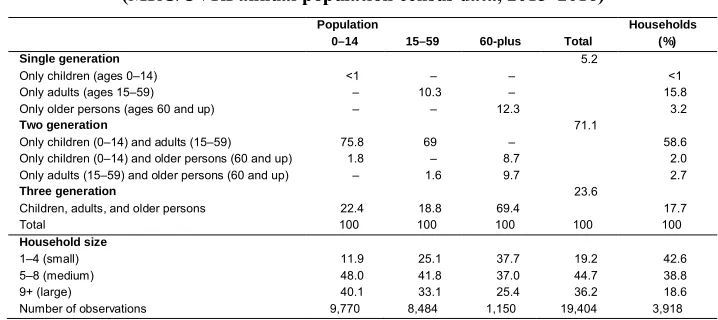
Table 1: Structure (number of generations) and size of households (MRC/UVRI annual population census data, 2015–2016)
Population Households
0–14 15–59 60-plus Total (%)
Single generation 5.2
Only children (ages 0–14) <1 – – <1
Only adults (ages 15–59) – 10.3 – 15.8
Only older persons (ages 60 and up) – – 12.3 3.2
Two generation 71.1
Only children (0–14) and adults (15–59) 75.8 69 – 58.6
Only children (0–14) and older persons (60 and up) 1.8 – 8.7 2.0
Only adults (15–59) and older persons (60 and up) – 1.6 9.7 2.7
Three generation 23.6
Children, adults, and older persons 22.4 18.8 69.4 17.7
Total 100 100 100 100 100
Household size
1–4 (small) 11.9 25.1 37.7 19.2 42.6
5–8 (medium) 48.0 41.8 37.0 44.7 38.8
9+ (large) 40.1 33.1 25.4 36.2 18.6
Number of observations 9,770 8,484 1,150 19,404 3,918
Cohabitation between two generations, typically parents and children, is the most frequent structure of households. Two-thirds of the households include two generations (Table 1); 78% of children, 71% of adults (15 to 59 years old), and nearly 20% of older persons (60 and above) live in such family configurations. However, cohabitation between three generations is not unusual: 22% of the children and 69% of the older persons belong to such a household. As expected according to their overwhelming weight in the population (just over 50% of total population), children are present in most of the households – about 88% of them. On the other hand older persons (aged 60 and above), despite their small number (6% of the population), are present in 26% of the households. Nearly one-fifth of households in the site had both children and older persons coresiding (15% in three-generation households and 3% in ‘skipped’ two-generation households).
Living with an older person (60 and above) is experienced by nearly a quarter of boys and girls under age 15 (Table 2). Cohabitation is more common with an older woman than with an older man (17% versus 12% among children aged 0–14). This probably reflects the fact that the care of children is usually in the hands of women, and also that women’s life expectancy is higher, making them more numerous than men at old age. (There is a ratio of 3:2 of women to men at ages 60 and above). The percentage of children living with an older person increases with age from 18% among children aged 0–4 to 30% at age 10–14, without gender differences. Younger children may stay with their mother, at least until being weaned, and join a ‘grandparent’4 when they are
4 In this context, ‘grandparent’ is a term that reaches across to the children of nieces and nephews, and
ready for school or when their parents migrate to work in the cities. Given the patrilineal system, in case of marital rupture, the child is supposed to join and to be educated by their father’s relatives as a member of the man’s clan (Seeley 2013).
Table 2: Percent of children (0–14) coresiding with at least one older person (60 and above), by age and sex of children (MRC/UVRI annual population census data, 2015–2016)
Age groups
0–4 5–9 10–14 Total
Percent of children coresiding with older person 17.7 25.4 29.5 24.2
Percent of BOYS coresiding with older person 18.0 25.9 29.3 24.4
Percent of GIRLS coresiding with older person 17.5 24.8 29.6 24.0
Percent children coresiding with an older WOMAN 12.1 17.9 20.6 16.8
Percent of children coresiding with an older MAN 8.4 12.3 13.9 11.5
N 3,210 3,402 3,158 9,770
While not all children share a household with older persons, the majority of older persons coreside with children (Table 3): 82% of women and 73% of men aged 60 and over. This rate decreases with age from 85% at age 60–64 (88% for women, 81% for men) to 74% after age 70 (78% for women, 68% for men). This decrease may be linked to the deterioration of health at older ages and to physical limitations that make it difficult to provide care for young children.
Table 3: Percent of older persons (60 and above) coresiding with at least one child (0–14), by age and sex of older person (MRC/UVRI annual population census data, 2015–2016)
Age groups
60–64 65–69 70+ Total
Percent of older persons coresiding with child(ren) 84.8 78.8 74.1 78.1
Percent of older persons coresiding with BOY(S) 70.6 66.4 59.0 63.8
Percent of older persons coresiding with GIRL(S) 71.5 61.0 58.2 62.5
Percent of older MEN (463) coresiding with child(ren) 81.3 73.1 68.3 73.0
Percent of older WOMEN (687) coresiding with child(ren) 87.5 81.6 78.2 81.5
N 323 241 586 1,150
5. Qualitative findings: The content of care exchange
The FGD data highlights what older persons say they do for children and what children do for them. Older persons’ roles in the household are diverse, depending on the household’s needs, but generally connect to the historical and traditional place of ‘respect’ held for elders. Children’s roles reflect physical assistance, but also companionship and emotional support.
5.1 Financial and physical care
The financial or physical care older persons provide for young people in their households and networks impacts the ways they perceive they are thought of and treated by their kin. For example, discussing how older persons are viewed at home, one respondent in an FGD of men said older persons are well-regarded, particularly if they contribute financially to the household:
This is because they[older men] are the breadwinners for a variety of members found in the family such as grandchildren and the wife. In that case they[those household members]realize that where the older person and head of the family does not exist, they[other household members]cannot survive too. (FGD4-M)
The male FGDs highlight the key role and responsibility of older men to financially secure the wellbeing and survival of all household members, including any children who might be in the household – for instance, those left behind by their parents. Further, many older people report that they deliver care daily by feeding and watching after children and providing physical care and assistance in seeking health care for children when they are sick. Sometimes these contributions come at the expense of the older person’s health, particularly in communities with financial and physical barriers to accessing health care (Schatz et al. 2017).
Explaining how older persons remain connected to their family and community, one older man bore a broad smile as he said,
We do some work to be able to obtain something little that can keep the family going such as growing food, making sure that essentials such as paraffin, salt and sugar are availed. Now that the children are in UPE[Universal Primary Education]schools you try to buy them books, uniforms and in that case you realize you have also gained some momentum to fit within the family.
The pride with which this respondent shares his ability to still occasionally work to provide food and essentials to the household shows both the desire to assist as well as the important inputs that older persons contribute to their households and to children’s wellbeing. It is also a reminder about the critical gaps in support for older people, which force older persons to continue working even when their physical energy is waning. Particularly in settings that have been strongly impacted by HIV, the solidarity and reciprocity between older persons and children may be crucial to fill the gap left by a missing middle generation (Kuo and Operario 2009; Rutakumwa et al. 2015; Schatz and Seeley 2015; Seeley et al. 2009; Zimmer 2009).
5.2 Filling the care gap
Older persons often take in children when their adult children die or when they need assistance themselves. In the wake of the HIV epidemic, there are many orphans who need care (Nyambedha, Wandibba, and Aagaard-Hansen 2003; Seeley et al. 1993). Migration from rural to urban areas to seek work also results in children being left behind in rural areas to be cared for by older persons (Seeley 2013; Zalwango et al. 2010). Several voices spoke up to describe why young children come to live with older persons, usually their grandparents; one older woman broke through to explain, “We have those that lost their parents, there are those that a son brings to you and he never comes back to check on them!” A second woman personalized this statement when she said with distress, “I have my son who brought me children when they were still young like that child over there [a child around 5 years old]…but he has never come back since he brought them!” (FGD8-W).
Other older women also lamented the lack of care provided to their grandchildren, particularly by their sons, saying,
You may tell your son[biological son and father of the grandchildren] that I want the grandchildren to go to school. Instead of sending them to school with money for school fees, he goes to the bar to drink alcohol, leaving the children at home[not in school].[…] You start arguing with your son that personally I brought you up well[…], why don’t you care for your children! (FGD1-W)
Older persons report that some grandchildren whom they cared for, now grown, have moved away, yet send back care, money, and assistance. One older woman gave an example of the thoughtfulness of a granddaughter she cared for in reciprocating by supporting her now:
You might be there very stuck when you lack every commodity! Then you pray thus, “Jesus how can I go about this, what can I do?” She [the child] then phones you after some time having got some money. She tells you, “I have sent you some money grandmother but I have accomplished everything, do not spend any coin!”[meaning she has paid for any fees related to mobile money]. You then thank her and decide on your own how to spend that money!
(FGD1-W)
Thus, providing financial and physical care to grandchildren can be an investment that results in reciprocal care in the future.
5.3 Limited resources, multiple demands
Despite the desire to contribute, our older participants often make difficult choices about how and when to spend the little money and few resources to which they have access. In several discussions, older persons spoke about the need to sometimes divert household funds to support children, particularly in areas related to schooling. Sometimes these are funds older persons earn themselves through cultivation of cash crops or other means, but just as often household funds come from remittances sent by adult children who live elsewhere:
It is like this, when a child sends you some money which is somehow a reasonable amount and you have a [grand]child at home who has been sent back home for school fees, you divert this money for school fees first even when it came purposely for buying sugar and other essentials. (FGD3-M)
Similarly, in another FGD, a woman said,
You start[buying for the household]what had been missing or challenging the family! For example, salt, soap. We also have those grandchildren with no one to support [orphans] when she lacks school fees you get some amount from
In these cases, the parent or relative of the child may have sent funds, but the older person decides how to spend it. The value older persons place on children’s education comes through in their paying school fees and purchasing books rather than using the funds for ‘other household essentials.’ Older persons prioritize children’s education and other aspects of their wellbeing. When older persons are able to provide in these ways, children’s wellbeing is positively impacted.
Poverty and aging are impediments for some respondents, however, who express concern for the resulting negative impacts on children's wellbeing. When one woman reflected on her good fortune saying, “My son who had twins, he sends their school fees in such a way [via mobile money],” a second group member said sorrowfully, “My grandchildren are seated [not going to school]” (FGD6-W). These financial and physical barriers affect the older person’s ability provide school fees, but also to seek health services for children in his or her care. When asked which other issues cause depression among the elderly, one female participant reported ‘poor feeding,’ saying that, “You have forced yourself to work, but have almost eaten nothing because when you get a piece of cassava for example then you preserve it for the grandchild and you go without!” She continued mournfully,
You often hear older persons saying; “Cook some little food for the children, for us [the adults within an older person’s household] we shall take the sugarless tea which is there!” As time goes by when an older person feeds in such a way, you realize she is deteriorating, thoughts begin, then palpitations! When one realizes she has not yet prepared supper depending on the situation that exists, her heart breaks!(FGD8-W)
5.4 Children’s roles in older persons’ households
Care is not unidirectional. Children also provide essential and important support and assistance to older persons. Older persons rely on the companionship, physical labor, physical care, and memory assistance of children to sustain their daily needs, to sustain their own health and wellbeing, and/or to compensate for their physical disabilities.
In one FGD an older woman living with three grandchildren said that she “did not have any challenges with the family members I stay with and I like staying with them for I hate living all alone as I can fall sick and have no one to care for me” (FGD6-W). A woman in another FGD spoke generally about how young people might help older persons by saying, “Grandchildren are among those people who remind the elderly to take their [HIV or other chronic condition] drugs” (FGD8-W). An older woman in another FGD mentioned the physical labor young people do: “Water sources [wells] are far, children are in school and we can’t fetch it ourselves. In case there is no water we don’t eat at home and wait until children return from school to collect some water” (FGD5-W).
From our data we cannot know how children perceive the help they provide to older persons or what affective or physical pressures they incur – perhaps there is coercion to assist even if they do not wish to do so. Children in the care of older persons may benefit from strengthened bonds with their older carers and wider family relations with maternal or paternal kin. In some cases, children staying with a grandparent to assist with their care may benefit from smaller household size and more individual attention from their carer than may be the case otherwise (Alber 2004; Kasedde et al. 2014; Madhavan 2004). While food, stimulation, discipline, and child care are important inputs, children may also experience positive benefits from sustained warm, caring relationships (WHO 2004). Yet, certain types of assistance that young people provide to older persons may incur costs for children’s health, schooling, and general wellbeing. Children, particularly girls, may forfeit time at school to provide assistance to their aging carers (Seeley 2008; Yamano, Shimamura, and Sserunkuuma 2006).
6. Investigating intergenerational reciprocity and children’s
wellbeing: New lines of research
6.1 Reciprocity of care
Children’s wellbeing is impacted by their ability to access resources in their networks. A first step in understanding this issue is to document their networks of living arrangements and other social connections that provide children with care (Madhavan et al. 2017; Madhavan and Gross 2013). As we show, these resource flows are unlikely to be unidirectional. We find that the children for whom older persons care receive emotional support, but also are often expected to provide care or resources in return. Yet, the majority of studies are missing the elements of exchange and reciprocity (exceptions include Rutakumwa et al. 2015; Skovdal 2010).
The FGD narratives provide insight into and support for the idea that reciprocal exchange exists between generations in the form of in-kind and economic support, as well as social, emotional, and psychosocial support. Gender plays an important role in the provision and receipt of care. Older women relate their involvement in care work more than men, even if men also are involved in these reciprocal relationships (Mugisha et al. 2015). Grandmothers, in particular, express having no choice but to step in when their sons are not providing properly for their own children. On the other side of the exchange, girls are particularly likely to reduce school attendance or attention on school in order to assist with household work, farming, and other income generation (Yamano, Shimamura, and Sserunkuuma 2006), such that the costs of providing care to older persons may be greater for girls than boys.
The reciprocity of care and resources may improve or decrease children’s (and older persons’) emotional and physical wellbeing. Tracking the connections, relationships, and exchange of care between generations, through both quantitative and qualitative means, is crucial to understanding the impacts on their wellbeing of the care children receive and provide to others. Examining the quality of childrearing practices, including discipline and parenting/care work styles, as well as the ways that cycles of poverty are embedded in these practices, is essential for understanding the impact on children’s wellbeing.
6.2 Conceptualizing reciprocity
sub-children’s wellbeing, however, a multigenerational perspective of intergenerational exchange that highlights both the giving and receipt of care is essential (Cattell 1990). Care work is often explored using data from the perspective of children or from the perspective of older persons. Capturing both viewpoints simultaneously with a focus on the trade-offs involved and implications for those at either end of the life course is needed.
A life course perspective would capture the experiences of both young and old and could incorporate the role and/or absence of the middle generation in both the upward and downward provision of care. The ‘social timing’ of important life events for both children and older persons, combined with the theme of ‘linked-lives’ (Elder 1994), provides a context for understanding care exchange over the life course. Together, ‘social timing’ and ‘linked-lives’ are reflected in the conceptualization of reciprocity as “a sense of mutual dependence expressed in give and take over time” (Whyte, Alber, and Geest 2008:6). Reciprocity includes not only financial exchange –“transmission and sharing of resources” – but also “expressions of care and regard.”
Beyond what is available in our data, much more detailed information is needed, including types, amounts, direction of support, and geographical distribution of networks of exchange, as well as the impacts on children’s wellbeing of providing and receiving care. Further, our FGD data is limited to older persons’ views on care. Many older persons in rural Uganda complain about young people disrespecting elders (Seeley 2013; Wright et al. 2012); others brag about the care they give to grandchildren and the assistance they receive in return (Rutakumwa et al. 2015; Schatz et al. 2017). Examining how well these claims fit with children’s views of these relationships and exchanges is necessary to have the full story.
The ways in which limited resources and the need to spread those limited resources across multiple children impact intergenerational care work is a critical piece of this picture (Elder and Rockwell 1979; Seeley 2008). Viewing older persons’ roles and support for children in the context of a broader network can help clarify when their care work is voluntary versus a necessity due to lack of other options. The underlying reasons for care may give different meanings to any related ‘costs.’ While care may be grounded in traditional values related to supporting elders, it may also be due to a lack of other possible carers (Madhavan et al. 2010).
understanding both children’s and older persons’ vulnerability and wellbeing (Golaz, Wandera, and Rutaremwa 2017).
6.3 Measuring reciprocal care
In order to capture the effects on children’s and older persons’ wellbeing of simultaneous giving and receiving of care we need both (1) age-appropriate measures of physical, financial, and emotional care work and (2) measures of support that children and older persons receive from others. Examples of children’s care work for others to measure might include: time spent on fetching water and firewood, household chores, and assistance with activities of daily living. For older persons, it is important to capture the care work they provide for others in the form of time spent growing and providing food, household chores, assistance with school fees and schooling, and in-kind and financial provision of clothing and other necessities. In addition, age-appropriate outcome data (on health, schooling, nutrition, etc.) will enable us to assess impacts on both children’s and older persons’ wellbeing.
Capturing the impacts of the HIV epidemic is also critical is places like Uganda. The presence of an orphan in households may present different opportunities and constraints that impact networks’ resources and reciprocal relationships. Equally important is understanding the circumstances of and relationships in families that are not able to access social grants for orphans and vulnerable children. The costs and benefits of taking in a child and the trade-offs incurred are a key issue that needs further investigation. Thus, measures must capture presence (or absence) of orphans and accessibility of social services and grants, with a focus on not just inter-household dynamics but also intra-household dynamics, since networks of care are not limited to those who live together (Golaz, Wandera, and Rutaremwa 2017; Madhavan et al. 2017; Madhavan, Townsend, and Garey 2008).
Developing a set of qualitative and quantitative tools that capture data on both support for older persons and children in the same networks and the role of the middle generation would generate a rich source of information to understand intergenerational dynamics and reciprocity. A combination of ethnographic and qualitative techniques and survey and quantitative instruments could be used to elicit this information from multiple members of the same network from different generations (Madhavan et al. 2017; Madhavan, Townsend, and Garey 2008; Rutakumwa et al. 2015; Schatz, Madhavan, and Williams 2011).
taken on by extended kin (Golaz, Wandera, and Rutaremwa 2017; Seeley 2013), and to capture not just these inputs but also the reciprocity that exists within networks (Rutakumwa et al. 2015). The aging of African populations may create an additional cadre of carers for the young, but as these individuals continue to age, there will be a greater number of older persons in need of care. In HIV-endemic areas, the rollout of antiretroviral drugs may be shifting the relationships between young and old once again. As people live longer with HIV, there will be more adults to fill the middle generation, but also more people living into older ages with HIV (Hontelez et al. 2011; Mutevedzi and Newell 2014). It is unclear how these changes will impact the exchange of care between generations or the complex health and care needs of those aging with HIV.
We believe that research is needed that focuses explicitly on the reciprocity between old and young and its mediation/moderation by the middle generation. This information would provide children’s and older persons’ perspectives on the same intergenerational care relationships, which are currently missing from the literature. Having data from both sources collected contemporaneously would help uncover (1) how older carers and children in particular contexts define intergenerational relationships, (2) the ways that reciprocity of care impacts children’s wellbeing and older persons’ wellbeing, (3) the reliability of responses by looking within and across networks, and (4) the trade-offs and costs experienced by those at either end of the life course.
7. Acknowledgements
References
Akintola, O. (2004).A gendered analysis of the burden of care on family and volunteer caregivers in Uganda and South Africa. Durban: University of Kwa-Zulu Natal. Akintola, O. (2008). Unpaid HIV/AIDS care in southern Africa: Forms, context, and
implications. Feminist Economics 14(4): 117–147. doi:10.1080/135457008022 63004.
Alber, E. (2004). Grandparents as foster-parents: Transformations in foster relations between grandparents and grandchildren in northern Benin.Africa 74(1): 28–46.
doi:10.3366/afr.2004.74.1.28.
Apt, N.A. (2012). Aging in Africa: Past experiences and strategic directions. Ageing International 37(1): 93–103.doi:10.1007/s12126-011-9138-8.
Asiki, G., Murphy, G., Nakiyingi-Miiro, J., Seeley, J., Nsubuga, R.N., Karabarinde, A., Waswa, L., Biraro, S., Kasamba, I., Pomilla, C., Maher, D., Young, E.H., Kamali, A., and Sandhu, M.S. (2013). The general population cohort in rural south-western Uganda: A platform for communicable and non-communicable disease studies. International Journal of Epidemiology 42(1): 129–141.
doi:10.1093/ije/dys234.
Asiki, G., Reniers, G., Newton, R., Baisley, K., Nakiyingi-Miiro, J., Slaymaker, E., Kasamba, I., Seeley, J., Todd, J., Kaleebu, P., and Kamali, A. (2016). Adult life expectancy trends in the era of antiretroviral treatment in rural Uganda (1991– 2012).AIDS 30(3): 487–493.doi:10.1097/QAD.0000000000000930.
Bongaarts, J. and Zimmer, Z. (2002). Living arrangements of older adults in the developing world: An analysis of demographic and health survey household surveys. The Journals of Gerontology: Series B 57(3): 145–157. doi:10.1093/ geronb/57.3.S145.
Caldwell, P. (1996). Child survival: Physical vulnerability and resilience in adversity in the European past and the contemporary Third World. Social Science and Medicine 43(5): 609–619.doi:10.1016/0277-9536(96)00109-8.
Case, A. and Deaton, A. (1998). Large cash transfers to the elderly in South Africa.The Economic Journal 108(450): 1330–1361.doi:10.1111/1468-0297.00345. Cattell, M.G. (1990). Models of old age among the Samia of Kenya: Family support of
Cheng, S.-T. and Siankam, B. (2009). The impacts of the HIV/AIDS pandemic and socioeconomic development on the living arrangements of older persons in sub-Saharan Africa: A country-level analysis. American Journal of Community Psychology 44(1–2): 136–147.doi:10.1007/s10464-009-9243-y.
Cohen, B. and Menken, J.A. (eds.) (2006). Aging in sub-Saharan Africa: Recommendations for furthering research. Washington, D.C.: National Academies Press.
Collinson, M. (2010). Striving against adversity: The dynamics of migration, health, and poverty in rural South Africa. Global Health Action 3(1).
doi:10.3402/gha.v3i0.5080.
Duflo, E. (2003). Grandmothers and granddaughters: Old-age pension and intra-household allocation in South Africa. World Bank Economic Review 17(1): 1– 25.doi:10.1093/wber/lhg013.
Elder, G.H. (1994). Time, human agency, and social change: Perspectives on the life course.Social Psychology Quarterly 57(1): 4–15.doi:10.2307/2786971.
Elder, G.H. and Rockwell, R.C. (1979). The life-course and human development: An ecological perspective. International Journal of Behavioral Development 2(1): 1–21.doi:10.1177/016502547900200101.
Evans, R. (2010). Children’s caring roles and responsibilities within the family in Africa. Geography Compass 4(10): 1477–1496. doi:10.1111/j.1749-8198.2010. 00386.x.
Evans, R. (2015). HIV-related stigma, asset inheritance, and chronic poverty: Vulnerability and resilience of widows and caregiving children and youth in Tanzania and Uganda. Progress in Development Studies 15(4): 326–342.
doi:10.1177/1464993415592740.
Freeman, M. and Nkomo, N. (2006). Guardianship of orphans and vulnerable children: A survey of current and prospective South African caregivers. AIDS Care 18(4): 302–310.doi:10.1080/09540120500359009.
Golaz, V., Wandera, S.O., and Rutaremwa, G. (2017). Understanding the vulnerability of older adults: Extent of and breaches in support systems in Uganda. Ageing and Society 37(1): 63–89.doi:10.1017/S0144686X15001051.
Grant, M.J. and Yeatman, S. (2012). The relationship between orphanhood and child fostering in sub-Saharan Africa, 1990s–2000s. Population Studies 66(3): 279– 295.doi:10.1080/00324728.2012.681682.
Haour-Knipe, M. (2009). Families, children, migration, and AIDS. AIDS Care
21(Supplement 1): 43–48.doi:10.1080/09540120902923071.
Hontelez, J.A.C., Lurie, M.N., Newell, M.-L., Bakker, R., Tanser, F., Bärnighausen, T., Baltussen, R., and de Vlas, S.J. (2011). Ageing with HIV in South Africa.AIDS
25(13): 1665–1667.doi:10.1097/QAD.0b013e32834982ea.
Hosegood, V. and Timaes, I. (2005). The impact of adult mortality on the living arrangements of older people in rural South Africa. Ageing and Society 25(6): 431–444.doi:10.1017/S0144686X0500365X.
Isiugo-Abanihe, U.C. (1985). Child fosterage in west Africa. Population and Development Review 11(1): 53–73.doi:10.2307/1973378.
Kabeer, N. (2000). Inter-generational contracts, demographic transitions, and the ‘quantity–quality’ tradeoff: Parents, children, and investing in the future.
Journal of International Development 12(4): 463–482.
Kasedde, S., Doyle, A.M., Seeley, J.A., and Ross, D.A. (2014). They are not always a burden: Older people and child fostering in Uganda during the HIV epidemic.
Social Science and Medicine 113: 161–168. doi:10.1016/j.socscimed.2014. 05.002.
Kautz, T., Bendavid, E., Bhattacharya, J., and Miller, G. (2010). AIDS and declining support for dependent elderly people in Africa: Retrospective analysis using demographic and health surveys.BMJ340: c2841.doi:10.1136/bmj.c2841. Kuo, C. and Operario, D. (2009). Caring for AIDS-orphaned children: A systematic
review of studies on caregivers.Vulnerable Children and Youth Studies 4(1): 1– 12.doi:10.1080/17450120802270418.
Lloyd, D.C.B. and Desai, S. (1992). Children’s living arrangements in developing countries.Population Research and Policy Review 11(3): 193–216.doi:10.1007/ BF00124937.
Madhavan, S. (2004). Fosterage patterns in the age of AIDS: Continuity and change.
Madhavan, S., Clark, S., Beguy, D., Kabiru, C.W., and Gross, M. (2017). Moving beyond the household: Innovations in data collection on kinship. Population Studies 71(1): 117–132.doi:10.1080/00324728.2016.1262965.
Madhavan, S. and Gross, M. (2013). Kinwork and time use in rural South Africa.
Journal of Comparative Family Studies 44(2): 175–191.
Madhavan, S., Schatz, E., Clark, S., and Collinson, M. (2010).Child mobility, maternal status, and household composition in rural South Africa. Paper presented at Population Assocation of America, Dallas, USA, August 15–17, 2010.
Madhavan, S., Townsend, N., and Garey, A. (2008). ‘Absent breadwinners’: Father-child connections and paternal support in rural South Africa. Journal of Southern African Studies 34(3): 647–663.doi:10.1080/03057070802259902. Mathambo, V. and Gibbs, A. (2009). Extended family childcare arrangements in a
context of AIDS: Collapse or adaptation?AIDS Care 21(Supplement 1): 22–27.
doi:10.1080/09540120902942949.
McKinnon, B., Harper, S., and Moore, S. (2013). The relationship of living arrangements and depressive symptoms among older adults in sub-Saharan Africa.BMC Public Health 13(1): 682.doi:10.1186/1471-2458-13-682.
Mugisha, J., Schatz, E., Seeley, J., and Kowal, P. (2015). Gender perspectives in care provision and care receipt among older people infected and affected by HIV in Uganda. African Journal of AIDS Research 14(2): 159–167. doi:10.2989/1608 5906.2015.1040805.
Mutevedzi, P.C. and Newell, M.-L. (2014). The changing face of the HIV epidemic in sub-Saharan Africa. Tropical Medicine and International Health 19(9): 1015– 1028.doi:10.1111/tmi.12344.
Nahemow, N. (1979). Residence, kinship, and social isolation among the aged Baganda.Journal of Marriage and Family 41(1): 171–183.doi:10.2307/351741. Nyambedha, E.O., Wandibba, S., and Aagaard-Hansen, J. (2003). Changing patterns of orphan care due to the HIV epidemic in western Kenya. Social Science and Medicine 57(2): 301–311.doi:10.1016/S0277-9536(02)00359-3.
Randall, S. and Coast, E. (2015). Poverty in African households: The limits of survey and census representations.The Journal of Development Studies 51(2): 162–177.
doi:10.1080/00220388.2014.968135.
Richter, L.M., Sherr, L., Adato, M., Belsey, M., Chandan, U., Desmond, C., Drimie, S., Haour-Knipe, M., Hosegood, V., Kimou, J., Madhavan, S., Mathambo, V., and Wakhweya, A. (2009). Strengthening families to support children affected by HIV and AIDS. AIDS Care: Psychological and Socio-medical Aspects of AIDS/HIV 21(Supplement 1): 3–12.doi:10.1080/09540120902923121.
Roscoe, J. (1911). The Baganda: An account of their native customs and beliefs. London: Macmillan.
Rutakumwa, R., Zalwango, F., Richards, E., and Seeley, J. (2015). Exploring the care relationship between grandparents/older carers and children infected with HIV in South-Western Uganda: Implications for care for both the children and their older carers. International Journal of Environmental Research and Public Health 12(2): 2120–2134.doi:10.3390/ijerph120202120.
Schatz, E. (2007). ‘Taking care of my own blood’: Older women’s relationships to their households in rural South Africa. Scandinavian Journal of Public Health
35(Supplement 69): 147–154.doi:10.1080/14034950701355676.
Schatz, E., Madhavan, S., and Williams, J. (2011). Female-headed households contending with HIV/AIDS-related hardship in rural South Africa. Health and Place 17(2): 598–605.doi:10.1016/j.healthplace.2010.12.017.
Schatz, E. and Ogunmefun, C. (2007). Caring and contributing: The role of older women in multi-generational households in the HIV/AIDS era. World Development 35(8): 1390–1403.doi:10.1016/j.worlddev.2007.04.004.
Schatz, E. and Seeley, J. (2015). Gender, ageing, and carework in east and southern Africa: A review. Global Public Health 10(10): 1185–1200. doi:10.1080/17441 692.2015.1035664.
Schatz, E., Seeley, J., Negin, J., and Mugisha, J. (2017). They ‘don’t cure old age’: Older Ugandans’ delays to health care access. Ageing and Society: 1–21.
doi:10.1017/S0144686X17000502.
Seeley, J. (2008). The intergenerational transmission of poverty during the AIDS epidemic in Uganda. Manchester: Chronic Poverty Research Centre.
Seeley, J., Biraro, S., Shafer, L.A., Nasirumbi, P., Foster, S., Whitworth, J., and Grosskurth, H. (2008). Using in-depth qualitative data to enhance our understanding of quantitative results regarding the impact of HIV and AIDS on households in rural Uganda. Social Science and Medicine 67(9): 1434–1446.
doi:10.1016/j.socscimed.2008.07.001.
Seeley, J., Kajura, E., Bachengana, C., Okongo, M., Wagner, U., and Mulder, D. (1993). The extended family and support for people with AIDS in a rural population in south west Uganda: A safety net with holes?AIDS Care 5(1): 117– 122.doi:10.1080/09540129308258589.
Seeley, J., Malamba, S., Nunn, A., Mulder, D.W., Kengeya-Kayondo, J., and Barton, T. (1994). Socioeconomic status, gender, and risk of HIV-1 infection in a rural community in south west Uganda.Medical Anthropology Quarterly 8(1): 78–89.
doi:10.1525/maq.1994.8.1.02a00060.
Seeley, J., Wolff, B., Kabunga, E., Tumwekwase, G., and Grosskurth, H. (2009). ‘This is where we buried our sons’: People of advanced old age coping with the impact of the AIDS epidemic in a resource-poor setting in rural Uganda.Ageing and Society 29(1): 115–134.doi:10.1017/S0144686X08007605.
Settles, B.H., Zhao, J., Mancini, K.D., Rich, A., Pierre, S., and Oduor, A. (2009). Grandparents caring for their grandchildren: Emerging roles and exchanges in global perspectives.Journal of Comparative Family Studies 40(5): 827–848. Skovdal, M. (2010). Children caring for their ‘caregivers’: Exploring the caring
arrangements in households affected by AIDS in western Kenya. AIDS Care
22(1): 96–103.doi:10.1080/09540120903016537.
Uganda Bureau of Statistics (2017).The national population and housing census 2014: Kalungu District. Kampala: Area Specific Profile Series.
Uganda Bureau of Statistics (2018). Uganda national household survey 2016/2017. Kampala: UBOS.
Velkoff, V.A., Kowal, P.R., and United States Census Bureau (2007).Population aging in sub-Saharan Africa: Demographic dimensions 2006. Suitland: US Department of Commerce, Economics and Statistics Administration, US Census Bureau.
WHO, UNAIDS, and UNICEF (2011). Progress report 2011: Global HIV/AIDS response. Geneva: World Health Organization.
Whyte, S.R., Alber, E., and van der Geest, S. (2008). Generational connections and conflicts in Africa: An introduction. In: Alber, E., van der Geest, S., and Whyte, S.R. (eds.). Generations in Africa: Connections and conflicts. Münster: LIT: 1– 26.
Williams, A. (2003). Ageing and poverty in Africa: Ugandan livelihoods in a time of HIV/AIDS. Farnham: Ashgate.
Wittenberg, M. and Collinson, M.A. (2007). Household transitions in rural South Africa, 1996–2003. Scandinavian Journal of Public Health35(Supplement 69): 130–137.doi:10.1080/14034950701355429.
Wright, S., Zalwango, F., Seeley, J., Mugisha, J., and Scholten, F. (2012). Despondency among HIV-positive older men and women in Uganda. Journal of Cross-Cultural Gerontology 27(4): 319–333.doi:10.1007/s10823-012-9178-x.
Yamano, T., Shimamura, Y., and Sserunkuuma, D. (2006). Living arrangements and schooling of orphaned children and adolescents in Uganda. Economic Development and Cultural Change 54(4): 833–856.doi:10.1086/503586. Zalwango, F. (2016).The impact of informal social protection on older people’s health
and wellbeing in Uganda [MSc Thesis]. Southampton: University of Southampton.
Zalwango, F., Eriksson, L., Seeley, J., Nakamanya, S., Vandepitte, J., and Grosskurth, H. (2010). Parenting and money making: Sex work and women’s choices in urban Uganda. Wagadu: A Journal of Transnational Women’s and Gender Studies 8: 91–92.
Zimmer, Z. (2009). Household composition among elders in sub-Saharan Africa in the context of HIV/AIDS. Journal of Marriage and Family 71(4): 1086–1099.
doi:10.1111/j.1741-3737.2009.00654.x.