Amplifying applied game development and uptake
Hollins Paul , Westera Wim, Manero Iglesias Borja The University of Bolton UK , The Open University of the Netherlands, Netherlands, Universidad Complutense de Madrid, Spain.
Abstract :
The established (digital) leisure game industry is historically one dominated by large international hardware vendors (e.g. Sony, Microsoft and Nintendo), major publishers and supported by a complex network of
development studios, distributors and retailers. New modes of digital distribution and development practice are challenging this business model and the leisure games industry landscape is one experiencing rapid change. The established (digital) leisure games industry, at least anecdotally, appears reluctant to participate actively in the applied games sector (Stewart et al., 2013). There are a number of potential explanations as to why this may indeed be the case including ; A concentration on large-scale consolidation of their (proprietary) platforms, content, entertainment brand and credibility which arguably could be weakened by association with the conflicting notion of purposefulness (in applied games) in market niches without clear business models or quantifiable returns on investment.
In contrast, the applied games industry exhibits the characteristics of an emerging, immature industry namely: weak interconnectedness, limited knowledge exchange, an absence of harmonising standards, limited
specialisations, limited division of labour and arguably insufficient evidence of the products efficacies (Stewart et al., 2013; Garcia Sanchez, 2013) and could, arguably, be characterised as a dysfunctional market. To test these assertions the Realising an Applied Gaming Ecosystem (RAGE) project will develop a number of self contained gaming assets to be actively employed in the creation of a number of applied games to be implemented and evaluated as regional pilots across a variety of European educational, training and vocational contexts. RAGE is a European Commission Horizon 2020 project with twenty (pan European) partners from industry, research and education with the aim of developing, transforming and enriching advanced technologies from the leisure games industry into self-contained gaming assets (i.e. solutions showing economic value potential) that could support a variety of stakeholders including teachers, students, and, significantly, game studios interested in developing applied games. RAGE will provide these assets together with a large quantity of high-quality
knowledge resources through a self-sustainable Ecosystem, a social space that connects research, the gaming industries, intermediaries, education providers, policy makers and end-users in order to stimulate the development and application of applied games in educational, training and vocational contexts.
The authors identify barriers (real and perceived) and opportunities facing stakeholders in engaging, exploring new emergent business models ,developing, establishing and sustaining an applied gaming eco system in Europe.
Key Words :
Applied Games ; Serious Games ; Game Assets ; Ecosystem ; GamificationIntroduction
settings to stimulate engage and motivate (Prensky 2001) , in particular , disaffected learners. Critically digital games have in the past been presented as the panacea for solving the many problems in schools and training sic (cf. Gee, 2003; Quinn, 2005 ) .There is ,however, an increasing volume of research and validation evidence available to support the notion that games can indeed be extremely effective tools for learning (Connolly 2012). In parallel emerging digital technologies in design, production and distribution have enabled considerable cost reductions in game development production and delivery. In an environment with reductions in costs married with significantly increased capabilities one might have expected to experience substantial growth of the applied games market. However, growth figures of the wider domain of game-based learning, including simulation-based learning are estimated to be in the region of 3-4 % per year until 2017 (Adkins, 2013). In contrast, the leisure games market is experiencing much higher growth which is forecast to continue over the coming years, to an estimated 7 % per year (PWC, 2012). A number of explanations for the cause of this phenomenon in the applied game industry and markets have been suggested. Firstly that , the applied games industry exhibits the
characteristics of an emerging, immature industry namely: weak interconnectedness, a very limited knowledge exchange, an absence of harmonising standards, limited specialisations, limited division of labour and insufficient evidence of the products efficacies (Stewart et al., 2013; Garcia Sanchez, 2013) and could, arguably, be
summarised, at present, as a dysfunctional market. There is, however, seemingly contradictory evidence to suggest that the exponential social impact of the Leisure Games Industry is leading to a growing acceptance of educational games as having an authentic and legitimate place in the digital game development industry (Hollins & Whitton 2011 ). Paradoxically; this social impact could have a negative effect on the attraction of the applied games industry to leisure game developers concerned with maintaining their perceived established brand characteristics such as “coolness” , “edginess” or rebelliousness.
Secondly, the education and training market is widely characterised as intrinsically conservative and (highly) risk averse. Over the years, various authors (Bates, 1995; Clarck and Estes, 1998; Westera, 2012) have criticised what is perceived as a conservative culture in educational practice; one that is entrenched historically in the intuitive and traditional pedagogic methods of the pre-medieval apprenticeship model, featuring an omniscient master and a naive pupil. Bates (1995) goes further in critiquing the established organisational model of education itself in the classroom and in teaching in presenting a scathing judgement on the role of teachers, who, he asserts, rarely use any kind of design process and do not ground their work on validated , scientific evidence. Thirdly it is suggested that there is a significant dichotomy between the established and emergent business models of the leisure games industry and the emerging properties of the much less mature Applied gaming markets.
In this paper the authors will analyse these issues in the context of the RAGE project: Realising an Applied Games Ecosystem. In essence the RAGE project is a technology-driven research and innovation project that makes available accessible self-contained gaming assets (i.e. solutions showing economic value potential) that support game studios in the development of applied games. These assets are made available together with substantial accompanying high-quality knowledge resources through a self-sustainable Ecosystem The ecosystem is a social space that connects a variety of stakeholders from the research, gaming industries, intermediaries, education providers, policy makers and end-user communities.
European objectives and policies (H2020)
The Distinctions between the “established” Leisure Game industry and the Applied Games Industry
The authors assert there are significant distinctions between the Leisure and Applied gaming industries which can be characterised in the following ways :
The leisure game industry :
Digital games have acquired extraordinary social relevance, becoming a highly significant media in modern culture and life and constituting a massive industry with 155 million of users and $22.4 billion per year in the US alone (ESA 2015). There has been a prolific rise in the number of game players of games in particular casual gaming, over the last decade played by an ever increasingly broad demographic audience , in terms of geographic location, age and of both genders over an increasing and varied number of technology platforms including consoles, personal computers, hand held devices and significantly mobile telephony.
However, it seems that digital gaming industry has been primarily remained focused on the development of entertainment products and services . Recent research undertaken by the Entertainment Software Association (ESA 2015), provided data indicating that only small percentage ( 5%) of the games acquired (purchased) in the United States were developed for educational purposes (Notwithstanding these commercial off the shelf (COTS) games could conceivably have been applied within educational settings).
As suggested in the introduction, anecdotally at least, the established Leisure Games industry has thus far been extremely reluctant to engage in the development of applied or serious games (Stewart 2013). There are a number of real and perceived barriers to active participation by the digital game development industry in applied and serious games markets. As indicated in the introduction of this paper there is a perceived lack of maturity of the Applied Game Market in particular in respect of established business models or clear evidence of return on investment of development costs. Whilst development costs through technology have reduced significantly for some sectors of the market notably with the rise of the use of middleware and small scale App development over the last decade in other segments such as console (proprietary platform technology) the “cost of success” in terms of development, licensing and marketing has increased markedly. The risk and cost of entry to digital game developers in new applied gaming markets is significant.
Leisure digital games product business models can be analysed vertically, or alternatively from concept to market or horizontally (Williams 2002) into market segments. Games have been identified as “experience goods” where quality is determined only through their consumption (Kerr 2006 ). Historically, in terms of vertical analysis game development has been focussed on large scale, and time consuming two years of development, consolidating proprietary platforms.
A cursory review of the value chain analysis of the the final price of a game a conventional “Commercial off the shelf console boxed game” reveals contribution levels of the console manufacturer (Licensor) 10 % , the Developer/publisher 20 %, the Distributor 6 % , the retailer 14% and finally the customer 50 % (Deutsche Bank 2002).
approach is unsatisfactory given then the rapid changes to the market and players and emergence of new platforms (and technologies) on a regular basis.
In what is entirely consistent with the evolution of other entertainment industries , such as the music, television and hospitality industries, the ubiquitous effect of digital technology on established Leisure game business models is becoming increasingly evident with the emergence and challenge of new digital distribution and service models. Recent years has seen the establishment of major commercial entities such as Steam offering new cost effective channels to market with service support and active communities of engagement. Established publishers and developers such as Electronic Arts (EA) have responded with the establishment of its proprietary digital distribution platform Origin. A Recent addition to the digital games distribution channels has emerged in the form of Galaxy GOG offering games free of, the highly contentious, imposition of Digital Rights Management (DRM). Galaxy potentially offers some guidelines as to the future evolution of business models . Models that mark a transition from a product based to a service based ecology with foundations embedded within the establishment of a Galaxy online community.
In a competitive and dynamic environment the associated risk of entry to new markets (Applied Games) for digital Games Developers could, arguably ,be the most significant barrier to entry.
The Applied game industry :
Applied Games; or at least the more established genre of Serious Games have historically exhibited low
production values and whilst there are authors (Whitton & Moseley 2012) that argue “the opportunity to create bespoke fit for purpose computer games is beyond the technical capabilities and time limitations of teaching staff and outside of the capability of most learning technology teams” (P 138) and that effective games need games expertise and that many, expensive, in house or designed for education games simply aren’t games. (Whitton & Mosely 2012) advocate the value in a low tech approach in claiming production quality has little value in engaging and motivating learners compared to pedagogically sound instructional design and playful approaches.
In direct contrast with commercial entertainment games which are designed to target a wide demographic audience, applied games are usually oriented towards a narrow audience with very specific learning characteristics. They incorporate strong instructional design and pedagogy , andragogy and heutagogy. For example ; Unsurprisingly an applied game developed to support the teaching of geology to year four students would be quite distinct in comparison to one designed for undergraduate or postgraduate students studying within a university setting.
business models of the Leisure game industry the applied or serious games industry allows game developers to experiment with (vertical) business and distribution models that bypass the established retail publishing industry and open up new revenue streams.
In contrast to the Leisure game industry in the applied Gaming Industry context quality is not merely determined by consumption. Consistent with most educational interventions efficacy in the achievement of desired pre-determined learning outcomes is the key performance measure and to demonstrate this through evidence based data. Cooperation between these two industries could have an impact in improving applied games quality, and then in achieving better learning outcomes. Applied games industry, because of its youth, would certainly benefit from leisure industry know-how. Many errors that entertainment industry has made over the past 40 years could not be repeated in applied games development.
Applied and Serious games are environments which can potentially support a broad variety of pedagogical approaches including constructivist inquiry based and as didactic instructivist tools (Whitton & Hollins 2008) and have the potential to provide rich streams of real time activity analytical data It should be noted however,, learning and playing are inherently distinct concepts. While learning is readily associated with an obligation - even forced by law - , homework, examinations, are a necessity of life, and a prerequisite for having a job, a salary and a career, games are associated with play, joy, leisure and having fun. In his seminal book “Homo Ludens” Huizinga (1950) describes play as a leisure activity, non-obligatory and fully free of any material goal or interest – no profit can be gained from it. Play cannot be reinforced. Essentially, we are able to force children to go to school or to do their homework, but - in contrast - it is impossible to force them to play. This conceptual conflict forces game developers to deal with applied games and leisure games in different ways. Nevertheless learning and playing share a common base, which is the human need of being challenged by difficult tasks. As Papert (1980) noted: the best fun is “hard fun”. Applied games may offer the hard fun that we are looking for.
The RAGE project: addressing The key Challenges.
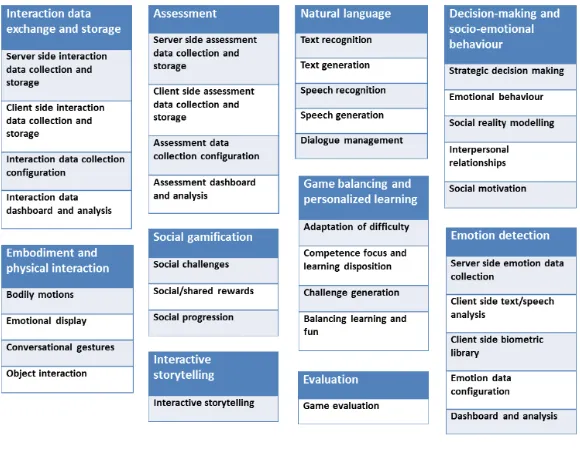
Figure 01 Overview of RAGE gaming assets source RAGE proposal
The RAGE-project is founded upon a number of underlying principles that can be summarised as follows:
●
The project will provide an ecosystem with future proof features. Usage of large asset repositories have an inclination to decline in use over an extended period of time with . RAGE will support the social dimensions of stakeholder interaction in order to empower the collaborative process via the asset repository.●
creating and stimulating the Internet Value Chain. A knowledge and technology juncture point for stakeholders available for those organisations on the applied gaming supply side (industry, universities, …), and for those organisations on the demand side (end-users, organizations,...).●
By involving Universities as an integral part of the innovation process model; consistent with the Triple Helix model (Leydesdorff & Etzkowitz, 1998),. of government , industry and education .A stated objective of the RAGE project.● Enabling the disruptive power of small medium enterprises (SME). History demonstrates , small companies in the leisure game industry have been at the forefront of innovation in the industry tackling the development challenges . Larger developers, in general, are accommodated within an incremental model which can restrict innovation and appetite for risk. The RAGE ecosystem aims to facilitate the gaming creation process for small companies .
● With the pilot implementations and case studies targeting employability skills specifically aligned with the objectives of the European Commission Horizon 2020 ambitions. The applied games produced in RAGE will address unemployment problems by creating accessible and usable tools that educate in clearly targeted broad social and employment requirements ; that addresses the challenges of social exclusion and improve retention in education or training . Research paradigms are combined to ensure that innovative and usable assets are developed . The project will combine design-oriented (to make them better), intervention-oriented (to make them work), domain-oriented (to make them matter) and disciplinary research (to make them understandable).
● By addressing the Gaming priority areas. The asset components in RAGE will be: relevant for learning, advanced, and work in games where there may be challenges.
The conceptual underpinning and Management Approach in RAGE
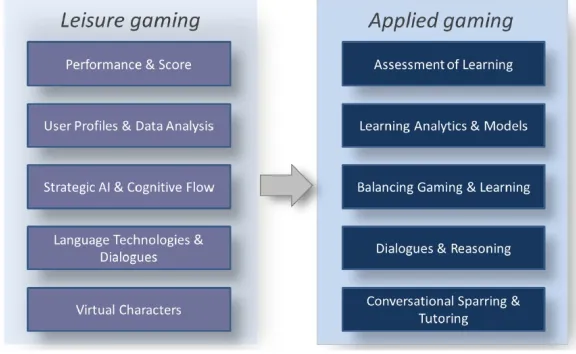
The transformations from leisures game technologies into applied gaming functions are indicated in Figure 02. That Figure 02 summarizes what leisure industry techniques should be transformed to create engaging, pedagogical and capable to analyzing applied games.
Figure 02. RAGE: Transforming leisure industry technologies to build applied games. Source: RAGE proposal.
The RAGE ecosystem aims to replicate the elegantly aesthetic structure and self regulating principles of a natural ecological system providing an architecture for innovation hence the term “ecosystem”.
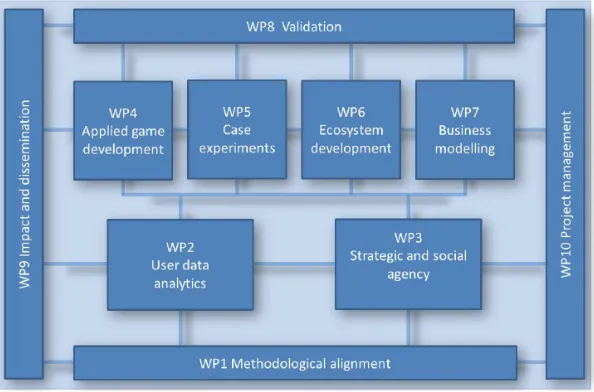
Figure 03 Representation of the interconnections of the RAGE project work packages source RAGE Proposal
Figure 03 is a visual representation of the design of the workpackage and their associated interconnections essentially a series of discrete activities pressured by method/ project alignment and impact and dissemination.
Conclusions
The RAGE project will develop entirely new and accessible supported services and interoperable assets with the objective of bridging the chasm that currently exists between the Leisure and Applied Gaming industries. Barriers , both real and perceived , the cost of entry and consequently risk will be significantly reduced. These assets, when employed, will significantly reduce the cost of production of high quality applied games incorporating hitherto complex pedagogic functions such as learning analytics, learner agency, assessment, and artificial intelligence validating the quality and efficacy of theses assets by testing them in a series of large scale game pilots. The RAGE project will support this development by undertaking extensive research in to the established Leisure Game Industry and emerging Applied Gaming industry business models to provide leverage points for developers engaged or seeking to engage in the Applied gaming market.
These assets and their ultimate location in a supporting ecosystem incorporating supported stakeholder demand and supply side agency should ensure both scalability and sustainability with the aim of supporting an increasing number of Leisure game developers active in the applied games market over and above the ten percentage (Games Monitor 2012) of those companies participating at present.
Acknowledgements
The Authors wish to acknowledge the support and receipt of project funding from the European Union’s Horizon 2020 research and innovation programme under grant agreement No 644187 and the support of their host institutions The University of Bolton, The Open University of the Netherlands and Universidad Complutense de Madrid, Spain.
References
Adkins, S.S. (2013). The 2012-2017 Worldwide Game-based Learning and Simulation-based Markets. Key Findings from Recent Ambient Insight Research, Serious Play Conference 2013. Ambient Insight: Monroe, WA. Retrieved from
www.ambientinsight.com/Resources/Documents/AmbientInsight_SeriousPlay2014_WW_2013_2018_GameBase dLearning_Market.pdf
Bates, A. (1995). Technology, Open Learning and Distance Education. London/New York: Routledge. Bogost I (2010) Persuasive Games The Expressive Power of Videogames MIT Press Cambridge
Clarck R.E., & Estes F. (1998). Technology or Craft: What are We Doing? Educational Technology, 38(5), 5-11. T. M. Connolly, E. a. Boyle, E. MacArthur, T. Hainey, and J. M. Boyle, (2012) “A systematic literature review of
empirical evidence on computer games and serious games,” Comput. Educ., vol. 59, no. 2, pp. 661–686, [Facer et al. 2003] Facer, K., Furlong, J., Furlong, R., Sutherland, R. "Screenplay: Children and Computing in the
Home";
García Sánchez, R., Baalsrud Hauge, J., Oliveira, M., Fiucci, G., Rudnianski, M., Kyvsgaard Hansen, P., Riedel, J., Padrón-Nápoles, C., L. and Brown, D. (2013). Business Modelling and Implementation Report 2, GALA Network of Excellence, www.galanoe.eu
ESA (2015), ESSENTIAL FACTS about the computer and video game industry 2015. Entertainment Software Association. Retrieved from: http://www.theesa.com/wp-content/uploads/2015/04/ESA-Essential-Facts-2015.pdf Games Monitor 2012 (2012). De Nederlandse Games industrie onderzocht. Overview of the Dutch Game Industry.
Taskforce Innovatie Regio Utrecht
Gee J (2003) What Video Games have to teach us about Learning and literacy Palgrave Macmillon Hays R, “The Effectiveness of Instructional Games: A Literature Review and Discussion,” Orlando, 2005. Hollins P & Whitton N (2011) From the Games Industry: Ten Lessons for Game-Based Learning
Huizinga J ( 1950) Homo ludens A Study of the Play element in Culture Beacon Press Books Massachusetts M. Ibanez, A. Di Serio, and C. Delgado Kloos, “Gamification for Engaging Computer Science Students in Learning
Activities: A Case Study,” 2014.International Journal of Virtual and Personal Learning Environments, 2(2), 73-82,
Kapp,K (2012) The Gamification of Learning and Instruction Wiler and Sons San Francisco
Kerr, A. (2006) The business of Making Digital Games in Understanding Digital Games eds Rutter,J. Bryce,J. Sage Kinzie and Joseph (2008) Kinzie, M.B., Joseph, D.R.D. "Gender differences in game activity preferences of middle school children: implications for educational game design"
Leydesdorff, L. and Etzkowitz, H. (1998). The Triple Helix as a Model for Innovation Studies. Science & Public Policy 25(3), 195-203.
Michael D & Chen S. (2006) Serious Games that Educate, Train and Inform Thomson Boston
Moore, F. (1993) Predators and prey : A new ecology of Competition. Harvard Business Review (May June): 75–86.
Papert, S. (1980) “Mindstorms”. Basic Books, New York .
Prensky M. (2001) Digital Games Based Learning McGraw Hill
PWC. (2012). Global Entertainment and Media-Outlook: 2012-2016. PriceWaterhouseCoopers.
Quinn, C.N. (2005). Engaging learning. Designing E-Learning Simulation Games. San Francisco: Pfeiffer, John Wiley and Sons, Inc.
Rogers,E.M. (1962) Diffusion of innovation New York Free Press
Stewart, J., Bleumers, L., Van Looy, J., Mariën, I., All, A., Schurmans, D., Willaert, K., De Grove, F., Jacobs, A., And Misuraca, G. (2013). The Potential of Digital Games for Empowerment and Social Inclusion of Groups at Risk of Social and Economic Exclusion: Evidence and Opportunity for Policy. Centeno, C. (Ed.), Joint Research Centre, European Commission.
Westera, W. (2012). The eventful genesis of educational media. Education and Information Technologies 17(3), 345-360.
Whitton N Moselely A (2012) Using Games To Enhance Learning AND Teaching Routlidge New York
Whitton N Hollins P (2008) Collaborative Gaming in Higher Education ALT-J, Research in Learning Technology Vol. 16, No. 3, September 2008, 221–229
Williams (2002) Structure and Competition in the US Home Video game Industry The international Journal on Media Management, 4(1) 41- 54
www.origin.com (Accessessed May 2015)
http://store.steampowered.com (Accessed May 2015)