
R E V I E W
Open Access
Allergen-specific immunotherapy
William Moote
1*, Harold Kim
2,3Abstract
Allergen-specific immunotherapy is a potentially disease-modifying therapy that is effective for the treatment of allergic rhinitis/conjunctivitis, allergic asthma and stinging insect hypersensitivity. However, despite its proven efficacy in these conditions, it is frequently underutilized in Canada. The decision to proceed with allergen-specific immunotherapy should be made on a case-by-case basis, taking into account individual patient factors such as the degree to which symptoms can be reduced by avoidance measures and pharmacological therapy, the amount and type of medication required to control symptoms, the adverse effects of pharmacological treatment, and patient preferences. Since this form of therapy carries the risk of anaphylactic reactions, it should only be prescribed by physicians who are adequately trained in the treatment of allergy. Furthermore, injections must be given under medical supervision in clinics that are equipped to manage anaphylaxis. In this article, the authors review the indications and contraindications, patient selection criteria, and the administration, safety and efficacy of allergen-specific immunotherapy.
Introduction
Allergen-specific immunotherapy (also known as allergy shots) is an effective treatment used by allergists and immunologists for common allergic conditions, particu-larly allergic rhinitis/conjunctivitis, allergic asthma and stinging insect hypersensitivity [1-4]. This form of ther-apy typically involves the subcutaneous administration of gradually increasing quantities of the patient’s rele-vant allergens until a dose is reached that is effective in inducing immunologic tolerance to the allergens. The primary objectives of allergen-specific immunotherapy are to decrease the symptoms triggered by allergens and to prevent recurrence of the disease in the long-term. Currently, it is the only identified disease-modifying intervention for allergic disease [5,6].
Despite the proven efficacy of immunotherapy for the treatment of allergic conditions, it is frequently underu-tilized in Canada [6]. This article will review the mechanisms of immunotherapy, its indications and con-traindications, patient selection criteria, and the admin-istration, safety and efficacy of this form of therapy.
Mechanisms of immunotherapy
Immunologic changes that occur during allergen-specific immunotherapy are complex and not completely
understood. However, successful immunotherapy has been associated with a shift from T helper cell type-2 (Th2) immune responses, which are associated with the development of atopic conditions, to Th1 immune responses. It is also associated with the production of T regulatory cells that produce the anti-inflammatory cyto-kine, interleukin 10 (IL-10), amongst others such as transforming growth factor (TGF)-beta. IL-10 has been shown to reduce levels of allergen-specific bulin E (IgE) antibodies, increase levels of immunoglo-bulin G (IgG) (blocking) antibodies that play a role in secondary immune responses, and reduce the release of pro-inflammatory cytokines from mast cells, eosinophils and T cells. Allergen-specific immunotherapy has also been found to decrease the recruitment of mast cells, basophils, and eosinophils to the skin, nose, eye, and bronchial mucosa after exposure to allergens, and reduce the release of mediators, such as histamine, from basophils and mast cells [5,7]. Research surrounding the mechanisms of immunotherapy is still ongoing and will help further elucidate how this form of therapy exerts its beneficial effects in allergic diseases.
Indications
Allergen-specific immunotherapy is indicated in patients with allergic rhinitis/conjunctivitis and/or allergic asthma who have evidence of specific IgE antibodies to clinically relevant allergens (see Table 1). Skin prick
1
Division of Clinical Immunology & Allergy, University of Western Ontario, London, Ontario, Canada
Full list of author information is available at the end of the article
testing (SPT) is the preferred method of testing for spe-cific IgE antibodies. Allergen-spespe-cific IgE testing which provides anin vitromeasure of a patient’s specific IgE levels against particular allergens is a reasonable alterna-tive to SPT. However, SPTs are generally considered to be more sensitive and cost effective than allergen-speci-fic IgE tests [5-7]. Patients with allergic rhinitis/conjunc-tivitis or allergic asthma who may be good candidates for immunotherapy include those who: have symptoms that are not well controlled by pharmacological therapy or avoidance measures; require high doses of medica-tion, multiple medications, or both to maintain control of their disease; experience adverse effects of medica-tions; or wish to avoid the long-term use of pharmaco-logical therapy [7].
Venom immunotherapy is indicated in individuals of all ages with severe systemic reactions to stinging insects, as well as in adults who experience generalized reactions that are limited to the skin (see Table 1) [6]. Severe systemic reactions to Hymenoptera (classification of insects that includes bees and wasps) venom are rela-tively uncommon, but can be fatal. The purpose of venom immunotherapy is to reduce the severity of the reactions and the risk of fatality, and to improve patient quality of life by allowing the patient to work or play outdoors without being concerned about the possibility of experiencing a serious allergic reaction [5].
Contraindications
Allergen-specific immunotherapy is contraindicated in patients with medical conditions that increase the patient’s risk of dying from treatment-related systemic reactions, such as those with severe or poorly controlled asthma or significant cardiovascular diseases (e.g., unstable angina, recent myocardial infarction, significant arrhythmia, and uncontrolled hypertension) (see Table 1). Immunotherapy is also contraindicated in patients using beta-blockers since these agents can amplify the severity of the reaction and make the treatment of sys-temic reactions more difficult. Immunotherapy should
be considered, however, in patients with life-threatening stinging insect hypersensitivity, even if they also require beta-blocker medications, because the fatal risk asso-ciated with an insect sting is greater than the risk of an immunotherapy-related systemic reaction [6,7].
Special considerations
Special consideration should be given to the use of aller-gen-specific immunotherapy in children under 6 years of age, pregnant women, the elderly, and patients with malignancy, or immunodeficiency/autoimmune diseases (see Table 1). Immunotherapy is effective in children and is often well tolerated. However, children less than 6 years of age may have difficulty cooperating with the immunotherapy regimen and injections and, therefore, physicians need to weigh the risks and benefits of ther-apy in this patient population. Immunotherther-apy is gener-ally not initiated in pregnant women; however, it can be safely continued in women who have been on treatment prior to becoming pregnant. Special consideration must also be given to the use of immunotherapy in the elderly since these patients often have comorbid medical condi-tions that may increase the risk of experiencing immu-notherapy-associated adverse events. Finally, some physicians feel uncomfortable about manipulating the immune system in patients with autoimmune disorders, immunodeficiency syndromes, or malignant disease. However, there is no solid evidence that allergen-specific immunotherapy is actually harmful to these patients, provided the risks and benefits of therapy in these patients have been considered [5].
Efficacy
Venom immunotherapy
Venom immunotherapy provides rapid protection against Hymenoptera stings. There is a residual risk of systemic reactions of approximately 5-10% after comple-tion of venom immunotherapy; however, when reaccomple-tions to stings do occur following therapy, they are typically mild [5]. Clinical features such as a notable history of Table 1 Allergen-specific Immunotherapy: indications, contraindications and special considerations [5-7]
Indications: •Patients with stinging insect (venom) hypersensitivity
•Patients with allergic rhinitis/conjunctivitis and/or allergic asthma who have evidence of specific IgE antibodies to clinically relevant allergens; includes patients who:
–Do not achieve control of symptoms with avoidance measures and pharmacotherapy –Do not want ongoing or long-term pharmacotherapy
–Experience undesirable side effects with pharmacotherapy
Contraindications: •Patients on beta-blockers (relative contraindication with venoms) •Patients with uncontrolled or severe asthma
•Significant co-morbid diseases such as cardiovascular disability
Special considerations:
•Children < 6 years of age •Pregnancy
•The elderly
•Patients with malignancy, immunodeficiency and autoimmune diseases
very severe reactions to a sting, systemic reactions dur-ing immunotherapy, and treatment duration of less than 5 years have been associated with a greater likelihood of relapse following the discontinuation of venom immu-notherapy [7].
Allergic rhinitis
Allergen immunotherapy is an effective treatment for aller-gic rhinitis, particularly for patients with intermittent (sea-sonal) allergic rhinitis caused by pollens [5,8] It has also been shown to be effective for the treatment of allergic rhi-nitis caused by tree pollen, grass pollen and ragweed pollen, house dust mites, cat and dog dander, alternaria, and cock-roach. Often patient’s symptoms improve even when they were resistant to conventional drug therapy [5,9].
Evidence suggests that at least 3 years of allergen-spe-cific immunotherapy provides beneficial effects in patients with allergic rhinitis that can persist for several years after discontinuation of therapy [10,11]. In Canada, most allergists consider stopping immunotherapy after 5 years of adequate treatment. Immunotherapy may also reduce the risk for the future development of asthma in patients with allergic rhinitis [5].
Asthma
Immunotherapy has been shown to be effective against allergic asthma caused by grass, ragweed, house dust mites, cat and alternaria [6,12]. A Cochrane review of 75 randomized controlled trials examining the use of aller-gen-specific immunotherapy in asthma management con-firmed its efficacy in reducing asthma symptom scores and medication requirements, and improving airway hyperre-sponsiveness [1]. Similar benefits have been noted with sublingual immunotherapy [13], which is expected to be approved in Canada in the near future. Evidence also sug-gests that allergen-specific immunotherapy may prevent the onset of asthma in atopic individuals [14,15]. One study in children with grass and/or birch pollen allergy found that only 26% of subjects treated with immunother-apy developed asthma 3 years after completion of treat-ment compared to 45% who were not treated with immunotherapy [15]. Allergen-specific immunotherapy may also modify the progression of established asthma in children. A study published in the 1960s found that 70% of treated children no longer had asthma 4 years after completing immunotherapy compared to 19% of untreated control subjects, and these results were sustained up to 16 years of age [16]. However, there is no current evidence that immunotherapy influences the evolution of estab-lished asthma in adults.
Patient selection
The decision to proceed with allergen-specific immu-notherapy should be made on a case-by-case basis,
taking into account individual patient factors such as the degree to which symptoms can be reduced by avoid-ance measures and pharmacological therapy, the amount and type of medication required to control symptoms, and the adverse effects of pharmacological treatment [7]. Furthermore, patients selected for immunotherapy should be cooperative and compliant. Patients who have a history of noncompliance or who are mentally or phy-sically unable to communicate clearly with the treating physician may be poor candidates for immunotherapy. Inability to communicate clearly with the physician will make it difficult for the patient to report signs and symptoms suggestive of systemic reactions [7].
Venom hypersensitivity
Before deciding to proceed with venom immunotherapy, it is important to consider the natural history of venom allergy. Patients who have experienced systemic symp-toms after a sting are at much greater risk of severe sys-temic reactions on subsequent stings compared with patients who have had only local reactions. The fre-quency of systemic reactions to stings ranges between 5-10% in those who have a history of large local reac-tions compared to 30-70% in those who have had a pre-vious systemic reaction. In general, children are at lower risk of repeated systemic reactions, as are those with a history of milder reactions [5].
It is also important to consider occupational and geo-graphic factors that may increase the likelihood of future stings. For example, bee stings are much more common in beekeepers, their families, and their neighbors. Yel-low-jacket stings are more common in certain occupa-tions such as bakers, grocers and outdoor workers [5].
Allergic rhinitis
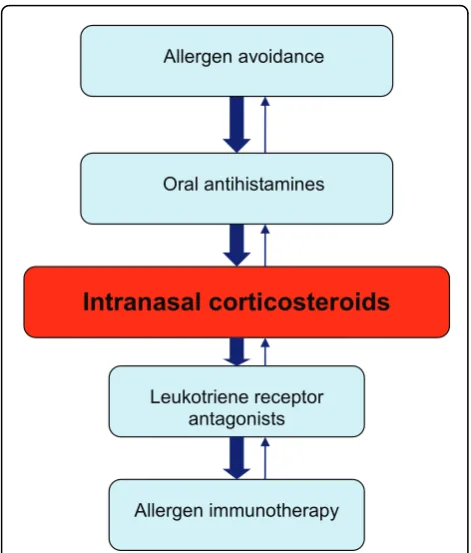
Patients with allergic rhinitis who are unable to sleep because of symptoms or whose symptoms interfere with their work or school performance are particularly good candidates for immunotherapy. Those that experience adverse side effects from pharmacological therapy, such as nosebleeds from intranasal steroids or excessive drowsiness from antihistamines, and those who find pharmacotherapy inconvenient or ineffective, may also be appropriate candidates for immunotherapy [5]. A flow diagram for the management of allergic rhinitis is provided in Figure 1 (for more information on the man-agement of allergic rhinitis, please see the Allergic Rhi-nitis article in this supplement).
Asthma
patients with very mild allergic asthma and concomitant allergic rhinitis and as add-on therapy in patients using ICSs alone [12]. Allergen-specific immunotherapy may also be considered in patients using combination inha-lers, ICS/leukotriene receptor antagonists (LTRAs) and/ or omalizumab if asthma symptoms are controlled. (see Figure 2; for more information on the management of asthma, please see the Asthma article in this supple-ment). However, to reduce the risk of serious reactions, asthma symptoms must be controlled and the forced expiratory volume in 1 second (FEV1) should be greater
than 70% predicted at the time immunotherapy is administered.
Immunotherapy administration and schedules Allergen-specific immunotherapy carries the risk of ana-phylactic reactions (serious allergic reactions that are rapid in onset and may cause death) and, therefore, should only be prescribed by physicians who are ade-quately trained in the treatment of allergy and the use of immunotherapy (such as allergists and immunolo-gists). The injections must be given where a physician is present, and in clinics that are equipped to manage pos-sible life-threatening reactions.
Before immunotherapy is started, patients should understand its benefits, risks, and costs. Counseling
should also include the expected onset of efficacy and duration of treatment, as well as the risk of anaphylaxis and importance of adhering to the immunotherapy schedule. An assessment of the patient’s current health status should be made before the administration of immunotherapy injections to determine whether there have been any recent changes in the patient’s health that may require modifying or withholding treatment (e. g., uncontrolled/symptomatic asthma or exacerbation of allergy symptoms) [7].
Once it has been determined that the patient is suita-ble for immunotherapy, the allergist/immunologist will use extracts of clinically relevant allergens for immu-notherapy treatment sets. Allergen extracts are commer-cially available for most of the commonly recognized allergens (e.g., grass and tree pollen, house dust mites, insect venom). When possible, standardized extracts should be utilized to prepare treatment sets since the efficacy and safety of immunotherapy are dependent on the quality of the allergen extracts used. In choosing the components for a clinically relevant allergen immu-notherapy extract, the physician must also be familiar with local and regional aerobiology and indoor and out-door allergens, paying special attention to potential allergens in the patient’s own environment. Table 2 pro-vides the timing and concentration of common pollen and mould allergens across the various geographic regions in Canada [6,7].
Typically, allergen-specific immunotherapy consists of two phases: a build-up phase (also known as up-dosing or induction) and a maintenance phase. During the build-up phase, the patient receives weekly injections, starting with a very low dose, with gradual increases in dose over the course of 5-8 months. After this period, the patient has usually built up sufficient tolerance to the allergen such that a maintenance (therapeutic) dose has been reached. During the maintenance phase, the patient receives injections of the maintenance dose every 3 to 4 weeks, usually for a period of 3 to 5 years. After this period, many patients experience a prolonged, protective effect and, therefore, consideration can be given to stopping therapy [7].
Accelerated schedules, such as rush or cluster immu-notherapy, may also be used and involve the administra-tion of several injecadministra-tions at increasing doses on a single visit. With cluster immunotherapy, two or three injec-tions (at increasing doses) are given sequentially in a single day of treatment on non-consecutive days. Rush immunotherapy entails administering incremental doses of the allergen at intervals varying between 15 and 60 minutes over 1 to 3 days until the target maintenance dose is achieved. Although accelerated schedules offer the advantage of achieving the therapeutic dose much earlier than conventional immunotherapy schedules,
Leukotriene receptor antagonists
Allergen immunotherapy
Intranasal corticosteroids
Allergen avoidance
Oral antihistamines
they may also be associated with an increased risk of systemic reactions, and are not typically used in Canada for respiratory allergies [5,7].
Pre-seasonal immunotherapy preparations that are administered on an annual basis are also available. They offer a much shorter build-up phase. Sublingual pre-parations are also expected to be approved in Canada in the near future. These should provide patients with effective therapeutic options. Although patients will be able to self-administer the sublingual formulations, close monitoring by a physician will still be required.
Patients receiving maintenance immunotherapy should be followed regularly to: assess the efficacy of treatment; monitor adverse reactions; assess patient compliance with therapy; and determine whether immunotherapy can be discontinued or if dose/schedule adjustments are required. For example, dose reductions may need to be considered during periods when the patient is exposed to increased allergen levels or when he/she is experien-cing an exacerbation of symptoms.
At present, there are no specific tests or clinical mar-kers that will distinguish between patients who will relapse and those who will remain in long-term clinical remission after discontinuing allergen immunotherapy. Therefore, the decision to continue immunotherapy beyond 3 to 5 years should be based on individual
patient factors such at the severity of the disease, bene-fits sustained from treatment, reaction history, patient preference, and treatment convenience [7].
Safety
Allergen-specific immunotherapy is generally safe and well-tolerated when used in appropriately selected patients. However, local and systemic reactions may occur. Local reactions, such as redness or itching at the injection site, can generally be managed with local treat-ment (e.g., cool compresses or topical corticosteroids) or oral antihistamines. Systemic reactions occur in approxi-mately 1-4% of patients on allergen immunotherapy [6] and can be mild to severe. The most severe reaction is anaphylaxis. Fatal anaphylactic reactions are rare, occur-ring in an estimated 1 in every 8 million doses of immu-notherapy administered [6].
There are numerous signs and symptoms of anaphy-laxis that involve the skin, gastrointestinal and respira-tory tracts, and cardiovascular system (see Table 3) [17]. These symptoms typically develop within 30 minutes after the immunotherapy injection. In fact, most docu-mented fatalities (73%) have occurred within 30 minutes of the injection [6]. It is important to note that the signs and symptoms of anaphylaxis are unpredictable and may vary from patient to patient. Therefore, the absence of
Combination ICS/LABA or ICS/LTRA
Allergen-specific immunotherapy
Inhaled corticosteroids (ICS)
or LTRAAnti-IgE or oral prednisone Avoidance measures
Rapid-acting beta2-agonist
as needed
one or more of the common symptoms listed in Table 3 does not rule out anaphylaxis, and should not delay immediate treatment [6].
In the event of anaphylaxis, the treatment of choice is epinephrine administered by intramuscular injection into the lateral thigh (see Anaphylaxis article in this supplement for more information on the diagnosis and management of anaphylaxis). Adjunctive therapies such as antihistamines, bronchodilators and systemic corti-costeroids may also be used, but should never be given prior to or replace epinephrine in the treatment of ana-phylaxis. In severe cases, intravenous saline or supple-mental oxygen may be required [5-7].
Following a systemic reaction to immunotherapy, con-sideration should be given to reducing the therapeutic dose or to possibly discontinuing therapy, particularly if the patient has repeated systemic reactions following injections [5-7].
Conclusions
Allergen-specific immunotherapy is a potentially dis-ease-modifying therapy that is effective for the treatment of allergic rhinitis/conjunctivitis, allergic asthma and stinging insect hypersensitivity. Although it is still
unclear exactly how this form of therapy works, immu-notherapy has been associated with a shift from Th2 to Th1 immune responses, and the production of T regula-tory cells that dampen the immune response to relevant allergens. When used in appropriately-selected patients, allergen-specific immunotherapy is extremely safe. This form of therapy, however, does carry the risk of anaphy-lactic reactions and, therefore, should only be prescribed by physicians who are adequately trained in the treat-ment of allergy. Furthermore, immunotherapy should be administered only by physicians who are equipped to manage life-threatening anaphylaxis.
Key take-home messages
•Allergen-specific immunotherapy is a potentially dis-ease-modifying therapy that is effective for the treatment of allergic rhinitis/conjunctivitis, allergic asthma and stinging insect hypersensitivity.
• Allergen immunotherapy is contraindicated in
patients on beta-blockers, those with uncontrolled or severe asthma, or those with significant co-morbid car-diovascular disease.
•The decision to proceed with allergen
immunother-apy should be made on a case-by-case basis, taking into Table 2 Timing and concentration of suspect pollens and mould spores in various geographic areas across Canada [6]
Tree pollen Grass pollen Weed pollen Mould spores
British Columbia (Coastal)
•Season: early February to mid-July •Primarily deciduous trees (alder, birch, poplar, elm, oak)
•Season: end of April to September
•Highest grass concentrations: early June to mid-July
•Not usually a major factor; no native ragweed
•Levels higher in the spring; increase further in September and October
•Most prevalent spores: Cladosporium and basidiomycetes
British Columbia (Interior)
•Season: late March to mid-July •Primarily deciduous trees (willow, birch, poplar)
•Season starts in early May in southern parts of the province; starts up to 1 month later in northern parts
•Ragweed is minimal •Cladosporium can occur from April to late fall
Prairies •Season starts in the first week of April and continues through June• Main deciduous trees: birch and poplar; alder, maple, elm, oak, ash, and willow may also contribute
•Season starts in mid‐May and continues to the end of September• Peak season is usually mid‐June to early July
•Most common weeds: nettles or sage brush• Some ragweed, especially in Manitoba)
•Can occur through the spring, summer, and early fall• Alternaria and Cladosporium are the predominant moulds
Ontario and Quebec
•Season starts early April in southern Ontario and Quebec; may occur 6 weeks later in northern areas •In southern Ontario, most common are deciduous trees (birch, poplar, oak, maple, ash, elm, mulberry, willow, chestnut, hickory)
•In northern Ontario, birch and poplar most common
•In Quebec, ash, poplar, birch most common; maple, alder and oak are less prevalent
•Season starts mid-to-late May; a couple of weeks later in northern areas
•Latter part of May and mid-June are peak seasons for grass pollination
•Ragweed season in Southern Ontario and Southwestern Quebec begins early-to-mid August
•Reaches peak in late August/early September •Stops at first frost •Nettle and plantain can also contribute
•Occur during spring, summer and fall months
•Concentrations may be higher late summer to fall months in Quebec
•Alternaria and Cladosporium are the predominant moulds
Maritimes •Season in New Brunswick and Nova Scotia: late March to last week of June •Primarily deciduous trees (birch, poplar, alder, maple, oak, and ash)
•Season: mid-May to end of September
•Peaks in early June
•Ragweed: early August to end of September
account individual patient factors such as disease sever-ity, efficacy of avoidance measures and pharmacological therapy, and patient preferences.
•Allergen immunotherapy carries the risk of anaphy-lactic reactions and, therefore, should only be prescribed by physicians who are adequately trained in the treat-ment of allergy
•Injections must be given under medical supervision in clinics that are equipped to manage life-threatening anaphylaxis.
Acknowledgements
This article has been published as part ofAllergy, Asthma & Clinical ImmunologyVolume 7 Supplement 1, 2011: Practical guide for allergy and immunology in Canada. The full contents of the supplement are available online at http://www.aacijournal.com/supplements/7/S1
Author details
1Division of Clinical Immunology & Allergy, University of Western Ontario,
London, Ontario, Canada.2University of Western Ontario, London, Ontario,
Canada.3McMaster University, Hamilton, Ontario, Canada.
Competing interests
Dr. William Moote has received consulting fees or honoraria for continuing education from AstraZeneca, Merck and Amgen.
Dr. Harold Kim is the past president of the Canadian Network for Respiratory Care and co-chief editor ofAllergy,Asthma and Clinical Immunology. He has received consulting fees and honoraria for continuing education from AstraZeneca, GlaxoSmithKline, Graceway Pharmaceuticals, King Pharma, Merck Frosst, Novartis, and Nycomed.
Published: 10 November 2011
References
1. Abramson MJ, Puy RM, Weiner JM:Allergen immunotherapy for asthma. Cochrane Database Syst Rev2003, CD001186.
2. Abramson MJ, Puy MR, Weiner JM:Is allergen immunotherapy effective in asthma? A meta-analysis of randomized controlled trials.Am J Respir Crit Care Med1995,151:969-974.
3. Ross RN, Nelson HS, Finegold I:Effectiveness of specific immunotherapy in the treatment of allergic rhinitis: an analysis.Clin Ther2000,
22:342-350.
4. Ross RN, Nelson HS, Finegold I:Effectiveness of specific immunotherapy in the treatment of asthma: a meta-analysis of prospective, randomized, double-blind, placebo-controlled studies.Clin Ther2000,22:329-341. 5. Frew AJ:Allergen immunotherapy.J Allergy Clin Immunol2010,125:
S306-313.
6. Canadian Society of Allergy and Clinical Immunology:Immunotherapy Manual.Fall2010.
7. Joint Task Force on Practice Parameters, American Academy of Allergy, Asthma and Immunology, American College of Allergy, Asthma and Immunology, Joint Council of Allergy, Asthma and Immunology:Allergen immunotherapy: a practice parameter second update.J Allergy Clin Immunol2007,120(3 Suppl):S25-85.
8. Calderon MA, Alves B, Jacobson M, Hurwitz B, Sheikh A, Durham S:
Allergen injection immunotherapy for seasonal allergic rhinitis.Cochrane Database Syst Rev2007,1:CD001936.
9. Frew AJ, Powell RM, Corrigan CJ, Durham SR:Efficacy and safety of specific immunotherapy with SQ allergen extract in treatment-resistant seasonal allergic rhinoconjunctivitis.J Allergy Clin Immunol2006,
117:319-325.
10. Durham SR, Walker SM, Varga EM, Jacobson MR, O’Brien F, Noble W, Till SJ, Hamid QA, Nouri-Aria KT:Long-term clinical efficacy of grass pollen immunotherapy.N Engl J Med1999,341:468-475.
11. Eng PA, Borer-Reinhold M, Heijnen IA, Gnehm HP:Twelve-year follow-up after discontinuation of preseasonal grass pollen immunotherapy in childhood.Allergy2006, ,61:198-201.
12. Zielen S, Kardos P, Madonini E:Steroid-sparing effects with allergen-specific immunotherapy in children with asthma: A randomized controlled trial.J Allergy Clin Immunol2010,126:942-949. 13. Calamita Z, Saconato H, Pela AB, Atallah AN:Efficacy of sublingual
immunotherapy in asthma: systematic review of randomized clinical trials using the Cochrane Collaboration method.Allergy2006,
61:1162-1172.
14. Grembiale RD, Camporota L, Naty S, Tranfa CM, Djukanovic R, Marsico SA:
Effects of specific immunotherapy in allergic rhinitic individuals with bronchial hyperresponsiveness.Am J Respir Crit Care Med2000,
162:2048-2052.
15. Niggemann B, Jacobsen L, Dreborg S, Ferdousi HA, Halken S, Høst A, Koivikko A, Koller D, Norberg LA, Urbanek R, Valovirta E, Wahn U, Möller C, PAT Investigator Group:Five-year follow-up on the PAT study: specific immunotherapy and long-term prevention of asthma in children.Allergy
2006,61:855-859.
16. Johnstone DE, Dutton A:The value of hyposensitization therapy for bronchial asthma in children. A 14 year study.Pediatrics1968,42:793-802. 17. Webb LM, Lieberman P:Anaphylaxis: a review of 601 cases.Ann Allergy
Asthma Immunol2006,97:39-43.
doi:10.1186/1710-1492-7-S1-S5
Cite this article as:Moote and Kim:Allergen-specific immunotherapy. Allergy, Asthma & Clinical Immunology20117(Suppl 1):S5.
Submit your next manuscript to BioMed Central and take full advantage of:
• Convenient online submission
• Thorough peer review
• No space constraints or color figure charges
• Immediate publication on acceptance
• Inclusion in PubMed, CAS, Scopus and Google Scholar
• Research which is freely available for redistribution
Submit your manuscript at www.biomedcentral.com/submit Table 3 Signs and symptoms of anaphylaxis [17]
Signs/symptoms Incidence
Urticaria, angioedema 87%
Dyspnea 59%
Dizziness, syncope 33%
Diarrhea, abdominal cramps 29%
Flushing 25%
Upper airway edema 21%
Nausea, vomiting 20%
Hypotension 15%
Rhinitis 8%
Itch without rash 5%
![Table 1 Allergen-specific Immunotherapy: indications, contraindications and special considerations [5-7]](https://thumb-us.123doks.com/thumbv2/123dok_us/409672.2038373/2.595.60.539.100.230/table-allergen-specific-immunotherapy-indications-contraindications-special-considerations.webp)

![Table 2 Timing and concentration of suspect pollens and mould spores in various geographic areas across Canada [6]](https://thumb-us.123doks.com/thumbv2/123dok_us/409672.2038373/6.595.57.542.96.426/table-timing-concentration-suspect-pollens-various-geographic-canada.webp)
![Table 3 Signs and symptoms of anaphylaxis [17]](https://thumb-us.123doks.com/thumbv2/123dok_us/409672.2038373/7.595.57.289.99.249/table-signs-and-symptoms-of-anaphylaxis.webp)
