TELL, Vol. 8, No. 2, Fall & Winter 2014, pp.59-90
Web-based and collaborative corrective
feedback: Exploring options for reducing the
dependence on the teacher in l2 writing
Afsar Rouhi1
Assistant Professor, Payame Noor University
Hossein Vafadar
Islamic Azad University, Ardabil Branch
Received on February 12, 2013 Accepted on December 19, 2014
Abstract
This paper reports a study that examined the effect of web-based and collaborative corrective feedback (CF) on the use of English articles in the written mode. Sixty four Iranian learners of English were placed in the web-based CF, the collaborative CF, and the control group. During two treatment sessions, all participants were required to narrate their accounts of reading 2 fables in a fixed time span. The targeted forms used incorrectly in the narration of the web-based CF group were specified and sent back to participants as a hyperlink to a concordance file designed for this study. Later, the group was required to exploit concordances for self-correction using an online concordance website. Participants in the collaborative CF group revised their narrations collaboratively. The control group, however, received no CF. Results of repeated measures ANOVAs run on the data obtained revealed that although both web-based and collaborative CF improved learners' L2 writing in terms of English articles significantly, web-based CF showed some superiority over collaborative CF. The findings also suggested, though implicitly, that
60 TELL, Vol. 8, No. 2
Web-based and collaborative corrective feedback
participants assumed more responsibility and independence in revising their own writing as a result of the CFs given in this study.
Keywords: web-based CF, collaborative CF, L2 writing, concordancing
1. Introduction
There is now a growing consensus among researchers and practitioners that corrective feedback (CF) is an essential factor for encouraging and reinforcing students’ writing (e.g., Ashwell, 2000; Cho & Schunn, 2007; Fathman & Whalley, 1990; Ferris & Roberts, 2001; Hu, 2002; Magno & Amarles, 2011). Lightbown and Spada (1999) define CF as “any indication to the learners that their use of the target language is incorrect. This includes various responses that the learners receive” (pp. 171-172). Providing feedback on students’ writing only by the teacher, however, is criticized on the grounds that teacher’s feedback may be unclear, inaccurate, and may lack sensitivity to different contexts as well as to varying levels of need, ability, and other individual differences of students (Cohen & Cavalcanti, 1990; Conrad & Goldstein, 1999; Ferris, Pezone, Tade, & Tinti, 1997; Hyland, 1998). On the other hand, it is argued that the teachers’ feedback makes students lose their self-sufficiency (e.g., Hyland, 2000; Liu & Sadler, 2003; Paulus, 1999; Tsui & Ng, 2000). The present study aimed 1) to investigate whether web-based and collaborative CF, as alternatives to teachers authority in providing feedback in response to learners errors in L2 writing, lead to improved accuracy in new pieces of writing, and 2) to compare web-based and collaborative CF in fostering autonomy on the part of learners asreflected in their ability to take more responsibility of making corrections to errors in their L2 writing.
TELL, Vol. 8, No. 2 61
Rouhi and Vafadar
learners reading, critiquing, and providing feedback on each other's writing. At the same time with the advent of technology the role of computer in delivering and mediating feedback has become a salient area for research (Stapleton & Radia, 2010). Recently, computer-assisted language learning programs have shifted from tutoring students in classroom setting to helping them make decisions for themselves and become more independent outside the classroom. Hyland (2003), for instance, argued that concordance software is used as a tool to provide a great deal of information that helps students solve their language problems on their own. Accordingly, web-based CF is likely to foster autonomous learning outside the classroom, can alter traditional writing practice significantly, and might encourage students to take on gradually more responsibility for their own writing. Web-based CF which primarily utilizes concordance software is a type of CF in which a hyperlink is provided where an error occurs. The hyperlink leads directly to a concordance file or an online concordance website and enables students to have access to copious, authentic, and numerous instances of particular features on large collections of wordlists and texts.
Web-based and collaborative CF are assumed to foster differing degrees of autonomy on the part of L2 learners. A learner who is able to perform a task independently thanks to his ability and willingness is taken to be an autonomous learner (Littlewood, 1996). Since in the web-based CF condition, as operationalized in the present study, learners are detached from the teacher and his authority, need to reflect on their erroneous wittings, and also have to take independent action (Little, 1991) in making corrections to their erroneous pieces of language, it is assumed to exercise some degree of autonomy on the part of L2 learners. In collaborative CF too learners experience some degree of detachment from the teacher and rely on themselves in giving feedback to their writings.
62 TELL, Vol. 8, No. 2
Web-based and collaborative corrective feedback
confidence (Littlewood, 1996), L2 learners, due to their individual differences, would possess differing levels of autonomy.
In the present study, we take collaborative CF as a sort of partial autonomy since L2 learners instead of being fully dependent on the authority of the teacher in providing feedback are dependent on each other's knowledge and skills and finally choose to give CF. And in web-based CF, the learners experience higher degrees of independence from their teacher since they have to stretch their knowledge and skills to make corrections to their erroneous pieces of writing which cannot be operationalized without their willingness to do so.
It is imperative to stress that unfettered autonomy where the learner independently chooses aims and sets goals would “amount to nothing more than a romantic ideal which does not square with reality” (Thanasoulas, 2000, p. 2). To reiterate, if carried out with enough scrutiny and vigilance, the redistribution of power and authority can lead to learner autonomy rather than learner bewilderment which is a natural result of leaving learners on their own to take the full responsibility of learning with no intervention involved.
Stated differently, autonomy has to be placed on a continuum with prescription and assistance by the teacher at one end and full autonomy where L2 learners are able to set their own learning goals and create appropriate conditions for learning to take place at the opposite end. It does not seem logical to expect L2 learners to exercise autonomy from the very first day of learning rather it has to be experienced gradually starting from next to zero to full-scale autonomy.
TELL, Vol. 8, No. 2 63
Rouhi and Vafadar
simply because they are not communicatively salient enough (Akakura, 2011; Sheen, 2007). Furthermore, when directed to a limited number of error types, learners are likely to understand the nature of the errors and make required corrections (Bitchener & Knoch, 2008).
2. Literature Review
2.1 Web-based CF and L2 Writing
Recent modes of learning (e.g., distance learning, flexible learning, and blended learning) stimulated by the availability of new technologies require teachers more than ever to take learners autonomy into account (Lamb, 2007). The prevalence of computers, increased opportunities of access to the Internet, and availability of large amounts of target language data have ignited language teachers’ interest in the active use of concordance in the classroom (Conrad, 2000; Hewings & Hewings, 2002; Hyland, 2003; Kennedy & Miceli, 2001; Krajaka, 2007; Kuo, 2008; Lee & Swales, 2006; Sun, 2000). Students might search out concordances by using an online website or concordance software, or the teacher might provide concordances for them to work on.
Web-based CF is consistent with the tenets of discovery-based approach which gives EFL novice writers cognitive support to reach decisions about appropriate choices of language rules (Bloch, 2009; Kennedy & Miceli, 2001; Kuo, 2008). According to this approach, “learning” can take place as a result of “doing”. O’Sullivan (2007) argued that working with corpus data can benefit learners by developing a process-oriented view of language learning and fostering their active involvement. It might also make learners take on more responsibility in learning and upgrade their knowledge.
64 TELL, Vol. 8, No. 2
Web-based and collaborative corrective feedback
students become autonomous learners. Hyland (2003) notes that immediate online assistance can be extremely useful for raising students’ awareness, developing independent learning skills, and improving writing products. He suggests that if students submit their writing electronically, teachers can hyperlink errors directly to a concordance file where students can examine the contexts, examples, and collocation of the words they have misused. Kennedy and Miceli (2010) stress the importance of guiding students through concordance activities to help them develop effective learning strategies.
Concordances have also been found to help L2 writers across ability levels. Gaskell and Cobb (2004) conducted a study in which low-intermediate learners used a concordance to practice corrections upon having certain grammar and collocation errors pointed out to them. Having studied the examples of the grammatically correct usage provided by the concordance, they were able to correct their initial errors. At a higher level, Lee and Swales (2006) introduced concordances to their doctoral students. Instead of consulting native speakers or reference books, students were asked to use the software. Then, they were instructed to apply their own appropriate choices, taken from the software, in terms of collocations and grammar instead of relying on an authority. In Todd’s (2001) study, students made concordances of the lexical items from the Internet; they then were able to induce valid patterns from their selected concordances and made valid self-corrections of their errors. A few studies have surveyed students’ attitudes toward concordance in English for academic purposes (Gaskell & Cobb, 2004; Lee & Swales, 2006; Yoon & Hirvela, 2004). In such studies, concordance approach was perceived to benefit the development of L2 writing skill and to increase confidence toward L2 writing.
2.2 Collaborative CF and L2 Writing
TELL, Vol. 8, No. 2 65
Rouhi and Vafadar
feedback by students, both to procure immediate textual improvements over time and develop writing competence via a mutual scaffolding (Tsui & Ng, 2000; Zhu, 2001). According to Franco (2008), in collaborative CF students learn from each other in groups. Vygotsky’s (1978) zone of proximal development (ZPD) provides the theoretical base for peer collaboration. The ZPD has been used in association with the concept of scaffolding by which an expert can help a novice learner achieve higher levels of control. The function of the ZPD distinguishes between two developmental levels in the learner: the actual developmental level and the potential level of development. The former is identified by what the learner can do alone. The latter, however, is related to what the learner can do when scaffolded by a more capable peer. Wertsch (1979, as cited in Hyland & Hyland, 2006) noted that the learner moves from interpsychological to intrapsychological activity. Such a movement occurs from other-regulation to complete self-regulation (DiCamilla & Anton, 2004).
Collaborative CF encourages students to approach writing as a social meaning-making process (Tuzi, 2004) and generates more positive attitudes towards writing (Min, 2005). It also fosters a sense of text ownership (Tsui & Ng, 2000) by giving students opportunities to explain, defend, and elucidate their points of view (Villamil & De Guerrero, 1996). It also helps students constitute the social basis for the development of cognitive processes (Villamil & De Guerrero, 1996) and increases students’ awareness of revision strategies (Hedgcock & Lefkowitz, 1992), confidence, and language skills (Byrd, 2003; Min, 2006).
66 TELL, Vol. 8, No. 2
Web-based and collaborative corrective feedback
Research has also identified a number of problems associated with the use of collaborative CF. The primary problem concerns students’ poor knowledge of the target language and its rhetorical conventions, making it hard to assess the appropriateness of peer feedback (Leki, 1990; Saito & Fujito, 2004; Tsui & Ng, 2000; Villamil & De Guerrero, 1996). The second problem might originate from the nature of the comments provided by peers. Leki (1990) noted that students just focus on surface language issues in their feedback. They tend to provide unclear comments when they are involved with larger issues concerning content, organization, and idea development (Liu & Sadler, 2003). The third problem might arise from inappropriate views that students may bring to collaborative CF. Peers might be hostile or over-critical towards other students’ writing (Nelson & Murphy, 1992). Some students feel afraid of being ridiculed by their peers for language problems (Nelson & Carson, 1998). Some may react negatively to critical comments (Villamil & De Guerrero, 1994) and become over-defensive. The fourth problem arises from cross-cultural issues; those who come from different cultural backgrounds have varied sociolinguistic rules of peer communication and different views of good writing, which can lead to inappropriate suggestions in mixed groups (Nelson & Murphy, 1992). Students from teacher-centered cultures may think that their peers are not qualified enough to critique their writing and may mistrust their comments (Nelson & Murphy, 1992; Paulus, 1999). The problems outlined above need to be taken into consideration by teachers who choose to practice such feedback in classroom settings. As the preceding section revealed, a great number of studies have investigated the effect of collaborative CF on L2 writing. This study compares the impact of collaborative CF with that of web-based CF on the accuracy of L2 writing. The study will be guided by the following research questions:
TELL, Vol. 8, No. 2 67
Rouhi and Vafadar
2. How would collaborative CF followed by collaborative
correction with less dependency on the teacher affect the accuracy of students' L2 writing?
3. Method
3.1 Design
68 TELL, Vol. 8, No. 2
Web-based and collaborative corrective feedback
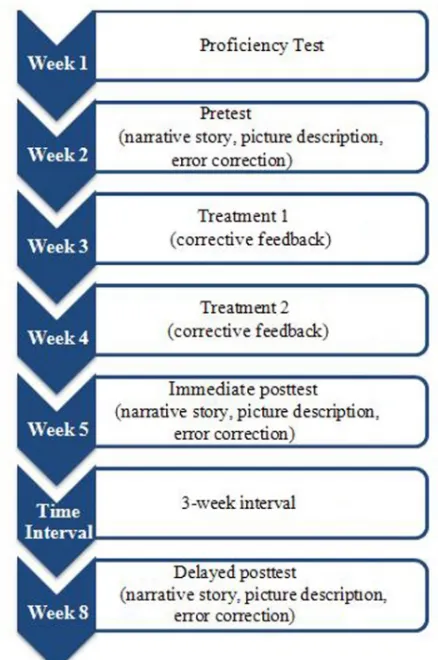
Figure 1: The design of the study
3.2 Participants
TELL, Vol. 8, No. 2 69
Rouhi and Vafadar
(control group) were majoring in TEFL and were in their eighth academic semester. Participants of the web-based CF group were EFL learners from the institute, who had completed the first year of a communication-oriented program. From the total number of individuals involved, 37 students were excluded from the study, simply because they did not want to participate. The scores of nine students were excluded from further consideration because of their low proficiency level or their failure to participate in all measures of the study. From this pool, 64 participants were assigned to three groups: a web-based CF (n = 20), a collaborative CF (n = 22), and a control group (n = 22). A one-way ANOVA run on the scores confirmed that there was no significant difference across the three participating groups. Furthermore, one-way ANOVAs run on the scores obtained from the pretest revealed no statistically significant difference among the three participating groups in relation to the narrative story, the picture description task, and the error correction test which are briefly presented in the next section.
3.3 Materials
The study included three testing instruments: (a) a narrative story task, (b) a picture description task, and (c) an error correction test. The narrative story task included three Aesop's fables (http://storyarts.org): How the Dalmation Got its Spots (fable 1),
The Fox and the Crow (fable 2), and Running for His Life (fable 3). Fable 1 was used on the three testing occasions. The fables’ readability was checked through readability software 1.0. The FKRT readability indices computed for fable 1, fable 2, and fable 3 appeared to be 81.42, 88.55, and 78.90, respectively. In the Flesch-Kincaid readability test, higher numbers (90.0−100.0) imply that the passages are easier to read and lower numbers (0−30.0) mark passages that are more difficult to read. Accordingly, indices computed revealed that the fables were appropriately understood by participants of the study. Table 1 summarizes the results of the readability test.
70 TELL, Vol. 8, No. 2
Web-based and collaborative corrective feedback
Fables FKRT Ws Syll Ss Ws per S Syll per W
Fable 1 81.42 137 187 14 9.37 1.36 Fable 2 88.55 161 194 10 16.1 1.20 Fable 3 78.90 136 181 9 15.11 1.33
FKRT = Flesch-Kincaid Readability test, Ws = words, Syll = syllables, S = sentence
It is worth noting that the fables selected had enough obligatory occasions for the use of the forms in focus and thus they provided a reliable condition for the analysis of participants’ accuracy of using those forms.
The second instrument included four sequential pictures with some word prompts placed next to each picture such as old man, paint, and picture, which had to be reconstructed as follows: The old man likes to paint a picturein the park. The picture description contained five definite and five indefinite articles. It was chosen because, as Bitchener and Knoch (2008) argue, the range of people, objects, and activities illustrated in the pictures predispose participants to using articles. The third instrument contained 17 items with four items as distracters, eight definite, and five indefinite articles. Each item comprised two related sentences, one of which was underlined. The underlined sentence contained at least one error:
Example: I saw a very interesting movie last night. I forgot the name of movie.
Correction: I saw a very interesting movie last night. I forgot the name of the movie.
The reason for choosing the error correction test was that each item in the test contained one or two sentences involving an article-obligatory context. The error correction test and picture description task were adapted from Muranoi's (2000; personal communication, May 20, 2010) testing instruments for English articles.
TELL, Vol. 8, No. 2 71
Rouhi and Vafadar
fables (http://storyarts.org). The procedure adopted for the narrative writing task is described in the procedure section below. For the error correction test, participants were given 15 minutes to correct the underlined sentences. Participants were required to write a short story for the picture description task based on the word prompts provided next to each picture in 15 minutes.
Solutions Placement Test was also used to assess participants’ general knowledge of language. The test contains 50 multiple-choice items which assess students’ knowledge of grammar and vocabulary from elementary to intermediate levels, a reading text with 10 graded comprehension questions, and an optional writing task that assesses students’ ability to produce the language. The 50 multiple-choice items and the reading task are designed to be done together in 45 minutes. The writing can be done in, approximately, 20 minutes. Participants whose scores fall on the borderlines of 0-20, 21-30, 30+ should be placed in elementary, pre-intermediate, and intermediate, respectively.
72 TELL, Vol. 8, No. 2
Web-based and collaborative corrective feedback
concordances. Participants might have faced a problem in picking out the relevant examples (Kennedy & Miceli, 2001) or in working with multi-word patterns (Granger & Meunier, 2008); therefore, we limited a wordlist-group along with any words we selected. Upon doing concordance by the software, a full wordlist of concordances and the original text could be simultaneously viewed in pop-up web browser in an independent window. Then, the concordance file was translated into HTML for publishing on a web server.
3.4 Procedure
Prior to the pretest, participants were required to take a proficiency test. On the first day, the pretest, which included an error correction test, a narrative story, and a picture description task, was administered to all participants in the three groups involved. Then, the treatment sessions began a week later. The web-based CF group received writing tasks for two sessions; in the first treatment session, participants were required to write at least 130 words in 20 minutes on a carbon copy. The procedure was as follows: we distributed the story with the attached blank sheet of paper and asked them to read the fable silently. Participants were also provided with the meaning of the keywords of the story. Having accomplished the reading, participants were required to return the stories. Then, the second author read the story loudly once while they were just listening. Afterwards, we asked participants to write the story in as much detail as they could remember. After 20 minutes, we collected the carbon copy of their narratives. Finally, students were required to transcribe the original version of their writing and send it from home via email.
After participants had emailed their writings to us, we provided feedback over the targeted structures (a and an as the first mention and the as the anaphoric reference) as a hyperlink to the concordance file that we prepared by the concordance software. We
placed the concordance file in a sharing website
TELL, Vol. 8, No. 2 73
Rouhi and Vafadar
on the given hyperlink would lead them to the concordance file that showed examples of correct usage.
To mask the focus of the study, i.e., the targeted structures, we also provided feedback on some of the errors related to other categories. Having provided feedback on each participant's writings, we sent them to participants via email to have them study the provided feedback, and revise their draft. Participants were required to email the revised version of their writing back prior to the next session of the treatment. To ensure that they would revise their writings on the basis of the given feedback, we asked some questions about the content of the concordance file upon attending the next treatment session.
In the next session of the treatment, we just highlighted the errors, each with a tag that displayed the type of error on a given
hyperlink to an online concordance website
(http://www.lextutor.ca/concord_writer); participants were advised to search out concordances for the highlighted errors independently, by using the online concordance website. It needs to be mentioned that participants were given instruction (before attending the second treatment session) on how to conduct concordance searches themselves by using the website given. In week 5, the immediate posttest was administered, containing all the three testing instruments used as the pretest. In order to examine the effect of CF manipulated in the present study in the long run, the delayed posttest was given after three weeks; participants received the same testing instruments given in the pretest and immediate posttest.
74 TELL, Vol. 8, No. 2
Web-based and collaborative corrective feedback
writings. In week 5, participants received the same tests and package of testing instruments used for the web-based CF group.
The control group was assigned to a no-treatment condition; that is, they had only their own regular classes. They received no treatment and placebo. They only received the pretest, the immediate posttest, and the delayed posttest.
The obligatory uses of the targeted forms were identified in participants' writing in the three groups for each of the three testing occasions. Accuracy was then computed for each participant by dividing the total number of articles supplied correctly by the total number of obligatory occasions. Finally, the figures obtained were multiplied by 100 and expressed as percentages.
We did an inter-rater reliability check on the scores. A second rater scored a sample of 15% of the total data coming equally from the pretest and the posttest 1 and 2. The inter-rater reliability for the narrative story, picture description tasks, and error correction test were .99, .98, and 1.00, respectively.
4. Results
4.1 Narrative Story Task
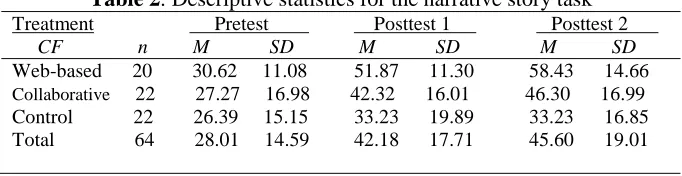
Table 2 represents the descriptive statistics for the narrative story task.
Table 2: Descriptive statistics for the narrative story task
Treatment Pretest Posttest 1 Posttest 2 CF n M SD M SD M SD Web-based 20 30.62 11.08 51.87 11.30 58.43 14.66
Collaborative 22 27.27 16.98 42.32 16.01 46.30 16.99 Control 22 26.39 15.15 33.23 19.89 33.23 16.85 Total 64 28.01 14.59 42.18 17.71 45.60 19.01
TELL, Vol. 8, No. 2 75
Rouhi and Vafadar
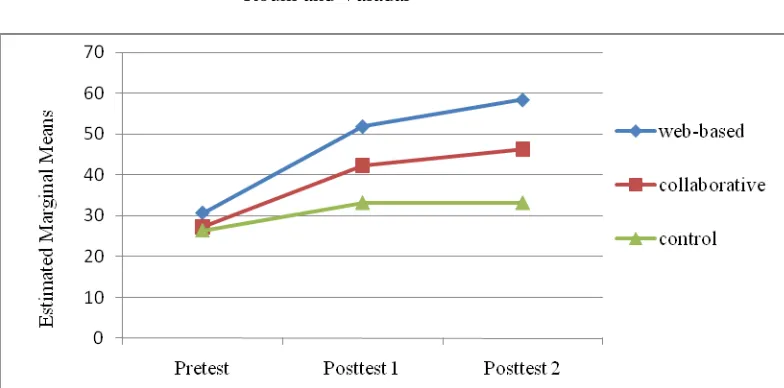
Figure 2: Group means on the narrative story task
Figure 2 graphically illustrates the means of groups over time. As it shows visually, there is an increase in the three participating groups from the pretest to the posttest 1. The web-based and collaborative group revealed gains with a small mean difference from the posttest 1 to 2. Meanwhile, the control group began to level out from the posttest 1 to 2. As it can be seen visually in Figure 2, the web-based group revealed a marked rise compared with the other two groups in the narrative story task over the three testing times. The scores obtained from the three testing occasions for the narrative story task were submitted to repeated measures ANOVA. This analysis yielded a significant main effect for time with a big effect size, F = 62.62, p < .001, ŋp2 = .67 and a main
significant effect for CF treatment with a big effect size, F = 6.52, p
< .01, ŋp2 = .17. Additionally, there was a significant interaction
effect between time and CF treatment with a big effect size, F = 6.18, p < .001, ŋp2 = .17.
76 TELL, Vol. 8, No. 2
Web-based and collaborative corrective feedback
p = .081. There was, however, a statistically significant difference between the web-based and the control group, p < .001. Table 3 shows the SPSS output for the post-ANOVA analysis for the narrative story task.
Table 3: SPSS output for the post-ANOVA analysis (the narrative story task)
Posttest 1: web-based > collaborative > control Posttest 2: web-based > collaborative > control
Posttest 1 Posttest 2
web-based > collaborative web-based > collaborative web-based > control* web-based > control*
collaborative > control collaborative > control*
The results pertaining to the post-ANOVA analysis (Bonferroni adjustment) comparing groups in the posttest 1 and 2, as shown in Table 3, revealed that the web-based group outperformed the collaborative and the control groups in the posttest 1 and 2, indicating a significant difference between the web-based and the control groups, p < .05 in both testing times. Additionally, the collaborative group performed better than the control group in the posttest 1 and 2 with a significant difference in the posttest 2, p < .05.
4.2 Picture Description Task
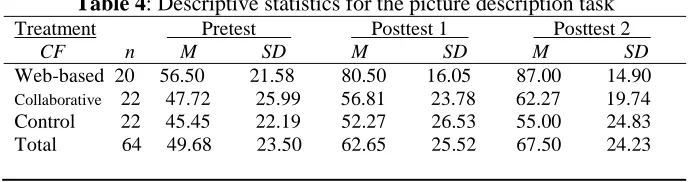
Table 4 presents the means and standard deviations for the picture description task.
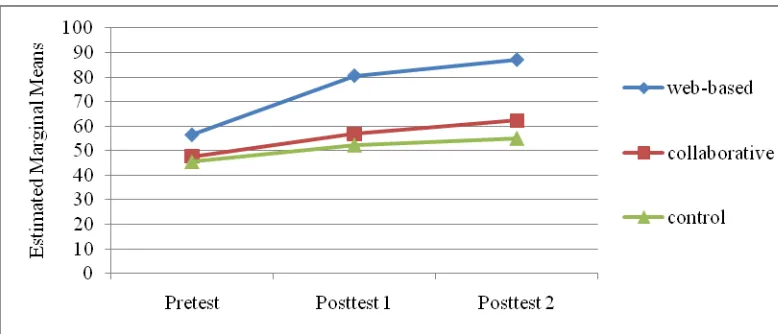
Table 4:Descriptive statistics for the picture description task
Treatment Pretest Posttest 1 Posttest 2 CF n M SD M SD M SD Web-based 20 56.50 21.58 80.50 16.05 87.00 14.90 Collaborative 22 47.72 25.99 56.81 23.78 62.27 19.74 Control 22 45.45 22.19 52.27 26.53 55.00 24.83 Total 64 49.68 23.50 62.65 25.52 67.50 24.23
TELL, Vol. 8, No. 2 77
Rouhi and Vafadar
Figure 3: Group means on the picture description task
Figure 3 displays the means of the three participating groups in the pretest, posttest 1, and 2 for the picture description task. As shown in Figure 3, all the three groups showed improvements over time from the pretest to the posttest 2. However, the improvement was notable in the web-based group compared to the other two groups.
The repeated measures ANOVA run on the scores obtained from the three testing occasions for the picture description task revealed a main significant effect for time with a large effect size, F = 29.24, p < .001, ŋp2 = .49 and CF treatment with a large effect
size, F = 8.13, p < .001, ŋp2 = .21. Moreover, the analysis
manifested a significant interaction effect between time and CF treatment with a moderate effect size, F = 3.51, p < .01, ŋp2 = .10,
78 TELL, Vol. 8, No. 2
Web-based and collaborative corrective feedback
the collaborative and the control groups was not significant, p =
.440. Furthermore, the web-based group outperformed the
collaborative and control groups significantly in the posttest 1 and 2, p < .05. Also, the collaborative group performed better than the control group in the posttest 1 and 2. Table 5 displays the results of the post-ANOVA analysis for the picture description task.
Table 5: SPSS output for the post-ANOVA analysis (the picture description task)
Posttest 1: web-based > collaborative > control Posttest 2: web-based > collaborative > control
Posttest 1 Posttest 2
web-based > collaborative* web-based > collaborative* web-based > control* web-based > control*
collaborative > control collaborative > control
4.3 Error Correction Test
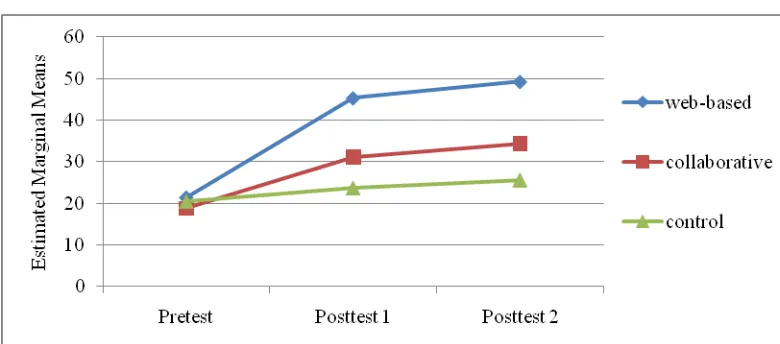
Table 6 displays the descriptive statistics for the error correction test. The pattern displaying the means of the three groups in Figure 4 shows that the gains for the web-based and collaborative groups were marked from the pretest to the posttest 2. This turned out to hold true for the control group with a relatively moderate gains from the pretest to the posttest 2. Furthermore, there was a sharp rise in the web-based group from the pretest to the posttest 1. Meanwhile, all groups manifested a marginal increase from the posttest 1 to 2. More specifically, the web-based group revealed more notable rise than the other two groups in the three testing occasions.
Table 6: Descriptive statistics for the error correction test
Treatment Pretest Posttest 1 Posttest 2 CF n M SD M SD M SD Web-based 20 21.42 18.96 45.35 18.58 49.28 16.20 Collaborative 22 18.83 22.85 31.16 27.49 34.41 30.83 control 22 20.45 20.23 23.70 20.48 25.64 21.67 Total 64 20.20 20.50 33.03 23.99 36.04 25.43
TELL, Vol. 8, No. 2 79
Rouhi and Vafadar
Figure 4: Group means on the error correction test
The repeated measures ANOVA performed on the scores obtained from the three testing times revealed a significant effect for time with a large effect size, F = 35.71, p < .001, ŋp2 = .54. There was a
trend for the CF treatment, F = 2.85, p = .065, ŋp2 = .08, indicating
that the effect for the CF treatment was a bit higher than the alpha level set at p < .05. Moreover, a significant interaction effect was observed between time and CF treatment with a small effect size, F = 5.92, p < .001, ŋp2 = .016.
The post-ANOVA analysis (Bonferroni adjustment) merged with the pairwise mean comparisons displayed in Table 7 demonstrated no statistically significant difference between the
web-based and the collaborative groups, p = .113, while a
80 TELL, Vol. 8, No. 2
Web-based and collaborative corrective feedback
group in the posttest 1 and 2. Table 7 presents the summary of the post-ANOVA analysis of the error correction test.
Table 7: SPSS output for post-ANOVA analysis (the error correction test) Posttest 1: web-based > collaborative > control
Posttest 2: web-based > collaborative > control
Posttest 1 Posttest 2
web-based > collaborative web-based > collaborative web-based > control* web-based > control*
collaborative > control collaborative > control
5.
Discussion
5.1 Web-based CF and L2 Accuracy
TELL, Vol. 8, No. 2 81
Rouhi and Vafadar
approach which leaves participants to have hands-on experience and to get involved in active learning (O'Sullivan, 2007).
5.2. Collaborative CF and L2 Accuracy
Research question 2, however, addressed the potentiality of collaborative CF in improving the accuracy of L2 writing. The results demonstrated that the collaborative CF group improved their writing accuracy and significantly outperformed the control group, particularly in the narrative story task. The pattern of findings is in line with some studies (e.g., Byrd, 2003; Ferris, 2003; Franco, 2008; Min, 2005, 2006; Rollinson, 2005; Tsui & Ng, 2000; Zhu, 2001) suggesting that collaborative CF fosters cooperative activity, mutual scaffolding, consciousness-raising, and social meaning-making process. Viewed from the cognitive perspective, collaborative CF allows learners to notice the gap between their erroneous language production and the input provided by the peer and enables them to restructure their output in the light of collaborative CF and lead to the production of more correct grammatical structures (Swain & Lapkin, 2002). The finding can also be explained in the light of Vygotsky's sociocultural theory (1986, as cited in Kozulin, 1986), which indicates that learners can only acquire information within their ZPD, establishing the actual development, what the novice learner can do alone versus the potential development, what the learner can do when helped by a more capable peer or an expert. Collaborative CF offers learners the opportunity to stretch their ability within their ZPD and makes them move from other-regulated to self-regulated activity (Dicamilla & Anton, 2004). The concept of the ZPD was later accompanied by joint scaffolding where each learner helps the other by providing extra support (e.g., Teo, 2006; Villamil & De Guerrero, 2000; Warwick & Maloch, 2003).
82 TELL, Vol. 8, No. 2
Web-based and collaborative corrective feedback
2010). The collaborative group outscored the control group in the posttest 1 and 2 in the picture description task. This finding can be justified by Swain and Lapkin's (2002) cognitive perspective and Vygotsky's (1986, as cited in Kozulin, 1986) sociocultural theory which were elaborated on earlier.
Regarding the error correction test, the results obtained from the three testing occasions showed that the web-based group performed better than the collaborative and control groups, indicating a significant difference between the web-based and control groups. All groups revealed a significant effect for time and a significant interaction effect between time and CF treatment. A significant effect for CF treatment was observed in the narrative writing and picture description tasks. Contrary to our expectation, there was a trend for CF treatment in the error correction test, that is, all groups showed almost the same degrees of increase in the posttest 1 and 2. A possible explanation for this might be the resemblance of the narrative story and picture description tasks to the treatment given, which required participants to produce narratives as opposed to the error correction test that required participants to recognize the erroneous forms and correct them (Sheen, 2008).
5.3 Web-based and Collaborative CF and Learner Autonomy
TELL, Vol. 8, No. 2 83
Rouhi and Vafadar
depends on two main components: "ability"and "willingness". The former is comprised of "knowledge" and "skills"; the latter is subdivided into "motivation" and "confidence". The results indicated that the participants possessed the components of ability and willingness. They were able to gain the knowledge (e.g., using concordance examples, collaborating and negotiating in groups) about the alternatives from which choices had to be made in self- and peer-correction and the necessary skills for applying the choices which seemed the most appropriate. Participants also possessed the motivation component because their motivation was fostered by clarifying its relation to their own needs and goals. Participants appeared confident in their self- and peer-correction by indicating a notable number of corrections, making decisions independently about choices both outside and inside the classroom that have traditionally belonged to teachers, creating a non-threatening atmosphere, and providing techniques for furthering participants' ability to self- and peer-correction. Overall, the participants demonstrated an ability to perform independently and a willingness to attempt for more accuracy in their writing.
84 TELL, Vol. 8, No. 2
Web-based and collaborative corrective feedback
Participants in the present study obtained both proactive and reactive requirements, that is, we set the direction for participants to work on tasks (e.g., by giving hyperlink to an already prepared concordance file, placing a guiding tag on errors, giving directions on how to work in group and negotiate errors collaboratively) and then they appeared to manage their own resources independently in order to reach their aim (e.g., searching out online concordances, giving and receiving feedback).
6. Conclusion
The current study sought to answer the question if web-based and collaborative CF would result in more improvements on L2 writing accuracy in the use of English articles (a and an as the first mention and the as the anaphoric reference) over the three testing occasions: pretest, immediate posttest, and delayed posttest. On the whole, web-based and collaborative CF appeared to have a significant effect on the L2 writing accuracy in the use of English articles over time. Compared to the collaborative and control group, the web-based group made the most favorable improvements over time. Also participants' autonomy was examined with respect to Littlewood's (1996) framework of autonomy. The results revealed that participants who got engaged in self- and peer-correction reduced their dependency on the teacher both outside and inside the classroom successfully.
References
Akakura, M. (2011). Evaluating the effectiveness of explicit instruction on implicit and explicit L2 knowledge. Language Teaching Research, 16(1), 1-29.
Ashwell, T. (2000). Patterns of teacher response to student writing in a multiple-draft composition classroom: Is content feedback followed by form feedback the best method? Journal of Second Language Writing, 9(3),227-258.
TELL, Vol. 8, No. 2 85
Rouhi and Vafadar
Bitchener, J., & Knoch, U. (2008). The value of a focused approach to written corrective feedback. ELT Journal, 63(3), 204-211.
Bitchener, J., Young, S., & Cameron, D. (2005). The effect of different types of corrective feedback on ESL student writing. Journal of Second Language Writing, 14(3), 191-205.
Bloch, J. (2009). The design of an online concordancing program for teaching about reporting verbs. Language Learning & Technology, 13(1),69-78.
Butler, Y. (2002). Second language learners’ theories on the use of English articles. Studies in Second Language Acquisition, 24(3), 451-480.
Byrd, D. (2003). Practical tips for implementing peer editing tasks in the foreign language classroom. Foreign Language Annals, 26(3), 434-441.
Cho, K., & Schunn, C. D. (2007). Scaffolded writing and rewriting in the discipline: A web-based reciprocal peer review system. Computers and Education, 48(3), 409-426.
Cohen, A. D., & Cavalcanti, M. C. (1990). Feedback on compositions: Teacher and student verbal reports. In B. Kroll (Ed.), Second language writing: Research insights for the classroom (pp. 155-177). Cambridge: Cambridge University Press.
Conrad, S. M. (2000). Will corpus linguistics revolutionize grammar teaching in the 21st century? TESOL Quarterly, 34(3), 548-560.
Conrad, S. M., & Goldstein, L. M. (1999). ESL student revision after teacher-written comments: Text, contexts and individuals. Journal of Second Language Writing, 8(2), 147-179.
DiCamilla, F. J., & Anton, M. (2004). Private speech: A study of language for thought in the collaborative interaction of language learners. International Journal of Applied Linguistics, 14(1), 36-69.
Fathman, A., & Whalley, E. (1990). Teacher response to student writing: Focus on form versus content. In B. Kroll (Ed.), Second language writing: Research insights for the classroom (pp. 178-190). Cambridge: Cambridge University Press.
Ferris, D. R. (2003). Response to students writing: Implications for second language students. Mahwah, NJ: Lawrence Erlbaum.
86 TELL, Vol. 8, No. 2
Web-based and collaborative corrective feedback
Ferris, D. R, & Roberts, B. (2001). Error feedback in L2 writing classes: How explicit does it need to be? Journal of Second Language Writing, 10(3),161-184.
Franco, C. D. P. (2008). Using wiki-based peer-correction to develop writing skills of Brazilian EFL learners. Novitas Royal, 2(1), 49-59. Gaskell, D., & Cobb, T. (2004). Can learners use concordance feedback
for writing errors? System, 32(3), 301-319.
Granger, S., & Meunier, F. (2008). Phraseology in language learning and teaching: Where to from here? In S. Granger & F. Meunier (Eds.), Phraseology in foreign language learning and teaching (pp. 247-252). Amsterdam: John Benjamins.
Hedgcock, J., & Lefkowitz, N. (1992). Collaborative oral/aural revision in foreign language writing instruction. Journal of Second Language Writing, 1(3),255-276.
Hewings, M., & Hewings, A. (2002). ‘‘It is interesting to note that . . .’’: A comparative study of anticipatory ‘it’ in student and published writing. English for Specific Purposes, 21(4), 367-383.
Hu, G. (2002). Potential cultural resistance to pedagogical imports: The case of communicative language teaching in China. Language, Culture, and Curriculum, 15(2), 93-105.
Hyland, F. (1998). The impact of teacher written feedback on individual writers.Journal of Second Language Writing, 7(3), 255-286.
Hyland, F. (2000). ESL writers and feedback: Giving more autonomy to students. Language Teaching Research, 4(1), 33-54.
Hyland, K. (2003). Second language writing. Cambridge: Cambridge University Press.
Hyland, K., & Hyland, F. (2006). Feedback in second language writing: Context and issues. Cambridge: Cambridge University Press.
Jabbour, G. (2001). Lexis and grammar in second language reading and writing. In D. Belcher & A. Hirvela (Eds.), Linking literacies: Perspectives on L2 reading-writing connections (pp. 291-308). Ann Arbor, MI: University of Michigan Press.
Jacobs, G. M., Curtis, A., Braine, G., & Huang, S. Y. (1998). Feedback on student writing: Taking the middle path. Journal of Second Language Writing, 7(3),307-317.
TELL, Vol. 8, No. 2 87
Rouhi and Vafadar
Kennedy, C., & Miceli, T. (2010). Corpus-assisted creative writing: Introducing intermediate Italian learners to a corpus as a reference resource. Language Learning & Technology, 14(1), 28-44.
Kozulin, A. (Ed.). (1986). Thought and language. Cambridge, MA: MIT Press.
Krajaka, J. (2007). Corpora and language teachers: From ready-made to teacher-made collections. CORELL: Computer Resources for Language Learning, 1, 36-55.
Kuo, C. H. (2008). Designing an online writing system: Learning with support. RELC Journal, 39(3),285-299.
Lamb, T. E. (2007). Learner and teacher autonomy: Synthesizing an agenda. In T. E. Lamb & H. Reinders (Eds.), Learner and teacher autonomy: Concepts, realities, and responses (pp. 269-280). Amsterdam: John Benjamins.
Lee, D., & Swales, J. (2006). A corpus-based EAP course for NNS doctoral students: Moving from available specialized corpora to self-compiled corpora. English for Specific Purposes, 25(1),56-75.
Lee, L. (2008). Focus-on-form through collaborative scaffolding in expert-to-novice online interaction. Language Learning & Technology, 12(3), 53-72.
Leki, J. (1990). Coaching from the margins: Issues in written response. In B. Kroll (Ed.), Second language writing: Insights from the language classroom (pp. 57-68). Cambridge: Cambridge University Press. Lightbown, P. M., & Spada, N. (1999). How languages are learned.
Oxford: Oxford University Press.
Little, D. (1991). Learner autonomy 1: Definitions, issues, and problems. Dublin: Authentik.
Littlewood, W. (1996). Autonomy: An anatomy and a framework. System, 24(4), 427-435.
Littlewood, W. (1999). Defining and developing autonomy in East Asian contexts. Applied Linguistics, 20(1),71-94.
Liu, D., & Gleason, J. (2002). Acquisition of the article the by nonnative speakers of English. Studies in Second Language Acquisition, 24(1), 1-26.
Liu, J., & Sadler, R. W. (2003). The effect and affect of peer review in electronic versus traditional modes on L2 writing. Journal of English for Academic Purposes, 2(3),193-227.
88 TELL, Vol. 8, No. 2
Web-based and collaborative corrective feedback
Min, H. T. (2005). Training students to become successful peer reviewers. System, 33(2), 293-308.
Min, H. T. (2006). The effects of trained peer review on EFL students’ revision types and writing quality. Journal of Second Language Writing, 15(2), 118-141.
Muranoi, H. (2000). Focus on form through interaction enhancement: Integrating formal instruction into a communicative task in EFL classrooms, Language Learning, 50(4), 617-673.
Nelson, G. L., & Carson, J. G. (1998). ESL students’ perceptions of effectiveness in peer response groups. Journal of Second Language Writing, 7(2),113-131.
Nelson, G. L., & Murphy, J. M. (1992). An L2 writing group: Task and social dimensions. Journal of Second Language Writing, 1(3), 171-193.
O’Sullivan, Í. (2007). Enhancing a process-oriented approach to literacy and language learning: The role of corpus consultation literacy. ReCALL, 19(3), 269-286.
Paulus, T. M. (1999). The effect of peer and teacher feedback on student writing. Journal of Second Language Writing, 8(3), 265-289.
Rollinson, P. (2005). Using peer feedback in the ESL writing class. ELT Journal, 59(1), 23-30.
Saito, H., & Fujito, T. (2004). Characteristics and user acceptance of peer rating in EFL writing classrooms. Language Teaching Research, 8(1), 31-54.
Schmidt, R. (1995). Attention and awareness in foreign language learning. Honolulu: University of Hawaii Press.
Schmidt, R. (2001). Attention. In P. Robinson (Ed.), Cognition and second language instruction (pp. 3-32). Cambridge: Cambridge University Press.
Sheen, Y. (2007). The effect of focused written corrective feedback and language aptitude on ESL learners’ acquisition of articles. TESOL Quarterly, 41(2), 255-283.
Sheen, Y. (2008). Recasts, language anxiety, modified output, and L2 learning. Language Learning Research, 58(4), 835-874.
Sinclair, M. (1991). Corpus, concordance, collocation. Oxford: Oxford University Press.
TELL, Vol. 8, No. 2 89
Rouhi and Vafadar
Sun, Y. C. (2000). Using on-line corpus to facilitate language learning. Paper presented at the Annual Meeting of the Teachers of English to Speakers of Other Languages, British Columbia, Canada. Abstract
retrieved from http://www.eric.ed.gov/ERICWebPortal/recordDetail?accno=ED442
275
Swain, M., & Lapkin, S. ( 2002). Talking it through: Two French immersion learners’ response to reformulation. International Journal of Educational Research, 37(3/4), 285-304.
Teo, A. K. (2006). Social-interactive writing for English language learners. The CATESOL Journal, 18(1), 160-178.
Thanasoula, D. (2000). What is learner autonomy and how can be fostered? The Internet TESL Journal, 1(11), Retrieved from http://iteslj.org/Articles/Tanasoulas-Autonomy.html
Todd, R. W. (2001). Induction from selected concordances and self-correction. System, 29(1), 91-102.
Tsui, A. B. M., & Ng, M. (2000). Do secondary L2 writers benefit from peer comments? Journal of Second Language Writing, 9(2),147-170. Tuzi, F. (2004). The impact of e-feedback on the revisions of L2 writers in an academic writing course. Computers and Composition, 21(2), 217-235.
Villamil, O. S., & De Guerrero, M. (1994). Social-cognitive dimensions of interaction in L2 peer revision. The Modern Language Journal, 78(4), 484-496.
Villamil, O. S., & De Guerrero, M. (1996). Peer revision in the L2 classroom: Social-cognitive activities, mediating strategies, and aspects of social behavior. Journal of Second Language Writing, 5(1),51-75.
Villamil, O. S., & De Guerrero, M. (1998). Assessing the impact of peer revision on L2 writing. Applied Linguistics, 19(4), 491-514.
Villamil, O. S., & De Guerrero, M. (2000). Activating the ZPD: Mutual scaffolding in L2 peer revision. The Modern Language Journal, 84(1), 51-68.
Vygotsky, L. S. (1978). Mind in society: The development of higher psychological processes. Cambridge, MA: Harvard University Press. Warwick, P., & Maloch, B. (2003). Scaffolding speech and writing in the
90 TELL, Vol. 8, No. 2
Web-based and collaborative corrective feedback
Yoon, H. (2008). More than a linguistic reference: The influence of corpus technology on L2 academic writing. Language Learning & Technology,12(2), 31-48.
Yoon, H., & Hirvela, A. (2004). ESL student attitudes toward corpus use in L2 writing. Journal of Second Language Writing, 13(4), 257-283. Zhu, W. (2001). Interaction and feedback in mixed peer response groups.