GORDON BROWN
is the D.W. Kirby Professor of Earth Sciences at Stanford University, Chair of the Department of Geological & Environmental Sciences, and Professor of Photon Science at SLAC. He has spent his academic career to date learning more and more about less and less. Trained as a chemist, a geologist, and a crystallographer, his research focus has been on chemical bonding and crystal structures of minerals and how they are impacted by different environments, particularly ambient aqueous environments. This focus led to a strong interest in mineral-water interfaces and interfacial processes responsible for sequestering cations and anions, specifically major environmental pollutants, such as lead, arsenic, selenium, and uranium. He has used many molecular-level methods, particularly synchrotron-based x-ray methods, to pursue this interest. He has also dabbled in microbial geochemistry. Gordon has worked with over 60 bright graduate students and postdocs at Stanford, as well as scientists from other disciplines to tackle complex geochemical problems requiring an interdisciplinary approach. Gordon is a Fellow of the European Association of Geochemistry and the Geochemical Society, is anGeORGes Calas
holds the Chair of Mineralogy at the University Institute of France and is professor at the University Pierre et Marie Curie (UPMC), Paris. His research centres on mineral chemistry, spectroscopy of solids, colour of minerals and glasses and more generally structure/property relationships in (geo)materials, with special attention to transition elements and radiation defects that provide invaluable information on their formation conditions. Present interests include environmental mineralogy, materials science, nuclear waste management, cultural heritage and development of mineral resources in a sustainable environment. The use of synchrotron radiation provides opportunities for travel in Europe, USA and Canada. Nonscientific interests include history, early music, gardening and (good) French wines. Member of the Academia Europaea, he was elected Fellow of the European Association of Geochemistry and the Geochemical Society in 2009.G
O
RD
O
N
e
. B
RO
W
N
, J
R
.
Ge
O
RG
es
C
a
la
s
Mineral-Aqueous
Solution Interfaces
and Their Impact
on the Environment
Volume 1, number 4 and 5 | October 2012
January 2013
V
o
lu
m
e 1
, n
u
m
be
r 4 a
n
d 5
|
O
ct
o
be
r 2
01
Ja
n
u
ar
y 2
01
G
O
R
D
O
N
e
. B
RO
WN
, J
R
. • G
L
ianeG. B
enninGUniversity of Leeds, United Kingdom
Editorial Board
T
ime
LLioTTUniversity of Bristol, United Kingdom
e
ricH. o
eLkersCNRS Toulouse, France
s
usanL.s. s
TippUniversity of Copenhagen, Denmark
Editorial Manager
m
arie-a
udeH
uLsHoffGraphical Advisor
J
uand
ieGor
odriGuezB
Lanco University of Leeds, UK Each issue of Geochemical Perspectivespre-sents a single article with an in-depth view on the past, present and future of a field of geochemistry, seen through the eyes of highly respected members of our community. The articles combine research and history of the field’s development and the scientist’s opinions about future directions. We welcome personal glimpses into the author’s scientific life, how ideas were generated and pitfalls along the way. Perspectives articles are intended to appeal to the entire geochemical community, not only to experts. They are not reviews or monographs; they go beyond the current state of the art, providing opinions about future directions and impact in the field.
Copyright 2012 European Association of Geochemistry, EAG. All rights reserved. This journal and the individual contributions contained in it are protected under copy-right by the EAG. The following terms and conditions apply to their use: no part of this publication may be reproduced, translated to another language, stored in a retrieval system or transmitted in any form or by any means, electronic, graphic, mechanical, photo-copying, recording or otherwise, without prior written permission of the publisher. For information on how to seek permission for reproduction, visit:
www.geochemicalperspectives.org
or contact [email protected].
The publisher assumes no responsibility for any state-ment of fact or opinion expressed in the published material.
ISSN 2223-7755 (print) ISSN 2224-2759 (online) DOI 10.7185/geochempersp.1.4
Principal Editor in charge of this issue Liane G. Benning
Reviewers
David Vaughan, University of Manchester, UK
Michael F. Hochella, Virginia Tech, USA
Tom Trainor, University of Alaska, USA
Cover Layout Pouliot Guay Graphistes Typesetter Info 1000 Mots PrinterJ.B. Deschamps
ABOUT THE COVER Time-lapse image of the Stanford Synchrotron Radiation Lightsource at the SLAC National Accelerator Laboratory, Stanford University, California, USA, taken at night. In the background, west of SSRL, is the California Coast Range. The San Andreas Fault zone, which marks the boundary between the Pacific Plate and the North American Plate, is about 6 km west of SSRL just on this side of the mountains. SSRL resides on the North
Geochemical Perspectives
is an official journal
of the European Association of Geochemistry
The European Association of Geochemistry, EAG, was established in 1985 to promote geochemistry, and in particular, to provide a platform within Europe for the presentation of geochemistry, exchange of ideas, publications and recognition of scientific excellence.
Officers of the EAG Council
President
Bernard Bourdon
,
ENS Lyon, FranceVice-President
Chris Ballentine
,
University of Manchester, UKPast-President
Eric H. Oelkers
,
CNRS Toulouse, FranceTreasurer
Christa Göpel
,
IPG Paris, FranceSecretary
Liane G. Benning
,
University of Leeds, UKGoldschmidt Officer
Bernard Marty
,
CNRS Nancy, FranceCONTENTS
Preface . . . .V
Acknowledgments . . . . VI
Mineral-Aqueous Solution Interfaces
and Their Impact on the Environment . . . . 483
Abstract . . . . 483
1 . Introduction . . . . 485
1 .1 A Brief History of Early “Geochemical” Time . . . . 485
1 .2 A New Era of Inorganic Geochemistry . . . . 487
2 . Our Personal and Scientific Histories . . . . 490
2 .1 The Life and Times of Gordon Brown . . . . 490
2 .2 . The Life and Times of Georges Calas . . . . 499
3 . Historical Perspectives on Crystal Chemistry and Mineral-Surface Chemistry – The Contributions of Goldschmidt, Pauling, and Gibbs . . . . 509
3 .2 . Linus Pauling’s View of the Chemical Bond and Complex Ionic Crystals and the Modern View
of Chemical Bonds in Minerals from Jerry Gibbs . . . . 510
3 .3 . The Influence of Jerry Gibbs – Modern Mineralogist Extraordinaire . . . . 515
4 . Historical Perspectives on Surface Chemistry and Environmental Interface Chemistry – The Contributions of Langmuir, Krauskopf, and Stumm . . . . 520
4 .1 . Langmuir’s Contributions to Surface Chemistry . . . . 520
4 .2 . Krauskopf’s Ideas on Adsorption Reactions in the Marine Environment and Other Contributions . . . . 521
4 .3 . Stumm’s Views on Mineral-Water Interface Geochemistry . . . . 523
5 . The Revolution/Evolution In Molecular-Scale Geochemistry . . . . 526
5 .1 . From Röntgen to Synchrotron Light Sources . . . . 526
5 .2 . Synchrotron-Based Spectroscopic and Scattering Methods . . . . 529
5 .2 .1 Basics of X-ray absorption fine structure (XAFS) spectroscopy . . . . 529
5 .2 .2 XAFS spectroscopy uses and applications . . . . 533
6 . From Heisenberg’s Quantum Theory to Density Functional Theory and Beyond: Applications to Mineral-Water Interface Geochemistry . . . . 540
6 .1 . How Aqueous Pb2+ Interacts with a-Al 2O3 and a-Fe2O3 (0001) Surfaces . . . . 541
6 .2 . Linking Molecular-Level Structure with Macroscopic Properties of the Rutile-Water Interface . . . . 542
7 . The Nature of Solid-Water Interfaces . . . . 545
7 .1 . Acid-Base Reactions at Metal Oxide-Water Interfaces . . . . 545
7 .2 . The Helmholtz-Gouy-Chapman-Stern-Grahame EDL Model . . . . 547
7 .3 . Modern Variants of the EDL Model . . . . 551
7 .4 . Experimental Validation of the EDL Model . . . . 552
7 .5 . The Nature of Water at Mineral-Water Interfaces . . . . 557
8 . That Strange Solvent Known As Water . . . . 561
9 . The Initial Interaction of Water with Minerals – Lessons Learned from Metal-Oxide Surfaces . . . . 566
9 .1 . Introduction . . . . 566
10 . The Structure of Hydrated Mineral Surfaces
and their Interactions With Cations and Anions . . . . 575
10 .1 . The Structure of Hydrated Mineral Surfaces . . . . 575
10 .1 .1 X-ray scattering study of the hydrated a-Al2O3(0001) surface . . . . 575
10 .1 .2 The geometric structure and composition of the haematite (0001) surface in equilibrium with water vapour . . . . 576
10 .2 . Macroscopic Uptake of Cations and Anions on Metal-Oxide Surfaces . . . . 581
11 . XAFS Results for Metal Ion Sorption Products on Mineral Surfaces in Simple Model Systems . . . . 585
11 .1 . Lead Sorption Reactions on Mineral Surfaces . . . . 586
11 .1 .1 Lead sorption on g-Al2O3 . . . . 587
11 .1 .2 Lead sorption on a-Al2O3 . . . . 588
11 .1 .3 Lead sorption on ferric-(oxyhydr)oxides . . . . 591
11 .2 . Arsenic Adsorption Reactions on Mineral Surfaces . . . . 592
12 . Adsorption of Organic Molecules at Mineral-Water Interfaces – In Situ Attenuated Total Reflectance IR (ATR-FTIR) Spectroscopic Studies . . . . 596
13 . Sorption Reactions in More Complex Model Systems: Containing Nom and Microbial Biofilm Coatings . . . . 603
14 . Does Size Matter? The Effect of Size on Nanoparticle Structure and Properties . . . . 611
14 .1 Nanoparticle Properties – What Makes Them Different From Their Microscopic and Larger Counterparts? . . . . 611
14 .2 The Structure of Ferrihydrite – A Widely Distributed Nanomineral and a Major Sorbent of Contaminant Ions . . . . 613
14 .3 Silver Nanoparticles (Ag-NP’s): the Impact of Environmental Transformations on Their Solubility and Toxicity . . . . 619
14 .4 Nanophase Sorption and Transport of Elements in Natural Environments . . . . 622
14 .4 .1 Colloid-facilitated subsurface transport of contaminants . . . . 622
14 .4 .2 Evidence of nanophase-assisted transport of elements in rivers . . . . 623
14 .4 .3 Evidence of Fe- and Ti-nanophases associated with clay minerals in soils and sediments . . . . 625
14 .4 .5 Sorption of radionuclides on clays and associated oxides: Radiation-induced defects are the witnesses . . . . 626
15 . Sorption Processes at Mineral-Water Interfaces in Complex Natural Environmental Systems . . . . 628 15 .1 Lead Speciation in Mine Tailings and Pb-Contaminated Soils . . . . 628 15 .1 .1 Lead speciation at Leadville, Colorado . . . . 628 15 .1 .2 Lead speciation at at Noyelles-Godault,
Nord-Pas-de-Calais, France . . . . 632 15 .1 .3 Lead speciation at the natural geochemical anomaly
of Largentière, Ardèche, France . . . . 633 15 .2 Arsenic-Polluted Soils and Groundwater Aquifers . . . . 636 15 .2 .1 Arsenic pollution in South and Southeast Asia . . . . 637 15 .2 .2 The role of source: Former As-producing industrial
plants vs . natural geochemical anomalies . . . . 638 15 .2 .3 A natural bioremediation site at the Carnoulès,
Gard, France acid mine drainage . . . .644
16 . Mineral Weathering as a Molecular-Level Mineral-Surface Process . . . . 650 16 .1 How Water Dissolves Minerals – Fundamental Concepts . . . . 651 16 .2 Geochemical Invariants and Insoluble Minerals:
What is the Secret? The Example of Zircon (ZrSiO4) . . . . 656
16 .2 .1 Zirconium as an immobile element
for modelling weathering processes . . . . 656 16 .2 .2 Surface chemistry of zircon in soils and sediments . . . . 656 16 .2 .3 DFT calculations of the adsorption energy
of water at the ZrSiO4 surface . . . . 658
16 .2 .4 Influence of radiation-damage on zircon dissolution . . . . 660
17 . Aluminum Sorption and Trapping in Biogenic Silica:
a Major Contribution to the Global Al and Si Cycles . . . . 663
18 . Mineral-Water Interfaces as Driving Forces For Metal Concentration: the Example of Cobalt Trapping By Mn-Oxides . . . . 666
19 . The Role of Mineral-Surface Reactions in Isotope Fractionation . . . . 669
20 . Sequestration of CO2 Via Mineral Carbonation
on Mg-Silicate Mineral Surfaces . . . . 672
21 . The Alteration of Nuclear Glasses:
22 . Conclusions and Future Perspectives . . . . 682
22 .1 What Have We Learned About Mineral-Water Interfaces Over the Past 30 Years? . . . . 682
22 .2 Unanswered Questions About Mineral-Water Interfaces . . . . 685
22 .3 Perspectives on Surface Science Methods and Theoretical Modelling . . . . 686
22 .4 Perspectives on Materials . . . . 687
22 .5 Perspectives on the Structure and Properties of Water and Interfacial Water . . . . 688
22 .6 Perspectives on Silicate Mineral Dissolution . . . . 689
22 .7 Perspectives on Nanoparticles in the Environment . . . . 689
22 .8 Perspectives on Heterogeneous Catalysis on Mineral Surfaces . . . . 690
22 .9 Mineral-Water Interfaces and Remediation of Past Human Activities . . . . 690
22 .10 Looking to the Future: Low-Temperature Geochemistry, Environmental Mineralogy, and Sustainability . . . . 692
22 .11 A Final Note on the Future of Mineral-Water Interface Geochemistry . . . . 692
References . . . . 695
List of Acronyms . . . . 733
PREFACE
The focus of this Perspective is on chemical processes at mineral-water interfaces – a subfield of geochemistry in which both of us have worked for the past several decades and one that can be traced back to the 1850’s (Thompson, 1850; Way, 1850) . We would like to tell a story about how this field has evolved during this period and how some of the early scientific contributions of Victor Goldschmidt,
Konrad Krauskopf, Irving Langmuir, Linus Pauling, and Werner Stumm (see photos below) have impacted our thinking about mineral-water interface chemistry . In telling this story, we draw heavily from our own studies with a number of collabo-rators, focusing on molecular-level investigations of environmental interfaces and the chemical reactions that occur at these interfaces .
Although we also discuss some of the work of others in this area, this
Perspective is not intended to be an exhaustive overview of the field, and we
apologise in advance for omission of the work of many who have contributed to its development, particularly in the area of microbe-mineral surface interactions, which is an active and growing research area that should be the subject of a separate Perspective . In keeping with the objectives of the founders of Geochemical
Perspectives, we offer personal perspectives and discuss how ideas were
gener-ated and developed through time, concluding with our thoughts about the future directions and impact of this field .
Why is it important to understand the molecular-scale factors controlling
geochemical processes? We view this as a key question to address here because of
the disturbing trend in some university Earth science departments to eliminate undergraduate courses in crystallography, mineralogy, or inorganic geochem-istry that focus on molecular-scale concepts and processes . Empirical macro-scopic approaches do not lead to a fundamental understanding of the chemical processes that control Earth’s near-surface environment or to robust predictive models of these processes . It is our hope that this Perspective will demonstrate how molecular-scale geochemical processes occurring at mineral-water interfaces have a major impact on global geochemical processes .
Gordon E. Brown, Jr.1,2 and Georges Calas3
ACKNOWLEDGMENTS
We wish to thank the US and French research agencies that have generously supported the research highlighted in this Perspective over the past 30 years, including the US National Science Foundation (Earth Sciences, Chemistry, and Biology Divisions) and Department of Energy (Offices of Basic Energy Sciences and Biological and Environmental Research), the French Centre National de la Recherche Scientifique (Universe Sciences and Physics Divisions), the Ministry for Higher Education and Research, the Agence Nationale de la Recherche, the Commissariat à l’Energie Atomique (Direction of the Nuclear Energy), and the
1 . Surface & Aqueous Geochemistry Group, Department of Geological and Environmental Sciences, Stanford University, Stanford, CA, 94305-2115, USA
former Délégation Générale à la Recherche Scientifique et Technique . We are also grateful to these agencies for support of the national synchrotron radiation facilities in the US and France, where much of our research was conducted during this period . We wish to thank our many graduate and postdoctoral students and colleagues who have worked closely with us on the science that forms the basis of this Perspective . Without them, we would not have the scientific perspec-tives that are discussed here . In addition, we wish to thank Liane G. Benning (U . Leeds), principal editor of this Geochemical Perspective issue, and Marie-Aude
Hulshoff for their technical help, advice, and encouragement and Liane, Mike
Hochella (Virginia Tech), Tom Trainor (U . Alaska, Fairbanks), David Vaughan (U . Manchester), and an anonymous reviewer for helpful reviews of our manuscript that improved its contents . Liane is singled out for special thanks because of her careful attention to and helpfulness with both the content and style of this
Geochemical Perspective issue while suffering from pneumonia . Finally, we wish
MINERAL-AQUEOUS
SOLUTION INTERFACES
AND THEIR IMPACT
ON THE ENVIRONMENT
ABSTRACT
This Perspective describes an area of geochemistry that involves minerals, their surfaces, and the interactions of these surfaces with water and the ions and molecules present in water, some of which, like arsenic, are highly toxic to organ-isms . The importance of these interactions, together with those between micro-organisms and mineral surfaces, cannot be overestimated, for they control the composition of our natural environment and mitigate some of the anthropo-genic perturbations that are changing our environment in ways that are often unpredictable and sometimes detrimental . Following overviews of our scientific careers to date, including acknowledgments of our former and current students and research collaborators, we highlight some of the scientific contributions
of Victor Goldschmidt, Irving Langmuir, Linus Pauling, Konrad Krauskopf, Werner
Stumm, and others that led directly or indirectly to the evolution of this field,
the past 30-40 years due to enormous changes in molecular-level experimental methods, particularly those involving the extremely intense X-ray sources known as synchrotrons, in digital computers, and in molecular-level theories . We (GB and GC) offer our perspectives on the development of synchrotron radiation sources and their applications to mineral-water interface processes, based on our personal experiences starting in the early days of these major user facilities . We discuss some of these new methods and theories and their applications to mineral-water interface processes through various examples .
Because of the complexity of mineral-water interfaces, particularly in natural Earth surface environments, where natural organic matter and microor-ganisms play very important roles, we adopt a reductionist approach and consider simple model systems of increasing complexity in our quest to understand the chemical processes occurring at these interfaces at the molecular level . We start with a discussion of the acid-base chemistry of metal-oxide surfaces in contact with bulk water and empirical models of the electrical double layer (EDL) that is thought to develop at solid-water interfaces . We then consider experimental and theoretical studies of the EDL, which show that the classical Helmholtz-Gouy-Chapman-Stern-Grahame model is qualitatively correct . Following a story about some of the new, controversial research on the structure of water, we discuss (1) experimental and theoretical studies of the reaction of water with metal-oxide surfaces, (2) the structure of hydrated mineral surfaces, (3) the uptake of cations and anions on metal-oxide surfaces, (4) X-ray absorption spectroscopy studies of lead and arsenic adsorption complexes at mineral-water interfaces, (5) the adsorp-tion of organic molecules at mineral-water interfaces, (6) the effect of organic and microbial biofilm coatings on the reactivity of mineral surfaces, and (7) the effect of particle size on the structure and properties of nanoparticles, using ferrihydrite as an example of a natural nanomineral and silver nanoparticles as an example of an engineered nanoparticle . In keeping with the spirit of Geochemical Perspectives, we interspersed personal experiences resulting from our involvement in most of these research areas .
To put the results of this more basic research in context we end by discussing selected applications of mineral-water interface geochemistry to environmental and Earth science problems, including (1) sorption reactions in real environ-mental systems that were anthropogenically perturbed, focusing on lead-polluted sites in the USA and France and As-polluted areas in southern Asia and France, (2) dissolution and weathering mechanisms of silicate minerals and zircon, (3) the interaction of aluminum with diatom surfaces, (4) the interaction of cobalt with manganese oxides, (5) the role of mineral-surface reactions in isotope fractiona-tion, (6) the role of mineral surfaces in mineral- carbonation reactions, and (7) the surface chemistry associated with alteration of nuclear waste glasses .
1.
INTRODUCTION
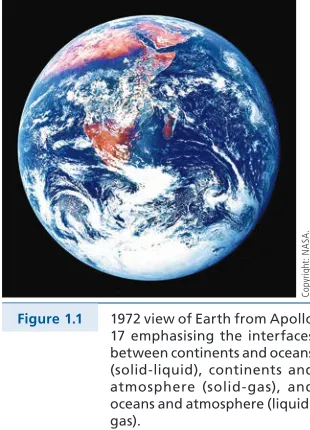
The interfaces between minerals and aqueous solutions (or atmospheric gases) play a major role in the geochemistry of Earth’s surface environment . The impor-tance of such interfaces on a global scale is obvious when Earth is viewed from space (Fig . 1 .1) . At the molecular scale, reactions between mineral surfaces and aqueous solutions, atmospheric gases, and biological organisms are responsible for chemical weathering and the production of soils . Mineral-surface reactions also help control the sequestration, release, transport, and transformation of envi-ronmental contaminants and pollutants, both natural and anthropogenic, as well as plant nutrients in the biosphere . In addition, reactions of mineral surfaces with acid rain are responsible for the degradation of natural and synthetic building materials . Moreover, mineral carbonation that has sequestered huge quantities of CO2 naturally over geologic time is a mineral-surface reaction . Werner Stumm
(Stumm et al ., 1987) summed up the importance of the mineral-water inter-face: “Almost all the problems associated
with understanding the processes that control the composition of our environ-ment concern interfaces, above all, the interfaces of water with naturally
occur-ring solids.” The importance of solid
surfaces to chemistry is well summa-rised in a quotation from Irving Lang-muir (Langmuir, 1916): “From the point of view of the chemist, the structure of the surface must be of utmost importance, for the chemical reactions in which solids take part are practically always surface reactions.” Finally, the inherent diffi-culty encountered in studies of solid surfaces is captured in a famous 1927 quote from Wolfgang Pauli: “God made the bulk, surfaces were invented
by the devil.” This may be true, but
what great fun mineral surfaces have proven to be .
1.1
A Brief History of Early “Geochemical” Time
Inorganic geochemistry has undergone enormous changes since the times of
Victor Moritz Goldschmidt (1888-1947), who spent much of his scientific career
studying the distribution and amounts of chemical elements in minerals, ores, rocks, soils, waters, the atmosphere, and their natural cycles, on the basis of the
Co
py
rig
ht
: N
A
SA
.
properties of their atoms and ions (Goldschmidt, 1937) . This field, and the closely related field of mineralogy, have also undergone revolutionary changes during both of our professional lifetimes due mainly to major advances in analytical and characterisation methods, theory, and computational power (Brown et al ., 2006a,b) . Change is an inevitable and desirable part of life and science, but it often occurs so rapidly in science that the pioneers in a particular field quickly become distant memories, or their seminal ideas are not properly introduced to younger generations of scientists . For example, we have found that some of our younger colleagues in geochemistry and mineralogy do not recognise the name
Linus Pauling (1901-1994) – awarded two unshared Nobel Prizes, one in Chemistry
for elucidating the nature of chemical bonds and the structure of molecules, and one in Peace for advocating nuclear disarmament – and by inference they do not know of Pauling’s major contributions to structural chemistry . We have also found that some of our younger colleagues are unaware of the pioneering studies in inorganic geochemistry by V.M. Goldschmidt even though they recognise his name because of the annual international geochemistry conference in his honour . Similar statements can also be made about Irving Langmuir (1881-1957), who was awarded the Nobel Prize in Chemistry in 1932 for his theory dealing with the chemical forces at the boundaries between different substances, or about
Konrad Krauskopf (1910-2003; 1982 Goldschmidt Medalist), one of the pioneers
of inorganic geochemistry in the US, or about Werner Stumm (1924-1999; 1998 Goldschmidt Medalist), one of the pioneers of mineral-water interface chemistry . This Perspectives issue is, in part, our attempt to change this landscape and show how the legacy of these pioneers has shaped our field .
Goldschmidt’s Views on Geochemistry – Goldschmidt was not shy in his thinking
about the importance of geochemistry, as illustrated by a quotation from
Geochem-istry (Goldschmidt, 1958, edited by Alex Muir following Goldschmidt’s death): “From a human point of view, geochemistry is of the greatest practical importance, especially in its applications to mining, metallurgy, chemical industry, agriculture and, of course, the study of terrestrial materials, particularly the accessible outermost parts of our planet… The results of mineralogy, petrology, and geology form the foundation of geochemistry. Modern atomic chemistry and atomic physics, as well as physical chemistry and chem-ical physics, give in many cases an essential basis for the understanding of geochemchem-ical problems. Geochemistry, however, is not a debtor only in its relations to theoretical chem-istry and physics, since modern inorganic crystal chemchem-istry originated from the study of geochemical problems, e.g., the practical use of X-ray spectra for chemical analysis and the development of quantitative optical spectroscopy with the carbon arc.”Goldschmidt was also prescient in his thinking about the linkages among geochemistry, biology, and
the environment: “Very close relationships exist between modern geochemistry and pure
and applied biology. The circulation and distribution of many chemical elements in nature (are) closely related to biochemical processes in which both plants and animals are involved. Some of the dominant geochemical factors of our time result from the activities of modern man – agriculture, mining, and industry.” We resonate particularly with Alex Muir’s
theory: “In the general evolution of geochemistry during the last quarter of a century, the most remarkable trend is the tendency not only to accumulate analytical facts, but to find a theoretical explanation of these facts.” (Goldschmidt, 1958) .
Our own Perspective reflects this idea .
One of us (GB) was fortunate to have known Linus Pauling, Konrad Krauskopf,
and Werner Stumm during his career at Stanford University, and both of our
professional careers have benefitted from their pioneering scientific contributions . In this Perspective, we discuss some personal interactions with these pioneers as well as some of their contributions that have impacted our understanding of mineral-water interface chemistry . We also give an overview of some of our studies in inorganic geochemistry and mineralogy that are directly related to the contributions of Pauling, Krauskopf, and Stumm, as well as to those of Gold-schmidt and Langmuir . We should not forget that many of the basic principles of geochemistry, chemical bonding and molecular structure, and surface chemistry were initially developed by Goldschmidt, Pauling, and Langmuir, respectively . As part of our discussion, we revisit some of the classical atomistic concepts of crystal chemistry developed by Pauling (bond valence and Pauling’s Rules; Pauling, 1927, 1929) and Goldschmidt (ionic radii and the radius ratio principle; Goldschmidt, 1937), and show how they can be extended to mineral-aqueous solution interface chemistry . We also expand on some of Langmuir’s seminal ideas about adsorption reactions at solid-gas and solid-liquid interfaces that helped define the field of surface chemistry and provided the framework for our field . Krauskopf’s classic experimental work on the role of adsorption reactions on mineral surfaces and natural organic matter in controlling trace element concentrations in seawater (Krauskopf, 1956) is also discussed in light of more recent molecular-level spec-troscopic studies (e.g ., Brown and Parks, 2001) . In addition, we revisit and extend some of the ideas of Stumm about surface complexation reactions at mineral-water interfaces (Stumm, 1995) and about chemical weathering (Stumm et al ., 1983), particularly in light of modern spectroscopic and theoretical studies of such reac-tions . It is our hope that this Perspective will introduce our younger colleagues in geochemistry and mineralogy, and reintroduce some of our older colleagues, to these pioneers of our science and will show that their scientific legacy is as relevant today as it has been over the past 75 years .
1.2
A New Era of Inorganic Geochemistry
the geometric and electronic structures of adsorbates (e.g., Ford et al ., 2001; Brown and Sturchio, 2002) and the hydrated mineral surfaces to which they attach (e.g., Trainor et al ., 2004; Yamamoto et al ., 2010) . Both of us have spent much of our careers exploiting synchrotron X-ray sources in addressing molecular-level prob-lems in inorganic geochemistry, mineralogy, and most recently environmental geochemistry and mineralogy (Brown and Calas, 2011; Calas and Brown, 2011) . We have had the benefit of observing first-hand the development of these light sources and the various synchrotron radiation-based methods they have made possible in our fields since the first synchrotron radiation facility that allowed
user measurements – the Stanford Synchrotron Radiation Project – started in 1974 (http://www .slac .stanford .edu/history/ssrp .shtml), followed two years later, by the first French facility, the Laboratoire pour l’Utilisation du Rayonnement Electromagnétique (LURE); http://www .lactualitechimique .org/larevue_article . php?cle=2607) . As both of us have been involved at these centres since these pioneering times, we will discuss some of the interface-related science these light sources have made possible as well as some of the interface-sensitive methods and complementary computational chemistry approaches used to understand mineral-water interface processes in complex natural environments .
Both of us entered the Earth sciences because of our love of minerals, our curiosity about how they form, and what they tell us about geological and geochemical processes . An important part of this Perspective will therefore focus on environmental mineralogy and geochemistry, which is an area that has attracted our attention for the past 25 years and which is dominated by chemical reactions that occur at mineral-water interfaces .
Co
py
rig
ht
: J
av
ie
r T
ru
eb
a.
Co
py
rig
ht
: L
ian
e G
. B
en
ni
ng.
Figure 1.2 (a) Giant gypsum (CaSO4•2H2O) crystals in the “Cave of the Crystals” in Naica,
Mexico discovered in 2000. Some of these crystals reach lenghts of 11m (humans for scale), can weigh over 55tons, and are estimated to have taken up to 0.5 million years to grow. (b) Transmission electron microscope images of bassanite (CaSO4•0.5H2O) nanocrystals (bottom inset) and self-assembled
nanoparticle aggregates (main image) during the formation of gypsum. The difference in diameter between the giant crystals from Naica and the nano-crystals is about nine orders of magnitude (1-3 m vs. 20nm).
We conclude this Geochemical Perspective issue with a discussion of some of the outstanding unresolved problems in mineral-water interface chemistry and our own views on the future of this research area and its impact on important geochemical processes .
In the following sections we use a number of acronyms
2.
OUR PERSONAL AND SCIENTIFIC HISTORIES
2.1
The Life and Times of Gordon Brown
I was born in 1943 in San Diego, California . However, I grew up from age two in the Deep South of the USA (Mississippi) and experienced first-hand the civil rights movement of the 1950’s and 1960’s . As one of my high school classmates –
Jim Barksdale (co-founder of Netscape) – said in a speech he gave at our 40th high
school reunion in 2001, “Things have changed since we grew up in Mississippi and
attended Murrah High School (in Jackson, MS) . Rosa Parks sat down (on a bus in
Montgomery, Alabama in 1955), and Sputnick (a Soviet Union spacecraft launched in 1957) went up.” Both of these events profoundly changed our world . Those were interesting times when the culture in the Deep South was shaken to its foundations and was changed for the better by these events and others . Three other events in those early years also helped shape my life: having a 3rd grade
teacher – Janet Heredeen – who had a simple but magical mineral collection in her classroom, which began my love of minerals; having a 7th grade science teacher
– Nancy Lay – who taught me some of the wonders of natural science; and most
important, meeting my future wife of 45 years – Nancy Tweedy – in that 7th grade
science class (we were married in 1965, and Nancy passed away in 2010) . I attended Millsaps College – a liberal arts college in Jackson, MS – and graduated in 1965 with B .S . degrees in Chemistry and Geology . During college, I was influenced by the small book by William S. Fyfe entitled Geochemistry of
Solids (Fyfe, 1964), which showed how the principles of chemical bonding could
provide useful qualitative insights about the structural chemistry of minerals, and the book by Linus Pauling entitled The Nature of the Chemical Bond and the Structure of Molecules and Crystals: An Introduction to Modern Structural Chemistry
(Pauling, 1960), which introduced me to the world of chemical bonding and structure in molecules and crystals . In part because of these two books and the encouragement of my advisors in Chemistry (Prof. Roy Berry) and Geology (Prof.
Richard Priddy), I decided to combine these two subjects in my graduate work
bonding in minerals and the structural chemistry of osumulite and the olivines . I was also fortunate to meet Charlie Prewitt, then a crystallographer at DuPont Central Research Labs in Wilmington, Delaware, and learned of his project with Bob Shannon on updating and quantifying the radii of ions in oxide- and fluoride-based solids as a function of their coordination number, oxidation state, and electron spin state . Charlie moved to SUNY Stony Brook in 1969 to establish a new programme in petrologic crystal chemistry with Jim Papike and invited me to join them as a postdoctoral student .
During the 16 months I spent at Stony Brook, NY, where my son Michael
was born, I worked on returned Lunar samples, particularly the structural chem-istry of Lunar pyroxenes, and how
they could be used to interpret the thermal history of Lunar basalts, the development and application of high-temperature crystal struc-ture methods to minerals, and Al/Si order-disorder in the feldspars using neutron diffraction methods .
After a two-year stay (1971-1973) as an Assistant Professor of Geological & Geophysical Sciences at Princeton University, where my daughter Tracey was born and where I worked with my first graduate student George Harlow, I was lured to Stanford University in 1973 by Dick Jahns, Konnie Krauskopf, and Bill Luth, where I have been since . Here, I was introduced to gem-bearing granitic pegmatites by Dick Jahns, continued work on the structure of minerals at
high temperature, and began work on the structural chemistry of silicate glasses and melts at high temperature with my students Mark Taylor and Mike Hochella
and on feldspars with my first postdoc Phil Fenn . During this same period, my student Bernard De Jong and I carried out some early semi-empirical quantum chemical calculations on H6IVT2O7 molecules (T = Si, Al), primitive by today’s
standards, X-ray emission spectroscopy studies of glasses on the effects of protons, hydroxyl groups, CO2, and alkali cations on their energetics and structures in
aluminosilicate glasses and minerals . The results of these studies gave us some mechanistic insights about the disruptive effects of network modifiers in silicate glasses and melts . Also at Stanford in 1977, I began using the Stanford Synchro-tron Radiation Laboratory (now the Stanford SynchroSynchro-tron Radiation Lightsource – SSRL) at the Stanford Linear Accelerator Center (SLAC; now officially the SLAC National Accelerator Laboratory supported by the US Department of Energy Office of Basic Energy Sciences; DOE-BES) to carry out the first X-ray absorption Figure 2.1 Jerry Gibbs (left) and Gordon B r ow n (ri g h t ) a t t h e 2 0 07
Geochemical PersPectives | V o l u m e 1 , N u m b e r 4 a N d 5
492
fine structure (XAFS) spectroscopy studies of cations in silicate glasses (Brown
et al., 1978; Brown et al., 1983). I have since been involved in similar synchrotron radiation-based structural studies of silicate glasses and melts, minerals, and aqueous solutions, initially in partnership with Glenn Waychunas (now Senior Scientist at Lawrence Berkeley National Laboratory (LBNL); Waychunas et al., 1983, 1986), and also with an exceptional postdoctoral student named Francois
Farges (now Professor at the Muséum National d’Histoire Naturelle de Paris).
In the early days of SSRL I and other early synchrotron experimentalists waited for hours and hours for synchrotron light to do our experiments, and thus we often received only several hours of X-ray beam at low current (≤ 20 mA) with little warning in the wee hours of the morning. The synchrotron ring was eventually fully dedicated to production of synchrotron light, which solved this problem. In the 1980’s, I also initiated a 15-year partnership with my Stanford colleague George Parks, focusing on complexation reactions at mineral-water interfaces. George taught me the classical concepts of mineral-surface chemistry, and I taught George XAFS spectroscopy and crystallography. We co-advised a number of excellent graduate students and postdocs during this period, including (in alphabetical order) John Bargar, Sing-Fong Cheah, Cathy Chisholm-Brause, Jeff Fitts, Andrea Foster, Daniel Grolimund, Chris Kim, Peggy O’Day, John Ostergren, Per
Persson, Maria Peterson, Ingrid Pickering, Larry Roe, Hillary Thompson, the late
Steven Towle, Tom Trainor, and Ning Xu, all of whom spent long hours collecting XAFS data on metal ion surface complexes at mineral-water interfaces and many more hours in our labs at Stanford preparing samples and analysing XAFS data. The XAFS spectroscopic approaches we developed have been used by many scientists interested in the molecular-level details of surface complexes of many environmentally important metal cations and oxoanions at various mineral-water interfaces.
Beginning in the mid-1990’s our focus shifted to complex environmental samples and determination of the molecular-level speciation of important inor-ganic contaminants, such as Pb(II), As(III), As(V), Se(IV), Se(VI), Hg(II), U(VI), Np(V), and Cr(VI), because this ultimately controls their environmental fate and impact (transport, toxicity, and potential bioavailability) (Brown et al ., 1999b; Brown and Calas, 2011, and references therein) . Our collaborations in the area of environmental geochemistry and mineralogy, both at Stanford and the IMPMC, form part of the basis of this Perspective .
I must acknowledge the special role my former student Mike Hochella
(now Distinguished University Professor at Virginia Tech) played in my growing interest in mineral surfaces, beginning in the mid-to-late 1980’s (Fig . 2 .3) . After a stint at Corning, Inc ., Mike returned to Stanford, and we started collaborating on laboratory-based
X-ray photoelec-tron spectroscopy (X PS) st udies of mineral surfaces . He pioneered the applica-tion of XPS and scan-ning tunneling and atomic force micros-copy (STM and AFM) to mineral surfaces with his students
Car r ick Eg gleston
and Patricia Maurice
(both co-advised by
George Parks), Jody
Junta, Susan Stipp
(co-advised by Jim Leckie) and postdocs
Patricia Dove and the
late Tracy Tingle . We also learned a great deal from the late Werner Stumm during his sabbatical stay at Stanford in my research group in 1992 as Cox Visiting Professor . I fondly remember the joint group meetings that we had with Werner
and our students and postdocs at that time, during which we sometimes used,
to Werner’s surprise, the word “bullshit” in commenting on the interpretation
of an experiment .
Another important chapter in my scientific life began in 1990 as a result of my friendship with Prof. William E. Spicer (1929-2004) at Stanford . Bill was a fellow southerner (from Louisiana) and well-known surface physicist who was one of the founders of the Stanford Synchrotron Radiation Project in 1971 . Bill
was a pioneer in XPS, and he,Ingolf Lindau (Stanford and SLAC), and Piero Pian-etta (SLAC) were responsible for building the first soft X-ray/vacuum-ultraviolet (VUV) synchrotron beamline (at SSRL) devoted to this type of spectroscopy .
Ph ot o b y G or do n B ro w n.
Figure 2.2 The French Connection: (from left to right)
Figure 2.3 Photograph of some of the participants at the 1979 Gordon Research Confer-ence on Inorganic Geochemistry. Front row (all from left): Gordon Brown, Wes Hildreth, Tony Lasaga, Ian Carmichael, Dean Presnall, Jan Bottinga, Alex Navrotsky. Second row: Mike Hochella (with hair), Gail Mahood, Enrique Merino, N. Gray, Tony Philpotts, Georges Calas (looking down on a fly on Alex Navrotsky’s head). Third row: Bernie Wood, Bill McKenzie, Charles Langmuir, John Weare, W. Park, George Flowers. Fourth row: Pascal Richet, Hans Engi, Richard Sack, J. Wenzel, Tony Morse. Fifth row: E. Takahashi, Bill Nash, Jim Thompson (1985 Goldschmidt Medalist), S. Hasse, Murli Manghnani, P. Danckwerth, A. Rite.
of all reactions in aqueous and environmental geochemistry . My partnership with Tom lasted almost 20 years (he retired in 2011), during which Tom and I and several graduate students and postdocs used synchrotron-based XPS, soft XAFS spectroscopy, and low-energy electron diffraction to study the chemistry and physics of metal-oxide and metal-sulphide surfaces . These experiments were difficult because of the need for ultra-high vacuum (<10–10 Torr) sample
environ-ments; however, they were well worth the effort because of what we learned about the initial interaction of water with these surfaces (Section 9) .
An important development in the scientific capabilities of SSRL and the Advanced Light Source (ALS), and one that had a major impact on my career and that of others involved in the new field of Molecular Environmental Science (MES), was a DOE workshop on this topic that I organised in 1995 at the request
of Robert Marianelli (DOE-BES-Chemical Sciences) . This was followed in 1997 by
a second workshop on soft X-ray/VUV applications to MES, held at SSRL . The resulting workshop reports (Brown et al ., 1995b; Brown, 1997) defined this new field and led to two successful DOE-BES proposals, one submitted through SSRL and one submitted through the ALS (in partnership with David Shuh, LBNL), requesting over $12M to construct two beamlines devoted to MES . The resulting beamlines (hard X-ray wiggler BL 11-2 at SSRL and soft X-ray elliptical undulator BL 11 .0 .2 at the ALS) and accompanying experimental hutches and detectors were designed and constructed, respectively, for XAFS spectroscopy on dilute elements in complex environmental matrices and at mineral-aqueous solution/microbial biofilm interfaces, and for Scanning Transmission X-ray Microscopy (STXM) (ALS branchline 11 .0 .2 .2) and ambient-pressure XPS (ALS branchline 11 .0 .2 .1) on samples relevant to MES, the Earth sciences, and heterogeneous catalysis (Bluhm et al ., 2006) . My former student John Bargar, now Senior Scientist at SSRL, was responsible for commissioning the MES-SSRL beam line . ALS scientists
Tolek Tyliczcak and Hendrik Bluhm, respectively, were responsible for building
and commissioning these MES-ALS beamlines . I am happy to report, as of this writing, that these MES synchrotron beamline facilities are flourishing and have served many hundreds of experimentalists working in the MES area as well as other areas of science and engineering from the US and abroad (particularly Europe) since 1997 (SSRL BL 11-2) and 2004 (ALS BL 11 .0 .2) .
Community building in the MES area played a major role in the success of these beamline projects and the continuing use of these facilities . Combined with the very successful GeoSoilEnviro Consortium for Advanced Radiation Sources (GSECARS) beamline project on sector 13 at the Advanced Photon Source (APS, Argonne National Laboratory), which was initially led by the late
Joseph V. Smith at the University of Chicago in the early 1990’s (now ably led by
Mark Rivers, Steve Sutton, Peter Eng, and others from the University of Chicago),
My graduate students Tom Trainor (now Professor of Chemistry at the University of Alaska, Fairbanks) and Alexis Templeton (now Associate Professor of Geomicrobiology at the University of Colorado, Boulder) helped initiate another important period in my scientific career when they joined my research group in 1995 and 1997, respectively (Fig . 2 .4) . Upon his arrival at Stanford, Tom immedi-ately jumped into a difficult experimental project designed to map out the struc-ture of the electrical double layer (EDL) at the metal oxide-water interface using synchrotron-based long-period X-ray standing wave fluorescent yield (LP-XSW-FY) measurements . Our plan was to use the fluorescence yield intensity generated from aqueous Pb(II) and Se(IV) ions in the EDL of an a-alumina single crystal-electrolyte solution interface region as the antinodes of the standing waves were swept through the EDL region by changing the X-ray incidence angle . Although some of the original objectives of the project were not achievable, we were able to obtain reasonable fluorescence yield data using a kluged-together grazing-incidence sample goniometer, which was later redesigned and improved with the help of John Bargar and Joe Rogers at SSRL . Tom, working with Alexis, produced a very nice study of the competitive sorption of Pb(II) and Se(IV) at this interface .
W hen Alexis
joined my group, she was aware of our synchrotron-based work on the interac-tion of various cainterac-tions and oxoanions at mineral-water inter-faces and wanted to add the complexity of microorganisms to these already complex systems . I knew little about microbiology at that time, so I suggested that we discuss this idea w ith Alf red
Spormann, a recently
arrived A ssistant Professor of Envi-ronmental Microbiology at Stanford and an expert on microbial biofilms . Intel-lectual sparks flew at that first meeting, and we decided to prepare a funding proposal to initiate this work, which was submitted to the DOE-BES Geosciences programme . The then-manager of this programme sent the proposal back within the week without external review indicating that DOE-BES Geosciences didn’t fund that type of work . But we did not give up!
Ph
ot
o b
y G
or
do
n B
ro
w
n.
Figure 2.4 (from left to right) Tom Trainor, Peter Eng, Sara
Several years earlier, I co-organised (with Maryellen Cameron of NSF and
Janet Herman of the University of Virginia) a combined NSF Earth
Sciences-Chemistry workshop on Environmental Geochemistry and Biogeochemistry (EGB) . The outcome of this workshop was the NSF-EGB funding programme . This programme later morphed into the Collaborative Research Activity in Environmental Molecular Science (CRAEMS) and the Environmental Molecular Science Institute (EMSI) Programs in the NSF Chemistry Division and into the Low-Temperature Geochemistry and Geomicrobiology Program in the NSF Earth Sciences Division . Alexis, Alfred, and I made some cosmetic changes to the refused DOE proposal and resubmitted the same proposal, entitled “
Inter-actions of Heavy Metals with Biofilm Coated Mineral Surfaces”, to the NSF-EGB
programme . The proposal was funded in 1998, and we were off and running in the area of microbial geochemistry . In partnership with Tom Trainor, we carried out the first LP-XSW-FY spectroscopy at SSRL on the partitioning of Pb(II)(aq)
and Se(IV,VI)(aq) between oriented single-crystal metal-oxide substrates (a-Fe2O3
and a-Al2O3) and a Burkholderia cepacia biofilm coating . We were joined initially
on this project by Sam Traina (U . C . Merced), who was Cox Visiting Professor in my group at that time . We were able to obtain even better data at the APS-GSECARS ID-13-C general-purpose diffractometer beamline with the help of
Matt Newville and Steve Sutton, and based on these data, we published a series
of papers that comprised Alexis’ Ph .D . thesis . These studies showed that Pb(II) and Se(IV) reacted preferentially with sites on metal-oxide surfaces relative to functional groups in the B. cepacia biofilm coatings at the lowest metal concen-trations, indicating that the overlying biofilm did not block reactive sites on the several metal-oxide substrates examined and that the order of reactivity of these biofilm-coated surfaces to Pb(II)(aq) was essentially the same as that of the
bare surfaces (Section 13) . Alexis was awarded the inaugural Rosalind Franklin Young Investigator Award from the APS in 2004 and the 2006 Clarke Medal of the Geochemical Society for her pioneering studies . Tom Trainor won the 2009 Mineralogical Society of America (MSA) Award for his efforts in developing and applying LP-XSW-FY spectroscopy, and for one of the first applications of crystal truncation rod (CTR) diffraction to interface geochemistry problems (Section 10) .
The most recent chapters in the story of my scientific career have involved several interdisciplinary centres and projects funded by the NSF, DOE, and the Stanford Global Climate and Energy Project (GCEP) . The first – The Stanford EMSI – was funded by the NSF Chemistry Division initially in 2000 (in the form of a CRAEMS) and lasted until 2010 (with additional support from NSF Earth Sciences and DOE-Biological and Environmental Research) . The main focus of our EMSI was on chemical and microbial processes at environmental interfaces, and this effort was led by me as PI, Anders Nilsson (SLAC), Alfred Spormann,
Scott Fendorf (Stanford), and Satish Myneni (Princeton University) . This group was joined in a successful 2004 NSF-EMSI proposal by Hendrik Bluhm (LBNL),
Anne Chaka (now at Pacific Northwest National Laboratory; PNNL), Kevin Rosso
Ona-Nguema were also members of this team, as were Lars Pettersson (Stockholm University), Andrea Foster and James Rytuba (U .S . Geological Survey), and Jennifer Wilcox (Stanford) (Fig . 2 .5) .
Figure 2.5 Members of the Stanford-EMSI at our annual meeting in August 2007 at Stanford University.
Tom Trainor, Anne Chaka, Peter Eng, and I also had a joint NSF-funded Nanotechnology and Interdisciplinar y Research Team (NIRT) project on the structure and reactivity of iron-(oxyhydr)oxide nano-particles that resulted in a very enjoyable and productive collaboration (Fig . 2 .6) .
The second more recent centre is the NSF-funded Center for Environmental Implica-tions of Nanotechnology, which is based at Duke University (Mark Wiesner
(PI), Richard Di Giulio, Helene Hsu-Kim, and
Joel Meyer), with
satel-lite groups at Carnegie Figure 2.6 Members of the NSF NIRT at a research
Lowry), Howard University (Kimberly Jones), University of Kentucky (Paul Bertsch), Stanford University (GB), and Virginia Tech (Mike Hochella and Peter Vikesland) . I have worked closely with two very bright Stanford postdocs Clement Levard and
Marc Michel, Stanford graduate student Cristina Cismasu, and Carnegie Mellon
collaborator Greg Lowry and his students, U . Paris-6 collaborator Guillaume Morin
and his co-workers, and Mike Hochella and his students at Virginia Tech on the structure, solubility, and toxicity of engineered and natural nanoparticles, including engineered silver nanoparticles and natural ferrihydrite and ZnS nano-particles . These studies form the basis of our discussion of nanomaterials later in this Perspective (Section 14) .
Finally, I recently became involved in a project on CO2 sequestration via
mineral carbonation funded by the Stanford Global Climate and Energy Project (GCEP) in collaboration with my Stanford colleagues Kate Maher and Dennis Bird
and our students and postdocs Pablo Garcia del Real, Natalie Johnson, Seung-Hee Kang, Joey Nelson, and Laura Nielsen; some of the early results of these studies will also be highlighted later in this Perspective (Section 20) .
One message I would like to convey at the end of this overly indulgent personal and scientific history, particularly to my younger colleagues, is the fun I have had over the years and continue to have in my work at the boundaries of geochemistry, mineralogy, physical chemistry, materials science, X-ray physics, and most recently microbiology . I am first and foremost an Earth scientist, but I would not find my scientific life as interesting without crossing disciplinary boundaries whenever needed and working with a variety of scientists and engi-neers from different disciplines to tackle complex geochemical problems .
2.2
.
The Life and Times of Georges Calas
Born in 1948 in Paris, France, in a family from Southern France, I was educated at a time when things were changing fast . In Southern France, the Occitan language – the Romance language spoken for centuries in this area – was still spoken, and it was possible to see the last horse carriages working in vineyards and people using water from wells . The country was less wealthy than now, but it was growing fast . This post-war economic development was referred to as “Les trente glorieuses” in France – the thirty glorious years . Until 1989, Europe was divided into two parts by the Iron Curtain, but in the western part, boundaries were falling between European countries .
I got two years of training for the competition to enter the “Grandes Ecoles”, a system that provides French studies of a specific flavour . At the same time, I was also spending time in the mineralogy collection and laboratory at the Muséum National d’Histoire Naturelle de Paris, which was open to undergrads . I was taking lectures and discussing the history of mineralogy with Jean Orcel, the chair of mineralogy and successor of Alfred Lacroix in this institution . This experience helped strengthen my motivation for mineralogy, as my actual studies were mostly mathematics and physics with some biology and geology . Two years later, I passed the competition for various higher education institutions during the May 1968 riots . These frequently lasted all night in the streets of Paris, yet in the early mornings we took exams for several hours in historical buildings that preserved a miraculous calm during these unpredictable events . I finally chose to enter Ecole Normale Supérieure (ENS) de Saint-Cloud, a school which later relocated in Lyon to become the ENS de Lyon . The ENS system is rather unique in the world . It provides undergrad students a generous stipend during four years, provided they agree to serve the French public system during 10 years . I was following the Geology classes at the University of Paris, in its former location in the Sorbonne . Meanwhile, I was also receiving complementary training at ENS Saint-Cloud in some fields that were not taught at University, such as computer science, which was still a minor field . As part of this training, we had geology and ecology field trips in all parts of France, and in addition I was working during summers as an adjunct collaborator with the French Geological Survey, which provided me an unique opportunity to experience the complexity of natural systems .
In 1969, the LMCP moved to the new campus of Jussieu, where it is still located, and I began several internships in this lab . LMCP was chaired at this time by Jean Wyart, who encouraged structural studies of new minerals . I was not really interested in structure determination and decided to move to mineral physics . I was attracted by books showing other aspects of mineralogy and linking miner-alogy and geochemistry . In particular, Geochemistry of Solids (Fyfe, 1964) and
Paramagnetic Resonance (EPR) spectrometer), and while there I met Dominique
Bonnin, who was starting a Mössbauer spectroscopy facility and also wrote XAFS
programmes used for data analysis for many years in France . I was happy to share my time among ESPCI, ENS Saint-Cloud, and LMCP . I also met Yves Farge, head of a research group at the Solid-State Physics Laboratory (LPS) in Orsay, south of Paris, which became famous because of people such as Denis Raoux and Pierre Lagarde, about whom I will talk later . LPS was (and still is) an international place with many foreign researchers, and it was refreshing to discuss science with them in the superb cafeteria located at the top of the building . This blend of training in four different laboratories and schools allowed me to get the first quantita-tive data on the thermal stability of radiation-induced defects in fluorites . In 1972, I defended my diploma on the colouration of fluorites .At the same time, I was admitted at a competition to become a high school teacher, and I was also offered a position of research associate at the Centre National de la Recherche Scientifique (CNRS), the French research organisation . I took the second possi-bility with pleasure . In 1973, I followed up on fluorite colouration, spending six months at the Clarendon Laboratory in Oxford to use their EPR facility . The head of the Clarendon was Brebis Bleaney, co-author of a thick reference book,
Electron Paramagnetic Resonance of Transition Ions (Abragam and Bleaney, 1970) .
Discovering English life and tea-time and living in an international place such Oxford provided a big change in environment for a young French researcher at a time when international exchanges were almost nonexistent for students .
Early in 1974, I had to do my National Service . At this time, French men were obliged to serve in the army, unless they found an 18 month- to 2-year position in a developing country . I went to Mexico, where I started a mineral-ogical laboratory in the national nuclear agency (Instituto Nacional de Energia Nuclear) . I was lucky to arrive at a time when Mexico was a wealthy country . I was sharing my time between laboratories in Mexico City and fieldwork on hydrothermal alteration associated with volcanic-hosted uranium deposits in Chihuahua . Several researchers at LMCP later worked on various aspects of this unusual deposit, which was once used as a natural analogue for the now aban-doned Yucca Mountain nuclear repository project in the US .
Back in Paris in the fall of 1975, I found LMCP with a decreasing number of mineralogists . After discussions with Claude Allègre, I decided to enter the field of glass structure and worked on the speciation of transition elements in glasses and melts using spectroscopic techniques . I spent some time to find funding for a UV-visible-near infrared spectrophotometer, while using ESPCI facilities for complementary methods such as EPR and Mössbauer spectroscopy, because spectroscopic investigations of crystals and glasses were developing fast . In 1976, Joe Wong and Austen Angell published Glass Structure by
Spectros-copy (Wong and Angell, 1976), showing the importance of combining different
The end of the 1970’s corresponded to a major break in my activity, due to the advent of synchrotron radiation, which was beginning to be available in France at LURE in Orsay . I interacted once more with Yves Farge, who had left the solid-state physics laboratory of Orsay (LPS) to create LURE, a 1 .85 GeV synchro-tron light source that opened in a shared-user mode with particle physicists in 1976 . Sometimes, beamtime became available at short notice, so we always had samples ready . In the absence of the Internet, data transfer was accomplished using various types of floppy disks and magnetic tapes, requiring that local computers be available, usually on Sundays . This “short-notice” problem was solved in the mid-1980s by the full dedication of LURE to production of synchro-tron radiation .
I began a 10-year partnership with Jacqueline Petiau, Professor of Physics at the ENS, who performed her research at LMCP, and we had a fruitful collabora-tion due to our different backgrounds . Our first study concerned the coordinacollabora-tion of Fe(II) in glasses, but we also used XAFS spectroscopy to determine the local coordination environments of transition elements in glasses of geological interest as well as that of Ge in technological glasses . The groups of Paris and Stanford were the first to publish this type of information for Fe cations in glasses (Brown
et al ., 1978; Calas et al ., 1980) . In 1980, we also published with young collaborators of Yves Farge (Denis Raoux, Alain Fontaine, and Pierre Lagarde) the first review of the application of XAFS spectroscopy to disordered systems (Raoux et al ., 1980) . The second area of collaboration with Jacqueline was on X-ray absorption near edge structure (XANES) spectroscopy . We showed that high spectral resolution enabled us to model the pre-edge structure, which we interpreted in the frame-work of crystal-field theory (Calas and Petiau, 1983) . This provided original data on the coordination environments of Fe(II) and Fe(III) in silicate glasses . Together with Antonio Bianconi (University of Rome), we modelled the XANES spectra of tetrahedral cations and the XANES spectra of actinides in crystals and glasses .
within glass structure, and by Guillaume Ferlat and Gerald Lelong (both Assistant Professors at UPMC in Paris) who carried out mesoscale numerical modelling of glass structure and high-pressure modifications of glasses, respectively . Other directions of research concern the structure-property relationships of glasses and of silicate melts, after pioneering experiments at SSRL with Gordon Brown,
François Farges, and Laurence Galoisy, and more recent activities at IMPMC, on
the structural evolution of glasses at high-pressure and the nucleation of glasses . Determining the surroundings of transition elements in silicate glasses and melts was also helpful for rationalising mineral-melt partition coefficients . Together with Gordon, we also share an interest in the location of impurities in minerals, though with limited activity due to the lack of funding . After the early doctoral studies by Jean-François Cottrant and Laurent Izoret in the early 1980’s, Amelie Juhin
recently related the relaxation around Cr-impurities with the colour of garnets and spinels by coupling advanced XANES techniques and DFT calculations .
In 1980, I defended my Science Doctorate, a diploma that no longer exists in France . A major change in my career occurred the year after, when I moved to University of Paris 7 (now UPD) as a professor in the Earth Sciences Department . There I met Gérard Bocquier, Professor of Soil Science working on tropical soils . As I was working on disordered materials, we found it interesting to share our respective experiences to better understand the mineralogical and crystal-chem-ical controls on element transfer during weathering and soil formation . A student interested in soil formation and mineralogy, Alain Manceau (now CNRS Director of Research at the Grenoble Observatory), helped initiate this new approach, beginning with the investigation of the crystal-chemical behaviour of transition elements in the low-temperature alteration and weathering phases associated with the Ni, Co, and Cr ore deposits, complementing the first XAFS study on these minerals with a detailed petrological and mineralogical characterisation (Section 18) . A few years later, Alain moved to Grenoble, where the European Synchrotron Radiation Facility (ESRF) was starting and has been successful since . Based on Alain’s work we found it important to initiate a study of simpler, synthetic systems, using the knowledge of LMCP on disordered systems . This was the doctoral work of Jean-Marie Combes (now Executive Director of a subsid-iary of Saint-Gobain Company) discussed below in Section 14 . Jean-Marie was the first student of my group to go to Stanford as a postdoc to work with Gordon, and this stay helped Jean-Marie convert his research to XAFS investigations of silicate melts and encouraged him to enter the glass industry .
William Bassett invited me to the 1982 American Geophysical Union (AGU)
Fall Meeting in San Francisco, which had the first special session on the applica-tions of synchrotron radiation in the Earth sciences . There I again met Gordon
Brown, whom I first encountered at the 1979 Gordon Conference (Fig . 2 .3) . This