My Brain Book
A Case Study on Responsible Research and Innovation in Information and
Communication Technology for Ageing People.
Savitch, Nada
Innovations in Dementia CIC
Corresponding Author: Nada Savitch, [email protected]
Keywords: RRI, Industry.
Citation: The full citation information will be inserted here once the paper is accepted.
Field of research or industry
For long-term conditions such as dementia, care planning is a vital tool to promote people’s health and well-being.
People with dementia and carers told us that care plans are often non-existent, or are of variable quality. Information can soon become out-of-date, plans get lost, and they are seldom owned or written by people with dementia and their families.
Innovations in Dementia Community Interest Company (CIC) is part of a partnership which is led jointly by the Health Innovation Network (HIN) in South London, UK, and an ICT company called IXICO.
The HIN is a membership organisation driving lasting improvements in health and wellbeing across London by sharing innovations across the health system and capitalising on teaching and research strengths (http://www.hin-southlondon.org/). Membership of the HIN includes: local authorities, hospitals and NHS Trusts, commissioners of NHS health and social care services, NHS primary care providers, higher education institutions, third sector and charity organisations, and industry and commercial partners.
IXICO is an ICT company established in 2004 which develops innovative technologies to help those involved in researching and treating serious diseases to make rapid decisions and improve patient outcomes. The clinical focus is predominantly on dementia. IXICO was founded by academics from the three leading London academic institutions, Imperial College, University College London and Kings College London. The company has raised a total of £4.2m from investors and in 2013, it became IXICO.
Event or activity
This case study focuses on the initial development of an ICT system that aims to empower people with dementia to remain part of society.
This web-based tool will help people to identify not only the practical problems they experience but also their interests, hobbies, achievements and what they want from their lives. The system helps people to formulate ways to address any issues and to identify where further support would be available when needed – ie the care plan. This help might come from professionals or the voluntary sector, but also from friends, family and neighbours. The My Brain Book system also has the potential to contain various other facilities, such as enabling users to create a ‘peer-support’ network of people in similar circumstances, and record information for use in particular circumstances such as if an ambulance is called.
Traditionally, care planning has been an exercise that is often carried out by professionals with little input from the person with dementia or even their family/ carers. A care plan that is in hard copy or reliant on being printed out is often lost and goes out of date very quickly, and can be difficult to share. Using the My Brain Book type of ICT for care planning can help to overcome some of these issues.
My Brain Book is designed to be used by the person with dementia with help from family, friends and a trained facilitator. The design needs to be as simple as possible so that people with limited IT skills can understand it. The trained facilitator is vital in overcoming concerns about using ICT. Although it will be easier for people with early stage dementia to engage directly with the ICT interface, using a system that is easily shared with different family members and professionals will enable people with dementia to remain engaged as their dementia progresses.
Many companies have considered how to develop such a tool, but this project is different because of the partnership between commercial organisations, the Health Innovation Network and people with dementia (through Innovations in Dementia, a social enterprise that helps make the voice of people with dementia heard).
Why does it fall under Responsible Research and
Innovation (RRI)?
The aims of the main organisation involved in the development of My Brain Book align closely with the Responsible Research and Innovation (RRI) approach, including engaging with society in general, promoting equality, and sharing results and innovation.
The HIN is one of 15 similar organisations called the Academic Health Science Network (AHSN) across England. Each AHSN has a remit to:
• Focus on the needs of patients and local populations
• Build a culture of partnership and collaboration
• Create wealth through co-development, testing, evaluation and early adoption and spread of new products and services.
Innovations in Dementia is a social enterprise that works with people with dementia in a variety of ways, but always as equals. Innovations in Dementia supports organisations of all sorts to think about how they can engage with people with dementia in their work.
This coming together of organizations with different remits along with ICT providers and researchers in the company IXICO has fostered a responsible approach to research and innovation. The My Brain Book project is an example of how this approach can be put into practice with a section of society which is often overlooked: people with dementia.
This case study is relevant to RRI because:
It demonstrates responsible and ethical ways to involve one of the most marginalised groups of people in Europe – people with dementia. Throughout Europe there are initiatives to raise awareness of Alzheimer’s disease and other forms of dementia amongst the general public. Listening to people with dementia is one way that they can take an active place in society.
It demonstrates how responsible research and innovation by industry can respond to the needs of society as a whole. This is an example of industry working closely with the public sector and the public in a specific area. Opportunities for people with dementia to be part of research and innovation are rare.
It demonstrates the role that research and innovation within industry has in promoting equality in the wider society. This case study shows how business and industry can lead the way in listening to a group of people who often have no voice in society in general.
It demonstrates that working with the public, patients and carers at the outset of the innovation process will improve the final product for everyone involved.
It demonstrates how industry can work together with public and voluntary organizations to ensure that their work is responsive to the needs of society. It demonstrates that innovation is not just important in research but how innovative approaches to engaging with marginalised groups is vital for health and wellbeing products to succeed.
The HIN recognised from the start that for a product to be successful it must be acceptable for its users. Only if a product is acceptable will it be sustainable. All the HIN’s work around dementia comes from consultation with people with dementia and the general public.
As responsible innovators in the health and wellbeing industry, it was important that people with dementia and carers were involved in every stage of development. Innovative ways of including people with dementia in equal discussions with researchers and developers has meant that the product under development reflects the needs of the people who will use it.
Examples of engagement activities include:
• A dedicated engagement session for people with dementia around priority setting for the HIN
• Background focus groups
• Design workshops
• Testing a prototype with those who might use the system
Engagement session around priority setting
When the dementia stream of the HIN was set up, the HIN carried out a number of engagement exercises with professionals in the field and among the general public. These exercises aimed to find out what was important to the local population, where innovation was happening that could be spread to other areas and where there were unmet needs. Exercises ranged from meetings to online crowd-sourcing activities. However, although these activities aimed to reach as many people as possible, it was felt that the voice of people with dementia was being missed.
Innovations in Dementia was asked to set up a parallel session where people with dementia could talk in a more relaxed setting than at a large formal meeting. The meeting was welcoming and set up in a venue that was known to participants and easy to reach. Working with people with dementia separately allowed Innovations in Dementia and the HIN project manager to explore issues with people with dementia more fully than if they were in a meeting designed for professionals or even the general public.
The idea of the digital care planning tool came out of this engagement work.
Background focus groups
Innovations in Dementia worked with the HIN and ICT developers at IXICO to run focus groups with people with dementia and their carers to establish the key issues in care planning and how a web-based system could address some of these.
Our engagement with people with dementia and their carers confirmed what patient advocacy groups often say, which is that many patients lack structured support and do not feel well-served by the health and social care system in a time of changing circumstances. For those that are lucky enough to have a carer to take care of their daily needs, the carer is given even less support, and both patient and carer live in fear of a crisis point that will cause their fragile existence to fall apart.
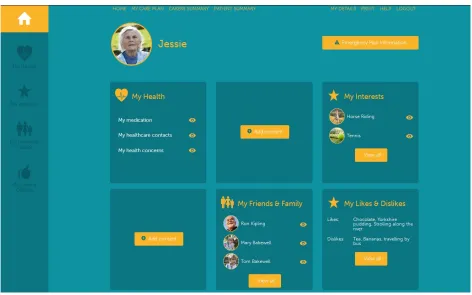
Figure 1: My Brain Book: Example of personal profile page.
be designed to record a profile of the patient that captures their interests, people that are important to them, their likes and dislikes etc. This gives those caring for the patient (often remotely) a way to keep in touch by sharing photos and stories, as well as holding important information about what to do in an emergency. A one page profile can be shared with drop- in carers so that the patient can be addressed as an individual – for example by giving information such as whether the person likes to be called Tommy and never Mr Smith (or the opposite), has a daughter in Australia, prefers their tea black and never likes to miss an episode of their favourite TV programme.
Design workshops
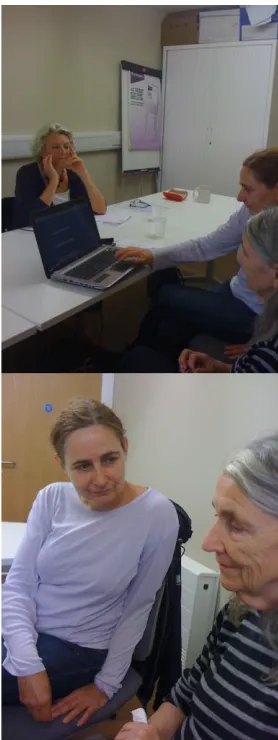
Innovations in Dementia worked closely with the ICT developers at IXICO to run a series of design workshops where people with dementia and their family/carers got together with researchers and innovators to look at various aspects of the design for My Brain Book. Each workshop was different: we explored existing provision for care planning in people’s lives, the look and feel of the computer interface, and how best to engage prospective users of the My Brain Book system.
Importantly, each workshop was held at familiar or easily accessible venues, in a relaxed and welcoming environment – with lots of cake! Researchers, innovators, people with dementia and their carers had time to get to know each other and talk about the issues and their lives.
Three mock designs were created for evaluation during a workshop to gauge layout/font/quantity of information presented to the user etc. These were presented on paper, as were other activities in the workshop to get objective feedback without participants becoming concerned about the form of display. Contrary to expectations, participants preferred a bold design that was heavy on information. If the design was too simple, participants were less able to see the full scope of the tool and were confused as to its purpose. A combination of the concepts was chosen for development.
Many people with dementia find it difficult to discuss their lives, especially what is missing in them. A series of flash cards were used to encourage people to talk about themselves. Exploring topics such as hobbies, friends and family, health and shopping informed the developers how to structure the My Brain Book interface.
depersonalised way. We felt that the paper exercises allowed patients to open up more freely without the complication of adding in a computer or other digital media. We wanted to build a tool to support patients and we could gather those requirements without the use of a simple prototype.
Figure 2: At one of the design workshops.
The workshops also informed the developers about building a care plan structure that the patient could own and identify with. In particular the developers realised the importance of the initial engagement with the person with dementia and their family/ carer prior to building an effective personalised care plan.
At the workshops, people discussed different options for how a personalised care plan could be developed and used. By talking to people about their lives and interests and what they are finding difficult, or fear they might find difficult in the future, the system could flag up areas of concern. My Brain Book then asks people to consider the existing people and services and other assets in their lives and how these could be best utilised to support them.
People also discussed how this information might best be used – for example what information should be readily available for paid carers or volunteers who might come to support the person with dementia, or what information should be made available in an emergency (for example to paramedics).
Testing a prototype with those who might use the system
This web-based tool was then evaluated with 19 pairs of people with dementia and their carers using a trained facilitator. User-testing is widespread in industry, but it is often done in ‘laboratory conditions’. We wanted to make sure that the people with dementia who took part in the user testing enjoyed the experience and also that the feedback for the developers was as real as possible.
Figure 3: Some people with dementia and their carers using My Brain Book.
At the end of the session the person with dementia was asked to sign a consent form to enable the Project Team to share the data entered with interested parties. The family member or family carer was also asked to sign the form. There was an assumption that people with dementia who were part of this project had the mental capacity to understand the process as it was happening and were happy to answer questions about themselves and My Brain Book. However, in dementia capacity can fluctuate and the family member was always involved. This meant that if the person became confused about what the testing was about, the family member would be on hand to explain. All answers to the questions were kept secure and not shared outside the small project team.
Members of the ICT development team or project managers from the HIN attended all the sessions so that they could see My Brain Book being used.
Twenty people with dementia and their carers registered to take part in the testing. One person cancelled as a convenient date within the test period could not be agreed. Nineteen people with dementia (12 male and 7 female) completed their My Brain Book profile. About half the people were between 66 and 75 years of age, and half were over 76.
Some people who helped with the testing were in the early stages of dementia, and others were much more advanced.
Many people with dementia had access to a computer/tablet, others said they would be inclined to learn new skills if the reason was compelling.
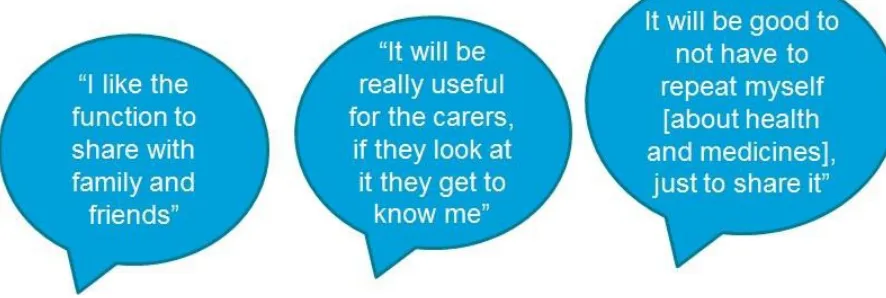
My Brain Book was well received by the large majority and a mountain of feedback has been obtained to help with further development, both with respect to refinement of existing functionality and new functionality.
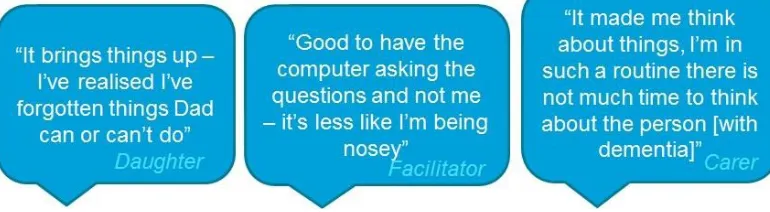
Figure 5: Some feedback from carers and facilitators.
Impact achieved
The main impact of this work is that the voices of people with dementia and their carers is seen as vital in the next phase of development. The researchers, developers and innovators involved in the project understood and valued the need to work ethically and responsibly with the people who would be the ultimate users of the system under development. This impact should not be underestimated as it is rare that designers engage with people with dementia.
Not making assumptions about people with dementia
Many developers make assumptions about the end users of their products. This is especially true when developing products in the dementia field, as researchers and developers often think it is impossible to get the view of people with dementia. By involving people with dementia throughout the design and development process, the researchers and innovators involved in the development of My Brain Book had their assumptions challenged, and will hopefully therefore produce a more relevant and useful product.
Focusing on the person
The design of the product will focus on the person rather than their problems. The personal profile section of My Brain Book has been given prominence because the developers found that it was really important to “get to know” the patient prior to being able to explore the areas to address more formally in a care plan.
Understanding the difficulties of using ICT
this role would work and observe the interactions between the person with dementia, their family/carer, the questions presented by the My Brain Book system and the facilitator.
The role of a human facilitator to help people to use the My Brain Book system and explore its features was found to be vital. People with dementia often find it difficult to ask for help, or to admit when they are finding things difficult.
An interesting finding from this project was that some people with dementia and carers found it easier to talk about their worries and concerns when the questions were presented on a computer screen than when asked the same questions by the NHS staff and professional carers.
Realising the financial value of working with people with dementia
In addition, all members of the partnership have really valued the input from people with dementia and their carers, and adjustments to both the product and the schedule for development have been made, based on the opinions of people with dementia.
The testimonies and stories of the people with dementia involved in this project will be vital in any fundraising activities for the further development of the My Brain Book
system.
Lessons learned
Lessons about engaging meaningfully with people with dementia
Involving people with dementia in a meaningful and responsible way is not easy, but the rewards are great in terms of better products and in sending out messages to society that people with dementia have a voice.
Ways to engage with and support people with dementia are continually being refined and we learnt a lot from this work. For example:
• Working with people with dementia in their own homes or in community settings familiar to them is vital to avoid stress and confusion.
• Developing creative ways of engaging people with dementia in the design process – for example running parallel sessions, and using paper prototypes and flash cards.
Lessons for the software developers and the development of My Brain Book
This project has been key in giving the software developers at IXICO an insight into the lives of people with dementia and their carers, and into how the NHS and other parties work to support people with dementia. This builds upon their scientific and product portfolio in the area of dementia and has given them a new focus on post-diagnosis support of people with dementia.
Some lessons learnt from the point of view of the software developers
• The need to be flexible with time-lines. Many developers have a strict timetable that they need to follow in order for products to be developed. However, following the initial workshops with people with dementia, the developers at IXICO realised that engaging with people with dementia takes time. The timelines and schedules for development were restructured to ensure that the results from the engagement activities were taken into account by the developers. IXICO staff learnt that listening to what people say may mean delays in the development schedule while products are refined.
• Keeping it simple. Following the workshops with people with dementia and carers, IXICO made the decision to focus on a few key features rather than trying to include a wide range of functionality. For most people with dementia, even the concept of a care plan was not something they were familiar with, let alone having had completed one for themselves. Developers decided to focus on doing this element well, as it was also something that could be evaluated more easily with participants. As with any “social networking” platform, making My Brain Book appealing to users is critical to winning them over; more advanced functionality can be added later.
• Not using traditional features or making assumptions. Throughout the process, working jointly with people with dementia has challenged the assumptions of families, ICT developers, and health and social care professionals. For example, the usefulness of supposedly ‘simple’ yes/no questions or 1-to-5 scales was challenged, and have been changed for future versions of the system. Changes have been made to language, data entry and design and will mean that the system has more chance of being accepted by users.
This project combines ICT interfaces with ‘human interfaces’ – ie trained facilitators and carers. There is much more work to be done in terms of developing the ICT tool and the role of the facilitators, and how both will be funded for people living with dementia.
A fully costed proposal for the next stage in development – including involving people with dementia and their families – has been devised.
In October 2014 IXICO presented a bid for phase 2 development funding of My Brain Book to the UK Small Business Research Initiative for Healthcare (SBRI Healthcare). Although they weren't successful on this occasion, IXICO and the HIN are still very committed to developing My Brain Book further, as the feedback received on the phase 1 prototype from people with dementia, carers and other stakeholders has been extremely encouraging, and they believe that My Brain Book could truly transform the experience of people living with dementia. My Brain Book has been showcased at several industry events in London, including Mindtech and SPARK.
The HIN and IXICO will be refining the business model over the first few months of 2015 whilst considering future funding and development options.
Funding: This case study was conducted for the “Responsible Industry” project. The “Responsible Industry” project has received funding from the European Union’s Seventh Framework Programme for research, technological development and demonstration under grant agreement no 609817.
Appendix: Relevance to the five RRI Horizon 2020
action lines
Definition of RRI from European Commission
(http://ec.europa.eu/programmes/horizon2020/en/h2020-section/science-and-society):
RRI is an inclusive approach to research and innovation (R&I), to ensure that societal actors work together during the whole research and innovation process. It aims to better align both the process and outcomes of R&I, with the values, needs and expectations of European society.
In general terms, RRI implies anticipating and assessing potential implications and societal expectations with regard to research and innovation. In practice, RRI consists of designing and implementing R&I policy that will:
1. engage society more broadly in its research and innovation activities,
2. increase access to scientific results,
3. ensure gender equality, in both the research process and research content,
4. take into account the ethical dimension, and
5. promote formal and informal science education.
This case study is relevant to all of these action lines in different ways:
1. Engage society more broadly in research and innovation activities:
The case study illustrates the involvement of some of the most marginalised people in society – ie people with dementia.
2. Increase access to scientific results
My Brain Book is being developed jointly with the Health Innovation Network (HIN). The HIN has a commitment to sharing results widely both for its members and the wider scientific community.
3. Ensure gender equality
Dementia is a condition that disproportionately affects women: two thirds of people living with dementia are women, and more than half of all family carers are women. We endeavoured to work within this demographic, but actually worked with more men with dementia due to recruitment issues. In future work, we will address this further. We also need to ensure that the product works for people from different cultural backgrounds.
Involving people with dementia in testing like this needs to be carried out in a sensitive and ethical way. People with dementia were recruited via existing services and were supported if there was any confusion or distress about the project. In addition, people with dementia were supported by a family or informal carer at all times. Documentation was provided in a simple form and the facilitators and researchers explained the process throughout. Safeguarding of data and privacy were paramount. Technical solutions ensured the data was inputd and stored securely.
5. Promote formal and information science education