225
Formulation and Evaluation of Paracetamol Suspension from
Trigonella
Foenum Graecum
Mucilage
V. Senthil*, D. Sripreethi
J.S.S. College of Pharmacy, Ooty – 643 001, JSS University, Mysore, Tamil Nadu, India.
*Corresponding author: [email protected]
ABSTRACT:
The purpose of the study is to formulate and evaluate a new, cheap and effective
natural suspending agent that can be used as an effective alternative for traditional
suspending agent. The study procedure involved extraction of suspending agent from
the Trigonella foenum graecum (fenugreek) seeds, solubility testing of the mucilage
obtained, phytochemical testing, determination of swelling index, preparation of
paracetamol suspension (blank), determination of sedimentation volume, measurement
of viscosity, and determination of flow rate. The study showed that the extraction of
fenugreek seeds had 8% w/w of suspending agent. The natural suspending agent was
soluble in hot water and cold water. The photochemical test showed contains
carbohydrates, alkaloids, proteins and amino acid. The swelling index was found to be
150%. The sedimentation volume by using fenugreek as a suspending agent shows
highest sedimentation volume then acacia, tragacanth and paracetamol alone.
Fenugreek can be employed as a stabilizer of choice and high viscosity is desired
especially in cosmetic, pharmaceutical and food industries.
Keywords: Paracetamol, suspension, suspending agent, Trigonella foenum-graecum, Mucilage
INTRODUCTION:
A pharmaceutical suspension thermodynamically unstable system it should stabilized
by adding suitable suspending agent [1, 9]. A number of plant gums have been used as
suspending agent in suspenstion formulations. There are reports about the successful
use of Albizia zygia [2]gum, Abelmoschus esculentus pods contain gum has been found
to have binding property for tablet preparation [3] Mucilage, Boswellia Serrata Roxb.
Gum in tablet formulation, Tamarind Seed [4] Polysaccharide Isapgol [5] mucilage as
suspending agent. Trigonella foenum-graecum was reported as binding agent [6], it is
226
frequently used in the preparation of pickles, curry powders, and pastes [7], and is
often encountered in the cuisine of the Indian subcontinent. The young leaves and
sprouts of fenugreek are eaten as greens, and the fresh or dried leaves are used to
flavor other dishes. The dried leaves (called kasturi methi) have a bitter taste and a
strong characteristic smell.
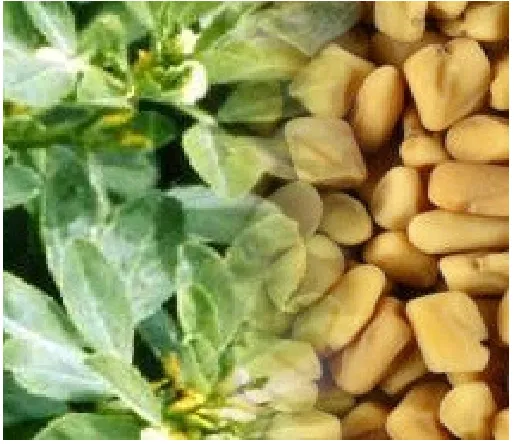
Figure 1:Seeds of Trigonella foenum graecum
OBJECTIVE:
The purpose of the study was to formulate and evaluate a new, effective natural
suspending agent that can be used as an effective alternative for the formulation of
pharmaceutical suspension.
MATERIALS AND METHODS:
Paracetamol (Sunij Pharmaceuticals, Ahmadabad), suspending agent isolated from
Trigonella foenum-graecum (Seed was collected from the local area of Erode, Tamilnadu,
South India), Distilled Water (vehicle), Tragacanth, Acacia, Benzoic acid (Loba Chemie,
Mumbai).
227
Dried pods of Trigonella foenum-graecum were segregated from pods. The brown
mucilagenous covering was isolated from the cleaned seeds by soaking them in warm
water. The mucilaginous portion were picked manually and crushed in mortar and
filtered through a muslin cloth and the extract was collected in beaker. Thrice the
volume of acetone was added and stirred. Then the purified product dried and powdered.
The powder was passed through sieve no. 74. It is stored in desiccators for further
evaluation.
Solubility:
Solubility of isolated mucilage was studied using different types of solvents like water,
alcohol acetone, Polyethylene Glycols, Propylene Glycol, Glycerin, Sorbitol, Ethyl
Alcohol, Methanol, Benzyl Alcohol, Isopropyl Alcohol, etc..
Percentage yield in 100 g seeds of Trigonella foenum graecum.
Phytochemical test:
The qualitative analysis was carried out to determine the compounds of selected
natural suspending agent to Trigonella foenum graecum.
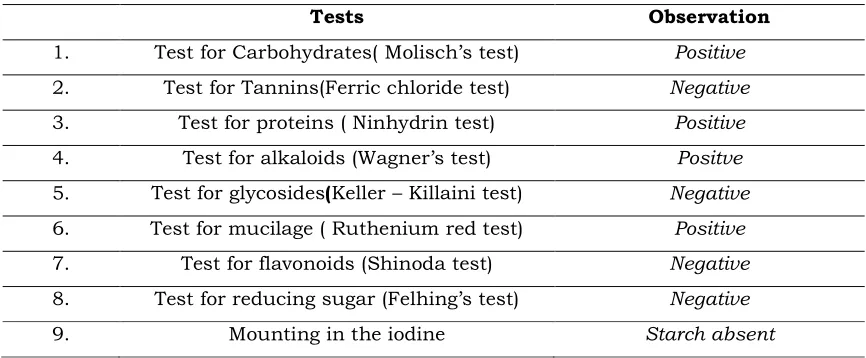
Table 1: Phytochemical screening of mucilage of Abelmoschus esculentus
Tests Observation
1. Test for Carbohydrates( Molisch’s test) Positive
2. Test for Tannins(Ferric chloride test) Negative
3. Test for proteins ( Ninhydrin test) Positive
4. Test for alkaloids (Wagner’s test) Positve
5. Test for glycosides(Keller – Killaini test) Negative 6. Test for mucilage ( Ruthenium red test) Positive
7. Test for flavonoids (Shinoda test) Negative
8. Test for reducing sugar (Felhing’s test) Negative
9. Mounting in the iodine Starch absent
228
The natural suspending agent 1g was taken in a China dish and then 10 ml of
distilled water was added and the mixture was shaken and allowed to stand for 1
hour. After 1 hour the remaining water in China dish was discarded and the weight
increase of the natural suspending agent was rated.
Swelling Index % (SI) = (W2 – W1/W1) x 100 --- (1)
W1= Weight of tablet at time ‘0’
W2= Weight of tablet at time‘t’
PREPARATION OF PARACETAMOL SUSPENSION
Procedure:
Compound tragacanth powder 2 g and 5 g of Paracetamol were triturated together
with 50 ml of water to form a smooth paste. The mixture was transferred into a 100
ml of measuring cylinder made up to volume with distilled water and then shaken
vigorously for 2 min. (thus making 2% w/v of the gum in the preparation). The
suspension contains 0.1% w/v benzoic acid as preservative. The procedure was
repeated using 3% w/v of compound tragacanth powder. The above procedure was
continued with acacia gum and Trigonella foenum graecum(seed).
DETERMINATION OF SEDIMENTATION VOLUME
Each suspension (50 ml) was stored in a 50 ml measuring cylinder for 4 days at 350C. Observations were made every 24 hr for 4 days. The sedimentation volume, F (%),
was then calculated using the following equation.
F = 100 Vu/Vo --- (2)
MEASUREMENT OF VISCOSITY USING BROOKFIELD VISCOMETER:
The viscosity (centipoise) of the sample was determined at 250C using Brookfield Synchro-electric viscometer; model LVF (Brookfield Laboratories, Massachusetts) at
100 RPM (spindle #4). All determinations were made in at least triplicate and the
results obtained are expressed as the mean values.
Viscosity of suspending agent η1 = η2X (ρ1t1 / ρ2t2) --- (3)
229
The time required for each suspension sample to flow through a 10 ml pipette was
determined and the apparent viscosity (ηα in mls-1) was calculated using the equation:
Volume of pipette (ml)
Flow rate ηα = --- --- (4)
Flow time (s)
RESULTS AND DISCUSSION:
Percentage yield of Trigonella foenum-graecumseeds contain 8% of suspending agent.
PHYTOCHEMICAL INVESTIGATION OF NATURAL SUSPENDING AGENT (Trigonella foenum graecum) (seed)
Preliminary tests were performed to confirm the nature of mucilage obtained. In view of
phytochemical test, Trigonella foenum graecum mucilage contains carbohydrates,
alkaloids and proteins.
SOLUBILITY STUDIES OF ISOLATED NATURAL SUSPENDING AGENT:
The result shows that the natural suspending agent is soluble in hot water, cold water
and insoluble in organic solvents.
SWELLING INDEX:
Swelling index of Trigonella foenum graecum = (25-10/10) x 100 =150%.
Result shows that the time increase, swelling index was increased, because weight gain
by mucilage was proportional to rate of hydration. The direct relationship was observed
between swelling index and mucilage concentration, as mucilage concentration increase
swelling index increased.
DETERMINATION OF SEDIMENTATION VOLUME
230
From the above result, the sedimentation volume by using Trigonella foenum- graecum
as suspending agent shows highest sedimentation volume than acacia, tragacanth and
paracetamol alone. The order of the sedimentation volume was found to be,
Trigonella foenum graecum>Tragacanth>Acacia>Paracetamol (Blank)
231
Determination of viscosity (3% w/v at 170C Temperature)
The preparations were assessed based on their sedimentation volume, viscosity and
flow rate. The result shows that the sedimentation volume was found to be directly
proportional to the concentration of the suspending agents and reverse in case of flow
rate. It reveals that obtained material have considerable viscosity it is applied to
increase the stability of prepared suspension.
232
At initial, the flow of shearing stress gets started slowly. While increasing shearing
stress, the rate of shear also increased suddenly. Hence it comes under the Pseudo
plastic flow type.
CONCLUSION:
The extracted mucilagenous substance of Trigonella foenum graecum is edible, has
the potential as a suspending agent even at lower concentration (1-3% w/v) and
can be used as a pharmaceutical adjuvant. The suspending ability of suspendants
were in the order of fenugreek> tragacanth> acacia. Thus fenugreek exhibits the
best suspentability of all the conventional suspending agents. Due its high
viscosity it can also employed especially in cosmetic, pharmaceutical and food
industries.
REFERENCES:
1. V. Senthil, R.Suresh Kumar, D. Nagasamy Venkatesh, G.N.K. Ganesh and N.
Jawahar Formulation And Evaluation of the Suspending Properties of Natural
Suspending Agent on Paracetamol Suspension Research J. Pharm. and Tech 2009; 2 (4): 719-722.
2. Mbang N, Femi-Oyewo, Musiliu O, AdedokunF and Taiwo O Olusoga.
“Evaluation of the suspending properties of Albizia zygia gum on sulphadimidine
suspension’, Trop J.of Pharm Research 2004; 3: 279-284.
3. Ravi Kumar, M. B. Patil, Sachin R. Patil, Mahesh S. Paschapur Evaluation of
Abelmoschus Esculentus Mucilage as Suspending Agent in Paracetamol
Suspension Int J. of Pharm Tech Research 2009; 1(3): 658-665.
4. R.Deveswaran, S.Bharath, Sharon Furtado, Sindhu Abraham, B.V.Basavaraj,
V.Madhavan Isolation and Evaluation of Tamarind Seed Polysaccharide as a
Natural Suspending Agent, Int J. of Pharm & Biol Arch 2010; 1(4): 360-363.
5. Deveswaran Rajamanikam, Sharon Furtado,Bharath Srinivasan,Sidhu
Abraham,Basavaraj Basappa Veerabhadriah, Madhavan Varadharajan, Isapgol
mucilage as a potential natural suspending agent, Int j. of Research in Ayur and
Pharmacy 2010; 1(2): 543-548.
6. Ofoefule S I, Chukwu A N, anayakoha A, Ebebe IM. “Application of Abelmoschus
esculentus in solid dosage forms 1: use as binder for poorly water soluble drug”,
233
7. Vidya Sabale, Vandana Patel, Archana Paranjape and Prafulla Sabale Isolation
of Fenugreek Seed Mucilage and Its Comparative Evaluation as a Binding Agent
with Standard index. Int J. of Pharm Res 2009; 1(4): 56-62.
8. J. Craig Richardson, Peter. W. Dettmar, Frank. C. Hampson. Oesophageal
bioadhesion of sodium alginate suspension: particle swelling and mucosal
retention. Eur. J. Pharm. Sci 2004; 3: 49-56.
9. Rishabha malviya, pranati srivastava and G.T. Kulkarni Applications of
Mucilage’s in Drug Delivery - A Review Advances in Biological Research 2011; 5
(1): 01-07.
10. Sandip P. Chaudhari, Pooja R. Patil, Tushar A. Deshmukh*, Bharat W. Tekade,
and Vijay R. Patil, Evaluation of binding properties of Boswellia Serrata Roxb.