Introduction
Travelling is an integral part of modern life, and enjoyed by most people. Unfortunately, travelling has risks associated with it, which are not always tolerated by all travellers.1,2 Travelling has an impact
on public health, as travellers are not only at risk of being exposed to various diseases and other adverse health outcomes inside and outside their home country, they can also import non-endemic diseases into their home country or export non-endemic diseases to the destination country.1,2,3
Statistics show that travelling, especially to international destinations, is on the increase, subsequently exposing
more people to travel-associated risks.1,3,4 The World Tourism
Organisation estimated 1.2 billion world-wide international tourist arrivals in 2015, which was a 4% increase from 2013.1 Similarly, an
increase in travelling to other destinations such as Asia and Africa, places more travellers at risk for various travel-related conditions,
and other tropical or vaccine-preventable infections.1,4 Data on
the actual risk for travellers are limited, as it is difficult to obtain an accurate numerator (number of cases of disease among travellers) and denominator (number of travellers overall or travellers to a specific destination who are susceptible to infection and illness).1
Risks associated with travelling include travel-related infections which, in most cases, can be prevented by vaccines, such as hepatitis, meningitis, yellow fever, and rabies. Other infections such as malaria, can be prevented by chemoprophylaxis,
combined with protective measures against mosquito bites.1
The practice of travel medicine and travellers’ health is a continuum and includes the pre-travel health and risk assessment, contingency planning during travel and taking care of the traveller
after travel (see Figure 1).1,5,6 A pre-travel risk assessment is
important to identify any hazards and risks, for which vaccination,
prophylaxis or any other intervention could be prescribed.1,5,6
During travel, precautionary measures should be followed to limit exposure to risks. On return, prophylactic medication must be completed, and if not well, travellers should immediately seek medical advice and inform the medical practitioner of recent travel.1,5,6 Travellers should be cognisant of the fact that no
intervention provides 100% protection.6 Morbidity and mortality
from diseases such as malaria, which may still occur post-travel, can be reduced significantly through early identification and
management post-travel.6 Similarly, the risk to the traveller’s
community from a disease such as dengue fever, can be reduced
through early recognition and management.6
Pre-travel preparation
As part of travel preparation and planning, travellers are advised to have a pre-travel risk assessment done, at least four to eight
weeks before travelling.1,3 This can be done by a travel medicine
provider at a travel clinic or through consultation with a healthcare provider (medical practitioner, nurse, pharmacist).
The purpose of a pre-travel risk assessment is to identify possible
risks and then aim to modify those risks with an intervention.5,6
Interventions include immunisation, prophylactic medication and taking the necessary clothing, equipment or devices (e.g. water filter or mosquito net) according to the health conditions and
climate of the travel destination.5,6 The past medical history and
current health status of the traveller should also be evaluated.5,6
Figure 1 illustrates the factors to consider when doing a pre-travel risk assessment, as part of the continuum of travel medicine.5,6
Travel medicine: An overview
Johanna C Meyer, BPharm, MSc(Med) Pharmacy, PhD(Pharmacy) Kalaba Nkonde, BPharm
Natalie Schellack, BCur, BPharm, PhD(Pharmacy) School of Pharmacy, Sefako Makgatho Health Sciences University
Correspondence to: Hannelie Meyer, e-mail: [email protected] Keywords: travel medicine, travel health, risk assessment, prophylaxis, immunisation
Abstract
Travelling, especially to international destinations, has increased significantly over the years and is expected to increase even more over the next two decades. As a result, more people are exposed to travel-related risks, influenced by the travel destination, itinerary, duration of the trip, and the medical history of the traveller. With adequate pre-travel planning and a timeous pre-travel risk assessment, measures can be taken to mitigate risks and safeguard the traveller’s health. This paper provides an overview of the continuum of travel medicine with a focus on interventions to prevent and manage travel-related infectious diseases, common conditions related to travel as well as specific travel needs and risks.
REVIEW
Measures against infectious diseases related
to travel
Immunisation
As part of the pre-travel risk assessment, immunisation which could protect the traveller against infectious diseases, should
be considered.1,3 The benefits of vaccination extend beyond the
travel period, and in many cases lifelong immunity is achieved.1
There is, however, not a vaccine available for every disease, neither does immunisation always offer 100% protection, nor lifelong
protection.1 Vaccination, though will greatly reduce the chances
of acquiring the disease and in many cases offer an extremely high level of protection.1,7 Conversely, it is important for travellers
to not only rely on immunisation for protection, but also to use other strategies and protective measures to safeguard their health (see Figure 2).1,3,7
The Centres for Disease Control and Prevention (CDC), recommend that all travellers should be up-to-date with routine vaccines before international travel, regardless of destination.1,3 One should
therefore verify whether the traveller is immune to diseases (e.g. measles) which are covered by routine vaccination, and whether the travellers’ routine vaccination, according to the South African
Expanded Programme on Immunisation (EPI) schedule, is up-to-date. 1,3
There are many vaccinations available for an extensive list of travel-related infectious diseases.8 The itinerary of the traveller
must therefore be reviewed to determine the need for specific vaccines based on the travel destination or purpose of the travel, particularly when travelling to unusual destinations.1,5 The
most commonly recommended vaccines for most destinations, according to risk of infection for the traveller, include vaccines against influenza, measles, hepatitis A and B, and pneumococcal
disease.1,5,6 The World Health Organization (WHO) International
Travel and Health website provides useful information for travellers about the main infectious disease threats, their geographical distribution and precautionary measures, including information
on vaccine-preventable diseases.8
Mandatory vaccinations to protect against diseases such as yellow fever, meningococcal disease and polio are required for specific
travel destinations.9,10 Requirements of different countries are
subject to change at any time. Travellers therefore need to verify the specific vaccination requirements with the relevant consulate
or embassy of the country they are travelling to.8 The latest
updates on mandatory vaccination, can be found on the WHO International Travel and Health website.8
Figure 1. Pre-travel risk assessment and decision-making within the continuum of travel medicine and travellers’ health5,6 Continuum of travel medicine and travellers’ health
PRE-TRAVEL Preventative measures
PRE-TRAVEL RISK ASSESSMENT AND RISK
MANAGEMENT
Hazards and potential exposure Host factors Intervention
Purpose of travel e.g. leisure, medical, work
Past medical history e.g. diabetes, asthma
Vaccination e.g yellow fever, hepatitis Travel destination and
hygiene standards
Activities during travel e.g. mountain
climbing
Special needs and concerns e.g.
pregnancy, age
Preventative measures e.g. clothing,
equipment Mode of travel e.g. air,
cruise Time of year, season
and climate
Current health status and medication
Chemo-prophylaxis e.g. malaria Type of
accommodation e.g. camping, luxury
Duration of trip - longer trips increased
risks
Allergies DURING TRAVEL
Contingency planning
Malaria
Malaria is a life-threatening disease, and transmitted to humans
by the bite of an infected female Anopheles mosquito.11,12 The
two most common species of the Plasmodium parasite that cause
malaria are Plasmodium falciparum and Plasmodium vivax.3,12
Sub-Saharan Africa has the largest morbidity and mortality associated with malaria.3 Malaria is characterised by fever and influenza-like
symptoms, including chills, headache, myalgia, and malaise; which can occur at intervals.3,12,13 Mosquitos breed in stagnant water and
thrive in tropical climates, hence travellers in these endemic areas
should take great care to prevent being bitten by mosquitoes.12,13
Malaria diagnostic tests are available in most health services in the endemic regions and in reference centres for infectious diseases in teaching hospitals.12,13
With malaria prevention, measures are taken against both the
mosquito vectors and against the malaria parasite.11 These
prevention measures, commonly referred to as the ‘A,B,C’ of malaria prevention, include vector control programmes by government health authorities, personal protection measures
against mosquito bites and the use of chemoprophylaxis11:
A = Awareness of malaria risk
B = Being aware of mosquito bites and peak biting times
C = Taking appropriate Chemoprophylaxis
D = Early Detection of infection
E = Getting Effective treatment
The WHO provides specific recommendations on malaria prevention based on the risk of contracting malaria, the prevailing species of malaria parasites in the area, the level and spread of drug resistance reported from the country, and the possible risk of serious side-effects resulting from the use of the various
prophylactic drugs.9 Prevention against Plasmodium falciparum
takes priority where both species occur, and unless the malaria risk is defined as due “exclusively” to a certain species, travellers may be at risk of any of the parasite species, including mixed infections. Currently, chloroquine and sulfadoxine-pyrimethamine are neither used in the prevention nor the treatment of falciparum malaria, as Plasmodium falciparum resistance is nearly universal.9
South Africa has a risk of Plasmodium falciparum malaria, in
combination with reported chloroquine and sulfadoxine– pyrimethamine resistance, throughout the year in low-altitude areas of Mpumalanga Province (including the Kruger National Park), Limpopo Province and north-eastern KwaZulu-Natal. The
risk is highest from October to May inclusive.9 Mosquito bite
prevention plus the following chemoprophylaxis options are recommended, and need to be tailored to the individual traveller (i.e. children and pregnancy/lactation)9,11,14:
• Mefloquine is the prophylactic agent of choice to prevent
infection from Plasmodium falciparum malaria because of
resistance to chloroquine.3,9,13 Mefloquine should be initiated
one to two weeks prior to entering an endemic area and continued as a once weekly dose for up to four weeks after
the last possible exposure.3,11,14 Mefloquine is generally well
tolerated by children and can be used for children over 3 months of age or with a weight above 5 kg.14 It is recommended
for all trimesters of pregnancy, should travel be necessary.14 In
general, mefloquine should be avoided in patients with mental health problems, considering its potential for neuropsychiatric side-effects.1
• Doxycycline for malaria prophylaxis should be started 24–48 hours before entering a malaria area and continued
thereafter for up to four weeks after exposure.3,11,14 Because
doxycycline is taken on a daily basis for an extended period
of time, compliance should be reiterated.3 Doxycycline can
only be used in children from the age of eight years and is contraindicated in pregnancy.12,14
• Atovaquone/proguanil is a combination drug and shows the
most promising safety profile compared to the other agents.11
Prophylactic treatment should be started one to two days before entering the malaria area, and taken daily for up to seven days after the last possible exposure.8,11 Paediatric tablets can
be given to children > 11 kg. Due to lack of data, atovaquone/ proguanil is contraindicated in pregnancy.12,14
Travel-associated sexually transmitted infections
Sexually transmitted infections (STIs) are diseases acquired through having unprotected sexual intercourse with infected
persons.15 One risk factor for contracting STIs is considered to
be travel because it disturbs individuals’ usual sexual practices through physical separation of partners and removal of inhibitions
that might hinder sexual freedom.15
A broad range of STIs can be acquired. Most STIs are asymptomatic,
making them difficult to control.16 Early detection and treatment
are therefore very important.1 The most common STIs are
unspecified urethritis, gonorrhoea, syphilis, chlamydia, genital ulcers, chancroid, acute HIV infection, acute pelvic inflammatory disease, epididymitis, cervicitis, balanitis, and unspecified
STIs.15 Prevention is the best way to decrease the morbidity and
mortality associated with STIs and consistent and proper use of
latex condoms during sexual activity is highly recommended.16
Evaluation, management, and follow-up of STIs should be based
on standard treatment guidelines and per individual case.1
Patient education and travel advice
REVIEW
Common conditions related to travel
Travellers’ diarrhoea
Travellers’ diarrhoea remains the most common medical problem
encountered by travellers.3,14 It is a clinical syndrome associated
with contaminated food or water that occurs during or shortly after travel, and is defined as three or more loose or liquid stools per day, or more frequently than is normal for the individual.3,17,18
Traditionally, Escherichia coli has been considered the major
causative pathogen for travellers’ diarrhoea.3,17,18
Risk of travellers’ diarrhoea should be reviewed and prophylaxis
offered if indicated.14,15 In most international travellers it is a
self-limiting illness.3 The duration of travellers’ diarrhoea can be
shortened with antibiotic treatment, of which fluoroquinolones
e.g. levofloxacin, ciprofloxacin are currently most effective.5
Azithromycin is considered the best alternative treatment for
travellers’ diarrhoea, and the drug of choice in children.5 Oral
rehydration solution should be used to treat dehydration.3
Altitude illness
Altitude illness may occur in individuals travelling to high altitude,
usually above 2 500 metres.19 This happens when ascending too
rapidly to high altitude, and the body is unable to adjust to the
reduced oxygen levels.16 If sensible precautionary measures are
taken, i.e. gradual ascent with regular rest days, most trips exposed to high altitude can be enjoyed safely.19
Conditions that are contraindicated for travel to high altitude include unstable angina, pulmonary hypertension, severe chronic
obstructive pulmonary disease (COPD) and sickle-cell anaemia.3
Altitude illness can present as acute mountain sickness (AMS) (headache, loss of appetite, nausea, vomiting, dizziness, sleep disturbance, fatigue and weakness), high altitude cerebral oedema (HACE) (confusion, altered consciousness and incoordination) and high altitude pulmonary oedema (HAPE) (increasing breathlessness, breathlessness lying flat, cough (initially dry then
wet), chest tightness and blood tinged sputum).19 When illness is
severe, these conditions are life-threatening and require urgent medical attention.19
If sensible precautionary measures are taken, i.e. gradual ascent with regular rest days, most trips exposed to high altitude can
be enjoyed safely.19 Preventative medication is not necessary for
low risk situations and may be considered in addition to gradual ascent in moderate or high risk situations, however, it is not a substitute for gradual ascent.19
Motion sickness
Motion sickness is attributed to physiological responses of the
body to motion by air, sea, train or car.1 Common symptoms of
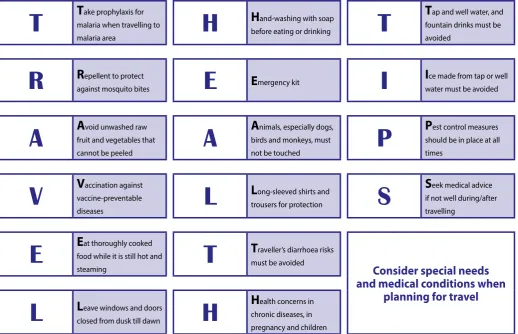
T
T
ake prophylaxis for malaria when travelling tomalaria area
H
H
and-washing with soapbefore eating or drinking
T
T
ap and well water, and fountain drinks must be avoidedR
R
epellent to protectagainst mosquito bites
E
E
mergency kitI
I
ce made from tap or well water must be avoidedA
A
void unwashed raw fruit and vegetables thatcannot be peeled
A
A
nimals, especially dogs, birds and monkeys, mustnot be touched
P
P
est control measures should be in place at all timesV
V
accination against vaccine-preventablediseases
L
L
ong-sleeved shirts andtrousers for protection
S
S
eek medical advice if not well during/after travellingE
E
at thoroughly cooked food while it is still hot andsteaming
T
T
raveller’s diarrhoea risks must be avoidedConsider special needs
and medical conditions when
planning for travel
L
L
eave windows and doorsclosed from dusk till dawn
H
H
ealth concerns in chronic diseases, in pregnancy and childrenmotion sickness include nausea, vomiting, increased salivation, warmth, dizziness, sweating, malaise, pallor, hyperventilation, feeling cold and clammy.1,20 Risk factors for motion sickness include
age, i.e. children 2–12 years, females i.e. pregnant, menstruating, or on hormone treatment, migraines, certain prescription medicines and environmental factors such as the type of motion and the
body position.1,20 Non-pharmacological prevention strategies for
motion sickness include the following1,20:
• Position to reduce motion or motion perception e.g. driving a vehicle instead of riding in it, sitting in the front seat of a car or bus, or sitting over the wing of an aircraft.
• Be aware of and avoid situations that would trigger symptoms. • Reduce sensory input by lying prone, shutting eyes, or looking
at the horizon.
• Maintain hydration by drinking water, eating small meals frequently, and limiting alcoholic and caffeinated beverages. • Adding distractions e.g. listen to music, use aromatherapy
scents such as mint or lavender.
• Flavoured lozenges, specifically ginger-flavoured, which may hasten gastric emptying and function as distractions.
• Use of acupressure or magnets, although scientific data on its efficacy is equivocal.
Antihistamines cinnarizine, promethazine and cyclizine are frequently used as prophylaxis for motion sickness, but cause
drowsiness as a side-effect.1,20 Non-sedating antihistamines are
also used for motion sickness, however, they appear to be less effective.1,20 Other drugs used for motion sickness are scopolamine
(hyoscine, most commonly administered as a transdermal patch applied every 72 hours), antidopaminergic drugs (such as prochlorperazine), metoclopramide, sympathomimetics, and
benzodiazepines.1,20 Travellers should understand the risks and
benefits of using antihistamines to prevent motion sickness and should consider trying the medication before travel to determine what effect it might have on them.1,20
Cinnarizine and promethazine are not recommended for use in
children under the age of five years.1 Cyclizine can be given to
those over the age of two years. Caution should be taken when using antihistamines to prevent motion sickness in children, as oversedation of young children with antihistamines can
be life-threatening.1 Some children present with paradoxical
agitation when given antihistamines, which necessitates a test
dose given at home before departure.1 Scopolamine can cause
dangerous adverse effects in children and should not be used.1
Prochlorperazine and metoclopramide should be used with caution in children.1
Jet lag
Jet lag is a temporary sleep disorder that occurs in air travellers who rapidly cross three, or more, time zones during their flight i.e.
when flying east to west or west to east.1,3 It happens subsequent
to the slow adjustment of the “body clock”, and the approximate 24 hour (circadian) rhythms it controls, to the time at the
destination.1,3 The daily rhythms and internal drive for sleep and
wakefulness are subsequently out of synchronisation.1,3
Jet-lagged travellers may experience poor sleep, poor performance in physical and mental tasks, negative subjective changes (e.g. fatigue, headache, irritability, stress, inability to concentrate, and depression), and gastrointestinal upsets and lack of interest in meals.1,3 Symptoms of jet lag gradually wear off as the body adapts
to the new time zone.1,3 Not all travellers react in the same way
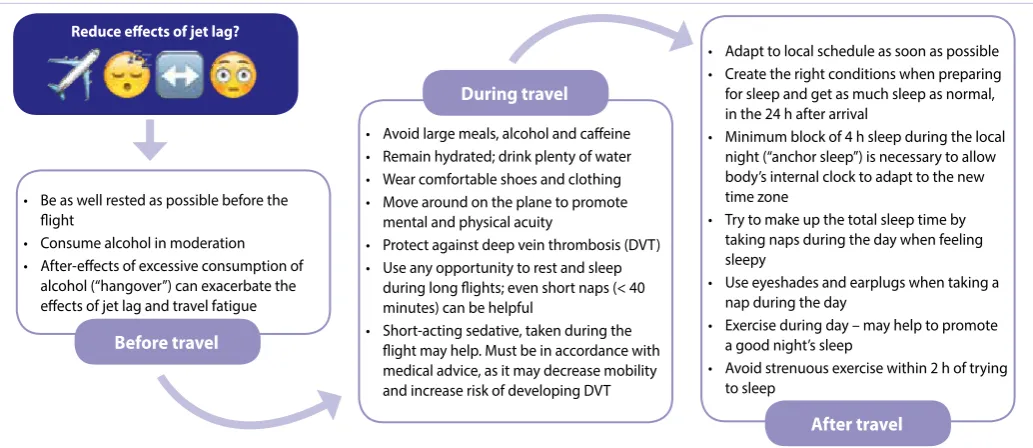
to time zone changes, hence, individuals should determine how their own bodies respond and develop their own coping strategy accordingly. Jet lag cannot be prevented but travellers can take a number of steps before, during and after their flight, to reduce its effects (see Figure 3).1,3
Specific travel needs and risks
Travel-related health risks are greater for certain groups of travellers, including pregnant women, infants and young children,
Figure 3. Measures taken to reduce the effects of jetlag1,3
• Be as well rested as possible before the flight
• Consume alcohol in moderation • After-effects of excessive consumption of
alcohol (“hangover”) can exacerbate the effects of jet lag and travel fatigue
• Avoid large meals, alcohol and caffeine • Remain hydrated; drink plenty of water • Wear comfortable shoes and clothing • Move around on the plane to promote
mental and physical acuity
• Protect against deep vein thrombosis (DVT) • Use any opportunity to rest and sleep
during long flights; even short naps (< 40 minutes) can be helpful
• Short-acting sedative, taken during the flight may help. Must be in accordance with medical advice, as it may decrease mobility and increase risk of developing DVT
• Adapt to local schedule as soon as possible • Create the right conditions when preparing for sleep and get as much sleep as normal, in the 24 h after arrival
• Minimum block of 4 h sleep during the local night (“anchor sleep”) is necessary to allow body’s internal clock to adapt to the new time zone
• Try to make up the total sleep time by taking naps during the day when feeling sleepy
• Use eyeshades and earplugs when taking a nap during the day
• Exercise during day – may help to promote a good night’s sleep
• Avoid strenuous exercise within 2 h of trying to sleep
Before travel
During travel
After travel Motion sickness
Motion sickness is attributed to physiological responses of the
body to motion by air, sea, train or car.1 Common symptoms of
motion sickness include nausea, vomiting, increased salivation, warmth, dizziness, sweating, malaise, pallor, hyperventilation, feeling cold and clammy.1,20 Risk factors for motion sickness include
age, i.e. children 2–12 years, females i.e. pregnant, menstruating, or on hormone treatment, migraines, certain prescription medicines and environmental factors such as the type of motion and the
body position.1,20 Non-pharmacological prevention strategies for
motion sickness include the following1,20:
• Position to reduce motion or motion perception e.g. driving a vehicle instead of riding in it, sitting in the front seat of a car or bus, or sitting over the wing of an aircraft.
• Be aware of and avoid situations that would trigger symptoms. • Reduce sensory input by lying prone, shutting eyes, or looking
at the horizon.
• Maintain hydration by drinking water, eating small meals frequently, and limiting alcoholic and caffeinated beverages. • Adding distractions e.g. listen to music, use aromatherapy
scents such as mint or lavender.
• Flavoured lozenges, specifically ginger-flavoured, which may hasten gastric emptying and function as distractions.
• Use of acupressure or magnets, although scientific data on its efficacy is equivocal.
Antihistamines cinnarizine, promethazine and cyclizine are frequently used as prophylaxis for motion sickness, but cause
drowsiness as a side-effect.1,20 Non-sedating antihistamines are
also used for motion sickness, however, they appear to be less effective.1,20 Other drugs used for motion sickness are scopolamine
(hyoscine, most commonly administered as a transdermal patch applied every 72 hours), antidopaminergic drugs (such as prochlorperazine), metoclopramide, sympathomimetics, and
benzodiazepines.1,20 Travellers should understand the risks and
benefits of using antihistamines to prevent motion sickness and should consider trying the medication before travel to determine what effect it might have on them.1,20
Cinnarizine and promethazine are not recommended for use in
children under the age of five years.1 Cyclizine can be given to
those over the age of two years. Caution should be taken when using antihistamines to prevent motion sickness in children, as oversedation of young children with antihistamines can
be life-threatening.1 Some children present with paradoxical
agitation when given antihistamines, which necessitates a test
dose given at home before departure.1 Scopolamine can cause
dangerous adverse effects in children and should not be used.1
Prochlorperazine and metoclopramide should be used with caution in children.1
Jet lag
Jet lag is a temporary sleep disorder that occurs in air travellers who rapidly cross three, or more, time zones during their flight i.e.
when flying east to west or west to east.1,3 It happens subsequent
to the slow adjustment of the “body clock” and the approximate 24 hour (circadian) rhythms it controls, to the time at the
destination.1,3 The daily rhythms and internal drive for sleep and
wakefulness are subsequently out of synchronisation.1,3
Jet-lagged travellers may experience poor sleep, poor performance in physical and mental tasks, negative subjective changes (e.g. fatigue, headache, irritability, stress, inability to concentrate, and depression), and gastrointestinal upsets and lack of interest in meals.1,3 Symptoms of jet lag gradually wear off as the body adapts
to the new time zone.1,3 Not all travellers react in the same way
to time zone changes, hence, individuals should determine how their own bodies respond and develop their own coping strategy accordingly. Jet lag cannot be prevented but travellers can take a number of steps before, during and after their flight, to reduce its effects (see Figure 3).1,3
Figure 3. Measures taken to reduce the effects of jetlag1,3 Reduce effects of jet lag?
• Be as well rested as possible before the flight
• Consume alcohol in moderation • After-effects of excessive consumption of
alcohol (“hangover”) can exacerbate the effects of jet lag and travel fatigue.
• Avoid large meals, alcohol and caffeine • Remain hydrated; drink plenty of water • Wear comfortable shoes and clothing • Move around on the plane to promote
mental and physical acuity
• Protect against deep vein thrombosis (DVT) • Use any opportunity to rest and sleep
during long flights; even short naps (< 40 minutes) can be helpful
• Short-acting sedative, taken during the flight may help. Must be in accordance with medical advice, as it may decrease mobility and increase risk of developing DVT
• Adapt to local schedule as soon as possible • Create the right conditions when preparing for sleep and get as much sleep as normal, in the 24 h after arrival
• Minimum block of 4 h sleep during the local night (“anchor sleep”) is necessary to allow body’s internal clock to adapt to the new time zone
• Try to make up the total sleep time by taking naps during the day when feeling sleepy
• Use eyeshades and earplugs when taking a nap during the day
• Exercise during day – may help to promote a good night’s sleep
• Avoid strenuous exercise within 2 h of trying to sleep.
Before travel
During travel
REVIEW
the elderly, immunocompromised people and those who have
pre-existing problems or a chronic illness.3 It is very important
that these travellers consult for a pre-travel risk assessment to adequately plan their trip considering their special needs.
Pregnancy
Most pregnant women are able to travel safely, with proper
pre-travel considerations and preparation.1,3 Pregnant travellers
should pack a travel health kit to cater for their individual needs, including, for example, all prescription medicines, prenatal vitamins, antiemetics, antacids.1
The majority of vaccines are safe in pregnancy, but the patient
should consult with a HCP before traveling.3,7 Hence, in specific
cases such as travelling to an endemic malaria area, the pregnant traveller should consider the risks of neither herself nor the baby being protected against a specific disease, and whether the trip could be postponed until after the birth.3,7 Travelling to,
and staying at destinations of high altitudes (over 3 000 m) or to
very remote areas is not advisable during pregnancy.3 Pregnant
travellers should also take cognisance of the fact that currently there is no vaccine or medicine to prevent Zika virus, which is of particular concern to pregnant women due to its link to birth defects.3
Infants and geriatrics
Infants and small children are negatively affected by the changes in cabin air pressure during flights. Air travel is therefore
contraindicated for infants < 48 hours old.3 Infants and small
children are furthermore sensitive to sudden changes in altitude as well as ultraviolet radiation.3 In terms of vaccination and malaria
prophylaxis, special needs and precautionary measures must be
observed.3 Compared to adults, infants and small children become
dehydrated more easily, especially when there is inadequate fluid
intake or loss of fluid due to vomiting and/or diarrhoea.3
Almost all factors contributing to travel risks are amplified in older adults, because of the decline in physiological functions with age,
making them more vulnerable to most travel-related hazards.2
Older adults often suffer from chronic diseases, which could be a major risk factor for them, especially when exacerbated by other factors.2 They are also at higher risk for adverse events, as they are
often more severely affected by jet lag and could be confused,
even in cases where mild cognitive impairment is present.2 Due
to these increased risks in the elderly, pre-travel planning and risk-assessment, is of utmost importance. Of special concern is the risk of venous thromboembolism, which is increased by any form of travel.2
Immunocompromised travellers
The immune status of the immunocompromised traveller is
of particular importance in terms of immunisation.1 Overall
considerations for vaccine recommendations, are the same as for
other travellers.1 Cognisance should be taken of the fact that the
immune response to vaccination may be less and live vaccines may give rise to disease. In addition, the risk of severe illness or
death from a vaccine-preventable disease must be weighed against potential adverse events from administering a live vaccine
to an immunocompromised patient.1 Should the traveller not be
able to tolerate recommended immunisations or prophylaxis, changing the planned itinerary or activities, or deferring the trip
should be considered.1
Chronic illnesses
Travelling for people with chronic illnesses can be stressful
due to the physical demands of travelling.1 Adequate travel
preparation is therefore important, especially in terms of appropriate immunisation, chronic medicines and any treatment
or precautionary measures required.1 Patients should consult with
their medical practitioner at least four to six weeks before their trip to ensure adequate time to respond to immunisation, try any required prophylactic medicines required and ensure that their chronic illness is well controlled.1 A summary of considerations for
travellers with special medical conditions is shown in Table I.1
Patients with chronic illness are advised to carry an official letter from their medical practitioner, certifying their existing medical condition/s, prescribed medication (including generic names),
and any equipment required to manage their condition.1,3 If
travelling by air or boat cruise, all medicines and medical supplies
e.g. ostomy bags, must be packed in carry-on luggage.1,3 Keep
all items in their original containers and carry a copy of the prescription. It is also advisable that travellers with chronic illnesses carry their medical information on his/her person e.g.
medical alert bracelet.1,3 Travellers with chronic illnesses should
ensure that they have sufficient quantities of medicines for the entire trip, plus an additional supply in case of unexpected delays.1
It is important to note that medicines should be taken based on elapsed time and not the time of day. Hence, scheduling when to take medicines during and after crossing time zones, should be
considered and planned for.1
Travellers taking chronic medication should be educated regarding possible drug interactions between their medicines and vaccines or any other medication prescribed for self-treatment
e.g. travellers’ diarrhoea, malaria prophylaxis.1 They should take
a medical kit with them, ensure that they keep well-hydrated during travelling, wear loose-fitting clothing and walk and stretch at regular intervals during long-distance travel.1
Venous thromboembolism and travel
Table I. Considerations for travellers with special medical conditions1
Condition General considerations
Cancer • Emphasise food and water precautions • Plan for self-management of dehydration • Take precaution for DVT
• Supplemental oxygen
• Wear loose-fitting clothing to prevent worsening of lymphoedema
• Check for medication restrictions in destination country, especially in the case of scheduled medicines for pain control Cardiovascular diseases • Plan for self-management of dehydration and volume overload; may include adjusting medication
• Supplemental oxygen • Take a copy of recent ECG with
• Take information card for pacemaker or other implanted devices • Take precautions for DVT
• Have sublingual nitroglycerine available in carry-on bag
• Mefloquine is not recommended in cardiac conduction abnormalities, particularly ventricular arrhythmias
• Self-monitoring and management of INR should be tailored to the individual patient needs by the medical practitioner Pulmonary diseases • Supplemental oxygen
• Arrange with airline to have other equipment on plane (e.g. nebuliser) • Plan for self-management of exacerbations (including COPD, asthma) • Take precautions for DVT
• Consider carrying a short course of antibiotics and corticosteroids for exacerbations, as appropriate and prescribed by medical practitioner
• Consider having an inhaler available in carry-on luggage, even if not routinely used Gastrointestinal diseases • Emphasise food and water precautions
• Consider prophylactic antibiotic for travellers’ diarrhoea, as prescribed by medical practitioner • Avoiding undercooked seafood, if cirrhosis, or heavy alcohol use
• May experience increased colostomy output during air travel
• Proton-pump inhibitors and H2 blockers may increase susceptibility to travellers’ diarrhoea • Use mefloquine with caution in any chronic liver disease
Renal failure and chronic renal
insufficiency • Emphasise food and water precautions• Dehydration can worsen renal function; plan for self-management • Arrange dialysis abroad, if needed
• Adjust medication for CrCl
• Know HIV, hepatitis C, and hepatitis B status
• Atovaquone-proguanil contraindicated when CrCl < 30 mL/min Diabetes mellitus • Plan for self-management of dehydration, diabetic foot, pressure sores
• Insulin adjustments
• Check blood glucose during air travel at intervals of 4–6-hours • Discuss changes in insulin regimen or oral agent with diabetes specialist
• Provide medical practitioner’s letter certifying the need for all equipment, including syringes, glucose meter, and supplies
• Keep insulin and all glucose meter supplies in carry-on luggage • Bring food and supplies needed to manage hypoglycaemia during travel • Check feet daily for pressure sores
Severe allergic reactions • Plan for managing allergic reaction while traveling and consider bringing a short course of corticosteroids for possible allergic reactions
• Should always carry injectable adrenaline and antihistamines on person • Observe peanut allergies – policies in place by many airlines
Mental health conditions • Check customs regulations for prohibited medication. Carry medication in original containers, with a letter from the prescribing physician
• Determine availability of culturally compatible mental health treatment in destination country for long-term travellers • For psychotropic medication refills, check with country’s embassy and reputable in-country pharmacy or healthcare
provider
• Investigate availability of laboratory facilities for measuring drug levels prior to travel. High ambient temperatures and increased sweating could lead to lithium toxicity, even on the same dose
• Mefloquine for malaria chemoprophylaxis is not recommended, due to potential neuropsychiatric side-effects • Currently sober patients with substance use disorders should consider seeking out Alcoholics Anonymous (AA) and
Narcotics Anonymous (NA) meetings, depending upon the length of stay and stability of their sobriety • Consider travel health and medical evacuation insurance that does not exclude psychiatric evacuations for
emergencies when abroad
REVIEW
As the name implies, the deep veins of the lower extremities constitute the most common sites of DVT, and there is a significant risk of acute PE secondary to such venous thrombi (i.e. roughly 50% in the case of DVT in the proximal lower extremity, and about
25% in the case of the distal lower extremities).21 Severe PE may
very well prove to be fatal. A DVT could, however, develop in the upper extremity as well.21
Evidence has shown that there is a definite association between long-haul flights, especially when they are more than eight hours
in duration, and venous thromboembolism (VTE).1,23 Interestingly
enough the risk for business class travellers is similar to that of travellers in the economy class cabin. 1,23 However, the risk is greater
for passengers who occupy the non-aisle seats. 1,23 This is due to
the fact that 75% of air-travel-associated episodes of VTE have been linked to immobility during long-distance flights.1,23 Similar
increased risk of VTE is seen with other modes of travel, such as car, bus, train, also suggesting that an increased risk of VTE is caused
by prolonged immobility rather than cabin environment.1
Conversely, the overall risk of developing air-travel-related VTE remains very low, but it has still been shown to be significantly higher than the same risk associated with the healthy, non-flying population. It could be said that an average long-haul flight of 12 hours in duration, with 400 passengers on board, will result in a
0.2% incidence rate of symptomatic VTE.21
Risk factors for VTE, including air travel
Travel-related VTE events are in most cases associated with pre-existing risk factors.1 Generally speaking the risk factors associated
with VTE may be classified as either being inherited (genetic) or acquired (environmental), with the majority of VTE-associated events being linked to a combination of the two. It should also be noted that these risk factors have an additive effect on an individual’s propensity for developing a VTE. Various genetic factors may predispose an individual to a state of so-called
hypercoagulability.21
Amongst the list of acquired risk factors, the following are especially important in the community (i.e. including regular air travellers) setting1,21,24:
Age and gender-related risk factors:
• Advancing age, from 40 years onwards
• Women’s health-related risks, which include the use of oral contraceptives and hormone-replacement therapy (HRT), as well as hypercoagulability of pregnancy and the puerperium • The male gender
• Frailty and immobility
Risk factors associated with medical illness:
• ‘Lifestyle diseases’ such as hypertension, diabetes mellitus and dyslipidaemia
• Stroke with paralysis or paresis, acute medical illness (including COPD, congestive cardiac failure and pneumonia), antiphospholipid syndrome, nephrotic syndrome and inflammatory bowel disease
• Patients with cardiac pacemakers
• Ambulatory patients with indwelling central venous catheters • Active cancer and certain cancer chemotherapeutic agents • Varicose veins and prior episodes of VTE
• Conditions that result in venous insufficiency
Surgical risk factors:
• Recent trauma resulting in compression of the veins or immobilisation, including plaster cast immobilisation
• Major surgery, especially the bigger orthopaedic procedures, such as hip and knee replacement surgery, and the surgical repair of hip fractures
Lifestyle-related risk factors:
• Smoking
• Obesity, especially when the body mass index (BMI) exceeds
30 kg/m2
• Conditions or circumstances that may result in prolonged immobility and venous stasis, such as long-distance travel (especially air travel), or being bedridden for more than three consecutive days
Additional risk factors for air travellers
The two major risk factors to consider are flight duration and the person’s height. Long-haul flights carry a greater risk due to the increased periods of immobility, especially single long-haul flights that last eight to ten hours or more. However, multiple long-haul flights of at least four hours in duration, or frequent flights of any duration that occur in short succession of one another, carry an increased risk for VTE as well. In terms of body height, persons who are at an increased risk are those who are shorter than 1.65 m, or taller than 1.85 m in height.21 This could be explained by
the fact that airplane seats cannot be adjusted to a person’s height. Shorter people may therefore experience seat-edge pressure to
the popliteal area while taller people may have less leg room.1
Furthermore, risk factors such as prolonged immobility, together with dehydration (with a resultant increase in blood viscosity) and hypobaric hypoxia (due to the pressurised passenger cabin) all increase the risk of VTE associated with air travel in patients who already have one or more of the underlying risk factors for VTE prior to their flight.23
VTE prophylaxis for air travellers
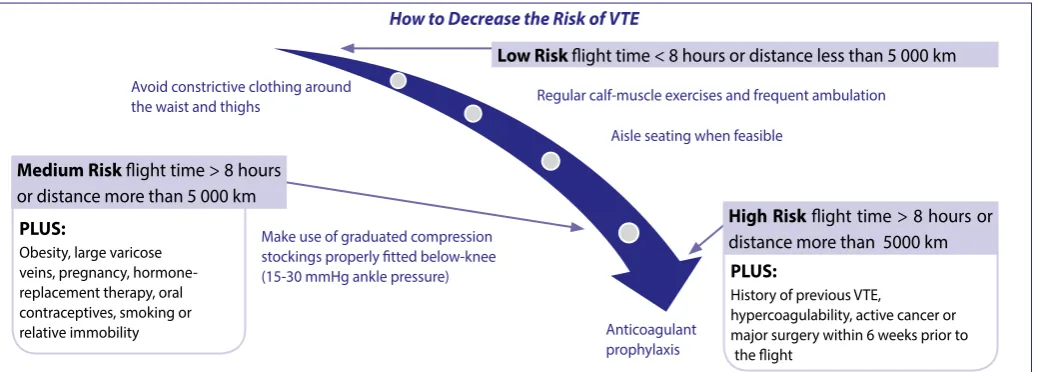
VTE associated with passenger air travel is an emerging public health concern, but there still seems to be a lack of sufficient evidence in terms of both definite causality and effective prophylactic measures. Yet, a few basic principles, based on current knowledge in this field, may be proposed for the prevention of VTE during air travel, as illustrated in Figure 4.1,21,23
Anticoagulant prophylaxis and treatment
Anticoagulants are most commonly used to treat DVT and PE.1
The most frequently used injectable drugs are unfractionated heparin, the newer forms of low molecular weight heparin such as enoxaparin and dalteparin, and fondaparinux (Factor Xa inhibitor). Oral anticoagulants include warfarin (vitamin K antagonist), dabigatran and rivaroxaban. Warfarin is known for its long list of potential drug interactions and the variation in individual responses to this drug may be substantial. Careful monitoring and good compliance are essential to the success of anticoagulant therapy with warfarin.1,22,25
Conclusion
Travelling has an impact on public health, given the millions of travellers across the globe, and risks associated with travelling. Most travel-related diseases can be prevented either through immunisation, chemoprophylaxis or behaviour change. Individual travellers are therefore strongly encouraged to consult a suitable travel clinic and healthcare professional, well in advance of undertaking their trip. An individual pre-travel risk assessment and guidance on suitable or required prophylactic measures, is essential for minimising travel-related risks. The traveller’s medical history, current illnesses and prescribed medication may significantly influence his/her prevention strategies, precautionary measures and/or travel plans.
References
1. Centres for Disease Control and Prevention (CDC). CDC Yellow Book 2018: Health Infor-mation for International Travel. 2018. [Homepage on the internet] c2017. Available from: https://wwwnc.cdc.gov/travel/yellowbook/2018/table-of-contents.
2. Charles G. The aging traveler. In: Williams BA, Chang A, Ahalt C, et al. (eds). Current Diag-nosis & Treatment: Geriatrics, 2nd Edition. New York, NY: McGraw-Hill; 2014. Available from: http://accessmedicine.mhmedical.com/content.aspx?bookid=953&Sectionid=53375643. 3. World Health Organization (WHO). International Travel and Health. Geneva: WHO, 2012.
Available from: http://www.who.int/ith/en/.
4. Slain D, Kincaid S. Travel Health. In: DiPiro JT, Talbert RL, Yee GC, Matzke GR, et al. (eds). Pharmacotherapy: A Pathophysiologic Approach, 10th Edition. New York, NY: McGraw-Hill; 2016.
5. Rose S, Keystone JS. International travel health guide 2016. Online Edition. [Homepage on
the internet] c2017. Available from: https://www.travmed.com/pages/health-guide. 6. Phelps K, Hassed C. Travel medicine - general practice: the integrative approach. Australia:
Elsevier Health Sciences, 2012.
7. Patient. Travel vaccinations. [Homepage on the internet] c2016. Available at: http://patient. info/health/travel-vaccinations-leaflet.
8. World Health Organization. International Travel and Health. [Homepage on the internet] c2017. Available from: http://www.who.int/ith/en/.
9. International Travel and Health. List of countries, territories and areas. Vaccination re-quirements and recommendations for international travellers, including yellow fever and malaria. 16 February 2017. Available from: http://www.who.int/ith/2017-ith-country-list. pdf?ua=1&ua=1&ua=1
10. International Travel and Health. Annex 1 – Update – as of 16 February 2017 Countries with risk of yellow fever transmission and countries requiring yellow fever vaccination. Avail-able from: http://www.who.int/ith/2017-ith-annex1.pdf?ua=1&ua=1&ua=1
11. National Department of Health (NDoH). Malaria prevention and treatment. [Homepage on the internet] c2017. Available from: http://www.health.gov.za/index.php/malaria-preven-tion-treatment-advice.
12. Burman D, Markle W. Travel Medicine. In: South-Paul JE, Matheny SC, Lewis EL. eds. Cur-rent Diagnosis & Treatment: Family Medicine, 4th Edition. New York, NY: McGraw-Hill; 2015. http://accessmedicine.mhmedical.com/content.aspx?bookid=1415&Section id=77060558.
13. Gallego V, Berberian G, Lloveras S, et al. The 2014 FIFA World Cup: Communicable dis-ease risks and advice for visitors to Brazil – A review from the Latin American Society for Travel Medicine (SLAMVI). Travel Med Infect Dis. 2014;12(3):208-218.Doi: 10.1016/j. tmaid.2014.04.004.
14. Blumberg LH. Recommendations for the treatment and prevention of malaria: Update for the 2015 season in South Africa. S Afr Med J. 2015;105(3):175-178. Doi:10.7196/SAMJ.9407. 15. Matteelli A, Schlagenhauf P, Carvalho A, et al. Travel-associated sexually transmitted in-fections: an observational cross-sectional study of the GeoSentinel surveillance database. Lancet Infect Dis. 2013;13:205-13. Doi: 10.1016/s1473-3099(12)70291-8.
16. Croughs M, Van Gompel A, De Boer E, et al. Sexual risk behavior of travelers who consulted a pretravel clinic. J Travel Med. 2008;15(1):6-12. Doi: 10.1111/j.1708-8305.2007.00160.x. 17. Steffen R, Hill DR, DuPont HL. Traveler’s diarrhea: a clinical review. JAMA. 2015;313:71-80. 18. Keystone JS, Kozarsky PE. Health Recommendations for International Travel. In: Kasper D,
Fauci A, Hauser S, et al. (eds). Harrison’s Principles of Internal Medicine, 19the Edition. New York, NY: McGraw-Hill; 2015.
19. National Travel Health Network and Centre (NaTHNaC). Travel Health PRO. [Homepage on the internet] c2017. Available from: https://travelhealthpro.org.uk/.
20. Priesol AJ. Motion sickness. In: Deschler DG, Sullivan DJ (Eds), UpToDate, Waltham, MA, 2017. Available from: https://www.uptodate.com/contents/motion-sickness?source=search_ result&search=motion%20sickness&selectedTitle=1~34.
21. Silverman D, Gendreau M. Medical issues associated with commercial flights. Lancet. 2008; 373:2067-77.
22. Bartholomew JR, Schaffer JL, McCormick GF. Air travel and venous thromboembolism: Minimizing the risk. Cleveland Clinical Journal of Medicine. 2011;78(2):111-122. 23. Brenner GM & Stevens CW. Pharmacology. 3rd ed. Philadelphia: Saunders Elsevier; 2010. 24. Goldhaber SZ. Risk factors for venous thromboembolism. J Am Coll Cardiol 2010; 56:1. 25. Schellack G (ed). Pharmacology in clinical practice: application made easy for nurses and
allied health professionals, 2nd Edition. Claremont: Juta and Company, Ltd; 2010.
Figure 4. Measures to decrease the risk of air-travel related thromboembolism1,23
Note: These measures are additive and relative to the degree of risk, and should be based on an individual risk assessment Source: Adapted from Silverman & Gendreau (2008)23
PLUS:
Obesity, large varicose veins, pregnancy, hormone-replacement therapy, oral contraceptives, smoking or relative immobility
PLUS:
History of previous VTE,
hypercoagulability, active cancer or major surgery within 6 weeks prior to
the flight
How to Decrease the Risk of VTE
Low Risk flight time < 8 hours or distance less than 5 000 km
High Risk flight time > 8 hours or distance more than 5000 km
Medium Risk flight time > 8 hours or distance more than 5 000 km
Regular calf-muscle exercises and frequent ambulation Avoid constrictive clothing around
the waist and thighs
Make use of graduated compression stockings properly fitted below-knee (15-30 mmHg ankle pressure)
Aisle seating when feasible