https://doi.org/10.5194/nhess-18-1201-2018 © Author(s) 2018. This work is distributed under the Creative Commons Attribution 4.0 License.
Analysis of a risk prevention document using dependability
techniques: a first step towards an effectiveness model
Laetitia Ferrer1, Corinne Curt1, and Jean-Marc Tacnet2 1Irstea, 13100 Aix-en-Provence, France
2Irstea, 38402 Grenoble, France
Correspondence:Laetitia Ferrer ([email protected])
Received: 28 August 2017 – Discussion started: 28 September 2017
Revised: 4 January 2018 – Accepted: 8 March 2018 – Published: 20 April 2018
Abstract.Major hazard prevention is a main challenge given that it is specifically based on information communicated to the public. In France, preventive information is notably pro-vided by way of local regulatory documents. Unfortunately, the law requires only few specifications concerning their con-tent; therefore one can question the impact on the general population relative to the way the document is concretely created. Ergo, the purpose of our work is to propose an ana-lytical methodology to evaluate preventive risk communica-tion document effectiveness. The methodology is based on dependability approaches and is applied in this paper to the Document d’Information Communal sur les Risques Majeurs (DICRIM; in English, Municipal Information Document on Major Risks). DICRIM has to be made by mayors and ad-dressed to the public to provide information on major haz-ards affecting their municipalities. An analysis of law com-pliance of the document is carried out thanks to the identifica-tion of regulatory detecidentifica-tion elements. These are applied to a database of 30 DICRIMs. This analysis leads to a discussion on points such as usefulness of the missing elements. Exter-nal and interExter-nal function aExter-nalysis permits the identification of the form and content requirements and service and tech-nical functions of the document and its components (here its sections). Their results are used to carry out an FMEA (fail-ure modes and effects analysis), which allows us to define the failure and to identify detection elements. This permits the evaluation of the effectiveness of form and content of each components of the document. The outputs are validated by experts from the different fields investigated. Those re-sults are obtained to build, in future works, a decision support model for the municipality (or specialised consulting firms) in charge of drawing up documents.
1 Introduction
Every year, major natural phenomena cause human and ma-terial disasters. Recently, in August 2016, an earthquake of magnitude 6.2 occurred in central Italy causing 250 deaths (Guha-Sapir et al., 2016). Two months before, in the same year, the River Seine in France rose to a height of 6.10 m and overflowed, causing four deaths, 24 injuries and a great amount of material damage throughout the different depart-ments (France territorial divisions) it traverses (CCR, 2016). Preventive policies have been implemented to manage the consequences of these disasters, such as the Hyogo or Sendai frameworks for action and disaster risk reduction (UNISDR, 2015). Transmission of preventive information is equally im-portant and has been the topic of current discussions high-lighted by recent scientific research (Newell et al., 2015) and international institutions as the United Nations (UNISDR, 2015; United Nations, 2006).
Figure 1.A prefect is a government representative of an area or department. It is thus responsible for public order, ensures the application of laws and regulations and verifies that the local authorities (town hall or EPCI, which is a grouping of town halls) respect them as well. French regulatory prevention information throughout the town include the Territorial Coherence Scheme (SCoT), Knowledge of Existing Data (PAC), Flood Risk Prevention Plan (PPRI), Development and Planning Guidelines (OAP), Local Urban Plan (PLU), Departmental Document on Major Risks (DDRM), Municipal Information Document on Major Risks (DICRIM), public notices, Purchaser Tenant Information (IAL), Family Plan for Safety Layout (PFMS), public meetings, floodmarks.
preventive information and its exchange between different stakeholders. For instance, in a town threatened by floods, the mayor must make a Flood Risk Prevention Plan (PPRI) that will be approved by the prefect. The general public will then give their opinion on this plan. Different forms of commu-nication (public meetings, information kits, posters, etc.) are used not only to provide safety recommendations, but also as means of increasing individual knowledge of risk.
This is highly significant as human behaviour during major disasters is influenced by their own knowledge of risk (Quar-antelli, 2008). Behaviours, however, are not necessarily the
studies and information. Indeed, to reduce the psychologi-cal discomfort caused by dissonance, individuals can act on their risk representations. Cognitive biases can then substi-tute knowledge of individual risk as an act of denial, which consists of trivialising the risk involved and is similar to a phenomenon of disbelief (Weiss et al., 2006) or an illusion of control, which consists of believing that one has control or influence over external or random events (Langer, 1975). Kahneman and Tversky (1979) and then Slovic et al. (1982) argue that people form their judgments heuristically, based on their experience, habits or cultural traditions that enable them to construct their cognitive risk representation. In fact, people fear that they will find themselves at risk and that their certainties will be undermined by reviewing information on the risks affecting their living environment.
Residents are also generally thought to have a lower hu-man vulnerability than tourists, as risk awareness is of-ten attributed to locally rooted populations (Hubert and De Vanssay, 2005). However, in the sample of victims of floods in the Mediterranean between 1998 and 2011 stud-ied by Boissier (2013), only 30 out of 203 people were non-residents. Even though several other factors may have to be considered, non-residents are less vulnerable because they are more prone to taking instructions, more respectful of evacuation orders and less inclined to take risks (going to school to pick up their children, saving personal belongings because less property needs to be saved, etc.) as pointed out by Ruin (2007).
However, communication on risk can become a form of indirect experience of risk and thus a way of strengthening its acceptance and stimulating the involvement of exposed populations (Festinger, 1957). If information is transmitted effectively people are more likely to adopt the relevant be-haviour during the event as they have better knowledge of the associated risks and the safety recommendations for bet-ter risk prevention (Siegrist and Cvetkovich, 2000). Results from a research study showed that information seeking by residents seems to coincide with the intention to take preven-tive actions (Kievik and Gutteling, 2011). Providing regula-tory information to residents can also lead to further infor-mation seeking (Hagemeier-Klose and Wagner, 2009). Con-sequently the public needs to be periodically informed about the hazards and the levels of risk they are exposed to and how their situation is changing (United Nations, 2006). For Paton et al. (2000) a major challenge for risk communica-tion is ensuring that the informacommunica-tion provided is meaningful to recipients and motivates risk acceptance.
Although significant progress has been made (recent de-crees, investment by towns, more resources, etc.), certain fea-tures regarding risk information remain disappointing such as the uneven implementation and lack of control over these resources (IRMa and al., 2015), different behavioural in-structions from one document to another even in reference to the same phenomenon (MAAF and MEDDE, 2013), in-complete information about the hazards to which the
popula-tion is exposed to and so on. It is also very difficult to estab-lish if preventive communication tools achieve their aim in terms of being appropriated by the local population (AFCPN, 2013). Do they empower residents with respect to knowledge on the risks that concern them? (Cutter, 1993; Lindell and Perry, 2004). To give answers it is important to analyse the effectiveness of such preventive communication tools. Effec-tiveness is the level of achievement of planned activities and achievement of expected results (Association Française de Normalisation, 2005). It refers to the concepts of function and dysfunction. Are those preventive tools made to be ef-fective in terms of appropriation by the general public? It is important to evaluate if those preventive communication tools reach their goal while conforming to the law.
To rise to this challenge, this article has the objective of proposing an approach capable of analysing preventive com-munication document, in terms of its effectiveness. The Mu-nicipal Information Document on Major Risks (DICRIM) is used as an application of the method proposed. The article is structured according to the following plan: it first exam-ines selected methods for analysing the effectiveness of com-munication tools, and it then presents the methodology pro-posed after which the results of its application to the DICRIM are shown. A part of these results is applied to a DICRIM database. The article ends with the conclusion and outlook.
2 State of the art
2.1 Effectiveness of risk prevention communication tools: case of the DICRIM
In this work, we focus on preventive risk communication in regulatory documents (informal communication by social networks and by word of mouth is not considered). In France, information and knowledge are communicated at a commu-nal level using different means (see Fig. 1). The mayor estab-lishes DICRIM intended for the public and based on informa-tion contained in DDRM (Departmental Document on Major Risks) made by the prefect. DDRM lists all essential infor-mation on major natural and technological risks at the level of their department. The municipalities required to produce a DICRIM are those in which there are Flood Risk Prevention Plans and/or those designated by prefectural decree because of their exposure to a particular major risk.
possible to refine the expertise of historical floods, but also to bring to life the memory of flood risk. With regard to resi-dents, there are two distinct obligations regarding preventive information established by the Environmental Code for pur-chasers and tenants: (i) information on the natural hazards af-fecting the property and (ii) information on claims resulting from recognised natural disasters which affected all or part of the property concerned. This Purchaser Tenant Informa-tion (IAL) concerns: all lessors or sellers and all types of real estate, regardless of the destination (seasonal rentals also; MEDDE, 2013). The general public is also encouraged to es-tablish their PFMS (family safety plan). PFMS is a booklet, provided by the state, which contains sections to filled out with relevant information by members of the public. For in-stance, the booklet helps them to check if they own all equip-ment needed in the event of a crisis.
We chose to focus on DICRIM because, in the French gov-ernment’s overall strategy for risk prevention, it is the main reference document in terms of informing the public about the natural and technological risks affecting the municipal territory. A brochure, film or advertisement may be just one part of a larger campaign to promote hazard readiness, and these items can and should be tested separately for efficacy and effectiveness prior to broad deployment (Sanquini et al., 2016).
In general, inequality in terms of updating the specifica-tions, transmitting the information and controlling the exe-cution of preventive information tools is observed and this concerns also the DICRIM. For example, in the Provence-Alpes-Côte-d’Azur (PACA) region, in December 2016 only half of the concerned communities had completed their DI-CRIM (ORRM, 2017). Furthermore, the French government gives indications only on the general content of the docu-ment without providing any standards notably regarding the design of the document. Works and writing guides have been proposed to develop DICRIMs (Clément et al., 2012; CEPRI, 2013; IRMa, 2014) but the justifications of these recommen-dations are not clearly and fully presented, which leads to disparate documents in terms of content and form. Given the large number of pages, the effectiveness of some DI-CRIM for residents is also questionable, as is that of other DICRIMs containing a reduced number of pages, which can lead to oversimplification and significant loss of information. Finally, there is no link between quantity and compliance of DICRIM (Douvinet et al., 2013); having a DICRIM does not mean that municipalities provide good preventive informa-tion under the law (Rode, 2012).
Effectiveness of some contents in DICRIM is also ques-tionable. For instance, the law required that DICRIMs in-clude maps regarding each hazard threatening the given town. Those maps are used to show to the population the hazard level geographically distributed on the territory of the municipality. But those maps are often similar to those elab-orated in PPRI, which is mainly used by experts, and they are not intended to be used for communicating with the general
public. Flood maps are frequently seen as an information tool rather than a communication tool (Meyer et al., 2012). That is why some maps are really difficult for some people to un-derstand, which is regrettable because it is maps which often first draw people’s attention before text. Some works propose an evaluation of flood maps effectiveness notably based on interviews or eye-tracking and also give recommendations that should be used for hazard maps contained in DICRIM (Meyer et al., 2012; Fuchs et al., 2009).
These elements must be considered carefully because in-dividual cognitive perception is reinforced or weakened by the form and content of the provided informative document; document communication is intended to be helpful and to result in the expected impact (Terpstra et al., 2009). Con-sequently, assessing the effectiveness (form and content) of such legislative texts and the information they contain is an indispensable challenge, especially since this issue has re-ceived very little attention and only a few works on it have been published to date (Gominet, 2007; Kellens et al., 2013).
2.2 Analysis of candidate methodologies
Evaluating effectiveness requires the development and im-provement of tools and methods. Such methods currently ex-ist in different fields of study: advertising, geography, engi-neering, etc. They apply to different systems and are gener-ally divided into three categories, according to if they (i) in-volve formal population samples, (ii) do not inin-volve formal population samples but rely on population perception assess-ments and (iii) are based on systemic analytical methods that do not involve the population.
persuasive effect on the population in the same way as ad-vertising seeks to convince a consumer. If the questionnaires are well constructed and the results interpreted rigourously, these methods allow for predicting the impact communica-tion should have with regard to the pre-test and make it pos-sible to modify the content prior to publication if necessary. In the post-test phase, they also allow for obtaining feed-back on communication, on what worked or not, and on any dysfunctions in order to consider possible corrections and a new communication campaign. However, these methods also have limitations. Indeed, they require building a represen-tative sample of the population that may require a budget and human and material resources which can be substantial. Moreover, these methods are focused on opinions and do not take into account factors that omit individuals’ feelings.
Some methods do not require the use of a representative sample of the population but need indirect intervention:
– advertising efficiency standards for establishing perfor-mance comparisons, without it being necessary to use population samples;
– “connected” methods to evaluate the effectiveness of advertising such as the association of flyers, websites and/or mobile applications (QR code, website audience, image recognition, etc.). For instance, a flyer can be ef-fective if it has a QR code. It is then possible to quan-tify the number of “flashes” generated by people with their smartphones to visit the associated websites. The higher the number of visits, the more effective the flyer is deemed to be;
– ROI detection elements (return on investment; click rates, visits, cookies, etc.) related to digital advertising and tracking capabilities. They allow, for example, mak-ing post-tests a certain time after the broadcast of a mes-sage to identify individuals previously exposed to it. Connected methods can be useful in that they will help to de-termine whether a risk communication document aroused the interest of people by convincing them, for example, to go to the associated websites (using QR code) for additional infor-mation after reading the document. These evaluation meth-ods also appear relevant to our case study mainly because they do not require the intervention of inhabitants to assess effectiveness. However, there is an indirect need for some people to be involved by clicking, using a QR code, etc. If it can give an idea of the effectiveness of risk communication documents, it does not provide information about the impact of its reading. Is the information really received? Although relevant in some aspects, these methods can be expensive.
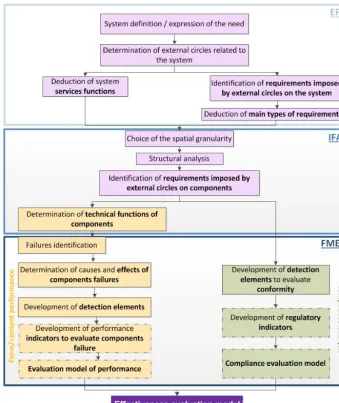
Figure 2.Global methodology proposed and followed to build the effectiveness evaluation model: detailed steps leading to the detection elements. Dotted boxes show future works.
3 Methodology proposed to assess effectiveness of a risk preventive communication document
The development of our method of analysis leads to various types of indicators (compliance, form, content), the combi-nation of which are used to assess the effectiveness of the document. This method is generic and applicable to different prevention documents. Figure 2 shows the global approach of the methodology we propose. In this paper, results of steps shown in solid line boxes are presented. Shown in the dotted lines are potential steps.
The method proposed considers functioning and non-functioning of the system, which here is the preventive com-munication document.
It consists of a functional analysis that fully describes the functions and relationships in the system and the require-ments it fulfils. A constraint is a “characteristic, effect or
design provision that has been made mandatory or prohib-ited for any reason whatsoever. No other possibility is left” (AFNOR, 2015).
Once the system is analysed, a change of the granularity of analysis is made to study the system components. Structural analysis allows us to determine those components. Three types of requirements are identified linked to those compo-nents. Regulatory requirements to evaluate conformity and form and content requirements to evaluate performance are identified.
docu-ments is made and used to apply those regulatory detection elements.
In parallel, functions of components are analysed. Func-tions are systematically characterised, classified and evalu-ated (AFNOR, 2014). For the functional analysis we chose to use the APTE method that can be applied successfully to our case study as a quick test, as proposed in Ghariani et al. (2014). It is one of the most used dependability methods, and it generally provides the basis for a subsequent FMEA which is the next part of the approach. FMEA is an induc-tive method of analysing potential failures in a system. It systematically considers each system component and its fail-ure modes one after another. Failfail-ures are identified by non-compliance with requirements. Detection elements are also listed, allowing the identification of this non-compliance. The results of FMEA analyses are presented with a diagram in a bow tie form, specifically designed for the type of system studied. The detection elements were formulated by making use of the literature. For example, the field of advertising was investigated for the part concerning the information on the preventive document’s form. FMEA results were validated by experts. When performing an FMEA in an industrial sit-uation, specialists in different areas are usually involved in completing and validating the results obtained. Several do-mains are necessary to evaluate the effectiveness of preven-tive from risk and communication, justifying the choice of experts made in our work. Three experts were asked to carry out this task: two have performed research in technological or natural risk analysis for more than 15 years, while the other is a communication expert with 27 years of experience in the field.
Later, detection elements will be formalised as indicators. An indicator is information that helps a stakeholder, an in-dividual or a community in general, to carry out the course of actions needed to achieve a goal or to evaluate a result (Bonnefous and Courtois 2001). It should be formalised in order to make its use repeatable and reproducible (Curt et al., 2010). Indicators will be aggregated with each other to form a model that will give an effectiveness score as out-put. Feedback will also be provided by the model to know which component must be improved and how. This effective-ness evaluation model will be a decision support model for the municipality (or specialised consulting firms) in charge of drawing up documents. This model will allow evaluating the effectiveness of existing preventive communication doc-uments and identifying the corrective actions needed to im-prove their effectiveness.
The results shown below stem from the application of the method to the case of the DICRIM. As said before, Indica-tors and the construction of an effectiveness evaluation model represent our future work for which only some examples will be shown in this paper.
4 System functions: external functional analysis The external functional analysis (EFA) consists of three main steps: system definition, expression of needs and determina-tion of reladetermina-tionships with external environments.
4.1 System definition and needs satisfied by the system: the DICRIM
First, it is necessary to define the system to be studied pre-cisely. Limits are defined, which then lead to considering the interactions with external environments. The system there-fore takes into account the document (DICRIM) with its con-tent, form and accessibility as described by the relevant law. The main headings and information to be included in the DICRIM are listed in the National Model for the application of the Environment Code (Articles L 125-2 and R 125-9 to R 125-27) issued by the MTES (Ministry of Ecological and Inclusive Transition; MEDDE, 2013). Our analysis will be based on it. It is a framework with general information that must be used both by mayor and prefect to create respec-tively DICRIM and DDRM. To do so they have to use this framework and to add specific information, for instance in-formation regarding the municipal territory for mayor. The major risks that must be dealt with in the DICRIM (accord-ing to their occurrence in the given town) are listed in the Na-tional Model and are as follows: floods, earthquakes, ground movements, forest fires, avalanches, storms/cyclones, vol-canic eruptions, dam failures, nuclear accidents, industrial accidents and mining risks. There is no legal obligation re-garding the document’s format. The DICRIM can be viewed by the public at the town hall as a paper document. In some towns it is also distributed directly to residents’ mailboxes or posted on the municipal website in digitised form or more rarely, in interactive format.
EFA is used for translating the need satisfied by the sys-tem. In general, this can be formalised into three questions applied here to the DICRIM: (1) to whom is the system ded-icated? To the general public; (2) on what does it act? On its knowledge and risk perception; (3) why is this action neces-sary? (that is to say, for what purpose does the system exist?) To provide notice on hazards and on how to act when phe-nomena occur.
4.2 External circles
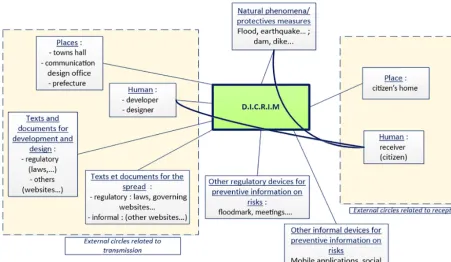
Figure 3.Functional block diagram for DICRIM.
and use by the public). Interactions between the system and its environment are visualised using a functional block dia-gram, in which we distinguish between contact relationships (represented by straight segments) and flows (represented by arcs). Interactions between an external circle and DICRIM identify requirements to be considered. Flow relationships between two external circles identify the service functions performed by the system. The quality of the external circles and the analysis of interactions determine the completeness of the functions obtained.
4.3 Service function and requirements
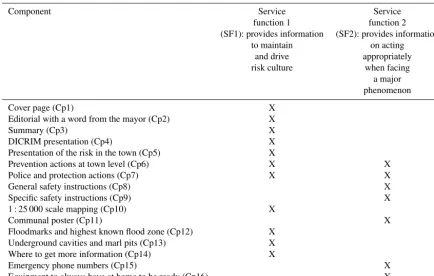
Service functions reflect the objective of a system. They are determined through relations between two external environ-ments. Figure 3 shows that the transmitter (developer and de-signer) is linked with the receiver through the document. This is the process involved in preventive information on hazards. With the DICRIM, the receiver, that is to say the public, is also related to major events when they happen. They must implement what they learn from the document in terms of behaviour. Two DICRIM Service functions are then deduced: 1. Service Function 1 (SF1): the DICRIM provides infor-mation on maintaining and nurturing risk culture (learn-ing in the operational phase). We consider that risk cul-ture is driven by four main elements: risk awareness, knowledge, acceptance and memory (Johnson, 1993; Terpstra, 2011).
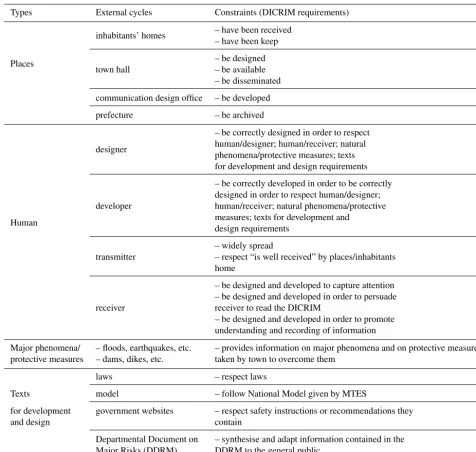
2. Service Function 2 (SF2): the DICRIM provides infor-mation on acting appropriately when facing a major event (decision-making in the operational phase). An appropriate action is based on the way the event is de-tected and good practices (Bostrom and Löfstedt, 2003). These are functions fulfilled by the document to satisfy the requirements exerted on it by external circles. Constraints are obtained by examining the external circles in interaction with the document. They are listed in Table 1 (extract).
Table 1.Extract of the table showing requirements features highlighted by the interactions between the DICRIM and external circles.
Types External cycles Constraints (DICRIM requirements)
Places
inhabitants’ homes – have been received – have been keep
town hall
– be designed – be available – be disseminated
communication design office – be developed
prefecture – be archived
Human
designer
– be correctly designed in order to respect human/designer; human/receiver; natural phenomena/protective measures; texts for development and design requirements
developer
– be correctly developed in order to be correctly designed in order to respect human/designer; human/receiver; natural phenomena/protective measures; texts for development and
design requirements
transmitter
– widely spread
– respect “is well received” by places/inhabitants home
receiver
– be designed and developed to capture attention – be designed and developed in order to persuade receiver to read the DICRIM
– be designed and developed in order to promote understanding and recording of information
Major phenomena/ – floods, earthquakes, etc. – provides information on major phenomena and on protective measures protective measures – dams, dikes, etc. taken by town to overcome them
laws – respect laws
Texts model – follow National Model given by MTES
for development government websites – respect safety instructions or recommendations they
and design contain
Departmental Document on – synthesise and adapt information contained in the Major Risks (DDRM) DDRM to the general public
5 Structural analysis of a DICRIM
Structural analysis aims at listing all the components of the system. The DICRIM components are identified in the Na-tional Model issued by the MTES. There are at least 16 com-ponents (see Table 2). More comcom-ponents are possible be-cause 6 among those 16 (nos. 5 to 10) are applied for each hazard encountered in the town studied; 10 elements out of 16 remaining do not depend on hazard. For instance, if two hazards threaten the town, there will be 22 compo-nents (10+2×6). That is why there can be as many as 76 (10+11×6) components in the DICRIM if a town faces all the hazards listed in the National Model (11 hazards; see Sect. 3.1).
Municipalities are free to introduce non-legislated compo-nents; however, we do not consider this option at this stage of the analysis.
– Component 1: cover page (Cp1),
– Component 2: editorial from the mayor (Cp2), – Component 3: summary (Cp3),
– Component 4: DICRIM presentation (Cp4),
– Component 5: presentation of the risk in the town (Cp5), – Component 6: prevention actions at town level (Cp6), – Component 7: police and protection actions (Cp7), – Component 8: general safety instructions (Cp8), – Component 9: specific safety instructions (Cp9), – Component 10: 1 : /25 000 scale mapping (Cp10), – Component 11: communal poster (Cp11),
– Component 12: floodmarks and highest known flood zone (Cp12),
– Component 13: underground caves and marl pits (Cp13),
– Component 14: where to get more information (Cp14), – Component 15: emergency phone numbers (Cp15), – Component 16: equipment to always have at home to be
ready (Cp16).
6 Compliance analysis and application to a DICRIM database
To analyse its effectiveness, first we must analyse the DI-CRIMs compliance with the law by identifying detection el-ements. This compliance analysis is based on the National Model. Indeed, it was mentioned earlier that government pro-vides some general instructions regarding the content of DI-CRIM in the form of a National Model. We can think that this model has been strongly discussed in order to make the DICRIM as effective as possible. The regulation detection elements we listed allow the evaluation of the presence or absence of the required content for each component. Com-ponents 5 to 10, associated with a given risk, are charac-terised by 19 detection elements, i.e. 19 elements required by law. With 10 risks being considered here, this gives a to-tal of 190 elements. Component 4 (DICRIM presentation) is characterised by six detection elements. Component 13, spe-cific to underground cavities and marl pits, is broken down into two detection elements. The remaining seven compo-nents, with only one detection element each, are not tailed in the National Model. Altogether, there are 205 de-tection elements to assess compliance with the law for a given DICRIM. Although this number is high, the production
of such detection elements simplifies their appropriation if compared to the approach of localising them in the National Model which is very long (360 pages) and where require-ments about DICRIM are mixed with DDRM regulations and general information about major hazards. Moreover, as they are presence/absence detection elements, the assessment of the whole sets of symptoms can be quite rapid (∼20 min per DICRIM). The completeness of the DICRIM can be verified thanks to them. In our future works they will be formalised as indicators and their number will be greatly reduced, but they can already be used as they are.
To apply those regulatory detection elements, we built a database of 30 DICRIMs. Those DICRIMs were all produced by towns located in the PACA region in France. The DI-CRIMs were retrieved from municipal websites. A variety of DICRIMs were collected, considering the number and types of hazards affecting the town, the size of the town in terms of number of inhabitants or surface area, the environment of the town (mountain, sea, countryside) and criteria regarding the document itself were also considered. The DICRIMs were more or less long (from 5 to 56 pages – not linked with the number of risks identified). The average length was 20 pages. Their dates of creation also varied with some more being re-cent than others (from 2003 to 2015).
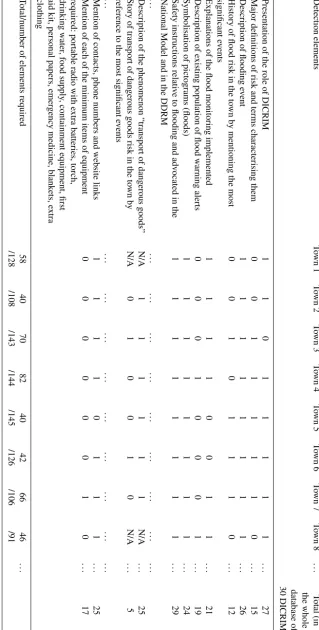
In this application, we wanted to analyse compliance with regulations for all the DICRIMs. We did not consider mining and volcanic risks because they did not threaten any of the 30 towns studied. That is why 199 detection elements were used during this analysis. Each DICRIM was carefully read and each detection element was assigned 1 if the element was present or 0 if it was absent. The abbreviation “NA” (not ap-plicable) was noted if the hazard asked by certain detection elements was absent in the town studied. The results are pre-sented in table form. An extract from this table is shown in Table 2.
Results highlight that there is a big lack of elements in all the DICRIM reports. In fact, the existing elements sel-dom reach half of the total requirements for each DICRIM. For instance, town 1 contains 58 of 128 required elements or town 5 only 40 of 125 required elements; ergo in both cases their number is less than half of the elements needed. In con-clusion, Table 9 shows that none of the DICRIMs exposed in the database fulfils the elements’ requirements.
Elements relative to hazard safety instructions were those which were most present in the DICRIM database. This ob-servation is interesting because safety instructions are ma-jor part of one of the two service functions of a DICRIM. The second most common element concerned “the presenta-tion of the DICRIM’s role”, an important means of capturing readers’ attention.
Table 3.Components and links with service functions.
Component Service Service
function 1 function 2
(SF1): provides information (SF2): provides information
to maintain on acting
and drive appropriately
risk culture when facing
a major phenomenon
Cover page (Cp1) X
Editorial with a word from the mayor (Cp2) X
Summary (Cp3) X
DICRIM presentation (Cp4) X
Presentation of the risk in the town (Cp5) X
Prevention actions at town level (Cp6) X X
Police and protection actions (Cp7) X X
General safety instructions (Cp8) X
Specific safety instructions (Cp9) X
1 : 25 000 scale mapping (Cp10) X
Communal poster (Cp11) X
Floodmarks and highest known flood zone (Cp12) X
Underground cavities and marl pits (Cp13) X
Where to get more information (Cp14) X
Emergency phone numbers (Cp15) X
Equipment to always have at home to be ready (Cp16) X
one of them was nearly always missing: the role of insur-ance for each hazard. Some people may think they will be better compensated in case of damage to their property than in reality. It can unconsciously lead them to prepare less for their own safety when a phenomenon is announced. “History of the risk concerned in the municipality by mentioning the most significant events” was also often absent, which was un-fortunate in our own opinion. Mentioning significant events is an effective way of raising public awareness of hazards that threaten the town in which they live. It is also a way of pre-serving memory of the risk. In addition, the lack of a hazard map and a list of equipment necessary in the case of an event is also unfortunate. Indeed, in our opinion they are also im-portant elements for both service functions of the DICRIM.
While these observations show interesting results, we must nevertheless remain cautious about such conclusions with re-gard to the number of DICRIMs contained in the database. This number is sufficient to test the feasibility of the method, but it will be necessary in future work to increase this number for further results.
The analysis of the presence of elements allows for eval-uating to what extent the DICRIM does or does not comply with the regulations. However, this does not necessarily pro-vide any conclusion on the effectiveness of these DICRIMs. The use of other non-regulatory, formal and substantive de-tection elements is necessary to achieve such a measure. Determination of formal and substantive detection elements
needs to identify functions and dysfunctions of components contained in a DICRIM.
7 Component functions: technical function analysis Technical function analysis (TFA) is the part of functional analysis that helps to formalise and study the architecture of the product (structural analysis) and identify the techni-cal functions of the components (AFNOR, 2015).
7.1 Component/service functions
Regulatory components identified during the structural anal-ysis (see Sect. 5) are listed in Table 3 according to whether they concern the first service function of the system (the global DICRIM) or the second, identified in Sect. 4.
seri-Table 4.List of technical functions identified for both service functions of DICRIM.
Service functions Technical functions
Provides information to maintain and drive risk culture – Provide information to raise awareness of risk (TF1) – Provide information to drive knowledge on risk (TF2) – Provide information to foster the acceptance of risk (TF3) – Provide information to maintain risk memory (TF4)
Provides information on the appropriate action to be taken – Provide information on event detection (TF5) when facing a major disaster – Make known the appropriate responses to adopt if a
phenomenon occurs (TF6)
Figure 4.Role of the entities of the method.
ously. CP7 also performs SF2 insofar as it also gives infor-mation on the way the public will be alerted if an adverse event occurs. Alerting is one of the factors that characterise SF2. Finally, all the components are linked to at least one service function.
7.2 Service functions/technical functions
Each component has one or more so-called technical func-tion. They contribute to the service functions. Moreover, they must satisfy the requirements. The technical functions are now linked to the different components: a component fulfils one or more technical functions (Fig. 4).
When establishing the two service functions of the DI-CRIM, some elements were identified as being linked to both of them. Here, these six identified elements are expressed in terms of six technical functions: four contribute to risk cul-ture and two concern actions during an event. The technical functions of all the components are listed in Table 4 accord-ing to whether they concern the first service function or the second.
The identification of the technical functions is based on the following elements. The “culture of risk” is not to be seen as a more or less distributed capital but rather as a prag-matic relationship to the danger that is constructed and re-built perpetually, sometimes individually, sometimes
Table 5.Membership of each technical function identified for the 16 components (TF1: provide information to raise awareness of risk; TF2: provide information to drive knowledge on risk; TF3: provide information to foster the acceptance of risk; TF4: provide information to maintain risk memory; TF5: provide information on event detection; TF6: make known the appropriate responses to adopt if a phenomenon occurs).
Component TF1 TF2 TF3 TF4 TF5 TF6
Cover page (Cp1) X X
Editorial with a word from the mayor (Cp2) X X
Summary (Cp3) X X X
DICRIM presentation (Cp4) X X X
Presentation of the risk in the town (Cp5) X X X X
Prevention actions at town level (Cp6) X X X X
Police and protection actions (Cp7) X X
General safety instructions (Cp8) X
Specific safety instructions (Cp9) X
1 : 25 000 scale mapping (Cp10) X X X
Communal poster (Cp11) X X
Floodmarks and highest known flood zone (Cp12) X X X
Underground cavities and marl pits (Cp13) X X X
Where to get more information (Cp14) X X X X X X
Emergency phone numbers (Cp15) X
Equipment to always have at home to be ready (Cp16) X
Figure 5.Factors influencing a decision-making process related to the occurrence of a phenomenon.
take refuge in the denial of that risk. Denial is part of a set of perception biases (overconfidence, anchoring effect, etc.), which can occur in the face of risk, running counter to the in-gredients described above and which build the culture of risk (awareness, knowledge, memory, acceptance; Fig. 5; Mary and Wildavsky, 1987).
In many cases, cognitive bias takes precedence over the rationality of a decision (Slovic, 1987). For example, over-confidence corresponds to an overestimation of ones knowl-edge or an underestimation of ones uncertainty (Kahneman and Tversky, 1979). Most of the time subjects underestimate
Table 6.An extract of some content requirements satisfied by each component.
Component/content requirements Persuade Capture Promote Promote
to read attention understanding understanding
the and recording and recording
DICRIM information to information to maintain and act appropriately
drive risk when facing a
culture major
phenomenon
Cover page (Cp1) X X X
Editorial with a word from the mayor (Cp2) X X X
Summary (Cp3) X X X
DICRIM presentation (Cp4) X X
Presentation of the risk in the town (Cp5) X X
Prevention actions at town level (Cp6) X X X
Police and protection actions (Cp7) X X X
General safety instructions (Cp8) X X
Specific safety instructions (Cp9) X X
1 : 25 000 scale mapping (Cp10) X X
Communal poster (Cp11) X X
Floodmarks and highest known flood zone (Cp12) X X
Underground cavities and marl pits (Cp13) X X
Where to get more information (Cp14) X X X
Emergency phone numbers (Cp15) X X
Equipment to always have at home to be ready (Cp16) X X
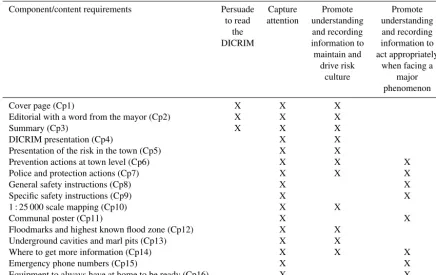
Table 5 represents the membership of each technical func-tion identified for the 16 DICRIM components. We consider that components 5 to 10 generally concern each hazard. Gen-erally, all the functions are covered by at least five compo-nents and all the compocompo-nents perform at least one function. TF1 is filled with 10 components. This is the function per-formed by most of the components. Cp14 satisfies all the technical functions of both service functions. Components 8, 9, 15 and 16 perform only one function (TF6). The pairs of components 1/2, 3/4 and 12/13 fulfil the same functions. Cp5 performs all the technical functions linked to SF1 and Cp11 the two technical functions of SF2.
The redundancy in this table is obvious. However, hasty conclusions must not be drawn from these observations. For example, although two components fulfil a single function, this does not mean that one duplicates another. Depending on the context, accomplishing the same function through sev-eral components may be beneficial. For example, awareness may not be immediate and require the addition of more in-formation. Conversely, too much knowledge can cause bore-dom for the reader who may lose interest in the topic or the whole component. A detailed analysis will be performed when identifying adjustments to the content of the regulatory document. This concerns a work in progress, not presented here, that consists of interviewing the population about their perception of the DICRIM.
7.3 Constraints satisfied by the components
Table 7.Functional analysis table for Component 2.
Component 2 Service function Technical function Constraints
Editorial with a word Provides information to maintain – Provide information to raise Form:
from the mayor and nurture the culture awareness of risk – To be designed of risk – Provide information to foster the and developed to acceptance of risk capture attention
– To be designed and developed in order to persuade the receiver to read the DICRIM Content:
– To be designed and developed in order to persuade the receiver to read the DICRIM – To be designed and developed in order to reassure the reader – Introduce DICRIM function
– Explain importance of risk management
Table 8.Example of an indicator grid for evaluating the length of the editorial component.
Name IC6 – component length
Definition the aim is to evaluate the length of the whole editorial component
Scale and references
10: 1/8 or 1/4 page and the font is of standard size (usually 12) 6: 1/2 page and font size is standard
5: 1/8 or 1/4 page and the font is greater than 14
3: the font is greater than 14 and the length is greater than 1/4 page 2:>1/2 page or the font is less than 10
Place characteristic at the beginning of the DICRIM – on the page where the editorial is located
develop the DICRIM. Each component must capture atten-tion to be read. The same type of table was produced for form requirements (six columns).
7.4 Functional analysis table
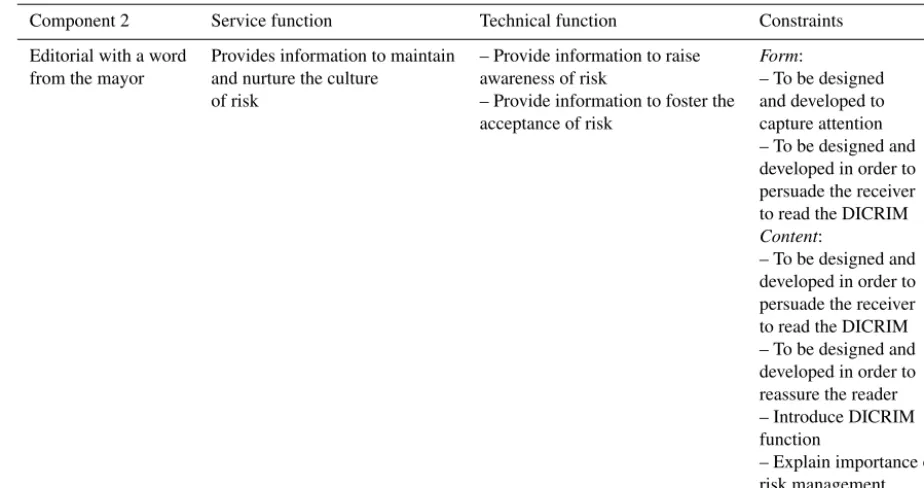
For each component, the technical functions along with the service function they refer to and the requirements are then gathered in functional analysis tables. Table 7, showing the component “editorial with a word from the mayor”, is an ex-ample.
8 Causes, effects and detection of components failures The results produced by the functional analysis form the ba-sis for performing an FMEA. The FMEA is carried out for
Figure 6.Diagram with a bow tie showing FMEA for Component 2.
Figure 7.Example of the functioning of the future effectiveness model by indicator aggregation.
The results of the FMEA are presented in a diagram with a bow tie form. Figure 6 presents an example for the editorial component.
An editorial with a word from the mayor is considered a failure when its functions “provide information to raise awareness of risk” and “provide information to foster the ac-ceptance of risk” are faulty. It occurs when form and content of the editorial are not complied with requirements. To detect those failures form detection elements and content detection elements are used to evaluate the typography, the text length, the vocabulary, etc. Those failures can have some negative ef-fects. For instance, as the editorial is not effective, the reader does not view this section and might not want to continue to
read the DICRIM or even not accept the risks present on its town.
understand-ing and answerunderstand-ing volunteers’ questions on different types of maps, Palka (2015), for example, showed that the most use-ful maps are characterised by a quantity of information con-tained in them. The location of the fixations also allowed the author to define which areas of the map attract the eye with their graphic or informational characteristics. This knowl-edge from different fields will in fact be exploited in more detail in our future work during the development of the indi-cators.
For form, 13 generic detection elements were identified. They are used for one or some of the 16 DICRIM compo-nents according to what they allow one to determine. The same approach is followed for the seven content detection elements identified. In future works, content and form detec-tion elements will be formalised as indicators and presented in a grid form. An example of those indicators is shown in Table 8. It allows for evaluating the length of the com-ponent, here the editorial comcom-ponent, regarding number of pages combined with the font size. This is one of the impor-tant features to take into account for evaluating its effective-ness.
Then all those form and content indicators will be ag-gregated to form an effectiveness detection model. Several aggregation operators can be used such as weighted aver-age, minimal, etc. In Fig. 7, an example of the effectiveness model is showed. It contains indicators with their hypotheti-cal weights, used to demonstrate how a “bad” score becomes useful for detecting where feedback must be applied to im-prove a given component’s overall score.
9 Conclusion and outlook
Providing information and communication is essential for raising awareness of risks and disseminating knowledge on their nature and on how to act if a phenomenon occurs. That is why it is crucial to ensure that relevant information and communication is available to those who would use them. It allows decisions to be taken without bias. However, few works currently propose to evaluate their effectiveness. Ex-isting works often require a sample population or are expen-sive to perform. According to the means available, such stud-ies are not always possible. Furthermore, these methods are specific to the sites where they must be applied and are not necessarily generic. In this study we proposed an analytical methodology that allows identifying preventive communica-tion documents funccommunica-tions and dysfunccommunica-tions. It lies at the in-terface between several existing approaches, from different fields (engineering, advertising, etc.). This method was ap-plied to the DICRIM, one of the main French documents used to inform the general public about risk at a communal level. Results included the identification of regulatory detec-tion elements. These detecdetec-tion elements were then used to analyse existing documents and show their degree of confor-mity with the regulations. A challenge in the future will be to
analyse whether component redundancy is strictly necessary (Table 5). Indeed, we observed that some components ful-filled the same function, raising doubts as to their usefulness. Likewise, the application of the database showed that several elements demanded by the regulations were systematically missing from the DICRIMs studied. This also led to ques-tioning the need for these elements to fulfil the objectives of the document.
The approach is generic and could be applied to other doc-uments, notably for preventive risk management such as the family safety plan intended to help families. Families have to complete it themselves in order to prepare for the pos-sible occurrence of an event. Our approach and its general procedure (EFA and FMEA), service functions, types of re-quirements, form requirements and some of regulatory and content requirements may be applied to the case of family safety plans.
This study is the first step towards a decision support model for the municipality (or specialised consulting firms) in charge of drawing up documents. This model will allow for the evaluation of the effectiveness of existing preventive communication documents and identification of the correc-tive actions needed to improve their effeccorrec-tiveness. In the next step (not presented here), the causes and effects identified with the FMEA method will be used to define models for the quantitative assessment of DICRIM efficiency. Detection elements will become formalised indicators, which will be used as input data in these models. This is an essential step towards the overall goal. Its results are crucial for ensuring the basis of models and for structuring them.
Appendix A: Table of abbreviations in the article Abbreviation Meaning
DICRIM Document d’Information Communal sur les Risques Majeurs (Municipal Information Document on Major Risks)
DDRM Document départemental sur les risques majeurs (Departmental Document on Major Risks) EFA external functional analysis
FMEA failure modes and effects analysis
IAL Information Acquéreur Locataire
(Purchaser Tenant Information)
MTES Ministère de la Transition Ecologique et Solidaire (Ministry of Ecological and Inclusive Transition) OAP Orientations d’Aménagement et de Programmation
(Development and Planning Guidelines)
PAC Porté à Connaissance
(Knowledge of existing data) PFMS Plan Famillial de Mise en Sûreté
(Family Plan for Safety Layout)
PPRI Plan de prévention des risques inondations (Flood Risk Prevention Plan)
SCoT Schéma de Cohérence Territoriale (Territorial Coherence Scheme)
SF1 Service Function 1
SF2 Service Function 2
Supplement. The supplement related to this article is available online at: https://doi.org/10.5194/nhess-18-1201-2018-supplement.
Competing interests. The authors declare that they have no conflict of interest.
Acknowledgements. We thank the PACA region for helping fund the thesis from which the research work presented here is derived.
Edited by: Sven Fuchs
Reviewed by: Johnny Douvinet and Kamal Serrhini
References
AFCPN: Réflexion sur l’information préventive sur les risques na-turels, 2013.
AFNOR: NF EN 1325 (2014-04-26), 2014. AFNOR: NF EN ISO 9000 (2015-10-15), 2015.
Association Française de Normalisation: Lexique, définitions nor-malisées, NF EN ISO 9000, afnor.fr, 2005.
Bambara, G., Peyras, L., Felix, H., and Serre, D.: Developing a functional model for cities impacted by a natural hazard: applica-tion to a city affected by flooding, Nat. Hazards Earth Syst. Sci., 15, 603–615, https://doi.org/10.5194/nhess-15-603-2015, 2015. Boissier, L.:La mortalité liée aux crues torrentielles dans le Sud
de la France: une approche de la vulnérabilité humaine face à l’inondation, Université Paul Valéry – Montpellier III, Montpel-lier, 2013.
Bostrom, A. and Löfstedt, R. E.: Communicating Risk: Wireless and Hardwired, Risk Analysis, 23, 241–248, 2003.
CEPRI: Sensibiliser les populations exposées au risque d’inondation Comprendre les mécanismes du changement de la perception et du comportement Les collectivités en Europe pour la prévention du risque d’inondation, in: Les guides du CEPRI, http://www.cepri.fr (last access: 17 October 2017), 2013.
CCR: Inondations de mai–juin 2016 en France: Modélisation de l’aléa et des dommages, Report of 28 June 2016, https://www. ccr.fr/-/inondations-de-mai-juin-2016 (last access: April 2018), 2016.
Chesneau, E.: Modèle d’amélioration automatique des contrastes de couleur en cartographie – Application aux Cartes de risque, Université de Marne-la-Vallée, Marne-la-Vallée, 2006.
Clément, A., Chesneau, E., Celle, G., Giannoccaro, F., Fournel, F., and Paduano, L.: Elaboration d’un Document d’Information Communal sur les Risques Majeurs interactif: Guide de recom-mandations, in: Les dossiers de l’Institut des Risques Majeurs, IRMa Institute, Grenoble, 2012.
Curt, C., Peyras, L., and Boissier, D.: A knowledge formalisation and aggregation-based method for the assessment of dam perfor-mance, Comput.-aided Civ. Infrastruct. Eng., 25, 171–183, 2010. Cutter, S.: Living with risk: the geography of technological hazards,
Edward Arnold, London, p. 214, 1993.
Defossez, S.: Réglementation vs conscience du risque dans le pro-cessus de gestion individuelle du risque inondation, Géocar-refour, 86, 281–290, 2012.
Douvinet, J., Pallares, R., Genre-Grandpierre, C., Gralepois, M., Rode, S., and Servain-Courant, S.: L’information sur les risques majeurs à l’échelle communale: Occurrence et facteurs explicatifs du DICRIM, un outil préventif sous-utilisé, cybergeo, no. Espace, société, territoire, document 658, https://doi.org/10.4000/cybergeo.26112, 2013.
Duaut, M. and Luneau, A.: Le risque et les AllevardinsSavoirs et représentations sur le milieu allevardin, université Pierre Mendès France, http://www.irmagrenoble.com/PDF/actualite/ articles/rapport1_juin2008_annexes.pdf (last access: 28 Septem-ber 2017), 2008.
Fabrikant, S. I., Hespanha, S. R., and Hegarty, M.: Cognitively in-spired and perceptually salient graphic displays for efficient spa-tial inference making, Ann. Assoc. Am. Geogr., 1, 13–29, 2010. Festinger, L.: A theory of cognitive dissonance, Stanford University
Press, Standford, 291 pp., 1957.
Fuchs, S., Spachinger, K., Dorner, W., Rochman, J., and Serrhini, K.: Evaluating cartographic design in flood risk mapping, Envi-ron. Hazards, 8, 52–70, 2009.
Ghariani, N., Curt, C., and Tacnet, J. M.: Analyse du fonction-nement et des dysfonctionfonction-nements des dispositifs de protection contre les crues torrentielles, in: Fiabilité des matériaux et des structures – Analyse de risques et fiabilité des systèmes dans leur environnement, edited by; Curt, C., Peyras, L., Baroth, J., and Chateauneuf, A., ISTE Editions, London, UK, 47–59, 2014. Girard, C.: Diagnostic des Dysfonctionnements des Plans de
Sec-ours pour la Gestion des Risques majeurs, Ecole Nationale supérieure des Mines de Saint-Etienne, Saint-Etienne 2014. Gominet, S.: Les habitants de la commune de la Terrasse (Isère)
connaissent – ils les risques auxquels ils sont exposés?, mars, http://www.irma-grenoble.com/01actualite/01articles_afficher. php?id_actualite=172 (last access: 14 July 2017), 2007. Gominet, S.: Deux enquêtes auprès de la population de
Pont-de-Claix pour estimer l’efficacité du DICRIM, novembre, http://www.irma-grenoble.com/01actualite/01articles_afficher. php?id_actualite=418 (last access: 14 July 2017), 2010. Guha-Sapir, D., Hoyois, P., and Below, R.: Annual Disaster
Statis-tical Review2016: The Numbers and Trends, CRED, Brussels, 2016.
Hagemeier-Klose, M. and Wagner, K.: Evaluation of flood hazard maps in print and web mapping services as information tools in flood risk communication, Nat. Hazards Earth Syst. Sci., 9, 563– 574, https://doi.org/10.5194/nhess-9-563-2009, 2009.
Hubert, G. and De Vanssay, B.: Le risque d’inondation et la car-tographie réglementaire. Analyse de l’efficacité, des impacts et de l’appropriation locale de la politique de prévention, in: Pro-gramme Evaluation et Prise en compte des Risques naturels et technologiques, Ministère de l’Ecologie et du Développement Durable, Paris, 188 pp., 2005.
IRMa: Information préventive des populations – Mémento du Maire et des élus locaux, http://www.mementodumaire.net (last access: 14 July 2017), 2014.
IRMa, PARN, Pacte, and Région Rhône-Alpes: L’information préventive sur les risques naturels, au-delà du réglementaire, quelles approches alternatives en Rhône-Alpes, Grenoble, 2015. Johnson, B. B.: Advancing understanding of knowledge’s role in
lay risk perception, Health Safety, 189 pp., 1993.
MITLi-brairies, http://hdl.handle.net/1721.1/68590 (last access: 3 Jan-uary 2018), 2012.
Kahneman, D. and Tversky, A.: Prospect Theory: An Analysis of Decision under Risk, Econometrica, 47, 263–292, 1979. Kellens, W., Terpstra, T., and De Maeyer, P.: Perception
and Communication of Flood Risks: A Systematic Re-view of Empirical Research, Risk Analysis, 33, 24–42, https://doi.org/10.1111/j.1539-6924.2012.01844.x, 2013. Kievik, M. and Gutteling, J. M.: Yes, we can: motivate
Dutch citizens to engage in self-protective behavior with regard to flood risks, Nat. Hazards, 59, 1475–1490, https://doi.org/10.1007/s11069-011-9845-1, 2011.
Langer, E. J.: The illusion of control, J. Personal. Soc. Psychol., 32, 311–328, https://doi.org/10.1037/0022-3514.32.2.311, 1975. Lindell, M. K. and Perry, R. W.: Communicating Environmental
Risk in Multiethnic Communities, Sage, Thousand Oaks, CA, 2004.
MAAF and MEDDE: Évaluation des dispositions visant à l’information préventive des citoyens vis-à-vis des risques na-turels auxquels ils peuvent être exposés, no. 008684-01, French Government, Paris, 2013.
Mary, D. and Wildavsky, A.: Risk and culture. An essay on the selection of technological and environmental dangers, Revue française de sociologie, 28, 178–181, 1987.
McArthur, D. N. and Griffin, T.: A marketing management view of integrated marketing communications, J. Advert. Res., 37, 19– 26, 1997.
MEDDE: DDRM/DICRM – Maquette nationale pour l’application du code de l’environnement, articles L125-2 and 5 à R125-27, French Government, 2013.
Meyer, V., Kuhlicke, C., Luther, J., Fuchs, S., Priest, S., Dorner, W., Serrhini, K., Pardoe, J., McCarthy, S., Seidel, J., Palka, G., Un-nerstall, H., Viavattene, C., and Scheuer, S.: Recommendations for the user-specific enhancement of flood maps, Nat. Hazards Earth Syst. Sci., 12, 1701–1716, https://doi.org/10.5194/nhess-12-1701-2012, 2012.
Newell, B. R., Rakow, T., Yechiam, E., and Sambur, M.: Rare dis-aster information can increase risk-taking, Macmillan Publishers Limited, 158–161, https://doi.org/10.1038/nclimate2822, 2015. Observatoire Régionale des Risques Majeurs en
Provence-Alpes-Côte d’Azur: Les principales lois en matière de gestion des risques naturels,http://observatoire-regional-risques-paca.fr/ article/principales-lois-en-matiere-gestion-risques-naturels, last access: 28 May 2017.
ORRM – Observatoire Régional des Risques Majeurs: Dynamique de production de l’information préventive, Report, August 2017. Palka, G.: Amélioration de la cartographie du risque d’inondation par l’intégration des besoins et préférences des destinataires, Université François-Rabelais, Tours, 2015.
Paton, D., Smith, L., and Johnston, D. M.: Volcanic HAzards: Risk Perception and Preparedness, New Zeal. J. Psychol., 29, 86–91, 2000.
Peyras, L., Royet, P., and Boissier, D.: Dam ageing diagnosis and risk analysis: Development of methods to support expert judg-ment, Can. Geotech. J., 43, 169–186, 2006.
Piatyszek, E. and Karagiannis, G. M.: A modelbased approach for a systematic risk analysis of local flood emergency operation plans: a first step toward a decision support system, Nat. Haz-ards, 3, 1443–1462, 2012.
Quarantelli, E. L.: Conventional Beliefs and Counterintuitive Real-ities, Social Res., 75, 873–904, 2008.
Renn, O.: Four questions for risk communication: a re-sponse to Roger Kasperson, J. Risk Res., 17, 1277–1281, https://doi.org/10.1080/13669877.2014.940601, 2014.
Rode, S.: Le chêne ou le roseau: quelles stratégies de gestion du risque d’inondation en France? Oak or reed: how to manage flood risk in France?, https://cybergeo.revues.org/25299 (last access: 29 May 2017), 2012.
Ruin, I.: Conduite à contre-courant. Les pratiques de mobilité dans le Gard: facteur de vulnérabilité aux crues rapides, Université Joseph-Fourier, Grenoble, 2007.
Sanquini, A, M., Thapaliya, S., and Wood, M. M.: A survey in-strument to isolate effectiveness of a novel risk communication intervention, Nat. Hazards, 82, 59–72, 2016.
Schoeneich, P. and Busset-Henchoz, M. C.: La dissonance cogni-tive: facteur explicatif de l’accoutumance au risque, Revue de géographie alpine, 2, 53–62, 1998.
Siegrist, M. and Cvetkovich, G.: Perception of hazards?: the role of social trust and knowledge, Risk Analysis, 20, 713–719, 2000. Slovic, P.: Perception of risk, Science, 236, 280–285, 1987. Slovic, P., Fischhoff, B., and Lichtenstein, S.: Why Study Risk
Per-ception?, Risk Analysis, 2, 83–93, 1982.
Terpstra, T.: Emotions, Trust, and Perceived Risk: Affective and Cognitive Routes to Flood Preparedness Behavior, Risk Anal-ysis, 31, 1658–1675, 2011.
Terpstra, T., Lindell, M. K., and Gutteling, J. M.: Does communi-cating (Flood) risk affect (Flood) risk perceptions? Results of a Quasi-Experimental study, Risk Analysis, 29, 114–155, 2009. UNISDR: Sendai Framework for Disaster Risk Reduction, https:
//www.unisdr.org/we/coordinate/sendai-framework (last access: 27 July 2017), 2015.
United Nations: Global Survey of Early Warning Systems – An assessment of capacities, gaps and opportunities towards build-ing a comprehensive global early warnbuild-ing system for all nat-ural hazards, https://www.unisdr.org/2006/ppew/info-resources/ ewc3/Global-Survey-of-Early-Warning-Systems.pdf (last ac-cess: 27 October 2017), 2006.
Weiss, K., Colbeau-Justin, L., and Marchand, D.: Entre connais-sance, mémoire et oublis: représentations de l’environnement et réactions face à une catastrophe naturelle, in: Psychologie so-ciale de l,environnement, edited by: Weiss, K. and Marchand, D., Presses universitaires de Rennes, Rennes, 145–156, 2006. Zouakia, R., Bouami, D., and Tkiouat, M.: Industrial systems