University of South Carolina
Scholar Commons
Theses and Dissertations
2018
Audio Books’ Impact On Students’ Reading
Experiences
Anne W. Hartell
University of South Carolina - Columbia
Follow this and additional works at:https://scholarcommons.sc.edu/etd
Part of theCurriculum and Instruction Commons
This Open Access Dissertation is brought to you by Scholar Commons. It has been accepted for inclusion in Theses and Dissertations by an authorized administrator of Scholar Commons. For more information, please [email protected].
Recommended Citation
AUDIO BOOKS’ IMPACT ON STUDENTS’ READING EXPERIENCES
by
Anne W. Hartell
Bachelor of Arts Converse College, 1997
Master of Library and Information Science University of South Carolina, 1999
Submitted in Partial Fulfillment of the Requirements
For the Degree of Doctor of Education in
Curriculum and Instruction
College of Education
University of South Carolina
2018
Accepted by:
Toby Jenkins-Henry, Major Professor
Leigh D’Amico, Committee Member
Janie Goodman, Committee Member
Jin Lui, Committee Member
ii ABSTRACT
The purpose of this study was to investigate the impact of audio books on
students’ reading experiences in a public elementary school in rural upstate South
Carolina. This study was conducted to address the problem of practice reported by
teachers as low motivation and engagement during independent reading in classrooms
that contributed to negative experiences during independent reading. This action research
study utilized interviews, a focus group, a survey, and classroom observations to gather
qualitative data on the reading experience before and after the introduction of audio
books from three resources. Adult support, access, interest, focus, and difficulty were
themes revealed during data collection and analysis that impacted the experience of
reading for students. The study revealed that audio books may or may not have an impact
on students’ perceptions of reading, but their implementation can positively impact the
iii
TABLE OF CONTENTS
ABSTRACT ... ii
LIST OF TABLES ... iv
CHAPTER ONE: Introduction ...1
CHAPTER TWO: Review of Literature ...13
CHAPTER THREE: Action Research Methodology ...44
CHAPTER FOUR: Findings from the Data Analysis ...65
CHAPTER FIVE: Discussion, Implications, and Recommendations ...95
REFERENCES ...109
APPENDIX A: Tumblebook Library Handout...120
APPENDIX B: Destiny Discover Library Handout ...121
APPENDIX C: Capstone Interactive Library Handout ...122
APPENDIX D: Teacher Participation Email Invitation ...123
APPENDIX E: Interview Protocol for Initial Student Interview...124
APPENDIX F: Interview Protocol for Follow-Up Student Interview ...125
APPENDIX G: Interview Protocol for Teacher Focus Group ...126
APPENDIX H: Follow-Up Teacher Survey Questions ...127
iv
LIST OF TABLES
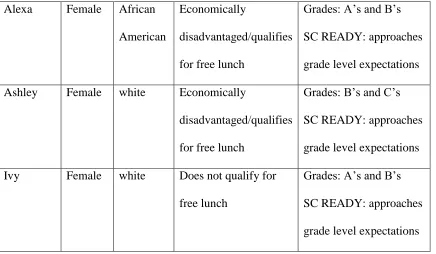
Table 3.1 Descriptions of Student Research Participants ...53
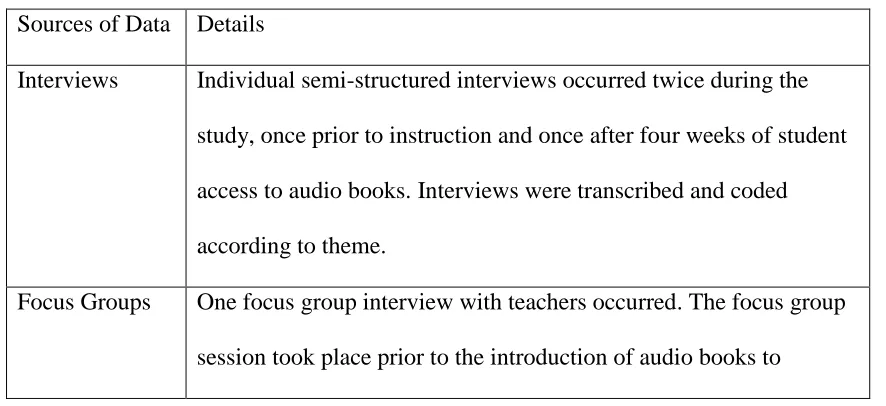
Table 3.2 Descriptions of Teacher Focus Group Participants ...54
1
CHAPTER ONE: Introduction
Reading is an integral part of language and literacy development for children. In
schools, independent reading is a key component of a balanced literacy curriculum as it is
important for building stamina, fluency, and comprehension. Experts in reading
instruction agree the best way to learn to read is to practice reading (Zemelman, Daniels,
& Hyde, 1998). Research in schools around the world has found that student choice and
the contexts in which students read impact the desire to read (Daniels, Marcos, & Steres,
2011). Educators may assume that creating a peaceful environment and giving students
choices would be enough to create a positive reading experience. However other factors
can impact students’ experience while reading. While there are many theories suggesting
reasons for a negative reading experience for students such as lack of time for
independent reading and an over instruction on reading skills, it is a widely agreed upon
notion that motivation and engagement are suffering. A 2007 study by the National
Endowment for the Arts found that families are spending less on books than in the
previous twenty years, so students may not read at home if texts and interests are limited.
The National Endowment for the Arts (2007) also found that when readers utilize books
and other media simultaneously such as television and video games, they experience low
engagement in reading. As a result, students may have negative feelings about the
reading experience. For many students, independent reading may occur only during
1
collect, organize, and offer access to high interest reading materials for students. With the
introduction of one to one mobile learning in schools, students have more access to
electronic resources than ever before.
Because schools are dynamic environments that change as their participants
change, assessing activities in classrooms is a process that naturally appeals to
practitioners in the field of education. Leaders as far back as John Dewey (1910)
recognized the need for and benefit of educational reform through practitioner research.
In the field of education, particularly in the area of instructional best practices, action
research is favorable because its purpose is to improve one’s practice while traditional
research is meant to offer information that is generalizable to all settings (Herr &
Anderson, 2015). For this reason, an action research model is preferable to a traditional
research model as it can have an immediate impact on educational experiences for
teachers and students. In addition, action research is situational in that the researcher
seeks to understand the context and participants of the study (Herr & Anderson, 2015).
Educators working in the field with students on a daily basis are in an optimal position to
examine situational factors and make the practical decisions that are necessary for student
learning. For action researchers, the process of self-reflection is as important as the data
gathered, so this type of research is best to inform my instructional and purchasing
decisions for digital resources (Efron & Ravid, 2013).
Statement of the Problem of Practice
I have worked in the same elementary school for the past nineteen years, and
during my tenure, I have seen motivation and engagement to read independently rise and
3
version of the Motivational Reading Questionnaire developed by Guthrie and Wigfield
(1995) to students in grades two through five. Each year, I find fifth grade students to
indicate the lowest levels of reading motivation. As a result of declining motivation for
this age group, I have implemented incentive programs that have led to short term
improvement in motivation. These programs, however, did not impact student
engagement in independent reading, and due to the extrinsic nature of reading incentives,
they have not impacted motivation long term. Utilizing my experiences in the field, the
Motivation to Read Questionnaire (Guthrie & Wigfield, 1995) and anecdotal reports from
teachers, it has become clear that the problem lies in the experience of reading for
students. Low motivation and engagement as reported by teachers is a symptom of this
problem. This problem appears most significantly in my fifth grade students as they begin
the pre-adolescent stage of development and prepare to leave the elementary school
setting for middle school. For these students, motivation to read is highly important as
they must read extensively and increasingly difficult texts in social studies, science and
language arts. Reluctance to read and difficulty fostering engagement and a love of
reading are grade level problems that persist each year.
Research Questions
This study was intended to answer one main research question and two
sub-questions created as a result of the problem of practice:
Research Question:
How do audio books impact the experience of reading for students in the elementary
classroom?
4
1. How audio books affect student motivation to read?
2. How do audio books affect student engagement while reading?
Purpose of the Study
The purpose of this study was examine the impact audio books have on student
experiences while reading. Data from the study is also useful in collection development
for the library collection and classroom libraries in the school, so the information will be
used in making decisions about material expenditures. I selected an action research study
because the information I sought required focused inquiry and a holistic understanding of
student experiences. I used observations, interviews, a focus group, and a survey to glean
information that will inform instructional and purchasing decisions to improve the
reading experience for students.
The school in which I work receives additional funding for programs and
services as part of the Elementary and Secondary Education Act (2015) administered by
the U.S. Department of Education Office of State Support. The funding is intended to
provide support to schools with high numbers or high percentages of children from
low-income families. The low socioeconomic background of students is a factor in reading
achievement and reading abilities. Low reading engagement reported by teachers who
monitor off task behaviors and difficulty in maintaining student reading stamina is
affected by distractions as well as students’ desires to be doing something other than
reading. These students are required by their teachers to read for a specified amount of
time each day and report their reading on a printed reading log. The materials they are
required to read are teacher approved traditional print materials on students’ independent
5
expectations and format create negative experience for students while reading that are
then reported by teachers as low levels of motivation and engagement. The purpose of
this study is to assess the impact audio books as an alternative to traditional print
materials have on the reading experience for students. This study gathered information
from students and teachers on their perceptions of reading including information on
motivation and engagement before and after the introduction of audio books.
Scholarly Literature
There is a great deal of literature on the importance of reading, and there are a
variety of best practices educators use to impact the reading achievement of students.
Within the field of education, it is widely accepted that opportunities for independent
reading and reading aloud are components of a successful balanced literacy program.
With one to one mobile technology becoming a staple in schools, the ability to access
digital materials for reading is becoming commonplace in classrooms as students have
access to a wide range of electronic books and audio books. Audio books provide the
opportunity for students to experience both independent reading and reading aloud
simultaneously.
Reading Aloud. Information about reading aloud is important to this study
because audio books can be used to read aloud to students.In schools, it is a widely
agreed upon that teachers must incorporate reading aloud from high interest books every
day (Zemelman, Daniels, and Hyde, 1998). Research supports this notion as referenced
by the 1985 report entitled Becoming a Nation of Readers (National Academy of
Education, 1985). The report found that reading aloud to children is the most important
6
programs, reading aloud often diminishes in classrooms as students grow older and
become more independent. Documents read aloud are often “capable of mesmerizing
children, adolescents, and adults and drawing them into real engagement with the subject
matter” (Zemelman, Daniels, and Hyde, 1998, p. 30). Since audio books are produced
using human voices, they provide a similar experience for students as do books read
aloud in the classroom.
Independent Reading. Just as hearing books read aloud is important to reading
success, so is reading independently. Independent reading has a strong association with
improved reading achievement (Zemelman, Daniels, & Hyde, 1998). As part of a
balanced literacy program, independent reading requires students to applythe skills
learned during instruction (Giordano, 2011). A study conducted by Brannan (2016) found
that average achieving readers and lower achieving readers who participated in an
independent reading program in class scored better on assessments than students who did
not. In addition, the study found that students who participate in independent reading in
class read more than students who did not participate in independent reading in class.
Students must choose the books that are appropriate and that they can read on their own
for independent reading to be successful (Giordano, 2011). For struggling readers or for
students with prior negative reading experiences, audio books may apply to their interests
and be appropriately challenging without being overwhelming, while print versions of the
same titles may be frustrating.
Student Motivation. The National Endowment for the Arts (2007) found that
fewer than one-third of 13 year olds read daily, which leads educators to note that
7
addition, the same study found that the 17-year-old individuals who do not read for
pleasure doubled during the previous 20 years (National Endowment for the Arts, 2007).
Researchers also found that the amount students read for homework or schoolwork had
stayed the same indicating that the amount of required reading has not changed (National
Endowment for the Arts, 2007). A 2006 study used conversational interviews with
elementary aged students to assess the impact reader motivation has on reading practices.
The study found that student interests influenced reader motivation with 84% of the
children preferring to talk about self-selected reading, while 16% chose to discuss books
that were assigned by teachers (Edmunds & Bauserman, 2006). Educators understand
that a positive learning environment is best for students, but brain research shows that
positive feelings may have a larger impact on learning than once thought. According to
the Journal of Reading Recovery, “learning occurs best when positive emotions facilitate
the chemical secretions required in the brain to connect neurons” (Lyons, 2004, p. 4).
When these positive emotions are not associated with reading, students may feel
negatively toward reading.
Technology and Reading Integration. There is a great deal of information
available on the growing popularity of electronic reading materials, but the amount of
research addressing student motivation to read digitally is not as prevalent, especially for
elementary students. Hess (2014) found that the use of e-readers in an elementary
classroom encouraged enthusiasm in students, but the study did not address text to speech
e-books or audio books. Similarly, a study in Taiwan found that the implementation of an
e-book learning system for elementary students produced feedback that was “quite
8
(Huang, Liang, Su, & Chen, 2012, p. 721), but audio books were not considered. A
Canadian study found that the use of literacy software promotes motivation to read for
beginners and limits off task reading behaviors (Ciampa, 2012). According to Larson
(2015), shifting from print to digital formats must be gradual and span a length of time
for it to be successful, indicating that educators may expect reading outcomes using
technology to change as reading digitally becomes more prevalent.
Not all research supports the use of digital reading tools to improve motivation.
Researchers in Turkey discovered conflicting results and found that reading electronically
affected fifth grade students adversely (Aydemir and Ozturk, 2012). The study utilized
predetermined texts, and measured students’ motivation using a pretest-posttest model.
Student interests were not considered, and it is difficult to determine if the subject matter
of the texts may have affected motivation. In the design of my study, students used
self-selected texts in an effort to rule out interest as a variable that would impact validity. In
addition, the Turkish study focused on e-books rather than audio books. In the design of
my study, students were offered audio books on a variety of topics with accompanying
print and electronic versions.
Knowlton (2016) examined the popularity of electronic books compared to print
books in a university setting and found “the overall preference for print, combined with
the drawbacks of e-books for preservation and resource sharing, leads to a
recommendation that most monographic purchases be in print” (p. 32). Again, these
results reflect electronic books and do not consider the audio book medium. Thooft
(2012) examined the effect of audio books on reading comprehension and motivation
9
use of audio books impacted student achievement, audio books did not appear to have an
impact on motivation. Like other studies in which a subgroup is the focus, it is difficult to
attribute causality as the characteristics of the subgroups may have had an impact on the
findings.
McGill-Franzen, Ward, and Cahill (2016) concluded that the use of electronic
reading resources can impact students and provide information for educators. According
to their findings, electronic resources provide opportunities to read materials that might
be too challenging in the traditional print format. Pearman (2008) found that low
achieving students remain on task longer when reading using electronic resources than
when they read that same resource in a traditional print format, so reading stamina may
be affected by electronic formats. This literature review provides an overview of topics
relevant to the study and is a shortened version of the in-depth review of literature found
in Chapter Two.
Key Words/Glossary
Audio books: Books that are read aloud by means of a human voice. Audio books may
or may not have a print counterpart.
Electronic Books (E-books): Printed monographs that have been scanned or otherwise
recreated in a digital format that may or may not be enhanced with audio. Electronic
books are read visually.
Independent Reading: Reading that is scheduled to occur in the classroom environment
during which students read a self-selected text for a pre-determined amount of time prior
to conferencing with the teacher.
10
models in schools that provide a dedicated device for every student such as a laptop,
iPad, or tablet and access to resources in multiple locations through wireless capabilities.
Potential Weaknesses
One potential weakness of this project exists in placing too much emphasis on the
positive impact of audio books. Audio books may replace traditional print in some
instances, but currently, they are considered an alternate form of print rather than a
primary resource for reading (Cahill & Moore, 2017). Therefore, the number of available
titles in audio formats are more limited than traditional print formats. As the librarian, I
must avoid over emphasizing audio book purchases in lieu of print and focus on
balancing the collection. My personal and professional opinions also pose a weakness to
the study since I prefer to read aloud to students and listen to audio books when I read for
pleasure. Another weakness may be this study’s acceptance by the wider research
community in library and information science as it does not consider circulation data to
determine impact. While circulation statistics are helpful in purchasing materials,
students may access materials without actually reading or enjoying them. There is no
measure of student motivation and engagement available in the circulation system, so
circulation statistics show what students are selecting, not what they are reading. My
background is also a source of potential weakness. As a product of a white, middle class
upbringing, I critically examined my biases with regards to literacy and technology. The
home access students have to text and technology differs from my experience, so my
inferences must be free of preconception. The limited size of the study and its
representation of one group in one school and geographic location may also pose a
11
it considers only the reading behaviors observable during a limited portion of the school
year. The experiences students have may impact their reading perceptions in the long
term, but this study is not constructed to consider those impacts.
The Significance of the Study
As an action research project, the results of this study are most significant to my
professional setting. For my purposes, I will use the information gathered to inform
purchasing decisions as well as instructional decisions. On a larger scale, however, this
study has the potential to impact historically underserved student groups. Students from
disadvantaged backgrounds due to poverty may lack the opportunities students from
privileged backgrounds enjoy particularly in the area of early literacy. Children who are
not read to at an early age may begin school without the literacy skills that are crucial to
success in all areas of the curriculum. Although poverty is not the sole variable in
determining at risk reading behaviors in students, it is the most universal factor
(Cunningham, 2003). Students from impoverished backgrounds and schools that serve
these students may find information from this study helpful in stimulating lacking early
literacy skills with the use of audio books. In addition, this study may be of significance
to students who are learning English as a second language as many of those students must
read below their abilities due to difficulties deciphering printed English. Most
importantly, this study has the potential to remind educators in every environment that
there are many ways to excite and motivate children to read, but teachers must continue
to seek out those various ways.
Conclusion
12
decisions is not uncharted territory, the studies about the use of audio books for students
is an area that has not been widely undertaken. The abilities to learn to read, read to learn,
and read in all aspects of one’s life are crucial to success, so it is imperative that
educators implement any and all ways they can to motivate and engage students in
reading. While audio books may not be the answer to all students’ motivation and
engagement problems, it is an area worth examining to learn as much as possible about
what engages children. Like other action researchers, I want to ensure that the knowledge
obtained is valid and trustworthy, and my goals are to improve instructional practices and
inform purchasing decisions. As I seek to learn further about the student reading
experience and the implementation of electronic resources for reading, I hope to inform
the purchasing of materials for my school, but more importantly, the engagement and
13
CHAPTER TWO: Review of Literature
Independent reading is an integral part of academic learning experiences in
schools. Reading for pleasure and information is important as “individuals read to live
life to its fullest, to earn a living, to understand what is going on in the world, and to
benefit from the accumulated knowledge of civilization” (Cullinan, 2000, p. 1). Students
become skilled readers by reading extensively, especially during independent reading
(Adams, 1995). In order for independent reading to be informative and engaging for
students, the reader must be motivated to read and engaged in the act of reading
(Cunningham, Hall, & Sigmon, 1999; Miller, 2012). Despite its importance, there exists a
problem with student motivation to read independently and student engagement while
reading. In this chapter, I review available literature pertinent to the problem of practice
in my professional practice. The literature review contains a statement of the problem of
practice in my professional setting, the study’s main research question and sub questions,
an explanation of the purpose of the chapter, and a description of legislation that impacts
literacy instruction in public schools. The literature review also addresses the theoretical
and historical perspectives that frame the research study followed by pertinent literature
to the topic. The research contained in the literature review examines socioeconomic
impacts on reading, reading aloud, reading motivation, reading engagement, independent
reading, and technology tools for reading including electronic books, audio books and
14 Theoretical Perspective
This research study is informed by constructivist theory that requires educators to
focus on the learner to create meaning in learning experiences. The learner centered
approach to curriculum and instruction requires the student to be the central focus of
instruction rather than the content (Shiro, 2013). In reading, the learner centered approach
relies on student self-selection of text and opportunities to read using differentiated
means to meet their needs (Spivey, 1989). In Experience and Education (1938), John
Dewey explains that when learning is the “acquisition of what is already incorporated in
books and in the heads of elders” (p. 19), information is incorrectly assumed to be static.
In reading, the acquisition of what is in books and the heads of elders does not improve
the development of the learner as the learner centered ideology prescribes. The heads of
elders as Dewey describes it refers to information contained in textbooks or in notes
provided by teachers through which students lack opportunities for questioning,
self-selection, and reflection. Dewey’s theory of experiential education (1938) explains that it
is a mistake to expect the future to be the same as the past. In reading instruction,
teaching using traditional print materials, basal readers, and whole class novels does not
recognize the future as different from the past and therefore requires diverse resources
and methods (Pearson, 2000). Also vital to this research study is the understanding that
education and experience are not necessarily equated as some experiences can lead to
mis-education (Dewey, 1938). In reading experiences, mis-education can occur as a result
of poor vocabulary acquisition, low appreciation of literacy in the home, and inadequacy
of reading materials that may exist in homes with low levels of financial resources
15
Theories of learning and human development proposed by Jean Piaget (1964)
provide crucial information to this research study, as well. Piaget (1964) examined the
differences between learning and development explaining that these processes in children
are not identical. Piaget (1964) explained that development is spontaneous and considers
the totality of knowledge, while learning is caused by situations that differ based on one’s
experiences. In reading, students can experience the spontaneous development Piaget
discusses as they develop word recognition, fluency, and phonetic awareness. Learning in
reading, however, requires situations, teachers, and materials that can produce different
results in different learners (Guzzetti, 2002). This study utilized audio books to improve
the reading experience for students rather than to create changes in the development of
reading abilities.
Because reading functions best in situations that are authentic, it is a constructivist
activity in which students participate naturally during an instructional day (McLaughlin,
2012). Literacy is also a body of skills and sub skills which are constantly evolving and
changing as students mature and participate in different experiences (McLaughlin, 2012).
Constructivist theory of reading emphasizes the importance of schema in children’s
reading experiences, so for students with limited experiences with text, comprehension
can be difficult (McLaughlin, 2012). For students from high income homes, expenditures
on enrichment activities such as music lessons, travel, and summer camps are often
available and offer experiences that are inaccessible to their peers from lower income
homes (Reardon, Valentino, & Shores, 2012). According to constructivism, readers
comprehend by building mental representations that combine new information from text
16
(1964) and Dewey (1938), reading must be a learner center process to ensure success.
Dewey (1938) also questioned the role of the teacher and of books in the educational
development of children and concluded that education is not to intended impart subject
matter alone. In this action research study, the subject matter of the reading materials was
irrelevant because the researcher was not attempting to impart content. Rather, as the
researcher, I sought to address the problem of practice using learner center theory. This
research study recognizes that for activity to be meaningful, “everything depends upon
the quality of the experience which is had” (Dewey, 1938, p. 27). Addressing the problem
of practice in the research setting requires high quality reading experiences for students.
In addition to constructivist theory, this research is based on the theory of new
literacies that state that literacies evolve as the world around us changes (Gallego &
Hollingsworth, 1992; Leu et al., 2013). Independent reading as it is framed in this study
is the reading students do using self-selected texts in which they engage for pleasure
(Miller, 2002). The type of literacy required for independent reading is pleasurable
literacy during which engagement and motivation are necessities regardless of the type of
text being read (Resnick, 2000). In addition, this research requires the use of audible
language in the form of audio books, so spoken language is an important factor in
understanding this research as a possible means to improve the reading experience. This
research study is not intended to measure comprehension skills, reading levels, or
academic growth. In line with Lewin’s action research theory (1946), it is intended to
examine a potential solution to an identified problem that exists separate from academic
17 Historical Framework
The history of reading education during the last century has followed the trends in
the larger scope of education (Guzzetti, 2002). Prior to the 20th century, drill and practice
were the primary methods of instruction as all learners were expected to read by
identifying sounds and letters (Pearson, 2000). Ability grouping during the early 20th
century was done in classrooms using reading groups, but educators soon realized that
ability grouping by class incorrectly assumed students who showed strength in one
curricular area to be strong in all subjects (Guzzetti, 2002; Zemelman, Daniels & Hyde,
1998). Studies of whether students in homogenously grouped classrooms learned more
than heterogeneous classes were inconclusive, so grouping trends began to change
(Guzzetti, 2002). In addition, researchers began to recognize inequalities in classes where
students were homogeneously grouped, particularly students with lower abilities.
Concerns about the limited vocabulary in texts also led to the creation of controlled
vocabulary basal readers that were widely used as the primary resource for reading
instruction until the 1980s (Allington & McGill-Franzen, 1999). As norm referenced tests
became useful as accountability measures for schools in the 1970s, assessment became a
driving force in reading instruction (Guzzetti, 2002; Pearson, 2000). Students were
required to pass basic skills tests in order to graduate high school, so an instructional
emphasis in reading was placed on basic skills (Guzzetti, 2002). During the 1990s, the
standards movement led to reforms in both instruction and accountability when standards
based instruction measured by high stakes testing became the focus in reading (Allington
& McGill-Franzen, 1999). In the current system of education, value added measures seek
18
2002). As a result, schools have implemented differentiated practices in reading and
assessments that measure individual student progress using reading materials based on
children’s independent and instructional reading levels (Fountas & Pinnell, 2012).
Reading interventions as part of school reform have been used in classrooms
typically to improve word fluency and comprehension with an overarching goal of
improving student achievement, but interventions today are aimed at effectively teaching
diverse learners how to read for deeper understanding (Fountas & Pinnell, 2012). Marie
Clay (2013) contributed reading intervention strategies not to improve high stakes testing
results but rather to monitor the progress of individual students. Current models in
education recognize that the reading process involves four areas of learning in which
students must understand messages expressed in language, conventions used in print, and
visual patterns as well as master the ability to listen to language. Listening to print
resources read aloud is an important component of the first and last area of learning
(Clay, 2013; Zemelman, Daniels & Hyde, 1998). In this research study, messages
expressed in language and listening to language are key components of the instruction
that occurs with the target group of students.
Current best practices in reading education indicate that all children do not learn
the same content at the same rate or in the same ways, but daily instructional programs in
schools have not necessarily changed in ways that implement this philosophy
(Cunningham, Hall, & Sigmon, 1999; Fountas & Pinnell, 2012). While models such as
the Four Blocks emphasize a self-selected reading block, it has varied in its use and
effectiveness from class to class (Cunningham, Hall, & Sigmon, 1999). Studies that track
19
a decline in literacy but a result of economic, political, and social challenges that demand
more advanced skills not currently addressed in traditional classrooms (Murnane,
Sawhill, & Snow, 2012; Resnick, 2000). For this reason, achievement data is not an
emphasis of this study because it does not measure these advanced skills. This research
study utilizes technology for learning, self-direction, and self-selection of materials in an
effort to improve the reading experience for students.
Read to Succeed Act 284
Legislation passed by the South Carolina General Assembly is intended to impact
instructional practices and student opportunities in South Carolina’s schools. The largest
piece of legislation to be passed in South Carolina that impacts student literacy is the
Read to Succeed Act 284 which was passed in 2014. The Read to Succeed Act 284
(2014), an amendment to the 1976 Title 59 Code, was enacted in an effort to improve
literacy in South Carolina. According to the bill, many students “fail to develop
proficiency with reading and comprehension because of inadequate instruction and
engaged practice” (Read to Succeed Act 284, 2014). In order to address the proficiency
problems, the Read to Succeed Act requires schools and teachers to take specific steps to
improve proficiency. Of importance to this action research study is the mandate by the
South Carolina General Assembly that “all students must be given high quality
instruction and engage in ample time actually reading and writing in order to learn to
read, comprehend, write, speak, listen, and use language effectively across all content
areas” (Read to Succeed Act 284, 2014). While this research study does not measure
20
problems reported by teachers in an effort to provide tools for the engaged practice
required by law.
Socioeconomic Impact on Reading
Socioeconomic background has long been recognized to have a direct impact on
reading as poverty creates unequal opportunities between children growing up in high
income homes and children growing up in low income homes (Gorski, 2013; Lesaux,
2012; Leu et al., 2013; Zhang, Washington & Yin, 2014). Family income is not the only
predictor of reading proficiency, but family income has been found to be a predictor of
parents’ behaviors with their children around print, so children from low income
backgrounds may be less likely to have interactions with reading materials while with
their parents (Wambiri & Ndani, 2015; Zhang, Washington & Yin, 2014). This impact is
present even prior to the beginning of school for students with as much as a
fourteen-month difference in reading readiness between students from low and middle to high
socioeconomic backgrounds (Worley & Story, 1967). Only one-third of middle school
students from low income homes show reading comprehension proficiency, and students
from low-income homes enter high school with literacy skills as much as five times lower
than their higher income peers (Reardon, Valentino, & Shores, 2012). In addition, these
students are not gaining the literacy skills to be successful in high school, college and the
work force even though measurements of procedural word reading skills taken in third
grade indicate proficiency (McGill-Franzen, Ward, Cahill, 2016; Reardon, Valentino, &
Shores, 2012). The problem worsens for students from low socioeconomic backgrounds
as they encounter texts with specialized academic vocabulary as these students show
21
For students from low income homes, parent involvement in reading has been
found to be lower than for higher income peers as low income parents are less able to
provide resources in the home, and support in reading is largely school based (Chen,
Pisani, White, & Soroui, 2012; McGill-Franzen, Ward, Cahill, 2016). Families differ in
their abilities to provide enriching literacy activities for children, and parents earning
lower incomes face economic challenges that hinder reading experiences in the home
(Chen, Pisani, White, & Soroui, 2012). According to Bianchi and Robinson (1997), the
higher a family’s income, the more time children spend reading or in other literacy
activities because these families may be more financially able to fund these activities.
For low income families, the responsibility of working multiple jobs may keep parents
away from the home. Lack of reliable transportation may inhibit families’ access to
libraries and community activities in which children from higher incomes participate.
These school like activities provide background experiences that may help students excel
more easily in literacy activities in school while leaving students from low income
backgrounds at a disadvantage (Bianchi & Robinson, 1997; Burney & Bielke, 2008).
The subjects in this research study are largely from backgrounds of low income,
so the struggles indicated from past research likely exists for these students. Reading
experiences are school based, so these must be the most positive, engaging and
motivating experiences possible. This study seeks to offer tools teachers can use to
improve their students’ reading experiences and materials that appeal to students’
interests and digital proficiencies.
Reading Motivation
22
with the publication of Motivation and Personality. According to Maslow (1954), the
needs of individuals exist in a hierarchy, and needs on the lower ends of the hierarchy
must be met before higher level needs are addressed. On the subject of education,
Maslow said, “my own criticism of our traditional educational methods is that they are
far too much occupied with intellectual analysis, and with the acquirement of
formularized information” (p. 224). In reading instruction, this intellectual analysis may
be gathered using assessments in which every student reads the same text regardless of
interest. The formularized information in reading instruction can be the diagnostic
reading levels and teacher selected texts that are then used with students that may or may
not impact their motivation to read because motivation to read is not secondary to basic
reading skills (Johnson & Blair, 2013). Treating reading motivation as an afterthought
creates a population of students with reading abilities but without the desire to read
(Johnson & Blair, 2013).
While reading motivation and engagement are often used synonymously with one
another, they are two components that work both separately and in conjunction with one
another as students read independently (Johnson & Blair, 2003; Unrau & Quirk, 2014).
Reading motivation is a broad term that encompasses eleven constructs of reading
including efficacy, challenge, curiosity, involvement, importance, work avoidance,
competition, recognition for reading, reading for grades, social reasons for reading, and
compliance (Guthrie et al., 2004). For students, many factors may affect motivation
including frustration with text difficulty, lack of interesting materials, and preferences for
other activities (Chua, 2008). Information on student attitudes is important in
23
assigning arbitrary reading materials students may not be motivated to read (Unrau &
Quirk, 2014). Assessing reader motivation is one component of improving it as educators
work to understand why reading fails to hold an important place in some student’s lives
(Conradi, Jang, & McKenna, 2014; Unrau & Quirk, 2014). It is clear that for some
students, motivation to read lessens as the students get older (Varuzza, Sinatra,
Eschenauer, & Blake, 2014). In the current research study, advancing age as students
enter pre-adolescence appears to be a factor in reduced motivation to read.
F. Herzberg (1954) examined the factors of motivation and hygiene in his work,
Work and the Nature of Man. Herzberg observed employees and determined that certain
factors may lead to dissatisfaction with a job, but he termed these factors as hygiene
factors because they do not impact motivation. Herzberg explained that policies,
relationships, working conditions and salary are important but they are not predictors of
motivation nor can they be used to motivate. For students, hygiene factors may be
extrinsic rewards, the classroom environment, and relationships between teachers and
students (Gawel, 1997, Nichols, 2004). Some educators attempt to impact motivation
with rewards, but because these rewards are extrinsic, they operate as hygiene factors
rather than motivators (Herzberg, 1954). Other factors such as policies that require a
specific amount of time spent reading, relationships with one’s language arts teacher, and
classroom environment would also be considered hygiene factors according to
Herzberg’s theory, so they do not have the ability to motivate. Educators may focus on
hygiene factors in their classrooms, but they may or may not impact a student’s reading
experience (Miller, 2012). Herzberg (1954) determined achievement, recognition, the
24
his theory, it is these intrinsic factors that incite students to read (Gawel, 1997; Unrau &
Quirk, 2014).
Reading Engagement
Educators recognize that students learn best when they are actively
involved in thinking about their own learning (Buoncristiani & Buoncristiani,
2012). The metacognition that is necessary in all content areas carries additional
importance in reading because students are required to think about what they want
to read, engage with their reading material, and reflect on what they read (Miller,
2002; Zemelman, Daniels, & Hyde, 1998). The multistep metacognition required
in reading is critical to reading for meaning (Zemelman, Daniels, & Hyde, 1998).
In order for literacy instruction to be successful in engaging students, it must be
skill driven and instill a love of the reading process in students (Gorski, 2013).
Engagement is a prerequisite for reading enjoyment, and for students from low
income backgrounds, promoting literacy enjoyment is crucial for reading
proficiency (Gorski, 2013; Resnick, 2000; Chua, 2008). Like other areas of
academic behavior, reading is influenced by a child’s skill set, but because
engagement is a necessary factor in reading for meaning, it is important most
critically in older students (Miller, 2002; Buoncristiani & Buoncristiani, 2012).
For engagement in reading to occur, students must read materials of interest but
these materials can be neither too difficult nor too easy (Miller, 2002). Due to the
emphasis on assessments and accountability, readability is often a factor in
encouraging students to select texts, but if “we want children to actively engage in
25
selections must be made for the purposes of engagement rather than text readability
(Miller, 2002, p. 40). In choosing materials, students must have the opportunity to
self-select based on content, schema, and variety (Miller, 2002).
Engagement is an area of student behavior researchers have had difficulty
measuring although it is recognized to be important in reading because students may
appear to be engaged when they are actually not (Unrau & Quirk, 2014). Williams, Hall,
Hedrick Lamkin, & Abendroth (2013) found that the outward indicators and the physical
interaction with text while reading might be present, which indicated engagement, but
these physical indicators were not necessary for involvement. Researchers found this to
be true especially with students who had lower reading proficiency. For these students,
reading engagement may or may not have been measurable with observations, but the
authors did find that disturbances such as a student’s own movements and external
factors acted as distractors during independent reading. In the current research study,
these external factors will be minimized as students engage with audio books
independently utilizing headphones.
Engagement in reading is more complicated that observations of a series of
off-task behaviors. Powell, McIntyre, and Rightmyer (2006) collected data by observing and
interviewing teachers during 60 to 180 minutes of literacy instruction. They used 75 data
sets and found that tasks that they determined to be closed tasks with low levels of
student choice, challenge, control, and collaboration produced the highest number of
instances of off-task behavior. Researchers determined that more closed off tasks during
literacy instruction led to less engagement in students. In this study, disengagement was
26
that allowed for more student choice, control and collaboration would offer less
opportunities for resistance. When instructional and assessment programs consider only
the cognitive process of decoding, fluency and comprehension, students are not always
able to become deeply involved in the text (Johnson & Blair, 2013).
Reading engagement may be just as affected by intrinsic factors as motivation
(Baker, Dreher, & Guthrie, 2000, Johnson & Blair, 2013). In addition, reading
engagement is highly variable among students. Cole (2002) examined four reading
personalities and determined that students’ literacy personalities were informed by their
beliefs about reading, their purposes for reading and by their capabilities. She found that
even though a student may take literacy goals seriously, that is not a predetermining
factor for engagement. Cole (2002) observed and interviewed four students of differing
interests, personalities and reading aptitude to determine what might motivate them to
read. During the process, the researcher also examined engagement. The researcher
examined student engagement over a seven-month period and found that it was student
beliefs that contributed more to engagement while reading than anything else. When
readers in the study were engaged, they found the reading not too challenging nor too
easy, and they were eager to collaborate about reading.
In the technology rich environments in homes and schools, engagement may also
be affected by factors that are in competition for student attention. The National
Endowment of the Arts (2007) found that when reading occurs using print materials at
home, the act of reading competes with other media. According to researchers, this
multitasking suggests a lower level of engagement than students might have if they were
27
relationships between reading skills and engagement noting that learners who indicated
more engagement also scored higher on summative assessments. In the current action
research study, reading engagement has been recognized by teachers as problematic and
continuing to diminish as the students get older. The use of audio books may have some
impact on engagement in these readers contributing to an overall improved reading
experience.
Independent Reading
Because independent reading is a requirement in this school setting, it is
necessary to understand the implications independent reading has on the experiences of
students. Independent reading is one way to give students experience with materials.
Because “experience counts in cognitive functioning,” the more experiences a child can
have with reading, the better (Clay, 2013). For teachers, an overarching goal in literacy
instruction is to produce independent learners. According to Clay (2013), becoming an
independent learner requires students to monitor their reading, search for information
while reading, discover new things, and check that information of different kinds fits with
other information that is available. In classrooms, time must be purposefully built into the
schedule for students to read on their own so they can practice the strategies they learn
during language arts instruction and read texts that are self-selected (Harvey & Goudvis,
2007).
Independent reading may take many forms in classrooms. In Silent Sustained
Reading programs, students participate in recreational reading of self-selected texts
without assessment (Chua, 2008). In reading workshops, students read every day from
28
& Williams, 2015). In the Self-Selected Reading Block, children choose what they want
to read from a variety of materials chosen by the teacher (Cunningham, Hall & Sigmon,
1999). The independent reading block is a time during which students are expected to
read on their independent reading level as prescribed by a diagnostic program and
conference with the teacher about what they have read (Cunningham, Hall & Sigmon,
1999).
Despite the differences in how reading independently is facilitated in classrooms,
independent reading takes place on an individual basis with personal interaction with a
text (Miller, 2002; Moss, 2016). In classrooms with adult support and a focus on
students, independent reading can be an effective way to build literacy skills and engage
students in the experience of reading for pleasure (Hudson & Williams, 2015; Krashen,
2004; Sanden, 2012). Because self-esteem is tied to both motivation to read and reading
engagement, students with low self-esteem in reading or other academic areas may find
independent reading challenging (Boeglin-Quintana & Donovan, 2013). In this action
research study, the introduction of audio books as an option during the required
independent reading time in an effort to impact both motivation and engagement and
improve the overall reading experience.
Student Choice
Research studies on student habits during independent reading in school provide
information on what works well when motivating students to read and keeping them
engaged in reading. Hall, Hedrick, and Williams (2014) observed 21 third graders over a
four-week period in a classroom in which at least 75% of the students qualified for free or
29
independent reading positively affected engagement with the texts during reading.
Choices were provided as to whether to listen to music or to read silently, whether to talk
about reading with a peer or reflect silently. Choices were also provided for materials as
students selected from different genres and levels without limitations imposed by the
teacher. Researchers concluded from this study the climate of a classroom and the
opportunity to develop their own preferences can improve the reading experience for
students.
Dickerson (2015) conducted a two-year study between 2013 and 2015 in an
English class utilizing surveys, observations, and teacher notes to assess the impact of
student choice during independent reading and amount of reading students report
completing in class. According to results, after implementation of an in class independent
reading program for students, 77% of students indicated they read more in the class than
in other classes, and 47.92% of students indicated they enjoyed the independent reading
time. Of note in this study is that the students in the class were eleventh graders, so they
may represent the teens for whom the National Endowment for the Arts (2007) study on
reading expressed concern.
Research on teacher habits during independent reading offer information on how
effective programs work in classrooms. Sanden (2012) conducted a study across a
six-month period in eight first through fifth grade classes in Illinois and found that teachers
who provided opportunities for choice and allowed students to work at their own levels
and own paces without relying on adult intervention were also the teachers who were
recognized by administrators to have the most effective programs. The researcher also
30
learning and privileging of student needs rather than assessment results and static literacy
instruction. According to the researcher, utilizing these methods improved self-efficacy in
reading, one facet of student motivation.
Hudson and Williams (2015) utilized observations, achievement results, and
teacher journaling to assess a reading workshop model in a classroom. The researchers
found that when students were able to select their own books, they did not express
unwillingness to read independently. Some of the students in the class settled on one
book to read independently and committed themselves to read the remainder of the series
without teacher intervention. The researcher also noted increases in self-confidence as
reported by parents of students in the class.
While each of the pieces of research on student choice in reading contains
different components, when considered together, data shows that self-selection of
materials is favored over teacher selection of materials by students. Because my research
study seeks to improve the reading experience rather than achievement results, student
selection of materials is a key variable in the study.
Reading Aloud
Reading aloud exposes students to a wide variety of texts and models fluent
reading, and it is a strategy used in schools as part of a balanced literacy program
(Cunningham, Hall, & Sigmon, 1999; McClure & Fullerton, 2017). Early language
development for children occurs in the home and community prior to beginning school,
but children continue to learn new words beyond their initial language acquisition as
vocabularies for children in elementary grades grow by thousands of words each year
31
contexts, and one of the widely used verbal contexts in schools that impart new
vocabulary to children is the read aloud (Robbins & Ehri, 1994). Despite the recognized
importance of reading aloud, it is sometimes neglected in classes above the primary
grades (Zemelman, Daniels & Hyde, 1998). In order to examine the effects reading aloud
has on the acquisition of vocabulary, Robbins and Ehri (1994) selected unfamiliar texts to
read to fifty-one kindergartners from different classrooms in a school serving students
from low and middle income homes. In the study, students were separated into three
groups based on ability from an achievement assessment, and each child listened to a
selected unfamiliar story individually on two separate occasions. The children then took a
multiple choice assessment to determine if they acquired new vocabulary from the story.
Researchers found that the students expanded their vocabulary after listening to the
stories twice and hearing the unfamiliar words repeated. This study is of significance to
the current action research study because the use of audio books provides the
opportunities for students to listen and re-listen to stories read aloud and have new or
challenging vocabulary repeated.
Educators may assume that children have been exposed to many types of texts
and a range of vocabulary from being read to at home, but students from low income
homes below the poverty level are less likely to have been read to by parents and
caregivers (Chen, Pisani, White, & Soroui, 2012). For children, being read to aloud can
be a joyful experience and one that is considered a luxury, so it can help build
engagement in reading (Laminack, 2016; Miller, 2012). Hearing the written word read
aloud also assists students in constructing meaning and examining possibilities their
32
those who have had fewer verbal experiences in the home learn how language is used in
different ways (Laminack, 2016). Because reading for meaning requires students to build
mental representations of details contained in text, reading aloud can supplement reading
for students who have difficulty constructing these mental representations (Spivey, 1985).
As an instructional tool, reading aloud in the classroom is intended to build
students’ motivation to read, increase background knowledge on various subjects, and
develop listening and speaking vocabularies (Laminack, 2016; Miller, 2002). These skills
are difficult to measure through traditional assessment methods, so the read aloud portion
of reading instruction also varies from class to class (Cunningham, Hall, & Sigmon,
1999). For the purpose of vocabulary acquisition, reading aloud is a fundamental part of
classroom literacy instruction that can take place as a whole class, in small groups, and
individually.
For students, the benefits of reading aloud can be measured by assessments.
Brown, Waring and Donkaewbua (2008) studied thirty-five subjects in three
experimental groups as they listened to sets of stories during ninety minute intervals over
a course of two weeks. Researchers sought to determine how the reading aloud of the
stories affect vocabulary acquisition. In addition, the researchers gathered information on
students’ reading format preferences. Results suggested that the highest vocabulary
acquisition and comprehension for learners improves most when materials are listened to
and read visually simultaneously rather than being listened to or read separately. The
researchers also reported that the majority of subjects preferred to read while listening as
opposed to listening or reading material only. For the purposes of the current action
33
for language acquisition as it cannot be taken for granted that all students experience
early reading aloud in the home. In addition, as the research study above shows, for some
learners, listening to stories read aloud is preferable to reading visually. This preference
for listening to books plays an important role in the current research study in which all of
the materials have the read aloud option. In my study, students had the opportunity to
read visually while listening to audio books, but they were not required to do so.
Technology and Reading
There are many ways in which technology can be used in reading including books
in electronic forms that are static, audible, and interactive (McGill-Franzen, Ward, Cahill,
2016). While many students may indicate enjoyment for reading using technology, the
use of technology in reading cannot motivate students to read (Conradi, 2014). However,
using digital tools that make reading a less stressful task for students may impact
self-concept, which is an important part of motivation (Conradi, 2014; McGill-Franzen,
Ward, Cahill, 2016). Using technology for reading is not a new activity as electronic
books have been widely accessible for over a decade. However, with the addition of one
to one technology in many schools, access to electronic reading materials is more
convenient, and it can be done by students individually as a part of independent reading
(Larson, 2015). For the purpose of this literature review, research studies are examined in
three sections according to format: electronic books, audio books and interactive books.
Schools access different formats in different ways using a variety of hardware, software,
and subscription services, but all of the reading materials fall into one of these three
categories.
34
materials and print materials is a yearly challenge that is informed by curriculum,
teacher’s needs, student needs, and student interests (Knowlton, 2016). For the purpose of
this research, student interest is the focus, and it is informed by research on student
perceptions of electronic resources. Knowlton (2016) examined student preferences for
electronic materials in the academic library. The researcher examined circulation
statistics for course related materials at the library and found that overall, patrons
preferred traditional print materials to electronic materials offered by the schools’
databases. However, the college students enrolled in education and curriculum courses
preferred electronic materials over print materials. The findings of this study are
important to the current action research study because it suggests that students in
curriculum and education courses and possibly educators working in the field are more
open and interested in using alternate forms of reading materials, particularly those that
are accessible electronically. Also important to the current study are the types of
materials being accessed by the students in the academic library. The materials were
electronic textbooks and other required course content rather than self-selected materials
for independent reading or for recreational reading. While the electronic resources did not
engage students more than their print counterparts, introducing self-selection of materials
may have a different outcome.
Much of the research available on digital reading materials examines computer
assisted software. While this action research study does not focus on gains in reading
achievement but rather engagement and motivation, research on computer assisted
instruction is an important component of the literature review. Students who have reading
35
frustrating may have difficulty remaining engaged, so computer assisted instruction may
assist in correcting these problems and improve the reading experience. Gonzalez (2014)
examined computer assisted instruction in seventeen third and fourth grade students with
reading disabilities. The researcher used three formats of books with students to
determine if oral retelling and comprehension could be impacted using electronic
resources. Researchers used electronic books with text-to-speech capabilities that read
aloud to students, electronic books with pronunciation tools for difficult vocabulary, and
traditional print books with students. According to data from the study, comprehension
scores did not show differences as students used different formats for the books.
However, researchers found that students scored higher on oral retelling of stories when
using the electronic resource with the most audio support. These books were electronic
books the students followed visually, but the text-to-speech feature read the entire book
to the students. This research is informative to the current research study because it
reveals how audio support can be beneficial to students. However, because Gonzalez
(2014) focused on students with special needs, the results may or may not be reflected in
the current action research study because the subjects in my study were heterogeneously
grouped and had access to audio materials regardless of the presence or absence of
disabilities.
Electronic Books. Electronic books have gained popularity for both children and
adults as personal wireless devices have become more affordable and commonplace in
homes (Jones & Brown, 2011). In schools, electronic textbooks as well as books students
would typically find in print versions in school libraries have become accessible from
36
students. Jones and Brown (2011) examined reading comprehension results and
satisfaction surveys during a study in which twenty-two students read three books
including one traditional print book and two electronic books. During the study, the
researchers were surprised to learn that while students seemed excited to use the
electronic books at the beginning of the study, comprehension scores did not reflect
improvement. For one of the electronic books, students actually scored lower on
comprehension than on the print book and the additional electronic book. In addition,
researchers found that students did not prefer one format over another when reading, but
they were impressed with the variety of books available electronically. This research is
important to the current action research study because it is a reminder that using
technology for reading for the sake of using technology cannot be expected to impact
student motivation to read or engagement while reading. In this case, reading
electronically was a novelty that did not produce overly favorable results in comparison
to reading traditional print books.
Korat and Shamir (2012) conducted a study of electronic books and their impact
on students in Israel with a purpose of comparing direct and indirect word and vocabulary
recognition following the use of electronic books with students. According to researchers,
indirect decoding and vocabulary recognition occurs when students read so extensively
that incremental decoding and vocabulary create a cumulative effect that improves
reading. According to researchers, direct decoding and vocabulary occur when educators
purposefully select words for exposure to children as part of instruction. Researchers
obtained a sample of 288 students in twelve pre-kindergarten and kindergarten classes.