Embryonic diapause: development on hold
JANE C. FENELON, ARNAB BANERJEE and BRUCE D. MURPHY*
Centre de Recherche en Reproduction Animale, Université de Montréal, St-Hyacinthe QC CanadaABSTRACT Embryonic diapause, the temporary suspension of development of the embryo, is a fascinating reproductive strategy that has been frequently exploited across the animal kingdom. It is characterized by an arrest in development that occurs at the blastocyst stage in over 130 species of mammals. Its presumed function is to uncouple mating from parturition, to ensure that both occur at the most propitious moment for survival of the species. Diapause can be facultative, i.e. induced by physiological conditions, or obligate, i.e. present in every gestation of a species. In the latter case, the proximal signals for regulation are related to photoperiod. Three diverse models, the mouse, the mustelid carnivores and the wallaby have been studied in detail. From these studies it can be discerned that, although the endocrine cues responsible for induction of diapause and re-initiation of development vary widely between species, there are a number of commonalities. Evidence to date indicates that the uterus exercises the proximal regulatory influence over whether an embryo enters into and when it exits from diapause. Some factors have been identified that appear crucial to this regulation, in particular, the polyamines. Recent studies indicate that dia-pause can be induced in species where it does not exist in nature. This suggests that the potential for diapause in mammals to be due to a single evolutionary event, to which control mechanisms adapted when the trait was beneficial to reproductive success. Further work at the molecular, cel-lular and organismic levels will be required before the physiological basis of diapause is resolved.
KEY WORDS:
blastocyst, diapause, polyamine, evolutionary strategy
Introduction
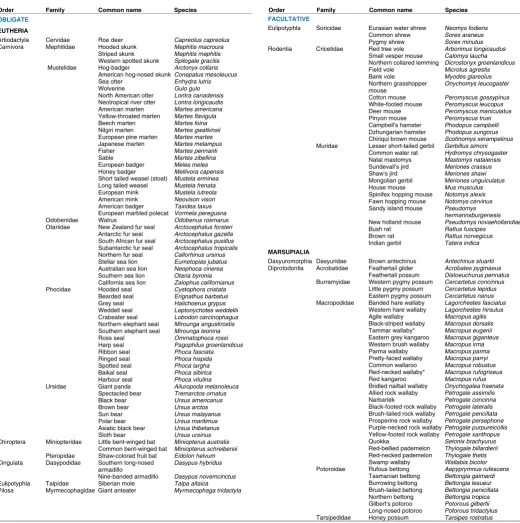
Reversible arrest of embryo development occurs across the animal kingdom, with multiple examples in nematodes, insects, non-mammalian vertebrates and mammals. The phenomenon, known as embryonic diapause, has intrigued biologists of several stripes, from those focused on evolution, to embryologists, endo-crinologists and animal scientists. The first recorded observation of diapause is found in the field notes of William Harvey (1578-1657), who accompanied King Charles I on hunts of roe deer, where he observed differential states of embryonic development following examination of uterine contents (Hunter, 1995). The first report in scientific literature for mammals appears to be that of Bischoff in 1854, on the roe deer (cited in Sempere, 1977), followed by that of Lataste in 1891, who showed lengthened gestation in female rodents suckling large litters (cited in Psychoyos, 1992). In rodents and in many other mammalian species (Table 1), the embryo is arrested at the blastocyst stage for variant intervals that are spe-cific to the species and to the environmental conditions. A similar strategy known as delayed development is found in bats, whereby the blastocyst implants superficially, then grows very slowly,
re-www.intjdevbiol.com
*Address correspondence to: Bruce D. Murphy, Centre de recherche en reproduction animale, Université de Montréal, 3200 rue Sicotte, St-Hyacinthe QC Canada J2S7C6. E-mail: [email protected] - web: http://www.rqr.umontreal.ca/index.php/en/members/bruce-d-murphy
Final, author-corrected PDF published online: 8 July 2014
ISSN: Online 1696-3547, Print 0214-6282
© 2014 UBC Press Printed in Spain
Abbreviations used in this paper: CB1, CB2, Cannabinoid receptors; Esr1, Estrogen
receptor-a; Esr2, Estrogen receptor-b; FGF, Fibroblast growth factor; HBEGF, Heparin binding epidermal growth factor; IL1B, Interleukin 1b; LIF, Leukemia inhibitory factor; miRNA, MicroRNA; Msx1, Muscle segment homeobox-1; Msx2, Muscle segment homeobox-2; ODC1, Ornithine decarboxylase; Pgr, Progesterone receptor; Wnt, Wingless gene family.
sulting in long and variable gestation lengths (Heideman, 1989). Although there are some detracting hypotheses, the consensus view of the significance of embryonic diapause as an evolutionary strategy is that it allows the uncoupling of fertilization from birth, thereby ensuring that postnatal development occurs under the most favorable environmental conditions for survival of the offspring (Lindenfors et al., 2003).
164 J.C. Fenelon et al.
Furthermore, since it is unknown whether the evolution of diapause was a single event or if it evolved multiple times, it is unclear to what extent the mechanisms by which the embryo-uterine dialogue coordinates the events of diapause are conserved across species. These cautions notwithstanding, the study of embryonic
dia-pause has the potential to provide us with a greater understand-ing of many aspects of early embryo development. For example, determining how an embryo is able to remain quiescent for an extended period of time could elucidate the minimum factors required for embryo survival both in vivo and in vitro. Similarly,
TABLE 1
LIST OF CURRENTLY KNOWN SPECIES WITH PRE-IMPLANTATION EMBRYONIC DIAPAUSE Order Family Common name Species
OBLIGATE
EUTHERIA
Artiodactyla Cervidae Roe deer Capreolus capreolus
Carnivora Mephitidae Hooded skunk Mephitis macroura
Striped skunk Mephitis mephitis
Western spotted skunk Spilogale gracilis
Mustelidae Hog-badger Arctonyx collaris
American hog-nosed skunk Conepatus mesoleucus
Sea otter Enhydra lutris
Wolverine Gulo gulo
North American otter Lontra canadensis
Neotropical river otter Lontra longicaudis
American marten Martes americana
Yellow-throated marten Martes flavigula
Beech marten Martes foina
Nilgiri marten Martes gwatkinsii
European pine marten Martes martes
Japanese marten Martes melampus
Fisher Martes pennanti
Sable Martes zibellina
European badger Meles meles
Honey badger Mellivora capensis
Short tailed weasel (stoat) Mustela erminea
Long tailed weasel Mustela frenata
European mink Mustela lutreola
American mink Neovison vison
American badger Taxidea taxus
European marbled polecat Vormela peregusna
Odobenidae Walrus Odobenus rosmarus
Otariidae New Zealand fur seal Arctocephalus forsteri
Antarctic fur seal Arctocephalus gazella
South African fur seal Arctocephalus pusillus
Subantarctic fur seal Arctocephalus tropicalis
Northern fur seal Callorhinus ursinus
Stellar sea lion Eumetopias jubatus
Australian sea lion Neophoca cinerea
Southern sea lion Otaria byronia
California sea lion Zalophus californianus
Phocidae Hooded seal Cystophora cristata
Bearded seal Erignathus barbatus
Grey seal Halichoerus grypus
Weddell seal Leptonychotes weddellii
Crabeater seal Lobodon carcinophagus
Northern elephant seal Mirounga angustirostis
Southern elephant seal Mirounga leonina
Ross seal Ommatophoca rossi
Harp seal Pagophilus groenlandicus
Ribbon seal Phoca fasciata
Ringed seal Phoca hispida
Spotted seal Phoca largha
Baikal seal Phoca sibirica
Harbour seal Phoca vitulina
Ursidae Giant panda Ailuropoda melanoleuca
Spectacled bear Tremarctos ornatus
Black bear Ursus americanus
Brown bear Ursus arctos
Sun bear Ursus malayanus
Polar bear Ursus maritimus
Asiatic black bear Ursus thibetanus
Sloth bear Ursus ursinus
Chiroptera Miniopteridae Little bent-winged bat Miniopterus australis
Common bent-winged bat Miniopterus schreibersii
Pteropidae Straw-colored fruit bat Eidolon helvum
Cingulata Dasypodidae Southern long-nosed
armadillo Dasypus hybridus Nine-banded armadillo Dasypus novemcinctus
Eulipotyphla Talpidae Siberian mole Talpa altaica
Pilosa Myrmecophagidae Giant anteater Myrmecophaga tridactyla
FACULTATIVE
Eulipotyphla Soricidae Eurasian water shrew Neomys fodiens
Common shrew Sorex araneus
Pygmy shrew Sorex minutus
Rodentia Cricetidae Red tree vole Arborimus longicaudus
Small vesper mouse Calomys laucha
Northern collared lemming Dicrostonyx groenlandicus
Field vole Microtus agrestis
Bank vole Myodes glareolus
Northern grasshopper
mouse Onychomys leucogaster Cotton mouse Peromyscus gossypinus
White-footed mouse Peromyscus leucopus
Deer mouse Peromyscus maniculatus
Pinyon mouse Peromyscus truei
Campbell's hamster Phodopus campbelli
Dzhungarian hamster Phodopus sungorus
Chiriqui brown mouse Scotinomys xerampelinus
Muridae Lesser short-tailed gerbil Gerbillus simoni
Common water rat Hydromys chrysogaster
Natal mastomys Mastomys natalensis
Sundevall's jird Meriones crassus
Shaw's jird Meriones shawi
Mongolian gerbil Meriones unguiculatus
House mouse Mus musculus
Spinifex hopping mouse Notomys alexis
Fawn hopping mouse Notomys cervinus
Sandy island mouse Pseudomys hermannsburgenesis
New holland mouse Pseudomys novaehollandiae
Bush rat Rattus fuscipes
Brown rat Rattus norvegicus
Indian gerbil Tatera indica
MARSUPIALIA
Dasyuromorphia Dasyuridae Brown antechinus Antechinus stuartii
Diprotodontia Acrobatidae Feathertail glider Acrobates pygmaeus
Feathertail possum Distoeuchurus pennatus
Burramyidae Western pygmy possum Cercartetus concinnus
Little pygmy possum Cercartetus lepidus
Eastern pygmy possum Cercartetus nanus
Macropodidae Banded hare wallaby Lagorchestes fasciatus
Western hare wallaby Lagorchestes hirsutus
Agile wallaby Macropus agilis
Black-striped wallaby Macropus dorsalis
Tammar wallaby* Macropus eugenii
Eastern grey kangaroo Macropus giganteus
Western brush wallaby Macropus irma
Parma wallaby Macropus parma
Pretty-faced wallaby Macropus parryi
Common wallaroo Macropus robustus
Red-necked wallaby* Macropus rufogriseus
Red kangaroo Macropus rufus
Bridled nailtail wallaby Onychogalea fraenata
Allied rock wallaby Petrogale assimilis
Narbarlek Petrogale concinna
Black-footed rock wallaby Petrogale lateralis
Brush-tailed rock wallaby Petrogale pencillata
Prosperine rock wallaby Petrogale persephone
Purple-necked rock wallaby Petrogale purpureicollis
Yellow-footed rock wallaby Petrogale xanthopus
Quokka Setonix brachyurus
Red-bellied pademelon Thylogale billardierii
Red-necked pademelon Thylogale thetis
Swamp wallaby Wallabia bicolor
Potoroidae Rufous bettong Aepyprymnus rufescens
Tasmanian bettong Bettongia gaimardi
Burrowing bettong Bettongia lesueur
Brush-tailed bettong Bettongia penicillata
Northern bettong Bettongia tropica
Gilbert's potoroo Potorous gilbertii
Long-nosed potoroo Potorous tridactylus
Tarsipedidae Honey possum Tarsipes rostratus
Order Family Common name Species
OBLIGATE
EUTHERIA
Artiodactyla Cervidae Roe deer Capreolus capreolus
Carnivora Mephitidae Hooded skunk Mephitis macroura
Striped skunk Mephitis mephitis
Western spotted skunk Spilogale gracilis
Mustelidae Hog-badger Arctonyx collaris
American hog-nosed skunk Conepatus mesoleucus
Sea otter Enhydra lutris
Wolverine Gulo gulo
North American otter Lontra canadensis
Neotropical river otter Lontra longicaudis
American marten Martes americana
Yellow-throated marten Martes flavigula
Beech marten Martes foina
Nilgiri marten Martes gwatkinsii
European pine marten Martes martes
Japanese marten Martes melampus
Fisher Martes pennanti
Sable Martes zibellina
European badger Meles meles
Honey badger Mellivora capensis
Short tailed weasel (stoat) Mustela erminea
Long tailed weasel Mustela frenata
European mink Mustela lutreola
American mink Neovison vison
American badger Taxidea taxus
European marbled polecat Vormela peregusna
Odobenidae Walrus Odobenus rosmarus
Otariidae New Zealand fur seal Arctocephalus forsteri
Antarctic fur seal Arctocephalus gazella
South African fur seal Arctocephalus pusillus
Subantarctic fur seal Arctocephalus tropicalis
Northern fur seal Callorhinus ursinus
Stellar sea lion Eumetopias jubatus
Australian sea lion Neophoca cinerea
Southern sea lion Otaria byronia
California sea lion Zalophus californianus
Phocidae Hooded seal Cystophora cristata
Bearded seal Erignathus barbatus
Grey seal Halichoerus grypus
Weddell seal Leptonychotes weddellii
Crabeater seal Lobodon carcinophagus
Northern elephant seal Mirounga angustirostis
Southern elephant seal Mirounga leonina
Ross seal Ommatophoca rossi
Harp seal Pagophilus groenlandicus
Ribbon seal Phoca fasciata
Ringed seal Phoca hispida
Spotted seal Phoca largha
Baikal seal Phoca sibirica
Harbour seal Phoca vitulina
Ursidae Giant panda Ailuropoda melanoleuca
Spectacled bear Tremarctos ornatus
Black bear Ursus americanus
Brown bear Ursus arctos
Sun bear Ursus malayanus
Polar bear Ursus maritimus
Asiatic black bear Ursus thibetanus
Sloth bear Ursus ursinus
Chiroptera Miniopteridae Little bent-winged bat Miniopterus australis
Common bent-winged bat Miniopterus schreibersii
Pteropidae Straw-colored fruit bat Eidolon helvum
Cingulata Dasypodidae Southern long-nosed
armadillo Dasypus hybridus Nine-banded armadillo Dasypus novemcinctus
Eulipotyphla Talpidae Siberian mole Talpa altaica
Pilosa Myrmecophagidae Giant anteater Myrmecophaga tridactyla
FACULTATIVE
Eulipotyphla Soricidae Eurasian water shrew Neomys fodiens
Common shrew Sorex araneus
Pygmy shrew Sorex minutus
Rodentia Cricetidae Red tree vole Arborimus longicaudus
Small vesper mouse Calomys laucha
Northern collared lemming Dicrostonyx groenlandicus
Field vole Microtus agrestis
Bank vole Myodes glareolus
Northern grasshopper
mouse Onychomys leucogaster Cotton mouse Peromyscus gossypinus
White-footed mouse Peromyscus leucopus
Deer mouse Peromyscus maniculatus
Pinyon mouse Peromyscus truei
Campbell's hamster Phodopus campbelli
Dzhungarian hamster Phodopus sungorus
Chiriqui brown mouse Scotinomys xerampelinus
Muridae Lesser short-tailed gerbil Gerbillus simoni
Common water rat Hydromys chrysogaster
Natal mastomys Mastomys natalensis
Sundevall's jird Meriones crassus
Shaw's jird Meriones shawi
Mongolian gerbil Meriones unguiculatus
House mouse Mus musculus
Spinifex hopping mouse Notomys alexis
Fawn hopping mouse Notomys cervinus
Sandy island mouse Pseudomys hermannsburgenesis
New holland mouse Pseudomys novaehollandiae
Bush rat Rattus fuscipes
Brown rat Rattus norvegicus
Indian gerbil Tatera indica
MARSUPIALIA
Dasyuromorphia Dasyuridae Brown antechinus Antechinus stuartii
Diprotodontia Acrobatidae Feathertail glider Acrobates pygmaeus
Feathertail possum Distoeuchurus pennatus
Burramyidae Western pygmy possum Cercartetus concinnus
Little pygmy possum Cercartetus lepidus
Eastern pygmy possum Cercartetus nanus
Macropodidae Banded hare wallaby Lagorchestes fasciatus
Western hare wallaby Lagorchestes hirsutus
Agile wallaby Macropus agilis
Black-striped wallaby Macropus dorsalis
Tammar wallaby* Macropus eugenii
Eastern grey kangaroo Macropus giganteus
Western brush wallaby Macropus irma
Parma wallaby Macropus parma
Pretty-faced wallaby Macropus parryi
Common wallaroo Macropus robustus
Red-necked wallaby* Macropus rufogriseus
Red kangaroo Macropus rufus
Bridled nailtail wallaby Onychogalea fraenata
Allied rock wallaby Petrogale assimilis
Narbarlek Petrogale concinna
Black-footed rock wallaby Petrogale lateralis
Brush-tailed rock wallaby Petrogale pencillata
Prosperine rock wallaby Petrogale persephone
Purple-necked rock wallaby Petrogale purpureicollis
Yellow-footed rock wallaby Petrogale xanthopus
Quokka Setonix brachyurus
Red-bellied pademelon Thylogale billardierii
Red-necked pademelon Thylogale thetis
Swamp wallaby Wallabia bicolor
Potoroidae Rufous bettong Aepyprymnus rufescens
Tasmanian bettong Bettongia gaimardi
Burrowing bettong Bettongia lesueur
Brush-tailed bettong Bettongia penicillata
Northern bettong Bettongia tropica
Gilbert's potoroo Potorous gilbertii
Long-nosed potoroo Potorous tridactylus
Tarsipedidae Honey possum Tarsipes rostratus
Artiodactyla Cervidae Roe deer Capreolus capreolus
Carnivora Mephitidae Hooded skunk Mephitis macroura
Striped skunk Mephitis mephitis
Western spotted skunk Spilogale gracilis
Mustelidae Hog-badger Arctonyx collaris
American hog-nosed skunk Conepatus mesoleucus
Sea otter Enhydra lutris
Wolverine Gulo gulo
North American otter Lontra canadensis
Neotropical river otter Lontra longicaudis
American marten Martes americana
Yellow-throated marten Martes flavigula
Beech marten Martes foina
Nilgiri marten Martes gwatkinsii
European pine marten Martes martes
Japanese marten Martes melampus
Fisher Martes pennanti
Sable Martes zibellina
European badger Meles meles
Honey badger Mellivora capensis
Short tailed weasel (stoat) Mustela erminea
Long tailed weasel Mustela frenata
European mink Mustela lutreola
American mink Neovison vison
American badger Taxidea taxus
European marbled polecat Vormela peregusna
Odobenidae Walrus Odobenus rosmarus
Otariidae New Zealand fur seal Arctocephalus forsteri
Antarctic fur seal Arctocephalus gazella
South African fur seal Arctocephalus pusillus
Subantarctic fur seal Arctocephalus tropicalis
Northern fur seal Callorhinus ursinus
Stellar sea lion Eumetopias jubatus
Australian sea lion Neophoca cinerea
Southern sea lion Otaria byronia
California sea lion Zalophus californianus
Phocidae Hooded seal Cystophora cristata
Bearded seal Erignathus barbatus
Grey seal Halichoerus grypus
Weddell seal Leptonychotes weddellii
Crabeater seal Lobodon carcinophagus
Northern elephant seal Mirounga angustirostis
Southern elephant seal Mirounga leonina
Ross seal Ommatophoca rossi
Harp seal Pagophilus groenlandicus
Ribbon seal Phoca fasciata
Ringed seal Phoca hispida
Spotted seal Phoca largha
Baikal seal Phoca sibirica
Harbour seal Phoca vitulina
Ursidae Giant panda Ailuropoda melanoleuca
Spectacled bear Tremarctos ornatus
Black bear Ursus americanus
Brown bear Ursus arctos
Sun bear Ursus malayanus
Polar bear Ursus maritimus
Asiatic black bear Ursus thibetanus
Sloth bear Ursus ursinus
Chiroptera Miniopteridae Little bent-winged bat Miniopterus australis
Common bent-winged bat Miniopterus schreibersii
Pteropidae Straw-colored fruit bat Eidolon helvum
Cingulata Dasypodidae Southern long-nosed
armadillo Dasypus hybridus Nine-banded armadillo Dasypus novemcinctus
Eulipotyphla Talpidae Siberian mole Talpa altaica
Pilosa Myrmecophagidae Giant anteater Myrmecophaga tridactyla
FACULTATIVE
Eulipotyphla Soricidae Eurasian water shrew Neomys fodiens
Common shrew Sorex araneus
Pygmy shrew Sorex minutus
Rodentia Cricetidae Red tree vole Arborimus longicaudus
Small vesper mouse Calomys laucha
Northern collared lemming Dicrostonyx groenlandicus
Field vole Microtus agrestis
Bank vole Myodes glareolus
Northern grasshopper
mouse Onychomys leucogaster Cotton mouse Peromyscus gossypinus
White-footed mouse Peromyscus leucopus
Deer mouse Peromyscus maniculatus
Pinyon mouse Peromyscus truei
Campbell's hamster Phodopus campbelli
Dzhungarian hamster Phodopus sungorus
Chiriqui brown mouse Scotinomys xerampelinus
Muridae Lesser short-tailed gerbil Gerbillus simoni
Common water rat Hydromys chrysogaster
Natal mastomys Mastomys natalensis
Sundevall's jird Meriones crassus
Shaw's jird Meriones shawi
Mongolian gerbil Meriones unguiculatus
House mouse Mus musculus
Spinifex hopping mouse Notomys alexis
Fawn hopping mouse Notomys cervinus
Sandy island mouse Pseudomys hermannsburgenesis
New holland mouse Pseudomys novaehollandiae
Bush rat Rattus fuscipes
Brown rat Rattus norvegicus
Indian gerbil Tatera indica
MARSUPIALIA
Dasyuromorphia Dasyuridae Brown antechinus Antechinus stuartii
Diprotodontia Acrobatidae Feathertail glider Acrobates pygmaeus
Feathertail possum Distoeuchurus pennatus
Burramyidae Western pygmy possum Cercartetus concinnus
Little pygmy possum Cercartetus lepidus
Eastern pygmy possum Cercartetus nanus
Macropodidae Banded hare wallaby Lagorchestes fasciatus
Western hare wallaby Lagorchestes hirsutus
Agile wallaby Macropus agilis
Black-striped wallaby Macropus dorsalis
Tammar wallaby* Macropus eugenii
Eastern grey kangaroo Macropus giganteus
Western brush wallaby Macropus irma
Parma wallaby Macropus parma
Pretty-faced wallaby Macropus parryi
Common wallaroo Macropus robustus
Red-necked wallaby* Macropus rufogriseus
Red kangaroo Macropus rufus
Bridled nailtail wallaby Onychogalea fraenata
Allied rock wallaby Petrogale assimilis
Narbarlek Petrogale concinna
Black-footed rock wallaby Petrogale lateralis
Brush-tailed rock wallaby Petrogale pencillata
Prosperine rock wallaby Petrogale persephone
Purple-necked rock wallaby Petrogale purpureicollis
Yellow-footed rock wallaby Petrogale xanthopus
Quokka Setonix brachyurus
Red-bellied pademelon Thylogale billardierii
Red-necked pademelon Thylogale thetis
Swamp wallaby Wallabia bicolor
Potoroidae Rufous bettong Aepyprymnus rufescens
Tasmanian bettong Bettongia gaimardi
Burrowing bettong Bettongia lesueur
Brush-tailed bettong Bettongia penicillata
Northern bettong Bettongia tropica
Gilbert's potoroo Potorous gilbertii
Long-nosed potoroo Potorous tridactylus
Tarsipedidae Honey possum Tarsipes rostratus
an increased understanding of the embryo-uterine dialogue has implications not only for women with recurrent miscarriages but also in improving the success rate of embryo transfers resulting from assisted reproductive technologies.
Types of embryonic diapause: obligate, facultative or
both
The concepts of obligate and facultative diapause have been chronicled in the reviews that have appeared over the previous 20 years (Mead, 1993; Renfree and Shaw, 2000; Lopes et al., 2004). Obligate diapause characterizes each gestation of a species, while facultative diapause is related to some condition, usually lacta-tional or metabolic stress that, when relieved, allows implantation to occur. Lactational diapause is common in rodent species that have a postpartum estrus and in marsupials where the ovarian cycle and inter-uterine embryo development concur in duration. Some marsupial species display a combination of the two types of diapause, where lactational delay is further extended by seasonal photoperiodic cues (Renfree and Shaw, 2000). The model species described below illustrate the similarities and differences between the facultative and obligate manifestations of diapause.
Embryonic diapause in model species
Rodent facultative modelThe best studied models of diapause are the rodents, in par-ticular the mouse and the rat. There appears to be no evidence of obligate diapause in these species, rather facultative diapause, resulting from the metabolic stress of lactation, is the most com-mon form. The length of the delay in both mice and rats correlates with the number of offspring in the suckling litter (Pritchett-Corning
et al., 2013).
supported by the recent observation that some 38 miRNAs are more abundant in the blastocyst in diapause, relative to its acti-vated counterpart (Liu et al., 2012). Overexpression of one of these miRNAs, Let-7a, in mouse embryos prevents implantation (Liu et
al., 2012). Targets of Let-7a include several genes that regulate
cell proliferation (Gurtan et al., 2013), consistent with the view that there is depletion of specific elements required for progression beyond the blastocyst stage.
In spite of markedly lower protein synthesis and carbohydrate metabolism in dormant mouse blastocysts (Weitlauf, 1974), the needs for embryo survival are met. Recent studies have revealed a potential mechanism by which the metabolic requirements are supplied to the mouse embryo during diapause (Lee et al., 2011). These authors show that dissolution of a small number of cells by autophagy allows for the recycling of vital cell nutrients in the cells of the embryo.
Reactivation of the blastocyst from diapause is very rapid in the mouse and is characterized by increases in DNA, RNA and protein synthesis, cell number and metabolism within 4-16 h after the resumption of development, followed closely by the initiation of implantation (Yoshinaga and Adams, 1966; Paria et al., 1993; Das et al., 1994; Spindler et al., 1996). A recent proteomic analysis, remarkable in its investigation of 6000 embryos, identified numerous factors that were differentially expressed between the diapause and activated blastocyst (Fu et al., 2014). Not unexpectedly, elements essential to aerobic glycolysis and a wide range of factors related to chromatin remodeling and proliferation were upregulated with reactivation. Glutathione metabolism, a process associated with cell protection from reactive oxygen species damage, was increased with reactivation. Further analysis of this massive database is expected to provide new insights into the process of diapause.
Early studies demonstrated that, in both mice and rats, diapause could be terminated by administration of estrone (Krehbiel, 1941).
Fig. 1. Diapause embryos from the three model species. (A) Mouse blastocyst contain-ing an inner cell mass, with the zona pellucida already shed. (B) Mink blastocyst containcontain-ing an inner cell mass and surrounded by a trilaminar capsule. (C) Wallaby blastocyst with no inner cell mass, surrounded by three extracellular layers; a zona pellucida, a mucoid layer and a shell coat.
B
C
It was later shown that an ovarian surge of estradiol secretion during late morning of the fourth day following mating is essential to induction of implantation (McCormack and Greenwald, 1974). Much of what we know about rodent implantation can be attributed to use of an experimentally induced diapause model, the ovariec-tomized, progesterone-treated mouse or rat, in which implantation can be predictably induced by a single administration of estrogen (Cha et al., 2013).
The ovarian compartment or cell type from whence this estrogen is secreted remains to be clarified. Furthermore, there appears to be no modern investigation of the upstream regulation of the nida-tory estrogen surge in rodents. Treatment of hypophysectomized rats with luteinizing hormone (Macdonald et al., 1967) resulted in successful implantation, while passive immunization with anti-LH antiserum in early gestation prevented this event (Maneckjee and Moudgal, 1975). Beyond these observations, little is known.
The estrogen of ovarian provenance that effects implantation in the mouse uterus acts through the estrogen receptor-a (Esr1)
and estrogen receptor-b (Esr2). Esr1 is expressed in the uterine
glands, endometrial epithelium and endometrial stroma during the period that coincides with the ovarian estrogen signal (reviewed in Vasquez and DeMayo, 2013). The role of Esr2 is less well defined, as germline deletion of the gene does not prevent implantation (Couse and Korach, 1999).
The progesterone receptors (Pgr) in the mouse uterus are es-sential for embryo transport prior to implantation and are clearly involved in preparation of the uterus for embryo implantation (Cha
et al., 2012). The Pgr A isoform is the major functional form in the
mouse uterus, and is found in the stromal, glandular and epithelial compartments of the endometrium (Vasquez and DeMayo, 2013). At the time of initiation of implantation, Pgr expression ceases to occur in the luminal and glandular epithelia, and remains only in the stroma, allowing for the estrogen-induced proliferation of the epithelium that precedes implantation (Vasquez and DeMayo, 2013). In the absence of the estrogen signal, i.e. the delay state, Pgr expression persists in the glandular and epithelial compart-ments, presumably contributing to embryo quiescence.
Mustelid carnivore obligate model
Obligate diapause is a widespread phenomenon among carni-vores, with numerous examples in the orders Ursidae, Mephitidae,
Mustelidae, Otariidae and Phocidae (Table 1). Two models have
been studied in some detail, the Western spotted skunk (Spilogale
gracilis) and the American mink (Neovison vison). The former
species mates in the autumn with implantation and parturition oc-curring in late spring, with embryos in diapause for approximately 200 days (Mead, 1981). The mink, on the other hand, breeds in early to mid-March in the Northern Hemisphere, after which the embryos undergo a brief delay followed by implantation and a post-implantation gestation of 30-31 days (Murphy, 1992).
The early embryology is nearly identical between the two car-nivore species, in that blastocysts develop at approximately six days after mating. During diapause in the mink, the blastocysts remain clustered in the anterior portion of the uterus with migration and spacing only occurring once reactivation has occurred. The carnivore blastocyst differs from that of the mouse in two important features, firstly, the number of cells in the embryo is substantially greater and more variable, usually reported to range from 250 to 500 cells (Fig. 1). Secondly, the embryo remains encapsulated
in the zona pellucida of the oocyte which has become trilaminar, presumably due to coatings invested during the transit through the reproductive tract (Enders et al., 1986). In the skunk, there is a minor increase in the number of trophoblast cells during the lengthy period of diapause (Mead, 1981), reported to be due to endoreduplication and cell division without nuclear envelope breakdown (Isakova and Mead, 2004). A fraction of the cells of the mink embryo demonstrate DNA synthesis during diapause (Llerena-Vargas, 2011). In both species there is rapid expansion of the blastocyst and a rapid increase in both cell replication and protein synthesis associated with the reactivation of embryo de-velopment (Enders et al., 1986; Desmarais et al., 2004).
The increasing photoperiod following the vernal equinox is the proximal stimulus for the termination of dormancy and the consequent escape of the embryo from diapause in these car-nivores (Murphy and James, 1974). It is mediated via the pineal gland by a decrease in the duration of the nocturnal secretion of melatonin (reviewed in Lopes et al., 2004). Increasing photoperiod translates into increased secretion of prolactin from the pituitary (Murphy, 1983), and can be prevented by dopamine agonist treat-ment (Papke et al., 1980), hypophysectomy (Murphy et al., 1981) and chronic melatonin treatment (Murphy et al., 1990). All three treatments abrogate implantation. Termination of diapause and precocious implantation can be induced by the administration of prolactin (Papke et al., 1980; Murphy et al., 1981). Reactivation of the embryo is first visible three days later in the form of embryo expansion, with implantation occurring around 13 days after initia-tion of prolactin treatment (Desmarais et al., 2004).
The corpora lutea in both the mink and skunk develop following ovulation, but cell volumes actually decline from their initial size at differentiation (Mead, 1981; Douglas et al., 1998a). Progesterone synthesis occurs, as reflected in circulating concentrations, but at a much reduced level relative to post-implantation gestation (Papke et al., 1980; Mead, 1981; Douglas et al., 1998a). Increased circulating prolactin following the equinox induces expression of both prolactin and LH receptors in the mink corpus luteum, and these two hypophyseal factors then drive progesterone synthesis (Murphy and Rajkumar, 1985; Douglas et al., 1998a). A peculiar-ity of the mink corpus luteum of diapause is that the cells are not terminally differentiated by luteinization as in other species, but retain their capacity to divide (Douglas et al., 1998b). Implantation requires secretion of an as yet unknown factor from the corpus luteum (Murphy et al., 1983). Parallel studies in the domestic fer-ret indicate that this factor is proteinaceous (Mead et al., 1988), a viable candidate is glucose-6-phosphate isomerase, functioning as a cytokine (Schulz and Bahr, 2003).
The endocrine maintenance of the uterine environment hos-pitable to the embryo in diapause and the modifications of this environment that are permissive to implantation have yet to be well explored. Multiple studies have shown that implantation is preceded by a rapid increase in circulating progesterone from the reactivated corpus luteum (Stoufflet et al., 1989; Murphy, 2012). Prolactin binds to membrane preparations from the anestrous mink uterus (Rose et al., 1983). Prolactin receptor binding to the uterus increases substantially during diapause compared to the anestrous condition, then declines following implantation (Rose et
al., 1986). Analysis of prolactin receptor abundance by
to be demonstrated.
The paradigm employed successfully in the mouse, i.e. es-trogen administration against a background of progesterone, does not induce implantation in the mink. Progesterone and estrogen receptor binding to the mink uterus have been explored in anestrous mink, and the results indicated that suppression of prolactin secretion increased progesterone, but not estrogen receptor populations (Slayden and Stormshak, 1992). Nuclear estrogen receptor abundance, as established by binding assays, was greater in pregnant, post-implantation mink uteri compared to the anestrous condition (Patnode and Curtis, 1994). The same authors demonstrated progesterone receptors to be present in the post-implantation uterus, but no comparisons between diapause and later gestation were made. Progesterone receptors, along with both ESR1 and ESR2 are present in the uterus of the California sea lion (Zalophus calforianus), a pinniped carnivore (Colegrove
et al., 2009). Semiquantitative analysis by immunohistological
staining suggests that both are substantially lower in the endo-metrium during diapause, relative to post-implantation gestation. No variation was evident in progesterone receptor abundance in the surface and glandular epithelium between diapause and later gestation in this species (Colegrove et al., 2009). Clearly, further investigation of steroid receptors during gestation and diapause in carnivores is warranted.
Marsupial combined facultative and obligate model
In marsupials, embryonic diapause is a common reproductive strategy, particularly amongst the Macropodidae (Table 1), where there are only three known exceptions in which it is absent, the western grey kangaroo (Macropus fuliginosus), musky rat kanga-roo (Hypsiprymnodon moschatus) and Lumholtz’s tree kangakanga-roo (Dendrolagus lumholtzi) (Tyndale-Biscoe, 2005). The control of embryonic diapause in marsupials has been best studied in the tammar wallaby (Macropus eugenii), which, in contrast to the mouse and mink, is monovular and undergoes both facultative and obligate forms of embryonic diapause (reviewed in Renfree and Shaw, 2000). Facultative diapause in the wallaby occurs after mating at the postpartum estrus, and is induced by the suckling stimulus of the newborn young in the pouch. Tammar wallabies give birth to single, precocious young in late January in the south-ern hemisphere, which then completes its development in the pouch, emerging around late September. Mating occurs following parturition, and, if the pouch young is lost before May, the single embryo in diapause will reactivate and be born around 27 days later. If however the pouch young is lost after this time, the embryo will remain in a seasonally-induced obligate diapause until late December (after the summer solstice). Thus, the wallaby embryo can remain in diapause for as long as eleven months.
The wallaby blastocyst forms after 6 days and, in contrast to Eutherian species, is a unilaminar structure of around 80 cells with no inner cell mass, and with no sign of an embryonic disc appearing until around day 9 after reactivation (Fig. 1; Renfree, 1994; Frankenberg et al., 2013). Similar to the carnivores, the wallaby blastocyst remains enclosed in its zona pellucida during diapause but there are also an additional two layers, a mucin layer and a shell coat, both laid down during passage through the reproductive tract (Fig. 1). During diapause, the single blastocyst remains free floating in the uterus with no observable mitosis or cell growth, but it maintains a basal metabolism and low levels of
RNA and protein synthesis (Moore, 1978; Tyndale-Biscoe, 1978; Thornber et al., 1981; Shaw and Renfree, 1986; Tyndale-Biscoe and Renfree;1987, Spindler et al., 1998; Spindler et al., 1999a). Reactivation of the blastocyst from diapause is characterized by a resumption of the cell cycle and increased metabolism.
Although tammar wallabies undergo both facultative and ob-ligate diapause, endocrine cues regulating either version result in inhibition of the immature corpus luteum by prolactin secreted from the pituitary (Hinds, 1989; Hinds and Tyndale-Biscoe, 2013). During facultative diapause, the suckling of the pouch young sends a neural signal to the hypothalamus, whilst during obligate diapause, photoperiodic signals are transduced by melatonin se-cretion from the pineal gland (Renfree, 1979; Tyndale-Biscoe et
al., 1986). Reactivation from embryonic diapause in the wallaby
requires removal of the prolactin-induced inhibition of the corpus luteum for a minimum of three days by either removal of the pouch young or by a decreased photoperiod accompanied by a change in the length of the daily episode of melatonin secretion (Hinds and Tyndale-Biscoe, 1982; Hinds et al., 1983; Shaw and Renfree, 1984; Hinds, 1989). Diapause can be experimentally terminated in the wallaby by hypophysectomy or by treatment with either the dopamine agonist, bromocriptine during lactational quiescence, or by melatonin during seasonal quiescence (Hearn, 1974; Tyndale-Biscoe and Hinds, 1984; 1992). Nonetheless, quiescent wallaby blastocysts are not reactivated by bilateral ovariectomy (Tyndale-Biscoe and Hearn, 1981). Reactivation from diapause occurs slowly in the wallaby with the first signs that the blastocyst has reactivated at day 4, followed by embryo expansion at day 8, with shell coat rupture and attachment to the uterine wall occurring around 18 days after reactivation (Renfree and Tyndale-Biscoe, 1973; Denker and Tyndale-Biscoe, 1986; Shaw and Renfree, 1986; Spindler et al., 1998; Spindler et al., 1999b).
At entry into diapause, the corpus luteum is still maturing, and progesterone levels are basal (Tyndale-Biscoe and Ren-free, 1987). Prolactin secreted daily from the pituitary prevents the preimplantation progesterone pulse from occurring (Hearn, 1974; Tyndale-Biscoe and Renfree, 1987; Hinds, 1989). During diapause, high concentrations of prolactin receptors are present in the corpus luteum, levels of which halve at reactivation (Stewart and Tyndale-Biscoe, 1982). Nonetheless, prolactin does not have a luteotrophic role in the corpus luteum in marsupials and there is no evidence for luteinizing hormone binding to this tissue (Stew-art and Tyndale-Biscoe, 1982; Bradshaw and Bradshaw, 2011). Removal of the prolactin inhibition is then followed by a pulse of progesterone around day 5 of reactivation. Both ESR and PGR are expressed in the wallaby endometrium at high concentrations during both diapause and early reactivation, but both decrease to relatively low levels after the pulse of progesterone (Renfree and Blanden, 2000). Both ESR1 and ESR2 isoforms exist in the tammar, but it is unknown whether there are any differences in their expression in the endometrium. Although both estradiol and progesterone can initiate reactivation in the wallaby, it can only be maintained by progesterone (Renfree and Tyndale-Biscoe, 1973; Fletcher et al., 1988).
environment acts on the blastocyst to control diapause or whether this process is conserved across species.
Commonalities in embryo implantation
Numerous elements of the initial implantation process appear conserved among mammals. The notion of a temporal period of uterine receptivity, known as the window of implantation, was established by asynchronous transfers of embryos into the uteri of females in various stages of pseudopregnancy (Psychoyos, 1986). The concept has proven valid in virtually all species studied (Yoshinaga, 1988). Among the constants for receptivity across species is the presence of luteal progesterone, and, in many spe-cies, ovarian or locally synthesized estrogens (Zhang et al., 2013). Consistent with this, reactivation from diapause also requires the presence of steroid hormones and a lack of uterine receptivity has been suggested to be a factor in the induction of embryonic diapause (Paria et al., 1993). A second generality of receptivity is that it engenders alteration of anti-adhesive elements, principally glycoproteins found on the endometrial epithelial surface, that have the capacity to inhibit implantation (Bazer et al., 2010). Attachment of the trophoblast to the extracellular matrix of the endometrial epithelium is a progressive process, first involving carbohydrate ligand binding, then employing factors that include the selectins, trophonin and heparin-binding epidermal growth factor (HBEGF) (Fukuda and Sugihara, 2008).
The dialogue between the embryo and uterus, to date only partially understood, is an essential element of both embryonic diapause and the implantation process in mammals. In polytocous species, embryos become spaced along the uterine horn. It is hypothesized that the mouse embryo secretes factors, perhaps proteins of the wingless (Wnt) family that activate Wnt signaling in the uterus with effects on the myometrium, that may then, in turn, affect the spacing of the embryos (Mohamed et al., 2005). Targeted deletion of cytosolic phospholipase-A2a disrupts embryo
spacing, indicating that lipid signaling plays a role in this process (Song et al., 2002).
There appear to be other common factors of uterine prov-enance essential for implantation across species, in particular, the cytokines such as interleukin-1b (IL1b)(Bourdiec et al., 2013),
leukemia inhibitory factor (LIF), and growth factors including bone morphogenic protein-2 (BMP2), fibroblast growth factors (FGF) and HBEGF, among others (Cha et al., 2012). In the mouse, the bind-ing of endometrial Hbegf to its receptor, Erbb4 on the blastocyst, coordinates the initiation of implantation, a mechanism consistent with observations in humans (Yoo et al., 1997; Leach et al., 1999; Chobotova et al., 2002). Further candidates are the signaling mol-ecules of the WNT family (Chen et al., 2009; van der Horst et al., 2012). The muscle segment homeobox-1 (Msx1) is essential for uterine receptivity in the mouse (Daikoku et al., 2011). Msx1 is an upstream regulator of the Wnt genes and its targeted disruption in the uterus disrupts Wnt signaling patterns, altering the state of the uterine epithelium in the mouse (Nallasamy et al., 2012). Uterine polyamines also appear to be essential, at least in carnivore and rodent species (Lefevre et al., 2011c).
Knowledge of embryonic signals in the implantation process is sparse, prostaglandins of the E-series are candidates (Lopes et
al., 2007). However, many of the above factors are also present in
the blastocyst. Currently, limited evidence is available confirming
which of the factors active during implantation are involved in the control of embryonic diapause. A more profound understanding of embryo-uterine communication is key to elaboration of the mechanisms of embryonic diapause.
The uterus dictates diapause
In the mouse, reactivation of the uterus after diapause is regu-lated by ovarian steroid hormones, and the induction of a favorable uterine environment is required for subsequent development of the blastocyst (Paria et al., 1993). However, the in vitro addition of steroid hormones directly to mouse embryos in diapause does not result in their reactivation (Weitlauf, 1974).
Embryo transfers of blastocysts to delay-state uteri in rodents (Weitlauf and Greenwald, 1968) and reciprocal transfer of embryos from a species displaying obligate diapause, the mink, to a species without evidence of diapause, the domestic ferret (Chang, 1968) have defined the uterus as the regulator of developmental arrest. Similarly, mink blastocysts in diapause resumed development when co-cultured with conspecific uterine cell lines, and wallaby blastocysts in diapause are able to reactivate and develop nor-mally when transferred to a reactivated uterus (Tyndale-Biscoe, 1970; Moreau et al., 1995). Wallaby blastocysts displaying delay in their metabolic reactivation were found to be from mothers with a low endometrial metabolism, indicating a failure of the maternal system to reactivate (Spindler et al., 1998). Since both the wallaby and mink blastocyst are surrounded by multiple acellular layers and do not implant until a number of days after reactivation, fac-tors controlling diapause must reach the embryo via the uterine secretions (Renfree, 1973; Shaw and Renfree, 1986; Renfree and Shaw, 2000).
The notion of uterine regulation of diapause is further strength-ened by the remarkable recent findings that the sheep blastocyst can be induced to undergo developmental arrest if transferred to the uteri of pseudopregnant mice, and can then, if transplanted back to the uterus of the ewe, produce normal lambs (Ptak et al., 2012). As noted above, numerous factors secreted by the uterus that are essential to the implantation process are common to multiple species, and their expression, or lack thereof, is expected to be a mechanism by which the uterus dictates diapause. The first sign of reactivation from diapause in the mouse is the detection of Hbegf in the endometrium, 6-7 hr before implantation commences but only adjacent to the blastocyst, (Das et al., 1994). We recently showed that Msx1 or Msx2, transcriptional regulators of some uterine implantation factors, persist in the uterus across three species of widely differing taxa, mice, mink and wallabies, during embryonic diapause (Cha et al., 2013). Together, the observation of uterine control and conserved regulation indicates common mechanisms were established during the evolution of diapause. Furthermore, the findings of Ptak et al., (2012) in the sheep suggest that the potential for diapause is not restricted to the species where it is known to occur.
appear to play a significant role in regulating reactivation of the blastocyst from embryonic diapause (Wang et al., 2003). Whilst high levels of anandamide maintain diapause, low levels can activate the blastocyst. In addition, anandamide binds to the cannabinoid receptors, CB1 and CB2. The levels of CB1 are up-regulated in the blastocyst trophectoderm during diapause and rapidly down-regulated at reactivation (Wang et al., 2003). Hence, high levels of anandamide may act as an inhibitory factor in the mouse. Al-though the mouse embryo is able to reactivate its metabolism in
vitro, it is not “implantation competent” (Weitlauf, 1974; Paria et al.,
1993; Spindler et al., 1998; Spindler et al., 1999a). Furthermore, incubation of mouse blastocysts with wallaby uterine exudates collected during diapause did not completely cause the mouse embryo to enter into diapause and did not maintain diapause in
vitro (Spindler et al., 1999a).
The contrasting view is that during diapause, the uterine factors essential for continued embryogenesis are lacking, thus resulting in a developmental arrest. Although the uterus of the mouse has fewer endometrial glands than found in the other model species, the glands are active in secretion during the peri-implantation period (Given and Enders, 1980). Termination of experimental diapause in the mouse by estrogen treatment induces changes that parallel those seen during implantation (Given and Enders 1978), suggest-ing glandular secretions essential to implantation are not present during diapause. In the wallaby during diapause, uterine secretions are low and the uterus remains quiescent (Renfree, 1973; Shaw and Renfree, 1986; Tyndale-Biscoe and Renfree, 1987; Spindler et
al., 1998). Furthermore, dormant blastocysts from both the wallaby
and the mink do not reactivate when cultured in vitro (Moreau et
al., 1995; Renfree and Shaw, 2000). One potential candidate for
a missing factor is LIF, which is essential for embryonic stem cell proliferation (Zhao et al., 2012) and for implantation in the mouse (Hondo and Stewart, 2005). LIF expression in the uterine epithelium and glands appears at the termination of diapause in the mouse, mink and the wallaby (Bhatt et al., 1991; Stewart et al., 1992; Song
et al., 1998;Renfree, personal communication). In the mouse, LIF
expression appears to be under estrogenic control and can replace the estrogen injection to induce reactivation (Chen et al., 2000).
However, it is unlikely that reactivation from embryonic dia-pause is the result of one particular signal, but a combination of a range of factors, each with a specific downstream function. Among the best recent candidates for uterine factors that are required to terminate diapause are the polyamines, known to be involved in diverse reproductive functions in mammals (Lefevre
et al., 2011c). Polyamine synthesis is rate limited by the ornithine
decarboxylase-1 (ODC1) enzyme (Lefevre et al., 2011c). As noted above, an episode of ovarian estrogen secretion is the key event in termination of mouse diapause. It has been shown that there is an increase in the expression of not only Odc1, but also other genes that modulate polyamine availability, Sat1, Samdc, Sms and
Smox, at the time of estrogen-induced reactivation of the mouse
blastocyst (Zhao et al., 2008). Implantation sites in the mouse display elevated levels of expression of Odc1 and polyamines (Zhao et al., 2008). Blockade of Odc1 conversion of ornithine to the polyamine putrescine by the suicide inhibitor difluoromethyl ornithine (DFMO) prevents implantation in the mouse (Zhao et al., 2008) and reversibly arrests development in mink (Lefevre et al., 2011b) and mouse (Zwierzchowski et al., 1986) embryos. Expression of ODC1, along with the polyamine availability genes (Lefevre et al.,
2011a) and uterine content of the polyamine putrescine (Lefevre
et al., 2011b), are upregulated at the termination of diapause in
the mink (Murphy, 2012).
Although polyamines have pleiotropic actions in cellular systems, few molecular targets have been defined (Zhao et al., 2012). The mechanisms by which their absence or paucity induces or maintains diapause remain to be determined, but, given the developmental arrest of diapause, regulation of cell proliferation is an obvious candidate. Polyamines act as supercations at physiological pH, thus interacting with polyanions in the cell, including nucleic acids, proteins and phospholipids (Wallace et al., 2003). Polyamines stabilize DNA structure and promote chromatin remodeling and transcription (Wallace et al., 2003). Polyamine synthesis is associ-ated with the cell cycle, with synthetic peaks at the G1-S transition and during the S-phase of the cycle (Alm and Oredsson, 2009). In neuroblastoma cells, inhibition of polyamine synthesis leads to accumulation of the cell cycle inhibitors and arrest of the cell cycle in the G0/G1 phase (Koomoa et al., 2013). The evidence, albeit limited, indicates that diapause, at least in the mouse, is also due to arrest prior to the S-phase of the cell cycle (reviewed in Lopes et al., 2004). Microarray analysis comparing dormant with reactivated mouse embryos showed increased expression of cell cycle inhibitory factor genes in the diapause condition (Hamatani
et al., 2004). An attractive, if simplistic hypothesis is that, in the
absence of polymines, the cells of the diapause embryo remain in a state of interphase.
The embryo plays a proactive role in its own development
Although it appears that uterine factors control the events of embryonic diapause, the blastocyst itself also has a role in deter-mining its own development. In many eutherian species, embryo signaling ensures maternal recognition of pregnancy by maintain-ing a functional corpus luteum, although the factor involved can differ, depending on the species (reviewed in Bazer et al., 2010). In the mouse uterus at decidualization, approximately 10% of all genes expressed in the endometrium are differently expressed in the presence of an embryo (Kashiwagi et al., 2007). Studies have demonstrated pinocytic activity in the rat uterus at the time of implantation, indicating uptake of substances from the lumen (Enders and Nelson 1973), and providing a mechanism for transfer of embryonic signals to the endometrium. The level of pinocyto-sis, as determined by morphological methods, is lower when the embryos are in diapause (Enders and Nelson 1973). It is not clear whether the material taken up is of embryonic provenance, but this observation, along with the information cited above suggests that the embryo takes a proactive role in preparing the maternal environment to support its own development. Mouse embryos can survive in simple, defined media, indicating a certain autonomy from the uterine environment, because they are believed capable of producing autocrine factors to enhance their own development (Whitten, 1957). It is therefore possible that, during diapause, the absence of paracrine signaling from the uterus down-regulates this autocrine production by the embryo.
en-dometrium (Hamatani et al., 2004). It would therefore appear that the embryo can function as an active unit with its own molecular program of cell growth and differentiation (Paria et al., 2002; Dey
et al., 2004; Dey and Lim, 2006).
Diapause: a common mechanism or convergent
evolu-tion?
Given that we were not present during the evolutionary trajectory that resulted in the establishment of the reproductive mechanisms of extant species, suppositions on the evolution of diapause can-not be confirmed. Two divergent views can be considered (Table 2). It has been theorized by Sandell (1990) that diapause evolved independently multiple times, in both its facultative and obligate manifestations. This conclusion is based primarily on the occur-rence or non-occuroccur-rence of diapause in congeneric species such as the ermine (Mustela ermina) and long-tailed weasel (Mustela
frenata), both diapause species, and the least weasel (Mustela nivalis), a species that displays no diapause. A classic example is
the spotted skunk, where the western species (Spilogale gracilis) displays obligate diapause and its eastern counterpart, (Spilogale
putorius), does not (Mead, 1993). A second argument for
conver-gent evolution is that the trait is found in a wide variety of species, including armadillos, at least one mole, three species of bats and an ungulate, the roe deer (Table 1) that have a wide divergence of placentation, post-implantation embryogenesis and other reproduc-tive strategies. As can be seen in the model species, the diversity of regulatory mechanisms further argues for independent evolution of diapause. Prolactin can maintain diapause (marsupials), terminate diapause (mustelids) or have no effect (rodents). The ovaries are essential for implantation in the model species, but, remarkably, in the nine-banded armadillo (Dasypus novemcinctus), implantation of blastocysts in diapause is induced by ovariectomy, occurring 18-29 days after removal of the ovaries in the absence of exogenous hormone treatment (Buchanan et al., 1956).
There is evidence for the contrary view, i.e. that diapause evolved but a few times, or even only once, and that control mechanisms have evolved to exploit the trait when it provides reproductive advantage to the species. The facultative condition argues for this possibility, in that an embryo can undergo diapause or not, depending on metabolic stress on the dam. In the absence of a pouch young, the wallaby embryo will not undergo diapause and its gestation length is shortened as a result (reviewed in Tyndale-Biscoe and Renfree, 1987). This concept is further supported in
the context of obligate diapause, in that development was arrested at the blastocyst stage in ferret, a non-diapause species, when these embryos were transplanted to the uterus of the mink (Chang, 1968). Furthermore, delay in implantation was induced in ferrets by manipulation of the ovarian hormonal milieu (Foresman and Mead, 1978).
The work of Ptak and colleagues (2012), whereby they success-fully induced diapause in sheep embryos by placing them in the uterus of a mouse has provided a new perspective on the question. The same laboratory has apparently repeated the finding using two other non-diapause species, the cow and the rabbit (alluded to but unpublished by Ptak et al., 2013). These experiments indicate that embryos of non-diapause species can survive in the blastocyst state for an extended period of time, and be reactivated in a pat-tern similar to that seen at termination of delayed implantation in the mouse. The experimental paradigm of Ptak (2012) provides for the possibility of an in depth exploration of the embryo-uterine dialogue that will shed further light on the evolution of diapause.
Pressing questions
While progress has been made in the understanding of em-bryonic diapause in recent years, a number of issues remain to be more satisfactorily resolved. The embryo-uterine dialogue that first suspends development and then allows it to recommence, requires further exploration. In particular it would be valuable to confirm whether the uterus directly inhibits development during diapause, or whether the arrest in development is due to depriva-tion of factors necessary for further embryogenesis. We know little about the mechanisms of suspension of the cell cycle or about the strategy employed by the embryo to survive at the very low metabolic rate of diapause. It is hoped that the rapidly evolving cell and molecular biology technology will provide the tools to answers these and other questions pertinent to diapause.
Acknowledgements
Research on diapause from the laboratory of B.D. Murphy was made possible by the generous and consistent support of the Natural Sciences and Engineering Research Council of Canada. Jane Fenelon and Arnab Banerjee were recipients of postdoctoral fellowships from the Canadian Institutes of Health Research. We thank Drs. Kalyne Bertolin and Marilyn Renfree for the photos in Figure 1.
References
ALM, K. and S. OREDSSON (2009). Cells and polyamines do it cyclically. Essays
Biochem 46: 63-76.
ATKINSON, S (1997). Reproductive biology of seals. Rev Reprod 2: 175-194. BAZER, F. W., G. WU, T. E. SPENCER, G. A. JOHNSON, R. C. BURGHARDT and
K. BAYLESS (2010). Novel pathways for implantation and establishment and maintenance of pregnancy in mammals. Molec Hum Reprod 16: 135-152. BHATT, H., L. J. BRUNET and C. L. STEWART (1991). Uterine expression of
leu-kemia inhibitory factor coincides with the onset of blastocyst implantation. Proc
Natl Acad Sci USA 88: 11408-11412.
BOURDIEC, A., E. CALVO, C. V. RAO and A. AKOUM (2013). Transcriptome analysis reveals new insights into the modulation of endometrial stromal cell receptive phenotype by embryo-derived signals interleukin-1 and human chorionic gonado-tropin: possible involvement in early embryo implantation. PloS One 8:e64829. BRADSHAW, F. J. and D. BRADSHAW (2011). Progesterone and reproduction in
marsupials: A review. Gen Comp Endocrinol 170: 18-40.
BUCHANAN, G. D., A. C. ENDERS and R. V. TALMAGE (1956). Implantation in Diapause evolved once Diapause evolved multiple times
Facultative diapause-dormancy can be
induced Diapause is present in a wide variety of species with greatly differing implantation processes and placentation
Presence/absence in congeneric species Wide variety of endocrine regulatory mechanisms
Induction of diapause in non-diapause species by transfer of embryos to the delay uterus
Differences in embryonic characteristics of diapause among species
Commonality of uterine regulatory mechanisms
Always occurs at the blastocyst stage
TABLE 2
THE ORIGIN OF DIAPAUSE, CONVERGENT EVOLUTION