R E S E A R C H A R T I C L E
Open Access
The Murri clinic: a comparative retrospective
study of an antenatal clinic developed for
Aboriginal and Torres Strait Islander women
Sue Kildea
1,2*, Helen Stapleton
1,2, Rebecca Murphy
1,2, Natalie Billy Low
1,2and Kristen Gibbons
2Abstract
Background:Indigenous Australians are a small, widely dispersed population. Regarding childbearing women and infants, inequities in service delivery and culturally unsafe services contribute to significantly poorer outcomes, with a lack of high-level research to guide service redesign. This paper reports on an Evaluation of a specialist (Murri) antenatal clinic for Australian Aboriginal and Torres Strait Islander women.
Methods:A triangulated mixed method approach generated and analysed data from a range of sources: individual and focus group interviews; surveys; mother and infant audit data; and routinely collected data. A retrospective analysis compared clinical outcomes of women who attended the Murri clinic (n=367) with Indigenous women attending standard care (n=414) provided by the same hospital over the same period. Both services see women of all risk status.
Results:The majority of women attending the Murri clinic reported high levels of satisfaction, specifically with continuity of carer antenatally. However, disappointment with the lack of continuity during labour/birth and postnatally left some women feeling abandoned and uncared for. Compared to Indigenous women attending standard care, those attending the Murri clinic were statistically less likely to be primiparous or partnered, to experience perineal trauma, to have an epidural and to have a baby admitted to the Neonatal Intensive Care Unit, and were more likely to have a non-instrumental vaginal birth. Multivariate analysis found higher normal birth (spontaneous onset of labour, no epidural, non-instrumental vaginal birth without episiotomy) rates amongst women attending the Murri clinic.
Conclusions:Significant benefits were associated with attending the Murri clinic. Recommendations for
improvement included ongoing cultural competency training for all hospital staff, reducing duplication of services, improving co-ordination and communication between community and tertiary services, and working in partnership with community-based providers. Combining multi-agency resources to increase continuity of carer, culturally responsive care, and capacity building, including creating opportunities for Indigenous employment, education, and training is desirable, but challenging. Empirical evidence from our Evaluation provided the leverage for a
multi-agency agreement to progress this goal within our catchment area.
Keywords:Aboriginal and Torres Strait Islander, Indigenous Australian, Antenatal, Maternity, Midwifery, Culturally responsive, Model of care, Evaluation, Multi-agency
* Correspondence:[email protected]
1Australian Catholic University, 1100 Nudgee Road, Banyo, QLD 4014,
Australia
2Mater Medical Research Institute, Level 3, Aubigny Place, Raymond Terrace,
South Brisbane, Qld 4101, Australia
Background
Childbearing women and infants constitute a significant proportion of Indigenous Australians, and the impor-tance of prioritising their health has consequences for future generations [1]. Disparities in reproductive health outcomes between Australian Indigenous and non-Indigenous women demonstrate significantly higher maternal and perinatal morbidity and mortality rates amongst the former. For example, maternal mortality is approximately five times greater [2], with a higher pro-portion of low birth weight infants (liveborn infants: 12.0% vs. 5.6%); preterm births (13.1% vs. 8.0%); and perinatal deaths (18.6 vs. 9.4 per 1,000) [3]. A more uni-fied and comprehensive approach to reducing disadvan-tage and ‘closing the gap’ in health outcomes between both populations has been proposed [4]. The 2011 report [5] of key maternal and infant health (MIH) indicators shows that despite improvements in some areas (34% de-cline in perinatal mortality between 1999–2008) antici-pated improvements resulting from increased funding through the‘Close the Gap’Initiative have not eventuated. The quality of care delivered by some maternity ser-vices is problematic with women expressing dissatisfac-tion and some reporting racist attitudes [6-9]. One review of the literature in this area claimed many had expressed “profoundly negative views and experiences of recent and past involvement with mainstream health sys-tems and providers of care including, in particular, hospital clinics” [10]. Specific issues included: a lack of Aboriginal staff and childcare facilities; poor transport; dissatisfaction with the information provided; long wait-ing times; negative staff attitudes; poor communication; and limited interpreter services. Care providers identi-fied many of the same issues and the following chal-lenges: cultural gaps between women and themselves; insufficient consultation time; lack of continuity of carer precluding the opportunity for building relationships; and the increasingly complex nature of information sharing required in antenatal care provision (particularly regarding screening tests and their interpretation). Women’s narratives suggested that some viewed consul-tations with service providers as resembling ‘ interroga-tions’ [11]. The importance, and availability, of choice for younger maternity service users, and their concerns about confidentiality and privacy, have also been identi-fied in a recent report on perceptions of ‘good’antenatal care [9]. Evaluation results from an urban community-based service, which included interviews with consumers, described a service that made women feel special: ‘For once I was actually treated like it was all about me rather than fitting into everyone else’s schedule’; and as another woman commented‘it’s more than just having a baby– it’s about establishing networks, play groups, all sorts of sessions for mums to get together and talk and learn’[12].
The challenges to effective service delivery are high-lighted by population characteristics: Indigenous childbearing women are a widely dispersed popula-tion, representing only 3.8% of annual Australian births, and only 27.7% live in major cities compared to 71.6% of non-Indigenous women [3]. Critical reviews of ten antenatal programs found little high quality evidence on which to base recommendations (highest Level III-2) for improving Indigenous MIH due to: wide variation in study design, quality and reporting; small sample sizes; and different treatment effects depending on location [13,14]. Failures regard-ing inter-agency collaborations were also cited as problematic [13]. Despite these limitations, improve-ments in antenatal clinic attendance, screening and treatment (e.g. sexually transmitted and urinary infec-tions), immunisation, mean birth weight and rates of preterm birth were noted in some programs [15-18], none of which are universally available in Australia.
Hence, the substantial differences in outcomes remain problematic and highlights the urgent need to develop targeted and innovative programs within embedded evaluation frameworks. Also highlighted in the National Maternity Services Plan is the need to strengthen part-nerships between organisations to ensure the provision of clinically safe and culturally competent maternity care [19]. This presents both a challenge and an invitation for clinicians, policy makers and community stakeholders to consider more effective models for delivering MIH ser-vices to Indigenous women and their infants, within a comprehensive evaluation framework.
This paper presents results of a recently completed (2010) Evaluation [20] of a specialist antenatal clinic tar-geting Aboriginal and Torres Strait Islander women: the Murri Clinic (MC). It describes the perspectives of ser-vice-users, staff and other stakeholders (internal and external to the hospital). It compares outcomes with In-digenous women who accessed standard care (SC), and considers how maternity care might continue to evolve for the benefit of all Indigenous women and infants. The terms Indigenous and Aboriginal and Torres Strait Islander are used interchangeably throughout this paper.
Methods
Aim and objectives
Setting Murri clinic
The Murri Antenatal Clinic was established in 2004 in a tertiary Australian hospital where approximately 5,000 women access public maternity services per annum; clinic provision was limited to the antenatal period. Women were referred to the MC if they were identified as Indigenous on the General Practitioner (GP) referral form. Women partnered to Indigenous men also accessed the clinic and women who were identified as Indigenous at a later stage of their pregnancy were offered transfer from mainstream services; clinic staff also accepted self-referrals from eligible women. Clinical input was provided by a hospital-employed Indigenous midwife and a non-Indigenous obstetrician; additional support was available from Indigenous liaison officers (ILOs) who welcomed women and their families and helped them to feel comfortable, and provided support for women transferred in from rural and remote areas. The ILOs also followed up women who‘failed to attend’ their scheduled appointments; accompanied women to appointments as necessary, and performed an important ‘cultural brokerage’ and advocacy role, particularly for the most vulnerable women. Women requiring the ser-vices of Allied Health staff, including social workers, were referred to mainstream services; contracted hours were on a part-time basis for all staff.
Standard care
For the purpose of this paper, all other models of ante-natal care available at the hospital have been categorised as standard care (SC), including: midwifery and medical clinics (whether community or hospital-based) and spe-cialist services such as Maternal Fetal Medicine. Pri-vately insured women were excluded. Eighteen percent of all women attending the hospital receive care through a Midwifery Group Practice (MGP) which provides con-tinuity across the continuum of the antenatal, birthing and postnatal periods by small teams of midwives, with one acting as primary midwife to the women in her caseload.
Both SC and MC services offer shared care with GPs and the Aboriginal Medical Services (AMSs) located within the hospital catchment area.
Ethics
The Evaluation proceeded following approval from the hospital Human Research Ethics Committee.
Study design
A triangulation mixed method approach [21] was used to generate qualitative and quantitative data from a range of sources (individual and focus group interviews; surveys; mother and infant audit data; and routinely
collected data (from hospital databases) gathered con-currently over a 12-month period. To inform future service development we mapped the postcodes of service users’places of residence against the 2006 census (sub-urb and postcode) using Geographic Information System data to identify the localities of women accessing the MC. The data sets were combined in the intermediate stage of the Evaluation for interpretation and analysis, which highlighted issues necessitating further data col-lection (for example regarding shared care), including a chart audit of 2009 MC clients.
Two female peer research assistants (one Aboriginal and one Torres Strait Islander) received research train-ing and were employed part-time for recruitment and data collection; one continued her employment and par-ticipated as an author of this paper. A reference group, comprising Indigenous and non-Indigenous personnel including MC staff and representatives from allied health and hospital management, met fortnightly throughout the Evaluation. They helped the research team trouble-shoot problems, provided support and guidance regard-ing culturally sensitive issues, and gave feedback on the draft report. The researchers met regularly with staff from the AMSs throughout the Evaluation; staff from one AMS helped design a survey and staff from both assisted with recruitment and promotion of the Evalu-ation within their organisEvalu-ation.
Participants
Research participants included MC staff and service users; hospital managers and staff; and relevant commu-nity stakeholders, and representatives from a variety of community organisations including two AMSs. The qualitative data collection period occurred from March-October 2010. Although the sample of Indigenous service users was smaller than anticipated our data were varied and included the perspectives of young women (both Aboriginal and Torres Strait Islanders), multiparous and primiparous women, women partnered to Aboriginal men, and older women.
Recruitment and data collection Service users
identified by snowball sampling whereby women who had participated in the Evaluation recruited friends and rela-tives. Women were offered the opportunity to complete one or two paper based surveys; the‘Yarning Circles’ sur-vey was developed in consultation with key stakeholders from one AMS and focused on antenatal education; a more general survey focused on women’s experiences of using the MC. Both surveys contained ‘free text’options for women to write additional comments; the peer inter-viewers helped women with literacy problems to complete surveys, sometimes acting as‘scribes’to dictate their feed-back. Women were also offered 1-to-1 semi-structured interview or participation in a focus group. Consent was implied for women completing surveys; written consent was obtained from those who contributed interviews.
Staff
Hospital staff in relevant clinical areas were emailed and invited to complete a web-based survey which sought demographic data and information about a range of issues including staff confidence and experiences of working with Indigenous women/families, and cultural awareness training. Reference group members actively championed participation and two reminder emails were dispatched over a six-week period. A paper copy of the survey was also distributed throughout key areas. Other staff, including managers and those with specific responsi-bilities for the MC, were invited to contribute individual, or focus group, interviews (none declined).
External stakeholders
The reference group recommended external stake-holders, including staff from both AMSs; all who were approached agreed to be interviewed.
Interviews and focus groups were arranged at mutually convenient times and places; written consent was obtained prior to participation. Refreshments were provided and travel and childcare costs were reimbursed. All interviews, which were in English, were audio recorded and tran-scribed verbatim.
Data sources
A total of 220 participants contributed data: 46 service users (38 completed surveys with an additional eight contributing 1-to-1 interview data); 157 staff (147 com-pleted surveys [21% response rate], with an additional ten interviewed 1-to-1 or in pairs); 17 external stake-holders contributed data through focus groups or 1-to-1 interviews. Routinely collected clinical and psychosocial quantitative data were obtained from two obstetric data-bases (Obstetric Clinical Reporting System, Clinical Reporting Systems Pty Ltd, New South Wales (NSW), Australia and MatriX, Meridian Health Informatics, NSW, Australia) for 367 women (the MC cohort) who
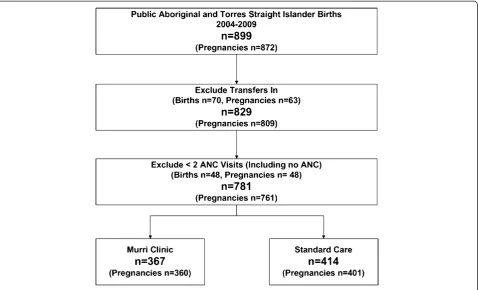
attended the clinic between 2004–2009, and the 414 Indigenous women attending SC services in the same hospital over the same time period (Figure 1). A chart audit was conducted on a random sample of 50% of 2009 service users (n=59) in order to understand more about the shared care (between hospital clinicians, GPs and the AMSs) arrangements for these women. Some variables were only available for May 2007–2009. All percentages presented are calculated on non-missing data with the number available for analysis detailed in tables below.
Data analysis
Clinical data were collated and analysed using StataSE Version 10 (StataCorp, College Station, Texas, United States of America). Survey data were collated and ana-lysed using SPSS Version 17 (IBM Corporation, Chicago, United States of America). Graphical interpretations of quantitative results were generated using Microsoft Office Excel 2002 (Microsoft Corporation, Redmond, Washington, USA). Bivariate analysis comparing out-comes between the two cohorts, MC attendees (n=367) and SC attendees (n=414), are reported as the difference in proportions with associated 95% confidence intervals (CIs). Statistical significance was set at the 0.05 level. Multivariate logistic regression was undertaken adjusting for the following possible confounders: age, body mass index (BMI), smoking status, specific pregnancy compli-cations (gestational diabetes, antepartum haemorrhage and/or pregnancy-induced hypertension) and socio-economic status as measured by Socio-Economic In-dexes for Areas (SEIFA) [22]. Results are reported as adjusted odds ratios (aOR) and associated 95% CIs. Due to small sample sizes for both staff and participant surveys no statistical inference was undertaken for these data. Results reported in tables are not repeated in the text.
A sample of interview transcripts was read by two of the authors [B & C] who identified key themes and indepen-dently created a coding system. Codes were compared, in-consistencies discussed and reconciled, and a final coding scheme agreed. To reduce the likelihood of errors, precise descriptors were written for each code. Coded transcripts were entered into NVivo Version 8 (QSR International Pty Ltd, Doncaster, Victoria, Australia), key themes identi-fied, and thematic analysis undertaken [23,24].
Results
Maternal characteristics
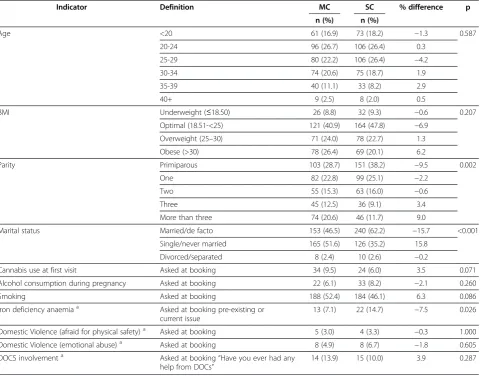
clinically significant differences between the two cohorts for any of the other conditions analysed including preg-nancy induced hypertension, gestational diabetes and ante-partum haemorrhage (data not shown). The rates of key psychosocial indicators were similar across cohorts. Some clinically significant differences were noted in the Murri co-hort in terms of alcohol consumption during pregnancy, smoking at first hospital (booking) visit and Department of Child Safety (DOCS) involvement; however no statistically significant differences were found.
High rates of smoking were evident in both cohorts; 81% of survey participants stated they had received in-formation on smoking in pregnancy, although women not infrequently complained that:
I don't want to be told not to smoke over and over again. (Participant survey)
Service provision Accessing the clinic
Difficulties with internal referral pathways, and identifi-cation of Indigenous status, resulted in some women who were eligible to access the MC, being allocated to mainstream services. This was sometimes rectified after women heard about the clinic and negotiated a transfer. Significant delays were identified concerning referral processes, reiterated by interview data, with the average
referral for MC women received at 16 weeks gestation (range 5–37 weeks) with a further eight weeks wait on average to attend a ‘booking’visit which occurred at 24 weeks vs. 20 weeks (mean) for Indigenous women in SC. Indigenous women attending SC were statistically more likely to attend eight or more visits (51.0% vs. 38.4%), al-though the hand held record which we accessed for audit purposes, is usually only commenced at the first hospital booking visit with previous episodes of commu-nity based care rarely recorded. Hence, antenatal attend-ance for women accessing MC shared care is likely to be under-recorded.
Shared care
Women accessed the MC from a wide geographical region including outside the hospital catchment area. Routinely collected data provided limited information on GP shared care arrangements (MC:14% vs. SC:34%) with interview data suggesting the proportion of MC women receiving shared care was higher. We instigated a chart audit of 2009 data and identified a much higher propor-tion (68% vs. 14%) participated in shared care with a variety of providers including two AMSs (39% and 15%); and GPs (MC: 14%). Participants expressed a desire for greater collaboration and partnership across organiza-tions, believing that a team approach would be more ef-fective and efficient, and reduce the substantial amount
of photocopying and faxing of patient records between services:
Everyone’s got their own patch. [. . .] Everyone seems to be doing something but nothing. (Staff )
They’ll drop in every three weeks [. . .] even though they don’t need antenatal care [. . .] you know there is kind of a doubling up. (External stakeholder)
Women mentioned needing to tell their story numer-ous times to different providers:
All they do is ask you the same questions. (Participant)
Interview data highlighted concerns from hospital staff and external stakeholders about the lack of co-ordinated care and duplication of services, for example due to dif-ferent pathology providers, screening test results which were inaccessible for‘after-hours’admissions.
Continuity of carer
At the time the Evaluation was undertaken the MC operated one day a week; midwifery appointments were available all day with an obstetric clinic operating along-side in the afternoon. Continuity of carer (midwife and obstetrician) was a major attraction, with women report-ing that this reduced the likelihood of bereport-ing asked the same questions:
It’s good coming here too because you know you’re going to see the same people all the time. It’s not a different doctor or a different midwife every time who’s going to ask you the same questions over and over again [. . .] she (midwife) knows your full-on history from the first visit to, you know, your last visit. She knows everything about you, which is good. (Participant)
Survey data confirmed that continuity of midwifery carer was very important to women attending the MC,
Table 1 Maternal characteristics and key social indicators by antenatal model of care, 2004-2009
Indicator Definition MC SC % difference p
n (%) n (%)
Age <20 61 (16.9) 73 (18.2) −1.3 0.587
20-24 96 (26.7) 106 (26.4) 0.3
25-29 80 (22.2) 106 (26.4) −4.2
30-34 74 (20.6) 75 (18.7) 1.9
35-39 40 (11.1) 33 (8.2) 2.9
40+ 9 (2.5) 8 (2.0) 0.5
BMI Underweight (≤18.50) 26 (8.8) 32 (9.3) −0.6 0.207
Optimal (18.51-<25) 121 (40.9) 164 (47.8) −6.9
Overweight (25–30) 71 (24.0) 78 (22.7) 1.3
Obese (>30) 78 (26.4) 69 (20.1) 6.2
Parity Primiparous 103 (28.7) 151 (38.2) −9.5 0.002
One 82 (22.8) 99 (25.1) −2.2
Two 55 (15.3) 63 (16.0) −0.6
Three 45 (12.5) 36 (9.1) 3.4
More than three 74 (20.6) 46 (11.7) 9.0
Marital status Married/de facto 153 (46.5) 240 (62.2) −15.7 <0.001
Single/never married 165 (51.6) 126 (35.2) 15.8
Divorced/separated 8 (2.4) 10 (2.6) −0.2
Cannabis use at first visit Asked at booking 34 (9.5) 24 (6.0) 3.5 0.071
Alcohol consumption during pregnancy Asked at booking 22 (6.1) 33 (8.2) −2.1 0.260
Smoking Asked at booking 188 (52.4) 184 (46.1) 6.3 0.086
Iron deficiency anaemiaa Asked at booking pre-existing or current issue
13 (7.1) 22 (14.7) −7.5 0.026
Domestic Violence (afraid for physical safety)a Asked at booking 5 (3.0) 4 (3.3) −0.3 1.000
Domestic Violence (emotional abuse)a Asked at booking 8 (4.9) 8 (6.7) −1.8 0.605
DOCS involvementa Asked at booking“Have you ever had any
help from DOCs”
14 (13.9) 15 (10.0) 3.9 0.287
a
with continuity of obstetrician and social worker slightly less so (61% vs. 47% vs. 42%). Clinic staff believed that the social worker provision, with minimal or no continu-ity, discouraged women’s frank and honest disclosures about their troubles. For their part, Social Workers reported being disappointed when their efforts to engage ‘hard to reach’women were thwarted because they were unable to secure the level of continuity required to en-sure culturally safe practice.
Staff were further concerned that lack of continuity in this area jeopardised the clinical management strat-egies in place for ‘high risk’ women; they were also concerned that this might be a factor in such women disengaging from all care provision. Although staff considered Indigeneity to be an important feature of the MC, their clients seemed less concerned about the Indigenous status of staff, stipulating that more important was access to the same care provider who was well qualified and experienced, with good listen-ing skills:
I’m more concerned about their qualifications and how much experience they’ve had [. . .]. I’m not really worried about whether they’re Indigenous or not. (Participant)
It’s someone that’s going to listen to you, then it don’t matter what they look like. (Participant)
Operational issues
The limited clinic opening hours were considered insuf-ficient to meet demand. Lack of flexibility with schedu-ling appointments was a particular problem which staff believed deterred some women from booking with the MC.
Sometimes they don’t come to this clinic because [. . .] we’re only on a Thursday and it doesn’t suit everyone [. . .] maybe the family’s working [. . .] studying, and they can’t get here on a Thursday and for that reason they’ll go through mainstream. (Staff )
Limited provision increased pressures on staff as the clinic was extremely busy on the one day it was in oper-ation; women reported that their appointments rarely ran to time. Staff agreed that delays were frequent and often substantial, commenting that scheduled appoint-ments were also not in keeping with Indigenous cul-tural norms, which favoured‘drop in’arrangements. An important concern for staff was that if they did not accommodate women who dropped in to the clinic un-announced, and who were more likely to be at higher risk with poor attendance records, a crucial opportunity for antenatal care would be lost. At the risk of inconvenien-cing women who were punctual with appointments, staff
adopted an opportunistic approach to these less regular clients:
Like she had an appointment two hours ago and now she’s here and it’s like so, I’ll just see her [. . .]
Indigenous health as you know is opportunistic and if you don’t get them then, you might not get them again. (Staff )
Women sometimes used the knowledge that they would be seen without an appointment to their advantage:
I figured out how it (the clinic appointment system) was working. So I would go up there like (at) nine (am) [. . .] women would be waiting after me that were probably meant to be before me. (I felt) bad at first but, you know, that’s the way they operate.
(Participant)
Strategies which assist patients to circumvent perceived organisational deficits may be important for survival in systems which are not designed to take account of their individual needs. The efforts expended by staff to balance opposing needs and professional responsibilities, however, are also acknowledged as considerable [25,26].
Location
Clinic staff and external stakeholders were of the opinion that the location of the clinic, within a tertiary maternity hospital setting, was problematic with some believing this hindered women’s attendance at clinic appointments. In particular, they cited long journeys, with perhaps multiple changes on public transport, travel-related costs including parking fees, and problems associated with travelling ac-companied by small children and pushchairs. Women who contributed to the Evaluation, however, refuted these suggestions, stating that accessing the clinic was relatively easy. Women who drove to the clinic for their appoint-ments reported that they frequently parked in side streets where parking was cheaper (or free) rather than using the (expensive) hospital car parks. Busways (i.e. dedicated roadways separating buses from general traffic), were a popular alternative for those travelling by public transport, not least because the bus stop was located directly in front of the hospital. When women were asked their pre-ferences regarding the location of the clinic, some sug-gested community-based locations, closer to where they lived. However, the hospital was also favoured for the op-portunity it provided partners and family members to be-come familiar with the surroundings in advance of labour and admission to birth suite:
Physical space
Complaints about overcrowding and lack of privacy to dis-cuss confidential matters were frequently articulated. One participant referred to the waiting area as a 'fishbowl’:
It’s a very fishbowl kind of situation. We’re all in there looking at each other in a very small space and as soon as the woman comes in with her other two kids and they start playing in the middle of the space, we’re all part of it you know? It’s like the comfort zones might be pushed for some [. . .] I think it definitely needs a better situation [. . .] at least a more appropriate one. (Participant)
Male partners in particular were reported as being loathe to spend time in the waiting room, opting instead to use mainstream facilities:
Yeah they (male partners) wait outside [. . .] (they) don’t feel comfortable. Like my partner didn’t feel comfortable sitting in there [. . .] sometimes I’d see just fathers just stroll past [. . .] because they don’t really want to go in there. (Participant)
In addition to concerns about confidentiality, staff believed lack of space hindered their ability to properly en-gage with women and their families. This was problematic as building rapport and establishing trusting relationships was an essential prelude for staff attempting to address the complex, and often long-standing, health-related risk fac-tors disrupting the lives of so many of their clients.
Culturally responsive care
Analysis of survey data found that the majority of women (92%) felt ‘mostly understood and respected’ by staff whilst attending the MC. Other hospital locations were less well rated, however, with only 47% of women feeling similarly about birth suite, 31% about the postna-tal ward and the 31% about the Maternal Fepostna-tal Medicine unit. Relatively small percentages of women stated they felt ‘not at all understood’or ‘respected’in selected loca-tions including; birth suite (14%), the Neonatal Intensive Care Unit (NICU) (6%), the postnatal ward (8%), the Ma-ternal Fetal Medicine unit (8%), and the Home Care Pro-gram (6%). Women described their disappointment with the lack of continuity of carer they experienced in birth suite and postnatally. Being cared for by unfamiliar staff during labour was especially difficult for younger Indigen-ous women, some of whom reported feeling ‘scared’ and/or ‘shamed’ when staff they had not previously met entered their room unannounced. Their discomfort was heightened by intrusions that occurred when clinical assessments were taking place, with women of the opinion that the intimate nature of labour and birth called for a
known carer and that all other staff should seek permis-sion to attend:
I was kind of like covering myself. (I felt) shame. [. . .] was like, embarrassed. (Participant)
I think it’s a very private time labour, and I think you should have a choice as to who is to be there.
(Participant)
Staff generated anxieties about labour progress and in-fant welfare when they failed to discuss with women in their care the need for consultation with medical collea-gues:
It makes you panic more when more people walk in because it makes you think that there’s something wrong [. . .] staff walk in and you think, what the hell is going on? Something’s going wrong here, is it going to be all right? (Participant)
Clinical outcomes
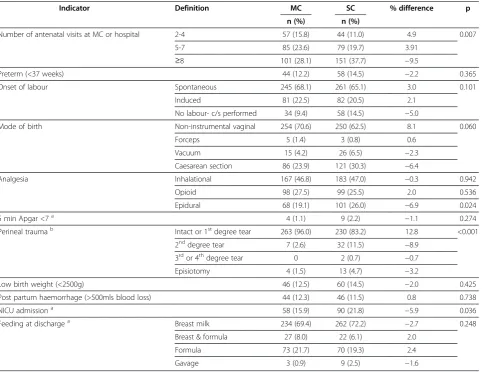
When compared to Indigenous women who attended SC, women who attended the MC were statistically less likely to experience perineal trauma, undergo an elective caesa-rean section, and have a baby admitted to the NICU (Table 2). Women attending the MC attended less ANC visits at the hospital, however we did not have accurate records of the number of visits with other providers.
Multivariate analysis found that Indigenous women who attended the MC were significantly more likely to have a normal birth with no statistically significant dif-ference seen for preterm birth or admission to the NICU (Table 3).
Discussion
communicating appropriately), were successful elements in the model of care provided by the MC. That said, little detail was provided about the constituent elements of a culturally sensitive service. Women consistently reported that these aspects of service provision pro-tected them from having to repeat information and afforded opportunities to build trusting relationships.
The majority of women who participated in the Evaluation reported that they were happy with the
clinic location and care arrangements (lack of con-tinuity notwithstanding); however, dissatisfaction may have been a factor motivating Indigenous women who attended other facilities or selected SC (53.2% of all Indigenous women attending the hospital). We were unable to ascertain if these women were ever offered the MC, or if they declined this option. The authors acknowledge that lack of data in this respect is a weakness in the study findings.
Table 2 Key maternal and neonatal indicators by antenatal model of care, 2004–2009
Indicator Definition MC SC % difference p
n (%) n (%)
Number of antenatal visits at MC or hospital 2-4 57 (15.8) 44 (11.0) 4.9 0.007
5-7 85 (23.6) 79 (19.7) 3.91
≥8 101 (28.1) 151 (37.7) −9.5
Preterm (<37 weeks) 44 (12.2) 58 (14.5) −2.2 0.365
Onset of labour Spontaneous 245 (68.1) 261 (65.1) 3.0 0.101
Induced 81 (22.5) 82 (20.5) 2.1
No labour- c/s performed 34 (9.4) 58 (14.5) −5.0
Mode of birth Non-instrumental vaginal 254 (70.6) 250 (62.5) 8.1 0.060
Forceps 5 (1.4) 3 (0.8) 0.6
Vacuum 15 (4.2) 26 (6.5) −2.3
Caesarean section 86 (23.9) 121 (30.3) −6.4
Analgesia Inhalational 167 (46.8) 183 (47.0) −0.3 0.942
Opioid 98 (27.5) 99 (25.5) 2.0 0.536
Epidural 68 (19.1) 101 (26.0) −6.9 0.024
5 min Apgar <7a 4 (1.1) 9 (2.2) −1.1 0.274
Perineal traumab Intact or 1stdegree tear 263 (96.0) 230 (83.2) 12.8 <0.001
2nddegree tear 7 (2.6) 32 (11.5) −8.9
3rdor 4thdegree tear 0 2 (0.7) −0.7
Episiotomy 4 (1.5) 13 (4.7) −3.2
Low birth weight (<2500g) 46 (12.5) 60 (14.5) −2.0 0.425
Post partum haemorrhage (>500mls blood loss) 44 (12.3) 46 (11.5) 0.8 0.738
NICU admissiona 58 (15.9) 90 (21.8) −5.9 0.036
Feeding at dischargea Breast milk 234 (69.4) 262 (72.2) −2.7 0.248
Breast & formula 27 (8.0) 22 (6.1) 2.0
Formula 73 (21.7) 70 (19.3) 2.4
Gavage 3 (0.9) 9 (2.5) −1.6
a
Excluding stillbirthsb
Excluding Caesarean sections.
Table 3 MC vs. SC bivariate and multivariate analysis of key clinical outcome indicators
Outcome Bivariate Multivariate
N Odds Ratio 95% CI P Odds Ratio 95% CI P
Preterm <37 weeksa 648 0.92 0.59, 1.43 0.710 0.92 0.58, 1.46 0.732
Normal birtha,b 648 1.61 1.17, 2.20 0.003* 1.48 1.07, 2.06 0.019*
NICU admissiona,c 643 0.71 0.47, 1.06 0.100 0.70 0.45, 1.08 0.110
a
Adjusted for maternal age, parity, body mass index, smoking, medical complications (gestational diabetes, antepartum haemorrhage, pregnancy induced hypertension, asthma) and socio-economic status as measured by the Socio-Economic Indexes of Areas.
b
Normal birth defined as: spontaneous onset of labour, no epidural, non-instrumental vaginal birth and no episiotomy. c
Our findings strongly suggested that employment of an Indigenous midwife and ILOs was very well received by both women attending the MC and other care providers, whether hospital or community-based. In particular, hospital staff believed the contribution made by their Indigenous colleagues helped to ensure a cultur-ally safe and appropriate environment. Additioncultur-ally, women emphasised the importance of staff qualifications and expertise, continuity, and communication skills.
Deficiencies in staff communication and interpersonal skills were particularly noticeable when women transi-tioned from antenatal to labour and postnatal environ-ments where care was provided by unfamiliar staff. Previous research confirms that Indigenous women en-counter culturally inappropriate maternity services and discriminatory attitudes amongst staff [30] although this was not a significant feature in our research. That said, some women did confide that they felt staff did not al-ways listen to them and sometimes discounted their opinions and version of events. Some also described occasions where their privacy was intruded upon, for example during clinical assessments in labour; this heightened their sense of shame and embarrassment.
Our findings suggest a positive association between the care provided to women attending the MC and some outcomes e.g. reduced perineal trauma, epidural adminis-tration and NICU admission, and higher rates of non-instrumental vaginal birth and normal birth (spontaneous onset of labour, no epidural, non-instrumental vaginal birth without episiotomy). After adjusting for known confounders we still found a positive and statistically sig-nificantly difference in normal birth rates, and a trend towards reduced NICU admissions. These may be due to women with higher medical risk factors (not found in our data), attending SC although we cannot rule out a possible association with the care provided through the MC. Psychosocial and lifestyle data reflected high rates of com-plexities in this population of women. This may help to explain the willingness of MC staff to spontaneously ex-tend antenatal visits and ‘slip in’women for consultation ahead of others already waiting, sometimes considerably beyond their appointment time.
Our findings confirmed that duplication of services between the MC and external services (such as AMSs) is problematic. The fragmented nature of shared care and suboptimal communication between hospital and community-based providers contributed to operational in-efficiencies. Despite the efforts of all concerned, the current model of care offered by the MC cannot be described as woman-centered. In the absence of standar-dised protocols and reliable systems for information sharing, multi-agency maternity provision is not ideal and indeed, may impact negatively on the quality of care pro-vided. However, due to the participatory nature of the
Evaluation, changes to service provision intended to de-crease delays in referral processes, and inaccurate or in-complete recording of data (e.g. BMI, smoking), have commenced.
A common, and widely acknowledged, successful feature of Indigenous-specific services is that they are either community-controlled or work within a community model. It is yet to be determined however whether, and how, it might be possible to streamline local provision to provide a ‘gold class’ maternity service across all sectors, including primary and tertiary, non-government and State. Models of care such as midwifery group practices, which provide a high degree of continuity throughout pregnancy, birth and the postnatal period, and are known to positively influence MIH outcomes [31-33], are being introduced in some Australian settings with a variety of Indigenous workers embedded in the models. Early evaluations of these models show promising results [34-36].
Clinical privileging, or access rights, are required if midwives are to be employed in primary care settings and offer continuity during birth (at the tertiary centre) and beyond. Currently, however, such arrangements are in their infancy in Australia. Combining multi-agency resources to increase continuity of carer, including during birth, culturally responsive care, Indigenous employment, capacity building, education and training is desirable, but has rarely been achieved in the area of maternity service provision. Finally, services that provide on-going cultural competency training as a matter of routine would go some way to improving staff knowledge and skills, and hence work towards reducing iniquitous care to a population with some of the poorest MIH outcomes.
Limitations
Small numbers, and the retrospective nature of the Evaluation, limit the conclusions that can be drawn from the data. Having access to a contemporary comparison group however, greatly strengthened our findings not least because there is little existing empirical research in this national priority area.
Conclusions
Competing interests
There are no competing interests, financial or otherwise, for any of the authors.
Authors’contributions
Author contributions are as follows: SK conceived of and led the study, and participated in the design, conduct and coordination. SK also helped draft the manuscript. HS assisted in the coordination of the project, led data collection and qualitative analysis of data. HS also helped draft the manuscript. RM helped in the qualitative analysis of data, conducted the quantitative analysis and helped draft the manuscript. NL collected data and helped draft the manuscript. KG oversaw the quantitative analysis and helped draft the manuscript. All authors read and approved the final manuscript.
Acknowledgements
The authors extend thanks to everyone who contributed to the Evaluation of the MC, including the women who have used the service, peer interviewers, clinic staff and hospital managers, external stakeholders and the project reference group. We would also like to acknowledge the Mater Foundation Golden Casket Major Research Grant who funded this Evaluation.
Received: 8 June 2012 Accepted: 19 December 2012 Published: 21 December 2012
References
1. Nettleton C, Napolitano D, Stephens C:An Overview of Current Knowledge of the Social Determinants of Indigenous Health. InWorking Paper. Edited by Commission on Social Determinants of Health for the Symposium on the Social Determinants of Indigenous Health Adelaide. Geneva: World Health Organisation; 2007. Australia 29–30 April 2007.
2. Kildea S:Maternal deaths high for Indigenous women.Women Birth2008, 21:175–176.
3. Li Z, McNally L, Hilder L, Sullivan E:Australia’s mothers and babies 2009. In
Perinatal statistics series no 25. vol. Cat. no. PER 52. Sydney: AIHW National Perinatal Epidemiology and Statistics Unit; 2011.
4. Steering Committee for the Review of Government Service Provision:
Overcoming Indigenous Disadvantage Report. Canberra: Commonwealth of Australia; 2009.
5. AIHW:Aboriginal and Torres Strait islander Health Performance Framework, 2010 report: Detailed Analysis. Canberra: Canberra Australian Insititute of Health and Welfare; 2011.
6. Watson J, Hobson K, Johnson R, Kemp K:The maternity experiences of Indigenous women admitted to an acute care setting.Aust J Rural Health2002, 10:154–160.
7. Ireland S, Wullili Narjic C, Belton S, Kildea S:Niyith Niyith Watmum the quiet story: exploring the experiences of Aboriginal women who give birth in their remote community.Midwifery2010, doi:10.1016/j.midw.2010.05.009. 8. Dietsch E, Shackleton P, Davies C, McLeod M, Alston M:'You can drop
dead': Midwives bullying women.Women Birth2010,23(2):53–59. 9. Wilson G:What do Aboriginal women think is good antenatal care?
Consultation report. Darwin: Central Australian Aboriginal Congress (CAAC) Inc. and Cooperative Research Centre for Aboriginal Health (CRCAH); 2009. 10. Hunt J:Trying to make a difference: improving pregnancy outcomes, care and
services for Australian Indigenous women. Doctor of Philosophy. La Trobe: La Trobe University; 2003.
11. Carter E, Lumley J, Wilson G, Bell S:Alukura. . .for my daughters and their daughters and their daughters. A review of Congress Alukura.Aust N Zeal J Publ Health2004,28(3):229–234.
12. Homer C, Foureur M, Allende T, Pekin F, Caplice S, Catling-Paull C:‘It’s more than just having a baby’women’s experiences of a maternity service for Australian Aboriginal and Torres Strait Islander families.Midwifery2012,28:e509–e515. 13. Herceg A:Improving health in Aboriginal and Torres Strait Islander mothers,
babies and young children: a literature review. Australia: Department of Health & Aging; 2005.
14. Rumbold AR, Cunningham J:A review of the impact of antenatal care for Australian Indigenous women and attempts to strengthen these services.J Matern Child Health2008,12:83–100.
15. Panaretto KS, Lee HM, Mitchell MR, Larkins SL, Manessis V, Buettner PG, Watson D:Impact of a collaborative shared antenatal care program for
urban Indigenous women: a prospective cohort study.Med J Aust2005, 182(10):514–519.
16. Mackerras D:Birthweight changes in the pilot phase of the strong women strong babies strong culture program in the northern territory.
Aust N Z J Publ Health2001,25(1):34–40.
17. NSW Health:NSW Aboriginal Maternal and Infant Health Strategy Evaluation Final Report 2005. Sydney: NSW Health; 2006.
18. Jan S, Conaty S, Hecker R, Bartlett M, Delaney S, Capon T:An holistic economic evaluation of an Aboriginal community-controlled midwifery programme in Western Sydney.J Health Serv Res Pol2004,9(1):14–21. 19. Australian Health Ministers Advisory Council:Aboriginal and Torres Strait
Islander Health Perfromance Framework 2010. Canberra: Canberra Australian Government; 2011.
20. Stapleton H, Murphy R, Gibbons K, Kildea S:Evaluation of the Mater Mothers’ Hospitals Murri Antenatal Clinic. Brisbane: Brisbane Midwifery Research Unit, Mater Mothers’Hospitals and Australian Catholic University; 2011. 21. Creswell JW:Research design: Qualitative, quantitative, and mixed methods
approaches. Los Angeles: Sage Publications, Inc; 2009.
22. ABS:Information Paper: An Introduction to Socio-Economic Indexes for Areas (SEIFA) 2006. Canberra: Australian Bureau of Statistics, Commonwealth of Australia; 2008.
23. Mason J:Qualitative Researching. London: Sage; 2008.
24. Attride-Stirling J:Thematic networks: an analytic tool for qualitative research.Qual Res2001,1:385–407.
25. Allan H:A‘good enough’nurse: supporting patients in a fertility unit.Nurs Inq2001,8(1):51–60.
26. Kirkham M, Stapleton H:Informed choice in maternity care: an evaluation of evidence based leaflets. York: University of York: NHS Centre for Reviews and Dissemination; 2001.
27. Helman CG:Culture, Health and Illness (Hodder Arnold Publication). London: Trans-Atlantic Publications, Inc; 2007.
28. Kleinman A, Eisenberg L, Good B:Culture, illness, and care: clinical lessons from anthropologic and cross-cultural research.Focus2006,4(1):140–149. 29. National Aboriginal and Torres Strait Islander Health Council:National
Aboriginal and Torres Strait Islander Health Strategy, Consultation Draft. Canberra: NATSIHC; 2000.
30. Reibel T, Walker, R:Antenatal services for Aboriginal women: the relevance of cultural competence.Quality in Primary Care2010,18:65–74. 31. McLachlan HL, Forster DA, Davey MA, Farrell T, Gold L, Biro MA, Albers L,
Flood M, Oats J, Waldenström U:Effects of continuity of care by a primary midwife (caseload midwifery) on caesarean section rates in women of low obstetric risk: the COSMOS randomised controlled trial.BJOG2012, 119(12):1483–1492.
32. Hatem M, Sandall J, Devane D, Soltani H, Gates S:Midwife-led versus other models of care for childbearing women.Cochr Database Syst Rev (Online)
2008,4:CD004667.
33. Sandall J, Devane D, Soltani H, Hatem M, Gates S:Improving quality and safety in maternity care: the contribution of Midwife-Led care.
J Midwifery Womens Health2010,55(3):255–261.
34. Homer C, Foureur M, Allende T:An evaluation of the Malabar community midwifery link service. Sydney: University Technology Sydney; 2009:61. 35. Stamp G, Champion S, Anderson G,et al:Aboriginal maternal and infant
care workers: partners in caring for Aboriginal mothers and babies.Rural Remote Heal2008,8:883.Online), 20082008,8(883 (online).
36. Josif C, Kildea S, Gao Y, Steenkamp M, Bar Zeev S, Kruske S, Barclay L:
Evaluation of the Midwifery Group Practice Darwin. Brisbane: Midwifery Research Unit, Mater Medical Research Institute and Australian Catholic University; 2012.
doi:10.1186/1471-2393-12-159