BIO-ARTIFICIAL LIVER
Shahana Shihab
1, Thahany. S
2and Saju Simon.S.G
31.2 & 3
UG Students, Assistant Professor
*Department of biomedical engineering, Noorul Islam University, Kumaracoil, K.K Dist, (India)
ABSTRACT
A person suffering from acute liver failure requires liver transplantation. But the availability of donor organ is
always a serious problem and is costly. Here bio-artificial liver comes into play with the advent of regenerative
hepatocyte cells. The significant feature of bio-artificial liver is that it does not permanently replace the liver
function but it acts as a supportive device that is it enhance the proper regeneration of hepatocytes in the
affected liver and it severs as a bridge for patients until a transplant comes evitable. These regenerative cells
are capable of secreting adequate hormones and improve live supportive system. The most recently used bio
artificial liver system is Spheroid Reservoir Bio Artificial Liver [SRBAL] and Molecular Adsorbent Recycling
System [MARS]. Other different types are extracorporeal liver perfusion system, extracorporeal liver assist
device and modular extracorporeal liver system.
I. INTRODUCTION
Liver is said to be the largest gland of our body which performs the metabolismof carbohydrates, lipids, proteins, hormones and xenobiotics including bile secretion and plasma protein. It also regulates the glucose levels,protein production, coagulation function, osmotic pressure, enzymatic function of the blood, detoxification and maintain immunological health. These functions are involved within the hepatocytes (parenchymal cells) of liver.The artificial liver function becomes challenging due to about 60% of liver while bile duct cells, littoral cells like endothelial cells, stellate cells, kupffer cells forms the rest. There are many supportive devices developed long before for assisting organs like hemodialysis device, artificial ventilation, artificial heart, heart-lung machine etc. But the development of assistive device for liver was challenging. Bio-artificial liver is a supportive device which helps in the liver function by regenerating hepatocyte cells. Even though the Bioartificial liver does not replace the liver function completely it is widely used. Different types of Bioartificial liver systems are now available. Spheroid Reservoir Bio-Artificial Liver [SRBAL] uses porcine hepatocytes isolated from pigs and in Molecular Adsorbent Recycling System [MARS] detoxification function is carried out. In Extra Corporeal Liver Perfusion [ECLP], the hepatocytes are drawn from the explanted human liver or xenogeny origins and are given to the human blood directly. The availability of viable hepatocytes are difficult in this method. In order to overcome this, different types of bioreactors are used. In Extracorporeal Liver Assist Device [ELAD], cryopreserved procine hepatocytes are used which are available in large quantity whereas the Modular Extracorporeal Liver Support [MELS] uses primary procine hepatocytes.
helps in the hepatocellular function.The system becomes complex for the isolation of human hepatocytes which is needed for efficient bio-artificial liver processes. Earlier the application of BAL was conducted in animals and was proven as successful. The treatment with different BAL system was improved using neurologic and biochemical parameters.
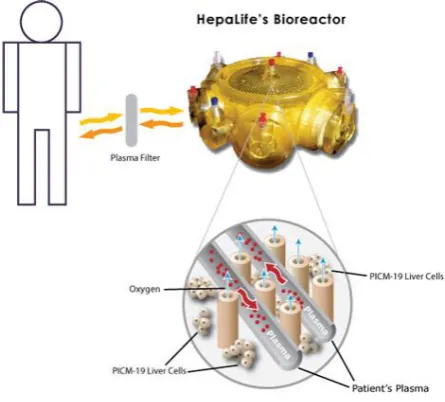
Bio- artificial liver can be said as a bioreactor consisting of hepatocytes (liver cells) which is thereby capable of functioning as a normal liver. It is usually connected outside the body to the blood or plasma circulation of the patient. Several types of bio-artificial liver are present in which one type of bioartificial liver resembles kidney dialysis system that contains hollow fibre cartridges.
II. RELATED WORKS
Dr. Kenneth Matsumara developed the first bio-artificial liver in 2001. Before the invention of bio-artificial liver system hepatocytes were obtained from animals. The construction of today’s bio-artificial liver is similar to the structure and function of the very first device. A semi permeable membrane is used to separate the suspended animal liver cell solution and the blood that allows the transportation of toxins and blood proteins restricting an immunological response. As per the studies in 2004 bio-artificial liver system was capable of reducing the mortality rate by about half in patients suffering from acute liver failure. The studies showed the improved standard supportive care with the use of bio-artificial liver embedded with pig liver cells. The studies covered around 171 patients in US and Europe. Bioartificial liver therapy for patients with acute liver failure becomes effective during liver transplantation or liver regeneration. There are two types of liver support system: biological liver support system and non biological liver support system
.
Matsumara first reported the application of bio-artificial liver support system in the year 1987. The system was developed based on the principle of hemodialysis and the cryopreserved hepatocytes of rabbit.With the use of rabbit hepatocytes the blood of the patient was isolated. The blood was allowed to flow through a cellulose membrane which transferred low and average molecular weight molecules. The position of artificial component of the BAL system was between the radial artery and basilica vein.
Later on a study including of 126 patients who used BAL system which contain 40*10^6 porcine hepatocytes suspended in a 20ml poly chloro vinyl capsule was reported. In the outlet of the capsule a nylon filter is present and the capsule is filled with charcoal and inorganic quartz glass materials. The capsule was inserted through arterio venous shunt of fore arm. During every interval of 6 hours the capsule was replaced. In every minute 90ml blood was flow through the bioreactor. Heparin is used as an anticoagulant.
bioreactor. Hydrophobic membrane is used for make third group of hollow fibers. And it is used for the exchange of gas within the bioreactor containing about 500-600 gram of hepatocytes.
After the invention of liver support system, a group of scientist in Amsterdam was develop the new bio-artificial liver system named as AMC (Academic Medical Center) BAL system. This BAL containing a bioreactor consisting of hollow fibers and act as a plasmapheresis system.The main advantage of this system is,this has the direct contact between the plasma and the small granules of hepatocytes. This results the optimal transfer of hepatocytes.
Hybrid bio-artificial liver was recently developed and its study was published. The success of the treatment using hybrid bioartificial liver is related to the bio activity of hepatocytes in the bioreactor. The injected bioactive cells and cell type are able to treat the diseased liver and plays a major role in treatment. These cell mass are expressed in grams or by cell number which may be confusing. Freshly isolated hepatocytes are used for the efficient treatment by BALs. This requires optimal preservation which improves the BAL availability. The required condition must be checked during its application.
Fig (1): hepatocyte bioreactor
2.1 Non biologic liver support
2.2 Biologic liver support
Hepatocytes from human or proper functioning of liver are exploited in biological approaches to support the affected liver. The main functions of liver like detoxification, metabolic functions, protein synthesis and synthesis of other molecules are effectively done. In one of the biologic approaches patient’s blood was dialyzed against animal liver tissue preparations known as xeno-cross hemodialysis. As this procedure was complex and there is a risk of loss of effectivity it was not considered for clinical application even though it was beneficial for patients with acute liver failure. Human cross circulation can be used as a liver support but this process was eliminated due to the adverse reaction and toxicity in the donor. Usually, the isolated hepatocytes are suspended in solution but they can be used in variety of configuration such as substrate attached an encapsulated in semi-permeable membranes. There are two kinds of hepatocytes based on their use in liver support system that is namely implantable and extracorporeal system. And these bio-artificial liver systems are extra corporeal connected to the circulation of the patient. The bio-artificial liver system consists of an artificial component and a biological part. The bioreactor forms the artificial component and hepatocytes forms the biological component.
III. PROPOSED WORK
Fig (3): Block Diagram Representation of SRBAL
The basic need for a liver support system is to act as a bridge during transplant and for organ regeneration. Bio-artificial liver should perform biochemical process that the liver performs. Biochemical functions and mechanical functions are fulfilled to conduct these biochemical activities. Any artificial device is unable to perform all the biological activities of liver. So it is necessary to carry out an essential biochemical function for survival.
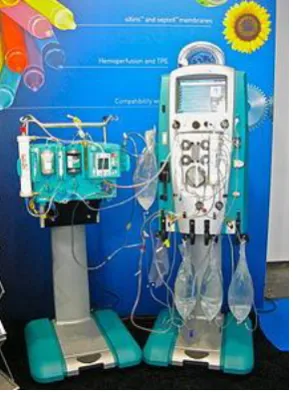
Fig (2): Bioartificial Liver Unit
The BAL culture medium should be tested for bacterial, fungal and mycoplasma contamination in prior. Also bioreactors are checked for urea synthesis function and patients were tested negative for cyto-toxicity beside porcine liver cell. The body temperature of patients is allowed above 36 degree Celsius to evade hypothermia. Studies showed better neurological state, enhanced diuresis and stabilization of hemodynamics. The only identified side effect was hypotension which can be corrected within 15 minutes by fluid addition and temporary running of dopamine.The disadvantages of earlier BAL are: insufficient number of hepatocytes in oculation, the premature death of hepatocytes, and loss of function of hepatocytes. To overcome the above demerits, most advanced type of BAL that is SRBAL can be developed. Most commonly used Bioartificial liver is Spheroid Reservoir Bioartificial Liver [SRBAL] developed by the Mayo Clinic. In this spheroid reservoir Bioartificial liver, there are two components are mainly present.
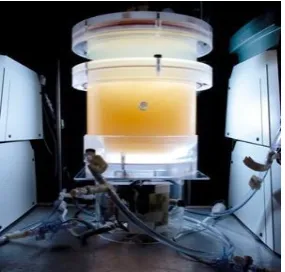
Fig (4): Hepatocytes Culture Medium
They are,
1) Multifunctional spheroid reservoir and 2) Multi shelf rocker.
Spheroid reservoir is the active component in the liver supportive device. Multi shelf rocker is used to produce upto 6 liters of hepatocytes in the incubator. By the oscillation based technique the bioreactor produce porcine hepatocyte. These hepatocytes can be isolated from pigs.
The newly isolated hepatocytes are first suspended in cryopreservation medium and then it is transferred into a controlled rate freezer. The hepatocytes are freezed upto -90 C. Then the frozen hepatocytes are stored in the liquid nitrogen. Live and dead hepatocyte can be identified by using a fluorescence viability stain and an epi-fluoresce video microscopy stain. BAL that can help in the regeneration of failure liver and also help in the healing.
The type of Bioartificial liver is MARS [Molecular Adsorbent Recycling System]. This was first invented in University of Rostock [Germany] in the year 1993. MARS is a non- biologic therapeutic support system. It performs detoxification function and had overcome the drawbacks of other Bioartificial systems.
Studies had found that the MARS removed bilirubin, biliary salts, pre-fatty acids and tryptophan by maintaining the essential proteins such as albumin, alpha 1 glycoprotein, alpha 1 antitrypsin, alpha 2 macroglobulin transferring, globulin tyrosine and hormonal systems. MARS is an extracorporeal hemodialysis system consisting of three circuits; namely blood circuit, albumin circuit, open loop-single pass dialysate circuit. It helps in the removal of albumin bound molecules and toxin from the blood. MARS are commonly used for the treatment on hepatic encephalopathy [HE]. After hepatocellular breakdown HE produces neurotoxin and neuro active substances. These accumulate in the brain and reduce the detoxification capability of liver. Ammonia, manganese, aromatic amino acid, mercaptans, phenols, median chain fatty acids, bilirubin are some of the substances involved in this process. MARS improves protein synthesis during treatment, plasma anti-thrombin III levels, pro-thrombin activity and factor VII levels, chiolinesterase level were increased. It also helps in the removal of ammonia which causes hepatic encephalopathy and cerebral edema. The major advantage of MARS is removal of water soluble and albumin bound substances.
IV. CONCLUSION
The unavailability of organs for transplantation, which may leads to the invention of Bioartificial liver for the hepatic liver failure. There are many disadvantages in earlier inventions of Bioartificial liver. In order to overcome these drawbacks many technologies has been developed. Spheroid reservoir Bioartificial liver and Molecular Adsorbent Recycling System are the most advance technologies. Studies have shown that the spheroid reservoir Bioartificial liver decreased the risk of liver diseases and mortality rate.Also the assures as a less invasive long term treatment. While Molecular Adsorbent Recycling System removes water soluble substances and increases the protein synthesis.
REFERENCE
[1]. SongyangRen,Joseph Ignatius Irudayam, Deisy Contreras 2015 “Bioartificial liver device based on induced pluripotent stem cell-derived hepatocytes”.
[2]. Scott L Nyberg, Joseph Herdin,BruceAmiout, Upendre A Argilear, Roey P Remmel, PieroRinado 2005 “Rapid large scale formation of porcine hepatocyte spheroids in a novel SRBAL”.
[5]. Matsumara KN, Guevara GR, Huston H, Hamilton WL, RikimaruM,Yamasaki G 1987 “Hybrid bioartificiaiver in hepatic failure:preliminary clinical report”.
[6]. JW Allen, T Hassanein, SN Bhatia 2001 “Advances in bioartificial liver devices”.
[7]. FJ Wu, MV Peshwa, FB Cerra,WS Hu 1995 “Entrapment of hepatocytes spheroids in a hollow fiber bioreactor as a potential bioartificial liver”.
[8]. J Rozga, F Williams, MS Ro, Daniel F Neuzil, Todd D Giorgio, Gisela Backfisch, Albert D Moscioni, Raymond Hakim, Dr Achilles A Demetriou1993 “Devolopment of a bioartificialliver:properties and function of a hollow fiber module inoculated with liver cells”.
[9]. MP Van de Kerkhove, R A F M Chamuleau, T M Van Gulik 2003 “Clinical application of bioartificial liver support systems”.
[10]. E Morsiani, Pazzi P, Puviani AC, Brogi M, Valier L, Gorini P “Early experiences with a procine hepatocyte based bioartificial liver in acute hepatic failure patients”.
BIOGRAPHIES
Shahana Shihab
UG Scholars, Department of biomedical engineering, Noorul Islam university,K.K Dist, India
Thahany. S
UG Scholars, Department of biomedical engineering, Noorul Islam university,K.K Dist, India
Saju Simon.S.G