ABSTRACT
WHITE, ANGELA MICHELLE. Understanding the Relationships Between the Racial Identity, Science Identity, and Science Self-efficacy Beliefs of African American Students at HBCUs. (Under the direction of Dr. Jessica DeCuir-Gunby).
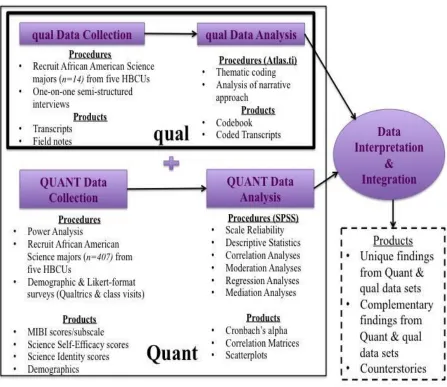
In this study, the relationships between the racial identity, science identity, and science self-efficacy beliefs of African American college students who attend HBCUs have been explored through the utilization of a concurrent mixed methods design (QUANT + qual). The study was viewed through the analytic lens of Critical Race Theory (CRT), and specifically guided by the following CRT tenets: permanence of racism, challenge to
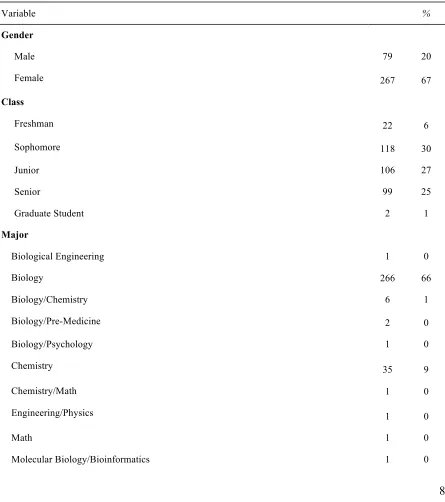
dominant ideology, intersectionality, and whiteness as property. Approximately, 347 African American science students (Biology, Chemistry, Physics, and Pharmaceutical Sciences) participated in the quantitative aspect and 14 students participated in the qualitative component, the semi-structured interviews. The students were sophomores, juniors, or seniors and were enrolled at a southeastern HBCU.
promote the development of and interactions between their racial identity, science identity, and science-self-efficacy beliefs. Also, subtle acts of racism by White HBCU faculty or White principal investigators for their research experiences hindered a positive interaction between their science identity and science self-efficacy; thereby, supporting the notion of the permanence of racism. In addition, findings revealed that African American students at HBCUs prefer Black spaces, but their interactions with non-African American faculty at their HBCUs or interactions in other predominantly White settings require that they strategically assimilate. The need to strategically assimilate, despite a strong sense of racial pride and predominately Black educational context, reveals how science-related activities reinforce the notion of “Whiteness as property”.
Understanding the Relationships Between the Racial Identity, Science Identity, and Science Self-efficacy Beliefs of African American Students at HBCUs
by
Angela Michelle White
A dissertation submitted to the Graduate Faculty of North Carolina State University
in partial fulfillment of the requirements for the degree of
Doctor of Philosophy
Curriculum and Instruction
Raleigh, North Carolina 2017
APPROVED BY:
_______________________________ _______________________________
Dr. Jessica DeCuir-Gunby Dr. John Nietfeld
Committee Chair
_______________________________ _______________________________
DEDICATION
I dedicate this dissertation to the Lord who is the one who downloaded the ideas and aroused the passion for this study. It would have been virtually impossible for me to have endured the various stages of this dissertation without His grace and continual guidance. I give back to you what you have birthed through me.
BIOGRAPHY
Angela Michelle White was born and raised in Greensboro, North Carolina. She is the daughter of Michael White Sr. and Nora White. Her love for math and science guided her to the University of North Carolina at Chapel Hill, where she earned a Bachelor of Science in Biology in 1999. After working for two years in Chapel Hill, Angela returned home to Greensboro to further cultivate her science knowledge and technical skills. In 2004, she graduated with her Master of Science in Biology from North Carolina Agricultural and Technical State University. Her educational training in biology entailed research experiences in virology at the University of Maryland at College Park, as well as in cancer biology at Wake Forest University.
of African American students in STEM today than she was when she first began teaching at the university.
Above all, Angela deeply loves the Lord and has always sought to position Him at the center of every decision, especially her professional and educational involvements. Not only has her passion for teaching been displayed within our secular educational system, but it has also been displayed within the four walls of the church. She was licensed as a minister of the gospel in 2006 and ordained as a pastor in 2016. Angela is an associate pastor at the
ACKNOWLEDGMENTS
First and foremost, I acknowledge the Lord for His continued presence, strength, and favor throughout this entire process. Thank you Lord for the treasure that you hid deep within this earthen vessel that I was not even aware of until the pressure from this endeavor was applied to my life. You have brought out aspects of Your greatness that is woven into the fabric of my being that was simply waiting to be unearthed through this walk of faith.
A very special expression of my gratitude is extended to my parents, Nora White and Michael White Sr. Thank you mama for believing in every single one of my dreams and for never telling me that my aspirations were unattainable. Your prayers, support, words of encouragement, phone calls during my weekly commute from Raleigh to Greensboro and delicious meals have seen me through this process. Thank you daddy for being my cheerleader and inspiration. Watching you press through your personal and educational journeys caused me to press even harder for the prize that has been positioned before me.
Eddie Redmon, thank you for your love, support, and for prophetically speaking the outcome of Dr. White into existence.
I would like to thank my committee members who went above and beyond the call of duty throughout this entire process. I feel so blessed to have such a unique assembly of scholars who have actively cultivated the educational psychologist within me. Thank you for sharing your expertise and for sacrificing your time. A very special thank you to Dr. Jessica DeCuir-Gunby, my committee chair for your instrumental guidance, encouragement, and patience. Your mentorship has shaped me into a better researcher and cleared my vision to see through a more critical lens. I have been able to glean from you in this “field” just as Ruth was able to glean from Naomi…Thank you for every deposit that you made along the way. Thank you Dr. Nietfeld for agreeing to serve on my committee, but most of all for mentoring me from the moment I took your Advanced Educational Psychology class. Thank you Dr. Hope, Dr. Sondel, and Dr. Davis for serving on my committee, and for providing me the feedback that sharpened the focus of my study.
me during this very critical timeframe. I am blessed to have the two of you on my side. Cailisha - the support that you provided was selfless and served as a true indicator of
TABLE OF CONTENTS
LIST OF TABLES ... xi
LIST OF FIGURES ... xii
CHAPTER I: INTRODUCTION ... 1
Theoretical Framework ... 3
Inquiry Worldview ... 4
Central Tenets of CRT ... 6
Permanence of Racism ... 8
Challenge to Dominant Ideology ... 8
Voices of people of color/Counterstorytelling ... 10
Intersectionality ... 11
Whiteness as property ... 12
Substantive Content Theories ... 16
Subjectivity Statement ... 21
Purpose Statement ... 27
Statement of the Problem ... 27
Goals of the Research ... 28
Mixed Method Rationale ... 28
Significance ... 29
Operationalization of Terms ... 30
Overview and Organization of Dissertation ... 31
CHAPTER II: LITERATURE REVIEW ... 33
Identity Theories and Identity Development ... 33
Social Identity Theory and Identity Theory ... 36
Triple Quandary Theory ... 40
Racial Identity ... 42
William Cross and Nigrescence Theory ... 44
Multidimensional model of racial identity ... 46
Science Identity ... 49
Self-efficacy and Science Self-efficacy ... 56
The Mechanism of Personal Agency ... 59
Sources of Self-efficacy ... 60
Performance accomplishments/mastery experiences ... 61
Vicarious experience ... 61
Verbal or Social persuasion ... 62
Physiological and affective states ... 63
Self-efficacy and Context ... 64
The Role of Historically Black Colleges and Universities (HBCUs) ... 67
CHAPTER III: RESEARCH DESIGN AND METHODOLOGY ... 76
Justification of Concurrent Mixed Methods ... 77
Study Design ... 77
Sample and Interview Participants’ Profiles ... 81
Participants’ Institutions ... 85
Recruitment of Participants ... 85
Instrumentation ... 87
Multidimensional Inventory of Black Identity (MIBI) ... 88
Science Identity Scale ... 89
Science Self-efficacy Inventory ... 90
Demographics Questionnaire ... 90
Interview Protocol ... 91
Data Collection ... 93
Quantitative Data Collection ... 93
Qualitative Data Collection ... 94
Data Analysis ... 96
Quantitative Data Analysis ... 96
Qualitative Data Analysis ... 98
Qualitative Data Trustworthiness and Credibility ... 100
Data Integration ... 102
Ethical Procedures ... 107
Summary ... 107
CHAPTER IV: FINDINGS AND DISCUSSION ... 108
Quantitative Analyses for Research Question One ... 109
Science Identity and Racial Identity ... 109
Science Self-efficacy and Racial Identity ... 110
Science Self-efficacy and Science Identity ... 111
Moderation Analyses ... 112
Quantitative Analyses for Research Question Two ... 114
Centrality Moderating ... 115
Assimilation Moderating ... 115
Public Regard Moderating ... 116
Nationalist Regard Moderating ... 116
Quantitative Findings to Address Research Question Three ... 121
Science courses in high school, science identity, and college science GPA ... 121
Math courses in high school, science identity, and college science GPA ... 121
High school GPA, science identity, and college science GPA ... 122
Pre-college experiences ... 122
Qualitative Findings: Research Question Four ... 124
Black Racial Cohesion ... 125
Black Science Cohesion ... 133
Building Science Capital ... 140
Scientific Cultural Capital ... 140
Influence science related behaviors ... 143
Building a Network ... 144
Data Integration Findings ... 145
I Prefer Black Spaces, but I Strategically Assimilate ... 146
The Source Makes the Difference ... 160
Science Self-efficacy and Science Achievement are Raceless in the HBCU ... 164
I’m going to confidently handle my business and prove-them-wrong! ... 169
CHAPTER V: SUMMARY, IMPLICATIONS, AND RECOMMENDATIONS ... 174
Summary of Study ... 174
Research Study Limitations ... 189
Implications ... 192
Recommendations for Future Research ... 197
Conclusion ... 199
REFERENCES ... 201
APPENDICES ... 234
Appendix A: Survey Recruitment Letter ... 235
Appendix B: Surveys Consent Form ... 236
Appendix C: Surveys & Questionnaire ... 238
Demographics Questionnaire ... 238
Identity as a Scientist ... 241
Multidimensional Inventory of Black Identity (MIBI) ... 242
Science Self-efficacy Questionnaire ... 244
Appendix D: Interview Recruitment Letter ... 246
Appendix E: Interview Consent Form ... 247
LIST OF TABLES
Table 1 CRT tenets: Descriptions and Literature sources ... 7
Table 2 Frequency Table for Major School, Highest Science in High School, and Highest Math in High School ... 82
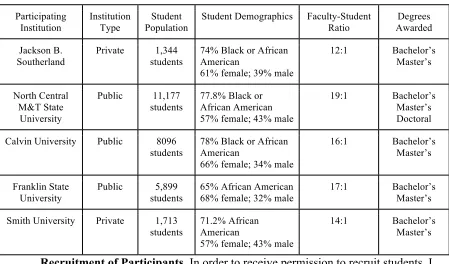
Table 3 Description of Participating Institutions ... 85
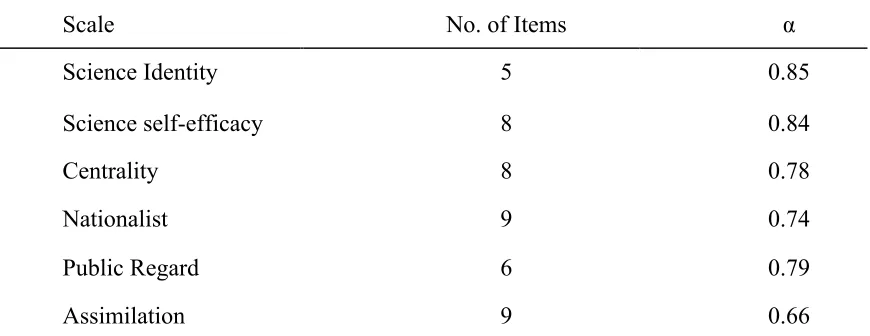
Table 4 Reliability Table for Science Identity, Science self-efficacy, Centrality, Assimilation, Nationalist, and Public Regard ... 87
Table 5 Interview Participant Profile ... 91
Table 6 Means and Standard Deviations for Continuous Variables ... 97
Table 7 Sample Display of Quantitative and Qualitative Findings Table ... 104
Table 8 Regression Results with Centrality and Science self-efficacy ... 110
Table 9 Regression Results with Public Regards Mediating the Relationship Between College Science GPA and Science self-efficacy ... 110
Table 10 Pearson Correlation Matrix among Science Identity, Science Self-efficacy, Centrality, Assimilation, Nationalist, and Public Regard ... 111
Table 11 Linear Model Comparison Table between the Non-Interaction and Interaction Model ... 116
Table 12 Moderation Analysis Table with College Achievement Predicted by Science self- efficacy Moderated by Nationalist ... 117
Table 13 Regression Results with Science Identity Mediating the Relationship Between College Achievement and Science Self-efficacy ... 119
Table 14 Correlations for High School GPA, College Science Courses, College Science GPA, Science Identity, Science Self-efficacy, Centrality, Assimilation, Nationalist, and Public Regard ... 122
Table 15 Meta-themes, Sub-Themes, and CRT Connection ... 123
LIST OF FIGURES
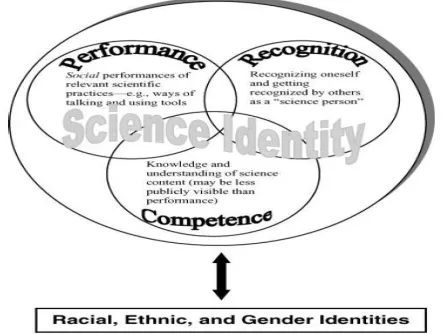
Figure 1 Model of science identity (Carlone & Johnson, 2007) ... 53
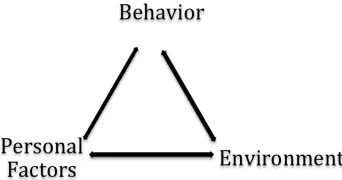
Figure 2 Interdependent relationship between the interacting determinants ... 59
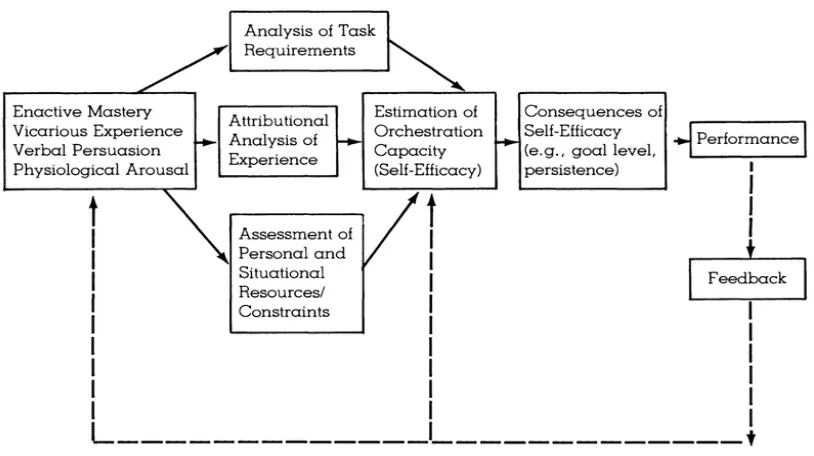
Figure 3 Gist-Mitchell Proposed Model (1992) ... 64
Figure 4 Schematic of Concurrent Mixed Methods Design ... 77
CHAPTER I: INTRODUCTION
Traditionally, science and science-related careers were designated as privileges for the White elite, specifically White males (Russell & Atwater, 2005). In fact, over 50% of the scientists and engineers working in industry are white males, while white women account for another 25% (Falkenheim & Burrelli, 2012). There are a number of school practices and policies that have maintained the structure of hegemony that exist within the American educational system. Over the years, African American students have not experienced great success in science and are greatly underrepresented in science courses and science-related careers (Russell & Atwater, 2005). African Americans are considered underrepresented in science because the percentage of African Americans with science degrees and working in science-related careers is dramatically lower than the percentage of African Americans in the U.S. population;however, whites and Asians are overrepresented (NSF, 2013;Fries-Britt, S., Younger, T., Hall, W. 2010; Lewis, B. & Connell, 2005; Russell, 2005).
that intended to major in science or engineering. Research conducted by the National Science Foundation (NSF) showed that the college graduating class of 2013 consisted of 74.8% White, 8.4% Asian, 7.5% Hispanic, and 7.1% African American (NSF, 2015). Additionally, NSF (2015) reported that the participation rates of White graduates in science and
engineering careers was 69.9%, while the participation rates for African Americans in science and engineering careers was 4.8%. These numbers indicate that African American students have a desire to pursue degrees and careers in science at rates comparable to White students; however, there is a turn of the tide when it comes to the numbers who actually obtain science degrees and positions in the field. To this end, African Americans are not experiencing the careers that typically provide the greatest opportunities for financial prosperity and professional status. If African American students intend to major in science disciplines at higher rates than their White counterparts, then why are there so few African American students who receive a science degree and enter science-related careers? In order to address this question, one must consider that African American students in science face the challenge of navigating their way through a system that is characterized by White, male values and behavioral norms (Carlone & Johnson, 2007).
the racial identity, science identity, and science self-efficacy beliefs of African American students. Moreover, this investigation is situated within the context of historically Black colleges and universities (HBCUs), as they have a disproportionately higher number of graduates with science degrees (NSF, 2013; Shorette & Palmer, 2015). Between 2006-2010, close to 35% of the doctorates earned by African Americans in science and engineering were granted by HBCUs. Unfortunately, HBCUs only represent a small percentage of institutions of higher learning in the United States.
Theoretical Framework
Education researchers and science educators have posited the influence of many different cognitive and psychological factors and frameworks to explicate the
underperformance and underrepresentation of African American students in science. For the most part, these theoretical constructs have been maintained as isolated ideas, without
self-efficacy beliefs. In addition to the aforementioned substantive content theories, this study has been informed by the central tenets of my inquiry worldview of Critical Race Theory.
Inquiry Worldview. My research study was situated within a critical, interpretive framework. More specifically, my work was guided by Critical Race theory (CRT) which centralizes race at the core of analysis (DeCuir-Gunby & DeVose-Walker, 2013). There is not a concept as complex and contentious in sociological thought than that of race (Winant, 2000). When seeking to understand the experiences of marginalized or underrepresented groups with regard to race, gender, sexuality, or class, an interpretive lens is an appropriate choice (Creswell, 2007). Moreover, utilization of an interpretive lens may potentially provoke a call to action and change (Creswell, 2007). Critical Race Theory (CRT) is an interpretive framework that emphasizes the experiential knowledge of racial minorities and their communities as it relates to race and race relations (Delgado & Stefancic, 2012). A unique quality of CRT is that it takes into consideration that race and racism are focal constructs that have intersected with various dimensions of a person’s identity such as gender, sexuality, and social class (Crenshaw, 2011).
theoretical lens to evaluate the relationships between racial identity, science identity, and science self-efficacy beliefs. Moreover, it can be used to analyze the ways African Americans students’ perspectives of their college experiences at HBCUs influence their racial identity, science identity, and science self-efficacy beliefs.
CRT draws its origins from critical legal studies (CLS), as it emerged in the 1970s as a more radical approach to addressing the collective racialized experiences of people of color (Delgado & Stefancic, 2012; Parker, 2015). While CLS served as the forerunner of CRT, many of the early CRT scholars criticized its failure to acknowledge the role the law played in the history of racism in American society (Cook, 1995; Crenshaw, 1988). Critical legal studies scholars did not include critiques of racial power in their analysis or theories, thus at times their writings could not be distinguished from those of the dominant institutions that they challenged (Crenshaw, Gotanda, Peller, & Thomas, 1995). Thus, a group of scholars and students assembled to construct an “alternative account of racial power and its relation to law and antidiscrimination reform” (Crenshaw, Gotanda, Peller, & Thomas, 1995, p. xxi). A key goal of CRT is to enhance society’s understanding of racial power from a position on race that is not aligned in any way with liberalism (Crenshaw, Gotanda, Peller, & Thomas, 1995).
see that racism has been institutionalized and systematized; thus, they only consider it to be an individual and senseless act (Savas, 2014). To this end, we can no longer restrict racism to the level of the individual for this causes us to overlook the manner in which racism operates within society and its institutions. CRT contends that racism is very much present in our society, but it has taken on a more subtle form that differs from what was experienced in the past (Delgado & Stefancic, 2012; Dixson, 2006; Ladson-Billings & Tate, 1996).
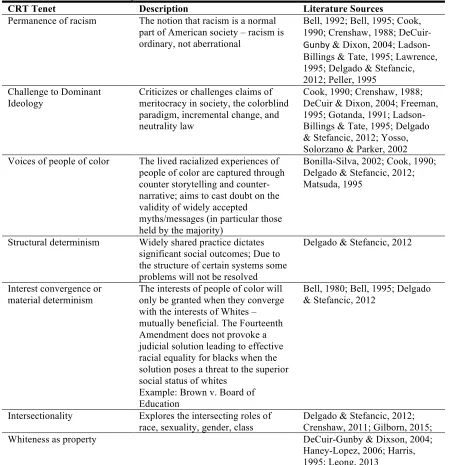
Central Tenets of CRT. Delgado and Stefancic (2012) point to the following central
tenets of CRT: (1) permanence of racism, (2) a critique of liberalism, (3) the use of storytelling/counter storytelling – voices of people of color, (4) structural determinism (5) interest convergence and (6) intersectionality with regard to race, sex, and class (see Table 1 for descriptions and sources). Moreover, CRT argues against colorblindness, seeks to dismantle the myth of meritocracy, and counter dominant legal assertions of equality (Delgado & Stefancic, 2012); therefore revealing how these concepts synergistically create an interest convergence where people of color gain some advantages but not without Whites gaining something in return (Bell, 1992; Parker, 2015). In order to superimpose the
society.
Table 1. CRT tenets: Descriptions and Literature sources
CRT Tenet Description Literature Sources
Permanence of racism The notion that racism is a normal part of American society – racism is ordinary, not aberrational
Bell, 1992; Bell, 1995; Cook, 1990; Crenshaw, 1988; DeCuir-‐ Gunby & Dixon, 2004; Ladson-Billings & Tate, 1995; Lawrence, 1995; Delgado & Stefancic, 2012; Peller, 1995
Challenge to Dominant Ideology
Criticizes or challenges claims of meritocracy in society, the colorblind paradigm, incremental change, and neutrality law
Cook, 1990; Crenshaw, 1988; DeCuir & Dixon, 2004; Freeman, 1995; Gotanda, 1991; Ladson-Billings & Tate, 1995; Delgado & Stefancic, 2012; Yosso, Solorzano & Parker, 2002 Voices of people of color The lived racialized experiences of
people of color are captured through counter storytelling and counter-narrative; aims to cast doubt on the validity of widely accepted
myths/messages (in particular those held by the majority)
Bonilla-Silva, 2002; Cook, 1990; Delgado & Stefancic, 2012; Matsuda, 1995
Structural determinism Widely shared practice dictates significant social outcomes; Due to the structure of certain systems some problems will not be resolved
Delgado & Stefancic, 2012
Interest convergence or material determinism
The interests of people of color will only be granted when they converge with the interests of Whites – mutually beneficial. The Fourteenth Amendment does not provoke a judicial solution leading to effective racial equality for blacks when the solution poses a threat to the superior social status of whites
Example: Brown v. Board of Education
Bell, 1980; Bell, 1995; Delgado & Stefancic, 2012
Intersectionality Explores the intersecting roles of race, sexuality, gender, class
Delgado & Stefancic, 2012; Crenshaw, 2011; Gilborn, 2015; Whiteness as property DeCuir-Gunby & Dixson, 2004;
Haney-Lopez, 2006; Harris, 1995; Leong, 2013
permanence of racism, challenge to dominant ideology, voices of people of color, intersectionality, and whiteness as property.
Permanence of racism. Critical Race Theory rests on the premise that racism is intricately woven into the fabric of American society. According to Derrick Bell (1992, 1995), racism is endemic and permanent in America; therefore, Black people will never experience equality in the United States. Despite civil rights movements, periodic victories in legislatures, and the Black Lives Matter movement, African Americans are in no way equal to whites (Bell, 1995). Moreover, any successes or victories are temporal due to the manner in which racial patterns adapt to sustain white dominance (Bell, 1992). While Jim Crow has been brought to an end, the white social norm still exist within popular consciousness and negative stereotypes associated with African Americans are still prevalent (Crenshaw, 1988). For these reasons, Bell (1995) asserts that racial equality is not a realistic goal. In order to embrace this CRT tenet, Bell (1995) suggest engaging in “Racial Realism”; therefore, taking into consideration the role that racism has played in American history. According to Bell (1995), the concept of Racial Realism allows African Americans to understand and appropriately respond to their subordinate status. Crenshaw (1988) asserts that racism and subordination are permanent in American due to the acceptance of a colorblind perspective. More specifically, the nation will never be able to correct subordination because it will never acknowledge its existence.
tradition of race-consciousness amongst African Americans by investigating the manner in which race and racism have been negotiated in American consciousness (Crenshaw, Gotanda, Peller, & Thomas, 1995). Critical race theorists posit that such a tradition of race-consciousness was rejected as integration, assimilation and colorblindness became the accepted norms of explanations related to race (Bell, 1995; Crenshaw, Gotanda, Peller, & Thomas, 1995; Delgado, 1995). For this reason, an essential tenet of CRT is to challenge dominant ideologies such as meritocracy, incremental change, colorblindness, and neutrality of the law. Moreover, a critical race methodology uncovers deficit-informed investigations that silences and misrepresents epistemologies of people of color (Delgado Bernal, 1998; Solórzano & Yosso, 2002). Derrick Bell (1995) asserted that the drive of establishing race balance (integration), as demonstrated in Brown v. Board of Education, blinded key judicial players from identifying the true factors that prevented African American children from receiving a quality education. Moreover, Bell (1995) introduced a more race-conscious point of view regarding Brown, thereby causing individuals to consider the impact integration had on the Black community.
citizens” (Gotanda, 1991, p.47); thereby, weakening the effectiveness of any possible solution. An end goal of colorblindness is a racially assimilated society that renders race irrelevant; thereby, neglecting the positive aspects of race (Gotanda, 1991). Such a goal of assimilation devalues Black culture and destroys positive facets of Blackness (Gotanda, 1991). According to Gotanda (1991), the assimilationist ideal associated with a colorblind society lends to the notion that one day the phenotypic aspects associated with race (i.e. skin complexion, hair texture, facial features, etc.) would be socially inconsequential.
Many of the CRT critiques of racial power unveil the manner in which various conceptions of merit operate not as a neutral basis for allocating resources and opportunities, but as a storehouse of hidden, race-specific preferences for the individuals who possess the power to make determine the connotation of “merit” (Crenshaw, Gotanda, Peller, & Thomas, 1995). Furthermore, Crenshaw (1988) emphasizes that America’s embracing of indecisive rhetoric of neutrality and equal opportunity law has made it very challenging for African American people to name their reality.
CRT tenet of counterstorytelling. Instead of scholars making attempts to recreate the experience of life at the bottom of the totem pole, listening to the individuals who are positioned at the bottom provides a greater opportunity to connect theory to concrete
experiences of oppression (Matsuda, 1995). The voices of the people promote an experiential deconstruction of systems and structures that have supported hegemonic ideologies (Cook, 1995).
According to Delgado and Stefancic (2001), counterstorytelling is a method of telling an account that “aims to cast doubt on the validity of accepted premises or myths, especially ones held by the majority” (p. 144). This methodology functions to uncover normalized discourse that propagate racial stereotypes, challenge privileged dialogue, and amplify the voice of marginalized groups (DeCuir-Gunby & Dixson, 2004). Majoritarian stories are constructed in such a way that they make racial privilege appear natural as they stem from a long legacy of racial privilege (Solórzano & Yosso, 2002). By employing counterstorytelling in this study, I will analyze the experiences of the fourteen participants and explain how their respective HBCUs promote the development of their racial identity, science identity, and science self-efficacy beliefs. Moreover, their lived experiences will shed light on how their experiences at PWIs or predominantly white science environments interrupted or limited such development or interactions.
Intersectionality was introduced by Kimberlé Crenshaw (1995) in an effort to explicate the oppression and violence experienced by women of color. Under this tenet, a Black woman may be oppressed as a result of her race or because of her gender (Delgado & Stefancic, 2001). Early feminist and antiracist discourse did not take into consideration intersectional identities, thus Crenshaw (1995) sought to explore the intersecting patterns of racism and sexism. In doing so, Crenshaw (1989) centered Black women in her analysis in an attempt to investigate the multidimensionality of the experiences of Black women; thereby, removing the single-axis analysis that tends to distort such experiences. Crenshaw (1989) asserts that the utilization of a single-axis framework lends to the marginalization of Black women, as antiracist policy and feminist theory do not accurately reflect the interaction of race and gender. Thus, any analysis or investigation of Black females that is not guided by intersectionality cannot effectively address the specific manner in with Black women experience subordination (Crenshaw, 1989).
1995). In 1790, Congress restricted naturalization to “white persons”, and this racial
prerequisite to citizenship stood until 1952 (Haney-Lopez, 2006; Harris, 1993, 1995). Being a white person was a condition for citizenship, thus many individuals sought to prove their “whiteness” through the United States judicial system (Haney-Lopez, 2006). To this end, the courts established criteria for which they drew boundary lines around “whiteness” (Haney-Lopez, 2006). Whiteness presented its owners with facets of citizenship, which became extremely valuable because they were denied to those who were not identified as white (Harris, 1993, 1995). According to Haney-Lopez (2006), the courts have not only marked the boundaries of race, but determine the substance of racial identities and denote their
associated privilege or disadvantage in American society.
Harris (1993, 1995) explains that the development and maintenance of racial and economic subordination in America is due to the interaction between the conceptions of property and race. First and foremost, black labor was highly exploited because black people were treated as property (Harris, 1993, 1995). Most significantly, Harris (1993, 1995)
protected by law (Harris, 1993, 1995). Specifically, the law safeguards one’s expectations of rights as legal property (Harris, 1993, 1995). Thus, “in a society structured on racial
subordination, white privilege became an expectation” (Harris, 1995, p. 281); therefore, whiteness became fortified as property for personal identity. Since the law acknowledge and protected expectations rooted in white privilege, such expectations became property that could not be infringed upon without permission from the owner(s) (Harris, 1993, 1995). According to Harris (1993,1995), the property functions of whiteness include: the right to transfer, the right to use or enjoyment, and the right to include or exclude others. There are modern conceptions of whiteness as property that continue to permit exclusion, such that predominantly white institutions continue to monitor the boundaries of whiteness through the synthesis of racial categories to which others are demoted (Leong, 2013). By embracing the principle of colorblindness, the Supreme Court and other systems safeguard the property interest in whiteness by shielding the status quo of distribution of social resources (i.e. goods, status and privilege) (Leong, 2013).
were employed to frame my interview protocols and guide data analysis. When writing the interview protocol, the guiding questions were based on the centrality of experiential
knowledge of the students in the study, the recognition that race is a part of their daily lives, and the CRT goal of social justice.
There is a lot of debate amongst CRT scholars over the appropriateness of using quantitative methods to explore research questions related to African American students, as CRT places great emphasis on the gaining a deeper understanding of the lived experiences of African American students (DeCuir-Gunby and DeVose-Walker, 2013). However, one’s perspective suggests that “critical quantitative approaches allow for the telling of ‘group’ or composite counterstories, although through the use of numbers, and are therefore compatible with CRT” (DeCuir-Gunby and DeVose-Walker, 2013, p. 248).
According to DeCuir-Gunby and DeVose-Walker (2013), mixed methods approaches are highly effective approaches to traditional research designs. Specifically, combining CRT with mixed methods should take place in the form of transformative-emancipatory
personal experiences of the students that explain the data from the quantitative portion of my study.
Substantive Content Theories. In addition to my study being guided by CRT, my work was also guided by several other theories. One such theory is social cognitive theory (Bandura, 1977a, 1977b), which stems from the work of Albert Bandura. Social cognitive theory is a psychological model of behavior that was initially designed to evaluate the acquisition of various social behaviors (Bandura, 1977, 1986). At present, social learning theory proposes that much of what an individual learns occurs within a social context and is gained primarily through observation (Bandura, 1977a, 1977b, 1986; Pajares, 1996).
According to Bandura (1977a; 1986), people are able to regulate the direction of their lives by selecting and creating environmental supports for who and what they desire to become. Moreover, social conditions serve as the underpinning for human functioning, with
environmental supports being established both by the individual and through collaboration with other (Bandura, 1977, 1986).
goals (Bandura, 1977, 1986). Self-efficacy beliefs are situated within triadic reciprocality, as it serves as a mediator between an individual’s thoughts and the actions carried out within a particular environment (Pajares, 1996). According to Bandura (1977, 1986), self-efficacy beliefs, an individual’s judgments of personal capability, serve as highly reliable predictors of behavior. A second assumption that people possess an agency to regulate their own behavior, as well as the environment is a very goal-oriented manner (Bandura, 1986, 2001). Thus, while people are not the sole determiners of the events that take place throughout their life journey, they are key contributors. Social cognitive theory does not disregard the
influence exerted by the environment on a person’s behavior, but it does strongly contend that through self-reflective and self-regulatory processes the individual is able to influence his own actions and the environment. The third assumption that frames social cognitive theory is that it is possible for learning to take place without immediate evidence that changes have taken place with a person’s behavior (Bandura, 1977; 1986). Social cognitive theory assumes that such an outcome is possible because learning is not only inclusive of the expression of new behaviors, but learning entails the acquisition of new knowledge,
cognitive skills and resources, rules, and values (Bandura, 1977, 1986).
According to situated-mediated identity theory, the development of self-efficacy, intellectual agency, and emotional resilience is shaped and mediated by the procurement of cultural practices (Murrell, 2009). With regards to students, this theory asserts that the school context is the primary source of the vast majority of their learned and socialized cultural practices (Murrell, 2009). Furthermore, Murrell (2009) proposes that race and racism heavily influence the development of African American students’ academic potential, as these factors attenuate the developmental uprightness of the social and cultural contexts of educational institutions. Therefore, situated-mediated theory recognizes that the developmental task of integrating an “ego-identity” is more complex for African American students in comparison to their White or Asian counterpart, because of the subjection to racialized experiences and negative stereotypes (Murrell, 2009).
A host of social stressors make it difficult for African Americans to find meaning and form their identity. According to situated-mediated theory, African American students’ positionality or oppositionality must be factored into their academic identity development (Murrell, 2009); therefore, we must always take into consideration the images, meanings, and negative ascriptions that African American students seek to “oppose” in their educational experiences. Descriptively, a person’s positionality is a situationally determined social identity, in that, it is the future social self a person seeks to manifest and maintain (Murrell, 2009). It is the way in which African Americans stabilize their social identity in the
(2009) emphasizes that the academic achievement of African American students is the product of a dynamic interchange between the development of their racial identity and academic identity.
The third theory that guides my study is the Multidimensional Model of Racial Identity (MMRI) [Sellers, Smith, Shelton, Rowley, & Chavous, 1998). Uniquely, the MMRI theorizes Black racial identity as a multidimensional construct that is situationally influenced. This model fits very nicely with Murrell’s situated-mediated identity theory, as both that acknowledge identity is situated within the context of one’s environment and mediated by the environment in which they carryout specific roles. Additionally, both theories suggests that identity is not static, but very fluid and situationally-manifested (Murrell, 2009; Sellers, Smith, Shelton, Rowley, & Chavous, 1998). Furthermore, MMRI recognizes that individuals have multiple identities, which are organized within a hierarchical infrastructure (Sellers, Smith, Shelton, Rowley, & Chavous, 1998). Significantly, this Black racial identity theory places greater emphasis on an individual’s racial identity status than its development over a period of time (Sellers, Smith, Shelton, Rowley, & Chavous, 1998).
African Americans perceive others view members of their racial group and how this may impact their own perception of self within that racial group. While the MIBI is comprised of seven subscales (i.e. Centrality, Private Regard, Public Regard, Assimilation, Humanist, Nationalist, and Oppressed Minority), I have decided to not use the instrument in its entirety based on my research questions and previous findings. Therefore, my design will utilize the following subscales: Centrality, Public Regard, Assimilation, and Nationalist. Centrality provides an understanding of how being African American is at the core of who I am, as well as how it is connected to each of my actions.
and have been chosen based on previous findings indicating that Nationalist ideologies were higher than Assimilationist for students at HBCUs (Sellers, et al, 1997; Cokely & Helm, 2001). Moreover, previous studies found scores for the Nationalist attitude to be higher for African American students who attend HBCUs compared to those attending PWIs, whereas the Assimilationist attitude is higher for those who attend PWIs. Integrating these subscales into my study is important, because they provide insight into how these ideologies impact how African American students position themselves in a domain that is highly concentrated with White males. Overall, the MIBI subscales will provide a deeper understanding into the extent to which racial identity influences science identity and science self-efficacy beliefs of African American science students who attend HBCUs.
Subjectivity Statement
race and her gender. Even though she experienced numerous career related challenges, she always externalized her high motivation, grit, and self-efficacy within the context of her work environments. This helped me to realize that we have intrinsic characteristics and qualities that have the potential to minimize the effects of external barriers or limitations.
As a child, I always said that I was going to be a medical doctor and my family supported this aspiration. I’ve always performed well in school, especially in math and science. I simply love learning, and view myself as a life-long learner. Many of my teachers stimulated my math and science self-efficacy through providing meaningful learning
experiences and speaking words of affirmation. I was consistently placed in advanced courses, which meant the majority of my classmates were White. I always wondered why there were very few African American students in my classes. The only advanced math and science learning experiences I engaged in that included a high representation of African American students was an enrichment program that was specifically designed to prepare underserved/underrepresented students in middle and high school for careers in education, science technology, engineering and mathematics.
well-known southeastern Historically Black College and University (HBCU). I participated in the program throughout my middle and high school years, and I believe it augmented the
knowledge I developed about success through observing my mother. As I reflect on my experiences in this program, I can see how it ingrained in each participant the notion that race does not dictate whether or not a person can learn and “do” science. If a person is placed in the right learning environment and taught effective learning strategies, then they will experience some degree of success in science.
After graduating high school, I attended a well-known Predominantly White
Institution (PWI) where I obtained my Bachelor of Science degree in biology. At the start of my freshman year, a good percentage of my African American peers were biology majors. However, after the first semester about fifty-percent of them transferred into another major. It seemed as if every semester the number became less and less. By my senior year, only a handful of those who started as biology majors persisted and graduated. The environment within the classroom, did not promote a sense of community or self-efficacy. It seemed that the classroom and university culture perpetuate dominant ideologies and the stereotype that African Americans have science and math deficits that are nonexistent in our White
counterparts. As a result, for a period of time I adopted these perspectives and questioned my ability to perform in a science context at the same level as White individuals.
clarity of my purpose. The learning experiences within my masters program were
dramatically different from my undergraduate experiences. I received my Master’s in Science from the same HBCU that hosted the enrichment program that I participated in as a teenager. I decided to attend this HBCU because it is in my hometown, and it was to serve as a bridge into medical school. While in this program, I experienced a sense of community that was lacking at the PWI. My undergraduate institution painted a distorted picture of the teacher-student relationship, as well as conveyed a one-sided message of science achievement. This HBCU was a setting that did not necessarily promote competition but collaboration. There was a degree of culturally relevant pedagogy that the instructors practiced on a daily basis, and they made meaningful connections with their students. While several of my peers struggled with the demands of the program, they persisted and graduated. I believe the differentiating factor between African American persistence in science at the PWI and the HBCU is the teacher-student relationship.
performed poorly on various benchmark tests. I knew the potential impact relationship could have on the performance of African American students from my own experiences; therefore, in addition to building their knowledge I sought to build relationships. Throughout my tenure at that school, I realized that teaching African American students how to learn science
concepts within the context of a relational environment promoted success. It was not that they could not understand or “do” science before having a class with me, it was that these factors were lacking in their earlier experiences. It was through teaching high school that I realized my purpose is to teach and increase the science success of African American students.
I left the teaching scene to work as a product developer for a company that develops educational science products; however, my experiences in the corporate setting gave me insight into another dimension of my purpose. When I looked around the company, and at various science conferences, it became more evident to me that the number of African
efforts.
I realize that who I am as a person, greatly influences who I am as both a teacher and researcher. My race, gender, and spirituality interact and influence my construction of knowledge, pedagogies, and research methodologies. My past experiences and my identity shape my research ideas and determine the target populations for my research. Since who I am as a person greatly influences the decisions I make as a researcher, I have intentionally confronted my biases and personal assumptions. This has allowed my research to be more objective, and eliminate the likelihood of manipulated data so that it is aligned with my biases. At this point, I possess a greater awareness of how my personal, cultural, and historical experiences have shaped my approach to research as a whole.
My personal experiences, as both a science student and a science educator, have served as the launching pad for the proposed research. While my subjectivity statement has given insight into how my personal experiences influence my dissertation research, it does not provide the specific details of my research focus. In the section dedicated to my purpose statement, I will provide a succinct overview of my dissertation study.
Purpose Statement
This section of the study highlights the original intentions of my study, as well as why my study is relevant:
Statement of the Problem. Science, technology, engineering, and mathematics (STEM) careers provide great financial stability and are expected to experience a boom within the job market; however, very few African Americans are entering into or persisting through these fields to experience these advantages. Today, the majority of African American college students are enrolled in predominantly White institutions (PWIs) (Fries-Britt & Turner, 2001); however, historically Black colleges and universities (HBCUs) produce a disproportionately high number of minority graduates in science, technology, engineering, and mathematics (STEM) (Shorette & Palmer, 2015). The disparity between the number of African American STEM graduates from HBCUs and PWIs is a sign that there is a problem at the institutional level as it relates to educating African American students in science. Moreover, the disparity also alludes to need to gain a deeper understanding of the
this understanding may help to resolve the low number of African American STEM graduates from PWIs. While many programmatic initiatives and interventions have been developed to address the underperformance and underrepresentation of African Americans in science, we have not really seen considerable improvements. Individually, studies have reported that science identity, science self-efficacy beliefs, racial identity, and university context influence the science achievement of African American students; however, rarely have researchers explored how the interconnections between these constructs influence achievement.
Goals of the Research. The purpose of this research study is four-fold. The first goal was to gain a deeper understanding the relationships between science identity, racial identity, and science self-efficacy beliefs of African American students attending HBCUs. The second goal was to explore the extent to which these constructs influence the science achievement of African American students attending HBCUs. Third, the study sought to investigate the degree to which the pre-college experiences of African American students attending HBCUs influence science identity, racial identity, and science self-efficacy beliefs, and college
science achievement. My final research goal was to gain a more detailed understanding of the ways the African American students’ perspectives of their experiences at HBCUs influence their science self-efficacy beliefs, science identity, and racial identity.
Ultimately, this methodology allowed me to test a theoretical model about the relationships between the three aforementioned constructs, and modify it by converging numeric trends from precise, instrument-based measurements with specific contextual details from the narratives of participants. Thus, the utilization of both quantitative and qualitative data enriched my understanding in ways that typically does not occur through a single form of data.
Significance
This dissertation study has the potential to make very useful contributions to the fields of educational psychology and science education. First, there is almost a nonexistent body of research that explores the relationships between science identity, racial identity, and science self-efficacy of African American students. More specifically, the science identity and science self-efficacy of African American students have not been evaluated through the lens of critical race theory. For this reason, the findings of this study will provide a more authentic account of the development and integration of their science identity and science self-efficacy beliefs.
development of the science identity, racial identity, and science self-efficacy beliefs of African American students. Third, this study will shed light on the experiences provided by HBCUs that foster the development of the psychological factors of interests, which may potentially serve as a template to be replicated by faculty members at predominantly White institutions (PWIs). This is particularly significant as the use of such empirically grounded models or strategies may potentially establish new science cultural norms that are more inclusive of and welcoming to African Americans; thereby, minimizing the property right of White individuals to determine
Fourth, while many universities and government agencies have developed programs and interventions to address the needs to African American college students in science, there is a need to base their development upon empirical findings; therefore, discovering constructs that influence how students identify as scientists will lend to the development of more
targeted interventions and programs. Last, many of the research studies that have investigated these psychological constructs or their relationships with one another have been performed in a qualitative fashion(Britner & Pajares, 2006; Britner et al., 2012; Carlone & Johnson, 2007; Ceglie, 2011; Gee, 2001), thus this mixed method approach will make a very significant methodological contribution.
Operationalization of Terms:
et al., 1997).
Centrality - the normative significance of a person’s race in the individual’s self-concept (Sellers et al, 1997).
Public Regard - the extent to which a person feels others view African Americans positively or negatively (Sellers et al, 1997).
Assimilationist - an ideology adopted by an individual that emphasizes the similarities between African Americans and mainstream society (Sellers et al, 1997).
Nationalist - an ideology adopted by an individual that emphasizes the uniqueness and importance of being of African descent (Sellers et al, 1997).
Racial Salience - the significance of a person’s race in his/her self-concept at a specific moment in time (Sellers et al, 1997).
Science Identity - the sense of who individuals are, what they believe they are capable of, and what they want to do and become in regard to science (Brickhouse, 2001).
Science Self-Efficacy Beliefs - one’s appraisal of his/her ability to perform and/or complete science related tasks
Overview and Organization of Dissertation
rationale for employing a mixed methods approach, and the significance of the study.
Chapter 2 is a comprehensive review of the literature and research related to science identity, racial identity, science self-efficacy, and Historically Black Colleges and Universities.
Moreover, the chapter gives an overview of Critical Race Theory, which is the analytical lens of this dissertation work. Chapter 3 provides the methodology, research questions and
CHAPTER II: LITERATURE REVIEW
The overarching goal of this study is to investigate the relationships between racial identity, science identity, and science self-efficacy beliefs of African American students within the historically Black college and university context. Before I explain the overall design of my study, it is critical for me situate my research problem within the theoretical framework. This process will be initiated by an examination of relevant literature.
Specifically, I will discuss literature on identity development, placing a strong emphasis on racial and science identity development. Afterwards, I will discuss the literature on self-efficacy, focusing heavily on the malleable nature of self-efficacy beliefs. Then I will discuss HBCUs, providing an emphasis on the nature of the institutional environment and how these institutions promote the academic achievement and self-development of African American students. I will conclude my review with a discussion of Critical Race Theory, and its use as an analytic and theoretical tool to evaluate the relationships between racial identity, science identity, and science self-efficacy beliefs.
Identity Theories and Identity Development
the societal structures that constrain individual possibilities” (p. 286). Scholars have yet to settle on a clear explanation of identity due to its great heterogeneity. There have been debates over whether identity is stable or fluid, singular or plural, and if it is personally constructed or socially constructed. Gee (2001) asserts that all individuals have multiple identities that are connected to their performances in society rather than to their “internal states”. Stets and Burke (2014) clearly defines identity as “a set of meanings that defines individuals in terms of the roles they occupy, the social categories or groups they belong to, and the individual characteristics that define them as unique persons” (p. 412). Kroger (2001) places emphasis on identity’s ability to help one to navigate life paths and decisions, while Gee (2001) states that identity is being recognized a being a certain “kind of person” in a given context.
The infusion of identity into the social sciences and public discourse within the
establish their identity in order that move from childhood to adulthood. This is essential information, as the participants of this study fall within the age range that has been identified as emerging adulthood.
Identity may reference self-definitions of individuals or their group associations. For this reason, present approaches to identity give attention to one or more of the three
categories for which we define identity: individual, relational, and collective (Schwartz, Luyckz, & Vignoles, 2011). Individual or personal identity refers to the level of the individual person (Schwartz, Luyckz, & Vignoles, 2011), which includes the cluster of meanings that are connected to and sustain the self as an individual (Stets & Burke, 2000). The meanings ascribed to self, function across different roles and conditions (Stets & Burke, 2000). Individual identity may involve goals, values beliefs, decision-making standards, and self-esteem and self-evaluation. Relational identity refers to an individual’s roles with regard to other people, such as daughter, student, mother, etc. (Schwartz, Luyckz, & Vignoles, 2011). Collective identity describes an individual’s identification with the different groups and social categories to which he belongs, the meanings they ascribe to these social
categories and groups, and the feelings, beliefs and mindsets that result from their
identity and science identity.
Social Identity Theory and Identity Theory. There are two theoretical conceptions of identity that this review will give attention to: social identity theory and identity theory. There are several similarities and intersections between these two theories that may possibly allow for their unification; yet, there are distinct differences that serve as barriers to such a merger. Stets and Burke (2000) postulated that conflating the two theories would possibly establish a more integrated view of the self. Both theories speak to the social nature of self as constructed by societal influences, and disregard the notion of self as being autonomous (Hogg, Terry, & White, 1995). In the two theories, there is a reflexive nature to self; therefore, self has the ability to categorize or name itself in certain ways in regards to other social categories (Stets & Burke, 2000). In social identity theory, this process is referred to as self-categorization; conversely, it is known as identification in identity theory (Stets & Burke, 2000; Hogg, Terry, & White, 1995). It is through the process of categorization or identification that an identity is created.
Within identity theory, identity/self is linked to a specific role (Stets & Burke, 2000), and the meanings individuals assign to themselves while operating in that role (Stets & Burke, 2014). The link that connects identities, perceptions, and behaviors is meaning (Burke & Reitzes, 1981). Once an individual occupies a role, the expectations and meaning
expectations of the role, interacting with role partners, and manipulating the environment to control the resources needed to sustain identity and interactions (Stets & Burke, 2000). It is not that identities are reliable predictors of behavior, but they are good predictors of the meanings that are expressed through the behaviors (Stets & Burke, 2014). Burke and Reitzes (1981) contended that there must be congruence between the meanings ascribed to occupying a role with those given to the behaviors that the person enacts in the role. Thus, they
hypothesized that changes in role performance may be predicted from changes in
role/identities. Burke & Reitzes (1981) investigated the college student/role to ultimately discern the link between identity and role performance, and found that the strength of the relationship between identity and performance increases when their meanings are congruent.
the situation. These interpretations made by the person form the input. The appraisals made by the person are constantly loaded into the comparator, where they are compared to the identity standards; therefore, inducing a process of self-verification. The comparator
determines the difference between the two, and generates an “error signal” when the two do not match. When the two are equivalent it is known as identity verification, while a mismatch is known as identity non-verification. The final component is the output into the situation. Specifically, the output is the behavior enacted in the situation, and it is contingent upon the signal transmitted by the comparator.
According to social identity theory, a social identity is derived from a person’s group memberships (Brown, 2000). At the core of social identity theory is the idea that in social situations people view themselves and others as group members, instead of as separate
individuals (Ellemers & Haslam, 2012). Stets and Burke (2000) describes a social groups as a cluster of people who view themselves as member of the same social category. Individuals are categorized into the same group under the assumption that they all share a group-defining feature that separates them from individuals who lack this feature (Ellemers & Haslam, 2012). It is through a process of making social comparisons between an in-group (i.e. persons who share similarities with self) and relevant out-groups (i.e. persons who differ from self) that a positive identity emerges (Brown, 2000). A central aspect to this process of
means being like other individuals within the group, and viewing things from the group’s perspective (Stets & Burke, 2000). Thus, social identity theory may be viewed as a social psychological theory that seeks to explicate group processes and intergroup relations (Hogg, Terry, & White, 1995), and gives more attention to the social context as the primary
determinant of self-definition and behavior (Ellemers & Haslam, 2012).
Triple Quandary Theory. In an effort to determine why such a large achievement gap exists between White and African American students, researchers have investigated identity formation and achievement for African American students (Murrell, 2009). The literature on such investigations show that the developmental task of creating an integrated ego-identity is more complex and cumbersome for African Americans (Boykin, 1986; Murrell, 2009). For African American students the process of finding meaning and identity formation involves a number of external stressors and pressures that may not be experienced by other social groups. Boykin (1986) provides an appropriate example of this through his Triple Quandary Theory. He asserts that if we are to gain a rich understanding of the African American experience, we must view it in light of an interplay among three realms of
experiential negotiation: the mainstream experience, the minority experience, and the Black cultural experience.
connected to race; however, other groups have minority status but it is not linked to their race (Boykin, 1986). Last, African Americans participate in a Black cultural experience that is grounded in a traditional African spirit.
The triple quandary for African Americans is birthed out of conflicts by the three aforementioned realms of negotiation. This phenomena is clarified by Boykin (1986),
They are incompletely socialized to the Euro-American cultural system; they are victimized by racial and economical oppression; they participate in a culture that is sharply at odds with mainstream ideology. (p. 66)
African Americans experience a triple burden because they have to make attempts to
integrate three divergent identities simultaneously: mainstream, minority, and Black cultural (Boykin, 1986). Thus, any conceptual model that focuses on the identity development of African Americans should take into consideration the stringent negotiation demands that are experienced during the developmental process.
critical to understanding the notion of Black racial identity.
Racial Identity. African American students transition through various stages of Black racial identity (BRI) development, which DeCuir-Gunby (2009) describes as “the attitudes and beliefs that an African American has about his or her belonging to the Black race individually, the Black race collectively, and their perceptions of other racial groups” (p. 103). With regards to the psychological experiences of African Americans, racial identity has been one of the most commonly researched areas (Sellers, Smith, Shelton, Rowley, &
Chavous, 1998). Since the onset of racial identity theories, researchers have struggled with understanding the significance and meaning of race (Cross, 1991; Sellers, Smith, Shelton, Rowley, & Chavous, 1998). Every member of society deals with the struggles of identity development; however, minorities also have to address this matter within the context of race (Scottham, Cooke, Sellers, & Ford, 2010). In the case of African Americans this warrants responding to the question of “What does it mean to me to be African American?”
(Scottham, Cooke, Sellers, & Ford, 2010, p. 21). Ultimately, the manner in which African Americans find an answer to this question determines their racial identity.
literature is that racial identity development is not a single process, but a combination of experiences and changes that take place at different points in one’s life. The latter places emphasis on the content of a person’s attitudes toward this racial membership (Scottham, Cooke, Sellers, & Ford, 2010). The research design for my study is more aligned with the content paradigm, in that I will focus on the content of the students’ race-related attitudes and beliefs.
The early theories exploring the nature of Black identity development gave
considerable attention to aspects of group identity, while overlooking the role culture plays in the developmental process (Sellers, Smith, Shelton, Rowley, & Chavous, 1998). Between the 1930s and 1970s, the ideas regarding Black identity development were oversimplified to self-hatred (Cross, 1994), which stemmed from the identity preferences of Black nursery school children participating in a “Doll Test” (Clark & Clark, 1947). The Clark team (1947) reported that when the Negro children were given dolls that ranged in skin color and asked which one is the prettiest and nicest, the vast majority of the children chose the White doll over the colored dolls. Their findings led researchers to conclude that Black children were socialized in a way that led them to reject their Blackness while identifying more closely with Whiteness. Researchers exploring this phenomenon in the late 1960s shifted the focus of research to the “uniqueness of their oppression and cultural experiences” (Sellers, Smith, Shelton, Rowley, & Chavous, 1998, p. 19).
Nigrescence Models attempt to capture the stages that African Americans traverse when experiencing a major shift in the racial self-identification. In addition, to a description of the key dynamics associated with each stage… (p.119)
racial self-discovery and development. However, the complexity of race as a social construct has made reducing the construct into a theory, let alone a model a very daunting task. While there are numerous racial identity models and scales that have been developed by scholars over the years, my literature review will only highlight two of the most widely researched and used models.
William Cross and nigrescence theory.The earlier conceptions of Black identity
Cross’ Black racial identity development models have been frequently utilized and validated in a number of empirical studies (Anglin & Wade, 2007; Davis, Aronson, & Salinas, 2006; Worrell, Vandiver, Schaefer, Cross, & Fhagen-Smith, 2006).
Cross’ original model was grounded in his belief that Black identity development occurs during late adolescence/emerging adulthood, and focused on the identity development of Blacks in American; however, his model was criticized for being too simple (Cross, 1978; Parham, 1989). Cross’ (1978, 1991, 1994) first model includes five stages: Pre-encounter, Encounter, Immersion/Emersion, Internalization, and Internalization-Commitment; however, it was later reconceptualized to depict a recycling through the stages instead of a linear transition.The model depicts development in which a Black person transitions from a negative to more positive racial identity (Cross, 1978; Cross, 1991; Cross, 1994; Cross, 2012). Such an arrangement makes it seem as if an individual is striving to achieve the highest level and once it is reached, identity development ceases. While the model is able to capture the stage/identity attitude of the individual in a quantitative manner, it does not account for the lived experiences that catalyze the transitions from one stage to another.
Even though Cross saw the need to revise his original model in 1991, his original 1971 model continues to be cited and used for empirical studies (Vandiver, Cross, Worrell, & Fhagen-Smith, 2002). Cross’ (1991) nigrescence model was later extended by Thomas
Attitudes Scale (RIAS), which was developed by Parham and Helms (Vandiver, Cross, Worrell, & Fhagen-Smith, 2002). The development of the RIAS lead to an upsweep in racial identity development research (Worrell, Vandiver, Schaefer, Cross, & Fhagen-Smith, 2006). Subsequently, the Cross Racial Identity Scale (CRIS) was designed to measure the
theoretical constructs presented in Cross’ most recent model (Vandiver, Cross, Worrell, & Fhagen-Smith, 2002) and has been used in a variety of Black racial identity studies (Anglin & Wade, 2007; Worrell, Vandiver, Schaefer, Cross, & Fhagen-Smith, 2006; Worrell, Mendoza-Denton, Telesford, & Simmons, 2011)
Multidimensional model of racial identity.The Multidimensional Model of Racial
Identity was developed by Sellers, Smith, Shelton, Rowley, & Chavous (1998) with the goal of gaining a deeper understanding of the self-concepts of African Americans and the
meanings they place on being members of that particular racial category. Sellers, Smith, Shelton, Rowley, & Chavous (1998) assert that the MMRI “represents an amalgamation of a number of existing theories on group identity that is sensitive to the historical and cultural experiences that make racial identity a unique form of group identity for African Americans” (p. 21). The MMRI closely resembles Cross’ model in a variety of ways. In fact, the scales that operationalize these theoretical models contain several subscales that are similar, including Assimilation, Afrocentricity (paralleling Nationalism, and Multiculturalist