ABSTRACT
BARTEL, CHELSEA MAUREEN. Understanding Verbal Interaction Patterns in Problem-Solving Team Meetings Using the Consultation Analysis Record. (Under the direction of William P. Erchul).
The purpose of this research was to better understand the verbal interactions
occurring during Problem-Solving Team (PST) meetings. PSTs are both prevalent and
important for school-based problem-solving consultation, especially given the current
emphasis on Response to Intervention (RTI). Although these teams are present and active in
the majority of schools nationwide (Truscott et al., 2005), the types of verbal interactions
occurring within PSTs have received limited attention in the literature. In the present study,
transcripts from 15 PST meetings were coded using the CAR. Additionally, each coder
completed a Problem Solving Components Outcome Coding Scale that assessed participants’
adherence to a traditional problem-solving framework. Important results included: (a)
meeting facilitators were more directive in their conversations than were other meeting
participants, (b) meeting facilitators did not discuss relevant content categories to a greater
extent than individuals in other meeting roles, (c) referring teachers’ verbalizations revealed
an important trend in that teachers’ verbalizations focused on student behavior and
behavior-setting events to a greater extent than did other meeting participants. In sum, these findings
provide important information on PST functioning and lay the foundation for additional
by
Chelsea M. Bartel
A dissertation submitted to the Graduate Faculty of North Carolina State University
in partial fulfillment of the requirements for the degree of
Doctor of Philosophy
Psychology
Raleigh, North Carolina
2012
APPROVED BY:
_________________________________ _________________________________ Dr. William Erchul Dr. Mary Haskett
Committee Chair
__________________________________
Dr. Susan Osborne
BIOGRAPHY
Chelsea M. Bartel was born on February 12, 1983 in Wichita, Kansas. She attended a
variety of public and private schools in Wichita, culminating with her graduation from the
International Baccalaureate Diploma Programme at Wichita High School East in 2001. She
completed her undergraduate studies at Kansas State University, where she majored in
Psychology. Chelsea graduated summa cum laude with her Bachelor of Science degree in
2005. She then entered the Clinical Psychology graduate program at Washburn University in
Topeka, Kansas. Upon receiving her Master of Arts degree in 2008, she entered the graduate
program in School Psychology at North Carolina State University. After completing her
Doctor of Philosophy degree in December 2012, she plans to continue in the field of school
ACKNOWLEDGEMENTS
I am indebted to so many people for their support in the completion of this research.
First and foremost, to my advisor and committee chair, Dr. Bill Erchul. I am lucky to have
had firsthand access to your expertise in the field of behavioral consultation, your fastidious
editing skills, and your ever patient teaching. For the past four-and-a-half years, you have
continuously encouraged me to eat this elephant one bite at a time. You challenged me with
your questions and supported me as I navigated not only the dissertation, but all of the
coursework and requirements of the program. For all of this, thank you. Secondly, to my
dissertation committee: Dr. Ann Schulte, Dr. Mary Haskett, and Dr. Susan Osborne, your
feedback has been instrumental to the work herein. I appreciate your ideas and questions,
your help, and your drive to ensure that this research represents the best of my skills.
Over the course of my academic career, I have had the privilege of learning from
dedicated and inspirational teachers. You tirelessly plant seeds and hope that they grow. This
is for you. To Mrs. Henneberg, my kindergarten teacher who inspired a curiosity and love of
learning that day you had a circle of five-year-olds pass around a real cow heart. To Chele
Behrens, my middle-school Language Arts teacher, for pushing me to understand language
and to always write well. To Jennifer Fry and Renee Lafever, my high school English and
Psychology teachers whose pedagogy is matched only by their unyielding desire to convince
recalcitrant adolescents to grasp the bigger picture of education and life. To Dr. Richard
Harris and Dr. Jennifer Bonds-Raacke for taking me under your wings as an undergraduate at
Your quiet encouragement trumped my self-doubt and led me to pursue seven years of
graduate education – years of experiences and learning that I will always cherish. Finally, to
the professors over the course of my graduate career I have not acknowledged individual –
the Clinical Psychology faculty at Washburn University and the School Psychology faculty at
North Carolina State University – each of you have been instrumental to my own academic
and personal growth. Thank you.
Without the support of colleagues and friends, this research and the whole experience
of graduate school would have been impossible. For always believing in me, for bringing
meals when the babies were born, for challenging me with questions and feedback on this
work, for celebrating academic milestones, and for commiserating just enough, my gratitude
goes to Mary Whitehouse, Bindiya Shajith, Rachel Nice, Katie Proffit, Stacey Potkin, Julia
Easton, Megan Bennett, and Kristina Barnes. Also essential to this project was the dedication
and hard work of Jamie Whitenack, the best undergraduate research assistant ever. I consider
myself unbelievably lucky to have been surrounded by so many intelligent, strong women. I
cannot wait to see how each of you contribute to the field and the world.
My mother, Maureen Masters, deserves more than I could ever attempt to repay her
for raising two children as a single parent. You ensured that I never underestimated the value
of education. Thank you. To my brother, Justin Mueller, for always reminding me that there
is life beyond academia and letting me vicariously experience your adventures in creating
basement darkrooms, playing to packed venues, piloting airplanes, sailing, and exploring the
years has been incredible. Thank you for uprooting for months at time to care for babies so I
could go to class and internship, for your encouragement, and for nudging me along when I
wasn’t sure I could do it. To my extended family and family-in-law, for asking me how the
dissertation was going and when graduation was coming just often enough to keep me
motivated – thank you.
Finally, to my husband and children. Being a grad-school husband is not for the faint
of heart. Thanks, Jonathan, for sticking with me through the late nights, demanding
schedules, and stress-induced panics. For celebrating every small step along the way, and for
pushing me to keep moving forward. For listening to me read drafts. For never, ever doubting
that this was possible even when I tried to convince you that it wasn’t. And to my children,
TABLE OF CONTENTS
LIST OF TABLES ...x
LIST OF FIGURES ... xi
Introduction ...1
CHAPTER 1: OVERVIEW OF THE LITERATURE REVIEW ...5
Consultation: Definition and Models ...6
Definition ...6
Three Prominent Consultation Models ...7
Mental Health Consultation ...7
Organizational Consultation ...8
Behavioral Consultation...9
Moving Beyond Traditional Dyadic Consultation ...11
Problem-Solving Teams: Definition and Historical Background ...13
The Current State of PSTs in Schools...18
Outcome Research on the Process Within PSTs...21
Three Issues Affecting the Success of PSTs ...24
Analyzing Verbal Interactions Within Consultation ...29
History and Development of the Study of Verbal Processes ...29
The Consultation Analysis Record ...33
General Description ...34
Index of Message Control ...40
Reliability ...41
Validity ...42
Research Base of the CAR ...43
Bringing the Pieces Together: PSTs, RTI, and Consultation...51
Studies Using the Alfred University Data Set ...55
Conclusions ...59
CHAPTER 2: STATEMENT OF THE PROBLEM ...61
CHAPTER 3: METHOD ...65
Alfred University Methodology: The Collaborative Team Project ...65
General Description of Study...65
Setting and Participants...65
Data Collection Procedures ...67
Current Research Study Methodology ...67
Stimulus Material ...67
Consultation Analysis Record (CAR) ...68
Problem-Solving Components Outcome Scale ...70
Procedure ...71
CHAPTER 4: RESULTS ...74
Descriptive Statistics ...74
Reliability ...78
CAR ...78
Problem Solving Components Outcome Scale ...78
Hypothesis 1 and Hypothesis 2 ...79
Hypothesis 3 and Hypothesis 4 ...86
Relationships Between Meeting Role and CAR Indices ...86
CHAPTER 5: DISCUSSION ...88
Results ...88
Descriptive Results ...88
Hypothesis 1 and Hypothesis 2 ...93
Hypothesis 3 and Hypothesis 4 ...98
Research Questions ...98
Limitations ...100
Future Research Directions ...103
Summary and Implications ...106
REFERENCES ...108
APPENDICES ...116
APPENDIX A: Table A: Chronological Summary of Published Studies Using the Consultation Analysis Record...117
APPENDIX B: Table B: Individuals Present at Each PST Meeting by Role ...127
LIST OF TABLES
Table 1 Summarization of Key Verbal Process Coding Schemes Reported in
School Consultation Literature (Martens, Erchul, & Witt, 1992) ...31
Table 2 Description of Message Classification Categories and Subcategories of the CAR (Bergan & Tombari, 1975) ...35
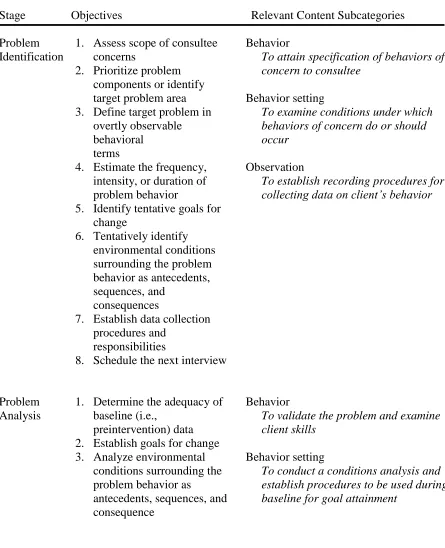
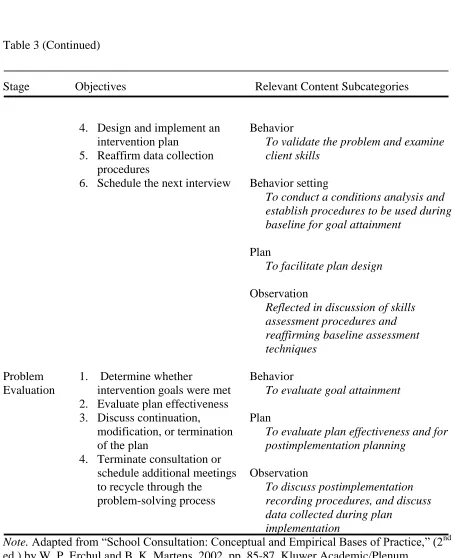
Table 3 Behavioral Consultation Interview Goals and Instrumental Related Content Subcategories ...38
Table 4 Five Major Findings Stemming from CAR Research ...44
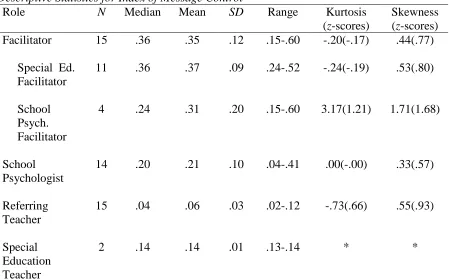
Table 5 Descriptive Statistics for Index of Message Control ...75
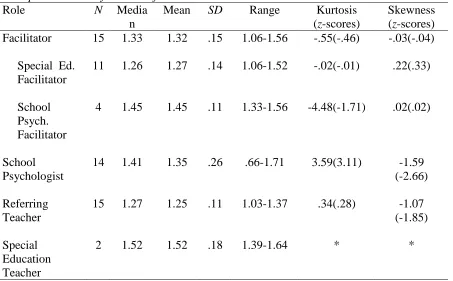
Table 6 Descriptive Statistics for Index of Content Relevance ...76
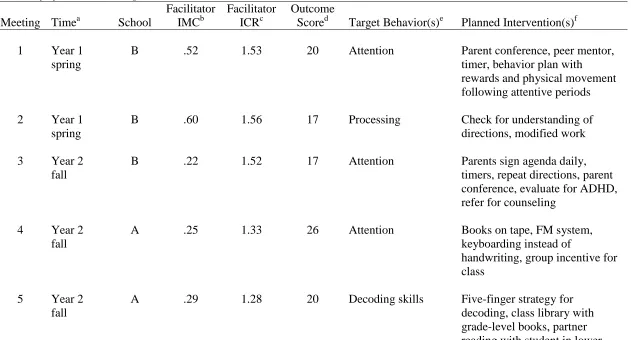
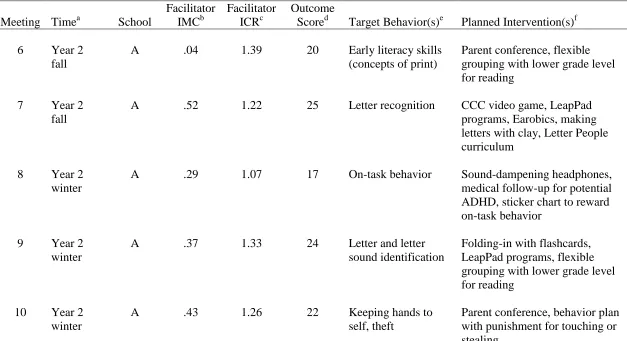
Table 7 Summary of 15 PST Meetings ...80
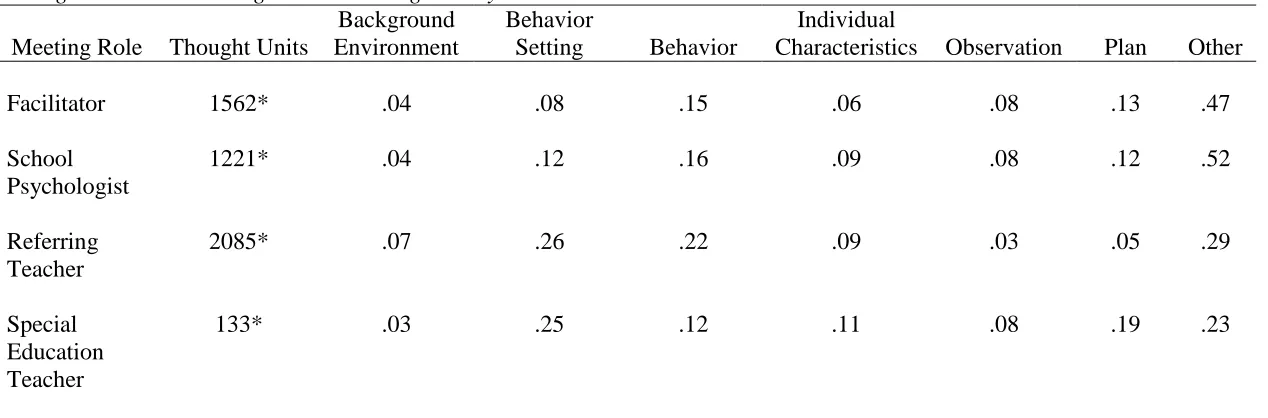
Table 8 Thought Units and Message Content Categories by Role ...84
LIST OF FIGURES
Introduction
Consultation is and has been a pillar of the school psychologist’s responsibilities for
improving system and student functioning (Burns & Symington, 2002; Truscott, Cohen,
Sams, Sanborn, & Frank, 2005). Even so, the term itself can incorporate many different
definitions and theoretical models. Bergan’s (1977) model of behavioral consultation was
designed officially for dyadic consultation, typically involving a school psychologist meeting
with a teacher to develop a plan that would benefit a student. In the 35 years since this
popular consultation model was introduced, schools and the field of school psychology
certainly have not remained static. Legislation such as the Education for All Handicapped
Children Act (P.L. 94-142) in 1975 and the Elementary and Secondary Education Act (No
Child Left Behind; NCLB) in 2001, as well as movements in the field such as Response to
Intervention (RTI; Reschly & Bergstrom, 2009), have led to noteworthy changes.
Specifically, schools are increasingly incorporating team-based decision making into
determining how best to help students (Truscott et al.). Thus, it is important to gain a firm
understanding of what transpires in these team meetings in order to make them more efficient
and beneficial.
Consultation occurs during team meetings when school psychologists and other
school staff meet to identify problems, generate potential solutions, develop intervention
plans, and evaluate their progress; the process often closely mirrors well-established models
of consultation such as Bergan’s (1977) behavioral consultation. Knowing that consultation
interactions in order to better understand the types of interactions that characterize
consultation within the team setting. Researchers have developed many measures to assess
verbalizations in various contexts, demonstrating the usefulness of these instruments as
training tools to improve counselors’ or consultants’ skills (e.g., Heatherington &
Friedlander, 1987; Lichtenberg & Heck, 1986).
One verbal analysis measure, the Consultation Analysis Record (CAR; Bergan &
Tombari, 1975), was specifically developed to investigate verbal communication occurring
during behavioral consultation by providing a detailed coding and interpretation scheme. The
CAR has been widely used in research on behavioral consultation within school settings for
dyadic consultation (e.g., Bergan & Tombari, 1976; Busse, Kratochwill, & Elliott, 1999), but
its use as a tool to understand interactions within larger team-based school consultation
meetings has been quite limited to date (Lee & Jamison, 2003). Thus, many questions remain
regarding the types of verbal interactions that occur during team-based decision-making
meetings in schools and how participants could improve their verbalizations to ultimately
enhance student outcomes.
Although the CAR (Bergan & Tombari, 1975) generally has not been used to
understand verbalizations within problem-solving teams (PSTs) in schools, one researcher
recently used a relational communication coding scheme to analyze these meetings for a
doctoral dissertation (viz., Bennett, 2010). Results from Bennett’s analysis of 15 PST
meetings using Heatherington and Friedlander’s (1987) Family Relational Communication
noted that individuals serving in various roles in the PST meetings were relatively consistent
both in their attempts to control the conversation and their success at gaining control when
they attempted to do so. However, school psychologists tended to make more attempts to
control conversation during the meetings than did referring teachers. Results such as these
begin to shed light on the complex interactions taking place within PST meetings; the current
study expands on these findings by applying another coding system to the same PST data set.
This study used the CAR (Bergan & Tombari, 1975) to analyze 15 PST meetings
(Young & Gaughan, 2010). Key meeting participant roles were coded using the CAR to
allow for an analysis of which participants were in control of the meeting and the extent to
which participants discussed content relevant to the goals for the meeting. Additionally,
researchers completed a scoring rubric (similar to Telzrow, McNamara, & Hollinger, 2000)
to rate the PST’s fidelity to the problem-solving model for each of the 15 meetings. Through
this study of verbal interactions within PSTs using the CAR, it was predicted that researchers
would gain a better understanding of how consultation occurs within team-based meetings in
schools. Important results included: (a) meeting facilitators were more directive in their
conversations than were other meeting participants, (b) meeting facilitators did not discuss
relevant content categories to a greater extent than individuals in other meeting roles, (c)
referring teachers’ verbalizations revealed an important trend in that teachers’ verbalizations
focused on student behavior and behavior-setting events to a greater extent than did other
functioning and lay the foundation for additional research on the processes occurring within
CHAPTER 1
Overview of the Literature Review
The purpose of this literature review is to introduce information relevant to the
understanding of problem-solving teams (PSTs) in schools and how communication within
these team meetings can be analyzed. The review begins with an examination of the
historical and current literature on consultation, including definitions of the various types of
consultation models.
Following this overview of the consultation literature, the topic of problem-solving
teams is introduced. These teams are defined for the purposes of the current study, their
history is reviewed in a chronological fashion, and the current state of problem-solving teams
in schools is discussed. Next, outcome data from research on problem-solving teams are
introduced, with a focus on both student and systemic outcomes related to the use of these
teams. This review will also highlight issues affecting the success of problem-solving teams
in order to better understand these issues and to help address them through the current study.
Finally, the literature review will include an overview of the study of verbal
interactions within consultation. One way to understand what transpires within
problem-solving team meetings is to apply communication analysis procedures to these meetings. The
history, empirical support, and rationale for following a systematic coding scheme to analyze
these team meetings are discussed. The review will conclude with descriptions of a study
verbal interactions within PSTs using part of this data set (Bennett, 2010). These studies
provide the raw data and starting point for the current study.
Consultation: Definition and Models Definition
Over the years, researchers have provided multiple definitions of consultation. Gerald
Caplan (1963) defined consultation as an interaction process between two professionals, one
with specialized competence in the area of need that is related to a work problem and is
either client-focused or organization-focused. Caplan used the term consultant to refer to the specialist, and consultee to refer to the individual who is seeking help from the specialist. Subsequent researchers included various features in their definitions of consultation,
including: it can be initiated by the consultee or the consultant (Brown, Pryzwansky, &
Schulte, 2011), it represents an indirect service delivery model in which consultants work
directly with consultees for the benefit of third-party clients (Brown et al.; Erchul & Martens,
2010), and it has a secondary goal of enhancing the consultee and the system in a preventive
function (Erchul & Martens; Zins & Erchul, 2002). Different consultation definitions share
some commonalities, but their disparities stem largely from the diverse theoretical
orientations within the field.
The prominent models of consultation commonly seen in schools are reviewed next to
provide a framework for the model embraced in the current study. It is important to delineate
and differentiate these models in order to prevent using the term consultation too broadly and
Reschly (1976). Three models of consultation are outlined here, each chosen for their
historical popularity and use by school psychologists (Reschly). They are (a) mental health
consultation, (b) organizational consultation, and (c) behavioral consultation.
Three Prominent Consultation Models
Mental health consultation. Caplan (1963) is credited with formally introducing mental health consultation in the human services field. He distinguished mental health
consultation by its primary goal – to prevent, treat, and rehabilitate mental disorders. Caplan
also emphasized the importance of the logistical strengths of consultation: one consultant can
work with professionals in direct-service roles to benefit many more clients than the
consultant could directly serve. Mental health consultation has four different subtypes (i.e.,
client-centered case consultation, program-centered administrative consultation,
consultee-centered case consultation, and consultee-consultee-centered administrative consultation), each with
slightly different goals shaping the client-consultee relationship and course of consultation
(Caplan). The subtype most strongly influencing the practice of consultation in schools is
consultee-centered case consultation (Caplan, Caplan, & Erchul, 1995). In this type of
consultation, the consultant focuses on improving the knowledge and skills of the consultee
rather than directly changing the client. Caplan explained that the majority of the consultant’s
time in consultee-centered case consultation is focused on discussing the client with the
consultee as opposed to spending time conducting formal evaluations of the client. The goal
can learn skills to both intervene in the present case and to prevent similar struggles in the
future.
Consultee-centered case consultation is evident in schools when school psychologists
work with teachers and focus on the teachers’ difficulties with students instead of directly
evaluating or intervening with the students. In this way, teachers can learn skills that they can
use to solve current and future problems with their students. Assuredly, though, school
psychologists do often spend some time in direct assessment and intervention with students.
Caplan et al. (1995) defined mental healthcollaboration as a framework in which school
psychologists often function. In this model, school psychologists as consultants collaborate
with teachers through traditional consultee-focused consultation work but also serve the
clients directly through assessment and intervention during this process. Knotek and
Sandoval (2003) noted that Caplan’s (1963) consultee-centered case consultation is often
seen in schools. For example, psychologists frequently serve in dichotomous roles as both
collaborators and consultants with teachers and other school staff, especially when they serve
on teams of staff requiring them to participate with less responsibility for the client while
also serving as a consultant.
Organizational consultation. The goals of organizational consultation vary widely and can include: increasing productivity and morale within the organization; working with
subsystems within the organization to develop communication and problem-solving skills,
and; developing training processes and procedures (see Bergan & Kratochwill, 1990 for a
group training sessions and exercises (Reschly, 1976). The organizational consultant often
functions as a facilitator in group meetings of school staff with the goal of improving the
overall functioning of the system rather than improving one consultee’s or client’s ability to
manage problems (Brown et al., 2011). This type of consultation uses some of the methods
and strategies included in other models, with a focus on data collection and feedback (Bergan
& Kratochwill) but it does so with the broad organizational culture and health in mind
(Truscott, Cosgrove, Meyers, & Eidle-Barkman, 2000). Organizational consultation can be
seen in schools when school psychologists consult with administrators regarding school
policies as a whole, or other similar systems-level concerns. At times, these systems-level
concerns can affect consultation at other levels as well – as when lack of administrator
support diminishes the effectiveness of team-based consultation (e.g., Rafoth & Foriska,
2006).
Behavioral consultation.Consultation within schools takes many forms, as it is influenced by various theoretical orientations. Behavioral consultation, which focuses on
directly observing and measuring behavior that is developed through learning and
reinforcement principles, is one of the most frequently used models employed by school
psychologists (Costenbader, Swartz, & Petrix, 1992; Erchul & Martens, 2010; Reschly,
1976). Like other models of consultation, behavioral consultation involves problem-solving
components. Unlike other models, though, these steps are clearly delineated and followed
Behavioral consultation is relatively new in the field of school psychology. Bergan’s
seminal introduction of this model came with the release of his book, Behavioral
Consultation, in 1977. Since then, this work and its revised edition (Behavioral Consultation
and Therapy; Bergan & Kratochwill, 1990), have been cited and used extensively in many areas of school psychology research (Gutkin & Curtis, 2009). Behavioral consultation
includes four stages: (a) problem identification; (b) problem analysis; (c) plan
implementation; and (d) problem evaluation. Interviews are conducted to gather information
at three of these stages, yielding: (a) the problem identification interview (PII); (b) the
problem analysis interview (PAI); (c) Plan implementation (PI); and (d) the problem
evaluation interview (PEI). The consultation process is dyadic, involving interactions
between the consultant (typically the school psychologist in school-based consultation) and
the consultee (typically the referring teacher). Uniting these stages of the consultation
process are two overarching goals for this type of problem solving: that it be used to promote
mental health and educational development, and that its aims are behaviorally defined
(Bergan).
Bergan and Tombari (1975) also developed a system to allow researchers to
investigate verbal interaction occurring within each stage of his problem-solving model. This
coding system, the Consultation Analysis Record (CAR), is the primary measure of the
current study and will therefore be discussed at length in later sections. The consultation
meetings included in the current study also did not precisely follow Bergan’s behavioral
the PII and PAI meetings were combined in this study and were therefore analyzed with
Bergan’s goals for both of these meetings in mind.
Importantly, behavioral consultation as conceptualized by Bergan (1977) incorporates
consultee involvement by viewing the consultee as an active participant and problem solver,
and encouraging the consultee to use the consultation process to develop skills for solving
similar problems in the future. Behavioral consultation is also distinct from Caplan’s (1963)
mental health consultation in its emphasis on environmental factors: Consultants and
consultees define problems as occurring outside of the client, consider environmental
influences on behavior, and focus the evaluation of success on goal attainment rather than
individual characteristics of the client (Bergan).
Moving Beyond Traditional Dyadic Consultation
Two of the three models of consultation typically practiced in schools reviewed thus
far – mental health consultation and behavioral consultation – typically involve a dyadic
consultative relationship. However, Bergan’s (1977) model of behavioral consultation has
been successfully adapted for a slightly larger group. This type of triadic consultation that
has been promoted in the literature, Conjoint Behavioral Consultation, (CBC; Sheridan &
Kratochwill, 2007), is an example of team-based consultation on a slightly smaller scale –
involving a consultant meeting with parents and teacher to discuss a student’s needs and
interventions. CBC has been demonstrated to contribute to favorable outcomes for a variety
of students, and it is viewed favorably by consultants and consultees (Sheridan, Eagle,
pertaining to special education regulation and current movements in the field of school
service delivery such as RTI (Reschly & Bergstrom, 2009), are influencing changes in the
format of consultation in the schools and often moving it more toward consultation within
larger group contexts rather than within dyads. RTI will be summarized following the
discussion of PSTs.
Tilly (2008) noted that problem solving has probably been used in an unstructured
way in schools since at least the 1970s. However, team decision making became compulsory
after the passage of the Education for All Handicapped Children Act, P.L. 94-142, in 1975.
The law required schools to use multidisciplinary teams to determine eligibility for
placement in special education – a requirement that spurred the development and
differentiation of teams, including Individualized Education Plan (IEP) teams, Prereferral
Intervention Teams (PITs), and Problem Solving Teams (PSTs; Bahr & Kovaleski, 2006).
This new focus on teams was paired with another mandate of P.L. 94-142, which stated that
students must receive their education in the least restrictive environment. Students who were
previously placed in separate classrooms or even separate schools were in large part brought
back into the regular education classrooms, and teachers were faced with the task of meeting
the academic, behavioral, and emotional needs of a wide range of students. The increase in
the development and use of consultation in schools was propelled by these issues of
mainstreaming, where more students with varying levels of need were participating in regular
education classrooms. Team-based decision making does indeed occur in schools, as Truscott
team of staff members that meets regularly to address concerns with students, even in cases
that do not fall within the federally mandated multidisciplinary team requirements.
Consultation occurring within the group-based setting of multidisciplinary
problem-solving teams, where a school psychologist or meeting facilitator might act as a consultant
for multiple consultees (e.g., teachers, administrators, parents) at one time, was the central
focus of the current study. Group meetings consist of numerous verbal interactions between a
consultant and these consultees, and meaningful information can be gained from the careful
analysis of these verbal interactions (e.g., Lee & Jamison, 2003). This field of research and
its rationale and support is presented after a careful review of the history and outcomes
associated with problem-solving teams in schools.
Problem-Solving Teams: Definition and Historical Background
In an age of increasing accountability with the introduction of the 2001 Elementary
and Secondary Education Act (No Child Left Behind or NCLB), public school staff are under
pressure to maximize resources and provide the best possible education for every individual
student under its care. One way schools are meeting individual students’ academic,
behavioral, and emotional needs is through increased teaming and early intervention efforts
(Truscott et al., 2005). School staff form teams of teachers, specialists, administrators, and
often a combination of all of these roles to evaluate students’ needs and plan for how best to
meet those needs (Truscott et al.). One type of team often formed in schools is a
not seem to be progressing academically, emotionally, and/or behaviorally in relation to their
peers (Raforth & Foriska, 2006).
Many terms in psychology and education have multiple definitions, and PST is no
exception. These teams go by many different names, with some researchers clearly
differentiating PSTs from other types of teams in schools and others categorizing all teams
together under one umbrella term. The inconsistency in the definition and use of the term
problem-solving team can lead to confusion, which is why a careful consideration of the various terms is important in order to reach a decision on how best to define PSTs. The use
of teams to meet the needs of students certainly has a long history in schools, and another
viable way to examine the development of PSTs is to do so chronologically. Over the past 35
years, there has been a good deal of research on the functions and effectiveness of PSTs in
schools. That history will be briefly reviewed here.
One of the earliest introductions of the idea of problem solving in a team format in
schools came from Chalfant, Pysh, and Moultrie (1979). It was shortly after the passage of
P.L. 94-142 that Chalfant et al. found through survey information from principals and
teachers that teachers needed a better support system to be effective with students with
learning and behavior problems. As a result, the researchers worked with teachers and
schools to develop teacher assistance teams (TATs). Membership on the teams was flexible,
but teachers were always included on the team and were in charge of inviting any other
specialized staff or administrators to team meetings. TATs were conceptualized by these
(p. 88). Notably, these teams incorporated problem solving and included multiple staff
members. These same themes are also present in the definitions of many other types of teams
in schools. The only guidelines suggested by the researchers were that the teams should
accept referrals, hold a meeting to make objectives and have problem-solving discussions,
record recommendations, implement recommendations, and hold a follow-up meeting to
determine outcome of the intervention after six to eight weeks. This early TAT model is not
unlike modern PST models. Five years after Chalfant et al.’s development of the TAT model,
Graden et al. (1985) introduced the PIT model.
In a review of studies from 1980-1997 on PSTs in schools, Welch, Brownell, and
Sheridan (1999) referred to the teams as school-based problem-solving teams (SBPSTs).
These researchers defined the teams as “an indirect service delivery approach consisting of a
group of … educational professionals who share the responsibility of working with a
colleague or family member to develop and evaluate an action plan to address an academic or
behavioral problem” (p. 38).This operational definition is helpful to gain an understanding of
what exactly constitutes a SBPST. The researchers also explained that SBPSTs incorporated
teams by other names, including TATs (Chalfant et al., 1979) and student assistance teams
(Rankin & Aksamit, 1994). Thus, SBPST is one umbrella term for the various types of teams
focused on meeting students’ individual needs.
There are still more terms for problem-solving teams in schools. Friend and Cook
(1997) discussed student-centered problem-solving teams, which engage in problem solving
overarching term incorporating the definitions of various types of teams, including TATs
(Chalfant et al., 1979), intervention assistance teams, mainstream assistance teams, student
support teams, multidisciplinary teams, child study teams, transdisciplinary teams, and case
conference teams. Thus, after Friend and Cook’s summary and Welch et al.’s (1999)
differentiations of the various team names, there were at least two broad terms attempting to
simplify the definition of solving teams in schools: student-centered
problem-solving teams and SBPSTs. It seems logical to shorten these terms to simply problem-solving teams, but first there is one more definitional issue to consider.
In 1985, Graden, Casey, and Christenson defined a model for what are known as
prereferral intervention teams (PITs) in schools. The model included four key steps for these
teams to complete: (a) request for consultation, (b) consultation, (c) observation, and (d)
formal referral for special education services, if needed. Since Graden et al.’s seminal article
on PITs, this term has become one of the most commonly used names for these types of
teams in schools. Other researchers have presented their own definitions of PIT as well.
Burns and Symington (2002) defined a PIT as “any multidisciplinary problem solving team
that develops interventions to meet the needs of students in general education that are
difficult to teach” (pp. 437-438). In one study, Yetter and Doll (2007) chose to use PIT
interchangeably with student assistance team, stating that both names incorporate many other
similar team models and names.
Despite the widespread use of the PIT name, many current researchers are unsatisfied
special issue of Remedial and Special Education, Bahr and Kovaleski (2006) explained that it
is the prereferral part of PITs that is the problem. These researchers agreed with Graden’s (1989) argument that prereferral implies that a referral to special education is likely to
follow. This implication is problematic because the focus of problem-solving teams should
be on assisting students to succeed rather than waiting to refer them to special education.
Bahr and Kovaleski argued for a broad definition of PSTs incorporating PITs and many of
the other names previously discussed. Truscott et al. (2005) used the PIT name in their study
but noted that they agreed with Graden’s concerns and chose to use PIT “to avoid confusion
among the plethora of names” (p. 140).
Even researchers are searching for a consensus among the various names, and it
appears that PST is the most accurate name to reflect the current and future state of these
teams in schools. Burns, Vanderwood, and Ruby (2005) clarified the distinction between
PITs and PSTs by stating that PST is a more accurate name for teams focused on service
delivery, whereas PITs may be more appropriate for teams focused on special education
referrals. Other current researchers in the field agree that PST is a more accurate and
encompassing term for the true functions of these teams (Gregory, 2010; Rafoth & Foriska,
2006). Thus, for the purposes of this review and to best reflect the nature of these teams, PST
as used here includes the many other names of teams that all have the focus of bringing
together different school staff, parents, and even community members to engage in
Despite the aforementioned arguments over the use of the word prereferral, the
original intended focus of PITs is again not unlike modern PST models. However, there is
still not one clear definition of who should be included on teams and which aspects of their
functioning are most important to student outcomes (Friend & Cook, 1997). In fact, in their
review of team data from 1980-1997, Welch et al. (1999) were able to identify only 18
articles on PSTs that met their criteria (i.e., focused on school-based problem solving, was
conducted in schools, focused on concerns for students in kindergarten through 12th grade,
and was published in a peer-reviewed journal). These researchers concluded that, despite
years of research on these teams, there is not a solid database on efficacy and there is still not
enough quality research on PSTs. Since that publication, there has been more research on
PSTs. The current status of PSTs and highlights of the outcome research are reviewed next.
The Current State of PSTs in Schools
One of the most informative investigations into the use of PSTs in schools comes
from two national surveys conducted from 1998-2000 (Truscott et al., 2005). These
researchers interviewed representatives from 51 state education departments (i.e., each state
plus the District of Columbia) during the 1998-1999 school year and representatives from
200 elementary schools (i.e., 4 in each state) during the 1999-2000 school year. Truscott et
al. asked about issues ranging from state mandates for PSTs to interventions recommended
by the teams and perceived goals of the teams. Their results revealed that PSTs are prevalent
in American schools. In fact, 69% of states reported mandating some type of prereferral
44% of states recommending team-based problem solving. Even beyond these state mandates
and recommendations, a striking finding is that 170 of the 200 (85%) schools interviewed
reported that their school had a PST in place. The researchers stated that their sample was
certainly small given the number of elementary schools in the United States, but they
selected the 200 elementary schools to be representative of all schools in the country. Thus,
the findings can be generalized with some degree of confidence. Given these data and the
upward trend of teams in schools since the 1970s, it is likely that an even greater proportion
of schools are using PSTs today than when these data were collected.
In addition to the prevalence of PSTs, Truscott et al.’s (2005) study revealed
important information about the perceived goals of PSTs in schools and the interventions
typically recommended within these teams. The primary goal shared among the teams was to
increase students’ academic performance; however, there was little consensus about the goals
of PSTs in general. As for interventions, most schools (74%) reported that the interventions
recommended in the PSTs tended to be focused on academics and were designed to be
implemented by teachers. The five most common interventions were: peer tutors or buddies
(37%), individual or group counseling (33%), out-of-classroom remediation (32%), changing
the child’s seat (32%), and decreasing the amount of work that the child is expected to
complete (22%). Truscott et al. noted that none of the common interventions require the
teacher to alter instruction in any way, and that teams seemed hesitant to intrude on
classroom management practices as a focus of intervention. The researchers concluded that
literature and the actual current functioning of these teams in schools. The types of
interventions that PSTs recommend and how the teams decide which issues should be the
focus of concern are both issues that are affected by the verbal interactions and
communication patterns within PST meetings. Although the current study did not investigate
ideal interventions per se, it contributes to the understanding of communication within these
meetings and how communication may be improved to enhance issues such as intervention
selection and student outcomes.
In a more recent study on the acceptability of PSTs in schools, Yetter and Doll (2007)
surveyed 313 elementary and middle school staff about their experiences with PSTs and team
procedures. Their results revealed that teachers rated PSTs as moderately high in
acceptability, but neutral in their perceived ability to actually help students. Taken together,
these studies on the current state of PSTs in schools point to the growth and prevalence of
PSTs but also begin to reveal some areas in need of further investigation. If 41% of states
mandate PSTs (Truscott et. al, 2005) and teachers find the team process acceptable but not
especially helpful for student outcomes (Yetter & Doll), there is undoubtedly room for
improvement where PSTs are concerned. The current study further investigated the PST
process and offers some insight and direction to improve the current situation. First, though,
it is important to consider some of the research on outcomes related to PSTs (i.e., those going
Outcome Research on the Process Within PSTs
Since the inception of PSTs, researchers have rightfully been interested in
determining the success of these teams. As suggested by Truscott et al.’s (2005) survey, there
are many possible goals for PSTs and therefore many possible foci for outcome research. A
comprehensive review of all outcome research involving PSTs is beyond the scope of the
present review, but the studies highlighted here will focus on some of the different types of
outcome research that has been conducted with PSTs.
To provide an organizational framework for outcome research, the meta-analysis of
PSTs conducted by Burns and Symington (2002) is a useful starting point. These researchers
found only nine studies on PSTs that met their criteria (i.e., included an outcome measure for
the PST as a dependent variable, included at least one between-group or within-group
comparison of outcomes, included quantitative data that could be used to determine effect
sizes, and were written in English). Despite the low number of quality studies on PST
outcomes, Burns and Symington were able to gather enough data to make some conclusions.
First, they argued that outcome data should be divided into student outcomes and systemic
outcomes. Student outcomes include: (a) time on task, (b) task completion, (c) scores on behavior rating scales, and (d) observations of target behavior in students. Systemic outcomes
include: (a) referrals to special education, (b) new placements in special education, (c)
percentage of referred students who are eventually diagnosed with a disability, (d) number of
students retained in a grade, and (e) amount of increase in consultation and/or counseling
The results of the meta-analysis revealed that PSTs had a strong effect on almost all
of these desired outcomes, with large effect sizes (at or above .90) for all but two of the mean
effect size coefficients. One of the two coefficients that was not within the large effect size
range was for nonrandomized studies, suggesting a greater need for randomized studies
concerning PST outcomes. Another important finding was the magnitude of the difference
between the effect size for university-based PSTs (1.32) and field-based PSTs (.54). Both
types of teams led to positive gains on the desired outcomes, but the university-based PSTs
were significantly better than the field-based PSTs at obtaining these outcomes. Taken
together, these conclusions point to the importance of PSTs, which can contribute to
increased positive outcomes for students and systems.
Some of the earliest systemic PST outcome data are included in Chalfant et al.’s
(1979) introduction to TATs. When developing the TAT model, these researchers looked at
the effectiveness of these teams as measured by reduced referrals to special education. Over
the span of time since the start of TATs in their studies, 203 children were referred to the
teams for assistance. The team resolved problems for 129 (63.5%) of these referred children,
sending only 74 children on for additional assistance though special education evaluation.
The researchers noted that the decrease in referrals to special education allowed members of
the special education team, including the school psychologist, to engage in other activities
and to better meet the individual needs of the students who truly qualified for special
Other research on systemic outcomes has demonstrated a consistency in the success
of PSTs at reducing referrals to special education services. For example, in their summary of
years of research on statewide instructional support teams in Pennsylvania, Kovaleski and
Glew (2006) reported that 84.6% of students who were referred to PSTs did not go on to be
referred for special education placement. This percentage, called the success rate (as
students’ needs were served through regular education services rather than special education
placement; see Hartman & Fay, 1996), was higher in schools using the PSTs than in other
schools. Thus, schools with PSTs referred approximately 33% fewer students than did
schools without PSTs (Kovaleski & Glew).
An important area of PST outcome research that bridges systemic and student
outcomes is research on treatment integrity. In their 1999 study, Kovaleski, Gickling,
Morrow, and Swank compared 492 students who received the services of instructional
support teams (IST) to students who did not get IST support but were at-risk for academic
problems (237 students) and average students who also did not receive IST support (1189
students). The researchers were measuring student outcomes of time-on-task, task
completion, and task comprehension before, during, and after the interventions of the IST.
They used observers and trainers to ensure that there was treatment integrity for the specific
interventions identified to help these students, to influence increased time-on-task,
completion, and comprehension. Additionally, the researchers analyzed the level of
In order to assess these variables, a team visited each participating school to look at
documentation from the IST and objectively rate intervention and process integrity using a
comprehensive list of target items (Kovaleski et al., 1999). Results revealed that when the
IST process was implemented with fidelity, students performed better on all of the dependent
variables when compared to students who did not receive IST interventions. However, when
the IST process was implemented with low levels of integrity (both in the specific
intervention integrity and in the overall IST process integrity), the students who received
interventions from the IST were no better off than the at-risk students who did not receive
any interventions. Kovaleski et al. noted that “basic collaborative team structures…may be
necessary but not sufficient to realize desired student outcomes” (p. 182). Thus, there is
evidence for the importance of PSTs with respect to student and systemic outcomes (e.g.,
Burns & Symington, 2002), but researchers have also identified an important moderator in
intervention and PST process integrity (e.g., Kovaleski et al.).
Three Issues Affecting the Success of PSTs
When any procedure is put into practice in schools, it is expected that there will be
problems to overcome in order for the process to run smoothly and serve its intended
purpose. PSTs are no exception, and the literature is replete with areas in need of attention.
Keeping these issues in mind is essential to overcoming them and helping PSTs to function
more effectively. Three of these problems will be explored here: the lack of procedural and
intervention integrity, staff training and implementation, and the research base for PSTs. The
the current study’s emphasis on providing additional data to improve the state of PSTs in
schools today.
First, without fidelity to the PST process and to the specific interventions
recommended by these teams, PSTs appear to be a waste of time and resources for schools
and students. Indeed, Telzrow et al. (2000) conducted a comprehensive study of PSTs in 227
schools and collected “best case” documentation (i.e., a problem-solving worksheet and
evaluation team report – two documents designed to guide the PST process) from each
school. This documentation was reviewed by trained specialist-level school psychologist
raters, who used a scoring rubric to assign ratings for each of eight problem-solving
components and for student outcome. The researchers concluded that the fidelity to the
problem-solving process was significantly correlated with student outcomes, with significant
correlations ranging from .13 for the problem-solving component of systematic intervention plan to .24 for having a clearly identified goal. Additionally, the problem-solving
components of clearly identified goal and data indicating student response to intervention
combined to predict approximately 8% of the variance in student change (R2= 0.08, F =
11.09, p < .001).
It is important to note that part of the documentation presented by the schools was
supposed to include notes on treatment integrity, but the researchers found that these notes
were either absent or vague in every case. They could only conclude that PST interventions
are carried out with lower than desired levels of integrity (Telzrow et al., 2000). Fidelity is
integrity with which teams are run and interventions suggested by those teams are put into
practice is just one of the many issues affecting the success of PSTs. The current study
provides additional data regarding the PST process through a careful investigation of the
specific topics of conversation and progression of problem-solving processes within PST
meetings. Specifically, the study provides information that can be used to increase teams’
ability to efficiently define the primary issue of concern and to follow a structured
problem-solving format.
A second issue affecting the success of PSTs relates to staff training and
implementation of these teams. Martens and Ardoin (1992) acknowledged the need for
increased consultant support of teachers as the teachers work to implement interventions
identified through the consultation process. They highlighted and supported with research a
few strategies that consultants can employ to support teachers, including social influence,
setting clear goals for teacher behavior, modeling, coaching, performance feedback, and
developing implementation protocols (Martens & Ardoin). Many other researchers have also
found that schools vary in how much training they provide before and during implementation
of the PST process (e.g., Friend & Cook, 1997; Telzrow et al., 2000).
From the early developmental studies of PSTs (Chalfant et al., 1979) to more current
research on state requirements for the teams (Truscott et al., 2005), the specific procedures
for training teams and determining the exact procedures for PSTs are quite vague. In a
comparison of PST formation and processes with the literature on what is known about
members are not clear on the function of PSTs and there is little direction on how to form and
use teams effectively. Yetter and Doll (2007) agreed, stating that even when schools were
part of an established PST project, there were still low levels of PST training for teachers and
other team members. Truscott et al. were concerned that so many states mandate teams but
then provide little, if any, direction and training to make the teams successful. These issues
compound with the previous problem of integrity to create a situation where teams may be
practicing without much direction or follow-up, potentially spinning their wheels and not
meeting student or systemic outcome needs.
Third, there is a clear problem with the lack of sound research on PSTs. Two
comprehensive reviews of PST-related data in schools have found few studies meeting basic
criteria including clearly defining outcomes and being published in peer-reviewed journals
(i.e., Burns & Symington, 2002; Welch et al., 1999). Without quality research on the
functioning and outcomes of these teams, it is difficult to move forward and offer
evidence-based recommendations for PSTs in the future.
These three issues with PSTs – fidelity to the PST process, training of team members
on the goals and process of PSTs, and research on what makes PSTs effective and what leads
to favorable outcomes for students – can certainly impede the progress of these teams to
meeting both systemic and student outcomes. Fortunately, there is also evidence that teams
can overcome problems with proper support. In a study on the development of PSTs,
Truscott et al. (2000) supported teams to meet their changing needs and issues as they slowly
engage in effective problem solving. Instead, teams focused almost exclusively on
within-child or within-family problems and ignored the classroom environment as a potential area of
concern. As a result of their concerns with PST development around problem solving, the
researchers introduced the idea of problem solving as a goal to the teams. They found that
although the teams were initially opposed to implementing a clear problem-solving process,
they still did their best to follow the problem-solving plan in spite of their frustrations.
Additionally, Young and Gaughan (2010) found that as support and training in the
PST process progressed, teams were more effective at achieving procedural integrity. One
indicator of this improvement is based on the number of problems targeted for each child.
Bergan and Tombari (1975) demonstrated that problem identification (as defined by the
consultant) in behavioral consultation meetings accounted for 59% of the variance in whether
plans were implemented to address the problem, and one feature essential to adequate and
accurate problem identification involves narrowing the focus to fewer target behaviors.
Young and Gaughan also reported that teachers improved from initially identifying 4.4
targeted problem behaviors per child to identifying only 1.9 problem behaviors per child.
Although it is difficult to determine whether teams chose the correct behaviors to target, their
progress in narrowing their focus is consistent with Bergan and Tombari’s data supporting
the increased success with plan implementation. Furthermore, teams moved from a focus on
referral for determining special education eligibility to a focus on solving problems before
the point of referral. Young and Gaughan reported that special education evaluations were
this number dropped to less than 10%. This result provides additional support for the positive
effects of PSTs on the systemic outcome of success rate previously discussed (e.g., Kovaleski
& Glew, 2006).
Investigations such as those conducted by Truscott et al. (2000) and Young and
Gaughan (2010) are important to consider in the context of the many issues facing PSTs,
because these studies provide evidence that PSTs can implement difficult and at times
“unpopular” practices in order to better serve students’ needs. The current study will also
help to alleviate the challenges that PSTs face by providing an analysis of the specific types
of verbal interactions occurring within the meetings and how these interactions contribute to
the procedural integrity of PSTs.
Analyzing Verbal Interactions Within Consultation
With an understanding of the history of consultation and PSTs, how these are applied
and practiced within schools, and some of the issues affecting the success of PSTs, it is
important to address the specific means by which verbal interactions can be analyzed in
consultation meetings. The history and development of verbal analysis and the specific
coding measures used to explore verbal interactions will be reviewed first. Then, the CAR
(Bergan & Tombari, 1975) will be presented in detail as it was the primary tool used in this
study.
History and Development of the Study of Verbal Processes
Researchers in fields including communications and psychotherapy (e.g., Lichtenberg
understanding the verbal exchanges that characterize various sorts of interactions, from
workplace discussions to conversations in therapy and counseling contexts. Indeed,
investigators studying verbalizations within psychotherapy have demonstrated relationships
between therapists’ verbal behaviors and clients’ verbalizations and actions (e.g., Patterson &
Forgatch). Furthermore, Martens, Deery, and Gherardi (1991) argued that the information
gained from studies of verbal interaction within therapy are especially important because
there are clear parallels between the types of conversations occurring in psychotherapy and
those occurring within consultation – both of which are helping relationships. Therefore, it
makes sense to investigate the verbal exchanges occurring within consultation because, as
demonstrated by Martens et al. (1991), consultation outcomes can be mediated by the
influence of a consultant’s verbalizations on a consultee.
As they have studied verbal interactions across various settings, researchers have
developed several coding systems in order to quantify and analyze these interactions.
Martens, Erchul, and Witt (1992) reviewed four coding schemes with roots in diverse
settings but histories of application to the analysis of verbalizations within the consultation
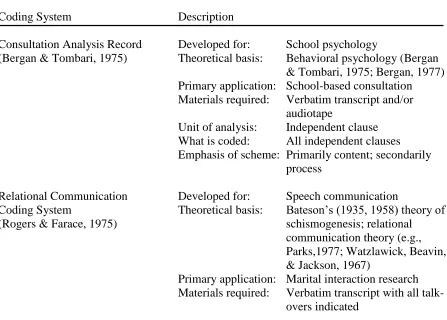
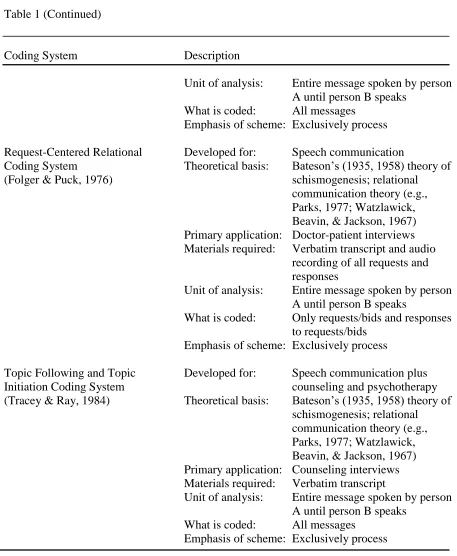
context. The selected coding systems, summarized in Table 1, are a sampling of the many
coding systems available. Despite being developed in order to assist with understanding
verbal interactions in various contexts, Martens et al. found that these coding schemes
revealed several consistencies when used to analyze interactions occurring within behavioral
consultation. For example, across all systems, researchers demonstrated that consultants
and focused discussion on the child. On the other hand, consultees asked far fewer questions
than consultants and consultees primarily provided information about the child throughout
the initial consultation interview (i.e., PII). These results were revealed no matter which
coding scheme was employed to analyze interviews.
Table 1
Summarization of Key Verbal Process Coding Schemes Reported in School Consultation Literature (Martens, Erchul, & Witt, 1992)
Coding System Description
Consultation Analysis Record Developed for: School psychology
(Bergan & Tombari, 1975) Theoretical basis: Behavioral psychology (Bergan & Tombari, 1975; Bergan, 1977)
Primary application: School-based consultation Materials required: Verbatim transcript and/or audiotape
Unit of analysis: Independent clause What is coded: All independent clauses
Emphasis of scheme: Primarily content; secondarily process
Relational Communication Developed for: Speech communication
Coding System Theoretical basis: Bateson’s (1935, 1958) theory of
(Rogers & Farace, 1975) schismogenesis; relational
communication theory (e.g.,
Parks,1977; Watzlawick, Beavin,
& Jackson, 1967)
Primary application: Marital interaction research Materials required: Verbatim transcript with all talk-
Table 1 (Continued)
Coding System Description
Unit of analysis: Entire message spoken by person A until person B speaks
What is coded: All messages Emphasis of scheme: Exclusively process
Request-Centered Relational Developed for: Speech communication
Coding System Theoretical basis: Bateson’s (1935, 1958) theory of
(Folger & Puck, 1976) schismogenesis; relational
communication theory (e.g., Parks, 1977; Watzlawick,
Beavin, & Jackson, 1967)
Primary application: Doctor-patient interviews Materials required: Verbatim transcript and audio
recording of all requests and responses
Unit of analysis: Entire message spoken by person
A until person B speaks
What is coded: Only requests/bids and responses to requests/bids
Emphasis of scheme: Exclusively process
Topic Following and Topic Developed for: Speech communication plus
Initiation Coding System counseling and psychotherapy
(Tracey & Ray, 1984) Theoretical basis: Bateson’s (1935, 1958) theory of schismogenesis; relational communication theory (e.g., Parks, 1977; Watzlawick, Beavin, & Jackson, 1967) Primary application: Counseling interviews Materials required: Verbatim transcript
Unit of analysis: Entire message spoken by person A until person B speaks
What is coded: All messages Emphasis of scheme: Exclusively process
In addition to these four dyadic coding schemes, the Family Relational
Communication Control Coding System (FRCCCS; Heatherington & Friedlander, 1987)
provides a means to analyze verbal interactions occurring within groups of three or more
people. This coding system was developed as an outgrowth of the Relational Communication
Control Coding System (RCCCS; Rogers & Farace, 1975), and both were developed for use
primarily within the therapeutic fields to understand therapist-client or therapist-family
interactions. Although the RCCCS appeared in the consultation literature reviewed by
Martens, Erchul, and Witt (1992), the group-based FRCCCS has not been widely used to
study verbal interactions within consultation. Bennett’s (2010) analysis of school-based
consultation within PSTs is one notable exception to the dearth of research utilizing the
FRCCCS to understand consultation interactions in the group context. This work is
especially important to the current study because it provides a basis for comparing two
coding schemes (i.e., FRCCCS and CAR) as they are used to analyze the same consultation
data. Details on Bennett’s (2010) investigation are provided following a description of the
CAR and its history and empirical support.
The Consultation Analysis Record
The CAR (Bergan & Tombari, 1975) is the only verbal interaction coding system
specifically formulated to investigate behavioral consultation like that which occurs often in
schools (Costenbader et al., 1992; Gutkin, 1996). It has been used in research on traditional
dyadic models of consultation (e.g., Busse et al., 1999; Gutkin, 1996; Martens et al., 1992;
better understand group-based consultation is lacking (for one exception, see Lee & Jamison,
2003) . The CAR was the primary measure used in the current study; as such, it is described
in detail below.
General description. Bergan and Tombari (1975) developed the CAR as a training and research tool for analyzing dyadic behavioral consultation with the goal of increasing
school psychologists’ knowledge of what types of verbalizations lead to positive consultation
outcomes. The CAR allows for coding of verbalizations across four major categories: (a)
message source (e.g., the speaker); (b) message content (e.g., what is talked about); (c)
message process (e.g., the kind of verbal action); and (d) message control (e.g., the potential
influence of one person’s verbalizations on another person’s verbalizations). Verbalizations
can be further coded across subcategories within each of these major categories. Detailed
descriptions of each category and its subcategories are provided in Table 2. The current study
involved coding messages for source, content, and control; explanation for this decision is
provided below.
The CAR also provides a way to determine overall measures of interview
effectiveness during the three interviews conducted in behavioral consultation (Bergan, 1977;
Bergan & Kratochwill, 1990). These measures of interview effectiveness are analyzed by
means of the following four indices: (a) index of content focus; (b) index of content
relevance; (c) index of process effectiveness; and (d) index of interview control. The indices
were designed for research purposes in order to analyze transcripts of consultation interviews
Table 2
Description of Message Classification Categories and Subcategories of the CAR (Bergan & Tombari, 1975)
Category and Subcategories Description
Source Identifies the speaker (consultant or consultee)
Content Identifies topics discussed during consultation
Background Environment client’s previous/current home/community factors
Behavior Setting events/behaviors proceeding, following, or sustaining current behaviors
Behavior client behaviors that are observable and covert, how behaviors are recorded, behavioral
intensity, and purpose of behaviors Individual Characteristics individual traits (e.g., personality, IQ)
Observation observing/recording client’s behavior Plan strategies to assist in solving problem
behaviors
Other verbalizations that do not reflect other content categories
Process Identifies types of verbal messages
Specification giving or requesting a definition/description Evaluation value judgments of events/objects/persons,
reflecting attitudes and emotions of speaker Inference verbalizations based on opinion rather than fact
Table 2 (Continued)
Category and Subcategories Description
Validation indicating agreement/disagreement regarding factual information
Control Identifies whether information is asked for or provided
Elicitor verbalization requiring a response/behavior Emitter verbalization providing information
Note. From Bergan, J. R., & Tombari, M. L. (1975). The analysis of verbal interactions occurring during consultation. Journal of School Psychology, 13, 209-226.
Kratochwill), providing information that can in turn shape training in the development of
adequate consultative skills. There are no set standard scores or cutoffs for determining
success; instead, higher scores on these four indices suggest more effective consultant
communication than do lower scores (Bergan & Kratochwill). The Index of Content
Relevance and the Index of Control are pertinent to the current study; as such, each is
discussed in greater detail below. The precise methodology for CAR coding and scoring will
be presented in the methods chapter.
Index of Content Relevance. Bergan and Tombari (1975) included the Index of Content Relevance in their coding scheme to analyze the extent to which consultants
discussed a balance of topics relevant to the specific behavioral consultation interview stage.
This index provides a measure of the degree to which the consultant discusses material