Abstr
comp The g algor data can b The e mails basic effici show Keyw 1. IN Spam accu user. mail emai netw some and v perso perso The contr Deci discr repre gene into refer as a given mail ident shou infor such spec class A d maki ident parti trees worl have
CLA
Dep Governmeract: The gene plex data in data growing volum rithm, using sta mining and stat be eliminated fo effective decisi s and filter the cally used as cl ient spam filter ws best results am
words: classifier NTRODUCTI
m is an unfort umulate in the
. Great issue s and spend ils.Causes a lo work bandwid
etimes crashe viruses that po onal privacy. onal informat growing thr rol measures. ision tree le rete values t esented by a erally suited t one of a dis rred to as clas
classifier for n case. Probl is Spam or H tified as Spam uld be allowed rmation about h as frequent ial characters ses, can classi
ecision tree ing decision tify a strategy icular, constru s has been qui ld application e been reported
Inter
SSIFICA
Dr. C. Chan Assistant P partment of Co ent Arts Colle
eral data minin a mining solves me of spam mai atistics or data m
tistical test app or performance on tree classifie m but the accu lassifiers namel ring. The result mong other cla
rs, e-mail, ham,
ION
tunate problem e users inbox the users inbo unproductive oss of internet dth, clogs up es. Spam incr ose a big thre
Spammers ion about the reats of spam
earning is a target functio decision tree to the problem screte set of p sification prob r determining lem is proces Ham is to be f m is to be filt d to be stored
t the mail is occurrence o s. The allo fy the mails a is a decision
analysis or y that is most ucting classif ite popular, an ns that employ
d. V rnational Jo A
ATION TE
ndrasekar Professsor omputer Scien ege, Udumalpeng model with t s the problem o ils annoys peop mining approac proach. The effi improvement. ers are used to c uracy and perfo ly J48 or C4.5, ts are compared assifiers.
, spam
m on the intern x without the oxes are flood e hours in del
t performance email servers reases the spr at to the netw s also deploy user for fraud m definitely
method for ons, in learn
. [1]Decision ms in that tas possible categ blems. A deci g an appropri ss of determin found out. Th ered and legit d in the users given by a of the charac owed actions as Spam or Ha n support too changes of o likely to reach fiers in the fo nd a number o
y decision tre
Volume 9, N
ournal of Ad
RES
Available O
ECHNIQU
nce et, India
the complex sa of accuracy cau ple and affects ch to develop p iciency of spam
classify whethe ormance of the , Rndtree. The d and RndTree
net.Spam ema e consent of t ed up with spa leting unwant and wasting t s to the point read of malwa work security a
y spam to ga dulent purpos
require dras
approximati ned function
tree learning sk is to class gories are oft ision tree is us ate action for ning whether t he mails that a timate messag mail box. T set of attribu ters, words a are viewed am.
ol that used outcomes or h a goal. [7]. orm of decisi of successful r
ees constructi
No. 2, March
dvanced Re
SEARCH PA
Online at ww
UES USIN
ample data solv used by the mas work efficienc recise spam rul m rules, only sig
er the mail is sp e algorithms is algorithms are e algorithm sho
ails the am ted the t it are and ain ses. stic ing is g is sify ften sed r a the are ges The utes and as for to In ion real ion W au de fr sp ap th no ea pe da th ba cl en im 2. M sc in co B at el K U an TA al is Ru de [1 h-April 2018
esearch in Co
APER
ww.ijarcs.inf
NG SPAM
P.G. and Re Govern
ves the problem ss data.
cy significantly les. The main p gnificant rules w
pam or ham. Va distinct from e e studied, analy
ws almost 99%
What is a Spam The task of utomatically f ecision tree c om other type pecifically on pplication of he spam filtrat ot. [3]The dec asy to unde erformance as ataset is traine he performanc
ased on the lassifier. The nhanced to p mplemented in
.METHODO
Muthukaruppan cheme solves t n a domain w
onsumption p ayes model at ttributes, larg liminated. Kishore Kuma UCI machine l
nalyzing the ANAGRA da lgorithms are done for each uan Guangch ecision tree 15]Classifier 8 omputer Sc fo
M FILTE
P. Priy M. Phi esearch Depar nment Arts Com on data classi
y. The work foc propose of an a will be used to
arious filtering t each other. Tw yzed and test re % accuracy leve
m Filter? Spam filtering from a user’ classifiers are
es of data min n decision tre
spam filtratio tion is to iden cision tree fil erstand. Prov s far as spam m
ed and tested ce evaluation c precision, ac
classifier wh rovide more n the WEKA t
OLOGIES
n et al (2011 the problem o with depende problem of th t a leaf node s ge number o
r et al (2012 learning repos
various cl ata mining too
applied over h of these clas hen et al (2 classifiers (NBT), C4. cience ISSN No
ERING EM
yatharsini il., scholar rtment of Com ollege, Udumaification. The p
cused on devel anti spam appro
classify emails
techniques are u wo decision tree esults are show el in filtering th
g is to rule ou s mail stream
taken for ev ning classifier ee classifiers on technique. ntify whether t
lters are easy vides an ov mail detection with various criteria of var ccuracy and t hich is evalua accuracy and tool.
1) proposed m of poor naive B ent attributes, he decision tr
should contain of irrelevant
2) has taken s sitory is taken lassification ol. [8]The var
this dataset an ssifiers.
012) has use such as Na 5, and Logi
o. 0976‐5697
mputer Science alpet, India
preprocessing s
loping spam fil oach combining s and the rest of
used to find the e algorithms th wn in WEKA to he spam mails
ut unsolicited m[2]. The va valuation and rs it is empha for the part The main ta the mail is spa
to implemen verall satisfa n is concerned decision tree rious classifie time taken by ated best is fu d the algorith
method for h Bayes perform
and the me ree. [13]The n all the rema attributes ca
spam dataset n as input dat
techniques rious classific nd cross valid
P. Priyatharsini et al, International Journal of Advanced Research in Computer Science, 9 (2), March-April 2018,402-410
© 2015-19, IJARCS All Rights Reserved 403
Classifier were analyzed for Spam filtration. Among several approaches, the top most are SVM[12] (Support Vector Machines) and the well known Naive Bayes classifier. Weka, an open source, GUI based, portable workbench has been used to perform the analysis of various email spam filtering techniques with a rigorous data set applied. Data set of emails is created using attributes and relations from the spam mails received in the mailbox for over six months. The 105 attributes and 300 instances taken as a total data set and 10 fold cross validations has been done to test the result and compare the different results. The different decision tree algorithms are run using Weka are NBTree, C4.5 decision tree classifier and Logistic Model Tree classifier are analyzed based on the performances with different criteria in terms of time, result efficiency and accuracy achieved by the various decision tree classifiers and also some other criteria like false positive, false negative rates of decisions taken by the classifiers.
Catarina Silva et al (2012) using hybrid system for text classification based on the ensemble of both Artificial Immune Systems (AIS) and SVM approaches. [6]The advantage of a non-evolutionary implementation that produced remarkable results with text classification and showing the classification performance gains, resulting in a classification has improved.
Manjusha et al (2013) used method for Binary Decision Tree Multi Class Support Vector Machine approach are using the advantages of SVM and decision tree[11], that is Decision Tree (DT) s are much faster than SVM s in classifying new instances while SVM perform better then DTs in terms of classification accuracy. To include both this advantages we will reduce the size of record set will be fed to the SVM. Normal data points are classified by decision tree while some crucial data points were difficult for decision tree to classify to multiclass SVM.
Malti Sarangal (2014) proposed method is K Means clustering and Support Vector Machine (SVM) based classification algorithm are considered to classify the spam base dataset[10]. The main advantages is improved classification accuracy and reduces the false positive and time cost. K Means algorithm, is numerical and one of the hard clustering method, this means that a data point can belong to only one cluster.
The decision tree classifiers provide great results as far as spam detection concerned. By comparing all the three classifiers, yield best results and provides 90% accuracy in performance. That algorithm takes more processing time than that of other classifiers. The one of the most disadvantages exhibited in this classifier. This is better than the earliest algorithms such as Naive Bayes and many other spam detection techniques.
3. EXISTING SYSTEM
The Immune System evolved to become an extremely complex resistance system that has the capability to identify foreign substances and to differentiate between harmless and harmful. Immune System is decomposed in two main layers of resistance that is innate and adaptive. Innate recognizes precised substances and its conduct is similar to all individuals of the same species. Adaptive layer is able to learn to identify new forms of anomalous pathogens that regularly change during the time hence it provides an
extremely complicated adaptive form of identification. The Immune System is also supported by a pathogens are divided into small peptides by Antigen Presenting Cell (APC). The peptides are then accessible by the lymphocytes also called as Transaction Cells. The Transcation cells have a particular set of receptors that used to bind peptides with a certain degree of affinity that are being offered by Antigen Presenting Cells. Artificial Immune Systems (AIS) is an adaptive system inspired by biological immune system and it is based on theoretical immunology.
4. K MEANS CLUSTERING
Automated mechanism uses unsupervised learning for classification purposed. Unsupervised learning means there is no supervisor is needed to train the mechanism. [4]Clustering is one type of unsupervised learning. Clustering is designed to aim for grouping similar type of data together. Clustering process data is divided into similar type of groups where each group contains the data which have more similarity. The groups are called as clusters. K Means clustering is the most useful method for finding natural groups of similar type of data.
A classification technique the objects are assigned to predefined categories whereas in clustering the classes are formed and two categories available for dividing clustering methods on the basis of character of the data and the reason for that cluster has being used. The categories are fuzzy clustering and hard clustering in the fuzzy clustering to every data element can belong to more than one cluster. Resolve it fuzzy clustering uses a mathematical model for classification and hard clustering every data element is divided into separate cluster.
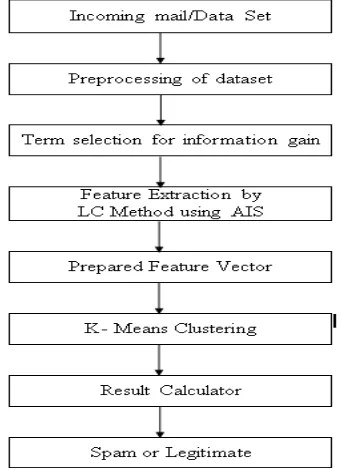
Figure 1.1 An overview of Local Concentration Based K Means Clustering
The local concentration based feature extraction method with artificial immune system has five processing stages are involved to generate final results. Each of them is discussed given blow.
Preprocessing of incoming email is essential task before process to classify it. The setup is working with real time spam filter, incoming email is processed and when working in an experimental environment sample datasets are preprocessed. Used string tokenizer in this phase for generating dictionary of the words. Irrelevant words are discarded and after it processed data is passed to term selection stage of the model.
Information Gain is used as term selection strategy for our model. [5]Algorithm for term selection is discussed as ds generation and term selection algorithm given below. Step 1 : Initialize preselected set and DS == Empty set. Step 2 : Every term in the terms set Do Calculate weight of the term according to a certain term selection strategy End Step 3 : Arrange the terms in decreasing order of the weight Step 4 : Join the front % terms to the preselected set Step 5 : For all terms in the preselected set Do Calculate Tendency as (tk)=P(tk|cl)-P (tk|cs) if || P(tk|cl)–P(tk|cs)||>, >=0 then
if || P(tk|cl) –P (tk|cs) || > , >=0 then Add the term to DSs
Else Add the term to DSl endif .
Else Discard the term endif
endfor
P (tk|cl) is probability of tk as legitimate P (tk|cs) is probability of tk as spam. DSs is spam detector set and DSl spam detector set.
Model used local concentration based feature extraction approach with artificial immune system. Algorithm used for feature extraction is discussed to local concentration based feature extraction approach with artificial immune system.
Step 1 : Move a sliding window of wn term length over a given message
With a step of wn term.
Step 2 : for every position of the sliding window Do Calculate the spam genes concentration in the window by formula: SCj = Ns/Nt
Calculate the legitimate genes concentration of the window by formula: LCj = Nl/Nt
end for.
Step 3 : Construct feature vector: (<SC1, LC1>,<SC2,LC2>…<SCn, Cn>)
SCj is spam gene concentration in jth window. LCj is legitimate gene concentration in jth window. Nt is the number of dissimilar terms in the window.
Ns is the number of the dissimilar terms in the window which corresponding to detectors in Ds.
The work applied KMeans clustering for classification. Fourth and very important stage of spam filtering. The stage of measuring to effectiveness in this entire system by evaluating classification result. Algorithm used for K Means clustering at classification phase is discussed K Means clustering for classification
Step 1: Initialize spam and legitimate Centroids Step 2: Centroids = kMeansInitCentroids(X, k)
Step 3: for iter = 1 iterations Cluster assignment step Assign each data
point to the closest centroid. idx(i) corresponds to cˆ(i), the indexof the centroid assigned to example i
Step 4: idx = findNearestCentroids(X, centroids); Move centroid step
Compute means based on centroidassignments Step 5: centroids = computeMeans(X, idx, K) Step 6: end
5. VARIOUS CLASSIFIERS IN EMAIL SPAM FILTERING PROBLEM DEFINITION
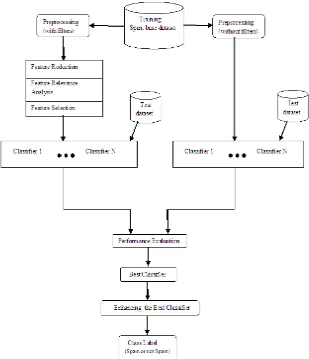
The various decision tree classifiers are taken for evaluation and apart from other types of data mining classifiers it is emphasized specifically on decision tree classifiers for the particular application of spam filtration technique. The main task of the spam filtration is to identify whether the mail is spam or not. The decision tree filters are easy to implement and easy to understand. Provides an overall satisfactory performance as far as spam mail detection is concerned. The dataset is trained and tested with various decision trees and the performance evaluation criteria of various classifiers are based on the precision, accuracy and time taken by the classifier. The classifier which is evaluated best is further enhanced to provide more accuracy and the algorithm is implemented in the WEKA tool.
6. SPAM DATASET
P. Priyatharsini et al, International Journal of Advanced Research in Computer Science, 9 (2), March-April 2018,402-410
[image:4.595.143.452.70.429.2]© 2015-19, IJARCS All Rights Reserved 405
[image:4.595.64.534.441.711.2]Figure 1.2 Various Classifiers in Email Spam Filtering
Figure 2.1 Spam Dataset
7. FEATURE REDUCTION TECHNIQUES
Complex data analysis and mining on huge amounts of data take a very long time making practical analysis infeasible.
quali volu The ChiS The re en the l Relie attrib estim deal attrib respe valid occu occu meth depe spam evalu func by evalu takes pred corre Subs attrib each them C4.5 Inpu Outp Meth Step Step Step Step Step class ity knowledg ume of data or feature reduc Square Attribu Component A nables to visu
oss of informa efF algorithm butes and p mation in regr with incompl bute by comp ect to class. T dations in the
Chi Square urrence of fe urrences of hod, the inde endent variab m email.
= N*( (A+C)*(B+
CFS Corr uation metho
tion to evalua which Corr uation method s into accoun dicting the c
elation among set evaluation butes by con h feature alon m.
5 ALGORITH
ut: data trainin attribut put: decision hod:
p 1: create a no p 2: if samples p 3: return N a p 4: if list of at p 5: return N
s in the sample
ge. Feature re reduce the dim ction techniqu ute evaluation Analysis is a ualize a datase
ation. m detects con
rovides a u ression and cla
lete and noisy puting the val The dataset is
training data s is a statist atures agains those feature ependent vari bles are the c
(AD-CB)2 +D)*(A+B)*(A
elation base od uses a se ate the merit o relation base d measures th nt the usefuln lass label al g them. Corre n method eval
sidering the i ng with the d
HM
ng samples; li te_selection_m
tree.
ode N, s has the same as leaf node w ttributes is em as leaf node w es.
eduction techn mensions redu ues used here n, CFsubset ev dimension re et in a lower d
nditional depe unified view
assification. T y data. Evaluat ue of chi squ s evaluated w set and tested. tical test th st the expect
es. The Chi iables are the categories tha
A+D) (4.1
ed Feature earch algorith of feature sub ed Feature
he goodness ness of indiv long with th elation based luates the wo individual pre degree of red
ist of attribute method.
e class, C, then with class C lab
mpty then with class lab
niques reduce uce attributes. e are the Rel valuation meth eduction techn dimension wi
endencies betw on the attr The robust and
tes the worth uared statistic with ten fold
.
hat measures ed number o Square evalu features and at is legitimate
1)
selection Su hm along wi bsets. The heu
selection Su of feature su vidual feature he level of d Feature sele
orth of a subs edictive abilit dundancy betw
s;
n bel;
bel that is the e the . liefF, hods. nique thout ween ribute d can of an with cross the of the uation
d the e and ubset ith a uristic ubset ubsets s for inter ection set of ty of ween most Step usin Step Step Step Step attri Step Step Step Gen Step Step 8. R Ran trees grow Algo Step Step colle the c Step orig Step in th each Step split Step and of at 9. E The data spam clas com outp false com are accu resu
p 6: Choose ng attribute_se p 7: give node p 8: for each a p 9: Add bran p 10: Make p ibute= ai; p 11: if si is em p 12: attach le p 13: els nerate_decision p 14: endfor p 15: return N
RANDOM FO
ndom Forest a s, unlike oth ws multiple t orithm can be ps in Random p1: A random ection of sam class distribut p2: Selected ginal data set i p3: A dataset he dataset, h tree R<M. p5: The attrib
t using the Gin p6: Random F constructs m ttributes.
EXPRIMENT
discussions aset with diff m or ham an
sifier and J48 mpared with th performs all th
e positive rat mparatively les compared an uracy level in ults among oth
test-attribute, election_meth e N with test-a ai pada test-att nch in node N
partition samp
mpty then eaf node with
se attach n_tree si,attrib
N;
OREST ALGO
are ensemble her decision t
trees are crea e used for clas
Forest Algori m seed is chos mples from tra
tion.
dataset, a ran s chosen base t M is the t only R attrib
butes from th ni index to de Forest Tree multiple trees f
TAL RESULT
made in the ferent rules fo nd they are 8 classifier. T he two differe
he classifiers te. The time ss than that o nd RndTree n filtering the her classifiers.
, that has the od;
attribute label tribute;
to test-attribu ple si from sa
the most class node tha bute-list,
test-ORITHM
e of un prune tree classifier ates a forest sification and ithm: sen which pul aining data set
ndom set of a d on user defi total number butes are cho
his set create velop a decisi follows the s for the forest
T
project , the for finding wh implemented The results of ent datasets an
with 86% of taken by th of NB tree cla
algorithm sh e spam mails
e most Gain
;
ute = ai; amples where
s in samples; at generate
attribute;
ed binary dec rs Random F like classific d regression.
lls out at rand t while mainta
attributes from ined values.
of input attri sen at rando
s the test po ion tree model same method
using differe
ey have crea hether the m using 2 diff f the classifie nd proved tha f accuracy and e J48 classif assifier.The r hows almost
P. Priyatharsini et al, International Journal of Advanced Research in Computer Science, 9 (2), March-April 2018,402-410
[image:6.595.60.540.55.379.2]© 2015-19, IJARCS All Rights Reserved 407
Fig 2.2: Enhancing Random forest Classifier
Training data
[image:6.595.323.542.418.726.2]Test data
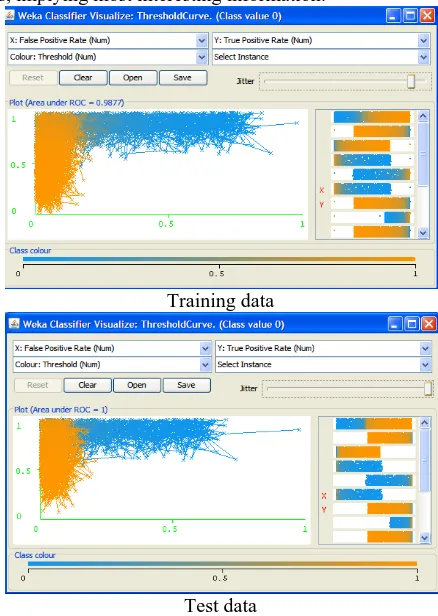
Figure 2.3 Calculate the Classifier Errors
Maximum 1 - 1/nc when records are equally distributed among all classes, implying least interesting
information ‹ Minimum 0.0 when all records belong to one class, implying most interesting information.
Training data
Test data
Figure 2.3 Receiver Operating Characteristic Curve
posit grap The using recal
Tabl
Rand
Enha
The rand in th WEK ident class rand T 4.49 teste
Tabl
Algo
C4.5
Rand
Naiv
tives and cost h with five cla true positive g logistic mo ll are calculate
le 1.1:Random
Algorithm
dom forest
anced Random
e results from dom forest cla he table abov KA filters a
tifying the s sifier produce dom forest clas
The error rate % in enhance ed, the accura
le 1.2 WEKA
orithms
5/J48
domforest
vebayes
ts false positi assifiers label rate and false odel cross val ed for true pos
m Forest Class
ms
m forest
m the random assifier for em ve. The resu nd the datas spam mails. es about 1.09%
ssifier. e of random ed random for acy of the cl
filters result f
B
Train
ives. Figure 2 led are all attri e positive rate lidation meth sitive and fals
sifier
Accuracy
94.41
95.50
forest classif mail spam filte ults are taken set is trained The enhance % increased a
forest classif rest classifier. assifier is fur
for time
efore Filterin
ning time (in Sec)
0.84
0.74
0.11
2.3 shows an ibutes. e are calculate hod. Precision se positive rate
Training da
Error rat
5.58
4.49
fier and enha ering are tabu n before app d and tested ed random f accuracy from
fier is reduce . While the da rther improve
ng
Train ROC
ed by n and
e.
Clas accu the d
ata
te Precis
0.94
0.95
anced ulated lying d for forest m the
ed to ata is ed to
99.9 Algo show fore data
appl table
CFSubsetev
ning Time (in Sec)
0.31
0.44
4.91
ssified result urate result is
decision tree.
sion A
44
55
93% that achi orithm is prov ws best result est classifier sh aset is tested.
The time tak lying WEKA e below.
After Filter
val
is obtained formed by Lo
Accuracy
99.60
99.93
ieves it as the ved that the en ts for spam f hows best pre
ken by the var filters in trai
ring using WE ReliefF Filtering Training
time (in Sec)
0.89
0.55
83.16
d by resulting ogistic Model
Test data
Error rate
0.03
0.06
e best spam f nhanced rando filtering. The ecision rate of
rious classifie ining the data
EKA filters Chis
Traini
g input data l tree and con
Precisi
0.996
0.999
filtering algor om forest clas enhanced ran f 0.999% whi
ers before and aset is given i
quared attrib eval
ing time (in Sec)
0.72
0.53
67.95
a and nstruct
on
6
9
rithm. ssifier ndom le the
d after in the
© 201 Tabl
Algo
C4.5
Rand
Naiv
Accu Tabl
Algo
C4.5
Rand
Naiv
P. Pr
15-19, IJARCS A le 1.3 Naive B
orithms
5/J48
domforest
vebayes
uracy of the cl le 1.4 Accurac
orithms
5/J48
domforest
vebayes
riyatharsini et al,
All Rights Reserve Fig
Bayes classifie
B
lassifier is def cy of the vario
l, International J
ed
gure 3.1 Resu
er passed throu
Before Filter
Test time (in Sec)
0.29
0.31
0.20
Figure 3.2 Ti
fined as the de ous classifiers
Before Filterin ( in %)
Training d
92.97
94.41
79.28
Figure
Journal of Advan
ults time taken
ugh the WEKA
ring
ime taken to
egree of closen
e ng
) C
data T
e 3.2 Results
nced Research in
n by the class
A filters.
CFSubsetev
Test time (in Sec)
0.06
0.06
0.09
test the datas
ness of classif
Af
CFSubseteva
Training data
92.69
93.71
93.30
of accuracy o
n Computer Scie
sifier during
After Filter
val
e
set applying W
fying the corre
fter Filtering
l
a Tr
of various cla
ence, 9 (2), Marc
the training t
ring using W Relief Filtering Test time (in Sec)
0.11
0.13
0.20
WEKA filter
ectly classifie
using WEKA
ReliefF Filtering
raining data
93.00
94.47
93.08
assifiers
ch-April 2018,40
time
WEKA filters Chis
e
rs
ed instances.
A filters (in %
Chisqua
02-410
40 squared attrib
eval Test time
(in Sec) 0.09
0.14
0.20
%)
red attribute
Training Data 92.97
94.41
93.19
09 bute
10. CONCLUSION AND FUTURE ENHANCEMENT
Email spam is a serious threat in corporate world and also in business. Reducing the spam mails and preventing the accumulation of spam mails storing in user’s mailbox is a great challenge to the users. The identification of best algorithm to classify the spam mails is an important task.
Decision tree algorithms are used in filtering the spam mails because the main task is to classify the mails whether it belongs to spam or ham. The algorithms are trained, tested before and applying filtering algorithms. The results of the different algorithms are evaluated based on the Accuracy, Error rate, Precision and False positive rate. The comparison of the above algorithms based on their performance shows that the Random forest classifier exhibit best results when compared to other classifiers before and after applying weka filters.
The bugs that are identified when this classification algorithm was built are when handling with the missing values. Split point is the point at the tree splits up the instances in two instances by assigning weights to the branch at the splitting point. The attribute has some missing values, the attributes carry some information after the split points. The results in additional branches in the tree. Sometimes, the split will have a reduction of entropy of 0 and have a small positive value which leads to additional branches in the tree. The algorithm can be further enhanced by improving the Out of Bag estimate (OOB) it supports multithreading.
REFERENCES
[1] Abdelrahim, Adoutspouls, Agarwal, Awan and Roth (2000), ‘Effect attribute size of training spam lists for Naive Bayesian Filters’, IEEE Transaction Pattern Anal. Machine learning Intelligence., vol. 26, no. 11, pp. 1475–1490
[2] Ali Ahmed Abdelrahim, Ammar Ahmed, El hadi, Hamza Ibrahim (2000), ‘Feature Selection and Similarity Coefficient Based Method Email Spam Filtering’, International Conference on Computing, Electrical and Electronic Engineering., vol. 16, no. 21, pp. 245–250
[3] Amandeep Kaur and Malti Sarangal (2009), ‘A Hybrid Approach For Enhancing The Capability of Spam Filter’, International Journal of Computer ApplicationsTechnology and Research, Volume 2– Issue 6, ISSN 759 – 762
[4] Bay, Ess, Matsumoto, Tuytelaars and Gool (2004), ‘Study on two spam detection metods for support vector machines and
Naïve Bayesian classifier’, Journal of Computing Machine learning algorithms ., vol. 110, no. 3, pp.346-349
[5] Caputo, Hayman and Xing Tan (2009), ‘Colonel particle swarm optimization in multilayer neural networks and support vector machines ’, in Proceedings International Conference on computing research techniques for learning algorithms ., vol. 2,pp. 1597–1604
[6] Catatrina Silva, Dollar, Wojek, Schiele, and Perona (2012), ‘A Hybrid text classification based on Artificial immune system and support vector machine’, International journal of computing and communication engineering, vol. 34, no.4 , pp. 743–761.
[7] Ichimura, Shechtman and Irani (2007), ‘Spam classification in self organizing map and Automatically defined group’, IEEE International. Conference on soft computing and fuzzy systems, pp 1-8
[8] Kishorkumar, Revathi and Chen (2012), ‘A Comparative study of various data mining classification algorithms’, IEEE Transaction on Intelligence computing, vol .32,no.32, no.9 , pp. 1705-1720
[9] Kunal Jain, Amrit Pal, Manish Sharma, Sanjay Agrawal (2014), ‘Impact of Spam on the Environment & its Prevention’, IEEE International Conference on Convergys of Technology, Pune., vol. 7, no. 6, pp. 567–575
[10] Malti Sarangal, Amandeep Kaur, RajeshKanna (2014), ‘A KMeans Clusteringand Support Vector machine based classification algorithms of Spam Filter’, International Journal of Computer Applications Technology and Research, Volume 12– Issue 31, ISSN 345 – 353
[11] Manjusha, Perona and Zisserman (2013), ‘Email spam detection using Binary Decision Tree Multiclass Support Vector machines’, in Proceeding of International. Conference computer vision and knowledge engineering., vol. 2, pp 264-271
[12] Mario Antunes, Catarina Silva, B ernardete Ribeiro, and Manuel Correia (2010), ‘On Using An Ensemble Approach of AIS and SVM for Text Classification’., vol. 17, no. 9, pp. 98– 104.
[13] Muthukaruppan Annamalai, Ankur Jain, Vaishn avi Sannidhanam (2011), ‘A Novel Hybrid Approach to Machine Learning’, Study Documents, Department of Computer Science and Engineering, University of Washington. vol. 2, no. 5, pp. 114-340
[14] Nadir Omer Fadl Elssied, Otman Ibrahim, Waheeb Abu Ulbeh (2014), ‘An Improved of Spam Email Clas sification Mechanism Using KMeans Clustering’, Journal of Theoretical and Applied Information Technology, Vol. 60 No.3