Original Research Article
A study of complications in cases of placenta previa
Dhaval M. Khirasaria*, Trupti C. Nayak
INTRODUCTION
Haemorrhage in obstetrics is almost life-threatening emergency, especially in the last trimester. In placenta previa, the bleeding occurs from the placental site, situated in the lower uterine segment, stretches near term or in labour and the associated bleeding is inevitable.1
Antepartum haemorrhage forms one of the most dangerous and devastating groups of disorders in obstetrics. Placenta previa contributes to 1/5th of the cases
of antepartum haemorrhage. This catastrophic complication not only poses a risk to the foetus but also endangers the mother’s life.
There has been substantial reduction in maternal death in placenta previa throughout globe because of early diagnosis even prior to the bleeding, omission of internal examination outside the hospital, free availability of blood transfusion facilities, wider use of caesarean section with expert anaesthesiology, skill and judgment. But in developing countries because of wide gap of the extension of medical facilities and also the difference in the patients’ profile between urban and rural population, maternal mortality in placenta previa ranges from less than 1% to as high as 5%. Placenta previa accounts for approximately 0.5% of all deliveries but still remains major cause of perinatal mortality and morbidity.1
Department of Obstetrics and Gynecology, Shri M. P. Shah Government Medical College and G. G. Government Hospital, Jamnagar, Gujarat, India
Received: 27 September 2017
Accepted: 31 October 2017
*Correspondence:
Dr.Dhaval M. Khirasaria,
E-mail: [email protected]
Copyright: © the author(s), publisher and licensee Medip Academy. This is an open-access article distributed under the terms of the Creative Commons Attribution Non-Commercial License, which permits unrestricted non-commercial use, distribution, and reproduction in any medium, provided the original work is properly cited.
ABSTRACT
Background: Haemorrhage in obstetrics is almost life-threatening emergency especially in the last trimester. Placenta previa contributes to 1/5th of the cases of antepartum haemorrhage. This catastrophic complication not only poses a
risk to the fetus but also endangers the mother’s life. The aims of this study were to estimate the incidence of placenta previa and to study the various complications and its impact on maternal and neonatal morbidity and mortality.
Methods: An observational prospective clinical study was carried out in Department of OBG-GYN on total 30 cases-admitted patients coming from both rural and urban areas, presented with placenta previa after 28 weeks of pregnancy in duration of January 2012 to August 2013.
Results: In the present study, the incidence of placenta previa contributed to 0.23% cases. The general perinatal mortality was 18 per 1000 live births and that due to placenta previa was 6.6 per 1000 live births. The maternal mortality rate due to placenta previa in this study was nil.
Conclusions: A marked reduction in maternal mortality rate from placenta previa was achieved during the last half of the 20th century but still placenta previa is an important cause of perinatal morbidity and mortality. A good antenatal care, early detection of placenta previa by ultrasound and the conservative management may definitely contribute to the dramatic reduction in the perinatal mortality in placenta previa.
The aims of this study were to estimate the incidence of placenta previa and to study the various complications and its impact on maternal and neonatal morbidity and mortality.
METHODS
An observational prospective clinical study was carried out in Department of Obstetrics and Gynecology on total 30 cases - admitted patients coming from both rural and urban areas, presented with placenta previa after 28 weeks of pregnancy in duration of January 2012 to August 2013.
Patients were then subjected for complete history, general and systemic examination with relevant investigations and appropriate management. A detailed study for various symptoms of placenta previa and its complications was done.
Outcome measures
• Relevance of clinical correlation of surgical findings
• Correlation between grade of placenta previa and complications
• To study of blood loss with various grade of placenta previa.
RESULTS
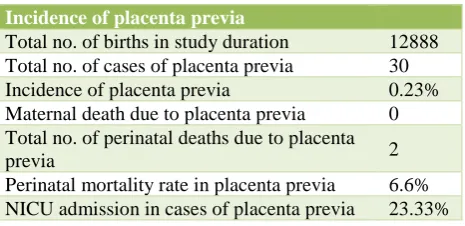
[image:2.595.311.546.103.178.2]In present study, 30 cases of placenta previa were studied regarding the type of clinical presentation, the clinical course, and the maternal and perinatal outcome. The information obtained was analyzed statistically. The incidence of placenta previa in present study was 0.23% (Table 1).
Table 1: The incidence of placenta previa.
Incidence of placenta previa
Total no. of births in study duration 12888 Total no. of cases of placenta previa 30 Incidence of placenta previa 0.23% Maternal death due to placenta previa 0 Total no. of perinatal deaths due to placenta
previa 2
Perinatal mortality rate in placenta previa 6.6% NICU admission in cases of placenta previa 23.33%
In the present study, the cases of placenta previa were highest in the maternal age group 20-29 years i.e. 53.33% (Table 2). The mean maternal age±SD in the present study was 27±4.9 years.
[image:2.595.313.545.340.494.2]In the present study incidence of placenta previa was highest (66.6%) in the multiparous group. It was 16.6% in the primi group and 16.6% in grand multi group.
Table 2: Correlation of maternal age and placenta previa.
Age No. of cases Percentage
<19 0 0
20-29 16 53.33
30-35 13 43.33
>35 1 3.33
Total 30 100
The risk factors studied were previous caesarean section and abortion. The incidence of prior caesarean section was 13.33% (n=04), prior abortion was 10% (n=03) and there were no cases of twin gestation, Rh isoimmunization or myomectomy in this study.
Of the complications studied, in the present study malpresentations contributed to 30% (breech 20%, transverse lie 10%), 1st and 2nd trimester bleeding
26.66%, severe anaemia 6.66%, and pregnancy induced hypertension (PIH) was found in only 3.33% of cases (Figure 1).
Figure 1: Antenatal complications in the present study.
In the present study 86% of cases required blood transfusion and shock/hypotension was noticed in 43% of cases, Postpartum haemorrhage (PPH) in 33.3% of cases, adherent placenta in 3.33% cases; whereas only 1 case of placenta previa accreta required caesarean hysterectomy to control the bleeding in the immediate intra operative period. Post-operative febrile morbidity or sepsis was not seen in any of cases.
It is observed that more complications occurred in major type of placenta previa than minor type (Table 3).
In the present study, perinatal morbidity was studied as the percentage of babies required NICU admission and Resuscitation among the cases of placenta previa. It was 40% (23.34% required NICU admission and 16.66% required Resuscitation) of the total cases.
26.66
6.66 30
20
10 3.33 6.66
1st/2nd Trimester bleeding Severe anemia<7gm Malpresentation Breech
Transverse lie PIH
[image:2.595.53.286.523.636.2]Table 3: Intra and post-operative complications.
Complications Minor (N=14) Major (N=16) Total (N=30) Percentage
Shock/hypotension 3 10 13 43.33
Sepsis 0 0 0 0
Febrile morbidity 0 0 0 0
PPH 1 9 10 33.33
Blood transfusion 11 15 26 86.66
Hysterectomy 0 1 1 3.33
Adherent placenta 0 1 1 3.33
New-borns with birth weight above 2500gms had a good survival rate as compared to birth weight <1500gms had a very poor survival rate.
Table 4: Correlation between perinatal mortality and gestational age, in placenta previa.
Gestational age (Weeks)
No. of cases
Perinatal
deaths Percentage
28-33 3 1 33.33 34-36 21 1 4.76
37 + 6 0 0
Total 30 2 6.66
Incidence of perinatal deaths was 6.66%, which includes asphyxia and prematurity. The perinatal mortality was
more in the 28-33weeks-gestation group (33.33%), whereas in the 37+weeks-gestation group, it was Nil. (Table 4).
The perinatal mortality was the same in both clinical types of placenta previa i.e. chi square value was 1.28 which is not significant. The perinatal deaths were more in the cases delivered vaginally (98.3%) than those delivered abdominally (1.7%). In present study no maternal death occurred.
DISCUSSION
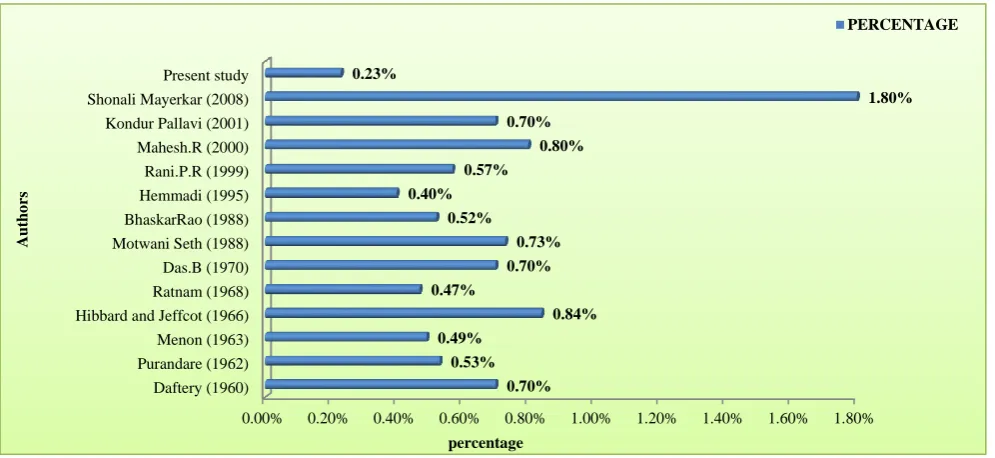
Figure 2 shows the incidence of placenta previa in various studies.2-6 It varies with the availability of
[image:3.595.51.549.442.671.2]antenatal care and sonographic evaluation.
Figure 2: Incidence of placenta previa by different authors.
The mean maternal age in the present study was 27 years, which is similar to observation made by Das et al with the mean age of 28.6 years and Singhal et al as 26.2.2,7 In
a recent study by Mayerkar S regarding the maternal age, the maximum number of patients i.e., 35 (70%) women were between the age group of 20-29 years, followed in
0.00% 0.20% 0.40% 0.60% 0.80% 1.00% 1.20% 1.40% 1.60% 1.80%
Daftery (1960) Purandare (1962) Menon (1963) Hibbard and Jeffcot (1966) Ratnam (1968) Das.B (1970) Motwani Seth (1988) BhaskarRao (1988) Hemmadi (1995) Rani.P.R (1999) Mahesh.R (2000) Kondur Pallavi (2001) Shonali Mayerkar (2008) Present study
0.70% 0.53% 0.49%
0.84% 0.47%
0.70% 0.73% 0.52%
0.40% 0.57%
0.80% 0.70%
1.80% 0.23%
percentage
A
u
th
o
rs
descending order by 8 (16%) women in 30-35 years age group. In the study done by Mcshane P the mean maternal age was 29.8 years.8 In the study done by
[image:4.595.312.545.105.267.2]Williams M, the correlation between placenta previa and parity was as follows, with highest incidence in the multiparous group (65.2%) like in the present study it was 66.66% (Table 5).
Table 5: Comparative study of distribution of parity in placenta previa.
Author Incidence of multipara (%)
Williams M (1991) 65.2 Rani PR (1999) 69 Kumar M (2000) 72 Pallavi K (2001) 78.4 Mayankar S (2008) 56 Present Study 66.66
Previous caesarean section is an important risk factor for placenta previa. In the present study, the risk factors were prior caesarean section (13.33%) and prior abortion (10%). Rani PR et al shows that prior caesarean section in 11% and 9% had abortion, majority had no risk factors.6 In the study done by Ananth CV et al, advancing
maternal age, multi-parity, previous caesarean section and abortion smoking-cocain use during pregnancy and male fetuses all confirmed increased risk for placenta previa.10
The major causes of mortality and morbidity in placenta previa are hemorrhage (both antepartum and peripartum), anemia, sepsis and placenta accreta. Pregnancies with low-lying placenta are associated with high incidence of postpartum hemorrhage. A history of previous caesarean section and complete previa increase maternal morbidity due to increased risk of massive hemorrhage, placenta accreta and chances for hysterectomy.
In the present study 86% of cases required blood transfusion and shock/hypotension was noticed in 43% of cases, PPH in 33.3% of cases, adherent placenta in 3.33% cases; whereas only 1 case of placenta previa accrete required caesarean hysterectomy (Table 3). In the study done by Mcshane et al the major post-partum complications were hysterectomy 28.6%, febrile morbidity 28.6%, urinary tract infection 28.6% and shock 14.3%.8 In the present study 23.34% babies required
NICU admission and 16.66% required resuscitation, whereas in the study done by McShane et al, 22% of babies required resuscitation.8
Neonatal mortality in the present study was 6.66%. Ananth CV et al shows 10.7% neonatal mortality with previa.10 In the study done by McShane et al, the perinatal
mortality was highest in 500-999 gm birth weight group, like in the present study.8 The increased use of caesarean
section, preceded by expectant treatment has been universally adopted in cases of placenta previa, which has reduced the maternal mortality to nil and the fetal
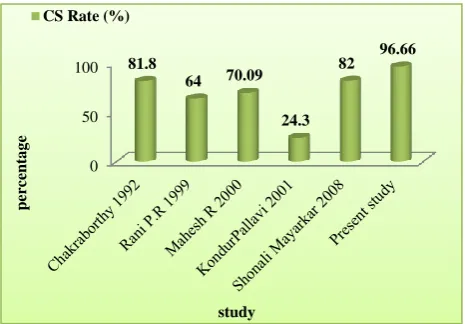
[image:4.595.52.287.196.283.2]mortality to less than 10%. Caesarean section rate in placenta previa in different studies shown in Figure 3.
Figure 3: Caesarean section rate in placenta previa in different study.
A marked reduction in maternal mortality rates from placenta previa was achieved during the last half of the 20th century but still placenta previa is an important cause of perinatal morbidity and mortality.
It is clearly evident from the present study that the majority of our patients were from rural areas with poor educational standard, from low socioeconomic status and they were unaware of the importance of antenatal visits. It is observed that the patient who had no antenatal checkups and admitted to hospital as an emergency admission had maximum incidence of maternal morbidity and perinatal mortality.
Improved transport communication and proper health education by paramedical staff, regarding the MCH services, family planning to the patient individually, to the public in general is necessary in the rural and semi urban areas for the better management and prognosis of patients with placenta previa.
As a minimum requirement during a planned procedure for placenta previa, a consultant obstetrician and anesthetist should be present within delivery suite. When an emergency arises, consultant staff should be alerted and should attend as soon possible.
Any women going to theatre electively with suspended placenta previa/accreta should be attended by a consultant obstetrician and anesthetist. If the delivery is unexpected, out of hours consultant staff should be alerted and attend as soon as possible. These measures will definitely help in a better outcome for both mother and fetus in all high-risk pregnancies.
CONCLUSION
With improving obstetric services, the mortality rate in recent studies as expected is much lower, the Centre for
0 50
100 81.8
64 70.09
24.3
82 96.66
p
er
ce
n
ta
g
e
Disease Control and Prevention (USA) reporting a mortality rate of 0.03%. The reduced maternal mortality in recent years is mainly attributable to a good antenatal care, early detection of placenta previa by ultrasound, the increased use of blood transfusion, effective antibiotic therapy and better understanding of the management of shock and renal failure. In present study no maternal deaths occurred.
Funding: No funding sources Conflict of interest: None declared
Ethical approval: The study was approved by the Institutional Ethics Committee
REFERENCES
1. Donald I. Textbook of practical obstetric problems. 5th edition. Edward Arnold Publishers Limited;
2007:423-54.
2. Das B. Antepartum hemorrhage in three decades. Obs Gyn India. 1975;25:636-41.
3. Ratnam SS, Rao KP, Kumaran SA. Obstetrics and gynecology for postgraduates. 2nd edition. Orient
Longman. 2007;78-88.
4. Rao BK, Manorama S. Maternal prognosis in placenta previa. Obstet Gynecol India. 1975;25:642-6.
5. Hemmadi. Recent trends in the management of placenta previa. Indian J Obstet Gynecol. 1989;39(71):365-8.
6. Rani PR, Chaturvedula L. Placenta previa: an analysis of 4-year experience. Indian J Obstet Gynecol. 1999;19(3):53-5.
7. Singhal S, Nymphaea, Nanda S. Maternal and perinatal outcome in antepartum hemorrhage: a study at a tertiary care referral institute. Int J Gynecol Obstet. 2008;9(2):5580.
8. McShane PM, Heyl PS, Epstein MF. Maternal perinatal morbidity Resulting from placent previa. Obstet Gynecol. 1985;65:176-82.
9. Williams M. Cigarette smoking in pregnancy in relation to placenta previa. Am J Obstet Gynecol. 1991;165:28-32.
10. Ananth CV, Smulian JC, Vintzileo AM. The effect of placenta previa on neonatal mortality: a population based study in the United States, 1989 through 1997. Am J Obstet Gynecol. 2003;188(5):1299-304.