Scholarship@Western
Scholarship@Western
Electronic Thesis and Dissertation Repository
9-22-2017 10:00 AM
A Case Study of New Media Literacies in an English Language
A Case Study of New Media Literacies in an English Language
Learning Program
Learning Program
Yifei HuThe University of Western Ontario
Supervisor Zheng Zhang
The University of Western Ontario Graduate Program in Education
A thesis submitted in partial fulfillment of the requirements for the degree in Master of Arts © Yifei Hu 2017
Follow this and additional works at: https://ir.lib.uwo.ca/etd
Part of the Language and Literacy Education Commons
Recommended Citation Recommended Citation
Hu, Yifei, "A Case Study of New Media Literacies in an English Language Learning Program" (2017). Electronic Thesis and Dissertation Repository. 4967.
https://ir.lib.uwo.ca/etd/4967
This Dissertation/Thesis is brought to you for free and open access by Scholarship@Western. It has been accepted for inclusion in Electronic Thesis and Dissertation Repository by an authorized administrator of
i
Abstract
This case study was conducted in a four-week winter program of an English language
center affiliated to a university that is situated in a city in Ontario. Underpinned by
theories on new media literacies, actor-network theory, and curriculum, the thesis
examines human and nonhuman actors that enabled and constrained students’ new media
literacies practices in the English language learning program. Despite the fact that there are emergent studies on new media literacies, there is scarce literature on human and
nonhuman actors that influence students’ new media literacies practices. In this study, sources of data included curricular documents, students’ artifacts, classroom observations
of 12 student participants and two instructors, and semi-structured interviews with six
student participants. Findings show that students’ new media literacies practices of
transmedia navigation, appropriation, judgment, and distributed cognition were enabled in
the program whereas the practices of networking, participatory culture, and collective intelligence were constrained to a certain degree. The study also identified human and
nonhuman actors that shaped students’ new media literacies practices, such as program design, materiality of classrooms, and individual differences of student participants. This
study provides curricular and pedagogical suggestions to English language learning
programs in order to enable and expand students’ new media literacies practices and bolster their language learning.
Keywords
ii
Acknowledgements
The completion of the thesis could never have been possible without the assistance of many
people. I would like to express my sincerest gratitude to my supervisor, Dr. Zheng Zhang
for providing me with valuable suggestions and encouragements constantly.
Many thanks go to Dr. Wendy Crocker for giving me insightful suggestions and continuous
support in my data collection process. I also cherish Dr. Kathy Hibbert’s valuable helps and constructive recommendations as my committee member. Special thanks go to my friend
Di Wang for her selfless help.
I also owe sincere thankfulness to all my participants in this research. This study could not
have been completed without their support and cooperation.
iii
Table of Contents
Abstract ... i
Acknowledgements ... ii
Table of Contents ...iii
List of Tables ... vii
List of Figures ...viii
List of Appendices ... ix
Chapter 1 ... 1
1 Introduction ... 1
1.1 Background of the Problem ... 1
1.2 Context of the Study ... 2
1.3 An Overview of the Study ... 3
Chapter 2 ... 5
2 Conceptual Framework ... 5
2.1 Curriculum ... 5
2.2 Actor-Network Theory ... 6
2.3 New Media Literacies ... 9
iv
2.3.2 Distributed Cognition and Collective Intelligence ... 11
2.3.3 Appropriation and Transmedia Navigation ... 12
2.3.4 Networking, Judgment, and Negotiation ... 13
2.3.5 Multitasking ... 14
2.3.6 Participatory Culture ... 14
Chapter 3 ... 17
3 Literature Review... 17
3.1 Ancillary Tools for New Media Literacies ... 17
3.2 Participatory Culture ... 18
3.3 New Media Literacies Skills ... 20
3.4 New Media Literacies Programs ... 23
3.5 Media Literacies and Language Learning ... 25
3.6 Conclusion ... 28
Chapter 4 ... 30
4 Research Design... 30
4.1 Methodology ... 30
4.2 Data Collection ... 31
4.2.1 Documents and Artifacts Collection ... 32
v
4.2.3 Semi-structured Interviews ... 33
4.3 Data Analysis ... 34
4.4 Ethical Considerations ... 36
4.4.1 Informed Consent... 36
4.4.2 Confidentiality ... 36
4.4.3 Avoidance of Harm, Deception, and Conflict of interest ... 37
4.4.4 Potential Benefits to Participants ... 37
4.5 Limitation ... 38
Chapter 5 ... 39
5 Findings... 39
5.1 Students’ New Media Literacies Practices ... 39
5.1.1 Participatory Culture ... 39
5.1.2 Appropriation and Transmedia Navigation ... 41
5.1.3 Distributed Cognition and Collective Intelligence ... 44
5.1.4 Judgment and Networking ... 47
5.2 Actors that Influenced Students’ New Media Literacies Practices ... 49
5.2.1 The Program Design ... 49
5.2.2 The Materiality of Classrooms... 52
vi
Chapter 6 ... 58
6 Discussion ... 58
6.1 Enabled New Media Literacies Practices ... 59
6.1.1 Transmedia Navigation ... 59
6.1.2 Appropriation ... 60
6.1.3 Judgment ... 60
6.2 Constrained New Media Literacies Practices ... 61
6.2.1 Networking ... 61
6.2.2 Participatory Culture ... 63
6.2.3 Collective Intelligence ... 64
6.3 Conclusion ... 65
References ... 66
Appendices ... 76
vii
List of Tables
viii
List of Figures
Figure 1: Visual Effects Students Added in the Video Presentation ... 42
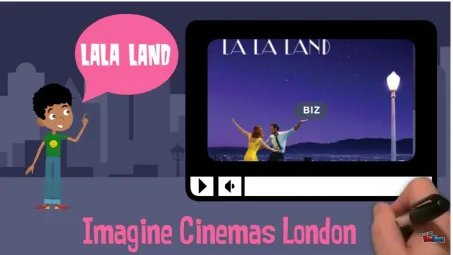
Figure 2: Subtitles Students Added in the Video Presentation ... 43
Figure 3: Animation with Edited Film Clips... 44
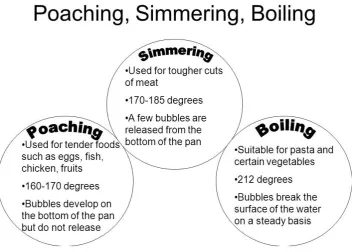
Figure 4: Answers about the Differences between “Boil”, “Poach”, and “Simmer”
ix
List of Appendices
Appendix 1: Ethics Approval Notice ... 76
Appendix 2: Letter of Information ... 77
Appendix 3: Consent Form ... 79
Chapter 1
1
Introduction
1.1
Background of the Problem
New media literacies (Jenkins, 2009) refers to “a set of cultural competencies and social
skills that young people need in the new media landscape” (p. xiii). Although studies
related to new media literacies emerged over the last twenty years (Gee, 2007; Boyd, 2007; Chau, 2010; Reilly, 2011), few have combined new media literacies and
actor-network theory (Fenwick & Edwards, 2010) to examine human and nonhuman actors that influenced students’ new media literacies practices in English language learning
programs. Actor-network theory refers to an approach that empowered researchers to make sense of how “things come together, manage to hold together, and form associations
that produce agency and other effects” (p. 21). According to actor-network theory, actors
could be both human and nonhuman, including but not limited to animals, objects, ideologies, concepts, and spatial and temporal patterns (Fenwick & Edwards, 2010).
A traditional definition of literacy proposed that literacy was about the “ability to read and write” (Crystal, 1997, p. 250). Cope and Kalantzis (2009) suggested that traditional
literacy was two of the three “R”s, reading and writing. However, an expanded definition of literacy was proposed by the New London Group (1996) to recognize that literacies
were both multiple and socially constructed. Because of the contemporary contexts of
increased “cultural and linguistic diversity” (Kalantzis & Cope, 2008, p. 195) and the influence of new communication technologies, the researchers in the New London Group
(1996) coined the term “multiliteracies”. They used it to describe the emergence of new literacies and the change in meaning making and to reflect the growing significance of
communications channels and media, and the increasing saliency of cultural and linguistic diversity” (The New London Group, 1996, p. 63). Under the big umbrella of
multiliteracies, there were closely related concepts and theories, such as multimodal literacies (Kress, 2003), new literacies (Knobel & Lankshear, 2007), digital literacies
(Gillen, 2014), (mass) media literacies (Baran, 2013), and new media literacies (Jenkins,
2009). What we knew about this field is that literacy was significant in nowadays’ education and a mastery use of literacy could benefit students’ learning processes
(Thorne, 2008; Reilly, 2011; Alper, 2011; Micheli, 2013; Jocson, 2015). What we knew little about was to what extent new media literacies practices were influenced by what
human and nonhuman actors. Confronted with the current situations, this research was designed to explore human and nonhuman actors that would enable and constrain
students’ new media literacies practices in an English language learning program.
1.2
Context of the Study
I always believed that new media, such as online newspapers and books, blogs, video
games, social media software, and interactive platforms such as YouTube and Wikipedia, could provide people with more than recreational functions. Digital media could enable
people’s practices of sharing, interacting, and discussing with people around the world
through the Internet. When I was in China, my conception of literacy was merely the ability to read and write. However, after being introduced to the concept of multiliteracies
(New London Group, 1996), my understanding of literacies and meaning making has been expanded. I was especially interested in the theory of new media literacies (Jenkins,
2009) because it underlined the social skills that students need to master in the 21st century. Since I was an undergraduate student majoring in English back in China, I have
had a long-term interest in using new media as learning tools as a foreign language
learner. However, I have always wondered why digital media was not buttressed in my formal language learning classrooms back in China. This experience inspired me to
media literacies practices in an English language learning program here in Canada.
I, therefore, conducted a case study underpinned by the theories on curriculum,
actor-network theory, and new media literacies. The research was designed to answer the research question: “What were the human and nonhuman actors that enabled and
constrained students’ new media literacies practices in an English language learning
program?” The case was a winter program of an English language center affiliated to a university that is situated in a city in Ontario. I invited 12 student participants and their
two instructors to participate in the research. Data sources include documents, artifacts, classroom observations, and semi-structured interviews. I used iterative analysis
(Srivastava & Hopwood, 2009) which emphasized “visiting and revisiting the data and connecting them with emerging insights” (p. 77).
1.3
An Overview of the Study
In Chapter 2, I synthesize the literature on new media literacies and English language learning.
Chapter 3 presents theories that are appropriate for my study. I introduce the curriculum to shed light on the data analysis and interpretation. I chose new media literacies to
investigate new media literacies practices with which student participants were engaged.
And I took advantage of actor-network theory to explore human and nonhuman actors that influenced participants’ new media literacies practices.
In Chapter 4, I showcase my data collection methods, including document collection, artifacts collection, classroom observations, and semi-structured interviews. I also
describe my data analysis method and explain my data analysis procedures. Finally, I discuss ethical considerations associated with my conducted data collection.
Chapter 5 offers vignettes and the interview excerpts pertinent to student participants’
In Chapter 6, I discuss the key findings pertaining to student participants’ new media literacies practices and actors that influenced them to respond to my research questions.
Chapter 2
2
Conceptual Framework
In this chapter, I present a conceptual framework that is comprised of theories and
approaches that are appropriate for exploring the research question: “What were the human and nonhuman actors that enabled and constrained students’ new media literacies
practices in an English language learning program?” The set of conceptual tools includes curriculum, actor-network theory, participatory culture, and new media literacies skills
and competencies.
2.1
Curriculum
The curriculum of the winter program was a major document that I collected for this
study to illuminate actors that shaped students’ new media literacies practices. Therefore,
I introduce the basic concept and different dimensions of curriculum which shed light on the data analysis and interpretation.
Curriculum is generally understood as “subject matter or a series of written documents like books and syllabi” (Wiles, 2009, p. 2). Yet the scholars of curriculum have not yet
reached a consensus on the definition of the term. Some scholars expanded the definition from “simply subjects” to “a set of school experiences”, “a plan tied to goals and related
objectives”, and “outcomes and results” (Wiles, 2009, p. 2). Others believed that curriculum was students’ total experiences in educational process (Kelly, 2009), or
decisions concerning the content, the scope, and the aim of programs (Eisner, 2002), or
blueprint for achievements (Egan, 2003). In this thesis, I adopt Wiles’s (2007) definition that curriculum “represents a set of desired goals or values that are activated through a
development process and culminate in successful learning experiences for students” (p. 2). Based on the understanding of the concept of curriculum, scholars proposed that
levels of curriculum: institutional curriculum, programmatic curriculum and classroom curriculum.
Institutional curriculum is an abstract ideal which reflects societies’ and nations’ desire, value, and policy (Deng, 2009), rather than prescribed and detailed expectations for what
should be taught at school (Doyle, 1992). Programmatic curriculum encompasses
“curriculum documents and materials for use in schools and classroom” (Deng, 2009, p. 589). Classroom curriculum is what actually happens in class and in school since
curriculum does not always go as planned (Eisner, 2002). Teachers “interpret, modify, and transform the curriculum-as-offered into a curriculum-in-use, creating their personalized
versions of curriculum” (Deng, 2009, p. 593). To sum up, institutional curriculum is an ideal and abstract policy in response to changing social and cultural conditions.
Programmatic curriculum transmits the institutional curriculum into school subjects,
programs, or courses, as an official plan that reflects institutional curriculum. And classroom curriculum transmits the programmatic curriculum into actual teaching and
learning practices in the real world.
2.2
Actor-Network Theory
In this study, notions and constructs of the actor-network theory also provided insight into
what actors were involved in the winter program and how these actors influenced the participants’ new media literacies practices.
Actor-network theory refers to “a disparate set of tools, sensibilities, and methods of analysis that treat everything in the social and natural worlds as a continuously generated
effect of the webs of relations within which they are located” (Law, 2007, p. 595). It is an approach that empowers researchers to make sense of how “things come together, manage
to hold together, and form associations that produce agency and other effects” (Fenwick
& Edwards, 2010, p. 21). Actor-network theory helps researchers “trace the ways that things come together, act and become taken for granted, or ‘black-boxed’” (Fenwick &
“representing” education (Fenwick & Edwards, 2010, p. 23).
Things are not only ubiquitous, but also integral in education (Fenwick & Edwards,
2010). They are assembled (or fail to assemble) and lashed up and are interdependent fragments of a larger whole (Molotch, 2003). These things connect with others to
generate associations. These associations link together to become “identifiable entity or
assemblage”, which is an actor (Fenwick & Edwards, 2010, p. 27). In actor-network theory, actors could be human and nonhuman, including but not limited to animals,
objects, ideologies, concepts, and spatial and temporal patterns. Actor-network theory is characteristic of treating human and nonhuman actors equally (Fenwick & Edwards,
2010). The nonhuman entities possess us as much as we process them (Miller, 2005). They respond to “human intentions and force” and “exert force themselves” (Fenwick &
Edwards, 2010, p. 24). Moreover, nonhuman entities have “demands and needs” and
could change human “intentions, meanings, relationships, routines, memories, and even perception of self” (Fenwick & Edwards, 2010, p. 24). Material things are performative.
They enact events, produce effects, exclude, invite and regulate “particular forms of participation”, and compel activities (Fenwick & Edwards, 2010, p. 25).
Based on the concept of actors, translation is the process when actors “come together and connect, changing one another to form links” (Fenwick & Edwards, 2010, p. 27). It also
concerns the process that “generates ordering effects such as devices, agents, institution, or organizations” (Law, 1992, p. 386). Network is an assemblage of actors that are
“brought together and linked through processes of translation that perform a particular
function” (Fenwick & Edwards, 2010, p. 31). Fenwick and Edwards argued that entities would come together, make connections, become part of a form, and eventually create a
network. The translation process involves negotiations, persuasions, subterfuges, seductions, forces, resistances, and exclusion (Fenwick & Edwards, 2010). Once a
translation is completed, the actor-network will be “mobilized to assume a particular role and perform knowledge in a particular way” (Fenwick & Edwards, 2010, p. 28).
strong or immutable (Fenwick & Edwards, 2010). Continuous effort is needed to hold the network together, to “bolster the breakages”, to “counter the subterfuges”, and to take
challenges from “constantly spring up” counter-networks (Fenwick & Edwards, 2010, p. 30). The precise process of how framed networks assemble and extend could be described
as being through the four moments of translation (Callon, 1986): problematization,
interessement, enrollment, and mobilization. Firstly, a primary actor tries to make itself an obligatory passage point (problematization). In order to achieve the goal, it attracts,
invites, and includes as well as excludes other actors to detach themselves from their original existing networks (interessement). Then it negotiates their roles and positions in
the new emerging network (enrollment) and finally makes the new network durable enough to play a role (mobilization) (Callon, 1986; Fenwick & Edwards, 2010).
Actor-network theory has increasingly been applied to educational research and is
appropriate for my study for two reasons. Firstly, educational processes unfold in “schools, and post-secondary institutions” and also in “community agencies and
subjectivity, social movements, agricultural extension, training centers, work
organizations, union initiatives, and a host of other settings” (Fenwick & Edwards, 2010,
p. 14). All these settings, although sharing some certain commonalities, have their own unique traits, rendering education a very complex and even chaotic process. Instead of a
world of cause and effect, the educational issue that researchers are confronted with is a world of “precarious correlations” (Fenwick & Edwards, 2010, p. 22). The relationships
between actors are intricate. Therefore, actor-network theory, as an analytic method that
honors the “mess, disorder, and ambivalences” (Fenwick & Edwards, 2010, p. 19), has proven to be helpful since it could discern “difficult ambivalences, messy objects,
multiple overlapping worlds and apparent contradictions” (Fenwick & Edwards, 2010, p. 15).
Secondly, teachers, educators, administrators, students, policy makers, curriculum designers, as well as classrooms, function rooms, auxiliary facilities, and supporting
Actor-network theory brings all actors forward, rather than focusing only on the human. In this way, teachers, students, and other human actors do not “have a privileged and a priori
status in the world but to be part of it” (Fenwick & Edwards, 2010, p. 21). All actors are included in examination of educational problematics. Human and nonhuman actors are
treated equally since “without the nonhuman, the humans would not last for a minute”
(Latour, 2004, p. 91). Through the lens of actor-network theory, I could trace the ways in which human and nonhuman actors created assemblages, form networks, and work with
each other (Fenwick & Edwards, 2010).
2.3
New Media Literacies
The framework of new media literacies provided me with a lens to explore, recognize,
and discern the nuances of new media literacies practices in which the participants were engaged in the winter program.
The aim of new media literacies education is to help meaning makers understand how to complete their knowledge from multiple sources. Therefore, Jenkins (2009) classified 11
competencies and skills: play, performance, simulation, appropriation, multitasking, distributed cognition, collective intelligence, judgment, transmedia navigation,
networking, and negotiation. As Jenkins proposed, adolescents should firstly consolidate
and expand their core competencies as readers and writers. Moreover, Jenkins argued that young students should develop research skills, including taking notes, assessing reliability
of information, and reading charts. Last but not least, young students should also train their own technical skills (Jenkins, 2009). For example, they should develop the
capability to use different software, to do some basic programming, and more
importantly, to adapt themselves to rapid changes of technologies (Jenkins, 2009). In this
way, the new media literacies skills should be seen as social skills, instead of merely
2.3.1
Play, Simulation, and Performance
Play refers to experimenting freely and speculating open-endedly (Jenkins, 2009). Pratt
(1991) believed that the feature of playful activities that demanded skills and practices
enabled play to be helpful for academic subjects. Moreover, playful activities could provide people with scaffoldings that motivates them to acquire other forms of knowledge
(Pratt, 1991). Jenkins (2009) proposed that so far the discussion of play was still like Pratt’s (1991), that is, treating games as tools to motivate people to learn “other kinds of
content” (p. 37). However, play itself could be a valuable skill to enable students to suspend consequences and to learn through trials and errors (Jenkins, 2009). Play makes
it possible for students to make their own discoveries, to apply their findings to new
contexts, to test and refine hypotheses, and to solve problems with real world
consequences, instead of locking them out of the worlds (Gee, 2007). Jenkins (2009)
argued that there was a traditional confusion between “play as a source of fun” and “play as a form of engagement” (p. 40). In fact, the emphasis of play has shifted from play for
fun to play for engagement. Nowadays play is a mode of active engagement that encourages people to experiment freely, to speculate open-endedly, and to treat the
process of problem solving and answers equally (Jenkins, 2006).
Jenkins (2009) also mentioned that “play is closely related to two other important skills: simulation and performance” (P. 40). Simulation refers to manipulating and interpreting
existing simulations and constructing new models (Jenkins, 2009). Jenkins argued that “students learn more through direct observation and experimentation than from reading
about something in a textbook or listening to a lecture” (P. 42). Simulation could help students become both “critical readers” and “effective designers” (Jenkins, 2009, p. 45).
Student could use imaginary situations to learn the logic of the real world. They could
also create their own simulations by using the bottom-up process to represent the central aspects of the world around them (Clark, 2003). Performance is adopting others’
As mentioned before, Jenkins treated play as a form of problem solving and simulation as a form of modeling. Based on the concept of play and simulation, Jenkins proposed that
performance was a form of role playing. When students perform, they need to collect, interpret, and synthesize multiple sources of information to fully understand their roles.
Performance should be treated as a “fundamental skill used across multiple academic
domains” (Jenkins, 2009, p. 52). It enables students to view the problem from multiple viewpoints, to try on different possible identities, to transfer the collected information to
their own knowledge reserve, and to experience rather than memorizing (Jenkins, 2009; Shaffer, 2006).
2.3.2
Distributed Cognition and Collective Intelligence
Distributed cognition refers to using tools which can expand mental capabilities (Jenkins,
2009). Clark (2003) believed that intelligence was distributed and circulated in
technological and sociocultural environments. Distributed cognition emphasizes that cognition relies on tools. And tools could include not only technologies but also “social
institutions and practices or remote experts” (Jenkins, 2009, p. 67). Cognition is
distributed so that we need to rely on the capabilities of tools which could “expand and
augment human cognitive capacitive” (Jenkins, 2009, p. 66), such as dictionary, database,
website, forum community, augmented reality technology (Klopfer & Squire, 2008), calculator (Shaffer & Clinton, 2006), or even a spell-checker (Shaffer & Kaput, 1998).
With the help of these tools, students no longer need to focus only on memorizing or on recording information in their head. However, they could pay attention to more complex
problem solving and decision making and think with and through tools. In this way, students need to learn what areas these tools are good at and what situations they are
suitable for (Jenkins, 2009). Distributed cognition is closely related to another skill:
collective intelligence.
Collective intelligence refers to cooperating with community members and utilizing
collective intelligence as the fact that everyone knows something while no one knows everything. Individuals with the help of communities could gain power that is not inferior
to authorities. Against the background of collective intelligence, people start to consider problem solving as teamwork. And as a whole, each individual becomes something
greater than themselves (Jenkins, 2009). Therefore, individuals still need to master
knowledge and try to solve problems by themselves. However, with the existence of the community that “knows everything” (Jenkins, 2009, p. 77), they also need to know when
to seek help from a larger community for expertise and how to expand their intelligence by working with communities.
2.3.3
Appropriation and Transmedia Navigation
During the process of distributed cognition and collective intelligence, other skills are needed, such as appropriation and transmedia navigation. Appropriation refers to
sampling and remixing media content (Jenkins, 2009). It is a process that students learn knowledge through “taking culture apart” (sampling) and “putting it back together”
(remixing) (p. 55). Moreover, this process is not merely disassembling and assembling. It also involves analysis and commentary. Sampling means that students need to have a
thorough understanding of the existing material, a detailed analysis of potential useful
contents, and the ability to pick out the needed contents appropriately. Meanwhile, remixing requires students to have creative ideas in their minds and capabilities to
reconstruct ideas based on what they could get from sampling. A successful appropriation process might also relate to another skill: transmedia navigation.
Transmedia navigation refers to understanding, considering, and utilizing a range of
different media (Jenkins, 2009). Collecting and synthesizing information from multiple
sources are significant skills in an era of convergence (Jenkins, 2008). Buckingham and
Soften-Green (2003) proposed that information could be transferred between different media or platforms and a master needs to master all its manifestations. On one hand,
hand, transmedia navigation is related to multimodality. Kress (2010) proposed that “mode is a socially and culturally given semiotic resource for making meaning” and
“image, writing, layout, music, gesture, speech, moving image, soundtrack, and 3D objects are examples of modes used in representation and communication” (p. 79).
Multimodality concerns “mode plurality” (Zhang et al., 2016, p. 147). Considering the
fact that we live in a complex world and we must be adept enough to use all forms of new information and technology, Kress (2003) proposed that modern literacy requires students
to be able to understand different media, to express ideas through different modes, and to determine the most effective one for meaning making.
2.3.4
Networking, Judgment, and Negotiation
The three new media literacies skills of networking, judgment, and negotiation are closely related to the three core problems of participation gap, transparency problem, and ethics
challenge. If transmedia navigation is about the ability to “understand the relations between different media systems”, networking is about the ability to “navigate across
different social communities” (Jenkins, 2009, p. 93). Networking refers to searching for, synthesizing, and disseminating information (Jenkins, 2009). Nowadays, students need to
know where to find groups, which group has the most relevant resources, and what search
system is the most appropriate one. However, identifying potential resources is just one part of networking. The process of synthesizing and disseminating is also significant.
Jenkins believed that some students lacked skills for distinguishing their own words and the material they have borrowed from other sources. They also have problems with
assessing the sources, making meaningful synthesis, and sharing their creations with larger communities.
In order to support networking, judgment and negotiation are needed for assessing
resources from groups and for acting appropriately in groups. Judgment refers to evaluating reliability and credibility and asking critical questions. In order to acquire
prejudices behind the information. Students should be taught to “distinguish fact from fiction, augment from documentation, real from fake, and marketing from enlightenment”
(Jenkins, 2009, p. 81). Negotiation refers to traveling across, discerning, respecting, and following different communities, perspectives, culture, value, and norms online. Although
the Internet is open, students need to act ethically, to understand “multiple perspectives”
and “a variety of social norms”, to respect “diversity of views”, and to negotiate among “conflicts opinions” (Jenkins, 2009, p. 99). Students should be taught not to ignore
differences, but to embrace, appreciate, and value “differences in background, experience, and resources” and to avoid “stereotypes about race, sex, ethnicity, religion, and other
forms of culture differences” (Jenkins, 2009, p. 100).
2.3.5
Multitasking
Among all above-mentioned new media literacies skills, multitasking always plays a
significant role in students’ new media literacies practices. Multitasking refers to scanning all and shifting focuses (Jenkins, 2009). Brown (2000) proposed that people at his age had
the tendency to think that multiprocessing and concentrating could not be compatible, which is not true. Jenkins (2003) also believed that multitasking process was evident and
that “multitasking often is confused with distraction” (Jenkins, 2009, P. 63) and that
“multitasking and attention should not be seen as oppositional forces” (P. 61). Multitasking should be treated as a competency rather than a disorder and should be
reinforced in education to help students develop skills of shifting between paying close attention and scanning the whole environment (Jenkins, 2009).
2.3.6
Participatory Culture
Participatory culture, as the key construct of new media literacies, enabled a better
understanding of students’ new media literacies practices in this study. Based on Jenkins’s
mentorships from experienced to novice, 4) senses of social connection, and 5) belief in freedom and the value of one’s own contribution. Participatory culture allows for 1)
chances for peer-to-peer learning, 2) changes of attitude about intellectual property, 3) diversifications of cultural expression, 4) developments of skills that are valued in the
modern workplace, 5) empowerments of conception of citizenship, 6) shifts of literacy’s
focus from individual expressions to community involvements (Jenkins, 2009).
Gee (2004) called participatory culture affinity space and distinguished it from formal
educational system. Jenkins (2009) believed that the formal educational system was often conservative, static, institutional, with few changes and little mobility, national, and
bureaucratic. In contrast, informal learning was more experimental, innovative,
provisional, temporary, flexible, localized, and ad hoc. Gee (2004) believed affinity space
enabled people to participate in diverse ways. It also helps people learn new knowledge
and skills, reinforce existing knowledge and skills through peer-to-peer support, and makes people feel like experts while utilizing others’ expertise (Gee, 2004).
Jenkins (2009) identified three core problems with the development of participatory culture: the participation gap, the transparency problem, and the ethics challenge. New
media literacies skills increasingly become another significant form of competencies in the 21st century. Although participatory culture has the characteristic of low barriers, once
the new resource appears, the new social system, the new “cultural elite”, and the new “cultural underclass” would arise (Ivey & Tepper, 2006, p. B8). In this way, in order to
avoid these three core problems, students are expected to become “full, active, creative,
and ethical participants” (Jenkins, 2009, p. 105).
The participation gap is about ensuring students have access to the opportunities,
experiences, skills, and knowledge required to participate fully in the community
(Jenkins, 2009). It aims at leading students as well as reminding educators, teachers, and
administrators to handle questions such as how to make sure students have enough
problem is about guaranteeing that students articulate their understanding of the ways in which media shapes their perceptions of the world (Jenkins, 2009). It aims at teaching
students to judge whether the information is valuable (Hobbs, 1998a), authentic (Jenkins, 2009), creditable (Flanagin & Metzger, 2008), complete (Hobbs, 1998b), and
noncommercial (Jenkins, 2009). Ethics challenge is about assuring that students are
prepared with the emerging ethical standards that should shape their practices as media makers and community participants (Jenkins, 2009). It aims at encouraging students to
become more reflective about the ethical choices that they make while participating, communicating, creating, and making impacts on others (Jenkins, 2009). Furthermore, it
aims at urging adults to develop an “ethical mind” (Gardner, 1991) and provide role models, teacher mentors, and even corresponding curriculum in schools (Davis et al.,
2010).
To sum up, these conceptual tools combined enabled me to answer the research questions and guided me in the data collection and data analysis processes. Curriculum provided me
with insight into document analysis. Participatory culture and new media literacies helped me to investigate what new media literacies practices participants were engaged in during
Chapter 3
3
Literature Review
There are abundant studies pertaining to new media literacies, including participatory
culture and new media literacies skills. In this chapter, I present studies related to new media literacies in five categories: ancillary tools for new media literacies, participatory
culture, new media literacies skills, new media literacies programs, and media literacies and language learning.
3.1
Ancillary Tools for New Media Literacies
In this section, I introduce research that focused on ancillary tools for new media literacies. The existing studies mainly paid attention to libraries and in-class teaching
tools. Nijboer and Hammelburg (2010) chose Netherlands’s libraries as a case to
emphasize the significance for libraries to satisfy students’ needs in nowadays digital era. By analyzing the international policy on media literacy and the practical implementation
of new policy on media literacy in the Netherlands, they urged that libraries should bear more responsibilities for “function[ing] as a platform and playground for consuming and
producing media content” (p. 36) and training their personnel in media literacy skills. Similarly, Tripp (2011) argued that “providing people with dynamic contexts for learning
with digital media and providing young people with opportunities to learn and practice new media literacy skills” were important roles for nowadays libraries to play (p. 329).
He believed that youth’s use of new media literacies became more frequent than before
and libraries and librarians would face new challenges in a digital age. Tripp reimagined an innovative library program called YouMedia which “offers teens both physical and
online space for engaging with library resources and for learning with digital media” (p. 332). She believed that this model could give youth more freedom and flexibility when
significant roles in new media literacies. Yet access to libraries could be affected by different elements, such as library locations, socioeconomic factors, and race. Therefore,
Thorne-Wallington conducted a geospatial analysis by utilizing qualitative and
quantitative methods to explore the metropolitan area of St. Louis, Missouri in the United
States. The results demonstrated that “patterns of library location related to race and
income” exist and presented how library locations impacted young people’s access to the Internet, computers, and technologies (p. 53). Instead of focusing on public facilities,
Alvarez et al. (2013) paid more attention to in-class teaching tools and conducted an experiment in Sweden to study the effectiveness of two digital tools, the digital pen and
the interactive whiteboard. Their experiment included observation, pre- and post-tests, a paper-based survey, and semi-structured interview. The findings indicated that these two
digital tools could improve students’ collective intelligence, distributed cognition, and
transmedia navigation abilities in many different knowledge domains.
These studies illustrated that facilities, accessibility, and librarians could be crucial to
students’ new media literacies practices and they might become primary actors that influenced students’ new media literacies practices to different degrees. Therefore, when
conducting data collection in my own study, I paid attention to facilities and employees in the winter program. I noted the devices that the program provided and students brought
by themselves. I also observed the program’s employees’ behaviors that were related to students’ new media literacies activities. In this way, the reviewed literature illuminated
my identification of both human and nonhuman actors that influence students’ new media
literacies practices.
3.2
Participatory Culture
This section presents studies that focused on participatory culture, which could be
founded in websites like Wikipedia and YouTube. Chau (2010) examined YouTube and managed to understand how it offered a space for youth development. Chau concluded
low”, “creation is easily circulated and shared”, “informal mentorship and instructions facilitate their developing identity”, “their levels of contribution matter”, and they “feel
socially connected to peers within the community” (p. 73). Similarly, Thomas (2016) asked why pop culture fans in particular were so interested in editing Wikipedia. He
concluded that fans were firstly drawn to Wikipedia by a desire to create as well as a
desire to communicate. Wikipedia ensured other audience’s view and use, which could be seen as a form of approval, and this approval affirmed the editors' knowledge and
encouraged them to continue editing.
However, there are corresponding problems pertaining to participatory culture. Jenkins
(2009) proposed three problems: the participation gap, the transparency problem, and the ethics challenge. In this section, I introduce research that focused on the participation gap
and the transparency problem. For the participation gap, Seiter (2008) drew an analogy
between computers and pianos to illustrate that there were huge gaps between people’s access to new media because of their differences in economic condition, group
membership, family relationship, social connection, social network, knowledge, taste, and preference. She suggested educators change curriculum to cater to students’ individual
differences. For the transparency problem, Prensky (2001a, 2001b, 2010) proposed the concept of digital natives and digital immigrants as a metaphor to better understand
nowadays teacher-student relationships. He argued that nowadays students were no longer the teaching objects for which the educational system was designed. Students were “all
‘native speakers’ of the digital language of computers, video games and the Internet”
because they grew up with this new technology and they “have spent their entire lives surrounded by and using computers, videogames, digital music players, video cams, cell
phones, and all the other toys and tools of the digital age” (p. 1). He contended that teachers were “not born into the digital world but have, at some later point in our lives,
become fascinated by and adopted many aspects of the new technology” (p. 2). However, Mills (2010) argued that not all youth were digital natives and refuted Prensky’s (2010)
(2010) proposed that labels such as digital natives and digital immigrants were, to some degree, oversimplification since students could not acquire all those competencies by
themselves without help from teachers’ and schools’ “intervention and supervision” (Jenkins, 2009, p. 15).
These studies emphasized characteristics of participatory culture and gave some apt
illustrations of what participatory culture looked like in real life. They also paid attention to the problems related to the emergence of participatory culture. It helped me to identify
student participants’ new media literacies practices related to participatory culture and corresponding problems (if any) in the winter program.
3.3
New Media Literacies Skills
Jenkins (2009) classified new media literacies skills into 11 categories: play, performance, simulation, appropriation, multitasking, distributed cognition, collective intelligence,
judgment, transmedia navigation, networking, and negotiation. Yet as mentioned before, different scholars’ definitions and wording might be slightly different from Jenkins’s.
However, the skills they described share a lot of commonalities and their understandings and definitions of these skills overlap.
This section mainly focuses on two new media literacies skills: play and simulation. In
the new media literacies framework, play refers to “a form of problem solving” (Jenkins, 2009, p. 35) and simulation refers to the “ability to interpret and construct dynamic
models” (p. 41). Many researchers examined relationships between video gaming and these two new media literacies skills. Gee (2007) proposed that people “learn from
experiences stored in long-term memory” and they “store these experiences in memory and use them to run simulations in their minds to prepare for problem solving in new
situations” (p. 21). Also, he argued that video games were “virtual experiences centered
on problem solving” (p. 36). He further suggested that playing well-designed video games could enhance learning processes through recruiting distributed intelligence,
that in the future game design and learning theory could enhance each other. Also,
confronted with the fact that nowadays students could pass a test yet sometimes not really
understand what they learned, Gee (2013) proposed 16 learning principles to illustrate how the learning process could imitate the procedure of playing games. Focusing on
game-based learning, Squire et al. (2008) conducted a case study to see whether playing a
historiographic game, Civilization III, could help “disadvantaged students develop fluency in world history and advanced problem-solving skill” (p. 242). They found that
with deliberate scaffolding and well-structured facilitation of activities, students
“developed both academic skills and productive identities as consumers and producers”
(p. 240). He suggested that the structure of video games could be adopted to assist students to accomplish their learning goals. As for simulation, Gee (2008) utilized a
military strategy game, Full Spectrum Warrior, as a model to analyze and explain the
relationship between video games, real life, and learning processes. He argued that video games allowed players to experience a simulation, to learn to build the same simulation,
to judge and evaluate the simulation when playing, and to perform a new and better simulation. He suggested that this process or this formula might also work for learning
processes.
There is also work that relates to collective intelligence. McGonigal (2008) conducted a
case study to explore how a web-based interactive fiction, which is based on Halo 2, demonstrated collective intelligence. McGonigal argued that there were three stages of
collective intelligence: “reconstructing a hive mind” (p. 205), “making meaning” (p. 209),
and “evolving a collective intelligence” (p. 215). McGonigal also concluded that “players develop a familiarity with collective intelligence techniques through direct experience”
and they “gain confidence and fluency in emerging technologies and collective
intelligence strategies by playing with new network platforms and multiuser applications
in increasingly complex scenarios” (p. 222).
Research pertinent to transmedia navigation is showcased in this section. Buckingham
related to Pokemon, one of the most popular crazes in the world. They demonstrated that Pokemon not only broke the constraints of age, gender, and cultural differences, it was
also so diverse in format that it had forms such as TV shows, movies, card games, toys, computer games, mobile phone games, video games, magazines, and comic books. They
also argued that Pokemon was “unavoidable” because of its diverse forms, since “a
significant aspect of this knowledge is its portability" which means “[knowledge] can be transferred between media and between social contexts” and similarly, “information can
be transferred between media (or platforms)” (p. 388).
In this section, I present studies that shed light on media literacies skills of networking.
Boyd (2007) conducted a two-year ethnographic study on American youth’s use of MySpace, a social network site. By utilizing participant observation and qualitative
interviews, Boyd investigated youth’s rapid adoption of social network sites in the United
States. He concluded that “by interacting with unfamiliar others, teenagers are socialized into society” (p. 21). He also argued that educators needed to figure out “how to educate
teens to navigate social structures” rather than “limit their access” (p. 23). Through offline interviews, observation, and tracking online activities of participants in an after-school
gaming club called Whyville, Kafai (2008) studied youth’s social network practices through the Internet in terms of gender differences. Kafai concluded that gender
boundaries were crossed during the game and suggested that the avatar design of
Whyville made it more gender equitable. Lam (2012) conducted research to explore how
immigrant students used new media literacies outside of school to help themselves better
fit into schools’ pedagogies. Lam focused on Chinese immigrants and summarized that using social media and online tools could help immigrant students develop their language,
literacy, and social skills, which would serve them better in schools.
By reviewing studies related to core competencies of new media literacies, I have
developed a better understanding of new media literacies skills. Also, these studies illuminated what new media literacies practices to observe and to investigate in my
3.4
New Media Literacies Programs
Some researchers chose to introduce existing curricula, pedagogies, or programs that
were responsive to new media literacies. Reilly (2011) conducted research based on the
Los Feliz Charter School for the Arts, an elementary school that integrated art across curricula. The researcher followed a first-grade teacher, observed classes, and found that
incorporating new media literacies into the classroom “blur[red] boundaries between informal and formal learning and harness[ed] a new form of literacy” (Reilly, 2011, p.
474). Alper (2011) chose the Reggio Emilia-inspired early childhood education program as the research site and explored how educators in the program used new media literacies
when mentoring and teaching children. To see whether new media literacies skills were
applicable to early childhood education, she focused on three aspects of Jenkins’ (2009) new media literacies skills: play, distributed cognition, and transmedia navigation. She
concluded that the program “promote[d] children as inherently capable human beings with rights and agency” and “children are both consumers, creators and distributors of
media, tools and technology.” (p. 188). Subramaniam et al. (2012) introduced a new media literacies project called Sci-Dentity and demonstrated the important role of
participatory culture in STEM (Science, Technology, Engineering, Math). They suggested
that these kinds of programs were highly recommendable for other schools that lacked engaging curriculum for STEM. Micheli (2013) gave a detailed description of three
sessions of an after-school program in a Los Angeles high school. The program was called Explore Locally, Excel Digitally and was responsive to new media literacies. The
three sessions reflected three of Jenkins’ (2009) new media literacies skills of play,
performance, and transmedia navigation. Micheli (2013) introduced details of activities in
this program, such as “working on Tumblr, Twitter and Voice Thread accounts”,
“employing different tools … such as maps on paper, videos, iPod Touches, the
Hipstamatic app, VUVOX, Google Maps and Google Earth”, “taking part in … taking
concluded that this program had “two important processes: (1) how to develop a know-how useful for incorporating new media literacies into teaching and (2) know-how to provide
students with the knowledge and attitudes needed to actively participate in the media creation and production process” (p. 347).
Some researchers paid more attention to designing new models based on Jenkins’s (2009)
framework of new media literacies. In order to contribute to the area of technology-mediated language education, Thorne (2008) demonstrated a pedagogical proposal called
Bridging Activities, which combined new media literacies and advanced foreign language proficiency education. Through this proposed model, he developed students’ language
awareness by using modern technologies or practices, such as messaging, chat, blogs, wikis, remixing, and multiplayer online gaming. Jocson (2015) conducted a design-based
action research project to discuss pedagogical considerations in the conceptualization of
new media literacies. By positioning himself as a learning partner, collecting print and digital materials, and organizing blogging, group presentations, experiential learning, and
digital story, Jocson found that “creative expressions blur the lines between youth cultural production and participatory politic” and “collaboration, participation, and distributed
expertise shapes how individuals see themselves in the world and interact with each other as afforded by digital technologies” (p. 31).
These studies presented programs that were designed to be responsive to new media literacies. They provided me with concrete examples of how new media literacies could
be embedded in real-life meaning making practices and how new media literacies
influenced the curriculum and pedagogies. These studies also set examples of how to investigate a program in an appropriate and upright way. They presented me with what
previous work researchers have done about new media literacies programs. Therefore, I could learn from their experience to regulate my research procedures and address the
3.5
Media Literacies and Language Learning
Studies that use the new media literacies framework to investigate language learning are
few. However, they generally explore the use of digital literacies or media literacies are
emerging. In this section, I present studies that investigated the relationship between language learning and media or digital literacies.
Some researchers have proposed that media literacies would influence students’ four skills (reading, writing, listening and speaking). Choudhury and Share (2012) believed
that the “psychological model of reading and writing as individual cognitive skills needs to evolve into a deeper sociological understanding of literacy as a social practice” (p. 39).
They used Choudhury’s sixth-grade intermediate English as a second language class and
managed to bring in classroom discussions, media analysis, and media creation. Their study found that students studied English, social studies, and new literacies in meaningful
and engaging ways. Moreover, they gained considerable growth in meeting the academic standards in terms of the California Standards Test in English–Language Arts. Arono
(2014) measured the effectiveness of multimedia in improving students’ listening ability by conducting an experiment with 215 students. Effectiveness was measured through
pre-test and post-pre-test. Arono found that students’ listening skills were improved with the help
of interactive multimedia. Silviyanti (2014) employed questionnaires to investigate 45 students’ use of YouTube videos in practicing their listening skills inside and outside of
class. The results of the study showed that YouTube enabled students to learn from various “videos that are uploaded by many people around the world” (p. 45), increased
students’ motivations of practicing English listening, and improved their listening skills. Silviyanti proposed that teachers should do a “thorough pre-observation of the videos that
will be used in the classroom”, including the selection of “the level of language difficulty
used in the video, the accents used, and the topic” (p. 54). Silviyanti also found that the Internet accessibility influenced students’ use of YouTube. Unstable Wi-Fi connections
To investigate the relationship between media literacies and listening comprehension, Zarei and Parhizkar (2017) conducted an experiment with 84 Iranian English as a Foreign
Language students. By using the questionnaire and the listening comprehension multiple-choice questions in TOFEL, the study revealed that the correlation between media
literacies and listening comprehension was positive. Zarei and Parhizkar argued that the
integrating of listening comprehension and media literacy could “enable learners to develop better understanding of both” (p. 901). They also suggested that the English as a
Foreign Language curriculum should utilize applications such as “Facebook, YouTube, podcasts, Vodcasts, games, and online dictionaries” on the phone to “facilitate learners’
cognitive achievement” (p. 902).
Some researchers focus more on students’ motivations and comprehensive mastery of the
language. Smith (2009) agreed with the National Association for Media Literacy’s
assertion that “media, including the electronic media, are an integral component of modern culture and function as an agent of socialization” (p. 75). Therefore, she
conducted an action research study by doing a blogging project with one of her English as a Second Language classes at a high school in Provo. She required her students to turn in
weekly reading logs and asked them to complete and submit their reading logs online by using Moodle, a free course management service. Then she expanded the requirements
beyond basic reading and included “multiple literary modes of the 21st century” (p. 76). She believed that “the understanding and use of digital technology is not a luxury—it is
essential for young adults moving into higher education or careers in our global
economy” (p. 79). She proposed that blogging could be very useful to help English language learners in understanding “receptive skills of reading, viewing, and listening”
(p. 76), understanding “a message on both the surface and deeper levels” (p. 77), and “analyzing and evaluating a message” (p. 77). Tan and Guo (2010) proposed that although
a current syllabus in Singapore “was responding to the changing literacy demands in the new communication landscape” and it broadened the notion of literacy from the
understood as “skills only” (p. 69). Tan and Guo utilized participant observation, semi-structured group and individual interviews, and document analysis to investigate how
“young people participate in the reading, viewing and production of media texts in their literacy practices” (p. 67) and concluded that literacy should be understood as a set of
“social practices” for “social goals and cultural practices” (p. 69). Ahmad (2012)
proposed that in order to improve students’ self-learning environments (p. 924), develop their “integrated language skills” (p. 926), and increase their “motivation level” (p. 927),
English teachers should integrate media technology in English language teaching classrooms. To explore the impacts of media technology in general, Ahmad conducted
three statistical surveys among 100 students and found that the impact of integration of media technology in English language teaching was excellent. Ahmad argued that “media
technology provides students with exciting experience in learning process and
tremendously increases their motivation level” (p. 927) while “teacher still remains central in all teaching programs taken up with the aid of media technology” (p. 928).
Ismaili (2013) conducted a survey and an experiment based on two groups of students, whose age range was between 18 and 25, at the South East European University to
explore the effects of using movies in an English as a Foreign Language classroom. Ismaili demonstrated that English teachers in the study assumed that movies could
improve students’ “communicative competence” (p. 125) yet found that movies were also very time-consuming in the meanwhile. Ismaili found that students perceived movie
watching in the classroom as pleasant experience and that it could improve their
vocabulary learning. The results of the experiment showed that using movies “further created more student-teacher and student-student discussions” (p. 128). Based on the
findings, Ismaili argued that teachers could employ “movie-based instruction” to improve students’ listening and speaking skills and increase their interests in language learning and
learning motivation (p. 129). Gilakjani (2012) defined multimedia as “any computer-mediated software or interactive application that integrates text, color, graphical images,
animation, audio sound, and full motion video in a single application” (p. 57) and
language in terms of raising “interests level”, enhancing understanding of a “complex topic”, and increasing “memorability” (p. 58) because of its “high effectiveness’,
“diversity”, and “high efficiency”. In this way, Gilakjani proposed that a teacher should be the “facilitator”, the “integrator”, the “researcher”, the “designer”, and the
“collaborator” in the multimedia educational environment (p. 61). New roles for teachers
required them to know individual students’ personal strengths and weaknesses and identify multimedia’s feature to “combine media mindfully” (p. 64). Hafner et al. (2014)
defined digital literacies as “the modes of reading, writing and communication made possible by digital media” (p. 1). In order to explore the influences of digital literacies on
curriculum and classroom, they conducted a case study by using observations and interviews. They proposed that in the digital age and online contexts, language learners
were confronted with new issues, such as how to “find texts online, evaluate those texts,
distinguish genuine from fake websites, and so on” and argued that these skills should be added to learning processes to enable students to understand “not only the text on the
page, but the whole multimodal ensemble of writing, images, layout, graphics, sound, and hypertext links” (p. 1).
These studies demonstrated the applications and implications of new media and technologies in English language learning and instruction. Since the winter program I
studied was also an English language learning program, this research could shed light on how previous studies about English language learning and teaching investigated the
influences of the media literacies.
3.6
Conclusion
Studies about participatory culture, new media literacies skills, and new media literacies
programs were prevalent. However, existent research on new media literacies was
relatively scattered and isolated. I found few studies that used actor-network theory. My review of relevant literature also helped identify gaps in existing research and justify my
Chapter 4
4
Research Design
In this chapter, I present the methodological considerations of my study. Firstly, I describe
my choice of methodology. Then I present the multiple sources of data collection tools, including documents collection, artifacts collection, classroom observations, and
semi-structured interviews. I also delineate my data analysis method of iterative analysis. Finally, I present my ethical considerations.
4.1
Methodology
The research was designed to answer the research question: “What were the human and nonhuman actors that enabled and constrained students’ new media literacies practices in
an English language learning program?” I considered case study (Yin, 2014) as the best
fit in response to my research question. Yin proposed that case study was an empirical inquiry that “investigate[s] a contemporary phenomenon in depth and within in its
real-world context” (p. 47). Cohen et al. (2007) argued that the strength of case study was its attention to “subtlety and complexity of the case in its own right” (p. 256). Ashely (2012)
proposed that the case study had the ability to “intensively investigate the case in-depth, to probe, drill down and get its complicity” (p. 206). Since my research question focused
on “what” and “how”, I defined my research as an exploratory case study.
Geographically, the case of the winter program was situated in an English language
learning center affiliated to a university in a city in Ontario. The 12 students and two
instructors in this specific winter program were participants. Temporally, this specific case was about a winter program that lasted for four weeks. The winter program was an
English immersive program that focused not only on students’ English language proficiency, but also on students’ cultural and social awareness. Students who study in
borrow materials they need. They could also use the university’s cafeterias, gyms, and student centers to interact with Canadian students and other international students.
Moreover, since it is an open campus, after the class, the students are also free to explore the whole city to feel the local culture and practice their English with native speakers.
There were two specific courses in the winter program: listening and speaking, which was
taught by Ms. Taylor; reading and writing, which was taught by Ms. Harris. Students also had extra-curricular activities, with chances to attend social events. I invited 12 students
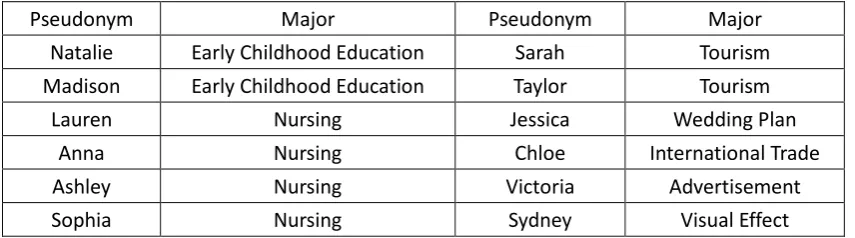
(see Table 1) and their two instructors to participate in the research. All the student participants are female. All of them are from a college situated in Korea and all of their
first languages are Korean. I used the pseudonyms for all student and teacher participants in this study. The winter program lasted for four weeks. It had nine classes per week and
each class lasted for two hours. Both formal in-class time and out of class time were
included in the research.
Table 1 Student Participants' Profile
4.2
Data Collection
I collected multiple sources of data in order to enable triangulation of data to create a
thick description of the case. Firstly I collected curricular documents of the winter program. Next, I observed in the classroom to get an idea of the layout of rooms and to
note any facilities and devices provided by the program as well as those brought by students and instructors themselves. I also watched how instructors used new media and
technologies and how students reacted to instructors’ use of them. Further, I conducted
Pseudonym Major Pseudonym Major
Natalie Early Childhood Education Sarah Tourism Madison Early Childhood Education Taylor Tourism
Lauren Nursing Jessica Wedding Plan
Anna Nursing Chloe International Trade
Ashley Nursing Victoria Advertisement
semi-structured interviews with six student participants. Finally, I collected participants’ artifacts that they were willing to share.
4.2.1
Documents and Artifacts Collection
Since “documentary information is likely to be relevant to every case study topic” (Yin, 2014, p. 148), I collected the curricular document of the winter program first to know
about the program’s curriculum. Post-secondary schools are not obliged to follow Ministry-created programmatic curriculum. Therefore, this winter program followed the
programmatic curriculum created by the governing institution, namely the language center of the university. The programmatic curriculum in this center is mainly represented
in the course outline. I collected the course outline before beginning my classroom
observation to help me have a basic idea of the objectives and the expected outcomes of the program. In examining the course outline, I looked for evidences related to
opportunities for students to engage with different tools of technologies and new media resources. I also looked at the winter program’s positioning towards the use of new
technologies and media.
Apart from the documents, I also examined students’ artifacts. In this study, artifacts refer
to the work that students created, including assignments, presentation materials, and
individual or group projects. I only collected the electronic version of students’ artifacts based on what was approved by the Research Ethics Board. More specifically, I collected
the slides and posters that students prepared for presentations and the videos and animations that students created, edited, mixed, and subtitled. Since many new media
literacies practices happened out of the classroom, the artifacts also reflected students’ out-of-class practices with new media and technologies.