Scholarship@Western
Scholarship@Western
Electronic Thesis and Dissertation Repository
4-15-2019 10:00 AM
A Social Skills Support Program For Children With Down
A Social Skills Support Program For Children With Down
Syndrome And Their Typically Developing Siblings: Effect On
Syndrome And Their Typically Developing Siblings: Effect On
Sibling Relationship
Sibling Relationship
Jill Y. Miko
The University of Western Ontario
Supervisor Neil, Nicole
The University of Western Ontario Graduate Program in Education
A thesis submitted in partial fulfillment of the requirements for the degree in Master of Arts © Jill Y. Miko 2019
Follow this and additional works at: https://ir.lib.uwo.ca/etd
Part of the Disability Studies Commons
Recommended Citation Recommended Citation
Miko, Jill Y., "A Social Skills Support Program For Children With Down Syndrome And Their Typically Developing Siblings: Effect On Sibling Relationship" (2019). Electronic Thesis and Dissertation Repository. 6123.
https://ir.lib.uwo.ca/etd/6123
This Dissertation/Thesis is brought to you for free and open access by Scholarship@Western. It has been accepted for inclusion in Electronic Thesis and Dissertation Repository by an authorized administrator of
ii Abstract
Children with Down syndrome (DS) demonstrate differences in social and communication skills
resulting in atypical relationships with others, including siblings. Typically-developing (TD)
siblings face their own social and emotional adjustment needs that impact the sibling
relationship. The current study examined the effects of a 10-week social skills support program
on the sibling relationship between children with DS and their TD siblings. Two sibling dyads
completed the program consisting of skills instruction for children with DS, a support group for
TD siblings, and cooperative recreation activities for all children together. The sibling
relationship was measured through self-report questionnaires and direct observations of sibling
interactions. Results show preliminary evidence that a social skills support group may help
improve the sibling relationship and suggests the need for further investigation. TD siblings are a
critical lifelong support for individuals with DS and these results can help improve quality of life
for the entire family system.
Keywords
Down syndrome, typically-developing sibling, sibling relationship, support group, social skills,
iii
Acknowledgements
I am very grateful to the children, parents, and volunteers for the time and energy they gave to
this research study. I would like to acknowledge the help and guidance given by Dr. Nicole Neil,
Ashley Amicarelli, Carly Esipu, Ayesha Ghouse, and Hayden Mullholland during the completion
iv
Table of Contents
Abstract i
Acknowledgements ii
Table of Contents iii
List of Tables vi
List of Figures vii
List of Appendices viii
Introduction 1
Down Syndrome and the Sibling Relationship 2
Factors that Improve the Sibling Relationship 4
Social and Communication Skills of the Individual with DS 4
Emotional Coping/Adjustment Skills of the TD Sibling 6
Gaps in the Current Literature 8
Summary 10
The Current Study 10
Method 11
Participants 11
Sample 11
Overall Settings 12
Dependent Variables: Assessments and Measures of Sibling Relationship 12
Self-Report Questionnaires 12
Direct Observation of Interactions 14
v
General Itinerary 15
Setting 16
Interventionists 16
TD Sibling Support Group 16
Individualized Skill Instruction for Siblings with DS 17
Combined Recreation Hour 18
Research Design 18
Procedure 19
Assessment Schedule 19
Video Recording Protocol and Evaluation 20
Results 21
Sibling Dyad #1: Katie (TD Sibling) and Emma (sibling with DS) 21
Self-Report Questionnaires 21
Sibling Inventory of Behaviour Revised (SIBR) 21
Sibling Relationship Questionnaire Revised (SRQR) 22
Direct Observation of Interactions 22
Sibling Dyad #3: Connor (the TD sibling) and Greg (the sibling with DS) 23
Self-Report Questionnaires 23
Sibling Inventory of Behaviour Revised (SIBR) 23
Sibling Relationship Questionnaire Revised (SRQR) 23
Direct Observation of Interactions 23
Discussion 24
vi
References 31
Tables 38
Figures 39
Appendices 45
vii
List of Tables
viii List of Figures
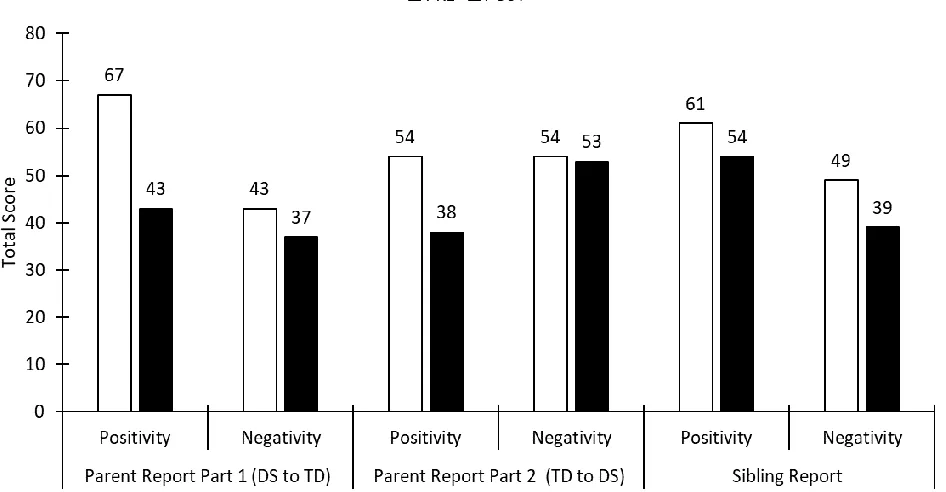
Figure 1. Katie and Emma: Total scores on Sibling Inventory of Behaviour Revised (SIBR)
factors. 39
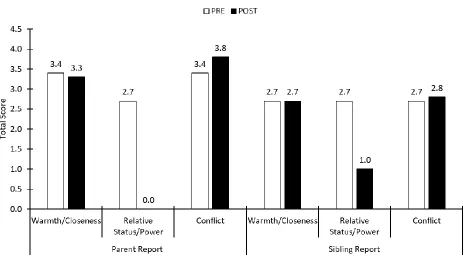
Figure 2. Katie and Emma: Total scores on Sibling Relationship Questionnaire Revised (SRQR)
subscales. 40
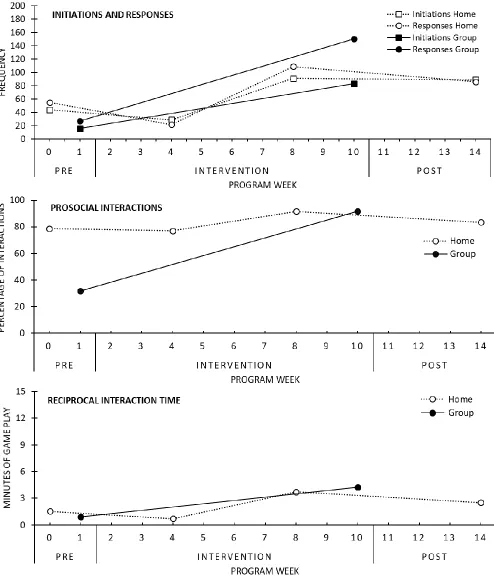
Figure 3. Katie and Emma: Frequency of initiations and responses, percentage of prosocial
interactions, and reciprocal interaction time. 41
Figure 4. Connor and Greg: Total scores on Sibling Inventory of Behaviour Revised (SIBR)
factors. 42
Figure 5. Connor and Greg: Total scores on Sibling Relationship Questionnaire Revised (SRQR)
subscales. 43
Figure 6. Connor and Greg: Total frequency of initiations and responses, total percentage of
ix
List of Appendices
Appendix A: Western Ethics Continued Approval 45
Appendix B: Sibling Inventory of Behavior Revised – Parent 46
Appendix C: Sibling Inventory of Behavior Revised – Sibling 51
Appendix D: Sibling Relationship Questionnaire Revised – Parent 54
Appendix E: Sibling Relationship Questionnaire Revised -Sibling 61
1 Introduction
Sibling relationships are one of the strongest relationships that humans develop (Brody,
2004). The relationship that one has with their sibling plays a crucial role in shaping one’s
childhood, adolescence, and adulthood and influences all areas of social and emotional
functioning (Floyd, Purcell, Richardson, & Kupersmidt, 2009; Noller, 2005; Milevsky &
Heerwagen, 2013). Additionally, family systems theory asserts that the relationship between two
siblings can impact all other relationships within the family unit (Minuchin, 1974; Seltzer,
Begun, Seltzer, & Krauss, 1991). The quality of the sibling relationship is characterised by how
siblings interact and engage with one another and contains positive and negative dimensions,
including warmth/closeness, conflict, rivalry, and relative status/power (Furman & Buhrmester,
1985; Allison & Campbell, 2015). Studies show that children in sibling relationships
characterized as high in warmth and low in conflict develop fewer internalising symptoms such
as anxiety and depression (Buist, Dekovi´c, & Prinzie, 2013). Alternatively, sibling relationships
that are low in warmth and high in conflict can result in increased incidence of externalizing
symptoms such as aggression, delinquency, and antisocial behaviour (Bank, Burraston, &
Snyder, 2004; Buist et al., 2014; Slomkowski, Rende, Conger, Simons, & Conger, 2001). While
a large body of literature exists investigating typically-developing (TD) sibling relationships,
only recently has research started to examine whether, and how, the sibling relationship is
affected by the presence of a developmental disability. There is even less literature evaluating the
sibling relationship specifically when Down Syndrome (DS) is present.
DS is a chromosomal disorder that is caused by the presence of an extra chromosome 21.
It is one of the most common congenital anomalies worldwide, with approximately 1 in 750
2
Individuals with DS are at an increased risk for several medical conditions and experience
developmental and intellectual delays. Children with DS can show some problems with social
behaviour and communication skills that may influence the sibling relationship negatively, such
as trouble controlling impulses, trouble with interaction and play skills, and trouble managing
frustration (Choi & Van Riper, 2013; Hodapp and Urbano, 2007; Sigman et al., 1999). However,
children with Down syndrome also show unique behaviors that may positively influence the
sibling relationship, such as increased sociability and a desire to seek out interactions with others
(Jahromi et al. 2008; Pollard, Barry, Freedman, & Kotchick, 2013). Just as with TD siblings, the
sibling relationship between children with DS and their TD siblings can impact all aspects of
development and family life (Floyd et al., 2009; Noller, 2005; Milevsky & Heerwagen, 2013;
Minuchin, 1974; Seltzer et al., 1991). The sibling relationship is also important as individuals
with DS live longer and rely more on their TD sibling(s) for care later in life (Dew, Llewellyn,
Baladin, 2004; Orsmond & Seltzer, 2007).Overall, the literature suggests that it would be
worthwhile to develop and implement interventions designed to improve the quality of the
sibling relationship. The current study was designed to evaluate the effects of a social skills
support program for children with DS and their typically-developing (TD) siblings on the quality
of the sibling relationship.
Down Syndrome and the Sibling Relationship
The literature investigating how the quality of the sibling relationship is impacted by the
presence of a general developmental disability demonstrate mixed results. Some studies show
that the sibling relationship is affected positively, with more warmth and less conflict (Roper,
Alfred, Mandleco, Freeborn, & Dyches, 2014; Stoneman, 2005). Contrarily, some studies show
3
behaviour (Allison & Campbell, 2015; Fisman, Wolf, Ellison, & Freeman, 2000). While this
research is useful, one of the limitations in the above-mentioned studies is the grouping of
multiple disability groups in the samples. Cuskelly (1999) and Cuskelly and Gunn (2003) argue
that sibling relationship research should be conducted on specific diagnostic groups separately,
as using groups composed of multiple disability types does not allow effects particular to one
group to be identified. In support of this, Seltzer, Greenberg, Orsmond, and Lounds (2005)
published a review paper looking at research done on sibling relationships when one sibling had
an intellectual disability and concluded that different disability types – especially DS and Autism
Spectrum Disorder (ASD) which are often studied together- led to different outcomes in the
sibling relationship and TD sibling’s coping. Specifically, when one of the siblings has DS, the
sibling relationship is characterized by more closeness, affection, nurturance, and admiration
compared to the sibling relationship when one of the siblings has autism or another pervasive
developmental disability (Hodapp & Dykens, 2012; Kaminskey & Dewey, 2001; Seltzer et al.,
2005). This could be because a common aspect of the Down syndrome phenotype is increased
sociability and a desire to seek out interactions with others (Jahromi et al. 2008; Pollard, Barry,
Freedman, & Kotchick, 2013). Clearly, it is important to study if and how DS affects the sibling
relationship separately from other disability groups, however, only a relatively small amount of
research has done this.
The studies that have looked at the sibling relationship when one sibling is typically
developing and the other specifically has a diagnosis of DS also show mixed results. Some
results show that, compared to sibling relationships when both children are TD, the sibling
relationship between children with DS and their TD siblings is positive with more characteristics
4
show any differences in sibling relationship when one child has a diagnosis of DS compared to
when both children are TD (Cuskelly & Gunn, 2003). Other studies show that there can be
negative effects on the sibling relationship, in terms of more conflict and less frequent
interactions (Hodapp and Urbano, 2007; Pollard et al., 2013). It is unknown why the literature
shows mixed results, but a possible explanation includes differences in the way the sibling
relationship was measured between studies. For example, it appears that the studies showing a
positive effect on the relationship used parent self-report data to measure the sibling relationship,
whereas studies reporting more negative effects used TD sibling self-report data. Regardless, it is
clear that the sibling relationship can be affected by the presence of DS and, as the sibling
relationship is important to both siblings’ development and also family functioning, it is
worthwhile to study ways to improve the sibling relationship.
Factors that Improve the Sibling Relationship
In designing targeted interventions to improve the sibling relationship specifically when
one sibling has DS, we need to identify the factors that impact that relationship. Studies show
that the sibling relationship is more positive when: 1) the individual with DS has good social and
communication skills and 2) the TD sibling has strong emotional coping/adjustment skills (Choi
& Van Riper, 2013; Cuskelly, 2016; Hodapp & Urbano, 2007; Pollard et al., 2013).
Interventions which target these two areas may have positive collateral effects on improving the
sibling relationship.
Social and Communication Skills of the Individual with DS. As mentioned,
individuals with DS are known to have problems with social behaviour and communication
skills, such as trouble controlling impulses, trouble with interaction and play skills, and trouble
5
relationship (Choi & Van Riper, 2013; Hodapp & Urbano, 2007; Sigman et al., 1999). For
example, 284 TD adult siblings of individuals with DS completed The Adult Sibling Relationship
Questionnaire online survey (Hodapp & Urbano; 2007). The questionnaire measured the number
and length of contacts between siblings and their brothers/sisters with DS as well as the warmth,
closeness, and positiveness of the sibling relationship. They correlated the scores on that
questionnaire with reports of the brother/sister with DS’s behaviour concerns and level of
functioning. They found that closer, more positively rated sibling relationships were significantly
associated with: 1) more frequent and lengthy interactions between siblings and 2)
brothers/sisters with DS who had lower levels of behavioural/emotional problems and were
better at social skills and maintaining friendships. Based on these findings, interventions to
improve the sibling relationship would do well to include programs aimed at raising the social
and communication skills of the child with DS.
Looking in the literature, several studies have successfully used Applied Behavior
Analytic (ABA) techniques to improve the interaction and communication skills of children with
DS including verbal imitation, responding to questions, emotional regulation, and spontaneous
language (Bauer, Jones, & Feeley, 2014; Feeley, Jones, Blackburn, & Bauer, 2011). For
example, Bauer et al. (2014) delivered ABA-based interventions to 2 children with DS aimed at
increasing their ability to respond to questions, a skill that is important in reciprocal
communication. A multiple-baseline probe design across 22 sessions was used to examine the
effectiveness of multiple opportunities, prompting, reinforcement, and error correction
procedures on the participants’ responses. Correct responses to a question resulted in verbal
praise and physical interaction, while incorrect responses or no response to a question resulted in
6
and immediately presented another opportunity by asking the question again. All of the children
succeeded in acquiring the ability to respond appropriately to questions, generalized those
responses to interactions with other adults not associated with the intervention sessions, and
maintained responding to questions across a one-month period. More studies are needed to
increase the sample size and generalizability, but the results show that ABA models of
intervention can improve the social and communication skills of the child with DS.
Since we know that the sibling relationship is rated more positively when the child with
DS has strong social and communication skills, ABA models of intervention to improve social
and communication skills may be used to concurrently improve the sibling relationship. There
are no studies showing exactly this in the DS literature, however, there is evidence from the ASD
literature that such interventions do indeed lead to more positive interactions between siblings
and improve the sibling relationship (Boyden, 2012; Greenwood, 2018; Kryzak & Jones, 2017).
Examining this when the diagnosis is specifically DS is one of the goals of the current study.
Emotional Coping/Adjustment Skills of the TD Sibling. Traditionally, research around
sibling relationships and the presence of DS has focused not on the sibling relationship, but on
the psychosocial outcomes experienced by the TD sibling. Research findings have been varied as
to whether having a sibling with a developmental disability is related to positive outcomes, such
as greater self-control, increased empathy for others, and greater adaptive coping abilities, or
negative outcomes, such as greater risk for conflict, increased rates of psychological disorders,
and difficulties with social isolation, self-esteem, and adjustment (Barnett & Hunter, 2012; Dew,
Balandin, & Llewellyn, 2008; Findler & Vardi 2009; Mandleco, Marshall, Olsen, & Dyches,
2003; Orsmond & Seltzer 2007). Regardless, it makes sense that if the TD sibling is
7
be less warmth, closeness, and interaction between siblings. Indeed, this is precisely what the
literature shows (Cuskelly, 2016; Pollard, Barry, Freedman, & Kotchick, 2013).
For example, Pollard et al. (2013) looked at sibling relationship quality in 38 TD siblings,
ages 11-17, who had a brother or sister with DS. The participants completed the sibling domain
of The Network of Relationships Inventory, which assessed features such as social support and
negative interchanges within the sibling relationship to give an overall relationship quality score.
Participants self-reported anxiety was assessed using The Multidimensional Anxiety Scale for
Children. They found that anxiety in the TD sibling was significantly and negatively correlated
with overall sibling relationship quality. Based on these findings, interventions to improve the
sibling relationship would also do well to include programming aimed at improving the
emotional coping and adjustment of the TD sibling.
Current literature shows that support group type programs have been successful in
improving the emotional coping and adjustment of the TD sibling (D’Arcy, Flynn, McCarthy,
O’Connor, & Tierney, 2005; Kryzak, Cengher, & Fienup, 2015; Roberts et al., 2015; Roberts,
Ejova, Giallo, Strohm, & Lillie, 2016). The TD sibling support groups typically involve regular
meetings where a group of TD siblings learn about their brother’s/sister’s disability, discuss
issues and emotions, build a support network, and learn about coping strategies. Two of the most
well-known programs are SibShops, developed by Meyer and Vadasy (1994), and SibworkS,
developed by Strohm (2010). In addition to improving TD sibling’s adjustment, coping, and
emotional well-being, some studies have even noticed a small but encouraging concurrent
improvement in sibling relationship quality (Kryzak et al., 2015; Roberts et al., 2015).
As an example, Roberts et al. (2015) recruited 56 children, aged 7–12, who had a sibling
8
SibworkS program (n = 30) or waitlist control (n = 26). The emotional and behavioural
functioning of the children were measured both pre and post intervention using The Strengths
and Difficulties Questionnaire – Parent Version. The questionnaire has five subscales: emotional
symptoms, conduct problems, hyperactivity/inattention, peer relationship problems, and
prosocial behavior. Siblings participating in the SibworkS intervention were reported by their
parents to have fewer emotional and behavioral difficulties than siblings in the control group
immediately following the intervention and also at a 3-month follow-up.
Since we know that the sibling relationship is rated more positively when the TD child
has strong emotional coping/adjustment skills, support group programming to facilitate
development of those skills may be used to concurrently improve the sibling relationship. There
is evidence that this is the case. Although it was not the main area of focus, Roberts et al. (2015)
also included one parent-report measure of sibling relationship and found that the sibling
relationship was reported as slightly better, specifically with less reported conflict, after TD
sibling completed the support group. More studies are needed to corroborate this finding when
the sibling specifically has DS, which is an aim of the current study.
Gaps in the Current Literature
There are several gaps in the presented literature that the current study will address.
Given the information in the previous section, it is reasonable to posit that combining ABA
based interventions to improve the social and communication skills of the child with DS with
support group interventions to improve the emotional coping/adjustment of the TD sibling may
have the most success at improving the sibling relationship. However, to the best available
knowledge, no research has explicitly evaluated how combining interventions affects the sibling
9
children with ASD and their TD siblings (Choi & Van Riper, 2013; Kryzak, Cengher, & Fienup,
2015). A landmark study by Kryzak, Cengher, and Fienup (2015) examined the effects of a
community support group providing intervention for both the children with ASD and their TD
siblings at the same time. They reported on 14 sibling dyads, ages 4 to14, who completed a
7-week program consisting of a support group for the TD siblings, using curricula based on the
SibShop program developed by Meyer and Vadasy (1994), and individualised skills instruction
for the children with ASD, using ABA interventions to address skills important for interacting
with their siblings. Their results revealed increases in communicative initiations and responses
for both siblings after completion of the program, pointing to an improvement in the sibling
relationship. Some limitations to note are the use of only a single measure of sibling relationship
and concerns about generalizability of the increased communication (i.e., did the effects also
occur in environments outside the program?). Nonetheless, the Kryszak et al. (2015) study is
very important and served as a starting model for the current study.
Importantly, the Kryzak et al. (2015) study was one of the first in the ASD sibling
relationship literature to measure the sibling relationship using observable changes in behavior of
the siblings toward each other (reciprocal initiations and responses and affect between siblings).
Most of the research on sibling relationships specifically involving DS has relied on indirect
self-report measures completed by the parents or the TD siblings. Self-self-report measures of the sibling
relationship can give valuable information, such as ratings of the positivity (warmth/closeness)
and negativity (conflict, rivalry, and relative status/power) of the relationship; however, the
sibling relationship also includes when and how siblings interact with each other (Furman &
Buhrmester, 1985; Allison & Campbell, 2015). Research on sibling relationships specifically
10
provide valid and more objective data about the quality of the sibling relationship. The literature
does present guides to reliably measure the sibling relationship by observing and assessing
characteristics of sibling interactions such as the duration of a reciprocal interaction, the number
of initiations and responses, the valence of each communicative event, and whether the
communicative event is prosocial or agonistic (Abramovitch, Corter, & Lando, 1979;
Abramovich, Stanhope, Pepler, and Corter, 1987; Knott, Lewis, and Williams, 1995; Lobato et
al. 1987; Odom, Hoyson, Jamieson, and Strain, 1985; Kamps et al., 2002, Kryzak, Cengher, &
Fienup, 2015). Observation can be less vulnerable to response bias and provides real-time
demonstration of the sibling relationship, rather than reflective accounts gathered by self-report
measures.
Summary
In summary, the sibling relationship is often one of the most influential relationships in a
person’s life. Although limited, the research presented shows that when one sibling has DS and
the other is TD, the sibling relationship is affected by the social and communication skills of the
sibling with DS and also the emotional coping/adjustment of the TD sibling. An effective way to
address the behavioural and communication skills of the sibling with DS is through applied
behavior analytic interventions. An effective way to address the emotional coping/adjustment of
the TD sibling is through support group interventions. Although no such studies exist in the DS
literature, research from the ASD literature suggests that combining both of these interventions
into an integrated program can lead to improved quality of the sibling relationship. Finally, the
sibling relationship may best be evaluated through observable measures of sibling interactions in
addition to self-report measures.
11
The current study sought to add to the current literature in several novel ways: 1) it
looked at the effects of a tailored and integrated social skill support group on the sibling
relationship between children with DS and their TD siblings; 3) it included observable measures
of the sibling relationship in addition to self-report measures; and 4) it recorded the observable
measures in both the group and home setting. The main research question was: how does a social
skills support program integrating interventions for both the child with DS and their TD sibling
affect the sibling relationship? If the communication/social skills of the child with DS improve
and if the TD siblings gain emotional coping/adjustment skills, it was hypothesized that the
sibling relationship would improve.
Method
Participants
This research was reviewed and approved by the institutional review board at Western
University; a copy of the ethics approval form is found in Appendix A. Inclusion criteria
required that participants were sibling dyads where one child is TD and one child has a diagnosis
of DS, as determined by parent report. Both siblings were required to be between 5 and 17 years
of age, as this age range represents the upper and lower limits of the study measures that were
administered to participants. Participants were recruited from organizations in the London,
Ontario region that provide services to families who have a child with DS, for example the
London Down Syndrome Association. The principle investigator contacted these organizations
(typically the program directors) via scripted email using email addresses posted on their public
websites. A member of the organization (typically a secretary) distributed our study recruitment
12
contacted the researchers and received a letter of information and a phone call to review details
about participating in the study.
Sample
A total of three dyads signed the consent forms. One dyad withdrew from the study after
week one of the intervention due to scheduling conflicts. Data from the remaining two sibling
dyads that completed the study are reported here. The first dyad consisted of two sisters, Katie
and Emma. Emma is the youth with DS and she was 14 years old at the time of the study. Katie
is the TD sibling and she was 16 years of age at the time of the study. The second dyad consisted
of two brothers, Connor and Greg. Greg is the child with DS and he was 6 years old at the time
of the study. Connor is the TD sibling and he was 11 years of age.
Overall Settings
The social skills support group took place at Merrymount Children’s Centre, a London,
Ontario organization that provides various programming for children and their families.
Merrymount is affiliated with the University of Western Ontario via the Mary J. Wright Centre.
More detailed descriptions of the setting for the social skills support group is found in the
Independent Variable section. Filling out of pre- and post- questionnaires took place in each
family’s home, in a quiet location deemed suitable by the family. Also in the home, the video
recordings of siblings interacting took place in a quiet area where distractions could be
minimized and there was room for the sibling pair to interact.
Dependent Variables: Assessments and Measures of Sibling Relationship
Self-Report Questionnaires. Two self-report measures were used to evaluate sibling
13
Revised (SIBR; Hetherington, Henderson, & Reiss, 1999), which has a version for Parents
(SIBR-P) and for Siblings (SIBR-S). It was developed by Schaeffer and Edgerton (1981) and
modified by Hetherington, Henderson, and Reiss (1999); it assesses behaviors of siblings toward
each other and their relationship. The SIBR-P has two parts, with Part 1 assessing child A’s
behaviour towards child B and Part 2 assessing child B’s behaviour towards child A. In our
study, P Part 1 assessed behaviors of the child with DS toward their TD sibling and
SIBR-P SIBR-Part 2 assessed behaviours of the TD sibling towards the child with DS. The SIBR-SIBR-P (SIBR-Part 1
and Part 2) and the SIBR-S each contain 32 items including: a 5-item empathy/concern scale, a
6-item companionship/involvement scale, a 6-item rivalry scale, a 5-item conflict/aggression
scale, a 5- item avoidance scale, and a 4-item teaching/directiveness scale. Each item is answered
on a 5-point Likert scale: 1 (never), 2 (seldom), 3 (sometimes), 4 (often), and 5 (always). A
factor analysis indicated that the scales formed two larger factors, positivity (sum of
teaching/directiveness, companionship, and empathy) and negativity (sum of aggression,
avoidance, and rivalry) (Schaeffer & Edgerton, 1981). Psychometric properties of the SIBR are
good. The reliability is robust with respect to Cronbach’s alpha estimates and construct validity
is also strong, as indicated by correlation with other measures of sibling relationship and also
with comparison to observed sibling interactions (Volling, Brenda & Blandon, Alysia, 2005). A
copy of the SIBR-P and SIBR-S can be found in Appendix B and C, respectively.
The second self-report questionnaire used was the Sibling Relationship Questionnaire
Revised (SRQR: Furman & Buhrmester, 1985), which also has a version for Parents (SRQR-P)
and for Siblings (SRQR-S). It was developed by Buhrmester and Furman (1985) to assess parent
and sibling perceptions of the sibling relationship. It contains 42 questions which make up three
14
warmth/closeness, conflict, and relative power/status. The dimension subscale of
warmth/closeness consists of seven underlying qualities: intimacy, prosocial behavior,
companionship, affection, similarity, admiration of the sibling, and admiration by the sibling
(Furman & Buhrmester, 1985). The dimension subscale of conflict can be divided into three
underlying qualities: quarreling, antagonism, and competition (Furman & Buhrmester, 1985).
The dimension subscale of relative power/status can be divided into two underlying qualities:
nurturance and dominance. Each item on the SRQR is answered on a 5-point Likert scale: 1
(hardly at all), 2 (not too much), 3 (somewhat), 4 (very much), and 5 (extremely much). The
construct validity of the instrument, as shown by correlation with observed sibling behaviours,
and internal consistency, as measured by Cronbach’s alpha, for these dimensions and the
underlying qualities is strong (Derkman et al., 2010). A copy of the SRQR-P and SRQR-S can be
found in Appendix D and E, respectively.
Direct Observation of Interactions. Each sibling dyad was video recorded while
engaging together in three different types of activities for 5 minutes each: building blocks, board
games, and crafts/colouring. This resulted in 15 minutes of recorded interactions. Three different
activities/games were used to account for varying interests of the siblings and to increase ability
to generalize any relevant findings. Building blocks engaged the siblings in semi-structured
activity ideally requiring cooperation, board games require the siblings to interact in a turn-based
manner of communication, and crafts/coloring offer the siblings a chance to be creative and more
free-form in their interactions. The protocol for obtaining these video recordings is detailed later
in the procedure section.
There are several studies that have validated coding guides of sibling interactions for the
15
al., 2002; Knott, Lewis, & Williams, 1995; Kryzak et al., 2015; Lobato et al. 1987; Odom,
Hoyson, Jamieson, & Strain, 1985). The current study combined these offerings to come up with
a coding guide to apply to observed interactions between the sibling participants, which can be
found in Appendix F. First, the researchers coded the type and frequency of social–
communicative behaviors emitted by either the child with DS or the sibling. A social–
communicative behavior broadly refers to behavior emitted by either child directed to the other
child, including vocalizations and use of gestures. Secondly, the researchers coded whether the
social-communicative behaviour was an initiation or a response. An initiation refers to any
social-communicative behavior not preceded within 3 s by a social-communicative behavior
from the sibling. Responses are any social-communicative behavior that occurs specific to and
directed towards the sibling within 3 s of a preceding behavior from the other sibling. Third, the
total duration for which the siblings are engaging in reciprocal interaction with each other was
calculated. A reciprocal interaction was defined as an initiation and all responses that followed,
where each response occurred within 3 s or less of the previous response. Lastly, the researchers
coded whether the social-communicative behavior was prosocial or agonistic. An example of a
prosocial social-communicative behaviour would be verbal statements of approval or admiration
of the sibling or his/her behaviour. An example of an agonistic social-communicative event
would be assertive physical contact and teasing, name calling, or unfavorable judgements.
Overall, the study will report the following summative outcomes for each time point: 1) the total
number of initiations and responses for each individual sibling and each sibling pair; 2) the total
duration of reciprocal interaction for each sibling pair; and 3) the number of prosocial versus
agonistic communication events for each individual sibling and each sibling pair.
16
General Itinerary. The social skills support group is a two-hour program, taking place
over 10 weeks. For the first hour of each session, individualised skills intervention was provided
for the children with DS and a concurrent support group was provided for the TD siblings.
During individualized skills intervention, children with DS received applied behavioral analytic
(ABA) instruction around social, communication, and play skills that are important for
interacting with their siblings (e.g. turn taking, reciprocal commenting, and sitting appropriately).
During the TD sibling support group, siblings were provided lessons that covered a specific topic
each week. For the second hour of each session, all children attended recreation time together.
During recreation time, children completed relay races, sibling interaction activities, and whole
group activities.
Setting. The individualized skills instruction for the children with DS took place in a
large room with a multitude of areas and materials appropriate for behavioural interventions,
including couches, tables and chairs, books, play kitchen and workbench, board games, mats, a
sink area, etc. The support group for TD siblings took place in an adjacent room equipped with
tables and chairs and a sink area. The recreation hour took place in the same room as the
individualized skills instruction.
Interventionists. The principal investigator is a doctoral level Board-Certified Behavior
Analyst (BCBA-D) and was responsible for approving the programming and delivery of the
support group for TD siblings and the individualized skills instruction for the siblings with DS,
as described below. Other interventionists involved in the delivery of the social skills support
group were all undergraduate or masters level students of Western University and were involved
with the study in a volunteer, work-study, or research assistantship capacity. All individuals were
17
TD Sibling Support Group. The curriculum for the support group for TD siblings was
based on the established SibShops program, developed by Meyer and Vadasy (1994). The first
two weeks were focused on the participants getting to know each other. Then the group moved
into topics such as sharing and talking about feelings, developmental disability/DS education,
coping strategies, meeting and talking with an adult who has a sibling with DS, positive
self-esteem, and why you are important to your sibling. The last week was focused on
reflection/conclusion. Materials for the sibling support group included personalized workbooks
with weekly activities, board games, playing cards, art supplies, a ball, candy, certificates (e.g.
good listening), books about DS, a shoe box, and DS trivia questions. The support group was run
by a master’s level counselling psychology student, with other interventionists available to help
as needed.
Individualized Skill Instruction for Siblings with DS. During the first week of the
program, interventionists collected baseline data about the skills of the child with DS related to
social skills important in interacting with their siblings. For younger children with DS, skills
included taking their turn during a game, allowing someone else to take a turn, responding to
their name being called, making reciprocal statements (e.g. volunteer says, ‘‘My name is --,’’
child responds, ‘‘My name is --’’), initiating comments (e.g. ‘‘I have this game at home’’),
requesting, and use of eye contact. For older children with DS, skills included taking turns,
emotional regulation, requesting, and staying on task. Baseline data were used to develop
individualized intervention plans targeting two to three skills for each child with DS.
Intervention was embedded in game play or other activities, such as drawing pictures.
Sometimes children worked one-on-one with an interventionist and other times they played
18
delivering an instruction, prompting if necessary, reinforcing behavior, and repeating this
structure for 5–10 opportunities. Prompts were individualized for each child and the target
response and faded from most to least. Physical and gestural prompts were used for turn taking,
while visual (textual or pictorial) prompts were used for expressive communication and eye
contact. Prompt fading occurred when children performed at 80% or higher in a session of 5–10
opportunities. Throughout the 10-week program, the principal investigator provided weekly
feedback for interventionists, including instructions, modeling, practicing, and feedback on
implementation of intervention. The principal investigator also examined treatment data each
week and changed programs (i.e., targets and prompt levels) depending upon the child’s
performance. The materials for the skills intervention included datasheets, timers, writing tools,
index cards/wipe boards for visual prompts, art supplies (e.g. markers and construction paper),
board games (e.g. Candyland™), and edibles. The individualized skills instruction was run by a
master’s level counselling psychology student and the principal investigator, with other
interventionists available to help as needed.
Combined Recreation Hour. During recreation time, activities were intended to mimic
‘‘field days’’ and physical education classes at schools, including stretching, relay races,
cooperative games between siblings. Examples include both siblings in a hula hoop trying to
walk though an obstacle course, catching a ball, or bean bag toss, freeze dance, Simon says, and
red rover. Games were those that would likely be played in other settings by peers and are
appropriate for children of varied ages and abilities. Recreation time materials included timers,
music player, art supplies, cones, and a variety of other play materials. The recreation hour was
run by a master’s level counselling psychology student, with the principal investigator and other
19
Research Design
A pre-post design was used to measure the sibling relationship through self-report
questionnaires filled out by the parents and the TD siblings. A time-series AB design was used to
measure the sibling relationship via direct observations of social–communicative interactions.
Results are presented graphically and discussed as descriptive case series.
Procedure
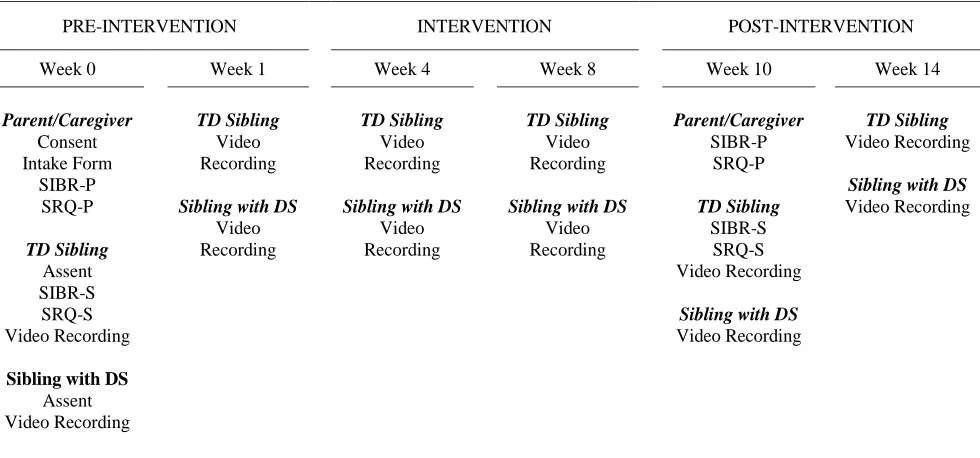
Assessment Schedule. Table 1 outlines the general assessment timeline followed and
described here. Following expressed interest, all families received packets containing a letter of
information, consent/assent forms, and intake forms designed to describe the general
demographics of the participants. A research assistant contacted the family by phone to go
through these materials. If the parents gave consent and the child gave assent, the researchers
scheduled a week 0 pre-baseline assessment in the participant's home setting. During the week 0
pre-baseline assessment, the consent/assent forms were checked for completeness and collected
while the parents and the TD siblings completed the self-report questionnaires. During the week
0 pre-baseline assessment, researchers also video recorded each sibling dyad playing the three
different types of games for the observations of sibling interactions. Week 1 baseline assessment
occurred in the group setting on day 1 of the intervention; sibling dyads were pulled into a
private room and video recorded playing the three different types of games during recreation
hour of the social skills support group program. Recreation time was held before the
interventions during week 1 (so that this measurement could be used as pre-intervention
baseline) and after the interventions for each subsequent meeting. During week 4 and week 8 of
the social skills support group intervention, researchers completed intervention assessments in
20
observation of sibling interactions. Week 10 post-intervention assessment was held in the group
setting, where again sibling dyads were also pulled into a private room and video recorded
playing the three different types of games during recreation hour. At week 10, parents and TD
siblings were given the self-report questionnaires to fill out again that night. The week 14
follow-up assessment was completed 4 weeks after the intervention ended and included video recording
each sibling dyad playing the three different types of games and collection of the
post-intervention self-report questionnaires filled out at week 10.
Video Recording Protocol and Evaluation. As discussed above,there were three main
categories of games/activities (i.e. building blocks, board games, and crafts/colouring) that the
sibling dyads were recorded playing. Each category had at least three different options for the
siblings to choose from. For example, building blocks options included LEGO, wooden blocks,
or Silly Star Connectors™. Each recording session, the sibling pair was offered a choice of
which category and option of game within that category they wanted to play first, second, and
third. Researchers used scripted instructions to ready the siblings for the recording session. The
siblings told the researcher which category and game they wanted to play first, and the researcher
then put that game in front of the siblings. The 5-min timer and the coding of behaviors started
when either one of the siblings first touched the game materials. If the siblings were not playing
together, the researcher gave a prompt every minute of, “[sibling name], would you like to play
with your brother/sister?”, alternating which sibling name was said. Researchers tried to provide
minimal assistance and interference during game play. For example, if a child could not open a
box, the researcher would provide brief assistance and step away. If the children did not
independently engage in the activity, the researchers provided direct assistance in the form of
21
researcher announced that it was time to clean up the current game and play a new game. The
camera was not stopped, but when one of the siblings engaged with the new game materials, the
timer and coding of behaviors began again.
The video recorded sessions of the siblings playing games were scored by the primary
researcher by recording on data sheets. See Appendix F for a copy of the recording sheets used.
The following was scored: 1) the total number of initiations and responses for each individual
sibling and each sibling pair; 2) the total duration of reciprocal interaction for each sibling pair;
and 4) the number of prosocial versus agonistic communication events for each individual
sibling and each sibling pair. A research assistant/volunteer independently scored a randomly
selected sample of 30% of the sessions and their findings were compared with those of the
primary researcher for each of the reported measures. From this, interobserver agreement (IOA)
was calculated for initiations, responses, prosocial communication events, and total reciprocal
interaction time by dividing the smaller count by the larger count and multiplying by 100
(Cooper et al., 2007). IOA for initiations averaged 83% (range, 30-100%) and for responses
averaged 80% (range, 50-100%). IOA for agonistic interactions averaged 96% (range, 82-100%).
IOA for total reciprocal interaction time averaged 80% (range 50-95%).
Results
Katie (TD sibling) and Emma (sibling with DS)
Self-Report Questionnaires.
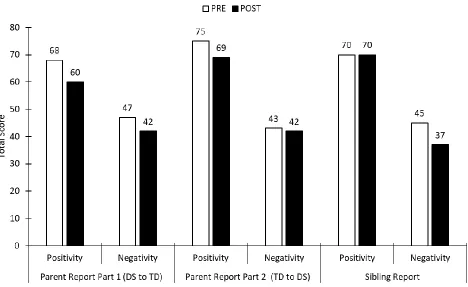
Sibling Inventory of Behaviour Revised (SIBR). Figure 1 shows the results of the
SIBR-P SIBR-Part 1, SIBR-SIBR-P SIBR-Part 2, and SIBR-S for Katie and Emma. For the SIBR-SIBR-P SIBR-Part 1, which assessed
22
aggression, avoidance, and rivalry subscales) decreased as did the positivity factor (sum of
teaching/directiveness, companionship, and empathy subscales). Similarly, for the SIBR-P Part
2, which assessed the parent’s report of how Katie behaves towards Emma, the negativity factor
decreased, as did the positivity factor. For the SIBR-S, which assessed Katie’s report of how she
behaves towards Emma, the negativity factor decreased, while the positivity factor remained the
same.
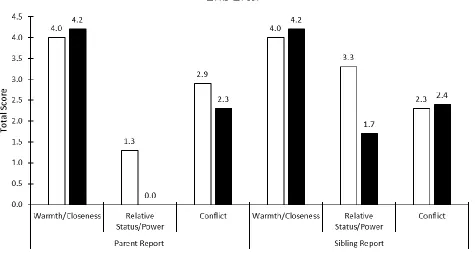
Sibling Relationship Questionnaire Revised (SRQR). Figure 2 shows the results of the SRQR-P and SRQR-S for Katie and Emma. The SRQR-P, which assessed the parent’s report of
the sibling relationship between Emma and Katie, showed an increase in warmth/closeness and a
decrease in relative power/status and conflict. The SRQR-S, which assessed Katie’s report of the
sibling relationship between her and Emma, showed a decrease in relative power/status and an
increase in warmth/closeness and conflict.
Direct Observation of Interactions.
Unfortunately, there were technical difficulties with the recording equipment and, during
week 4, only 30 seconds of sibling interactions were recorded for each game. Thus week 4 is not
included in the results for Katie and Emma. All three activities (building blocks, board games,
and crafts/colouring) showed similar trends with no interactions apparent. Additionally, both
Emma and Katie showed consistent trends on all reported outcomes. Consequently, the results
were combined and totalled for the sibling pair over the whole 15 minutes of interaction.
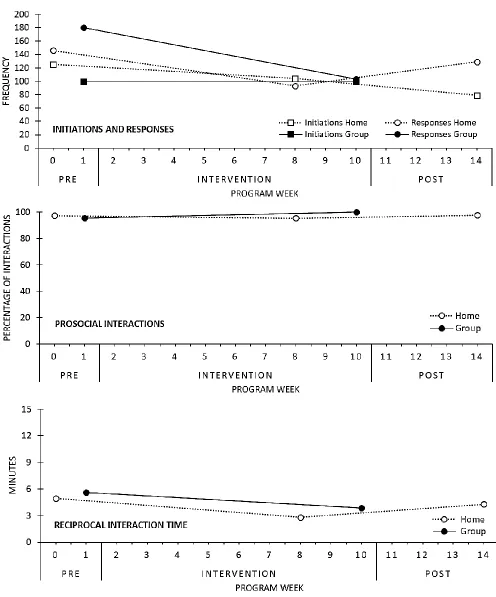
Figure 3 shows the total frequency of initiations and responses, total percentage of
prosocial interactions, and total reciprocal interaction time for Katie and Emma. When
23
and responses (the smallest difference was a decrease of 3 between pre and post frequency and
the largest difference was a decrease of 41 between pre and post frequency). Prosocial
interactions remained relatively stable, although there was a slight increasing trend, especially in
the group setting. The amount of reciprocal interaction time decreased, which aligns with the
decreasing trend also seen in initiations and responses.
Connor (TD sibling) and Greg (sibling with DS)
Self-Report Questionnaires.
Sibling Inventory of Behaviour Revised (SIBR).
Figure 4 shows the results of the SIBR-P Part 1, SIBR-P Part 2, and SIBR-S for Connor
and Greg. For the SIBR-P Part 1, which assessed the parent’s report of how Greg behaves
towards Connor, the negativity factor (sum of the aggression, avoidance, and rivalry subscales)
decreased as did the positivity factor (sum of teaching/directiveness, companionship, and
empathy subscales). Similarly, for the SIBR-P Part 2, which assessed the parent’s report of how
Connor behaves towards Greg, the negativity factor decreased, as did the positivity factor. For
the SIBR-S, which assessed Connor’s report of how he behaves towards Greg, the negativity
factor decreased, as did the positivity factor.
Sibling Relationship Questionnaire Revised (SRQR).
Figure 5 shows the results of the SRQR-P and the SRQR-S for Connor and Greg. The
SRQR-P, which assessed the parent’s report of the sibling relationship between Connor and
Greg, showed an increase in conflict and a decrease in relative power/status and
24
him and Greg) showed no change in warmth/closeness, a decrease in relative status/power, and
an increase in conflict.
Direct Observation of Interactions.
As in the other dyad, all three activities (building blocks, board games, and
crafts/colouring) showed similar trends with no interactions apparent. Connor and Greg both also
showed consistent trends on all reported outcomes. Thus, the results were again combined and
totalled for the sibling pair over the whole 15 minutes of interaction.
Figure 6 shows the total frequency of initiations and responses, total percentage of
prosocial interactions, and the total reciprocal interaction time for Connor and Greg over the
course of the study. When comparing pre-intervention to post-intervention, there was a distinct
increasing trend for both initiations and responses (the smallest difference was an increase of 9
between pre and post frequency and the largest difference was an increase of 70 between pre and
post frequency). Prosocial interactions increased, which was especially striking in the group
setting. Reciprocal interaction time also increased, especially in the group setting, which aligns
with the increase seen in initiations and responses.
Discussion
The current study is pilot research investigating how a social skills support program
integrating interventions for both the child with DS and their TD sibling affects the sibling
relationship. One of the only other studies to look at a similar question is Kryzak et al. (2015),
who examined the effects of such a social skills support program on interactions between
children with ASD and their TD siblings. The social skills support group in the current study
25
instruction was provided for the children with DS using ABA-based interventions designed to
improve social, communication, and play skills important in reciprocal relationships (Bauer,
Jones, & Feeley, 2014; Feeley, Jones, Blackburn, & Bauer, 2011). Concurrently, a support group
was provided for the TD siblings based on curriculum proven to improve social and emotional
coping/adjustment (D’Arcy, Flynn, McCarthy, O’Connor, & Tierney, 2005; Roberts et al., 2015;
Roberts, Ejova, Giallo, Strohm, & Lillie, 2016). For the second hour of each session, all children
attended recreation time together where they could interact and practice the skills learned. The
dependant variables used to measure sibling relationship included two questionnaires, the SIBR
and SRQR, and also direct observations of sibling interactions.
The current study builds on previous research (Kryzak et al., 2015) by using the SIBR-R
and the SRQR, which are validated measures of sibling relationship, to help evaluate the success
of the intervention (Derkman et al., 2010; Volling, Brenda & Blandon, Alysia, 2005). There was
a decrease in both the negativity and positivity factors when looking at the SIBR-P (Part 1 and
Part 2) and the SIBR-S for Emma and Katie and for Connor and Greg. The social skills support
program’s curriculum focused mostly on coping with negative emotions and this could be
reflected in these questionnaire results. For example, one of the main elements of the social skills
program curriculum specifically for Emma was emotional recognition, emotional regulation,
and, specifically, how to handle negative emotions without avoidance or conflict. The results of
the SIBR-P Part 1 suggest that the intervention may have helped Emma with attenuation of
negative behaviors towards Katie.Unrelated to the intervention, it could be that both positivity
and negativity factors decreased because of regression to the mean or because the parent was
26
The SRQR-P for Katie and Emma revealed that after the intervention, warmth/closeness
of the relationship was higher, conflict was less, and relative status/power was less (meaning that
after the intervention, no one sibling was treated better or had more influence in the relationship).
These results are encouraging as to the intervention having a positive effect on the sibling
relationship, as reported by Emma and Katie’s parent. Katie’s results from the SRQR-S are also
encouraging, as she too reported that the warmth/closeness in the relationship increased and the
relative status/power decreased. However, Katie reported that conflict increased slightly after the
intervention. For Connor and Greg, the SRQR-P and SRQR-S also showed that conflict
increased following the intervention. It is curious why conflict would be reported to increase in
the SRQR, but not in the SIBR (conflict was a subscale of the larger factor of negativity). This
could be due to operational definitions of conflict and the way in which the questions are asked.
Especially because there is a discrepancy between the parent and sibling report of conflict for
Emma and Katie, a slight increase in conflict could also be situational. That is, that there could
have been an external event that increased the frequency of or even just perception of conflict in
the post-intervention measurement unrelated to the intervention.
While the trends from pre-intervention to post-intervention were similar for both sibling
dyads, it is important to note that the raw scores for Katie and Emma in positivity factors in both
the SIBR and SRQR were consistently higher than for Connor and Greg. This speaks to the fact
that Katie and Emma had a more positive relationship overall, regardless of the intervention.
This is important in the interpretation of the direct observations of behaviours, which are
discussed next.
Unlike the questionnaire results, which were quite similar between the sibling dyads, the
27
dyads. Kryzak et al. (2015) also reported that there were varied trends seen in the observable
behavioural observations of their 11 sibling dyad study participants. All reported outcomes
(initiations and responses, prosocial interactions, and reciprocal interaction time) increased for
Connor and Greg in both the home and group settings. These results are encouraging as to the
intervention having a positive effect on the outward manifestation of the sibling relationship
between Connor and Greg. For Katie and Emma, all reported outcomes decreased or remained
consistent in both the home and group setting. Although it is a possible explanation, Katie and
Emma’s results do not inherently speak to a failure of the intervention to improve the sibling
relationship. The researchers noted that Emma and Katie had tended to choose the same games
in each category across the recording sessions, whereas Connor and Greg tended to choose
different games in each category across the recording sessions. It is plausible that Emma and
Katie became familiar with the activities as they played it each week and so the lowered amount
of interaction was not because the intervention hurt the sibling relationship, but rather because
Emma and Katie became used to the games and had to communicate less to play them.
Most likely, however, as discussed in the previous section, a main reason for the
discrepancy in observable results between the sibling dyads could be that Katie and Emma had a
more positive relationship to begin with. This suggests that the intervention is best designed for
siblings starting with a more negative or less interactive sibling relationship. Future studies may
be informed to employ more directed purposive sampling for sibling dyads with a less strong
sibling relationship.
The current study is not without limitations, many of them stemming from the fact that it
was a small pilot study. Moving forward, however, the limitations of the current study can be
28
to include a comparison group or employ randomization. This means that any changes in the
results of the questionnaires and direct observations cannot be concretely attributed to the social
skills support group intervention. Another large limitation was the small sample size, which
further confines the detection of significant changes. Reasons for small sample size relate to the
already small and targeted population of children with DS with TD siblings. While the two
sibling dyads that were recruited provided interesting results, without a larger sample size we
cannot make clear conclusions or examine fully other things that may affect results, such as
demographic factors like age, gender, and sibling order. Future studies would do well to try and
improve recruitment. Ideas to achieve this include wider dispersal of recruitment materials,
broader inclusion criteria (for example, including children with other developmental disabilities
in addition to DS), and alteration to the time/travel commitment of the program (as evidenced by
one dyad withdrawing from the study, some families may find it hard to commit to two hours a
week for 10 weeks).
There may have been some limitations with both dependant variables used, the
questionnaires and the direct observation of interactions. While the SIBR and the SRQR both
have strong reliability and validity (Derkman et al., 2010; Volling, Brenda & Blandon, Alysia,
2005), it is not well defined whether they are suited for inferences about the success of a
treatment or if they are simply meant to assess a population. Additionally, as discussed in
interpreting the decrease of both the positivity and negativity scales, it could be that the factors
assessed in the questionnaire measures were not best aligned to measure the success of the
curriculum of the program in improving the sibling relationship. Finally, for any self-report
29
participants, results are situational and changes in the results may be due to other uncontrolled
variables.
Although important to include, results from direct observation of interactions, especially
those which include affective responses, must be approached with caution for several reasons.
First, the reliability for these measures is less as demonstrated by the lower ranges of IOA found
in this and other studies (Abramovich, Stanhope, Pepler, & Corter, 1987; Kamps et al., 2002;
Knott, Lewis, & Williams, 1995; Kryzak et al., 2015; Odom, Hoyson, Jamieson, & Strain, 1985).
This could be a result of practical issues such as camera angle in combination with the
subjectivity of judging small movements that may count as initiations or responses and facial
expressions that may indicate prosocial or agonistic intent. Additionally, the research assistant
coder was not blind to the purpose of the study and would have been able to tell whether the
videos were pre or post intervention. As well, the degree of control needed in the research
protocol (type of games, presence of the researcher, etc.) leads to forced and artificial
interactions. As an example of this, especially for Greg and Connor, many comments were
directed at the researcher, and thus not coded as interaction between the sibling. Natural
interactions by the siblings may better reflect any influence of the social skills support group. It
was also clear that the observed interactions were vulnerable to external events and influences
having nothing to do with the intervention. For example, week 8 recordings from Emma and
Katie show a dip in reciprocal interaction time. The researcher learned that the TD sibling had
gotten back very late from a trip; her tiredness was clear in the videos and appeared to impact the
measure outside of any influence of the intervention. Future studies may benefit from multiple
30
There may have also been limitations in the independent variable of the social skills
support program, specifically with the fidelity of program. Although the curriculum for the ABA
intervention skills instruction for the children with DS, the TD sibling support group, and the
combined recreation hour was based on previous studies, the extent to which the curriculum was
consistently followed was not directly measured in this pilot study. Fidelity measures may be
important in future research.
Summary
There were no highly stable trends across the two participating sibling dyads that
suggested the social skills support group may have wholly improved the sibling relationship.
However, there were some results suggesting that the intervention may have helped improve
small aspects of the sibling’s relationship in each sibling dyad. Overall, this pilot study shows
some preliminary evidence that a social skills support group could help to improve the sibling
relationship and suggests the need for larger, randomized control trials to further demonstrate the
most beneficial programming to improve and foster the sibling relationship between siblings
where one has a diagnosis of DS. Improving the sibling relationship is important because a
strong sibling relationship nurtures individuals’ social, cognitive, and psychosocial development
and bolsters the functioning of the whole family (Floyd et al., 2009; Noller, 2005; Milevsky &
Heerwagen, 2013; Minuchin, 1974; Seltzer et al., 1991). Fostering a strong sibling relationship
may also be especially relevant as individuals with DS live longer and rely more on their TD
31
References
Abramovitch, R., Corter, C., & Lando, B. (1979). Sibling interaction in the home. Child
Development, 50, 997-1003.
Abramovitch, R., Corter, C., Pepler, D., & Stanhope, L. (1986). Sibling and Peer Interaction: A
Final Follow-Up and a Comparison. Child Development,57(1), 217-229.
Allison, M., & Campbell, M. (2015). Mothers' perceptions of the quality of childhood sibling
relationships affected by disability. The Australian Educational and Developmental
Psychologist, 32(1), 56.
Bank, L., Burraston, B., & Snyder, J. (2004). Sibling conflict and ineffective parenting as
predictors of adolescent boys' antisocial behavior and peer difficulties: Additive and
interactional effects. Journal of Research on Adolescence, 14(1), 99-125.
Barnett, R. A., & Hunter, M. (2012). Adjustment of siblings of children with mental health
problems: Behaviour, self-concept, quality of life and family functioning. Journal of
Child and Family Studies, 21(2), 262-272.
Bauer, S.M., Jones, E.A., Feeley, K.M. (2014). Teaching responses to questions to young
children with Down syndrome. Behavioral Intervention, 29, 36-49.
Boyden, P. (2012). improving interactions between siblings. Learning Disability Practice
(through 2013), 15(7), 12.
Brody, G. H. (1998). Sibling relationship quality: Its causes and consequences. Annual Review of
Psychology, 49, 1-24.
Brody, G. H. (2004). Sibling’s direct and indirect contributions to child development. Current
Directions in Psychological Science, 13(3), 124–126.
32
childhood and adolescence. Child Development,61, 1387–1398.
Buist, K.L., Dekovi´c, M., & Prinzie, P. (2013). Sibling relationship quality and
psychopathology of children and adolescents: A meta-analysis. Clinical Psychology
Review, 33, 97–106.
Choi, H. & Van Riper, M. (2013). Siblings of children with Down syndrome: An integrated
review. The American Journal of Maternal Child Nursing, 38(2), 72-78.
Cooper, J. O., Heron, T. E., & Heward, W. L. (2007). Applied Behavior Analysis, Second
Edition. New Jersey: Pearson Education Inc.
Cuskelly, M. (1999). Adjustment of siblings of children with a disability: Methodological issues.
International Journal for the Advancement of Counselling, 21, 111.
Cuskelly, M. (2016). Contributors to adult sibling relationships and intention to care of siblings
of individuals with down syndrome. American Journal on Intellectual and
Developmental Disabilities, 121(3), 204-218.
Cuskelly, M., & Gunn, P. (2003). Sibling relationships of children with down syndrome:
Perspectives of mothers, fathers, and siblings. American Journal of Mental Retardation:
AJMR, 108(4), 234
D’Arcy, F., Flynn, J., McCarthy, Y., O’Connor, C., Tierney, E. (2005). Sibshops: An evaluation
of an interagency model. Journal of Intellectual Disabilities, 9(1), 43-57.
Derkman, M.M.S., Scholte, R.H.J., Van der Veld, W.M., & Engels, R.C.M.E. (2010). Factorial
and construct validity of the sibling relationship questionnaire. European Journal of
Psychological Assessment, 26(4), 277-283.
Dew, A., Llewellyn, G., Baladin, S. (2004). Post-parental care: a new generation of sibling-
33
Feeley, K.M., Jones, E.A., Blackburn, C., Bauer, S. (2011). Advancing imitation and requesting
skills in toddlers with Down syndrome. Research in Developmental Disabilities, 32,
2415-2430.
Findler, L., & Vardi, A. (2009). Psychological growth among siblings of children with and
without intellectual disabilities. Intellectual and Developmental Disabilities, 47(1), 1–12.
Fisman, S., Wolf, L., Ellison, D., & Freeman, T. (2000). A longitudinal study of siblings of
children with chronic disabilities. The Canadian Journal of Psychiatry, 45(4), 369-375.
Floyd, F. J., Purcell, S. E., Richardson, S. S., & Kupersmidt, J. B. (2009). Sibling relationship
quality and social functioning of children and adolescents with intellectual
disability. American Journal on Intellectual and Developmental Disabilities, 114(2),
110-127.
Furman, W., & Buhrmester, D. (1985). Children's perceptions of the qualities of sibling
relationships. Child Development, 56(2), 448-461.
Greenwood, A. B. (2018). Sibling participation in applied behavior analysis treatment for
children with autism: Effects on sibling relationships. Available from ProQuest
Dissertations & Theses Global.
Hodapp, R. M., & Dykens, E. M. (2012). Genetic disorders of intellectual disability: Expanding
our concepts of phenotypes and of family outcomes. Journal of Genetic
Counseling, 21(6), 761-769.
Hodapp, R.M. & Urbano, R.C. (2007). Adult siblings of individuals with Down syndrome versus
with autism: Findings from a large-scale US survey. Journal of Intellectual Disability
Research, 51(12), 1018-1029.