PARENTAL INVOLVEMENT IN PRIMARY STANDARD THREE PUPILS’ READING AT HOME IN IGEMBE SOUTH
CONSTITUENCY, MERU COUNTY, KENYA
BY
HELLEN KATHURE KIMATHI E83/12978/09
A THESIS SUBMITTED IN FULFILMENT OF THE REQUIREMENT FOR THE AWARD OF THE DEGREE OF DOCTOR OF
PHILOSOPHY IN THE SCHOOL OF EDUCATION, KENYATTA UNIVERSITY
ii
DECLARATION
iii
DEDICATION
iv
ACKNOWLEDGEMENT
I would like to thank my supervisors, Dr. Ndani, Mary and Dr. Wambiri, Gladwell of the Department of Early Childhood Studies, Kenyatta University for their guidance and advice at every stage of this study. Their suggestions and insights led to quality work. In addition, I acknowledge the professional support from other lecturers in the Early Childhood Studies Department, Kenyatta University.
I also acknowledge the support I received from my employer; the Kenya Institute of Curriculum Development. The moral support and encouragement received from my colleagues at the Institute is highly appreciated.
v
TABLE OF CONTENT
Content Page
DECLARATION ... ii
DEDICATION ... iii
ACKNOWLEDGEMENT ... iv
TABLE OF CONTENT ... v
LIST OF TABLES ... viii
LIST OF FIGURES ... x
ABBREVIATIONS AND ACRONYMS ... xi
ABSTRACT ... xii
CHAPTER ONE ... 1
INTRODUCTION AND BACKGROUND TO THE STUDY ... 1
1.1 Introduction ... 1
1.2 Background to the Study ... 1
1.3 Statement of the Problem ... 6
1.4 Purpose of the Study ... 9
1.5 Objectives of the Study ... 9
1.6 Research Hypotheses ... 10
1.7 Assumptions of the Study ... 10
1.8 Limitation ... 10
1.9 Delimitation ... 11
1.10 Significance of the study ... 11
1.11 The Theoretical Framework ... 13
1.12 The Conceptual Framework ... 15
1.13 Operational Definition of Terms ... 18
CHAPTER TWO ... 20
REVIEW OF RELATED LITERATURE ... 20
2.1 Introduction ... 20
vi
2.3 Level of Parental involvement in Modelling, Cognitive and Behavioural
Dimensions of Parental Involvement ... 28
2.4 Extent of Parental Involvement in Children’s Reading ... 34
2.5 Factors Influencing Parental Involvement in Children’s Reading at Home38 2.6 Hindrances to Parental Involvement in Children’s Reading at Home ... 43
2.7 Summary of the Literature Review ... 48
CHAPTER THREE ... 50
RESEARCH DESIGN AND METHODOLOGY ... 50
3.1 Introduction ... 50
3.2 Research Design and Locale ... 50
3.3 Population ... 55
3.4 Sampling Techniques and Sample Size determination ... 56
3.5 Research Instruments ... 58
3.6 Training of Research Assistants ... 62
3.7 Pilot Study ... 63
3.8 Data Collection ... 65
3.9 Logistical and Ethical Considerations ... 66
3.10 Data Analysis ... 67
CHAPTER FOUR ... 70
DATA ANALYSIS AND DISCUSSIONS ... 70
4.1 Introduction ... 70
4.2 Demographic information ... 71
4.3 Levels of parental involvement in children’s reading at home with respect to modelling, cognitive and behavioural dimensions of parental involvement ... 73
4.4 The level of parents’ role construction regarding involvement in children’s reading at home ... 80
4.5 The level of teacher invitation for parents’ to be involved in children’s reading at home ... 82
vii
4.7 The relationship between teachers’ invitation and parents’ level of involvement in modelling, cognitive and behavioural dimensions of
parental involvement ... 93
4.8 Hindrances to parents’ involvement in children’s reading at home ... 100
4.9 Summary ... 108
CHAPTER FIVE ... 110
SUMMARY, CONCLUSION AND RECOMMENDATIONS ... 110
5.1 Introduction ... 110
5.2 Summary of the Study Findings ... 110
5.3 Implications of the Findings ... 112
5.4 Conclusion ... 114
5.5 Recommendations ... 115
REFERENCES ... 121
APPENDIX I: PARENTS’ INTERVIEW SCHEDULE- ENGLISH VERSION ... 131
APPENDIX II: PARENTS’ INTERVIEW SCHEDULE- KISWAHILI VERSION ... 138
APPENDIX III: PARENTS’ INTERVIEW SCHEDULE - KIMERU VERSION ... 145
viii
LIST OF TABLES
Table Page
Table 3. 1: Study sample and schools from which it was drawn ... 58
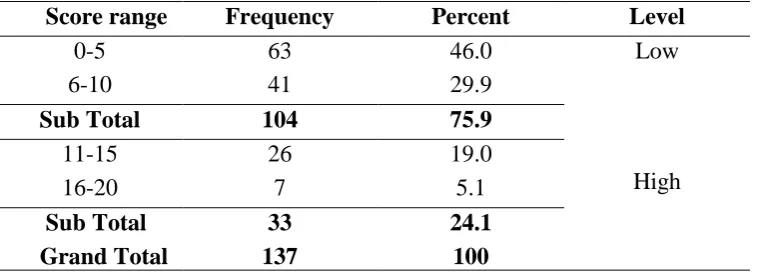
Table 3. 2: Categories of parental involvement levels ... 60
Table 3. 3: Categories of parental role construction ... 61
Table 3. 4: Categories of teachers’ invitation levels ... 62
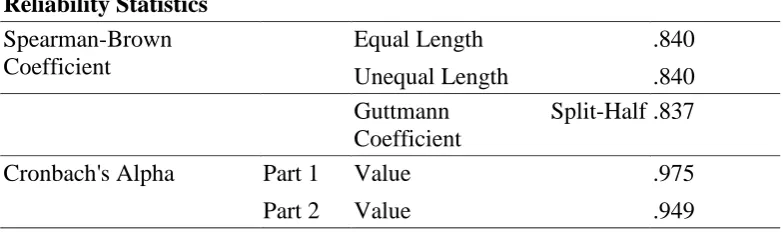
Table 3. 5: Reliability Statistics ... 65
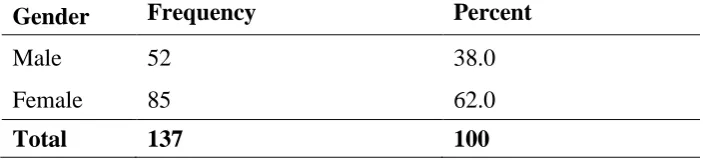
Table 4. 1: Proportion of parents by gender ... 71
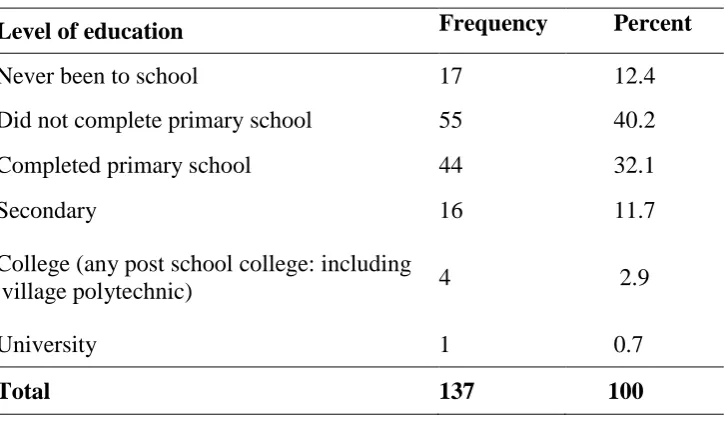
Table 4. 2: Proportion of parents by level of education ... 72
Table 4. 3: Parents’ scores and level of involvement in modelling dimension 74 Table 4. 4: Parents’ scores and level of involvement in cognitive dimension . 75 Table 4. 5: Parents’ scores and level of involvement in behavioural dimension ... 76
Table 4. 6: Parents’ role construction scores and their level of involvement .. 80
Table 4. 7: Teacher invitation scores and parents’ level of involvement ... 83
Table 4.8: Parents’ involvement in modelling dimension and Parents’ role construction Cross tabulation ... 85
Table 4.9: Chi-Square Tests for Parent role construction and Parent involvement in modelling dimension ... 86
Table 4.10: Parent involvement in cognitive dimension and Parent role construction ... 87
Table 4.11 :Chi-Square Tests for Parent role construction and Parent involvement in cognitive dimension ... 88
Table 4.12: Parents’ involvement in behavioural dimension and Parents’ role construction Cross tabulation ... 89
Table 4.13: Chi-Square Tests for Parent role construction and Parent involvement in behavioural dimension ... 90
Table 4.14: Parent involvement in modelling dimension and Teacher invitation Cross tabulation ... 93
ix
x
LIST OF FIGURES
Figure 1. 1: Factors that influence parents’ involvement in children’s reading at home ... 17
Figure 3. 1 :Map of Meru County showing Igembe South Constituency ... 54
Figure 4. 1 : Proportion of parents’ involvement in modelling, cognitive and
xi
ABBREVIATIONS AND ACRONYMS
CBO Community Based Organization DEO District Education Officer ECD Early Childhood Development EFA Education for All
FPE Free Primary Education
KCPE Kenya Certificate of Primary Education KCSE Kenya Certificate of Secondary Education KNEC Kenya National Examination Council MDG Millennium Development Goals MOE Ministry of Education
NCES National Centre for Educational Statistics NCST National Council for Science and Technology NGO Non Governmental Organization
OECD Organisation for Economic Co-operation and Development
PTA Parent Teacher Association RNG Random Number Generator RTI Research Triangle Institute
xii ABSTRACT
1
CHAPTER ONE
INTRODUCTION AND BACKGROUND TO THE STUDY
1.1 Introduction
This chapter presents the background to the study, statement of the problem, purpose of the study, research objectives, research hypotheses, significance of the study, limitations and delimitations of the study and assumptions of the study. The chapter also presents a theoretical framework, the conceptual framework and the operational definitions of various terms as employed in the study.
1.2 Background to the Study
The close link between home and school is recognized worldwide as an essential factor in facilitating improvement of literacy skills among children. There is ample evidence that parental involvement in children’s reading during their early years has a positive impact on children’s reading ability (Gest, Freeman, Domitrovinch and Welsh, 2004; Rowe, 1991; Sheldon and Epstein, 2005; Wambiri, 2007). Studies have also shown that lack of parental involvement impacts negatively on children’s literacy achievement and academic performance (McNeal, 1991; Sui-chu and Willms, 1996).
2
children, listening to children read, asking questions from the passage that has been read and explaining the meaning of difficult words. It also involves checking children’s homework, reminding children to read, reinforcing children’s effort to read and acquiring reading materials for children.
The level of parental involvement in reading-related activities has been proved to influence children’s reading achievement. Research has established that when parents are highly involved in children’s reading at home, children’s reading achievement improves significantly and when they are not involved, children experience reading difficulties (Adams, 1990; Epstein and Sheldon, 2000; Fantuzzo, McWayne, Perry et al., 2004; Flouri and Buchanan, 2004; Grolnick, 1994; Topping and Wolfendale, 1985; Wade and Moore, 2000). Unfortunately, research on pupils’ reading achievement indicates that a significant number of children in several parts of the world are not able to read at their class levels (Maduekwe and Adeosun, 2010; Manjula, Saraswathi, Parkash and Ashalatha, 2009; Rosebrock, 2006; Snow, Burns & Griffins, 1999; Strickland & Riley-Ayers, 2006). For example, a nation wide test for reading skills conducted in USA by NCES (1999) reported a proficient reading level of 31%, which is less than the most basic reading level of 38%.
3
“Tetum”. Similar studies conducted in Uganda and Tanzania recorded poor literacy levels. Specifically, in Tanzania the study found that, 92.3% of the standard three pupils could not read a class two text in English. In Uganda, the study found that 98% of the pupils in class three could not read a class two story in English and that 28% could not read a class two text by the time they completed primary schooling (RTI, 2010).
Consistently, local studies show that majority of children are not able to read at expected class levels and worse still, some complete primary school unable to read at the expected level (Uwezo, 2010; RTI, 2010; KNEC, 2010). Further, there has been an outcry over poor examination performance in the Kenya Certificate of Secondary Education (KCSE) languages, particularly English and Kiswahili as attested by the audit of the 2012 examination (Gichobi, 2013). The audit report indicated that in the Kenya Certificate of Primary Education (KCPE); some of the standard eight candidates could not write simple English and Kiswahili words. The local studies discussed however, mainly focused on school factors such as teacher to pupil ratio, teachers’ qualification, availability of learning resources and the condition of physical facilities; and did not investigate parental involvement in the modelling, cognitive and behavioural dimensions.
4
reading at the lower primary school level have not received due attention. A focus on parental involvement in children’s reading at the lower primary school level and factors that influence their involvement was therefore critical since development of conventional reading skills at the lower primary school level plays a significant role in laying a firm foundation for later schooling.
The activities that were examined in this study were drawn from Grolnick’s (1994) theory of parental involvement. This theory proposes three parental involvement dimensions from which activities that parents can engage in to enhance children’s reading ability may be drawn. These dimensions include: (1) modelling dimension which refers to children observing literacy behaviour of parents or guardians at home then striving to emulate this reading on their own, (2) cognitive dimension which refers to parents reading with their children to promote reading skills development, (3) behavioural dimension which refers to parents motivating their children to learn and exposing them to varying literacy-rich environments, thereby providing opportunities for the children to read different types of materials. Parental involvement levels in activities drawn from these dimensions have not been adequately investigated locally, especially at the lower primary school classes, and hence the need for the study.
5
construction, teacher invitation for parental involvement, parents’ education level, parents’ self efficacy, parents socio-economic status, time constraint, child’s age, type of the school the child attends, teachers’ attitudes towards parental involvement, teachers’ perception of parents’ efficacy and the teachers’ years of experience (Adams & Christenson, 2000; Bandura, 1986; Dauber & Epstein, 1991; Fan & Chen, 2001; Garcia, Akiba, Palacios et al., 2002; Hoover-Dempsey, Walker, Sandler et al., 2005; Levin, 2002; Park, 2004; Russell & Granville, 2005). This study, however, focused mainly on parental role construction and teacher invitation because according to Hoover-Dempsey and Sandler (1995) the two have a great influence on parental involvement in children’s learning.
6
Continued lack of adequate knowledge and comprehensive information about the extent of parental involvement in lower primary school pupils’ reading and factors influencing the situation in Kenya may make it difficult to develop relevant policies, strategies and programmes to guide parents on how to effectively support their children’s reading at home. Consequently, parents may continue failing to adequately and appropriately support children’s reading and in-turn negatively impacting on children’s reading development at this critical level of development. As a result, many pupils may continue to perform poorly in reading, and subsequently in all academic subjects. Therefore, there was need for a study specifically focusing on the level of parental involvement and factors that influence this involvement in lower primary school pupils reading. In order to obtain comprehensive information, this study focused on parents.
1.3 Statement of the Problem
7
Local research on parental involvement has mainly focused on parental involvement at the pre-school level and before formal instruction (Koech, 2010; Maina, 2010; Mwoma, 2009; Ndani, 2008; Swadner, Kabiru and Njenga, 2000; Wambiri, 2007). The kind of parental involvement required at the lower primary school level varies from that expected in pre-school. This is because at the pre-school level children are prepared for reading readiness while at the lower primary school level they are introduced to conventional reading. Hence, the need for a study on parental involvement targeting parents of children in the lower primary school classes.
Local studies on literacy achievement at the lower primary school level mainly focused on school factors such as teacher to pupil ratio, teachers’ qualification, and the physical condition of the learning environment and only examined parental involvement in the cognitive dimension (KNEC, 2010; RTI, 2010; Uwezo, 2010). While these factors may contribute to the literacy levels, in some regions and particularly among disadvantaged community schools, there seems to be other pertinent and more widespread factors, one of which has been thought to be parental involvement in children’s reading. This study, therefore, focused on the level of parental involvement in children’s reading at home in the modelling, cognitive and behavioural dimensions as well as factors that influenced parents’ involvement.
8
being involved in their children’s reading influences parents’ decision to be involved. Though the contribution of parents’ role construction regarding their involvement in children’s reading during the infancy and pre-school years has been documented locally (Maina 2010; Wambiri, 2007), contribution of parental role construction at the lower primary school level has not attracted much attention in Kenya.
Hoover-Dempsey and Sandler (1995); Epstein (1995); Bassler and Brissie (1992) found that invitations by children’s teachers influence parents involvement in their children’s reading development. Locally, a study carried out in Thika district, found that invitation for participation in pre-school activities by teachers and school management raises community participation (Ndani, 2008). However, the influence of teachers’ invitation for parental involvement in children’s reading at the lower primary school level has not been adequately explored in Kenya.
9
influence this involvement would have remained incomplete if this study was not carried out.
1.4 Purpose of the Study
The purpose of this study was to determine the extent of parental involvement in children’s reading at home and the factors that influence this involvement, in order to guide the development of policies and strategies that will enhance parental involvement in children’s reading; thereby improving children’s reading ability.
1.5 Objectives of the Study The study sought to:
1. Find out the levels of parents’ involvement in children’s reading at home with respect to modelling, cognitive and behavioural dimensions of parental involvement
2. Establish the levels of parents’ role construction regarding involvement in children’s reading at home
3. Establish the levels of teacher invitation for parents’ involvement in children’s reading at home
10
5. Determine the relationship between teachers’ invitation and parents’ level of involvement in modelling, cognitive and behavioural dimensions of parental involvement
6. Find out hindrances to parents’ involvement in children’s reading at home
1.6 Research Hypotheses
The study was guided by the following research hypotheses:
H1: There is a relationship between parents’ role construction and their level of involvement in the modelling, cognitive and behavioural dimensions of parental involvement
H2: There is a relationship between teachers’ invitation and parents’ level of involvement in the modelling, cognitive and behavioural dimensions of parental involvement
1.7 Assumptions of the Study
The study assumed that children in class three were given homework regularly. The study also assumed that parents to different extents assisted children in learning at home.
1.8 Limitation
11
challenges responding to the study instruments. To mitigate this, interviews were used to collect data instead of questionnaires. In addition, interviews were conducted in English, Kiswahili or Kimeru depending on the parent’s language preference.
1.9 Delimitation
There are several factors that may influence parental involvement in the modelling, cognitive and behavioural parent involvement dimensions. This study however, focused on parents’ role construction and teachers’ invitation because these two factors were likely to have a considerable influence on parental involvement. In addition, although the study targeted parents of children in the lower primary school, it was limited to parents with children in standard three because children in this class can read simple story books and are, usually, given homework. In addition, although other people living in a child’s home including the siblings, cousins or other relatives may be involved in the child’s reading related activities, this study only focused on parental involvement. Further, the study was carried out in Igembe South constituency. The findings, therefore, may only be generalised to other population with similar characteristics.
1.10 Significance of the study
12
information obtained from this study could be used by the Ministry of Education to formulate policies for the establishment of programmes to guide parents on techniques to support their children’s reading at home. Such parental involvement programmes may be initiated at the school level, county level or nationally with the aim of improving children’s reading ability.
Curriculum developers may also use the findings to develop appropriate education programmes that relevant Government Ministries could use to educate parents on how to support children’s reading at home. In addition, the findings may also guide the development of teacher education programmes that could be used to educate teachers on appropriate ways of collaborating with parents in order to effectively support their children’s reading at home.
Primary school head teachers and classroom teachers could use these findings to guide parents to engage in reading related activities with their children at home and to encourage children to read not only for school work but also for leisure.
13 1.11 The Theoretical Framework
This study was guided by Hoover-Dempsey and Sandler’s (1995) model of parental involvement. The study adopted this model because it provides a framework for understanding the motivation behind parents’ decision to be involved in their children’s learning. The model also gives insight on factors that influence parents’ involvement in their children’s learning. These factors include parents’ role construction and teachers’ invitation to involvement, which this study intended to investigate.
This theory was complimented by Grolnick’s (1994) theory of parental involvement which provided guidelines on parental involvement dimensions that were investigated in this study. These dimensions include modelling, cognitive and behavioural involvement. In each of these dimensions, the suggested activities which parents and their children could engage in to improve children’s reading ability were used to formulate the study items. These theories are as discussed in the following section:
1.11.1 Parental involvement model- Hoover-Dempsey and Sandler (1995, 1997)
14
be involved in their children’s reading. The model also suggests that teachers’ invitation to parents to be involved in their children’s learning also influences parental involvement. This model was selected for this study because it provides insight on factors influencing parental involvement in children’s learning. The factors included parental role construction and teachers’ invitation for parental involvement, which were the main focus of this study.
1.11.2 Theory of Parental involvement- Grolnick (1994)
15
This theory was selected for this study because it proposes parental involvement dimensions and activities that parents and their children can engage in; to improve children’s reading ability. This study intended to investigate parental involvement in each of the three parental involvement dimensions (modelling, cognitive and behavioural) discussed by this theory. The study also examined parental involvement in some of the activities suggested in Grolnick’s theory.
1.12 The Conceptual Framework
16
parents could engage in to improve children’s reading achievement significantly (Grolnick, 1994).
Figure 1.1 illustrates the variables of interest; parents’ role construction, teachers’ invitation and parental involvement. Parents’ role constructions and teachers’ invitation are the independent variables while parental involvement in children’s reading is the dependent variable. The figure also presents a number of extraneous variables including; parents’ level of education, parents’ self efficacy, parents’ socio-economic status, child’s age, time factor, type of school the child attends, teachers’ attitudes towards parental involvement and teachers’ perception of parents’ efficacy.
17
Figure 1.1: Factors that influence parents’ involvement in children’s reading at home
Key
Study variable Non study variable
Direction of the relationship
-Teachers’ attitudes
towards parental involvement
-Teachers’ perception of parents’ efficacy
-Parents’ education level -Parents’ socio-economic status -Parents’ self-efficacy
-Child’s age -Time constraint
-Type of school the child attends
-Teachers’ academic level -Teachers’ professional experience
Parents' Role Construction construction
Teachers’ invitation for Parents’ involvement
Children’s Reading Ability
Modelling parent involvement dimension
Reading various materials at home while the child sees including;
-Bible/Koran
-Booklets such as church newsletters, brochures, pamphlets -Newspapers -Magazines -Story books Cognitive parent involvement dimension
-Read to the child
-Ask the child to read while you listen -Ask questions from a passage to check the child’s understanding of words and phrases read -Explain the meaning of difficult words to the child -Check child’s homework to ensure the child completes it correctly
Behavioural parent involvement dimension -Remind the child to read or
complete homework at the designated place
-Request the child’s teacher to recommend suitable reading books that you can borrow for the child from the library
-Accompany the child to the bookshop to choose reading materials -Reinforce the child’s efforts to read (e.g. by praising, hugging or giving gifts to the child)
-Acquire reading materials for the child apart from those required in school
18 1.13 Operational Definition of Terms
Parental involvement: Refers to parents’ participation in a wide range of reading-related activities that parents and their children engage in at home geared towards helping children learn to read. In this study, it is categorised under the modelling, cognitive and behavioural dimensions.
Modelling dimension: Refers to parents acting as positive role models through constantly reading or requesting someone to read for them various materials in their children’s presence. Children then strive to emulate this behaviour on their own.
Cognitive dimension: Refers to parents engaging in reading-related activities with their children at home in order to promote reading skills. This includes reading to the child, listening to the child read aloud, discussing what has been read with the child or supervising the child as he/she does homework.
Behavioural dimension: Refers to parents public reading related actions that motivate the child to read various materials. These actions include reminding the child to read, taking the child to the library, museum or book stores, reinforcing the child’s effort to read or acquiring several reading materials for the child (by buying or borrowing).
19
Parents’ role construction: Refers to parents’ perception about their role in assisting their children learn to read. This is based on parents’ beliefs that their involvement will improve their children’s reading ability.
20
CHAPTER TWO
REVIEW OF RELATED LITERATURE
2.1 Introduction
This chapter comprises review of the literature related to parental involvement in children’s reading. In particular, the chapter focuses on parental involvement and children’s reading achievement; level of parental involvement in modelling, cognitive and behavioural dimensions; extent of parental involvement in children’s reading; factors influencing parental involvement in children’s reading; hindrances to parental involvement in children’s reading and a summary of the chapter.
2.2 Parental Involvement and Children’s Reading Achievement
21
The reading process begins at home where children observe their parents or guardians reading. Parents’ involvement in their children’s reading at home has a tremendous effect on children’s reading achievement. Research conducted by Fantuzzo, et al., (2004); Grolnick (1994) shows that the practices associated with parental responsibilities for learning such as providing a place for education activities, asking children about school and reading to them are related to children’s motivation to learn, hence contributing to their reading achievement at school. In addition, Grolnick (1994) found that parental involvement affects pupils’ achievement because their encouragement, motivation and reinforcement ensure that children practice reading, thereby, improving their reading skills. Accordingly, the mediatory involvement of parents in their children’s reading has a positive impact on their reading achievements since they spend many hours at home with their parents. These studies, however, did not explore factors that influence parental involvement in their children’s reading.
22
children’s academic performance. These studies, however, focused on parental involvement in the school and not at home. They also did not identify parental involvement dimensions and the extent to which parents get involved in each of these dimensions.
Greater parent involvement in children’s reading at home is linked to children’s school readiness hence positively affects school performance, including higher academic achievement. A study conducted in USA by Topping and Wolfendale (1985) found that children who read regularly with their parents at home performed better than those who did not. They attributed this to the following: i. Parents have the opportunity to encourage children to practice reading at home as compared to the school where children are engaged in other activities including studying other subjects. This implies that children who read at home regularly get more practice at reading than those who do not. Positive practice promotes fluency and minimises forgetting, hence better performance.
ii. Unlike in school where there is limited opportunity for the child to receive feedback about the correctness of attempts to read immediately, the one-to-one situation with a parent at home allows for immediate feedback preventing the compounding of errors.
23
Benefits of parental involvement extend beyond the realm of literacy and educational achievement. Several studies conducted in different parts of the world indicate that parental involvement in children’s literacy development not only influences children’s academic performance but also improves their attitudes towards reading (Desforges & Abouchaar, 2003; Epstein, 1992, 1995; Fan & Chen, 2001; Feinstein & Symons, 1999; Flouri & Buchanan, 2004; Henderson & Berla, 1994; Melhuish, et al., 2001; Wade & Moore, 2000). In addition, studies by Gest, et al., (2004) and Rowe, (1991) found that parental involvement in children’s reading activities at home has a significant positive influence not only on academic achievement but also on language comprehension, expressive skills, pupils’ interest in reading and attitudes towards reading.
24
involved in. They also did not investigate factors that might have influenced parents involvement in their children’s reading.
In Kenya, there is some evidence of a positive relationship between parental involvement and children’s academic performance. A study in Gucha district involving 160 fathers for example, found that children whose fathers were involved in their education performed better at pre-school than their peers whose fathers were not involved (Mwoma, 2009). This study however, examined the overall children’s academic performance and not reading in particular. The study also targeted fathers’ involvement and not both parents. In addition, the study examined learning at the pre-school level and not the lower primary school level where children are introduced to conventional reading. Consequently, a study focusing on parental involvement in children’s reading at the lower primary school level was necessary.
25
conducted in the USA by NCES (1999) reported a proficient reading level of 31%. This proficient reading level is less than the most basic level (38%).
A study on early grade reading acquisition carried out in Timor-Leste among pupils in grade one, two, and three under theWorld Bank’s support, found that at the end of grade one 70% of pupils could not read a single word of the simple text in either “Portuguese” or “Tetum”, 40% of the pupils were not able to read a single word at the end of grade two, and 20% could not read a single word at the end of grade three (World Bank, 2009). This study, however, did not examine the extent of parental involvement in children’s reading at home and factors that influence parents’ involvement.
26
read a class two text by the time they completed primary schooling (RTI, 2010). These studies, however, mostly examined the contribution of school factors and did not focus on the contribution of parental involvement in their children’s reading at home and factors that may influence the situation. A study focusing on parental involvement and factors influencing this involvement was therefore necessary in order to improve children’s reading ability.
Studies conducted by Research Triangle International in 2010 recorded low reading scores among standard three pupils in Kenya. The study found that pupils scored an average of 30.4 words per minute in English oral reading fluency tests. The study also reported that 14% of the study sample scored a “zero words per minute”, meaning they could not read even one word. The study further reported that while significant, a number of these “non-readers” is much less than the number of pupils scoring zero words per minute in the other African countries where the study was carried out (Mali, Senegal and Uganda). The study further found that the average of 30.4 words per minute in oral language test was higher than scores in other languages; Kiswahili 21.2, Gikuyu 20.0 and Dholuo 19.6 words per minute (RTI, 2010). This study, however, did not focus on the influence of parental involvement.
27
Education (KCPE) where it was reported that some of the standard eight candidates could not write simple English and Kiswahili words; in the English composition and Kiswahili Insha (Gichobi, 2013). The report further indicated that in mathematics, the candidates performed worst in areas that involved reading and interpretation of mathematical problems. There is therefore, need to explore parents involvement in children’s reading and factors that influence the situation.
Local studies on literacy achievement have reported incidences of low reading ability among primary school pupils. The Uwezo study for example, found that a high percentage of standard two pupils could not read at their class level and that some pupils leave primary schools unable to read. Specifically, the study found that 85% of the standard two pupils could not read class 2 text in English while 81% could not read a similar text in Kiswahili. Among pupils in class five, 27% could not read a class two text in English; while 23% could not read a similar text in Kiswahili. The study also found that 4% of the pupils could not read a standard two text in English or Kiswahili by the time they completed primary schooling (Uwezo, 2010).
28
and the Eastern province the lowest scores (276). This implies that the reading achievement is quite low. These studies, however, focused more on school factors such as teacher to pupil ratio, teachers’ qualification, condition of physical facilities and attendance of refresher courses by the teaching staff as influencing pupils’ literacy achievement but not on the level of parental involvement.
2.3 Level of Parental involvement in Modelling, Cognitive and Behavioural Dimensions of Parental Involvement
This section discusses parental involvement modelling, cognitive and behavioural dimensions of parental involvement.
2.3.1: Parental Involvement in the Modelling Dimension
29
competent and possessing reading skills and abilities. This often makes the parent a significant and powerful model for the child (Bandura, 1986). These studies, however, did not examine factors that influence parents modelling reading at home. In addition, the studies did not specify the type of materials parents read in their children’s presence.
2.3.2: Parental Involvement in the Cognitive Dimension
Children who are introduced to reading activities at home during their early years learn to read early. Studies conducted in the west to explore the relationship between children’s home reading environment and their literacy acquisition indicate that children whose parents read books, newspapers, and magazines with them, tell stories and listen to them read story books in the early classes have an advantage over their peers without such experiences. The researchers attest that the experience with print and non-print reading materials at home has a facilitative effect on children’s reading (Cornille, Mullis, Ritchson et al., 2004; Senechal and LeFevre, 2003; Scarborough, Dobrich and Hager, 1991; Wade and Moore, 2000). These studies, however, only investigated the cognitive dimension of parental involvement and did not examine other parental involvement dimensions.
30
The study also found that when parents taught letter sounds and word reading to their children at home, there was a significant improvement in children’s reading skills. He argued that families where children are at risk of failing to read should take up these practices in order for their children to succeed in school. The study, however, only investigated parent involvement in the cognitive dimension of parental involvement in children’s reading and did not focus on activities in the modelling and behavioural dimensions.
Parents’ involvement in children’s reading-related activities at home is a very effective form of parent involvement. Studies have proved that when parents read to their children and listen attentively as children read aloud regularly, they help children to comprehend the relationship between the pronounced word and the written word thereby promoting children’s reading development (Denton, Reaney & West, 2001; Epstein 1995; Lyon, 1999; Beck & Juel, 1999; Snow et al., 1999). In addition, research conducted by Hewison and Tizzard (1980) found that children who read aloud regularly to their parents performed better in reading tests even when their parents could not read or write when compared to children who did not receive this kind of help from their parents.
31
conduct studies on parent involvement in all the three parental involvement reading dimensions; namely: modelling, cognitive and behavioural.
32
Parent-child reading activities at home play a key role in children’s reading achievement. Research conducted in USA by McNeal (1991) and Sui-chu and Willms (1996) determined that the most important factor in student achievement was home discussions, parents’ contact with school and homework supervision. The research also found that children with learning and behavioural problems had fewer home discussions and were less supervised than the cohorts that did not exhibit learning and behavioural problems. They recommended that parents should be guided to provide a literacy-rich home environment, encourage children to interact with reading materials, visit the library or museum with their children and take their children to buy story books. This study, however, did not focus on factors that influence parental involvement in children’s reading.
2.3.3 Parental Involvement in the Behavioural Dimension
33
(e.g. books, computers, visits to museums, libraries, plays or movies) available for children from middle income households particularly during summer months. Although this study gives insights on gains made by exposing children to a literacy-rich reading environment, it did not investigate the factors influencing parental involvement in children’s reading at home.
A literacy-rich home environment positively influences children’s reading achievement. Epstein (2005); Maduekwe and Adeosun (2010); Neufield (1977) and Hughes (1993) found that a home environment that has plenty of reading materials strongly correlates with children’s reading achievement in school. They stipulated that an effective learning home environment includes high parent aspiration and expectation, rich learning environment, academic support, guidance and stimulation that lead to higher achievement in reading tests. These studies, however, did not investigate factors that influence parents’ involvement in their children’s reading at home.
34
however, did not explore factors that influence parents’ provision of literacy-rich home environments.
2.4 Extent of Parental Involvement in Children’s Reading
Higher levels of parental involvement positively influence children’s reading achievement. Various studies conducted all over the world have shown that there has been low parental involvement in children’s reading. Studies conducted in the United States of America (USA) for example, indicated that parents were not adequately involved in their children’s reading. Brandt (2011) noted that most teachers reported low parental involvement in schools in the United States of America. These teachers reported that majority of parents fail to attend parent-teacher meetings, school functions and do not assist their children with assignments and projects. The study reported that in most families both parents work; and at times full time hence lack time to be involved. Similarly, MetLife (2005) found that teachers in USA ranked strengthening parents’ roles in their children’s learning first, among the issues that should receive the highest priority in the public education policy. These studies, however, did not indicate factors that contribute to the low levels of parental involvement other than lack of time.
35
however, reported that the percentages of the parents who were involved in their children’s reading differed across different races as follows; Whites (69%), Blacks (56%), Asians (66%), Hispanic (53%) and American Indians (50%). Smith (2008) also found minimal parental involvement in children’s education in the USA. Smith attributed the low involvement to lack of education and lack of time.
Studies conducted in the United Kingdom reported low levels of parental involvement in their children’s education. In a study involving fathers in 26 families in Britain, Welsh et al., (2012) found that parental involvement in their children’s reading and support in homework assignments were rated least among other aspects of parental involvement. The study noted that out of the eight aspects of involvement that were measured, the lowest scores were in reading and in the supervision of homework. The study reported that some of the fathers in the study indicated that they did not have the necessary ability to help their children with school work.
36
A study conducted by Lemmer (2007) in South Africa, observed that parental involvement has been limited to financing schools and volunteering. She noted that although parental involvement is linked to school success, parental participation is not significant in many schools in South Africa. She reported that many developing countries including South Africa, tend to give parents increased roles in governing schools; while relatively few parents are actively involved in their children’s reading. Similarly, a study involving 21 parents who were serving in the school governing bodies, 5 school principals and 1 headman conducted in the Eastern Cape Province, South Africa reported very low levels of parental and community involvement (Msila, 2012). Msila reported that parents were of the opinion that teachers had the necessary skills to lead schools without parents’ support. On the other hand, the school principals concurred that parental involvement would improve learners’ performance and school success in general. However, these studies, did not explore factors contributing to parents’ failure to be involved in their children’s learning.
37
with children in pre-schools did not focus on reading related activities such as reading books with their children at home, but rather got involved in activities such as making play materials, participating in pre-school committees and putting up classrooms. These studies, however, investigated parent involvement during the infancy and pre-school levels and not at the lower primary level. Due to the crucial role reading plays in a children’s reading achievement as well as their academic performance, a study focusing on parental involvement in children’s reading at the lower primary school level where children are introduced to conventional reading was necessary.
38
on reasons for parental involvement or non-involvement was, therefore, necessary.
2.5 Factors Influencing Parental Involvement in Children’s Reading at Home
Research suggests that several factors influence parental involvement in children’s reading. These factors include; parents’ role construction, teacher invitation, education level, self-efficacy, socio-economic status, time constraint, child’s age, type of school the child attends, teachers’ attitudes towards parental involvement and teachers’ perception of parents’ efficacy. However, localstudies on parental role construction and teachers invitation for parental involvement particularly at the lower primary school level have not attracted much attention. This study, therefore, focused on parental role construction and teacher’s invitation.
2.5.1. Parents Role Construction
39
be involved in their children’s reading when they understand that being involved is part of their role as parents. They attest that once parents decide to be involved, they choose specific activities to be involved based on their beliefs about what they are supposed to do so that they can improve their children’s reading. These studies however, did not explore factors that influence parents’ involvement in their children’s reading. A study to examine parents’ role construction and its impact on their levels of involvement was, therefore, necessary.
Parents’ beliefs about appropriate support roles in children’s education influence their role construction. A study conducted in England by Williams, Williams and Ullman (2002) found that 2% of parents who took part in the study felt that the responsibility for children’s education belonged to the school while 58% believed that they had at least equal responsibility. The study concluded that the way parents perceive the responsibility for their children’s education is a critical factor in shaping their views about being involved. This study however, examined children’s education in general but did not focus on a particular education aspect such as reading development or the reasons for expressed views. There was, therefore, a need to explore parents’ construed roles in children’s reading.
40
children to read was the responsibility of teachers. The study also found that some of the parents argued that homework supervision at home interfered with the quality time that parents’ should spend with their children. Other parents believed that their children were capable of fulfilling the demands of the school and did not require parents’ monitoring (SESR, 2005).
Parents’ role construction serves as a motivator for involvement in children’s reading. Studies by Hoover-Dempsey and Sandler (1997) found that when parents perceive their involvement in children’s learning as their responsibility, they engage in activities that they construe as important, necessary, and permissible. Similarly, Bandura (1986) asserts that from the construed roles, parents set goals that are related to desired outcomes. Parents’ beliefs about their roles in children’s reading enable them to plan and engage in activities that in their opinion assist their children’s literacy development. Parents’ perception of their roles in children’s reading and reasons for these perceptions needed to be explored.
41
involvement in pre-school children’s reading development found that fathers’ role construction influenced their involvement in children’s literacy development (Maina, 2010). These studies, however, targeted parents of children who had not entered primary schools. Studies on parental involvement in children’s reading development during the lower primary school are necessary because children are usually introduced to conventional learning at this level.
2.5.2 Teachers’ Invitation
Teachers’ attitudes towards parental involvement are of great importance to the level and quality of parental involvement. Studies by Hoover-Dempsey and Sandler (1995) found that specific invitations to involvement by children’s teachers’ through reading assignments and homework supervision influence parents’ decision to be involved in children’s reading at home. Similarly, a study conducted by Epstein (1995) found that when teachers encourage children to practice reading at home with their parents, children make considerable achievement in reading ability compared to those who only practice reading at school.
42
these studies only investigated parental invitation to be involved in the cognitive dimension and did not investigate teachers’ invitation for parental involvement in the modelling and behavioural dimensions of parental involvement. Consequently, a study focusing on modelling, cognitive and behavioural dimensions of parental involvement was necessary.
43
2.6 Hindrances to Parental Involvement in Children’s Reading at Home
2.6.1 Parents’ education level
Parents’ educational level influences their involvement in children’s reading related activities. Researchers in USA found that parents who had more formal education were more involved in their children’s learning than parents who had less formal education (Hoover-Dempsey & Sandler, 1995; Zill & Nord, 1994). Dauber and Epstein (1993) found that there is a significant relationship between parents level of education and parents reports of involvement in children’s learning at home. They found that parents who had higher levels of education were more likely to be involved in children’s learning. These studies, however, investigated parents’ involvement in children’s learning in general and not specifically in children’s reading.
44 2.6.2 Parents’ self-efficacy
Parents’ perceptions about their ability to help their children learn to read affects their involvement in children’s reading at home. Hoover-Dempsey and Sandler (1995) reported that parents who felt they had inadequate skills or education were less likely to become involved in their children’s learning at home. They argued this was because parents felt that their efforts might not positively affect their children’s schooling. Parents’ perception about their ability to help their children succeed in school influences their views about activities they should engage in to help children improve their reading skills.
Studies by Eccles and Harold (1993); Levin (2002); Park (2004) found that parental involvement in their children’s education is higher when parents are confident that they can positively influence their children’s performance in school. These studies further indicate that parental involvement was found to be less when parents thought that their efforts might not positively affect their children’s schooling. Similarly, studies by Salinas (2005) indicate that some parents reported that they were not involved in their children’s education because they did not know how to be involved. Another study in Kenya, Obondo (1994) found that 95% of the study respondents reported that they experienced problems in helping their children learn to read.
2.6.3 Parents’ socio-economic status
45
children to succeed in school therefore, regardless of their socio-economic status; they are equally involved in their children’s education. However, studies by other researchers contradict this view as they argue that parents belonging to high socio-economic backgrounds are more involved because they have resources to provide learning materials such as books, magazines and that they make regular visits to a library or a bookstore as compared to parents from low socio-economic backgrounds (Guthrie, 1978; Taube, 1988; Elley, 1994; Lehmann, 1996; Lietz, 1996; OECD, 2002). Similarly, studies by Brody and Flor, (1998); Fan & Chen, (2001); Lareau, (1989); Stevenson and Baker, (1987) found that parents’ social-economic status and parental involvement levels are positively related.
2.6.4 Time constraints
Some parents highlight lack of time as a reason for not being involved in their children’s reading at home. Research conducted in USA, Epstein (1995) found that in families where caregivers work full-time, their involvement in children’s education faces significant barriers regardless of their socio-economic status. A similar study on forms and patterns of parental involvement conducted in Scotland found that work and family involvement were the most mentioned reasons for lack of time for parental involvement in their children’s reading (Russell & Granville, 2005).
46
children’s learning (Hoover-Dempsey & Sandler, 1995; Lareau, 1989). According to Garcia, et al., (2002); Weiss, Mayer, Kreider et al., (2003), parents whose employment is relatively demanding and inflexible tend to be less involved in their children’s education than parents whose jobs are more flexible. Parents with multiple child-care or extended family responsibilities were also found to be less involved particularly, in school-based activities (Hoover-Dempsey et al., 2005).
Brandt (2011) reviewed that most teachers in the United States of America reported low levels of parental involvement in schools. Majority of the parents failed to attend parent-teacher meetings, school functions and did not assist their children with assignments and projects. Lack of time as a result of both parents working schedules was reported to be a major factor influencing parental involvement. Smith (2008) reported minimal parental involvement in children’s education in the USA. He attributed the low level of involvement to lack of time.
2.6.5 Child’s age
47
from pre-school and lower primary school to higher levels. Similarly, Eccles and Midgley (1990); Grolnick, Benjet, Kurowski, et al., (1997) found that parental involvement consistently decreased as the child moves from early to middle childhood and into adolescence. They attributed this to developmental reasons such as children’s maturity and increased need for independence. In a cross-sectional study of first to third-grade students, Izzo, Weissberg, Kasprow, et al., (1999) noted that parental participation at school decreased as the child joined higher grades.
2.6.6 Type of school the child attends
48
2.6.7 Teachers’ attitudes towards parental involvement
Dauber and Epstein (1991) found that teachers who have positive attitudes towards parental involvement regularly invite parents to be involved in children’s learning. They further report that such parents increase their interactions with their children at home and feel more positive about their ability to help their children with school work.
2.6.8 Teachers’ perception of parents’ efficacy
Hoover-Dempsey, Walker, Jones et al., (2002) found that when teachers believe that parents are capable of contributing to their children’s educational success, they are more likely to invite them to be involved in their children’s learning. These teachers were also found to be more likely to encourage parents to be involved. In addition, the study found that teachers who invite parents to be involved report high levels of support from parents.
2.7 Summary of the Literature Review
49
50
CHAPTER THREE
RESEARCH DESIGN AND METHODOLOGY
3.1 Introduction
This chapter presents research design, variables, study location, population, research instruments, data collection and data analysis procedures that were used in this study. It also presents ethical and logistical considerations.
3.2 Research Design and Locale
This study employed a descriptive research design to gather information on parental involvement in children’s reading at home and factors that influence their involvement. Descriptive research design was found to be suitable for this study because the researcher intended to collect information on parents’ behaviour, attitudes and opinions regarding their involvement in children’s reading at home as it existed. According to Gay (1991), descriptive research is a process of collecting data in order to test hypothesis or answer questions concerning the current status of subjects in the study. Similarly, Best (1970) points out that, descriptive research could be used to describe current conditions or relationships that exist, practices that prevail, as well as beliefs or attitudes that are held by a particular group of subjects.
51
Mitchell and Jolly (1992) indicated that the descriptive research method could be used to describe relationships that exist between study variables without accounting for effects of extraneous variables.
3.2.1 Variables
The study focused on two independent variables; parents’ role construction and teachers’ invitation for involvement and one dependent variable; parents’ involvement in children’s reading at home.
Independent variables
The two independent variables were:
52
ii. Teachers’ Invitation: Refers to teachers’ prompts to parents to be involved in reading related activities with their children at home. It was assessed by having parents indicate how often their children’s teachers requested them to engage in reading related activities on a 5-point Likert Scale. Parents were requested to choose from five responses: Very Often, Often, Sometimes, Rarely and Never (Appendix 1, section D). Frequencies of parent’s responses on the 15 items in the interview schedule regarding teachers’ invitation for their involvement in children’s reading were computed. Teachers’ invitation to parental involvement was then categorized as either high or low based on the scores.
Dependent Variable
The dependent variable; parental involvement in children’s reading at home was examined under the modelling, cognitive, and behavioural parent involvement dimensions:
53
dimension was categorised as either high or low based on the scores.
ii. Cognitive dimension of parent involvement: Refers to parent-child reading activities that promote the child’s reading skills and knowledge. The frequency of parents’ reports of reading to the child; asking the child to read aloud while he/she listens; explaining the meaning of difficult words; asking questions from a passage to check the child’s understanding of words and phrases; supervising the child’s homework to ensure it is completed correctly was measured (Appendix1, section B). Frequency of parents' reports regarding their involvement in reading activities with their children was calculated. Parents’ level of involvement in the cognitive dimension was categorised as either high or low based on the scores.
54
parents' reports regarding their actions to encourage their children to read and exposing them to literacy rich environment was calculated. Parents’ level of involvement in the behavioural dimension was categorised as either high or low based on the scores.
3.2.2 Location of the Study
The study was conducted in Igembe South constituency in Meru County. Igembe South Constituency is one of the four constituencies curved out from the former Meru North district. The constituency borders Igembe Central Constituency in the North, Igembe East Constituency in the East, Tigania East Constituency in the West and Tharaka North Constituency in the South.
Figure 3. 1 : Map of Meru County showing Igembe South Constituency
55
Igembe South constituency was purposefully selected for this study because Eastern province, where it is located, recorded the lowest literacy scores in a national literacy and numeracy study (KNEC, 2010). In addition, Meru North district from which the constituency was curved recorded a very high illiteracy level which may be attributed to irresponsible consumption of “Khat” (Miraa) and liquor (Republic of Kenya, 2007). Further, the Eastern Province where this constituency is located has a very high adult illiteracy rate; second to North Eastern province which has the highest (Kibathi, 2006; Kilele, 2007). The high adult illiteracy level could have affected parents involvement in children’s reading at home.
3.3 Population
The target population in this study comprised of parents or guardians of children in standard three in both public and private primary schools in Igembe South constituency. The constituency has a total of one hundred and nine primary schools of which ninety three were public and sixteen private. Preliminary information from the District Education Officer, Igembe South constituency had confirmed that all the primary schools in the constituency had a standard three class.
56
elementary pupils’ reading and school performance in America reviewed that third-grade reading level was a significant predictor of a student’s eighth-grade reading level; ninth-grade course performance; rate of high school graduation; and college attendance (Tomko, 2014). Tomko concluded that there is a correlation between student graduation/dropout rates and ability to read by the end of grade three. This class was also selected for the study because very few studies in Kenya, have examined parental involvement in children’s reading at the lower primary school level, yet development of conventional reading at this level is crucial for reading and academic performance during later schooling.
3.4 Sampling Techniques and Sample Size determination
The sampling technique and sample size are described in the following subsections.
3.4.1 Sampling Techniques
57
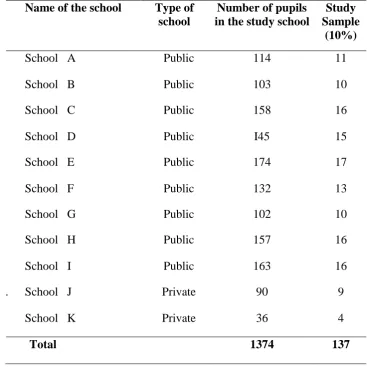
The eleven study schools were selected at random using stratified random sampling. Two lists, one of public schools and the other of private schools were used to select the study schools using the Random Number Generator (RNG) tool. This sampling method was used to ensure that parents from both public and private schools were represented in the study sample in proportion to their number in the population.
The standard three classes in each selected school became the study class. Parents or guardians of the selected pupils were the respondents in this study. Only one parent/guardian per child was to be interviewed and parents were requested to decide whether it was the father or mother to participate in the study.
3.4.2 Sample Size
58
Table 3.1: Study sample and schools from which it was drawn Name of the school Type of
school
Number of pupils in the study school
Study Sample
(10%)
1. School A Public 114 11
2. School B Public 103 10
3. School C Public 158 16
4. School D Public I45 15
5. School E Public 174 17
6. School F Public 132 13
7. School G Public 102 10
8. School H Public 157 16
9. School I Public 163 16
10. School J Private 90 9
11. School K Private 36 4
Total 1374 137
3.5 Research Instruments
59
because in addition to the reported high illiteracy levels, the study items comprised both close-ended and open-ended items. According to David and Sutton (2004), open-ended questions can be included within a structured interview and prompting can be used during interviews for clarification purposes.
3.5.1 Interview Schedule
A structured interview schedule basically comprising of a set of close-ended questions and a few open-ended questions was used to gather relevant information from the study respondents. A structured interview schedule was therefore utilized to collect relevant information from the parents regarding the extent of their involvement in children’s reading at home and factors that influence their involvement with reference to the modelling, cognitive and behavioural parent involvement dimensions. Specifically, the interview schedule was used to gather information on: (1) The extent of parental involvement in children’s reading at home with respect to modelling, cognitive and behavioural dimensions (Appendix 1, section B) (2) Parental role construction (Appendix 1, section C) and (3) Teachers’ invitation for parental involvement in children’s reading at home (Appendix 1, section D).
3.5.2 Scoring the interview schedule