ABSTRACT
BRANNAN, KELLY E. Effect of Early Incubation Temperature and Late Incubation Conditions on Embryonic Development and Subsequent Broiler Performance. (Under the direction of John T. Brake).
Six experiments were conducted to evaluate the effects of early and late incubation temperatures and hatching basket ventilation on embryonic development and early broiler performance. Eggs were exposed to a constant incubation air temperature of 37.6°C (99.7°F) from E 0-17 in Experiment 1 while Experiments 2-5 employed an incubation temperature profile that had an initial dry bulb set point of 38.1°C (100.5°F), which was gradually decreased to 37.2°C (99.0°F). Experiment 6 exposed eggs to either an Early Hot treatment (EH) that had a short initial air temperature of 38.9°C (102°F) followed by 38.1°C (100.5°F) to E 3 or an Early Cool treatment (EC) of 36.9°C (98.5°F) to E 3. Experiments 1-4 used an average air temperature of 38.1°C (100.5°F) during the late incubation period, while Experiments 5 and 6 added a late temperature treatment of approximately 35°C (95.0°F) (LC) in addition to 38.1°C (100.5°F; LH).
The TT treatment produced chicks with significantly less relative yolk sac in Experiment 1, but differences between ventilation treatments did not occur in other experiments. At E 15 of incubation, embryos from the EC treatment in Experiment 6 exhibited a decreased embryo weight and fluid (yolk and albumen) absorption. The LC treatment produced heavier BW and relative heart weight, as well as an increased relative yolk weight in Experiments 5 and 6. The LD treatment exhibited a lower egg temperature and greater relative weights of the heart, gizzard, and proventriculus at hatching in Experiment 4.
The Effect of Early Incubation Temperature and Late Incubation Conditions on Embryonic Development and Subsequent Broiler Performance
by
Kelly Elizabeth Brannan
A thesis submitted to the Graduate Faculty of North Carolina State University in partial fulfillment of the requirements
for the Degree of Master of Science
Poultry Science
Raleigh, North Carolina 2007
APPROVED BY:
___________________ __________________ V.L. Christensen J. Odle
___________________ __________________
DEDICATION
BIOGRAPHY
ACKNOWLEDGEMENTS
I would like to express my most sincere appreciation and gratitude to Dr. John T. Brake, whose support, constructive criticism and endless “real world” examples have proven to be invaluable during my academic career and will no doubt continue to be so as I begin my career in the poultry industry. Further appreciation is extended to Dr. Vern Christensen, Dr. Jack Odle and Dr. Chris Williams for their expertise, insight, and assistance.
Gratitude is also extended to my fellow graduate students Nirada Leksrisompong, Peter Plumstead, and Hugo Romero-Sanchez, whose advice, hard-work, and friendship enhanced both my research and my life. I would like to thank Susan Creech for her tireless attention to detail, her honest suggestions, and for occasionally letting me steal her lunch table. This research could not have been conducted without the hard work and dedication of the staff at the Lake Wheeler Road Field Laboratory; in particular Lori Cooke, Terry Reynolds, and Bill Stuart; thanks for your patience on those Friday afternoon transfers!
TABLE OF CONTENTS
Page
LIST OF TABLES... vii
LIST OF FIGURES... xii
LIST OF ABBREVIATIONS... xiii
INTRODUCTION... 1
LITERATURE REVIEW... 4
Factors Affecting Embryonic Growth and Development... 4
Turning... 4
Gaseous Exchange... 6
Temperature... 11
Ventilation... 14
Nutrient Availability at Hatching... 18
Post Hatching Nutrition and Muscle Growth... 19
References... 23
MATERIALS AND METHODS... 30
Experiments 1 and 2... 30
Experiment 3... 36
Experiments 4 and 5... 39
Experiment 6... 47
RESULTS... 53
Experiments 1, 2, 3, 4, 5, and 6 Concerning BW, Yolk Sac, and Organ Weights... 53
Page
Experiment 2... 53
Experiment 3... 57
Experiment 4... 57
Experiment 5... 63
Experiment 6... 72
Experiments 3, 4, and 5 Concerning Chick Performance... 85
Experiment 3... 85
Experiment 4... 86
Experiment 5... 91
DISCUSSION... 111
Early Incubation Temperature... 111
Preincubation Warming... 118
Basket Ventilation... 120
Experiments 1 and 2... 121
Experiment 3... 125
Experiments 4 and 5... 129
Late Incubation Temperature... 144
SUMMARY AND CONCLUSIONS... 151
LIST OF TABLES
Materials and Methods Page
TABLE M-7. Mean egg shell temperature desired during the incubation
period for the Early and Late temperature treatments in Experiment 6. 50
Results TABLE R-1. Egg temperature from broiler hatching eggs on E 18, E 19, and
E 20 in Experiment 1 as influenced by basket ventilation during incubation... 54
TABLE R-2. Body weight and relative weights of tissues and organs from broiler chicks on day of hatching in Experiment 1 as influenced by ventilation
during late incubation (E 17-E 21)... 55 TABLE R-3. Egg temperature from broiler hatching eggs and speed of air
exiting the hatching baskets on E 19 and E 20 in Experiment 2 as influenced
by basket ventilation during incubation... 56 TABLE R-4. Body weight and relative weights of tissues and organs from
broiler chicks on day of hatching in Experiment 2 as influenced by basket
ventilation treatment during late incubation (E 17-E 21)... 58
TABLE R-5. Body weight and relative weights of tissues and organs from broiler chicks on day of hatching in Experiment 3 as influenced by basket
ventilation treatment during late incubation (E 18-E 21)... 59 TABLE R-6. Egg temperature from broiler hatching eggs and air speeds of
air exiting the hatching baskets on days E 18-E 20 in Experiment 4 as influenced by the main effects of basket ventilation (Vent), basket density, and the basket ventilation by basket density interaction during incubation at a
at a machine temperature set point of 38.1°C (100.5°F)... 60
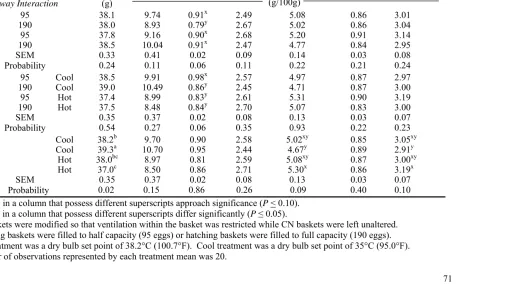
TABLE R-7a. Body weight and relative weights of tissues and organs from broiler chicks on day of hatching in Experiment 4 as influenced by the main effects of basket ventilation and basket density in a machine at an elevated
temperature during late incubation (E 17-E 21)... 62
TABLE R-7b. Body weight and relative weights of tissues and organs from broiler chicks on day of hatching in Experiment 4 as influenced by the basket ventilation by basket density interaction in a machine at an elevated
Page TABLE R-8a. Egg shell temperatures and air speed exiting the basket as
influenced by the main effects of basket ventilation (Vent), basket density,
and machine temperature during E 18-E 20 in Experiment 5... 65
TABLE R-8b. Egg temperature from broiler hatching eggs and air speeds of air exiting the hatching baskets on E 18-E 20 in Experiment 5 as influenced by the basket ventilation (Vent) by basket density interaction, the basket density by machine temperature interaction, and the basket ventilation by machine
temperature interaction... 67 TABLE R-8c. Egg temperature from broiler hatching eggs and air speeds of
air exiting the hatching baskets on E 18-E 20 in Experiment 5 influenced by the basket ventilation (Vent) by basket density interaction by machine
temperature interaction... 68
TABLE R-9a. Body weight and relative weights of tissues and organs from broiler chicks on day of hatching in Experiment 5 as influenced by the main effects of basket ventilation (Vent), basket density, and machine temperature
during late incubation (E 17-E 21)... 70
TABLE R-9b. Body weight and relative weights of tissues and organs from broiler chicks on day of hatching in Experiment 5 as influenced by the basket ventilation (Vent) by basket density interaction, the basket density by machine temperature interaction, and the basket ventilation by machine temperature
interaction during late incubation (E 17-E 21). 71
TABLE R-9c. Body weight and relative weights of tissues and organs from broiler chicks on day of hatching in Experiment 5 as influenced by basket ventilation (Vent) by basket density by machine temperature interaction
during late incubation (E 17-E 21)... 73
TABLE R-10. Egg temperature as influenced by early incubation temperature
in Experiment 6 from E 0 to E 3... 75 TABLE R-11. Egg weight, embryo and fluid weights, and embryo length on
E 15 of incubation as influenced by Early incubation temperature in
Experiment 6... 76
TABLE R-12a. Egg temperature and air speed exiting the basket as influenced by the main effects of early temperature, late temperature, and basket
ventilation (Vent) on E 19 and E 20 in Experiment 6... 78
Page TABLE R-12b. Egg temperature of broiler hatching eggs and air speeds of air
exiting the hatching baskets on E 19-E 20 in Experiment 6 as influenced by the early temperature by basket ventilation interaction (Vent), the basket density by machine temperature interaction, and the basket ventilation by
machine temperature interaction... 79
TABLE R-12c. Egg temperature from broiler hatching eggs and air speeds of air exiting the hatching baskets on E 19-E 20 in Experiment 6 as influenced by the early temperature by late temperature by basket ventilation (Vent)
interaction... 80 TABLE R-13a. Body weight and relative weights of organs from broiler
chicks on day of hatching in Experiment 6 as influenced by early incubation temperature (E 0-4), late temperature(E 18-21), and basket ventilation (Vent)
during incubation... 81
TABLE 13b. Body weight and relative weights of organs from broiler chicks on day of hatching in Experiment 6 as influenced by the two-way interactions of Early temperature (E 0-4), Late temperature (E 18-21), and basket
ventilation (Vent) during incubation... 83 TABLE 13c. Body weight and relative weights of organs from broiler chicks
on day of hatching in Experiment 6 as influenced by Early temperature (E 0-4) by Late temperature (E 18-21)by basket ventilation (Vent) interaction
during incubation... 84
TABLE R-14. Feed consumption of broiler chickens as affected by basket
ventilation in Experiment 3... 87
TABLE R-15. Body weights of broiler chickens as affected by the main effects of basket ventilation and sex, and the basket ventilation by sex
interaction in Experiment 3... 88
TABLE R-16. Adjusted feed conversion ratio (AdjFCR) of broiler chickens as affected by basket ventilation in Experiment 3... 89
TABLE R-17. Percentage mortality (deaths) of broiler chickens as affected by main effects of basket ventilation and sex, and the basket ventilation by sex
interaction in Experiment 3... 90
TABLE R-18. Feed consumption of broiler chickens as affected by the main effects of basket ventilation and basket density, and the basket ventilation by density interaction during late incubation (E 17-21) in a machine at an
Page TABLE R-19. Body weight of broiler chickens as affected by the main
effects of basket ventilation and basket density, and the basket ventilation by density interaction during late incubation (E 17-21) in a machine at an
elevated temperature in Experiment 4... 94
TABLE R-20. Adjusted feed conversion ratio (AdjFCR) of broiler chickens as affected by the main effects of basket ventilation and basket density, and the basket ventilation by density interaction during late incubation (E17-21) in a
machine at an elevated temperature in Experiment 4... 95
TABLE R-21. Percentage mortality (deaths) of broiler chickens as affected by the main effects of basket ventilation and basket density, and the basket ventilation by density interaction during late incubation (E 17-21) in a
machine at an elevated temperature in Experiment 4... 96 TABLE R-22a. Feed consumption of broiler chickens as affected by the main
effects of basket ventilation, basket density, and machine temperature in
Experiment 5... 98
TABLE R-22b. Feed consumption of broiler chickens as affected by the basket ventilation by basket density interaction, the basket density by machine temperature interaction, and the basket ventilation by machine temperature
interaction in Experiment 5... 99
TABLE R-22c. Feed consumption of broiler chickens as affected by the basket ventilation by basket density by machine temperature interaction in
Experiment 5... 100
TABLE R-23a. Body weight of broiler chickens as affected by the main effects of basket ventilation, basket density, and machine temperature in
Experiment 5... 101
TABLE R-23b. Body weight of broiler chickens as affected by the basket ventilation by density interaction, the basket density by machine temperature interaction, and the basket ventilation by machine temperature interaction in
Experiment 5... 102
TABLE R-23c. Body weight of broiler chickens as affected by the basket ventilation by basket density by machine temperature interaction in
Experiment 5………... 103
TABLE R-24a. Adjusted feed conversion ratio (AdjFCR) of broiler chickens as affected by the main effects of basket ventilation, basket density, and
Page TABLE R-24b. Adjusted feed conversion (AdjFCR) of broiler chickens as
affected by the basket ventilation by basket density interaction, the basket density by machine temperature interaction, and the basket ventilation by
machine temperature interaction in Experiment 5………... 106
TABLE R-24c. Adjusted feed conversion (AdjFCR) of broiler chickens as affected by the basket ventilation by basket density by machine temperature
interaction in Experiment 5………... 107
TABLE R-25a. Percentage mortality (deaths) of broiler chickens as affected by the main effects of basket ventilation, basket density, and machine
temperature in Experiment 5………... 108
TABLE R-25b. Percentage mortality (deaths) of broiler chickens as affected by the basket ventilation by basket density, the basket density by machine temperature, and the basket ventilation by machine temperature interactions in
Experiment 5………... 109
TABLE R-25c. Percentage mortality (deaths) of broiler chickens as affected by the basket ventilation by basket density by machine temperature interaction
in Experiment 5………... 110
Discussion
TABLE D-1. Body and yolk weights, as well as the relative yolk free body weight from broiler chicks on day of hatching in Experiment 6 as influenced by early incubation temperature (E 0-4), late incubation temperature(E
LIST OF FIGURES
Materials and Methods Page
Figure M-1. Desired egg temperatures during normal incubation... 31 Figure M-2. Arrangement of hatching baskets within the NMC-2000
machine used for Experiments 1 and 2... 34 Figure M-3. Doors were created in the TT cardboard divider in Experiments
4, 5, and 6 to allow for easier egg shell temperature sampling within the
basket... 41 Figure M-4. Arrangement of hatching baskets within the two
NMC-1000 machines used for Experiment 4... 43 Figure M-5. Arrangement of hatching baskets within the two
NMC-1000 machines used for Experiment 5... 44 Figure M-6. Machine temperature profiles for Experiment 6... 49 Discussion
Figure D-1. Chick behavior on day of placement in the High Density (180
eggs/basket) treatment of Experiment 4………... 138
Figure D-2. Chick behavior at day of placement in the Low Density (90
LIST OF ABBREVIATIONS
AdjFCR Adjusted Feed Conversion Ratio, corrected for mortality
BW Body Weight
C Celsius d Day of age, post-hatch
E Day of embryo age during incubation EC Early Cool treatment
EH Early Hot
INTRODUCTION
The broiler industry has undergone massive changes during the past few decades with the main effect being a dramatic reduction in the days to achieve broiler market weight (Havenstein et al., 2003). As a result of this decrease in grow-out time, the modern broiler now spends almost a third of its life in incubation. Since the earliest observations of the feral fowl, incubation has been widely regarded as one of the most crucial steps in achieving maximum poultry performance. Although several factors influence embryo development during incubation, the most crucial has commonly been accepted to be temperature (Meijerhof, 2003). The optimal incubation temperature has been demonstrated to be within the range of 37°C (98.6°F) to 38°C (100.4°F) in chickens (Romanoff, 1960; Lundy, 1969; Wilson, 1991; Lourens et al., 2005). This range has commonly been applied to the machine air temperature instead of the embryo temperature, with the assumption being that the two were equal (French, 1997). However, recent research has shown that the difference between these two temperatures can vary significantly and that measuring egg temperature was a much more accurate means of monitoring embryo growth and development than was machine air temperature (Meijerhof and van Beek, 1993; French, 1997; Lourens, 2001; Leksrisompong, 2006). In his work, French (1997) identified the three main influences on temperature experienced by the embryo as machine temperature, heat exchange between the embryo and its environment, and the metabolic heat production of the embryo as it grew.
heat, the machine air temperature has not always been reduced to reflect these developmental changes. As a result, the machine air temperature that was beneficial to embryo growth during early incubation became detrimental during late incubation. Furthermore, the lack of uniform air movement within the machine created pockets of stagnant air that exacerbated the increased egg temperature. Obstructions caused by incubator trays and the eggs themselves impeded adequate air mixing and caused air speeds to vary throughout the machine. Egg temperatures have been shown to be inversely related to air speed and pockets of lower air speed prevented uniform egg temperatures throughout the machine (Wilson, 1991; Lourens, 2001; Van Brecht et al., 2003). The increase in egg temperature may arise from the somewhat stationary air surrounding the egg that created a “heat halo” that has been shown to be a 100-fold greater barrier to heat loss than the egg shell itself (Southerland et al., 1987). During late incubation when the heat production of the embryo increased, the inability to effectively dissipate this heat due to the “heat halo” created egg temperatures above that of the optimal range. This can be detrimental to embryo development and, as this does not occur uniformly, chick quality at hatching can also lack uniformity. Research has also demonstrated that chicks exposed to increased temperatures during late incubation did not perform well during the subsequent grow-out period and were often unable to achieve the same BW as those incubated under optimal conditions (Hulet et al., 2007).
muscle and organ development of the chick, which can continue to be evident throughout the grow-out period (Sklan et al., 2003; Yalcin and Siegel, 2003).
LITERATURE REVIEW
Factors Affecting Embryonic Growth and Development. Genetic progress within the broiler industry over the past few decades has been dramatic. The modern broiler has been reported to be able to achieve the same BW in less than a third of the time as compared to their random bred predecessors (Havenstein et al., 2003). However, while the time spent on the farm may be decreasing, the embryo has been found to still require a 21-d incubation period, which translates into a greater percentage of the life of the broiler being spent in the incubator. This places a greater emphasis on the conditions under which this embryonic period of growth occurs. As a result, controlling and optimizing the physical environment that the egg will be exposed to during incubation has become more important. There have been several environmental factors characterized that contribute to the early development of the embryo, but the most crucial factors have been commonly accepted to be turning, gaseous exchange, and temperature (Eycleshymer, 1907; Romanoff, 1960; Lundy, 1969). A fourth factor, ventilation, has also been found to be necessary to achieve optimal embryo growth and its interactions with the previous factors can either ameliorate or aggravate their effects.
benefit from an increased turning frequency (Lundy, 1969; Wilson, 1991; Elibol and Brake, 2006). Although Olsen (1930) reported that feral hens turn their eggs 96 times daily, and although later work by Elibol and Brake (2003) confirmed this; in an industrial setting turning the eggs hourly has functioned as a more practical substitute with acceptable results (Freeman and Vince, 1974; Wilson, 1991). However, studies have shown with respect to the 90° rotation, there was little room for error (Funk and Forward, 1960; Lundy, 1969; Buhr, 1989).
Many studies have also shown that there appears to be a critical period for turning with the first and second wk of incubation generally accepted as the most important period of time with turning beyond 15 d of incubation considered to be of less importance (Lundy, 1969; Wilson, 1991). During the first wk of incubation, the embryo began to differentiate and extra-embryonic membranes developed very rapidly in order to support future growth (Romanoff, 1960). Turning has been reported to be vital during this period in preventing the rapidly growing extra-embryonic membranes from prematurely adhering to the inner shell membranes, which would retard their early growth and the later growth of the embryo (Tazawa, 1980; Deeming, 1989c; Elibol and Brake, 2004). In the second week of incubation turning has been found to be instrumental in facilitating embryo movement and improving uptake of the albumen (Tullet and Deeming, 1987; Wilson, 1991).
chorioallantois for gas exchange (Tazawa, 1980; Tullet and Deeming, 1987). Tazawa (1980) noted a reduction in oxygen concentration in unturned eggs that led to a smaller embryo at 16 d of incubation. Furthermore, the residual albumen of unturned eggs was positioned so that it was inaccessible to the embryo and not properly utilized, thus causing retarded embryonic growth (Tullet and Deeming, 1987). An increased incidence of late embryonic mortality and malpositions was also associated with unturned eggs (Robertson, 1961b; Wilson, 1991; Elibol and Brake, 2006).
However, while turning has been shown to be vital to correct embryo development, it can be a hindrance to ventilation within the machine. In some incubators, trays turn by pivoting around a fulcrum at its center. In such cases, the space between trays was significantly decreased when the trays were turned to a 45° angle in comparison to when all the trays were lying horizontally (French, 1997). Such obstructions can alter the air flow path within a machine and create temperature gradients within the machine due to a reduction in air mixing (Owen, 1991).
environments of the egg, following Fick’s First Law of diffusion that gases have an innate tendency to move in order to decrease the gradient and establish homogeneity. The rate of gaseous exchange has been shown to be controlled by shell permeability and area, as well as the differences in concentrations between the gases inside and outside the egg (Wangensteen and Rahn, 1970/71; Paganelli, 1980). Shell permeability comprises the resistance provided by the shell in terms of pore area and pore length (shell thickness). These shell characteristics were determined by the hen at the time of oviposition and remain constant during incubation (Wangensteen and Rahn, 1970/71). However, gas concentrations do change to meet the changing metabolic needs of the growing embryo during incubation and artificially altering the concentrations of either oxygen or carbon dioxide had dramatic effects on embryonic growth (Romanoff, 1967; Lundy, 1969; Wangensteen and Rahn, 1970/71; McCutcheon et al., 1982).
pipping and failed to hatch. During late incubation, embryos have exhibited a progressive increase in carbon dioxide tension in the air cell and a decrease in available oxygen within the egg due to increased consumption by the embryo, which has been thought to create an imbalance that may stimulate the chick to hatch by forcing it to seek oxygen by breaking the air cell membrane. An excess of oxygen in the surrounding air may have inhibited this mechanism and caused the chicks not to pip (Rahn et al., 1974; Wangensteen and Rahn, 1970/71; van Golde et al., 1998).
McCutcheon et al., 1982). Further work by Mulder et al. (1998) demonstrated that under hypoxic conditions, cardiac output was increased to the heart, brain, and chorioallantoic membrane. However, cardiac output to the intestine, liver, yolk sac, and carcass was decreased by this compensatory redistribution of oxygen. When combined with hypercapnia, the negative effects of hyperoxia became more apparent and decreased heart rate and blood pressure could also be noted (Tazawa, 1981b).
However as heat production in the embryo increased during later incubation, so too did egg temperature and this was when excessive water loss became a problem (Romijn and Lokhorst, 1960; Ar, 1991). Water loss greater than 20% during late incubation has been shown to reduce hatchability and result in smaller chicks due to a reduction in water content of the birds (not a reduction in growth rate). However, these chicks did seem to recover lost weight with no obvious defects (Davis and Ackerman, 1987; Davis et al., 1988). Bruzual et al., (2000) also suggested that chicks from young breeder flocks were capable of recovering from high or low relative humidity during late incubation if brooding conditions were sufficiently warm.
Temperature. Temperature has been commonly acknowledged to be the most influential factor on embryonic growth and development during all stages of incubation. During storage, cool temperatures were crucial in cooling the eggs below ‘physiological zero’ so that they can be kept for approximately one week and normal hatchability maintained until eggs were incubated (Wilson, 1991). Romanoff (1960) noted that cool temperatures before incubation were also evident in natural incubation, as the hen did not begin to incubate her eggs until she had laid enough eggs for a clutch, which may require several days. Optimal storage temperatures during artificial incubation have varied with strain (Scott and Silversides, 2000), flock age (Mather and Laughlin, 1979), and duration of storage (Elibol and Brake, 2002), but Lundy (1969) defined the range to achieve ‘physiological zero’ to be approximately between 24-26°C (75.2-78.8°F). Optimal incubation temperature had been generally defined as that which produced the maximum hatchability (in terms of numbers and quality) and has been commonly acknowledged to be between within the narrow range of 37°C (98.6°F) to 38°C (100.4°F) in chickens (Romanoff, 1960; Lundy, 1969; Wilson, 1991; Lourens et al., 2005). Achieving this temperature was not only dependant upon the incubator temperature, but the transfer of heat between the embryo and its surroundings as well as the metabolic heat production of the embryo (French, 1997).
Cold temperatures have also been proven by several authors to be equally detrimental to embryo development. In his review, Lundy (1969) defined three different zones for hypothermia in the embryo. At 35-27°C (95-86°F), the embryo continued to grow, but was disproportionate, may not fully develop all organs or suffer from malformations, and ultimately did not hatch. Between “physiological” zero (27°C) and freezing (-2°C (28.4°F)), the embryo may enter a torpor-like state in which development ceased, but hatching potential still existed. Depending on the age of the embryo when it was exposed to these temperatures, the length of exposure and the actual temperature within this range, the embryo may recover (Tazawa and Rahn, 1987). Sensitivity to cold stress has been observed to increase with age (Wilson, 1991), which is why storing eggs before incubation at temperatures between 27 to -2°C was effective, while exposing embryos at E 16 or later to the same temperature range resulted in certain mortality. Lastly, Lundy (1969) defined -2 to -3°C (28.4-26.6°F) as the temperature at which ice crystals formed in the embryonic tissues and the damage became irreversible. Hatching weight has been shown to increase due to exposure to cold stress during incubation, but this increase may have been due to a reduction in moisture loss rather than any actual weight gain (Buckland, 1969). Further research has supported this idea by demonstrating that cold stress hindered the growth of the area vasculosa and reduced yolk utilization, which would allow less surface area for water vapor exchange and limit the amount of water produced from lipid mobilization (Deeming, 1989c).
important (Eycleshymer, 1907) during artificial incubation, contact between the egg and the tray or any other heat source has been reported to be extremely small and therefore was not the method of heat transfer (Van Brecht et al., 2005). Radiation was also not an effective means of heat transfer during commercial incubation as each egg was surrounded by others at approximately the same temperature (Kashkin, 1961; French, 1997). Consequently, convection has been considered to be the main method of heat transfer and was strongly influenced by the movement of the air surrounding the egg (French, 1997; Van Brecht et al. 2005). However, air movement inside the incubator was not always uniform and studies have demonstrated areas of stagnant air and a lack of homogeneous mixing due to obstacles such as the trays and the eggs themselves (Janssens et al., 2003). With a lack of complete air mixing, heat exchange can become variable and embryos can be exposed to different temperatures. This can create problems as stagnate air around the egg has been shown to be approximately 100 times greater a barrier to heat exchange than the egg shell itself and thus an increase in egg temperature can occur due to reduced heat loss (Sotherland et al., 1987). Furthermore, several studies have demonstrated that hot temperatures can be detrimental to embryonic development and reduce hatchling quality (Lundy, 1969; Wilson, 1991; French, 1997). However, if air speed can be increased and directed over the eggs, heat exchange should improve and high egg temperatures can be ameliorated.
within the machine (Barber and Ogilvie, 1982; Janssens et al., 2003). Ventilation within the incubator works primarily to remove carbon dioxide and water, and provide oxygen to meet the needs of the developing embryos. By completely circulating air throughout the machine, ventilation also serves to improve uniformity by adequately mixing the air within the microenvironment surrounding each egg and thus preventing excesses or deficiencies of relative humidity, air temperature, and, to some extent, gaseous exchange (Kaltofen, 1969). However, when obstructions within the machine prevented adequate air mixing, the air flow paths became variable and differences in the microenvironment experienced by each embryo occurred. These differences in temperature created variability among the chicks in terms of embryonic development that decreased hatchling uniformity in terms of time and quality (Lundy, 1969; Lourens, 2001).
With more uniform egg temperatures during early incubation, it can be assumed that embryo development will proceed uniformly as well with reduced differences that might occur in uniformity of time of hatching and chick quality.
As the embryos increased in age, oxygen consumption and the subsequent carbon dioxide and heat production began to escalate, as did the need for ventilation (French, 1997). The increased heat production by the embryos that occurred during the second half of incubation created a larger thermal load for the machine to control and as a result, uniformity suffered (van Brecht et al., 2003). Uneven air flow paths or increased distance from the ventilator can exacerbate this issue and egg shell temperatures greater than 40°C (104°F) have been demonstrated during the last days of incubation when air speed was less than 0.1 m/sec (Lourens, 2001). Such temperatures can be detrimental to embryonic development and increase the occurrence of cull chicks (Romanoff, 1960; Lundy, 1969; Kaltofen, 1969; Wilson, 1991; Lourens, 2001). Under these conditions, water loss differences have been noted between air speeds, but the greater water loss was observed to be in the lower air speed treatments (Kaltofen, 1969). However, as moisture loss increased with egg temperature (Romanoff and Romanoff, 1949), it was clear that the increase in water loss in the presence of lower air speeds was primarily due to evaporative cooling rather than the direct effects of air movement.
loss that was almost 100 x greater than the egg shell itself. If the air speed over the egg were increased from 0 to 100 m/sec, thermal conductivity was increased approximately 2.5-fold (Sotherland et al., 1987). However, in a commercial incubation, larger machines presented the obstacles of larger egg trolleys and increased egg capacity that makes homogenizing or even controlling the air speed and egg temperature more difficult. As a result, in commercial incubators air speed was not inversely related to egg temperature as work by van Brecht et al., (2003) demonstrated both high and low air temperatures in areas of high and low air speeds in large commercial incubator (with capacity for 57,600 eggs). Under these conditions, the air flow path within the machine became of greater importance in removing the air boundary layer surrounding the egg than just air speed alone.
exponential increase in the required air speed to maintain the same egg temperature (French, 1997). Van Brecht et al., (2003) demonstrated hourly variation in air speed and air temperature due to turning. As commercial incubators have continued to increase in size and capacity, further work was needed to ensure that the ventilation within these machines increased proportionately and that obstacles to air flow path were considered in the design.
Nutrient Availability at Hatching. After the chick emerges from the egg, several changes must take place in order for it to successfully adapt to its new environment. One of the primary changes that must take place will be the shift away from the chick’s sole dependence on the lipid rich yolk sac for nutrients to carbohydrate rich exogenous feed sources. Although the newly hatched chick does retain some residual yolk after hatching (Romanoff, 1960), it was not sufficient to support the chick during an extended period of starvation post-hatching (Bigot et al., 2003). Rather, this residual yolk was thought to provide energy and protein immediately following hatching, and then act as a supplement to exogenous feed (Sklan and Noy, 2000). Chicks that underwent a deutectomy at hatching were not observed to grow at all in the following 2-3 d. However, once these chicks began to ingest feed, they were able to reach BW comparable to the control group and were indistinguishable from the control chicks by 10 d of age (Akiba and Murakami, 1995). These data suggested although that the nutrients provided by the yolk were a valuable supplement for rapid growth, exogenous feed had a greater influence on growth.
simulated intestinal antiperistaltic movements (Esteban et al., 1991) that in turn stimulated more yolk absorption through the yolk stalk and resulted in increased yolk turnover for fed chicks (Noy and Sklan, 2001).
In order to accommodate the chick’s change in nutrient intake, rapid intestinal development also occurred during the immediate post-hatching period with dramatic increases in villa size and volume appearing in the small intestines during the first day after hatching (Geyra et al., 2001; Sklan, 2001). Intestinal growth can occur even if the chicks were unfed, however it did not equal the growth that occurred in chicks with access to feed and the difference remained even after the delayed chicks were given feed (Bigot et al., 2003). Absorption of glucose and methionine has also been shown to be more efficient in fed chicks when compared to unfed chicks. Intestinal absorption of exogenous proteins and carbohydrates has previously been noted to be low in newly hatched chicks (when compared to lipid absorption) and was shown to increase with age (Sulistiyanto et al., 1999). Noy and Sklan (1999) suggested that this initial reduction in hydrophilic compounds was due to the presence of hydrophobic lipid compound from the yolk being present in the intestinal tract.
hypertrophy of the muscle fibers via increased DNA content of the fibers. Myogenic precursor cells within the skeletal muscle called “satellite cells” have the ability to enter the cell cycle and proliferate, differentiate, and either fuse with existing muscle fibers or fuse with each other to create new fibers (Mauro, 1961). However, the proliferation of the satellite cells decreased rapidly as the chick grew, making the first week of growth critical to optimizing muscle growth (Moss et al., 1964; Cardiasis and Cooper, 1975). Halevy et al. (2000) and Mozdziak et al. (2002) observed that if chicks experienced delayed access to feed during the few days post-hatch, satellite cell proliferation could either be enhanced or detrimentally altered. Chicks that were denied feed for 1 d demonstrated an increase in overall cell number due to satellite cell proliferation. However, this may be attributed to a stress reaction as other studies have also demonstrated an initial increase in cell number and satellite cell activity due to mechanical stress or muscle injury (Bischoff and Heintz, 1994; Grounds, 1998). As the period of starvation increased beyond 1 d, satellite cell activity dramatically decreased, as did cell number. Furthermore, Halevy et al. (2000) also observed that the age of the chick plays a role in how severe the effects of delayed feeding on muscle growth were. The earlier the starvation period occurred, the more dramatic the effect on muscle growth became and potential recovery capacity was also reduced.
unclear and even less was understood about how each was affected by the nutritional status of the chick.
A few studies have suggested that feed deprivation of up to 5 d resulted in decreased IGF-I concentrations (Kim et al., 1991; Morishita et al., 1993), which would correlate with a decrease in mitotic activity of the satellite cells (Sklan et al., 2003). However, McMurtry et al. (1998) demonstrated an increase in IGF-II after a 24 h period of starvation. While this may be associated with satellite cell activity and possibly be viewed as a stress response induced by a short period of starvation, it was not clear why IGF-I should not also increase during the 24 h period and what role each IGF played in regulating muscle growth. FGF has been shown to be expressed in proliferating satellite cells, but will then decrease in concentration as the cells begin to differentiate (Wilkie et al., 1995). Further work by Itoch et al. (1996) suggested that down regulation of FGF receptors may be necessary in order for satellite cell differentiation to occur, making high concentrations of the growth factor inhibitory to the muscle growth process. Similarly, GH receptor RNA was also shown to peak during satellite cell proliferation and then decline during differentiation (Halevy et al., 1996). GH receptor RNA was shown to decrease after a 3 d starvation period (Halevy et al., 2000), indicating that nutritional status plays an important, if not entirely clear, role in how these compounds regulate satellite cell mitotic activity and post-hatch muscle cell growth.
REFERENCES
Akiba, Y., and H. Murakami. 1995. Partioning of energy and protein during early growth of broiler chicks and contribution of viteline residues. World’s Poult. Sci., Antalia, Turkey.
Alsop, F. M. 1919. The effect of abnormal temperatures upon the developing nervous systems in the chick embryos. Anatom. Rec. 15: 307-331.
Ande, T. B., and H. R. Wilson. 1981. Hatchability of chicken embryos exposed to acute high temperature stress at various ages. Poult. Sci. 60: 1561-1566.
Ar, A. 1991. Egg water movements during incubation. Avian Incubation. S. G. Tullet. London, Buterworth-Heinemann: 157-173.
Barber, E. M., and J. R. Ogilvie. 1982. Incomplete mixing in ventilated airspaces, part 1: Theoretical considerations. Can. J. Agric. Eng. 24: 25-29.
Bigot, K., Mignon-Grasteau, S., Picard, M., and S. Tesseraud. 2003. Effects of delayed feed intake on body, intestine, and muscle development in neonate broilers. Poult. Sci. 82: 781-788.
Bischoff, R., and C. Heintz. 1994. Enhancement of skeletal muscle regeneration. Dev. Dyn. 201: 41-54.
Bruzual, J. J., Peak, S.D., Brake, J., and E.D. Peebles. 2000. Effects of relative humidity during the last five days of incubation and brooding temperature on performance of broiler chicks from young broiler breeders. Poult. Sci. 79: 1385-1391.
Buckland, R. B. 1969. Effect of cold stressing chicken embryos on hatchability and post- hatching body weight. Can J. Anim. Sci. 49: 132-134.
Buhr, R. J. 1989. Effect on hatchability of tilting instead of turning chicken eggs during incubation. Poult. Sci. 68: 1603-1611.
Cardiasis, A., and G.W. Cooper. 1975. An analysis of nuclear number in individual
muscle fibers during differentiation and growth: A satellite cell muscle fiber growth unit. J. Exp. Zool. 191: 347-358.
Careghi, C., K. Tona, O. Onagbesan, J. Buyse, E. Decuypere, and V. Bruggeman.
Coleman, M. E., DeMayo, F., Yin, K.C., Lee, H.M., Geske, R., and C. Montgomery. 1995. Myogenic vector experssion of insulin-like growth factor I stimulates muscle cell differentiation and myofiber hypertrophy in transgenic mice. J. Biol. Chem. 270: 12109-12116.
Davis, T. A., and R.A. Ackerman. 1987. Effects of increased water loss on growth and water content of the chick embryo. J. Exp. Zool. Suppl. 1: 357-364.
Davis, T. A., Shen, S.S., and R.A. Ackerman. 1988. Embryonic osmoregulation:
Consequences of high and low water loss during incubation of the chicken egg. J. Exp. Zool. 245: 144-156.
Decuypere, E. A. H. M. 1978. Incubation temperature as a management tool: A review. World’s Poult. Sci. J. 48: 28-38.
Deeming, D. C. 1989. Failure to turn eggs during incubation: Development of the area vasculosa and embryonic growth. J. Morphol. 201: 179-186.
Dodson, M. V., McFarland, D.C., Grant, A.L., Doumit, M.E., and S.G. Velleman. 1996. Extrinsic regulation of domestic animal-derived satellite cells. Dom. Anim. Endocrinol. 13: 107-126.
Elibol, O., Peak, S.D., and J. Brake. 2002. Effect of flock age, length of egg storage, and frequency of turning during storage on hatchability of broiler hatching eggs. Poult. Sci. 84: 945-950.
Elibol, O., and J. Brake. 2003. Effect of frequency of turning from three to eleven days of incubation on hatchability of broiler hatching eggs. Poult. Sci. 82: 357-359.
Elibol, O., and J. Brake. 2004. Identification of critical periods for turning broiler hatching eggs during incubation. Br. Poult. Sci 45: 631-637.
Elibol, O., and J. Brake. 2006. Effect of egg turning angle and frequency during
incubation on hatchability and incidence of unhatched broiler embryos with head in the small end of the egg. Poult. Sci. 85: 1433-1437.
Esteban, S., Rayo, J.M., Moreno, M., Sastre, M., Rial, R.V., and J.A. Tur. 1991. A role played by the vitelline diverticulum in the yolk sac resorption in young post-hatched chickens. J. Comp. Physiol. B. 160: 645-648.
Florini, J. R., Ewton, D.Z., and S.A. Coolican. 1996. Growth hormone and insulin-like growth factor system in myogenesis. Endocrinol. Rev. 17: 481-517.
Freeman, B. M., and M.A. Vince. 1974. Development of the Avian Embryo. London, Chapman and Hall.
French, N. A. 1997. Modeling incubation temperature: The effects of incubator design, embryonic development, and egg size. Poult. Sci. 76: 124-133.
Funk, E. M., and J. Forward. 1960. Effect of holding temperature on hatchability of chicken eggs. Missouri Agr. Exp. Sta. Bull. 732. Columbia, MO.
Geyra, A., Z. Uni, and D. Sklan. 2001. Enterocyte dynamics and mucosal development in the posthatch chick. Poult. Sci. 80: 776-782.
Grounds, M. D. 1998. Age-associated changes in the response of skeletal muscle cells to exercise and regeneration. Ann. New York Acad. Sci. 854: 78-91.
Halevy, O., E. Monsonego, C. Marcelle, V. Hodik, A. Mett, and M. Pines. 1994. A new avian fibroblast growth factor receptor in myogenic and chondrogenic cell differentiation. Exp. Cell Res. 112: 278-284.
Halevy, O., V. Hodik, and A. Mett. 1996. The effects of growth hormone on avian
skeletal muscle satellite cell proliferation and differentiation. Gen. Comp. Endocrinol. 101: 43-52.
Halevy, O., A. Geyra, M. Barak, Z. Uni, and D. Sklan. 2000. Early posthatch starvation decreases satellite cell proliferation and skeletal muscle growth in chicks. J. Nutr. 130: 858-864.
Hamburger, V., and H.L. Hamilton. 1951. A series of normal stages in the development of the chick embryo. J. Morphol. 88: 49-92.
Havenstein, G. B., P. R. Ferket, and M.A. Qureshi. 2003. Growth, livability, and feed conversion of 1957 versus 2001 broilers when fed representative 1957 and 2001 broiler diets. Poult. Sci. 82: 1500-1508.
Itoch, N., T. Mima, and T. Mikawa. 1996. Loss of fibroblast growth factor receptors is necessary for terminal differentiation of embryonic limb muscle. Development, 122: 291-300.
Kaltofen, K. S. 1969. The effect of air movements on hatchability and weight loss of chicken eggs during artificial incubation. The Fertility and Hatchability of the Hen's Egg. ed. T.C. Carter and B.M. Freeman. Edinburgh, UK, Oliver and Boyd. Chapter 10: 177-190.
Kashkin, V. 1961. Heat exchange of bird eggs during incubation. Biophysica, 6: 97-107. Kim, J. W., D. L. Fletcher, D. R Campion, H. H. Gaskins, and R. Dean. 1991. Effect of
dietary manipulation of c-myc RNA experssion in adipose tissue, muscle and liver of broiler chickens. Biochem. Biophys. Res. Comm. 180: 1-7.
Lambson, R. 1970. An electron microscopic study of the endodermal cells of the yolk sac of the chicken during incubation and after hatching. Am. J. Anat. 129: 1-20. Leksrisompong, N. 2005. Effect of temperature during incubation and brooding on
broiler chickens. The Graduate School. North Carolina State University, Raleigh, NC. Lourens, A. 2001. The importance of air velocity in incubation. World Poult. Magazine
17(3): 29-30.
Lourens, A., H. van den Brand, R. Meijerhof, and B. Kemp. 2005. Effect of eggshell temperature during incubation on embryo development, hatchability and posthatch development. Poult. Sci. 84: 914-920.
Lundy, H. 1969. A review of the effects of temperature, humidity, turning and gaseous environment in the incubator on the hatchability of the hen's egg. The Fertility and Hatchability of the Hen's Egg. ed. T.C. Carter and B.M. Freeman. Edinburgh, UK, Oliver and Boyd. Chapter 9: 143-176.
Mather, C. M., and K.F. Laughlin. 1979. Storage of hatching eggs: The interaction
between parental age and early embryonic development. Br. Poult. Sci. 20: 595-604. Mauro, A. 1961. Satellite cells of skeletal muscle fibers. J. Biophys. Biochem. Cytol. 9:
493-495.
McCutcheon, I. E., J. Metcalfe, A. B. Metzenberg, and T. Ettinger. 1982. Organ growth in hyperoxic and hypoxic chick embryos. Resp. Physiol. 5: 153-163.
McMurtry, J. P. 1998. Nutritional and developmental roles of insulin-like growth factors in poultry. J. Nutr. 128: 302-305.
Morishita, D., M.Wakita, and S. Hoshino. 1993. Effect of hypophysectomy on insulin- like growth factor (IGF)-I binding activity of serum in chickens. Comp. Biochem. Physiol. 104A: 261-265.
Moss, F. P., R. A. Sommonds, and H.W. McNary. 1964. The growth composition of skeletal muscles in the chicken. 2. The relationship between muscle weight and the number of nuclei. Poult. Sci. 43: 283-290.
Mozdziak, P. E., T. J. Walsh, and D. W. McCoy. 2002. The effect of early posthatch nutrition on satellite cell mitotic activity. Poult. Sci. 81: 1703-1708.
Mulder, A. L. M., J. C. van Golde, F. W. Prinzen, and C.E. Blanco. 1998. Cardiac output distribution in response to hypoxia in the chick embryo in the second half of the incubation time. J. Physiol. 508: 281-287.
Nilsen, N. O. 1968. Eye malformations in chick embryos exposed to elevated incubation temperatures. Acta Ophthal. 46: 322-328.
Noy, Y., and D. Sklan. 1999. Energy Utilization in newly hatched chicks. Poult. Sci. 78: 1750-1756.
Noy, Y., and D. Sklan, 2001. Yolk and exogenous feed utilization in the posthatch chick. Poult. Sci. 80: 1490-1495.
Noy, Y., and D. Sklan. 2002. Nutrient use in chicks during the first week posthatch. Poult. Sci. 81: 391-399.
Olsen, M. W. 1930. Influence of turning and other factors on the hatching power of hens eggs. Iowa State College, Ames.
Paganelli, C. V. 1980. The physics of gas exchange across the avian eggshell. Amer. Zool. 20: 329-228.
Pringle, E. M., and H.G. Barott. 1937. Loss of weight of hen's eggs during incubation under different conditions of humidity and temperature. Poult. Sci. 16: 49-52. Rahn, H., C. V. Paganelli, and A. Ar. 1974. The avian egg: air-cell gas tension,
metabolism and incubation time. Respir. Physiol. 22: 297-309.
Robertson, I. S. 1961. The influence of turning on the hatchability of hens' eggs. II. The effect of turning frequency on the pattern of mortality, the incidence of malpositions, malformations and dead embryos with no somatic abnormality. J. Agric. Sci. Camb. 57: 57-69.
Romanoff, A. L. 1960. The Avian Embryo. New York, John Wiley and Sons, Inc. Romanoff, A. L. 1967. Biochemistry of the Avian Embryo. New York, John Wiley and
Sons.
Romijn, C., and W. Lokhorst. 1960. Foetal heat production in the fowl. J. Physiol. 150: 239-249.
Scott, T. A., and F.G. Silversides. 2000. The effect of storage and strain of hen on egg quality. Poult. Sci. 79: 1725-1729.
Sklan, D., and Y. Noy. 2000. Hydrolysis and absorption in the intestine of newly hatched chicks. Poult. Sci. 79: 1306-1310.
Sklan, D. 2001. Development of the digestive tract of poultry. World’s Poult. Sci. J. 57: 415-428.
Sklan, D., S. Heifetz, and O. Halevy. 2003. Heavier chicks at hatch improves marketing body weight by enhancing skeletal muscle growth. Poult. Sci. 82: 1778-1786. Sotherland, P. R., J. R. Spotila, and C.V. Paganelli. 1987. Avian eggs: barriers to the
exchange of heat and mass. J. Exp. Zool. Suppl. 1: 81-86.
Spotila, J. R., J. Weinheimer, and C.V. Paganelli. 1981. Shell resistance and evaporative water loss from bird eggs: Effects of wind speed and egg size. Physiol. Zool. 54: 195-202.
Sulistiyanto, B., Y. Akiba, and K. Sato. 1999. Energy utilisation of carbohydrate, fat and protein sources in newly hatched broiler chicks. Br. Poult. Sci. 40: 653-659. Tazawa, H. 1980. Adverse effect of failure to turn the avian egg on the embryo oxygen
exchange. Respir. Physiol. 41: 137-42.
Tazawa, H. 1981. Effect of O2 and CO2 in N2, He, and SF6 on chick embryo blood pressure and heart rate. J. Appl. Physiol. 51: 1071-1022.
Tazawa, H., and S. Nakagawa. 1985. Response of egg temperature, heart rate and blood pressure in the chick embyro to hyypothermal stress. J. Comp. Physiol. 155B: 195-200.
Tazawa, H., and H. Rahn. 1987. "Temperature and metabolism of chick embryos and hatchlings after prolonged cooling. J. Exp. Zool. Suppl. 1: 105-109.
on capillary development in the chick chorioallantois. Respir. Physiol. 9: 216-233. Tullet, S. G., and D.C. Deeming. 1987. Failure to turn eggs during incubation: Effects on
embryo weight, development of the chorioallantois and absorption of albumen. Br. Poult. Sci. 28: 239-249.
van Brecht, A., J. M. Aerts, K. Janssens, A. Chedad, and D. Berckmans. 2001. Egg shell temperature as an indicator for embryonic response. American Society of Agricultural Engineers Annual International Meeting, Sacramento, California, USA.
van Brecht, A., J. M. Aerts, P Degraeve, and D. Berckmans. 2003. Quantification and control of the spatiotemporal gradients of air speed and air temperature in an incubator. Poult. Sci. 82: 1677-1687.
van Brecht, A., H. Hens, J. L. Lemaire, J. M. Aerts, P. Degraeve, and D. Berckmans. 2005. Quantification of the heat exchange of chicken eggs. Poult. Sci. 84: 353-361. van Golde, J., P.J. Borm, M. Wolfs, W. Gerver, and C.E. Blanco. 1998. The effect of
hyperoxia on embryonic and organ mass in the developing chick embryo. Resp. Physiol. 113: 75-82.
van Paemel, O., and A. van Itterbeek. 1951. Notes on the loss of weight and the amount of heat generated by hen's eggs during the incubation period. Proc. 9th World Poultry Congress, Paris.
Wangensteen, O. D., and H. Rahn. 1970/71. Respiratory gas exchange by the avian embryo. Resp. Physiol. 11: 31-45.
Wilkie, R. S., I. E. O'Neill, S. C. Butterwith, M. J. Duclos, and C. Goddard. 1995.
Regulation of chick muscle satellite cells by fibroblast growth factors: Interaction with insulin-like growth factor-I and heparin. Growth Regul. 5: 18-27.
Wilson, H. R. 1991. Interrelationships of egg size, chick size, posthatching growth and hatchability. World's Poult. Sci. J. 47: 5-20.
Wilson, H. R. 1991. Physiological requirements of the developing embryo: temperature and turning. Avian Incubation. S. G. Tullet. London, Butterworth-Heinemann. Chapter 9: 145-156.
MATERIALS AND METHODS
Day of Incubation Target Egg Temperature Incubation Air Temperature
(°F) (°C) (°F) (°C)
E 0-E 1 99.8-100 37.6-37.7 100.5 38.1
E 1-E 12 99.5-99.8 37.5-37.6 99.5 37.5
E 12-E 15 99-100 37.2-37.7 99.3 37.4
E 15-E 17 99-100 37.2-37.7 99.0 37.2
E 17-E 21 98-99 36.7-37.2 96-97* 35.6-36.1
EXTRA BASKET-empty EXTRA BASKET-eggs BOTTOM TAPED (BT-3)
CONTROL (CN-3) TOP TAPED (TT-3)
CONTROL (CN-2) TOP TAPED (TT-2) BOTTOM TAPED (BT-2)
TOP TAPED (TT-1) BOTTOM TAPED (BT-1)
CONTROL (CN-1) EXTRA BASKET-eggs EXTRA BASKET-empty Block 3
Block 2
Block 1
As a result, only eggs near the perimeter of the basket could be measured for temperature. Five eggs were monitored in each basket and measurements were taken by slipping the thermoscan thermometer between the vertical bars along the perimeter of the plastic baskets. For BT treatment, a window in the tape that could be opened and closed was used to access the eggs. The Braun thermoscan was allowed to equilibrate inside the hatcher for 10 minutes prior to recording egg temperatures (Leksrisompong, 2005). An electrically heated plastic incubation tent was also fabricated in front of the machine to prevent the eggs from losing heat during temperature measurements. The clear plastic covering the PVC plastic frame of the tent was securely taped around the sides of the machine to prevent heat from escaping. The tent was preheated to approximately 37.8-38.3°C (100-101°F) with two electrical resistance heaters before each sampling. Details of this procedure were described by Leksrisompong (2005).
The yolk sac, heart, liver, gizzard, proventriculus, and small intestines were carefully excised and weighed. The small intestines from the gizzard to the ileo-cecal junction were removed. Yolk sac weight and BW were measured to the nearest 0.01 g while the organs were weighed to the nearest 0.001 g.
For both Experiments 1 and 2, data were analyzed as a randomized complete block design using the mixed procedure of SAS Institute (2004). Each hatching basket was an experimental unit. Means were partitioned using protected least square means. Statements of statistical differences were based upon P<0.05 unless otherwise indicated.
were weighed to the nearest 0.01 g and then necropsied with yolk and heart being carefully excised and weighed to the nearest 0.001 g.
Data were analyzed as a randomized complete block design using the mixed procedure of SAS Institute (2004). Each hatching basket was an experimental unit and the baskets were divided within the basket rack to create blocks. Means were partitioned using protected least square means. Statements of statistical differences were based upon P<0.05 unless otherwise indicated.
consumption and feeders were shaken daily to ensure that fresh feed was accessible to the chicks. At placement feeders were filled with 4.54 kg of a standard starter diet and two egg flats were filled with extra feed from this quantity. The supplemental feeders (egg flats) were refilled as needed from the main feeders until 5 d of age when all supplemental feeders were removed and excess feed was returned to the feeders. This ensured that chicks in all pens had equal access to supplemental feeders during the same period of growth. A standard starter diet was fed until 21 d of age after which a standard grower diet was fed. Feed consumption and group BW by sex were determined at 7, 21, and 42 d of age. Feed was weighed, added, and recorded as needed. All mortalities were recorded and weighed. From the data collected BW, BW gain, feed intake, adjusted FCR, and livability were calculated.
For grow-out, data were analyzed as a randomized complete block design using the mixed procedure of the SAS institute (2004). The facility contained two blocks (consisting of two rows each) and pens were used as the experimental unit. Differences were deemed to be significant at P<0.05, unless otherwise indicated. Means were partitioned using protected least square means.
Natureform model NMC-1000 (modified NOM-45) and the incubation temperature profile was similar to that used in Experiment 2. Sixteen trays with 180 eggs each were used with 11 trays in the NMC-2000 and 5 trays in the NMC-1000.
Machine 1 Machine 2
1. Top Taped 90 2. Control 90 3. Top Taped 180 4. Control 180 5. Top Taped 90 6. Control 90 7. Top Taped 180 8. Control 180
9. Top Taped 90 10. Control 90 11. Top Taped 180 12. Control 180 13. Top Taped 90 14. Control 90 15. Top Taped 180 16. Control 180
Machine 1 Machine 2
Temperature=95.0°F (Cool) Temperature=100.7°F (Hot)
1. Top Taped 95 2. Control 95 3. Top Taped 190 4. Control 190 5. Top Taped 95 6. Control 95 7. Top Taped 190 8. Control 190
9. Top Taped 95 10. Control 95 11. Top Taped 190 12. Control 190 13. Top Taped 95 14. Control 95 15. Top Taped 190 16. Control 190
chicks were counted to calculate fertile hatchability. Live chicks were counted and weighed as a group by treatment, replicate, and sex Five male chicks from each treatment and replicate that were within + 2.0 g of the average male chick weight for each respective basket were sampled, for a total of 80 chicks being examined. Chicks were identified with neck tags so that data gathered was specific to each individual. These chicks were euthanized before measurements were taken. Individual BW and body length were recorded. The yolk sac, heart, liver, gizzard, proventriculus, and small intestines from the gizzard to the ileo-cecal junction were carefully excised and weighed. Yolk sac weight and BW was measured to the nearest 0.01 g while the sampled organs were weighed to the nearest 0.001 g.
square means. Statements of statistical difference were based upon P<0.05, unless otherwise indicated.
10, 16, and 18 d of age in Experiment 5. All mortalities were weighed and recorded. BW gain, feed intake, adjusted FCR, and mortality were all calculated from the data collected.
For grow-out, data were analyzed as a randomized complete block design using the mixed procedure of SAS Institute (2004). Each brooding room contained four blocks each and pens served as the experimental unit. Statements of statistical differences were based upon P<0.05, unless otherwise indicated. Means were partitioned using protected least square means.
35
36
37
38
39
40
E 0
E 1
E 2
E 3
E 4
E 5 E 11 E 18 E 19 E 20 E 21
Air Temperature (
0
C)
Day of Incubation
Figure M-6. Machine temperature profiles for Experiment 6. The “Hot” machine temperature profile in Early (E 0-E 3) and Late (E
18-E 21) treatments are designated by an open triangle. The “Cool” machine temperature profile in both Early and Late treatments are
TABLE M-7. Mean egg shell temperature desired during the incubation period for the Early and Late temperature treatments in Experiment 6.
Incubation Period Temperature
Treatment E 0-3 E 4-16 E 18-21
Early Late (°F) (°C) (°F) (°C) (°F) (°C)
Hot 101.0 38.3 99.8 37.7
Cool 98.0 36.7 99.8 37.7
Hot 102.0 38.9
designated as “Late Cool” and maintained at an air temperature of 36.1°C (97.0°F). Relative humidity was maintained at approximately 53% in both incubators. Individual incubators were divided into two blocks for purposes of statistical analysis, similar to Experiment 5. Egg temperature and air speed as air exited each basket was measured daily until hatching, as described previously. An incubation tent was utilized to prevent egg heat loss during sampling and temperatures in the tent were adjusted according to which Late temperature machine was being measured as described for Experiment 5. Egg shell surface temperature was measured using a Braun Thermoscan thermometer and air speed was measured with an LM-8000 digital anemometer. Different eggs were selected at random from inside each basket at each temperature measurement time.
gizzard weights. Yolk sac weight and BW was measured to the nearest 0.01 g while the organs were weighed to the nearest 0.001 g.
53
RESULTS
Experiments 1, 2, 3, 4, 5, and 6 Concerning BW, Yolk Sac, and Organ Weights.
Data concerning BW and relative weights of the organs as well as yolk sac were taken on day
of hatching for Experiments 1, 2, 3, 4, 5, and 6. Additional data concerning embryo
development and amount of fluids in the egg on E 16 of incubation also were recorded in
Experiment 6. These data are summarized in the following section.
Experiment 1. The effect of basket ventilation during late incubation on egg shell
temperature during E 18-20 of incubation is shown in Table R-1. The BT treatment
exhibited a significantly higher egg shell temperature at E 18 when compared to the other
two treatments, however these differences were not apparent on E 19 and 20 of incubation.
The effect of basket ventilation during late incubation on BW and relative yolk sac
and organ weights on day of hatching is shown in Table R-2. While BW did not
demonstrate significant differences, relative yolk weight was significantly lower in the TT
treatment than in the BT and CN treatments. The TT treatment also exhibited a larger
relative heart weight that approached significance (P < 0.10), and significantly larger relative
liver weight compared to the CN group while BT chicks produced intermediate values. No
significant differences were found for the gizzard, proventriculus, and small intestines.
Experiment 2. The effect of basket ventilation on egg shell temperature and air
speed exiting the basket on E 19-20 of incubation is shown in Table R-3. The BT treatment
exhibited a significantly higher egg temperature on E 19 and 20 of incubation while the TT
and CN treatments remained statistically similar. Significant differences were not noted in
TABLE R-1. Egg temperature from broiler hatching eggs on E 18, E 19, and E 20 in
Experiment 1 as influenced by basket ventilation during incubation.
Basket Ventilation E 18 E 19 E 20
(°F, °C)
TT1 101.6b 38.7b 102.3 39.1 103.8 39.9 CN2 102.1b 38.9b 103.2 39.6 104.4 40.2 BT3 103.0a 39.4a 103.8 39.9 104.1 40.1 SEM4 0.23 0.13 0.50 0.28 0.52 0.29 Probability 0.02 0.02 0.14 0.14 0.20 0.20
a,b Means in a column that possess different superscripts approach significance (
P≤ 0.05).
1 TT baskets had tape applied to the top of the basket so that ventilation within the basket
was restricted (Top Taped).
2 CN baskets were left unaltered (Control).
3 BT baskets had tape applied to the bottom of the basket so that ventilation within the
basket was restricted (Bottom Taped).
55
TABLE R-2. Body weight and relative weights of tissues and organs from broiler chicks on
day of hatching in Experiment 1 as influenced by ventilation during late incubation (E 17-E 21).
Basket
Ventilation BW YolkSac Heart Liver Gizzard Proventriculus IntestinesSmall (g) (g/100g)
TT1 44.2 10.85B 0.82x 2.61a 4.44 0.92 2.89 CN2 44.6 12.78A 0.74y 2.37b 4.32 0.83 2.78 BT3 44.0 12.64A 0.76xy 2.46ab 4.43 0.84 2.74
n4 21 21 21 21 21 21 21
SEM 0.76 0.56 0.81 0.07 0.24 0.03 0.09 Probability 0.82 0.01 0.06 0.05 0.86 0.12 0.49
x,y Means in a column that possess different superscripts approach significance (
P < 0.10).
a,b Means in a column that possess different superscripts differ significantly (
P≤ 0.05).
A,B Means in a column that possess different superscripts differ significantly (
P≤ 0.01).
1 TT baskets had tape applied around the top perimeter of the basket so that ventilation
within the basket was restricted from flowing through the top half of the basket (Top Taped).
2 CN baskets were left unaltered (Control).
3 BT baskets had tape applied around the bottom perimeter of the basket so that ventilation
within the basket was restricted from flowing through the bottom half of the basket (Bottom Taped).
TABLE R-3. Egg temperature from broiler hatching eggs and speed of air exiting the
hatching baskets on E 19 and E 20 in Experiment 2 as influenced by basket ventilation during incubation.
Day of Incubation Basket
Ventilation E 19 E 20
(°F) (°F) (m/sec) (°F) (°F) (m/sec) TT1 101.6B 38.7B 1.4 101.9b 38.8b 1.2
1 1
CN2 101.9B 38.8B 1.3 102.3b 39.1b 1.1 BT3 102.7A 39.3A 1.1 103.4a 39.7a 1.1 SEM4 0.15 0.07 0.23 0.30 0.16 0.27 Probability <0.01 <0.01 0.72 0.03 0.03 0.97
a,b Means in a column that possess different superscripts approach significance (
P≤ 0.05).
A,B Means in a column that possess different superscripts differ significantly (
P≤ 0.01).
1 TT baskets had tape applied to the top of the basket so that ventilation within the basket
was restricted (Top Taped).
2 CN baskets were left unaltered (Control).
3 BT baskets had tape applied to the bottom of the basket so that ventilation within the
basket was restricted (Bottom Taped).