QUICK, JAMES KEEMAR. Effect of Gilt Feeding Level and Duration of Feeding Level on Piglet Birth Weight. (Under the direction of Dr. Mark Knauer).
The objective of the study was to evaluate the impact of increasing gilt feeding level in late gestation, for different durations, on piglet quality. Gilts (n=472) were allocated to one of five dietary treatments in a 3 × 2 factorial design at a commercial farm in eastern North Carolina. Gilts were housed during gestation in climate controlled buildings with tunnel ventilation.
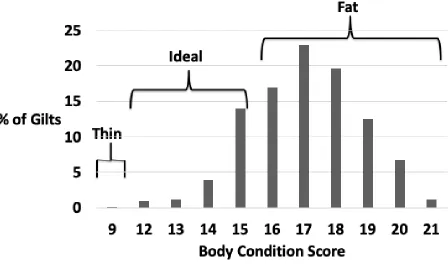
Females were given ad libitum access to water and fed once daily in gestation. Gilts were fed 1.82 kg of feed until farrowing (Control) or feeding level was increased by either 0.68 or 1.36 kg per day at either day 93 or 100 of gestation. Treatments were randomly assigned to pen (5 to 6 gilts per pen). The gestation diet contained 2,979 Kcal/kg ME and 0. 58% SID lysine. Gilt body condition score was captured at day 93 of gestation using a sow body condition caliper (thin = <12, ideal = 12 to 15, fat=>15). Piglet birth weights were captured within 24 hours of farrowing and piglets were ear notched by treatment prior to cross fostering. Sow production traits analyzed included: number born alive, number of stillborn, number of mummified piglets, litter birth weight, average piglet birth weight, number weaned and number of functional teats. Data was analyzed using the PROC GLM procedure of SAS (Cary, NC) with fixed effects of dietary treatment, contemporary group and covariates of litter size and sow functional teat number when applicable.
Average gilt caliper score at d 93 of gestation was 17, thus the gilts were over
by
James Keemar Quick
A thesis submitted to the Graduate Faculty of North Carolina State University
in partial fulfillment of the requirements for the degree of
Master of Science
Animal Science
Raleigh, North Carolina 2019
APPROVED BY:
______________________________________________ _____________________________________
Dr. Mark Knauer Dr. William Flowers Committee Chair
ii BIOGRAPHY
iii ACKNOWLEDGMENTS
I would like to start by thanking my committee member, Dr. William Flowers and Dr. Jonathan Holt for their contributions to my graduate work. A huge thank you to Dr. Mark Knauer for his mentorship over these past two years and teaching me everything I now know about pigs. I would also like to thank Dr. Knauer for his help with and patience while completing this thesis, and his encouragement along the way.
I would also like to thank my helpers, Patrick Yiech, Lauren Anderson, Macy Massengill, Dalton Obermier and Zack Peppmeier for the hours dedicated to help me collect data during those early mornings. I’d also like to give special thanks to Dr. Jeff Wiegert for always
answering my many questions and mentoring me along the way. Additionally, I’d like to give a huge thanks to my officemates in Polk 208! You guys kept me on track and let me rant when I didn’t feel like being productive. Y’all are amazing!
iv TABLE OF CONTENTS
LIST OF TABLES ... vi
Chapter 1: Literature Review ... 1
Piglet Birth Weight and Survival ... 2
Muscle Fibers ... 2
Body Heat Retention ... 3
Birth to Weaning ... 6
Litter Competition/Teat Competition ... 9
Post-Weaning ... 10
Probability of being Full-Value at Market ... 11
Management Strategies to Enhance Piglet Birth Weight ... 12
Increasing Feeding Level in Late Gestation ... 12
Diet Composition ... 14
Feed Additives ... 17
Management Practices ... 19
Genetics ... 21
Heritability of Birth Weight ... 21
Selection Based on Litter Size ... 22
Literature Cited ... 24
Chapter 2: Effect of Gilt Feeding Level and Duration of Feeding Level on Piglet Birth Weight ... 40
Abstract ... 41
Introduction ... 42
Materials and Methods ... 43
Study Location ... 43
Statistical Analysis ... 44
Results and Discussions ... 44
Sow Reproductive Performance ... 44
Piglet Survival ... 48
Implications... 48
v LIST OF TABLES
Table 1.1 Effect of increasing gilt feeding level in late gestation on average piglet birth
weight ... 37
Table 1.2 Effect of increasing sow feeding level in late gestation on average piglet birth weight. ... 37
Table 1.3 Effect of gestation lysine level on average piglet birth weight.. ... 38
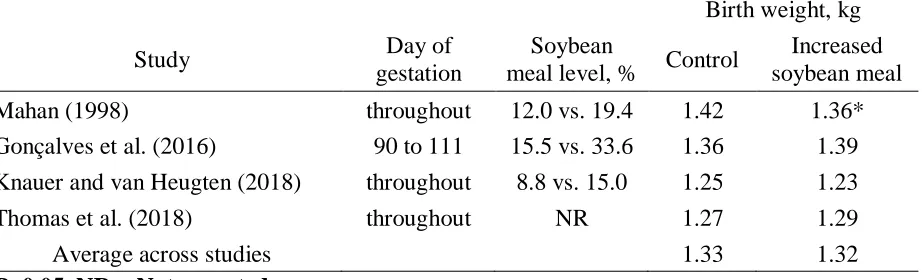
Table 1.4 Effect of gestation soybean level on average piglet birth weight ... .38
Table 1.5 Effect of gestation β-hydroxy-β-methylbutyrate (HMB) on average piglet birth weight……….…38
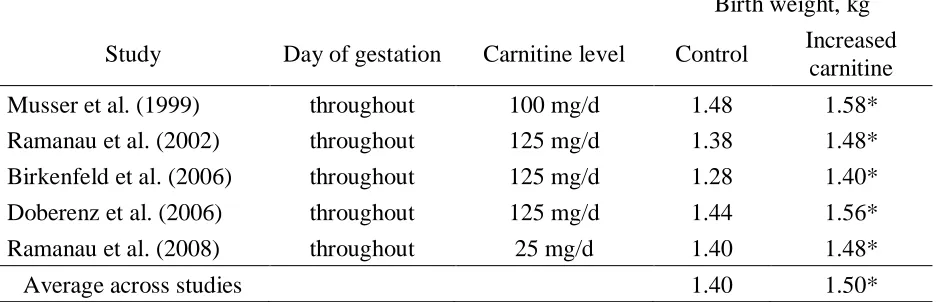
Table 1.6 Effect of gestation L-carnitine on average piglet birth weight………... ... 39
Table 2.1 Summary Statistics……….49
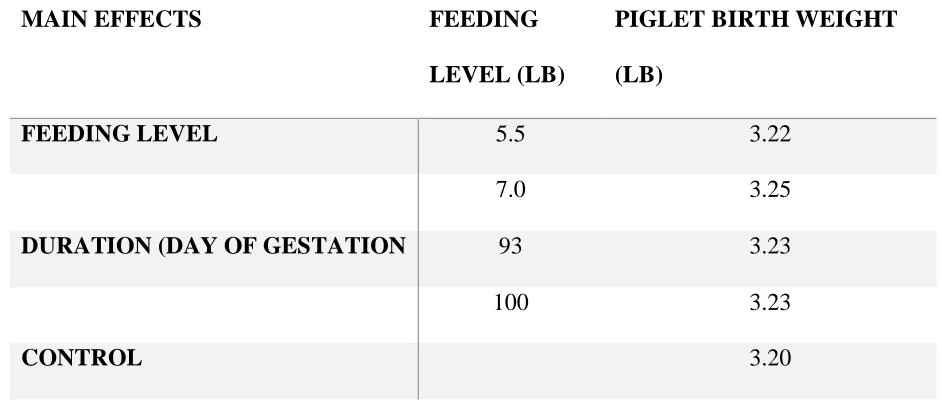
Table 2.2 Average piglet birth weight across main effects………....49
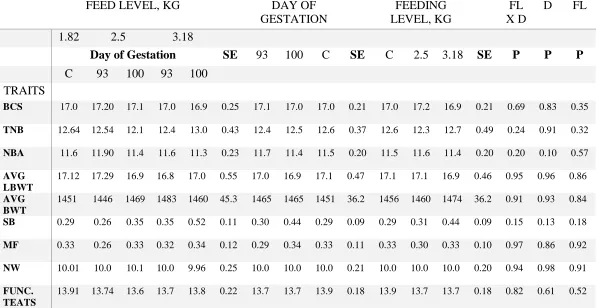
Table 2.3 Trait Means, Standard Error, and P-value per diet, day of gestation, and feeding level………50
vi LIST OF FIGURES
2 Introduction
In hopes to increase profitability in the swine industry, prolific sows are chosen to contribute their genes to the next generation. Due to this genetic selection, larger litters are now being produced. Often a larger litter size comes at the cost in terms of piglet birth weight. As litter size has increased, piglet birth weight and survival has decreased. Hence, improving piglet birth weight has become a priority in the swine industry. A common practice attempting to remedy this issue is increasing the amount of feed a female receives in late gestation during the period of rapid fetal growth. This is commonly known as “bump feeding”. This strategy is usually implemented between day 90 to 100 of gestation. Increasing feed can become expensive. Hence, any reduction in the duration or amount of bump feeding could be financially beneficial to farmers. The optimal time to begin bump feeding and the amount of that should be increased has not been clearly evaluated in prior studies (Cromwell et al. 1989; Shelton et al. 2009; Soto et al. 2011; Goncalves et al. 2016). Therefore, determination of the optimal time and level of increased feed would be highly beneficial for the swine industry.
The topics covered in this literature review are the importance of piglet birth weight; management strategies to improve piglet birth weight; and, the genetic contributions to birth weight.
Piglet Birth Weight and Survival Muscle Fibers
3 of muscle fibers is determined prenatally, their growth contributes significantly in the future body development and weight increase of the piglets. Therefore, the growth potential of some piglets is already higher than their littermates before they are even born.
Variation in muscle fibers accounts for a significant portion of the variation observed in piglet birth weight variation (Rehfeldt et al. 2006). The amount of skeletal muscle fibers plays a huge role throughout the entire life of a pig in the production field as prenatal development helps dictate pig growth from birth until slaughter. Piglets that start off smaller at birth tend to have lower meat quality in regards to water holding capacity and tenderness (Gondret et al., 2005; Rehfeldt and Kuhn, 2006). Rehfeldt et al. (2006) speculated that differences in meat quality could be due to the low number of muscle fibers going through accelerated muscle fiber hypertrophy. Similarly, Staun (1963) and Dwyer et al. (1993) reported that a piglet’s growth rate was
positively related to number of muscle fibers. Taken together, the amount of skeletal muscle fibers is associated with piglet birth weight and plays an important role throughout the entire life of a pig from the time it is born until the time it is processed for human consumption.
Body heat retention:
Piglets are exposed to an extreme environmental change immediately following farrowing. The sow’s internal temperature is above 38C and most swine facilities maintain a
temperature between 21.1 and 26.6C in farrowing rooms. This decrease in temperature may be a
4 stay close to the sow to keep warm, but when she stands, rolls over or lays down they are at risk of being crushed. Hypothermic piglets often have reduced vitality, reduced chance of gaining access to the udder, and are less able to avoid the movements of the sow (Herpin et al., 2002). Consequently, relying on the sow for warmth immediately after birth increases the odds of piglet death by crushing, which is the major cause of piglet mortality (Bille et al., 1974). Loss of body heat is another major source of piglet mortality within the first three days of life. Curtis (1970) showed that about a quarter of piglet deaths on day 1 after farrowing are caused by chilling and hypothermia.
Previous nutrition studies have focused on improving piglet body heat retention and reducing the length of time it takes piglets to warm up after farrowing. One method studied was caffeine and its central analeptic effect that increases muscle performance of the respiratory system (Menozzi et al., 2015). Due to caffeine’s chemical structure, it can cross the placental
membrane and reach the fetus (Dearlove et al., 2018). A study completed by Superchi et al. (2016) was developed to look at the effects of caffeine on piglet’s thermoregulation when given to sows in late gestation. In this study, sows were fed 27 mg of caffeine per kg bodyweight which was mixed with 200g of feed on day 113 of gestation. Farrowing was induced via
intramuscular injection at day 118 of gestation. The caffeine had no effect on total number born or birth weight, but it did reduce the occurrence of stillborns by 73%, improved piglet
thermoregulatory ability, and reduced neonatal mortalities (Superchi et al., 2013). These results have high economic significance for the swine industry as they drastically reduced the
5 this study reported higher rectal temperatures three hours after birth for the piglets born to
caffeine treated sows when compared to untreated sows (Dearlove et al., 2018). A reduced number of stillborns was also reported, concurring with the previously mentioned study. The untreated sows tended to farrow sooner than caffeine treated sows (115.6 vs. 116.6 days of gestation). Vanderhaeghe et al. (2010) reported that 10% of sows farrow early which can explain the occurrence of stillborns. Perhaps increased gestation lengths allow more developmental time for the piglets which might explain the positive effects of caffeine on piglet survival.
Heat mats and heat lamps are commonly used swine facilities in hopes of improving the thermal environment available to pigs early in their life. Management studies have been
completed that focused on improving piglet body heat retention. Zhang and Xin (2001) evaluated the preference of heat mats or heat lamps for neonatal piglets. In this study, two commercial heat mats or lamps were placed either at the rear or front end of the farrowing crate from birth to eight days of life. It was reported that piglets preferred the rear heat source, regardless of type (Zhang and Xin, 2001). The authors further reported the piglets did seem to prefer the heat lamp the first two days of life, which makes sense as it would dry them of birth fluids quicker. From day three to day eight of life the piglets showed no preference between mats or lamps, the use for both was around 50%. Another study reported similar results, piglets continued to prefer posterior placed heat sources and lamps over mats (Stinn and Xin, 2014). Knowing the preference of piglets is economically important as it could improve piglet survival rates.
The use of heat mats are mainly for piglets to stay warm after birth, but it has been shown that if heated floors are used during parturition, piglet thermoregulation can be improved.
6 heating (33.5C) and the remaining 11 received no floor heating (21.2C). The authors reported
piglets born on heated floor, after the initial drop in the piglet’s body temperature, were able to recover earlier than piglets born on unheated floors. The piglets given floor heating also suckled sooner than control piglets and had fewer live-born piglet deaths during the first three days and week. This shows how important those first few moments of life for the piglet are to their survival. The piglets born on heated floors were able to reduce the period of experiencing hypothermia and reduce their latency to suckle.
Birth-Weaning
Piglet survival is of high importance to pig producers all over the world. The most critical period for piglet survival is during the first two days post-farrowing (Bereskin et al., 1973; Barnett et al., 2001). Most piglet mortality happens within the first two days post parturition (Tuchscherer et al., 2000). The top causes of pre-weaned piglet death include crushing by sow, starvation, and stillborns (Dyck and Swierstra, 1987). The number of piglets surviving to weaning is one of the most economically important traits in commercial pig production.
7 immediately post farrowing and during the pre-weaning phase. The authors reported that as birth weight increased, the odds of the piglet surviving also increased (Fix et al., 2010a). This makes sense as smaller piglets are more prone to pre-weaning death, so as birth weight is increased the occurrence of death due to these factors also is reduced. Ferrari et al. (2014) also completed a study to evaluate the effect of birth weight on pig mortality. The results were agreement with the previously mentioned studies. In this study, the piglets born heavier than their littermates had the lowest percentage of mortality regardless of their colostrum intake.
There have also been studies that focused on evaluating different management techniques to improve piglet survival. As most pre-weaned deaths occur on the first or second day of life (Fahmy et al., 1971), preventative management practices could be applied during this time period. Small changes in different aspects of the gestation and farrowing period have been shown to reduce early losses. A study conducted in Nova Scotia, Canada evaluated whether if increased assistance during farrowing impacted piglet survival. In this trial, sows were fit with a
8 vitality. The clearing of cavities and the concentrated oxygen the piglets received is beneficial, because it ensures those first few breaths of life are of higher quality. The weaning weight and overall weight gain of the protocol group was higher, when compared to the control groups. The entire protocol took around 2 minutes per piglet, so it could be adapted into production and the increased labor costs would be offset by an increased amount of heavier weight piglets.
However, the high initial cost of the probes could deter farmers from adapting this protocol especially facilities with high herd numbers.
Other management studies have focused more on the microenvironment of the sow and piglet and how they affect survival. A study in Australia was conducted to determine the effects of the gestation and farrowing environments on piglet survival. The study included gestation stalls and pens, farrowing crates and a prototype pair-pen system that held two sows (included bedding). The piglets were surveyed on day eight post-farrowing for survival. Piglet survival was higher in the gestation stalls when compared to the gestation pens; however, mean litter size was greater in gestation pens (Cronin et al., 1996). Sows that went from group pens to farrowing crates experienced the highest percentage of mortality and stillborns within the first three days post-farrowing. Perhaps this was due to stress related to a change in environment. The sows that went from group pens to the prototype pen still had another sow in the pen, perhaps the stress levels were not as high. The prototype pen included bedding, which acts as a nest, which is a part of the natural process for sows leading up to farrowing. Bedding helps with thermoregulation by insulating the piglets. In relation to the bedding, Cronin et al. (1993) reported that bedding in farrowing crates reduced the duration of parturition by increasing pre-partum nesting behavior. Collectively, these results suggest that some adaption to simulate natural pig farrowing
9 Litter Competition/Teat Order
In the first few moments of life, piglets compete for teat access which plays a huge part in their survival (Fraser, 1990). Piglets starting off smaller than their siblings often continue to lag behind their larger siblings in all phases of production for economically important traits such as average daily gain and feed efficiency. This occurs because piglets born smaller are often bullied by their larger littermates and they are usually restricted to posterior teats (de Passille et al., 1988). It has been proven that teat competition is higher in larger litters compared to smaller litters (Milligan et al. 2001). Most piglets will establish “ownership” of a specific teat and will fight aggressively to keep it from their littermates (de Passille et al., 1988), this is known as the “teat order”. Research has shown that piglets are more likely to pick anterior teats instead of
10 two minutes of being moved, the piglets returned to their previously chosen teats (McBride, 1963).
Sow functional teat numbers at the time of the first farrowing also impact teat
competition. Farmer et al. (2012), reported that teats not suckled during the first lactation will become non-lactating tissue. According to another study, this effect becomes irreversible after 3 days post farrowing (Theil et al., 2005). The suckled functional teats becoming
functional could negatively impact the survival of subsequent litters due to the increase in non-functional teats.
Consequently, even after weaning the smaller piglets can still struggle to catch up to their larger pen mates because the competition for food is more intense as the piglets grow older. As more prolific sows are selected to increase piglet output, teat competition will also be increased, therefore functional teats is a trait that should be optimized.
Post-Weaning
11 need more time, feed, or if they need to be culled. Paredes et al. (2012) agreed that birth weight was a good predictor for how much pigs weight at the end of the nursery phase along with season and sex. Collectively, these results suggest birth weight has a positive relationship with post-weaning weight and survival.
Individual birth weights of piglets is a good indicator of future post-weaning
performance. Grau et al. (2005) and Smith et al. (2007) reported that small birth weight piglets continued to lag behind their heavier birth weight littermates post-weaning. Fix et al. (2010b) reported that heavier birth weight piglets grew faster than their lighter birth weight counterparts throughout the nursery and finishing period and were more likely to be full value at market. In agreement, Smith et al. (2007) reported that heavier born weight piglets had higher 42-day post weaning weight when compared with their lighter littermates. This makes sense because the heavier piglets already have an advantage over their lightweight littermates. The heavyweight piglets have a higher amount of muscle fibers and higher odds of increased colostrum intake.
Probability of Being Full-Value at Market
12 weight at the end of the finishing phase (Kohler and Bierman, 2014). However, Quiniou et al. 2002 reported that the lighter the piglets are, the higher their relative body weight gain is during lactation in proportion to their birth weight. Although producers save money on feed in regard to light weight pigs, they still lose potential profits when selling those light weight pigs. Fix et al. (2010b) and Grau et al. (2005) reported that piglets that are born lighter than their littermates continue to be smaller throughout subsequent phases of production including weaning, nursery and finishing. As birth weight increases, average daily gain and the probability of the piglet being at full value at 181 days of age increases (Fix et al., 2010b). The same study reported that heavier birth weight piglets had increased backfat depth, faster daily gain, heavier future body weight (finishing phase), and larger longissimus muscles (Fix et al., 2010a).
Management Strategies to Enhance Piglet Birth Weight Increasing Feeding Level in Late Gestation
Bump feeding, also known as increasing feeding level in late gestation, has been generally shown to improve piglet birth weight in gilts (Cromwell et al., 1989; Shelton et al., 2009; Soto et al., 2011; Goncalves et al., 2016; Gourley et al., 2018; Mallmann et al., 2019); (Table 1.1, 1.2). In late gestation, the sow’s amino acid and energy requirements for fetal growth are higher than earlier in the pregnancy. This means that throughout the sow’s gestation the
13 during this phase of gestation is needed for maternal growth, such as mammary gland
development and body weight gain. The extra feed may help contribute to increasing the piglets’ birth weight and maintaining the sow’s body condition and health (Cromwell et al., 1989). If the right adjustments are not made for the sow’s nutrition in late gestation, then the sow’s energy
reserve could become negative thus lowering the subcutaneous fat depots as sows will generally sacrifice body tissue for her piglets.
There have been numerous studies that evaluated late gestation feeding in gilts and sows. Cromwell et al. (1989) conducted a bump feeding study that included over 1,000 primiparous and multiparous sows. The test animals were given an extra 1.36 kg of feed from day 90 of gestation to farrowing. Increased feeding level resulted in greater maternal weight gain, more piglets being born alive in the subsequent farrowing and greater lactation weight lost. The piglets born from the test sows bump fed two cycles had heavier birth weights when compared to the control fed sows. The initial cost of extra feed was compensated by the sow’s extra weight gain and the additional 0.3 of a pig per litter. However, another study reported different results. Shelton et al. (2009) conducted a bump feeding study that included 108 gilts and sows with feed being increased 0.90 kg from day 90 of gestation to parturition. In agreement with Cromwell et al. (1989), bump fed sows and gilts had greater gestation weight gain, but only bump fed gilts in this study had increased average piglet birth weight while sows had decreased average piglet birth weight. The differing results could be due to the sample size, 1000 vs. 100 gilts and sows. The smaller sample size reduced the statistical power of the study.
14 increased feeding allowance in late gestation. Perhaps differing results reported by Shelton et al. (2009) and Cromwell et al. (1989) are due to the amount of feed added in late gestation (0.90 kg vs 1.36 kg) and sample size (108 vs. 1080 sows). Shelton et al. (2009) further evaluated the effects of bump feeding on subsequent litters. The authors reported parity two displayed greater born alive and litter weight than higher parity sows. The parity two sows also had higher average weaning weight and number weaned when compared with higher parity sows that were bump fed. Bump feeding for one reproductive cycle has not been shown to increase piglet birth weight in sows but has generally been shown to be effective in gilts.
Diet Composition
Added Fat: Fatty acids can be very beneficial to the health and survivability of piglets and sows. Fatty acids have thermoregulation properties and also can store energy for the body to use when needed. Piglets are only born with around 2% body fat, mostly used for structural composition and not used for energy (Manners and McCrea, 1963; Okai et al., 1977).
15 done on a herd with high survival rates, if replicated on a herd with low survival rates, the effects may be more beneficial.
The type of fat added to the diet of piglets can also play a part in its effects on piglet birth weight. Cera et al. (1988) tested three types of fats, including corn oil, lard or tallow on
weanling piglets. Piglets fed diets containing corn oil had higher fat digestibility than the piglets fed lard or tallow. Although the piglet’s ability to absorb fat increases with age, corn oil results in higher digestibility and absorption of fat and dry matter. This can be beneficial especially during early life when piglets are most prone to malnutrition and other health issues or diseases.
Amino Acids: Scientists have researched specific amino acid compounds that can be added to the late gestation diet of the sow that could impact piglet birth weight positively. In a recent study conducted by Goncalves et al. (2016), scientists wanted to determine if adding additional amino acids and energy to the sow and gilt diet would improve litter and reproductive performance. The sow’s response to the added amino acid resulted in body weight gain greater
than that of the gilts fed the same diet. However, sows fed an increased amount of energy
resulted in an increase in stillborn rates. The increased energy intake did have a positive effect on individual piglet birth weight, with a 0.03 kg increase in females feed high energy feed when compared to females fed low energy feed. Although increasing amino acid level in late gestation enhanced female weight gain, it had no positive significant effect on piglets.
Lysine: Lysine is an amino acid that is vital for protein deposition in maternal and fetal tissues (Kim et al., 2009) and a primary factor determining sow performance (Johnston et al., 1993). Lysine is found in corn and soybean-based diets and acts as a limiting amino acid, which means protein synthesis cannot proceed beyond the rate at which this key amino acid is
16 impacts sow performance and piglet birth weight (Table 1.3). In a study completed by Zhang et al. (2011), the authors discovered that increasing dietary lysine from 0.65 to 0.75% during
gestation increased sow body weight gain and back fat thickness. Yang et al. (2007) and Zhang et al. (2011) reported that added lysine does not affect total number of piglets born and born alive rates. However, there were positive effects on average litter birth weight and average piglet birth weight. Cerisuelo et al. (2009) and Zhang et al. (2011) reported an increase in piglet birth weight when lysine was increased in sows. This increase in birth weight resulted in a reduced number of runts and stillbirths. Magnabosco et al. (2013) reported the same findings in gilts. The NRC has released NRC 2012 which details the most current sow lysine requirements based on parity and day of gestation to ensure producers are able to satisfy gestating sows nutrient requirements as they change throughout gestation.
Soybean meal: Soybean meal is a protein source commonly used in the animal feed industry (Table 1.4), but it does have anti-nutritional factors (Dunsoford et al., 1989). One of the effects of the anti-nutritional factors include growth suppression (Holm et al., 1992), so to combat this Zamora et al. (1979) treated soybean meal with fermented Aspergillus oryzae and Rhizopus oligosporus. Fermented and treated soybean meal is used in the human food industry and are highly nutritious and digestible. This study was done at the University of Missouri and included two 35-day trials involving 80 crossbred growing pigs. The pigs fed fermented
Aspergillus Oryzae soybean meal had higher average daily gain and greater gain:feed ratio than the pigs fed the unfermented diets.
17 from each treatment were slaughtered to collect intestinal contents. The scientist reported that piglets fed the fermented diet had higher average daily gain when compared to the piglets fed the unfermented diet. However, Feng et al. (2007) reported decreased gain:feed which differs from the findings of Zamora et al. (1979).
Feed Additives:
HMB: B-hydroxy B-methyl butyrate (HMB) is a metabolite that is formed from the essential amino acid, leucine. Knowing this, scientists wanted to determine if adding this feed additive would positively impact piglet birth weight (Table 1.5). Nissen et al. (1994) conducted a study over 3 farrowings that top-dressed the feed of sows 3 to 4 days before farrowing until 28 days post parturition with 2.5 g of HMB. Fetal piglets experience rapid fetal growth during late gestation which is why this time frame was chosen. Nissen et al. (1994) reported that piglet weight at day 21 of age was increased by 7% in the HMB treated sows. This weight gain in piglets could be due to the increased amount of energy and fat produced by the added HMB.
Another study conducted in Denmark, Flummer et al. (2012), reported similar results. These scientists tested to see if HMB would have a positive effect on piglet performance. Piglet birth weight was not affected by the added HMB, but sow and piglet performance were
improved. The sows were able to produce more colostrum and piglets had higher weight gain and reduced mortality during the colostrum period. Milk yield was not impacted from day 17 to 28 post-partum and the reduced piglet mortality could be due to the increased colostrum
18 were used, and litters were observed for potential impacts of the additive. Again, birth weight was not affected but internal organs of the piglets such as the liver, spleen, kidneys and caecum were impacted. These internal organs had a weight increase by 8 to 31%. Perhaps greater internal organ development of piglets from sows treated with HMB explains the 7% weight increase reported by Nissen et al. (1994).
19 while Musser et al. (1999) only used multiparous sows. Musser et al. (1999) and Birkenfeld et al. (2005) reported that the number of stillborns per litter for sows on the L-carnitine diet was lower than that of the control sows.
Equivalently, studies done by Eder et al. (2001) and Ramanau et al. (2004) demonstrate similar results in gilts. In these studies, piglets born from gilts fed an increased L-carnitine diet resulted in heavier piglets and litters and reduced stillborns. Eder et al. (2001) reported that gilt test litters were 8% heavier and the individual piglet birth weight was 9% heavier than off-test piglets. Also, the live-weight gains of the piglets during suckling were higher in the L-carnitine fed animals which resulted in higher post-weaning litter weights. Brown et al. (2008) reported that L-carnitine produced heavier piglets at day 70 of gestation. This shows that the utilization of dietary nutrients by the sow improved the nutritional status of the fetuses. In all studies
mentioned, gilt’s and sow’s number born alive was not affected by the additive.
Management Practices
20 compared with sows in gestation sows. This correlates with a study mentioned earlier in this review, Cronin et al. (1995), which reported piglets born to sows in pair/group housing had better survival rates which is strongly correlated with birth weight. Bates et al. (2003) also reported that litter birth weight was higher in sows that were group housed compared to individual stalls. The exact causes of these results are still unclear but could be related to
increased exercise or social interaction. Hale et al. (1981) reported piglets were 70 grams heavier when the sows were exercised daily on a treadmill for 15 minutes when compared with sows not exercised.
The use of prostaglandins has been reported to lower piglet birth weight by 43 grams when compared to piglets farrowed naturally (Opschoor et al. 2010). This makes sense, because as gestation is shortened, the time for the piglets to develop is also shortened. This agrees with a study previously mentioned, Superchi et al. (2016), who reported that piglets farrowed naturally had higher birth weights when compared with sows that had farrowing induced. Lastly,
Opschoor et al. (2010), reported that farm hygiene can have an impact on average piglet birth weight. The 17 farms in that study were given a subjective score (very good, good or average) based on good farm practices. Piglet birth weight at farms with “very good” scores were 104 grams heavier than “good” farms and 224 grams heavier than “average” farms. This supports the
21 Genetics
Heritability of Birth Weight
Birth weight is a lowly heritable trait that has high economic value, which is why
selecting for this specific heritable trait is important. As genetic selection has increased litter size over time, it has also decreased average piglet birth weight (Berard et al., 2008; Quiniou et al., 2002). Like most traits such as backfat depth or litter size, birth weight is subject to some genetic influence. Studies have been completed to estimate the heritability of birth weight. The sire and dam both contribute to the piglet’s genetics, the sows genes prominently contribute to piglet growth during gestation (Roehe. 2000; Knol et al., 2002). Maternal heritability estimates for piglet birth weight are generally greater than direct genetic effects (0.17 to 0.26 vs. 0.03 to 0.10, respectively). A study in France evaluated the genetic parameters of individual piglet birth weight using data from a herd over a 7 year span. Kaufmann et al. (2008) reported that the direct and maternal heritability for individual piglet birth weight were 0.02 and 0.21. Although these values are low, they both should be considered when selecting for gilts if a formula to increase birth weight is to be discovered. Damgaard et al. (2003) reported that selecting sows based on their ability to farrow uniform litters may be beneficial to piglet survival and growth as it reduced the occurrence of runts.
22 weaning weight (55.4 vs. 49.5 kg), and average piglet weaning weight (5.5 vs. 4.9 kg) when compared to litters sired by Landrace × Large White composite boars. These results indicate that the sire line can greatly impact piglet birth weight, thus using specific sire breeds may be a strategy to improve piglet quality. A study conducted in Scotland, consisting of 241 litters, evaluated the boar effects on piglet quality when sows were fed two different feed regimes often practiced in production, ad libitum vs. restricted. Half the sows were bred by Duroc boars and the other half was bred by Large White boars. The piglets sired by the Duroc boars grew faster and had better feed conversion when fed ad libitum, but there was no significant difference when feed was restricted (Simpson et al., 1987). The piglets had an economic advantage of $1.93 per pig when the sows were fed ad libitum, but a $0.40 per pig loss when sows were on a restricted diet. The initial cost of feeding sows ad libitum can be offset by the Duroc progeny’s feed efficiency and faster growth. Taken together, these results suggest that Duroc boars may be the optimal sire breed for increasing birth weight in Large White x Landrace crosses.
Selection based on Litter Size:
23 Danish scientist completed a study that included approximately 16,000 litters to determine if there was an alternative trait for litter size at birth that could enhance litter size yet not impair piglet quality. Selection based on litter size at d 5 was introduced in 2004 in hopes to reduce piglet mortality. Su et al. (2007) reported that there was a positive genetic correlation between litter size after at 5 days of life and piglet survival to weaning. The genetic correlation between total number born and survival to weaning was 0.53. Another study reported similar results, litter size at 5 days of life was favorably correlated genetically with reduced mortality (Nielsen et al., 2013). Both of these studies conclude that selection for litter size at 5 days post farrowing should reduce mortality, thus increasing number of piglets weaned. This discovery could be very
24 LITERATURE CITED
Alonso-Spilsbury, M., Ramirez-Necoechea, R., Gonzalez-Lozano, M., Mota-Rojas, D., & Trujillo-Ortega, M. (2007). Piglet Survival in Early Lactation: A Review. Journal of Animal and Veterinary Advances, 6(1), 76-86. Retrieved from
http://www.medwelljournals.com/abstract/?doi=javaa.2007.76.86
Barnett, J. L., Hemsworth, P. H., Cronin, G. M., Jongman, E. C., & Hutson, G. D. (2001). A review of the welfare issues for sows and piglets in relation to housing. Australian Journal of Agricultural Research, 52(1), 1-28. doi:10.1071/ar00057
Bates, R., Edwards, D., & Korthals, R. (2003). Sow performance when housed either in groups with electronic sow feeders or stalls. Livestock Production Science, 79(1), 29-35.
doi:10.1016/s0301-6226(02)00119-7
Baxter, E. M., Jarvis, S., Sherwood, L., Robson, S. K., Ormandy, E., Farish, M., .Edwards, S. A. (2009). Indicators of piglet survival in an outdoor farrowing system. Livestock Science, 124(1-3), 266-276. doi:10.1016/j.livsci.2009.02.008
Beaulieu, A. D., Aalhus, J. L., Williams, N. H., & Patience, J. F. (2010). Impact of piglet birth weight, birth order, and litter size on subsequent growth performance, carcass quality, muscle composition, and eating quality of pork1. Journal of Animal Science,88(8), 2767-2778. doi:10.2527/jas.2009-2222
Bereskin, Shelby, F., D., & Cox. (1973). Some Factors Affecting Pig Survival 1. Journal of Animal Science, 36(5), 821-827. Retrieved from
https://academic.oup.com/jas/article-abstract/36/5/821/4667343?redirectedFrom=fulltext
25 Bérard, J., Kreuzer, M., & Bee, G. (2008). Effect of litter size and birth weight on growth, carcass and pork quality, and their relationship to postmortem proteolysis1. Journal of Animal Science, 86(9), 2357-2368. doi:10.2527/jas.2008-0893
Bille, N., Nielsen, N. C., Larsen, J. L., & Svendsen, J. (1974). Preweaning mortality in pigs. 2. The perinatal period. Nort Vet Med, 26(5), 294-313. Retrieved from
https://www.ncbi.nlm.nih.gov/pubmed/4831789
Birkenfeld, C., Doberenz, J., Kluge, H., & Eder, K. (2006). Effect of l-carnitine supplementation of sows on l-carnitine status, body composition and concentrations of lipids in liver and plasma of their piglets at birth and during the suckling period. Animal Feed Science and Technology, 129(1-2), 23-38. doi:10.1016/j.anifeedsci.2005.12.007
Brown, K. R., Goodband, R. D., Tokach, M. D., Dritz, S. S., Nelssen, J. L., Minton, J. E., Johnson, B. J. (2008). Effects of feeding l-carnitine to gilts through day 70 of gestation on litter traits and the expression of insulin-like growth factor system components and l-carnitine concentration in foetal tissues. Journal of Animal Physiology and Animal Nutrition, 92(6), 660-667.
doi:10.1111/j.1439-0396.2007.00762.x
Cera, K. R., Mahan, D. C., & Reinhart, G. A. (1988). Weekly Digestibilities of Diets
Supplemented with Corn Oil, Lard or Tallow by Weanling Swine. Journal of Animal Science, 66(6), 1430. doi:10.2527/jas1988.6661430x
26 Cromwell, G., Hall, L., Clawson, A. J., Combs, G., Knabe, D., Maxwell, C., Orr, E., Jr. (1989).
Effects of Additional Feed during Late Gestation on Reproductive Performance of Sows. Journal of Animal Science, 67(1), 3-14. Retrieved from
https://www.researchgate.net/publication/20229809_Effects_of_Additional_Feed_during_Late _Gestation_on_Reproductive_Performance_of_Sows_A_Cooperative_Study
Cronin, G., Schirmer, B., Mccallum, T., Smith, J., & Butler, K. (1993). The effects of providing sawdust to pre-parturient sows in farrowing crates on sow behaviour, the duration of parturition and the occurrence of intra-partum stillborn piglets. Applied Animal Behaviour Science, 36(4), 301-315. doi:10.1016/0168-1591(93)90128-c
Cronin, G., Simpson, G., & Hemsworth, P. (1996). The effects of the gestation and farrowing environments on sow and piglet behaviour and piglet survival and growth in early
lactation. Applied Animal Behaviour Science, 46(3-4), 175-192. doi:10.1016/0168-1591(95)00657-5
Curtis, S. E. (1970). Environmental—Thermoregulatory Interactions and Neonatal Piglet Survival. Journal of Animal Science, 31(3), 576-587. doi:10.2527/jas1970.313576x
Damgaard, L. H., Rydhmer, L., Løvendahl, P., & Grandinson, K. (2003). Genetic parameters for within-litter variation in piglet birth weight and change in within-litter variation during suckling1. Journal of Animal Science, 81(3), 604-610. doi:10.2527/2003.813604x
Dearlove, B., Kind, K., Gatford, K., & Wettere, W. V. (2018). Oral caffeine administered during late gestation increases gestation length and piglet temperature in naturally farrowing
sows. Animal Reproduction Science, 198, 160-166. doi:10.1016/j.anireprosci.2018.09.015 Devillers, N., Dividich, J. L., & Prunier, A. (2011). Influence of colostrum intake on piglet
27 Dunsford, B. R., Knabe, D. A., & Haensly, W. E. (1989). Effect of Dietary Soybean Meal on the
Microscopic Anatomy of the Small Intestine in the Early-Weaned Pig. Journal of Animal Science, 67(7), 1855. doi:10.2527/jas1989.6771855x
Dwyer, C. M., Fletcher, J. M., & Stickland, N. C. (1993). Muscle cellularity and postnatal growth in the pig1. Journal of Animal Science, 71(12), 3339-3343. doi:10.2527/1993.71123339x Dyck, G. W., & Swierstra, E. E. (1987). Causes Of Piglet Death From Birth To
Weaning. Canadian Journal of Animal Science, 67(2), 543-547. doi:10.4141/cjas87-053
Eder, K., Ramanau, A., & Kluge, H. (2001). Effect of L-carnitine supplementation on performance parameters in gilts and sows. Journal of Animal Physiology, 85(3-4), 73-80. Retrieved from https://www.ncbi.nlm.nih.gov/pubmed/11686775
Fahmy, M. H., & Bernard, C. (1971). Causes Of Mortality In Yorkshire Pigs From Birth To 20 Weeks Of Age. Canadian Journal of Animal Science, 51(2), 351-359. doi:10.4141/cjas71-048 Farmer, C., Palin, M. F., Theil, P. K., Sorensen, M. T., & Devillers, N. (2012). Milk production in sows from a teat in second parity is influenced by whether it was suckled in first parity. Journal of Animal Science. 90(11), 3743-3751. doi:10.2527/jas.2011-5127
Feng, J., Liu, X., Xu, Z., Lu, Y., & Liu, Y. (2007). The effect of Aspergillus oryzae fermented soybean meal on growth performance, digestibility of dietary components and activities of intestinal enzymes in weaned piglets. Animal Feed Science and Technology, 134(3-4), 295-303. doi:10.1016/j.anifeedsci.2006.10.004
28 Fix, J., Cassady, J., Herring, W., Holl, J., Culbertson, M., & See, M. (2010a). Effect of piglet birth
weight on body weight, growth, backfat, and longissimus muscle area of commercial market swine. Livestock Science, 127(1), 51-59. doi:10.1016/j.livsci.2009.08.007
Fix, J., Cassady, J., Holl, J., Herring, W., Culbertson, M., & See, M. (2010b). Effect of piglet birth weight on survival and quality of commercial market swine. Livestock Science, 132(1-3), 98-106. doi:10.1016/j.livsci.2010.05.007
Flummer, C., Kristensen, N. B., & Theil, P. K. (2012). Body composition of piglets from sows fed the leucine metabolite β-hydroxy β-methyl butyrate in late gestation. Journal of Animal
Science, 90(Suppl 4), 442-444. doi:10.2527/jas.53923
Fraser, D. (1990). Behavioural perspectives on piglet survival. Journal of Reproductive Fertility, 40, 355-370. Retrieved from https://www.ncbi.nlm.nih.gov/pubmed/2192051
Fraser, D. (1975). Vocalizations of isolated piglets. I. Sources of variation and relationships among measures. Applied Animal Ethology, 1(4), 387-394. doi:10.1016/0304-3762(75)90075-9
Friend, D. W., & Cunningham, H. M. (1966). Piglet birth weights and the order of farrowing. Canada Journal of Comp Med Vet Sci, 30(7), 179-182. Retrieved from
https://www.ncbi.nlm.nih.gov/pubmed/4224290
Goncalves, M., Dritz, S., Tokach, M., Piva, J., DeRouchey, J., Woodworth, J., & Goodband, R. (2016). Impact of Increased Feed Intake during late gestation on reproductive performance of gilts and sows. J Swine Health Prod., 24(5), 1-5.
29 Gondret, F., Lefaucheur, L., Louveau, I., Lebret, B., Pichodo, X., & Cozler, Y. L. (2005).
Influence of piglet birth weight on postnatal growth performance, tissue lipogenic capacity and muscle histological traits at market weight. Livestock Production Science, 93(2), 137-146. doi:10.1016/j.livprodsci.2004.09.009
Grau, A., Dewey, C., Friendship, R., & Lange, K. (2005). Observational study of factors associated with nursery pig performance. Canada Journal Vet Res, 69(4), 241-245. Retrieved from
https://www.ncbi.nlm.nih.gov/pubmed/16479720
Harmeyer J, Schlumborn C. (1997). The physiological significance of L-carnitine and effects of carnitic supplements in domestic animals. Proc 6th Symp Vitamins and other additives in humans and animals, Sept. 24-25, Friedrich Schiller University, Jena (Germany).
Herpin, P., Dividich, J. L., Hulin, J. C., Fillaut, M., Marco, F. D., & Bertin, R. (1996). Effects of the level of asphyxia during delivery on viability at birth and early postnatal vitality of newborn pigs. Journal of Animal Science, 74(9), 2067. doi:10.2527/1996.7492067x
Herpin, P., Damon, M., & Dividich, J. L. (2002). Development of thermoregulation and neonatal survival in pigs. Livestock Production Science, 78(1), 25-45.
doi:10.1016/s0301-6226(02)00183-5
Holm, H., Reseland, J. E., Thorsen, L. I., Flatmark, A., & Hanssen, L. E. (1992). Raw Soybeans Stimulate Human Pancreatic Proteinase Secretion. The Journal of Nutrition, 122(7), 1407-1416. doi:10.1093/jn/122.7.1407
30 Johnston, M. E., Nelssen, J. L., Goodband, R. D., Kropf, D. H., Hines, R. H., & Schricker, B. R.
(1993). The effects of porcine somatotropin and dietary lysine on growth performance and carcass characteristics of finishing swine fed to 105 or 127 kilograms2. Journal of Animal Science, 71(11), 2986-2995. doi:10.2527/1993.71112986x
Kaufmann, D., Hofer, A., Bidanel, J. P., & Künzi, N. (2008). Genetic parameters for individual birth and weaning weight and for litter size of Large White pigs. Journal of Animal Breeding and Genetics, 117(3), 121-128. doi:10.1046/j.1439-0388.2000.00238.x
Kim, S. W., Heugten, E. V., Ji, F., Lee, C. H., & Mateo, R. D. (2010). Fermented soybean meal as a vegetable protein source for nursery pigs: I. Effects on growth performance of nursery pigs. Journal of Animal Science, 88(1), 214-224. doi:10.2527/jas.2009-1993
Knauer, M. T., & Heugten, E. V. (2018). Effect of Soybean Meal Supplementation during Gestation on Piglet Quality. Journal of Animal Science, 96(Suppl_2), 180-181.
doi:10.1093/jas/sky073.332
Knauer, M., and J. Quick. 2019. To Bump or Not to Bump? National Hog Farmer Daily Update. February, 2019. Available at
https://www.nationalhogfarmer.com/nutrition/bump-or-
notbump?NL=NHF-001&Issue=NHF-001_20190207_NHF001_418&sfvc4enews=42&cl=article_1_b&utm_rid=CPG020000036637 53&utm_campaign=35 607&utm_medium=email&elq2=c1db4e459f774c088bca5a052e8ced49 Knol, E., Ducro, B., Arendonk, J. V., & Lende, T. V. (2002). Direct, maternal and nurse sow
31 Lund, M. S., Puonti, M., Rydhmer, L., & Jensen, J. (2002). Relationship between litter size and
perinatal and pre-weaning survival in pigs. Animal Science, 74(02), 217-222. doi:10.1017/s1357729800052383
Magnabosco, D., Bierhals, T., Ribeiro, R. R., Cemin, H. S., Faccin, J. E., Bernardi, M. L., . . . Bortolozzo, F. P. (2013). Lysine supplementation in late gestation of gilts: Effects on piglet birth weight, and gestational and lactational performance. Ciência Rural, 43(8), 1464-1470. doi:10.1590/s0103-84782013000800020
Malmkvist, J., Pedersen, L. J., Damgaard, B. M., Thodberg, K., Jørgensen, E., & Labouriau, R. (2006). Does floor heating around parturition affect the vitality of piglets born to loose housed sows? Applied Animal Behaviour Science, 99(1-2), 88-105.
doi:10.1016/j.applanim.2005.10.007
Mcbride, G. (1963). The “teat order” and communication in young pigs. Animal Behaviour, 11(1),
53-56. doi:10.1016/0003-3472(63)90008-3
Menozzi, A., Mazzoni, C., Serventi, P., Zanardelli, P., & Bertini, S. (2015). Pharmacokinetics of oral caffeine in sows: A pilot study. Large Animal Review, 21, 207-210. Retrieved from https://www.vetjournal.it/images/archive/pdf_riviste/4701.pdf.
Manners, M. J. and M. McCrea. (1963). Changes in the chemical composition of sow-reared piglets during the first month of life. Br. J. Nutri. 17:495.
32 Milligan, B. N., Fraser, D., & Kramer, D. L. (2001). Birth weight variation in the domestic pig:
Effects on offspring survival, weight gain and suckling behaviour. Applied Animal Behaviour Science, 73(3), 179-191. doi:10.1016/s0168-1591(01)00136-8
Milligan, B. N., Fraser, D., & Kramer, D. L. (2002). Within-litter birth weight variation in the domestic pig and its relation to pre-weaning survival, weight gain, and variation in weaning weights. Livestock Production Science, 76(1-2), 181-191. doi:10.1016/s0301-6226(02)00012-x Motsi, P., Sakuhuni, C., Halimani, T. E., Bhebhe, E., Ndiweni, P. N., & Chimonyo, M. (2006).
Influence of parity, birth order, litter size and birth weight on duration of farrowing and birth intervals in commercial exotic sows in Zimbabwe. Animal Science, 82(04).
doi:10.1079/asc200664
Musser, R. E., Goodband, R. D., Tokach, M. D., Owen, K. Q., Nelssen, J. L., Blum, S. A., Civis, C. A. (1999). Effects of L-carnitine fed during gestation and lactation on sow and litter
performance. Journal of Animal Science, 77(12), 3289-3295. Retrieved from https://www.ncbi.nlm.nih.gov/pubmed/10641876
Nielsen, B., Su, G., Lund, M. S., & Madsen, P. (2013). Selection for increased number of piglets at d 5 after farrowing has increased litter size and reduced piglet mortality1. Journal of Animal Science, 91(6), 2575-2582. doi:10.2527/jas.2012-5990
Nissen, S., Faidley, T. D., Zimmerman, D. R., Izard, R., & Fisher, C. T. (1994). Colostral milk fat percentage and pig performance are enhanced by feeding the leucine metabolite
β-hydroxy-β-methyl butyrate to sows. Journal of Animal Science, 72(9), 2331-2337. doi:10.2527/1994.7292331x
33 Opschoor, C., Bloemhof, S., Knauer, M., & Knol, E. (n.d.). Management influences on birth
weight, phase 2. 1-15. Retrieved from
https://www.researchgate.net/publication/265754902_Management_influences_on_birth_weigh t_phase_2.
Paredes, S. P., Jansman, A. J., Verstegen, M. W., Awati, A., Buist, W., Hartog, L. A., Gerrits, W. J. (2012). Analysis of factors to predict piglet body weight at the end of the nursery
phase1. Journal of Animal Science, 90(9), 3243-3251. doi:10.2527/jas.2011-4574 Parker, M., & Knauer, M. T. (2017). 065 Effect of gestational β-hydroxy-β-methylbutyrate
supplementation and sire line on piglet quality. Journal of Animal Science, 95(Suppl_2), 30-31. doi:10.2527/asasmw.2017.065
Passillé, A. M., Rushen, J., & Hartsock, T. G. (1988). Ontogeny of Teat Fidelity In Pigs And Its Relation To Competition At Suckling. Canadian Journal of Animal Science, 68(2), 325-338. doi:10.4141/cjas88-037
Pedersen, M., Moustsen, V., Nielsen, M., & Kristensen, A. (2011). Improved udder access prolongs duration of milk letdown and increases piglet weight gain. Livestock Science, 140(1-3), 253-261. doi:10.1016/j.livsci.2011.04.001
Pettigrew, J. E., Cornelius, S. G., Moser, R. L., Heeg, T. R., Hanke, H. E., Miller, K. P., & Hagen, C. D. (1986). Effects of Oral Doses of Corn Oil and Other Factors on Preweaning Survival and Growth of Piglets. Journal of Animal Science, 62(3), 601-612. doi:10.2527/jas1986.623601x Quiniou, N., Dagorn, J., & Gaudré, D. (2002). Variation of piglets’ birth weight and consequences
34 Ramanau, A., Kluge, H., Spilke, J., & Eder, K. (2004). Supplementation of sows with L-carnitine
during pregnancy and lactation improves growth of the piglets during the suckling period through increased milk production. Journal of Nutrition, 134(1), 86-92. Retrieved from https://www.ncbi.nlm.nih.gov/pubmed/14704298
Rehfeldt, C., & Kuhn, G. (2006). Consequences of birth weight for postnatal growth performance and carcass quality in pigs as related to myogenesis1. Journal of Animal Science,
84(Suppl_13). doi:10.2527/2006.8413_supple113x
Roehe, R., & Kalm, E. (2000). Estimation of genetic and environmental risk factors associated with pre-weaning mortality in piglets using generalized linear mixed models. Animal Science, 70(02), 227-240. doi:10.1017/s1357729800054692
Shelton, N. W., Neill, C. R., Derouchey, J. M., Tokach, M. D., Goodband, R. D., Nelssen, J. L., & Dritz, S. S. (2009). Effects of increasing feeding level during late gestation on sow and litter performance. Kansas Agricultural Experiment Station Research Reports, (10), 38-50. doi:10.4148/2378-5977.6780
Simpson, S. P., Webb, A. J., & Dick, S. (1987). Evaluation of large White and Duroc boars as terminal sires under two different feeding regimes. Animal Production, 45(01), 111-116. doi:10.1017/s0003356100036692
Skok, J., Brus, M., & Škorjanc, D. (2007). Growth of piglets in relation to milk intake and
anatomical location of mammary glands. Acta Agriculturae Scandinavica, Section A - Animal Science, 57(3), 129-135. doi:10.1080/09064700801907089
35 Sommavilla, R., Costa, O. A., Honorato, L. A., Cardoso, C. S., & Hötzel, M. J. (2015). Teat order affects postweaning behaviour in piglets. Ciência Rural, 45(9), 1660-1666. doi:10.1590/0103-8478cr20141512
Soto, J., Greneir, L., Connor, J., & Allee, G. (2011). Effects of Increasing Feeding Level During Late Gestation on Sow and Litter Performance. Sow Herd Nutrition and Management. Retrieved from https://krex.k-state.edu/dspace/bitstream/handle/2097/2155/Effects of Increasing Feeding Level During Late Gestation.pdf?sequence=1
Staun, H. (1963). Various Factors Affecting Number and Size of Muscle Fibers in the Pig. Acta Agriculturae Scandinavica, 13(3), 293-322. doi:10.1080/00015126309434158
Stinn, J. P., & Xin, H. (2014). Heat Lamp vs. Heat Mat as Localized Heat Source in Swine Farrowing Crate. Pork Checkoff. doi:10.31274/ans_air-180814-1213
Su, G., Lund, M. S., & Sorensen, D. (2007). Selection for litter size at day five to improve litter size at weaning and piglet survival rate1. Journal of Animal Science, 85(6), 1385-1392. doi:10.2527/jas.2006-631
Superchi, P., Mazzoni, C., Zanardelli, P., Piancastelli, C., Zambini, E. M., Beretti, V., & Sabbioni, A. (2013). Effects of oral caffeine administration to sows with induced parturition on hypoxia in piglets. Livestock Science, 157(1), 372-377. doi:10.1016/j.livsci.2013.08.003
Superchi, P., Saleri, R., Farina, E., Cavalli, V., Riccardi, E., & Sabbioni, A. (2016). Effects of oral administration of caffeine on some physiological parameters and maternal behaviour of sows at farrowing. Research in Veterinary Science, 105, 121-123. doi:10.1016/j.rvsc.2016.01.023 Tuchscherer, M., Puppe, B., Tuchscherer, A., & Tiemann, U. (2000). Early identification of
36 Vanderhaeghe, C., Dewulf, J., Ribbens, S., Kruif, A. D., & Maes, D. (2010). A cross-sectional
study to collect risk factors associated with stillbirths in pig herds. Animal Reproduction Science, 118(1), 62-68. doi:10.1016/j.anireprosci.2009.06.012
White, K. R., Anderson, D. M., & Bate, L. A. (1996). Increasing piglet survival through an improved farrowing management protocol. Canadian Journal of Animal Science, 76(4), 491-495. doi:10.4141/cjas96-075
Xin, H., Zhou, H., & Bundy, D. S. (1997). Comparison Of Energy Use And Piglet Performance Between Conventional And Energy-Efficient Heat Lamps. Applied Engineering in Agriculture, 13(1), 95-99. doi:10.13031/2013.21585
Yang, Y., Heo, S., Jin, Z., Yun, J., Choi, J., Yoon, S., Chae, B. (2009). Effects of lysine intake during late gestation and lactation on blood metabolites, hormones, milk composition and reproductive performance in primiparous and multiparous sows. Animal Reproduction Science, 112(3-4), 199-214. doi:10.1016/j.anireprosci.2008.04.031
Yang, Y., Heo, S., Jin, Z., Yun, J., Shinde, P., Choi, J., Chae, B. (2007). Effects of dietary energy and lysine intake during late gestation and lactation on blood metabolites, hormones, milk composition and reproductive performance in multiparous sows. Archives of Animal Nutrition, 62(1), 10-21. doi:10.1080/17450390701780227
Zamora, R. G., & Veum, T. L. (1979). Whole Soybeans Fermented with Aspergillus Oryzae and Rhizopus Oligosporus for Growing Pigs. Journal of Animal Science, 48(1), 63-68.
doi:10.2527/jas1979.48163x
37 Zhang, R. F., Hu, Q., Li, P. F., Xue, L. F., Piao, X. S., & Li, D. F. (2011). Effects of Lysine Intake
during Middle to Late Gestation (Day 30 to 110) on Reproductive Performance, Colostrum Composition, Blood Metabolites and Hormones of Multiparous Sows. Asian-Australasian Journal of Animal Sciences, 24(8), 1142-1147. doi:10.5713/ajas.2011.10449
Table 1.1. Effect of increasing gilt feeding level in late gestation on average piglet birth weight Birth weight, kg Study Day of gestation feed increased Feeding level, kg Control Increased feed
Cromwell et al. (1989) 90 1.82 vs. 2.27 1.36 1.40
Shelton et al. (2009) 90 2.09 vs. 2.95 1.41 1.50
Soto et. al (2011) 100 +1.82 1.31 1.44*
Gonçalves et al. (2016) 90 1.89 vs. 2.75 1.28 1.31
Gourley et al. (2018
Mallmann et al. (2019)
Average
Average across studies 1.32 1.39*
*P<0.05
Table 1.2. Effect of increasing sow feeding level in late gestation on average piglet birth weight Birth weight, kg
Study Day of gestation
feed increased Feeding level, kg Control Increased feed
Cromwell et al. (1989) 90 1.82 vs. 2.27 1.48 1.46
Miller et al. (2000) 100 2.3 vs. 3.9 1.52 1.53
Shelton et al. (2009) 90 2.59 vs. 3.50 1.54 1.43
Soto et. al (2011) 100 +1.82 NR NR
Knauer (2016) 100 1.82 vs. 2.73 1.16 1.16
Gonçalves et al. (2016) 90 1.89 vs. 2.75 1.39 1.41
Garrison et al. (2017) 104 1.5 vs. 3.0 1.16 1.16
Average across studies 1.38 1.36
38 Table 1.3. Effect of gestation lysine level on average piglet birth weight
Birth weight, kg Study Day of gestation Lysine level, % Control Increased
lysine
Yang et al. (2009) 80 to 110 .6 vs. .8 1.29 1.39*
Zhang et al. (2011) 30 to 110 .56 vs. .65 1.35 1.46*
Average across studies 1.32 1.42*
*P<0.05
Table 1.4. Effect of gestation soybean level on average piglet birth weight
Birth weight, kg
Study Day of
gestation
Soybean
meal level, % Control
Increased soybean meal
Mahan (1998) throughout 12.0 vs. 19.4 1.42 1.36*
Gonçalves et al. (2016) 90 to 111 15.5 vs. 33.6 1.36 1.39 Knauer and van Heugten (2018) throughout 8.8 vs. 15.0 1.25 1.23
Thomas et al. (2018) throughout NR 1.27 1.29
Average across studies 1.33 1.32
*P<0.05. NR = Not reported
Table 1.5. Effect of gestation β-Hydroxy-β-methylbutyrate (HMB) on average piglet birth weight.
Birth weight, kg Study Day of gestation HMB level Control Increased
HMB Nissen et al. (1994) 112 to 115 2 grams per day 1.44 1.45 Krakowski et al. (2002) 79 to 100 15 mg per kg body wt 1.15 1.24 Tatara et al. (2007) 100 to 115 50 mg per kg body wt 1.31 1.62* Tatara et al. (2012) 100 to 115 50 mg per kg body wt 1.32 1.62* Flummer and Theil (2012) 108 to 115 2.5 grams per day 1.44 1.54 Parker and Knauer (2017) 100 to 115 6 grams per day 1.19 1.20
Average across studies 1.40 1.50*
39 Table 1.6. Effect of gestation L-carnitine on average piglet birth weight.
Birth weight, kg Study Day of gestation Carnitine level Control Increased
carnitine
Musser et al. (1999) throughout 100 mg/d 1.48 1.58*
Ramanau et al. (2002) throughout 125 mg/d 1.38 1.48*
Birkenfeld et al. (2006) throughout 125 mg/d 1.28 1.40* Doberenz et al. (2006) throughout 125 mg/d 1.44 1.56*
Ramanau et al. (2008) throughout 25 mg/d 1.40 1.48*
40 Chapter 2: Effect of Gilt Feeding Level and Duration of Feeding Level on Piglet Birth
41 Abstract
The objective of the study was to evaluate the impact of increasing gilt feeding level in late gestation, for different durations, on piglet quality. Gilts (n=472) were allocated to one of five dietary treatments in a 3 × 2 factorial design at a commercial farm in eastern North Carolina. Gilts were housed during gestation in climate-controlled buildings with tunnel ventilation.
Females were given ad libitum access to water and fed once daily in gestation. Gilts were fed 1.82 kg of feed until farrowing (Control) or feeding level was increased by either 0.68 or 1.36 kg at either day 93 or 100 of gestation. Treatments were randomly assigned to pen (5 to 6 gilts per pen). The gestation diet contained 2,979 Kcal/kg ME and 0.58% SID lysine. Gilt body condition score was captured at day 93 of gestation using a sow body condition caliper (thin = <12, ideal = 12 to 15, fat=>15). Piglet birth weights were captured within 24 h of farrowing and piglets were ear notched by treatment prior to cross fostering. Sow production traits analyzed included: number born alive, number of stillborn, number of mummified piglets, litter birth weight, average piglet birth weight, number weaned and number of functional teats. Data was analyzed using the PROC GLM procedure of SAS (Cary, NC) with fixed effects of dietary treatment, contemporary group and covariates of litter size and sow functional teat number when applicable.
Average gilt caliper score at d 93 of gestation was 17, thus the gilts were over
42 increased (P < 0.05) litter size at weaning by 0.28 piglets. Results suggest increasing gilt feeding level in late gestation does not impact mean piglet birth weight but may increase the occurrence of stillborns in parity one sows.
Introduction
Increasing gilt and sow feeding level late in gestation, also known as bump feeding, has been practiced by producers in the swine industry for decades (Cromwell et al., 1989). This practice was established to improve piglet quality in regard to piglet individual birth weight, piglet weaning weight, and piglet survival. Increasing feeding level in late gestation to enhance piglet quality has been proven to be more effective in gilts in comparison to sows (Cromwell et al., 1989). Perhaps this is due to the fact that the gilt’s body is not done growing or has not yet fully matured. Therefore, extra feed in late gestation can be beneficial to gilts as it helps meet body maintenance, growth, piglet growth and mammary development needs. Scientists have evaluated multiple time points during gestation to increase feeding level and increasing feeding level by differing amounts (Cromwell et al., 1989; Shelton et al., 2009; Soto et al., 2011; Goncalves et al., 2016; Gourley et al., 2018; Mallmann et al., 2019). Optimizing gilt feeding level in late gestation in relation to reproductive performance is warranted to optimize
performance and feed cost.
Most piglet mortality happens within the first 3 days post parturition (Tuchscherer et al., 2000). Common causes of pre-weaned piglet death include crushing by sow, starvation,
43 functional teat (Milligan et al., 2001). Thus, the objective of this study was to decrease the
occurrence of low birth weight piglets. The overall objectives of this study were to identify optimal duration of increased feeding level in late gestation and late gestation feeding level in relation to piglet birth weight and piglet survival.
Materials & Methods
Study Location
This study was completed at a commercial farm in eastern North Carolina. The duration of the study was September to November of 2018. Data was captured from 472 gilts. Gilts were Large White × Landrace F1’s (Smithfield Premium Genetics, Rose Hill, NC) mated to terminal Duroc semen. Gilts were fed once a day in gestation using an automated feeding system and water access was available ad libitum. Each gilt had their own feeder which dispensed
designated amount. Females were kept in gestation stalls from breeding to day 35 of gestation and then placed in pens of 6 until day 110 of gestation and dietary treatments were discontinued. On day 114 of gestation, farrowing was induced. The gestation diet contained 2,979 kilocalories per kilogram ME and 0.58% SID lysine. Before parturition gilts were moved to farrowing crates with ad libitum access to water. Gilts were fed 1.82 kg until farrowing and ad libitum from farrowing to weaning.
44 The body condition score (BCS) was measured on day 93 of gestation using the sow body condition caliper (Knauer and Baitinger, 2012) at the last rib (thin = <12, ideal = 12 to 15, fat = >15). Cross-fostering was allowed 24 hours following farrowing. Following farm SOP’s, piglets were cross-fostered within treatments when possible. Litter birth weights were recorded within 24 hours of birth and piglets were ear notched by treatment. Number of live-born piglets, stillborns and mummified piglets were recorded at birth and pre-weaned deaths were recorded throughout lactation. Mummified and stillborn piglets were not included in litter birth weights. Total number born was the sum of number born alive, stillborns and mummified piglets. Functional teats were counted on each sow within 24 hours of farrowing by visual observation of either engorged mammary gland or fully developed teat.
Statistical Analysis
Data were analyzed using the PROC GLM procedure of SAS (SAS Institute, Cary, NC) with fixed effects of dietary treatment, contemporary group and covariates of litter size and sow functional teat number when applicable. A linear regression was completed on all reproductive traits. Trait values greater than 3.5 standard deviations from the mean were excluded. Gilt was the experimental unit in all analysis.
Results & Discussion
Gilt Reproductive Performance
45 at two different feeding levels (1.8 and 2.2 kg/d) from day 90 of gestation to farrowing. Although the gilts gained weight, individual average piglet birth weight was not influenced by late
gestation feeding level. Correspondingly, Mallmann et al. (2019) reported feeding level (1.8, 2.3, 2.8 and 3.3 kg/d) starting at day 90 of gestation did not impact average piglet birth weight. In contrast, increasing feeding level in late gestation was reported to enhance piglet birth weight in gilts (Shelton et al., 2009, Soto et al., 2011). Soto et al. (2011) reported increase of feeding level starting on day 100 of gestation, improved average piglet birth weight in gilts (1.31 vs. 1.44 kg), but not in sows. In agreement, Shelton et al. (2009) conducted similar study with two feeding levels (+ 0.90 kg/d) from day 90 of gestation to farrowing and reported increased feeding level enhanced piglet birth weight (1.41 vs. 1.50 kg). Gourley et al. (2018) evaluated the effects of adding additional amino acids and energy to mixed parity sows during late gestation (day 107 to farrowing). Providing additional amino acids and energy increased piglet birth weight in gilts, but not sows. Taken together, inconsistent results suggest more research is needed to better understand why increasing gilt feeding level in late gestation does not always improve piglet birth weight.
46 during the last 21 days of gestation. The authors reported late gestation feeding level did not impact average piglet birth weight. Mallmann et al. (2018) also reported similar results from a 297 sow study. In that study, two feeding levels (1.8 vs. 2.2 kg/d) were given from day 90 of gestation to day 112 of gestation. Late gestation feeding level had no effect on average piglet birth weight. Collectively, these results suggest increasing sow feeding level in late gestation does not enhance piglet birth weight.
Cromwell et al. (1989) reported that increasing sow late gestation feed intake over multiple cycles positively influenced average piglet birth weight. In that study, 1,080 sow litters were evaluated to assess the effects of bump feeding over multiple parities (1.82 vs. 3.18 kg/d). Sows that received extra feed in late gestation farrowed more born alive piglets and the piglets were heavier at birth when compared to control fed sows. The cost of the extra feed was more than compensated by the increase in litter size (0.3 of a piglet/litter at weaning), and greater litter weaning weight. Mahan (1998) reported similar results from a study evaluating different feeding levels throughout gestation over five parities. Control and high feed intake were initially fed 1.81 and 1.94 kg/d, respectively, and feeding levels were increased by 0.09 kg after each parity. High feed intake had larger litter birth weights when compared to control sows. However, no
differences between treatments for average piglet birth weight. Shelton et al. (2009) also
evaluated the effects of increased feeding level in late gestation on subsequent litter performance. The authors reported sows with an increased feeding level in late gestation during the previous parity had higher average piglet weaning weight when compared to control fed sows.
47 In this present study, a one piglet increase in the litter size reduced the average piglet birth weight by 30 grams. In agreement, Opschoor et al. (2010) reported that an increase in one piglet per litter is associated with a 30 to 50 gram reduction in average piglet birth weight. These results coincide with the trend reported by Knauer and Hostetler (2013) stating that as average piglet litter size has increased, average piglet birth weight has decreased.
Gilts fed 3.18 kg/d in late gestation had a greater (P=0.05) occurrence of stillborn piglets when compared to gilts fed 1.82 or 2.5 kg/d. In agreement, Mallmann et al. (2019) conducted a bump feeding study in Brazil with four different feeding levels (1.8, 2.3, 2.8 and 3.3 kg/d) starting at day 90 of gestation to farrowing. Gilts fed the lowest feeding level had the lowest percentages of stillborns when compared to gilts in the higher feeding level treatments. The results from these studies suggest that overfeeding can be disadvantageous to the farrowing process of gilts and sows.