ABSTRACT
DEWEESE, BRAD HEATH. Defining the Constructs of Expert Coaching: A Q-Methodological Study of Olympic Sport Coaches. (Under the direction of Dr. James E. Bartlett, II, Ph.D.)
The purpose of this study was to enhance the development of coaches for participation at International level competition through the improvement of coaching education programming. Although many studies have alluded to the benefit of various coaching education tactics, no study to date had set out to determine the constructs that define an expert coach. This study utilized Q Methodology in order to unearth the beliefs regarding expert coaching from individuals with experience at the most elite level of competition, namely the Olympic games.
Fifteen current National Team coaches and athletes with previous experience at the Olympic games sorted 34 statements describing expert coaching on a spectrum of “most like an expert coach” (+4) to “least like an expert coach” (-4). These 15 sorts were subsequently analyzed and rotated. As a result of this process, 5 factors representing unique beliefs and perspectives regarding expert coaching were found. In addition to the sorts, post-sort
questionnaires provided additional qualitative data that assisted in the understanding of these 5 factors. The factors were categorized as: (a) the Knowledgeable Coach, (b) the Evolving Coach, (c) the Communicating Coach, (d) the Trustworthy Coach, and (e) the Teaching Coach.
through effective communication. In other words, coaches are valued for their ability to teach. Additionally, the individual respondents offered the opinion that expert coaches are trustworthy, which bolsters the coach-athlete relationship. Lastly, a large majority of the participants suggested that expert coaching is not a title that is earned through their involvement within a National Governing Body or National team; however, expertise is gained through the coach’s involvement in the sport and resultant growth and development. The knowledge gained through experience in the field and the effective transfer of
information to the athletes is what culminates into expert coaching.
The insight gained through this research study can assist in the further development and revision of current coaching education programs within the United States.
Defining the Constructs of Expert Coaching: A Q-Methodological Study of Olympic Sport Coaches
by
Brad Heath DeWeese
A dissertation submitted to the Graduate Faculty of North Carolina State University
in partial fulfillment of the requirements for the Degree of
Doctor of Education
Adult & Community College Education
Raleigh, North Carolina 2012
APPROVED BY:
Dr. James E. Bartlett, II, Chair Dr. Kevin Brady
DEDICATION
BIOGRAPHY
Brad Heath DeWeese, a native of Asheville, North Carolina, graduated from T.C. Roberson high school in 1993. With a passion for a career in sports, he entered Western Carolina University later that fall as a Sport Management major with a dual concentration of Exercise Physiology and Athletic Administration, and a minor in coaching. Immediately upon graduation he decided to stay at WCU in order to work towards a Master’s Degree in Nutrition and Dietetics so that he could have a more complete understanding of how to impact an athlete’s readiness not only through training theory, but also food choices. Following his education, Brad worked in the collegiate setting as a track & field coach as well as a strength & conditioning coach. Through his work and efforts in coaching
education, Brad became increasingly interested in improving his knowledge regarding elite sport development. This desire for more knowledge prompted him to begin his doctoral studies at North Carolina State University in the summer of 2006. A majority of his work during this time dealt with improving the United States national sporting system through the understanding and refinement of the coach-athlete relationship, training theory, and coaching education. Brad was able to utilize this information through his involvement in various coaching education capacities, in addition to his professional coaching duties. Specifically, Brad served as a coaching educator for USA Track and Field, USA Weightlifting, and the strength & conditioning coach for the USA Canoe/ Kayak slalom team.
At the time of completing this dissertation, Brad is serving as the Head Sport
ACKNOWLEDGEMENTS
When I started this journey in the summer of 2006, I was unaware of where I would be when I completed my doctorate. At that time, now almost 6 years ago, I was desperately trying to carve my own path in the field of sport science and coaching. In a job that I knew was not going to satisfy my career goals, I decided to take a leap of faith and begin my doctoral studies in hopes of bettering my chances for future opportunities. Fast forward to the year of 2011 and now I am happily married with 2 amazing girls, have found a position that allows me to maximize my knowledge in the construction of meaningful sport science, and still have the support of my loving parents who are at home in the beautiful Blue Ridge Mountains of North Carolina.
Every gift and opportunity that I have been given in this life is a result of the everlasting love of Our Heavenly Father. He is the one that gives me strength and gets me back on the path. I hope that my interactions with others and my body of work provide worthy of the virtues that have been bestowed upon me.
Words cannot express the love and gratitude I have for my wife and best friend, Jenny Lind. She will never know how much I have learned about perseverance and determination from her. It has been a joy to watch her transition from an accomplished athlete to an amazing and loving mother. Everything she does in life is to the best of her abilities and I will continue to be her biggest fan.
Addalyn Grace and Brinley Rose, what can I write that expresses the enduring love I have for you both? Each of you has taught me the true meaning of love and life. My fondest memories will forever include you both.
I would be remiss if I did not mention my staff at the United States Olympic Committee who helped me not only transition into a new career path, but also provided support in time of need. Kyle Colavita, Eric Hart, Matt Sams, and Ambrose Serrano have “shared the load” so that I could continue to finish this research endeavor while balancing the responsibilities of our Sport Physiology Department. These gentlemen are the future of sport science and I am thankful that I have them on my side.
Finally, I would like to thank Dr. James Bartlett, II, for his continuous support and guidance during my time as a doctoral student at North Carolina State University. I gained a great deal of admiration and respect for Dr. Bartlett early on in my studies for allowing me to create my own path with regard to study interests. Not only was he there to guide me
TABLE OF CONTENTS
Page
List of Tables…..……….xi
List of Figures…………...…………...………...……….xiii
Chapter 1………....……….1
Introduction….……….1
Statement of Problem……….………..………....5
Purpose of the Study……….……….…...9
Theoretical Framework………...……….………10
Conceptual Framework…….……….………15
Research Questions…………..……….……….18
Research Methods……….……….18
Significance of the Study………...19
Summary………20
Chapter 2………...……….22
Introduction……….………...22
Coaching Theory……….………...23
Sport Coaching……….………..25
Levels of Coaching………...….27
Expert Coaching……….28
Stages of Development in the Coaching Career……….…...………...….…35
Human Capital Theory………..……….……….…..39
Coaching Education………...……...………...…..41
Summary………...……..……….……...………...44
Chapter 3………..………...………..46
Introduction……….……….…..46
Q Methodology………..……….………..…...…....…..49
Participants………..………..………..………..…54
Sample………...………..……...………...54
Instrumentation………..………..…....………..56
Data Collection…………..………..…..58
Data Analysis………..………..…….59
Summary………..………..……..………..…....59
Chapter 4………...………...…….61
Introduction……...……….………...……….61
P Set Demographics…….………..………..………...…..61
Coach Demographics………...………...………...62
Athlete Demographics………...………63
Correlation Between Sorts……….….………….……...66
Factor Analysis………...………...67
Factor Arrays………...……….………….68
Factor Characteristics………...……….…….……70
Defining Statements………....……...…71
Factor Interpretation………...………...….71
Factor A……….………...……....77
Factor B……….……..…...86
Factor C……….…..……...94
Factor D………..………....………...101
Factor E………..…….…….106
Summary……….……….…....109
Chapter 5………..……….………...…....……...…113
Introduction………...……….…..………113
Discussion………..…...……….…..………116
Value of Interpersonal Skills………...117
Development of Coaching Knowledge………..….…….119
Limitations………...….123
Recommendations for Practice……….……..….124
Recommendations for Research………..…..….…….126
Conclusion………..…….127
References Cited……….129
A Institutional Review Board Approval………...…...………137
B Timeline………...………...………...……138
C Participant Introduction Letter………..…….139
D Q-Sort Guidelines………...……140
E Conceptual Q-Sort Grid………...……...142
F Post Card-Sort Questionnaire………...………..143
G Subject Demographics………...…...……….146
H Initial Concourse List………..……..……….148
I Revised Concourse List………..………..……….151
J Means and Standard Deviations for each Q-Sort Statement…….…….……153
K P Set Demographic Data………...…….154
L Standard Errors for Differences in Normalized Factor Scores………..……155
LIST OF TABLES
Table 1.4 Breakdown of gender for sampled population……….62
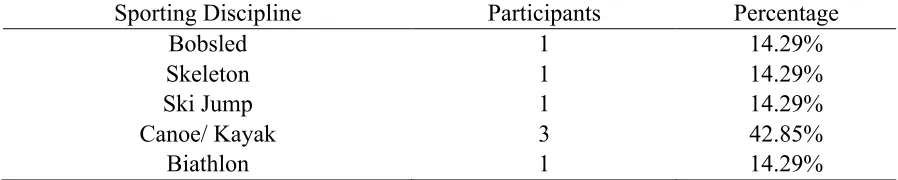
Table 2.4 Breakdown of sporting discipline for coaches sampled………..……62
Table 3.4 Years of coaching experience at National Team level……….64
Table 4.4 Highest competitive level of athletes under coach supervision………...64
Table 5.4 Breakdown of sporting discipline for athletes sampled………...64
Table 6.4 Years of athletic experience at National Team level………...65
Table 7.4 Highest level of competitive success for sampled athletic population………65
Table 8.4 Factor loading of subject responses to constructs of expert coaching……….69
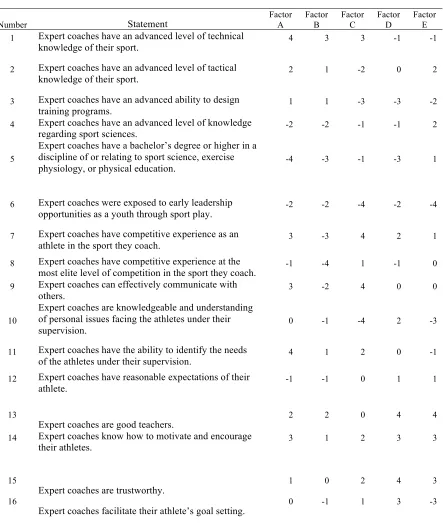
Table 9.4 Factor arrays……….72
Table 10.4 Factor characteristics………...74
Table 11.4 Distinguishing statements for factors………..75
Table 12.4 Highest rated statements for each factor………..77
Table 13.4 Lowest rated statements for each factor………...77
Table 14.4 Demographic characteristics for Factor A………...79
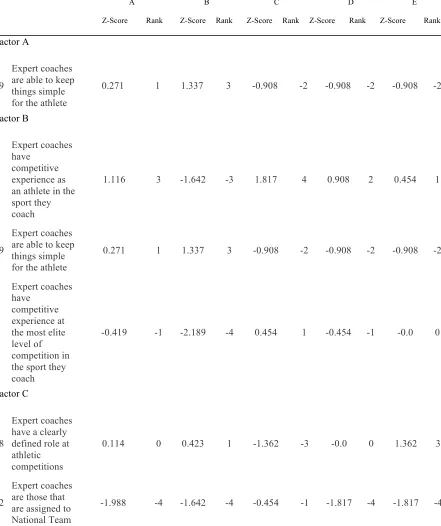
Table 15.4 Statement rank and z-scores for Factor A………82
Table 16.4 Demographic characteristics for Factor B………...87
Table 17.4 Statement rank and z-scores for Factor B………88
Table 18.4 Demographic characteristics for Factor C………...95
Table 19.4 Statement rank and z-scores for Factor C………95
Table 20.4 Demographic characteristics for Factor D……….101
Table 21.4 Statement rank and z-scores for Factor D………..…102
LIST OF FIGURES
Figure 1.1 United States summer Olympics medal performance from 1948-2008..…...…7
Figure 2.1 United States winter Olympics medal performance from 1948-2010………...7
Figure 3.1 Jacob Mincer’s model of human capital theory……...………12
Figure 4.1 Theoretical framework of coaching expertise………..15
Figure 5.1 Example of conceptual framework………..17
Figure 1.2 Model of situational leadership styles II……….……….25
Figure 2.2 Stages of skill acquisition and levels of expertise………...32
Chapter One
Introduction
By definition, participation at the elite level of sport is a rare opportunity that is most often granted to those athletes who display competitive excellence in their sport of expertise. As Allen (2007) reminds us, sport expertise is much more than physical prowess and good genetics. To be considered elite, athletes must perform at a high level on a consistent and long-term basis (Ericsson, Prietula, & Cokely, 2007). To be a fixture at the top of sport, it is commonplace for athletes to acquire the assistance of a coach. In fact, Gould, Greenleaf, Chung, and Guinan (2002) found that a majority of the athletes competing in the Olympic games held in Atlanta and Nagano correlated their success with the positive influences of their coach.
Ericsson et al. furthers this claim by adding current research has revealed many fields of work exist where there is no scientific evidence that supposed expertise leads to superior performance.
Considering the paucity of literature existing on elite sport coaching, the purpose of this research endeavor was to develop a standardized definition for an expert coach. Through the identification of common practices and beliefs regarding expert coaches, the aim of this study was to further the abilities of our National sporting system to sustain competitive success at the International level of competition. An additional priority of this research project was to expand the body of literature that exists on elite sport leadership by unearthing the key constructs of expert coaching status. A clearly articulated definition of expert
coaching can lead to further studies regarding the refinement of coaching education curriculum as well as improving the coach-athlete relationship. As a result, these findings are intended for those individuals who have a keen interest in developing programs, initiatives, and agendas tailored to the enhancement of sport through the refinement of coaching education practices. These stakeholders include collegiate faculty in programs of or relating to sport science, administrators overseeing coaching education programs within Olympic sport National Governing Bodies, and coaches themselves.
of interest to look at these two frameworks as complimentary with regard to the development of expertise in coaching.
To begin, human capital theory is a method of describing the decision to take part in activities that will influence future real income through the imbedding of resources in people (Becker, 1962). While there are many forms of investment that an individual can take
advantage of, these products or opportunities are rarely acquired as final goods. For instance, educational degrees, professional certifications, serving as an apprentice to a mentor, and competing in athletic events require the individual to participate in the creation of their human capital. Therefore, the level of ownership a person takes in the process of
self-education and development can determine the amount of human capital that is acquired (Ben-Porath, 1967). When actively taking part in both formal and informal learning opportunities, an individual is making a decision to focus on increasing future market value while at the same time delaying any improvement to their economic status. This decision, whether conscious or unconscious, signifies that the person acknowledges that their current skill level or knowledge base is not yet at a caliber that will demand maximal compensation in the professional marketplace. In other words, the individual understands that they have yet to claim expertise and would prefer to delay immediate earnings until they have graduated from novice status.
Expert-novice theory is a method of understanding the differences between
proficiency through a variety of distinguishing characteristics. “The most obvious difference between an expert and novice is that the expert knows a great many things the novice does not know and can rapidly evoke the particular items relevant to the problem at hand” (Larkin, McDermott, Simon, & Simon, 1980). In order to give a more detailed representation of the dichotomy that exists between an expert and novice, a snapshot of the current literature shows that experts have greater task-specific knowledge, interpret greater meaning from limited information, access stored information easier and more effectively than novices, can better detect and recognize structured patterns of play, and use situational probability data better (Singer & Janelle, 1999). While expert status may be somewhat influenced by
Statement of Problem
The direction provided by a coach continues to play a vital role in the refinement of an athlete’s performance capabilities (De Swardt, 2008). As such, the development of coaching knowledge is an essential aspect in the chain of events that ultimately lead to a well-equipped and prepared athlete. Although several opportunities exist for improving coaching knowledge, formalized coaching education programs have become a popular method of disseminating important information to the coaching profession. In Olympic-based sports, many coaching education programs are delivered by National Governing Bodies (NGB’s). These independent federations which fall under the jurisdiction of the United States Olympic Committee serve many purposes, but of primary importance is the development of athletes capable of attaining podium worthy performances at International competitions. Initiatives, including coaching education, have been developed within the framework of most of the NGB’s in order to equip coaches with the most up-to-date training theories for the athletes under their direction in hopes of bolstering competitive performance.
have declined. “Whether this is due to the increasingly well-coordinated sport development systems emerging elsewhere in the world, or is due to stagnation of the American system is unclear” (Sparvero, Chalip, & Green, 2008). It is plausible to infer that creating a stronger body of coaching professionals can assist in maintaining this Nation’s position at the top of the overall and gold medal count.
Unfortunately, due to federal legislature and the current environment in higher education within the United States, coaching education programs have been forced to bear most of the responsibility with regard to professional development and fostering expertise of sport coaches. As Sparvero, Chalip, and Green remind us, there are a few, but powerful, federal policies that impact elite sport development in the United States. Along with anti-trust exemption laws, Title IX of the Education Amendments of 1972, the Amateur Sports Act of 1978 has all but separated the development of elite sport from the auspices of the federal government. Specifically, the charge given to the United States Olympic Committee to oversee the rights and responsibilities associated with elite sport development through the actions of the various national governing bodies “was explicitly an effort to prevent federal intrusion into American sport development” (Sparvero, Chalip, & Green, 2008).
Stone, Stone, and Sands (2005) provide insight into this issue by suggesting that while higher education is perhaps the single largest employer of potential sport scientists, the lack of grants available for true sports research forces potential sport science programs to become more health or fitness oriented. Regrettably, the two subject matters are not cohesive as sport
Figure 1.1. United States summer Olympic’s medal performance from 1948-2008.
training can be defined as a scientifically grounded, purposeful activity characterized by the pursuit of performance optimization (Muller, Zallinger, & Ludescher, 1999). Due to the lack of sport study at the academic level, “coaches are often not schooled in science and may even have developed a cynical bias against sport science because of the mistaken application of health-oriented studies to high-performance athletes (Stone, Stone, & Sands, 2005). Sparvero and colleagues expand on the downfall of integrated sport science and coaching development in the United States by saying:
Although projects by sport scientists at the USOTC’s and the individual commitments of some university faculty and students have helped maintain a small stream of
development-relevant sport science, there is no prospect for a significant or
coordinated stream of sport science work formulated to enhance the foundation upon which American coaching or sport development are built. Given this absence of a coordinated sport development strategy and the lack of any significant sport science funding body, the long-term outlook for American sport science is bleak. (Sparvero et al., p. 260, 2008)
coaching education programs so that the United States can maintain their position of excellence in world sport.
Purpose of Study
Traditionally, the development of coaching constructs has been limited in study to the scholastic and collegiate levels of participation as they provide larger populations for study and are more accessible. On the other hand, the study of elitism in sport has focused heavily on the performer so that a deeper understanding of improved competitive ability is attained. The emphasis on lower level coaching and elite athletes has resulted in a gap in the literature pertaining to the process of becoming an expert sport coach. Trudel and Gilbert (2004) provide evidence to this dichotomy by stating, an over-representation of studies have been conducted with coaches of school-based sports compared to coaching working in
coaching education tactics, no study to date had set out to determine the constructs that define an expert coach. Therefore, if a goal of coaching educators is to increase the pool of candidates that can be considered elite level coaches, a working definition of expert coaching should be determined in order to tailor curriculum and modes of delivery. Specifically, Larkin, Duffy, and O’Leary (2007) discovered that younger, developing coaches taking part in their study listed the ability to observe elite coaches at work was one of the most valuable tools for increasing their knowledge base. If this is the case, coaching education programs must have a template for defining an elite coach so that lower-ranking coaches have the opportunity to work with an expert in the field. Gilbert, Cote, and Mallett (2006) find it surprising that the lack of conceptual framework to explain coach development is surprising, as this is a requisite for optimal coaching education program construction and delivery. Acknowledging the lack of framework and formal definition of expert coaching, research should be carried out in order to develop a definition that embraces the theoretical
underpinnings of expert development through the acquisition of human capital over a career span. In addition, Cote, Young, North, and Duff (2007) recommend a definition of coaching excellence should be multi-faceted so that it is reflective of the highly variable roles that a sport coach assumes, as well as emphasizing the constant personal interactions between coaches and their athletes in the training and competitive environment.
Theoretical Framework
betterment of coaching development in the United States so that we as a nation continue to be a mainstay at the top of international competition for years to come. In order for this to occur, this study was framed in the theoretical foundations of human capital theory and expert-novice theory.
Human capital theory can be described as a framework of understanding the inequalities between the personal incomes of individuals on the open market. This
discrepancy in earning power is thought to be the result of individual choices related to the decision to further education or enter the workforce. Mincer (1958) describes the influence of training on income distribution when he describes human capital theory in the following scenario.
Assume that all individuals have identical abilities and equal opportunities to enter any occupation. Occupations differ, however, in the amount of training they require. Training takes time, and each additional year of it postpones the individual’s earnings for another year. If individuals with different amounts of training are to be
knowledge include studying in a university degree system, a coaching certification program, interactions with peer coaches, self-directed learning, and previous experience as an athlete. This assumption is demonstrated in Figure 3.1, which shows a positive relationship between capital and reimbursement. Mincer summarizes this point by stating that differences in training result in differences in levels of earnings among occupations as well as in differences in slopes of life-paths of earnings among occupations.
Figure 3.1. Jacob Mincer’s Model of Human Capital Theory
observed that increases in national output have been large compared with the increases of land, man-hours, and physical reproducible capital. Investment in human capital is probably the major explanation for this difference”.
Although on a much smaller scale, the influence of additional human capital is perhaps the difference in success at the International level of sport. If it is assumed that all countries have a dense population of elite athletes to choose from and a similar ability to develop these athletes through advances in technology and knowledge sharing, then a limiting factor may be the ability of coaches to deliver sound training programs and instruction. Therefore, through the adoption of human capital theory, the purpose of this research study was to determine the subtle differences between expert and non-expert coaches so that we ensure proper development of these sport leaders.
expert’s increased knowledge base may free up skilled performers’ attentional resources so that they are able to act flexibly when unexpected or difficult circumstances arise.
In the sporting context, expertise between a coach and an athlete are somewhat different, as the athlete must have the physical capabilities to carry out the decisions made by the supervising coach. Likewise, the coach must be familiar with game play at some level in order to make instant and difficult decisions in a dynamic environment. In other words, the potential for competitive success of an athlete is based partly on genetics and partly on situational decision-making. For coaches, genetics may play a role in determining
intelligence but the exposure to a variety of learning opportunities may be the limiting factor. Baker and colleagues (2003) support this claim by stating that genes determine the size of the bucket while the environment determines the contents.
These contents are of particular interest in the study of expert coaches’ knowledge and status. Through a greater understanding of how expert coaches develop and mature in the world of sport is important in fine-tuning the advancement of the profession. This particular research study set forth to discover the constructs of expert coaching so that educating entities can establish improved methods of filling up the coach’s bucket. As demonstrated in figure 4.1, the researcher hypothesized that as an individual takes part in enriching educational activities, he or she will accrue more human capital that can not only increase their earning potential, but improve the Nation’s competitive chances in
Figure 4.1. Theoretical framework of coaching expertise.
Conceptual Framework
In order to positively influence the development of sport coaches within the United States, this research study aimed to unearth the constructs that define expert coaching. As highlighted in the previous section, the theoretical framework for this study was founded in the principles of human capital theory and expert-novice theory. Although these frameworks are rarely aligned, it is reasonable to infer that an individual who acquires profession-specific human capital will progress from a novice practitioner to an expert in their field of practice. Furthermore, progressive development to expert status may specifically be related to the type of educational strategies and learning opportunities provided to the novice seeking to accrue human capital. Therefore, the research agenda for this study was to assist coaching educators
Expert Coach
Demonstra*on of Knowledge, Skills, Strategies, Experiences HUMAN CAPITAL THEORY
Time spent acquiring knowledge through study and experience in fields
in refining coaching education practices by focusing on the constructs of expert coaching knowledge.
Reflecting on the theoretical framework, a review of the possible forms of capital was needed in order to assist the researcher in tracing the path from novice to expert coach. To date, no research study has attempted to define the various forms of human capital that expert coaches acquire through professional maturity, therefore a thorough review of the literature was completed to begin a scholarly conversation on the bank of various coaching practices and strategies that have been deemed important in previous investigations. These practices, strategies, and themes have been consolidated into five categories, which were used to develop the Q-cards for participant sorting purposes. The overarching categories include a coach’s: knowledge base, athletic experience, relationships, characteristics, and educational practices.
previous coaching record, and relationship to the National Governing Body. Lastly, the coaching educational practices category reflects the various forms of educational strategies that are used by practicing coaches. Not only are these items means of establishing further human capital, but they can also include additional forms of education that provide
certification or credentials outside of the academic setting.
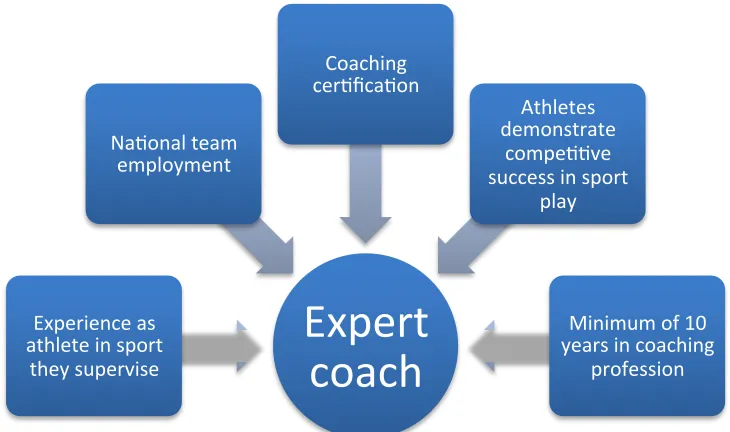
Upon completion of this study, the researcher hoped to determine the constructs of elite coaching by demonstrating the relationship between various forms of human capital that can be acquired by an individual developing from novice to expert status. An example of the possible linkage between forms of capital and expert status can be seen in figure 5.1 below.
Figure 5.1. Example of Conceptual Framework
Expert
coach
Experience as athlete in sport
they supervise
Na*onal team employment
Coaching cer*fica*on
Athletes demonstrate
compe**ve success in sport
play
Minimum of 10 years in coaching
Research Questions
This study employed Q methodological techniques to determine the differences between elite sport coaches and sub-elite sport coaches as perceived by current National Team coaches as designated by the National Governing Body for their respective sport, and current National team athletes who are training for International competition, namely the Olympic games. The following research questions guided the study:
Research Question 1
What qualities constitute an expert coach? Research Question 2
Do coaches and athletes share the same definition of expert coaching? Research Question 3
What are the highest and lowest rated concourse items for each factor?
Research Methods
information. Data was collected and analyzed using Q-assessor, a free online software program developed by Stan Kaufman. Inter-correlations among Q-sorts and factor loading were calculated through the software analysis. The results of the analysis were interpreted in a manner that relates to the proposed research questions.
Significance of the Study
Elite sport, especially at the international level of competition, is a rare opportunity provided to a select segment of society who consistently displays high levels of athleticism and technical efficiency. Even more allusive is the chance to participate in the Olympic games, which are held every four years. Acknowledging the scarcity of opportunities an individual has to fulfilling an Olympic dream; much effort is put into the proper development of athletes competing at this level.
“excellent coaches” was listed as the third most important factor behind “dedication and persistence” and “support of family and friends”, respectively with a relative percentage of 49.4%. On the other hand, of the 2653 obstacle factors provided by the respondents, the “lack of coaching expertise and support” was the third most common reply when asked what obstacles had to be overcome in the process of becoming an Olympian, with a relative percentage of 29.4%.
Considering the findings from this study, it is understood that the implication of not having access to an expert coach is a lower rates of success at the Olympic games.
Therefore, if a goal of international sport participation is competitive excellence, then a deeper understanding of the constructs behind expert coaching is desired. The investigation on expert coaching constructs will occur through the employment of Q-methodology. This research tool provides a unique vantage point into the population of individuals working at the highest levels of the sporting profession, as Q-methodology is well suited for smaller than usual study samples.
Summary
definition of expert coaching could be used to refine and develop coaching education
Chapter Two
Review of Literature
The review of literature for this study emphasizes the role coaching has in the sport leadership profession while providing insight into the development and importance of expert knowledge. More specifically, the research reviewed for this study intertwines subject matter from various disciplines in hope to provide direction and support for the acquisition of expert status in elite sporting endeavors.
In order to provide a detailed understanding on the importance of defining coaching expertise various topics were explored through the literature review process. To begin, a thorough investigation of the body of work focusing on sport coaching was reviewed for similarities and support. Through the employment of academic search engines such as SPORT Discus, PubMed, Google Scholar, and EBSCOhost, scholarly articles were found through searching terms such as: elite coach, expert coach, sport coaching, athletic coaching, sport leadership, expert-novice theory, human capital theory, coaching education, sport coach education, Olympic coaching, Olympic development, Olympic sport, leadership theory, performance leadership, performance coaching, coach attributes, role of mentors, coach-athlete relationship, preferred coaching behaviors, coach effectiveness, and desired sport leadership. In addition to performing a search using terms related to sport coaching, further investigation into the literature was completed by searching for work performed by
Baker. Through this inclusion of known authors to the search criteria, an exhaustive review of the literature was completed for this project.
Chapter two begins with an introduction to coaching theory as it is defined through leadership theory. This description is followed by a review of literature pertaining to the current understanding of sport coaching. This section leads to a discussion on expert-novice theory, which highlights the development of expert knowledge through deliberate practice and study. Next, human capital theory is described in order to emphasize the value of expert status in the profession of sport coaching. A brief look into organized coaching education will complete the literature review in order to provide reasoning for the need to revise the current coaching education system. Lastly, the chapter will conclude with a summary of the literature review.
Coaching theory. Given the assumption that leadership is essential, and recognizing the persistent difficulties in narrowing the scope of what styles are most successful, a number of scholars have studied people thought to be leaders in order to identify their core
characteristics and behaviors. In the quest to provide the best leadership in athletics, many researchers in the field of sport management advocate the use of literature from other fields to inform sport management research (Kellett, 1999). For this reason, a review of theories relating to human resource development and adult education will be explored.
one-way event but rather an interactive event encompassing three important constructs: influence, people, and goals. Leadership is reciprocal and dynamic, involving the use of power.
Figure 1.2. Model of Situational Leadership Styles II (Hersey & Blanchard, 1982).
Sport coaching. In competitive sport, effective leadership is considered one of the most important variables for athletic success. The direction of a coach provides expert insight on team dynamics, team cohesion, motivation, game strategy, and training theory (Laios, Theodorakis, & Gargalianos, 2003). Although many factors impact an athlete’s development, the coach-athlete relationship is one of the greatest influences on motivation and subsequent performance. Several researchers affirm the importance of a coach by claiming that no other quality is more important in the world of sports than leadership, which the lack thereof might create problems regarding discipline, communication, and
In order to properly prepare an athlete, a coach must not only create a sophisticated training program founded in scientific principle, but also deliver the training program in a manner that is preferred by the athlete. Within the context of sport coaching, Chelladurai’s (1980) multidimensional model of leadership behavior provides a theoretical concept of the relationship between the coach’s method of leadership and athlete responsiveness. A concept that is similar to Natale and Diamante’s (2005) model of the executive coaching process, this model suggests that actual coaching behavior is influenced by not only the characteristics of the coach (e.g., personality, experience, and attitude), but also by the coaching behavior (required and preferred) that is directly influenced by situational characteristics (e.g. home or away competition location), and member characteristics such as gender and the skill level of the athletes (Hoigaard, Jones, & Peters, 2008). Thus, in order to maximize performance and satisfaction of the athlete, the coach must maintain congruence between actual coaching behaviors, preferred group behaviors and situational requirements (Maby & Grady, 1996).
adopt preferred leadership qualities in order to improve the probability of coach-athlete cohesion and ultimately, goal attainment.
Levels of coaching. Sport coaches are categorized by the level of athletes under their scope of supervision (Lyle, 2002; Trudel & Gilbert, 2004). Specifically, a sport coach is either employed at the participatory or high performance level of competition. Although both forms of coaching are important in the world of sport, the focus and
responsibility of each type of coach is significantly different. Additionally, while all forms of coaching should be equally valued, the roles and foci of performance coaches differ from that of participation coaches (Mallett & Cote, 2006). Affirming this opinion, Cote et al. (2007) found that coaches who spend many years of development in a recreational sport participation context will be ill equipped to function successfully in a competitive context, and vice versa. Thus, knowledge and competent coaches excel mainly in particular contexts. Therefore, coach training and education should differ according to the context in which the coaches work (Trudel & Gilbert, 2004).
Participation coaches are employed at the recreational and scholastic level of
competition. Regardless of the sport being supervised, the main responsibility of a coach in this role is to promote the positive aspects of sport involvement to youth and adolescents. Participation coaching is therefore distinctive because competition is not emphasized (Lyle, 2002). For example, a coach in the participatory realm should emphasize good
attitude and competitive spirit, the emphasis is placed on developing well-rounded athletes that will continue to take part in sporting activities at the next level.
In contrast, high performance coaching is success driven. Coaches at the high performance level are employed at the collegiate, national, and international level of competition with the primary objective to win. Performance coaching entails a more intensive commitment to a preparation program for competition and a planned attempt to influence performance variables (Lyle, 2002). The high performance coach is expected to refine, prepare, and perfect an athlete or team’s readiness in order to successfully overcome the rigors of elite competition. Unlike the participation coach, the high performance coach is held responsible for his or her team’s results in game play. A fundamental difference in the measurement of coach effectiveness, the requirement to win, may influence the decision making process that occur in athlete development (Mallett & Cote, 2006).
scholars have managed to either be too wide in their definition of an expert coach or too narrow in the variables chosen in the sample selection process. In an attempt to understand the development of expert coaching knowledge, Erickson and colleagues loosely defined a high-performance coach as someone coaching highly skilled athletes in an environment that focused primarily on performance, as opposed to fun or athlete development. In order to assist the USOC in determining the most important factors in the development of Olympic athletes, Gibbons and colleagues (2003) vaguely defined an excellent coach as someone who provides sport expertise, skills, and motivation to Olympians. When looking at the behaviors of successful coaches, Horton and colleagues (2005) chose to only consider coaches
employed as National Team coaches, which did not take into consideration other important factors such as talent developed, educational status, or personality traits. Taking it a step further, in a study of expert rowing coaches, Cote and Sedgwick (2003) deemed participants worthy of inclusion if they had a minimum of 10 years coaching experience in the sport, supervised the training of athletes competing at the international stage of competition, and were recognized as experts by their peers. Unfortunately, a lack of continuity is present between studies performed on expert coaching to date. Abraham, Collins, and Martindale (2006) affirm this disarray when they acknowledge that a gold standard for determining expert status is not only a “thorny issue” but has yet to be tackled.
coaches of National teams who were supervising the training of elite athletes competing for success in International competitions, namely the Olympic games, were chosen for this study. In addition, the study incorporated the thoughts of current National team athletes who have had competitive experience at the Olympic games. Although these individuals are not coaches themselves, they had rare insight into the abilities and characteristics of expert coaches.
The theoretical underpinnings of the coaching process reinforce the need to carry out future research that focuses on sport coaching. Even though a sufficient body of literature exists for generalized coaching theory, there is a limited amount of information with regard to the profession of elite sport coaching. Within the framework of high performance coaching, the elite connotation is conferred only to those coaches who serve at the National and International levels of competition. Due to the rarity of such employment, researchers have found it difficult to assess the differences that exist between coaching at the highest level of game play to lesser coaching categories. With this in mind, my objective was to lead a research study with the intent to define the elite coaching process through the study of current National Team coaches and athletes. Recognizing that winning is the lone barometer of success at the elite level of sport, determining how a coach can nurture athletic
Expert-Novice Theory
Developing expertise is important for every dimension of commerce and industry as a more skilled laborer is the means by which a market or community progresses. In a given field, expertise comes to be recognized by the reasonably skilled peers with whom they work, generally over extended periods of time involving significant, complex, individual, feats or over many instances involving performance on different problems (Conford & Athanasou, 1995). Further, Ericsson et al., (2007) define an expert as someone who performs are superior in comparison to that of their peers, produces concrete results, and who replicates their performances. From an occupational perspective, experts demonstrate a set of similar patterns and abilities that are identifiable across many sectors of employment. Various researchers have concluded that experts:
- have their own specialized area of knowledge; - recognize patterns faster than novices;
- take deeper meanings from cues than novices;
- are more flexible and more able to adapt to situations;
- develop routines to allow processing capacity to be focused on ongoing environments;
- are quicker in their ability to solve problems successfully;
- have specific occupational memories with ability to recall complex details from past instances, especially the atypical or error situations;
- understand the complexities of a situation; and
- are able to apply specific judgment rules to each case.
(Berliner, 2004; Conford & Athanasou, 1995; Guest et al., 2001)
In contrast, a novice is defined as a beginner who seeks all-purpose rules to guide his or her behavior. These rules are logical, fairly consistent and the beginner typically is locked into these and unable to deal with situations, which require more than the application of rules (Conford & Athanasou, 1995). The differences between expert and novice performers are displayed below.
Figure 2.2. Stages of Skill Acquisition and Levels of Expertise, (Cornford & Athanasou,
In order to develop the necessary skills and knowledge deemed appropriate for expert status, an individual of novice designation must take part in meaningful and structured practice in one’s field of specialization. This purposeful study of subject matter has been termed deliberate practice by Ericsson, Krampe, and Tesch-Romer (1993). Specifically, “deliberate practice refers to the training activities designed to enhance an individual’s performance, with explicitly defined parameters including (1) a well-defined task with appropriate difficulty level, (2) high effort, and (3) opportunities for repetition and error correction. Furthermore, deliberate practice is designed to optimize the performer’s training regimens, and is not inherently enjoyable due to its rigorous nature” (Johnson, Tenenbaum, & Edmonds, 2006). In many fields, knowledge of effective training procedures accumulates over many years. Experts in these domains attain their highest level of performance at least a decade or more after introduction to the topic. This finding is considered the “10-year rule”, which was developed following the study of master chess players by researchers such as de Groot in 1946 and Simon & Chase in 1973. This rule contends that not even the most talented individual can attain international performance without approximately 10 years or 10,000 hours of preparation (Ericsson & Lehmann, 1996).
those involved in the development of coaching education curriculums to understand what segments should be highlighted during developmental sessions and stages.
Considering research done outside of the sporting arena, Hmelo-Silver and Pfeffer’s (2004) work provides insight on how experts and novices represent their knowledge of complex structures when faced with adverse and dynamic systems. When dealing with complexity, a person must construct a network of concepts and principles about some domain that represents key phenomena and the interrelationships between different levels of the system, whether it is macro or micro or structure to function. The authors believe that Structure-Behavior-Function theory may provide a deep principle that is useful for thinking about complex systems in a way that takes into consideration the interrelated levels and dynamic nature. Within this framework, structures refer to elements of the system, behaviors refer to how the structures of a system achieve their purpose, and functions refer to why an element exists within a given system. With this theoretical framework, the researchers compared the knowledge base of experts and novices as it relates to aquatic systems. As expected, their analysis showed that experts identified more concepts across the SBF framework than the novice groups. Although there was no difference among the groups for the numbers of structures mentioned, there were key differences for behaviors and functions. Results indicated that experts knew more about both functions and behaviors than the
dealing with a complex system, experts use a more elaborate network of concepts and principles that allow them to understand behavioral mechanisms which are often invisible processes and difficult to represent.
This finding suggests that in order to build an elaborate network of concepts that will assist in understanding complex systems, an individual who desires to attain expertise in a specific domain of sport should take part in formal educational and field-based learning opportunities that will allow for problem-solving and experiential knowledge development to occur. These educational opportunities, both formal and informal, provide the individual with a chance to gather a set of skills that will improve their likelihood of greater success and earnings in the future. This known and accepted delay of compensation can be described with human capital theory.
Stages of development in the coaching career. In the sporting environment most individuals who enter into the workforce as a coach have been athletes at some level of competition. Through early game play, positive experiences may lead an individual to ponder the possibilities of one day serving as a coach. Various researchers have attempted to determine if a pattern exists in the development of experts in a variety of professions, but few have considered the profession of coaching. One research team that has looked into coaching is that of Schinke, Bloom, and Salmela (1995), who set out to identify the chronological career advancement of expert basketball coaches. From their qualitative assessment of six expert coaches aligned with the National team of Basketball Canada, the researchers
phases of development reflect an individual’s process of acquiring human capital ranging from the initial experiences in sport as a competitor to later serving as a coach in various capacities. Each stage of chronological development can be illustrated by a gradual increase in competition, an affinity to the sport, an improved sense of task knowledge, as well as by the type of human capital acquired. The stages are described as follows:
1. Early Sport Participation: This category represents the first experiences in sport at the community level of competition. Here, the focus is on skill development and participation. At this point in the maturation process, coaches can expect to gain capital in the form of learning how to take part in organized practice and comprehension of the rules of game play. Additionally, the individual learns the importance of hardship, teamwork, sacrifice, and how to deal with winning and losing.
2. Elite Sport Participation: Individuals in this category are competing at the university or regional level in national level competitions. This represents a turning point in a person’s career, as the sport becomes an obsession as opposed to a recreational activity. An individual in this stage can expect to gain a deeper understanding of game strategy, and the importance of commitment. The athlete may also be looking to their coach for examples of how to lead in various
3. International Elite Sport Participation: This represents the final stage of athletic participation and is reserved only for those who are talented enough to perform at the highest level of competition. Although this stage exists, it is not known whether or not this stage is required to coach at this level. With regard to human capital, future coaches can improve their knowledge of game strategy, skill development, and non-training factors such as dealing with travel, media, and greater expectations of winning.
4. Novice Coaching: At this stage, individuals enter into the workforce as entry-level coaches working with primary or secondary school students. This phase will last long enough for the coach to acquire sufficient knowledge to specialize in one sport. In addition, they will gain an understanding of group supervision and administrative duties.
5. Developmental Coaching: This phase is represented by the transition into a coaching position that is at the high school or small college level of competition. In this setting, a coach will begin to develop more complex training and
competition strategies. With an understanding that their knowledge is not
6. National Elite Coaching: Coaching at this level differs from previous stages as the individual is now working with a more successful university team. Initial
appointments at this stage are often a shared responsibility, which serves to gradually introduce the coach to more responsibility and advanced knowledge of game play. During this time, the coach gains additional human capital in the form of improved and complete knowledge as it pertains to team development and game strategy.
7. International Elite Coaching: This stage signifies expert status, as it represents the moment in one’s career when they have proven themselves worthy of serving on a national team staff. Specifically, a national team is one that is created to compete on the world stage, namely the Olympic games. At this point, a coach utilizes his or her human capital in order to successfully deal with ambiguous situations in a highly outcome-centered environment. Human capital continues to be enhanced by the exposure to international competition, and the title of national team coach improves what the coach can demand on the open market.
These chronological stages of development are similar to findings from previous research done on performers outside of the sporting arena. Through the study of expert teachers, Berliner (1988) discovered a common theme in the development of teaching
“novice teachers” base their teaching on theoretical principles that were learned from their studies in the university setting. Over a period of two to three years, these individuals become “advanced beginners” that now have the ability to develop teaching strategies based on theory as well as personal experience. In the third stage, the teachers become
“competent” relying more on experience and streamlining their teaching strategies. Even though they have yet to automate their teaching schedule, the teachers have learned through experience what to attend to and what to ignore. With regard to the final two stages, the teachers progress from a cognitive state to a more intuitive, automated state of classroom instruction. A teacher is considered an “expert instructor” when they demonstrate a fluid performance and do not consciously decide what to attend to (Berliner, 1988).
Sufficient evidence exists that demonstrates a logical and progressive path of development for individuals who desire to become expert performers in their given career. The chronological development for coaches is different in that the first steps are highlighted by participation in the sport as an athlete. This participatory role may allow the individual to gain a unique perspective on the coaching process that can help guide them through their own growth in the profession.
Human Capital Theory
traits that are deemed influential on future endeavors (Heidbreder, 2007). The many ways to invest include schooling, on-the-job training, medical care, sport training, and acquiring information about the specific system they are employed in. The types of investment may differ in the relative effects on earnings, but all improve the physical and mental abilities of the persons involved (Becker, 1962). In an athletic context, human capital theory can help to understand, and empirically assess, how the sports labor market rewards performance
attributes of athletes and coaches (Antonietti, 2006).
When considering the acquisition of knowledge to move from novice to expert, the plausibility to propose that the honing of skills over many years in order to gain mastery can be considered an attempt to improve one’s human capital. Once an individual determines that a career in coaching is desired, he or she may become actively involved in the
consumption of knowledge and experiences that can provide them with a deeper understanding of the sport they wish to supervise.
sum than their counterparts over a career. Therefore, the lack of time that is available for young professionals to accrue enough skills and knowledge could hypothetically explain why only a few coaches matriculate into the elite coaching ranks.
With respect to the idea of developing an expert through the careful selection of learning strategies that fosters human capital, a definition of the stages of maturation for individuals in the coaching profession is warranted. Although unrelated to the profession of sport coaching, Law’s figure below provides detail on the development and advantages of human capital.
Figure 3.2. Law’s Interpretation of Human Capital, (Law, 2010)
Coaching Education
The development of coaching knowledge can be attributed to the exposure of a coach to a variety of factors. Previous researchers remind us that the sources of coaching
knowledge have
(Gilbert & Trudel, 1999; Lynch & Mallett, 2006). Interestingly, most of these activities occur when a person has already identified himself or herself as a coach and has entered into
the workforce as such. Accepting this fact, many sport organizations have begun offering
coaching education programs as a means to continue the development of the individuals in
these capacities. As a result of the increased international popularity of competitive sport, “comprehensive coach education programs have been developed in many countries around the world. These formal programs have many similarities in content and are typically
structured around courses for general coaching theory, sport specific techniques and tactics, and supervised coaching practice” (Cote, 2006).
Within the United States of America (USA), a majority of coaching education
programs are supervised by the National Governing Body (NGB) for each sport that is under the scope of the United States Olympic Committee (USOC). The intention of the USOC is to field a team that is consistently successful at the international level of competition. “This intention, set forth by the USOC, then flows through the organizational structure to each NGB and to the athletes themselves. It is at the NGB level where the foundation of sustained competitive excellence lies and where the creation of an athlete development system truly takes shape” (Stotlar & Wonders, 2006). A strong segment of athletic development is the inclusion of qualified coaches to oversee the training and competitive scenarios of USA athletes. Therefore, most NGB’s have implemented coaching education programs in order to promote forward thinking in the profession of sport coaching. Although most of the
although USA Weightlifting and USA Swimming may share the same educational material regarding physiology and nutrition, they will focus on delivering this content to coaches in a way that is specific to the sport in which they supervise.
Additionally, the coaching education programs offered by each National Governing Body are commonly scheduled during the off-season for each sport in order to promote maximum attendance. Once scheduled, these courses last for a weekend to as long as a week. Although attendance is voluntary, prerequisites often exist for many of the coaching education programs. These prerequisites can include full-time coaching status at the
scholastic or collegiate level, a pre-determined minimum number of years coaching, and the completion of an undergraduate degree. These requirements indicate that many coaches take part in these career enrichment programs in adulthood, and as part of a continuing education activity. Coaching education can therefore be considered an aspect of continuing adult education (Showers, 1985).
More often than not, all coaching education programs adhere to a similar structure with regard to curriculum delivery. Typically, content is provided to a group of coaches in the form of slides, lectures, and video. In order to maintain a reasonable learning sequence, discussion is limited to the end of the seminar. In addition, if time permits, program
coordinators and lecturers often lead demonstrations and practicum once the subject matter has been taught. This system of education reflects very closely pedagogical principles, which focus on the transmission of information and skills. For example, Holmes &
in advance what knowledge or skill needs to be transmitted, arranges this body of content into logical units, selects the most efficient means for transmitting this content, and then develops a plan for presenting these units in some sequence by using lectures, films, tapes, or lab exercises.
Regardless of design, the results of a continuing education program for the coaching discipline should optimally allow for the following:
- coaches to practice new strategies more frequently, and develop greater skill in the actual moves of a new teaching strategy,
- coaches to use these new strategies more appropriately in terms of their own instructional objectives,
- coaches to exhibit greater long-term retention of knowledge about and skill with new strategies,
- coaches to pass on the new strategies and knowledge to understudies (Gilbert & Trudel, 1999; Showers, 1985).
However, it is unknown whether or not a coaching education program does indeed improve a coach’s ability to improve domain-specific knowledge due to a lack of follow-up. In addition, the current design of coaching education programs offered by various National Governing Bodies does not subscribe to a singular and accepted definition of elite coaching, therefore, the ultimate goal of coaching education is difficult to measure.
supervision that exemplifies both a high-directive and high-supportive approach. For instance, sport coaches must not only plan appropriate practice and competition schedules based on their athletes’ level of capabilities, but also be in tune with the athletes’
psychological and emotional needs. In order to become an expert coach, it is suggested that an individual take part in discernable practice and study in order to collect the minimum 10,000 hours that is generally accepted to graduate from novice to expert status. An
Chapter Three
Methods
This chapter discusses the implementation of Q methodology for the purpose of answering the aforementioned research questions regarding expert coaching in the United States Olympic movement. The chapter begins with a review of the research questions and a brief review of the Q method as it relates to the research agenda. The discussion on Q methodology will be followed by a description of the research design and analysis.
This study was guided by the creation of three research questions regarding expert coaching within the United States’ Olympic movement. The aim of these questions were to construct a working definition of expert coaching so that coaching education programs within the United States can continue to produce high-level professionals capable of sustaining international competitive excellence within Olympic sport. This examination of expert coaching at the Olympic level of sport attempted to address the following research questions. First, the researcher wanted to determine the defining qualities of an expert coach. This question was of primary importance since no research to date had set out to uncover the unique qualities of this segment of the coaching profession. Secondly, the researcher wanted to determine if a difference in how coaching expertise is defined exists between National team coaches and National team athletes. Finally, the researcher wanted to understand what statements or commonly-held thoughts defined the various opinions regarding expert
that provided an avenue to measure a unique population’s subjective beliefs and experiences regarding expert coaching. As a result, Q methodology was chosen as a superior method.
Q methodology is a process that was created in 1935 by William Stephenson in order to provide a way to reveal the subjectivity involved in any situation. The development of this methodology was in direct opposition to the positivist assumptions underpinning traditional correlational research, as the life as lived from the standpoint of the person living is typically passed over by quantitative procedures (Brown, 1996; Shemmings, 2006). In other words, the primary goal of Q methodology is to uncover how and why people think the way they do (Brown, 1994). Shemmings (2006) reminds us that at its simplest level,
Q methodology is a research tool capable of augmenting existing qualitative analytical techniques aimed at identifying patterns and themes in interview
transcripts, field notes, or naturalistic observation. Although Q methodology deploys factor analysis, the mathematics of which is complex, it is a remarkably user-friendly method and requires no knowledge of mathematics to interpret the data obtained. (Shemmings, p. 2, 2006)
of a large number of people receiving a small number of test items, now a small number of people are receiving a large number of tests. For this reason, Q-methodology is a good choice for the current research endeavor as National team coaches and athletes, especially those with competitive experience at the Olympic games, are rare and very difficult to study in large quantities due to the intense nature of their work. This inversion of traditional quantitative research tactics allows the investigator to correlate persons instead of tests. Traditionally, qualitative studies are carried out by the use of exhaustive textual analytical techniques and procedures that assist in developing conceptual constructs from interview transcripts (Shemmings, 2006). On the other hand, by correlating people, Q factor analysis provides information about similarities, preferences, and viewpoints on a particular subject (Brown, 1993). Within qualitative research, Q methodology is a useful tool that provides the researcher with a variety of options. Steelman & Maguire (2004) state that Q methodology can often:
- identify important internal and external constituencies; - define participant viewpoints and perceptions;
- provide sharper insight into preferred management directions; - identify criteria that are important to clusters of individuals; - examine areas of friction, consensus, and conflict;
(as cited in Baker, 2004).
Q Methodology
In Q methodological research, intra-subjective studies gather data from an individual on multiple issues of interest. These points of view are then clustered together based on similarity of opinion. The overall purpose is to determine whether or not these opinions demonstrate a theme that will assist in the understanding of the subject matter (Brown, 1993). In order to generate these thematic results, a Q-methodology must be performed using
specific guidelines. These guidelines or steps include establishing the sample, administering the test, and analyzing the results. They are explained below.
Step 1: Define the concourse. When developing the concourse, the researcher attempts to create an exhaustive collection of all the possible statements that can be made about a given subject matter. This information can be gathered from a variety of resources, including participant observation, drawing from the cultural experiences of the researchers, literature reviews, interviews, popular media, and opinion. Next, the statements are compiled into categories based on overall themes. Although these statements of belief come from a variety of sources, the scale on which participant’s sort the items remain fixed. In the current study, the researcher elected to collect statements regarding expert sport coaching through an exhaustive review of the scholarly literature regarding sport and professional coaching.