Design and Implementation of Intelligent Surveillance System
Using Image Processing and Big Data
Prof. Sagar Rajebhosale
1, Shashank Dherange
2, Aniket Chandar
3, Rohit Khobarkhede
4 Assistant Professor1, UG Student2, 3, 4,Department of Information Technology1, 2, 3, 4, SITRC, Nashik , India
[email protected], [email protected], [email protected],
Abstract—In the recent trends of Educational Fields, Industries,etc. are facing a huge problem of identifying student or a
employee and mark there attendance and making it manually is more problematic. In this paper author proposes and compares the methodologies for an automated attendance system using video based face recognition which uses cascade classifier,PCA and Voila Jones algorithm. Face recognition activity is an application or a system which performs two task of identifying the the object and find the match for it in data bases.
It describes a method when student will enter in a class he or she will be marked by the facial algorithm. After that the system will register the attendance of student in ERP system. The student will be verified by there names,images which are stored in ERP and student ID. The system will maintain the log report,timetables and the daily schedule of the student or Employee and at last the system will generate overall final report of attendance of system and report will be send to faculty members and parents. As there will be large image database so we are using Big Data for storing and processing of data.
Keyword: Big Data,Cascade classifier,Database Analysis, Hadoop,Image processing, PCA, Violajones.
1. INTRODUCTION
In todays world face detection and face recognition has become a trending part in technology and for invention purpose. They have much importance in the field of artificial intelligence and machine learning. They have become keen part in developing a system and security. [1] Automated system are being implemented by use of face detection and face recognition so we are implementing our system by face detection face recognition by using image processing [3]. We are going to store large number of images we are going to apply Big data for storing and processing .So the system will provide accuracy , performance and efficiency at the best level. .The existing system uses camera for capturing the images of the students by using face recognition and detection algorithms ,after that system matches the images of the students and if confirmed the system registers the attendance in excel sheet.[4]
2. RELATEDWORK
A]Title: Classroom attendance system using surveillance camera
Author:Ketan N.mahajan,Nagraj V.Dharwadkar
Findings:
The author describes about the accuracy and performance of the process of face detection and extraction. They use the Viola Jones algorithm for increasing performance for making the poor quality images The use of OLR and UMIST database to check the accuracy of images which have been detected.[1] The PCA algorithm gives us the mathematical operation or output and calculate Eigen values and Eigen vectors[1]. There can be a partial or half images detected by camera so the eigen values can be used to detect the student information and register his attendance. So the PCA algorithm helps to increase the performance and detect the half face images too with low cost.[2]
B. Title:Automated attendance system using image processing
Author :Pooja G.R, Poornima M, Palakshi S, B. Bhanu
Prakash Varma, Krishna A N
Findings:
Nowadays face recognition has become the important aspect of computer vision in this paper there are two trends the first is the commercial and law enforcement application and second is the feasible technologies after year of research. [2] In this computer application for automatically identifying a person from a still images or video frames this system is based on face detection and recognition which automatically detects the student when he enters in the classroom marks the attendance by recognizing him. In the Viola Jones algorithm for face detection which detects the face of student by using cascade classifier and PCA algorithm for feature selection and SVM for classification . [3] In this paper it needs to account for all possible variations caused by change in illumination, facial feature,variation in pose image resolution,sensor noise , viewing distance occlusion presently available face detection mainly rely on two approaches. The first one is the local face recognition system which uses facial feature of face eg. noise,mouth,eyes. [3] Various algorithm are proposed for face detection such as face geometry based method, feature invariant method,machine learning based method Viola and Jones propose the framework which gives us high detection rate and is also fast .To acheive the multiple Haar Classifier for better detection rates up to an angle of 28 Degree. Eigen Face Technique is also used for face detection. [4]
C]Title:Face and Person Recognition from unconstrained video
Authors:Pooja Malusare,ShivangiShewale,Sanika Birla,
Findings:
The author describes main challenge in recognizing a person’s a facial feature. In this paper they use a multi camera network commonly frames having dynamic signature. 5Multiple View sign includes face body and motion,in this paper they overcome the drawback of single view point .Multi-camera commonly used for surveillance system. Multiple view point increases the position of person in different position. [5]
D]TItle:Real time face detection and recognition in complex background.
Author:Xin Zhang,Thomas Gonnol, Jafar Sannie Findings.
This paper is useful in real time face detection and recognition in complex background. This algorithm are implemented by using series of signal processing method such as adaboost ,cascade classifier,local binary pattern, Haar like feature. Haar Feature have multiple rectangular regions. [6] The adaboost algorithm are useful in face and eye detection with robust accuracy with cascade classifier.
In this paper LBP is used for face detection ,in this the faces are usually round and oval with the same color one simplest approach is to use color segmentation to detect the faces . The algorithm in this paper generates gray scale image in to detect and recognize faces in real time with high accuracy. [6] The implemented algorithm can be segmented into three stages :1)Faces and eye detection, 2) facial image normalization and enhancement,3)Facial recognition and face sample collection. For recognition the author has described about the Affine Transformation,it is used to rectify the orientation and also the scale of detected facial images to improve the accuracy of recognition. The Gaussian filter is used to remove noise in the preprocessed facial images for a high facial recognition accuracy. [7]
E]Title:Face Liveness detection with re captured feature extraction
Authors:Xiao Luan, Huaming, Weihua Ou, Linghui Liu Findings:
In this paper the author describes about the face liveness detection mechanism is their, this mechanism is based on analysis on how a alive test is faced. This usually done by checking eye movement such as blinking and face motion. [6] They show the difference between genuine face image and
- liveness feature based method - single image based method - multi module based method [9]
F] HIPI:A Hadoop Image Processing Interface for Image-based MapReduce Tasks.
Author: Chris Sweeney Liu Liu, Sean Arietta, Jason Lawrence Findings:
The author describes about the processing of large database which consists of images. They have described about the library for image processing and computer vision applications with MapReduce framework Hadoop Image Processing Interface(HIPI).The library hides the complex details of MapReduce framework and informs about the images which uses need. The images can also be stored as the author provides efficient access within the MapReduce pipeline,use of culling stage before the mapping stage give user a better option to filter and control the types of images used in the MapReduce tasks. [9]
They provide image encoders and decoders which work to present the float image types which are very useful for image processing and computer vision applications. The features in this interface provides new level of creating large scale vision applications by creating MapReduce operations which is focused totally for images. This paper gives us the ability to develop a hadoop framework which will be efficient and more accurate to process iamges and store them [11] .
G]Title:Smart attendance System using face recognition with percentage Analyzer shows new way from automated attendance which make use of Principal Component Analysis and along with artificial nueral network. As a human brain identify a person’s face after a few years also because of human brain are trained by rading or learning the faces of person and can identify that face after a several years this ability of training and identifying is converted into machine system using artificial neural network at a different lighting conditions,viewing conditions and facial expressions.
3. SYSTEMARCHITECTURE
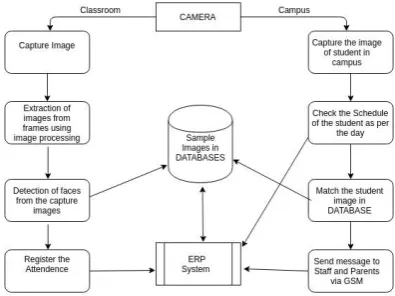
Fig 1. The architecture of Proposed System.
In existing system process start with training the system with face of student , first database of student information is stored in he database with multiple faces.. A camera is placed at top of entrance for capturing the images of student , camera capture a images of student then by using face detection and recognition module it is matched with face database ,if student data is matched with database then attendance will be marked and stored in excel sheet.
The proposed system has the following modules:
Attendance module. Student tracking module.
The first module is the attendance registration module which will be automated which is the biggest advantage of the first module. The module has the use of camera and image processing for implementation of the module. The system begins from a camera which will be placed at centre of the classroom. The camera will capture the faces from frames,extracting them from the frames after that using the face detection and recognition the faces will be compared in the database which will be already stored in the database. If the face gets matched then the attendance will be registered and if not present parents will be notified by SMS .This will reduce the manual work of staff and will work with higher accuracy.
The second module is the tracking module the advance part of the system. If the student is present in the campus wandering here and there in the campus without attending the lecture then student will be tracked through cameras which have been placed in the campus.The cameras will capture the frame then extract the faces by using face detection and face recognition algorithms. After this the schedule of the student will be checked in the database. If the schedule shows that there is a lecture at that time then the staff and his parents will be notified for the same.
For such huge storage of data we are using Big data which has the capability to store huge amount of data as we are using images so it is a unstructured data so that images will be stored and retrieved on large scale with high accuracy. So the system is automated which saves time of manual process of taking attendance and also saves time of staff.The system can be used on large scale and can be very beneficial in organizations and industries.
Details of Camera:
How can I find camera for my image processing system. The decision to implement an image processing system is generally based on concurrent needs .The basic requirement of our system will already point in the direction of one of two major cameras.
Network camera also known as Internet protocol cameras record videos they are frequently used in classical surveillance application and in combination with industrial camera .
Industrial camera by constraints send the image as compressed (raw) data directly to the PC ,the PC is then responsible for processing the activity large volume of data,one more impo rtant thing is area scan camera are typically used in a variety of industrial applications as found in many different industries.
Network camera are used for variety of surveillance from process control in shipping lines and packing system to build of traffic surveillance system.
4. ALGORITHMS AND DATABASE
Voila Jones Algorithm:
Is the first framework for object detection which gave viable results for real time situations. Paul Viola and Michael Jones had proposed the algorithm in year 2001. It was aimed at targeting the problem of face detection but can also be trained for
detecting different object classes. It is implemented in Open CV as cvHaarDetectObjects ().It is preferred for its robust nature and its fast detection of faces (full frontal upright faces)in practical situations. It comprises for four stages namely:
1. Haar Feature Selection. 2. Creating an integral image. 3. Adaboost Training. 4. Cascading Amplifiers
Haar Feature selection matches the commonalities found in human faces. The integral image calculates the rectangular features in fixed time which benefits it over other sophisticated features.. Integral image at (x,y) coordinates gives the pixelsum of the coordinates above and on to the left of the (x,y).Adboost training algorithm is used to train he classifiers and to construct a strong classifiers by cascading the previously used weak classifiers.
The characteristics of ViolaJones algorithm which make it a good detection algorithm are:
Real time For practical applications at least 2 frames per second must be processed.
Cascade Classifiers:
On average only 0.01(percent) of all sub-windows are positive (faces) Equal computation time is spent on all sub-windows Must spend most time only on potentially positive sub-windows. A simple feature classifier can achieve almost 100(percent) detection rate with 50(percent) FP rate. That classifier can act as a 1st layer of a series to filter out most negative windows 2nd layer with 10 features can tackle harder negative-windows which survived the 1st lay,earnd so on A cascade of gradually
more complex classifiers achieves even better detection rates. The evaluation of the strong classifiers generated by the learning process can be done quickly but it isn’t fast enough to run in real-time.
PCA:
PCA is a statistical approach used for reducing the number of variables in face recognition. In PCA, every image in the training set is represented as a linear combination of weighted eigenvectors called Eigenfaces. These eigenvectors are otained from the covariance matrix of a training image set. The weights are found out after selecting a set of most relevant Eigenfaces. Recognition is done by projecting a new image in the Eigenface subspace, after which the person is classified by comparing its position in Eigenface space with the position of known individuals. Order the eigenvectors descending by their Eigenvalue. The k principal components are the eigenvectors corresponding to the k largest Eigenvalues.
Big Data:
Big data is a blanket term for the non-traditional strategies and technologies needed to gather, organize, process, and gather insights from large datasets. While the problem of 1working with data that exceeds the computing power or storage of a single
computer is not new, the pervasiveness, scale, and value of this type of computing has greatly expanded in recent years. An exact definition of ”big data” is difficult to nail down because projects, vendors, practitioners, and business professionals use it quite differently. With that in mind, generally speaking, big data is:
• large datasets
• the category of computing strategies and technologies that are used to handle large datasets.
5. RESULTS
Table No:1
The expected results are as follows:
Sr.no Test case Expected Output
1 Registering
attendance
Registering Attendance on ERP ,
2 Tracking of student Notify staff and parents for bunking lectures
Screenshots:
Fig 2.Face Detection
Fig 3.Face recognition
VI.CONCLUSION
The system we are going to propose can be used for maintaining the attendance record. The main aim of this system is to overcome the drawback which are there in manual attendance system,the drawback like wastage of time and paper,the issue of proxy rising in the class will be completely eliminated ,looking at other techniques like manual attendance biometric attendance etc. Facial recognition technology has a great advantage in the field of education. As we can use it to update and manage the attendance automatically. Sorting of data and working on mathematical expression for calculation of attendance. The big data will play the role of storing and processing of data and store large amount of data and the result coming from the system will be notified to the authorized person.
REFERENCES
[1] Viola,Paul and Michael J Jones”Robust Real time Face Detection” International Journal of Computer Vision 57.2(2004) 137-154
[2] J.W. Li, Y.H. Wang, T.N. Tan and A.K. Jain, “Live face detection based on the analysis of Fourier spectra”, In Biometric Technology for Human Identification. 2004, pp. 296-303.
[3] M.Turk A.Petland ,Eigen Face for recognition ,Journal of cognitive Neuro Science PP.7186,2004
[4] S .Kadry,K Smail “A Design and implementation of Iris recogntion and Attendance Management System”.Information Technology and Control .Vol 36,No.3 PP.323329 2007
[5] Li-Zhen,et al.”Real Time Face detection and recognition for video surveillance application.” “ Computer Science and Information Engineering 2009” WRI World Congress Vol.IEEE-2009
[6] X.Y. Tan, Y. Li, J. Liu and L. Jiang, “Face liveness detection from a single image with sparse low rank bilinear discriminative model”, ECCV, 2010, pp. 504-517.
[7] Pavani,Shree-Kaushik,David Delgado and Alejandro F. Fangi”Haar Like feature with optimally weighted rectangles for rapid object detection ,” Pattern Recognition 43.1 (2010) 160-172.
[8] HIPI: A Hadoop Image Processing Interface for Image-based MapReduce Tasks Chris Sweeney Liu Liu, Sean Arietta, Jason Lawrence ,University of Virginia.,2010 [9] B. Peixoto, C. Michelassi and A. Rocha, "Face liveness
detection under bad illumination conditions," 2011 18th IEEE International Conference on Image Processing, Brussels, 2011, pp. 3557-3560.
[10] J. Maatta, A. Hadid and M. Pietikainen, “Face spoofing detection from single images using micro-texture analysis”, International Joint Conference on Biometrics (IJCB), 2011, pp. 1-7
[11] W. R. Schwartz, A. Rocha and H. Pedrini, "Face spoofing detection through partial least squares and low-level descriptors," 2011 International Joint Conference on Biometrics (IJCB), Washington, DC, 2011, pp. 1-8. [12] Ren,Chaun-Xien Dao Ding Dai and Hong yan “Coupled
Kernel embedding for low resolution”.Face image recognition,Image processing, IEEE transactions on 21.8(2012):3770-3783
[13] J. Maatta, A. Hadid and M. Pietikainen, “Face spoofing detection from single images using texture and local shape analysis”, IET Biometrics, vo1. 1, pp. 3-10, 2012. [14] B.K Mohamed and C Raghu “Finger Print Attendance
System for Classroom needs ” India Conference 2012 IEEE 2012 P.433438
[15] Roshan Tharanga ,S.M.S.C”Smart Attendance Using Real Time Face Detection ” 2013