ABSTRACT
WILSON, T. ANDER. Advances in Bayesian Methods for High-Dimensional Environmental Data. (Under the direction of Brian J. Reich.)
In many applications there is prior knowledge to support a monotone relationship between
the exposure and an outcome. In these situations, statistical models can be improved by
incorpo-rating prior knowledge of a monotonic relationship. In this dissertation, we present
methodolo-gies to monotone regression in hierarchical and spatial models with applications to
environmen-tal statistics. The first case looks at hierarchical dose-response estimation in high-dimensional
toxicology experiments. The second case looks at spatially-varying bivariate exposure-response
function with monotonicity constraints in the context of multi-city air pollution studies. In
ob-servational studies, such as the air pollution example, the results can be sensitive the the choice
of confounding variables included in the model. The third part of this dissertation presents
methodology to selecting confounders in observational studies.
High-throughput screening (HTS) of environmental chemicals is used to identify chemicals
with high potential for adverse human health and environmental effects from among the
thou-sands of untested chemicals. Predicting physiologically-relevant activity with HTS data requires
estimating the response of a large number of chemicals across a battery of screening assays based
on sparse dose-response data for each chemical-assay combination. Many standard dose-response
methods are inadequate because they treat each curve separately and under-perform when there
are as few as six to ten observations per curve. We propose a semiparametric Bayesian model
for monotone dose-response estimation that borrows strength across chemicals and assays. Our
method directly parametrizes the efficacy and potency of the chemicals as well as the
proba-bility of response. We use the ToxCast data from the U.S. Environmental Protection Agency
(EPA) as motivation. We demonstrate that our hierarchical method provides more accurate
estimates of the probability of response, efficacy, and potency than separate curve estimation in
the ToxCast data to well-characterized reference chemicals on estrogen receptor α (ERα) and
peroxisome proliferator-activated receptor γ (PPARγ) assays, then estimate the probability
that other chemicals are active at lower concentrations than the reference chemicals.
Climate change is expected to alter the distribution of ambient ozone levels and temperatures
which, in turn, may impact public health. Much research has focused on the effect of short-term
ozone exposures on mortality and morbidity while controlling for temperature as a confounder,
but less is known about the joint effects of ozone and temperature. The extent of the health
effects of changing ozone levels and temperatures will depend on whether these effects are
additive or synergistic. In this dissertation we propose a spatial, semi-parametric model to
estimate the joint ozone-temperature risk surfaces in 95 US urban areas. Our methodology
restricts the ozone-temperature risk surfaces to be monotone in ozone and allows for both
non-additive and non-linear effects of ozone and temperature. We use data from the National
Mortality and Morbidity Air Pollution Study (NMMAPS) and show that the proposed model
fits the data better than additive linear and non-linear models. We then examine the synergistic
ozone-temperature effect both nationally and locally and find evidence of a non-linear ozone
effect and an ozone-temperature interaction at higher temperatures and ozone concentrations.
When estimating the effect of an exposure or treatment on an outcome, such as the effect of
ozone on mortality, it is important to select the proper subset of confounding variables to include
in the model. Including too many covariates increases mean square error on the effect of interest
while not including confounding variables biases the exposure effect estimate. We propose a
decision-theoretic approach to confounder selection and effect estimation. We first estimate the
full standard Bayesian regression model and then post-process the posterior distribution with
a loss function that penalizes models omitting important confounders. Our method can be fit
easily with existing software and in many situations without the use of Markov chain Monte
Carlo methods, resulting in computation on the order of the least squares solution. We prove
that the proposed estimator has attractive asymptotic properties. In a simulation study we
© Copyright 2014 by T. Ander Wilson
Advances in Bayesian Methods for High-Dimensional Environmental Data
by
T. Ander Wilson
A dissertation submitted to the Graduate Faculty of North Carolina State University
in partial fulfillment of the requirements for the Degree of
Doctor of Philosophy
Statistics
Raleigh, North Carolina
2014
APPROVED BY:
Montserrat Fuentes David M. Reif
Ana-Maria Staicu Brian J. Reich
DEDICATION
BIOGRAPHY
The author was born in Newton, Massachusetts. He graduated from Newton North High School
and matriculated to the University of Vermont. After graduating with a Bachelors of Arts
Degree in mathematics and taking a ten month hiatus to kayak and ski, he became a senior
programmer analyst at Mathematica Policy Research in Cambridge, Massachusetts. After four
years of nutrition and health policy research at Mathematica Policy Research, he enrolled in
the North Carolina State University Department of Statistics where he received a Masters of
ACKNOWLEDGEMENTS
I would like to thank my parents and Abby for their unending support and encouragement, and
my advisor, Dr. Brian Reich, for his guidance and patience along the way. In addition, I would
like to thank my collaborators and EPA mentors: Drs. David Reif, Ana Rappold, and Lucas
Neas.
I would also like to thank my funding sources. NIH training grant GM081057: Biostatistics
Training in the Omics Era provided funding for my first three years. This includes the funding for
material presented in Chapter 2. In addition, the research in Chapter 3 was supported in part by
an appointment to the Research Participation Program for the U.S. Environmental Protection
Agency, Office of Research and Development, administered by the Oak Ridge Institute for
Science and Education through an interagency agreement between the U.S. Department of
TABLE OF CONTENTS
LIST OF TABLES . . . .viii
LIST OF FIGURES . . . ix
Chapter 1 Introduction . . . 1
1.1 Introduction . . . 1
1.1.1 Hierarchical Monotone Dose-Response Modeling for High-Throughput Toxicity Screening of Environmental Chemicals . . . 2
1.1.2 Modeling the Effect of Temperature on Ozone-Related Mortality . . . 3
1.1.3 Confounder Selection via Penalized Credible Regions . . . 4
Chapter 2 Hierarchical Dose-Response Modeling for High-Throughput Toxi-city Screening of Environmental Chemicals . . . 6
2.1 Introduction . . . 6
2.2 The ToxCast Data . . . 10
2.3 Model Description . . . 12
2.3.1 Hierarchical Structure and Prior Specification . . . 13
2.3.2 Assay Effects, Chemical Effects, and Prior Knowledge . . . 14
2.3.3 Posterior Computation . . . 15
2.4 Model Comparisons . . . 16
2.4.1 Simulation Study . . . 16
2.4.2 Cross Validation and Model Fit . . . 16
2.5 ToxCast Data Application . . . 17
2.5.1 Summary of Active Responses and Assay and Chemical Effects . . . 19
2.5.2 Comparison with Reference Chemicals . . . 21
2.6 Discussion . . . 23
2.7 Software . . . 24
Chapter 3 Modeling the Effect of Temperature on Ozone-Related Mortality . 25 3.1 Spatial monotone surface model . . . 29
3.1.1 Ozone-temperature surface model . . . 29
3.1.2 Hierarchical model for monotonicity and spatial smoothing . . . 30
3.1.3 Confounder model . . . 31
3.2 A two-stage approach for large datasets . . . 32
3.2.1 Stage 1: City-specific GLM regression . . . 33
3.2.2 Stage 2: Bayesian model for stage 1 output . . . 33
3.2.3 Priors and computational details . . . 34
3.3 Analysis of the ozone-temperature log RR surfaces . . . 35
3.3.1 Cross-validation . . . 35
3.3.2 Analysis of the national average log RR surface . . . 37
3.3.3 Analysis of the city-specific log RR surfaces . . . 40
3.4 Discussion . . . 45
Chapter 4 Confounder Selection via Penalized Credible Regions . . . 47
4.1 Introduction . . . 47
4.2 Methods . . . 49
4.2.1 Modeling approach . . . 49
4.2.2 Penalized regression reformulation . . . 51
4.2.3 Simplification under flat prior . . . 52
4.2.4 Extension to multiple exposures . . . 53
4.3 Theoretical Results . . . 53
4.4 Computation and tuning . . . 54
4.5 Simulation Study . . . 56
4.5.1 Simulation with linear model . . . 56
4.5.2 Simulation in the ultra high-dimensional setting. . . 59
4.5.3 Simulation with binary treatment and logistic confounder model . . . 59
4.6 Data Analysis . . . 61
4.7 Discussion . . . 63
4.8 Software . . . 66
Chapter 5 Future Directions . . . 69
5.1 Extensions for Hierarchical Dose-Response Modeling . . . 69
5.2 Extensions for Multi-Pollutant Modeling . . . 70
5.3 Extensions for Confounder and Variable Selection . . . 71
References. . . 72
Appendices . . . 83
Appendix A Supplemental Material for Hierarchical Dose-Response Modeling for High-Throughput Toxicity Screening of Environmental Chemicals . . . 84
A.1 Computation and Full Conditionals . . . 84
A.1.1 Conditional Posterior Distributions . . . 84
A.1.2 Priors for ZILL . . . 88
A.2 Simulation . . . 88
A.3 Additional Figure . . . 93
Appendix B Supplemental Material for Modeling the Effect of Temperature on Ozone Related Mortality . . . 94
B.1 Additional Figures . . . 94
B.2 Cross-Validation Results . . . 94
B.3 Full Conditional Distribution . . . 98
B.3.1 Full Conditionals . . . 99
B.4 MCMC algorithm . . . 101
B.5 Trace Plots . . . 102
C.1 Tuning . . . 104 C.2 Proof of Theorem 1 . . . 105
LIST OF TABLES
Table 3.1 Difference in cross-validation deviance from linear additive model (NMMAPS
model). . . 37
Table 3.2 Mean log RR on high and moderate temperature days over the observed and
common ozone rates by region (in percent change in mortality per 10 ppb increase in ozone). . . 43
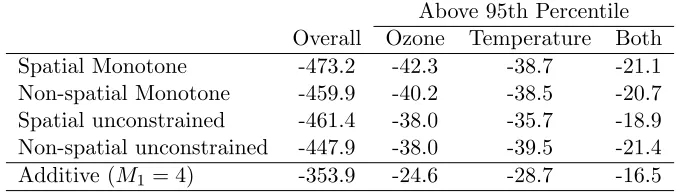
Table 3.3 Percent increase in mortality associated with an increase from the medians
of ozone and temperature to the 95th percentiles of ozone and temperature using different models. . . 45
Table 4.1 Simulation results for design 1. Bias, MSE, and coverage (Cover) are for the
effect of interest ˆβx. Coverage is 95% confidence or credible interval coverage.
CPU Time is reported in seconds on a MacBook Pro with OS X, 8 GB RAM, and 2 GHz Intel Core i7. SEs for the AUC range from 0.002 to 0.004, and for CPU time from less than 0.001 to 0.498. . . 67
Table 4.2 Simulation results for design 2. Bias, MSE, and coverage (Cover) are for the
effect of interest ˆβx. Coverage is 95% confidence or credible interval coverage.
CPU Time is reported in seconds on a MacBook Pro with OS X, 8 GB RAM, and 2 GHz Intel Core i7. SEs for the AUC range from less than 0.001 to 0.006,
and for CPU time from less than 0.001 to 0.003. . . 68
Table A.1 Simulation results for mean response and probability of active response. The displayed values are the mean (standard error) across simulated data sets. RMSE is the pointwise root mean square error taken over 50 evenly spaced points on log base 3, the spacing scale for concentrations in the real data. RMSE Top and RMSE AC50 are only calculated for dose-response curves that are active. AUC is the area under the ROC curve. . . 92
LIST OF FIGURES
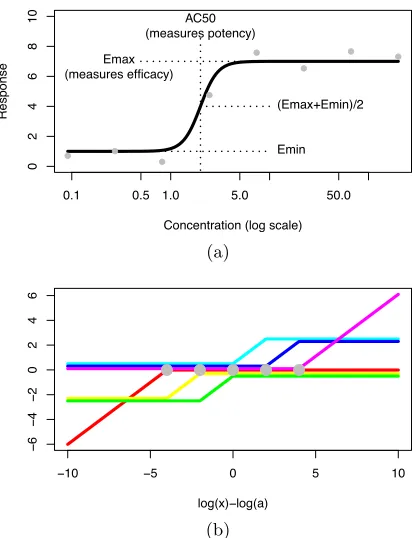
Figure 2.1 Panel (a) shows an annotated example of the four-parameter log-logistic
(FPLL) function. The FPLL model is f(x;t, b, a, w) = t−(t −b)×Logit
[−w{log(x)−log(a)}], where x is the tested concentration and (t, b, w, a)
parameterizes the Emax, Emin, AC50, andw(rate of increase), respectively.
Panel (b) shows six sample basis functions with internal knots (−4,−2,0,2,4)
marked with gray circles. This figure appears in color in the electronic version
of this article. . . 8
Figure 2.2 Illustration of the ToxCast data structure showing 20 chemicals tested on 8
assays. This is a sample of the 309 chemicals and 81 assays used in Section 2.5 with curves as reported in the publicly available ToxCast data. All 309
chemicals are tested on all 81 assays, resulting in 309×81 = 25,029
chemical-assay combinations. This figure appears in color in the electronic version of this article. . . 11
Figure 2.3 Example of ZIPLL and ToxCast estimates for 12 chemicals on the PXRE
assay. The ZIPLL posterior mean (thick solid black line) with 95% poste-rior intervals (dashed black lines), and the ToxCast fit (thin solid gray line) are shown. The legend shows a binary indicator of an active response from ToxCast (1=active) and the posterior probability of an active response us-ing ZIPLL. The FPLL fits are redrawn from the parameter estimated in the ToxCast public release data. This figure appears in color in the electronic version of this article. . . 18
Figure 2.4 Panel (a) plots the number of assays each chemical responded on with 95%
posterior intervals. The simultaneous fitting of all chemical-assay combina-tions allows for the estimation of the joint distribution of assays and naturally
propagates the distribution of the total number of assay responses. Thex
in-dicates the number of assay responses reported in the ToxCast data. (The 309 chemical names are omitted on the horizontal axis for readability.) Panel (b) shows posterior mean random intercept for the assay probability of
re-sponse (δj) as discussed in Section 2.3.2 and 95% posterior intervals. This
figure appears in color in the electronic version of this article. . . 20
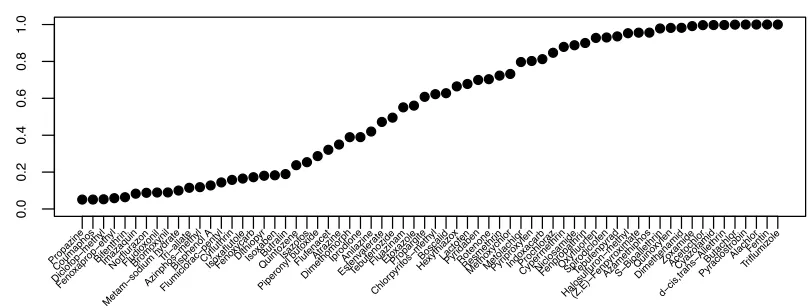
Figure 2.5 Chemical ranks by potency with 90% credible intervals. The x-axis shows
the posterior mean AC50 (more potent to the left). The y-axis ranks the chemicals by potency (most potent, rank one, at top). All chemicals with at
least a 0.50 percent probability of active response are plotted. For PPARγand
ERα reference chemicals are marked for comparison. These chemicals have
shown documented activity on these assays. This figure appears in color in the electronic version of this article. . . 22
Figure 2.6 Posterior probability that chemicals are more active than selected reference
chemicals on PPARγ. All chemicals with at least a 0.05 probability of being more active than all three reference chemicals are shown and ordered by their
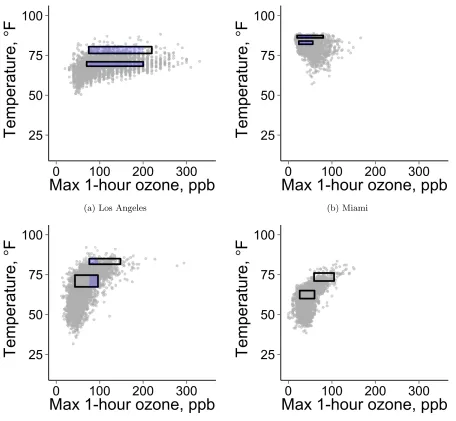
Figure 3.1 Ozone-temperature distribution for selected cities. The upper and lower boxes contain data for high temperature days and moderate temperature days, re-spectively, over the observed ozone range. The purple subsections highlight the common ozone range, the intersection of the ozone ranges for high and moderate temperature days. Details on the definition used to identify these days are in Section 3.3.3. Seattle is the only city in the dataset that does not have a common ozone range. . . 27
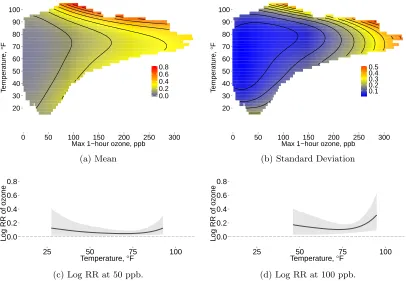
Figure 3.2 Panels (a) and (b) show the pointwise mean and standard deviation of the
national log RR surfaces. Panels (c) and (d) show cross section of the log RR surface with ozone fixed at 50 and 100 ppb, respectively, along with 95% posterior intervals. Log RR is in percent change in mortality per one ppb increase in ozone. . . 38
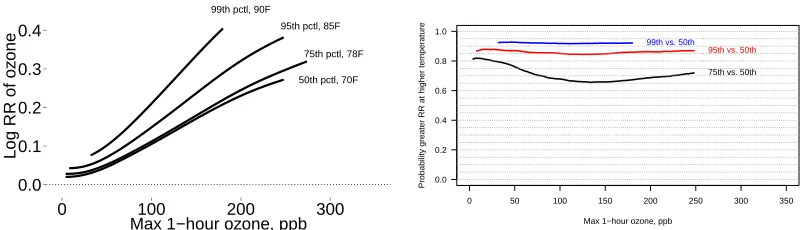
Figure 3.3 Comparison of the log RR at the 50th, 75th, 95th, and 99th percentiles of
temperature. The estimates extend over the range of ozone values observed in at least 5 cities. Subfigure 3.3a shows the mean log RR for each cross-section and Subfigure 3.3b shows the pointwise posterior probability that log RR is greater at the high temperature. Log RR is in percent change in mortality
per one ppb increase in ozone. . . 40
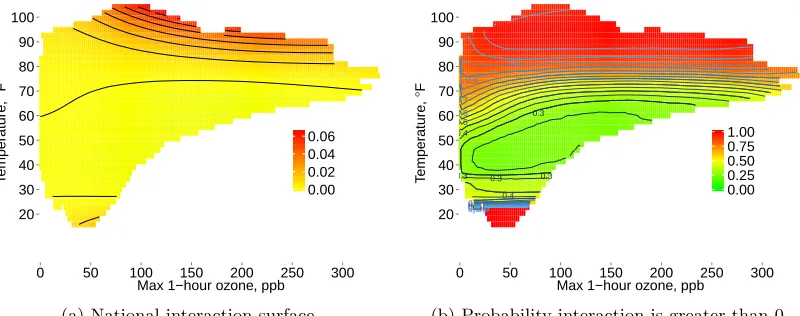
Figure 3.4 National interaction surface and pointwise probability of positive interaction.
Panel 3.4a shows the national interaction surface which is the cross-derivative of the log risk surface or the derivative of the log RR surface with respect to temperature. This shows how log RR changes with temperature and quanti-fies the interaction at each point. Panel 3.4b show the probability that the national interaction surface is greater than 0. . . 41
Figure 3.5 Log RR surfaces for selected cities (left) and their pointwise standard
devia-tions (right). Surfaces are plotted only over the range of data observed data for that city. The cities were selected for being geographically diverse and having varied ozone and temperature ranges. . . 42
Figure 3.6 Comparison of the log RR at high temperature and moderate temperatures
as defined in Section 3.3.3. Panel 3.6a compares the ratio of log RR over the observed ozone range (black) and common ozone range (blue). The posterior mean and 95% interval are shown. Panel 3.6b shows a map of the ratio on days in the common ozone range. Cities outlined in black (Los Angeles and St. Louis) are significant at the 0.8 level. . . 44
Figure 4.1 Probability of including covariates for simulation design one withn= 100 for
the credible region method ( ), BAC (#), BMA (4) , and adaptive LASSO
(+). Left: the proportion of simulated data sets for which each variable is selected. For BMA and BAC a variable is counted as included if its inclusion probability is greater than 0.5. Right: the average inclusion probability for BMA and BAC. Covariates in the first section (1 to 7) are confounders, in the second section (8 to 14) are other explanatory variables, and the far right
Figure 4.2 AUC for simulation design one withp > nfor three different rates of growth
forn. . . 60
Figure 4.3 Solution path for three subgroups and overall. The thick black line is the
estimated PM effect, βˆx. The other lines are the estimates for the other
covariates in the model. The regression coefficients correspond to centered
and scaled variables. . . 64
Figure 4.4 Estimates of the PM effect ( ˆβx). Top: The point estimates with each model
and the 95% interval. Bottom: The ratio of the SE or SD of ˆβx with each
model compared to the full OLS model. . . 65
Figure A.1 Example of simulated regression functions under using ZILL A.1a and
mix-ture of normals A.1b. . . 90
Figure A.2 Comparison of the posterior probability of an active response estimated with ZIPLL (x-axis) and the binary indicator of active response from ToxCast (y-axis) for all 309 chemicals on three assays. The majority of chemicals are considered not active (clustered in bottom left) or active (upper right) with both methods. However, using ZIPLL we estimated that several chemicals have posterior probabilities of response between 0.1 and 0.9, suggesting that there is not conclusive evidence that these chemical responded or not, but are forced to be classified as either active or not in the ToxCast data. . . 93
Figure B.1 Summary of the ozone and temperature distribution. . . 95 Figure B.2 Demonstration of the different basis expansions used in the first and second
stages. The bottom left shows the observed ozone-temperature distribution in each city. To the right are the basis functions in the temperature direction and to the top are the basis functions in the ozone direction for each stage. The first stage basis functions are different in each city. . . 96 Figure B.3 Difference in deviance from the linear, additive model (NMMAPS model) for
the spatial monotone model with different numbers of basis functions in the
ozone (M1) and temperature (M2) directions. . . 97
Figure B.4 Average rank of CV results across Figures B.3a through B.3d, with one being
the best performing model. The best model on average was (M1, M2) = (7,9)
with an average rank of 3.75; this is the model used for analysis. The next best models were (9,10), (10,9), and (9,9) with average ranks of 5.25, 5.50, and 6.75, respectively. . . 98 Figure B.5 Trace plots of the point wise estimates of the risk surface. . . 102
Figure B.6 Trace of the posterior sample of logρ(log range in log kilometers). The trace
plot only includes the posterior sample and does not show the portion of the burn in portion of the chain. The posterior mean is 922.9, the median is
Figure C.1 Comparison of model selection methods for simulation design 1. Subfig-ure C.1a shows the AUC while the remaining subfigSubfig-ures compare model size and performance with different selection criteria. The criteria are forward
selection with αf s = 0.25 (solid; ——), forward selection with αf s = 0.15
(short dash gray; - - - -), Cp (dotted; · · · ·), CV (short dash blue;
--), AIC (dash-dot-dash; -·-·-·-), and BIC (long dash; — — — —). Model
size is the number of confounders selected and does not count the outcome
Chapter 1
Introduction
1.1
Introduction
In many applications there is scientific evidence that an exposure’s effect on an outcome may
be monotonic in nature. In such situations, statistical estimation of the exposuresponse
re-lationship can be improved by incorporating prior knowledge of monotonicity into the model.
Many methods have been developed for monotonic regression (e.g. Friedman and Tibshirani,
1984; Mukerjee, 1988; Mammen, 1991; Hall and Huang, 2001; Holmes and Heard, 2003; Neelon
and Dunson, 2004; Wang and Leng, 2008; Curtis and Ghosh, 2011a). In this dissertation, we
develop methodology for monotonic regression in hierarchical and spatial models with
applica-tions to environmental exposures. In the first chapter, we use a hierarchical Bayesian model to
estimate dose-response relationships in the context of high-dimensional toxicology studies. In
this setting, the designed toxicology experiment results in data with a known non-decreasing
relationship between dose and multiple in vitro outcomes. In the second chapter, we use a
spatial model to estimate bivarite, semi-paraemtric risk surfaces in different locations. In this
case, we are interested in the effect of co-exposures to ozone and temperature on mortality
and assume that the ozone effect has a monotonic relationship with mortality. In observational
can be sensitive to the choice of confounding variables included in the model. In Chapter 4 we
present methodology to choose confounding variables in observational studies.
1.1.1 Hierarchical Monotone Dose-Response Modeling for High-Throughput Toxicity Screening of Environmental Chemicals
There are thousands of untested chemicals in common use today (Judson et al., 2009).
Com-prehensive testing of all chemicals is not feasible due to the financial and temporal costs of
traditional chemical testing, which relies heavily on animal testing. Recently, efforts have been
made to prioritize the large number of untested chemicals so that available testing resources can
be targeted at those chemicals that are most likely to cause adverse health or environmental
effects. This approach combines high-thoughput screening (HTS) which tests chemicals on a
large battery of relatively fast and inexpensive bioassays and predictive models.
The data for each chemical-assay combination consists of dose-response pairs and are often
known to have a monotonic relationship. Large designed experiments such as the US
Environ-mental Protection Agency’s (EPA) ToxCast which tests thousands of chemicals on hundreds
of HTS assays can result in large datasets (Dix et al., 2007; Kavlock et al., 2012). However,
the data for each chemical-assay combination can be sparse. Hence, HTS data consists of a
large number of sparse dose-response relationships from which we seek to rank chemicals based
on their relative bioactivity as measured on HTS assays as well as estimate key parameters
used in existing predictive model. As such, statistical methods are needed that estimate the
dose-response relationship in a way that parameterizes key statistics and facilitates ranking
of chemicals and other between chemical comparisons. At the same time, these methods must
be robust to the sparsity of data observed in each chemical-assay combination, presumably by
sharing information across the large number of chemical-assay pairs, and being efficient enough
to allow for estimation of large HTS datasets.
In Chapter 2 we present a hierarchical Bayesian model for the estimation of monotone
summary statistics used in predictive models – the potency, efficacy, and probability of an active
response – while allowing for flexibility of the shape of the dose-response relationship. Using
the proposed method, we estimate the dose-response relationship of a subset of the ToxCast
data and rank chemicals based on their potential potency on key bioassay.
1.1.2 Modeling the Effect of Temperature on Ozone-Related Mortality
The EPA has concluded that current scientific evidence supports a causal relationship between
ozone and respiratory health effects and a likely to be causal relationship between ozone and
cardiovascular health effects and mortality (US EPA, 2013). Several observational studies have
associated ambient ozone exposures with increased rates of mortality while controlling for
tem-perature and other confounding variables (Bell et al., 2004), while clinical research has found
that ozone’s effect on lung function is monotonicly increasing (McDonnell et al., 2012). With
the onset of anticipated climate changes (National Research Council, 2004a) both ozone and
temperature distributions are expected to increase in the near future (US EPA, 2009). To
antic-ipate the health burden of these changes it is important to understand the joint health effects
of ozone and temperature.
Many multi-city time-series studies have associated ambient ozone exposures with increased
risk of non-accidental mortality while controlling for temperature (Bell et al., 2004, 2006; Smith
et al., 2009). These results includes evidence of a non-linear ozone effect (Bell et al., 2006) and a
potentially greater linear ozone effect at higher temperatures than at lower temperatures (Smith
et al., 2009). However, estimates of interaction based on comparing the linear ozone effect at
different temperatures may be confounded by the different ozone distributions observed at
different temperatures and non-linearity in the ozone effect. To isolate interaction it is essential
to compare the ozone effect at different temperatures but for the same ozone level.
One way to isolate interaction is to estimate the full ozone-temperature risk surface. By
estimating the bivariate risk surface the rate of change in risk associated with changes in ozone
Hence, comparisons of the ozone effect can be made at different temperatures but for the same
ozone level. This approach has recently been employed in the single-city setting (Ren et al.,
2008; Chen et al., 2013) and visual inspection of the estimated risk surfaces suggests that there
is a non-linear and non-additive joint ozone-temperature effect.
There are several challenges to estimating ozone-temperature risk surfaces in multi-city
studies. Chief among them is the substantially different ozone and temperature ranges observed
in each city. As a result, it is challenging to find a parameterization of the risk surface that is
appropriate to use at all locations, while using a different basis expansion at each city does not
allow for the use of existing estimation methods such as those used in Dominici et al. (2002). In
addition, there is a computational burden associated with estimating surface models at many
locations. These issues are addressed in Chapter 3 which details a model for spatially-varying
risk surfaces which are constrained to be monotone in ozone.
1.1.3 Confounder Selection via Penalized Credible Regions
In many observations studies the primary interest lies in estimating the effect of an exposure
on an outcome while controlling for a large number of potential confounding variables. In such
cases, the exposure effect can be sensitive to the choice of confounding variables included in
the model. The sensitivity to confounder selection in multi-city time-series studies, such as the
work presented in Chapter 3, has been documented by Sacks et al. (2012). Omitting important
confounding variables, those correlated with both the outcome and the exposure, can bias the
exposure estimate while including too many covariates independent of both the outcome and
exposure can inflate the variance of the effect estimate. In problems where the primary interest
is in parameter estimation it is important to select an appropriate subset of the potentially
large number of confounding variables.
There are ample variable selection methods available. These include: all subsets, forward
selection, an array of penalized regression methods (Tibshirani, 1996; Fan and Li, 2001; Zou
McCulloch, 1993; George and Foster, 2000; Brown et al., 2002; Carvalho et al., 2010; Bondell and
Reich, 2012), among others. Variable selection, in general, focuses on balancing parsimony and
model fit as estimated by minimizing the sum of squared errors. These methods can be highly
effective in selecting variables for prediction, but can be biased for effect estimation. Bayesian
model averaging (BMA) attempts to average the effect estimates over the model space giving
more weight to models that have greater support from the data. However, BMA also tunes
for prediction and can result in biased estimates of the effect of interest when the exposure
is correlated with other covariates. Hence, a new class of selection methods are needed that
explicitly treat one covariate as the exposure or treatment of interest and focus on estimating
the associated regression coefficient.
To address the issue of confounder selection and effect estimation Crainiceanu et al. (2008)
proposed a two-stage approach. In the first stage, the exposure of interest is regressed on the
covariates to identify potential confounders that are correlated with the exposure of interest.
Then, in the second stage, the outcome is regressed on the exposures of interest and the other
observed covariates to identify additional covariates correlated with the outcome that were
not identified as potential confounders in the first stage. Bayesian adjustment for confounding
(BAC; Wang et al., 2012) formalized these two steps into a Bayesian approach that estimates
the two models simultaneously with a model-averaging approach. BAC proved effective at large
sample sizes; however, it was biased at small sample sizes, lacked optimality properties and is
computationally inefficient.
Chapter 4 of this thesis presents a new method for confounder selection. The proposed
method takes a decision-theoretic approach following that of Bondell and Reich (2012) but uses
an exposure model and a loss function that explicitly penalizes models that omit important
confounding variables. Chapter 4 details the methodology and presents simulation studies and
Chapter 2
Hierarchical Dose-Response
Modeling for High-Throughput
Toxicity Screening of Environmental
Chemicals
2.1
Introduction
There are thousands of untested chemicals in common use. Comprehensive toxicity testing of
all chemicals is infeasible due to high monetary and temporal costs (Judson et al., 2009). To
address this problem, a new paradigm in toxicity testing focuses on screening larger numbers
of chemicals on a diverse battery of relatively quick and inexpensive high-throughput screening
(HTS) assays that measure a variety of cellular and biochemical responses. Each assay measures
a single endpoint, such as transcription of a target gene or binding to a specific receptor protein.
The aim of HTS is to predict which chemicals are most likely to perturb normal biological
processes that lead to adverse human health and environmental effects, and focus scarce testing
To predict potential chemical activity from HTS data requires statistical models to estimate
the response of each chemical on each assay and to compare and rank chemicals. There are
three main quantities used to compare chemicals: 1) the probability that an active response
occurred, 2) the potency or concentration at which a response occurs, and 3) the efficacy or
magnitude of the response. These three quantities form the basis of chemical prioritization.
With improved estimates of these three quantities, predictive models will be able to better
predict which chemicals are most likely to have potentially hazardous effects.
Dose-response modeling for HTS data is unique because there are a large number of curves
to estimate but the data for each curve are sparse. For example, the ToxCast project at the US
EPA (Dix et al., 2007; Kavlock et al., 2012) has screened nearly 2,000 chemicals on over 700 HTS
assays; however, each chemical-assay combination is tested at six to ten unique concentrations
and, in most cases, in singlicate at each concentration. Analysis is further complicated by
assay and chemical effects, such as assays that are more or less sensitive, correlated assays
that measure the same or similar cellular response, and chemicals that are highly active or not
active on a variety of assays. Hence, HTS requires a dose-response method that is robust to the
sparsity of the data for each chemical-assay combination, takes advantage of the larger number
of chemicals and assays, and accurately estimates the efficacy, potency, and probability of an
active response.
A variety of parametric models are used for estimating monotonic dose-response curves
(Ritz, 2010). The most common method is the four-parameter log-logistic model (FPLL) which
directly parameterizes the efficacy and potency with the Emax (maximal response or upper
asymptote) and AC50 (concentration at which the half maximal response occurs), respectively.
Figure 2.1a shows an annotated example FPLL dose-response curve. The current release of EPA
ToxCast results uses FPLL to fit each dose-response curve with least squares (Judson et al.,
2010). Fitting six to ten observations with a four-parameter model using least squares results in
poor variance estimates (currently not provided in the ToxCast public release) and no estimates
0.1 0.5 1.0 5.0 50.0
0
2
4
6
8
10
Concentration (log scale)
Response
Emax (measures efficacy)
Emin AC50
(measures potency)
(Emax+Emin)/2
● ● ●
● ●
● ●
●
(a)
−10 −5 0 5 10
−
6
−
4
−
2
0
2
4
6
log(x)−log(a)
● ● ● ● ●
(b)
Figure 2.1: Panel (a) shows an annotated example of the four-parameter log-logistic (FPLL)
function. The FPLL model is f(x;t, b, a, w) =t−(t−b)×Logit [−w{log(x)−log(a)}], where
x is the tested concentration and (t, b, w, a) parameterizes the Emax, Emin, AC50, and w
(rate of increase), respectively. Panel (b) shows six sample basis functions with internal knots
(−4,−2,0,2,4) marked with gray circles. This figure appears in color in the electronic version
of this article.
There are several available frequentist approaches for monotonic curve estimation (e.g.
Fried-man and Tibshirani, 1984; Mukerjee, 1988; Mammen, 1991; Hall and Huang, 2001; Mammen
et al., 2001; Wang and Li, 2008). Recently, several semiparametric Bayesian methods for
mono-tone regression for a single curve have been proposed. Holmes and Heard (2003) proposed using
piecewise constant functions with random knots, Neelon and Dunson (2004) utilized a piecewise
linear spline model, and Curtis and Ghosh (2011a) developed a Bernstein polynomial model.
Also, Shively et al. (2009) modeled the monotonic function as the integral of a positive function.
None of these general semiparametric regression methods directly parameterize the efficacy or
predictive modeling.
Our problem is different from these because we are estimating the response for several
chemicals on multiple assays. Bayesian hierarchical models have been used in many fields where
the data takes a natural hierarchical structure. Severalin vivoor developmental toxicity studies
have used Bayesian hierarchical models to improve estimates when measuring the response of
multiple correlated endpoints tested with a single chemical (e.g Faes et al., 2006; Choi et al.,
2010) or used a multivaraite model that assumes correlation in residuals for multiple health
outcomes (Neelon and Dunson, 2004).
To incorporate dependence in the regression function between four HTS assays and eight
nanomaterials, Patel et al. (2012) estimate dose-duration-response surfaces using linear
B-splines with two internal knots in both the duration and dose direction. The first knot
param-eterizes potency with the no observable adverse effect level (NOAEL), an alternative measure
to AC50. For each chemical, they model correlation in the knot location and basis coefficients
across the assays, but they do not model correlation across chemicals within assay. While the
direct parameterization of the NOAEL is appealing, this model does not directly parameterize
the probability of a response or the efficacy, two important parameters for prioritization. In
addition, the model does not include assay effects which we assume to exist in our data and
can potentially improve fitting with the large number of chemicals but small sample size with
each chemical-assay. While the simple choice of linear splines with two internal knots provides
for a reasonable size model for a generalized additive model, this basis is not realistic for a
one-dimensional model (dose only, not dose-duration surfaces).
In this paper, we propose a Bayesian hierarchical model for dose-response curves that is
specifically tailored to the high-dimensional, sparse data setting of the ToxCast project, called
the zero-inflated piecewise log-logistic model (ZIPLL). ZIPLL is a mixture between a non-active
response and an active response that extends FPLL to a more flexible spline formulation while
maintaining direct parameterization of the efficacy and potency of each chemical-assay
of uncertainty for ranks of efficiency and potency which should allow for decision-makers to use
the results appropriately when deciding which chemicals to consider for future, more
compre-hensive, testing. We use a hierarchical framework that borrows strength across chemicals and
assays. This adds robustness, incorporates assay and chemical effects, and allows for estimation
of joint distributions of responses across multiple assays. In addition, prior information and
covariates can be included to exploit known relationships between chemicals, between assays,
and between chemical-assay combinations.
2.2
The ToxCast Data
The ToxCast project uses a diverse battery of HTS assays and informatic models to rapidly
characterize the activity of thousands of chemicals. These chemical activity profiles are used to
support decisions regarding prioritization for further testing (Reif et al., 2010), predictin vivo
activity (Martin et al., 2011), and inform risk assessments (Judson et al., 2011). In support
of these goals, the ToxCast project has tested over 2,000 chemicals on over 700 HTS assay
endpoints for which analysis is ongoing. The data for the first 309 chemicals tested for Phase I
are publicly available (http://www.epa.gov/ncct/toxcast/data.html). Figure 2.2 illustrates the
unique structure of the data.
In this paper we use the 309 chemicals in the publicly available data and a subset of 81
as-says comprising the multiplexed transcription factor reporter platform (Romanov et al., 2008,
www.attagene.com). This platform enables high-content, functional assessment of
transcrip-tion factor activity, which is a core component of cellular gene regulatory networks. Both
cis-regulating response element constructs (CIS) and trans-activating (TRANS) potential of
multiple nuclear hormone receptors are measured. These 48 CIS and 25 TRANS assays (plus
8 negative control assays) address relevant cellular processes including response to xenobiotics,
genotoxic stress, hypoxia, oxidative damage, immune-modulation, and endocrine disruption.
Martin et al. (2010) evaluated these assays’ response to the 309 Phase I chemicals.
Index Index Cyprodinil Index Diazinon Index Dichlor an Index Iprodione Index Isaz ofos Index Isoxaben Index Lactof en Index Lindane Index Linuron Index Rotenone Index Setho xydim Index Index Vincloz olin Zoxamide Index "n" Ahr_CIS ● ● ● ● ● ● ●
c(as.matrix(webdat[which(webdat$chemical_casrn == chemid), conccols]))
c(as
.matr
ix(w
ebdat[which(w
ebdat$chemical_casr
n == chemid), respcols]))
● ● ● ● ● ● ●
c(as.matrix(webdat[which(webdat$chemical_casrn == chemid), conccols]))
c(as
.matr
ix(w
ebdat[which(w
ebdat$chemical_casr
n == chemid), respcols]))
● ● ● ● ● ●●
c(as.matrix(webdat[which(webdat$chemical_casrn == chemid), conccols]))
c(as
.matr
ix(w
ebdat[which(w
ebdat$chemical_casr
n == chemid), respcols]))
● ● ● ●● ● ●
c(as.matrix(webdat[which(webdat$chemical_casrn == chemid), conccols]))
c(as
.matr
ix(w
ebdat[which(w
ebdat$chemical_casr
n == chemid), respcols]))
● ● ● ● ● ●●
c(as.matrix(webdat[which(webdat$chemical_casrn == chemid), conccols]))
c(as
.matr
ix(w
ebdat[which(w
ebdat$chemical_casr
n == chemid), respcols]))
● ● ● ● ●● ●
c(as.matrix(webdat[which(webdat$chemical_casrn == chemid), conccols]))
c(as
.matr
ix(w
ebdat[which(w
ebdat$chemical_casr
n == chemid), respcols]))
● ● ● ● ●● ●
c(as.matrix(webdat[which(webdat$chemical_casrn == chemid), conccols]))
c(as
.matr
ix(w
ebdat[which(w
ebdat$chemical_casr
n == chemid), respcols]))
● ● ● ● ● ● ●
c(as.matrix(webdat[which(webdat$chemical_casrn == chemid), conccols]))
c(as
.matr
ix(w
ebdat[which(w
ebdat$chemical_casr
n == chemid), respcols]))
● ● ● ● ● ●●
c(as.matrix(webdat[which(webdat$chemical_casrn == chemid), conccols]))
c(as
.matr
ix(w
ebdat[which(w
ebdat$chemical_casr
n == chemid), respcols]))
● ● ● ● ● ● ●
c(as.matrix(webdat[which(webdat$chemical_casrn == chemid), conccols]))
c(as
.matr
ix(w
ebdat[which(w
ebdat$chemical_casr
n == chemid), respcols]))
● ● ● ● ● ● ●
c(as.matrix(webdat[which(webdat$chemical_casrn == chemid), conccols]))
c(as
.matr
ix(w
ebdat[which(w
ebdat$chemical_casr
n == chemid), respcols]))
● ● ●
c(2, 2, 2)
c(0.5, 2, 3.5)
● ● ● ● ● ● ●
c(as.matrix(webdat[which(webdat$chemical_casrn == chemid), conccols]))
c(as
.matr
ix(w
ebdat[which(w
ebdat$chemical_casr
n == chemid), respcols]))
● ● ● ● ● ● ● c(as .matr ix(w ebdat[which(w ebdat$chemical_casr
n == chemid), respcols]))
Index
"n"
AP_1_CIS
● ● ● ● ● ●●
c(as.matrix(webdat[which(webdat$chemical_casrn == chemid), conccols]))
c(as
.matr
ix(w
ebdat[which(w
ebdat$chemical_casr
n == chemid), respcols]))
● ● ● ● ● ● ●
c(as.matrix(webdat[which(webdat$chemical_casrn == chemid), conccols]))
c(as
.matr
ix(w
ebdat[which(w
ebdat$chemical_casr
n == chemid), respcols]))
● ● ● ● ● ● ●
c(as.matrix(webdat[which(webdat$chemical_casrn == chemid), conccols]))
c(as
.matr
ix(w
ebdat[which(w
ebdat$chemical_casr
n == chemid), respcols]))
● ● ● ● ● ● ●
c(as.matrix(webdat[which(webdat$chemical_casrn == chemid), conccols]))
c(as
.matr
ix(w
ebdat[which(w
ebdat$chemical_casr
n == chemid), respcols]))
● ● ● ● ● ● ●
c(as.matrix(webdat[which(webdat$chemical_casrn == chemid), conccols]))
c(as
.matr
ix(w
ebdat[which(w
ebdat$chemical_casr
n == chemid), respcols]))
● ● ● ● ● ● ●
c(as.matrix(webdat[which(webdat$chemical_casrn == chemid), conccols]))
c(as
.matr
ix(w
ebdat[which(w
ebdat$chemical_casr
n == chemid), respcols]))
● ● ● ● ● ● ●
c(as.matrix(webdat[which(webdat$chemical_casrn == chemid), conccols]))
c(as
.matr
ix(w
ebdat[which(w
ebdat$chemical_casr
n == chemid), respcols]))
● ● ● ● ● ● ●
c(as.matrix(webdat[which(webdat$chemical_casrn == chemid), conccols]))
c(as
.matr
ix(w
ebdat[which(w
ebdat$chemical_casr
n == chemid), respcols]))
● ● ● ● ● ● ●
c(as.matrix(webdat[which(webdat$chemical_casrn == chemid), conccols]))
c(as
.matr
ix(w
ebdat[which(w
ebdat$chemical_casr
n == chemid), respcols]))
● ● ●● ●●●
c(as.matrix(webdat[which(webdat$chemical_casrn == chemid), conccols]))
c(as
.matr
ix(w
ebdat[which(w
ebdat$chemical_casr
n == chemid), respcols]))
● ● ● ● ● ● ●
c(as.matrix(webdat[which(webdat$chemical_casrn == chemid), conccols]))
c(as
.matr
ix(w
ebdat[which(w
ebdat$chemical_casr
n == chemid), respcols]))
● ● ●
c(2, 2, 2)
c(0.5, 2, 3.5)
● ● ● ● ● ● ●
c(as.matrix(webdat[which(webdat$chemical_casrn == chemid), conccols]))
c(as
.matr
ix(w
ebdat[which(w
ebdat$chemical_casr
n == chemid), respcols]))
● ● ● ● ● ● ● c(as .matr ix(w ebdat[which(w ebdat$chemical_casr
n == chemid), respcols]))
Index
"n"
AP_2_CIS
● ● ● ● ● ● ●
c(as.matrix(webdat[which(webdat$chemical_casrn == chemid), conccols]))
c(as
.matr
ix(w
ebdat[which(w
ebdat$chemical_casr
n == chemid), respcols]))
● ● ● ● ● ● ●
c(as.matrix(webdat[which(webdat$chemical_casrn == chemid), conccols]))
c(as
.matr
ix(w
ebdat[which(w
ebdat$chemical_casr
n == chemid), respcols]))
● ● ● ● ● ● ●
c(as.matrix(webdat[which(webdat$chemical_casrn == chemid), conccols]))
c(as
.matr
ix(w
ebdat[which(w
ebdat$chemical_casr
n == chemid), respcols]))
● ● ● ● ● ● ●
c(as.matrix(webdat[which(webdat$chemical_casrn == chemid), conccols]))
c(as
.matr
ix(w
ebdat[which(w
ebdat$chemical_casr
n == chemid), respcols]))
● ● ● ● ● ● ●
c(as.matrix(webdat[which(webdat$chemical_casrn == chemid), conccols]))
c(as
.matr
ix(w
ebdat[which(w
ebdat$chemical_casr
n == chemid), respcols]))
● ● ● ● ● ● ●
c(as.matrix(webdat[which(webdat$chemical_casrn == chemid), conccols]))
c(as
.matr
ix(w
ebdat[which(w
ebdat$chemical_casr
n == chemid), respcols]))
● ● ● ● ● ● ●
c(as.matrix(webdat[which(webdat$chemical_casrn == chemid), conccols]))
c(as
.matr
ix(w
ebdat[which(w
ebdat$chemical_casr
n == chemid), respcols]))
● ● ● ● ● ● ●
c(as.matrix(webdat[which(webdat$chemical_casrn == chemid), conccols]))
c(as
.matr
ix(w
ebdat[which(w
ebdat$chemical_casr
n == chemid), respcols]))
● ● ● ● ● ● ●
c(as.matrix(webdat[which(webdat$chemical_casrn == chemid), conccols]))
c(as
.matr
ix(w
ebdat[which(w
ebdat$chemical_casr
n == chemid), respcols]))
● ● ● ● ● ● ●
c(as.matrix(webdat[which(webdat$chemical_casrn == chemid), conccols]))
c(as
.matr
ix(w
ebdat[which(w
ebdat$chemical_casr
n == chemid), respcols]))
● ● ● ● ● ● ●
c(as.matrix(webdat[which(webdat$chemical_casrn == chemid), conccols]))
c(as
.matr
ix(w
ebdat[which(w
ebdat$chemical_casr
n == chemid), respcols]))
● ● ●
c(2, 2, 2)
c(0.5, 2, 3.5)
● ● ● ● ● ● ●
c(as.matrix(webdat[which(webdat$chemical_casrn == chemid), conccols]))
c(as
.matr
ix(w
ebdat[which(w
ebdat$chemical_casr
n == chemid), respcols]))
● ● ● ● ● ● ● c(as .matr ix(w ebdat[which(w ebdat$chemical_casr
n == chemid), respcols]))
Index
"n"
AR_TRANS
● ● ● ● ● ● ●
c(as.matrix(webdat[which(webdat$chemical_casrn == chemid), conccols]))
c(as
.matr
ix(w
ebdat[which(w
ebdat$chemical_casr
n == chemid), respcols]))
● ● ● ● ● ● ●
c(as.matrix(webdat[which(webdat$chemical_casrn == chemid), conccols]))
c(as
.matr
ix(w
ebdat[which(w
ebdat$chemical_casr
n == chemid), respcols]))
● ● ● ● ● ● ●
c(as.matrix(webdat[which(webdat$chemical_casrn == chemid), conccols]))
c(as
.matr
ix(w
ebdat[which(w
ebdat$chemical_casr
n == chemid), respcols]))
● ● ● ● ● ● ●
c(as.matrix(webdat[which(webdat$chemical_casrn == chemid), conccols]))
c(as
.matr
ix(w
ebdat[which(w
ebdat$chemical_casr
n == chemid), respcols]))
● ● ● ● ● ● ●
c(as.matrix(webdat[which(webdat$chemical_casrn == chemid), conccols]))
c(as
.matr
ix(w
ebdat[which(w
ebdat$chemical_casr
n == chemid), respcols]))
● ● ● ● ● ● ●
c(as.matrix(webdat[which(webdat$chemical_casrn == chemid), conccols]))
c(as
.matr
ix(w
ebdat[which(w
ebdat$chemical_casr
n == chemid), respcols]))
● ● ● ● ● ● ●
c(as.matrix(webdat[which(webdat$chemical_casrn == chemid), conccols]))
c(as
.matr
ix(w
ebdat[which(w
ebdat$chemical_casr
n == chemid), respcols]))
● ● ● ● ● ● ●
c(as.matrix(webdat[which(webdat$chemical_casrn == chemid), conccols]))
c(as
.matr
ix(w
ebdat[which(w
ebdat$chemical_casr
n == chemid), respcols]))
● ● ● ● ● ● ●
c(as.matrix(webdat[which(webdat$chemical_casrn == chemid), conccols]))
c(as
.matr
ix(w
ebdat[which(w
ebdat$chemical_casr
n == chemid), respcols]))
● ● ● ● ● ● ●
c(as.matrix(webdat[which(webdat$chemical_casrn == chemid), conccols]))
c(as
.matr
ix(w
ebdat[which(w
ebdat$chemical_casr
n == chemid), respcols]))
● ● ● ● ● ● ●
c(as.matrix(webdat[which(webdat$chemical_casrn == chemid), conccols]))
c(as
.matr
ix(w
ebdat[which(w
ebdat$chemical_casr
n == chemid), respcols]))
● ● ●
c(2, 2, 2)
c(0.5, 2, 3.5)
● ● ● ● ● ● ●
c(as.matrix(webdat[which(webdat$chemical_casrn == chemid), conccols]))
c(as
.matr
ix(w
ebdat[which(w
ebdat$chemical_casr
n == chemid), respcols]))
● ● ● ● ● ● ● c(as .matr ix(w ebdat[which(w ebdat$chemical_casr
n == chemid), respcols]))
Index
"n"
BRE_CIS
● ● ● ● ●● ●
c(as.matrix(webdat[which(webdat$chemical_casrn == chemid), conccols]))
c(as
.matr
ix(w
ebdat[which(w
ebdat$chemical_casr
n == chemid), respcols]))
● ● ● ● ● ● ●
c(as.matrix(webdat[which(webdat$chemical_casrn == chemid), conccols]))
c(as
.matr
ix(w
ebdat[which(w
ebdat$chemical_casr
n == chemid), respcols]))
● ● ● ● ●● ●
c(as.matrix(webdat[which(webdat$chemical_casrn == chemid), conccols]))
c(as
.matr
ix(w
ebdat[which(w
ebdat$chemical_casr
n == chemid), respcols]))
● ● ● ● ● ● ●
c(as.matrix(webdat[which(webdat$chemical_casrn == chemid), conccols]))
c(as
.matr
ix(w
ebdat[which(w
ebdat$chemical_casr
n == chemid), respcols]))
● ● ● ● ● ● ●
c(as.matrix(webdat[which(webdat$chemical_casrn == chemid), conccols]))
c(as
.matr
ix(w
ebdat[which(w
ebdat$chemical_casr
n == chemid), respcols]))
● ● ● ● ● ●●
c(as.matrix(webdat[which(webdat$chemical_casrn == chemid), conccols]))
c(as
.matr
ix(w
ebdat[which(w
ebdat$chemical_casr
n == chemid), respcols]))
● ● ● ● ● ●●
c(as.matrix(webdat[which(webdat$chemical_casrn == chemid), conccols]))
c(as
.matr
ix(w
ebdat[which(w
ebdat$chemical_casr
n == chemid), respcols]))
● ● ● ● ● ●●
c(as.matrix(webdat[which(webdat$chemical_casrn == chemid), conccols]))
c(as
.matr
ix(w
ebdat[which(w
ebdat$chemical_casr
n == chemid), respcols]))
● ● ● ● ● ●●
c(as.matrix(webdat[which(webdat$chemical_casrn == chemid), conccols]))
c(as
.matr
ix(w
ebdat[which(w
ebdat$chemical_casr
n == chemid), respcols]))
●● ●
● ● ● ●
c(as.matrix(webdat[which(webdat$chemical_casrn == chemid), conccols]))
c(as
.matr
ix(w
ebdat[which(w
ebdat$chemical_casr
n == chemid), respcols]))
● ● ● ● ● ● ●
c(as.matrix(webdat[which(webdat$chemical_casrn == chemid), conccols]))
c(as
.matr
ix(w
ebdat[which(w
ebdat$chemical_casr
n == chemid), respcols]))
● ● ●
c(2, 2, 2)
c(0.5, 2, 3.5)
● ● ● ● ● ● ●
c(as.matrix(webdat[which(webdat$chemical_casrn == chemid), conccols]))
c(as
.matr
ix(w
ebdat[which(w
ebdat$chemical_casr
n == chemid), respcols]))
● ● ● ● ● ● ● c(as .matr ix(w ebdat[which(w ebdat$chemical_casr
n == chemid), respcols]))
Index
"n"
CMV_CIS
● ● ● ● ●●●
c(as.matrix(webdat[which(webdat$chemical_casrn == chemid), conccols]))
c(as
.matr
ix(w
ebdat[which(w
ebdat$chemical_casr
n == chemid), respcols]))
● ● ● ● ● ● ●
c(as.matrix(webdat[which(webdat$chemical_casrn == chemid), conccols]))
c(as
.matr
ix(w
ebdat[which(w
ebdat$chemical_casr
n == chemid), respcols]))
● ● ● ● ● ● ●
c(as.matrix(webdat[which(webdat$chemical_casrn == chemid), conccols]))
c(as
.matr
ix(w
ebdat[which(w
ebdat$chemical_casr
n == chemid), respcols]))
● ● ● ● ● ● ●
c(as.matrix(webdat[which(webdat$chemical_casrn == chemid), conccols]))
c(as
.matr
ix(w
ebdat[which(w
ebdat$chemical_casr
n == chemid), respcols]))
● ● ● ● ● ● ●
c(as.matrix(webdat[which(webdat$chemical_casrn == chemid), conccols]))
c(as
.matr
ix(w
ebdat[which(w
ebdat$chemical_casr
n == chemid), respcols]))
● ● ● ● ● ● ●
c(as.matrix(webdat[which(webdat$chemical_casrn == chemid), conccols]))
c(as
.matr
ix(w
ebdat[which(w
ebdat$chemical_casr
n == chemid), respcols]))
● ● ● ● ● ● ●
c(as.matrix(webdat[which(webdat$chemical_casrn == chemid), conccols]))
c(as
.matr
ix(w
ebdat[which(w
ebdat$chemical_casr
n == chemid), respcols]))
● ● ● ● ● ● ●
c(as.matrix(webdat[which(webdat$chemical_casrn == chemid), conccols]))
c(as
.matr
ix(w
ebdat[which(w
ebdat$chemical_casr
n == chemid), respcols]))
● ● ● ● ●● ●
c(as.matrix(webdat[which(webdat$chemical_casrn == chemid), conccols]))
c(as
.matr
ix(w
ebdat[which(w
ebdat$chemical_casr
n == chemid), respcols]))
● ● ● ● ● ● ●
c(as.matrix(webdat[which(webdat$chemical_casrn == chemid), conccols]))
c(as
.matr
ix(w
ebdat[which(w
ebdat$chemical_casr
n == chemid), respcols]))
● ● ● ● ● ● ●
c(as.matrix(webdat[which(webdat$chemical_casrn == chemid), conccols]))
c(as
.matr
ix(w
ebdat[which(w
ebdat$chemical_casr
n == chemid), respcols]))
● ● ●
c(2, 2, 2)
c(0.5, 2, 3.5)
● ● ● ● ● ● ●
c(as.matrix(webdat[which(webdat$chemical_casrn == chemid), conccols]))
c(as
.matr
ix(w
ebdat[which(w
ebdat$chemical_casr
n == chemid), respcols]))
● ● ● ● ● ● ● c(as .matr ix(w ebdat[which(w ebdat$chemical_casr
n == chemid), respcols]))
Index
"n"
CRE_CIS
● ● ● ● ● ●●
c(as.matrix(webdat[which(webdat$chemical_casrn == chemid), conccols]))
c(as
.matr
ix(w
ebdat[which(w
ebdat$chemical_casr
n == chemid), respcols]))
● ● ● ● ● ● ●
c(as.matrix(webdat[which(webdat$chemical_casrn == chemid), conccols]))
c(as
.matr
ix(w
ebdat[which(w
ebdat$chemical_casr
n == chemid), respcols]))
● ● ● ● ● ●●
c(as.matrix(webdat[which(webdat$chemical_casrn == chemid), conccols]))
c(as
.matr
ix(w
ebdat[which(w
ebdat$chemical_casr
n == chemid), respcols]))
● ● ● ● ● ● ●
c(as.matrix(webdat[which(webdat$chemical_casrn == chemid), conccols]))
c(as
.matr
ix(w
ebdat[which(w
ebdat$chemical_casr
n == chemid), respcols]))
● ● ● ● ● ● ●
c(as.matrix(webdat[which(webdat$chemical_casrn == chemid), conccols]))
c(as
.matr
ix(w
ebdat[which(w
ebdat$chemical_casr
n == chemid), respcols]))
● ● ● ● ● ● ●
c(as.matrix(webdat[which(webdat$chemical_casrn == chemid), conccols]))
c(as
.matr
ix(w
ebdat[which(w
ebdat$chemical_casr
n == chemid), respcols]))
● ● ● ● ● ● ●
c(as.matrix(webdat[which(webdat$chemical_casrn == chemid), conccols]))
c(as
.matr
ix(w
ebdat[which(w
ebdat$chemical_casr
n == chemid), respcols]))
● ● ● ● ● ● ●
c(as.matrix(webdat[which(webdat$chemical_casrn == chemid), conccols]))
c(as
.matr
ix(w
ebdat[which(w
ebdat$chemical_casr
n == chemid), respcols]))
● ● ● ● ● ● ●
c(as.matrix(webdat[which(webdat$chemical_casrn == chemid), conccols]))
c(as
.matr
ix(w
ebdat[which(w
ebdat$chemical_casr
n == chemid), respcols]))
● ● ●● ● ● ●
c(as.matrix(webdat[which(webdat$chemical_casrn == chemid), conccols]))
c(as
.matr
ix(w
ebdat[which(w
ebdat$chemical_casr
n == chemid), respcols]))
● ● ● ● ● ● ●
c(as.matrix(webdat[which(webdat$chemical_casrn == chemid), conccols]))
c(as
.matr
ix(w
ebdat[which(w
ebdat$chemical_casr
n == chemid), respcols]))
● ● ●
c(2, 2, 2)
c(0.5, 2, 3.5)
● ● ● ● ● ● ●
c(as.matrix(webdat[which(webdat$chemical_casrn == chemid), conccols]))
c(as
.matr
ix(w
ebdat[which(w
ebdat$chemical_casr
n == chemid), respcols]))
● ● ● ● ● ● ● c(as .matr ix(w ebdat[which(w ebdat$chemical_casr
n == chemid), respcols]))
Index
"n"
DR5_CIS
● ● ● ● ● ● ●
c(as.matrix(webdat[which(webdat$chemical_casrn == chemid), conccols]))
c(as
.matr
ix(w
ebdat[which(w
ebdat$chemical_casr
n == chemid), respcols]))
● ● ● ● ● ● ●
c(as.matrix(webdat[which(webdat$chemical_casrn == chemid), conccols]))
c(as
.matr
ix(w
ebdat[which(w
ebdat$chemical_casr
n == chemid), respcols]))
● ● ● ● ● ● ●
c(as.matrix(webdat[which(webdat$chemical_casrn == chemid), conccols]))
c(as
.matr
ix(w
ebdat[which(w
ebdat$chemical_casr
n == chemid), respcols]))
● ● ● ● ● ● ●
c(as.matrix(webdat[which(webdat$chemical_casrn == chemid), conccols]))
c(as
.matr
ix(w
ebdat[which(w
ebdat$chemical_casr
n == chemid), respcols]))
● ● ● ● ● ● ●
c(as.matrix(webdat[which(webdat$chemical_casrn == chemid), conccols]))
c(as
.matr
ix(w
ebdat[which(w
ebdat$chemical_casr
n == chemid), respcols]))
● ● ● ● ● ● ●
c(as.matrix(webdat[which(webdat$chemical_casrn == chemid), conccols]))
c(as
.matr
ix(w
ebdat[which(w
ebdat$chemical_casr
n == chemid), respcols]))
● ● ● ● ● ● ●
c(as.matrix(webdat[which(webdat$chemical_casrn == chemid), conccols]))
c(as
.matr
ix(w
ebdat[which(w
ebdat$chemical_casr
n == chemid), respcols]))
● ● ● ● ●● ●
c(as.matrix(webdat[which(webdat$chemical_casrn == chemid), conccols]))
c(as
.matr
ix(w
ebdat[which(w
ebdat$chemical_casr
n == chemid), respcols]))
● ● ● ● ● ● ●
c(as.matrix(webdat[which(webdat$chemical_casrn == chemid), conccols]))
c(as
.matr
ix(w
ebdat[which(w
ebdat$chemical_casr
n == chemid), respcols]))
● ● ● ● ● ● ●
c(as.matrix(webdat[which(webdat$chemical_casrn == chemid), conccols]))
c(as
.matr
ix(w
ebdat[which(w
ebdat$chemical_casr
n == chemid), respcols]))
● ● ● ● ● ● ●
c(as.matrix(webdat[which(webdat$chemical_casrn == chemid), conccols]))
c(as
.matr
ix(w
ebdat[which(w
ebdat$chemical_casr
n == chemid), respcols]))
● ● ●
c(2, 2, 2)
c(0.5, 2, 3.5)
● ● ● ● ● ● ●
c(as.matrix(webdat[which(webdat$chemical_casrn == chemid), conccols]))
c(as
.matr
ix(w
ebdat[which(w
ebdat$chemical_casr
n == chemid), respcols]))
● ● ● ● ● ● ● c(as .matr ix(w ebdat[which(w ebdat$chemical_casr
n == chemid), respcols]))
Index
"n"
E2F_CIS
● ● ● ● ● ● ●
c(as.matrix(webdat[which(webdat$chemical_casrn == chemid), conccols]))
c(as
.matr
ix(w
ebdat[which(w
ebdat$chemical_casr
n == chemid), respcols]))
● ● ● ● ● ● ●
c(as.matrix(webdat[which(webdat$chemical_casrn == chemid), conccols]))
c(as
.matr
ix(w
ebdat[which(w
ebdat$chemical_casr
n == chemid), respcols]))
● ● ● ● ● ● ●
c(as.matrix(webdat[which(webdat$chemical_casrn == chemid), conccols]))
c(as
.matr
ix(w
ebdat[which(w
ebdat$chemical_casr
n == chemid), respcols]))
● ● ● ● ● ● ●
c(as.matrix(webdat[which(webdat$chemical_casrn == chemid), conccols]))
c(as
.matr
ix(w
ebdat[which(w
ebdat$chemical_casr
n == chemid), respcols]))
● ● ● ● ● ● ●
c(as.matrix(webdat[which(webdat$chemical_casrn == chemid), conccols]))
c(as
.matr
ix(w
ebdat[which(w
ebdat$chemical_casr
n == chemid), respcols]))
● ● ● ● ● ● ●
c(as.matrix(webdat[which(webdat$chemical_casrn == chemid), conccols]))
c(as
.matr
ix(w
ebdat[which(w
ebdat$chemical_casr
n == chemid), respcols]))
● ● ● ● ● ● ●
c(as.matrix(webdat[which(webdat$chemical_casrn == chemid), conccols]))
c(as
.matr
ix(w
ebdat[which(w
ebdat$chemical_casr
n == chemid), respcols]))
● ● ● ● ● ● ●
c(as.matrix(webdat[which(webdat$chemical_casrn == chemid), conccols]))
c(as
.matr
ix(w
ebdat[which(w
ebdat$chemical_casr
n == chemid), respcols]))
● ● ● ● ● ● ●
c(as.matrix(webdat[which(webdat$chemical_casrn == chemid), conccols]))
c(as
.matr
ix(w
ebdat[which(w
ebdat$chemical_casr
n == chemid), respcols]))
● ● ● ● ● ● ●
c(as.matrix(webdat[which(webdat$chemical_casrn == chemid), conccols]))
c(as
.matr
ix(w
ebdat[which(w
ebdat$chemical_casr
n == chemid), respcols]))
● ● ● ● ● ● ●
c(as.matrix(webdat[which(webdat$chemical_casrn == chemid), conccols]))
c(as
.matr
ix(w
ebdat[which(w
ebdat$chemical_casr
n == chemid), respcols]))
● ● ●
c(2, 2, 2)
c(0.5, 2, 3.5)
● ● ● ● ● ● ●
c(as.matrix(webdat[which(webdat$chemical_casrn == chemid), conccols]))
c(as
.matr
ix(w
ebdat[which(w
ebdat$chemical_casr
n == chemid), respcols]))
● ● ● ● ● ● ● c(as .matr ix(w ebdat[which(w ebdat$chemical_casr
n == chemid), respcols]))
Index
"n"
EGR_CIS
● ● ● ● ● ● ●
c(as.matrix(webdat[which(webdat$chemical_casrn == chemid), conccols]))
c(as
.matr
ix(w
ebdat[which(w
ebdat$chemical_casr
n == chemid), respcols]))
● ● ● ● ● ● ●
c(as.matrix(webdat[which(webdat$chemical_casrn == chemid), conccols]))
c(as
.matr
ix(w
ebdat[which(w
ebdat$chemical_casr
n == chemid), respcols]))
● ● ● ● ● ● ●
c(as.matrix(webdat[which(webdat$chemical_casrn == chemid), conccols]))
c(as
.matr
ix(w
ebdat[which(w
ebdat$chemical_casr
n == chemid), respcols]))
● ● ● ● ● ● ●
c(as.matrix(webdat[which(webdat$chemical_casrn == chemid), conccols]))
c(as
.matr
ix(w
ebdat[which(w
ebdat$chemical_casr
n == chemid), respcols]))
● ● ● ● ● ● ●
c(as.matrix(webdat[which(webdat$chemical_casrn == chemid), conccols]))
c(as
.matr
ix(w
ebdat[which(w
ebdat$chemical_casr
n == chemid), respcols]))
● ● ● ●● ● ●
c(as.matrix(webdat[which(webdat$chemical_casrn == chemid), conccols]))
c(as
.matr
ix(w
ebdat[which(w
ebdat$chemical_casr
n == chemid), respcols]))
● ● ● ● ● ● ●
c(as.matrix(webdat[which(webdat$chemical_casrn == chemid), conccols]))
c(as
.matr
ix(w
ebdat[which(w
ebdat$chemical_casr
n == chemid), respcols]))
● ● ● ● ● ● ●
c(as.matrix(webdat[which(webdat$chemical_casrn == chemid), conccols]))
c(as
.matr
ix(w
ebdat[which(w
ebdat$chemical_casr
n == chemid), respcols]))
● ● ● ● ● ● ●
c(as.matrix(webdat[which(webdat$chemical_casrn == chemid), conccols]))
c(as
.matr
ix(w
ebdat[which(w
ebdat$chemical_casr
n == chemid), respcols]))
● ● ●● ● ● ●
c(as.matrix(webdat[which(webdat$chemical_casrn == chemid), conccols]))
c(as
.matr
ix(w
ebdat[which(w
ebdat$chemical_casr
n == chemid), respcols]))
● ● ● ● ● ● ●
c(as.matrix(webdat[which(webdat$chemical_casrn == chemid), conccols]))
c(as
.matr
ix(w
ebdat[which(w
ebdat$chemical_casr
n == chemid), respcols]))
● ● ●
c(2, 2, 2)
c(0.5, 2, 3.5)
● ● ● ● ● ● ●
c(as.matrix(webdat[which(webdat$chemical_casrn == chemid), conccols]))
c(as
.matr
ix(w
ebdat[which(w
ebdat$chemical_casr
n == chemid), respcols]))
● ● ● ● ● ● ● c(as .matr ix(w ebdat[which(w ebdat$chemical_casr
n == chemid), respcols]))
Index
"n"
ERE_CIS
● ● ● ● ● ● ●
c(as.matrix(webdat[which(webdat$chemical_casrn == chemid), conccols]))
c(as
.matr
ix(w
ebdat[which(w
ebdat$chemical_casr
n == chemid), respcols]))
● ● ● ● ●● ●
c(as.matrix(webdat[which(webdat$chemical_casrn == chemid), conccols]))
c(as
.matr
ix(w
ebdat[which(w
ebdat$chemical_casr
n == chemid), respcols]))
● ● ● ● ● ● ●
c(as.matrix(webdat[which(webdat$chemical_casrn == chemid), conccols]))
c(as
.matr
ix(w
ebdat[which(w
ebdat$chemical_casr
n == chemid), respcols]))
● ● ● ● ● ● ●
c(as.matrix(webdat[which(webdat$chemical_casrn == chemid), conccols]))
c(as
.matr
ix(w
ebdat[which(w
ebdat$chemical_casr
n == chemid), respcols]))
● ● ● ● ● ●●
c(as.matrix(webdat[which(webdat$chemical_casrn == chemid), conccols]))
c(as
.matr
ix(w
ebdat[which(w
ebdat$chemical_casr
n == chemid), respcols]))
● ● ● ● ● ● ●
c(as.matrix(webdat[which(webdat$chemical_casrn == chemid), conccols]))
c(as
.matr
ix(w
ebdat[which(w
ebdat$chemical_casr
n == chemid), respcols]))
● ● ● ● ● ●●
c(as.matrix(webdat[which(webdat$chemical_casrn == chemid), conccols]))
c(as
.matr
ix(w
ebdat[which(w
ebdat$chemical_casr
n == chemid), respcols]))
● ● ● ● ●● ●
c(as.matrix(webdat[which(webdat$chemical_casrn == chemid), conccols]))
c(as
.matr
ix(w
ebdat[which(w
ebdat$chemical_casr
n == chemid), respcols]))
● ● ● ● ● ● ●
c(as.matrix(webdat[which(webdat$chemical_casrn == chemid), conccols]))
c(as
.matr
ix(w
ebdat[which(w
ebdat$chemical_casr
n == chemid), respcols]))
● ● ● ● ● ● ●
c(as.matrix(webdat[which(webdat$chemical_casrn == chemid), conccols]))
c(as
.matr
ix(w
ebdat[which(w
ebdat$chemical_casr
n == chemid), respcols]))
● ● ● ● ● ● ●
c(as.matrix(webdat[which(webdat$c