A FRAMEWORK FOR QUALITY MAINTENANCE SYSTEM IN CONSTRUCTION INDUSTRY
TIONG KUNG LEONG
A thesis submitted in fulfilment of the requirements for the award of the degree of
Doctor of Philosophy (Management)
Faculty of Management Universiti Teknologi Malaysia
ACKNOWLEDGEMENT
First of all, I would like to express my greatest gratitude to all people who have given their assistance towards the completion of this thesis. Their supports and contribution to the research have made the research a success.
I would like to dedicate a special thanks to my academic supervisor, Dr. Norhayati Binti Mohmad Zakwan who has always given her professional opinions and advices to ensure that all the works are almost flawless. My special thanks also go out to my co-academic supervisor Assoc. Prof. Dr. Muhamad Zameri Bin Mat Saman for his wise counseling, help and guidance; and all the staffs at the Faculty of Management, Universiti Teknologi Malaysia.
My sincere appreciation and gratitude also go to the professional experts from construction industry and academia, for their information and recommendations, which had become valuable contribution to this study. I also wish to express my sincere appreciation to all the respondents in this study. I could not have completed this research without their support and cooperation. Thus, I would like to take this opportunity to extend my special thanks to all of them who ever involved in this study.
ABSTRACT
Globalization of economy has resulted in construction firms trying to achieve internationally accepted quality construction work. Hence, it is critical for organizations to have a system such as Quality Management System (QMS) to ensure quality in the construction industry. Maintenance in QMS includes constant monitoring, controlling, assessing and improving of the system through technical and non-technical approaches. In previous studies, contractors in construction focussed more on technical rather than non-technical approaches to improve project performance. On the contrary, these non-technical approaches are very important. Besides that, both these approaches have not been compared with competitive theories to produce a standard framework that covers all the crucial criteria for quality maintenance system. Thus, the main objective of this research is to develop a framework of quality maintenance system by studying the implementation and effectiveness of technical and non-technical approaches and their relationship with project performance in construction industries. Questionnaires were used to collect quantitative data. 1050 questionnaires were distributed personally to respondents via project management teams. Statistical analysis of data was done by using ANOVA, MANOVA, correlation and regression analysis. The findings indicate that both non-technical and non-technical approaches in construction companies were generally implemented at moderate level. However, non-technical approaches have a significant correlation in effectiveness relationship with project performance (client satisfaction and time variance) when compared with technical approaches. Based on the findings, the new framework has verified new variables such as leadership and top management commitment from previous theories. To conclude, the research has generated a new framework for industry practitioners or researchers to measure effectiveness of quality maintenance system in construction industry.
ABSTRAK
TABLE OF CONTENTS
CHAPTER TITLE PAGE
DECLARATION ii
ACKNOWLEDGEMENTS iii
ABSTRACT iv
ABSTRAK v
TABLE OF CONTENTS vi
LIST OF TABLES xiii
LIST OF FIGURES xvii
LIST OF ABBREVIATIONS xix
LIST OF APPENDICES xxi
1. INTRODUCTION 1
1.1 Introduction 1
1.2 Problem Statement 4
1.3 Research Question 4
1.4 Research Objectives 5
1.5 Research Scope 5
1.6 Importance of Research 5
1.7 Thesis Outline 6
2. LITERATURE REVIEW 8
2.1 Introduction 8
2.2 Background of Quality Maintenance System 9
2.3.1 Quality Management Matrix with Maintenance
Concepts 15
2.3.2 Total Quality Management (TQM) 16
2.3.3 ISO 9000 Series 19
2.3.4 Technical and Non-technical Approaches 23
2.4 Similarities of Elements in Technical and Non- technical Approaches with Competitive Theories 34
2.4.1 Effectiveness and Efficiency of Quality Management Implementation 35
2.4.2 Relationship between Elements of Quality Management and Organizational Performance 38
2.4.3 Linkage and Integration between Quality Management and Management System in Different Industries 41
2.4.4 Summary of Elements in Technical and Non-technical Approaches with Competitive Theories 43
2.5 Quality Management System Research and Research in Construction Industry 47
2.5.1 Overview of Quality Management System Research in Construction Industry 48
2.5.2 ISO 9000 and Total Quality Management in Construction Industry 53
2.5.3 Integration of ISO 9000 with Other Management System 54
2.5.4 Quality Management System in Engineering Consultancy Companies 55
2.6 Quality Management System research in Malaysian Construction Industry 56
2.7 Theoretical Framework 60
2.8 Research Propositions 60
2.9 Research Hypothesis 62
3. RESEARCH METHODOLOGY 66
3.1 Introduction 66
3.2 Flow Chart of Research Methodology 66
3.3 Design and Development of Questionnaire 68
3.3.1 Questionnaire Design 68
3.3.2 Theories and Calculation Method of Project Performance Measurements 69
3.3.2.1 Cost Performance 70
3.3.2.2 Time Performance 72
3.3.2.3 Quality Performance 73
3.3.2.4 Client's Satisfaction 74
3.3.2.5 Safety and Health 74
3.3.3 Questionnaire Contents 75
3.3.4 Instrument for Questionnaire 75
3.3.5 Research Population 77
3.3.6 Research Sample Size 78
3.3.7 Research Sample Selection 80
3.3.8 Research Rating System 80
3.4 Data Collection Strategy 81
3.4.1 Survey Procedure 81
3.4.2 Survey Administration 82
3.4.3 Opening and Confidentiality Statement 82
3.4.4 Improvement Gain from Pilot Study 83
3.4.5 Data Recording 85
3.5 Reliability Evaluation 85
3.6 Validity Evaluation 86
3.7 Statistical Analysis Techniques Used 87
3.7.1 Analysis of Variance (ANOVA) 87
3.7.2 Multivariate Analysis of Variance (MANOVA) 88
3.7.3 Correlation 89
3.7.4 Regression 89
4. DATA ANALYSIS AND RESULTS 91
4.1 Introduction 91
4.2 Data Collected 91
4.2.1 Profile of Respondents 92
4.2.2 Reliability Test Result 94
4.2.3 Validity Test Result 94
4.2.3 Normality Test Result 95
4.3 Data Analysis 96
4.3.1 Proposition A - Implementation and Effectiveness towards Project Performance 98
4.3.1.1 Results of ANOVA 98
4.3.1.1.1 ANOVA - Cost Variance 98
4.3.1.1.2 ANOVA - Cost Performance Index (CPI) 101
4.3.1.1.3 ANOVA - Time Variance 102
4.3.1.1.4 ANOVA - Non-Conformance Report (NCR) 104
4.3.1.1.5 ANOVA - Client Satisfaction 105
4.3.1.1.6 ANOVA - Number of Accident 107 4.3.1.1.7 ANOVA - Fatalities 109
4.3.1.2 Results of MANOVA 110
4.3.1.2.1 MANOVA - Time, Cost and Quality 111
4.3.1.2.2 MANOVA - Cost and Client Satisfaction 111
4.3.1.2.3 MANOVA - Cost and Safety & Health 113
4.3.1.2.4 MANOVA - Time and Client Satisfaction 114
4.3.1.2.6 MANOVA - Quality and Client Satisfaction 116 4.3.1.2.7 MANOVA - Quality and Safety
& Health 117 4.3.1.2.8 MANOVA - Client Satisfaction
and Safety & Health 118 4.3.2 Proposition B - Relationship between variables
and Project Performance 119 4.3.2.1 Results of Correlation 120
4.3.2.1.1 Correlation - QMS
Maintenance variables towards Project Performance 120
4.3.2.1.2 Correlation - Technical
variables towards each
Non-technical Variables 124 4.3.2.1.3 Correlation - Non-technical
variable towards other
Non-technical Variables 125 4.3.2.2 Results of Regression 127 4.3.2.2.1 Regression - Leadership 127 4.3.2.2.2 Regression - Communication & Coordination 129 4.3.2.2.3 Regression - Team 131 4.3.2.2.4 Regression - Decentralization of Resources 132 4.3.2.2.5 Regression - Employee
Participation & Responsibilities 133 4.3.2.2.6 Regression - Intersecting
Territories 136 4.3.2.2.7 Regression - Culture of Pride &
4.3.2.2.9 Regression - Top Management
Commitment 140
4.3.2.2.10 Regression - Organization Structure & Culture 140
4.3.2.2.11 Regression - Cost Variance 142
4.3.2.2.12 Regression - Cost Performance Index 143
4.3.2.2.13 Regression - Client Satisfaction 144
4.3.2.2.14 Regression - Non-Conformance Report 145
4.3.2.2.15 Regression - No. of Accident 146
4.3.2.2.16 Regression - Time Variance 147
4.3.2.2.17 Regression - Fatalities 148
4.3.3 Proposition C - Model of relationship 149
4.3.3.1 Model of relationship 150
4.3.4 Proposition D - Critical Problem for QMS Maintenance 156
4.3.5 Proposition E - Challenges and Suggestion for Improving QMS maintenance 156
4.4 Hypothesis Testing 158
4.4.1 Hypothesis No.1 158
4.4.2 Hypothesis No.2 160
4.4.3 Hypothesis No.3 162
4.4.4 Hypothesis No.4 163
4.4.5 Hypothesis No.5 165
4.4.6 Hypothesis No.6 167
4.4.7 Hypothesis No.7 169
4.4.8 Hypothesis No.8 170
4.4.9 Hypothesis No.9 172
4.4.10 Hypothesis No.10 174
4.4.11 Hypothesis No.11 175
4.4.12 Hypothesis No.12 177
4.5 Summary of Data Presentation and Analysis 178
5. DISCUSSION OF FINDINGS 179
5.1 Introduction 179
5.2 Implementation of QMS Maintenance Approaches 179
5.3 QMS Maintenance Approaches and Project Performance 182 5.3.1 Technical Approaches and Project Performance 184
5.3.2 Non-Technical Approaches and Project Performance 186
5.4 Framework of Quality Maintenance System 189
5.5 Problems Discussion and Recommendations to improve QMS Maintenance 192
5.6 Summary 194
6. CONCLUSIONS, LIMITATIONS AND FURTHER RESEARCH 195
6.1 Introduction 195
6.2 Conclusions 195
6.2.1 Findings 195
6.2.2 Contributions of Research 197
6.2.3 New Framework of Quality Maintenance System 199 6.3 Limitations of Thesis 200
6.4 Further Research 200
6.5 Summary 201
REFERENCES 202
LIST OF TABLES
TABLE NO. TITLE PAGE
2.1 “Soft” and “hard” TQM Elements Used in Recent Studies 18 2.2 Comparison of Technical & Non-technical Approaches and
Competitive Theories 44
2.3 Summary of Relevant Researches (Categorized by
Non-technical Approaches Elements ) 45 2.4 Elements related with Non-technical Approaches 46 3.1 Summary of Sources of Key Measurement Scales 76 3.2 Total Numbers of Construction Projects Awarded by
Location 78
3.3 Area and Targeted Number of Samples 80
3.4 Example of Revised Questions 84
3.5 Summary of the Analysis used in Hypothesis 88
4.1 Summary of Incomplete Questionnaires 92
4.2 Questionnaires Collected 92
4.3 Profile of Respondents 93
4.4 Summary of Measures 94
4.5 Validation Results 95
4.6 Normality Results 96
4.7 New Categories for Data in Part C 97
4.8 ANOVA for variables by cost variance 99
4.9 ANOVA - Mean values by cost variance 100
4.10 ANOVA for variables by cost performance index 101 4.11 ANOVA - Mean values by cost performance index 102
4.12 ANOVA for variables by time variance 103
4.14 ANOVA for variables by NCR 105
4.15 ANOVA - Mean values by NCR 106
4.16 ANOVA for variables by client satisfaction 106 4.17 ANOVA - Mean values by client satisfaction 107 4.18 ANOVA for variables by number of accident 108 4.19 ANOVA - Mean values by number of accident 108
4.20 ANOVA for variables by fatalities 109
4.21 ANOVA - Mean values by fatalities 110
4.22 MANOVA - Time, Cost and Quality 112
4.23 MANOVA - Cost and Client Satisfaction 113
4.24 MANOVA - Cost and Safety & Health 114
4.25 MANOVA - Time and Client Satisfaction 115
4.26 MANOVA - Time and Safety & Health 116
4.27 MANOVA - Quality and Client Satisfaction 117 4.28 MANOVA - Quality and Safety & Health 118 4.29 MANOVA - Client Satisfaction and Safety & Health 119 4.30 Correlation - QMS Maintenance Variables towards Project
Performance 121
4.31 Correlation - Technical variables towards each Non-technical
Variables 125
4.32 Correlation - Non-technical variable towards other
Non-technical Variables 126
4.33 Regression - Recode Project Performance Variables 128
4.34 Regression - Leadership 129
4.35 Regression - Communication & Coordination 130
4.36 Regression - Teams 132
4.37 Regression - Decentralization of Resources 134 4.38 Regression - Employee Participation & Responsibilities 135 4.39 Regression - Intersecting Territories 137 4.40 Regression - Culture of Pride & Climate for Success 138
4.41 Regression - Training 139
4.42 Regression - Top Management Commitment 141 4.43 Regression - Organization Structure & Culture 142
4.45 Regression - Cost Performance Index 144
4.46 Regression - Client Satisfaction 145
4.47 Regression - Non-Conformance Report 146
4.48 Regression - No. of Accident 147
4.49 Regression - Time Variance 148
4.50 Regression - Fatalities 149
4.51 Regression - Overall Non-Technical Approaches and Technical Approach towards Project Performance 151 4.52 Regression - Non-Technical Approaches towards NTA 152
4.53 Critical Problem for QMS maintenance 157
4.54 Challenges and Suggestion for Improving Project Performance 157
4.55 H1 - ANOVA Result 159
4.56 H1 - MANOVA Result 159
4.57 H1 - Correlation Result 160
4.58 H1 - Regression Result 160
4.59 H2 - ANOVA Result 161
4.60 H2 - Correlation Result 161
4.61 H2 - Regression Result 162
4.62 H3 - ANOVA Result 162
4.63 H3 - Correlation Result 163
4.64 H3 - Regression Result 163
4.65 H4 - ANOVA Result 164
4.66 H4 - Correlation Result 165
4.67 H4 - Regression Result 165
4.68 H5 - ANOVA Result 166
4.69 H5 - MANOVA Result 166
4.70 H5 - Correlation Result 167
4.71 H5 - Regression Result 167
4.72 H6 - ANOVA Result 168
4.73 H6 - Correlation Result 168
4.74 H6 - Regression Result 169
4.75 H7 - ANOVA Result 169
4.76 H7 - Correlation Result 170
4.78 H8 - ANOVA Result 171
4.79 H8 - Correlation Result 172
4.80 H8 - Regression Result 172
4.81 H9 - ANOVA Result 173
4.82 H9 - Correlation Result 173
4.83 H9 - Regression Result 174
4.84 H10 - ANOVA Result 174
4.85 H10 - Correlation Result 175
4.86 H10 - Regression Result 175
4.87 H11 - ANOVA Result 176
4.88 H11 - Correlation Result 177
4.89 H11 - Regression Result 177
LIST OF FIGURES
FIGURE NO. TITLE PAGE
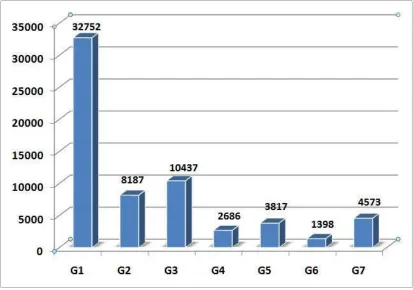
1.1 Total number of contractors by registration grade (2011) 2 1.2 Technical and non-technical approaches to improving
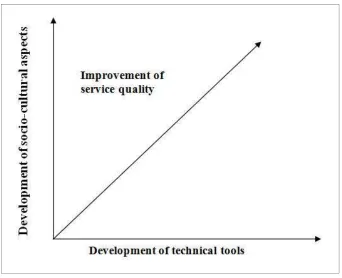
service quality 3
2.1 Overview of Literature Review and the Gap of Study 9 2.2 Overview of the Quality Management Maintenance Theories 14 2.3 Quality Management Matrix with Management Concept
Model 16
2.4 Index of Clauses in ISO 9000:2008 21
2.5 Kanter’s Theory for Maintain quality Management Systems Effectively 30 2.6 Overview of Quality Management System Research in Construction Industry 49 2.7 The effect model of technical approaches and non-technical approaches towards project performance 61 3.1 Flow Chart of Research Methodology 67 3.2 The Iron Triangle of Project Management 70 4.1 Model of Relationship - Cost Variance 153
4.2 Model of Relationship - Cost Performance Index 153
4.3 Model of Relationship - Client Satisfaction 154
4.4 Model of Relationship - Non-conformance Report 154
4.5 Model of Relationship - No. of Accidents 155
4.6 Model of Relationship - Time Variance 155
4.7 Model of Relationship - Fatalities 156
5.2 Revised Framework of Quality Maintenance System
(Suggested Model in this Research) 191 5.3 Final Framework of Quality Maintenance System (After
LIST OF ABBREVIATIONS
ACWP - Actual Cost of Work Performed ANOVA - Analysis of Variance
ATWP - Actual Time of Work Performed BCWP - Budgeted Cost of Work Performed BTWT - Budgeted Time of Work Performed
CIDB - Construction Industry Development Board Malaysia CNC - Communication & Coordination
COPNCFS - Culture of Pride & Climate for Success
CPI - Cost Performance Index
CS - Client Satisfaction
CV - Cost Variance
DOR - Decentralization of Resources EFA - Exploratory Factor Analysis
EPNR - Employee Participation & Responsibilities
F - Fatalities
IT - Intersecting Territories
L - Leadership
MANOVA - Multiple Analysis of Variance
NA - No. of Accidents
NCR - Non-conformance Report NTA - Non-Technical Approaches OSNC - Organization Structure & Culture
QA - Quality Assurance
QC - Quality Control
QMS - Quality Management System
SPSS - Statistical Package for Social Sciences
SV - Schedule Variance
T - Teams
TA - Technical Approaches
TMC - Top Management Commitment TQM - Total Quality Management
TR - Training
LIST OF APPENDICES
APPENDIX TITLE PAGE
A Questionnaire 226
B Population of Sample 234
C Likert-Type Scale Response Anchors 260
D Project List 263
CHAPTER 1
INTRODUCTION
1.1 Introduction
In year 1987, there are many local companies began to notice the importance of ISO 9000 Standard and implement it as the quality management system after launching of ISO 9000 series certification scheme by SIRIM (Standard and Industrial Research Institute of Malaysia) in Malaysia (Yeoh and Lee, 1996). There are total 680 organizations included public agencies, consultants in engineering field, main-contractors, sub-main-contractors, developers and property services companies had been certified by ISO 9000 series in the end of October 1996 (Yeoh and Lee, 1996). The numbers of ISO 9000 series certified companies kept increasing 2425 companies by the end of 2005 (SIRIM, 2005) and 532 companies out of the total numbers are in construction industry. In order to achieve the International Standards’ requirements, the ISO 9000 has become a standard guideline to follow that can create a new quality system or innovate an existing system (Low and Omar, 1997a).
more than 4573 construction companies having ISO 9001: 2000 certifications in the end of 2011.
However, this requirement cannot be the main reason to implement quality management system in a company. The old management system style will remain even though quality management system is adopted if the requirement has become the main reason for certification. This is because the socio-cultural or non-technical aspects may be ignored and lack of human behavioural skills development if the company tend to concentrate on upgrading those standard tools and procedures. Therefore, certification is only an evidence or reward to show that all the staffs work together to achieve minimum requirement of quality management.
Figure 1.1: Total number of contractors by registration grade (2011) (Anonymous, 2011)
technical approaches and non technical approaches (socio-cultural) to monitor, control, assess and improve existing management system constantly. There are some few findings showed that the some contractors put more concentration to the technical approaches and instrumental tools compare to the non-technical approaches (Low, 1993; Seymour and Low, 1990) when they try to improve the current quality management system. Nevertheless, a balance development of technical aspects and socio-cultural aspects has been used widely and effectively in some manufacturing sectors. The purpose of balancing is to improve service quality and it is necessary to implement if organizations in construction sector want to maintain their quality management system effectively (Spekknink, 1995). The concept of balancing the technical requirements and theoretical approach is illustrated in Figure 1.2. Quality management system can be more effective by proper maintenance of the system and it is very important to the construction companies especially those main contractors managing mega projects. Hence, the balance of non-technical aspects and technical aspects will also bring effects towards project performance of the contractors in construction industry.
1.2 Problem Statement
The theoretical approaches indicated that the application of both technical and non-technical approaches in an organization is very crucial in quality maintenance system. Technical approaches are mainly referred to the requirements which have been set out in Clause 4 of the ISO 9000 standards when those ISO certified companies implemented quality management systems (Low and Omar, 1997b) while non-technical approaches are referred to the methodology of implementing quality management systems to form integrative and culture that enhance an organization towards ideal egalitarian and meritocratic (Low, 1998; Low and Omar, 1997b; Low and Omar, 1997a). The combination of implementing technical and non-technical approaches will show better results than those only focus in technical approaches. Although there are many research of quality management system study the stage of implementation and effectiveness of technical approaches but there are few research looking at the effectiveness of non-technical approaches and balancing of both technical approaches and non-technical approaches. Moreover, most of the quality management studies in construction management tend to focus on construction quality. There is limited research study the quality maintenance system in construction management area. Besides, quality management system has become mandatory for Grade Seven contractors in Malaysia to implement so that quality of the mega-projects can be assured. Therefore, it is significant to know the relationship between project performance of the construction companies with the effectiveness of both non-technical approaches and technical approaches.
1.3 Research Question
The research questions of this research are as follows:
a) What is the status of non-technical approaches and technical approaches in Malaysian construction industry?
1.4 Research Objectives
The objectives of this research are as follows:
i. To assess both non-technical approaches and technical approaches which have been implemented in construction companies and effectiveness towards project performance in construction companies
ii. To analyze the relationship between effectiveness of non-technical approaches and technical approaches on project performance
iii. To develop theoretical framework showing the effect of quality management system maintenance on project performance
iv. To identify the problems in Malaysian ISO certified construction companies while implementing both technical and non-technical approaches, and also recommendation to improve on maintenance for quality maintenance system in construction industry
1.5 Research Scope
This research is confines to the ISO 9000 certified companies in Malaysia. The research will be carried out within construction companies including developers, consultants, contractors and sub-contractors. The research scope is also limited to the companies involved in project management.
1.6 Importance of Research
a. To help those large construction companies improving their quality management system and project performance by emphasizing on the quality maintenance system variables that have significant relationship with project performance;
b. To help those medium construction companies who only focus on technical approaches to understand the importance of non-technical approaches so that they can solve the problems related with quality maintenance system;
c. To assist small size contractors to understand more about implementation of quality maintenance system in main contractor companies so that they can work together under main contractors with ISO 9001 certified to increase the productivity and quality of projects towards the common goal of minimum input with maximum output in construction industry;
d. To provide a standard quality maintenance framework for researchers to study effectiveness of quality maintenance system in future with significant project performance variables.
1.7 Thesis Outline
REFERENCES
Abdul-Rahman, H. (1997). Some observations on the issues of quality cost in construction. International Journal of Quality & Reliability Management, 14(5), 464-481.
Abdul-Rahman, H., Berawi, M. A., Berawi, A. R., Mohamed, O., Othman, M., & Yahya, I. A. (2006). Delay mitigation in the Malaysian construction industry. Journal of Construction Engineering and Management, 132(2), 125-133.
Abdulaziz, A. B., & Tawfiq, H. A. (1999). ISO 9000 quality standards in construction. Journal of Management in Engineering, 15(6), 41-45.
Abdullah, M. (1996). Pengukuran Kualiti Ke Arah Peningkatan Daya Saing. Bangi: Universiti Kebangsaan Malaysia.
Abdullah, M. N. B. (2005). A Case Study on Quality Management System in Construction Project. Universiti Teknologi Malaysia, Skudai.
Aboulnaga, I. A. (1998). Integrating quality and environmental management as competitive business strategy for 21st century. Environmental Management and Health, 9(2), 65-71.
Abraham, M., Crawford, J., Carter, D., & Mazotta, F. (2000). Management decisions for effective ISO 9000 accreditation. Management Decision, 38(3), 182-193. Adam, E., Corbett, L., Flores, B., Harrison, N., Lee, T., Rho, B., et al. (1997). An
international study of quality improvement approach and firm performance. International Journal of Operations and Production Management, 17(9),
842–873.
Ahire, S. L., Golhar, D. Y., & Waller, M. A. (1996). Development and validation of TQM implementation constructs. Decision Sciences Journal, 27(1), 23-56. Ahmad, M. F. B., Yusof, S. r. M., & Yusof, N. M. (2007). Comparative Study of
Ahmed, S., & Hassan, M. (2003). Survey and case investigations on application of quality management tools and techniques in SMIs. International Journal of Quality & Reliability Management, 20(7), 795-826.
Ahmed, S. M. (1993). An Integrated Total Quality Management (TQM) Model for the Construction Process. Georgia Institute of Technology, Atlanta.
Ahmed, S. M., Aoieong, R. T., Tang, S. L., & Zheng, D. X. M. (2005). A comparison of quality management systems in the construction industries of Hong Kong and the USA. International Journal of Quality & Reliability Management, 22(2), 149-161.
Al-Alawi, A. I., Al-Marzooqi, N. Y., & Mohammed, Y. F. (2007). Organizational culture and knowledge sharing: critical success factors. Journal of Knowledge Management, 11(2), 22-42.
Alaghbari, W. e., Kadir, M. R. A., Salim, A., & Kamal, E. M. (2007). The significant factors causing delay of building construction projects in Malaysia. Engineering, Construction and Architectural Management, 14(2), 192-206.
Ali, A. S., & Rahmat, I. (2010). The performance measurement of construction projects managed by ISO-certified contractors in Malaysia. Journal of Retail & Leisure Property, 9(1), 25-35.
American Psychological Association. (1985). Standards for Educational and
Psychological Testing. Washington, DC.: American Psychological
Association.
Amsden, D. N., & Amsden, R. T. (1976). QC Circles: Applications, Tools and Theory: American Society for Quality Control, Milwaukee, WI.
Andersen, H. V., & Lawrie, G. (2004). Effective quality management through third-generation balanced scorecard. International Journal of Productivity and Performance Management, 53(7), 634-645.
Anderson, E., Fornell, C., & Rust, R. T. (1997). Customer Satisfaction, Productivity, and Profitability: Differences between Goods and Services. Marketing Science, 16(2), 129-145.
Anderson, M., & Sohal, A. S. (1999). A study of the relationship between quality management practices and performance in small businesses. International Journal of Quality & Reliability Management, 16(9), 859-877.
Anderson, S. W., Daly, J. D., & Johnson, M. F. (1999). Why firms seek ISO 9000 certification: regulatory compliance or competitive advantage. Production and Operations Management, 8(1), 28-43.
Andi, & Minato , T. (2003). Design documents quality in Japanese construction industry. International Journal of Project Management, 21, 537-546.
Aniftos, S. C. (1996). International standards: U.S. construction industry competitiveness. Ann Arbor, Mich: UMI Dissertation Services.
Anonymous. (1994). BS5750/ISO 9000-Setting Standards for Better Business. Croydon: Lloyds Register Quality Assurance Ltd.
Anonymous. (2000, December 12, 2011). ISO 9000 and ISO 9001 plain English introduction. Retrieved 28 December, 2011, from http://praxiom.com/iso-intro.htm
Anonymous. (2011). CIDB Official Portal. Retrieved 10 March, 2011, from http://www.cidb.gov.my/v6/?q=en/annoucement/it-compulsory-gred-g7-contractors-obtain-iso-9001-2000-certification-1st-january-2009
Anonymous. (2012a). Construction Quarterly Statistical Bulletin Retrieved 2 Feb, 2012, from http://www.cidb.gov.my/
Anonymous. (2012b). ISO 9001 Training- Understanding ISO 9001:2008. Retrieved 29 June, 2012, from http://askartsolutions.com/iso9001training/ Arditi, D., & Gunaydin, H. M. (1997). Total quality management in the construction
process. International Journal of Project Management, 15(4), 235-243. Armstrong-Stassen, G., Reavley, M., & Ghanam, D. (2005). Organizational
downsizing and its perceived impact on quality management practices. International Journal of Quality & Reliability Management, 22(9), 950-967.
Arnold, K. L. (1994). The Manager’s Guide to ISO 9000: The Free Press, New York, NY.
Ashford, J. L. (2003). The Management of Quality in Construction. London: E & FN SPON.
Aubrey, C. I., & Ferlkins, P. (1988). Teamwork: Involving People in Quality and Productivity Improvement. Milwaukee, WI, Quality Press, American Society for Quality Control; White Plains, NY, Unipub/Quality Resources.
Badri, M. A., Davis, D., & Davis, D. (1995). A study of measuring the critical factors of quality management. International Journal of Quality & Reliability Management, 12(2), 36-53.
Bagozzi, R. P. (1994). Measurement in Marketing Research. In R. P. Bagozzi (Ed.), Principles of Marketing Research. Oxford, UK: Blackwell Business.
Barad, M., & Raz, T. (2000). Contribution of quality management tools and practices to project management performance. International Journal of Quality & Reliability Management, 17(4/5), 571-583.
Barkley, B., & Saylor, J. (1994). Customer-driven Project Management. New York: McGraw-Hill.
Barrett, P. (2000). Systems and relationships for construction quality. International Journal of Quality & Reliability Management, 17(4/5), 377-392.
Battikha, M. G. (2002). QUALICON: Computer-Based System for Construction Quality Management. Journal of Construction Engineering and Management, 128(2), 164-173.
Battikha, M. G. (2003). Quality management practice in highway construction. International Journal of Quality & Reliability Management, 20(5), 532-550.
Bayazit, O. (2003). Total quality management (TQM) practices in Turkish manufacturing organizations. The TQM Magazine, 15(5), 345-350.
Besterfield, D. H., Besterfield-Michna, C., Besterfield, G. H., & Besterfield-Sacre, M. (2003). Total Quality Management (Third ed.). Upper Saddle River, New Jersey: Pearson Education.
Black, S. A., & Porter, L. J. (1996). Identification of the critical factors of TQM. Decision Science, 27(1), 1-21.
Blanchard, B. S. (1986). Logistic Engineering and Management (3rd ed.): Prentice-Hall, Englewood Cliffs, NJ.
Bray, J. H., & Maxwell, S. E. (1985). Multivariate Analysis Of Variance. Newbury Park: Sage Publications.
Broth, R. A. (1982). Managing Quality for Higher Profits: McGraw-Hill, New York, NY.
Brown, A., & Wiele, T. (1996). A typology of approaches to ISO certification and TQM. Australian Journal of Management Science, 21(1), 57-72.
Bryman, A., & Bell, E. (2011). Business Research Methods New York: Oxford University Press.
BSI, B. S. I. (1992). BS 7850 Total Quality Management. London: British Standards Publishing Limited.
Bubshait , A. A., & Almohawis , S. A. (1994). Evaluating the general conditions of a construction contract. International Journal of Project Management, 12(3), 133-135.
Burati, J. L., Jr, F., J.J. , & Ledbetter, W. B. (1992). Causes of quality deviations in design and construction. Journal of Construction Engineering and Management, 118(1), 34-49.
Carlsson, M., & Carlsson, D. (1996). Experiences of implementation ISO 9000 in Swedish industry. International Journal of Quality & Reliability Management, 13(7), 36-47.
Carmeli, A. (2005). The relationship between organizational culture and withdrawal intentions and behavior. International Journal of Manpower, 26(2), 177-195. Carr, F., Hurtado, K., Lancaster, C., Markert, C., & Tucker, P. (1999). Partnering in
Construction-A practical guide to project success. Chicago: American Bar
Association.
Carson, K. P., & Stewart, G. L. (1996). Job Analysis and the Sociofechnical Approach fo Quality: A Critical Examination. Journal of Quality Management, 1(1), 49-65.
Caudron, S. (1993). Keys to starting a TQM programme. Personnel Journal, 72(2), 28-35.
Chan, A. (2001). A Quest for Better Construction Quality in Hong Kong. Construction Paper 131, CIOB Construction Information Quarterly, 3(2),
Chan, A. P. C., & Tam, C. M. (2000). Factors affecting the quality of building projects in Hong Kong. International Journal of Quality & Reliability Management, 17(4/5), 423-441.
Chan, K. W., & Chan, H. C. (1997). Meeting quality assurance standards in the construction industry: experience from Hong Kong. International Journal of Management, 14(1), 87-91.
Chen, W.-H. (1997). The human side of total quality management in Taiwan: leadership and human resource management. International Journal of Quality & Reliability Management, 14(1), 24-45.
Cheung, S. O., Suen, H. C. H., & Cheung, K. K. W. (2004). PPMS: a web-based construction project performance monitoring system. Automation in Construction, 13(3), 361-376.
Chin, K. S., & Choi, T. W. (2003). Construction in Hong Kong: Success Factors for ISO9000 Implementation. JOURNAL OF CONSTRUCTION ENGINEERING AND MANAGEMENT, 129(6), 599-609.
Chini, A. R., & Valdez, H. E. (2003). ISO 9000 and the U.S. Construction Industry. Journal of Management in Engineering, 19(2), 69-77.
Choi, T., & Eboch, K. (1998). The TQM paradox: relations among TQM practices, plant performance, and customer satisfaction. Journal of Operations Management, 17, 59–75.
Choi, T. W., & Chin, K. S. (2001). A Study of ISO9000 Implementation and Quality Management Practices in Hong Kong Construction Industry. The Asian Journal on Quality, 2(2), 1-23.
Cochran, W. G. (1977). Sampling techniques (3rd ed.). New York: John Wiley & Sons.
Cohen, S. G., & Ledford, G. E. (1994). The effectiveness of self-managing teams: A quasi-experiment. Human Relations,, 47(13-43).
Coleman, S., & Douglas, A. (2003). Where next for ISO 9000 companies? The TQM Magazine, 15(2), 88-92.
Crosby, P. B. (1979). Quality is Free: The Art of Making Quality Certain. NY: McGraw-Hill Book Company, New York.
Curkovic, S., Vickery, S., & Droge, C. (2000). Quality related action programs - their imparct on quality performance and firm performance. Decision Science, 31(4), 885-905.
Dahlgaard, S. M. P. (2000). From Ancient Philosophies to TQM and Modern Management Theories. Linko¨ping: Linko¨ping University.
Dale, B. G. (2002). European quality challenges for the new millennium. Measuring Business Excellence, 6(4), 28-32.
Dean, H. W., & Bowen, D. E. (1994). Management theory and total quality: improving research and practice through theory development. Academy of Management Review, 19(3), 392-418.
Deming, W. E. (1981). Improvement of quality and productivity through action by management. National Productivity Review, 1(1), 12-22.
Deming, W. E. (1982). Quality, Productivity, and Competitive Position: MIT Centre for Advance Engineering Study, Cambridge, MA.
Deming, W. E. (1986). Out of Crisis: MIT Centre for Advanced Engineering, Cambridge, MA.
Deros, B. M., Rahman, M. N. A., Ghani, J. A., Wahab, D. A., Hashim, M. H., & Khamis, N. K. (2009). Role of Senior Management in TQM Implementation in Malaysian Small and Medium Enterprises. Journal - The Institution of Engineers, 72(3), 15-20.
Deros, B. M., Saibani, N., Yunos, B., Rahman, M. N. A., & Ghani, J. A. (2012). Evaluation of Training Effectiveness on Advanced Quality Management Practices. Procedia - Social and Behavioral Sciences, 56, 67-73.
Deros, B. M., Yusof, S. r. M., & Salleh, A. M. (2003). A Comparative Study of Benchmarking Practices of Malaysian Companies with and without Quality Certification. Proceedings of the International Conference on Mechanical Engineering 2003. 26-28, December. Dhaka, Bangladesh: 1-6.
Dick, G. P. M. (2000). ISO 9000 certification benefits, reality or myth? TQM Magazine, 12(6), 365-371.
Dissanayaka, S. M., Kumaraswamy, M. M., Karim, K., & Marosszeky, M. (2001). Evaluating outcomes from ISO 9000-certified quality systems for Hong Kong constructors. Total Quality Management, 12(1), 29-40.
Dow, D., Samson, D., & Ford, S. (1999). Exploding the myth: do all quality management practices contribute to superior quality performance? Production and Operations Management, 8(1), 1-27.
Drew, E., & Healy, C. (2006). Quality management approaches in Irish organizations. The TQM Magazine, 18(4), 358-371.
Dumas, R. A. (1989). Organizationwide quality: how to avoid common pitfalls. Quality Progress, 22(5), 41-44.
Ebrahimpour, M., Withers, B. E., & Hikmet, N. (1997). Experiences of US- and foreign-owned firms: a new perspective on ISO 9000 implementation. International Journal of Production Resarch, 35(2), 569-576.
Egan, J. (1998). Rethinking construction. London: Department of the Environment, Transportation, and Regions.
Eisenhardt, K. M., & Tabrizi, B. N. (1995). Accelerating adaptive processes: product innovation in the global computer industry. Administrative Science Quarterly, 40, 84-110.
Elghamrawy, T., & Shibayama, T. (2007). Total Quality Management Implementation in the Egyptian Construction Industry. Journal of Management in Engineering, 24(3), 156-161.
Emery, F. E., & Thorsrud, E. (1969). Form and content in industrial democracy: London: Tavistock.
Emery, F. E., & Trist, E. L. (1969). Sociotechnical systems.: London: Penguin. Emison, G. A. (2004). Pragmatism, adaptation, and total quality management:
Philosophy and science in the service of managing continuous improvement. Journal of Management in Engineering, 20(2), 56-61.
Endrijonas, J. (1994). Certification a bane or a boon? Managing Automation, 9(5), 38-39.
Eng, Q. E., & Yusof, S. r. M. (2002). Comparison of TQM Implementation Practices in Malaysian Electrical and Electronics Industry: A Survey. Paper presented
at the 2nd World Engineering Congress.
Evans, J. R., & Lindsay, W. M. (1996). The Management and Control of Quality (3rd ed.). Minneapolis, West.
Evans, J. R., & Lindsay, W. M. (1999). The Management and Control of Quality: South-Western College Publishing, Cincinnati, OH.
Everett, J. G., & Jr., P. B. F. (1996). Costs of Accidents and Injuries to the Construction Industry. Journal of Construction Engineering and Management, 122(2), 158-164.
Ezeldin, A. S., & Abu-Ghazala, H. (2007). Quality Management System for Design Consultants: Development and Application on Projects in the Middle East. Journal of Management in Engineering, 23(2), 75-87.
Feigenbaum, A. V. (1990). Management of quality: the key to the nineties. Journal for Quality and Participation, 13(2), 14-19.
Feigenbaum, A. V. (1992). Quality: our new competitive edge. Executive Excellence, 9(5), 18-19.
Fening, F. A., & Amaria, G. P. a. P. (2008). Relationship between quality management practices and the performance of small and medium size enterprises (SMEs) in Ghana. International Journal of Quality & Reliability Management, 25(7), 694-708.
Fisscher, A. M. (1994). Kwaliteitsmanagement en bedrijfsethisch handelen. Faculteit der Technische Bedrijfskunde, Universiteit Twente, Enschede.
Flynn, B. B., Schroeder, R. G., & Sakakibara, S. (1994). A framework for quality management research and an associated measurement instrument. Journal of Operations Management, 11(4), 339-366.
Flynn, B. B., Schroeder, R. G., & Sakakibara, S. (1995). The impact of quality management practices on performance and competitive advantage. Decision Sciences, 26(5), 659-692.
Fok, L. Y., Hartman, S. J., Patti, A. L., & Razek, J. R. (2000). Human factors affecting the acceptance of total quality management. International Journal of Quality & Reliability Management, 17(7), 714-729.
Forbes, L. H. (2002). Lean method in construction. Proceedings of the First International Conference on Construction in the 21st Century—Challenges
and Opportunities for Management and Technology. 25-26, April. CITC,
Forker, L. B. (1996). The contribution of quality to business performance. International Journal of Operations & Production Management, 16(8), 44-62.
Forza, C., & Flippini, R. (1998). TQM impact on quality conformance and customer satisfaction: a causal model. International Journal of Production Economics, 55(1), 1-20.
Fotopoulos, C., & Psomas, E. (2009). The impact of “soft” and “hard” TQM elements on quality management results. International Journal of Quality & Reliability Management, 26(3), 150-163.
Fram, E., & Presberg, M. (1992). TQM is a catalyst for new marketing applications. Marketing News, 26(23), 17.
Gadenne, D., & Sharma, B. (2009). An investigation of the hard and soft quality management factors of Australian SMEs and their association with firm performance. International Journal of Quality & Reliability Management, 26(9), 865-880.
Ganaway , N. B. (2006). Construction Business Management: A Guide to Contracting for Business Success. London: Butterworth-Heinemann.
Garvin, D. (1988). Managing Quality. Free Press, New York, NY.
Georgy , M. E., Chang , L. M., & Zhang , L. (2005). Prediction of engineering performance: A Neurofuzzy approach. Journal of Construction Engineering and Management, 131(5), 548-557.
Giles, R. (1997). perspective for construction industry in the UK. Training for Quality, 5(4), 178-181.
Gits, C. W. (1984). On the Maintenance Concept for a Technical System - A Framework for Design. Helmond, Dissertatie Drukkery Wibro.
Glass, G. V., Peckham, P. D., & Sanders, J. R. (1972). Consequences of failure to meet assumptions underlying the fixed effects analysis of variance and covariance. Review of Educational Research, 42(3), 237-288.
Gotzamani, K. D., Theodorakioglou, Y. D., & Tsiotras, G. D. (2006). A longitudinal study of ISO 9000 (1994) series' contribution towards TQM in Greek industry The TQM Magazine, 18(1), 44-54.
Gryna, F. M. (1981). Quality Circles – A Team Approach to Problem Solving: AMACOM, American Management Association, New York, NY.
Gu, S., & Zhou, Y. (2002). Case studies on construction companies implementing ISO9001. Beijing: Chinese Measurement.
Hafeez, K., Malak, N., & Abdelmeguid, H. (2006). A framework for TQM to achieve business excellence. Total Quality Management, 17(9), 1213-1229. Hage, J. (1980). Theories of Organization: Form, Process and Transformation: John
Wiley & Sons Inc., New York, NY.
Harwell, M. R., Rubinstein, E. N., Hayes, W. S., & Olds, C. C. (1992). Summarizing Monte Carlo results in methodological research: The one-and two-factor effects ANOVA cases. Journal of Educational Statistics, 17(4), 315-339. Hendricks, K., & Singhal, V. (1997). Does implementing an effectiveTQM program
actually improve operating performance? Empirical evidence from firms that have won quality awards. Management Science, 43(9), 1258–1274.
Hewitt, S. (1994). Strategic advantages emerge from tactical TQM tools. Quality Progress, 27(10), 57-59.
Hiyassat, M. (2000). Applying the ISO Standards to a Construction Company: A Case Study. International Journal of project Management, 18(4), 275-280. Hoang, D. T., Igel, B., & Laosirihongthong, T. (2006). The impact of total quality
management on innovation. Findings from a developing country. International Journal of Quality & Reliability Management, 23(9),
1092-1117.
Huarng, F., Horng, C., & Chen, C. (1999). A study of ISO 9000 process, motivation and performance. Total Quality Management, 10(7), 1009-1025.
Huselid, M. A. (1994). Document HR’s effect and company performance. HR Magazine, 39, 79-84.
Huselid, M. A., Jackson, S. E., & Schuler, R. S. (1997). Technical and strategic human resource management effectiveness as determinants of firm performance. Academy of Management Journal, 40, 171-181.
Ismail, M. Y., Baradie, M. E., & Hashmi, M. S. J. (1998). Quality Management in the Manufacturing Industry: Practice vs Performance. Journal of Computers Industry Engineering, 35(3), 519-522.
Ismail, M. Y., & Hashmi, M. S. J. (2010). The state of quality management in the Irish manufacturing industry, Total Quality Management. Total Quality Management, 10(6), 853-862.
ISO8402. (1994). International Standard: Quality Management and Quality Assurance –Vocabulary. Geneva, Switzerland: International Organization for Standardization.
Issac, R., & Pitt, D. (2000). Organization culture: it’s alive! But there’s no fixed address. Golembiewski, R. (Ed.), Handbook of Organizational Behavior, 2nd ed, 113-144.
Jusoh, A., & Yatim, S. M. (2008). Pelaksanaan ISO 9000: Pengajaran Dari Kajian Baru Jurnal Teknologi, 48(E), 71-83.
Jusoh, A., Yusoff, R. Z., & Mohtar, S. (2008). Determining TQM practices in university R&D activities using factor analysis: Research experience of Malaysian universities. Jurnal Kemanusiaan, 11(6), 36-54.
Kam, C. W., & Tang, S. L. (1997). Development and implementation of quality assurance in public construction works in Singapore and Hong Kong. International Journal of Quality & Reliability Management, 14(9), 909-928.
Kanter, R. (1994). The Change Masters: Corporate Entrepreneurs at Work. Routledge, London.
Kanter, R. (2006). Innovation: The Classic Traps. Harvard Business Review, 11(2006), 1-15.
Karim, K., Marosszeky, M., & Kumaraswamy, M. (2005). Organizational Effectiveness Model for Quality Management Systems in the Australian Construction Industry. Total Quality Management, 16(6), 793–806.
Karuppusami, G., & Gandhinathan, R. (2006). Pareto analysis of critical success factors of total quality management. A literature review and analysis. The TQM Magazine, 18(4), 372-385.
Kerlinger, F. N., & Lee, H. B. (2000). Foundations of Behavioral Research (4th ed.). USA: Wadsworth Thomson Learning.
Kim, D.-Y., Kumar, V., & Kumar, U. (2011). A performance realization framework for implementing ISO 9000. International Journal of Quality & Reliability Management, 22(4), 383-404.
Kivipold, K., & Vadi, M. (2010). A measurement tool for the evaluation of organizational leadership capability. Baltic Journal of Management, 5(1), 118-136.
Kubal, M. T. (1994). Engineered quality in construction: partnering and TQM. New York: McGraw-Hill.
Kumaraswamy , M. M., & Thorpe , A. (1999). Systematizing construction project evaluations . Journal of Management in Engineering, 12(1), 34-39.
Lagrosen, Y., & Lagrosen, S. (2005). The effects of quality management - a survey of Swedish quality professionals. International Journal of Operations & Production Management, 25(10), 940-952.
Landin, A. (2000). ISO 9001 within the Swedish construction sector. Construction Management and Economics, 18(5), 509-518.
Larson, C. (1988). Team tactics can cut product development costs. Journal of Business Strategy, 9(5), 22-25.
Lasserre, P., & Probert, J. (1994). Competing on the Pacific Rim: high risks and high returns. Long Range Planning, 27(2), 3-11.
Latham , M. (1994). Constructing the Team. London: HMSO.
Lau, A. W. T., & Tang, S. L. (2009). A survey on the advancement of QA (quality assurance) to TQM (total quality management) for construction contractors in Hong Kong. International Journal of Quality & Reliability Management, 26(5), 410-425.
Lawler, E. E. I. (1986). High involvement management: San Francisco: Jossey-Bass. Lawler, E. E. I., Mohrman, S. A., & Ledford, G. E., Jr. (1992). Employee
involvement and total quality management: San Francisco: Jossey-Bass.
Lee, D. E., Lim, T. K., & Arditi, D. (2011). An Expert System for Auditing Quality Management Systems in Construction. Computer-Aided Civil and Infrastructure Engineering, 26(8), 612-631.
Lee, T. Y. (1998). The development of ISO 9000 certification and the future of quality management: A survey of certified firms in Hong Kong. International Journal of Quality & Reliability Management, 15(2), 162-177.
Lester, R. H., Enrick, N. L., & Motley, H. E. J. (1977). Quality Control for Profit: Industrial Press, New York, NY.
Leung, H. K. N., Chan, K. C. C., & Lee, T. Y. (1999). Costs and benefits of ISO 9000 series: a practical study. International Journal of Quality & Reliability Management, 16(7), 675-690.
Levin, I. (2000). Five windows into organizational culture. Organizational Development Journal, 18(1), 83-94.
Lewis, W. G., Pun, K. F., & Lalla, T. R. M. (2006). Empirical investigation of the hard and soft criteria of TQM in ISO 9001 certified small and medium-sized enterprises. International Journal of Quality & Reliability Management, 23(8), 964-985.
Liao, W.-C., & Tsai, C.-C. (2001). A study of cockpit crew teamwork behaviors. Team Performance Management: An International Journal, 7(1/2), 21-26.
Lim , C., & Mohamed , M. (2000). An exploratory study into recurring construction problems International Journal of Project Management, 18, 267-273.
Lix, M. L., Keselman, J. C., & Keselman, H. J. (1996). Consequences of assumption violations revisited: A quantitative review of alternatives to the one-way analysis of variance F test. Review of Educational Research, 66(4), 579-619. Love, P. E. D., & Holt, G. D. (2000). Construction business performance
measurement: the SPM alternative. Business Project Management Journal, 6(5), 408-416.
Low, S. P. (1993). The rationalisation of quality in the construction industry: some empirical findings. Construction Management and Economics, 11(4), 247-259.
Low, S. P. (1998). Managing total service quality: a systemic view. Managing Service Quality, 8(1), 34–45.
Low, S. P., & Alfelor, W. M. (2000). Cross-cultural influences on quality management systems: two cases studies. MCB University Press, 49(4), 134-144.
Low, S. P., & Chan, F. M. (1997). Quality management systems: a study of authority and empowerment. Building Research and Information, 25(3), 158-169. Low, S. P., & Goh, K. H. (1994). Construction quality assurance: problems of
implementation at infancy stage in Singapore. International Journal of Quality & Reliability Management, 11(1), 22-37.
Low, S. P., Kee, T. B., & Leng, A. A. A. (1999). Effectiveness of ISO 9000 in raising construction quality standards: some empirical evidence using CONQUAS scores. Structural Survey, 17(2), 89-108.
Low, S. P., & Lim, B. L. (2000). Quality system QS 9000 for construction: Is the industry in Singapore ready? Journal of Construction Research, 1(1), 63-69. Low, S. P., & Omar, H. F. (1997a). The effective maintenance of quality
management systems in the construction industry. International Journal of Quality & Reliability Management, 14(8), 768-790.
Low, S. P., & Omar, H. F. (1997b). Integration, segmentalism and the maintenance of quality management systems in the construction industry. Building Research and Information, 25(1), 36-49.
Low, S. P., & Shiua, S. C. (2000). The maintenance of construction safety: riding on ISO 9000 quality management systems. Journal of Quality in Maintenance Engineering, 6(1), 28-44.
Low, S. P., & Tan, J. H. K. (2005). Integrating ISO 9001 Quality Management System and ISO 14001 Environmental Management System for Contractors. Journal of Construction Engineering and Management, 131(11), 1241-1244.
Low, S. P., & Teo, J. A. (2004). Implementing Total Quality Management in Construction Firms. Journal of Management in Engineering, 20(1), 8-15. Mack, T. (1990). Oryx Energy Corp.: Energizing a Bureaucracy. Forbes, September
17, 76-80.
Mahmood, W. Y. W., & Mansor, N. (1996). Quality Management In Construction Industry - Malaysia Experience. Jurnal Ukur Bahan.
Matthews, M., & Burati, J. J. (1989). Quality Management organizations and Techniques: The Construction Industry Institute, USA.
Mbugua, L. M., Harris, P., Holt, G. D., & Olomolaiye, P. O. (1999). A framework for determining critical success factors influencing construction business performance. Proceedings of the 15th Annual ARCOM Conference. 5-7, September. Liverpool, United Kingdom: 255-264
McCabe, S. (1996). Creating excellence in construction companies: UK contractors' experiences of quality initiatives. The TQM Magazine, 8(6), 14-19.
Mclintyre, C., & Kirschenman, M. (2000). Survey of TQM in construction industry in upper Midwest. Journal of Management in Engineering, 16(5), 67-70. Mills, D. (1993). Quality Auditing. London, UK: Chapman and Hall.
Miyagawa, M., & Yoshida, K. (2005). An empirical study of TQM practices in Japanese-owned manufacturers in China. International Journal of Quality & Reliability Management, 22(6), 536-553.
Mo, P. T., & Chan, M. S. (1997). Strategy for the successful implementation of ISO 9000 in small and medium manufacturers. The TQM Magazine, 9(2), 135-145. Moatazed-Keivani, R., Ghanbari-Parsa, A. R., & Kagaya, S. (1999). ISO 9000
standards: perceptions and experiences in the UK construction industry. Construction Management and Economics, 17(1), 107-119.
Moch, M. K. (1976). Structure and resource allocation. Administrative Science Quarterly, 21(4), 661-674.
Mohammed, A. H. b., & Abdullah, M. N. b. (2006). Quality Management System In Construction. Proceedings of the International Conference on Construction Industry. 12-24 June. Padang, Indonesia: 1-15.
Montes, F. J. L. n., Jover, A. V., & Ferna´ndez, L. M. M. (2003). Factors affecting the relationship between total quality management and organizational performance. International Journal of Quality & Reliability Management, 20(2), 189-209.
Motwani, J. G., Mahmoud, E., & Rice, G. (1994). Quality practices of Indian organizations: an empirical analysis. International Journal of Quality & Reliability Management, 1(1), 38-52.
Naor, M., Goldstein, S. M., Linderman, K. W., & Schroeder, R. G. (2008). The Role of Culture as Driver of Quality Management and Performance: Infrastructure Versus Core Quality Practices. Decision Sciences Journal of Innovative Education, 39(4), 671–702.
Ng, S. T. (2005). Performance of engineering consultants in ISO 9000-based quality management systems implementation. Engineering, Construction and Architectural Management, 12(6), 519-532.
Noori, H. (1991). TQM and its building blocks: learning from world-class organizations. Optimum, 22(3), 31-38.
Nunnally, J. C., & Bernstein, I. H. (1994). Psychometric Theory (3rd ed.). New York: McGraw-Hill, Inc.
Oakland, J. S., & Aldridge, A. J. (1995). Quality management in civil and structural engineering consulting. International Journal of Quality & Reliability Management, 12(3), 32-48.
Odeh , A. M., & Battaineh , H. T. (2002). Causes of construction delay: Traditional contracts. International Journal of Project Management, 20, 67-73.
Orwig, R. A., & Brennan, L. L. (2000). An integrated view of project and quality management for project-based organizations. International Journal of Quality & Reliability Managemen, 17(4/5), 351-363.
Öztaş, A., & Ökmen, Ö. (2005). Judgmental risk analysis process development in construction projects. Building and Environment, 40(9), 1244-1254.
Palaneeswaran, E., Ng, T., & Kumaraswamy, M. (2006). Client satisfaction and quality management systems in contractor organizations. Building and Environment, 41(11), 1557–1570.
Parasuraman , A., Zeithaml , V. A., & Berry , L. L. (1988). Service quality: A multi-item scale for measuring consumer perceptions of quality. Journal of Retailing, 64, 13-40.
Parfitt , M. K., & Sanvido , V. E. (1993). Checklist of critical success factors for building projects. Journal of Management in Engineering, 9(3), 243-249. Parsa, A., & Keivani, R. (1997). Making the most of quality management systems.
Construction Manager, September(1), 16-17.
Pheng, L., & Teo, J. (2004). Implementing Total Quality Management in Construction Firms. Journal of Management in Engineering, 20(1), 8-15. Powell, T. C. (1995). Total quality management as competitive advantage: a review
and empirical study. Strategic Management Journal, 16, 15-37.
Prajogo, D. I. (2005). The comparative analysis of TQM practices and quality performance between manufacturing and service firms. International Journal of Service Industry Management, 16(3), 217-228.
Prajogo, D. I., & McDermott, D. M. (2005). The relationship between total quality management practices and organizational culture. International Journal of Operations & Production Management, 25(11), 1101-1122.
Putri, N. T., & Yusof, S. r. M. (2008). Critical Success Factors for Implementing Quality Engineering (QE) In Malaysian's and Indonesian's Automotive Industries: A Proposed Model. International Journal of Automotive Industry and Management, 2(1), 1-15.
Rahman, H. A., Karim, S. B. A., Danuri, M. S. M., Berawi, M. A., & Wen, Y. X. (2007). Does Professional Ethic Affects Construction Quality? Proceedings of the Quantity Surveying International Conference. 4-5, September. Kuala
Lumpur, Malaysia: 1-10
Rahman, S. (2004). The future of TQM is past. Can TQM be resurrected? Total Quality Management, 15(4), 411-422.
Rahman, S., & Bullock, P. (2005). Soft TQM, hard TQM, and organizational performance relationships: an empirical investigation. Omega, 33(1), 73-83. Rausch, E., & Anderson, C. (2011). Enhancing Decisions with Criteria for Quality
Abstract.
Reddy, J., & Berger, A. (1983). Three essentials of product quality. Harvard Business Review, 61(4), 153-159.
Reed, R., Lemak, D. J., & Mero, N. P. (2000). Total quality management and sustainable competitive advantage. Journal of Quality Management, 5, 5-26. Reich, R. (1994). Leadership and the high performance organization. Journal for
Quality and Participation, 17(2), 6-11.
Rosenthal, R., & Rosnow, R. L. (1991). Essentials of Behavioral Research. Methods and Data Analysis (2nd ed.). Boston: McGraw Hill.
Sa´nchez-Rodriguez, C., & Martı´nez-Lorente, A. R. (2004). Quality management practices in the purchasing function: an empirical study. International Journal of Operations & Production Management, 24(7), 666-687.
Sail, R. M., & Alavi, K. (2010). Social skills and social values training for future k-workers. Journal of European Industrial Training, 34(3), 226-258.
Salter , A., & Torbett , R. (2003). Innovation and performance in engineering design. Journal of Construction Management and Economics, 21, 573-580.
Sambasivan, M., & Soon, Y. W. (2007). Causes and effects of delays in Malaysian construction industry. International Journal of Project Management, 25(5), 517–526.
Samson, D., & Terziovski, M. (1999). The relationship between total quality management practices and operational performance. Journal of Operations Management, 17(4), 393-409.
Sanvido, V., Grobler, F., Parfitt, K., Guvenis, M., & Coyle, M. (1992). Critical success factors for construction projects. Journal of Construction Engineering and Management, 118(1), 94-111.
Saporito, B. (1986). The revolt against “working smarter.”. Fortune, 114(2), 58-65. Schonberger, R. J. (1982). Japanese Manufacturing Techniques: Macmillan, New
York, NY.
Schonberger, R. J. (1986). World class manufacturing: The lessons of simplicity applied: New York: Free Press.
Seawright, K. W., & Young, S. T. (1996). A quality definition continuum. Interfaces, 26(3), 107-113.
Sekaran, U. (2005). Research Methods For Business: A skill-building appraoch (4th ed.). Singapore: John Wiley & Sons, Inc.
Seymour, D. (1997). Assessing quality control systems: some methodological considerations. Rotterdam: Balkema: Lean Construction.
Seymour, D., & Low, S. (1990). The quality debate. Construction Management and Economics, 8(1), 13-29.
Sharma, B., & Gadenne, D. (2002). An inter-industry comparison of quality managament practices and performance. Managing Service Quality, 12(6), 394-404.
Shea, C. M., & Howell, J. M. (1998). Organizational Antecedents to the Successful Implementation of Total Quality Management: A Social Cognitive Perspective. Journal of Quaiity Management, 3(1), 3-24.
Sila, I., & Ebrahimpour, M. (2005). Critical linkages among TQM factors and business results. International Journal of Operations & Production Management, 25(11), 1123-1155.
Simon, J. C., & Hoes, F. (1994). Standard based quality - the use of ISO 9000 standards and total quality. EOQ, 169-178.
Sinclair, D., & Zairi, M. (1995). Effective process management through performance measurement: part III-an integrated model of total quality-based performance measurement. Business Process Re-engineering & Management Journal, 1(3), 50-65.
Singh, P. J., & Smith, A. (2006). An empirically validated quality management measurement instrument. Benchmarking: An International Journal, 13(4), 493-522.
SIRIM. (1994). MS ISO 8402:1994 Quality Management System - Vocabulary: SIRIM Malaysia.
SIRIM. (2005). Malaysian Standard MS ISO9000 (Vol. 12: Part 2): SIRIM Malaysia. Snee, R. D. (1986). In pursuit of total quality. Quality Progress, 19(8), 25-53.
Snell, S. A., & Dean, J. W., Jr. (1992). Integrated manufacturing and human resource management: A human capital perspective. Academy of Management Journal, 35(3), 467-504.
Soetanto , R., & Proverbs , D. G. (2004). Intelligent models for predicting levels of clien