© 2017, IRJET | Impact Factor value: 6.171 | ISO 9001:2008 Certified Journal | Page 1203
Experimental Study of Hydrogen Peroxide Induction to a 4-Stroke
Diesel Engine Working on Bio-Diesel Blends
Dhanraj P
1, Channabasavaraj B Dharani
2, Charanraj A V
3, Devaraj R B
41 Assistant professor (Mechanical) AMC College of Engineering 2 Assistant professor (Mechanical) Bangalore Technological Institute
3,4Assistant professor (Mechanical) Bangalore College of Engineering and Technology
---***---
Abstract– Major need of energy generation is satisfied by fossil fills which are utilized for overall transportation In recent year India need sources of an alternative fuel as a biodiesel and its significant potential can be produced in India right around 10%-30% of diesel can be replaced with mixing of biodiesel. This biodiesel can reduce major Burdon on the import and also reduction in pollution level. For India most extreme wasteland can be used for plantation of sources as a seed base like Honge, Calophylum inophylum and biodiesel can be created and make it accessible as alternative fuel and so on. Biodiesel is a renewable fuel, which can reduce the utilization of petroleum based fuels and possibly bring down the general green house gas emissions of internal combustion engines. In this way, to reduce emissions, researchers have focused their interest in the areas of biodiesel as alternative fuel for diesel engine.
The focus of this paper is to lead investigation of biodiesel properties and its performance with different blends. This will be the major sources in the generation of energy for the substitution of diesel. The impact of utilization of distinctive biodiesel fuels on engine power, fuel consumption, thermal efficiency and engine emissions are gathered analyzed with that of conventional diesel fuel. Experimental investigation will be carried out on a four stroke single CI engine to find out the performance and emission characteristics.
It is also proposed to use small amount of hydrogen based fuel additives. The effect of additive on the performance and emission parameter will be investigated.
In this paper it will be a combination of two oils sesame oil and waste coconut oil. Since waste coconut oil solidifies at atmospheric temperature it has been used with sesame oil. A mixture of sesame oil and waste coconut oil and diesel will form the blend. Performance test emission test and combustion test are performed,results are comparable with diesel
I. INTRODUCTION
The main aim of the Rudolf Diesel to provide a better/new type of IC engineoperating with high efficiency than the otto cycle engine and conventional engines, that could be operated on different fuels. The steam engines used in the industries has been replaced by efficient CI engine for the
power generation. The global warming is caused of hydrocarbon (HC), oxides of nitrogen (NOX) and carbon
oxide (CO) emissions. From the combustion process these emissions are emitted. Transport sector has a purely responsibility for the environmental damage. It is a part in global warming potentially increased day by day and now bigger than industrial sectors. The CI engines are used in many sectors i.e transportation, electric power generation, industries and agriculture sectors.
The diesel engines (CI engines) are widely used in all sectors, now a day fossil fuels are reduce by consuming and increasing of oil cost so need to find alternative fuel for diesel engine. In addition to that, emissions have formed due to combustion of fuels in CI engine. Experts are stated, emissions may cause cancer; respiratory effects; pollution of soil, air and water; and environment change. In Europe countries, researches on reducing diesel emissions are being founded. There are many works on developing alternative fuel for the diesel engines. Because of emissions effect, the alternative fuel for Internal Combustion (IC) engine is considered as a option. If the alternative fuel is a renewable, biodiesel is one of the alternative fuels for diesel engine. Day by day fossil fuels are demanding in developing countries hence need to find some appropriate solution. The biodiesel like calophylum-inophylum, jatropha, pongamia pinnata oil is available in environment; it could be converting to biodiesel.
The bio-fuel oils like peanut, sun flower, soya bean oil are used as alternative fuel for diesel engines and are adopted in many countries. These plants can be grown in mass/ large scale on waste/agricultural lands, so chief resource may be available for production of biodiesel. Tests will be carried out in diesel engine by using biodiesel and analyses various parameter i.e BSFC (brake specific fuel consumption), ηbth (brake thermal efficiency) and emissions are NOX, CO, HC gases in exhaust.
II BIODIESEL
© 2017, IRJET | Impact Factor value: 6.171 | ISO 9001:2008 Certified Journal | Page 1204 and diesel fuel were more extravagant than diesel. Thus,
examine movement and advancements on vegetable oil were not taken truly on those days. There is a restored enthusiasm for vegetable oil in this decade when it was understood that petroleum fuel are declining speedier and eco-accommodating renewable substitutes must be found for substitution to the petroleum diesel. Thus biodiesels are increasing more enthusiastically as an alluring fuel because of the exhausting of fossil fuel assets.
Chemically/Artificially biodiesel is alluded as mono-alkyl esters of long chain unsaturated fat got from renewable organic sources. It can be specifically utilized as a part of the CI engine. Bio-diesel fuel is a clean blazing option fuel that originates from 100% renewable assets. Numerous individuals accept that Biodiesel is the fuel without bounds. Some of the time it is otherwise called Bio-fuel. Biodiesel does not contain petroleum, but rather petroleum can be blended to deliver a biodiesel mix that can be utilized as a part of various vehicles. Immaculate biodiesel fuel however, must be utilized as a part of diesel motors. Biodiesel is biodegradable and non-harmful.
The fundamental goal of this work is to examine the emission characteristics of CI engine fuelled with biodiesel obtained from Calophylum Inophylum Oil and/or its mixes with diesel fuel, which will help in both the bearing of lessening outflow issues and quest of option fuel for CI motors.
Hydrogen peroxide
Hydrogen peroxide has chemical formula H2O2, it’s a colour less fluid, pure formof hydrogen peroxide is dangerous fluid hence for the safety purpose aqueous solution is used only 6% of hydrogen peroxide will be contained in it; hydrogen peroxide is used as liquid propellant in rocket engines along with the alcohol. Usually hydrogen peroxide is non-flammable fluid; main idea to use this fluid is its thermal decomposition at 152oc and its elevated temperatures, once hydrogen peroxide reaches its boiling point, it starts decomposing in to water molecule i.e. H2O(steam) and O2.
2H2 O2 → 2H2O + O2
Above reaction will takes place when hydrogen peroxide is heated up to boiling temperature by releasing enamours amount of heat after decomposition. Hence hydrogen peroxide is used as additive Since H2O2 having a density of 1.130 g/cm3 is higher worth than the immaculate diesel fuel. The density of the fuel mixes demonstrates the expanding quality with the expanded in H2O2organization in the blend because of higher density of hydrogen peroxide.
III PREPARATION OF BIODIESEL
The most common process to produce biodiesel is Tranesterification. Sometimes the process “transesterification” is named alcoholisis or methanolisis. This process is converting Calophylum inophylum (surahonne) oil to Calophylum inophylum methyl ester. The 70-80% of viscosity is reduced from initial value for distinct oil methyl ester after transesterification. Methanol is reacts with high viscocity oil in the presence of NaOH or KOH catalyst during reaction to form an ester with short chain alcohol.
Blending Procedure
Calophyllum Inophyllum methyl ester (COME), diesel and hydrogen peroxide additive are blended in following proportions by volume
1.60% diesel and 40% biodiesel.
2.60% diesel,38% biodiesel and 2% additive. 3.60% diesel,34% biodiesel and 6% additive. 4.60% diesel,30% biodiesel and 10% additive
1) Measuring of fuel: diesel, biodiesel and additive are measured in measuring beaker at required proportion.
2) Magnetic stirrer and sonicator are used for proper mixing of fuels and subsequently physical properties of biodiesel and its blends were evaluated.
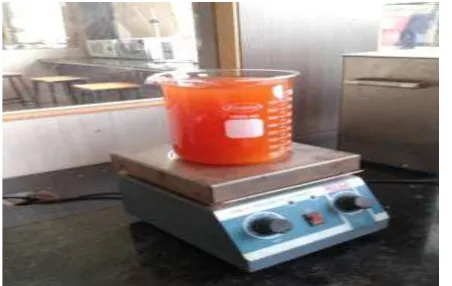
Magnetic Stirrer or Magnetic Mixer
[image:2.596.323.549.609.752.2]It is a device used to rotating magnetic field to drum up a buzz bar drenched in afuel mixes to turn rapidly. The turning field may be made either by a pivoting magnet set underneath the vessel with the fuel mixes. Attractive mix bars function admirably in glass vessels regularly utilized for synthetic responses, as glass does not considerably influence an attractive field. The constrained size of the bar implies that magnetic stirrers must be utilized for moderately little examinations, of 5 liters or less.
© 2017, IRJET | Impact Factor value: 6.171 | ISO 9001:2008 Certified Journal | Page 1205 Sonicator
[image:3.596.321.576.121.315.2]Sonication is a procedure in which sound waves are utilized to disturb particles in arrangement. The sound waves utilized as a part of Sonication are normally ultrasound waves with frequencies around 20 kHz that is 20,000 cycles for every second and as recurrence builds the quality of the unsettling increments. In arrangement, the particles vibrate in light of the fact that as they experience cycles of weight, minuscule vacuum air pockets structure and afterward fall into arrangement, a procedure called cavitations. These vibrations can disturb atomic communications; break clusters of particles separated and lead to blending.
Fig 2 sonicator
Properties of Calophyllum Inophyllum Biodiesel
Parame
ters Unit DIESEL B38/A2 B34/A6 B30/A10 B40 Density
at 300c
Kg/
m3 835 860 865 875 855
Viscosit y at 400c
CST 3.27
36 3.72 3.98 4.39 3.696
Flash point
0C 56 84 83 82 89
Fire point
0C 58 98 94 91 110
Calorific
value Kj/kg 44800 37061 39671 42282 38635
IV EXPERIMENTAL SETUP
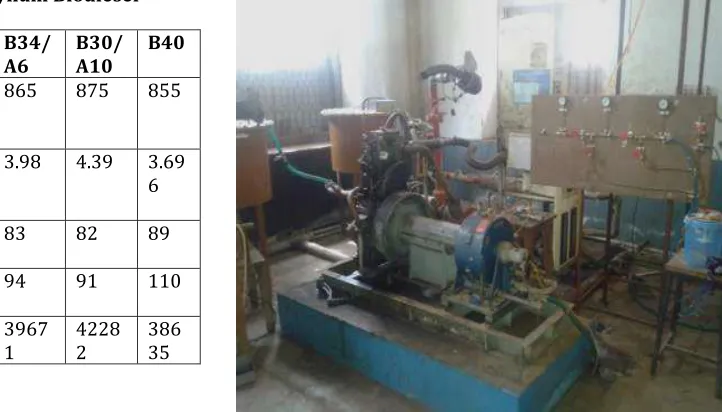
[image:3.596.98.226.261.510.2]Engine Layout
Fig 3 Experimental setup
PT: Pressure transducer T1: inlet temp of Jacket water. T2: outlet temp of Jacket water. T3: inlet temp of Calorimeter water T4: outlet temp of Calorimeter water T5: Temp of Exhaust gas to calorimeter. T6: temp of Exhaust gas from calorimeter. Ne: Rotary encoder
EGA: Exhaust Gas Analyzer F1: Flow of fuel
[image:3.596.188.549.535.741.2]© 2017, IRJET | Impact Factor value: 6.171 | ISO 9001:2008 Certified Journal | Page 1206 Specifications of Engine
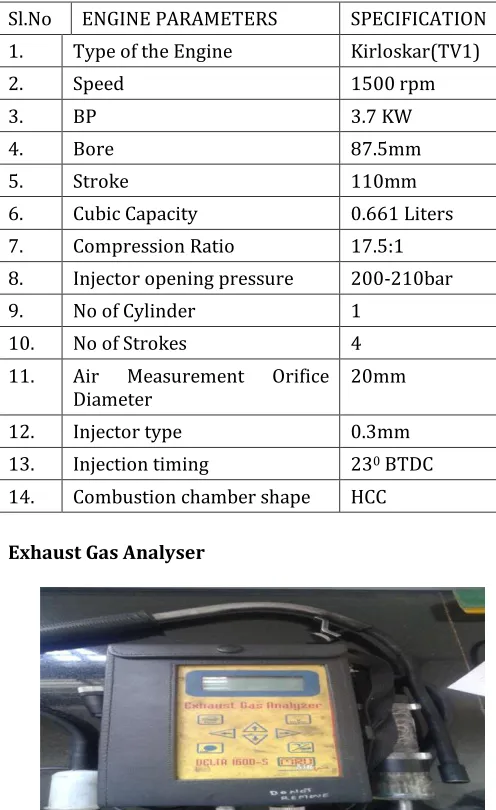
Sl.No ENGINE PARAMETERS SPECIFICATION 1. Type of the Engine Kirloskar(TV1)
2. Speed 1500 rpm
3. BP 3.7 KW
4. Bore 87.5mm
5. Stroke 110mm
6. Cubic Capacity 0.661 Liters
7. Compression Ratio 17.5:1
8. Injector opening pressure 200-210bar
9. No of Cylinder 1
10. No of Strokes 4
11. Air Measurement Orifice
Diameter 20mm
12. Injector type 0.3mm
13. Injection timing 230 BTDC
14. Combustion chamber shape HCC
[image:4.596.32.280.108.513.2]Exhaust Gas Analyser
Fig 4 gas analyser
Exhaust gas analyser was used to the analyse the exhaust gas composition in exhaust released by petrol, diesel, LPG and CNG engines. The emissions carbon monoxide (CO), hydrocarbons (HC), carbon dioxide (CO2) and oxides of nitrogen (NOX) are measured by EGA instrument. The CO (carbon monoxides), O2 (oxygen), CO2 (carbon dioxide) are measures in terms of percentage (%) and HC (hydrocarbons) and NOX (oxides of nitrogen) in ppm.
Experimental test procedure
Initially cooling water supply is turned on to the engine.
1) Computer system which is interfaced to engine is switched on.
2) Engine will be cranked manually.
3) Exhaust gas analyzer will be connected to the exhaust manifold of the engine.
4) Load will be applied on the engine by eddy current dynamometer.
5) Governor is adjusted to reach the 1500 rpm.
6) Engine will be allowed to run for 15 min to achieve the study state.
7) After achieving the study state readings will be taken
V Comparison of Performance and Emission Characteristics of D60B30A10 Blends for Different Pressures
Brake thermal efficiency of D60B30A10 is higher than D60B40, D60B34A6 and D60B38A2 at IOP 200bar, 205bar and 210bar. So D60B30A10 is the optimum for all pressures.
[image:4.596.309.559.336.482.2]BP vs BTE
Fig 5 Brake Power vs BSFC Fig 4 Brake Power vs BTE
Variation of BTE at different pressure 200bar, 205bar and 210bar as shown in fig 4 we can clearly observed that as the BTE increases as the brake power increases. When compared to 200bar and 210bar pressure the BTE is less than the 205bar pressure of D60B30A10 blends.
[image:4.596.308.563.606.746.2]© 2017, IRJET | Impact Factor value: 6.171 | ISO 9001:2008 Certified Journal | Page 1207 Variation of BSFC at different pressure 200bar, 205bar and
[image:5.596.308.561.95.264.2]210bar as shown in Fig 5.we can clearly observed that as the BSFC decreases as the brake power increases. When compared to 200bar and 210bar pressure the BSFC is higher than the 205bar pressure of D60B30A10 blends. BP vs NOX
Fig 6 Brake Power vs NOX
The variation of NOX at different pressure 200bar, 205bar and 210bar as shown in Fig 6. we can clearly observed that as the NOX increases as the brake power increases. When compared to 200bar and 210bar pressure the NOX is slightly lower than the 205bar pressure of D60B30A10 blends.
[image:5.596.38.287.167.328.2] [image:5.596.317.555.403.558.2]BP vs CO
Fig 7 Brake Power vs CO
The variation of CO at different pressure 200bar, 205bar and 210bar as shown in Fig 7 we can clearly observed that as the CO increases as the brake power increases. When compared to 200bar and 210bar pressure the CO is slightly higher than the 205bar pressure of D60B30A10 blends.
BP vs HC
Fig 7 Brake Power vs HC
The variation of HC at different pressure 200bar, 205bar and 210bar as shown in graph 6.32. As shown in the Fig 7 we can clearly observed that as the HC increases as the brake power increases. When compared to 200bar and 210bar pressure the HC is slightly higher than the 205bar pressure of D60B30A10 blends.
BP vs SMOKE
Fig 8 Brake Power vs Smoke
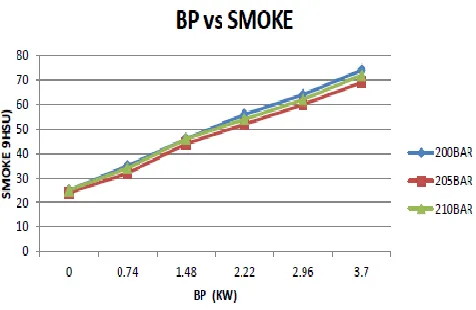
The variation of smoke at different pressure 200bar, 205bar and 210bar as shown in Fig 8. we can clearly observed that as the smoke increases as the brake power increases. When compared to 200bar and 210bar pressure the smoke is slightly higher than the 205bar pressure of D60B30A10 blends.
VI CONCLUSION
[image:5.596.41.289.468.635.2]© 2017, IRJET | Impact Factor value: 6.171 | ISO 9001:2008 Certified Journal | Page 1208 conclusions are made with respect to the experimental
results.
1. The Calophylum inophylum oil can be successfully converted into CIME through trans esterification process.
2. The Calophylum inophylum methyl ester blends properties are such has flash point, fire point, density, viscosity and calorific value are compared with diesel and are found to be nearer to diesel. Therefore Calophylum inophylum methyl ester (CIME) can be used as an alternate fuel for diesel.
3. The injection pressure has significant role on the engine performance. Increase in injection pressure causes better atomization of fuel.
4. Due to lower calorific value and higher density of biodiesel, brake thermal efficiency of the fuel blends are slightly lower compared to diesel and Brake specific fuel consumption are slightly higher for these blends.
5. From the above conclusion we can clearly state that, it is recommended that D60B30A10 fuel blend can be efficiently used in diesel engine at injection pressure of 205bar.
6.The emission such has HC, CO and CO2 are higher than the diesel but The NOxemission increases with increasing additive in the fuel blends. There is no Sulphur content in Calophylum inophylum methyl ester (CIME), so there is no emission of sulphur.
VIISCOPE OF FUTURE WORK
1.Concentration of additive can be increased up to 15% and evaluating the performance emission parameters.
2.Exhaust gas recirculation system can be used for reducing NOx emission.
3.Preheating of biodiesel blends by exhaust gas to get better atomization.
REFERENCES
[1] Avinash Hegde and K V Sreenivas Rao, “Performance and Emission Study of 4S CIEngine using Calophyllum Inophyllum Biodiesel with Additives” Volume-1, Issue-1, 2012
[2] Venkanna.B.K andVenkataramana Reddy.C, Performance, emission and combustion characteristics of direct injection diesel engine running on calophyllum minophyllum linn oil (honne oil), International Journal of Agricultural and Biological Engg., Vol.4 No.1, pp.1-9, 2011.
[3] K Ramesh, K S Amirthagadeswaran and Geen Paul V, ― “Bio-diesel development process from Calophyllum Inophyllum Seeds” 2010.
[4] S. S. Saddu, Dr S. B. Kivade,-“ The Status of Biodiesel as an Alternative fuels Amoora, Surahonne and other oils used for Diesel Engine.” International Journal of
Science and Research- 2012
[5] Rahul Krishnaji Bawane, S.V. Channapattana, Nilima Baliram Gadge, Sandip M. Ingole, “Experimental Investigation of Performance Characteristics of Calophyllum
Inophyllum Biodiesel in CI Engine by Varying Compression Ratio”. International Journal of Engineering Volume-3, Issue-5, June 2014.
[6] Rajeev K.T, R.S Vijayakumar “Effect Of Injection Opening Pressure On Ci Engine Using Calophyllum As Bio-Fuel”, International Journal of Mechanical Engineering and
Computer Applications, Vol 2,, Issue 4, July-Aug-2014.
[7] Chavan S.B., Kumbhar R.R. and Deshmukh R.B., “Callophyllum Inophyllum Linn (“honne”) Oil, A source for Biodiesel Production” Research Journal of Chemical
Sciences, Vol. 3(11), 24-31, November (2013.
[8] Muhammad Saad Khan, Iqbal ahmed, Abdul Mutalib and M A Bustam,.“Characterization of Diesel-Hydrogen Peroxide Fuel Blend”,. Vol.3, No.11, 2013
[9] S. Bari , M. Mohammad Esmaeil, “Effect of H2/O2 addition in increasing the thermal efficiency of a diesel engine” 89 (2010) 378–383