© 2017, IRJET | Impact Factor value: 5.181 | ISO 9001:2008 Certified Journal | Page 2855
Video Denoising using Transform Domain Method
1
Lina Desale,
2Prof. S. B. Borse
1
PG Student,
2Associate Professor and Head,
Department of Electronics and Telecommunication,
Late G.N. Sapkal College of Engineering,
Nashik, Maharashtra, India
---***---Abstract - Utmost prevailing practical digital video denoising techniques depend upon a traditional statistical model of image noise, such as Independent and identically distributed random variables- Gaussian noise, which is often violated in real life scenarios. For example, following foremost sources of video noise with dissimilar statistical distributions have been identified: photon shot noise, fixed pattern noise, amplifier noise, dark current noise and quantization noise. Performance of prevailing video denoising algorithms will severely degrade when the algorithm is applied on those images with noises evident from multiple sources. In this paper, a dictionary learning based scheme is proposed which computes the basis function adaptively from the first input image frames per fifty frames. Unlike other classical approaches like wavelet or contourlet transforms where the mother wavelet/basis functions are constant. If the mother wavelet/basis function is constant it is more likely that it will fail to capture the minuscule noise details from real life images. Therefore, the basis function is learnt from first frame itself. The dictionary learning method provides sparse representation of the image. Here, hard thresholding algorithm is applied to compute the denoised frame.
Key Words: Video denoising, Basis formation, SVD, Post
processing
1.INTRODUCTION
Even if video is a collection of 3-D numbers set, 3-D data manipulators are usually not used for its transformation. Undoubtedly, the typical 3-D data manipulators do not yield appropriate transformations for most video data. In general, maximum 3-D data manipulations are 1-D separable. Notwithstanding, multidimensional (M-D) separable implementations contain artifacts that can heavily hamper their utility, specifically for M-D image data (real life scenarios). Illustratively, the de facto separable 3-D manipulator is scarcely employed for digital video transformation as it combines sub-bands related to 3-D orientations. Thus for a 3-D video manipulator to provide a faithful representation of M-D video matrix, the mathematical manipulation must be non-separable. But, non-separable data manipulations are computationally heavy as well as difficult to design and implement. In the case of video denoising, the principal to be followed is to
explore the sparse representation of video frames. If one considers frequency (transform) domain representation, sparse representation is related to high-kurtosis marginal distribution of band-pass filtering. For the representation in spatial domain the non-local means (NLM) algorithm [1] was presented to reduce noise by computing mean of pixels in a video frame equivalently weighted by neighboring patch similarities. Sparse matrices are major part of video representation. Amongst two noise-free set of frames (videos) that yield the equal mean peak signal-to-noise ratio (PSNR), we adopt the one with higher temporal coherence. Maximum real life image sequences incorporate structured noise which makes it a challenging problem to ensure temporal coherence.
1.1 LITERATURE SURVEY
© 2017, IRJET | Impact Factor value: 5.181 | ISO 9001:2008 Certified Journal | Page 2856
weighted combination of the current frame NLM, and the preceding frame estimate. Experimental results demonstrate superiority of the presented approach. They have proved that the new approach outperforms classical single frame NLM and BM3D algorithms.
Redha et al. [5] proposed a pressingly effective algorithm for video denoising that explores temporal and spatial redundancy. The proposed algorithmic technique by Redha et al. [5] is heavily based upon intrinsic non-local means. NLM methods are smeared in video denoising applications. Each output video pixel is formed as a weighted summation of the center pixels within a given video search window. The SVD weights are established on the image patch intensity consisting of algebraic vector distances. The iterative process necessitates computing feature vector Euclidean distances for all of the video patches in the intrinsic search window. Straight extension of this technique from 2-D to 3-D, for video processing, can be computationally severe. The size of a 3-D search window is the size of the 2-D search window multiplied by the number of frames being used to form the output. They have presented a novel recursive NLM (RNLM) algorithm for video processing. Their RNLM method takes benefit of recursion for computational savings, as benchmarked with the direct 3D NLM. Conversely, unlike the 3D NLM, their proposed method is capable to feat both spatial and video temporal redundancy for improved performance, compared with 2D NLM. In their method, the first frame is processed with single-frame NLM algorithm. Subsequent video frames are algorithmically estimated using an actual weighted sum of internal pixels from the current video frame and a pixel from the previous video frame estimate. Numerous experimental results are obtained to validate the efficacy of proposed approach in terms of subjective and quantitative image quality.
Khalid et al. [6] considered the benefits of Surfacelet transform which were combined with Artificial Bee Colony (ABC) optimization method for adaptive threshold optimization. The resultant video sequences in denoised form have conveyed astonishing results as measured using peak signal to noise ratio (PSNR) and structural similarity (SSIM) index. Guo et al. [7] developed a novel approach to video denoising that is built upon the notion that in general, videos corrupted with noise can be segregated into two components - the approximate low-rank component and the sparse component. Initially they split the given video sequence into these two components, and subsequently applied prevailing state-of-the-art denoising algorithms on each component. They have showed, with the help of extensive experiments, that their denoising approach outperforms the state-of-the art denoising algorithms.
1.2 SYSTEM DESIGN AND OVERVIEW
1.2.1 Dictionary Learning
Sparse data exemplification has made its place as a tremendously useful tool for securing, demonstrating, and compressing high-dimensional signals. The authoritative categories of existing real life data values such as audio and videos have in built real life sparse representations which are explored with fixed standard bases (i.e., Fourier, Wavelet). In addition, singular methods dependent upon protuberant optimization or avaricious pursuit are heavily employed for high performance computing such as decompositions with high fidelity applications. In the field of computer vision, the matrix or spatial and variation semantics of a video frame are vital as compared with a dense, compressed video format. In the recent decades, L1 norm minimization have been extensively employed as main technology for vision tasks, which comprise of facial recognition, matrix super-resolution, video motion and matrix segmentation, machine learning based supervised video denoising and video in-painting and formation of background noise model and video frame classification. The challenge of discovering the sparse representation of a video frame in a form of dictionary can be expressed as follows:
For the
N
M
matrixB
which has values of over-complete dictionary arranged in its columnar positions, satisfying the conditionM
N
for the signal NR
g
, the aim of sparse representation aims at defining a solution as finding a1
M
matrix element vectorx
which obeysg
Bx
and subsequently0
x
is to be minimized using combinational optimization which is a NP hard problem.
0
min
x
x
Such thatBx
g
(1) Here, the0
x
is related to
0norm and it is equal to non-zero matrix elements in vectorx
.Since this is a NP hard problem, an approach to solve this problem is yielded by replacing
0norm with
1norm. Therefore the equation (1) is transformed to equation (2) as shown below.
1
min
x
x
Such thatg
Bx
(2)A generalized format of equation (2) that is used to compute x so that the mathematical objective functions is minimized:
1 2
2 1
(
x
;
)
g
Bx
x
G
(3)© 2017, IRJET | Impact Factor value: 5.181 | ISO 9001:2008 Certified Journal | Page 2857
g
Bx
(4) Here
is classical white Gaussian noise. The probability distribution ofx
is presented by equation (5).
M
j p j
x
x
p
1
exp
~
)
(
(5)
The MAP value of estimation is presented by equation (6).
)
min(
arg
22 pMAP
g
Bx
x
x
(6)Equation (6) solves the complete dictionary representation problem.
1.2.2 Discrete Wavelet Tight Frames
A discrete wavelet tight frame can be obtained by computing the union of minimum two bases. For this, two independent filter banks implemented in parallel are utilized. The Un-decimated DWT (UDWT) computes a discrete wavelet tight frame with the help of a prevailing wavelet basis by eradicating the subsampling from a prevailing analytically sampled filter bank. A discrete wavelet tight frame is computable by recapitulating an appropriately designed oversampled filter bank. The un-decimated DWT produces a strictly shift-invariant discrete transform. But, the UDWT builds upon an expansion factor of
log
N
: it expands anN
-element matrix toN
log
N
elements. For real life scenario data, like videos, this matrix expansion yields its use difficult in practice. On the contrary, the dual-tree DWT, and the oversampled DWT, give anN
-sample matrix toN
2
elements liberated of scales for which the video decomposition is accomplished.2. PROPOSED SYSTEM AND RESULTS
In this paper, a dictionary learning based scheme is proposed which computes the basis function adaptively from the input image frames. Initially, the input video is decomposed into image frames. Unlike other approaches like wavelet or contourlet where the basis functions are constant. If the basis function is constant it is more likely that it will fail to capture the minute noise details from natural images. Therefore the basis function is computed from image itself using dictionary learning. Subsequently, a set of dictionary images is learnt using the basis function on the image. The dictionary learning method provides sparse representation of the video frame. Here hard thresholding algorithm is applied to compute the denoised frame. Fig. 1 depicts the proposed scheme.
Fig 1: Proposed scheme for video denoising
Let us assume that
c
denotes a video frame corrupted with noise andd
denotes noiseless video frame. The subsequent dictionary is computed which is denoted byO
which must be a set of real numbers. In the next step, an original video frame is split into
parts and each containsm
pixels. By calculating this minimization as stated in equation (7), the video frame can be denoised.
u
u u u
u u O
d
c
d
c
Oy
N
d
2 2 0
2 2 ,
2
1
min
(7)The convex optimization using this equation is computationally heavy. Thus it is further resolved using advanced mathematical approach. Few substitute iterative methods have been proposed in the recent past, which helps to obtain a crisp solution of the minimization problem. Instead of simultaneously minimizing
d
andO
, ifd
andO
get minimized in an iterative manner, the problem becomes simpler.© 2017, IRJET | Impact Factor value: 5.181 | ISO 9001:2008 Certified Journal | Page 2858
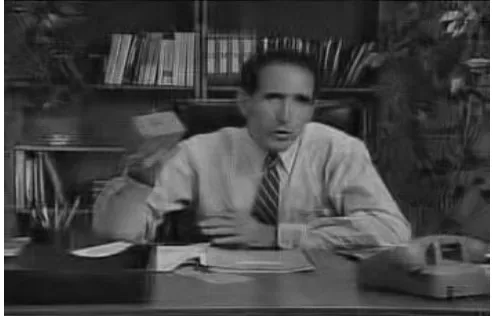
Fig.2. Noisy frames from gsalesman sequence
The denoising using proposed approach gives following frames in Fig.3.
Fig.3. Denoised frames using proposed technique
The results are benchmarked as shown in table 1.
Table 1: Comparison of PSNR with other approaches
3. CONCLUSIONS
In this paper, a dictionary learning based scheme is proposed which computes the basis function adaptively from the input image frames. Unlike other approaches like wavelet or contourlet where the basis functions are constant. If the basis function is constant it is more likely that it will fail to capture the minute noise details from natural images. Therefore the basis function is learnt from image itself. Subsequently a set of dictionary images is learnt using the basis function on the image. The dictionary learning method provides sparse representation of the image. Here hard thresholding algorithm is applied to compute the denoised frame. The frames are recollected together to form the video again. The proposed technique achieves competitive performance on the standard video sequences.
REFERENCES
[1] Buades, A., Coll, B. and Morel, J.M., 2005, June. A
non-local algorithm for image denoising. In Computer Vision and Pattern Recognition, 2005. CVPR 2005. IEEE Computer Society Conference on (Vol. 2, pp. 60-65). IEEE.
[2] A. Buades, J. L. Lisani, and M. Miladinović, "Patch-Based
Video Denoising With Optical Flow Estimation," IEEE Transactions on Image Processing, vol. 25, pp. 2573-2586, 2016.
[3] G. Chen, J. Zhang, D. Li, and H. Chen , "The Robust
Kronwecker product video denoising based on fractional-order total variation model," Signal Processing, vol. 119, pp. 1-20, 2016.
[4] R. Almahdi and R. C. Hardie, "Recursive non-local means
filter for video denoising with Poisson-Gaussian noise," in 2016 IEEE National Aerospace and Electronics Conference (NAECON) and Ohio A. Buades, J. L. Lisani, and M. Miladinović, "Patch-Based Video Denoising With Optical Flow Estimation," IEEE Transactions on Image Processing, vol. 25, pp. 2573-2586, 2016.Innovation Summit (OIS), 2016, pp. 318-322.
[5] R. A. Ali and R. C. Hardie, "Recursive non-local means
filter for video denoising," EURASIP Journal on Image and Video Processing, vol. 2017, p. 29, 2017.
[6] M. Khalid, P. S. Sethu, and R. Sethunadh, "Optimised
surfacelet transform based approach for video denoising," in 2016 International Conference on Inventive Computation Technologies (ICICT), 2016, pp. 1-5.
[7] H. Guo and N. Vaswani, "Video denoising via online
sparse and low-rank matrix decomposition," in 2016 IEEE Statistical Signal Processing Workshop (SSP), 2016, pp. 1-5.
[8] J.-S. Lee, “Digital image smoothing and the sigma filter,”
Computer Vision, Graphics & Image Processing, vol. 24, no. 2, pp. 255–269, 1983.
[9] D. Zhang, J.-W. Han, O.-J. Kwon, H.-M. Nam, and S.-J. Ko,
“A saliency based noise reduction method for digital TV,” S
r. Sigma 10 15 20 25 30 35 40 1 [8] 28.2
9 24.71 22.16 20.17 18.62 17.27 16.11 2 [9] 28.3
7 26.61 24.79 23.16 21.73 20.51 16.11 3 [10] 30.0
2 28.25 25.84 23.58 21.68 20.28 19.01 4 [11] 30.0
3 28.88 27.72 26.56 25.5 24.47 23.62 5 Propo
[image:4.595.39.286.100.264.2] [image:4.595.38.284.335.493.2]© 2017, IRJET | Impact Factor value: 5.181 | ISO 9001:2008 Certified Journal | Page 2859
in Proceedings of the IEEE International Conference on Consumer Electronics (ICCE ’11), pp. 743–744, Las Vegas, Nev, USA, January 2011.
[10] A. A. Yahya, J. Tan, and L. Li, “An amalgam method based