1
PERSONAL EXCAVATION
MULTIPLICITY AND MUSEOLOGICAL DISPLAY
Young-Gil Kim
A thesis submitted in partial fulfillment of the requirements of the University
of East London for the degree of Professional Doctorate in Fine Art
3
Acknowledgement
I would like to thank the Gyongbuk-Do Board of Education, a branch of the Korean Ministry
of Education allowed me to study Master and Doctorate courses in the United Kingdom from
1999 to 2004.
This research could not have progressed without the invaluable help of the staff of the
University of East London. I wish to especially thank Tim Allen, Grenville Davey, Andrew
Stephenson, Peter Cobb, Edward Whittaker and Andrea Duncan.
I am grateful to all my colleagues in the Professional Doctorate in Fine Art (UEL), who have
generated to enthusiastic dialogue in the seminars and whose own passions have
complemented my own. Many people have helped me in carrying out the research for my
project. I would like to thank Nak-Goon Joo(former Principal, London Korean School),
Charlotte Horlyck (Curator of Far Eastern Department, Victoria & Albert Museum), Ik-Joong
Kang(Artist), Liz Aston(Henry Moore Institute), Father Michael Park, Hyon-Tak Hwang (The
Korean Cultural Attaché, Korean Embassy), Jae-Eon Lee(Director, Sun Art Centre),
Rosemary Williams (PSG Manager), Peter Smith (Head of Division, Kingston College), Billie
Sehmi(Curator, The Media Centre), John Leitch(Communication Director, The Media Centre),
Kitty Stirling(Gallery Administrator, The Tricycle Gallery) and Steve Musham(Housing
Manager, Zebra Housing Association).
Finally, I want to thank my family: my wife Tae-Nam Kim for sharing my enthusiasm for five
Modern and contemporary artists have employed and co-opted the technologies of industrial
mass production to create and distribute works of art in forms variously termed as multiples,
printed matter or mail art. This strategy was pre-eminent in the 1960s and early 1970s when
there was a widespread interest among artists in creating prints and books as works of art, and
it was most central to the art group known as Fluxus, in Conceptual art and in the mail art
movement. The multiple has re-emerged in recent contemporary art and it is an important
strand in my practice. However, my works are not only informed by the methods of industrial
mass-production, but also by the practices of the hand-made. It is one of my prime principles
to engage with the theme of multiplicity and to use multiply produced forms.
The potentialities by assembled or collaged image provides a very remarkable point from
which to approach contemporary aesthetic debates within postmodernism and to launch any
searching examination of the formative currents in post-modern art. While contemporary art
has challenged the rigid boundaries between form and content, the role of ‘the museological
display’ remains crucial to the understanding of complex and uncanny elements in
contemporary art practices. In my opinion, the condition of being on display is, therefore,
fundamental to the construction of the category of ‘Art’ in the western world.
An interrogation of the museum artefact has been one of my longstanding projects since 1992.
In my work, I have struggled to explore aspects of visual potentiality through five years’
5
First, I engaged with notion of ‘pseudo-archaism’ approached through my knowledge of
ancient Korean artefacts and culture and use this as a way of re-questioning the western
museum artefact. In my view, western museum practices employ a mode of archaeological
methodology that can be understood as a form of personal excavation. Thus exploiting my
position as a Korean national moved to London, my work engages with issues linked to the
hybrid and cultural displacement and tied to the process of migration.
Second, I analyse the nature of the artists’ inherent collecting impulse both through my
personal collecting and by reference to the collecting practices of other contemporary artists.
Consequently, my research carries me into the areas of psychoanalysis and sociology.
Third, I analyse the appropriateness of the museological display as medium. In my
investigation, I propose that the museum artefact when displayed in multiple forms can be
approached by the use of an Eastern-informed meditative conception and quasi-scientific
archaeological method.
Lastly, I try to conceptualise my use of found materials. Throughout my research, I try to
evaluate and conceptualise crucial elements of my practice such as ambiguity, authenticity,
repetition, and consistency.
The methodology that informs my practice is tied to researching the museum artefact in
relation to my cultural identity. In this way, I have considered questions of personal identity
and taxonomical methodology, and have approached identity as both ambiguous when in the
of archaeological process: namely, one involving collecting, classification and display. At the
same time, I am always aware of the hand-made aspects of artefacts. This is because I am
instinctively interested in both their physical presence, and their symbolic aspect, which
generates psychoanalytical associations, especially ideas of repetition and multiplicity. It is in
my research into materials, particularly bones and stones, that my acts of personal collecting
can be seen as a form of personal discovery and excavation. Throughout my work, I always
keep in my mind the sense that subjectivity has to be objective and objectivity has to be
subjective.
In Chapter 1, I debate the view that instinctive collecting impulses in artists in relation to the
assemblages of various found materials might be understood in terms of ‘hunting’ and the
notion of art objects as ‘hunting objects’. My position exploits the repetitive nature of personal
collecting as a form of personal excavation, which is associated in my own imagination, in
terms of hunted objects. My works have also been careful to develop the innate possibilities
and potentialities of the materials themselves. Thus, I try to link the collecting principles and
motivations of both western and eastern museum artefact. In my research, I regard my
experiences in London as an important source to consider hybrid and cultural displacement in
post-modernity. In my examination of the dialogue between the artist and archaeology, I link
my interest in pseudo-archaism to the concept of spontaneous response taken from Korean
7
In Chapter 2, I characterise my methodology and material choice in terms of personal
excavation. The main themes I explore are Relief Painting, Altered Object, Three Dimensional
Work and Drawing. The materials, which are used in my two-dimensional and
three-dimensional artistic activities stand in place of instinctive perceptions, and they constantly
emerge in my practice as an important source, inspiration and initiative in any transitional
moment. Thus, I explore the potentiality of what are transitional and authentic materials such
as rabbit skin glue, fine soil powder, paper clay, hand-made paper and drawing materials. I
link this developing interest to my personal experience; to question of hybridity, Zen
Buddhism, multiplicity, transportability, metamorphosis and contemplation. Finally, as an art
educator, I investigated the Discipline-Based Art Education (DBAE) to integrate my project. I
try to evolve DBAE theory throughout this Chapter. As I consider, many museums have
crucial role in the domain of art education. Therefore, I try to apply the DBAE theory to my
project and the role of museum.
In Chapter 3, I describe in a chronological way my developing professional practice including
details of solo-shows, group-shows and the other involvements during the Doctorate course. I
also set out and reference those artists who have directly or indirectly influenced my own
practice.
Throughout my period at UEL, I believe that my own visual languages have questioned many
contemporary art issues and that, even now, there are many possibilities to develop further
new parameters in my work. Throughout my five years researching into the museum artefact,
my practice and theory has become more clearly conceptualised and articulated. Approached
9
Contents
List of Illustrations
Introduction
Chapter
Ⅰ
1-39Collecting; Personal Collecting; Post Modernity
1Art and Artefact; The Museological Display as Medium
13The Dialogue between the Artist and Archaeology
21Chapter
Ⅱ
40-97Methodology
40Material
43Personal Excavation
50Relief Painting 50
Transformation (Altered Objects) 59
Multiplicity with Three Dimensional Works 66
Drawing 79
Art Education (Discipline-Based Art Education)
98Chapter
Ⅲ
101-161Professional Practice
101Conclusion
128Appendix 1
133Appendix 2
144Bibliography
1461. The Museum of Ferrante Imperato, from Imperato’s Historia naturale, Naples, 1599 2. Merz, Mario. Niger Crocodile, 1972
3. Schiwitters, Kurt. Merzbau, Hanover, 1933
4. Freud’s desk and chair at Maresfield Gardens, London 5. Chonbuljeon, 1735, Jikjisa, Korea
6. Tripitaka, Hainsa, Korea, 1251
7. Kim, Young-Gil. Karma, 1996, paper-clay, water colour, Suokyong Gallery, Seoul 8. Bott, Karsten. One of Each, 1993, Offenes Kulturhaus, Linz
9. Boltanski, Christan. The Dead Swiss, 1989, Whitechapel Gallery, London 10. Hirst, Damien. Dead Ends Died Out; Explored, 1993
11. Greenaway, Peter. The Physical Self, 1997, Museum Boijmans-Van Beuningen, Roterdam 12. Wentworth, Richard. Questions of Taste, 1997, British Museum, London
13. Dion, Mark. Thames Dig, 2004, Tate Gallery of Modern Art
14. McCollum, Allan. Over Ten thousand Individual Works, 1993, Castello di Rivara, Turin
15. Mt. Namsan, Gyeongju, Korea
16. Kim, Young-Gil. Excavation-A Prayer for Hundred Days, 1993, paper-clay, hand-made paper, mud, acrylic, 162×130.3 cm
17. Kim, Young-Gil. Excavation-You and I, or We, 1993, paper-clay, hand-made paper, mud, acrylic, oil, 162×130.3 cm
18. Kim, Young-Gil. Excavation-Meditation, 1993, paper-clay, hand-made paper, acrylic, 71.9×119.9cm,
19. Kim, Young-Gil. Excavation-Meditation, 1993, paper-clay, hand-made paper, acrylic, 145.5×112cm
20. Kim, Young-Gil. Excavation-Extreme of Thought, 1993, paper-clay, hand-made paper, acrylic, 125.5×175cm
21. Kim, Young-Gil. Excavation-The Room of Intelligence, 1994, paper-clay, hand-made paper, mud, acrylic, 162×130.3cm
22. Kim, Young-Gil. Excavation-Creation or Extinction, 1994, paper-clay, dyestuff, mud, hand-made paper, acrylic, 61.5×38.1cm
11
24. Kim, Young-Gil. Excavation-The Eight Trigrams for Divination, 1994, cement, paper-clay, hand-made paper, acrylic, oil, 116.8×90.9cm
25. Joan, Fontcuberta. Pere, Formiguera. Fauna, 1987-1990 26. Joan, Fontcuberta. Pere, Formiguera. Fauna,1987-1990 27. Flints, Brighton, 2002
28. Kim, Young-Gil. Collective-Flints, 2002
29. Sashindo-A White Tiger, Koguryo mural painting 30. Hanji
31. Kim, Young-Gil. Working Space, 1996
32. Kim, Young-Gil. Excavation-Meditation, 2001, paper-clay, kitchen tissue paper, acrylic, graphite, coffee, 38×38cm
33. Kim, Young-Gil. Excavation-Excalibur (detail), 2002, MDF, paper-clay, graphite, hand-made paper, acrylic, oil
34. Kim, Young-Gil. Excavation-A Turtle, 2002, paper-clay, kitchen tissue paper, acrylic, coffee, oil, 38×38cm
35. Kim, Young-Gil. Excavation-A goat, 2002, paper-clay, kitchen tissue paper, acrylic, coffee, oil, 38×38cm
36. Kim, Young-Gil. Excavation-A horse, 2002, paper-clay, kitchen tissue paper, acrylic, coffee, oil, 38×38cm
37. Kim, Young-Gil. Excavation-A Dinosaur, 2002, MDF, paper-clay, acrylic, oil 38. Kim, Young-Gil. Excavation-Waterfall, 2002, MDF, paper-clay, acrylic, oil
39. Kim, Young-Gil. Excavation-A Turtle, 2002, MDF, paper-clay, hand-made paper, acrylic, oil 40. Kim, Young-Gil. Excavation-An Animal, 2002, MDF, paper-clay, acrylic, oil
41. Kim, Young-Gil. Excavation-Dog Head, 2002, MDF, paper-clay, acrylic, coffee, oil
42. Kim, Young-Gil. Excavation-A Crocodile, 2002, MDF, paper-clay, hand-made paper, acrylic, oil
43. Kim, Young-Gil. Excavation-Landscape, 2002, MDF, paper-clay, acrylic, each 17×35cm 44. Mach, David. Grizzly Little Fucker, 2002
45. Mach, David. Natural Causes, 1987, Session, Vienna
46. Kim, Young-Gil, Hostage, 2002, video-tape, paper-clay, stocking, 6×15×20cm
47. Kim, Young-Gil, Uncanny, 2002, Christmas cap, pillow, computer mouse, paper-clay, dimension variable
53.2 The Bird Anatomy Showcase, Natural History Museum, London 54. Earth Laboratory, Section 60, Natural History Museum, London, 2004
55. Kim, Young-Gil. Collective-Nature, 2003, dimension variable, paper- clay, screw 56. Kim, Young-Gil. Collective-Nature (detail), 2003
57. Kim, Young-Gil. Collective-Nature (detail), 2003
58. Becher, Bernd and Hilla, Watertorens/Watertowers, 1988 59. Gormley, Antony. Field, 1991, Salvatore Ala Gallery, New York 60. The Temple of Sagrada Familia, Barcelona, Spain, 2003
61. Kim, Young-Gil, Wounded Wolf, 1999, water-colour, 27.2×37.1cm 62. Kim, Young-Gil. An Illegitimate Child, 1999, colour-pencil, 29.1×41.8cm 63. Kim, Young-Gil. Confusing, 2000, colour-pencil, 29.1×41.8cm
64. Kim, Young-Gil. Collective, 2001, Chinese ink, Indian Ink, each 21× 29.7cm 65. Kim, Young-Gil. Collective (detail), 2001, Chelsea College of Art, London 66. Kim, Young-Gil. Collective, 2001, books, Chelsea College of Art, London 67. Kim, Young-Gil. Transformation- A Fire-extinguisher, 2002, pencil, 68. Kim, Young-Gil. Meditation, 2002, pencil
69. Kim, Young-Gil. Transformation-Vicious Object, 2003, ball-point pen, 23.1×29.6cm 70. Kim, Young-Gil. Transformation-Sofa,2003, ball-point pen, 23.1×42cm
71. Kim, Young-Gil. Transformation-From the Bone, 2003, ball-point pen, 23.1×29.6cm 72. Kim, Young-Gil. Transformation-From the Bone, 2003, ball-point pen, 23.1×29.6cm
73. Kang, Ik-Joong. Throw Everything Together and Add, 1994, Cap Street Project, San Francisco 74. Kim, Young-Gil. Collective-London, 2003, objects, Chinese ink, acrylic, card-board, Indian
ink, colour-pencil, pencil, each 12×12cm
75. Kim, Young-Gil. Collective-London (detail), 2003
76. Kim, Young-Gil. Collective-Taxonomical Drawing, 2003, pencil, 60×84cm 77. Kim, Young-Gil. Collective-Typology, 2003, acrylic, each 12×12cm
78. Kim, Young-Gil. Measured Multiplicity-Odd Objects from Flints, 2004, 177×82.5cm 79. Installation view of The Drawing Project, 2001, St. James Church
80. Penny Gallery (Kingston College), 2001
13
84. Kim, Young-Gil. Crocodile, 2002, MDF, paper-clay, The Media Centre, London, 30×90cm 85. Kim, Young-Gil. Hybrid, 2002, computer mouse, paper-clay, The Media Centre, 6×15×20cm 86. Installation view of Transition exhibition, 2002,The Media Centre, London
87. Installation view of Transition exhibition, 2002,The Media Centre, London 88. Installation view of Transition exhibition, 2002,The Media Centre, London 89. Kim, Young-Gil. Hostage, 2002, vitrine, boxes, video-tape, paper-clay, stocking 90. Kim, Young-Gil. Hostage (detail), 2002, dimension variable
91. Kim, Young-Gil. Anonymity, vitrine, box, paper-clay, stocking, 17×17×17cm 92. Installation view of Transition exhibition, 2002,The Media Centre, London 93. Installation view of Transition exhibition, 2002,The Media Centre, London 94. Installation view of Relief exhibition, 2002, The Tricycle Gallery, London 95. Installation view of Relief exhibition, 2002, The Tricycle Gallery, London
96. Kim, Young-Gil. Relationship, 2002, MDF, paper-clay, acrylic, oil, dimension variable 97. Critical Review with Gavin Turk, 2003, Oscar Gallery, University of East London 98. Installation view of Collective-Nature exhibition, 2003, Oscar Gallery, UEL 99. Installation view of Collective-Nature exhibition, 2003, Oscar Gallery, UEL
100.Kim, Young-Gil. Meditation-Videotapes, 2003, videotapes, paper-clay, enamel paint, each 6×15×20cm, Oscar Gallery, UEL
101. Installation view of Turf-Art, Music and Film Festival (Tony & Guy), 2002, Luton 102. Installation view of Next; Stop exhibition, 2001, Strand Underground Gallery, London 103. Installation view of The Pleasure of Contemplation, Sun Art Centre, 2004, Seoul 104. Kim, Young-Gil. Self-portrait (detail), 2001
105.The Drawing Project,2003, London Korean School
My BA course (1979-1983) concentrated on art teaching methodology and general art skills in
painting, sculpture, design, history of art and philosophy. During my studies, I was interested
in the theory of the plastic arts, modern art and aesthetics particularly artists associated with
Surrealism, Hyperrealism and Dadaism. These sources, I believed, could enrich my work and
provoke my imagination. Surrealism, in particular, had an immediate appeal for me owing to
the fact that it probes the sources of inspiration in relation to psychoanalytical theory, notions
of the subconscious and through the world of dreams. By 1982, I had established my key
drawing skills using pencil, pastel, charcoal and also watercolour and a personal method of
communication had developed.
During my compulsory military service, I served in the Korean army as a member of the
management team at the Divisional headquarters. This was a very strict and tense period of
my life. I was honorably discharged in 1984. I think, at that time, my pertinacious tendency
was growing and this significantly affected my early works, which formed a series entitled
‘Suspension’. In these works, I tried to reveal the consciousness of the ego and self-existence
of human beings through my paintings involvement with the ironic, supernatural and
references to fables highly valued within Surrealism.
In 1985 I began teaching at a secondary school as a fine art teacher, and so for 15 years. I
worked in the public school system. For two years, I was also a voluntary teacher on a radio
15
pass three gates that were very special to me in that the structure reminded me of my army life.
In prison, I taught drawing to 50 prisoners who were murderers, rapists and robbers. In fact, it
was very difficult for me to teach drawing to the prisoners because they were not ready to
study at all. They just regarded my class as a playtime. When I met them for the first time, I
felt really scared because of cigarette burns on their arms, monstrous tattoos, and their
threatening gaze. But I gradually made myself at easy with them and I tried to find a great deal
that was good about the experience. Sometimes I tried to get them to draw their desires and
this led to really special and monstrous images. They drew strange tattoos, moons, knives,
birds, sexual organs, and boats in the boundless expanse of the ocean. There were obviously
lots of symbolic meanings in their drawings and this came out when they explained the
meanings of their works. As far as I knew, they really wanted to go home and be without any
restrictions; ultimately, they obsessively wanted to be free.
Ironically, at this time I thought that I had also been trapped in my own fixed idea of art like a
prisoner, and in part, this was due to my circumstances. At that time, I really wondered about
my identity questioning who am I? What am I doing? What is the problem in the Korean
educational system? What can I do for them?
As my work developed and matured, I became an established artist as well as a leading
teacher in Korea even though I remained isolated by working in the countryside. My art was
exhibited in four solo-exhibitions and also shown in eighty group-exhibitions in Korea, Japan,
Russia, Germany and Italy. As a result of my winning the Grand Prize at the Art Festival of
Korean Youth Artists (1993), the Dong-Ah Gallery invited me to exhibit my art with them.
increasingly unhappy and unable to satisfy my own needs for an up-dated visual language. My
work was gradually taking a rigid form and content, and this tendency was partly the result of
creating my visual practice in isolation, and, partly, due to the small amount of time I had
when not teaching. It became clear that I was reaching a turning point in my life as a
professional artist. I then applied for the ‘Scheme for Teachers to Study Abroad’, which
included funding as well as the guarantee of a teaching position at the Gyongbuk-Do Board of
Education, which is a branch of the Korean Ministry of Education (1999-2004).
The purpose of my attending the MA Fine Art course at the Chelsea College of Art and
Design (2000-2001) was to enable me to locate my work more firmly in contemporary fine art
practice and to allow me to fulfil my potential as a professional artist. The course encouraged
me to intensify my engagement in contemporary issues and to more fully conceptualise my
work. It was a studio based and practice-led course, underpinned by a supportive theoretical
framework and it offered instruction in the approach to professional practice. It also demanded
a high level of commitment to independent productive activity within the wider cultural
environment of the city. It provided a valuable bridge between my studentship and my aim of
an improved professional practice.
During the MA course, I struggled to find my own identity, and to find an appropriate visual
language and a new methodology to explain my interests. Through drawings of my everyday
life, I wanted to evoke the possibility of drawing being a meditative space. My desire was to
17
own ordinary life. I wanted my works to stare back with at life through their own
interpretation.
In fact, during the Master’s course, my work had developed in two phases; one was based on
consumerism and with drawing, and the other aspect retained my interests in excavation
methodology within relief painting. This second interest initiated a line of personal excavation
that was somewhat discordant in terms of its links between my past and the present. At that
time, a fundamental question emerged in my work: why was my work involved in issues of
multiplicity? And how did this link to my identity? These questions required me to
contextualise my practice further, most especially in relation to the status and display of
museum artefact. And this is what led me to submit my proposal for the Professional
Collecting: Personal Collecting: Post Modernity
Artists are inherent collectors who take into account both the forms and the content of what
they assemble. This instinctive collecting impulse can be seen as part of art practice in which
the resulting assemblages of various materials can assist in the broadening of the frameworks
of intelligence; the collection as a storage place where both ideas and materials are held and
evaluated. The artist’s urge to accumulate objects in the studio is part of an age-old human
impulse to gather and hoard. These ‘hunting objects’1 approached as discovered materials, are negotiated and modified in the studio before being re-presented as works of art. Although
these found objects often have no monetary value, artists can reconstruct individual items into
distinctive and valuable artefacts. As contemporary writers have noted, ‘the potential
inwardness of objects is one of their most powerful characteristics, ambiguous and elusive
though it may be.’2
The Renaissance Cabinet of Curiosities, such as the cabinet of Ferrante Imperato (1599) and known as ‘Wunderkammer’, possessed a special quality in tune with the creative imagination:
it registered a quest to explore the rational, the irrational, and a capricious freedom of
1Another motivation underlying collecting derives from psychoanalytic drive theory. ‘Freud had hypothesized the existence
of two drives, libido and aggression. Collecting might be viewed as driving not from libido but from the aggressive drive. In many respects collecting resembles ‘hunting’: one locates the prey, plans for the attack, acquires the prey in the presence of real or imagined competition for it, and upon success, feels elated. The prey becomes a trophy-a symbol of one’s aggression and prowess’. Pearce, S. M. ed., (1994), Interpreting Objects and Collections, London: Routledge, p. 328.
2
19
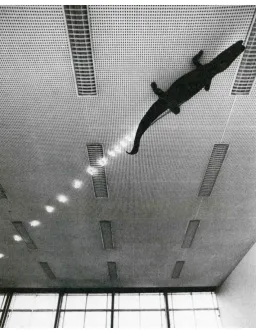
arrangement.3 The Wunderkammer, as an ancestor of the modern museum, was primarily an expression of an individual interest in collecting. The presence of stuffed crocodiles
suspended from the ceiling was directly re-presented in Mario Merz’s Niger Crocodiles in 1972 where Merz juxtaposed the crocodile against neon lights to reinforce the interplay
between the natural and the artificial. It is without doubt that many contemporary artists
including a number of Surrealist and Dadaist artists were strongly influenced by the
potentialities that the Wunderkammer had to offer.
[image:19.595.130.497.368.650.2]
Fig. 1 The Museum of Ferrante Imperato, from Imperato’s Historia naturale, Naples, 1599
3
Fig. 2 Mario Merz, Niger Crocodile, 1972
For example, Kurt Schwitters hunted the streets of Hanover in search of trash, scouring the
pavement, the gutters and the dustbins; elective fields as fertile as they were disgusting4 to
make collages, which are pictorial compositions made by gluing separate scraps of paper or
cloth or other materials onto a surface to test a particular effect. It is also an interesting feature
of his collective power that Schwitters obsessively transformed his home into an artwork
Hanover Merzbau which ‘functioned as a sort of container for a variety of object having personal significance for the artist, was a synthesis between Constructivist and Dada
elements.’5
4
Elsner, J. Cardinal, R. eds, (1997), The Cultures of Collecting, London: Reaktion Books Ltd., p. 73.
5
21
Fig. 3 Kurt Schiwitters, Merzbau, Hanover, 1933
The psycho-analyst Sigmund Freud was also an avid collector who began collecting in the
1880s mainly sculptures and antiquities, but also copies of Renaissance masterpieces, as well
as works from ancient Rome, Greece and Egypt. When he died in September 1939, he left a
huge collection of over 3.000 pieces including hundreds of rings, scarabs and statuettes.6 For a
long time, I too have continuously collected many objects, for example, photographs, odd
shape stones, dolls and old things. Whenever I had a rest, I would arrange those things on the
floor, recognizing that this action could of itself be art. In the process, I found the act of
collecting generated an energy that was evident in the assembled group itself.
It is crucial point to understand Schwitters’ position: ‘Individual Dadaist can be situated at varying points on the line that links the negative and positive extremes… Hans Richter asserted the essence: to generate anti-art impulses which would destroy and supplant existing art, thereby in effect creating art after all’
Elsner, J. Cardinal, R. eds, (1997), The Cultures of Collecting, London: Reaktion Books Ltd., p. 80.
6
Elsner, J. Cardinal, R. eds, (1997), The Cultures of Collecting, London: Reaktion Books Ltd., p. 227.
Fig. 4 Freud’s desk and chair at Maresfield Gardens, London
My artistic practice has exploited the repetitive nature of personal collecting as a kind of
excavation, which is associated in my own imagination, with ‘hunting objects’. These found
works are adjusted in their own way while I negotiate and modify the objects to make
artworks in the studio. This is a process of trial and error with each adjustment contributing
towards an experiment that amplifies my visual language and personal identity. Thus, my
works have developed from the innate possibilities and potentialities of the materials
themselves, which are collected as kind of ‘hunting images’ that are brought through my own
natural impulse into my collection. This conception of my work and its operations has been
influenced by Henri Bergson’s notion of memory as a depositary of élan vital; as an impetus, a vital, driving energy that is contained in all things each in its own way, and might be
understood in terms of a ‘virtual multiplicity’.7 At the beginning of my research, I was
interested in the potential space of élan vital opened up by Bergson’s philosophy and also in the transitional space that D.W. Winnicott sees in contemporary fine art practice. However, I
7
23
soon realized that my works had taken another direction and that it had developed the crucial
theme of ‘Personal Excavation: Multiplicity and Museological Display’. Although I became
further involved with issues of transitional parameters, it became clear that I had to
contextualise and articulate my working processes in terms of an archaeological framework,
which implied the processes of multiplicity and parody that this contained.
From 1995, I began to realise the enormous power held in and by collective artefacts when I
considered the Jikjisa temple in Mt. Hwangak, Korea, as a source to explore the power and forces of display. To get there, it takes me about fifteen minutes by car from my apartment. I
quite often visit Jikjisa whenever I am resting and in meditation. There are one thousand individual Buddha statues in the Chonbuljeon, one of the main religious sermon halls. With its bizarre sense of accumulation and meticulous display, the seats are arranged in tiers that allow
many spectators to assemble into a huge congregation (Fig. 5). This arrangement is
aesthetically very appealing to me and especially so in that it is unique in terms of display
when compared with other Asian temples. Through this example, I am always reminded of
Fig. 5 Chonbuljeon, 1735, Jikjisa, Korea
I represented this idea in the group exhibition entitled ‘Our Students’ at the Seokyong Gallery,
Seoul in 1996 where I installed many head-shaped images within a meticulous choreographed
display (Fig. 7). Overall, there were four hundreds and fifty head images, made of paper cups
using paper clay with water-based colouring, displayed on the floor. In this interactive
collaboration with my students, I tried to juxtapose the head images with the Buddha image, in
a relief form, which had been cut from a constructed panel, with black coloured cotton. At that
time, I was interested in the invisible power of destiny related to Karma. In this finished assemblage, I had seriously considered the possibility of a subjective construction of reality
what might be approached as a ‘collective energy’; namely as an environment, which is both
physical and psychological, and yet it is a form of transitional space in which personal and
25
In this sense, Haeinsa, perhaps Korea’s best-known temple and one of the world heritage sites
in Korea, is another marvellous example. Established in A.D 802, it contains a number of art
treasures in its more than 90 buildings. These include a shrine, hermitages and many
sub-temples that are scattered over an area of fifty-mile squares. What really distinguishes this
temple is its collection of more than 80.000 wooden printing blocks, which compose the
Tripitaka,8 and form the most complete collection of the Buddhist Sutra to be found in East Asia. The Tripitaka was completed in 1251 as a plea to the Buddha in an effort to ward off a Mongol invasion. The wood blocks remain in excellent condition and they are the basis of the
most authoritative editions of Buddha scripture. In a general way, Korean temples function as
both museums and as centres of spiritual resource. Here, paralleling the Tripitaka’s status as a
form of plea to the Buddha for protection, I wanted to make an artwork that in its multiplicity
could stand in some way as my personal excavation of spirituality, having both a reference to
the Tripitaka, and comparable in some ways to the western museum artefact. Thus, I became involved with fictional and non-fictional archaeological methodology and I produce
hand-made artefacts to develop my practice. This approach can be considered as a distinctive and
crucial one and in many ways, it relates to issues raised by other artists involved with the
theme of the ‘art and artefact: the museum as medium’.
8
27
eclectic and personal, bound up with their own memories and imaginings. As such, this
approach is more passionate accumulation rather than sheer calculated order and selection.
Andre Breton’s personal collection is exemplary in this respect and included a mandrake root
in the shape of person; embalmed animals, shells, ethnographic objects from Africa and
Oceania; incised bones and stones and a mirror that refracted and multiplied the images.9
Walter Benjamin was also interested in collecting, mainly book collecting; a passion that
involved the retrieval and ordering of past things. In a public lecture entitled ‘Unpacking My
Library-A Talk about Book Collecting’, Benjamin wrote: ‘every passion borders on the
chaotic, but the collectors’ passion borders on the chaos of memories.’10 As he asserted,
collecting is a form of memory because the book evokes the precise memory of where it was
acquired and under what conditions it was encountered and given or purchased.
I underwent a similar sense of the chaos of memory and experience when I arrived, had to
adapt to and to live in London as an immigrant from 1999. Everything was curious and
provoked fear. As Benjamin wrote, and it is useful to quote him since it equates with my
experience of coming here, ‘fear, revulsion and horror were the emotions which the big-city
crowd aroused in those who first observed it’11. Such a viewpoint is quite metaphorical; it can
also be reworked as ‘a powerful entity in global politics regarding contemporary art practice’
for ‘the big city crowd’. Everyday life was a vague and problematic experience. However, I
struggled to find an appropriate and personal visual language at the heart of such global
9
Putnam, James. (2001), Art and Artifact: The Museum as Medium, London: Thames & Hudson, p. 12
10
Benjamin, W. (1999), Illuminations, London: Pimlico, p. 61.
11
29
politics in London. I realized that everyday life in a foreign land and in an alien and haphazard
culture produce an acute sense of an ambiguous identity. As a counter point to my feeling of
estrangement in London, I continuously collected ordinary, everyday life objects; for example,
plastic fragments, computer mice, train tickets, etc. My collecting has particularly focused on
magazines because I believe that the magazine is the best source to get at the essence of
modern western life. Given that magazines opened up new avenues for examination, they
showed how real and ‘fake’ life values combined with human being’s wishes, desires,
anxieties and they offered much other information about human life as well. I felt that an
analysis of the magazine and its formats offered a key way of gauging the difference or
similarity between Eastern and Western life.
At the same time, I was alert to the fallacy in the process of its utilization, which was part of
its role as a post-modern artefact. Post-modernity is the cultural and ideological configuration
taken to have replaced or to be replacing modernity; and dominant theories of postmodernism
try and account for the change from modernity to post-modernity. By highlighting such
features as flux, flow and fragmentation. For many writers, postmodernism signals the
replacement of empiricist theories of representation, stability and truth, with an increased
emphasis on the importance of change, desire and the unconscious.12
12
The crucial role of the museum is to provide a meditative space for the essential encounter
with works of art. It stands in an intermediary and exhibitionary space between the artist and
his or her audiences. Thus, the museum is a place of stimulation and inspiration that serves to
draw together aspects of the past, the present and the future. The origin of the museum can be
traced back to the Ptolemaic mouseion situated at Alexandria. This was a study collection with a library attached, that formed a repository of knowledge; and it was a place of reverence for
scholars and historians. Every museum is involved with similar principles of classification,
display, archiving and storage, and, in many ways, they have a similar responsibility for
structuring their collections in terms of both exhibition and storage. I believe that these
principles can achieve an aesthetic impact that has many parallels with and is influential upon
contemporary art practice. According to Ivan Karp, the ‘museum is the very quality that
enables them to become instruments of power as well as instruments of education and
experience.’13
Marcel Duchamp, one of the most radical artists of the twentieth century, produced his
artwork the Portable Duchamp Museum in the form of photographs, colour reproductions and
miniatures of his works enclosed in a portable suitcase. Through the concept of the
‘ready-made’, Duchamp indirectly ‘mocked the museum concept and challenged the uniqueness of
genuine work of art’14 by questioning ideals of creativity. He asserted the importance of
parody and randomness in artistic invention. Duchamp was one of the pioneers of installation
art and his work was followed by and influential upon the work of other artists such as Joseph
13
Karp, I. Steven, D. L. eds, (1991), Culture and Representation, Washington D.C.: Smithsonian Press, p. 14.
14
31
Cornell, Joseph Beuys and Damien Hirst. Cornell’s works were dominated by assemblages of
old and new objects and he used images in glass-fronted boxes. They constituted a sort of
personal microcosm; most of them involving nostalgia and a freshness through startling
juxtaposition that produced a sense of visionary discovery and communication. In a similar
way, Beuys also used vitrines, although in his work they assumed a melancholic, almost
church reliquary quality to them. The vitrines contained a diverse range of materials that had
references to his own personal experience. He also used vitrines in which he assembled his
personal sets of objects as a vehicle for his ideas with their formal and technical languages
becoming another sets of tools to be used in his political argument.
The potentialities of an assembled image are very remarkable point at which to understand
contemporary aesthetic debates within postmodernism and this distinctive feature is inevitable
when any searching examination of the formative currents in post-modern art is undertaken.
While contemporary art has included the destruction of the rigid boundaries between form and
content, the role of ‘the museum display’ is crucial to the understanding of complex and
uncanny elements in contemporary art. The condition of being on display is, therefore,
fundamental to the construction of the category of art in the western world. Whenever I visit a
museum, I am fascinated by the variety of forms that heritage takes because it involves past,
present and future aspects of human life. I also feel the enormous energy of the museum;
namely, that the collection has a power in and of itself.
What I wonder is: is it possible to evaluate the collections significance in the broader arena of
current art practice by gathering together a wide range of linked material? The artist, Karsten
to forge strong emotional links between people’s individual life histories and the history of
their surroundings and environment15 (Fig. 8). Christian Boltanski also used a large number of
clothes, photographs, sometimes with light fittings, and many archive boxes to enhance his
display’s solemn resonance. His work, in general terms, explores the universal nature of the
human condition and the inevitability of death. It is without doubt an exhibition strategy that
is derived from an informed by museological display, since it confers onto the quotidian
objects an increased significance since display is a form of representation as well as a mode of
presentation (Fig. 9).
According to the Oxford English Dictionary, the act of classification is defined ‘as arranging systematically in a class’ and it is particularly associated with ‘things, which comes from the
subject matter of a science or a methodological enquiry’. This idea of applying a
quasi-scientific method to the organization of artistic material is the principle behind the
development of many museum collections. The word ‘classified’ also has a military sense,
suggesting secret or covert information. Thus, there is a kind of tension between the
appreciation of objects from other cultures and their appropriation as actual or aesthetic
objects within contemporary museum display. In the case of exhibitions, this typically
involves attempting to evoke their historical context with the help of information panels,
documents, photographs etc. The white walls and simple structures of modern architecture
provide an appropriate and highly symbolic context for the display of art that emphasizes
simplicity of means, clarity of expression and purity of ideals.
15
33
In a most intriguing way, I hope to develop the museum concept regarding the representation
of multiple objects in terms of virtual multiplicity, or what might be called its ‘collective
energy’. Although this sometimes involves the use of consumerist objects such as videotapes,
most often my displays consist of three-dimensional hand-made objects and drawings.
Whenever I display my hand-made objects, they increase daily in numbers from day to day as
I add to them. Throughout this process, I have to keep in mind my position negotiating how
my objects are displayed in relation to how many there are and the space inhabited as well as
other issues linked to my archaeological methodology.
According to Mary Anne Staniszewski’s essay, ‘the power of display’ was crucial to the
international avant-gardes, and its importance to twentieth century art was foremost in the
minds of the individual working at the Museum of Modern Art in New York. MOMA was the
first museum devoted exclusively to modern art, and its collection is generally considered to
be the most comprehensive in the world. Since 1929, MOMA has played a crucial role in
defining the modernist cannon and in shaping the way that modern art is looked at and
understood. As she notes, ‘a great effort was made to convert museums form mere
depositories of beautiful, valuable, of interesting object into active culture centres that enable
the visitor to see each object as part of a larger complex and to understand the nature of the
entire field of art or science represented by the collection’.16 While the museum acts as a kind
of sepulchre, it is also a display of once lived activity, where collecting is part of the process
of the museum’s very creation.17
16
Stanniszewski, M.A. (2001), The Power of Display, Massachusetts: MIT press, p. 111.
17
Fig. 8 Karsten Bott, One of Each, 1993, Offenes Kulturhaus, Linz
Fig. 9 Christan Boltanski, The Dead Swiss, 1989, Whitechapel Gallery, London
One of the most amazing types of museum technology is the vitrine; a format that suggests ‘a
number of significant practical, formal and conceptual possibilities. The most remarkable
35
feature of the vitrine is its ability to transport its carefully ordered and labelled contents
beyond the triviality and ephemerality of everyday.’18 Since the end of 1960s, artists have
often used the vitrine in a self-conscious way to present their work and this mode of display
has become a familiar phenomenon in galleries devoted in contemporary art. One good
example is Damien Hirst’s, which taxonomically displayed cigarettes in the vitrine installation
entitled ‘Dead Ends Die Out, Explored (1993)’. Its meticulous order and implied severity was highly effective in highlighting the variety of the cigarette forms.
Fig. 10 Damien Hirst, Dead Ends Died Out; Explored, 1993
Peter Greenaway also produced a striking juxtaposition of living people in the vitrine,
Reclining in traditional studio poses, the figures were sitting and standing, alongside
inanimate museum objects such as sculptural torsos or statues of Venus. The nude models,
which are surrounded by museum’s collection of old master pieces, evoked the profound
metaphorical question; what is the entity? At the same time, this approach challenged
accepted meanings providing an opportunity to review the conventional notion of the museum.
18
Wentworth juxtaposed ancient Egyptian Vessels from British Museum with various modern
drinking containers that had been discarded in the museums dustbins. These were installed in
a vitrine placed in the Egyptian Gallery at the British Museum. He catalogued details of their
manufacturing process and indicated the spot in which they were found, in each case imitating
the format and official languages of museum labels. Through such juxtapositions, Wentworth
is asking a metaphorical question about the difference between precious artefacts and
discarded rubbish. ‘This contrast sets up a dialogue between valuable and worthless, precious
artefact and discarded rubbish, the unique handmade object and mass-produced packing’.19
Fig. 11 Peter Greenaway, The Physical Self, 1997, Museum Boijmans-Van Beuningen, Roterdam
19
37
Fig. 12 Richard Wentworth, Questions of Taste, 1997, British Museum, London
When I visited Gavin Turk’s studio in the Charing Cross Road, London with other Doctorate
students on 6 June 2003, the artist showed us an example of a particular display aesthetic
installed in a vitrine. His studio was on the top floor of the building and it was spacious. He
showed us a number of new works and some recent catalogues and photographs. When I
asked about the museum artefact in relation to James Putnam’s quotation in his book, he
suddenly brought out from the compartmented storage area, a vitrine with his son’s big toy car
inside. That was fantastic moment because I had seen so many vitrines in various museums,
but I had never been present at that kind of moment. I realized that the vitrine has an
enormous power and when an object is displayed in it, it starts to embody a very particular
form of display aesthetic. In other words, the vitrine has a special ability to transform
magically the most humble object into something special and to confer upon the object a sense
According to the English Dictionary (Collins, 2001), archaeology, derived from the Greek word Arkhaiologia, is the study of man’s past through the scientific analysis of material remains of his/her culture. It depends mainly on stratigraphic excavation, namely the removal
from the Earth’s surface of discovered objects paying particular attention to the precise
context and place from which each find comes. During the Second World War, Sir Mortimer
Wheeler, an archaeological pioneer, established and developed a meticulous system, now used
extensively, for recording of the exact context of his excavations in India.20
The early history of museum display and presentation, in a manner similar to Wheeler’s
system, conceptualised it in the manner of archaeological methodology (involving digging,
gathering, cleaning, classification and display). This process has been re-considered in the
work of Mark Dion. After a number of excavation projects, History Trash Dig (1995) in Kunsthalle Gallery and Raiding Neptune’s Vault: A Voyage to the Bottom of the Canals and Lagoon of Venice (1997) shown in the Nomadic Pavilion at the Venice Biennale, Dion presented another project entitled Thames Dig (1999), which was commissioned by the Tate Gallery. The artist and the project teams gathered material from the foreshore of the River
Thames by the Tate Britain at Millbank and by the Tate Modern at Bankside in London. The
resulting debris, which revealed various aspects of the city’s history, included various items
such as an ancient potsherd, some bones and a contemporary plastic fragment etc. The find
was then exhibited in the Tate Gallery, and now it is exhibited in the Tate Gallery of Modern
Art in a classical vitrine with drawers. Dion’s Wunderkammer invites us into an interactive
20
39
space, and because of the relationship with the institution in which it is shown and through the
associations of individual items, it produces a meditative space to authenticate, to reminisce
and ultimately to re-evaluate everyday life when re-presented within the museum. Ironically,
in spite of fact that Dion’s Wunderkammer speaks with the voice of past, it articulates the language of the present.21
Fig. 13 Mark Dion, Thames Dig, 2004, Tate Gallery of Modern Art
Allan McCollum began the ‘Lost Object’ series in 1991. It consists of glass-fibre casts of
fossil dinosaur bones set in reinforced concrete shaped in rubber moulds. The fossil dinosaur
bones are derived from the vertebrate paleontology department of the Carnegie Museum of
Natural History. McCollum made over 750 of these ‘unique’ ‘Lost Objects’, which were then
painted all over with many coats of enamel paint. This extensive collection was then classified
according to their size and colour to produce a vast horizontal arrangement. McCollum
introduced the taxonomical system of classification in this way to represent the idea that life
force can still be present in inanimate, dead objects. The casts of the dinosaur bones, derived
21
something back used to be there but isn’t anymore”22; Another project, The Dog from Pompeii
(1992), shown at the John Weber Gallery, New York, followed the same idea to indicate a
sense of monumentally yet suggest sad absence.
One of the most fascinating of McCollum’s works is Over Then Thousand Individual Works
(1987-1989) in which the artist collected hundreds of small objects from supermarkets,
hardware stores and sidewalks. The collection, that hoarded a flood of McCollom’s personal
memories, and it included bottle caps, jar lids, saltshakers, cosmetic containers, garden horse
connectors and pencil sharpeners etc. The replicas of these objects were then re-cast in large
quantities, and these created an abundant vocabulary of shapes that were combined to produce
new, hybrid combinations. As the artist asserted, this reinvention represented a kind of
maniacal proliferation.23 McCollum also created a numerical system, which was applied to the
permutations and combinations to produce moulds hand cast in gypsum and hand painted with
enamel paint repeating individual shapes. These objects were derived from about three
hundred moulds. Each mould created half an object and they could be mixed in over forty-five
thousand ways. The individual works were then assembled into collections of over ten
thousand pieces were positioned in a densely packed and meticulous display on the
constructed table (Fig. 14). Although Over Ten Thousand Individual Works were generated from such contemporary found objects, it also constituted a kind of excavation process to
explore the shapes in the same way of the ‘Lost Object’.
22
McCollum, Allan. (1996), Allan McCollum-Interview by Thomas Lawson, New York: Art Press, p.6.
23
41
Each of these artists is clearly involved in issues linked to archaeological methodology and
engages in questions linked to museological display. In addition, they approach their work in
the manner of an excavation process; operations that generate memories and cultural
references. And yet they work in different ways and with various approaches to the theme.
Here I can define the main difference between Mark Dion and Allan McCollum as follows:
Dion concentrates on the peculiarity of objects allowing them to speak with the voice of past
in order to acquire the language of present. However, even if McCollum is sometimes
involved with the character of objects itself offered in an assemblage, he modifies the objects
in order to create a new form that speaks with the voice of hybrid multiplicity to represent
absence and morality. Therefore, it is apposite point that such ‘objects hang before the eyes of
the imagination, continuously re-presenting us to ourselves, and telling the stories of our
lives.’24
Fig. 14 Allan McCollum, Over Ten thousand Individual Works, 1993, Castello di Rivara, Turin
24
friends already knew in advance where the earthenware vessels could be found. We really
struggled to find and dig up old objects and after six days; at last, I found some shabby
earthenware vessels. Pleased with my find, I arranged them at the front of my bookshelves
alongside oddly shape stones. They constituted a kind of ‘trophy’, and one that was a symbol
of my prowess.
From the 1990s, in my work I again buried myself in the drawing of objects, materials
research and studying my own Korean heritage. My research into a range of natural materials
such as mud, briquette ash, wood, paper clay, gold dust, hand made paper, and traditional
Korean glue kept my mind open to many visual possibilities involving two dimensional and
three dimensional figuration. Due to these endeavours, my work took on many traditional
Korean themes: symbolism and forms such as dry fish, traditional Korean masks, ancestral
rites, historical incidents, imagery from mural painting, Buddhism and superstition. I was
continuously conscious of how I might re-deploy and re-depict the essence of my Korean
heritage; therefore, I adhered to the fundamental aesthetics of Korean culture and its reality.
My concern, following a line of pseudo-archaism, was to reconcile and amalgamate traditional
methods and forms in the construction of a meditative space, which included a new and
intimate aesthetic dialogue with the symbolic quality of my ancestors. In culture, as in fine art,
traditions including shamanism are not simply part of a legacy from the past, but they act as
vital forces enriching life in the present and fertilizing the cultural soil for future innovation.
Tradition, in this sense, could be replaced with the notion of transmission. We need an artistic
43
development of new styles. In my view, tradition is not an obsolete or outmoded relic from the
past but it should be seen as an active and dynamic form of transmission; as an organic thing
that enriches the present and inspires the future.
Among the stone works dating from the Silla Dynasty of Korea, which are scattered around
Mt. Namsan, in Gyeongju, I have encountered many figures of Buddha, and Bodhisattvas.
They are not deliberately arranged in any particular order, but they have been, at some point,
carved spontaneously on natural rock faces and into stone. I have also come across them in the
most unexpected places. According to Buddhism, Buddha and the self are ubiquitous
throughout nature. I am not a Buddhist, but as I grow older, Buddhist ideas are beginning to
influence my art. These stone figures influenced my works from 1992 and they were
influential in the initiative to make the relief painting using paper clay with Korean traditional
hand-made paper, which is called ‘Hanji’. Thus, the concept of ‘spontaneous response’25
central to Korean traditional heritage has been a recurring issue in my practice since my visual
language, in a way, emerged as part of a dialogue with an imaginary archaeological concept
and with pseudo-archaism.
25
Yanagi Muneyoshi, an enthusiastic Japanese connoisseur of Korean art, has most passionately asserted that ‘spontaneity’ is the main characteristic of Korean art. Yu-Sup Ko is in the same opinion, as he defines, the characteristics of Korean art as the qualities of ‘technique without technique’, ‘planning without planning’, ‘asymmetry’, and ‘nonchalance’. Yu-Sup Ko, (1963),
Fig. 15 Mt. Namsan, Gyeongju, Korea
I believe that my pseudo-archaism can be understood as a sort of excavation, which involves
in western museum artefact; even if I did not come into contact with the theory of museum
artefacts until I came to London in 1999. Nevertheless, I was constantly involved in imaginary
excavation processes within a dialogue with the past that might be understood as a form of
pseudo-archaism. I would imagine the moment that these old-aged objects revealed their
entity from the ground, as a kind of re-emergence which could be evaluated as an escape from
darkness or into potentiality. At the same time, I wished to approach the object as a metaphor
for and including desire and dream. This conception was also derived from a long-standing
feature of my inner life, namely the desire to be an archaeologist in my imagination. In fact, I
imitated the features of an excavation site in my relief painting. I used to write down the
hypothetical excavation site and its date on my work in order to disguise art as documentation.
Therefore, the most distinctive aspect of my work was to explore my inner feelings and reflect
45
Fig. 16 Kim, Young-Gil. Excavation-A Prayer for Hundred Days, 1993, paper-clay, hand-made paper, mud, acrylic, 162×130.3 cm
47
49
51
Fig. 22 Young-Gil Kim, Excavation-Creation or Extinction, 1994, paper-clay, dyestuff, mud, hand-made paper, acrylic, 61.5×38.1cm
Fig. 24 Young-Gil Kim, Excavation-The Eight Trigrams for Divination, 1994, cement, paper-clay, hand-made paper, acrylic, oil, 116.8×90.9cm
In this sense, there is a very interesting case paralleling my pseudo-archaism in the work of
Joan Fontcuberta and Pere Formiguera who created a series of fantastic creatures in a work
entitled Fauna (1988). The piece playfully mimics the aura of authority of the traditional museum display by incorporating pseudo-scientific data into the work and so, the artists are
able to create the illusion of fact. The display presents convincing photographs of the creatures
apparently taken in their supposedly natural habitat. It also includes extensive biographical
information on the life of the fictitious Professor Ameisenhaufen, accompanied by his field
notes, drawings and x-ray plates. It even includes push buttons to enable the viewer to listen to
recordings of the creatures’ characteristic sounds. With the help of a co-operative taxidermist
from Barcelona zoo, the two artists created the entire ensemble accompanied by didactic
museum captions and maps. According to Fontcuberta, ‘knowledge has everything to do with
53
by the trappings of scientific language and methods.’26 Thus, the element of fantasy and the
creation of fictional collections are very important on my practice.
Fig. 25 Fontcuberta Joan, Pere, Formiguera. Fauna, 1987-1990
Fig. 26 Fontcuberta Joan, Pere, Formiguera. Fauna,1987-1990
26
Consequently, I have always opened up my sensibility toward new parameters in the
contemporary art world. This approach marks a landmark in my practice and corresponds to
the moment when I encountered flints piled on the Brighton seashore. Flints are composed of
silica and they are the most common stones found in a large part of England, south of a line
from the River Tees to the Bristol Channel, excluding the southwestern counties. Many large
deposits of small flint stones or gravel are found mainly in estuary areas. Many beaches are
made of pebbles, most of which are of flint origin. Sometimes these have been carried by
longshore drift to form extensive spits, a good example being Chesil Bill.
These huge amounts of flints lead me to another spontaneous response, and to the examination
of transitional space to extend my visual language as it relates to the stone axes of the
Palaeolithic Era in the Natural History Museum. I have collected and classified many odd
shaped flints, which in their forms evoke ambiguous figures such as facial images, animal
figures and abstract patterns, etc. in them. This procedure is demanding since it requires a
special approach that arouses ideas of the authentic and the eternal embedded within the
stones themselves. My investigations have also developed into three-dimensional objects
using paper-clay, which are engaged in hybrid and imaginative dialogues with my ‘hunting
images’. Thus, I become a sort of archaeologist and, at the same time, adopt the role of a
55
57
Chapter
Ⅱ
Methodology
Through my efforts and training, I became an established artist as well as a leading teacher in
Korea even though I was isolated through my working in the countryside. My art has been
exhibited in four solo-exhibitions and in eighty group-exhibitions in Korea, Japan, Russia,
Germany and Italy. As a result of my winning the Grand Prize at the Art Festival of Korean
Youth Artists (1993), the Dong-Ah Gallery invited me to exhibit my art with them. I was also
awarded eight prizes in Korean national Art Competitions between1989-1995. In the period
from 1985-99 while working as a teacher, it was difficult to carry out work at the same time.
At all times I had to take into account my position and responsibilities while trying to develop
a new and updated visual language. My work was gradually taking on a rigid form and
established content, which was the result of creating my visual practice in isolation, and
because of the small amount of time I had when not teaching. I then applied for the ‘Scheme
for Teachers to Study Abroad’, which included funding as well as the guarantee of a teaching
position at the Kyongbuk-Do Board of Education, a branch of the Korean Ministry of
Education (1999-2004).
The purpose of my attending the MA Fine Art course at the Chelsea College of Art and
Design (2000-2001) was to enable me to locate my work more firmly in relation to