Munich Personal RePEc Archive
Self-esteem and Individual Wealth
Chatterjee, Swarn and Finke, Michael and Harness,
Nathaniel
University of Georgia, Texas Tech University, Texas AM University
at Commerce
21 March 2008
Self-esteem and Individual Wealth
Swarnankur Chatterjee University of Georgia
Michael Finke Texas Tech University
Nathaniel Harness
Texas A&M University—Commerce
Self-esteem measures confidence in one’s abilities. Prior literature has shown that higher self-esteem can also affect individual financial decision making through an increased willingness to invest in risky assets and motivation to enhance self image through wealth accumulation. However, self-esteem can also lead to wealth-destroying investment behaviors due to overconfidence and an unwillingness to accept inevitable losses. Using the Rosenberg Self-esteem Scale included in the National Longitudinal Survey of Youth, we model wealth and portfolio allocation as a function of self-esteem, socioeconomic and demographic variables. Self-esteem is positively associated with an increase in net worth between 1994 and 2004, and with the proportion of a household portfolio held in investment assets. This study adds to the literature on psychological determinants of optimal household portfolio allocation by providing evidence that the positive effects of self-esteem outweigh the negative financial behaviors identified in prior literature.
INTRODUCTION
While the prior literature suggests that higher self-esteem is associated with behaviors that can both foster and hinder household wealth accumulation, there have been no analyses that specifically investigate whether households with a higher self-esteem accumulate greater wealth over time. This study explores the impact of self-esteem on asset choice and wealth accumulation decisions among households using a longitudinal data set that measures self-esteem early in the life cycle and financial outcomes in middle age. This research provides insight into why individuals may prefer relatively safer or more risky portfolios and why some households choose to accumulate wealth while others do not.
LITERATURE REVIEW
Self-esteem may be defined simply as favorable or unfavorable attitude towards self (Rosenberg, 1965). Self-esteem can also be defined as the perception of self worth, or the extent to which a person values, prizes, or appreciates the self (Blascovich & Tomaka, 1991). The Rosenberg Self-esteem Scale (RSES), developed in 1965, is the most widely-used scale for the measurement of self-esteem and has undergone extensive reliability and validity tests (Robins, Hendin, & Trzesniewski, 2001).
Higher self-esteem may motivate wealth creation if asset accumulation is consistent with perceived self image. According to self consistency theory (Korman, 1970), individuals will behave in a fashion that is consistent with their perceived self worth. People with higher levels of self-esteem will be motivated to preserve and improve their socioeconomic status. As a result, individuals with higher levels of self-esteem may derive a greater utility stream from wealth due to the status and self image enhancement it provides. Korman (1970) finds that individuals with higher self-esteem are likely to be higher achievers in all performance-oriented tasks than those with lower self-esteem because they will be more conscientious about better performance in order to maintain perceived self worth. Findings from other studies validate this relationship between self-esteem and self consistency theory (Friedman & Goodman, 1967; Judge, Erez, & Bono, 1998). Bragues (2005) finds that the need to maintain self-esteem and status may drive the pursuit of wealth creation in order to keep one’s economic status consistent with perceived self worth.
Behavioral studies provide some evidence that self-esteem may be associated with investment and trading practices. Men (who tend to have higher self-esteem) trade excessively and underperform in investment accounts (Barber & Odean, 2001). Individuals have been observed to make bad investments in order to justify their sunk costs in an underperforming asset. This phenomenon of throwing good money after bad has been linked to an individual’s attempt to save face or maintain self-esteem, since regret leads to a lowering of self-esteem (Arkes & Blumer, 1985; Brockner & Rubin, 1985; Ramona-Bobocel & Meyer, 1994). Tykocinski, Israel, and Pittman (2004) found that survey participants were more likely to sell a mock stock portfolio that had yielded a small loss than a portfolio that experienced a more serious decline, revealing an unwillingness to cut losses and admit investment failure. Taking a pessimistic attitude toward investment (and women are observed to be more pessimistic) may be a defensive attempt to mitigate the drop in respondent self-esteem in the event of a failure (Mansour, Jouini, and Napp, 2006).
marital status, net worth, financial knowledge, and household income, self-esteem is a significant and positive predictor of financial risk tolerance (Joo & Grable, 2004). Self-esteem is also associated with an increased willingness to seek financial advice (Joo & Grable, 2001). Hogarth, Swenson, Gutenson and Nichols III (1995) find that financial education helps individuals feel that they are in better control of their financial situation, leading to increased financial self-esteem.
Risk reduction may be motivated by a desire to limit the drop in self-esteem that follows a negative outcome. Since the outcome of a choice can only be known in the future, most consumer purchases involve some uncertainty. Households with higher self-esteem appear to reduce their level of risk by looking for product warranties that will limit their exposure to information asymmetry risk (Taylor, 1974). Individuals who have high self-esteem and those who are wary of social punishment are less likely to evade taxes or engage in illegal activities (Kanniainen & Paakkonen, 2007). Since the outcome of this choice can only be known in the future, households have no other option but to deal with the uncertainty regarding their investment choice. This perceived risk results in some level of anxiety. However, the level of perceived risk and the risk mitigation strategies that households apply to deal with their anxiety is driven by their level of self-esteem (Taylor, 1974).
Greater confidence in investing abilities among those with higher self-esteem, however, may mitigate the fear of a possible loss. Investment in more complex financial instruments requires the ability to understand the characteristics of that instrument, such as expected return, return variability, where to buy, and what is a fair price. Households will invest in a particular asset only if the perceived benefits from this investment are greater than the expected cost in terms of time and utility. If those with greater self-esteem imagine a greater likelihood of success from an investment, they will be more likely to expend time and effort to build investment human capital (Taylor, 1974). According to Lazarus (1991), individuals follow a two-stage assessment process before making this decision. First, the individual decides whether the decision is likely to yield positive or negative results and then assesses whether the task itself and its final outcome are manageable. The first stage of risky asset investment then involves an assessment of outcomes and likelihoods, while in the second stage investors determine whether they have sufficient knowledge to manage their portfolio effectively. Lazarus (1991) finds that individuals with lower self-esteem find this appraisal task more difficult than those with higher self-esteem since individuals with higher self-esteem are better able to obtain and apply the necessary information and develop a strategy to help them make choices and manage their resources more effectively. Therefore, self-esteem may also influence wealth creation and portfolio allocation decisions among households by increasing the likelihood that they will take the time to investigate investment options as well as by an increased willingness to take greater financial risks. Households with higher levels of self-esteem are likely to derive greater utility from evaluating their investment choices by focusing on the positive outcomes rather than the risks (Tykocinski, Israel & Pittman, 2004). The reduced psychic cost of investing in more complex instruments with higher expected yield and greater risk should have an impact on wealth creation over time.
DATA
born between 1957 and 1964. In the most recent survey (2004), 52.7% of the respondents were men and 47.3% were female, and the respondents were aged between 39 and 47 (Zagorsky, 2007). The NLSY79 has surveyed the same households between 1979 and 2004 comprising 21 waves of this panel in subsequent years. This cohort is part of the young Baby Boom generation. Zagorsky (2007) finds that the wealth data contained in the NLSY data set are comparable to wealth data in other major national databases such as the Survey of Consumer Finance (SCF), Panel Study of Income Dynamics (PSID), and Survey of Income and Program Participation (SIPP).The level of respondent retention has been close to 90% (Haurin, Henderschott, & Wachter, 1997). Although the majority of data is collected through face to face interviews, some questions contain information gathered using telephone interviews and other methods. The NLSY includes a general sample and supplemental samples for blacks, Hispanics and low-income whites. The survey purposely oversamples blacks and Hispanics in order to make sufficient data available for generating efficient estimates for these demographic groups. The dataset has been validated in a number of past studies (Haurin et al., 1997). The NLSY is the only national database containing comprehensive household financial and self-esteem data collected early in respondents’ life cycle. This scale has been validated and reliability tested in previous research (Robins et al., 2001; Whitbeck, Simons, Conger, Lorenz, Huck, & Elder Jr., 1991). We include only respondents willing or able to estimate their net worth in both 1994 and 2004 NLSY samples. The years 1994 to 2004 are chosen due to availability of wealth data in the earliest and most recent NLSY surveys. Also, the time period represents one in which households have entered the wealth formation phase of their life cycle (early 30s in 1994 and early 40s in 2004).
METHODS
We hypothesize that self-esteem will have an impact on wealth accumulation over time; however, prior literature does not suggest a single direction of effect since higher self-esteem may lead to wealth-eroding, over-confident trading behavior, or a desire to increase wealth to maintain self image, or greater perceived or acquired investment abilities. We also hypothesize that higher self-esteem leads to preference for financial assets, since confidence is related to the willingness to focus on positive outcomes, reduced risk tolerance, and an increased willingness to search for investment information.
Dependent Variables
Change in net worth is estimated between 1994 and 2004 for each sample household with complete data. Wealth is measured using an identical self reported net worth question asked in each sample year. The question used as the dependent variable in our analysis is as follows:
“How much would you have left over after all debts are paid from selling all assets?” Wealth in 1994 and 2004 was transformed using a natural log. These two logged wealth variables are then subtracted from each other to create a change in log wealth from 1994 to 2004. The log transformation accounts for the non-linear relation between predictor variables and wealth, and to the lognormal distribution of net worth.
annuities, stocks, bonds, mutual funds, certificates of deposit, and personal loans to others. Total financial assets are then divided by net worth in 2004, and this ratio is logged to impose a more empirically tractable distribution.
Independent Variables
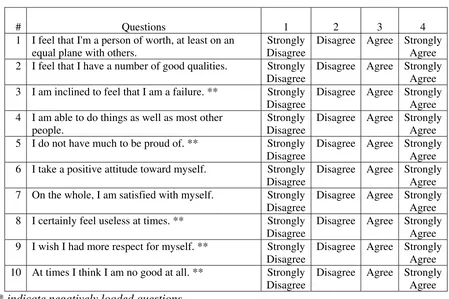
[image:6.612.80.529.327.626.2] [image:6.612.85.529.333.623.2]Household portfolio choice and wealth accumulation is affected by current wealth, expected future income, willingness to withstand variation in investment performance, and demographic characteristics that impact preferences for liquidity and consumption over time. We hypothesize that in addition to theoretical predictors of investment, self-esteem will also impact wealth accumulation and financial asset preference. The questions asked to calculate the Rosenberg Self-esteem Scale are shown in Table 1. The responses from the ten questions are summed to calculate the respondents’ self-esteem score (questions three, five, eight, nine and ten are reverse coded). Prior studies have found that the RSES scale conducted in the NLSY has a high internal consistency (Menaghan & Parcel, 1991).
TABLE 1
ROSENBERG SELF-ESTEEM SCALE
# Questions 1 2 3 4
1 I feel that I'm a person of worth, at least on an equal plane with others.
Strongly Disagree
Disagree Agree Strongly Agree 2 I feel that I have a number of good qualities. Strongly
Disagree
Disagree Agree Strongly Agree 3 I am inclined to feel that I am a failure. ** Strongly
Disagree
Disagree Agree Strongly Agree 4 I am able to do things as well as most other
people.
Strongly Disagree
Disagree Agree Strongly Agree 5 I do not have much to be proud of. ** Strongly
Disagree
Disagree Agree Strongly Agree 6 I take a positive attitude toward myself. Strongly
Disagree
Disagree Agree Strongly Agree 7 On the whole, I am satisfied with myself. Strongly
Disagree
Disagree Agree Strongly Agree 8 I certainly feel useless at times. ** Strongly
Disagree
Disagree Agree Strongly Agree 9 I wish I had more respect for myself. ** Strongly
Disagree
Disagree Agree Strongly Agree 10 At times I think I am no good at all. ** Strongly
Disagree
Disagree Agree Strongly Agree
** indicatenegatively loaded questions
categories based on years of schooling. Those with fewer than 12 years of formal education are coded as less than high school, those with exactly 12 years of education are coded as high school, those with greater than 12 and less than 16 years of education are coded as some college, those with 16 years of education are coded as college, and those with more than 16 years of education are coded as graduate school. Past research shows that educational attainment positively correlates with preference for investment in higher-return assets (Peress, 2004), and with a steeper earnings path that would encourage greater saving during the accumulation phase of the life cycle. Since financial knowledge and investment/saving preferences of individuals may also have been learned from their parents, educational attainments of parents are included as independent variables.
NLSY participants completed the Armed Services Vocational Aptitude Battery in 1980, which is transformed into an intelligence percentile using the Armed Forces Qualifying Test. The test is roughly equivalent to an IQ test, and correlates strongly with other tests of cognitive ability (Glaeser & Mare, 2001). Intelligence is also a proxy for endowed human capital, which may reduce the time and psychic costs of investing. Marital status is controlled due to differences in disposable income and life cycle saving between married and unmarried households, and differences in investment preferences (Zagorsky, 2007). Yamokoski and Keister (2006) find that gender may impact wealth and investment preferences. A variable testing whether participants have been divorced or widowed between 1994 and 2004 is included because of Zagorsky’s (2005) findings that divorce may result in a nearly 77% drop in net worth.
Region of residence is a proxy for possible regional differences in asset prices (for example, residential real estate) (Haurin et al., 1997). Both number of siblings and number of children are also included as variables to account for the increased preference for present consumption among those facing the expense of parenthood. Keister (2003) finds that having a larger number of children and siblings is negatively associated with ownership of risky assets.
Availability of financial resources that may have led to an increase in wealth between 1994 and 2004 includes log sum of total income earned between 1994 and 2004, inheritance, and log net worth in 1994. The share of wealth generated by inheritance has been estimated to range from 10% (Morgan, David, Cohen & Brazer, 1962) to 18.5 % (Menchik & David, 1983). Those with a greater net worth to begin with in 1994 may have seen a more rapid rise in net worth during this time period. Accounting for income earned in each sample year between 1994 and 2004 allows us to measure more precisely an independent increase in wealth due to saving and asset appreciation.
Since we control for income earned during the sample years between 1994 and 2004, the impact of progressive taxation on income may bias our results downward. Since those with higher self-esteem earn more, when income earned during the sample years between 1994 and 2004 is controlled, we might expect to see a negative coefficient on wealth accumulation ceteris paribus. However, this effect may be partially mitigated by the ability of higher-earning households to save excess income that provides a lower relative marginal utility.
To estimate whether self-esteem is a predictor of wealth creation, we use an OLS regression and a robust regression which focuses on near-median affects and is less influenced by extreme observations within the wealth distribution. A second regression is run to estimate the proportion of net worth held in investment assets. We assume that the same socioeconomic characteristics and preference shifters for change in wealth will impact preference for investment assets within a household portfolio.
RESULTS
Discussion of Frequencies
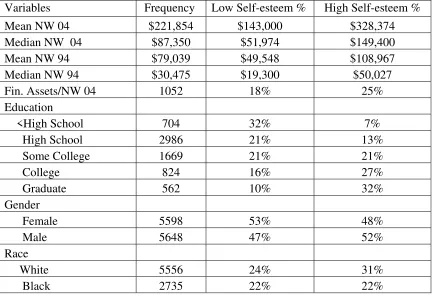
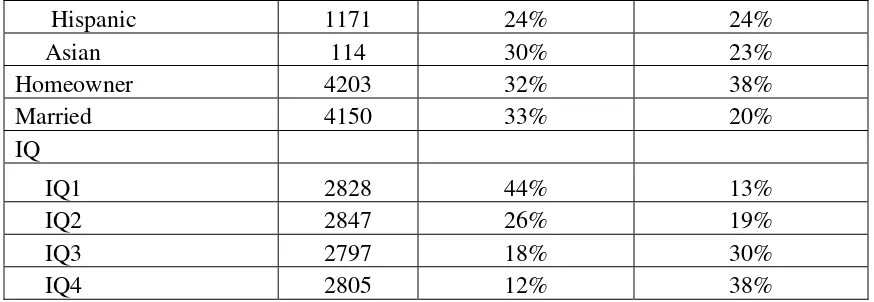
[image:8.612.91.524.417.713.2]Table 2 provides descriptive statistics for the overall sample and frequencies by high and low levels of self-esteem. High self-esteem individuals rank in the top (4th) quartile of the self-esteem scale, whereas low self-esteem individuals rank on the lowest (1st) quartile of the self-esteem scale. Respondents with high self-esteem have slightly more than twice the average net worth of those with low self-esteem in 1994, and by the 2004 sample those with high self-esteem had accumulated an average net worth 130% higher than those with low self-esteem. The percentage difference between the low and high self-esteem sample was even greater at the median. In 1994, the median difference was 159% and rose to 187% by 2004. In addition, those with higher self-esteem held a greater share of financial assets as a proportion of their net worth in 2004. A greater proportion of respondents with a high self-esteem were homeowners.
TABLE 2
DESCRIPTIVE STATISTICS
Variables Frequency Low Self-esteem % High Self-esteem % Mean NW 04 $221,854 $143,000 $328,374 Median NW 04 $87,350 $51,974 $149,400 Mean NW 94 $79,039 $49,548 $108,967 Median NW 94 $30,475 $19,300 $50,027 Fin. Assets/NW 04 1052 18% 25% Education
<High School 704 32% 7% High School 2986 21% 13% Some College 1669 21% 21% College 824 16% 27% Graduate 562 10% 32% Gender
Female 5598 53% 48% Male 5648 47% 52% Race
Hispanic 1171 24% 24%
Asian 114 30% 23%
Homeowner 4203 32% 38%
Married 4150 33% 20%
IQ
IQ1 2828 44% 13%
IQ2 2847 26% 19%
IQ3 2797 18% 30%
IQ4 2805 12% 38%
Respondents with higher self-esteem attained greater levels of formal education, and were more frequently in higher IQ quartiles than those with low self-esteem. A much greater proportion of respondents in the highest quartile of IQ have high self-esteem (38%) than low self-esteem (12%), while the lowest quartile of IQ includes a much greater proportion of respondents in the low self-esteem category (44%). Similarly, a greater percentage of those who have a college degree or have completed graduate studies are in the high self-esteem category (32%), while a greater percentage of respondents who did not complete high school are in the low self-esteem category (32%).
Discussion of T-Tests
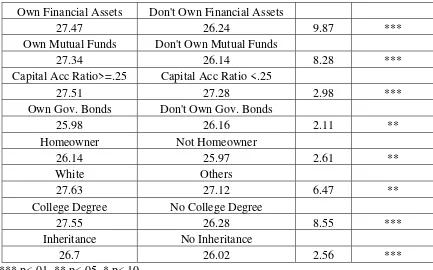
[image:9.612.88.525.72.223.2]Average self-esteem scores, which increase as self-esteem improves, are compared in Table 3 by asset ownership groups. Respondents in the highest quartiles of income and wealth have a higher self-esteem than those who fall in the lowest quartiles of income and wealth (p<0.01). Those who own financial assets, particularly financial assets with an uncertain future payoff, have a higher self-esteem than respondents who do not own risky assets. Stock owners, mutual fund owners, and owners of any financial assets have a significantly higher mean self-esteem, as well as those who have a capital accumulation ratio (investment assets/net worth) greater than 0.25 (all p<0.01). However, those who own government bonds have a lower mean self-esteem than those who do not own government bonds (p<0.05). Homeowners have a higher self-esteem than non-homeowners (p<0.05). Respondents who were white, had a college degree, and had received an inheritance had a higher self-esteem score than other respondents.
TABLE 3
SELF-ESTEEM SCORE T-TESTS
Variable 1 Variable 2 T-test Significance High Income Low Income
27.59 24.88 16.76 ***
High Net worth Low Net worth
27.77 25.54 12.45 ***
Own Stocks Don't Own Stocks
Own Financial Assets Don't Own Financial Assets
27.47 26.24 9.87 ***
Own Mutual Funds Don't Own Mutual Funds
27.34 26.14 8.28 ***
Capital Acc Ratio>=.25 Capital Acc Ratio <.25
27.51 27.28 2.98 ***
Own Gov. Bonds Don't Own Gov. Bonds
25.98 26.16 2.11 **
Homeowner Not Homeowner
26.14 25.97 2.61 **
White Others
27.63 27.12 6.47 **
College Degree No College Degree
27.55 26.28 8.55 ***
Inheritance No Inheritance
26.7 26.02 2.56 ***
*** p<.01, ** p<.05, * p<.10
Predictors of a Change in Net Worth
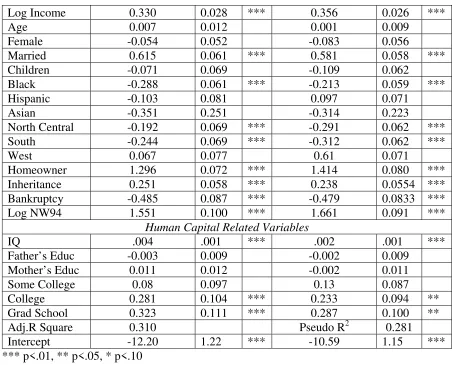
[image:10.612.88.521.70.340.2]Table 4 presents the results from both OLS and Robust (Median) Regression, which models change in net worth between 1994 and 2004. Self-esteem (beta=.018, p<.01; robust beta=.013, p<.05) is a positive predictor of an increase in wealth between the 1994 and 2004 sample years when controlling for income earned within this period and other socioeconomic factors. There are few surprises among the results predicting change in wealth. Log income earned during the sample period (in each sample year between 1994 and 2004) has a strong positive impact on change in wealth. Married households accumulated greater wealth, while black respondents and those living in the North-Central and South accumulated less wealth. Among financial characteristics, homeowners, those who received and inheritance, and those who began with a greater new worth in the 1994 sample, accumulated more wealth. Not surprisingly, those who declared bankruptcy accumulated less wealth. Human capital, including endowed human capital (measured by IQ) and attained human capital (education), was associated with greater wealth accumulation. Results from the robust regression indicated a slightly smaller magnitude of the self-esteem effect among respondents near the median and identical significance, and direction of effect among other control variables.
TABLE 4
REGRESSION OF CHANGE IN NET WORTH
Variables
OLS Parameter Estimate
St.
Error Sig.
Robust Parameter Estimate
St.
Error Sig.
Self-esteem 0.021 0.006 *** 0.013 0.005 **
Log Income 0.330 0.028 *** 0.356 0.026 ***
Age 0.007 0.012 0.001 0.009 Female -0.054 0.052 -0.083 0.056
Married 0.615 0.061 *** 0.581 0.058 *** Children -0.071 0.069 -0.109 0.062
Black -0.288 0.061 *** -0.213 0.059 *** Hispanic -0.103 0.081 0.097 0.071
Asian -0.351 0.251 -0.314 0.223 North Central -0.192 0.069 *** -0.291 0.062 ***
South -0.244 0.069 *** -0.312 0.062 *** West 0.067 0.077 0.61 0.071 Homeowner 1.296 0.072 *** 1.414 0.080 *** Inheritance 0.251 0.058 *** 0.238 0.0554 *** Bankruptcy -0.485 0.087 *** -0.479 0.0833 *** Log NW94 1.551 0.100 *** 1.661 0.091 ***
Human Capital Related Variables
IQ .004 .001 *** .002 .001 *** Father’s Educ -0.003 0.009 -0.002 0.009
Mother’s Educ 0.011 0.012 -0.002 0.011 Some College 0.08 0.097 0.13 0.087
College 0.281 0.104 *** 0.233 0.094 ** Grad School 0.323 0.111 *** 0.287 0.100 **
Adj.R Square 0.310 Pseudo R2 0.281
Intercept -12.20 1.22 *** -10.59 1.15 *** *** p<.01, ** p<.05, * p<.10
[image:11.612.79.532.67.432.2]Predictors of Financial Asset Holdings
[image:11.612.158.452.651.716.2]Table 5 presents a multivariate analysis of the proportion of net worth held in financial assets (IRAs, Keogh, 401(k), 403(b), pre-tax annuities, stocks, bonds, mutual funds, certificates of deposit, and personal loans to others) in the 2004 sample. Self-esteem has a positive and statistically significant (p<0.01) impact on the share of net worth held in investment assets. This implies that even when controlling for wealth and income, respondents with a higher self-esteem kept a greater share of their portfolio in investment assets than in liquid or tangible assets. Control variables indicate that those with greater education and IQ, and married households also have greater financial asset holdings, while black, Hispanic, and households with children hold less financial assets.
TABLE 5
PREDICTORS OF INVESTMENT ASSETS AS A PROPORTION OF NET WORTH
Variables OLS Sig
Self-esteem .002 ***
Log Income .034 ***
Married .029 ***
Children -.044 ***
Father’s Education .007 Mother’s Education -.007
Black -.052 ***
Hispanic -.057 ***
Asian -.036 Log NW 04 .05 ***
IQ .001 ***
Some College .019
College .049 **
Graduate .074 ***
Married .017 *
Female -.152 Inheritance .042 North Central .105
South .175 West -.184 Bankruptcy .165
Homeowner .038 ***
*** p<.01, ** p<.05, * p<.10
CONCLUSION
MANAGERIAL IMPLICATIONS
The desire to accumulate wealth among those with greater self-esteem is consistent with the theory of self consistency, where households save to ensure that their financial status is consistent with their perceived net worth (Korman, 1970). Descriptive results suggest that self-esteem is associated with higher endowed and attained human capital. Human capital may increase preference for financial assets that require greater human capital investment and risk tolerance by reducing time and psychic costs of investing. The ratio of financial assets to net worth or the Capital Accumulation Ratio (CAR) has been associated in the past with financial well being (DeVaney, 1993), retirement adequacy (DeVaney, 1995; Yao, Hanna, & Montalto, 2002), and financial stability across time (Garman & Forgue, 2000). Respondents with a higher self-esteem allocate a greater share of their wealth to financial assets, which may in turn lead to greater financial success over time. Conversely, a lack of self-esteem can lead to a preference for safe and tangible assets that tend to underperform over time.
REFERENCES
Arkes, H. R., & Blumer, C. (1985). The psychology of sunk cost. Organizational behavior and human performance, 35(1), 124-140.
Barber, B. M., & Odean, T. (2001). Boys will be boys: Gender, overconfidence, and common stock investment. The Quarterly Journal of Economics, 116(1), 261-292.
Baumeister, R. F., Campbell, J. D., Krueger, J. I., & Vohs, K. D. (2003). Does high self-esteem cause better performance, interpersonal success, happiness, or healthier lifestyles? Psychological Science in the Public Interest, 4(1), 1-44.
Blascovich, J., & Tomaka, J. (1991). Measures of self-esteem. Measures of personality and social psychological attitudes, 1, 115-160.
Bragues, G. (2005). Business is one thing, ethics is another: Revisiting Bernard Mandeville's fable of the bees. Business Ethics Quarterly, 15(2), 179–203.
Brockner, J., & Rubin, J. Z. (1985). Entrapment in escalating conflicts: A social psychological analysis. Springer-Verlag.
DeVaney, S.A. (1993). Change in household financial ratios between 1983 and 1986: Were American households improving their financial status? Financial Counseling and Planning, 4, 31-46.
DeVaney, S.A. (1995). Retirement preparation of older and younger Baby Boomers Financial Counseling and Planning, 6, 25-34.
Friedman, A., & Goodman, P. (1967). Wage inequity, self-qualifications, and productivity. Organizational Behavior and Human Performance, 2, 406-417.
Garman, E. T. & Forgue, R. E. (2000). Personal Finance. Houghton Mifflin Comp., Boston.
Glaeser, E. L., & Mare, D. C. (2001). Cities and skills. Journal of Labor Economics, 19(2), 316-342.
Haurin, D. R., Hendershott, P. H., & Wachter, S. M. (1997). Borrowing constraints and the tenure choice of young households. Journal of Housing Research, 8(2), 137-154.
Hogarth, P., Swenson, K., Gutenson, C. E., & Nichols III, E. L. (1995). Integrated outlet for communications and electrical power. Google Patents.
Joo, S., & Grable, J. E. (2004). An exploratory framework of the determinants of financial satisfaction. Journal of Family and Economic Issues, 25(1), 25-50.
Joo, S. H., & Grable, J. E. (2001). Factors associated with seeking and using professional retirement-planning help. Family and Consumer Sciences Research Journal, 30(1), 37.
Judge, T. A., Erez, A., & Bono, J. E. (1998). The power of being positive: The relation between positive self-concept and job performance. Human Performance, 11(2/3), 167-187.
Kanniainen, V., & Pääkkönen, J. (2007). Do the Catholic and Protestant countries differ by their tax morale? Retrieved November 20, 2007, from Helsinki Center of Economic Research Web site: http://ethesis.helsinki.fi/julkaisut/eri/hecer/disc/145/dothecat.pdf
Keister, L. A. (2000). Wealth in America: Trends in wealth inequality. Cambridge University Press.
Keister, L. A. (2003). Sharing the Wealth: The effect of siblings on adults' wealth ownership. Demography, 40(3), 521-542.
Korman, A. K. (1970). Towards a hypothesis of work behavior. Journal of Applied Psychology, 54(1), 31–44.
Lazarus, R. S. (1991). Emotion and Adaptation. US: Oxford University Press.
Liao, K. L. M., Hunter, M., & Weinman, J. (1995). Health-related behaviors and their correlates in a general population sample of 45-year old women. Psychology Health, 10, 171-184.
Mansour, S. B., Jouini, E., & Napp, C. (2006). Is there a “Pessimistic” bias in individual beliefs? Evidence from a simple survey. Theory and Decision, 61(4), 345-362.
Menaghan, E. G., & Parcel, T. L. (1991). Determining children's home environments: The impact of maternal characteristics and current occupational and family conditions. Journal of Marriage and the Family, 53(2), 417-431.
Menchik, P. L., & David, M. (1983). Income distribution, lifetime savings, and bequests. The American Economic Review, 73(4), 672-690.
Morgan, J. N., David, M. H., Cohen, W. J., & Brazer, H. E. (1962). Income and welfare in the US. New York: McGraw-Hill.
Peress, J. (2004). Wealth, information acquisition, and portfolio choice. Review of Financial Studies, 17(3), 879-914.
Robins, R. W., Hendin, H. M., & Trzesniewski, K. H. (2001). Measuring global self-esteem: Construct validation of a single-item measure and the Rosenberg Self-Esteem Scale. Personality and Social Psychology Bulletin, 27(2), 151.
Rosenberg, M. (1965). Society and the adolescent self-image. Princeton, NJ: Princeton University Press.
Taylor, J. W. (1974). The role of risk in consumer behavior. Journal of Marketing, 38(2), 54-60.
Tykocinski, O., Israel, R., & Pittman, T. S. (2004). Inaction inertia in the stock market. Journal of Applied Social Psychology, 34(6), 1166-1175.
Whitbeck, L. B., Simons, R. L., Conger, R. D., Lorenz, F. O., Huck, S., & Elder Jr, G. H. (1991). Family economic hardship, parental support, and adolescent self-esteem. Social Psychology Quarterly, 54(4), 353-363.
Yao, R., Hanna, S. D., & Montalto, C. P. (2002). Factors related to meeting the capital accumulation ratio guideline. Financial Services Review, 11 (2), 153-171.
Yamokoski, A., & Keister, L. A. (2006). The wealth of single women: Marital status and parenthood in the asset accumulation of young baby boomers in the United States. Feminist Economics, 12(1), 167-194.
Zagorsky, J. L. (2005). Marriage and divorce's impact on wealth. Journal of Sociology, 41(4), 406.