Permission to Borrow
In presenting this dissertation as a partial fulfillment of the requirements for an
advanced degree from Georgia State University, I agree that the Library of the
University shall make it available for inspection and circulation in accordance with its
regulations governing materials of this type. I agree that permission to quote from, or
to publish this dissertation may be granted by the author or, in his/her absence, the
professor under whose direction it was written or, in his absence, by the Dean of the
Robinson College of Business. Such quoting, copying, or publishing must be solely for
scholarly purposes and does not involve potential financial gain. It is understood that
any copying from or publication of this dissertation which involves potential gain will
not be allowed without written permission of the author.
Notice to Borrowers
All dissertations deposited in the Georgia State University Library must be used only in
accordance with the stipulations prescribed by the author in the preceding statement.
The author of this dissertation is:
Sweta Sneha
3642 Summit Oaks Drive
Roswell GA 30075
The director of this dissertation is:
Dr. Upkar Varshney
Computer Information Systems Department
Robinson College of Business Administration
P.O. Box 4015
Atlanta GA 30303-4015
Telephone: 404-651-3880 ext. 9139
Georgia State University
Users of this dissertation not regularly enrolled as students at Georgia State University
are required to attest acceptance of the preceding stipulations by signing below.
Libraries borrowing this dissertation for the use of their patrons are required to see
that each user records here the information requested.
PATIENT MONITORING VIA MOBILE AD HOC NETWORK -
MAXIMIZING RELIABILITY WHILE MINIMIZING POWER USAGE AND DELAYS
BY
SWETA SNEHA
A Dissertation Submitted in Partial Fulfillment of the Requirements for the Degree
of
Doctor of Philosophy
in the Robinson College of Business
of
Georgia State University
GEORGIA STATE UNIVERSITY
ROBINSON COLLEGE OF BUSINESS
Copyright by
Sweta Sneha
ACCEPTANCE
This dissertation was prepared under the direction of Sweta Sneha’s Dissertation
Committee. It has been approved and accepted by all members of that committee,
and it has been accepted in partial fulfillment of the requirements for the degree of
Doctor of Philosophy in the Robinson College of Business of Georgia State University.
____________________________
Dean
Robinson College of Business
Dissertation Committee:
____________________________
Chair: Dr. Upkar Varshney
____________________________
Dr. Peter Meso
____________________________
Dr. Yi Pan
ABSTRACT
PATIENT MONITORING VIA MOBILE AD HOC NETWORK -
MAXIMIZING RELIABILITY WHILE MINIMIZING POWER USAGE AND DELAYS
BY
SWETA SNEHA
May 22
nd, 2008
Committee Chair: Dr. Upkar Varshney
Major Department: Computer Information Systems
Comprehensive monitoring of patients based on wireless and mobile technologies has been proposed for early detection of anomalies, provision of prompt medical attention, and corresponding reduction in healthcare expenses associated with unnecessary hospitalizations and treatment. However the quality and reliability of patient monitoring applications have not been satisfactory, primarily due to their sole dependence on infrastructure-oriented wireless networks such as wide-area cellular networks and wireless LANs with unpredictable and spotty coverage. The current research is exploratory in nature and seeks to investigate the feasibility of leveraging mobile ad hoc network for extending the coverage of infrastructure oriented networks when the coverage from the latter is limited/non-existent.
scheme are designed to achieve the aforementioned objective. The PRD protocols manage power transmitted by the source and intermediate routing devices in end to end signal transmission with the obejective to maximize end to end reliability. The PM-PRD scheme operationalizes an appropriate PRD protocol in end to end signal transmission for diverse patient monitoring scenarios with the objective to maximize reliability, optimize power usage, and minimize delays in end to end signal transmission.
Analytical modeling technique is utilized for modeling diverse monitoring scenarios in terms of the independent variables and assessing the performance of the research artifacts in terms of the dependent variables. The evaluation criterion of the research artifacts is maximization of reliability and minimization of power usage and delays for diverse monitoring scenarios. The performance evaluation of the PRD protocols is based on maximization of end to end reliability in signal transmission. The utility of the PM-PRD scheme is associated with operationalizing an appropriate protocol for a given monitoring scenario. Appropriateness of a protocol for a given scenario is based on the performance of the PRD protocols with respect to the dependent variables (i.e., end to end reliability, end to end power usage, and end to end delays). Hence the performance evaluation of the PRD protocols in terms of the dependent variables is utilized to (a) discover the best protocol and (b) validate the accuracy and utility of the PM-PRD scheme in allocating the best protocol for diverse monitoring scenarios.
ACKNOWLEDGEMENTS
There are many people whose relentless support and guidance not only helped me mature professionally as a scholar but also helped me get through tough times on the personal front. I would not have reached so far in my career as a researcher if it wasn’t for their support. I would like to thank all of them.
First, I would like to thank my advisor, Dr. Upkar Varshney, who initiated my career as a researcher and motivated me to apply for the Ph.D. program. Since then I have known what I want to do for the rest of my life. Dr. Varshney has been a constant source of encouragement and his thoughtful consideration has uplifted me on numerous occasions. My dissertation has greatly benefited from his wisdom and superior knowledge of the subject matter. I have also gained personally from his mentorship and guidance. Thanks for everything!
I would also like to thank my committee members: Dr. Peter Meso, Dr. Yi Pan, and Dr. Anu Bourgeois in shaping and helping improve the dissertation. My dissertation benefited greatly from the keen acumen and mentorship of my committee members. Without your relentless support and suggestions the proposed dissertation would not exist. I thank you for your time and patience in dealing with me, my requests for feedback, and defense scheduling.
conduct rigorous research utilizing design research methodology. Dr. Storey continues to inspire me with the grace she manages her personal and professional lives.
Dr. Detmar Straub has been my mentor and support during my entire career at GSU. I have been very fortunate to be able to work with and learn from him. He has been instrumental in shaping my research career and in giving me wonderful opportunities in expanding my horizon from the very beginning of the Ph.D. program. I cannot thank him enough for his mentorship and kindness.
Dr. Daniel Robey has been a source of excellent advice and support during my entire stay at GSU. I still remember meeting him for the very first time at GSU on a Friday afternoon when he gave me a short tour of the department. His seminar on qualitative research methods encouraged me to explore the realm of interpretive research. Dr. Mark Keil gave me an opportunity to conduct research in the domain of project management. I have learnt a lot from him both professionally and personally and admire his courage and optimism in the face of difficulty.
I would like to thank all those who have been with me all along the journey. I could not have reached so far if it wasn’t for their relentless love and support:
• First and foremost are my dear husband (Chetan Rischie) and my adorable son (Ishaan Rischie) who have been a constant source of unsurpassed love, support, and encouragement. My husband Chetan has been my source of strength, perseverance, and joy. His small thoughtful considerations reflecting his love and care meant the whole world to me and helped me survive the rigors of the PhD program. He believed in me even when I didn’t and supported me in numerous ways from letting me sleep in for an hour in the morning because I stayed up all night, cooking/ordering in meals, helping with the laundry/dishes, dealing with busy days/nights and my highs/lows, and the list goes on and on. I am extremely proud of my son Ishaan who has been my source of inspiration and true bliss even in difficult times. His mere presence enriches my life and brings me smile and true happiness. His caring thoughts and actions at such a young age continues to overwhelm and surprise me. I am truly blessed to have both of you in my life. Even though I don’t say it often, I love you both today and always and I hope I can bring you as much happiness as you have brought me.
• Finally, I thank all my friends, especially Seema Verma, Toral Kapur, Preetha Prabhu, Smita Doshi, Kris Wittigen, and Cathy Silbaugh, who have supported and helped me during the PhD program and have remained great friends despite my being a poor correspondent at times.
TABLE OF CONTENTS
CHAPTERS
Page1.
INTRODUCTION……… 1
Problem Statement………. 5
Patient Monitoring via Mobile Adhoc Networks: Usage Scenario……….. 7
Research Question and Research Objective……… 11
Contribution to Research and Practice……… 16
Dissertation Outline……….. 20
2.
PATIENT MONITORING……….. 21
Patient Monitoring Requirements……….. 23
Review of Prior Research in Patient Monitoring ………. 28
3.
MOBILE AD HOC NETWORK (MANET)……….. 33
Mobile Ad Hoc Network in the Context of Patient Monitoring……… 36
End to End Reliability in Signal Transmission……… 37
End to End Delays in Signal Transmission………. 42
End to End Power Consumption in Signal Transmission……….. 45
4.
POWER, RELIABILITY, AND DELAY (PRD)……… 52
Power Management Techniques……….. 54
Power-Reliability-Delay (PRD) Protocols……….. 56
Sleep Strategy: Power Management at Idle State………. 67
Power-Reliability-Delay (PRD) Scheme……….. 73
5.
RESEARCH METHODOLOGY………... 85
Network Model……….. 90
6.
ANALYTICAL MODELING AND RESULTS………. 100
Analytical Model Development………. 101
Performance of E-E Reliability, E-E Delays, and E-E Power Usage……….… 121
Results and Performance Analysis without Using PRD Protocols………. 122
Results and Performance Analysis with Using PRD Protocols………. 136
7.
CONCLUSION AND FUTURE RESEARCH……….. 152
8.
APPENDIX A: ALGORITHMS ASSOCIATED WITH THE PM-PRD SCHEME………. 159
9.
GLOSSARY OF TERMS AND ABBREVIATIONS……….. 163
LIST OF FIGURES Page
Figure 1: Changing Global Demographics and Resultant Healthcare Needs……… 2
Figure 2: Issues with Exclusive Dependence on Infrastructure Oriented Networks… 6
Figure 3: Use of Ad Hoc Wireless Network for Patient Monitoring………. 9
Figure 4: A Conceptual Framework Classifying Patient Monitoring Requirements….. 23
Figure 5: Multi-Hop Signal Transmission in Ad Hoc Wireless Network……… 35
Figure 6: Parameters Impacting End to End Reliability of Transmission……….. 40
Figure 7: Parameters Impacting End to End Delays in Signal Transmission……….. 43
Figure 8: Minimal Delay Transmissions vs. Minimal Power Transmissions……….. 45
Figure 9: Transmitted Power Impacts Device Range and Number of Hops………. 47
Figure 10a: Transmission from C to D at Higher Power Causes Interference at B….. 48
Figure 10b: Transmission from C to D at Lower Power Reduces Interference at B… 48
Figure 11: Monitoring Device’s State Model……….. 55
Figure 12: Research Scope in Terms of Power Usage by a PMD……….. 56
Figure 13: Impact of PRD Protocols on E-E Power, E-E Reliability, and E-E Delays.. 59
Figure 14: End to End Transmissions via RP-RCD ……… 60
Figure 15: End to End Transmissions via MP-MCD ……….. 61
Figure 16: End to End Transmission via MP-OCD……….. 63
Figure 17: End to End Transmission via OP-OCD……….. 65
Figure 18: Assisted Power Management and Sleep Strategy ……… 71
Figure 19: Overview of Key Process Underlying the PM-PRD Scheme……….. 73
Figure 20: Uniform Distribution vs. Clustered Distribution in the Area of Transmission 75 Figure 21: Factors Impacting Overall Device Density in the Area of Transmission…. 76
Figure 22: Logical Architecture of the Power-Reliability-Delay (PRD) Scheme ………. 82
Figure 23: Process Model Underlying the PM-PRD Scheme……… 84
Figure 24: The Network Model – Transmission from X to Y via A-B-C-D-E……….. 92
Figure 25: Research Model………. 93
Figure 26: E-E Power Usage as a Function of Variation in E-E Hops………. 121
Figure 27: E-E Reliability as a Function of Variation in Device Density and E-E Hops 124
Figure 28: E-E Delays as a Function of Variation in System Utilization and E-E Hops 125
Figure 30: E-E Reliability as a Function of Variation in Device Density and E-E Hops In the Presence of Cluster = 1, Size = 30% of PMDs, Cluster Off Route of Transmission…….. 129 Figure 31: E-E Reliability as a Function of Variation in Device Density and E-E Hops In the Presence of Cluster = 1, Size = 40% of PMDs, Cluster On Route of Transmission…….. 129 Figure 32: E-E Reliability as a Function of Variation in Device Density and E-E Hops In the Presence of Cluster = 1, Size = 40% of PMDs, Cluster Off Route of Transmission…….. 130 Figure 33: E-E Reliability as a Function of Variation in Device Density and E-E Hops In the Presence of Cluster = 2, Size = 30% of PMDs, Cluster On Route of Transmission…….. 132 Figure 34: E-E Reliability as a Function of Variation in Device Density and E-E Hops In the Presence of Cluster = 2, Size = 30% of PMDs, Cluster Off Route of Transmission…….. 133 Figure 35: E-E Reliability as a Function of Variation in Device Density and E-E Hops In the Presence of Cluster = 2, Size = 40% of PMDs, Cluster On Route of Transmission…….. 133 Figure 36: E-E Reliability as a Function of Variation in Device Density and E-E Hops In the Presence of Cluster = 2, Size = 40% of PMDs, Cluster Off Route of Transmission…….. 134 Figure 37: E-E Reliability for 10 E-E Hops and Variable Overall Device Density Due to Variations in Cluster Size, Number, and Clusters On/Off Route……….. 135 Figure 38: E-E Reliability for 8 E-E Hops and Variable Overall Device Density Due to Variations in Cluster Size, Number, and Clusters On/Off Route……….. 136
Figure 39: End-End Power Transmitted for Uniform Device Distribution, C=0……... 139
Figure 40: End-End Reliability of Transmission for Uniform Device Distribution (C=0) 140
Figure 41: End to End Hops for Uniform Device Distribution, C=0………... 140
Figure 42: End-End Delays in Transmission for Uniform Device Distribution (C=0) at
System Utilization = 15%... 141
Figure 43: End-End Delays in Transmission for Uniform Device Distribution (C=0) at
System Utilization = 45%... 141
Figure 44: End-End Delays in Transmission for Uniform Device Distribution (C=0) at
System Utilization = 90%... 142
Figure 45: End-End Power Transmitted in Clustered Device Distribution, C=1, 30% .. 145
Figure 46: End-End Reliability in Clustered Device Distribution C=1, 30% of PMD…. 145
Figure 47: End to End Hops for Uniform Device Distribution, C=1, 30% of PMDs… 146
Figure 48: End-End Delays in Clustered Device Distribution (C=1, 30% of PMDs) at
System Utilization = 15%... 146
Figure 49: End-End Delays in Clustered Device Distribution (C=1, 30% of PMDs) at
Figure 50: End-End Delays in Clustered Device Distribution (C=1, 30% of PMDs) at
System Utilization = 90%... 147
Figure 51: End-End Power Transmitted in Clustered Device Distribution, C=2, 30% of
PMD……… 148
Figure 52: End-End Reliability in Clustered Device Distribution C=2, 30% of PMD.. 148
Figure 53: End to End Hops for Uniform Device Distribution, C=2, 30% of PMDs.... 149
Figure 54: End-End Delays in Clustered Device Distribution (C=2, 30% of PMDs) at
System Utilization = 15%... 149
Figure 55: End-End Delays in Clustered Device Distribution (C=2, 30% of PMDs) at
System Utilization = 45%... 150
Figure 56: End-End Delays in Clustered Device Distribution (C=2, 30% of PMDs) at
LIST OF TABLES Page
Table 1: Requirements, Decisions, and Technology Supporting Patient Monitoring…… 27
Table 2: Overview of Parameters Impacting End to End Reliability of Signal Transmission 41 Table 3: Overview of the Protocols for Power Management………. 58
Table 4: Comparative Assessment of the PRD Protocols………... 67
Table 5: Power Characteristics during Various Radio States……… 68
Table 6: Details of Sleep Strategy Alternatives for Power Control at Idle State……… 70
Table 7: Patient Monitoring Scenarios and Relative Priorities Corresponding to Power Management, Delay, and Reliability in End to End Transmission……… 79
Table 8: Operationalizing PRD Protocols in End to End Signal Transmission……… 83
Table 9: Key Constructs in the Current Research……… 94
Table 10: Independent Variables in the Current Research………. 94
Table 11: The Dependent Variables Considered in the Current Research……… 96
Table 12: Evaluation Plan of the PRD Protocols – Measuring Performance of E-E Reliability-E Power Usage, and Reliability-E-Reliability-E Delays in Signal Transmission………. 97
Table 13: Variables used in the Analytical Model……….………. 103
Table 14: Structure of Performance Evaluation……….. 120
Table 15: Algorithm for Process1-Task 1……… 159
Table 16: Algorithm for Process1-Task 2……… 159
Table 17: Algorithm for Process1-Task 3……… 159
Table 18: Algorithm for Signal Transmission………..……….. 160
Table 19: Algorithm for Process3-Task 6……… 161
INTRODUCTION
[image:20.612.86.515.427.660.2]Healthcare forms an indispensable constituent of the modern society, representing a large percentage of Gross National Product (GNP), sustaining a high political profile and strong public interest (Chiasson and Davidson et al., 2004). In the wake of the 21st century, healthcare systems around the globe are faced with exponential rise in expenses, heavy utilization of services due to the steep rise in aging population, and limited financial as well as human resources to deal with the growing needs (Goldberg and Wickramasinghe, 2003), (Varshney, 2005). Current healthcare expenses in US are approximately 15% of the Gross National Product (GNP) (Kern and Jaron, 2003) and are projected to reach 17% of the GNP by 2011 (Boult, 1999), (Chronic Care Improvement). Figure 1 depicts the changing global demographics, the resultant increase in the number of aging patients, and the corresponding strain on both the human as well as financial resources of the healthcare sector.
Figure 1: Changing Global Demographics and Resultant Healthcare Needs Prevention
Early Diagnosis
Disease Management
Compliance Issues
Early Treatment
Increasing Patient Population
Increasing load on Healthcare Sector Dwindling Financial Resources
The worldwide population of adults over 65 years of age is increasing exponentially and is expected to reach 761 million by 2025 (Tablado et al., 2003). Multiple studies in the past have noted the prevalence of multiple ailments in the aging population – seven of the most prevalent illnesses in U.S. (and their associated in-patient expenses) include: coronary artery diseases ($25.6 billion), heart failure ($15.2 billion), chronic obstructive pulmonary diseases ($6.2 billion), mental health disorders ($3.9 billion), diabetes ($3.8 billion), hypertension ($3.2 billion) and asthma ($1 billion) [6]. A large percentage of these ailments deteriorate to the point where a crisis is reached resulting in unnecessary long term hospitalization at massive costs to the healthcare sector. Many of such crisis situations are preventable and huge cost savings and improved healthcare can result from early detection of complications and proactive management of chronic diseases (Kunze et al. 2002). It is to be noted that often the development of crisis is not due to improper treatment of the patients
inside the hospitals but is due to inadequate monitoring of patient conditions, lack of proper
disease management, and non-conformity with physicians’ advice outside the hospitals. Many healthcare experts agree that current Medicare expense patterns - approximately 78% of all healthcare spending or well over a trillion dollar per year - are a reflection of unsuccessful
management of illnesses outside the hospitals (Boult, 1999), (Hunter, 2000), (Chronic Care
Improvement).
Innovative strategies are needed to tackle the spiraling healthcare expenses and to cater to the healthcare needs of an aging population in addition to sustaining the trend towards an independent lifestyle focusing on personalized non-hospital based care (Tablado et al., 2003), (US Administration on Aging Reports). One strategy is deployment of a large number of trained healthcare professionals to handle the current healthcare scenario. However, there are two key constraints associated with heavy utilization of human resources: (1) healthcare professionals are limited and over-worked; (2) human resources constitute the most expensive variable in the healthcare sector. Thus heavy utilization of human resources will not only increase the cognitive overload of the healthcare professionals it might lead to higher costs.
Dependable and comprehensive monitoring solutions enabled by information
PROBLEM STATEMENT
Figure 2: Issues with Exclusive Dependence on Infrastructure Oriented Networks
(Adapted from Varshney, 2004)
ISM equipments, (d) varying capacity of infrastructure-oriented wireless networks, and (e) lack of application-specific priority for transmission of emergency signals.
The aforementioned constraints combined with a lack of comprehensive coverage of infrastructure-oriented wireless networks negatively affects the quality of patient monitoring, greatly limits the mobility of patients, and can potentially lead to fatal consequences (Varshney 2004). The need for ubiquity and dependability in patient monitoring solutions combined with the lack of comprehensive support provided by infrastructure oriented wireless networks creates a rich problem space. The current research is motivated in this problem space and explores the novel approach of employing mobile ad hoc network (MANET) in conjunction with existing infrastructure oriented wired/wireless networks to support dependable, comprehensive patient monitoring solutions. A MANET can be formed as and when required among wearable patient monitoring devices capable of routing as well as transmitting signals. A patient monitoring solution based on MANET does not intend to replace infrastructure oriented wired/wireless networks instead it seeks to complement the coverage of such networks in areas where the coverage from the latter is limited or unavailable, thereby enhancing the coverage and dependability of wireless networks for signal transmission in the context of patient monitoring solutions.
PATIENT MONITORING VIA MOBILE AD HOC NETWORK: ENVISIONED USAGE SCENARIO
A nursing home houses patients where they are continuously monitored
for detection of any anomalies related to their respective illnesses. “X” is one
of the patients living in the nursing home. He is monitored for detection of
any anomalies related to a cardiovascular disease via a monitoring device. The
device measures electrocardiogram (ECG) readings at pre-specified intervals,
processes and analyzes the readings, and wirelessly transmits alerts to a
healthcare professional when an anomaly is detected. On receiving the alert
the healthcare professional (physician/nurse on duty) provides pertinent
medical attention to the respective patient. The network support for alert
transmission is provided via a Wireless Local Area Network (WLAN). Due to
incumbent shortage of nurses at the nursing home, a nurse physically examines
the patient once every hour irrespective of the absence of an anomalous
event. At one point during the day “X” goes to the restroom, suffered a fatal
cardiac arrest and died in the restroom. An hour later when the nurse came to
examine “X” she realized that he was already dead. Later investigation of the
monitoring device brought to the attention the fact that the device detected
the anomaly in ECG readings and made several attempts to transmit an
emergency alert to a healthcare professional. Unfortunately, the alert could
not be transmitted because the restroom where “X” suffered cardiac arrest
happened to be in a dead spot with no wireless network coverage.
dependability of patient monitoring solutions but also prevented pertinent medical
intervention from reaching the patient when required. An extension of the preceding scenario
[image:27.612.73.505.245.530.2]is presented next and graphically depicted in Figure 3. In the following scenario we assume that the patient monitoring devices are capable of forming a mobile ad hoc network to complement the coverage of an infrastructure oriented wired/wireless network when the coverage from the latter is limited or non-existent.
Figure 3: Use of Ad Hoc Wireless Network for Patient Monitoring
………At one point during the day patient “X” goes to the restroom
and suffered a cardiac arrest. The patient’s monitoring device analyzes the
patient) and detects an anomalous event which requires transmission of an
emergency alert to a healthcare professional. The device failed in transmitting
the alert via the WLAN since the restroom happened to be in a dead spot with
no wireless coverage at the time of the incidence. In the absence of wireless
coverage, the patient’s device “X” forms an ad hoc wireless network with the
other nearby devices by transmitting a strong burst of signal which is picked
up by other patient devices, “F” and “A”, at a distance of ‘d’ units. The
devices transmit the alert further. The transmitted signal can be routed by an
infrastructure oriented network in conjunction with a multi-hop MANET or
purely by a MANET such that after multiple hops the alert reaches a
healthcare professional “Y”. The transmitted alert consists of the location of
the patient along with the nature of emergency. The healthcare professional
rushes to the patient’s location and finds him in the restroom. Immediate
medical intervention was provided to the patient as required “just in time”.
The patient is resuscitated and the crisis is avoided. The physician adjusts the
patient’s medications and gives few critical advices to patient “X” in order to
manage the ailment going further.
physicians, nurses, and other related staff. The research on the other hand seeks to
economize and assist healthcare professionals in providing medical intervention as and when
needed, without any delay via dependable patient monitoring solutions.
RESEARCH QUESTION AND RESEARCH OBJECTIVE
The proposed approach of complementing the coverage of infrastructure oriented wired/wireless networks by leveraging multi-hop MANET formed among patient monitoring devices holds colossal promises not only for millions of patients requiring long term monitoring and confinement due to prolonged hospitalizations but also for the “health” of the healthcare sector in general. Nonetheless, there are also numerous challenges associated with leveraging mobile ad hoc network to support dependable patient monitoring solutions. The current study specifically focuses on the three primary factors underlying dependable patient monitoring solutions via multi-hop MANET:
• Power management of the battery constrained, low-powered monitoring devices –
Power management is vital to monitoring as well as transmitting signal via multi-hop MANET. The metric for power management in the current research is defined as the total power consumption in signal transmission from the patient to a healthcare professional via multiple hops (i.e. end to end power consumption).
• Reliability of signal transmission from the patient to a healthcare professional –
recipient (healthcare professional) in a multi-hop MANET (Cho et al., 2003). Reliability at each intermediate hop is measured in terms of probability of finding a cooperative router (a device capable of transmitting signal further till it reaches the final recipient) at each hop. It follows that the probability of finding cooperative routers at each successive hop in end to end signal transmission is the metric for end to end reliability of transmission.
• Delays in signal transmission from the patient to a healthcare professional – Patient
monitoring has bounded delay requirements and the level of delay tolerance can vary from high to low for diverse scenarios. End to end delay is the metric for delay in signal transmission from the patient to a healthcare professional via multiple hops.
Hitherto, a dependable patient monitoring solution via multi-hop MANET is defined as
optimizing end to end power consumption for a given patient monitoring scenario such that
the reliability of end to end signal transmission is enhanced at minimal delays in end to end
signal transmission. It follows that the parameters defining dependable patient monitoring in
“How can power of the monitoring devices be efficiently managed so as to
achieve dependable patient monitoring solution (as defined in the current
research) for various patient monitoring scenarios (as defined by the
aforementioned patient monitoring attributes)?”
This study follows the design research methodology which seeks to create and evaluate IT artifacts (Hevner et al. 2004). Following the design science paradigm the goal of
concurrently achieving the conflicting requirements of minimizing power consumption of the
low powered monitoring device while maximizing reliability and minimizing delays in end to
end signal transmission for a given patient monitoring scenario is tackled by the following
research objectives. It is to be noted that the current research is exploratory in nature and seeks to assess the feasibility of applying MANET for supplementing the spotty network coverage of infrastructure oriented networks such that the quality and dependability of end to end transmission in the context of patient monitoring applications is enhanced.
1. Analyze the dependability of patient monitoring via multi-hop MANET by analytically modeling and evaluating the performance of end to end power consumption, end to end reliability, and end to end delays in signal transmission for diverse patient monitoring scenarios (characterized by its attributes such as: patient/device density in the area of transmission, transmission area, patient mobility resulting in clustered versus uniform distribution, system utilization, processing capacity of the devices).
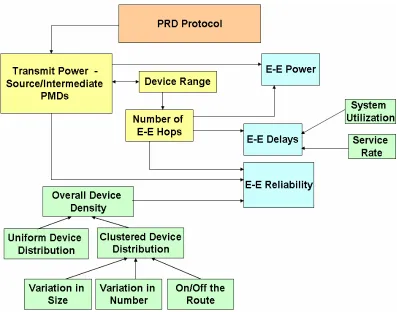
• Developing protocols for power management of the patient monitoring devices at the transmit state (i.e. when the devices are involved in active transmissions). The power-reliability-delay protocols (i.e. PRD protocols) utilize variable-rate transmit power to manage the power transmitted by the source and the intermediate routing devices such that reliability is maximized in end to end signal transmission for diverse patient monitoring scenarios.
• Assessing and investigating the applicability of sleep strategy to conserve power consumption at the idle state (when the devices are listening to transmissions from other devices but are not actively involved in transmissions) without adversely impacting the dependability of patient monitoring in the context of multi-hop MANET.
3. Explore and develop technique for achieving dependable patient monitoring solutions (i.e. minimizing power consumption for a given patient monitoring scenario such that reliability is maximized and delays is minimized in end to end signal transmission). The current study specifically achieves this objective by:
4. Following the design research guidelines outlined by Hevner et al. (2004), analytical modeling technique is used to assess the validity of the research artifacts in maximizing reliability while minimizing power usage and delays in end to end signal transmission. Specifically the following tasks are achieved:
• Develop a mathematical model representing end to end signal transmission in diverse monitoring scenarios via a multi-hop MANET. The PRD protocols operationalized in the PM-PRD scheme are analytically expressed in terms of the key independent and dependent variables.
• Develop diverse scenarios of interest by varying the independent variables.
• Evaluate/assess the impact on the dependent variables for various patient monitoring scenarios in terms of the performance of reliability, power usage, and delays in end to end signal transmission.
• The performance of the dependent variables is assessed before and after leveraging the PRD protocols in end to end signal transmission. The performance evaluation of reliability, power usage, and delays in end to end signal transmission without the PRD protocols seeks to validate the relationships of the independent variables on the key dependent variables in diverse scenarios. On the other hand the performance evaluation of reliability, power usage, and delays in end to end signal transmission with the PRD protocols seeks to demonstrate that the PRD protocols maximize end to end reliability in signal transmission under diverse monitoring scenarios.
of the PRD protocols is leveraged to demonstrate the utiity and accuracy of the PM-PRD scheme in achieving the desired objectives.
• Discuss and present the results of the evaluations and analysis.
5. The end to end delay is analytically modeled using M/M/1 Queue for varying patient monitoring scenarios (as defined by varying its attributes). The evaluation of the PM-PRD scheme with respect to end to end delay is associated with the performance of end to end delays while utilizing the PRD protocols under diverse scenarios.
CONTRIBUTION TO RESEARCH AND PRACTICE
The key significance of the current research is its contribution in investigating the potential of multi-hop MANET formed among patient worn devices as a possible solution to the problem of achieving dependable network coverage for comprehensive patient monitoring. The results show that it is possible to achieve efficient power utilization, 100% reliability of end to end transmission at minimal delay in the context of patient monitoring via multi-hop MANET. Transmissions with relaxed delay and reliability requirements can take advantage of higher power saving while lower delays and higher reliability can be met at the cost of higher power utilization. The relevance of this research extends not only to the community of wireless networking researchers, and practitioners but also to the healthcare community in general. The results of the current research are likely to open multiple doors and avenues for further research in this largely uncharted domain. Some of the unique contributions of this research are as follows:
• It is believed (to the best of my knowledge) that this is the first study that (a) investigates the applicability of multi-hop MANET to complement the infrastructure based wired/wireless network for comprehensive patient monitoring without any dependency on time and location, (b) designs and validates protocols for power management (PRD protocols) of the low-powered monitoring devices with the objective to maximize reliability, and (c) designs and validates the PM-PRD scheme that assesses a given monitoring scenario and operationalizes the PRD protocol with the objective to minimizing power usage and delays in addition to maximizing reliability.
operationalizing the best protocol for a given monitoring scenario such that the desired goals are met.
• Development of an extensible analytical model, analysis, and performance evaluation of the primary research artifacts (i.e. power management protocols and scheme for dependable patient monitoring) for diverse patient monitoring scenarios.
• The results corroborate that the research artifacts can be leveraged in end to end signal via a multi-hop MANET to complement the coverage of infrastructure oriented networks and thereby enhance the quality and dependability of patient monitoring applications.
Future research can explore other key factors that are also important constituents of patient monitoring via multi-hop MANET such as: efficiency in routing, mobility model for patients, throughput, and interference. As the industry gets more competitive, the infrastructure providers are likely to venture in the realm of utilizing ad hoc wireless networks to optimize the network performance and provide quality service to the users.
management, and healthcare sector. Thus the innovation in healthcare service industry can turn into a growth engine creating economic advancement and prosperity. It is to be noted that the current research does not seek to replace the healthcare professionals’ healing touch and/or medical expertise associated with providing quality healthcare. On the contrary it seeks to complement and assist the healthcare professionals in provision of prompt medical intervention to patients as and when needed.
DISSERTATION OUTLINE
PATIENT MONITORING
Patient monitoring is an age old concept which has evolved over the years. Traditionally patient monitoring implied monitoring of specific patient conditions by leveraging human resources in order to provide correct diagnosis and treatment. However, for the traditional form of monitoring patients to be sustainable, a larger workforce along with a bigger financial support is imperative. Under the dwindling financial and human resources available at the disposal of the healthcare sector technology based patient monitoring solutions is increasingly viewed as a viable option for meeting the healthcare needs of the changing global demographics and focusing on prevention of crisis, timely detection of anomalies, overall wellness, and proactive disease management.
PATIENT MONITORING REQUIREMENTS
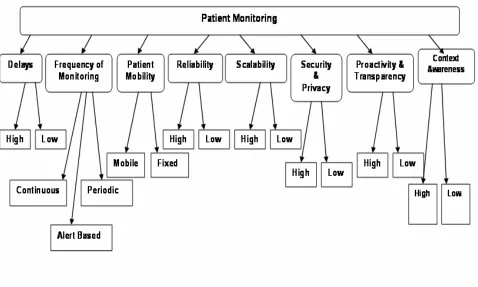
[image:41.612.73.551.356.643.2]The requirements of patient monitoring are not only diverse supporting indoor and outdoor, as well as stationary and mobile patients but are also complex, and involve multiple parameters such as: duration of monitoring, frequency of data collection and transmission, amount of data transmitted, nature of monitoring such as: alert, periodic or continuous. The following overview of the requirements of patient monitoring shows the complexity, diversity, and somewhat contradictory nature of the requirements. Figure 4 graphically depicts a conceptual classification of the diversity and complexity of patient monitoring requirements.
Monitoring and Transmission: Patient monitoring can be continuous, alert driven (on the detection of an abnormal event) or periodic (at fixed times in a day). Continuous monitoring and transmission can provide real-time data for analysis and storage but can also lead to an information overload of healthcare professionals and significant network traffic (such as patients undergoing critical care). Periodic monitoring and transmission sacrifices the real-time aspect for a decrease in network traffic and information overload and is suitable for patients under routine supervision. In alert driven monitoring, the patients are continuously monitored and the acquired data is analyzed for detection of anomalies. Only when an anomaly is detected and medical attention warranted, is a message transmitted over a network. This type of monitoring could result in a time lag in performing analysis and sending alert messages, however, a reduced information load and network traffic make it a possible choice in some instances of patient monitoring.
Reliability of Message Delivery: Due to the potentially life threatening situations, reliability of message delivery to healthcare professionals is the most critical requirement of patient monitoring. Routine transmission of signals from a patient can tolerate low reliability while emergency messages have the highest reliability requirement. Thus different monitoring messages can be prioritized based on the reliability requirements. The factors impacting reliability in infrastructure and ad hoc wireless networks based solutions include: network coverage, presence of dead spots, device range, available power, bit rate, routing protocol, failure(s) in the network or device, and un-cooperative behavior of other devices.
impacted by frequency of monitoring, size of message transmitted, bit rate, and the number of monitored patients. The objective is to have minimum delay in end to end message delivery.
Power Conservation: Power management of the low powered monitoring devices with diversity in the range of functionality and computing capabilities used for signal transmission poses a challenge in providing reliable patient monitoring solutions. The battery (power source for most wearable devices) typically forms the heaviest component; hence there is a tradeoff between carrying a heavy device and the frequency of recharging the battery. The critical factors impacting utilization of power include the frequency and size of transmitted messages and routing schemes employed for message transmission.
Support for Mobile Patients: patient monitoring solutions should be able to support mobile patients indoor and outdoor. Patient mobility results in patients moving in and out of network coverage (in an infrastructure based network), thus negatively impacting reliability in patient monitoring. Hence the challenge is to design dependable networking support for monitoring both mobile and stationary patients. Ad hoc wireless network can be a potential solution.
Reasonable Cognitive Load for Healthcare Professionals: Analyzing continuous streams of data from monitored patients and making relevant diagnosis can be an arduous task for the healthcare professional. It can also impact network traffic and scalability of the solution. A solution is to utilize the computational capabilities of the monitoring devices for initial analysis and decision making, and alerting the healthcare professionals only when an anomaly is detected.
Confidentiality, security, and privacy: As healthcare information is being transmitted over wireless networks, efforts should be made to keep it confidential and private. Privacy entails the right of a user to control the collection and dissemination of personal information and security is the protection of user’s information from unauthorized users. Privacy and security are one of the key challenges towards large scale adoption and diffusion of ubiquitous computing empowered by wearable devices (US Administration on Aging Reports). This is expected to be one of the most critical requirements for healthcare administrators and government regulators.
Context awareness: Context awareness is in synch with proactivity since a patient monitoring environment cannot be proactive in assisting a user in decision making unless the right context information is available. For instance: if the patient’s heart rate has gone up then the device must be aware of the context where and when the heart rate was high. If the patient was watching an exciting football game which caused the heart rate to go up while the vital signs from other sensors were within the normal range then the device should be able to detect the context and not send alerts. Context information can be recovered from sensors and would essentially contain information about who, what, when and where.
Table 1 presents the requirements and/or challenges associated with patient monitoring along with the various decision factors which characterize each requirement.
Table 1: Requirements, Decisions, and Technology Supporting Patient Monitoring
REQUIREMENT DECISION CRITERIA AND ENABLING TECHNOLOGIES Monitoring What to monitor – BP, ECG, Body Temperature, Blood Oxygen Level etc.
When to monitor – Periodically (what time interval), Continuously
How to monitor – Via sensors, physically separate devices ex: thermometer, BP Monitor.
Analysis Analyze the Collected Information Before Transmission? What to Analyze – The vital signs, the compliance factors etc. How to Analyze – Based on Stored Thresholds, Standardized Data
How/What to Transmit – Which Network, Patient’s Location, Current Reading, Transmission What to transmit – complete recorded data, differential data, personal information
How to transmit – WLANs, Cellular PCS/GSM etc., or ad hoc wireless networks When to transmit – Periodically, continuously, alert based
Reliability Reliability in sensing, analyzing and transmitting patient information via built in redundancy
Varying Reliability Levels for Transmitted Messages?
- High (Emergency), Medium (Routine), Low (Reminders etc.)
Delays Prioritized Transmission.
Low– Emergency Transmission, Medium– Routine Transmission Power
Conservation as sleep cycles, emergency power reserve, solar energy, innovation in Mobile computing and communication devices with power conservation methods such conserving/charging devices.
Support for Mobility
Patients Mobile Indoors/Outdoors?
Variation in Mobility Pattern – High/Low speed, Children/Adults
Cognitive Load The cognitive load on the healthcare professional should be low by automating the analysis as far as possible.
Security, Privacy, and Confidentiality
High levels of security, privacy and confidentiality.
Technologies with built in secure authentication processes, secure fool-proof communication resources, biomedical measurement/sensing devices, and patient specific intelligent devices
Proactivity and Transparency
Varying Levels of Proactivity and Transparency? Low Proactivity -> More Input/Low Transparency, High Proactivity -> Low Input/ High Transparency Context
Awareness
High level of context awareness in order to correctly analyze the collected information
REVIEW OF PRIOR WORK IN PATIENT MONITORING
The current advancement in wireless communication technology including increased communication bandwidth and miniaturization of mobile terminals, along with a parallel advancement in patient worn monitoring devices have together given a boost to monitoring solutions for patients inside and outside the hospital premises (Lin, 2004 #3). It is now possible to record and transmit digitized vitals signs in the form of signals from a patient device to the computer or hand-held PDA of a health care professional instantly, hence reducing the time taken for evaluation and treatment (Gouaux et.al., 2003, Nussbaum, et. al, 2002, Khoor, et. al, 2001, Hung, et al. 2003). However, the degree of reliability and effectiveness in patient monitoring as provided by commercially available portable monitors and research prototypes regarding timely detection of anomalies, and provision of medical attention as and when needed, are not satisfactory yet.
monitors provide short term monitoring for 10-14 days with the intention to diagnose a patient’s condition to match it with the correct treatment such as: CardioNet, and Biotronik.
development efforts for intelligent monitoring of patients in context aware, secure, smart environment for assisting elders to living independently, examples include Gator Tech Smart House, Aware Home Project, and Elite Care.
Summarize…….
Transmission of data for patient monitoring has so far been supported by either wired or wireless infrastructure based network. Periodic monitoring in the home environment has been supported via television sets, video monitoring, and two-way broadband connection via cable modem and telephone lines. The wired communication is reliable but doesn’t provide support for patient mobility and continuous monitoring. Bluetooth has been utilized for short range wireless communication between the monitoring device and WLANs. Satellite based communication has been used for GPS (Global Positioning System) for outdoor purposes and indoor location tracking is typically supported via RFID (Radio Frequency Identification). WLANs, cellular networks have primarily been used to support continuous patient monitoring along with patient mobility. Signal transmission for patient monitoring solutions predominantly takes place via cable modem, and infrastructure based network such as WLANs, Cellular PCS/GSM, and Satellite based Networks.
MOBILE AD HOC NETWORK (MANET)
The objective of the current chapter is to: (a) present an introduction to multi-hop mobile ad hoc network (MANET) and the associated opportunities and challenges, (b) review prior work in reliability and power management with respect to MANET, and (c) derive the key relationships and dependencies with respect to reliability, power usage, and delays in terms of the key independent and dependent variables. The applicability of a multi-hop MANET in the context of patient monitoring is assessed in terms of power management of the patient monitoring devices, reliability, and delays in end to end signal transmission. Power management, reliability and delays are the primary requirements of patient monitoring and hence form the locus of the current research.
they afford the mobility of the patients as well as the doctors (Sesay, S. et al. 2004, Vaidya 2006).
The challenges are related to the (a) variations in the mobility pattern and mobility characteristics of the nodes; (b) asymmetric capabilities of the nodes and associated constraints with respect to transmission range, battery power, and processing capacity of the nodes; (c) diversity in traffic characteristics such as bit rate; (d) timeliness constraints; and (e) reliability requirements. Resources such as bandwidth, battery life, storage space, and processing capability are limited in MANETs. Out of these, bandwidth and battery life are very critical resources, the availability of which significantly affects the performance of strategies impacting quality of transmissions based on MANET. Hence efficient resource management strategies are required for optimal utilization of these scarce resources (Reddy et al, 2006). The route from the source to the destination typically involves multiple hops and the route is susceptible to changes due to dynamically varying network topology associated with unrestrictedmobility of nodes (see Figure 5).
Recent advent in personal digital assistants and plethora of mobile patient monitoring devices that are used in transmission of vital signs over short range, have brought to the fore ground the possibility of forming ad hoc networks among patients’ devices which can monitor and transmit vital signs to one or more healthcare professionals using a single hop or multi-hop routing mechanism (Rajaraman, R., Varshney, U. 2004). The patient monitoring devices (PMDs) form the nodes in the mobile ad hoc network for the purpose of routing and transmitting signals.
MOBILE AD HOC NETWORK IN THE CONTEXT OF PATIENT MONITORING
caused to a signal. The range is also likely to affect the probability of finding another device that can act as co-operating device for routing in ad hoc networks. The throughput, or actual number of bits that can be transmitted after subtracting overhead and retransmission, decreases as the distance between nodes of an ad hoc network increases. The number of patients that can be supported will depend on the bit rate, frequency of monitoring, and the amount of information per patient that needs to be transmitted every time. One major issue may be the “intermittent” interference present due to other existing sources of ISM bands such as unlicensed spectrum radio, microwave ovens, or radar transmitters affecting the usability and range of ad hoc networks for patient monitoring. Since mobile ad hoc networks operate in a very dynamic environment where every link is wireless and every node is mobile, the resulting topological changes affect the reliability of message delivery.
Among the numerous challenges associated with application of MANET for patient monitoring. The focus of the current research is on efficient resource utilization (i.e. battery power) of the low-powered PMDs with the goal to enhance the performance of reliability and delays in end to end signal transmission. Reliability, delays, and power management of the diverse low-powered mobile PMDs are the most critical as well as conflicting challenges underlying patient monitoring based on a multi-hop mobile ad hoc network and consequently form the focus of the current research.
END TO END RELIABILITY IN SIGNAL TRANSMISSION
fatal consequences associated with patient monitoring (as discussed in Chapter 2). In the context of patient monitoring based on multi-hop MANET, end to end reliability in signal transmission is utilized as one of the key evaluation metric assessing the performance of the proposed power-reliability-delay (PRD) protocols under diverse patient monitoring scenarios.
In the prior research reliability has typically been addressed as a function of routing (protocols and schemes) with the performance metric being interference, throughput, bit rate etc. In the current research reliability is approached as a function of power management of the monitoring device forming the nodes in multi-hop MANET with the performance metric being probability of locating a cooperative device/node within the range of a transmitted signal at each consecutive hop in end to end routing of the transmitted message for a specific
patient monitoring scenario. This approach has been adapted from the definition of reliability
presented by Cho et al, (2003). Low probability of locating a cooperative device(s) in end to end signal transmission implies low reliability in end to end transmission and vice-versa for high probability of locating a cooperative device(s) in end to end signal transmission. The critical assumptions is that the patient monitoring device(s) within the range of the transmitted signal are cooperative routers (i.e. the PMD(s) are willing and capable of transmitting the signal further to the next PMD and so on and so forth till the transmitted signal reaches its destination). The current perspective on end to end reliability concedes that the resource (i.e. battery power) available to the PMDs can be manipulated based on the constraints/requirements associated with diverse patient monitoring scenarios with the goal to enhance the probability of locating cooperative PMDs in end to end signal transmission via a multi-hop MANET.
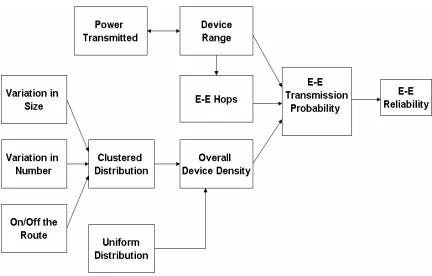
variations with respect to the clusters in terms of size, number, and (e) the clusters being on/off the route of transmissions. Figure 6 shows a model of the parameters that directly/indirectly impact end to end probability of signal transmission in the context of patient monitoring applications based on multi-hop MANET. End to end probability in signal transmission is a proxy for end to end reliability in signal transmission.
Figure 6: Parameters Impacting End to End Reliability of Transmission
is the fact that all devices in the area of transmission are cooperative routers. Consequently reliability is directly related to the proabability of locating patient monitoring device within the range of a transmitted signal. Thus reliability in end to end signal transmission in the current research is addressed from the perspective of probability of locating a cooperative device at each hop in end to end signal transmission. The current approach concedes that the existing network characteristics and content is difficult to change. Instead, it suggests that protocols for efficient resource (battery power) utilization may be incorporated and executed such that probability of locating one/more cooperative PMD in end to end signal transmission is enhanced. Table 2 gives a brief overview of the parameters that impact end to end reliability of transmission.
Table 2: Overview of Parameters Impacting End to End Reliability of Signal Transmission
Environmental and Device Level Characteristics
Parameters Impacted Comments Constraints and Challenges with respect to End to End Reliability in Transmission
Battery Power Transmitted Power
-Device Range -Number of
Hops from Source to Destination
Battery power affects transmitted power from a node. The transmitted power in turn impacts device range. Transmission range of the device impacts the number of hops between the source and destination
The Device Range determines the nodes that can hear a transmitted signal thereby impacting the chances of locating a node for signal transmission.
Smaller device range uses less power but reduces the number of nodes that can hear a transmitted signal. Number of Devices
in the Area of Transmission
Device Density Device density is impacted by the number of devices in the area of transmission.
d1<d7 Then reliability is higher for d7 than d1
Mobility of Devices Clustered OR Uniform Device Distribution Clusters
-Vary in Size
-Vary in
Number
-Vary in being
on/off the route of transmission
Patient mobility causes the devices to group in some areas at some point in time resulting in clusters. The clusters can vary in size, number and the clusters being on/off the route of transmission
Clustering of devices results in decrease of overall device density in the area of transmission while increase in device density within the clusters. This reduction in overall device density negatively impacts reliability for a given level of transmitted power. If the clusters are off the route of transmission, then reliability is further reduced
The requirements for enhancing reliability in end to end signal transmission conflict with the requirements for efficient power management. On one hand higher level of emitted power from the transmitting device results in fewer hops, increased device range, higher probability of locating cooperative PMDs (even at low device density) but on the other hand higher level of emitted power results in higher energy usage, higher interference to the neighboring devices, less efficient routing, reduced throughput, and reduced longevity of the network. Depending on the patient monitoring, and application specific requirements either reliability or power conservation will have to be sacrificed (Zhu, J et al, 2003).
END TO END DELAYS IN SIGNAL TRANSMISSION
one of the key performance measures assessing the applicability of the proposed power-reliability-delay (PRD) protocols for diverse patient monitoring scenarios. End to end delay in the current research is analytically modeled in terms of M/M/1 queue and is addressed from the perspective of total time taken in signal transmission from the source to the destination via multiple intermediate hops.
[image:61.612.144.440.423.661.2]Patient monitoring requirements dictate variability in the degree of tolerance with respect to end to end delay in signal transmission. The tolerance for end to end delay varies for diverse patient monitoring scenarios (i.e. emergency – low delays, routine – relatively higher delays). The parameters creating diverse patient monitoring scenarios and impacting end to end delays in signal transmission include the following (see figure 7): (a) service rate of the PMDs, (b) system utilization, and (c) end to end hops.
The details of the specific parameters impacting end to end delay in the context of signal transmissions via a multi-hop MANET are as follows:
• Service rate or processing capacity of the monitoring device directly impacts the delay in processing a signal by the monitoring device at each hop. Higher the processing capacity of the device lower is the end to end delay and vice-versa. The PMDs involved in end to end signal transmission may/may not be symmetrical with respect to service rate.
• System utilization (i.e. number of messages in the network) has a negative relationship with end to end delays. If the system utilization is high the end to end delay increases proportionately.
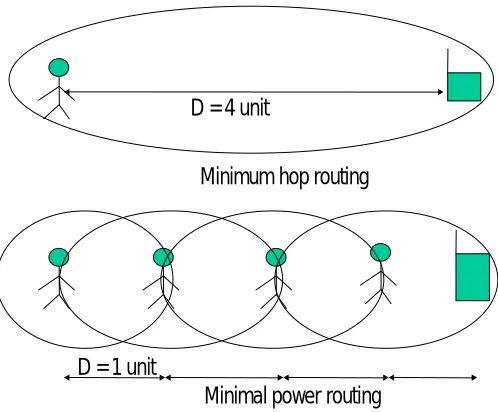
Figure 8: Minimal Delay Transmissions vs. Minimal Power Transmissions
END TO END POWER CONSUMPTION
The performance of applications and services supported via a multi-hop MANET is significantly impacted by the limited battery power available to the nodes (proxy for monitoring device in the current context) (Reddy et al, 2006). Given the context of signal transmission for patient monitoring based on multi-hop MANET, end to end power consumption is utilized as one of the performance measures assessing the applicability of specific PRD protocols for diverse patient monitoring scenarios. The end to end power consumed is manifested in terms of the sum of the transmitted power at each hop in end to end signals transmission.
D = 4 unit
D = 1 unit
Minimum hop routing
In the current context battery power of the monitoring device is significant to supporting comprehensive patient monitoring solutions specifically due to the following:
• The monitoring device performs one of the most significant functionalities within the context of the current research i.e. routing and transmitting of alert messages to a healthcare professional. Transmission and routing is critical to provisioning of pertinent medical intervention as and when needed, prevention of crisis, and unnecessary hospitalizations.
• Moreover, reliable end to end signal transmission (i.e. end to end probability of a device/node to locate and transmit a signal to the next node till the signal reaches the destination) is also critically dependent on the battery power of the devices/nodes involved in signal transmission via a multi-hop MANET (i.e. the source device, the intermediate routing devices, and the destination device). The amount of power transmitted influences both the ability of a patient to transmit emergency signals, as well as the end-to-end routing of these signals via multiple hops. The power limitations of co-operative devices will negatively affect their ability to locate next-hops for continued routing.
• Additionally, an end to end delay is also largely dependent on the transmitted power. End to end delay is a function of end to end hops which in turn is dependent on transmitted power.
recipient (see Figure 9). The device range of the monitoring device determines the range across which a signal can be coherently received and is therefore crucial in determining network performance in terms of end to end reliability, end to end delay, and end to end power consumption (Krunz, M. et al. 2004). Maximizing reliability implies increasing the device range and decreasing the number of end to end hops between the source and destination thereby requiring an increased level of power consumption for diverse levels of device density. Optimizing power usage requires conserving power by reducing device range and increasing the number of hops between the source and the destination while maintaining an acceptable level of reliability at any given level of device density.
Figure 9: Transmitted Power Impacts Device Range and Number of Hops
Figure 10a: Transmission from C to D at Figure 10b: Transmission from C to D at Higher Power Causes Interference at B Lower Power Reduces Interference at B
Notwithstanding is the fact that reduction in the range of transmitted signal by disproportionate reduction in the transmitted power level can negatively impact the probability of the transmitted signal to reach a neighboring device thereby adversely impacting reliable end to end signal transmission and network connectivity. Hence the efficiency in utilization of battery power without sacrificing reliability is of critical importance. An ideal solution will optimize power usage and spatial reuse while ensuring reliability of end to end transmission (Vaidya, 2001).
distributed nodes, network Layer), and CLUSTERPOW (non-uniformly distributed nodes). Although the impact of power control on reliability has been discussed in prior research, it hasn’t been fully explored and validated. Additionally power usage has not been approached from the perspective of reliability and delays as performance criteria. The current research is novel in the aspect that it has designed and evaluated the impact of power management of the monitoring devices on reliability, delays, and power usage in the specific context of end to end signal transmission for diverse patient monitoring scenarios.
TO SUMMARIZE…….