Enabled construction
Lee, A, Wu, S, MarshallPonting, AJ, Aouad, G, Cooper, R, Tah, JHM, Abbott, C
and Barrett, PS
Title
nD modelling road map : A vision for nDEnabled construction
Authors
Lee, A, Wu, S, MarshallPonting, AJ, Aouad, G, Cooper, R, Tah, JHM,
Abbott, C and Barrett, PS
Type
Monograph
URL
This version is available at: http://usir.salford.ac.uk/id/eprint/35972/
Published Date
2005
USIR is a digital collection of the research output of the University of Salford. Where copyright
permits, full text material held in the repository is made freely available online and can be read,
downloaded and copied for noncommercial private study or research purposes. Please check the
manuscript for any further copyright restrictions.
nD Modelling Roadmap
A Vision for nD-Enabled Construction
salford centre for research & innovation
in the built & human environment
Contact
For more information on the 3D to nD modelling project, please contact:
Professor Ghassan Aouad Or Dr. Angela Lee
T:+44 (0)161 295 5176 T: +44 (0)161 295 5855
F: +44 (0)161 295 5011 F: +44 (0)161 295 4587
E: [email protected] E:[email protected]
University of Salford
Bridgewater Building
Meadow Road
Salford, M7 1NU
United Kingdom
Website: http://ndmodelling.scpm.salford.ac.uk
Newsgroup: [email protected]
Lee, A., Wu, S., Marshall-Ponting, A., Aouad, G., Cooper, R., Tah, J. H. M., Abbott, C. & Barrett, P. S.
Contents
3. Foreword
4. Acknowledgments and contributions
5. 1st International workshop
5. 2nd International workshop
16. 1.0 2nd International nD Modelling
Workshop: An Introduction
17. 1.2 nD modelling
19. 2.0 nD modelling development
22. 3.0 2nd International nD modelling
workshop aims & objectives
23. 3.1 Data analysis method
25. 4.0 nD-Enabled Construction Industry:
Current research & development activities
26. 4.1 Discussion issues: barriers & drivers for
development, the relationships between them, and implementation of nD modelling
28. 4.1.1 Barriers
30. 4.1.2 Enablers & Drivers 4.1.3
Relationships between the Barriers, Enablers & Drivers
30. 4.1.3 Relationships between the Barriers,
Enablers & Drivers
31. 4.1.4 Actions and Policy Actions for
Change
34. 5.0 nD-Enabled Construction Projects and
5.1 Process and data
35. 5.2 Education & training
36. 5.3 Interoperability issues
37. 6.0 Skills and Competencies for the Future
39. 7.0 Workshop summary and road map for
nD modelling
41. 7.1 nD modelling road map
42. 7.1.1 nD modelling research framework
44. 7.1.2 nD modelling technology framework
45. 8.0 Summary
47. Appendices
47. Appendix A: nD related papers published
thus far Refereed journal Papers
53. Appendix B: nD related funding generated
thus far
54. Appendix C: Research Papers
The ARK Smart Information System
62. Engineering Assessment made Easy: The
‘Energysave’ Approach
70. The Virtual Construction Site (VIRCON)
Tools: An Industrial Evaluation
84. Application of nD Modelling for Improving
Construction Safety
92. Modelling and Visualisation of Information
and Knowledge in the Construction Industry
97. Improving Application Resiliency in the
Face of Imperfect Information
104. Appendix D: 2nD international workshop
sponsors
105. Salford Centre for Research and Innovation
(SCRI)
Foreword
nD modelling is a research topic that has started to gain momentum and interest worldwide. The goal of this report has been to produce a strategic plan, or ‘road map’, of how nD modelling can help the design and construction industries to improve their performance. The issues surrounding nD are not just technological, but are also cultural, educational and process related. This road map is the result of an international effort to create a blueprint of the research and technology milestones that are necessary to achieve improved construction practice. This report initially summarises the findings of the 2nd international nD modelling workshop before bringing together the findings of five workshops – attended by over 150 experts from industry, universities and government research laboratories – to address the technology barriers, research needs and priorities of the ARC industry. We wish to thank all those that have contributed to the workshops for their valuable support and input, without which this report could not have been written.
This document must be viewed as evolutionary in nature. The nD modelling road map is an update of the 2003 ‘Developing a Vision of nD-Enabled Construction’ report that summarised the results of the first four workshops. The findings of all the workshops were clustered into themes and are presented as repertory grids in the final road map. Whilst this report highlights both the barriers and opportunities of implementing nD modelling in the construction industry, the road map presents a research agenda for the global uptake of nD modelling. It shows that the concentration of effort should be placed on the education and training activities to heighten the level of industry’s awareness of nD modelling, with the technology itself being of a lower importance. Although the use of building electronic product models is not widespread in the industry at the present time, its need is seen to be self evident.
While this document represents an impressive compilation of critical research needs, the workshops were necessarily limited in the time and breadth of participation by both industry and academe. It is inevitable that it will not incorporate all viewpoints and all the valuable ideas may not be included. However, this document does provide an important snapshot in time of the industrial and research community needs. It will evolve as additional information becomes available and we are keen to receive your contributions towards the development of our future programmes. Please join us in working forward to making nD modelling the future of construction.
Finally, we would like to acknowledge the support of the sponsors of the 2nD international workshop: the Engineering and Physical Sciences Research Council (EPSRC), the Centre for Construction Innovation (CCI) and the Salford Centre for Research and Innovation (SCRI).
Professor
Richard Baldwin
Formerly Managing Director, Alfred McAlpine Special Projects, UK
Visiting Professor, University of Salford
Professor
Ghassan Aouad
Acknowledgements
and contributions
This report would not have been able to be produced without the invaluable contribution from the attendees of the 2 academic, 1 national, and 2 international workshops:
Academic workshops
December 2001 and September 2002
Attended by 18 members of the project team (see inside back sleeve for members list)
National workshop
9th October 2002, Hilton Hotel, Milton Keynes, UK
Attended by 64 participants from the following 39 organisations:
Architecture Fab ARK e-management Ltd BAA Plc
Balfour Beatty Civic Engineering BHR Group
Bilfinger Berger UK Ltd BIW Technologies Ltd Brookfield Consultancy
Centre for Construction Innovation CIRIA
CITE
Citex Professional Services Construction Products Association Construct IT
Costain Group Plc CSIRO
Currie & Brown Emcor Rail Ltd EPSRC Ernst & Young
Jeff Wix Consulting Ltd
Laing Construction Lancaster University
Leeds Metropolitan University Loughborough University Loxley Associates Ltd
Open University Business School Pickavance Consulting Ltd Public Construction & Property Ltd Ruddle Wilkinson Architects Shepherd Construction Ltd Spie - Batignolles|
2nd International workshop
13-14th September 2004, Centre of Construction Innovation, Manchester, UK
Attended by 45 participants from 27 organisations, representing 12 countries (Australia, Canada, Chile, China, Denmark, Finland, The Netherlands, Norway, Malta, Qatar, Singapore and the United Kingdom):
Carl Abbott
Constructing Excellence/ Centre of Construction Innovation, UK
Carl is the Constructing Excellence Regional Director of Innovation for the North West of England. Working primarily with the University of Salford and the Centre for Construction Innovation (CCI) he is responsible for technology and knowledge transfer from the university sector to industry in the Northwest. Carl initially qualified as an electronics design engineer with British Aerospace and was a lecturer in electronics specialising in Computer Aided Engineering. He changed career when he joined
Vian Ahmed. University of Wolverhampton, UK
Mustafa Alshawi. University of Salford, UK
Chimay Anumba, Loughborough University, UK
Ghassan Aouad, University of Salford, UK
Yusuf Arayici, University of Salford, UK
Matthew Bacon, ARK e-management
(visiting professor, University of Salford, UK)
Richard Baldwin, Independent consultant (visiting professor, University of Salford, UK)
Nick Bakis, University of Salford, UK
Peter Barrett, University of Salford, UK
Vladimir Bazjanac, Lawrence Berkeley National Laboratory, USA
Martin Betts, University of Salford, UK
Peter Brandon, University of Salford, UK
Eric Chang, STV & Polytechnic University of New York, USA
Mark Clayton, Texas A&M University, USA
Rick Coble, CEC-RJC Consulting, USA (visiting professor, University of Salford)
Tyson Coble, CEC-RJC Consulting, USA
Rachel Cooper, University of Salford, UK
Nash Dawood, University of Teeside, UK
Andrew Davies, EPSRC, UK
Robin Drogemuller,CSIRO, Australia
Martin Fischer, Stanford University, USA (visiting professor, University of Salford, UK)
Andy Fleming, University of Salford, UK
Thomas Froese, University of British Columbia, Canada
Charlie Fu, University of Salford, UK
Dennis Fukai, University of Florida, USA
Hilaire Graham, University of Plymouth, UK
Zuhair Haddad, Consolidated Contractors Company, Greece
Andy Hamilton,University of Salford, UK
Mike Kagioglou, University of Salford, UK
Auli Karjalainen, Senate Properties, Finland
Arto Kiviniemi, VTT Building and Transport, Finland
Irene Koh, University of Salford, UK
Carsten Kuhne, Gib Greiner, Germany
Jarmo Laitinen,JT Innovators Ltd, Finland
Y W Lam, University of Salford, UK
Angela Lee,University of Salford, UK
Lamine Mahdjoubi, University of Wolverhampton, UK
Sophie Maluski,University of Salford, UK
Amanda Jane Marshall-Ponting,University of Salford, UK
John Mitchell,Graphisoft R&D, Hungary
Leonardo Rischmoller, Bechtel Corporation Inc, Chile
Raimer Scherer,Tech University, Germany
Joseph Spiteri,University of Malta, Malta
Joseph Tah, South Bank University, UK
Ali Murat Tanyer, University of Salford, UK
Walid Tizani, University of Nottingham, UK
Jason Underwood, Construct IT, UK
Alastair Watson, University of Leeds, UK
Jeffery Wix, ARC3 Ltd, UK
Song Wu, University of Salford, UK
Xiaonan Zhang, University of Salford, UK
1st International workshop
30th January – 1st February 2003, Mottram Hall Hotel, Prestbury, UK
Vian Ahmed
School of Construction & Property Management
University of Salford, UK
Dr Ahmed joined Salford from the School of Engineering and Built Environment, University of Wolverhampton in January 2004. She obtained her first degree in Civil Engineering from the
University of Hertfordshire, followed by a MSc in Construction and a PhD in CAL in construction from Loughborough University (in which she worked and studied for a number of years), and previously worked for Corus in the Construction IT research unit.
Ghassan Aouad
School of Construction and Property Management
University of Salford, UK
Professor Aouad is Head of the only 6* rated School of Construction and Property Management in the UK, and director of the £3M EPSRC IMRC Centre (Salford Centre for Research and Innovation in the Built and Human Environment: SCRI). He leads the prestigious £443k EPSRC platform grant (from 3D to nD modelling). Professor Aouad’s research interests are in: modelling and visualisation,
development of information standards, process mapping and improvement, and virtual organisations.
Matthew Bacon
Director of ARK e-management Ltd, UK
Visiting Professor, University of Salford, UK
Professor Bacon is a founding director of ARK e-management Ltd, a company providing management consultancy and technology development services. ARK (Assets Resources and Knowledge) believes that new management practices are required if businesses are to effectively exploit the power of the Internet, and that the effective management of digital information is a key requirement in this regard. Currently, ARK’s largest customer is Siemens who are deploying the suite within the UK.
Richard Baldwin
Visiting Professor, University of Salford, UK
Professor Baldwin has thirty-six years experience in the international electromechanical, food and beverage process engineering industries, and the domestic construction services sector.
Responsibilities have included engineering centres, manufacturing facilities and contracting, including joint ventures in the UK and overseas, embracing all aspects of strategic planning, research and development, quality of management and deployment of professional people across a wide range of technologies and commercial sectors including project finance and the Private Finance Initiative. Professor Baldwin is currently undertakes a number of non-executive roles in private industry, government and academic related bodies.
Dino Bouchlaghem
Department of Civil and Building Engineering
Loughborough University, UK
Peter Bosma
TNO Building& Construction Research, The Netherlands
Peter has worked in the area of standardisation and ICT in building and construction for the past 4 years: structuring information (flows), software architecture, 3D/4D/nD models. Peter is best known nationally for its work concerning VISI, and internationally for its work on ISO STEP/ IFC (Industry Foundation Classes) and the development of the IFC Engine Series software. His background is in the applied mathematics through developing and implementing complex optimisation algorithms.
Peter Brandon
Director of Strategic Programmes
University of Salford, UK
Professor Brandon’s research interests range from construction economics, construction management, information/ knowledge based systems and sustainable construction. He has published widely in all four fields and has produced several ‘world’s first’ software products. He has played a significant role in UK Construction Research Policy including Chairman of the UK Science Engineering Research Council Panel for Construction, Chairman of the UK Research Assessment Exercise for the Built Environment (1996 and 2001), Member of the Government UK Technology Foresight Panel, Member of the Construction Research and Innovative Strategy Panel and Chairman of the University Research Group for the Built Environment. He founded the ‘CONSTRUCT IT’ National Network for Construction Information Technology in the UK. He has also organised and chaired several international symposia and provided over 150 papers in more than 30 countries.
Lars Christensen
Selvaag, Norway
Lars Christensen is a civil and structural engineer from the Norwegian University of Science and
Technlology (NUST). He has been working both with engineering and ICT in the ARC industry for almost 20 years. His focus has been on ICT system development, but he has also been working on more academic/ theoretical projects. His experience spans from engineering companies, pre-cast concrete producers, industrial homebuilders, software companies and ship classification societies to research at NUTS and Stanford University. Currently he is a strong evangelist for improved decision-making in construction projects by introducing low-friction information logistics enabled by the international standard IFC. Since 1999 he has been working with technology development and re-industrialization in Selvaag, a privately held homebuilding company in Norway.
Grahame Cooper
Dr Ian Cooper
Eclipse Research Consultants, UK
Visiting Professor, University of Salford, UK
Dr Cooper has worked extensively in the areas of procurement, management and operation of the built environment in the UK. He has a firm relationship with the University of Salford; he was a founding co-director of the Centre for Sustainable Urban and Regional Futures; was a facilitator for the BEQUEST ‘concerted action’ (1998-2001) whose purpose was to build a common language and framework for the assessment of urban sustainability; he played similar role on the INTELCITY thematic network whose purpose was joint scenario planning between the EU’s ICT and Sustainable Urban Development research communities; and is now a partner on INTELCITIES, a EU Framework 6 project delivering an electronic platform for on-line civic services, working with 20 major European Cities.
Rachel Cooper
Co-director of Salford Centre for Research and Innovation
Director of the Adelphi Research Institute for Creative Arts and Sciences
University of Salford, UK
Rachel is a Professor of Design Management, and undertakes research in the areas of design management; new product development; design in the built environment; design against crime; and socially responsible design. All her projects have been in collaboration with industry, working both nationally and internationally. Currently, Professor Cooper is Principal Investigator of ‘Vivacity 2020’, a five year study of urban sustainability for the 24-hour city. Professor Cooper was Founding Chair of the European Academy of Design, and is also Founding Editor of The Design Journal. She is currently a member of the Strategic Advisory Team for Environment and Infrastructure division of EPSRC and is Panel Convenor for the Postgraduate Awards in Visual Arts and Media for the Arts and Humanities Research Board (AHRB), where she is also currently serving on the Management Board. Professor Cooper has written over 100 papers and six books.
Steve Curwell
School of Construction & Property Management
University of Salford, UK
Steve is a Professor of Sustainable Urban Development (SUD) and a leading European researcher in this area through his key role in 14 EU and UK national research projects to a total value of circa
€15M over the last 15 years. Professor Curwell has led exploration of innovative ways of inclusive,
consensus-based research over the complex problems of SUD and urban regeneration linking IT and
new ways of e-working, and is currently scientific and technical director of the €16M IntelCities
Integrated E.U. Project.
Nash Dawood
Construction Management & IT
University of Teeside, UK
Andrew Davies
Associate Programme Manager
EPSRC, UK
Dr. Davies is responsible for the peer review of construction related research proposals submitted to EPSRC and is the principal contact for the construction related Innovative Manufacturing Research Centres at the Universities of Salford and Reading. Prior to joining the EPSRC, he was involved in research as a materials chemist, during which time he received a PhD from the University of London via the Royal Institution of Great Britain, and gained postdoctoral experience at the University of Cambridge.
Robin Drogemuller
Principal Research Scientist and Team Leader
CSIRO & Co-operative Research Centre for Construction Innovation, Australia
Robin holds qualifications in architecture, mathematics and computing, and worked as an architect and construction manager in both temperate and tropical Australia before entering academia at the Northern Territory University and then James Cook University of North Queensland. At CSIRO, Robin leads a team of 12 people in the area of IT support to design and manufacturing with a major focus on ARC applications. This group has developed and is continuing to develop commercial software to support construction innovation.
Kjetil Espedokken
Selvaag Gruppen, Norway
Kjetil is a system developer in Selvaag, his main responsibility is model development and integration of enterprise wide solutions in areas like knowledge engineering, knowledge based systems and process and product development. He is also involved with international standards development for data exchange (IFC) and is an observer to the Model Support Group of the IAI.
Thomas Froese
Associate Professor in the Department of Civil Engineering
University of British Columbia, Vancouver, Canada
Professor Froese’s research focus concentrates on computer applications and information technology to support construction management, particularly information models and standards of construction process data for computer-integrated construction. Professor Froese originally studied Civil Engineering at U.B.C. before obtaining his Ph.D. from Stanford University in 1992.
Charlie Changfeng Fu
University of Salford, UK
Charlie gained an MSc in Architecture and a Diploma in Computer Science; worked as a research assistant in computer programming for five years at the Martin Centre, Cambridge University; and as an architect for over three years before joining Salford. His research interests include 3D computer
Andy Hamilton
School of Construction & Property Management
University of Salford, UK
Andy has been a lecturer at Salford since 1992. His research interests lie within Urban and
Environmental Information Systems. He is currently involved in two EU projects: Intelicites (12M Euros) and Virtual Environmental Planning Systems (4M Euros), and previously worked on the Intelcity and BEQUEST projects.
Tarek Hassan
Department of Civil & Building Engineering
Loughborough University, UK
Dr Hassan is a Senior Lecturer and Director of the European Union Research Group at Loughborough University. His academic experience is complimented by 10 years of industrial experience with several international construction organisations. Dr Hassan has been leading and partner in 10 projects funded by the European Commission under the IST (Information Society Technologies) programme. His research interests include Advanced Information and Communication Technologies (ICT), applications of e-commerce, virtual enterprises business relationships, legal aspects in ICT
environments, information modelling and simulation, design management, management information systems, strategic management and dynamic brief development.
Mike Kagioglou
Manager of the Salford Centre for Research and Innovation (SCRI)
University of Salford, UK
Dr Kagioglou comes from a manufacturing background and for the last seven years he has been undertaking research in the built and human environment. He has worked in a number of research projects including the 'Process Protocol' and more recently he was the lead author of a training module on 'process management’ that is published by CIRIA on the 'training the trainers' series. He has published widely and his current research looks at the modelling and visualisation of hybrid concrete structures, process and project management, IP telephony communications, delivery of healthcare from a built environment perspective and enabling mass customisation capabilities for construction supply chains.
Kalle Kähkönen
VTT Building & Transport, Finland
Jan Karlshøj
Rambøll, Denmark
Dr. Karlshøj has a Master of Science and Ph.D in data modelling for the construction industry. He has been working at consulting engineer companies for 12 years, where he has been giving tasks within the structural domain and a number of ICT development related tasks. He is working as a Chief Consultant at Rambøll. Dr. Karlshøj has been active in a number of national ICT development projects for the construction industry, and has the project lead in the ‘3D visualisation and simulation’ project under the national IT implementation programme: Digital Construction. He has had a long interest in IFC, and has hald several positions within the International Alliance for Interoperability.
Jarmo Laitinen
JT Innovators Ltd, Finland
Acting Professor, Tampere University of Technology, Finland
Professor Laitinen (MSc, Eur.Ing) has a background in structural design, production processes and their technologies. He has wide expertise of European RTD-programmes and knowledge of many different R&D methodologies. Dr. Laitinen has participated in and co-ordinated several EC-research projects, and has evaluated for the EC 4th and 5th Framework programmes. He is the chairman of the steering committee of the national VERA programme launched by Tekes (IT enabled business networking in construction), member Nordic IAI chapter, and has coordinated the IST-1999-60002-GLOBEMEN (IMS) project.
Angela Lee
University of Salford, UK
Dr. Lee works on various CIB/ EU related projects including Revaluing Construction and PeBBu, and on the EPSRC funded 3D to nD Modelling project. She is the Assistant Editor of the International Journal of Construction Procurement. Her research interests include performance measurement, performance-based building, process modelling, process management, nD modelling and requirements capture. She has published extensively in both journal and construction papers in these fields. Dr Lee completed a BA (Hons) in Architecture at the University of Sheffield, and her PhD at the University of Salford.
Jun Lee
University of Salford, UK
Jun trained as an architect in Korea and was awarded an MSc in Architecture in 2002. He is currently a doctoral candidate at the University of Salford. His PhD aims to develop an integrated building
information modelling that will aid visualisation of the interaction between various design criteria, with particular concentration on security and health & safety issues in construction.
Amanda Jane Marshall-Ponting
University of Salford, UK
Dave Moyes
Building Design Partnership, UK
Khalid Naji
University of Qatar, Qatar
Dr. Naji holds a Ph.D. degree in Civil Engineering (1997) from the University of Florida in the area of Public Works Planning & Management. He received his M.Sc. degree in Civil Engineering from the University of Texas at Austin in1993, and his B.Sc. degree in Civil Engineering from the University of Qatar in 1990. Dr. Naji’s area of interest is computer applications in construction engineering, project planning & scheduling and applications of virtual reality in construction engineering. Currently Dr. Naji is the Head of the Civil Engineering Department at the University of Qatar since the year 2000.
Brendan Patchell
Bucknall Austin, UK
Brendan, a quantity surveyor by profession, produced a 3D cost model in 1982 that was used to produce capital cost estimates. He also developed systems analysis, rates databases and relationships between fundamental dimensions. The 4D cost model (4DCM) was developed in 1999 to address the need of owner/ occupier and PFI consortiums to calculate total project costs and running maintenance and replacement costs.
Leonardo Rischmoller
Bechtel Corporation, Chile
Leonardo is currently in the process of completing his PhD in Construction Technology at the Universidad Católica de Chile. At Bechtel, he has been developing technology, methods and procedures by which to conduct 4D planning; he pioneered the first 4D application on a live project that rendered significant and demonstrable savings in man-hours and materials, giving solid credence to his assertion that 4D technology is viable and cost-effective. Prior to this, he worked on several small to medium-sized construction projects.
Geoffrey Q. P. Shen
Hong Kong Polytechnic University, China
Wawan Solihin
novaCITYNETS Pte Ltd, Singapore
Wawan has been active in the area of nD modelling; programmes include CORENET ePlanCheck project and IAI in Singapore. His key research interest is in the area of downstream implementation of the nD model, e.g. code-checking and simulation; shaping the direction of code-checking implementation with concerns on the adoption and readiness of the end-users; and focusing on creating applications and making sure that the nD model can be used for real and useful applications that will benefit the end-users, with flexibility and resiliency towards ‘imperfect’ data.
Joseph Spiteri
University of Malta, Malta
Dr. Spiteri’s expertise is largely in the field of architectural, engineering and management services, with particular concentration on accessibility. He is a qualified access auditor. He gained an MSc from Edinburgh University, and a PhD from the University of Leeds.
Joseph Tah
School of Construction & Property Management
University of Salford, UK
Joe is Professor of Construction Management. His research interests are in the areas of project and risk management, integrated design and construction, supply chain management, and the globalisation of the construction industry. He has undertaken extensive research and developed expertise in the application of knowledge-based systems, object-oriented programming, relational and object database management, computer-aided design, product and process modelling, and artificial intelligence techniques to the provision of advanced decision support within integrated computer systems for construction management using open distributed computing standards.
Paul Tiley
School of Construction & Property Management
University of Salford, UK
Paul has been involved in the building and construction industry for nearly 30 years, starting as a building cadet with Queensland State Works Department in 1975, through to private building and project management consultant practices. In 1995, he joined the CSIRO's Building, Construction and Engineering Division as a Construction Systems Researcher, and has recently joined Salford to investigate the theory of project and production management, as it relates to the construction industry.
Walid Tizani
Senior Lecturer, School of Civil Engineering
University of Nottingham, UK
James Tucker
Wates Construction, UK
Jason Underwood
Manager of Construct IT
University of Salford, UK
Dr. Underwood’s background is in Civil Engineering, graduating from John Moores University in 1991. Since being awarded a Ph.D. in Construction IT (researching into the integration of design and construction through the effective usage of IT) he has been involved in a number of UK and EU funded research projects, specialising in the field of Concurrent Engineering and Integrated
Collaborative Construction, publishing extensively. In addition, he has worked in the software industry developing expert/ knowledge-based systems for the M&E sector. He is currently Manager of
Construct IT For Business, an international industry-led collaborative network comprising leading edge construction organisations whose aim is to improve industry performance through the innovative application of IT and act as a catalyst for academic and industrial collaboration.
Hongxia Wang
University of Salford, UK
Hongxia gained a BSc. in Computer Science from the National University of Defence Technology (China) and a MSc. in Computer Application from Shijiazhuang Mechanical Engineering Institute (China). She worked as a computing science lecturer in China for nine years, and as a programmer (part-time) in UMIST for one year. Her research interests include data modelling, information
management and database, 3D visualisation etc. Currently, she is undertaking a PhD at the University of Salford (nD urban information model) and is a part-time research assistant for the Intelcities Project.
Alastair Watson
Senior Lecturer in Computer-Aided Engineeing, School of Civil Engineering
Leeds University, UK
Jeffrey Wix
Building Services Engineer
ARC3 Ltd, UK
Jeff has been active in research and development of IT for building construction since 1980. In 1988 he developed low cost CAD for construction and building services applications. He returned to research consultancy in 1993 and is active in developing next generation software applications, information sharing capabilities between software and strategies for information development within major organisations. Current key work involves developing information models for and supporting
development of a rule-based regulation checking system, creating new forms of cost and environmental impact representation, re-engineering O&M instruction delivery using XML/XSD and defining shared data links between the GIS and building construction worlds. He is engaged in standards development for data exchange and dictionary frameworks within ISO, CEN and BSI. He is a member of the Model Support Group of the IAI and is Technical Coordinator for the UK Chapter, and led development of the IFC 2x information model.
Chris Woods
Research & Development Director
Wates Construction, UK
Chris is a trained performance coach (Industrial Society) and Value Manager (Leeds University) as well as a Chartered Architect; he worked in private practice until 1995. He is a founder member of Be (INCR) Innovation Network of Construction Research, and is an occasional contributor to the cross-sectorial Synchrony knowledge management network and the International Cultural Learning Association (Interclass). Currently he is working with Constructing Excellence and nCRISP executives to develop a long term vision and strategy for UK construction. Within Wates, he works within the Group Strategic Process team that is accountable for developing business strategy, cross project & market stream business improvement and integration of process across specialist disciplines. He is currently researching the integration of various business improvement processes that have originated outside the construction and development industry. He is involved in two Pii projects ‘prOSPa’ and ‘Integrated Team Collaboration using Object Modelling.’
Song Wu
School of Construction & Property Management
University of Salford, UK
Dr Wu is a research fellow on the 3D to nD Modelling project and previously worked on the Process Protocol II project at the University of Salford. He was a Quantity Surveyor in Singapore and China for 3 years. He was awarded an MSc in Information Technology in Construction and a PhD at the University of Salford. Dr Wu’s research interests include product and process modelling, construction IT and
1.0 2nd International nD
Modelling Workshop:
An Introduction
This report aims to develop the nD modelling road map as part of the 3D to nD modelling project at the University of Salford (£0.443 million EPSRC Platform Grant funded). It reports primarily on the results of the 2nd International nD modelling workshop, but also draws its results from a number of research team workshops (academic), a Construct IT national workshop (industrial), and 2 international workshops (both industrial and academic) that took place over a period of 3 years
• The first academic workshop sought to gain consensus amongst the 20+ strong group of multi-disciplinary research team of the boundaries of the vision; applied or blue-sky, short or long-term industry implementation? An electronic voting tool was used to ascertain the consensus of the participants in their own grappling of what they perceived the nD model would be .
• The second academic workshop set about defining the need and scope of nD modelling using a case study exemplar. Research topics, such as data quality/ availability and decision-making mechanisms, were identified
• At the national workshop, the findings of the academic workshops were presented to enable a consensus with both industry and academia across the UK. Those attending included contractors, clients, suppliers and architects, ranging from 1 person to large multi-national organisations. The spectrum of participants was to reduce any inherent exclusion of industry players in the vision development, and to gain interest and acceptance of the work. The positioning of IT in the industry was established
• The 1st international workshop, held at Mottram Hall February 2003, brought together world-leading experts (both from the industrial and academic communities) within the field of nD modelling (see Figure 1). There were 52 participants from 32 collaborating organisations, from 10 countries. The workshop developed a business process and IT vision for how integrated environments would allow future nD-enabled construction to be undertaken
A summary of all 4 workshops is published in ‘Developing a Vision of nD-Enabled Construction’ (Lee et al, 2003).
The aim of the 2nd international nD modelling workshop was to build upon the findings of the preceding event, concentrating on tackling the strategic and operational issues confronted by the widespread application of nD-enabled construction, and defining the future research agenda. This report firstly summarises the work
undertaken on the nD modelling project thus far and the findings of the 2nd workshop, which was held on the 13-14th September 2004. The workshop brought together 45 participants from 27 organisations and representing 12 countries: Australia, Canada, Chile, China, Denmark, Finland, The Netherlands, Norway, Malta, Qatar, Singapore and the United Kingdom. Whilst this report highlights the barriers and opportunities of implementing nD modelling in the construction industry, the findings of all the workshops are formulated to develop a road map of the future research agenda for global nD uptake.
The research papers and additional funding generated thus far from the 3D to nD project can be found in Appendix A and B
respectively. A number of research papers were presented as part of the 2ndinternational nD modelling workshop, some of which can
be found in Appendix C. Finally, further details of 2ndinternational workshop sponsors can be found in Appendix D.
1.2 nD modelling
The terms ‘nD modelling’ and ‘nD CAD’ are gaining increased usage in the field of information communication technologies (ICTs) and building design; the concept gaining a heightened profile via the £0.5 million funded 3D to nD modelling project at the University of Salford. An nD model is an extension of the building information model by incorporating all the design information required at each stage of the lifecycle of a building facility (Lee et al, 2003). Thus, a building information model (BIM) is a computer model database of building design information, which may also contain information about the building’s construction, management, operations and maintenance (Graphisoft, 2003). From this database, different views of the information can be generated automatically, views that correspond to traditional design documents such as plans, sections, elevations and schedules. As the documents are derived from the same database, they are all coordinated and accurate – any design changes made in the model will automatically be reflected in the resulting drawings, ensuring a complete and consistent set of documentation (Graphisoft, 2003). This report summarises the two international nD modelling workshops, presents the current development of the 3D to nD modelling project, lays out the nD modelling opportunities and barriers for implementation, and concludes by proposing a future road map for nD modelling and where this concept should move forward.
2D and 3D modelling in the construction industry takes its precedence from the laws governing the positioning and dimensions of a point or object in physics whereby a three number vector represents a point in space, the x and y axes describing the planar state and the z axis depicting the height (Lee et al, 2003). 3D modelling in construction goes beyond the object’s geometric dimensions and replicates visual attributes such as colour and texture. This visualisation is a common attribute of many ARC design packages, such as 3D Studio Max and ArchiCAD, which enable the simulation of reality in all its aspects or allow a rehearsal medium for strategic planning.
Combining time sequencing in visual environments with the 3D geometric model (x, y, z) is commonly referred to as 4D CAD (Rischmoller et al, 2000). Using 4D CAD, the processes of building construction can be demonstrated before any real construction activities occur (Kunz et al, 2002). This will help users to find the possible mistakes and conflicts at the early stage of a construction project, and to enable stakeholders to predict the construction schedule. Research projects around the world have taken the concept, developed it further and software prototypes and commercial packages have begun to emerge. In the USA, the Centre of Integrated Facility Engineering (CIFE) at Stanford University has implemented the concept of the 4D model on the Walt Disney Concert Hall project. In the UK, the University of Teesside’s VIRCON project integrates a comprehensive core database designed with Standard Classification Methods (Uniclass) with a CAD package (AutoCAD 2000), a Project Management Package (MS Project) and Graphical User Interfaces as a 4D/ VR model to simulate construction processes of an £8 million, 3 storey development for the University’s Health School (Dawood et al, 2002). Commercial packages are also now available, such as 4D Simulation from VirtualStep, Schedule
Simulator from Bentley, and 4D CAD System from JGC Corporation.
nD modelling develops the concept of 4D modelling and aims to integrate an nth number of design dimensions into a holistic model, which would enable users to portray and visually project the building design over its complete lifecycle. nD modelling is based upon the building information model (BIM), a concept first introduced in the 1970s and the basis of considerable research in construction IT ever since. The idea evolved with the introduction of object oriented CAD; the ‘objects’ in these CAD systems (e.g. doors, walls, windows, roofs) can also store non-graphical data about the building in a logical structure. The BIM is a repository that stores all the data ‘objects’ with each object being described only once. Both graphical and non-graphical documents, such as drawings and specifications, schedules and other data respectively, are included. Changes to each item are made in only one place and so each project participant sees the same information in the repository. By handling project documentation in this way, communication problems that slow down projects and increase costs can be greatly reduced (Cyon Research, 2003).
determine how the data representing the building in the model are defined, and the agreed specification of classes of components enables the development of a common language for construction. IFC-based objects allow project models to be shared whilst allowing each profession to define its own view of the objects contained in that model. This leads to improved efficiency in cost estimating, building services design, construction, and facility management: IFCs enable interoperability between the various ARC/ FM software applications allowing software developers to use IFCs to create applications that use universal objects based on the IFC specification. Furthermore, this shared data can continue to evolve after the design phase and throughout the construction and occupation of the building.
The 3D to nD research project at the University of Salford is developing a holistic nD modelling tool using IFCs, to help improve the decision-making process and construction performance by enabling true ‘what-if’ analysis to be performed to demonstrate the real cost in terms of the variables of the design issues. Therefore, the trade-offs between the parameters can be clearly envisaged, which will help to:
• Predict and plan the construction process • Determine cost options • Maximise sustainability • Investigate energy requirements • Examine people’s accessibility • Determine maintenance needs • Incorporate crime deterrent features
• Examine the building’s acoustics
Traditionally, a whole host of construction specialists are involved in instigating the design of modern buildings. With so much information and from so many experts, it becomes very difficult for the client to visualise the design, any changes applied, and subsequent impacts on the time and cost of the construction project. These problems highlight the need for nD modelling. Changing and adapting the design, planning schedules and cost estimates to aid client decision-making can be laborious, time consuming and costly. Each of the design parameters that the stakeholders seek to consider will have a host of social, economic and legislative constraints that may be in conflict with one another. Furthermore, as each of these factors vary – in the amount and type of impacts they can have – they will have a direct impact on the time and cost of the construction project. The criteria for successful design therefore will include a measure of the extent to which all these factors can be co-ordinated and mutually satisfied to meet the expectations of all the parties involved.
Specialist design criteria input is usually undertaken in a sequential step-by-step fashion whereby the design undergoes a number of changes; after satisfying the legal requirements, it then proceeds to the next consultant who in turn makes a number of design recommendation changes. Design changes are made in isolation from each other in an over-the-wall manner, whereby each discrete change pays little or no regard to the next. Therefore, it is often difficult to balance the design between aesthetics, ecology and economism – a three dimensional view of design that acknowledges its social, environmental and economic roles – in order to satisfy the needs of all the stakeholders. The sequential ‘over-the-wall’ approach is problematic as it allows information wastage, loss and repetition, and long lead times – changes to the design are made and passed on to the next professional for their updates (Brödner, 1996; Syan, 1994; Müller, 1987; Buggert, 1995). These problems are mainly attributed to the vast amount of information and knowledge that is required to bring about good design and construction co-ordination and communication within a
2.0 nD modelling development
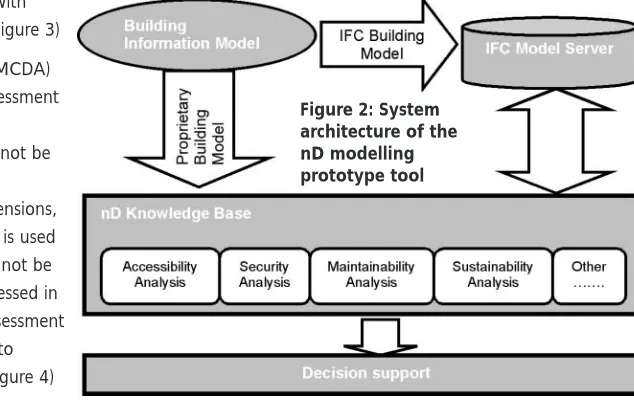
The nD modelling project aims to develop technology and tools to incorporate numerous design perspectives in order to systematically assess and compare the strengths and weaknesses of different design scenarios – as identified through the workshops. Thus, the tool builds upon the concept of BIM, and is IFCbased: the system architecture is proposed in Figure 2:
-• nD knowledge base: platform that provides information analysis services for the design knowledge related to the various design perspective constraints of nD modelling (i.e. accessibility requirements, crime deterrent measures, sustainability requirements etc). Information from various design handbooks and guidelines on the legislative specifications of building component will be used together with physical building data from the building information model to perform individual analysis, i.e. accessibility data model is developed to enable the sharing of the information with
other design aspects through the knowledge base. (Figure 3)
• Decision support: multi-criterion decision analysis (MCDA) techniques have been adopted for the combined assessment of qualitative criteria (i.e. criteria from the Building
Regulations and British Standard documents that cannot be measured against directly in their present form) and quantitative criteria (e.g. expressed in geometric dimensions, monetary units etc). Analytic Hierarchy Process (AHP) is used to assess both qualitative criteria (i.e. criteria that cannot be directly measured) and quantitative criteria (e.g. expressed in dimensions, monetary units, etc). The accessibility assessment model based on the AHP methodology is developed to support the decision making on accessible design. (Figure 4)
Figure 3: Accessibility data model (section)
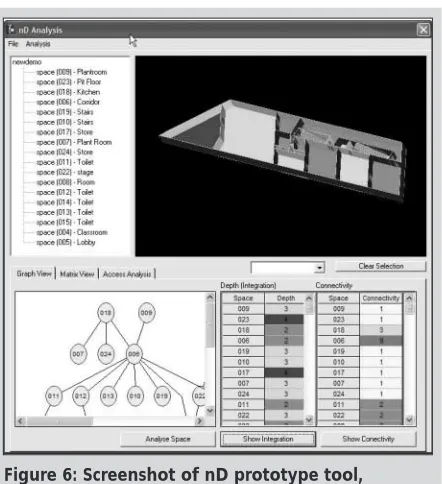
[image:21.595.234.551.258.459.2]So far, the nD prototype tools incorporate whole-lifecycle costing (using data generated by Salford’s Life-Cycle Costing research project), acoustics (using the Rw weighted sound reduction index), environmental impact data (using BRE’s ‘Green Guide to Specification’ data), crime (using the Secured by Design Scheme standards) and accessibility (using BSI:83001). Technology for space analysis is also developed to support the accessibility analysis. Figures 5 through to 7 demonstrate the prototype on a live case study – the extension of The Lowry. The Lowry is a national landmark millennium building. The Lowry is an architectural flagship with a unique and dynamic identity, designed by Michael Wilford & Partners. Opened on 28th April 2000, it brings together a wide variety of performing and visual arts under one roof. The Lowry houses two theatres for performing arts (1,730 & 466 seats) presenting a full range of drama, opera, ballet, dance, musicals, children's shows, popular music, jazz, folk and comedy; gallery spaces (1,610 metres of floor space); showing the works of LS Lowry alongside contemporary exhibitions; and ArtWorks, an interactive attraction designed to encourage individual creativity. The success of the building has led to the need for an extension of the existing building. The extension of the Lowry is used only to test and validate the nD modelling prototype tool and technologies we developed, i.e IFC based space analysis, and not to assess the feasibility of the design itself: the results of the nD modelling prototype tool will not be used to inform the design of the building.
20
Figure 5: The Lowry extension
[image:23.595.268.489.524.766.2]Figure 4: Accessibility Assessment Model
Figure 6: Screenshot of nD prototype tool,
External Step & Stairs (A.1.4) Physical Features
Accessibility
Access
3.0 2nd
International
nD modelling
workshop aims
& objectives
Since the 1st international workshop, the concept of nD modelling has been gaining worldwide momentum in both research and application. Increased interest in the level of research can be gauged by the growing number of
conferences and research papers/ projects on the subject: the 10th ISPE International Conference on Concurrent
Engineering, July 2003, Portugal; and The International Conference on Construction Information Technology (INCITE), February 2004, Malaysia, to name but a few. In addition, a growing number of organisations have also started to apply product modelling techniques on their construction projects.
In order to enable widespread nD-enabled construction, there still exist a number of implementation barriers. Therefore, the aim of the 2nd international workshop was to tackle the strategic and operational issues confronting nD modelling, and to define the future research agenda to fill these gaps. The two-day workshop was structured to address the differing challenges exposed by the ARC industry and specific construction projects respectively. Table 1 illustrates the research structure followed in the workshop and the expected deliverables.
Table 1: Workshop structure (adapted from the work of Professor Peter Barrett)
The first day concentrated on reviewing the progress of development and implementation of nD modelling in each country, thus establishing synergies and gaps between each region. The second day investigated in detail the barriers and solutions posed at the
Figure 7: Screenshot of nD prototype tool, displaying the AHP technique for determining suitable building material in accordance to lifecycle costing, acoustics and environmental impact factors
Aim
Type of Analysis
Focus of Analysis
Output
Stakeholder Addressed
How to create the general conditions to support nD modelling
Broad, holistic, conceptual model, highlighting what elements are important
Generic industry level highlighting any differences by country
Advice on how to create the conditions to maximise the potential for appropriate nD-enabled construction
Government/ industry bodies
nD-enabled construction industry
nD-enabled construction projects
How to bring together various elements/ stakeholders on specific projects
Good practice case studies illustrating how elements can work synergistically
Project specific, highlighting interaction of companies in industry context
Advice and illustrations on how to realise users requirements through nD-enabled construction
project level, and again the barriers and enablers were identified with possible policy improvement actions. The last session of the second day started to define the future research agenda: workshop participants were asked to envisage the future of nD modelling on a 4 year and 8 year timescale.
3.1 Data analysis method
All the workshops were tape recorded and subsequently transcribed. The approach underpinning the analysis of the transcription is that of qualitative data analysis. Qualitative analysis provides insights into theoretical and applied studies of knowledge, perception and cognition (Denicolo & Pope, 2001). As there were between 3 – 6 researchers collaborating on this work, they provided a degree of triangulation by carrying out the analysis of the data independently and in parallel.
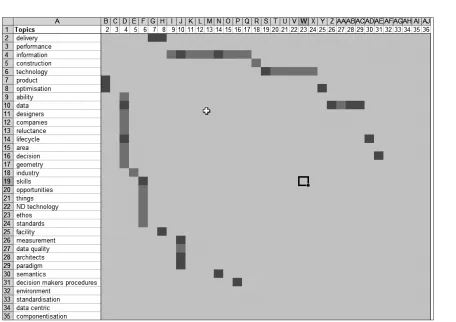
An iterative process of content analysis and interpretation was adopted. Firstly, a text-mining software tool, TextAnalyst, was used to analyse the content and interpret the data (see Figures 8 and 9). Based on the natural language processing technology, the tool was useful in coding, structuring and sorting the data; it provided quantifiable information such as weightings of the relationship between the key topics, which are extremely time consuming to produce manually. Figure 8 shows the key topics TextAnalyst has identified based on the transcripts. Figure 9 shows the relationship matrix between the topics and the colour in the matrix represents the weighting of the relationship; the darker the colour is, the stronger the relationships are. The longer the bar is, in any given column or row, the greater the weighting of the topic due to the greater number of relationships with other topics. For example, Figure 7 shows that ‘information’ (topic number 4) not only has more relationships with other topics than ‘technology’ (topic 6), but that but that its relationships are more significant due to the heavier weightings with 2 of the 9 topics. In addition, opposites (or bipolar) themes were also assigned. For example, some participants viewed the use of 3D CAD as a tool to improve communication with construction professionals, whereas others saw it as a medium to assist communication with clients.
Figure 9: Relationship grid for key topics
However, it is widely acknowledged that content analysis suffers from several disadvantages:
• it is extremely time consuming
• it is subject to increased error, particularly when relational analysis is used to attain a higher level of interpretation
• too often, it simply consists of word counts
• it often disregards the context that produced the text
Figure 10: Analysing the transcription using Adobe Acrobat Professional
Finally, in order to triangulate the manual and automatically generated content analysis of the workshop transcripts, the key themes identified were then compared. This added rigour to the search for segments and assisted in identifying unique aspects of the data. A way of visually summarising a consensus of the major themes emerging from the workshops was found to be via cognitive mapping using ‘Decision Explorer,’ which facilitated the summarising and presentation of qualitative data.
Not only does this report present a summary of the 2nd international workshop, it also combines the findings from all 5 workshops to produce an nD road map of the future.
4.0 nD-Enabled Construction
Industry:
Current research &
development activities
Group 1 – Far East & Australasia
• Australia: research was being deployed using IFCs to develop a system that will be able to undertake core checking of building standards, utilise visualisation techniques and look at on-line scheduling
• China: whilst there aren’t many research products for nD modelling, there is a demand, from the larger contractors & clients in particular, for better knowledge of the products possible
• Qatar: the SIM-CON project was presented, which simulates real-time construction activities in an object-orientated virtual environment, for example the noise and cranes
• Singapore: various e-submission and e-plan checking tools are being developed to enable authorities to measure benefits to individuals & industry
Group 2 – Central Europe
• Denmark: work is focussing on how IFCs can benefit the community, a requirements model is currently being developed
• Finland: work being undertaken in decision-making tools
• Norway: majority of industry is document focussed, work is being undertaken in decision-making tools
• Netherlands: evidence presence in changes in building codes and regulations
• UK: evidence was presented of both industry and university drives for nD, but these were pockets of best practice and occurred mostly in large scale projects
Group 3 – Canada & the Americas
• Canada: in industry there is little nD modelling development but there is the widespread adoption of process modelling &
management techniques. There is limited government support for research but high level of university activity; research is currently concentrated on product models with sustainability, e-management, mobile technology, ontologies, simulation, product models and visualisation
• Malta: research concentrates on accessibility and associated legal requirements. It is being driven by legislation
• Chile: are not developing new technologies but are concentrating on maximising the benefits of existing technologies e.g. Microsoft excel, 2D modelling, 3D modelling. Major gap between large organisations and SMEs
• USA: some industry partners are trailblazing with nD (e.g. Gehry, Disney), but not mainstream. Some government projects have insisted on the use of 3D modelling
4.1 Discussion issues:
barriers &
drivers for development, the
relationships between them, and
implementation of nD modelling
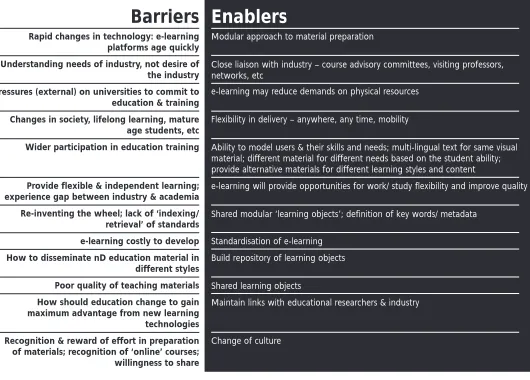
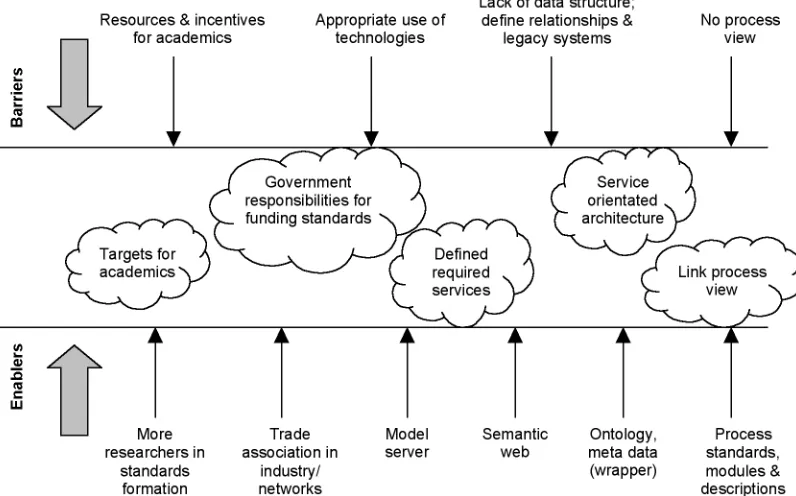
Figure 11: Barriers and enablers towards nD-enabled construction: the Far East and Australasia response
Figure 12: Barriers and enablers towards nD-enabled construction: the Central European response
Figure 13: Barriers and enablers towards nD-enabled construction: Canada and the Americas response
4.1.1 Barriers
It was noted that there were various overlaps in the research and development being undertaken across the world. However, despite this, when the issues under general discussion were classified according to the regional groups, there were no overlapping issues common to each of the three regional groupings. The Far East group stated that within their individual countries, the problems were almost national, which implied a need for country-specific solutions, for example government policy. The only issue common to all regions was agreement that collaboration, more specifically the lack of collaboration, was acting as a barrier to the development and implementation of nD modelling. The need for more collaboration was seen as such a burning issue in the Far East-Australasia group in terms of priority that resolving this was crucial. The other two groups provided greater depth of
explanation of what was needed to resolve this issue. It was stated that for true benefits to be realised, everybody concerned needs to get involved. However, it was thought that this would bring additional problems as this inclusive approach would mean
incremental adoption of the relevant technologies which would create a ‘chicken and egg’ situation: there would need to be a critical mass of existing users of technology to encourage others and reap the full benefits of nD modelling. The situation was likened to the adoption of the telephone; what impetus would there have been for the first adopters of telephone technology when there was no-one else to call? The European group emphasised different aspects of collaboration and argued that there was a ‘need for working differently through programs for information sharing-not just the data but the intellectual expertise that creates the data.’ They argued that the modelling based approach that the nD project advocates encourages collaboration through the sharing of information and re-use of data and that this also helps facilitate a move away from the prevalent document based approach.
perhaps more fundamentally, the industry managers who would have a role preparing the workforce in terms of exposure to the new ways of working and thinking that nD and object modelling requires. However, even with the best of intentions changes to education and training and the effects of these might take time to run their natural course based on circumstances we don’t have as much control over as we might like. The Americas group argued that it might take a generation to see things truly change; in their group they had discussed how increasing familiarity with technology and the spatial concepts needed to work in 3D & 4D environments is not an easy problem to solve. They provided the example of 11-13 year olds in schools in the UK using very simple CAD like software in materials resistance classes and this was cited as an example of the start of the building of the pre-requisite frameworks in their minds about how to deal with 3D information. The usability of the software on the market will also affect the uptake of nD and the Americas group cited the ease of use of object CAD as opposed to 3D CAD as one example and argued that the lack of consistency of 2D means that its current availability and use is not as much of a benefit as it should be.
Whilst lack of education itself is currently a barrier, it was argued as important to make explicit exactly what the knowledge is that needs to be passed on. The European group argued that there is a lack of more general understanding of how things work in the present, never mind how they should work in an idealised future. More specifically, there is a lack of understanding of the practicalities of working in multi-disciplinary groups and the kinds of processes that will be both necessary to facilitate this and become a resultant outcome of such working. In a similar vein, there was a cited lack of understanding of nD process and the management of the data that would be required through the model’s lifecycle and even a lack of understanding of the data required at each stage of the process for the necessary decision-making processes to occur. The reason for this was given as being due to the heavy document focus of the industry at this time. All of these barriers emphasise the importance of understanding nD and its implications for construction as a new set of processes first and foremost and before these new processes are mediated and supported by technology.
There were also contradictions between the groups regarding the barriers that they cited: whilst the Far East group thought the lack of investment in technology was problematic, the Europe group thought that there was too great a focus on technology in simulation terms. Instead, like the importance ascribed above to understanding the processes, data needs and management issues before the automation of the processes in a what-if model, they argued that the emphasis should be upon understanding the skills needed to assimilate nD into current working practices without the technology push. It was thought that there is too great a focus upon central databases and this is in contrast to the amount of development that is taking place on data and data standards such as STEP and IFCs which are being adopted. A further contradiction regarding technology emerged over the acceptance of the need for change: the Far East group argued that there was a belief by industry in the need for change, but the Europe group refuted this and argued that in their experience there was a lack of awareness of the need for change. In the case of the latter, this was tied in very closely with technology investment and with the group uncertain of the need for this investment when it was believed that we [the industry] already do things well. They did concede that this lack of awareness for the need for change was related to the lack of performance data that currently exist to demonstrate value – or lack of this – and this itself is a consequence of the lack of nD process. The lack of large, integrating projects demonstrating the potential opportunities was also cited as a barrier as was the lack of incentive program more generally. The Americas group called for a greater demonstration, and in the public domain, of the economic benefits that nD processes and technologies could enable. The Americas group pointed out that there might be a communication problem and this might be adding to the confusion over the need for change based on the way it is framing the problem: nD and more specifically nD technologies have been framed as a solution to a specific industry recognised problem, not as one of numerous solutions for its more generic problems. This situation is probably exacerbated by the cited lack of a dominant client, as compared to the aircraft industry. The use of the term ‘4D modelling’ was also deemed to be too academic and that comprehension would be aided by talking about scheduling instead.