2018 3rd International Conference on Information Technology and Industrial Automation (ICITIA 2018) ISBN: 978-1-60595-607-7
Research and Application of Transparent File
Encryption Technology on Android Platform
Yongzhong Li, Yi Li, Xuan Luo and Cheng Shen
ABSTRACT
Aiming at the data security problem of Android platform, a transparent encryption system based on file filter driver is designed and implemented, according to the technology of file transparent encryption and decryption system based on hook transparent encryption technology and file filtering driven transparent encryption technology used on windows platform. This system is different from the traditional APP development method of Android system. By intercepting the system call function and using the secret-key converted from the host MAC address, the encryption and decryption algorithm is written into the kernel, which fundamentally guarantees the security of user information. At the same time, the user's security experience is improved by putting authentication on the screen unlocking. The system design and implementation are described in this paper from system requirement analysis to overall design and detailed design of each module. Android application development technology and cross-compiling principle are used in the coding process. The system test results show that the system can effectively transparently encrypt files and protect the privacy of mobile files.1
INTRODUCTION
As an open source mobile development platform, Android has been favored by mobile phone users and developers all over the world. In May 2017, at the 2017 Google Developers Conference, Google announced that the number of smartphones using Android has reached 2 billion, close to one third of the world's population. However, while people enjoy the convenience brought by mobile phones, as an
1
important data carrier of daily life and work, their security problems are becoming increasingly prominent. At present, file transparent encryption technology has become increasingly mature. However, it is mostly used in Windows platform, and the application market for Android mobile phone file encryption software is uneven, and users are required to enter passwords to verify every time they encrypt and decrypt files, which greatly reduce the encryption efficiency and user experience. A transparent encryption system based on Android file filter driver is designed in this paper. In the kernel layer, the encryption and decryption algorithm is written into the kernel by intercepting system calls, so as to improve user experience and encryption efficiency. The system's authentication is placed in the screen lock.
ANDROID SYSTEM ARCHITECTURE
Android system architecture is based on the Linux kernel and is bottom-up structure. It is mainly divided into four layers, as shown in Figure 1, the Linux Kernel layer, the Library layer, the Application Framework layer and the Application layer. The Linux kernel layer provides the underlying drivers for various hardware of Android devices, such as display driver, audio driver, etc. The system runtime layer mainly provides the main features support for Android system through some C/C++ libraries, such as SQLite library, etc. The application framework layer mainly provides various APIs that may be used to build applications. Application Programming Interface (API); the application layer includes all applications installed on mobile phones [2-4]. First-order subheads should be in bold caps with 2 line spaces above and 1 line space below them. Second-order subheads should be in bold with main words capitalized with 1 line space above and below them. Third-order subheads should being regular type in all caps with 1 line space above and below them. Subheads should not appear alone at the bottom of a page.
File Filter Driven Transparent Encryption Technology
File Driver Encryption (IFS) technology is based on Windows File System Filter Driver (IFS) technology [10], which works in the kernel layer of Windows. Without affecting the upper and lower interfaces, it can intercept all file system requests, so that new functions can be added without modifying the upper software or the lower driver, as shown in Figure 2 [8-12]. It is characterized by high encryption efficiency and security, but the technical threshold is high. It is necessary to understand the Windows system kernel in depth and difficult to develop. All tables and figures with text only should be boxed in; i.e., a box should be drawn around the table or figure either by hand with a ruler or with a draw facility on.
DESIGN AND IMPLEMENTATION OF TRANSPARENTFILE ENCRYPTION SYSTEM
Overall Design
This system is a transparent file encryption system based on Android platform. It mainly completes the encryption and decryption of specified files, and takes into account the user's good experience, so as to ensure the personal information security of Android users.
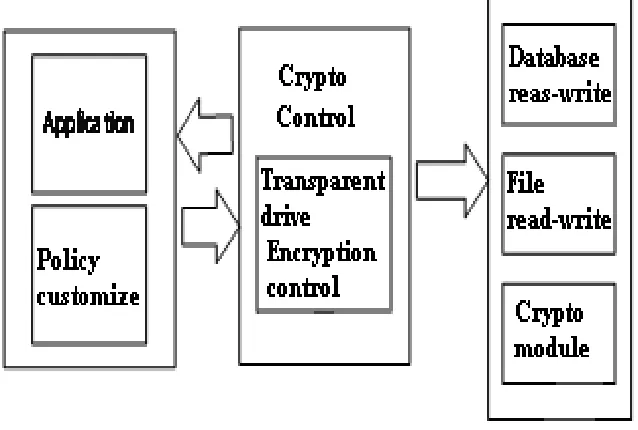
[image:3.612.144.463.423.638.2]The frame design of the whole system is shown in Figure 3.
The system uses MVP (Model, View, Presenter) framework. Model (model) receives the control information from the controller, completes the operation of reading and writing files and encryption and decryption. View (user interface) mainly realizes the interaction with users and updates the user's encryption policy customization to relevant database items. Presenter is responsible for logical processing, customizing and updating the monitoring list according to the user's encryption strategy, monitoring and accepting the data read and write operations applied in the list, and passing the information to Model. MVP is evolved from MVC framework [13]. It cuts off the connection between View and Model, makes View interact only with Presenter, increases readability and reusability, and reduces the cost of later testing and maintenance [14].
The encryption algorithm uses a more secure and stable AES algorithm to encrypt and decrypt files. The system authenticates the user through screen lock when the mobile phone starts. When the system intercepts the user to read the file, it calls the function module of the kernel to decrypt the ciphertext, and then transmits the decrypted plaintext to the application layer for the user to read. When the system intercepts the user to write the file, it stores the plaintext encryption on the storage device to improve the user experience and security performance.
Design and Implementation of Encryption and Decryption Module
[image:4.612.165.447.619.665.2]Design and Implementation of the Whole System
The whole design module of the system is divided into application layer module and kernel module. The application layer module mainly completes the function of customizing encryption strategy and interacting with users; the kernel module completes the functions of monitoring, encryption and decryption, data reading and writing according to the setting of application module.
The overall design flow chart of the system is shown in Figure 5. After the system starts to run, the user carries out the "policy customization" operation at the user level, enters the kernel layer after the policy formulation, and monitors the reading and writing operations of the files. In order to read a file, the first step is to determine whether the file is an open encrypted protected file. If it is, it decrypts and passes the data to the user; if it is to write a file, it is still necessary to determine whether the file is an open encrypted file, and if it is, it is encrypted and writes the data to the database or SD card. If the read-write operation file is not the file protected by the policy, then the normal read-write operation can be carried out.
Policy design
Read and write monitoring
Read file Write file
Is enable encryption protection? Is enable encryption protection? AES decryption AES encryption Send data
to users Write data to database or SD card
User layer Kernel layer No No Yes Yes Read file
Process calls read through the system
Perform a system call after replacement
Read data using the original system function read
Copy data into kernel space
Determine if the file needs to be
decrypted?
Return
Decrypt the data
Copy data to user space
Write file
Process calls write through the system
Perform a system call after replacement
Determine if the file needs to be
encrypted?
Write data using the original system function write
Copy data into kernel space
Encrypt the data
Copy data to user space
Yes
No
Yes
No
Design and Implementation of Kernel Module
System calls under Linux are implemented with soft interrupts. The interrupt program handles different system calls according to the system call number. Through the soft interrupt program, the program will be trapped in the kernel space for system call processing. In addition, Linux provides a program that can load kernel modules, namely LKM (Loadable Kernel Module), which is mainly used to dynamically extend the functions of the Linux kernel [18].Figure 6 shows the workflow diagram of the kernel module.
When run the process of writing files, the encryption process, is executed, the interception system calls write. At this run point, the kernel module gets the file name and structure. Comparing with the file name and file structure in the encryption strategy formulated by the application layer, if the file name and file structure match, the data will be copied to the kernel space, and AES symmetric encryption operation is performed on the data through the pre-written encryption function. The key is obtained from the application layer and encrypted. Then the file is copied to the user space, and the data is written into the storage medium by calling the original system function write. If the current operation of the file is not specified in the encryption policy, the normal file write operation is run.
When the read file operation is performed, the interception system calls read. Get the file name and structure of the file currently operating in the kernel module. Comparing with the file name and file structure in the encryption strategy formulated by the application layer, if the file name and file structure match, the file will be copied to the kernel space and decrypted. After the plaintext data is transferred to the kernel space, if the current operation file is not specified in the encryption policy, the file reading operation will be performed normally.
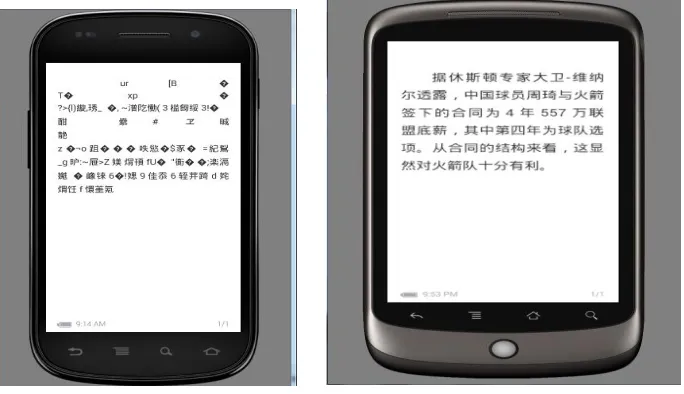
Figure 9. Views the encrypted TXT Figure 10. Views the encrypted doc file on the file on another terminal. local terminal.
[image:7.612.130.472.86.283.2] [image:7.612.282.449.335.518.2]
Figure 11. Views encrypted doc files on PC. Figure 12. Views encrypted doc files on another terminal.
SYSTEM TESTING
CONCLUSIONS
According to the test results, when the encryption is completed, the files can be viewed normally on the local mobile phone after the authentication of screen lock, but not in other environments. The transparent encryption function of files under Android platform has been successfully implemented. The system uses file filtering to drive transparent encryption technology. By intercepting system calls and using keys converted from MAC address of host computer, the encryption and decryption algorithm is written into the kernel. In the process of encryption, the plaintext of files only appears in the kernel layer, which has the characteristics of security, stability and efficiency. However, the software user interface for this system can also be beautified, and the type of file data for encryption protection can also be increased, which will become the next research content.
ACKNOWLEDGMENTS
This paper is supported by Jiangsu postgraduate research innovation project (SJCX18_0784, CXLX13_70, KYCX17_1845). Jiangsu provincial university fund project (13KJD52004).
REFERENCES
1. Jihua Huang. Research and Application of Android System Architecture[J]. Electronic Technology & Software Engineering, 2016(07):49.
2. Lin Guo.The First Line of Code-Android[M].Second Edition. Beijing: the People's Posts and Telecommunications Press,2016.
3. Kaizhen Mei,Yongzhong Li. Transparent File Safety Encryption Method of Enterprise Lan Based on Filter Driver[J].Computer Technology and Development,2012(04):238-241.
4. Di Yang, Peng Ye, Zhenlin Fang. The Application of Transparent Decryption in Trusted Storage of Electronic Documents[J].Electronic Science and Technology, 2017, 04(04):147-150.
5. Tiannan Zhu, Yong Shi, Zhi Xue. Research on Android Transparent Encryption File System Based on Xposed[J].Computer Technology and Development,2017,27(02):64-68.
6. Yanmin Wang,Yongzhong Li,Shaowei Lv. Research and Implementation of File Transparent Encryption Technology Based on Android[J].Computer Technology and Development, 2014(09):137-140.
7. Jingjing Qian.Design and Implementation of Phone Privacy Protection System Based on Android[D].Chengdu: University of Electronic Science and Technology of China,2014.
8. Quanmin Wang, Qing Zhou, Yuming Liu, et al. Research on File System Transparent Encryption Techniques[J].Computer Technology and Development,2010(03):147-150.
9. Shengtao Zhou.The Reveal and Prevention in Android Security Technology[M].Beijing: the People's Posts and Telecommunications Press, 2015.
10. Mingwei Zhao, Rui Mao, Rong-an Jiang. Transparent Encryption File System Model Based on Filter Driver[J].Computer Engineering, 2009(01):150-152.
12. Mingruo Tang. Design and Implementation of File Transparent Encryption Based on Android Platform[D].Chengdu University of Electronic Science and Technology of China,2012.
13. Yaming Lin. Application of MVVM Design Pattern and MVP Design Pattern Based on ZK[J].Journal of Chongqing University of Arts and Sciences(Natural Science Edition), 2012(06):72-74, 78.
14. LuZeng.Application Research of MVP for Android[J].Computer Engineering and Software, 2016(06):75-78.
15. Cunjun Fu. Design of Transparent Encryption System For Documents Based on Windows Kernel[J].Journal of Chongqing University of Education,2015,28(03):171-173.
16. Songbai Zhu. Design and Implementation of AES Algorithm Based on FPGA[D].Nanchong: China West Normal University ,2016.
17. Ziyu Luo. Improvement and Application of the AES Algorithm Based on Multi-Core Android Platform[D]. Shanghai: Shanghai Normal University, 2016.