R E S E A R C H A R T I C L E
Open Access
Prognostic factors in non-surgically treated
sciatica: A systematic review
Julie Ashworth
*, Kika Konstantinou and Kate M Dunn
Abstract
Background:When present sciatica is considered an obstacle to recovery in low back pain patients, yet evidence is limited regarding prognostic factors for persistent disability in this patient group. The aim of this study is to describe and summarise the evidence regarding prognostic factors for sciatica in non-surgically treated cohorts. Understanding the prognostic factors in sciatica and their relative importance may allow the identification of patients with particular risk factors who might benefit from early or specific types of treatment in order to optimise outcome.
Methods:A systematic literature search was conducted using Medline, EMBASE and CINAHL electronic databases. Prospective cohort studies describing subjects with sciatica and measuring pain, disability or recovery outcomes were included. Studies of cohorts comprised entirely of surgically treated patients were excluded and mixed surgically and conservatively treated cohorts were included only if the results were analysed separately by treatment group or if the analysis was adjusted for treatment.
Results:Seven adequate or high quality eligible studies were identified. There were conflicting but mainly negative results regarding the influence of baseline pain severity, neurological deficit, nerve root tension signs, duration of symptoms and radiological findings on outcome. A number of factors including age, gender, smoking, previous history of sciatica and heaviness of work do not appear to influence outcome. In contrast to studies of low back pain and purely surgically treated sciatica cohorts, psychological factors were rarely investigated. Conclusions:At present, the heterogeneity of the available studies makes it difficult to draw firm conclusions about sciatica prognosis, and highlights the need for further research for this group of patients. Large scale prospective studies of high methodological quality, using a well-defined, consistent definition of sciatica and investigating psychosocial factors alongside clinical and radiological findings are recommended to identify prognostic factors in this population.
Background
Sciatica is one of the commonest variations of low back pain (LBP) [1] and is considered an obstacle to recovery in LBP patients [2]. In comparison to patients with LBP alone, patients who complain of back and leg pain tend to suffer more severe pain and disability and take longer to recover [3].
There is an extensive body of literature investigating the prognostic factors for LBP. Various socio-demo-graphic, clinical, occupational and psychosocial factors have been identified [2,4-7], although it is acknowledged that individual risk factors explain only a modest part of
the variance and combinations of risk factors provide a stronger indication of prognosis [8,9]. In contrast, there are no published reviews of prognosis in non-surgically treated sciatica.
Understanding the prognostic factors in sciatica and their relative importance may allow the identification of patients with particular risk factors who might benefit from early or specific types of treatment in order to optimise outcome. It may also permit the development of conservative treatments directed at those modifiable factors with the greatest influence on outcome.
The term sciatica rather than lumbar radiculopathy is used in this review because of its widespread use in the literature [10]. The purpose of this paper is to * Correspondence: [email protected]
Arthritis Research UK Primary Care Centre, Primary Care Sciences, Keele University, Staffordshire, UK
systematically review, describe and synthesize the litera-ture investigating the prognostic factors for sciatica.
Methods
Search Strategy
Electronic database searches of MEDLINE (1950 -December 2010), EMBASE (1980 - -December 2010) and CINAHL (1981 - December 2010) were performed using the keywords: sciatica, lumbar radiculopathy, lumbar radicular pain, lumbosacral radicular syndrome, ischias, ischialgia, lumbar nerve root pain, prognos* (truncated), predict* (truncated), outcome, risk factor, recovery, nat-ural history, cohort study, longitudinal study, prospec-tive study, prognostic study. Hand-searches of reference lists of identified articles and relevant review articles were also conducted.
Inclusion criteria
Articles were considered eligible for the review if they met the inclusion criteria detailed in Table 1.
Exclusion criteria
Studies evaluating a single prognostic factor in isolation were excluded as sciatica prognosis is likely to be multi-factorial and therefore best investigated using multivari-able approaches [11]. Studies of cohorts comprised entirely of surgically treated patients were also excluded because prognosis post surgery may well be influenced by different factors compared to prognosis following conservative treatment. Mixed surgically and conserva-tively treated cohorts were included only if the results were analysed separately by treatment group or if the analysis adjusted for treatment.
Methodological quality assessment
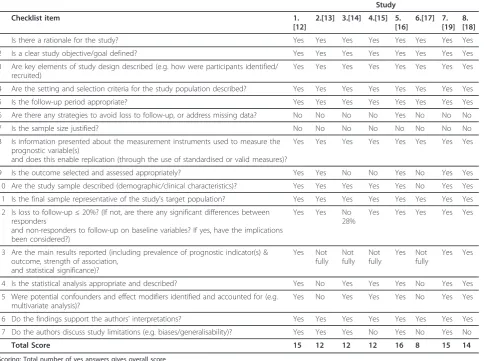
Methodological quality was assessed using a 17-item checklist. Table 2 shows the checklist scoring for each study.
Review Process
The titles and abstracts from the search were examined independently by two authors (JA, KK). The full papers of potentially eligible articles were examined
independently by all three authors. Disagreements were resolved by consensus.
Data extraction and analysis
Data regarding outcome was extracted according to the criteria used to define outcome in the individual paper. A prognostic factor was considered to be statistically significant if the reported p value was < 0.05 or the 95% confidence interval around an odds ratio (OR) did not include 1.0. Prognostic factors drawn from multivariate rather than univariate analyses are presented for studies where multivariate analysis was carried out.
Results
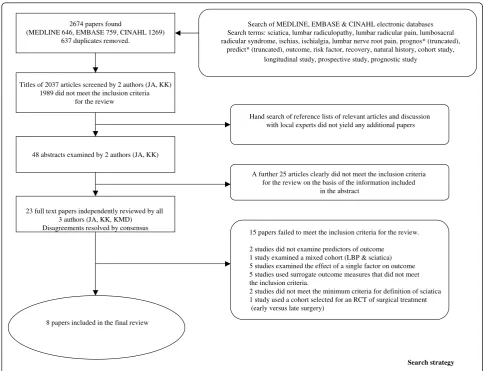
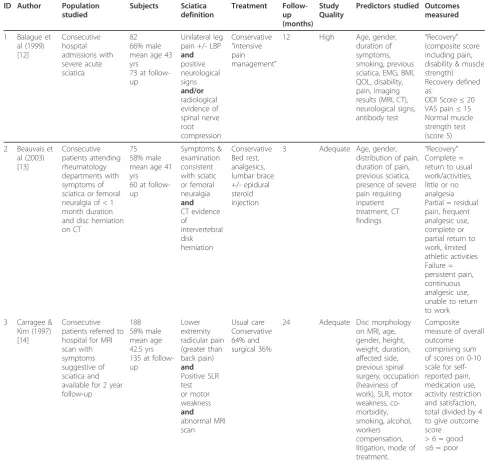
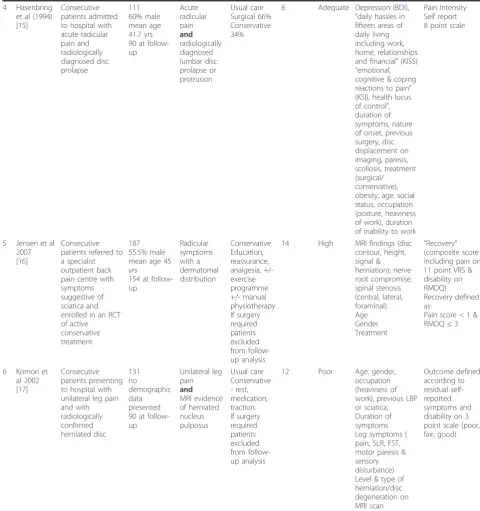
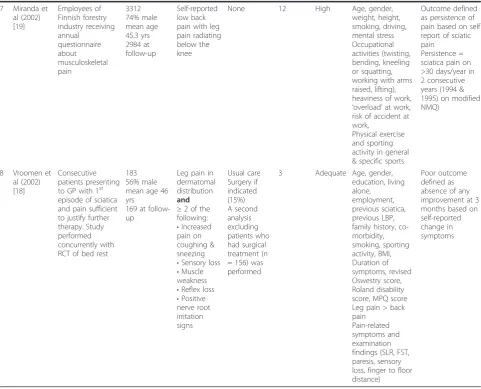
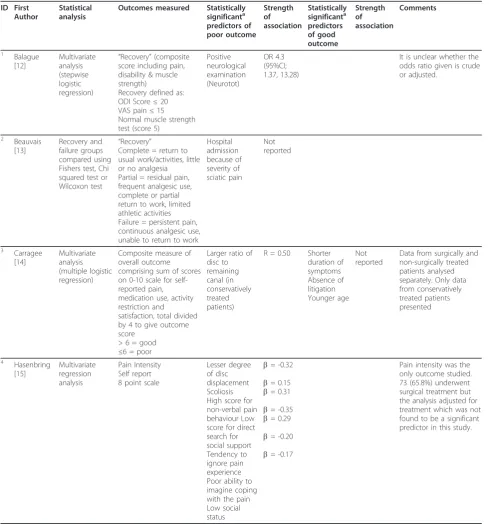
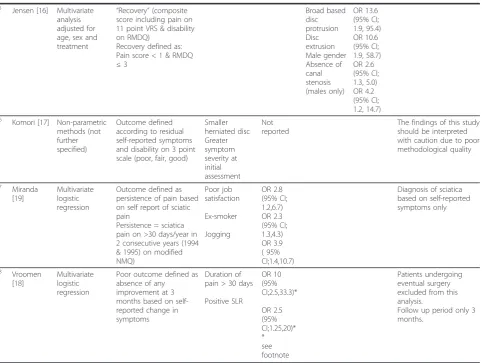
The search yielded 2674 citations. Eight met all the cri-teria for inclusion. The process for selecting the eligible studies is shown in Figure 1. The characteristics of the included studies are summarised in Table 3 and the sig-nificant prognostic factors from individual studies are presented in Table 4.
The majority of studies were in a secondary care or hospital setting [12-17], one was in primary care [18] and one looked at workers in a community setting [19]. Sample size at follow-up varied from 60 to 2984 and follow-up was for 12 months or more in 5 studies [12,14,16,17,19], 6 months in 1 study [15] and 3 months in 2 studies [13,18]. In terms of methodologi-cal quality, 3 studies were rated “high quality” [12,16,19], 4 “adequate quality” [13-15,18] and 1 ‘low quality’ [17] (Table 2). The findings of the low quality study [17] are presented in Table 4 but are excluded from the analysis presented in Table 5 and from the discussion below.
There was variation in the definition of sciatica; how-ever, all but one study clinically defined symptoms in ways that are commonly described in the medical litera-ture. One study used self-reported symptoms of‘LBP radiating below knee’, a definition often used in epide-miological studies as a proxy for sciatica.
[image:2.595.55.542.641.730.2]Six out of eight studies reported prognostic factors for poor outcome, one reported prognostic factors for good outcome (recovery) and one study reported prognostic factors for good and poor outcome.
Table 1 Inclusion criteria
1. Observational cohort study
2. Adult study population aged 18 years or over
3. Study population with symptoms and or signs indicative of‘sciatica’based on individual study criteria, with the broadest accepted definition being“pain down the leg which spreads below the knee”
4. Outcome measures include one or more of pain, function, disability, recovery or psychosocial measures.
5. Minimum follow-up period of 3 months
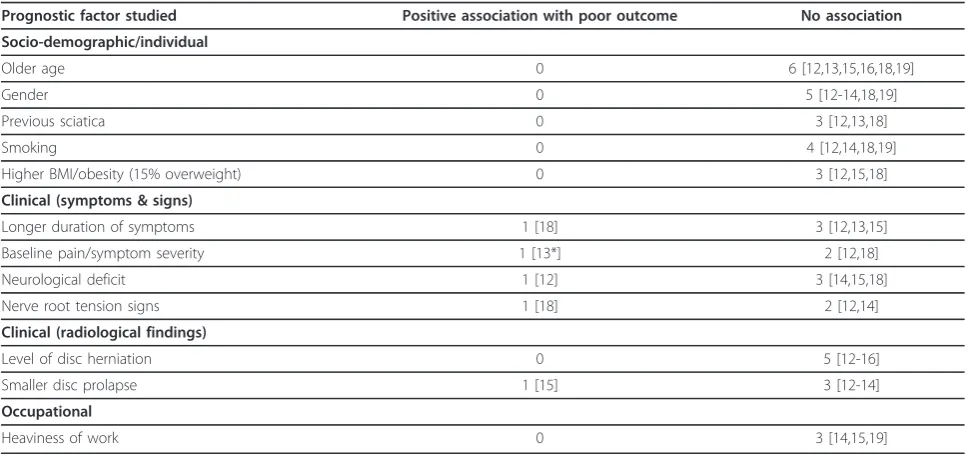
A large number of potential prognostic factors were studied with considerable variation between studies. Overall, 76 individual potential prognostic factors were considered but 30 relate to specific occupational activ-ities or sports from one study [19] and a further 29 are only considered in a single study. The large number of prognostic factors examined in only 1 or 2 studies makes analysis of the results difficult; therefore an over-view of the prognostic factors for poor outcome consid-ered in at least 3 studies is presented in Table 5.
Individual/socio- demographic prognostic factors
Age was considered but not found significant in 6 stu-dies reporting on prognostic factors for poor outcome. In one study considering prognostic factors for good outcome [14], younger age was found to be significant but no strength of association was reported. Gender was considered in 5 [12-14,19,18] out of 6 studies reporting on prognostic factors for poor outcome but none found
it significant. One study [16] reporting prognostic fac-tors for good outcome found male gender to be signifi-cant (OR 2.6; 1.3, 5.0). Current smoking was not found to be a significant prognostic factor in 4 out of 4 studies [12,14,18,19]. Miranda et al [19] reported worse out-come (persistence of sciatica) in ex-smokers (OR 2.8;1.2,6.7). A previous history of sciatica was not found to be a significant prognostic factor in 4 out of 4 studies [12,13,18,19]. Previous spinal surgery was not found to be a significant prognostic factor in 2 out of 2 studies [14,15].
[image:3.595.59.545.102.463.2]Obesity was considered in one study [15] and Body Mass Index (BMI) in two others [12,18] but none found either to be a significant prognostic factor. Two further studies [14,19] considered body weight and height but neither was significant. Low social status was identified as a prognostic factor for poor outcome in the only study considering this [15]. Absence of litigation was found to be a prognostic factor for good outcome in the
Table 2 Methodological Quality Scoring1for all studies
Study
Checklist item 1.
[12]
2.[13] 3.[14] 4.[15] 5. [16]
6.[17] 7. [19]
8. [18]
1 Is there a rationale for the study? Yes Yes Yes Yes Yes Yes Yes Yes
2 Is a clear study objective/goal defined? Yes Yes Yes Yes Yes Yes Yes Yes
3 Are key elements of study design described (e.g. how were participants identified/ recruited)
Yes Yes Yes Yes Yes Yes Yes Yes
4 Are the setting and selection criteria for the study population described? Yes Yes Yes Yes Yes Yes Yes Yes
5 Is the follow-up period appropriate? Yes Yes Yes Yes Yes Yes Yes Yes
6 Are there any strategies to avoid loss to follow-up, or address missing data? No No No No Yes No No No
7 Is the sample size justified? No No No No No No No No
8 Is information presented about the measurement instruments used to measure the prognostic variable(s)
and does this enable replication (through the use of standardised or valid measures)?
Yes Yes Yes Yes Yes Yes Yes Yes
9 Is the outcome selected and assessed appropriately? Yes Yes No No Yes No Yes Yes
10 Are the study sample described (demographic/clinical characteristics)? Yes Yes Yes Yes Yes No Yes Yes
11 Is the final sample representative of the study’s target population? Yes Yes Yes Yes Yes Yes Yes Yes 12 Is loss to follow-up≤20%? (If not, are there any significant differences between
responders
and non-responders to follow-up on baseline variables? If yes, have the implications been considered?)
Yes Yes No
28%
Yes Yes Yes Yes Yes
13 Are the main results reported (including prevalence of prognostic indicator(s) & outcome, strength of association,
and statistical significance)?
Yes Not fully
Not fully
Not fully
Yes Not fully
Yes Yes
14 Is the statistical analysis appropriate and described? Yes No Yes Yes Yes No Yes Yes
15 Were potential confounders and effect modifiers identified and accounted for (e.g. multivariate analysis)?
Yes No Yes Yes Yes No Yes Yes
16 Do the findings support the authors’interpretations? Yes Yes Yes Yes Yes Yes Yes Yes
17 Do the authors discuss study limitations (e.g. biases/generalisability)? Yes Yes Yes No Yes No Yes No
Total Score 15 12 12 12 16 8 15 14
Scoring: Total number of yes answers gives overall score 0-10 = poor quality 11-14 = adequate quality 15-17 = high quality 1
only study considering this [14]. Moderate or active jog-ging was reported as a prognostic factor for the persis-tence of sciatica (OR 3.9; 1.4, 10.7) in the only study considering it [19].
Individual prognostic factors considered in a single study were alcohol consumption [14], workers compen-sation [14], education [18], living alone [18], physical activity [19], various sports [19], driving [19] and family history of sciatica [18] but none was found to be significant.
Clinical prognostic factors
[image:4.595.55.540.87.458.2]Three studies investigated baseline pain severity [12,13,18]. One adequate quality study, using hospital admission for treatment as a surrogate measure of pain severity [13], found a significant association with poor outcome but one high quality and one adequate quality study [12,18] did not. Only one [12] of four studies which investigated neurological deficit identi-fied this as a significant prognostic factor of poor
outcome. Only one [18] of three studies considering nerve root tension signs reported a positive straight leg raise (SLR) to be associated with poor outcome (OR 2.5 CI;1.25, 20).
One [18] out of four studies considering duration of symptoms found longer duration to be associated with poor outcome. A further study [14] reported shorter duration of symptoms as a significant prognostic factor for good outcome but no strength of association was reported.
Five studies examined the association between radiolo-gical findings and outcome. None found the level of disc herniation to be significant. Four of these studies [12-15] reported on prognostic factors for poor out-come. One study [15] found smaller disc herniation to be significant, whilst, another study [14] found that a larger ratio of disc to remaining canal was associated with poor outcome (R = 0.50). The remaining two stu-dies found no association [12,13]. One study [16] found that broad based disc protrusion and disc extrusion
Titles of 2037 articles screened by 2 authors (JA, KK) 1989 did not meet the inclusion criteria
for the review
48 abstracts examined by 2 authors (JA, KK)
23 full text papers independently reviewed by all 3 authors (JA, KK, KMD) Disagreements resolved by consensus
Hand search of reference lists of relevant articles and discussion with local experts did not yield any additional papers
A further 25 articles clearly did not meet the inclusion criteria for the review on the basis of the information included
in the abstract
15 papers failed to meet the inclusion criteria for the review.
2 studies did not examine predictors of outcome 1 study examined a mixed cohort (LBP & sciatica) 5 studies examined the effect of a single factor on outcome 5 studies used surrogate outcome measures that did not meet the inclusion criteria.
2 studies did not meet the minimum criteria for definition of sciatica 1 study used a cohort selected for an RCT of surgical treatment
(early versus late surgery) 2674 papers found
(MEDLINE 646, EMBASE 759, CINAHL 1269) 637 duplicates removed.
Search strategy Search of MEDLINE, EMBASE & CINAHL electronic databases Search terms: sciatica, lumbar radiculopathy, lumbar radicular pain, lumbosacral radicular syndrome, ischias, ischialgia, lumbar nerve root pain, prognos* (truncated),
predict* (truncated), outcome, risk factor, recovery, natural history, cohort study, longitudinal study, prospective study, prognostic study
8 papers included in the final review
Table 3 Individual Study Characteristics
ID Author Population
studied Subjects Sciatica definition Treatment Follow-up (months) Study Quality
Predictors studied Outcomes measured
1 Balague et al (1999) [12] Consecutive hospital admissions with severe acute sciatica 82 66% male mean age 43 yrs
73 at follow-up
Unilateral leg pain +/- LBP and positive neurological signs and/or radiological evidence of spinal nerve root compression Conservative “intensive pain management”
12 High Age, gender,
duration of symptoms, smoking, previous sciatica, EMG, BMI, QOL, disability, pain, imaging results (MRI, CT), neurological signs, antibody test
“Recovery” (composite score including pain, disability & muscle strength) Recovery defined as:
ODI Score≤20 VAS pain≤15 Normal muscle strength test (score 5)
2 Beauvais et al (2003) [13] Consecutive patients attending rheumatology departments with symptoms of sciatica or femoral neuralgia of < 1 month duration and disc herniation on CT
75 58% male mean age 41 yrs
60 at follow-up Symptoms & examination consistent with sciatic or femoral neuralgia and CT evidence of intervertebral disk herniation Conservative Bed rest, analgesics, lumbar brace +/- epidural steroid injection
3 Adequate Age, gender, distribution of pain, duration of pain, previous sciatica, presence of severe pain requiring inpatient treatment, CT findings
“Recovery” Complete = return to usual work/activities, little or no analgesia Partial = residual pain, frequent analgesic use, complete or partial return to work, limited athletic activities Failure = persistent pain, continuous analgesic use, unable to return to work 3 Carragee &
Kim (1997) [14]
Consecutive patients referred to hospital for MRI scan with symptoms suggestive of sciatica and available for 2 year follow-up
188 58% male mean age 42.5 yrs 135 at follow-up Lower extremity radicular pain (greater than back pain) and Positive SLR test or motor weakness and abnormal MRI scan Usual care Conservative 64% and surgical 36%
24 Adequate Disc morphology on MRI, age, gender, height, weight, duration, affected side, previous spinal surgery, occupation (heaviness of work), SLR, motor weakness, co-morbidity, smoking, alcohol, workers compensation, litigation, mode of treatment.
Composite measure of overall outcome comprising sum of scores on 0-10 scale for self-reported pain, medication use, activity restriction and satisfaction, total divided by 4 to give outcome score
Table 3 Individual Study Characteristics(Continued)
4 Hasenbring et al (1994) [15]
Consecutive patients admitted to hospital with acute radicular pain and radiologically diagnosed disc prolapse
111 60% male mean age 41.7 yrs 90 at follow-up
Acute radicular pain and radiologically diagnosed lumbar disc prolapse or protrusion
Usual care Surgical 66% Conservative 34%
6 Adequate Depression (BDI),
“daily hassles in fifteen areas of daily living including work, home, relationships and financial”(KISS)
“emotional, cognitive & coping reactions to pain” (KSI), health locus of control”, duration of symptoms, nature of onset, previous surgery, disc displacement on imaging, paresis, scoliosis, treatment (surgical/ conservative), obesity, age, social status, occupation (posture, heaviness of work), duration of inability to work
Pain Intensity Self report 8 point scale
5 Jensen et al 2007 [16]
Consecutive patients referred to a specialist outpatient back pain centre with symptoms suggestive of sciatica and enrolled in an RCT of active conservative treatment
187 55.5% male mean age 45 yrs
154 at follow-up
Radicular symptoms with a dermatomal distribution
Conservative Education, reassurance, analgesia, +/-exercise programme +/- manual physiotherapy If surgery required patients excluded from follow-up analysis
14 High MRI findings (disc contour, height, signal & herniation); nerve root compromise; spinal stenosis (central, lateral, foraminal). Age Gender Treatment
“Recovery” (composite score including pain on 11 point VRS & disability on RMDQ) Recovery defined as:
Pain score < 1 & RMDQ≤3
6 Komori et al 2002 [17]
Consecutive patients presenting to hospital with unilateral leg pain and with radiologically confirmed herniated disc
131 no
demographic data presented 90 at follow-up
Unilateral leg pain and MRI evidence of herniated nucleus pulposus
Usual care Conservative - rest, medication, traction. If surgery required patients excluded from follow-up analysis
12 Poor Age, gender,
occupation (heaviness of work), previous LBP or sciatica, Duration of symptoms Leg symptoms ( pain, SLR, FST, motor paresis & sensory disturbance) Level & type of herniation/disc degeneration on MRI scan
were significant prognostic factors for good outcome (OR 13.6;1.9, 95.4 and OR 10.6; 1.9, 58.7, respectively). The presence of scoliosis was associated with poor out-come (beta 0.15, p < 0.011) in the only study to consider this [15]. The absence of spinal stenosis was found to be
[image:7.595.57.539.101.490.2]a prognostic factor for good outcome in males only (OR 4.2; 1.2, 14.7) in one study [16] but was not found to be significant in two further studies [13,14] considering spinal stenosis as a potential prognostic factor for poor outcome.
Table 3 Individual Study Characteristics(Continued)
7 Miranda et al (2002) [19]
Employees of Finnish forestry industry receiving annual
questionnaire about musculoskeletal pain
3312 74% male mean age 45.3 yrs 2984 at follow-up
Self-reported low back pain with leg pain radiating below the knee
None 12 High Age, gender,
weight, height, smoking, driving, mental stress Occupational activities (twisting, bending, kneeling or squatting, working with arms raised, lifting), heaviness of work,
‘overload’at work, risk of accident at work,
Physical exercise and sporting activity in general & specific sports
Outcome defined as persistence of pain based on self report of sciatic pain
Persistence = sciatica pain on >30 days/year in 2 consecutive years (1994 & 1995) on modified NMQ)
8 Vroomen et al (2002) [18]
Consecutive patients presenting to GP with 1st episode of sciatica and pain sufficient to justify further therapy. Study performed concurrently with RCT of bed rest
183 56% male mean age 46 yrs
169 at follow-up
Leg pain in dermatomal distribution and
≥2 of the following:
•Increased pain on coughing & sneezing
•Sensory loss
•Muscle weakness
•Reflex loss
•Positive nerve root irritation signs
Usual care Surgery if indicated (15%) A second analysis excluding patients who had surgical treatment (n = 156) was performed
3 Adequate Age, gender, education, living alone,
employment, previous sciatica, previous LBP, family history, co-morbidity, smoking, sporting activity, BMI, Duration of symptoms, revised Oswestry score, Roland disability score, MPQ score Leg pain > back pain
Pain-related symptoms and examination findings (SLR, FST, paresis, sensory loss, finger to floor distance)
Poor outcome defined as absence of any improvement at 3 months based on self-reported change in symptoms
BDI Beck Depression Inventory BMI Body Mass Index CT Computed Tomography EMG Electromyogram FST Femoral Stretch test
KISS Kiel Inventory of Subjective Situations KSI Kiel Pain Inventory
LBP Low back pain
MPQ McGill Pain Questionnaire MRI Magnetic Resonance Imaging NMQ Nordic Questionnaire ODI Oswestry Disability Index QOL Quality of life
RMDQ Roland Morris Disability Questionnaire SLR Straight leg raise test
Table 4 Significant Prognostic Factors identified in all included studies
ID First Author
Statistical analysis
Outcomes measured Statistically significanta predictors of poor outcome
Strength of association
Statistically significanta predictors of good outcome
Strength of association
Comments
1 Balague
[12]
Multivariate analysis (stepwise logistic regression)
“Recovery”(composite score including pain, disability & muscle strength)
Recovery defined as: ODI Score≤20 VAS pain≤15 Normal muscle strength test (score 5)
Positive neurological examination (Neurotot)
OR 4.3 (95%CI; 1.37, 13.28)
It is unclear whether the odds ratio given is crude or adjusted.
2
Beauvais [13]
Recovery and failure groups compared using Fishers test, Chi squared test or Wilcoxon test
“Recovery”
Complete = return to usual work/activities, little or no analgesia Partial = residual pain, frequent analgesic use, complete or partial return to work, limited athletic activities Failure = persistent pain, continuous analgesic use, unable to return to work
Hospital admission because of severity of sciatic pain
Not reported
3 Carragee
[14]
Multivariate analysis (multiple logistic regression)
Composite measure of overall outcome comprising sum of scores on 0-10 scale for self-reported pain, medication use, activity restriction and satisfaction, total divided by 4 to give outcome score
> 6 = good ≤6 = poor
Larger ratio of disc to remaining canal (in conservatively treated patients)
R = 0.50 Shorter duration of symptoms Absence of litigation Younger age
Not reported
Data from surgically and non-surgically treated patients analysed separately. Only data from conservatively treated patients presented
4 Hasenbring
[15]
Multivariate regression analysis
Pain Intensity Self report 8 point scale
Lesser degree of disc displacement Scoliosis High score for non-verbal pain behaviour Low score for direct search for social support Tendency to ignore pain experience Poor ability to imagine coping with the pain Low social status
b= -0.32
b= 0.15 b= 0.31 b= -0.35 b= 0.29
b= -0.20
b= -0.17
The remaining clinical prognostic factors were consid-ered only in a single study and none of these (distribu-tion of pain [13], affected side [14], greater leg than back pain [18], ability to bend forwards [18], EMG and antibody test [12] was found to be significant.
Occupational factors
Three studies [14,15,19] considered the heaviness or strenuousness of work but none found this to be a signif-icant prognostic factor. One study [19] also considered various occupational activities (bending, lifting, twisting, squatting) but none was found to be significant. Poor job satisfaction was associated with poor outcome (OR 2.8; 1.2, 6.7) in the only study which investigated this [19]. The only study [18] to investigate employment status did not find it to be a significant prognostic factor.
Psychological prognostic factors
Two studies looked at psychological prognostic factors. One study [15] considered a number of psychological
factors including depression,‘daily hassles’and cognitive and emotional coping strategies for pain. They found a high score for non-verbal pain behaviour, a low score for direct search for social support, a tendency to ignore pain experience and a poor ability to imagine coping with the pain were all significant prognostic factors for poor out-come. Collectively, the psychological variables measured in this study explained 37% of the outcome variance. Another study [19] examined self-reported‘mental stress’ on a 4 point scale and found a high score for mental stress to be a significant prognostic factor for persistence of scia-tica in the univariate but not the multivariate analysis.
Discussion
[image:9.595.58.544.99.462.2]This is the first systematic review to look at factors affecting sciatica outcome outside purely surgically trea-ted populations. The review found seven eligible studies of adequate or high methodological quality and one of poor quality; their heterogeneity precluded the statistical pooling of results.
Table 4 Significant Prognostic Factors identified in all included studies(Continued)
5
Jensen [16] Multivariate analysis adjusted for age, sex and treatment
“Recovery”(composite score including pain on 11 point VRS & disability on RMDQ)
Recovery defined as: Pain score < 1 & RMDQ ≤3
Broad based disc protrusion Disc extrusion Male gender Absence of canal stenosis (males only)
OR 13.6 (95% CI; 1.9, 95.4) OR 10.6 (95% CI; 1.9, 58.7) OR 2.6 (95% CI; 1.3, 5.0) OR 4.2 (95% CI; 1.2, 14.7) 6 Komori [17] Non-parametric
methods (not further specified)
Outcome defined according to residual self-reported symptoms and disability on 3 point scale (poor, fair, good)
Smaller herniated disc Greater symptom severity at initial assessment
Not reported
The findings of this study should be interpreted with caution due to poor methodological quality
7
Miranda [19]
Multivariate logistic regression
Outcome defined as persistence of pain based on self report of sciatic pain
Persistence = sciatica pain on >30 days/year in 2 consecutive years (1994 & 1995) on modified NMQ)
Poor job satisfaction
Ex-smoker
Jogging
OR 2.8 (95% CI; 1.2,6.7) OR 2.3 (95% CI; 1.3,4.3) OR 3.9 ( 95% CI;1.4,10.7)
Diagnosis of sciatica based on self-reported symptoms only
8 Vroomen
[18]
Multivariate logistic regression
Poor outcome defined as absence of any improvement at 3 months based on self-reported change in symptoms
Duration of pain > 30 days
Positive SLR
OR 10 (95% CI;2.5,33.3)*
OR 2.5 (95% CI;1.25,20)* * see footnote
Patients undergoing eventual surgery excluded from this analysis.
Follow up period only 3 months.
This review found conflicting results regarding the association of pain severity with outcome. Duration of symptoms and neurological deficit were found to be sig-nificant in only one out of four studies. Conflicting results were found in terms of the influence of the size and type of disc prolapse on outcome. In surgical scia-tica cohorts, pain severity, duration of symptoms and neurological deficit have all previously been identified as prognostic factors for poor outcome [20].
The results also suggest a number of factors which do not appear to affect outcome; including age, gender, smoking and heaviness of occupation. In the literature on prognosis for surgically treated sciatica, age and smoking have similarly been reported not to affect out-come, and the evidence for gender and physical work in the surgical population is conflicting [20]. Female gen-der has also been reported as a poor prognostic factor in some LBP studies although overall the evidence is conflicting [2].
The evidence regarding the prognostic role of psycho-logical factors in conservatively treated sciatica is limited to two studies [15,19] with only one study, which reported pain intensity as the sole outcome, [15] finding them significant. This contrasts with studies of LBP [2,4,6] and also surgically treated sciatica [20] where psychosocial factors are frequently examined and are often found to be associated with outcome, mainly in terms of persistent disability.
Overall, the current existing evidence does not allow firm conclusions to be drawn about the prognostic fac-tors in conservatively treated sciatica. A number of
limitations of the included studies may contribute to this. It is suggested that for prognostic studies at least 10 outcome events are required for each factor studied [11]. It is possible therefore that most of the included studies had too small a sample size in relation to the number of predictors studied. Furthermore, in excess of 70 predictors were considered across the various studies, but most were considered in only 1 or 2 studies making it difficult to draw firm conclusions even when signifi-cant factors were identified. Large studies investigating all potential prognostic factors are needed to overcome these issues.
The heterogeneity of the included studies presents further difficulties in analysing the results. There is variability in the definition of sciatica with one study using self-reported symptoms, and only 4 studies requir-ing radiological confirmation of disc prolapse. It is pos-sible therefore that not all subjects had leg pain associated with nerve root involvement. The diverse out-come measures used, ranging from self-reported improvement to complex composite measures of recov-ery may also have contributed to the conflicting results. Furthermore, three studies only presented p values, which offer little help in appreciating the clinical rele-vance of a prognostic factor and do not allow for com-parison of results between studies.
[image:10.595.56.540.99.327.2]This systematic review has highlighted the fact that in contrast to prognostic factors for persistent disability for LBP patients and surgically treated patients with sciatica, very little is still known about such factors for the majority of sciatica patients that are treated
Table 5 Prognostic factors reported in 3 or more studies and their association with poor outcome
Prognostic factor studied Positive association with poor outcome No association
Socio-demographic/individual
Older age 0 6 [12,13,15,16,18,19]
Gender 0 5 [12-14,18,19]
Previous sciatica 0 3 [12,13,18]
Smoking 0 4 [12,14,18,19]
Higher BMI/obesity (15% overweight) 0 3 [12,15,18]
Clinical (symptoms & signs)
Longer duration of symptoms 1 [18] 3 [12,13,15]
Baseline pain/symptom severity 1 [13*] 2 [12,18]
Neurological deficit 1 [12] 3 [14,15,18]
Nerve root tension signs 1 [18] 2 [12,14]
Clinical (radiological findings)
Level of disc herniation 0 5 [12-16]
Smaller disc prolapse 1 [15] 3 [12-14]
Occupational
Heaviness of work 0 3 [14,15,19]
conservatively. New evidence from studies published fol-lowing this review may, of course, influence these results.
Conclusion
The data presented here do not suggest any one strong or consistent predictor of persistent disability in mainly conservatively treated sciatica cohorts. However, a num-ber of factors have been identified that do not seem to significantly affect outcome of sciatica. The results of this review suggest that the prognostic factors for con-servatively treated sciatica may differ to some extent from those for surgically treated patients and from LBP in general. However, the heterogeneity of the available studies makes it difficult to draw firm conclusions and demonstrates the need for further research. It is recom-mended that good quality, prospective, large scale prog-nostic studies in sciatica cohorts are carried out. These should investigate psychosocial and occupational factors alongside clinical and radiological findings using consis-tent validated outcome measures for pain, function and recovery and report the strength of association of all prognostic factors identified. Furthermore a consistent definition of sciatica is needed in future studies. A possi-ble solution would be for future studies to include only subjects with clinically diagnosed sciatica and radiologi-cal confirmation of lumbar disc herniation.
Sciatica is more disabling and costly than LBP alone and the findings of such epidemiological studies may allow us in future to better predict outcome or likely response to treatment of patients with sciatica, based on the presence of certain characteristics. This may permit the targeting of treatments to particular patient subgroups.
Abbreviations
BDI: Beck Depression Inventory; BMI: Body Mass Index; CT: Computed Tomography; EMG: Electromyogram; FST: Femoral Stretch test; KISS: Kiel Inventory of Subjective Situations; KSI: Kiel Pain Inventory; LBP: Low back pain; MPQ: McGill Pain Questionnaire; MRI: Magnetic Resonance Imaging; NMQ: Nordic Questionnaire; ODI: Oswestry Disability Index; QOL: Quality of Life; RMDQ: Roland Morris Disability Questionnaire; SLR: Straight leg raise test; VAS: Visual Analogue Score; VRS: Verbal Rating Scale.
Acknowledgements
The authors would like to thank Mrs Jo Jordan for reading the manuscript and providing feedback.
There was no specific funding associated with this systematic review.
Authors’contributions
JA and KK carried out the literature search and screening of identified titles and abstracts. All three authors (JA, KK, KMD) reviewed the selected articles, contributed to the development and design of the review and to the writing of the manuscript. The final manuscript was read and approved by all three authors.
Competing interests
The authors declare that they have no competing interests.
Received: 18 May 2011 Accepted: 25 September 2011 Published: 25 September 2011
References
1. Waddell G:The back pain revolution.London: Churchill Livingstone; 2004. 2. Dunn KM, Croft PR:Epidemiology and natural history of low back pain.
Eura Medicophys2004,40:9-13.
3. Selim AJ, Ren XS, Fincke G, Deyo RA, Rogers W, Miller D,et al:The importance of radiating leg pain in assessing health outcomes among patients with low back pain. Results from the Veterans Health Study. Spine1998,23:470-474.
4. Linton SJ:A review of psychological risk factors in back and neck pain. Spine2000,25:1148-1156.
5. Manek NJ, MacGregor AJ:Epidemiology of back disorders: prevalence, risk factors, and prognosis.Curr Opin Rheumato2005,17:134-140. 6. Pincus T, Burton AK, Vogel S, Field AP:A systematic review of
psychological factors as predictors of chronicity/disability in prospective cohorts of low back pain.Spine2002,27:E109-E120.
7. Steenstra IA, Verbeek JH, Heymans MW, Bongers PM:Prognostic factors for duration of sick leave in patients sick listed with acute low back pain: a systematic review of the literature.Occup Environ Med2005,62:851-860. 8. Fransen M, Woodward M, Norton R, Coggan C, Dawe M, Sheridan N:Risk factors associated with the transition from acute to chronic occupational back pain.Spine2002,27:92-98.
9. Truchon M:Determinants of chronic disability related to low back pain: towards an integrative biopsychosocial model.Disabil Rehabi2001, 23:758-767.
10. Koes BW, van Tulder MW, Peul WC:Diagnosis and treatment of sciatica. BMJ2007,334:1313.
11. Moons KG, Royston P, Vergouwe Y, Grobbee DE, Altman DG:Prognosis and prognostic research: what, why, and how?BMJ2009,338:1317-1320. 12. Balague F, Nordin M, Sheikhzadeh A, Echegoyen AC, Brisby H,
Hoogewoud HM,et al:Recovery of severe sciatica.Spine1999, 24:2516-2524.
13. Beauvais C, Wybier M, Chazerain P, Harboun M, Liote F, Roucoules J,et al: Prognostic value of early computed tomography in radiculopathy due to lumbar intervertebral disk herniation. A prospective study.Joint Bone Spine2003,70:134-139.
14. Carragee EJ, Kim DH:A prospective analysis of magnetic resonance imaging findings in patients with sciatica and lumbar disc herniation: Correlation of outcomes with disc fragment and canal morphology. Spine1997,22:1650-1660.
15. Hasenbring M, Marienfeld G, Kuhlendahl D, Soyka D:Risk factors of chronicity in lumbar disc patients: A prospective investigation of biologic, psychologic, and social predictors of therapy outcome.Spine
1994,19:2759-2765.
16. Jensen TS, Albert HB, Sorensen JS, Manniche C, Leboeuf-Yde C:Magnetic resonance imaging findings as predictors of clinical outcome in patients with sciatica receiving active conservative treatment.Journal of Manipulative & Physiological Therapeutics2007,30:98-108. 17. Komori H, Okawa A, Haro H, Shinomiya KI:Factors predicting the
prognosis of lumbar radiculopathy due to disc herniation.Journal of Orthopaedic Science2002,7:56-61.
18. Vroomen PC, de Krom MC, Knottnerus JA:Predicting the outcome of sciatica at short-term follow-up.British Journal of General Practice2002, 52:119-123.
19. Miranda H, Viikari-Juntura E, Martikainen R, Takala EP, Riihimaki H, Murray C: Individual factors, occupational loading, and physical exercise as predictors of sciatic pain.Spine2002,27:1102-1109.
20. Den Boer JJ, Oostendorp RA, Beems T, Munneke M, Evers AW:Continued disability and pain after lumbar disc surgery: the role of cognitive-behavioral factors.Pain2006,123:45-52.
Pre-publication history
The pre-publication history for this paper can be accessed here: http://www.biomedcentral.com/1471-2474/12/208/prepub
doi:10.1186/1471-2474-12-208
Cite this article as:Ashworthet al.:Prognostic factors in non-surgically
treated sciatica: A systematic review.BMC Musculoskeletal Disorders2011