ScholarWorks @ Georgia State University
ScholarWorks @ Georgia State University
Middle and Secondary Education Dissertations Department of Middle and Secondary Education
Fall 12-18-2014
An Ethnographic Study of Socio-Emotional Factors In
An Ethnographic Study of Socio-Emotional Factors In
Interpersonal Peer Relationships and Their Impact on the
Interpersonal Peer Relationships and Their Impact on the
Academic Success of African American High School Students in
Academic Success of African American High School Students in
Mathematics
Mathematics
Alanna Johnson
Follow this and additional works at: https://scholarworks.gsu.edu/mse_diss
Recommended Citation Recommended Citation
Johnson, Alanna, "An Ethnographic Study of Socio-Emotional Factors In Interpersonal Peer Relationships and Their Impact on the Academic Success of African American High School Students in Mathematics." Dissertation, Georgia State University, 2014.
https://scholarworks.gsu.edu/mse_diss/2
This dissertation, AN ETHNOGRAPHIC STUDY OF SOCIO-EMOTIONAL FACTORS IN
INTERPERSONAL PEER RELATIONSHIPS AND THEIR IMPACT ON THE ACADEMIC
SUCCESS OF AFRICAN AMERICAN HIGH SCHOOL STUDENTS IN MATHEMATICS, by
ALANNA JACKSON JOHNSON, was prepared under the direction of the candidate’s
Dissertation Advisory Committee. It is accepted by the committee members in partial fulfillment
of the requirements for the degree, Doctor of Philosophy, in the College of Education, Georgia
State University.
The Dissertation Advisory Committee and the student’s Department Chairperson, as
representatives of the faculty, certify that this dissertation has met all standards of excellence and
scholarship as determined by the faculty. The Dean of the College of Education concurs.
_________________________________ Iman Chahine, Ph.D.
Committee Chair
_________________________________ ____________________________ Jennifer Esposito, Ph.D. Pier Junor Clarke, Ph.D. Committee Member Committee Member
_________________________________ Christine Thomas, Ph.D. Committee Member
_________________________________ Date
_________________________________ Dana L. Fox, Ph.D.
Chairperson, Department of Middle & Secondary Education
_________________________________ Paul A. Alberto, Ph.D.
Dean
AUTHOR’S STATEMENT
By presenting this dissertation as a partial fulfillment of the requirements for the advanced degree
from Georgia State University, I agree that the library of Georgia State University shall make it
available for inspection and circulation in accordance with its regulations governing materials of
this type. I agree that permission to quote, to copy from, or to publish this dissertation may be
granted by the professor under whose direction it was written, by the College of Education’s
Director of Graduate Studies, or by me. Such quoting, copying, or publishing must be solely for
scholarly purposes and will not involve potential financial gain. It is understood that any copying
from or publication of this dissertation which involves potential financial gain will not be allowed
without my written permission.
All dissertations deposited in the Georgia State University library must be used in
accordance with the stipulations prescribed by the author in the preceding statement. The author
of this dissertation is:
Alanna Jackson Johnson 2918 Edgewater St. SW
Atlanta, GA 30331
The director of this dissertation is:
Dr. Iman Chahine
Department of Middle & Secondary Education College of Education
Alanna J. Johnson
ADDRESS: 2918 Edgewater St. SW Atlanta, GA 30331
EDUCATION:
PROFESSIONAL EXPERIENCE:
2006 - Present Mathematics Adjunct Instructor
University of Phoenix - Online
2008 - 2013 Mathematics Adjunct Instructor
Ashford University - Online
2008 - 2011 Mathematics Adjunct Instructor
Atlanta Metropolitan College
2004 – 2007 Business Office Manager
Westwood College
PRESENTATIONS AND PUBLICATIONS:
Parker, P., Wisdom, N., Maxwell, K., & Johnson, A. (2014, November). A Fair Assessment of Mathematical Literacy: Troubling the Traditions of Assessment. International
Conference on Urban Education, Montego Bay, Jamaica.
Smalls, N., & Johnson, A. (2014, November). What is Working in the Urban Mathematics Classroom: Strategies for Continued Improvement. International Conference on Urban Education, Montego Bay, Jamaica.
Ph.D. 2014 Georgia State University
Middle & Secondary Education
Masters Degree 1997 Clark Atlanta University
Mathematics
Bachelors Degree 1997 Clark Atlanta University
Assessments and Social Stratifications. Creating Balance in an Unjust World Conference, Los Angeles, CA.
Johnson, A. (November, 2012). The Zulu and the Shield: An Ethnomathematics Journey
through South Africa, International Conference on Africa and its Diaspora, Atlanta, GA.
Johnson, A. (April, 2012). The Zulu and the Shield: An Ethnomathematics Journey through South Africa, Blurring Boundaries Conference, Atlanta, GA.
Bass, E. A., Frazier, L., Johnson, A., Porter, E., Shahbaz, R., and Smalls, N. (2011, October).
The Zulu and the Shield: An Ethnomathematics Journey through South Africa. Georgia Council of Teachers of Mathematics Conference, Atlanta, GA.
Dwellingham, T. and Johnson A. (2009, May). How can we promote excellence among black
students in urban education? Urban Mathematics Educator Mathematics Education Symposium, Atlanta, GA.
AWARDS AND FELLOWSHIPS
2010 – 2014 Southern Regional Education Board, Doctoral Scholars Fellowship
1992 – 1997 National Science Foundation STEM Award, Clark Atlanta University
SERVICE
2006–Present Parent Teacher Organization,
Stonewall Tell Elementary School, College Park, GA Sandtown Middle School, Atlanta, GA
2008 – Present Parent Volunteer, Boy Scouts of America Pack 3310 – Membership Chair
Stonewall Tell Elementary School, College Park, GA Troop 631
Woodward Academy, College Park, GA
2006 – 2013 Local School Advisory Council – Parent Volunteer, Vice Chair, Chair Stonewall Tell Elementary School, College Park, GA
PROFESSIONAL SOCIETIES AND ORGANIZATIONS
Collaborative Mathematics Education Research Group
Doctoral Students for the Advancement of Mathematics Education College of Education Doctoral Fellows
Kappa Delta Pi
PEER RELATIONSHIPS AND THEIR IMPACT ON THE ACADEMIC SUCCESS OF
AFRICAN AMERICAN HIGH SCHOOL STUDENTS IN MATHEMATICS
by
ALANNA J. JOHNSON
Under the Direction of Dr. Iman Chahine
ABSTRACT
Nationally, the outlook for African Americans in K-12 education is dismal. While gains
are being made, African Americans still lag behind their White peers. The latest reports by the
National Center for Education Statistics (2009) show a 31 point gap between 8th grade African
Americans and Whites in mathematics. While statistics such as these are in abundance, there are
few accounts of stories of success (Berry, 2005; Jett, 2009; Stinson, 2004). Studies directly
related to the role of socio-emotional interpersonal relationships and the means by which African
American high school students negotiated that space in terms of successful math performance
relationships between school friends and discover the ways in which students negotiated
academic success through these relationships. The following research questions guided the
study: How do academically successful African American high school students negotiate
academic success in mathematics classrooms using peer relationships? What are the
socio-emotional factors contributing to the academic success of these students in mathematics? How
do students perceive the nature of socio-emotional relationships with peers that contribute to
their academic success in mathematics? Using the lens of Critical Race Theory (CRT), this
ethnographic study explored how African-American high school students constructed and
appropriated socio-emotional relationships to support their academic success. Through the use
of purposive sampling, four African-American high school students were observed in an AP
Calculus AB course and interviewed over a seven month period at a high school in a
southeastern state. The data collected were crystallized using researcher memos and the
collection of artifacts. Data was analyzed using five coding techniques: structural, in vivo,
subcoding, eclectic, and axial. The study found seven themes related to socio-emotional factors
and perceptions about how the characters negotiated academic success in mathematics classes
using peer relationships: 1) selective narrowing of social interaction, 2) interpersonal
relationships affect academic identity and behaviors, 3) interpersonal engagement, 4) pursuit of
emotionally gratifying interactions, 5) satisfaction of emotional needs through social networks,
6) effect of collaborative learning, and 7) illusion of control.
INDEX WORDS: Mathematics, Ethnography, Socio-emotional factors, Critical race theory,
PEER RELATIONSHIPS AND THEIR IMPACT ON THE ACADEMIC SUCCESS OF
AFRICAN AMERICAN HIGH SCHOOL STUDENTS IN MATHEMATICS
by
ALANNA J. JOHNSON
A Dissertation
Presented in Partial Fulfillment of Requirements for the
Degree of
Doctor of Philosophy
in
Teaching and Learning
in
Middle and Secondary Education
in
the College of Education
Georgia State University
Copyright by Alanna J. Johnson
This dissertation is dedicated to and in memory of my daughter, Lauren Elisabeth, my
grandmother, Evergreen Swanigan McBurrows, and my cousin, Brenda Foster Scott – three very
ii
I would first like to thank God for bringing me to this point, for it is by His grace, mercy
and favor that I am here. When I thought I could not go any further I could hear a still small
voice encouraging me, whispering that He would not give a vision without provision.
Secondly, I want to thank my husband, Aaron. He has held me up and pushed me along
on this journey when things looked very bleak. He has shuttled our children to and fro with their
many activities between my classes and his meetings. He has led them away from my door saying, “No, Mommy has to study. You can’t bother her right now. She has to finish.” Most
importantly, he never missed an opportunity to make me laugh, tell me how much he loved me
and to express how proud he was of me and excited for me. I am grateful and I love you! I thank
my children, Cierra, Aaron Miles, and Austin (who was born in the middle of this crazy doctoral
journey). They have endured five years of Mommy missing many bath and bed times and dinners
with them. I can finally put the computer away and come play. Mommy loves you!
My family and friends provided food for my soul. My parents, Willie B. and Marjorie
Jackson, taught me to value education and have been my cheerleaders from the very beginning. I
thank you for the valuable lessons I learned as a child and continue to glean from you as an adult.
My mother-in-law, Ms. Verna Johnson, has loved me as her own and for that, I am grateful.
Thank you, Aunt Blondie, for the many prayers, words of encouragement and the many
opportunities to do nothing but laugh. To my cohorts who, in very short order, became cherished
friends – Natasha, Katrina, Tanya, and Candace. A special note of thanks to Candace and
Natasha, who were my accountability partners – thank you for the all-day, all-summer writing
sessions at Starbucks and so much more! We made it! To Aunt Stephanie and Yngrid, thank you
for your willingness to take time from your very busy schedules to read and edit my work and
give honest feedback. I am indebted to you both. To Dr. Dana Bryant, thank you, my friend, for
paving the way and offering your words of advice and encouragement along the way. To Shari
Watkins, my friend turned sister since our days at Clark Atlanta University, together we have
weathered these doctoral programs though in different departments at different universities. To
my many friends and family who stepped in when our schedules were out of sync – especially my
and advisor, for believing in my project and for insisting I live up to high standards! Thank you,
Dr. Jennifer Esposito, for your vacation time, for welcoming me into your home to discuss my
work, for responding to late night texts and for providing excellent guidance throughout this
process. You have my sincerest appreciation. Dr. Thomas, thank you for your candor and expert
advice. Dr. Pier Junor Clarke, thank you for your many supportive words and encouragement to
continue on this most arduous race. And where would I be without the fabulous support staff at
Georgia State! Ms. Carla Woods and Ms. Bobbie Turner, you have both saved me on more than
one occasion! Thank you!!!
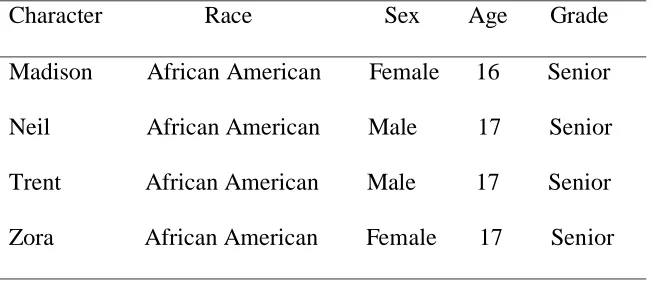
Finally, I owe a debt of gratitude to Madison, Zora, Trent and Neil, the four stellar
students from Hillman High School and their teacher, Mrs. Dean, who graciously allowed me
iv
TABLE OF CONTENTS
LIST OF TABLES...v
LIST OF FIGURES...vi
1 INTRODUCTION ... 8
Problem Statement and Research Questions ... 9
Rationale ... 10
Theoretical Framework ... 11
Terms and Definitions ... 13
Significance of the Study ... 14
2 LITERATURE REVIEW ... 15
History of CRT ... 16
Shifting the Focus ... 25
Peer Group Management ... 33
Acting White and Academic Achievement ... 35
3 METHODOLOGY ... 43
Methods ... 46
Procedure Initiating entry ... 53
Data Management and Analysis ... 68
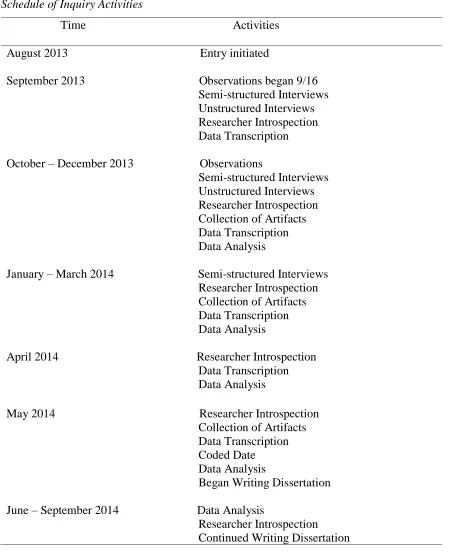
Inquiry Activities ... 74
4 RESULTS ... 77
Findings ... 80
Theme 1: Selective narrowing of social interaction ... 81
Theme 2: Interpersonal relationships affect academic identity and behaviors ... 88
Theme 3: Interpersonal Engagement ... 89
Theme 4: Pursuit of emotionally gratifying interactions ... 96
Theme 4: Satisfying emotional needs through social networks ... 99
Summary ... 111
5 DISCUSSION AND RECOMMENDATIONS ... 112
Implications of the Study... 112
Epistemological Implications ... 115
Summary of the Findings ... 115
Educational Implications... 118
Limitations of the Study ... 120
Theoretical Implications ... 123
Summary and Concluding Thoughts ... 124
REFERENCES ... 148
vi
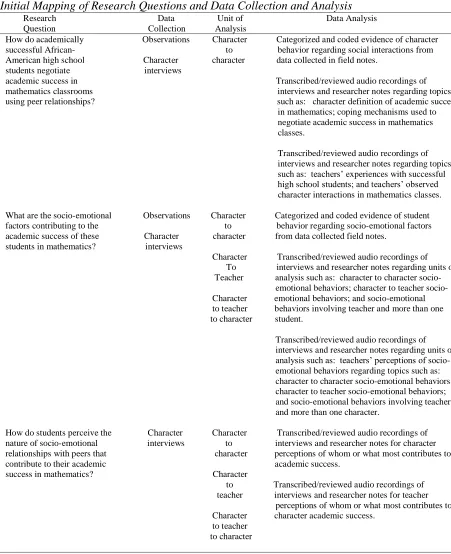
Table 2. Initial Mapping of Research Questions and Data Collection and Analysis ...70
Table 3. Code Hierarchy... 72
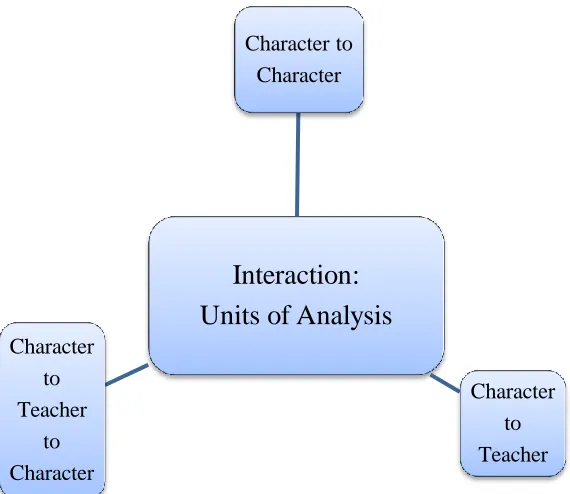
Figure 1. A/B/C Schedule ...63
Figure 2. Units of Analysis... 69
1 INTRODUCTION
I was born and raised in a small rural town in South Georgia in a two-parent household. I
am the youngest of three girls. My mother is a retired middle school mathematics teacher and
my father retired from two careers – the first being the military and the second a large
manufacturing company. We were what one would call middle class, and most of our neighbors
were teachers. In fact, my fifth grade teacher lived four houses up from us.
As expressed by several students in Walker’s (2006) study, my parents believe in
education and stressed that average performance was not good enough. I remember being in the
sixth grade and making a C on the midterm report in geometry. My mother grounded me for six
weeks with the lecture that I should just be able to show up to class and get a C. My mere
presence would guarantee that. She expected that I would actually put forth the effort to raise
my grade from average. While my parents expected much of me, so did my teachers. Research
(Farmer, Lines & Hamm, 2011) shows the tremendous influence teachers have over a child’s
academic performance. In fifth grade my teacher and neighbor suggested that I be tested to enter
the gifted program for sixth grade. Thus began my childhood experience as a gifted mathematics
student. I had already been bullied by my peers in elementary school for being very articulate –
or what some term as “acting white” (Fordham & Ogbu, 1986) - and having a rather reserved
behavior; now I had to contend with the reputation of being academically exceptional.
Thankfully, I had a good core group of friends by then who shielded me from most of the abuse
that I might have encountered. As Crosnoe, Cavanagh, and Elder (2003) assert, my friends – in
part – served protective roles in my journey toward academic success. They accepted me for
I embraced my intelligence and thrived in my environment. I had one other close friend
who was in most of my advanced classes (all except the gifted mathematics classes). He was my
study partner and helped to push me to the places my parents demanded I go. I was alone in
mathematics, however. I was the only black student in most of the mathematics classes that I
took from sixth grade to graduation from high school. Although I felt isolated, I did my best
because by that time I took pride in my work and my grades. I worked hard not only for my
parents, but also for myself, as I did not want anything less for me.
My desire as an African American female teacher of mathematics is to make the subject
accessible to more students of color by demystifying the subject. In doing so, I understand there
must be a will on the part of the student to achieve. Reflecting upon my upbringing and
educational experiences, I developed interest in the drive of students who are academically
successful in mathematics. There are many obstacles for students of color that act to dissuade
those who persevere. Through this body of research, I endeavor to discover what role, if any,
socio-emotional relationships play in the development of academically successful, African
American high school students.
Problem Statement and Research Questions
The purpose of this study is to explore the nature of the socio-emotional factors in the
relationships between school friends and to examine manners in which students negotiate
academic success in mathematics through these relationships. Socio-emotional relationships are
a derivation of Socio-emotional Factor Selective Theory developed by Laura Carstensen, a
Stanford psychologist. While Carstensen’s (1992, 1993, 1995, 1998) primary research focus is
based on a life span theory of motivation, it is also associated with academic achievement of
classroom friends who have helped to encourage and nurture academic achievement through peer
interactions which has led me to the following research question:
How do academically successful African American high school students negotiate
academic success in mathematics classes using peer relationships?
More specifically, the study will focus on the following sub-questions:
a. What are the socio-emotional factors in peer relationships contributing to the
academic success of these students in mathematics?
b. How do students perceive the nature of socio-emotional relationships with
peers that contribute to their academic success in mathematics?
African American high school students who have achieved academic success in
mathematics are the focus of this study. The goal is to explore those socio-emotional factors that
contribute to the academic achievement and engagement in classroom work for African
American students, particularly their interactions with their peers and friends while in school.
Rationale
My interest in this topic spawns from my subjective experiences as a student in high
school. While my parents were considerably involved in my schooling, I found that I also had a
group of friends who encouraged me to do well academically. This group was a mixture of
average and above average students whom I met at different levels of matriculation from primary
to secondary education, all of whom I am still friends with today. Flashman (2012) argues that
“[f]riends play an important role in the educational process” (p. 61). Albeit, in her research and
contrary to my experience, Flashman contends that high achieving students are more likely to
have friendships with other high achieving students and vice versa. In my case, I had friends
who were not high achieving students but who were still instrumental in my academic success.
subconscious, meaning as I reflect, I am more aware now of the formation of the positive peer
group, which was what sustained me during those times. Perhaps, this may be the case for others
who are academically successful in mathematics.
Because most of my friends were not in the higher level classes I attended, there were
few opportunitiesto form study groups, but rather there was a camaraderie that buffeted the
stigma that often comes with being gifted academically and being African American. There
were times when I was ridiculed and accused of “acting white” as a result of my academic
abilities. In fact, it is often suggested in the literature that “Black children hide their academic
abilities by becoming class clowns, dropping out, and suppressing effort to avoid being
perceived as ‘acting White’” (Bonner, 2000, p. 651). However, within my group of friends,
there was an acceptance that negated the negativity and allowed me to flourish. This group
along with the support of my parents is what I attribute to my relative academic success.
Likewise the majority of my friends have gone on to lead successful lives with rewarding
careers. Our socio-economic statuses varied as did the level of parental involvement in our
schooling with the constant being our friendships.
Theoretical Framework
The study will employ CRT as the major theoretical framework that will guide the
exploration of the nature of the socio-emotional factors in peer relationships between school
friends and manners in which students negotiate academic success through these relationships.
CRTbegins with the idea that racism is so embedded within American society that it appears
normal (Schram, 2006). Throughout the literature (Brayboy, 2005; Guitiérrez, 2010; Parker &
Stovall, 2004; Solórzano, 1998; Yosso, 2005), CRT has been identified as being comprised of
1) CRT lies at the intersection of race and racism. CRT theorists refuse the notion that forms of subordination are solely based on gender and class discrimination.
2) CRT challenges dominant ideology. CRT challenges traditional ideas in education such as meritocracy, color blindness, and equal opportunity.
3) CRT is committed to social justice. CRT commits fully to eliminating racism. 4) Storytelling is central to CRT. Storytelling is recognized as a legitimate and
appropriate method that lends to understanding, analyzing and teaching about racial discrimination. This precept is critical to the field of education.
5) CRT is from a shared interdisciplinary perspective. It is imperative to analyze race and racism from historical and contemporary perspectives using an interdisciplinary approach.
In general, the literature is in disagreement about a single set of tenets associated with
CRT, but it is common in the literature that we see these five tenets. Since this study will focus
on African American high school students’ peer relationships and their recounting of successful
experiences with mathematics, the most salient precept of CRT that will guide the research
methodology is storytelling.
Storytelling. Storytelling allows marginalized people to give “voice” to experiences
from a minority viewpoint (Ladson-Billings, 1998). Another phrase associated with giving voice
to one’s experiences is what Ladson-Billings (1998) terms as “naming your reality” (p. 15).
Delgado (1989a) offers three reasons for naming one’s own reality:
1. Reality is a social construct;
2. Stories allow marginalized members of society a medium for self-preservation; and 3. The exchange of stories from teller to listener provides mainstream groups a view of
other cultures from a perspective other than their own.
Marginalized people have always told stories and counter-stories (Tyson, 2003);
therefore, Delgado (1989a) contends subordinated groups are instinctively aware of the
significance of storytelling. As asserted by Gutiérrez (2010), “CRT seeks to privilege the voices
of scholars of color and the experiences of students and teachers and to work against popular
discourses that suggest such experiences are subjective, illegitimate, or biased” (p. 10). Stories
out-groups are often internalized by members of the group, storytelling is therapy by which
oppressed people gain healing and as a result group solidarity is promoted. Hearing the stories
of others who have been marginalized is empowering and encouraging for those who feel a sense
of isolation in their experience (Delgado, 1989a). Marginalized people, thus, draw strength
within the group as counter-reality, of sorts, is created (Delgado, 1989a; Tyson, 2003). Through
several semi-structured interviews over the course of the study, participants will give voice to
what role, if any, friendships have played in their academic success in mathematics, to what
struggles they may have encountered along the way and how these friendships may have served
them in overcoming obstacles faced in mathematics classrooms.
Terms and Definitions
In academic research, it is common for terms to have multiple meanings subject to the
field of study. For this proposed study, the following three terms will be used with respect to this
particular body of work.
Academic Success. Embedded within the research question of the proposed study is an
appeal for, what has been termed as, successful African American high school students as
participants. For the purpose of this study, participants who have achieved academic success in
mathematics will be identified by teachers in the mathematics department who are familiar with
the magnet student population. These students must also be enrolled in upper level mathematics
courses such as Honors and/or Advanced Placement (AP) Calculus.
Friendship. In this study, I employGottman and Parker’s (1987) depiction of
friendships. Gottman and Parker (1987) declare that friendships among children serve six
functions: “companionship, stimulation, physical support, ego support, social comparison, and
treasured secrets. In matters of companionship, students may choose to take the same classes to
provide stimulation to one another in an effort to successfully get through the course; specifically
mathematics courses which can be intimidating. Ego support, social comparison and intimacy
and affection go hand in hand in relation to academic support. Friendships supply an
“expectation of support, encouragement, and feedback that helps children maintain” healthy
social and emotional images of themselves (Santrock, 1995, p. 315). Intimacy and affection
between friends may bolster these experiences as students feel comfortable sharing
vulnerabilities in academics, and free to ask questions or request clarification of classroom
concepts.
Socio-emotional factors. This study will adopt the definition of socio-emotional as
proffered by Santrock (1995). Santrock (1995, 2009, 2010a, 2010b) has authored several texts
on life span development which encompasses socio-emotional development of children and
adults of all ages and stages of life. An adaptation of Santrock’s (1995) definition of
social-emotional will be operationalized for this body of research and is as follows: socio-social-emotional is
a process that consists of variations of an adolescent’s personality, relationships and emotions
with others over one’s life span. Of particular interest is the relationship between high school
students and their friends as it relates to their interactions regarding academic success in
mathematics. Any socio-emotional factors related to the academic success of the participants in
mathematics will be analyzed and evaluated as they emerge in the field.
Significance of the Study
This study has theoretical and practical significance. Theoretically, this study is
significant as CRT shifts the focus of the discourse of deficit and achievement gap as it relates to
African Americans socially, educationally, and culturally (Yosso, 2005). CRT scholars argue
that culture embodies the lived experiences and behaviors that are the result of the unequal
distribution of power along such lines as race, gender, class, ethnicity, age, and sexual
orientation (Cohen, Manion, & Morrison, 2011; Leistyna & Woodrum, 1996). Participants of
this study will have a unique opportunity to add a growing body of literature by sharing their
lived experiences of success in mathematics classrooms. Practically, teachers will be able to take
these accounts and utilize them to give insight on how to structure their classrooms in such a way
that advances student success by capitalizing on natural friendships. Teachers play a vital role in
the socioemotional development of the students they teach. The opportunity is there to assist in
nurturing friendships that result in academic achievement in mathematics through classroom
activities that involve increased peer interactions.
2 LITERATURE REVIEW
The discourse on African Americans and education appears very disparaging of African
Americans with little hope for improvement or success in academic achievement, particularly as
it relates to the so-called achievement gap between African Americans and whites. There are
scholars, however, who have worked to document gains made in education for African
Americans and emphasize programs around the country that are positively affecting the
achievement gap. This literature review explores: 1) the history of CRT and its role in education,
2) the role that socio-emotional interpersonal relationships play in affecting the performance of
high school students, and 3) the impact of peers on students’ success in mathematics. For the
relationships alternates from “peer groups” to “friends.” In review of the literature, studies
directly related to the role of socio-emotional interpersonal relationships and the means by which
African American high school students negotiated that space in terms of successful math
performance were significantly limited. However, provided here is an overview of current and
past research on the history of peer relationships and academic success for minorities in
mathematics.
The review will employ analyses and critiques of several studies as they relate to the area
of research which is how African American high school students use peer relationships to
negotiate success within the mathematics classroom. There are few studies which include all
aspects of the research as it relates to African Americans, academic success, friendships and
CRT. However, the study attempts to encompass an assortment of the various aspects as they
relate to the following research question and sub-questions:
How do academically successful African American high school students
negotiate academic success in mathematics classes using peer relationships?
a. What are the socio-emotional factors in peer relationships contributing to the
academic success of these students in mathematics?
b. How do students perceive the nature of socio-emotional relationships with
peers that contribute to their academic success in mathematics?
History of CRT
Most Americans became aware of CRT when President Clinton nominated Lani Guinier,
a University of Pennsylvania law professor, for Assistant Attorney General for Civil Rights
(Ladson-Billings, 1998). Guinier (1991) suggested in her legal writings that the only opportunity
and fair political representation might be for their votes to be weighted more heavily than the
majority vote. An uproar ensued as Guinier was condemned as attempting to undermine the
American tradition of “one person, one vote” (Ladson-Billings, 1998, p. 11). Subsequently,
CRT and its principles took center stage (Ladson-Billings, 1998).
CRT began as a protest of the lack of diversity at Harvard Law School. The complaint
focused on the dearth of diverse faculty members and held in contempt the curriculum deemed to
disregard issues of race and racial inequality (Carbado, 2002; Tyson, 2003). Disturbed by the
slow rate of racial reform following the civil rights movement, Derrick Bell and Alan Freeman
were eventually joined by other scholars in the creation of the CRT movement. CRT is a product
of Critical Legal Studies (CLS); a legal movement concentrated its efforts to challenge
traditional legal scholarship. Critics of CLS argue that the theory analyzes the legitimacy of
oppressive structures within American society but fails to give voice to the lived experiences of
oppressed people of color. Another criticism of CLS is the movement lacks focus on issues of
race and racism (Ladson-Billings, 1999; Yosso, 2005). Ladson-Billings (1998) writes, “CLS
scholars critiqued mainstream legal ideology for its portrayal of U.S. society as a meritocracy but
failed to include racism in its critique” (p. 12).
The contention is based on several areas of departure between CLS and CRT. CLS
criticizes formal bureaucratic structures but is informal in its approach to resolving the issues
desiring to rely on processes such as goodwill. As a result, the following elements of the CLS
movement are identified as threats to people of color:
1) The rejection of incremental reform by some members of CLS,
2) The idealism of CRT,
The rejection of incremental reform assumes an unfair society will use selective reform to
mask perpetual oppression. An idealistic CRT relies on reason and ideology to resolve society’s
ills. The concept of false consciousness is a hegemonic ideal whereby the oppressed are
unconscious participants of their oppression (Delgado, 1987; Tate, 1997). These perceived
threats are representative of the critical divergence between CLS and CRT. Subsequently, as the
momentum of the civil rights movement began to slow, it became increasingly apparent that
there were “limitations of achieving justice using dominant conceptions of race, racism, and
social equality” (Tate, 1997, p. 206). Thus scholars, Derrick Bell and Alan Freeman among
other legal scholars, expressed concern that social transformation would be limited under the
auspices of CLS.
Criticisms of CRT. In contrast, McLaren (1998; as cited in Parker & Stovall, 2004)
insist a key criticism of CRT to be as follows:
It reinforces a racialized politics of identity and representation that ignores the
imperatives of capitalist accumulation in a globalized economy and class divisions within racialized communities. The post-Marxist critics of CRT in particular have forcefully argued that it fails to provide a systemic analysis of global capitalism and its effect on communities (p. 168).
Post-Marxist theorists argue CRT emphasizes identity politics based on race while ignoring the
propensity of capitalism to paint the human experience with one broad brush rather than through
a lens of diversity (Darder & Torress, 2002; Parker & Stovall, 2004).
Additionally, not all scholars agree that narratives are valid vehicles in research. “…[A]
legal scholar should be a researcher (not a storyteller) whose scholarship rests on an objective,
universal, non-contingent set of rules and criteria – narratives, it is thought, lack scientific basis
and thus have no place in law or scholarship” (Zamudio, Russell, Rios, & Bridgeman,
fundamental issue in pursuing social justice. Scholars who critique CRT view its focus on race
as a tool to analyze racism and injustice as dismissive of other categories that might provide a
different analysis. Further, Darder and Torres (2004) assert that CRT romanticizes the
experiences of out-groups; has a tendency to group white people and marginalized people as
homogenous; and exaggerates. As a result of these critiques, Darder and Torres (2004) argue
that an unintended consequence may be essentialism.
Brooks’ (2009) critique of CRT centers on its concentration of outside social forces such
as social and institutional structures and master narratives as the roots of racial inequality. He
submits that CRT fails to dissect ways in which marginalized groups contribute to their own
subordination. Moreover, Brooks argues that CRT neglects to offer a viable framework for
solutions to the social problems it highlights.
Another criticism of CRT research is the need for further research along with an
exploration of policy implications. “Yet, it is often too easy to merely acknowledge limitations
in the scope of one’s work and assume that someone else will pick up where that work has left
off” (Carbado, 2002, p. 193). There is a call for scholars to no longer rely on “someone else” to
carry the research toward policy implementation, but to personally take on the task (Carbado,
2002).
Furthermore, Solórzano (1998) admonishes CRT scholars to begin to focus on the
intersection where race and gender meet. The experiences of women of color differ from those
of men of color. “It is the space where being a woman of color is quantitatively and qualitatively
different than being a man of color or a white woman or man” (Solórzano, 1998, p. 132). Hence,
it is possible to construct a framework to reassess how one perceives and counters critics of
CRT and its Role in Education. As CRT began to take hold, its applications were
increasingly employed in realms outside of law, such as education. CRT seeks to legitimize the
experiences of people of color, particularly in education where the standard of excellence is
based on the successes of the majority population. It insists the public discourse surrounding
law, society, and culture be held to a higher level of scrutiny and criticism as it relates to people
of color. CRT creates a space for reinterpretation of the text as it is written which holds people
of color and their experiences as subordinate (Tate, 1997).
Zamudio et al. (2001/2011) posit CRT provides an alternative theoretical lens and
pedagogical orientation that addresses issues of schooling students of color confront. With CRT,
educators gain analytical concepts to better grasp inequality in education. Educators understand
through CRT the property of whiteness and how value placed on race provides Whites with
resources that enrich their educational opportunities yet limit the education of students of color.
The CRT precept of interest convergence explains how educational reforms designed to address
inequality have been limited and put into place only when it also benefits Whites. The CRT
tenet of intersectionality addresses the intricacies of racism as it intersects with forms of
oppression that are class and gender based (Zamudio, et.al, 2001/2011).
The connection of CRT between education and legal scholarship is drawn in an analysis
of laws designed to shape education. In the landmark case of Brown vs. the Board of Education
in 1954, desegregation was the mandate. The theme of this historic decision was equal
opportunity. Equal opportunity constituted access to the same instruction, curricula, materials,
funding, and school structures for people of color as there was for Whites (Ladson-Billings,
the way that CRT can be a powerful explanatory tool for the sustained inequity that people of
color experience” (Ladson-Billings, 1998, p. 21).
CRT offers the following tools for analysis in the field of education:
1) Race is socially constructed (Delgado, 1989b; Ladson-Billings, 1998);
2) Within American democracy and institutions, racism has remained central – not
oppositional – to their functionality; and
3) Race and racism are both productions of law and social and educational policy
(Carbado, 2002).
In areas of instruction, CRT submits current instructional strategies presume Black
students to be deficient. Consequently, countless strategies are engineered and re-engineered “to
deal with (read: control) ‘at-risk’ (read: African American) students” (Ladson-Billings, 1998, p.
22). The use of various assessment tools are seen by critical race theorists as a move to
“legitimize African American students’ deficiency under the guise of scientific rationalism”
(Ladson-Billings, 1998, p. 23). Ladson-Billings (1998) contends the condition of Blacks in
America appears appropriate when supported by “scientific” data and statistics on which
justification for subordination of Blacks is built.
Colorblind Ideology. Parker and Stovall (2004) contend that CRT proposes the
centrality of race in the making of our world” (p. 170). In particular, culture and identity have
been shaped in such a way that has created subordinate groups. Ironically, current discourse in
American society advocates for a color blind ideology in politics, social and economic affairs,
and education (Lipsitz, 1998; Parker & Stovall, 2004). The result being teachers and
administrators compelled to ignore race and racism as they relate to issues such as low student
& Stovall, 2004). CRT situates color-blind ideology as a pretext to maintain white domination
while leaving “political majorities intact, which in turn uses the power of racism to undermine
minority interest[s]” (Parker & Stovall, 2004, p. 173; see also Bell, 1992; Crenshaw, Gotanda,
Peller, & Thomas, 1995; Delgado, 1989a; Williams, 1991). Subsequently in opposition to the
ideology of color-blindness, CRT uses stories and counter-stories with triangulation of historical
facts to impact present-day discrimination.
Creating Policy. Parker and Stovall (2004) propose critical positions that bolster CRT in
education:
1) The experiences of racial groups merit intellectual pursuit because of the uniqueness of the cultural, historical and contemporary experiences of people of color;
2) The historical and contemporary experiences of people of color can prove instructive about human interactions; and
3) One of the most significant tasks of a teacher or scholar who plans to utilize CRT is to develop tools that help generate knowledge designed to describe, analyze and empower people of color and to help change negative social forces into positive social forces as they impact on everyday life. (p. 174).
Parker and Stovall maintain that CRT serves its purpose in education by generating
informed perspectives that challenge racist policies and practices. The scholars write, “The
connection between critical race theory and education would entail liking teaching and research
to general practical knowledge about institutional forces that have a disparate impact on racial
minority communities” (Parker & Stovall, 2004, p. 174).
Mathematics Education, Policy, and the Achievement Gap. Martin (2009) analyzes
research, policy and practice in mathematics education and how race, racism and racialized
inequities have and have not been addressed in which he asserts racial hierarchies position
African Americans, Latinos and Native Americans below Whites and Asians. These structural
systems of hierarchy work to maintain White privilege in mathematics education as well as the
relate to race, racism and racialized inequality rely on “inadequate and impoverished
approaches” (p. 297). While educational policies have a tendency to misrepresent or
oversimplify educational research, practice can be improved to encompass astute research and
creative policy implementation. Subsequently, mathematics education would benefit from
frameworks often used outside its realm (Bonilla-Silva, 1997, 2001; Essed, 2002; Lewis, 2003a,
2003b, 2004; Martin, 2009; Omi & Winant, 1994).
Sociologists have long argued race as a social construct; however, “mathematics
education research has typically failed to acknowledge the socially constructed and sociopolitical
character of race” (Martin, 2009, p. 298). As a result, Martin (2009) makes three appeals. The
first of which calls for more research illuminating students’ everyday experiences (Berry, 2003,
2005; Jett, 2009; Martin, 2000, 2006a, 2006b; Stinson, 2004; Thompson & Lewis, 2005) of
racism in mathematics as well as how institutional and structural forces work to perpetuate these
racial experiences (Oakes, 1985, 1990; Oakes, Joseph, & Muir, 2001).
Secondly, Martin (2009) aims to modify how policy makers theorize the goals and
objectives of mathematics education for marginalized groups in ways that frame the
mathematical abilities of these groups in a discourse of deficiency. Goals that seek only to close
the so-called achievement gap suggest African Americans, Latinos and Native Americans are
inferior to Whites and Asians. Further, there is an inference within these goals members of these
minority groups must reject their culture in favor of assimilation to become successful in
mathematics. Such implications only serve to devalue African Americans, Latinos and Native
Americans within schools and society at large. Lastly, teachers are encouraged to acknowledge
approach to their teaching philosophies (Brewley-Kennedy, 2005; Martin, 2009; Reed &
Oppong, 2005).
The notion society now is color-blind is detrimental to minorities. Advances in
mathematics for members of these groups are impaired in two ways: (1) the approach to
resolving the achievement gap becomes overly broad and assimilation based, and (2) the issue of
tackling the gap appears daunting and thus is relegated as being beyond repair whereby educators
then turn their focus solely to matters of teaching and learning mathematics. Martin (2009)
posits the meaning of race as a social construct is significant for mathematics education in the
following ways:
1) [T]hey are important to consider when mathematics education is situated in its larger sociopolitical context, a context characterized by long-standing inequitable patterns of access to mathematical opportunities on the one hand, and the simultaneous rhetoric of Mathematics for All on the other;
2) [They] are important in considering the aims and goals of mathematics education research and policy; and
3) [They] are important in the everyday contexts in which individual students must struggle for mathematics literacy and negotiate both their racial identities and their identities as doers of mathematics (pp. 314-315).
Likely critiques of Martin’s (2009) research would be his lack of consideration for the
intersectionality of race, class, and gender – a major tenet of CRT. Yet his contention is that
issues of race within mathematics education must be further developed and understood,
particularly amongst educators and policy makers if other connections are to be made. Greene
(1996) offers that teachers can resist this by moving young children into their own interpretations
of their lives and their lived worlds, opening wider perspectives to them, respecting the language
of the student, and encouraging multiple readings of written texts and reading of the world.
The achievement gap continues to be used as the prevalent theory to explain difference in the
African American students often encounter dilemmas in school settings. To gain acceptance of
other non-African American students in their higher level courses, African American students
must often learn to negotiate this space to “fit in” by downplaying their culture while at school.
These students must also maintain their African American culture at home (Bonner, 2000).
Consequently, very little research is available regarding how students negotiate this space.
Shifting the Focus
Challenges to the dominant discourse of deficiency as it relates to marginalized groups in
mathematics are emerging (Berry, 2005; Jett, 2009; Stinson, 2004). Stinson (2004), Jett (2009),
and Berry (2005) each use CRT to frame their research. In an effort to broaden research
associated with African Americans and their academic experiences, particularly as they relate to
male students and mathematics, Stinson (2006) offers historical and current theories from
anthropological, social psychological and sociological perspectives. Stinson (2006) argues for a
move away from a discourse of deficit as it relates to African Americans and schooling in favor
of developing a discourse of achievement aimed at cultivating sound pedagogy that positively
affects the achievement gap for African Americans. Jett (2009) agrees with Stinson (2006) as he
adds “to the knowledge base concerning the successful schooling experiences of African
American men” (p. 93) through his exploration of how African American men gain access to
college mathematics and achieve success in that environment.
Likewise, Berry (2005) focuses on agency and self-empowerment in his research of
successful African American mathematics students. Berry (2005) examines middle school
African American males who are successful in mathematics, their experiences, and perceptions.
mathematics education have privileged the voices, and counter-stories, of African American,
Latino, and Native Americans in this way” (Martin, 2009, p. 327). Conchas (2006) makes an
argument for educational research needs to move away from school failures and instead focus on
student successes. He asserts that “the intention is to unravel how urban school practices can
empower youth” (p.3).
Schools and Student Engagement. Schools have an impact on the level of engagement
of urban minority students. Three areas of concern are racial segregation in school, divisions
within the racial groups, and the variance of institutional support the students receive. Conchas
(2006) found that “school within a school” career academies fostered a positive learning
environment for minority students by eliminating those areas of concern. However, this
phenomenon does not exist without challenges. Attitudes and beliefs about race are perpetuated
through school practices that maintain racial hierarchies. “In essence, school practices reinforce
existing attitudes and beliefs about the nature and significance of race through the maintenance
of racial hierarchies” (Noguera, 2003 as cited in Conchas, 2006, p. 45; see also Conchas, 2001;
Conchas & Goyette, 2001). This is exhibited by the disproportionate amount of low income
African Americans and Mexicans in remedial classes and interviews with the teachers revealed
that the guidance counselors overlooked African American and Latino students when
considering advanced placement (AP) courses and some academies (Conchas, 2006;
Klopfenstein, 2004). According to African American faculty members, “the counselors were the
gatekeepers of the tracking system” (Conchas, 2006, p.8). Placement in AP courses and the
Graphics Academy was based on race; subsequently, exacerbating the achievement gap Students
also revealed teachers had higher expectations for the Asian and White females and spent more
or “institutional agents” which led to a lack of motivation and no aspirations to attend college or
pursue long term career goals (Conchas, 2006; Klopfenstein, 2004).
Research indicates that gifted programs have proven to be beneficial for White and Asian
students, yet little information is contained within the research as it pertains to minority students.
Lee, Olszewski and Peternel (2010) report gifted programs or acceleration “leads to a number of
positive academic and affective outcomes for gifted students” (p. 191). Thus far, this perception
substantiates a majority point of view. To expand the breadth of knowledge concerning minority
students and perceived benefits of acceleration, Lee et al. (2010) conducted a qualitative
investigation of academically successful, minority students, along with their teachers, and their
perceptions about an accelerated mathematics program. An examination of responses to
questions related to their perceptions of advanced mathematics and accelerated placement, Lee et
al. (2009; 2010) found minority students to be excited about advanced mathematics finding it
beneficial and challenging. The participants’ self-images were reinforced by like-minded,
academically successful friends who expressed belief in their intelligence.
Peer Emulation and Social Influence. Studies (Crosnoe et al., 2003; Flashman, 2012;
Oyserman, Brickman, Bybee, & Celious, 2006; Walker, 2006) show a correlation between
adolescent friends and academic performance however, researchers are unclear of the manner by
which friends modify academic outcomes (Jones, Audley-Piotrowski, & Kiefer, 2012).
Furthermore, social cognitive and peer emulation theory suggest that academic self-concept is
directly affected by friendship interactions (Bandura, 1986; Baron & Kenny, 1986; Berndt, 1999;
Jones, et al., 2012). Social cognitive and peer emulation theory do not, however, map a link to
The study of Jones et al. (2012) focuses on “the proximal role of dyadic and peer group
friendship interactions in order to further examine how perceptions of friends might affect
self-beliefs and behaviors” (p. 20). Jones et al. employ two theories to frame their research
concerning whether friendships change academic behaviors and self-belief: social-cognitive
theory (Bandura, 1986) and peer emulation theory (Berndt, 1999; Berndt & Keefe, 1996).
Social-cognitive theory asserts that students gain information about friends’ behaviors, both
academic and social, through “vicarious experiences and direct instruction” (Bandura, 1986 as
cited in Jones et al., 2012, p. 20). The student may change his or her approach to academics after
having observed the behavior of friends.
Peer emulation theory suggests students may be socially influenced by their friends’
behaviors and will, thus, adopt and replicate their actions (Berndt, 1999; Berndt & Keefe, 1996;
Jones et al., 2012). Three processes of social influence are identified: compliance, identification,
and internalization (Jones et al., 2012; Kelman, 1961). Compliance ensues when an effort is
made by the student to gain favorable standing with another student by adopting that student’s
behaviors. Identification happens when the students assumes the beliefs of another in an effort to
appease that person. Internalization occurs when the student aligns his or her beliefs on a
particular topic to those of another to gain favor (Jones et al., 2012).
The majority of prior research involving peer emulation theory has focused on negative
behaviors. Little is known of how peer emulation theory might be employed in relation to
academic behaviors. Research shows that friendships contribute heavily to students’ school
engagement and the degree of students’ adjustment to the school environment (Ladd,
Herald-Brown, & Kochel, 2009; Jones et al., 2012). From childhood to adolescence, social networks
necessarily formal relationships (Santrock, 1995). High school students develop a broader array
of friendships that center on shared interests such as sports, extra-curricular activities, and
academics. As adolescents mature, they spend more time with their friends than any other social
or familial group; thereby naturally adopting some habits of the collective.
This pressure to assimilate can be positive or negative (Camarena, 1991; Foster-Clark &
Blythe, 1991; Pearl, Bryan, & Herzog, 1990; Santrock, 1995; Wall, 1993). While much of what
is known of peer pressure is associated with negative acts, a great deal of what Santrock (1995,
p, 384) terms as “peer conformity” is positive and exhibits a teen’s need to “fit in” by taking the
same classes, participating in the same activities, or joining the same clubs at school.
Behaviors such as studying together, attending class, discussing grades, and plans for education
beyond high school are other activities in which friends may engage. Jones et al. (2012) examine
the impact of how these behaviors are perceived by friends and if there is an impact on student
academic outcomes.
Friendship as a Resource and Social Capital. Many studies on friendship and its
importance relevant to human growth and emotional stability exist. However, the tone of the
research is largely dependent upon the stage of life being studied. Research on friendships
among adolescents has traditionally focused on the negative influences these relationships bear
(Crosnoe et al., 2003). Alternately, Crosnoe et al. (2003) situate adolescent friendship as a
potential resource (Antonucci & Akiyama, 1995; Crosnoe, 2000; Oliker, 1989). Crosnoe et al.
(2003) claims the behavior of adolescents and their friends is founded on two ideas: influence
and selection. The idea of influence suggests that students who perform well academically
promote this behavior among their peers through “modeling, support, reinforcement, and
successful students gravitate to other students who perform likewise. Whereas both behaviors
occur, research has shown that selection emerges more frequently as the explanation for
academically supportive friendships (Aseltine R., 1995; Crosnoe et al., 2003; Matsueda &
Anderson, 1998). Still, Crosnoe et al. (2003) employ both pathways in exploration of their
central research question stated above.
Friends who engage one another academically may be sources of social capital, Crosnoe
et al. (2003) contend. Social capital is a commodity that allows access to resources gained
through relationship ties (i.e., friendships) (Crosnoe et al., 2003; Furstenberg et al., 1999;
Sampson, Morenoff, & Earls, 1999). Crosnoe et al. argue the following:
By entering into a friendship with an academically oriented peer, an adolescent is gaining access to a new pool of social psychological and instrumental resources: social support and modeling of pro-social behavior, emotional support for the meeting of challenges, friends’ knowledge and skills related to schooling and academic subjects, exposure to larger academically oriented social networks, and access to various forms of capital the friend may have at home (p. 333).
These resources can encourage academic achievement and advance the importance of education
for students who engage in these relationships (Crosnoe et al., 2003; Portes, 1998;
Stanton-Salazar & Dornbusch, 1995; Steinberg, Brown, & Dornbusch, 1996).
Although their attitudes about school are no different, African American students tend to
perform at a lower level academically in comparison to their white counterparts. Crosnoe et al.
(2003) hypothesize that, for African Americans, academically situated friendships are more
protective for this group than for Whites. Whereas African American adolescents are not
wanting for what Crosnoe et al. term “the social psychological aspects of social capital” (p. 334),
the authors suggest there may be a lack of “instrumental social capital” (p. 334). For example,
Whites are more knowledgeable about the school system, more affluent, and more at ease with
children. Therefore, because of the resources that can be gained from having friends as social
capital, social capital may be more important for African American adolescents than for Whites
(Crosnoe et al., 2003; Newman, Lohman, Newman, Myers, & Smith, 2000; Steinberg & Morris,
2000). Although Crosnoe et al. report the salience of friends as academic resources for African
Americans, their empirical, quantitative study shows the likelihood of the availability of
academically oriented friendships for this group to be minimal when compared to Whites. The
results indicated that “if academically oriented friends were an academic resource, then African
American youths had less of this resource…”(Crosnoe et al., 2003, p. 342).
These resources extend to college students as well. Kraft (1991) explores coping
mechanisms of successful Black students on a predominately White college campus. The study
shows the majority of the students identified two factors as essential to their success: discipline
and some form of social support. The participants stressed the importance of study groups and
emotional encouragement. “Knowing who to talk to or where to go for academic help was
considered by all of the students as important to their success. Just as important was knowing
that someone cared and was willing to help, even if the student did not feel an immediate need
for help” (Kraft, 1991, p. 433).
The Role of Gender and Academic Achievement. Research shows friendship to be
both positively and negatively influential in the lives of adolescents (Crosnoe et al., 2003;
Farmer et al., 2011; Schweinle & Mims, 2009). Girls are more likely to take a subsequent
advanced course such as Calculus, Physics or an honors or AP course (Riegle-Crumb, Farkas, &
Muller, 2006). Moreover, there is a positive correlation between students having female friends
who were academically successful and subsequent advanced course taking. However, the results
mathematics and science. Because math and science have historically been male dominated, it is
believed girls respond more favorably academically with others of the same sex and are more
prone to take another advanced course if a same gender friend were also taking the course. The
explanation for this is having another academically successful girl in the course would serve as a
source of strength and encouragement in an environment where girls are underrepresented,
thereby tempering the possible anxiety associated with competing against males. “This situation
creates a structural opportunity for an academic and social network to flourish, such that girls can
encourage, compel, and learn from their friends, who are also studying, struggling, and
succeeding in these subjects” (Riegle-Crumb et al., 2006, p. 220).
Latino adolescents also benefit academically from peer relationships or friendships
(Riegle & Callahan, 2009; Flores-Gonzalez, 2005; Ream, 2005; Benner, 2011). Latino girls
were shown to benefit more academically from maintaining friendships with Latino peers who
were third generation or beyond when compared to friendships with Whites. In contrast, Latino
boys fair better academically when connected to all co-ethnic peers. Riegle and Callahan (2009)
concluded that their results “counter notions of a pervasive negative peer influence of minority
youth and suggest that co-ethnic ties are an important source of social capital for Latino students’
achievement” (p. 611).
Oyserman et al. (2006) argue that in-group membership based on physical markers of
minority boys, also known as cliques (Santrock, 1995), who reside in low-income, high-risk
communities will promote a sense of belonging and subsequently, facilitate positive school
engagement. Oyserman et al. (2006) support this argument by researching physical markers of
cliques and the roles they play as both protective factors and as risk factors (McLellan, Haynie,
masculinity in a group of minority boys of low socioeconomic status (SES). The context for the
argument is the mounting research espousing the beneficial links between academic success and
racial-ethnic identity. The authors’ hypothesis is situated in critical theory and the idea of a
society that is class-based.
In Oyserman et al.’s (2006) study dark-skin toned African American boys and physically
identifiable Latino boys were shown to have a higher level of school engagement and greater
academic success with school. Boys possessing these physical markers were determined to feel
more socially accepted than their counterparts of the same race. It is implied that theneed to feel
accepted is strong for minority boys. The claim is that satisfying this desire will free the young
men to focus on academics and eliminate the propensity to seek acceptance through destructive
behaviors detracting from potential academic success. Participants of studies such as this
(Oyserman et al., 2006) construct their own reality through racial-ethnic in-groups identification
to create a sense of belonging and connection allowing them to freely pursue success
academically with the support of their group. It is an example of positive racial-ethnic groups
promoting academic achievement through the removal of what some may consider normal
teenage angst associated with fitting in or belonging.
Peer Group Management
While gender may play a role in the relationship between friends’ perceptions and
academic performance (Rose & Rudolph, 2006) less is understood of whether there is a
difference in how males and females perceive their friends’ academic or social behaviors (Jones,
et al., 2012). Nonetheless, Jones et al. (2012) report a positive relation between mathematics
behaviors and their academic self-concepts. Likewise, students’ mathematics self-concepts were
positively related to perceptions of friends’ academic behavior.
It is increasingly evident the influence peers have on the behavior and psychological
development of children. Farmer et al. (2011) caution leaving peer relationships to chance.
Rather, Farmer et al. suggest children and adolescents receive guidance in the formation of peer
groups that will likely result in constructive achievement. Teachers, in particular, interact with
students in ways that direct social interaction, with or without intentionality. Termed by Farmer
et al., the “invisible hand” (p. 248), the authors believe teachers are capable of fostering
supporting environments in which students may thrive academically.
Teachers play significant roles in the social development of children and adolescents.
Dynamic teachers create exercises that enhance student social and behavioral skill sets and needs
(Baker, Clark, Maier, & Viger, 2008; Farmer et al., 2011; Johnson, Johnson, Buckman, &
Richards, 1985; Wentzel, Battle, Russell, & Looney, 2010; Wilson, Pianta, & Stuhlman, 2007).
Yet while peer group management is not a primary focus of academic instruction, there is
support for the idea that there is a correlation between students’ social interactions in the
classroom and their academic achievement. The power the peer group yields may be used to
encourage student engagement (Crosnoe et al., 2003; Farmer et al., 2011; Jones, et al., 2011).
Studies (Chung-Hall & Chen, 2010; Werner & Hill, 2010) show that members of peer groups
“become more like the descriptive norms of their peer groups…over the course of a school year”
(Farmer et al., 2011, p. 251). In other words, students who are associated with academically
successful peer groups will become more academically successful or, at the very least, become