Georgia State University Georgia State University
ScholarWorks @ Georgia State University
ScholarWorks @ Georgia State University
Criminal Justice and Criminology Dissertations
8-2014
Can Victims’ Compensation Reduce Revictimization Risk?
Can Victims’ Compensation Reduce Revictimization Risk?
Examining the Role of Victims’ Compensation and Satisfaction
Examining the Role of Victims’ Compensation and Satisfaction
Sadie Mummert
Follow this and additional works at: https://scholarworks.gsu.edu/cj_diss
Recommended Citation Recommended Citation
Mummert, Sadie, "Can Victims’ Compensation Reduce Revictimization Risk? Examining the Role of Victims’ Compensation and Satisfaction." Dissertation, Georgia State University, 2014.
https://scholarworks.gsu.edu/cj_diss/3
ABSTRACT
Stemming from the victims’ rights movement and the restorative justice movement, victims’
compensation is a program established to aid in addressing victims’ rights and needs. Much of
the existing research on victims’ compensation programs has been descriptive and comparative
in nature. Although newer studies on these programs have examined victims’ compensation and
its relationship to other variables, research has not explored the effects of victims’ compensation
has on negative outcomes, specifically revictimization. This dissertation will examine the
possible link between victims’ compensation applicants’ satisfaction with the criminal justice
system and its actors/programs and revictimization. Utilizing survey data from the Voice of the
Victim: Statewide Analysis of Victim Compensation research project derived from the victims’
compensation program through the Criminal Justice Coordinating Counsel in the state of
Georgia, bivariate and multivariate analyses were conducted regarding victims’ compensation
applicants’ satisfaction with victims’ compensation and other entities in the criminal justice
system and their relationship to revictimization. The findings suggest that applicants’
satisfaction with the police and victims’ specialists are important in reducing revictimization
risk. In addition, being unemployed and drinking alcohol were found to be risk factors for
experiencing revictimization among victims’ compensation applicants. Implications for policy
CAN VICTIMS’ COMPENSATION REDUCE REVICTIMIZATION RISK? EXAMINING THE ROLE OF VICTIMS’ COMPENSATION AND SATISFACTION
BY
SADIE J. MUMMERT
A Dissertation Submitted in Partial Fulfillment of the Requirements for the Degree
of
Doctor of Philosophy in the
Andrew Young School of Policy Studies of
Georgia State University
Copyright by Sadie J. Mummert
ACCEPTANCE
This dissertation was prepared under the direction of the candidate’s Dissertation Committee. It has been approved and accepted by all members of that committee, and it has been accepted in partial fulfillment of the requirements for the degree of Doctor of Philosophy in Criminal Justice and Criminology in the Andrew Young School of Policy Studies of Georgia State University.
Dissertation Chair: Dr. Leah E. Daigle Committee: Dr. Mark D. Reed Dr. Elizabeth L. Beck Dr. Brian K. Payne
Electronic Version Approved: Mary Beth Walker, Dean
Andrew Young School of Policy Studies Georgia State University
iv DEDICATION
v
ACKNOWLEDGMENTS
I would like to sincerely thank the numerous people who have made this dissertation possible. First and foremost, I would like to graciously thank Dr. Leah E. Daigle. Dr. Daigle not along served as my dissertation chair, but also as my major advisor and mentor. Without her, this dissertation would not be possible. Thank you, Dr. Daigle, for always being supportive of me, my ideas, and my future. I am forever grateful for your time and dedication to this dissertation and my journey through graduate school. I would also like to extend a heartfelt thank you to Dr. Mark D. Reed, Dr. Elizabeth L. Beck, and Dr. Brian K. Payne for serving on my dissertation committee. Thank you for your time, support, and guidance throughout this dissertation process.
Additionally, I would like to thank the Andrew Young School of Policy Studies and the faculty and staff of the Criminal Justice and Criminology Department at Georgia State University as well as my PhD cohort and fellow graduate students. I could not have had a better PhD
vi
TABLE OF CONTENTS
DEDICATION: ... iv
ACKNOWLEDGEMENTS: ...v
LIST OF TABLES: ... ix
CHAPTER I:Introduction ...1
CHAPTER II:Victims’ Rights ...8
CHAPTER III:Victims’ Experiences with the Criminal Justice System ...19
Therapeutic Jurisprudence ...19
Crime Victims’ Satisfaction with the Criminal Justice System ...26
Satisfaction with Police ...27
Satisfaction with Prosecutors ...30
Satisfaction with Victims’ Services ...32
CHAPTER IV: Revictimization ...36
Explanations of Revictimization ...36
State Dependence ...36
Risk Heterogeneity ...38
Risk Factors for Revictimization ...39
Individual-Level Risk Factors ...39
Demographics ...39
Risky Lifestyles/Routine Activities ...40
Neighborhood-Level Risk Factors ...41
Household-Level Risk Factors ...41
Consequences of Revictimization ...42
Victims’ Compensation & Revictimization Risk Reduction ...43
Current Study ...46
CHAPTER V: Methods ...47
Data ...47
Sample ...48
vii
Dependent Variable ...53
Revictimization ...53
Independent Variables ...53
Overall Satisfaction ...53
Satisfaction with Police...53
Satisfaction with Prosecutor ...54
Satisfaction with Victims’ Specialist ...54
Satisfaction with VWAP ...54
Satisfaction with Victims’ Compensation ...55
Apply for Victims’ Compensation Again ...55
Total Dollars Compensated...55
Claim Denied ...55
Control Variables ...55
Gender ...55
Race ...55
Age ...56
Cohabitating ...56
Private Health Insurance ...56
Who Applied ...56
Employed ...57
Drink Alcohol ...57
Urban vs. Rural ...57
Income ...57
Analyses ...58
CHAPTER VI: Results ...59
Bivariate Results ...59
Multivariate Results ...65
CHAPTER VII: Discussion &Conclusions ...68
Limitations ...73
viii
Directions for Future Research...81
REFERENCES ...85
ix
LIST OF TABLES
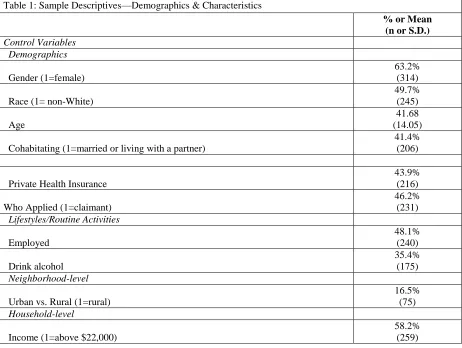
Table 1: Sample Descriptives—Demographics & Characteristics ...50
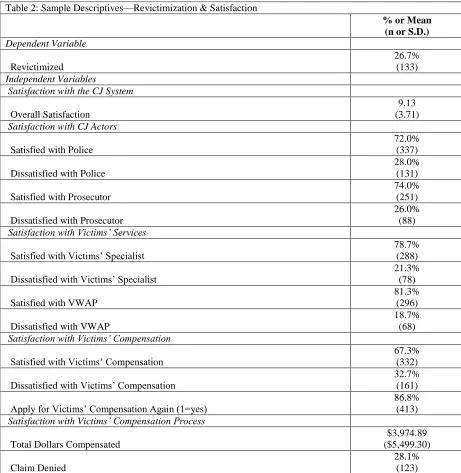
Table 2: Sample Descriptives—Revictimization & Satisfaction ...52
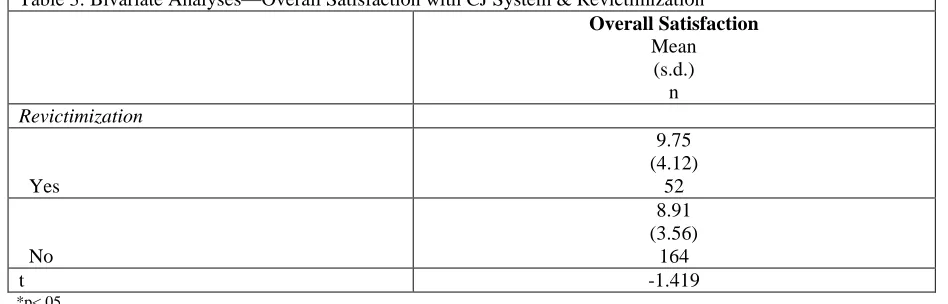
Table 3: Bivariate Analyses—Overall Satisfaction with CJ System & Revictimization ...59
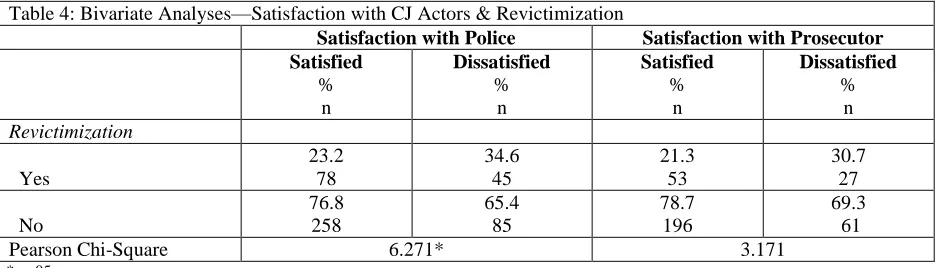
Table 4: Bivariate Analyses—Satisfaction with CJ Actors & Revictimization ...60
Table 5: Bivariate Analyses—Satisfaction with Victims’ Services & Revictimization ...61
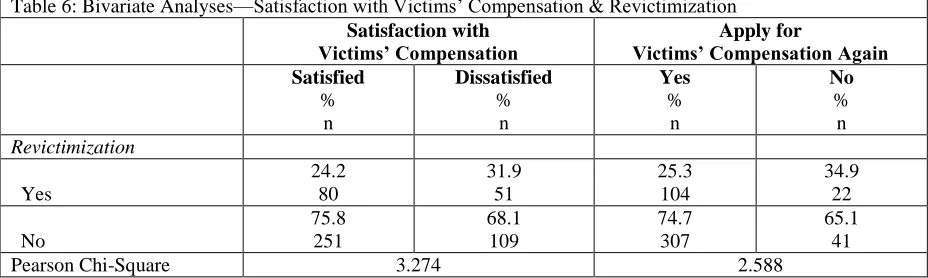
Table 6: Bivariate Analyses—Satisfaction with Victims’ Compensation & Revictimization ...61
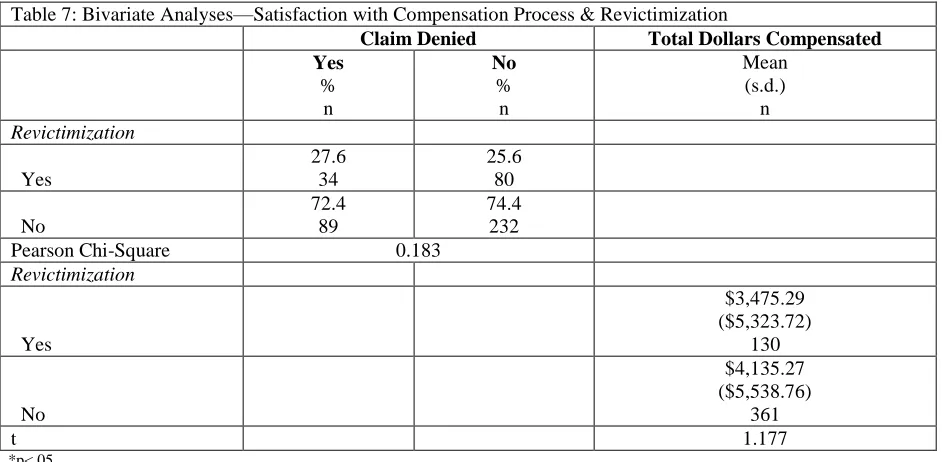
Table 7: Bivariate Analyses—Satisfaction with Compensation Process & Revictimization ...62
Table 8: Bivariate Analyses—Demographics & Revictimization ...64
Table 9: Bivariate Analyses—Additional Control Variables & Revictimization ...64
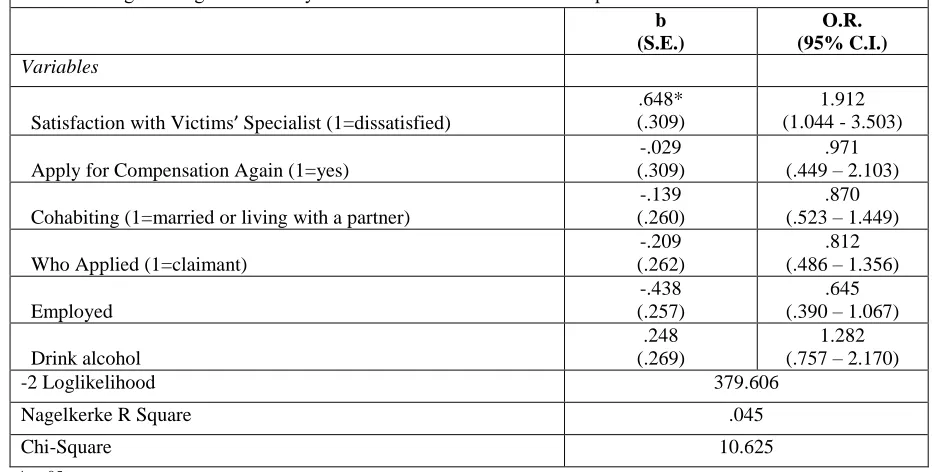
Table 10: Logistic Regression Analysis for Satisfaction with the Police & Revictimization ...66
1
CHAPTER I Introduction
Victimization is, unfortunately, a common occurrence in the United States. The Uniform
Crime Reports (UCR) and the National Crime Victimization Survey (NCVS) provide insight on
the prevalence of victimization. According to the UCR, over 1,300,000 acts of violence and over
9,700,000 property crimes were reported to the police in 2008 (FBI, 2009). Although the FBI
provides a depiction of the crimes reported to the police, it does not include those incidents that
go unreported. To fill this gap, the NCVS offers a more comprehensive picture of victimization
in the United States. This self-report survey collects information on victimization incidents
experienced by people whether they reported the incidents to the police or not. In 2012, the
NCVS reported that over 6,800,000 incidents of violent crime and over 19,600,000 incidents of
property crime occurred in the United States (Truman, Langton, & Planty, 2013). The
national-level numbers produced by these two data sources show ample evidence that crime and
victimization are quite prevalent.
The UCR and the NCVS also provide depictions of the typical crime and victim profiles.
According to the UCR, larceny-theft was listed as the crime most reported to the police.
Aggravated assault was the most commonly seen violent crime reported to the police (FBI,
2009). Results from the self-reported NCVS find that simple assault was reported most often
with regard to personal crimes, while the most common property crime reported in the survey
was theft (Truman et al., 2013). Persons are asked in the NCVS if they reported their
victimization to the police. Based on this question, 44% of violent crime victimizations and 34%
of property crime victimizations reported in the survey were reported to the police.
2
addition, when involving violent victimizations, victims knew the perpetrator more often rather
than the incident being perpetrated by a stranger (Truman et al., 2013).
With regard to who is most often the victim of crime, the NCVS, which collects data
from individuals on their own victimization experiences, finds that young (ages 18 to 24),
black/African American males are typically the victims of crime. Females, however, are more
likely than males to experience incidents of sexual victimization (i.e. rape and sexual assault) and
intimate partner violence (Truman et al., 2013). Moreover, a majority of victims were never
married. In addition, those who lived in urban settings were at higher risk of being victimized
than those who resided in rural settings (Truman et al., 2013). Households with lower income
were more likely to be victimized by property crimes than those with higher income. For
instance, property crime rates for the lowest income group (< $7,500) were 168.7 per 1,000,
while the highest income group ($75,000 and above) had rates of only 20.8 per 1,000 (Truman,
2011a).
Being the victim of a crime is oftentimes traumatic and detrimental in many ways,
including producing physical and mental health consequences, as well as economic and social
costs. Physical trauma is one of the most obvious outcomes of victimization. Injuries can range
from minor cuts or scratches to serious injuries such as stab or gunshot wounds to death.
According to the NCVS, in 2012 over 1.5 million incidents of violent crime were accompanied
by an injury (Truman et al., 2013). The most serious outcome of a victimization is death.
According to the UCR, more than 14,000 murders were reported to the police in 2008 (FBI,
2009).
Various mental health consequences are also associated with experiencing victimization.
3
Acierno, 2003; Kilpatrick et al., 2007; Resick, 1993; Sweeting, Young, West, & Der, 2006;
Winick, 2007), anxiety (Resick, 1993; Storch, 2003; Winick, 2007), lack of self-worth (Grills &
Ollendick, 2002), decreases in self-esteem (Resick, 1993; Turner, Finkelhor, & Ormrod, 2010;
Winick, 2007), self-blame (Simon, 1995), humiliation (Winick, 2007), a sense of powerlessness
(Winick, 2007), and helplessness (Simon, 1995) associated with victimization. Furthermore,
Harvey and Herman (1994) found that victims of abuse in childhood suffered from symptoms of
amnesia, partial amnesia, and delayed recall associated with the traumatic experience. Another
serious mental health consequence that victims may experience is post-traumatic stress disorder
(PTSD) (Herman, 1992; Kilpatrick & Acierno, 2003; Kilpatrick, Edmunds, & Seymour, 1992;
Kilpatrick et al., 2007; Resick, 1993; Simon, 1995). Fear is also a common mental, emotional,
and even a physical response to experiencing a victimization (Ferraro & LaGrange 1987; Resick,
1993; Winick, 2007). In addition, victimization can also be accompanied by pain and suffering
as well as a lower quality of life (Miller, Cohen, & Wiersema, 1996).
Beyond the physical, mental, and emotional consequences of crime, victims and their
loved ones often encounter financial obstacles after a victimization has occurred. These
obstacles stem from financial costs including medical costs (Miller et al., 1996), mental health or
counseling costs (Miller et al., 1996), missing work resulting in lost wages or loss of financial
support (BJS, 2011), and property loss or damage (BJS, 2011; Miller et al., 1996). For instance,
annual medical costs were estimated at over $6 billion for child abuse victims (Prevent Child
Abuse America, 2000) and almost $3 billion for female victims of intimate partner violence
(Wisner, Gilmer, Saltman, & Zink, 1999). Regarding mental health costs, as high as 20% of the
cost expended by the mental health system is derived from crime (Miller et al., 1996).
4
work due to their victimization experience (BJS, 2011). The loss of or damage to property cost
victims approximately $15,500 for each arson incident (Welsh et al., 2008).
Although one victimization incident is detrimental to persons who fall victims of crime,
there are individuals who experience more than one victimization incident, which is called
revictimization. Revictimization occurs when an individual who has experienced a victimization
incident experiences a subsequent victimization, of the same type or a different type in separate
incidents, but during no particular time frame. Much of the research shows that revictimization
is an all-too common phenomenon. For instance, findings from the 2010 National Crime
Victimization Survey (NCVS) show that approximately 3% of victims experience more than one
victimization incident in the past six months (Truman, 2011b). The 2010/2011 British Crime
Survey (BCS) concluded that within the given year, over a quarter of persons who were victims
experienced more than one victimization incident (Crime in England and Wales, 2010/2011).
Victims in Canada are also likely to experience revictimization. Results from the 2004 General
Social Survey on Victimization indicate that 38% of persons who were victimized were
revictimized (Perrault, Sauve, & Burns, 2010).
What the research has shown, however, is that some types of victimization are more
likely to re-occur than others. Specifically, revictimization is especially common in personal
crimes including assault, intimate partner violence, and rape as well as the property crime of
burglary. For example, a study utilizing the National Youth Survey found that in the past year,
approximately 60% of youth were assaulted more than once. In addition, 61% of robbery
victims were also revictimized in the past year (Lauritsen & Quinet, 1995). The British Crime
Survey provides insight on the extent of burglary revictimization. The 2003-2004 surveys and
5
victims of burglary experience two or more incidents within one year. Furthermore, Sagovsky
and Johnson (2007), in an examination of police reports in Australia from a two-year period,
found that about 11% of burglaries were repeat incidents.
Revictimization is also prevalent among victims of unwanted sexual experiences.
Research shows that females who have experienced an incident of sexual victimization were at
an increased risk of experiencing a subsequent sexual victimization (Classen, Palesh, &
Aggarwal, 2005; Norris, Nurius, and Dimeff, 1996). Specifically, in a review of the literature,
Classen et al. (2005) concluded that approximately two thirds of the sexually victimized women
reported experiencing multiple sexual victimizations during their lifetime with rates of
revictimization ranging from 10% to as high as 69%. Other research supports this finding of
sexual revictimization. A study using the National Violence Against Women Study data
concluded that female rape victims in the sample reported being raped 2.9 times, on average, a
year (Tjaden & Thoennes, 2006). Another national-level study of violent and sexual
victimization among college females showed that victims were experiencing repeat sexual
victimization at higher rates than repeat violent victimization (Daigle, Fisher, & Cullen, 2008).
Daigle and colleagues found that 7% of the college women who reported an initial sexual
victimization incident of rape, sexual coercion, unwanted sexual contact with force, unwanted
sexual contact without force, or threats experienced more than one of these incidents during the
school year (Daigle et al., 2008).
Revictimization is accompanied by many of the same consequences as the initial
victimization. These will be discussed in more detail in Chapter IV. With the suffering and
6
revictimization, it is important for there to be laws and policies in place to provide victims with
rights and services that will accommodate their needs.
One such need and right is providing financial compensation for the consequences
following a victimization such as injury or psychological trauma. It may be that by alleviating
these consequences, compensation can reduce the likelihood of an individual becoming a victim
again. Specifically, by aiding persons to receive physical and mental health treatment or to make
up for lost wages or economic support, for example, victims’ compensation can help individuals
to regain balance in their lives following the disruption a victimization experience can induce,
and in turn reduce the risk and risk factors associated with subsequent victimization.
Research shows that various characteristics and behaviors can predict being the victim of
a crime. For example, drug (Cass, 2007; Fisher & Wilkes, 2003; Mustaine & Tewksbury, 2002)
and alcohol use (Abbey, Zawacki, Buck, Clinton, & McAuslan, 2001; Combs-Lane & Smith,
2002; Schwartz & Pitts, 1995; Siegel & Williams, 2003; Ullman, Karabatsos, & Koss, 1999)
have been associated with victimization risk. Likewise, there are risk factors that place
individuals at risk of being revictimized, such as substance use (Daigle et al., 2008; Fisher,
Daigle, & Cullen, 2010b; Raghavan, Bogart, Elliott, Vestal, & Schuster, 2004), unemployment
(Mukherjee & Carcach, 1998), and socioeconomic status (Lauritsen and Quinet, 1995; Outlaw,
Ruback, & Britt, 2002). Moreover, some of the negative consequences that accompany an initial
victimization may also serve as risk factors for revictimization. These negative outcomes may
include mental health issues such as depression and anxiety (Burnam, Stein, Golding, Siegal,
Sorenson, Forsythe, & Telles, 1988). Risk factors and negative consequences such as these
create an imbalance for victims. The criminal justice system may be able to help victims remedy
7
victimization—such as reducing mental health consequences by providing money for counseling.
If participation in the criminal justice system, through compensation for example, can aid in
restoring victims’ imbalance caused by the initial victimization, then the system may also be
8
CHAPTER II Victims’ Rights
Historically, the criminal justice system has been offender-based, with offenders as
opposed to victims as the focus of the system. Until the emergence of the sub-field of
criminology known as victimology, victims were given little attention in the criminal justice
system, and programs for these individuals were lacking. Deriving from the notion of
understanding the victim-offender relationship, victimology began to be acknowledged in the
mid-1900s (Young & Stein, 2004). In 1947, Mendelsohn, known as the father of victimology,
labeled the study of victims as victimology. Furthermore, in 1948, Hans von Hentig, in his book,
The Criminal and His Victim, suggested that victims may contribute to their victimizations
(Dussich, 2007; Young & Stein, 2004). Hentig’s work encouraged the study of victims and their
roles in crime. The field of victimology moved from this early position of examining the
victim’s role in crime, and began to focus on the impact crime had on victims—as well as the
needs and rights of victims—due to the increasing awareness of how often victimization
occurred and victims’ distrust of the criminal justice system (Young & Stein, 2004). Thus, the
field of victimology focuses on the study of the causes and consequences of victimization along
with how the criminal justice system and other actors interact with and provide for victims
(Dussich, 2007; Young & Stein, 2004).
As mentioned, a major influence on the study of victims was the expansion of knowledge
surrounding the prevalence of victimization. The National Crime Survey (NCS), now known as
the National Crime Victimization Survey (NCVS), was implemented in 1966 due to the concern
of raising crime rates (BJS, 2014; Dussich, 2007). This survey was a recommendation of the
President’s Commission on Law Enforcement and the Administration of Justice. Since not all
9
Reports (UCR) by asking respondents to indicate any victimizations they experienced, regardless
of whether they reported the incidents to the police or not (Felson & Boba, 2010). Therefore, the
survey provided a better, more accurate picture of how much victimization, thus crime, was
actually occurring.
The awareness of victimization provided by the NCS was not the only influence on the
expansion of studying crime victims. During this same time period – the 1960s, both the
women’s rights movement and the civil rights movement were taking place, which provided
groundwork and momentum for the victims’ rights movement. With the recognition of the
power, status, and influence of women during the women’s rights movement, crimes against
women such as rape, sexual victimization, and domestic violence were acknowledged. In
addition, the way in which the criminal justice system handled these crime victims was brought
to light as well (Young & Stein, 2004). Similar to the women’s rights movement, the civil rights
movement was also concerned with how individuals were treated by the criminal justice system
(Smith, Sloan, & Ward, 1990). Specifically, the civil rights movement focused on the rights of
minorities, women, the young, and poor people (Sloan et al., 1990). Because of these similar
interests regarding the criminal justice system, both the women’s rights movement and the civil
rights movement fueled the victims’ rights movement.
Victims’ rights were first granted in the late 1960s. The overarching goal of these rights
is to provide and advance the privacy of victims, the protection of victims, and the participation
of victims in the criminal justice system (Garvin, 2010). Individual states implemented victims’
rights through either constitutional amendments or through legislation (Davis & Mulford, 2008).
Wisconsin was the first state to establish and provide rights to victims (Davis & Mulford, 2008;
10
acknowledged on the federal level. In 1982, the Presidential Task Force of Victims of Crime
was assembled under President Reagan in order to address and improve on legislation pertaining
to victims (Davis & Mulford, 2008; Henderson, 1985; Smith et al., 1990). This task force
suggested increased participation and restitution be granted to crime victims involved in the
criminal justice system. This task force, along with other federal legislation guaranteed that
victims’ rights would be maintained on the federal level (Davis & Mulford, 2008; Young &
Stein, 2004). Importantly, victims are able to attempt to have their rights enforced (National
Center for Victims of Crime, 2012).
To activate their rights, including the right to be informed, victims must report their
victimizations to the police (Davis & Mulford, 2008; National Center for Victims of Crime,
2012). Not only does this right to be informed include information for contacting criminal
justice agents and knowledge of the available resources and services, in a majority of states it
also includes being notified about the offender’s arrest, arraignment, and bail as well as whether
charges are dismissed; plea bargaining is taking place; when the trial, sentencing, and any
appeals are occurring; and whether the offender has probation or parole hearings and/or has
escaped or been released. All of this information in reference to the right to be informed can be
provided in various ways to crime victims: including mailing the victim the information, having
automated systems to call or email victims, or in some cases, victims must inquire about these
updates themselves (National Center for Victims of Crime, 2012). Another way in which these
notifications can be obtained is through a victim witness assistance provider (VWAP) often in
collaboration with the prosecutor. The prosecutor is required to discuss decisions with the victim
in some states; however, the prosecutor has the final say in all important decisions regarding the
11
Beyond notification, victims have numerous other rights. One such right is the right to
participation and consultation. This right, given by most states, allows victim participation in the
court process through victim impact statements and consultations with the prosecutor (Davis &
Mulford, 2008; National Center for Victims of Crime, 2012). Additionally, in about half of the
states, victims have a right to a speedy trial (Davis & Mulford, 2008; National Center for Victims
of Crime, 2012). This right ensures that the trial process will be free of unreasonable delay. The
court may consider the impact a delay could have on the victim when ruling on a continuance.
Victims are also guaranteed protection. This victims’ right provides protection from threats,
intimidation, and retaliation. Protection is provided by keeping victims isolated from their
perpetrators in and out of court, limiting the disclosure of their personal information, and
providing protection orders if necessary (Davis & Mulford, 2008; National Center for Victims of
Crime, 2012). Although most states have this victims’ right in place, the amount of protection
may vary from state to state and jurisdiction to jurisdiction. Providing police escorts, witness
protection programs, restraining orders, and relocation are all examples of protection services
that may be provided to victims (National Center for Victims of Crime, 2012). Crime victims
also have the right to restitution from the offender as well as the right to prompt return of
personal property. Restitution can be granted to the victim in most states. In this case, the court
holds the offender responsible for paying some or all of the financial losses they caused (e.g.,
property damage or loss). In addition, restitution may be granted for actual monetary loss such
as lost wages or the repayment of insurance deductibles (National Center for Victims of Crime,
12
An additional right provided to crime victims is financial compensation for expenses
caused by the victimization incident (Davis & Mulford, 2008; National Center for Victims of
Crime, 2012). This right is given to victims in every state.
There are various consequences that may result from a victimization experience. One
such consequence is injuries. According to the NCVS, 1,573,460 incidents of violent crime and
762,170 incidents of serious violent crime involved an injury to the victim in 2012 (Truman et
al., 2013). Beyond the obvious consequence of injuries when becoming the victim of a crime,
there are also other tangible costs—medical costs and lost earnings, for example—related to
victimization. These tangible costs per victimization range from an estimated $480 to $737,517
and are related to the type of crime the victim experienced (McCollister, French, & Fang, 2010).
To help counteract these monetary costs, victims’ compensation was first established in
California in 1965 (Ramker & Meagher, 1982). Within about ten years, most states had
recognized California’s efforts for crime victims and began victims’ compensation programs of
their own (Henderson, 1985). Today, every state provides the opportunity for victims to receive
compensation. The goal of victims’ compensation is to ease the victim’s financial burdens
associated with experiencing a crime. The expectation is that providing monetary aid through
this program assists crime victims as well as their loved ones through the physical and emotional
trauma a victimization experience can create (CJCC, 2012; National Association of Crime
Victim Compensation Board, 2012). Meeting this particular need of victims is important
because the system is acknowledging the harm the victim has endured, and is aiding in the
recovery of the victim’s well-being. As discussed previously, victims experience physical and
emotional consequences associated with being victimized. These consequences are often
13
negative outcomes by providing the financial means to obtain services such as counseling for
mental health issues and medical attention for injuries. By fulfilling the monetary needs to
counteract the trauma victims commonly experience following a victimization incident, victims’
compensation attempts to lessen the financial costs victims often face.
In general, financial compensation can be obtained for expenses directly related to the
victimization experience such as medical and funeral costs, loss of wages or economic support
reimbursement, crime scene clean up, and counseling expenses. In addition to these major
categories, some states’ victims’ compensation programs also provide emergency funds as well
as reimbursement for relocation costs, evidence, security expenses, child care, travel expenses to
treatment and court, property damage and replacement, and pain and suffering (Daigle, Reed,
Mummert, Azimi, & Topalli, 2013). In 2009, approximately $478 million dollars was dedicated
to victims’ compensation nationally in the United States (National Association of Crime Victim
Compensation Board, 2012). Federal grants provide about one-third of the funding for victims’
compensation with other financial resources provided through offenders’ court fees. For
example, in the state of Georgia, about five percent of the offender’s court fees are applied to the
state’s victims’ compensation fund (CJCC, 2012). Although there are various sources of
funding, victims’ compensation programs limit the amount compensation that can be awarded,
even though victims may have expenses that are very high, the mode for the total cap for
compensation programs in the United States is $25,000 (Daigle et al., 2013). The national
average total cap is $31,000 for victims’ compensation (Daigle et al., 2013). Texas provides the
highest maximum cap for victims’ at $125,000 (for catastrophic events), and Arkansas,
Louisiana, Nebraska, and Vermont provide the lowest cap at $10,000 (Daigle et al., 2013).
14
54%, although payments were also made for economic support (15%), funeral costs (11%), and
mental health/counseling costs (9%) (National Association of Crime Victim Compensation
Boards, 2012). About half of the claims for victims’ compensation came from victimization
experiences of assault, with other claims being filed as a result of incidents of domestic violence
(25%), child abuse (20%), sexual assault (16%), and homicide (10%).
Although varying from state to state and program to program, there are general eligibility
requirements for victims to receive compensation. Generally, the victim must have reported the
crime to the police within a specified time period, participate and cooperate with the police and
prosecutor, apply for victims’ compensation within a given time period (usually 1 year), not have
contributed to their victimization in any way, and have tangible costs associated with their
victimization that are not covered by another party (e.g. insurance) (National Association of
Crime Victim Compensation Boards, 2012).
In Georgia, the state in which the current research was conducted, through the Crime
Victims Bill of Rights (O.C.G.A. 17-17-1 C16) of Georgia, crime victims are entitled to the right
to apply for victims’ compensation. This victims’ compensation program is administered by the
Criminal Justice Coordinating Council (CJCC) of Georgia. Similar to common national
standards, Georgia victims of violent crime1—including sexual assault, child abuse, domestic
violence, vehicular homicide, child pornography, child exploitation, assault, robbery,
kidnapping, hit and run, homicide, and DUI/DWI where a physical injury or serious
mental/emotional trauma resulted—can be compensated for medical expenses, counseling
services, funeral costs, loss of wages or economic support, crime scene clean up, DUI memorial
signs, and sexual assault forensic medical examinations (CJCC, 2012). Victims’ compensation
15
funds can be utilized for these expenses after all other funds have been exhausted, including but
not limited to health insurance, worker’s compensation, and civil cases resulting in financial
restitution from the offender. It is important to note that Georgia does not provide monetary
benefits for pain and suffering. Additionally, there is a financial cap or limit for each area of
victims’ compensation as well as for the total amount of compensation that can be received
(CJCC, 2012). The total cap for victims’ compensation is $25,000, the medical cap is $15,000,
counseling is capped at $3,000, funeral is capped at $3,000, loss of wages or economic support is
capped at $10,000, and crime scene clean-up is capped at $1,500 (CJCC, 2012).
Eligibility requirements for victims’ compensation in Georgia are similar to the standards
of other states. These restrictions include: time requirements such as the incident must be
reported to the police within 72 hours unless with good cause and the time to apply for victims’
compensation is restricted to one year unless good cause is presented. Victims must also
cooperate with the police and the prosecutor. Additionally, if the victim is under criminal justice
supervision or contributed to his/her own victimization, he or she is not eligible to receive
compensation (CJCC, 2012; Robinson, 2012).
According to the CJCC, in 2009, the victims’ compensation program in Georgia obtained
over 1 million dollars for victims’ compensation services through the Recovery Act grant funds.
That same year, the victims’ compensation program dispensed a total of $965,177 to victims
through compensation (CJCC, 2012). There are approximately 3,000 new applicants for victims’
compensation in Georgia each year. Unfortunately, these new applicants only account for
approximately 2% of Georgia crime victims who are eligible applicants for victims’
compensation. This percentage of participation is over 3.5% lower than the national rate (5.7%)
16
compensation program should aid in rebalancing and restoring victims after they have suffered a
victimization experience. Thus, what could be most detrimental is that victims are not receiving
these compensation funds, thus they are not receiving the benefits of this program.
Soon after the emergence of the victims’ rights movement, another movement was also
taking place in the criminal justice system. In the 1970s, the restorative justice movement was
first introduced in Canada and then in the United States. The ideals of restorative justice had
been used in practice before this time, when earlier justice systems put the responsibility of
reparation from the offender on the victims and their families (Tobolowsky, 1999). This
victim-centered approach towards justice allowed for victims and those affected by the victimization
(e.g., loved ones, the community, the state) as well as the offender to play a role in restoring the
peace after victimization occurred (Johnstone, 2002). This restoration is done by the parties
involved working together to come to a decision regarding how to alleviate the harm and repair
the damage caused by the offender (Achilles & Zehr, 2001; Bazemore, 1998; Marshall, 1999).
Specifically concerning victims, restorative justice is focused on the needs of crime
victims and whether these needs are met by the criminal justice system (Achilles & Zehr, 2001;
Zehr, 2002). Crime victims and others who are affected by the crime (e.g. the victims’ families,
the community) are looking to restore power/control and order in their lives as well as rebuild
relationships and trust (Achilles & Zehr, 2001). In order to do so, victims have five basic needs
from the criminal justice system. First, they need a place where they can express their feelings
and concerns while feeling safe and free from blame and judgment. Second, crime victims need
restitution. Restitution is payment made to the victim by the offender, which holds the offender
accountable for the harm they have caused (Achielles & Zehr, 2001). Third, victims need
17
able to tell their story and describe the impact the crime has had on them. Fifth, and finally,
crime victims need to experience empowerment (Achilles & Zehr, 2001). In line with these
needs of victims, Zehr (2002) identifies four important types of victims’ needs where the
criminal justice system seems to fall short including information, truth-telling, empowerment,
and restitution/vindication. The need for information goes beyond that of knowing what is
happening with the case. Victims need to know what happened and why it happened. Many
times, the only way to gain this knowledge is through the offender (Zehr, 2002). Truth-telling, a
second need of victims, refers to the allowance of victims to tell their story or have a voice.
Expressing their experiences related to the crime can be therapeutic. Victims often times feel a
need to convey how the crime impacted them to the offender (Zehr, 2002). Another need – the
need to be empowered – stems from the notion that victims feel their lives have been turned
upside down by a crime. In basic terms, they have lost all control over their lives. There is a
need for victims to regain this control (Zehr, 2002). Finally, restitution is an important need for
victims because it not only compensates for the losses that were a result of the crime, but it also
symbolizes the recognition of the wrongdoing the offender committed. Crime victims have a
need to have their suffering be acknowledged and alleviated. Restitution is one way for this to
be achieved (Zehr, 2002). It is important for the criminal justice system to not only
acknowledge, but to also address the needs of victims. If the system is not meeting the needs of
victims, it would likely result in further harm. Thus, the trauma to and suffering of victims
continues, and may lead to additional negative outcomes such as revictimization by exacerbating
risk factors (e.g. depression and anxiety) associated with being revictimized.
In the United States, there are various programs in place that promote the notion of
18
mediation/reconciliation, restitution, family/community group conferencing, peacemaking, and
sentencing circles (Centre for Justice and Reconciliation, 2008). By giving the victims a voice in
what happens with the offender after they have been victimized, restorative justice aids in
meeting victims’ needs and providing them with their own rights similar to those that are
provided to offenders in the criminal justice system (Bazemore, 1998). Despite these needs
being essential to victims’ recovery from the crime, many argue the criminal justice system does
not adequately address these needs as discussed above (Achilles & Zehr, 2001; Bazemore, 1998;
Zehr, 2002). Bazemore (1998) argues that if the criminal justice system can meet the needs of
victims, perhaps through restorative justice for example, then victims will feel satisfied with the
system. If crime victims have positive experiences with the criminal justice system (i.e. thereby
meeting objectives of restorative justice and therapeutic jurisprudence), it should aid in the
19
CHAPTER III
Victims’ Experiences with the Criminal Justice System
Therapeutic Jurisprudence
In line with the ideals of the victims’ rights movement and the restorative justice
movement, therapeutic jurisprudence, first introduced in the 1990s, has as its main objective a
focus on the notion that laws and policies should promote the emotional, mental, and behavioral
well-being of those who interact with the criminal justice system (King, 2008; Stolle, Wexler, &
Winick, 2000; Wexler, 1995; Wexler & Winick, 1991; Winick, 1997, 2007, 2009; Winick &
Wexler, 2003). In basic terms, when an individual comes into contact with the criminal justice
system, there is a need for the system, its actors, and its services to promote a positive impact on
the individual. Thus, therapeutic jurisprudence is a matter of whether the criminal justice system
and its entities are working as a therapeutic agent or not (Slobogin, 1995). Therapeutic
jurisprudence can be assessed in the criminal justice system as a whole as well as among its
individual actors such as police and first responders, prosecutors, and judges. The system in
general and each of these actors play a role in the experiences of individuals who come into
contact with the criminal justice system and whether or not these experiences are positive or
negative and therapeutic or not (Winick, 1997). Generally, interactions with the criminal justice
system that promote empowerment of the individual and seek to address the needs of the
individual exemplify the very elements of therapeutic jurisprudence. On the organizational level,
problem-solving courts or specialty courts such as drug courts are examples of therapeutic
jurisprudence ideals put into action (Hora, Schma, & Rosenthal, 1998; Rottman & Casey, 1999).
Providing an example on the individual level, judges may consider the emotional undertones of
20
sentence has been handed down in order to provide closure and help promote healing (Rottman
& Casey, 1999).
Although this approach is appropriate for different types of people who come into contact
with the criminal justice system (i.e. offenders, witnesses, family members of the victims, and
accused), it has been applied to victims of crime in particular (Cattaneo & Goodman, 2010;
Feldthusen, Hankivsky, & Greaves, 2000; Winick, 2007). Winick (2007) discusses how the
application of therapeutic jurisprudence is appropriate for crime victims. As previously
discussed, research has shown that victims of crime may experience negative consequences as a
result of their victimization experience. These negative outcomes include anxiety (Resick, 1993;
Storch, 2003; Winick, 2007), fear (Resick, 1993; Winick, 2007), depression (Kilpatrick &
Acierno, 2003; Kilpatrick et al., 2007; Resick, 1993; Sweeting, Young, West, & Der, 2006;
Winick, 2007), post-traumatic stress disorder (PTSD) (Kilpatrick & Acierno, 2003; Kilpatrick,
Edmunds, & Seymour, 1992; Kilpatrick et al., 2007; Resick, 1993; Simon, 1995), a sense of
powerlessness (Winick, 2007), humiliation (Winick, 2007), substance abuse (Kilpatrick &
Acierno, 2003; Kilpatrick et al., 2007; Simon, 1995), blame (Simon, 1995), lack of
self-worth (Grills & Ollendick, 2002), decreases in self-esteem (Resick, 1993; Turner, Finkelhor, &
Ormrod, 2010; Winick, 2007), and helplessness (Simon, 1995) among many others.
Because of these negative outcomes often associated with victimization, the criminal
justice system should provide a positive experience for victims and avoid the possibility of
revictimizing them through disempowerment or further mental or emotional harm (Herman,
2003; Winick, 2007). The revictimization of victims by the criminal justice system can occur at
various points throughout the case. For example, police actions have been found to be sources of
21
with 58 rape victim advocates, 46% of the participants reported police as being the perpetrators
of revictimization. Police engaged in the revictimization of rape victims through victim-blaming
(Maier, 2008; Ullman, 1996), insensitivity (Martin, 2005), invasive questioning (Maier, 2008),
and hesitation or refusal to investigate the victim’s claims (Campbell, 2006; Edward & Macleod,
1999; Maier, 2008). In addition to these, police may also question or criticize the victim’s
reaction to experiencing a rape, for example, saying that she does not demonstrate enough
distraught emotion or injuries (Estrich, 1987; Maier, 2008; Madigan & Gamble, 1991).
Referencing victim-blaming specifically, the victims’ actions, behaviors, and lifestyle choices
may also be questioned by police (Campbell, 2006; Maier, 2008). The behaviors discussed here
are not limited to only the police. Similar behaviors can be found among prosecutors, judges,
and other criminal justice professionals (Ford, 1991; Hart, 1992; Winick, 2007). For instance,
Herman (1997) suggests that the court system aggravates PTSD and its symptoms among victims
of violence. Moreover, crime victims, such as domestic violence victims, may have concerns for
their safety and fear offender retaliation when participating in the case (Herman, 2003). All of
these actions by the criminal justice system and its actors can be detrimental and may result in
further harm to the victims. As Winick (2007) notes, individuals who experience violent crime
have their emotional equilibrium imbalanced, and part of the job of the criminal justice system
and the victims’ services that it provides is to restore this emotional balance, not damage it
further. The services and programs embracing therapeutic jurisprudence seek to provide this
restoration.
A major element of therapeutic jurisprudence that is specific to crime victims is meeting
their needs (Winick, 2007). One such need held by victims is that they do not want to be
22
victims feel as though they can express themselves and feel that they are being taken seriously.
Another necessity of victims, and perhaps most important, is that victims need to be respected
(Winick, 2007). Respect most often begins with the action of the police who are usually the first
actors of the system with whom victims come into contact. Scholars have stressed the need for
police, as well as other criminal justice actors, to be properly trained to be sensitive and educated
to be able to provide referral and prevention information to victims of crime (Simon, 1995;
Winick, 2007). By providing sensitivity and information to victims, criminal justice actors can
increase victims’ feelings of being acknowledged, respected, and empowered.
In addition to meeting the needs of victims, providing a sense of empowerment can also
be crucial to the emotional rebalancing of crime victims. Empowering victims aids in restoring
balance to victims’ emotional well-being. For instance, when protection orders are in place for
victims of domestic violence, police should enforce these appropriately when violated. Lack of
enforcement decreases victims’ sense of safety and empowerment (Simon, 1995). Courts and
prosecutors can aid in empowering victims by providing opportunities for victims to confront
their perpetrator and tell their side of the story about how the crime has impacted their life.
Giving this voice to the victim can be done with the use of victim impact statements, testifying in
court, protection or restraining orders, and victim-offender mediation (Cattaneo & Goodman,
2010; Simon, 1995; Winick, 2007).
Although the research regarding therapeutic jurisprudence as it pertains to victims within
the criminal justice system may be discouraging, there is still a need to understand how different
elements of the system can be beneficial in the healing process. Tying therapeutic jurisprudence
ideals to victim-witness assistance programs (VWAP) and other programs specifically for
23
forms and paperwork associated with victim impact statements, victims’ compensation,
victim-offender mediation sessions, and protection orders, and should assist with providing any
additional information that they may need when cooperating with the police or prosecutor.
These tasks seem simple, but they are essential because sometimes victims have language,
literacy, or cultural barriers that prevent them from adequately participating in their case
(Winick, 2007).
To reiterate, the overall goal of therapeutic jurisprudence pertaining to crime victims is to
aid them in restoring emotional and mental balance in their lives. Positive experiences with the
criminal justice system and its actors/elements are crucial in improving victims’ well-being. In
addition, the type of experience victims have with the system oftentimes influences whether or
not they will choose to participate in the criminal justice system in the future (Belknap &
Sullivan, 2003; Cattaneo & Goodman, 2010; Simon, 1995; Zweig & Burt, 2003). The option to
interact with the criminal justice system in the future is more likely to be accepted when the
objectives of therapeutic jurisprudence are met during the current victimization (Winick, 1997).
Beyond understanding what therapeutic jurisprudence is and how it is related to the
criminal justice system, research has begun to try to understand the importance of therapeutic
jurisprudence in the context of victims’ interactions with the criminal justice system. Some of
this research has examined whether victim empowerment produces positive outcomes for
victims, a goal of therapeutic jurisprudence. Cattaneo and Goodman (2010) examined the role of
empowerment in the court system among female victims of intimate partner violence and its
impact on levels of depression, quality of life, and whether or not the victims would utilize the
court system again. Using a sample of 142 women, the study found that empowerment was
24
well-being. Furthermore, women who felt they had positive experiences with the court system
had greater intentions of participating in the system again (Cattaneo & Goodman, 2010).
Overall, the researchers concluded that empowerment and a positive experience with the court
led to increased satisfaction with the system and improvement in the mental health of the victims
(Cattaneo & Goodman, 2010). In sum, when the ideals of therapeutic jurisprudence were
upheld, positive outcomes for victims were present.
Similarly, in a study of 46 victims who took part in either direct or indirect mediation
with their offenders, researchers found that mediation had a positive impact on victims’
well-being (Wemmers & Cyr, 2005). Over half of the victims (54.5%) reported that they felt their
participation in the mediation helped them move on from their victimization, and over 64% of
them indicated feeling better about their victimization experience following the mediation. In
addition, the majority of victims expressed that they benefited from the mediation, with
psychological benefits (62.1%) being the most commonly reported (Wemmers & Cyr, 2005).
The results of this research suggest the victim-offender mediation program was therapeutic in
nature for the victims. The service was found to be a healing process and a tool to regain balance
in their lives. Furthermore, a majority of the victims felt that the mediation program was fair
(66%), with correlational findings also indicating that the perception of the program and its
procedures being fair were associated with feeling better about their victimization experience
after the mediation. Thus, these findings suggest a therapeutic result stemming from the program
(Wemmer & Cyr, 2005). Taken together, the findings clearly demonstrate the positive outcomes
that programs can produce when in accordance with therapeutic jurisprudence.
Another study considered the therapeutic outcomes for victims of sexual abuse who
25
is of particular interest because it is the first study to investigate compensation as a tool of
therapeutic jurisprudence. Feldthusen and colleagues (2000) interviewed sexual abuse victims
and found that, in terms of compensation through either outlet, victims were seeking a
therapeutic outcome—a way to heal from their experience—rather than financial gain. More
specifically, victims in the study wanted to be heard, express their experiences, and gain
acknowledgment that what they went through was wrong (Feldthusen et al., 2000). Although
over 40% of the sample identified money as one of the main reasons they applied for
compensation, that reason was linked to the needs of paying for child care, education, and
counseling (Feldthusen et al., 2000). Thus, money may have been a motivator, but the uses for
that money would have provided a therapeutic outcome.
Importantly, a vast majority of the sample discussed several negative consequences, both
emotional (84%) and physical (53%), associated with their compensation or civil action
processes. Emotional consequences included issues such as depression, suicidal tendencies,
anger, frustration, loss of control with regard to the process, and the system not being responsive
towards them. Physical consequences included hypertension, vomiting, headaches, insomnia,
and other illnesses (Feldthusen et al., 2000). Looking specifically at those who applied for
compensation through the government, a large percentage of these victims (51%) reported
dissatisfaction with their experience, specifically citing insensitivity, disrespect, and lack of
empathy. They also expressed difficulty in filling out the required paperwork, and were insulted
when the details of the application and file were not reviewed. Victims indicated feelings of
being victimized and intimidated by the system and scared during the process as well
26
victims being revictimized by the system. Therapeutic jurisprudence was not upheld in the
program and victims were subsequently negatively affected by their participation.
Research has also begun to consider the role of therapeutic jurisprudence in the criminal
justice system, and how it may break the victimization-revictimization cycle for crime victims.
For example, Finn (2013) examined the outcome of revictimization among 170 domestic
violence victims when comparing evidence-based versus victim-centered prosecutorial policies.
Victim-centered policies take on the ideals of therapeutic jurisprudence, specifically
empowerment, in that this prosecutorial policy allows victims to participate in their case. The
goal then is that victim participation will reduce their chances of experiencing revictimization
incidents through empowerment. Supporting this idea, Finn (2013) found that those who were in
the victim-centered policy group were less likely to report subsequent violence than those who
were in the evidence-based policy group. This finding suggests that negative outcomes may be
prevented or at least alleviated by the criminal justice system through empowering victims of
crime.
Crime Victims’ Satisfaction with the Criminal Justice System
An important consideration of victims’ rights is whether the privileges and programs put
into place for victims are actually having a positive impact on them. One way to assess this
impact is to consider victims’ satisfaction with the criminal justice system as a whole, as well as
their satisfaction with different actors and aspects of the criminal justice system. To illustrate
victims’ overall perceptions of the criminal justice system, of their sample of felony crime
victims’ in Ohio, Erez and Tontodonato (1992) found that 55% felt the criminal justice system
handled their case well. Just under one third of their sample, however, felt their cases were
27
Satisfaction with Police
Although research has explored victims’ satisfaction with the criminal justice system in
general, other scholars have assessed victims’ satisfaction with specific actors in the criminal
justice system. One of the first actors in the criminal justice system with whom a crime victim
comes into contact is the police. This interaction—and the satisfaction associated with it—is
important because the police are often the very first impression a victim has with the criminal
justice system (Brandl & Horvath, 1991; Frazier & Haney, 1996; Reisig & Chandek, 2001;
Skogan, 2005; Tewksbury & West, 2001). In general, victims tend to be satisfied with the
police. Early studies reported that victims’ satisfaction with police ranged from 46% (Poister &
McDavid, 1978) to over 70% (Shapland, 1984). A study assessing crime victims’ experiences
with a central Wisconsin police department found that a majority of crime victims were satisfied
with the police who handled their cases. The level of satisfaction, however, varied depending
upon the type of crime. Sixty one percent of victims who experienced personal crimes, 67% of
serious property crime victims, and 74% of victims who experienced minor property crimes were
satisfied with the police (Brandl & Horvath, 1991). Further, Skogan’s (2005) study of Chicago
residents found that over three-fourths of the sample reported satisfaction with police actions at
the scene of the crime. With regard to police courtesy, other research has shown that just fewer
than 60% of a sample of crime victims ranked police with high satisfaction. In addition,
approximately half of the sample reported being completely satisfied with police contact
(Tewksbury & West, 2001). Not all studies have found that victims are satisfied with police
relative to other criminal justice actors. When asked what agents in the criminal justice system
28
This is not to say that victims were not satisfied with the police, rather they chose other actors
besides the police as being the most responsive.
Some research has focused on particular types of victims, such as those who experienced
domestic violence or sexual assault, and their satisfaction with the police. It may be that
different types of victims are exposed to different social pressures, which may in turn influence
how police officers respond to different victimization incidents. For instance, violence against
women has been tolerated in some realms of society, and domestic violence victims, specifically,
may feel social pressures to put the preservation of their families before their own rights and
well-being (Brown, 1984). Because of the view society holds towards these victims and because
police may repeatedly encounter the same situations of the victim wanting to spare her partner
from being punished, police may rationalize that there is no sense in responding to these victims
(Brown, 1984). With this view possibly being held by the police, perhaps satisfaction among
intimate partner violence victims will be different from other victims.
In a particular study of female victims of domestic violence who sought refuge in a
battered women’s shelter, three-fourths of the women reported the police were helpful (Yegidis
& Renzy, 1994). Other studies of victims of domestic violence have reported similar findings
with about 66% of these victims being satisfied with the police (Brown, 1984; Kennedy &
Homant, 1983). Similarly, in her study of domestic violence victims, Martin (1997) also found
that there was a consensus of general satisfaction among victims with the way in which the
police treated them.
Importantly, repeat victims—those who experience more than one victimization
incident—are also considered a specific category of victims. A study of repeat victims of
29
reported lower levels of satisfaction with police responses when compared to those who had only
been victimized once (van Dijk, 2001). In addition, repeat victims of violence against women
were found to have higher levels of satisfaction with the police response than repeat burglary
victims (van Dijk, 2001).
In addition to assessing levels of satisfaction with police, research has also tried to
discover why victims are satisfied or not. Brandl and Horvath (1991) found that satisfaction with
the police was positively related to the victims’ perception of police professionalism. This
relationship was present no matter what type of crime the victims experienced. Similarly,
Shapland (1983) found that higher levels of satisfaction with police were reported when the
police provided feedback to victims and appeared to be invested in the victim’s case. Moreover,
other research has reported that specific police actions—including making an arrest, comforting
the victim, and supplying information related to crime prevention—were all significantly related
to higher levels of victims’ satisfaction (Percy, 1980). Kelly (1983) found that victims’
satisfaction was dependent on the amount of case information the police provided to the victim,
how often the police contacted the victim, and how sensitive police were towards the victim.
Thus, increases in information provided by the police and police contact with victims led to a
greater level of police satisfaction among victims. Furthermore, other research indicated that the
level of satisfaction with the police among breaking and entering victims was related to the level
of service provided by the police. These services included whether or not they arrived promptly,
tried to locate witnesses, attempted to collect evidence, provided advice on preventing future
incidents, and contacted the victims about the status of the case (Reisig & Chandek, 2001). In
30
are actively interacting and staying in contact with victims (i.e. providing information to victims)
throughout their investigation.
Satisfaction with Prosecutors
After reporting a crime to the police, the prosecutors, VWAPs, and courts are usually the
next actors/aspects of the criminal justice system with whom crime victims interact. Prosecutors
typically interact with victims during the investigation and trial processes. For example,
depending upon the rights provided, victims may consult with the prosecutor, participate as
witnesses, give victim impact statements, or simply be present in court during the trial. In many
cases, victims prefer to be included in the trial process rather than be excluded (Kelly, 1983). In
addition, Kelly (1983) found that victims believed that the prosecutor’s job was, in part, to
represent them. Although this representation is not the role of the prosecutor, if the victim
perceived this representation to be present, then the more likely the victim was to give a positive
evaluation of the prosecutor (Kelly, 1983). Furthermore, the more contact the prosecutor had
with the victim, the higher the satisfaction level the victim held for the prosecutor (Kelly, 1983).
Other research has assessed victims’ satisfaction with prosecutors more generally. In a study of
100 female rape victims, Kelly (1984) found that 69% of these victims were satisfied with the
prosecutor assigned to their case and the services he or she provided. Other research has also
indicated high levels of satisfaction with the prosecutor among crime victims, with a majority of
victims reporting they were somewhat or very satisfied with the prosecutor (Kilpatrick, Beatty,
& Howley, 1998). Although much of research suggests that victims are generally satisfied with
prosecutors, out of all of the actors in the criminal justice system, prosecutors were the least
selected actor by crime victims with regard to their responsiveness (Erez & Tontodonato, 1992).
As with police, this lack of selection does not necessarily mean that victims are dissatisfied with
31
Prosecutors are not the only connection crime victims have to their case and its
accompanying decision-making process. Victim impact statements provide an opportunity for
victims to have their voices heard during the trial. These statements—which often involve a
testament as to how the victimization experience affected the victim’s everyday life, the victim’s
feelings toward the offender, and the sentence that the victim would like the offender to
receive—are when the victim has the chance to address the court prior to sentencing. Besides
being used at sentencing, victim impact statements can also be used at other points throughout
the case including during parole hearings, bail hearings, pre-trial release hearings, and during
plea bargaining (National Center for Victims of Crime, 2012). A study comparing victims who
gave victim impact statements and those who did not, found that both groups had approximately
the same level of satisfaction with the criminal justice system. A majority of victims reported
being satisfied (30%) when a five-point Likert scale (1=very dissatisfied to 5=very satisfied) was
used to assess their level of satisfaction (Erez, Roeger, & Morgan, 1994). Although it would
seem that victim impact statements would lead to increased victim involvement in the court
system, one study found no evidence of this influence (Davis & Smith, 1994a). In fact, research
has shown that victim impact statements can actually be harmful to victims with regard to
sentencing, specifically; because victims may be left with unfulfilled expectations of the
sentence they expected the offender to receive (Erez, Roeger, & Morgan, 1997).
The role of victim impact statements has also been examined with consideration for how
they may influence the actors and decisions made in the courtroom. For example, research has
explored the impact of victim impact statements on sentencing outcomes. In general, these
statements do not lead to harsher sentencing of offenders (Davis & Smith, 1994b; Erez &
32
increase criminal justice officials’ attention to the harm a victim may have suffered. In relation
to the harm done to victims, when considering the influence victim impact statements have on
victims’ lives such as receiving restitution and compensation, there is no evidence to suggest that
the court orders these repayments more readily as a result of victim impact statements being
given (Erez & Roeger, 1995).
Satisfaction with Victims’ Services
In addition to examining the research surrounding victims’ satisfaction with the criminal
justice system and its actors, there are also various services provided to crime victims that may
influence victims’ satisfaction. These services include programs such as domestic violence
shelters, victim-offender mediation, restitution, and other victim-witness assistance programs.
One such program is crime victims’ compensation. Victims’ compensation programs vary from
state to state, but generally, these programs are in place to reimburse or pay for tangible losses
related to an individual’s victimization. These losses could include things such as medical
expenses, counseling services, funeral costs, loss of wages or economic support, and crime scene
clean-up. Some states’ programs also include compensation for pain and suffering, relocation
costs, and loss of personal property, among other losses. Because victims’ compensation
programs have the potential to have a positive impact on victims, assessing crime victims’
satisfaction with these programs is important.
The existing research surrounding victims’ compensation can largely be categorized into
three overarching areas of interest. Much of the early research explored the need for victims’
compensation (Wolfgang, 1965) as well as demonstrated an overview of the victims’
compensation programs in place and the characteristics and issues associated with these
programs (Hoelzel, 1980; McAdams, 1976; Miers, 1983; Ramker & Meagher, 1982). Another