An exploration of cross-national differences in the
drinking behaviour of Italians and English: A
multi-method exploratory study
Luisa Perrino
A thesis submitted in partial fulfilment of the requirements of the
University of West London for the degree of Doctor of Philosophy
Abstract
Introduction: A range of factors including individual, socio-cognitive, political and those relating to geographical location provide important contexts for understanding influences on drinking behaviour. The relationship between these factors is an area that has been under-researched, so too are comparisons between the drinking behaviour of people in different cultural contexts. This is important when national rates of average alcohol suggest that lessons can be learned from countries with relatively low levels of alcohol consumption. The research reported in this thesis provides an in-depth exploratory analysis of individuals’ experiences of drinking in Italy and England, and investigates a range of motivations to drink alcohol, including, motives to drink, alcohol outcome expectancies and factors which
promote drinking in moderation or abstention.
Methods and participants: This research adopted a mixed methods design comprised of two studies. In the first study, a qualitative approach was adopted to explore the experience of n=24 social drinkers based in Italy and England. The second study used a quantitative approach and involved an overall total of n=403 (inclusive of abstainers) participants in Italy and England, who were asked to complete a battery of questionnaires to assess alcohol intake and a range of measures related to drinking behaviour.
Acknowledgements
I would like to primarily acknowledge my supervisors’ Dr Raffaella Milani, Dr Duncan
Stewart and Dr Julia Townshend for their continuing support, encouragement, and guidance through this immensely stimulating and worthwhile academic journey. I cannot thank them enough for their continued patience and advice and interest towards this work. Additionally, I would like to thank and pay respect to Professor Marcia Worrell.
I would like to acknowledge all the Italians that assisted in helping me every step of the way and correcting my mistakes, painfully translating, as well as raising debate over the precision of translation and meaning. For this I thank you for your patience, absolute kindness, and generosity to care and be dedicated in helping me to achieve what was necessary. To these people, I am also truly grateful for the unending support: Maria Grazia Meo-Colombo, Margherita Cavallaro, Jamila Al Ibrahim and in particular Raffaella Milani.
I wish to express thanks to my sister Elena for all the times she has endured emotional rants of low self-esteem. Melanie Morrisey for her efforts in helping me and Jonathan Boyd for being my brother and being supportive. Finally, I would like to thank Fabiola Fuentes and Dominic Metcalfe for their support and time at the end of this process.
Contents
Abstract ... 2
Overview of the Thesis ...17
Summary of chapters ...18
Chapter 1: A review of the literature on alcohol profiles and comportment amongst English and Italian alcohol users ...21
1.1 Alcohol: A general overview ...21
1.1.2 The Importance of cross-national understandings of alcohol consumption ...21
1.1.2 Cultural and national definitions in alcohol drinking ...23
1.1.3 Country Profiles: United Kingdom ...28
1.1.4 Country Profiles: Italy ...34
1.2 Governmental policies of Italy and England for alcohol use ...38
1.2.1 England ...38
1.2.2 Italy ...40
1.3 Parental factors ...42
1.3.1 Supervision ...43
1.3.2 Observable parental alcohol use, attitudes towards drinking and their effects on adolescent alcohol use and comportment. ...45
1.3.3 Parental communication about alcohol ...47
1.4 Peer factors and alcohol consumption ...50
1.5 Motivation Theory for drinking alcohol ...52
1.5.1 Motivations to drink and expectancies...52
1.5.2 Incentive Motivation ...53
1.5.3 Affective Change ...54
1.5.4 Motivational Model of Alcohol Use ...56
1.5.5 Evidencing motives to drink ...58
1.6 Expectancies ...62
1.6.1 Alcohol Outcome Expectancy Theory ...62
1.6.2 Outcome Expectancies and drinking behaviour evidence ...63
1.7 Limiting and Abstaining from drinking ...67
1.8 Rationale for the Thesis ...70
1.9 Research questions ...72
2.1 Theoretical framework ...73
2.1.1 Paradigms in social research and theoretical grounding ...73
2.1.2 Rationale for adopting multiple methods approach ...75
2.1.3 Design ...77
2.1.4 Sampling...80
2.1.5 Recruitment of participants ...80
2.1.6 Rationale for recruiting participants through online social media ...81
2.1.7 Sample size calculations and sample size ...84
2.2 Data Collection ...85
2.2.1 Rationale for collecting quantitative data online ...86
2.3 Questionnaires ...89
2.3.1 The Social Drinking Questionnaire ...89
2.3.2 Materials and Instrumentation of research tools ...92
2.3.1.2 The Alcohol Use Questionnaire (AUQ, Mehrabian and Russell, 1978) ...93
2.3.1.3 Drinking Motive questionnaire (DMQ-R; Cooper, 1994) ...95
2.3.1.4 The Alcohol Expectancy Questionnaire (AEQ) comprehensive effects (Fromme, Stroot and Kaplan, 1993) ...96
2.3.1.5 Motives for Abstaining from Alcohol Questionnaire (MAAQ, Strizke & Butt, 2001) ...97
2.3.1.6 Family supervision and attitude ...99
2.3.2 Procedure for online questionnaire ...102
2.4 Ethics ...104
2.4.1 Ethical considerations to the respondent and acknowledging the potential for distress ...104
2.4.2 Ethical considerations of online research ...105
2.5 Quantitative analysis and statistical tests ...107
2.5.1 Analyses of group differences MANOVA and T-testing ...107
2.5.2 Multiple Regression and Pearsons correlation ...108
2.6 Data Distribution ...109
2.7 Qualitative empirical work ...113
2.7.1 Data Collection rationale ...113
2.7.2 Data Collection procedure ...114
2.7.3 Semi-Structured Interviews ...115
2.7.5 Topic guide ...117
2.7.6 Ethical Issues ...120
2.7.7 Data Analysis ...121
2.8 Thematic Analysis and rationale for its use ...121
2.9 Conclusions and implications of the thesis ...125
Chapter 3: An exploration of individuals’ experiences of drinking alcohol for Northern Italian and Southern English respondents. ...127
3.1 Introduction ...127
3.1.1 Research Aims ...130
3.2 Methods ...130
3.2.1 Summary of methods ...130
3.2.1.1 Data Collection ...130
3.2.1.2 Participants profile ...131
3.2.1.3 Ethical Issues ...134
3.3 Data Analysis ...134
3.3.1 Conducting Thematic Analysis ...134
3.4 Limitation to generalisability ...135
3.5 Results ...135
3.5.1 Themes table: a summary of the Thematic Analysis of participants in South England (London) .137 3.5.2 Themes table: a summary of the Thematic Analysis of participants in Italy (Milan, Turin, Genoa) ...140
3.6 Themes: United Kingdom; London ...143
3.6.1 Understanding of alcohol and initial experience ...143
3.6.1.1 Primary knowledge ...143
3.6.1.2 Alcohol initiation/ primary tasting of alcohol ...144
3.6.1.3 Belonging, Involvement, and pretend play ...146
3.6.2 Family Drinking ...147
3.6.2.1 Repast ...147
3.6.2.2 Parental: Overt and Covert comportment ...149
3.6.3 Risk Factors ...151
3.6.3.1 Supervision ...151
3.6.3.2 Accountability ...153
3.6.4.1 Peer Influence ...155
3.6.4.2 Pre-loading ...158
3.6.4.3 Drinking to get drunk ...159
3.6.5 Emotions and motivations ...161
3.6.5.1 Disinhibitory Behaviour ...161
3.6.5.2 Risky Sexual behaviour and unsafe situations ...163
3.6.5.3 Violent acts and alcohol ...165
3.6.5.4 Shame & Guilt ...166
3.7 Themes: Italy; northwest Italy ...168
3.7.1 Understanding of alcohol and initial experience ...168
3.7.1.1 Exploration ...168
3.7.1.2 Initial taste ...169
3.7.2 Family Use of Alcohol ...170
3.7.2.1 Overt Drinking Behaviour ...170
3.7.2.2 Repast ...172
3.7.2.3 Perceptions of Family / Parental Use ...174
3.7.3 Protective Factors ...175
3.7.3.1 Parental advice and supervision ...175
3.7.3.2 Group Prejudgement ...177
3.7.4 Peer Interaction ...178
3.7.4.1 Peers ...178
3.7.4.2 Perceptions of youth drinking ...180
3.7.4.3 Drinking to get drunk ...181
3.7.5 Emotions and motives ...183
3.7.5.1 Reduction of Inhibitions ...183
3.7.5.2 Fighting ...185
3.8 Discussion ...187
3.8.1 Learning about alcohol ...188
3.8.2 Parental comportment ...190
3.8.3 Supervision ...193
3.8.4 Motivations in culture and how socialisation of drinking is emphasised ...195
3.9 Conclusions and implication for the thesis ...201
Chapter 4: A social cognitive perspective of alcohol drinking motives between southern English and northern Italian social drinkers ...203
4.1 Introduction ...203
4.1.1 Background ...204
4.2 Method ...205
4.2.1 Methods ...205
4.2.1.1 Participants ...205
4.2.1.2 Materials ...206
4.3 Statistical Analysis ...208
4.3.1 Statistical data Analysis Strategy ...208
4.3.2 Scale reliability ...208
4.3.3 Data Verification ...209
4.3.4 Data Distribution ...210
4.4 Results ...212
4.4.1 Participant profile ...212
4.4.1.1 Italian Respondents ...213
4.4.1.2 English respondents ...216
4.4.2 Differences in alcohol consumption and binge drinking (quantity and frequency) in English and Italian respondents ...217
4.4.3 Witnessing parent drinking and being drunk...217
4.4.4 Differences between Nationality and Gender in drinking motives ...218
4.4.4.1 Nationality ...218
4.4.4.2 Gender ...220
4.4.5 Differences in motivation to drink between binge drinkers and non-binge drinkers ...226
4.4.5.1 Italian sample ...227
4.4.5.2 English sample ...228
4.4.6 Witnessing parents drunk, and alcohol use. ...234
4.4.6.1 Italian sample ...234
4.4.6.2English sample ...235
4.5 Bi-variate association between Motives to drink, weekly alcohol consumption, binge drinking perceived parental supervision (PPS) and perceived parental attitude (PPA) split by nationality. ...236
4.5.2 English sample ...240
4.6Predicting alcohol quantity and frequency (binge) with motivations to drink alcohol in Italian and English respondents ...242
4.6.1 Summary of the results for multiple regression ...245
4.7 Discussion ...248
4.7.1 Nationality, Sex, and drinking motives in relation to alcohol unitary intake ...248
4.7.2 Nationality and drinking motives in relation to binge drinking ...252
4.7.3 Witnessing parents drunk, perceived parental supervision, perceived parental attitude, and drinking motives ...254
4.7.4 Limitations ...255
4.8 Implications for the thesis ...256
Chapter 5: National differences between Southern English and Northern Italian social drinkers on alcohol expectancies ...258
5.1 Introduction ...258
5.1.1 Background ...259
5.1.1.1 Culture and the Expectancy Value Model ...259
5.2 Method ...261
5.2.1 Summary of methods ...261
5.3 Statistical Analysis ...262
5.3.1 Statistical data Analysis Strategy ...262
5.3.2 Data Verification ...263
5.3.3 Scale reliability ...264
5.3.4 Data Distribution ...264
5.4 Results ...266
5.4.1 Participant profile ...266
5.4.2 Gender and nationality Differences in alcohol Expectancies ...267
5.4.3 Sex differences on alcohol expectancies ...269
5.4.4 Italian and English binge versus non-binge drinkers on alcohol outcome expectancies ...271
5.4.5 Global positive expectancies predicted by quantity and frequency of alcohol in English and Italian respondents ...273
5.5 Discussion ...276
Chapter 6: Exploring national differences on motives to limit alcohol use in social drinkers and abstainers.
...280
6.1 Introduction ...280
6.1.1 Background ...281
6.2 Methods ...283
6.2.1 Summary of Methods ...283
6.3 Statistical Analysis ...285
6.3.1 Statistical data analysis strategy ...285
6.3.2 Data Verification ...286
6.3.3 Data Distribution ...287
6.4 Results ...290
6.4.1. Participants’ profile ...290
6.4.1.1 English respondents ...290
6.4.1.2 Italian respondents ...292
6.4.2 Parental Supervision and Parental Attitude ...294
6.4.3 Statistical analyses for nationality and Sex on differences in Parental supervision and Parental attitude towards drinking alcohol...294
6.4.3.1 Nationality ...294
6.4.3.2 Sex-Differences ...296
6.4.3.3 English sample ...296
6.4.3.4 Italian sample ...297
6.4.3.5 Same sex comparison on parental supervision ...298
6.5 Reasons for limiting and abstaining in English and Italian respondents ...299
6.5.1 Nationality...299
6.5.2 Sex-Differences on reasons to abstain in the Italian and English sample ...301
6.5.3 Reasons to abstain in Abstainers and Limiters ...303
6.6 Bivariate correlations between 5 factors of limiting and abstaining from alcohol PPS, PPA, and alcohol use in in English and Italian respondents ...305
6.6.1 Italian sample: bivariate correlations ...305
6.6.2 English bivariate relationships ...308
6.7 Predicting alcohol quantity with motives to limit drinking in Italian and English respondents ...310
6.7.1 Summary of the results for regression ...312
6.8.1 Supervision and parental attitude ...314
6.8.2 Reasons for limiting and abstaining from drinking ...316
6.9 Implications for the thesis ...319
Chapter 7: Discussion and conclusions ...321
7.1 Introduction ...321
7.2 Summary of findings ...323
7.3 Contribution to Knowledge and Theory ...339
7.3.1 National differences in drinking characteristics ...339
7.3.2 Drinking motives ...340
7.3.3 Parental / family variables ...343
7.3.4 Alcohol Outcome Expectancies...347
7.3.4 Abstaining and limiting ...349
7.4. Relevance of the findings to policy ...353
7.5 Limitations of the research ...357
7.5.1 Non-probability sampling and generalisability ...357
7.5.2 Use of online-questionnaires and participant fatigue ...359
7.5.4 Alcohol measures ...360
7.6 Future research directions ...362
7.6.1 An intervention towards social drinkers that use alcohol to for coping with life stressors ...362
7.7 Conclusion ...368
References ...371
Appendix I: Interview Schedule English Version - Study 1 (Chapter 3) ...405
Appendix II: Interview Schedule Italian version - Study 1 (Chapter 3) ...407
Appendix III: Information pack for Interviewees – Study 1 Chapter 3 (English version) ...409
Appendix IV: Information pack for Interviewees – Study 1 Chapter 3 (Italian version) ...413
Appendix V: Social Drinking Questionnaire (English Version) Study 2 a & b (Chapter 4, 5, & 6): Sourced from Survey Monkey...416
Appendix VI: HCREG Correction in syntax for Multiple Regression ...439
Appendix VII: Facebook Advertisement and Group Decription of the SDQ ...444
List of tables
Table 1 (1.0): National prevalence of alcohol in the Italian population (ISTAT, 2015) ...36
Table 2 (1.0): The four factors of drinking motives according to Cox & Klinger (1990) and Cooper (1994) 57 Table 3 (2.0): Table depicting the overview of the SDQ in sections ...93
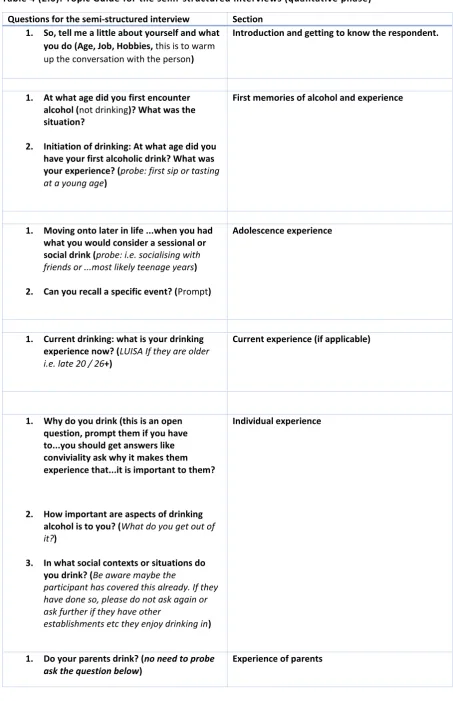
Table 4 (2.0): Topic Guide for the semi-structured interviews (qualitative phase) ...118
Table 5 (2.0): table outlining, in brief, the five-phase approach to coding and constructing themes in analysis of data (Braun & Clarke, 2012) ...123
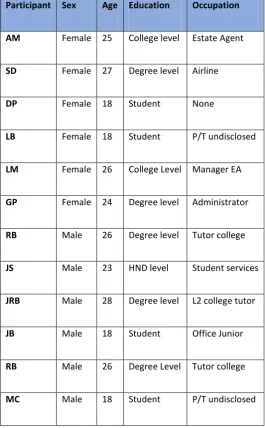
Table 6 (3.0): Participant demographics table London (England) ...132
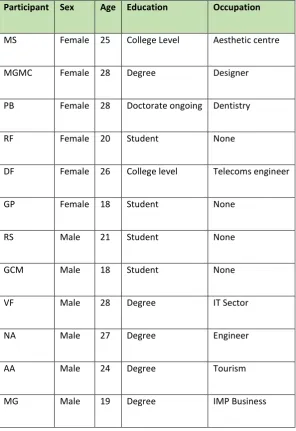
Table 7 (3.0) Participant demographics table Milan (Italy) ...133
Table 8 (3.0): Themes table of themes for English participants ...137
Table 9 (3.0): Themes table of themes for Italian participants...140
Figure 10 (3.0) A visual illustration of how alcohol is viewed differently across nationalities of southern England and north western Italian respondents to Social interaction ...197
Table 11 (4.0): Distribution of scores for the DMQ and the AUQ based on the Kolmogorov-Smirnov test in the Italian sample ...211
Table 12 (4.0): Demographics of Italian participants ...213
Table 13 (4.0): Demographics of English participants ...215
Table 14 (4.0): Table of results depicting between-subject effects of nationality on quantity and binge drinking levels. ...217
Table 15 (4.0): Differences between English and Italian participants on drinking motives ...219
Table 16 (4.0): main effects of sex (males and females) and motives to drink ...220
Table 17 (4.0): ANOVA table illustrating an interaction effect between nationality and sex on motives to drink ...220
Table 18 (4.0): T-test table illustrating differences between Italian and English males on alcohol drinking motives ...224
Table 19(4.0): T-test table illustrating differences between Italian and English females on alcohol drinking motives ...224
Table 20 (4.0): T-test table illustrating differences between English females and males on alcohol drinking motives ...225
Table 21 (4.0): T-test table illustrating differences between Italian males and females on alcohol drinking motives ...226
Table 22 (4.0): ANOVA table depicting main effects on the drinking motives in the Italian binge and non-binge drinkers. ...227
Table 23 (4.0): ANOVA table depicting main effects on the drinking motives in the English binge and non-binge drinkers. ...228
Table 24 (4.0): ANOVA and descriptives table depicting nationality and drinking type on Motives to drink Alcohol ...229
Table 48 (6.0): An ANOVA and descriptive statistics table demonstrating the differences between Italian females and English females on supervision ...298 Table 49 (6.0): ANOVA Table showing differences between nationality on motives to limit and abstain from drinking alcohol ...300 Table 50 (6.0): ANOVA showing differences between Italian males and females on 5 motives to limit and abstain from drinking alcohol. ...301 Table 51 (6.0): An ANOVA showing differences between English males and females on 5 motives to limit and abstain from drinking alcohol. ...302 Table 52 (6.0): An ANOVA and descriptive statistics table demonstrating the differences between Italian abstainers and limiters on 5 motives to limit and abstain from drinking alcohol. ...303 Table 53 (6.0): An ANOVA and descriptive statistics table demonstrating the differences between English abstainers and limiters on 5 motives to limit and abstain from drinking alcohol. ...304 Table 54 (6.0): Correlation matrices of PPS, PPA towards alcohol drinking and 5 factors of reasons to abstain or limit drinking for Italian respondents ...307 Table 55 (6.0): Correlation matrices of PPS, PPA towards alcohol drinking and 5 factors of reasons to abstain or limit drinking for English respondents ...309 Table 56 (6.0): Tabulated results of multiple regression using indicator variables; motives to limit drinking to predict alcohol use in quantity in Italian respondents. ...313 Table 57 (6.0): Tabulated results of multiple regression using indicator variables; motives to limit drinking to predict alcohol use in quantity in English respondents. ...313 Table 58 (7.0): summary of overall findings on differences and similarities into social drinking in Italians and English participants ...323
List of figures
Overview of the Thesis
This thesis explores differences between English and Italian nationals on a range of socio-cognitive factors deemed important in decision-making about alcohol consumption. These factors consist of: drinking motives; alcohol outcome expectancies; and motives to limit and/or abstain from drinking alcohol. A unique aspect of the research is that it focuses on two nations characterised by very diverse drinking styles: England and Italy. They are considered different in terms of their historical approaches to drinking behaviours, cultural norms set up around drinking, and attitudes towards the way in which drinking alcohol is viewed between groups and across society. This is reflected in the national statistics relating to each country, where, for example, fatal liver disease related to drinking alcohol has shown an increase in England with a corresponding decline in Italy over the past 15 years. Also relevant is the consumption per capita of alcohol, which has been steadily decreasing across the population in Italy over the last 10 years (ISTAT, 2015). Therefore, studying alcohol drinking motivation between the two nations is important in terms of providing a clearer understanding of the ‘drinking cultures’ and contemporary beliefs surrounding social drinking. There are many motivations and expectancies when drinking alcohol, which can be explicit or implicit. It is widely accepted that when people drink, alcohol motivations and expectancies are thought to regulate the quality of their emotional experiences (see; Fromme, et al., 1995). Therefore, it is the further aim of this thesis to examine the
frequency. The studies in thesis explore national alcohol consumption patterns, and
characteristics, which appear to either promote drinking or abstaining from taking alcohol in the Italian and English samples. Furthermore, understanding what is driving these drinking characteristics on motivational and outcome expectancy factors can suggest individual risk as well as highlighting recommendations for policy and primary prevention to lower or moderate alcohol use. The research in this thesis explores both countries in terms of these concepts with the aim to further understanding contextual differences in what influences the drinking behaviour of individuals in each nation.
Summary of chapters
Chapter 1 comprises of an introduction to the research area. It provides national profiles on alcohol intake, specific drinking patterns and policy directives in relation to alcohol. The chapter includes a literature review of motives and influences on drinking, limiting, and abstaining from taking alcohol, and alcohol outcome expectancies. A range of other factors are also reviewed such as the peer and parental influence. The chapter concludes by setting out the research questions.
Chapter 2 describes the methods employed for the two major studies reported in this thesis, and provides a rationale for the mixed-methodological approach used. Ethical
Chapter 3 reports on the first of the two major studies in this thesis; namely a qualitative exploration into the individuals’ experiences of alcohol consumption amongst a sample of English and Italian participants.
Chapter 4 is the first of three chapters to report on the findings of the major quantitative study conducted for this thesis, which is an investigation into the drinking motives of English and Italian respondents. These motives – namely Social, Enhancement, Coping and
Conformity - are examined in terms of whether there are any observed differences in the English and Italian responses in terms of parental supervision, attitude, gender, and quantity of alcohol consumed.
Chapter 5 reports on positive and negative alcohol outcome expectancies among the English and Italian respondents, where positive expectancies are generally linked to heightened levels of alcohol intake and negative expectancies to lowered intake.
Chapter 1: A review of the literature on alcohol profiles and comportment amongst English and Italian alcohol users
The focus of this chapter is on comportment, which is a general term for conduct and behaviour of an individual or a group when drinking alcohol, and prevalence of alcohol use in England and Italy. The chapter starts with a brief historical overview of cultural
differences in the use of alcohol. It then continues to provide an account of comportment related to alcohol use such as motivation to drink, social and cultural factors and
expectancies. The chapter then concludes with a rationale for the thesis and outlines the questions that this research sets out to address.
1.1 Alcohol: A general overview
1.1.2 The Importance of cross-national understandings of alcohol consumption
Social and psychological phenomena contribute to the norms and beliefs underpinning drinking practices within society (Kuntshce, et al., 2015; Kuntsche, et al., 2006; Heath, 1995) and it is therefore helpful to understand how these factors contribute to the overall
prevalence of alcohol use in any given country. This is useful as it can inform policy makers about how best to promote safer drinking habits as well as stemming rising public health costs caused by excessive drinking (Orford, 1994; Månsson & Bogren, 2014).
cultures, with a myriad of understandings and practices in-between (SIRC, 1998). For example, alcohol is often used as signifier for an important, formal, and/or social event. Additionally, ‘drunkenness’ or intoxication may convey symbolic meanings such as group affiliation or identity (Room, 2001). Cross-cultural/national and regional identities can additionally be of symbolic importance in relation to the type of alcoholic drink that is consumed (Anderson and Baumberg, 2006). There are clear cross-national differences in relation to comportment and the way individuals consume alcohol (Kuntche, et al., 2015). For instance, the practice of, and social importance given to, drinking differs in England and Italy (Allamani, et al., 2010; Beccaria, et al., 2010; Kuntsche, et al., 2006; WHO, 2004, 2014). In Italy, drinking practices are said to be broadly moderate when compared to other regions of Central Western and Northern Europe (Kuntsche, et al., 2015) and, as far as young adults are concerned, drinking alcohol is more likely to occur within a family context (e.g. a glass of wine at the meal table or at social events; Allamani et al, 2010). By contrast, in England the drinking behaviour of young adults is often described as heavier, more frequent, with greater emphasis being placed on drinking outside the family home, and is often linked with binge drinking (Gmel, Rehm & Kuntsche, 2003). Binge drinking is a widely-used term that categorises a certain pattern of drinking. There is no universally agreed definition of binge drinking with some commentators opting for unit classification and other quantities such as pints or glasses (Read, Beattie, Chamberlain & Merrill, 2008). For the purposes of this research, binge drinking is defined as the consumption of 4(+) or 5(+) or more drinks for
1.1.2 Cultural and national definitions in alcohol drinking
Heath (1984, 1995) and Kuntsche, et al., (2015) argue that anthropological, sociological, and psychological studies on alcohol consumption are of enduring importance due to their ability to understand variations in drinking practices across diverse populations and capture cultural shifts in terms of drinking practice. Furthermore, Kuntsche, et al., (2015) note that this type of endeavour will assist in the task of making sense of the variability in alcohol use and the impact of individual cultures in shaping and changing this. An example of this is binge drinking, which in the UK has been of great area of concern over at least the last decade (Edwards, 2000; Gill, 2002, Kuntsche, et al., 2006) and less so in Italy (Alamani, et al., 2010). Recently, however, it has been noted that this picture appears to be in flux pointing to increases in the drinking behaviour and patterns of Italian adolescents. Concentrated weekend drinking is reported to be more prevalent, with less moderate meal-time drinking being practised with families (Beccaria & Prina, 2010). This is contrary to the traditional method of drinking in Italy, which is more centred on moderate meal time and convivial drinking (Allamani, et al., 2010).
of alcohol consumption (Norstrom, 2001; Norstrom et al., 2001). The ‘constants’ (SIRC, 1998) are; 1. Prescription of solitary drinking (for example, drinking alone when coming home from work), 2. Prescription of sociability (that alcohol is always incorporated into sociable functions), 3. Social control of consumption (that given cultures or societies provide a set of rules on consumption through judgement and recommendation) and 4. Restrictions on female drinking behaviour (which can be related to traditional beliefs in society about what is judged to be acceptable: Heath, 1995, Day, Gough & McFadden, 2004, Makela, Gmel, Grittner, Kuendig, Kuntsche, Bloomfield & Room, 2006). It is argued that ‘constants’ are present in all cultures to some degree and are important in terms of self-regulation in the wider community, especially when it comes to social drinking. The Social Issues
Research Centre (SIRC 1998; 2015) suggests that social drinking may be linked to ‘unofficial’ rules operating within society, which can, however, become incorporated into legal
frameworks and policies. For example, the proscription of solitary drinking is an important ‘constant’ in so far as it highlights at the same time the social act of alcohol drinking and dangers associated with solitary drinking.
Ambivalent cultures1 are inclined to value solitary drinking as acceptable in certain
situations such as pre-loading where drinking takes place before going out to drink socially with an aim of saving money and to get ‘in the mood’ to go out; or where solitary drinking is related to tension reduction, such as drinking when coming home from work at the end of a
1An ambivalent culture is defined by alcohol drinking being associated with disinhibition, aggression, promiscuity, violence, and anti-social behaviour, this is opposed to an integrated culture where alcohol is less associate to these expectations and is more integral to
stressful day. However, the proscription of solitary drinking is a ‘constant’ linked to problem drinking and dependence on alcohol (SIRC, 1998). Some cultures, such as southern
European cultures (Italy in this case) appear to condone solitary drinking less although certain practices like male solitary drinking in bars is perceived to be acceptable (SIRC, 1998). This is not extended to female solitary drinking in bars and is also linked to the ‘constant’ of restriction of female drinking (Aviram, 2006). While the prescription of sociability frames drinking alcohol as a shared and sociable experience, the meaning of this experience is shaped by time, place, social norms, reference group norms (Perkins, 2002 & Larimer, et al., 2011) and rules which can give rise to outcomes ranging from abject
intoxication through to alcohol being used as a social lubricator. These, in turn, are
influenced by motivations to drink and expectations of drinking alcohol by individuals that operate at both an individual level and guided by social cultural norms (Cooper, 1995).
A further example of cultural differences can be found in distinctions between what Bloomfield, et al., (2003) refer to as wet and dry cultures. In dry cultures, alcohol consumption is not commonly used in everyday activities and access to alcohol is more restricted and wine consumption is less common when compared to wet cultures.
alcoholic drink. European countries bordering the Mediterranean are traditionally representative of wet cultures, hence Spain, Italy, Greece, and France.
These cultural patterns of drinking behaviour have also been subject to change. The UK, for example, has in the past been regarded as a ‘dry’ drinking culture (Room, & Mäkelä, 2000). More recently it has been suggested that this is changing, and the UK is said to contain characteristics of both wet and dry drinking comportments (Bloomfield, Stockwell, Gmel & Rehn, 2003; Ally, et al., 2016). Due to changes in retailing and licencing laws, alcohol is now more widely available and patterns such as consuming wine with family meals
(characteristic of wet drinking cultures) appear to be emerging. Ally, et al., (2016) examined drinking in the UK from 2009-2011 using detailed drinking diaries completed by a
representative sample of 90,000 adults as part of the ‘Kantar World-panel’s Alcovision study’. They found that nearly half (46%) of drinking occasions in the UK involved moderate, relaxed drinking at home. The study also reported that 9% of individuals were drinking more heavily at home with a spouse or partner. While the notion of wet and dry drinking culture is helpful in attempting to broadly envisage drinking profiles, this construct can be crude and fails to capture diversity in drinking behaviour arising, for example, from specific geographical locations, activities, and shifts in drinking behaviour patterns that may be influenced by a range of different factors (for example engagement with other cultures through travel, social media etc).
this was used as an indicator of concentrated drinking. Participants were also asked about group characteristics which were important to them, parental perceptions of alcohol consumption, as well as total spending money/ economic power. Their findings revealed that when compared to an earlier study conducted in 2008 (Gallimberti, et al., 2011) there was an overall rise in concentrated Saturday night drinking and that 70% of 16-17-year olds, and 68% of 14 -15-year olds taking part in this study, engaged in this form of concentrated drinking. Binging was additionally present in both age groups where 15% males and 7% of females in the 16-17-year-old group and 10.6% males and 3.9% of females in the 14-15 age group reported Saturday night binge drinking. The earlier observation when compared to other regions in Italy show that the Veneto region does record higher levels of binge
drinking and risky alcohol behaviour (ISTAT, 2012; MDS, 2012). The findings of this study do have implications for shifting patterns of drinking behaviour in Italy nationally (National Centre for epidemiology, Surveillance, and health promotion of national institute of health 2006-2007, ISTAT, 2012),
1.1.3 Country Profiles: United Kingdom
The UK is currently comprised of approximately of 64.6 million inhabitants (ONS, Office for National Statistics, 2015) with London being its largest city with a total of 8.5 million inhabitants according to the latest estimates from the ONS (2015). There is a diverse range of ethnic groups with, according to the (2015), white British (69.7%) with Asian British (13.2%) and Black British (10.1%) being the most prominent ethnic groups.
The World Health Organisation’s (WHO 2014) recorded country profile for adults’ states that 82% of population aged over 15 in the UK drink alcohol (WHO, 2014) and that the most commonly imbibed products are beer at 37%, wine 34%, spirits 22% and 7% for other forms of alcoholic product.
Figure 1 (1.0): Percentage of alcohol consumed by type and in pure alcohol by gender from the 2014 World Health Organisation report.
According to WHO (2014) data, there has been a steady rise in alcohol intake in England from 1961 to 2013 with estimated levels being an average of 11.7 litres of pure alcohol being consumed per capita per annum in 2006. Other reports, including those from the WHO using different metrics, present alternative figures which vary from 13.8 to 10.6 litres of alcohol being consumed per capita (see figure 2: Institute of alcohol studies, 2013; WHO, 2014 12.52 per capita, per annum). Whatever the specific quantities of alcohol that is being consumed, the overall trend to emerge is that, since a high reported in 2004/2005, the trend for alcohol consumption has been slowly declining in England & Wales over the last 10 years (see figure 2; WHO, 2014). Consumption of alcohol in England is comparatively lower in litres per capita per annum of alcohol than other northern and Central Eastern European countries such as; Lithuania, Austria, and Estonia (12 litres or more per adult per annum). However, the figures for the UK suggest that higher rates of alcohol consumption when compared to Southern Europe Italy, Greece, Malta, and Cyprus at 6 litres of alcohol per capita per annum and Nordic countries such as Norway, Iceland, and Sweden at 8 Litres per capita per annum (WHO, 2014; HSCIC 2015).
The latest figures from the Office for National Statistics (HSCIC, 2015) showed that that 67% males and 53% females of their total sample of 32,794 individuals in the United Kingdom reported drinking alcohol in the last seven days before taking part in the national survey (See figure 3). Assessment of average weekly alcohol consumption over the past 12 months suggested that 62% of males typically drank up to 21 units of alcohol per week and 61% of females drank up to 14 units a week. It should be noted, however, that while females appear to be drinking within the safer limits defined in the UK context (14 units per week), the recently revised guidelines from the UK Chief Medical Officer recommends no more than 14 units for both men and women per week. This currently means that there will be higher proportions of males further away from drinking within recommended safer limits as defined by the guidelines.
The costs to the United Kingdom vary regarding alcohol consumption. The Office for National Statistics (ONS 2014), drawing on NHS statistics, estimate that the cost of alcohol misuse amounts to £3.5 billion per year, or £120 per tax payer. This figure considers alcohol related injuries and treating a range of adverse drink-related outcomes such as intoxication, liver and other forms of disease, and treatment interventions for alcohol misuse and
dependence. The World Health Organisation (WHO 2014), on the other hand, estimate the true figure of all general alcohol attributable costs in the UK to be closer to £21 Billion.
Figure 4 (1.0): Binge drinkers in England as a proportion of alcohol consumers, 2005 -2013 by sex (ONS, 2013; HSCIC, 2015)
Figure 5 (1.0): Geographical map of UK binge drinking by region (ONS, 2013; reported in HSCIC, 2015)
Data on abstainers in the United Kingdom suggests that, at 32%, London has the highest number of abstainers (see figure 5). The ethnic diversity of London and cultural and religious prohibitions on drinking alcohol or at least admitting to doing so, must be considered in relation to shaping the figures on abstention.
1.1.4 Country Profiles: Italy
As of 2015, the population of Italy was estimated at 60,802,05 (ISTAT, 2015). Its largest cities are Rome and Milan with 2,864,731 and 1,345,851 inhabitants respectively (ISTAT 2015) Figures suggest that, when compared to the UK, Italy is far less ethnically diverse, with 92% of the population being White Italian with the rest of the population comprising of other ethnic groups: Romanian (1.81%), North African (1.81%), Albanian (0.77%) and Chinese (0.28%). In terms of typical consumption by Italians, wine is the most popular at 66%, followed by beer at 23% and spirits 11%. This contrasts significantly with UK consumption, which has shown a greater preference for beer over wine.
Figure 7 (1.0): Depicts the recorded alcohol per capita and type of alcohol consumed in Italy (figure taken from the latest report from the WHO, 2014)
from 9.9 litres per capita in 2010 (WHO, 2013). Whereas, the latest ISTAT (2015) figures suggest a further decline in consumption rates to 6 litres per capita per annum (see figure 8). Asciutto, et al., (2015) argue that this is due to a myriad of factors such as changing patterns of wine consumption, socio-cultural changes in drinking amongst younger generations, and finally awareness of health promotion policies aimed at informing the public on health-related effects of heavy alcohol use (Reitox Italian Focal Point; RIFP, 2014).
Figure 8 (1.0): Alcohol use per capita by type of alcohol product in Italy from 1961 -2010 (WHO, 2014)
Table 1 (1.0): National prevalence of alcohol in the Italian population (ISTAT, 2015)
Italian males and females who reported drinking one alcoholic drink or more during the year and daily aged 11 years and over
Geographic
areas/divisions of Italy
Males Females Males and females
within a year
every day
within a year
every day
within a
year every day
North-Western Italy 76.8% 34.5% 52.7% 13.3% 64.4% 23.6%
North-Eastern Italy 78.3% 34.8% 56.3% 13.6% 67.0% 23.9%
Central Italy 75.3% 34.6% 50.2% 11.2% 62.3% 22.4%
Southern Italy 77.1% 33.0% 45.1% 8.4% 60.6% 20.3%
Italian Islands 74.3% 30.4% 45.6% 7.4% 59.5% 18.5%
Italy (overall) 76.6% 33.8% 50.4% 11.1% 63.0% 22.1%
Figure 9 (1.0): Binge drinking regions of Italy displayed in % for males and females 11 + (ISTAT, 2015)
In terms of region, binge drinking is highest in Trento, Friuli, Sardinia, and Valle D’Aosta (shown in dark blue). The regions of Piemonte, Veneto, Abruzzo, and Molise record between 9.3 and 12.5 % of binge drinkers in the population (shown in royal blue). Finally, the lower binge drinking regions include Liguria, Toscana, Campania, Marche, and Umbria, recording from 0 to 5.8% (indicated as pale blue on the map). The overall prevalence of binge drinking in Italy is 7.5 % of males and females aged 11 years upwards, which is much lower than comparable English regions. Finally, as reported by ISTAT (2015) the abstinence rate of the overall Italian population was approximated at 37%.
This total figure is not dissimilar to the total amount of alcohol abstainers in the UK which was estimated at 32% (HSCIC, 2015).
The previous section provided a summary of country profiles regarding alcohol drinking. This has been described in terms of units consumed per year, differences of male and female drinking in each country, and prevalence drinking. The next section will consider some of the government policies in place to address drinking patterns.
1.2 Governmental policies of Italy and England for alcohol use
1.2.1 England
The current UK policy on alcohol includes legal limits of maximum blood alcohol
concentration when driving a vehicle and regulations on alcohol advertising, although there is no monitoring of alcohol sponsorship or sales’ promotion. Health warnings on alcohol advertisements and containers are also legally required (HM Government, 2012, 2014). Finally, there are restrictions imposed on the sale of alcohol in terms of hours’ available, age of the individual drinking (currently 18 years of age) and excise levies on beer, wine, and spirits, defined by the alcohol content, volume, and the type of drink (Hawkins, et al., 2012, HM Government, 2012, 2014).
Campaigns on a socio-political level are generally implemented in the UK such as ‘know your limits’ (NHS, 2009) and ‘safe sensible, social’ (Anderson, 2007) seeking to reduce alcohol related harm in social drinking by advocating responsibility. These campaigns have
unit allowance, after it was found that 77% of people, when questioned, were unclear about how many units were contained in different drinks. The main strapline for this campaign was ‘Units- they all add up’ with the aim of empowering social drinkers with a greater understanding of what they were drinking and hence encourage responsible drinking.
Revisions to the Government’s Alcohol Strategy (Home Office, 2015) were considered to introduce a national minimum unit pricing (MUPs) which would make alcohol less
affordable, especially when bought in bulk. However, a lack of consensus on the benefits or an evidence-base to support this approach has meant that, while being implemented in Scotland, the proposed intervention was not rolled out to England and Wales (IAS, 2016, Meier, Purshouse & Brennan, 2010; Brennan & Stockwell, 2012; Stockwell, Auld & Martin, 2012).
The UK Government’s ‘Public Health Responsibility Deal’ regarding alcohol may offer an alternative to unit pricing in its ‘unit reduction’ pledge. The deal suggests a reduction of 1billion units is to be achieved by improving consumer awareness and choice of lower alcohol products. However, this can be argued to be simply adding more products to the market with no overall guarantee of lowering unit intake. It is also counter-intuitive that another pledge in the Public Health Responsibility Deal should endorse displaying the calorific content of the product. For example, Vodka is deemed one of the lowest in calories and may in some cases encourage individuals to drink more of this spirit than red wine which is much higher in calories. Policies on reducing alcohol intake are additionally
Home Office, 2014) are currently being piloted in some areas of the country. The strategy is to use alcohol stocktake tools from Public Health England to encourage the use of ‘Brief interventions’ on alcohol through provision of psychoeducational material in the public arena to GPs and other health professionals. Additional measures include improving the night time economy in ways that are not dependent on the provision of alcohol. Finally, a focus on reducing crimes linked to drinking alcohol also forms part of the LAAAs’ agenda and is underway across 15-20 areas in the UK. This concludes a brief insight into some political intervention that is carried out in the United Kingdom for England. The next section will consider Italian political intervention.
1.2.2 Italy
In Mediterranean countries, state interventions that are preventive towards alcohol have only been established recently (Eisenbach-Stangl, 2011). These are neither strictly enforced nor coherent, and have not always focused directly on the reduction of alcohol consumption which makes a direct comparison to the UK difficult. Italy has recently been more active in terms of drinking and driving campaigns following a rise in mortality rates from car
intervention via campaigns is delivered from a local level with psychoeducational information focusing on ‘conscious drinking’ (i.e. in Milan: being aware of hazards when drinking and on the amount, IBG, 2010) and generally on preventative measures regarding drink driving in youth, from police intervention on a national level (as in the UK) through to informational leaflets and videos derived locally.
Another national strategy centres on a campaign called ‘Gaining Health: Making healthy choices easier’ (Ministero della salute, 2011). Whilst local level campaigns have included ‘I
would say to a friend who drinks too much’ which was an educational message focusing on
social norms of drinking responsibly (Osservatorio Permanente sui Giovani e alcohol, 1997). Other policies include taxation of beer and spirits but not wine (WHO, 2014, European Commission, 2015). Legally binding alcohol regulations on advertising and sponsorship are present in Italy, however there is no clear regulation on product placement of alcohol. The legal minimum age of drinking in Italy is 18 years old outside of the home (ISTAT, 2013; WHO 2014). Health warnings are not legally required on alcohol advertisements but can be included on a voluntary basis. Brief Information (BI) typically carried out in GP surgeries in the Italian NHS equivalent are a statutory requirement (ISTAT, 2013, AMPHORA, 2011).
In both Italy and the UK these public level interventions exist in a space that is populated with many other possible variables co-existing in relation to drinking alcohol. A complex system of multifaceted influences such as individual motivational factors, socio-cultural beliefs and norms are important to consider and offer further insight into contributory factors for alcohol consumption. Exploration into what individuals deem as important within culture tends to be overlooked in the literature, and to date there has been no comparison between Italy and England. The following section will review some of these factors.
1.3 Parental factors
1.3.1 Supervision
Sherriff, Cox, Coleman & Roker (2008) explored parental perspectives on communication and supervision in relation to the drinking practices of young people in the UK. Forty parents were interviewed for this study on their communication, monitoring, and supervision
strategies with their children aged between 13 and 17 years old. Their findings revealed five major themes: ‘communication’, ‘supervision’, ‘modelling and influences’ ‘legal and health issues’, and ‘difficult issues’. While their findings suggested that many parents were actively engaging in purposeful communication aimed at moderating alcohol use, they also felt ill-informed about what moderate alcohol levels are or should be. So, while many attempted to communicate messages about safer drinking practices it is likely that a lack of parental knowledge meant that some of these messages may have been erroneous.
An interesting factor associated with the theme of supervision identified in the Sherriff, et al., (2008) study related not to supervision aimed at avoiding alcohol, but supervision of the alcohol intake of young people in the home environment. This ranges from the
(64.2%) suggested a link between a lack of parental supervision and the tendency to drink heavily. Albeit a weak association, they further note that the young people taking part in this study were more likely to binge drink if they were not residing in their family home. In a more recent study by Laghi, Biaocco, Lonigro, Capacchione & Baumgartner (2012) they measured the relationship between alcohol consumption and family variables in a sample of 726 Italian adolescents aged between 16 and 18 (182 females and 544 males). They studied family adaptability and cohesion using the Family adaptability and Cohesion Evaluation Scale (SACES IV; Olson, et al., 1985) and found that social drinkers (moderate intake) perceived greater levels of satisfaction with communication between family members when compared to binge and heavy drinkers. Further they found that negative family characteristics were linked to higher alcohol use and other antisocial behavioural problems. This suggests that the family may act as a protective factor and may be important in an Italian context although further research is needed to improve the understanding of the dynamics of drinking, family functioning, and communication (Laghi, et al., 2012 & Gallimberti, et.al., 2011).
Findings from studies on parental supervision in the United Kingdom and France add to the picture of family importance serving as a protective factor to alcohol comportment. LeDoux, Miller, Choquet & Plant (2002) looked at samples of 15-year olds (males n=1280 and
parents as their French counterparts. It was also found that UK participants were heavier drinkers and more likely to misuse substances, while the French participants were heavier smokers and drank consistently but tended to drink less heavily when compared to UK children. While these findings are mixed, a factor that could relate to the lower levels of alcohol consumption could be attributed to family mealtime drinking cultures which are observed in France but less evident in UK settings. Further work is needed in this area to clarify these relationships.
1.3.2 Observable parental alcohol use, attitudes towards drinking and their effects on adolescent alcohol use and comportment.
Parental levels of alcohol consumption and attitudes towards alcohol have been shown to influence the later consumption and drinking patterns of their children. In a longitudinal Dutch study of 3, 697 parents and children, including 12 sets of monozygotic and dizygotic twins, Poelen, et al., (2007) found, over a 7-year period, that greater exposure to higher levels of parental drinking was a risk factor for higher levels of drinking among children. Dutch adolescents who came from homes where parents drank daily or several times a week reported higher rates of drinking when compared to their counterparts whose parents either did not drink or drank minimally (Poelen, et al., 2007).
supported by an American study by Warner & White (2003) who, in a longitudinal study spanning two decades and which involved 371 participants concluded that young people who were introduced to drinking within the family context were more likely to drink responsibly when compared to young people who were introduced to alcohol outside of family context. They further noted that “age of onset” was a predictor of later problematic and hazardous drinking which was not context dependent until later in their life, at which point those who had been introduced to alcohol in the family were less likely to drink problematically. Hence, their suggestion is towards promoting a greater understanding of socialisation of drinking in family contexts and the role this may play in reducing risk of later harmful drinking practices.
A study by Bellis, et al. (2007) also supports this theory. In this UK study, 10,271 males and females in the age range 14 to 17 in the northwest region of England completed
anonymised questionnaires in schools which explored alcohol consumption in terms of frequency and quantity. They also included a measure on the independent spending power of the young people taking part in the study. The outcomes from this study suggested that young people found to be drinking more regularly were more likely to be female, have greater spending power and were in schools in the least deprived areas. Participants drawn from more deprived areas in the study were more likely to obtain alcohol from siblings, friends and adults and were more likely to drink in public spaces such as parks and engage in binge drinking. Bellis, et al. (2007) additionally found that children, whose parents
parental influence and family factors which may be overlooked by studies which focus solely on the impact of peers in shaping drinking behaviour (Borsari & Carey, 2001).
Relationship to the ‘adult world’ is another factor which can influence drinking behaviour. In a recent study comparing Italy and Finland, Rolando, Torronen and Beccaria, (2014) found cultural differences in the way boundaries between the drinking amongst young people and adults were understood and drawn. They conducted 8 focus groups with young adults between the ages of 17 and 24 in Turin and Helsinki to understand why different
orientations towards heavy drinking persist in the two geographical regions studied. It was suggested that for the Italian sample weaker boundaries were drawn between their drinking and that of adults which in turn produced a set of norms around drinking. For the Finnish participants, boundaries between the drinking practices of adults and young people were more clearly defined and drunkenness was held as something that ‘young people do’. This stands in contrast to views expressed by the Italian sample about their interconnections with adults and how this informed the norms and boundaries set for their drinking behaviour.
1.3.3 Parental communication about alcohol
Alongside socialisation, parental communication has been suggested to play an important role in advising and informing younger adults and adolescents about their drinking
perceived as more lenient, this was associated with the increased likelihood to consume more heavily and frequently. Yu et al., (2003) did not support this result, they found, in their study of 642 parental and child (aged 15 to18) dyads, that more communication about alcohol coupled with observing parents drinking was positively correlated with increased levels of alcohol intake. This study relied on self-report measures of parent/ child
communication on alcohol which means that parental drinking may be underreported due to demand characteristics which could show a disparity with communication and actual intake of alcohol. Van der Vorst, et al’s., (2005) study suggests that, ineffective frequent communication may be a critical factor in any study. This means that parents may well be communicating with their children but that the quality of the communication may be poor or unhelpful. This was additionally found in the qualitative study by Sherriff, et al., (2008) in that sometimes parents were unsure how to communicate with their children and were not always aware of what a moderate level of drinking was. Finally, Yu, et al., (2003) suggested, rather ambiguously, that parents may communicate in a destructive way towards drinking and this could explain the result. Whilst they did not suggest what destructive
communication meant it can be implied that parents may be giving inaccurate information which could lead to problematic drinking.
other parents communicated with their own children (students) about alcohol, were more likely to frequently speak to their children about it. This suggested that social norms may dictate pressure on parents to communicate if they feel others are doing so. Furthermore, the type of message perceived by the child (student) was important. Targeted or seemingly deliberate communication was more negatively perceived (this communication can consist of a more didactic style of opposing alcohol use). Whereas higher and more frequent communication such as: specific situations, for example strategies for handling offers of drinks (by others) or issues related to alcohol and more difficult situations with alcohol, were more positively taken by the child (student) and seemed to relate statistically to lower use of alcohol and lower approval of alcohol use. Therefore, communication that is centred towards conversations which do not dictate to the individual and have meaning in a
person’s life, seem to be more helpful as a protective factor in drinking alcohol. The
communication was generally about frequency and relation to the alcohol that proved more effective and gave a teachable moment in which the child (student) could benefit from discussion with the parent. This finding highlights the importance of studying parental factors such as supervision, attitude, communication, and alcohol comportment as a protective factor.
experiences (qualitative study), however further aspects will be regarded in motives to abstain from drinking in chapter 6 which will look at parental influence in limiting drinking on supervision and monitoring. There are arguments against parental influence during adolescence and young adulthood as the reference group for these ages are mainly peers. Research has suggested that peers are more important towards drinking level in adolescent and young adult circles (Borsari, Borsari, & Carey, 2006; Masten, et al., 2009, Seaman & Ikegwuonu, 2010; Sondhi & Turner, 2011) therefore this next section will briefly review some peer factors that influence alcohol intake and comportment.
1.4 Peer factors and alcohol consumption
Peer factors have an extensive amount of evidence surrounding their role in alcohol related behaviours. Masten, et al., (2009) argue that peer influence is most important from late adolescence to young adulthood on influencing drinking behaviour. Borsari, Borsari, and Carey, (2006) suggest peer relations is the strongest variable in the myriad of multi-level principles when considering drinking among young adults. They argue that the quality of the peer relationships can be a mediating factor. Hence, the more stable, supportive, and intimate the relationship with peers, the more potent the effect of social cognition,
relative to alcohol experiences. If there is a less traditional role for drinking, then mediation is not necessarily a protective peer factor.
Seaman and Ikegwuonu, (2010) highlight the importance of alcohol and its central role in maintaining social relationships during student life. They suggest that relationships amongst peers at this point tend to be in a transitional stage and that social networks and
acquaintances may lack depth. Therefore, alcohol serves to help facilitate social encounters. They additionally argue that pricing of alcohol affects peer influence as higher affordability can impact on the amount drunk when peers encourage each other to drink more.
Moreover, it is suggested that the misconceptions of peers’ drinking levels being higher encourages higher drinking levels. Yanovitzky, Stewart & Lederman (2006) studied perceived drinking by peers and alcohol use in 276 male and female university students. Drinking levels were recorded by a battery of items that asked how many drinks were typically consumed at parties, bars, and other social gatherings. Additionally, they looked at
this study. The study also indicated that the closest friend to the individual would be more likely to predict alcohol use (this is similar to Bosari, Borsai & Cary’s, 2006, finding that peer dyads have higher influence on peer drinking levels). In relation to these findings in the literature it would be of interest in the qualitative phase to ascertain how individuals relate to peers and what experiences they have with their peer group in drinking situations between the two nationalities. This may help to highlight how the cultures differ in peer interaction and social rules which may impact on drinking behaviour and consumption.
1.5 Motivation Theory for drinking alcohol
1.5.1 Motivations to drink and expectancies
A large body of evidence looks at different populations regarding alcohol use and misuse on specific motivations to drink (Cox & Klinger, 1988; Epler, Sher & Piasecki, 2009; Anderson, Briggs, & White, 2013). Motivational models assert that there are reasons for initiation and perpetuation in alcohol use. Research into motivational theory (Cox & Klinger, 1988; Kuntsche, et al., 2006 Kuntsche, et al., 2015, Laghi, et al., 2016) has supported the
as well as why drinking is limited or abstained from in certain social situations. This section will explain the theory behind each construct (Motives and Expectancies) and will look to provide evidence for the thesis.
1.5.2 Incentive Motivation
Incentive motivation (Hull, 1951, Cox & Klinger, 1988) is concerned with the intensity and vigour of behaviour. This classical theory, demonstrated by Crespi’s, (1942) experiment in rats, offers a basis in reward and motivation related to social learning. The rats were trained to traverse a straight runway for a specified food reward. Thereafter three groups of rats were either shifted to higher food rewards or lower. The subsequent findings were noted through the speed at which the rats traversed the runway. Those with a larger food reward traversed the runway much faster (positive incentive contrast effect) than those who
received a diminished food reward (negative incentive contrast effect), or no change in food reward. This early experiment offered insight into motivation and that habit and drive (drive theory; Broadhurst, 1959) were not the only possible explanations. It suggested that the ‘attractiveness’ of the incentive was also important. This example shows the underpinnings of incentive motivation and incentive contrast effects in relation to alcohol use (Incentive contrast effects refers to the change in strength of one’s response under different
emotional), but, vice versa, non-chemical incentives will additionally alter the incentive value of alcohol as the substance of use.
Contemporary understanding towards motivation observes goals, incentives, current
concerns, values, and personal strivings (Cox and Klinger, 2004). Therefore, it is important to note that incentive motivation appeals to an individual’s drive to pursue affective states and the physical situations to which the individual is attracted or repelled (or is unlikely to be motivated towards). Klinger (1975, 1977) argued that peoples’ lives are centred on the pursuit of enjoyment and incentives. This is apparent in a simple context towards activation of the reward system via increasing dopamine neural transmission (Volkow, et al., 2004; Parrott, et al., 2005). Therefore, incentive motivation forms an integral part of an
individual’s psychological functioning, and motivation to use alcohol.
1.5.3 Affective Change
Affective change is focused on the psychological / experiential component of emotional response (Cox & Klinger, 1988; Cooper, 1994). It relates to a change in the current affective state of an organism (individual person) which can be either qualitative or quantitative in nature. Affective changes may occur which are separate from the incentives of an individual (an incentive being any object or possible event that has the capability to produce an
affective changes (Klinger, 1975, 1977, Pervin, 1989, Cooper, 1994, Cox & Klinger, 1988, 1990). Applying this to the notion of positive incentives, it can be viewed that the incentives may enhance positive affect, as well as act against negative incentives to reduce negative affect. In terms of the human motivation to use alcohol, it is clear through research that expectations about effects of alcohol are formed prior to the time that a person consumes any alcohol. Therefore, positive expectancies of sociability and confidence can increase or encourage use and negative expectancies can be active in decreasing alcohol use (Hasking, Lyvers & Carlopio, 2011).
There are two major pathways in which drinking alcohol can promote affective change. The primary pathway is that the chemical effects of alcohol will bring affective change on an emotional level. Alcohol is a central nervous system depressant which has a mood-altering effect that can be described as ‘tension reducing’ and ‘mood enhancing’ (Cox and Klinger, 2004). It can be noted that individuals’ expectancies regarding mood altering effects can be a more potent source of mood alteration than the pharmacological action of the drug itself (Hull & Bond, 1986, Testa, et.al, 2006, Volkow, et al. 2004). This has been well-documented over decades in experiments regarding the placebo effect seen in random controlled trials (RCTs). Subsequent cognitive tests have been implemented via exploring cognitive affective symptoms, and mood ratings have been recorded pre and post manipulation (Abrams and Kushner, 2004; Fillmore, Mulvihill, & Vogel- Sprott, 1994, Marlett & Rohsenow, 1980, Testa, et, al, 2006, Sitharthan, Sitharthan & Hough, 2009). In all cases, there has been an
expectancy effect in relation to the placebo groups; whether it is slower cognitive
enhanced mood or less anxiety in social situations. Such studies regard expectancies and motivation as playing a powerful role in outcomes relating to mood alteration, and
highlighting cognitive processes as potentially a critical element in the etiological matrix.
The secondary pathway in which alcohol can promote affective change is via an indirect process. Alcohol consumption can interfere with or facilitate an individual reaching positive and negative goals. An example of this could be achieving peer approval of drinking (social variable). Consuming alcohol whether moderate or in excessive quantities will change the way a person feels psychologically, and in turn their subsequent motivation to use or not use alcohol. Therefore, indirectly, or directly alcohol drinking has influences via other incentives in an individual’s life (Cooper, 1994, Cox & Klinger, 1988, 1990).
1.5.4 Motivational Model of Alcohol Use
Drinking motives have been studied since the 1960s with two broad areas being highlighted to classify individuals’ ‘reasons for drinking’. The two classifications looked towards coping with negative emotional state and/or personal difficulties and motives to escape in
drinking. Therefore, from a learning perspective individual’s may drink to gain positive outcomes (positive reinforcement) or avoid a negative outcome (negative reinforcement; Cooper 1994). Cox & Klinger (1988,1990) hypothesised that crossing the two categories would yield four classes of motives: a) internally generated, positive reinforcement motives (drinking to enhance positive mood and well-being), b) externally generated positive reinforcement motives (drinking to obtain positive social rewards), c) internally generated, negative reinforcement motives (drinking to regulate negative emotions) and d) externally generated negative reinforcement motives (drinking to avoid social rejection). A clear depiction of these motives can be seen in table 2 below.
Table 2 (1.0): The four factors of drinking motives according to Cox & Klinger (1990) and Cooper (1994)
Cooper (1994) developed a theory-based measure to quantitatively assess drinking motives that incorporates the four-factor model. The domains were derived from combining the two dimensions of Cox & Klinger’s (1990) motivational model (valence and source) to compile a 21-item questionnaire: The Drinking Motives Questionnaire Revised (DMQ-R Cooper, 1994 as outlined in chapter 3). According to Cooper (1994) the motives are defined as;