The processing of facial identity and expression is interactive, but
dependent on task and experience
Alla Yankouskaya, Glyn Humphreys and Pia Rotshtein
Journal Name: Frontiers in Human Neuroscience
ISSN: 1662-5161
Article type: Hypothesis & Theory Article First received on: 23 Jun 2014
Revised on: 15 Sep 2014
The processing of facial identity and expression is interactive, but dependent on task and experience
Alla Yankouskaya2, Glyn W. Humphreys2, and Pia Rotshtein1
1School of Psychology, University of Birmingham, Birmingham B15 2TT, UK
2Department of Experimental Psychology, University of Oxford, Oxford OX1 3UD
Abstract
Facial identity and emotional expression are two important sources of
information for daily social interaction. However the link between these two aspects of face processing has been the focus of an unresolved debate for the past 3 decades. Three views have been advocated: (1) separate and parallel processing of identity and emotional expression signals derived from faces; (2) asymmetric processing with the computation of emotion in faces depending on facial identity coding but not vice versa; and (3) integrated processing of facial identity and emotion. We present studies with healthy participants that primarily apply methods from mathematical
Introduction
It is difficult to find more a complex source of information in social interaction than human faces. Gaze direction, emotional expression and identity are perceived very rapidly allowing us to make a judgment of a face seen for less than a hundred milliseconds. How is this broad range of facial information processed by our perceptual system? To answer this question, scientists have used two general
approaches. The first focuses on the independent manipulation of each type of facial information, e.g. emotional expressions (Adolphs, 2002; Balconi & Lucchiari, 2005; Bartlett, Hager, Ekman, & Sejnowski, 1999; Bassili, 1979; Baudouin, Gilibert, Sansone, & Tiberghien, 2000; Calder, Young, Keane, & Dean, 2000); person identity (Baudouin & Humphreys, 2006; Bruce, Doyle, Dench, & Burton, 1991; Caharel, Jiang, Blanz, & Rossion, 2009; Collishaw & Hole, 2000). The second approach is to manipulate both types of information together, to determine whether different types of facial information are processed in an integrative or independent manner (Bruce & Young, 1986; Calder & Young, 2005; Campbell, Landis, & Regard, 1986; Curby, Johnson, & Tyson, 2012; de Gelder, Frissen, Barton, & Hadjikhani, 2003; Etcoff, 1984; Wild-Wall, 2004). The focus of this review is on studies adopting the latter approach to address the still outstanding question of whether identity and emotional
expression information in faces are processed independently or interactively. We
attempt to answer this question using novel application of mathematical procedures to
psychological problems. We further discuss the novel hypothesis that the architecture
of face processing is dynamic and shaped by experience.
Three paradigms are commonly used with healthy participants to assess the
relationship between factors in systematic ways: the ‘Garner paradigm’, the facial
within each paradigm and the contrasting processes that they ‘weight’ are described in detail. The review begins with a brief highlight of the three views on interactive versus independent processing of identity and emotion in faces and the supporting evidence for each. The three following sections present the evidence on interactions between identity and emotional expression from studies employing each task. The last section summarizes our knowledge about the relations between identity and emotion processing in faces and proposes directions for further studies.
1. Three views on interactions between identity and emotional expression processing in faces
A critical question, fundamental for building models of face processing, is whether identity and emotional expressions in faces interact or whether they are processed by strictly separated routes. This section provides a brief summary of contemporary views on the relationship between the two types of facial information. To date, three accounts have been proposed.
The first account – independent processing - proposes that there is separate
and parallel processing of identity and emotional expression signals from faces (Bruce & Young, 1986). The main support for the separate-parallel routes comes from neuropsychological studies showing double dissociations in emotion and identity processing. Patients have been reported to have impaired recognition of face identity but not emotion (Bruyer et al., 1983; Jones & Tranel, 2001; Nunn, Postma, &
Pearson, 2001), while other patients have impaired discrimination of face expression but not identity (Humphreys, Donnelly, & Riddoch, 1993) or impairments at
recognizing specific emotion (e.g. Adolphs et al., 1994; Calder et al., 2000).
The second account – asymmetric dependency - argues for asymmetric
processing depends on facial identity coding but not vice versa (Atkinson, Tipples, Burt, & Young, 2005; Baudouin et al., 2000; Kaufmann & Schweinberger, 2004; Schweinberger, Burton, & Kelly, 1999; Schweinberger & Soukup, 1998). A common finding in studies that support asymmetric dependency is that observers are able to attend and respond to the identity of faces while ignoring emotional and speech
expressions, but they are unable to ignore identity when attending and responding to
either emotional expression or speech (Schweinberger et al., 1999; Schweinberger &
Soukup, 1998). Similar results have been reported in studies examining the
relationship between gender and emotion in faces (Atkinson et al., 2005; Le Gal &
Bruce, 2002). These findings are consistent with the idea that information about
invariant aspects of faces influences how changeable aspects of faces are computed,
while information about their changeable aspects of faces does not influence the
processing of invariant face properties (Haxby, Hoffman, & Gobbini, 2000).
The third account – interactive processing - supports the idea of interactive
processing between facial identity and emotion (Ganel & Goshen-Gottstein, 2002,
2004; Wang, Fu, Johnston, & Yan, 2013; Wild-Wall, 2004; Yankouskaya, Booth, &
Humphreys, 2012). Ganel and Goshen-Gottshtein (2002, 2004) provide evidence for
symmetric interference between facial identity and emotions in familiar faces and
proposed that the mechanisms involved in processing familiar identity and expression
It is important to note the asymmetric and symmetric interactive accounts do not necessarily imply that there is only one shared mechanism for processing identity and emotion information from faces (Calder & Young, 2005). These accounts suggest a high degree of interconnection between emotion and identity processing, whether they are incorporated in one representational space (Calder & Young, 2005), or in separate ones (Haxby et al., 2002).
In the following sections we discuss in detail evidence based on formal testing of the three models of identity and expression processing.
1.1 The Garner task
The Garner paradigm was originally designed to establish the nature of the relationship between the properties of two-dimensional stimuli (Garner, 1974). It is assumed that if two dimensions of a stimulus are processed interactively, variation in one dimension will interfere with processing of the second dimension. In contrast, if the two dimensions are processed independently, there will be no interference from each other. Typically an observer is required to make speeded two-choice
Results based on the Garner paradigm provide conflicting results. While some studies show no interference in responses to either expression or identity, suggesting independent processing (e.g. Etcoff, 1984), others show an asymmetrical effect (effect of identity on expression but not vice versa; e.g. Schweinbger & Soukup, 1998), symmetrical effects with familiar faces (but not with unfamiliar faces) (e.g. Ganel & Goschen-Gottstein, 2004) or symmetrical interactions between facial expression and facial familiarity that emerge for some expressions (happiness and neutral), but not for others (disgust and fear) (Wild-Wall, 2004). One possible reason for the
variability in the results may be the use of a small stimulus set in many studies using this paradigm. Typically only two different stimuli exemplars displaying one of two emotions are used (e.g. see Schweinberger & Soukup, 1998). This limited set of stimuli is repeated across trials allowing the development of a strategy of
discriminating stimuli based on local image details (e.g., variations in lighting, photographic grain) rather than on expression and identity. Such a strategy may limit interference between the dimensions. Another important issue is that different picture- based strategies may be used for the identity and emotion decision tasks in the Garner paradigm. In the identity decision task pictorial strategies might be used to
discriminate individuals based on the shape of a face or on non-facial cues such as hair style (e.g., see the stimuli in Etcoff (1994) and Schweinberger & Soukup (1998) for example). For the expression decision task however, where participants are required to attend to internal facial features, this strategy may be inappropriate. This can lead to differences in task difficulty which may contribute to the asymmetric interference effects between identity and emotional expression judgments.
The relative discriminability between the exemplars of the two dimensions can also affect results in the Garner paradigm. Wang et al. (2013) orthogonally
(e.g. high Disc identities & high Disc expressions, high Disc identities & low Disc expressions). The results showed asymmetric interference from identity to emotional expression when the discriminability of the facial expression was low and that of facial identity was high. In contrast there was interference from emotional expression on identity when the discriminability of facial expression was high and that of facial identity low. When both dimensions were low in discriminability, interference was found in both directions, while there was no interference when both dimensions were highly discriminable. The authors argued that, when discriminability is low, people refer to additional information from an irrelevant dimension, and this results in Garner interference (Wang et al., 2013). Ganel & Goshen-Gottshtein (2004) controlled for pictorial processing strategies and they also equated the discriminability of identity and expression judgments. In this case symmetric interference was found between expression and identity judgments, though only for familiar faces (Ganel & Goshen-Gottstein, 2004).
Taken together, the above studies suggest that degree of interaction between identity and emotional expression in faces is associated with the level of
discriminability of the two dimensions. It is less clear, however, why no interaction is observed when both dimensions are highly discriminable. It is possible that
participants process each relevant dimension separately from the irrelevant one, because there is enough information carried by each dimension. However, there is also the possibility that in the orthogonal condition participants tend to switch their attention between the two dimensions that constantly change. Hence in some occasion participants direct attention to the irrelevant dimension which leads to potential increase in errors and longer RT. Thus, the effects of the unattended stimulus
Woldorff, 2009). On these occasions performance will be affected by variation in the irrelevant dimension, even though the dimensions might be processed independently.
1.2 The composite face task
Composite faces combine the top half of one face with the bottom half of another face. When aligned, the two face halves appear to fuse together to produce a novel face, making it difficult to selectively process either half of the composite by itself (McKone, 2008; Mondloch, Maurer, & Ahola, 2006; Rhodes, Hayward, & Winkler, 2006; Rossion, 2013; Young, Hellawell, & Hay, 1987). In the composite paradigm, the task is to attend to one half of the face (e.g., the top), and either name it (naming version) or determine whether it is the same or different to the half face in a second composite stimulus (matching version), while ignoring the non-target half (e.g., the bottom part of the face). There are two critical conditions: when the two halves of the faces are aligned – “encouraging” holistic processing, or when the two halves are not aligned – when there is less likelihood of processing them as a single perceptual unit. Note, that as in the Garner paradigm, perceptual integration is indexed by the level of interference of the irrelevant dimension on the processing of the relevant dimension.
there is also a composite effect for emotional expressions (Calder et al. (2000, Experiment 1)).
Interestingly, when identity and expression information are combined, the composite effect in identity has been found to operate independently of the effect in emotional expression. In Calder et al. (2000, Experiment 4), three types of composite faces were employed: (i) two halves of the same person posing different facial expressions (same-identity/different-expression composites), (ii) two halves of
different people posing the same facial expression (different-identity/same-expression composites), and (iii) two halves of different identities posing different facial
expressions (different-identity/different- expression composites). Participants performed two tasks: judging the identity or the expression of each face. The RT pattern depended on the task. In the identity task, judging the identity of the top half of the face was facilitated if it matched the identity of the bottom half, and this was independent of whether the expressions (the irrelevant dimension in this case) matched or mismatched. Similarly in the expression task, when the two halves were matched for expression responses were facilitated independent of facial identities. Thus, the results indicated that people could selectively attend to either of the facial dimensions (see a similar conclusion in Etcoff’s (1984) study where participants performed a Garner task).
to ignore the irrelevant information. In both cases this does not imply complete independence between the coding of identity and emotional expression. Second, the high cognitive demands on the perceptual system, required to focus attention on just one part of the faces, may have affected the results. For example, similar to the Garner task, participants may have attended to the irrelevant dimension due to trial-by-trial fluctuations in attention or local details of the images. Finally, the results may reflect a tradeoff between speed and accuracy, as the accuracy results indicate that most errors were made during conditions where the top and bottom halves did not match on either expression or identity. Furthermore, Richler et al. (2008) found that discriminability (d’) on trials when both face halves had same identity was higher than discriminability on trials when the two halves had different identities. In summary, the composite face task cannot unambiguously provide evidence for separate routes for processing of facial identity and emotional expressions.
1.3 The divided attention task
The divided attention task has been used in studies examining holistic versus featural processing in faces (Wenger & Townsend, 2001) and independent vs interactive processing of identity and expressed emotion in faces (Wenger &
Townsend, 2001; Yankouskaya et al., 2012; Yankouskaya, Humphreys, & Rotshtein, 2014; Yankouskaya, Rotshtein, & Humphreys, 2014).
conditions by including the double target display. There is considerable evidence that, when a visual display contains two targets that require the same response, reaction times (RTs) are faster compared to when only one target appears (Miller, 1982; Miller, Ulrich, & Lamarre, 2001; Mordkoff & Miller, 1993; Wenger & Townsend, 2006). For example, in Mordkoff & Miller’s (1993) study participants were required to divide their attention between the separable dimensions of colour and shape, with all stimulus features being attributes of a single object. Participants were asked to press a button if the target colour (green), the target shape (X), or both target features (green X) were displayed, or to withhold their response. The mean RT on redundant target trials was significantly less than the mean RT on single target trials (Mordkoff & Miller, 1993).
Although different explanations can be put forward to account for this
redundant target effect (RTE), the most relevant here are the Independent Race Model (Raab, 1962) and the Coactivation Model (Miller, 1982). According to the
Independent Race Model, redundancy gains are explained by means of ‘statistical facilitation’ (Raab, 1962). Whenever two targets are presented simultaneously, the faster signal determines the response ‘target present’ (i.e. this signal wins the race). As long as the processing time distributions for the two signals overlap, RTs will be speeded when two targets occur since the winning signal can always be used for the response (Raab, 1962). Note, that signal which finishes ‘first’ may depend on whether it is attended. For example, emotional expression or identity may be computed first, if there are fluctuations in attention to each independent dimension.
decision threshold, the response will be activated more rapidly relative to when only one attribute contributes activation.
The critical contrast for the two models compares the probability for the
response times obtained on redundant targets trials relative to the sum of probabilities for responses being made to either single target trial. The Independent Race Model holds that at no point in the cumulative distribution functions should the probability of a response to redundant targets exceed the sum of the probabilities for responses to either single target. In contrast, the coactivation account predicts that responses to the redundant targets can be made before either single target generates enough activation to produce a response. Thus, the number of fastest responses to a face containing both the target identity and the target emotional expression should be larger than the number of fastest responses to either target facial identity or target expression when presented as single targets. The procedure assessing the relations between the number of fast responses in the single target trials vs. the dual target trails is referred to as the Miller inequality test, or the race model inequality test.
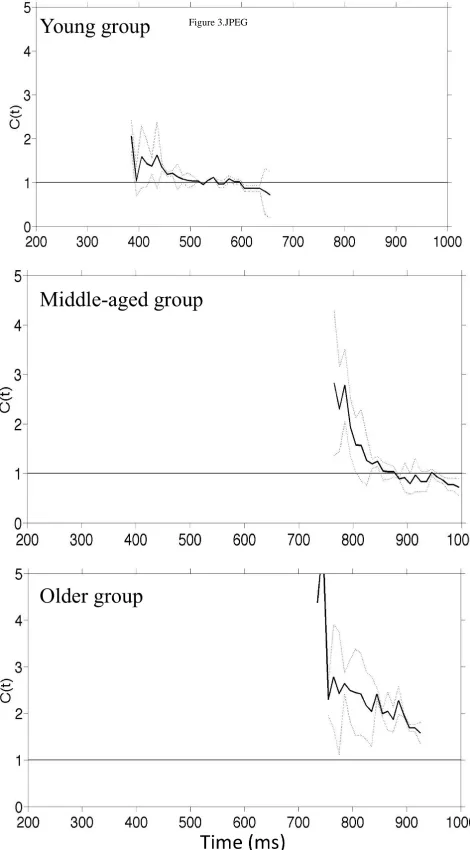
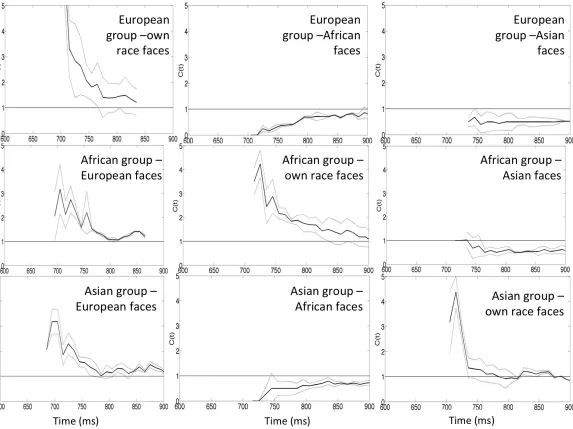
associated with unlimited capacity (C(t) = 1), as processing one dimension has no impact on the processing of the second dimension. Processing with limited capacity (C(t) < 1) is associated with decreasing performance (e.g., slowing in RT) when the workload increases and the system performs sub-optimally. On the other hand the overall workload could decrease when redundant targets are presented, leading to facilitation in performance (e.g., faster RT). In this case the system is said to operate at super capacity (C(t) > 1)). The super capacity emerges since a decision is made before any single dimension alone provides sufficient evidence to support it. Hence less processing was needed of each dimension to enable a decision – making the process more efficient. The super capacity mode violates the race model inequality (Townsend & Eidels, 2011; Townsend & Wenger, 2004), suggesting positive dependency between the two dimensions.
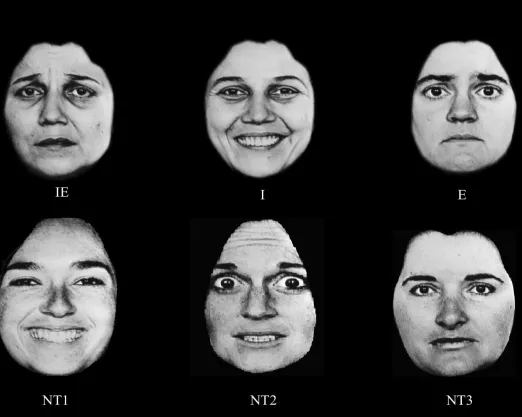
The Race Model and the capacity measure have been used in tests of independence vs coactivation in the processing of facial identity and emotional expression. Yankouskaya, et al. (2012) employed the divided attention task under conditions where participants had to detect target identities and target emotional expressions from photographs of a set target faces. Three of these photographs contained targets: stimulus 1 had both the target identity and the target emotion (i.e. redundant target); stimulus 2 contained the target identity and a non-target emotional expression; stimulus 3 contained the target emotional expression and a non-target identity (Figure 1). Three non-target faces were photographs of three different people, and expressed emotions different to those in target faces. Identity, gender and
emotional expression information were varied across these studies.
--- Insert Figure 1 about here
The general results showed that supper-additive redundancy gains occurred between face identity and emotional expression. Particularly striking was the finding that there were violations of the race model inequality test (Miller, 1982) when the target identity was combined with the target expression in a single face. Violation of the race model inequality occurred for combinations of sad or an anger expression with facial identity but not when identity was combined with a neutral expression. In the last case, the authors report no evidence for any redundancy gain. Yankouskaya, et al. (2012) suggest that unfamiliar faces bearing a neutral expression do not carry expression-contingent features and a neutral expression may be defined by the absence of an expression, making it more idiosyncratic to the particular face.
Importantly, the mathematical tests of the race model and capacity measures provide us with a precise analysis of the relationship between the processing of identity and emotional expression (Yankouskaya et al., 2012), facilitating estimation of the effect of different factors on the relationship (Yankouskaya, Humphreys, et al., 2014; Yankouskaya, Rotshtein, et al., 2014).
Taken together the data derived from the divided attention task within the
framework of the race model and capacity measures of processing are consistent with
coactive processing when a target identity is paired with a distinct emotional
expression. The coactivation is beneficial for the cognitive system as it allows to pool together information derived from identity and emotion in faces leading to super capacity of the system. This super capacity emerges since combining information reduces the demands of resources compared to when each channel is consider independently.
Based on common observation, the recognition of identity and emotional expression in faces in everyday life is easy. We can catch a face of familiar person in a crowd or an expression in a face in few seconds. In return, we are typically quick at making a judgment if a briefly seen face is unfamiliar or whether a stranger’s face has a particular expression. On the other hand, it may take longer for us to recognize a familiar face with an unusual expression or a stranger’s smiling face, because it makes us doubt whether the person is familiar or not (Baudouin et al., 2000). These examples show that familiarity judgments to faces are affected by the expression of the faces, and the interaction occurs for both unfamiliar and familiar faces (Baudouin et al., 2000; Calvo & Nummenmaa, 2008; Eastwood, Smilek, & Merikle, 2003; Elfenbein & Ambady, 2002; Wild-Wall, 2004). Familiarity with faces can be
conceptualized at multiple levels: 1) continuous contact across the lifespan with faces in general may gradually shape the way we process faces; 2) there may be familiarity for faces from specific ethnical/relevant cultural group; and 3) there may be
familiarity and increased experience with the face of specific individuals (including both media channels and direct social interactions).
Experience with human faces changes across the lifespan and affects the way we process faces. For example, the processing of both identity and expressions improves from childhood to adulthood (Baudouin, Gallay, Durand, & Robichon, 2010; Germine, Duchaine, & Nakayama, 2011; Schwarzer, 2000) and gradually declines in older people (Obermeyer, Kolling, Schaich, & Knopf, 2012; Plude & Hoyer, 1986; Ruffman, Henry, Livingstone, & Phillips, 2008). It is unclear, however, whether general experience with faces through the lifespan affects the way identity and expression interact.
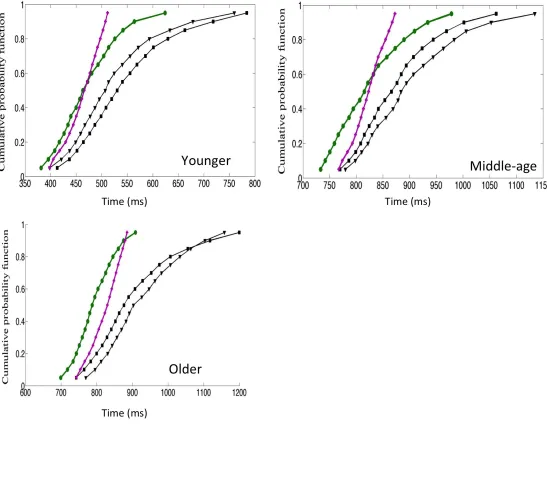
We used the divided attention paradigm to assess how aging affects the
40-50 and 60-70 performed a divided attention task in which they had to detect the
presence of a target facial identity or a target facial expression. Three target stimuli
were used: 1) with the target identity but not the target expression; 2) with the target
expression but not the target identity; and 3) with both the target identity and target
expressions (the redundant target condition). On non-target trials the faces contained
neither the target identity nor the target expression. All groups were faster in
responding to a face containing both the target identity and emotion compared to
faces containing either single target. Furthermore the redundancy gains for combined
targets exceeded performance limits predicted by the independent processing of facial
identity and emotion. These results held across the age range suggesting that there is
interactive processing of facial identity and emotion which is independent of the
effects of cognitive aging. Remarkably, there was an increase in the extent of
co-activation across trials throughout the adulthood lifespan so that, with increased age
the benefits of redundant targets were larger. This was reflected by an increased
probability of fast response trials and increased processing efficiency evidenced by
‘higher’ super-capacity. (Figures 2,3).
--- Insert Figures 2 and 3 about here
---
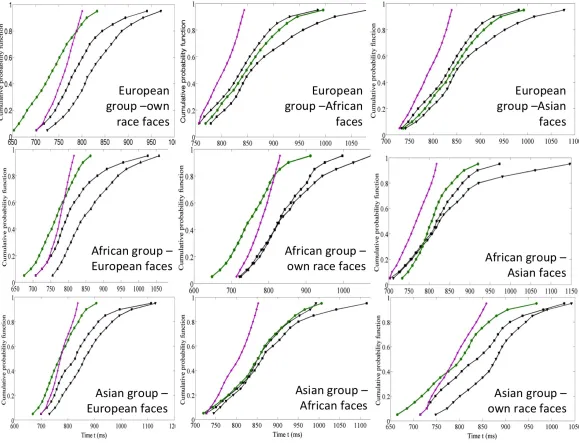
(Yankouskaya, Humphreys, et al., 2014) showed that experience with own race faces affected the integration of identity and emotional information. The relations between the processing of facial identity and emotion in own- and other-race faces were examined using a fully crossed design with participants from 3 different ethnicities all residing in the UK at the time of the study (Yankouskaya, Humphreys, et al., 2014). Three groups of participants (European, African and Asian individuals) performed the divided attention task on three sets of 6 female portrait photographs for each ethnic group. In each set, three photographs contained targets: Stimulus 1 had both the target identity and the target emotion, sad (IE); Stimulus 2 contained the target identity and a non-target emotional expression, happy (I); Stimulus 3 contained the target
emotional expression, sad, and a non-target identity (E). Three non-target faces were photographs of three other people expressing emotions different from those in target faces (angry, surprised, and neutral). The benefits of redundant identity and emotion signals were evaluated and formally tested in relation to models of independent and coactive feature processing and measures of processing capacity for the different types of stimuli (see details in section 1.3). The results suggested that coactive
processing of identity and emotion that was linked to super capacity for own-race but not for other-race faces (Figure 4).
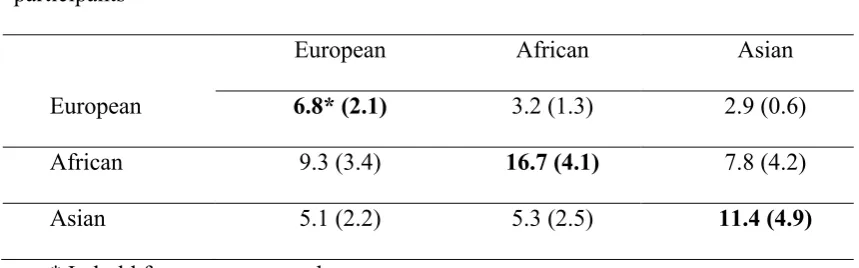
European faces than Europeans had with Asian and African faces (Table 1). A formal test show that variations in the size of the redundancy gains across other race faces were strongly linked to the number of social contacts, but less so to the quality of the contact with other-race members. This suggests that experience with faces facilitates the coactive processing of identity and emotional expression.
--- Insert Figure 4 about here
--- Table 1
Mean number (standard deviation in brackets) of well-known own and other-race
people for groups of European, African and Asian participants
Group of participants
Number of well-known own and other race people
European African Asian
European 6.8* (2.1) 3.2 (1.3) 2.9 (0.6)
African 9.3 (3.4) 16.7 (4.1) 7.8 (4.2)
Asian 5.1 (2.2) 5.3 (2.5) 11.4 (4.9)
* In bold for own race people
not for African and Asian groups where responses for European faces showed positive dependency.
--- Insert Figure 5 about here
---
Collectively, these results suggest that one component of the own race face advantage is the increase in the integration of identity and emotional expression information in own-race faces. This effect is strongly linked to individual experience with particular types of face.
Finally, familiarity with specific individuals can also change the way
information from the face is processed. Ganel & Goshen-Gottshtein (2004) predicted that Garner Interference should be greater for familiar compared to unfamiliar faces, because representations of familiar faces contain richer and more detailed structural descriptions than representations of unfamiliar faces. As a consequence perceivers should be more likely to be sensitive to the associations between invariant and changeable aspects of familiar faces than they are to those of unfamiliar faces (Ganel & Goshen-Gottstein, 2004). This was demonstrated using the Garner paradigm where participants had to make identity and emotion judgments for personally familiar and unfamiliar faces. The authors report that interference between identity and expression increased for familiar faces (Ganel & Goshen-Gottstein, 2004), consistent with this information being processed in a more integral way in this case.
operate at super capacity, so enhancing processing efficiency. We suggest that experience with faces results in a qualitative change to the way faces are processed. Importantly this change occurs in adulthood, demonstrating that our face processing system retains flexibility throughout life. Furthermore, the above results show that there is no one system for processing faces, but multiple mechanisms operate in parallel depending on the faces processed and on our previous experience with them – for example, the identity and emotion of novel faces (e.g., faces from a different ethnicity) are processed in parallel, while identity and emotion information from highly familiar face types are integrated. Thus we propose that experience shapes the connections between different processing channels and thereby increasing the efficacy of the processing in each of the individual channels. This brings up the question at what stage of the face processing identity and emotions are connected.
3. At what stage of the processing information on identity and emotion is integrated
There are several stages of processing at which identity and expression/emotion could interact during face processing. The coactivation view (Miller, 1982) suggests that the interaction between identity and emotional expression leading to a super-redundancy gain occurs just after the two stimuli have been separately coded, but prior to a decision about target presence. The interactive view (Mordkoff & Yantis, 1991) suggests that information about facial identity and emotional expression may be exchanged at early perceptual levels (inter-stimulus crosstalk) or at a decisional stage (non-target response bias). We next briefly discuss studies which may offer some resolution to these conflicting views.
(Behrmann, Avidan, Gao, & Black, 2007; Riddoch, Johnston, Bracewell, Boutsen, & Humphreys, 2008) showing a double dissociation between expression and identity processing. Neuroimaging studies suggest that different neural structures are involved in processing identity (invariant) and emotion (variant) information (Haxby et al., 2002). For example, it is shown that regions within the superior temporal process expressions, while regions along the Fusiform Gyrus process identity (Winston et al., 2005). It is further shown that processing within these two regions is relatively separated (Fairhall & Ishai, 2007). Taken together it is suggested that at some stage identity and expression are processed separately.
The alternative view suggests a single mechanism for processing identity and expressions from faces (Calder and Young, 2005). Thus arguing that identity and expression are not processed by dissociated mechanisms, but instead these two
dimensions are processed within a single multi-dimensional space. This view relies on computational, neuropsychological and neuroimaging evidence. Computationally, it is shown that the principle components derived from pictures of different identity posing different expressions, contains identity specific, emotion specific and shared emotion and identity components (Cottrell, Branson, & Calder, 2002). Thus the authors argue that within a single face representation system, different dimensions code for
dissociated as well as shared features across the two dimensions. Critical review of neuropsychological studies by Calder and Young (2005) further suggest that most patients who are impaired at identity processing (prosopagnosia) also show impaired emotion recognition, when formally tested, albeit less severe. Finally, Calder and Young review neuroimaging studies showing that regions along the Fusiform Gyrus (assumed to be solely processing identity) often show sensitivity to the facial
face identity (Winston et al., 2005).
In summary, it is unclear whether the interactive nature of emotion and identity arise from a single multi-dimensional space or due to interaction between different processing streams. Further research is needed to address this question, maybe using methods that have higher time resolution such as EEG or MEG.
Conclusion
We started our review by outlining three accounts for the relationship between
the processing of identity and emotional expression in faces: independent, asymmetric
and co-active processing of the two facial dimensions. We discussed in details support
for each account from studies employing the Garner inference paradigm, the
composite faces paradigm, and the divided attention paradigm. Based on this we
conclude:
First, there is compelling evidence against strictly independent processing of identity and emotional expression (Ganel & Goshen-Gottstein, 2002, 2004; Wang et al., 2013), with perhaps the strongest evidence coming from studies of redundancy gains (particularly the mathematical tests against models assuming independent processing of expression and identity) (Fitousi & Wenger, 2013; Yankouskaya et al., 2012; Yankouskaya, Humphreys, et al., 2014; Yankouskaya, Rotshtein, et al., 2014).
Second, there are two crucial conditions for the interaction to occur: equal discriminability of identity and emotional expression (Ganel & Goshen-Gottstein, 2002; Wang et al., 2013) and an expression that is emotionally valenced (i.e., other than a neutral expression) (Yankouskaya et al., 2012).
2004; Yankouskaya, Humphreys, et al., 2014). Both greater familiarity and experience with faces facilitate the interaction.
Reference
Adolphs, R. (2002). Recognizing emotion from facial expressions: psychological and neurological mechanisms. Behavioral and Cognitive Neuroscience Reviews, 1(1), 21-‐62. Retrieved from
http://www.ncbi.nlm.nih.gov/pubmed/17715585
Atkinson, A. P., Tipples, J., Burt, D. M., & Young, A. W. (2005). Asymmetric interference between sex and emotion in face perception. Perception & Psychophysics, 67(7), 1199-‐1213. Retrieved from
http://www.ncbi.nlm.nih.gov/pubmed/16502842
Balconi, M., & Lucchiari, C. (2005). Event-‐related potentials related to normal and morphed emotional faces. Journal of Psychollogy, 139(2), 176-‐192.
Retrieved from http://www.ncbi.nlm.nih.gov/pubmed/15844763 doi:10.3200/JRLP.139.2.176-‐192
Bartlett, M. S., Hager, J. C., Ekman, P., & Sejnowski, T. J. (1999). Measuring facial expressions by computer image analysis. Psychophysiology, 36(2), 253-‐ 263. Retrieved from http://www.ncbi.nlm.nih.gov/pubmed/10194972 Bassili, J. N. (1979). Emotion recognition: the role of facial movement and the
relative importance of upper and lower areas of the face. Journal of Personality and Social Psychology, 37(11), 2049-‐2058. Retrieved from http://www.ncbi.nlm.nih.gov/pubmed/521902
Baudouin, J. Y., Gallay, M., Durand, K., & Robichon, F. (2010). The development of perceptual sensitivity to second-‐order facial relations in children. Journal of Experimental Child Psychology, 107(3), 195-‐206. Retrieved from
http://www.ncbi.nlm.nih.gov/pubmed/20598706 doi:10.1016/j.jecp.2010.05.008
Baudouin, J. Y., Gilibert, D., Sansone, S., & Tiberghien, G. (2000). When the smile is a cue to familiarity. Memory, 8(5), 285-‐292. Retrieved from
http://www.ncbi.nlm.nih.gov/pubmed/11045237 doi:10.1080/09658210050117717
Baudouin, J. Y., & Humphreys, G. W. (2006). Configural information in gender categorisation. Perception, 35(4), 531-‐540. Retrieved from
http://www.ncbi.nlm.nih.gov/pubmed/16700294
Behrmann, M., Avidan, G., Gao, F., & Black, S. (2007). Structural imaging reveals anatomical alterations in inferotemporal cortex in congenital
prosopagnosia. Cerebral Cortex, 17(10), 2354-‐2363. Retrieved from http://www.ncbi.nlm.nih.gov/pubmed/17218483
doi:10.1093/cercor/bhl144
Bruce, V., Doyle, T., Dench, N., & Burton, M. (1991). Remembering facial configurations. Cognition, 38(2), 109-‐144. Retrieved from
http://www.ncbi.nlm.nih.gov/pubmed/2049903
Bruce, V., & Young, A. (1986). Understanding face recognition. British Journal of Psychology, 77 ( Pt 3), 305-‐327. Retrieved from
http://www.ncbi.nlm.nih.gov/pubmed/3756376
remembrance of familiar faces. Brain and Cognition, 2(3), 257-‐284. Retrieved from http://www.ncbi.nlm.nih.gov/pubmed/6546027
Caharel, S., Jiang, F., Blanz, V., & Rossion, B. (2009). Recognizing an individual face: 3D shape contributes earlier than 2D surface reflectance
information. Neuroimage, 47(4), 1809-‐1818. doi: 10.1016/j.neuroimage.2009.05.065
Calder, A. J., & Young, A. W. (2005). Understanding the recognition of facial identity and facial expression. Nature Reviews. Neuroscience, 6(8), 641-‐ 651. Retrieved from http://www.ncbi.nlm.nih.gov/pubmed/16062171 doi:10.1038/nrn1724
Calder, A. J., Young, A. W., Keane, J., & Dean, M. (2000). Configural information in facial expression perception. Journal of Experimental Psychology and Human Perception Performance, 26(2), 527-‐551. Retrieved from
http://www.ncbi.nlm.nih.gov/entrez/query.fcgi?cmd=Retrieve&db=PubMed&d opt=Citation&list_uids=10811161
Calvo, M. G., & Nummenmaa, L. (2008). Detection of emotional faces: salient physical features guide effective visual search. Journal of Experimental Psychology. General, 137(3), 471-‐494. Retrieved from
http://www.ncbi.nlm.nih.gov/pubmed/18729711 doi:10.1037/a0012771 Campbell, R., Landis, T., & Regard, M. (1986). Face recognition and lipreading. A
neurological dissociation. Brain, 109 ( Pt 3), 509-‐521. Retrieved from http://www.ncbi.nlm.nih.gov/pubmed/3719288
Cassidy, K. D., Quinn, K. A., & Humphreys, G. W. (2011). The influence of ingroup/outgroup categorization on same-‐ and other-‐race face processing: The moderating role of inter-‐ versus intra-‐racial context. Journal of Experimental Social Psychology, 47, 811-‐817. Retrieved from Collishaw, S. M., & Hole, G. J. (2000). Featural and configurational processes in the recognition of faces of different familiarity. Perception, 29(8), 893-‐ 909. Retrieved from http://www.ncbi.nlm.nih.gov/pubmed/11145082 Cottrell, G. W., Branson, K. M., & Calder, A. J. (2002). Do expression and identity
need separate representations? Paper presented at the 24th Annual Meeting of the Cognitive Science Society, Fairfax, Virginia.
Curby, K. M., Johnson, K. J., & Tyson, A. (2012). Face to face with emotion: holistic face processing is modulated by emotional state. Cognition & Emotion, 26(1), 93-‐102. Retrieved from
http://www.ncbi.nlm.nih.gov/pubmed/21557121 doi:10.1080/02699931.2011.555752
de Gelder, B., Frissen, I., Barton, J., & Hadjikhani, N. (2003). A modulatory role for facial expressions in prosopagnosia. Proceedings of the National Academy of Sciences of the United States of America, 100(22), 13105-‐13110.
Retrieved from http://www.ncbi.nlm.nih.gov/pubmed/14561892 doi:10.1073/pnas.1735530100
Eastwood, J. D., Smilek, D., & Merikle, P. M. (2003). Negative facial expression captures attention and disrupts performance. Perception & Psychophysics, 65(3), 352-‐358. Retrieved from
http://www.ncbi.nlm.nih.gov/pubmed/12785065
Etcoff, N. L. (1984). Selective attention to facial identity and facial emotion. Neuropsychologia, 22(3), 281-‐295. Retrieved from
http://www.ncbi.nlm.nih.gov/entrez/query.fcgi?cmd=Retrieve&db=PubMed&d opt=Citation&list_uids=6462422 doi:0028-‐3932(84)90075-‐7 [pii]
Fairhall, S. L., & Ishai, A. (2007). Effective connectivity within the distributed cortical network for face perception. Cerebral Cortex, 17(10), 2400-‐2406. Retrieved from http://www.ncbi.nlm.nih.gov/pubmed/17190969
doi:10.1093/cercor/bhl148
Fitousi, D., & Wenger, M. J. (2013). Variants of independence in the perception of facial identity and expression. Journal of Experimental Psychology. Human Perception and Performance, 39(1), 133-‐155. Retrieved from
http://www.ncbi.nlm.nih.gov/pubmed/22564158 doi:10.1037/a0028001 Ganel, T., & Goshen-‐Gottstein, Y. (2002). Perceptual integrality of sex and identity
of faces: further evidence for the single-‐route hypothesis. Journal of Experimental Psychology. Human Perception and Performance, 28(4), 854-‐ 867. Retrieved from http://www.ncbi.nlm.nih.gov/pubmed/12190254 Ganel, T., & Goshen-‐Gottstein, Y. (2004). Effects of familiarity on the perceptual
integrality of the identity and expression of faces: the parallel-‐route hypothesis revisited. Journal of Experimental Psychology. Human Perception and Performance, 30(3), 583-‐597. Retrieved from http://www.ncbi.nlm.nih.gov/pubmed/15161388 doi:10.1037/0096-‐ 1523.30.3.583
Garner, W. (1974). The processing of information and structure. Erlbaum: Potomac, MD.
Germine, L. T., Duchaine, B., & Nakayama, K. (2011). Where cognitive
development and aging meet: face learning ability peaks after age 30. Cognition, 118(2), 201-‐210. Retrieved from
http://www.ncbi.nlm.nih.gov/pubmed/21130422 doi:10.1016/j.cognition.2010.11.002
Haxby, J. V., Hoffman, E. A., & Gobbini, M. I. (2000). The distributed human neural system for face perception. Trends in Cognitive Sciences, 4(6), 223-‐233. Retrieved from http://www.ncbi.nlm.nih.gov/pubmed/10827445
Humphreys, G. W., Donnelly, N., & Riddoch, M. J. (1993). Expression is computed separately from facial identity, and it is computed separately for moving and static faces: neuropsychological evidence. Neuropsychologia, 31(2), 173-‐181. Retrieved from http://www.ncbi.nlm.nih.gov/pubmed/8455786 Jones, R. D., & Tranel, D. (2001). Severe developmental prosopagnosia in a child
with superior intellect. Journal of Clinical and Experimental Neuropsychology, 23(3), 265-‐273. Retrieved from
http://www.ncbi.nlm.nih.gov/pubmed/11404805 doi:10.1076/jcen.23.3.265.1183
Kaufmann, J. M., & Schweinberger, S. R. (2004). Expression influences the recognition of familiar faces. Perception, 33(4), 399-‐408. Retrieved from http://www.ncbi.nlm.nih.gov/pubmed/15222388
Kito, T., & Lee, B. (2002). Interpersonal perception in Japanese and British observers. Perception, 33(8), 957-‐974. Retrieved from
doi:doi:10.1068/p3471
http://www.ncbi.nlm.nih.gov/pubmed/17940587 doi:10.1016/j.jesp.2006.10.023
Lavie, N., & Tsal, Y. (1994). Perceptual load as a major determinant of the locus of selection in visual attention. Perception & Psychophysics, 56(2), 183-‐197. Le Gal, P. M., & Bruce, V. (2002). Evaluating the independence of sex and
expression in judgments of faces. Perception & Psychophysics, 64(2), 230-‐ 243. Retrieved from http://www.ncbi.nlm.nih.gov/pubmed/12013378 Levin, D. (2000). Race as a Visual Feature: Using Visual Search and Perceptual
Discrimination Tasks to Understand Face Categories and the Cross-‐Race Recognition Deficit. Journal of Experimental Psychology: General, 129(4), 559-‐574. Retrieved from http://www.ncbi.nlm.nih.gov/pubmed/11142869 McKone, E. (2008). Configural processing and face viewpoint. Journal of
Experimental Psychology. Human Perception and Performance, 34(2), 310-‐ 327. Retrieved from http://www.ncbi.nlm.nih.gov/pubmed/18377173 doi:10.1037/0096-‐1523.34.2.310
Michel, C., Rossion, B., Han, J., Chung, C. S., & Caldara, R. (2006). Holistic processing is finely tuned for faces of one's own race. Psychological Science, 17(7), 608-‐615. Retrieved from
http://www.ncbi.nlm.nih.gov/pubmed/16866747 doi:10.1111/j.1467-‐ 9280.2006.01752.x
Miller, J. (1982). Divided attention: evidence for coactivation with redundant signals. Cognitive Psychology, 14(2), 247-‐279. Retrieved from
http://www.ncbi.nlm.nih.gov/pubmed/7083803
Miller, J., Ulrich, R., & Lamarre, Y. (2001). Locus of the redundant-‐signals effect in bimodal divided attention: a neurophysiological analysis. Perception & Psychophysics, 63(3), 555-‐562. Retrieved from
http://www.ncbi.nlm.nih.gov/pubmed/11414141
Mondloch, C. J., Maurer, D., & Ahola, S. (2006). Becoming a face expert. Psychological Science, 17(11), 930-‐934. Retrieved from
http://www.ncbi.nlm.nih.gov/pubmed/17176421 doi:10.1111/j.1467-‐ 9280.2006.01806.x
Mordkoff, J. T., & Miller, J. (1993). Redundancy gains and coactivation with two different targets: the problem of target preferences and the effects of display frequency. Perception & Psychophysics, 53(5), 527-‐535. Retrieved from http://www.ncbi.nlm.nih.gov/pubmed/8332422
Mordkoff, J. T., & Yantis, S. (1991). An interactive race model of divided attention. Journal of Experimental Psychology. Human Perception and Performance, 17(2), 520-‐538. Retrieved from
http://www.ncbi.nlm.nih.gov/pubmed/1830090
Nunn, J. A., Postma, P., & Pearson, R. (2001). Developmental prosopagnosia: should it be taken at face value? Neurocase, 7(1), 15-‐27. Retrieved from http://www.ncbi.nlm.nih.gov/pubmed/11239073
doi:10.1093/neucas/7.1.15
Raab, D. H. (1962). Statistical facilitation of simple reaction times. Transaction of the New York Academy Sciences, 24, 574-‐590. Retrieved from
http://www.ncbi.nlm.nih.gov/pubmed/14489538
Rhodes, G., Hayward, W. G., & Winkler, C. (2006). Expert face coding: configural and component coding of own-‐race and other-‐race faces. Psychon Bulletin Review, 13(3), 499-‐505. Retrieved from
Riddoch, M. J., Johnston, R. A., Bracewell, R. M., Boutsen, L., & Humphreys, G. W. (2008). Are faces special? A case of pure prosopagnosia. Cognitive Neuropsychololy, 25(1), 3-‐26. Retrieved from
http://www.ncbi.nlm.nih.gov/pubmed/18340601 doi:10.1080/02643290801920113
Rossion, B. (2013). The composite face illusion: A whole window into our understanding of holistic face perception. Visual Cognition, 21(2), 139-‐ 253. Retrieved from
http://www.tandfonline.com/doi/abs/10.1080/13506285.2013.772929?journa lCode=pvis20 -‐ .U2CqCsZgNFw doi:10.1080/13506285.2013.772929
Schwarzer, G. (2000). Development of face processing: the effect of face inversion. Child Development, 71(2), 391-‐401. Retrieved from http://www.ncbi.nlm.nih.gov/pubmed/10834472
Schweinberger, S. R., Burton, A. M., & Kelly, S. W. (1999). Asymmetric dependencies in perceiving identity and emotion: experiments with morphed faces. Perception & Psychophysics, 61(6), 1102-‐1115.
Schweinberger, S. R., & Soukup, G. R. (1998). Asymmetric relationships among perceptions of facial identity, emotion, and facial speech. Journal of Exprimental Psychology. Human Perception & Performance, 24(6), 1748-‐ 1765. Retrieved from http://www.ncbi.nlm.nih.gov/pubmed/9861721 Townsend, J. T., & Eidels, A. (2011). Workload capacity spaces: a unified
methodology for response time measures of efficiency as workload is varied. Psychon Bulletin & Review, 18(4), 659-‐681. Retrieved from
http://www.ncbi.nlm.nih.gov/pubmed/21607804 doi:10.3758/s13423-‐011-‐ 0106-‐9
Townsend, J. T., & Nozawa, G. (1995). Spatio-‐temporal properties of elementary perception: An investigation of parallel, serial and coactive theories. Journal of Mathematical Psychology, 39, 321-‐360. Retrieved from Townsend, J. T., & Wenger, M. J. (2004). A theory of interactive parallel
processing: new capacity measures and predictions for a response time inequality series. Psychological Review, 111(4), 1003-‐1035. Retrieved from http://www.ncbi.nlm.nih.gov/pubmed/15482071 doi:10.1037/0033-‐ 295X.111.4.1003
Ulrich, R., Miller, J., & Schroter, H. (2007). Testing the race model inequality: an algorithm and computer programs. Behavioural Research Methods, 39(2), 291-‐302. Retrieved from http://www.ncbi.nlm.nih.gov/pubmed/17695357 Vuilleumier, P., Armony, J. L., Driver, J., & Dolan, R. J. (2003). Distinct spatial
frequency sensitivities for processing faces and emotional expressions. Nature Neuroscience, 6(6), 624-‐631. Retrieved from
http://www.ncbi.nlm.nih.gov/pubmed/12740580 doi:10.1038/nn1057 Walker, P., & Tanaka, J. (2003). An encoding advantage for own-‐ versus other-‐
race faces. Perception, 32, 117-‐1125. Retrieved from http://web.uvic.ca/psyc/vizcoglab/pubPDFs/Walker.pdf doi:doi:10.1068/p5098
Wang, Y., Fu, X., Johnston, R. A., & Yan, Z. (2013). Discriminability effect on Garner interference: evidence from recognition of facial identity and expression. Frontiers in Psychology, 4, 943. Retrieved from
Weissman, D. H., Warner, L. M., & Woldorff, M. G. (2009). Momentary reductions of attention permit greater processing of irrelevant stimuli. Neuroimage, 48(3), 609-‐615. doi: 10.1016/j.neuroimage.2009.06.081
Wenger, M. J., & Townsend, J. T. (2001). Faces as Gestalt Stimuli: Processes Characteristics. In M. J. W. J. T. Townsend (Ed.), Computational, geometric, and process perspectives on facial recognition: Contexts and challenges (pp. 229-‐279). London: Lawrence Erlbaum Associates Inc.
Wenger, M. J., & Townsend, J. T. (2006). On the costs and benefits of faces and words: process characteristics of feature search in highly meaningful stimuli. Journal of Experimental Psychology. Human Perception and Performance, 32(3), 755-‐779. Retrieved from
http://www.ncbi.nlm.nih.gov/pubmed/16822136 doi:10.1037/0096-‐ 1523.32.3.755
Wild-‐Wall, N. (2004). Is there an interaction between facial expression and facial familiarity? An investigation using performance data and event-‐related potentials. (PhD), der Humboldt-‐Universität zu Berlin. Retrieved from http://edoc.hu-‐berlin.de/dissertationen/wild-‐wall-‐nele-‐2004-‐05-‐
28/HTML/N1008F.html
Yankouskaya, A., Booth, D. A., & Humphreys, G. (2012). Interactions between facial emotion and identity in face processing: Evidence based on
redundancy gains. Attention, Perception & Psychophysics. Retrieved from http://www.ncbi.nlm.nih.gov/pubmed/22814949 doi:10.3758/s13414-‐012-‐ 0345-‐5
Yankouskaya, A., Humphreys, G. W., & Rotshtein, P. (2014). Differential interactions between identity and emotional expression in own and other-‐race faces: Effects of familiarity revealed through redundancy gains. Jornal of Experiemntal Psychology. Learning, Memory, Cognition. Retrieved from http://www.ncbi.nlm.nih.gov/pubmed/24707780
doi:10.1037/a0036259
Yankouskaya, A., Rotshtein, P., & Humphreys, G. (2014). Interactions between Identity and Emotional Expression in Face Processing across the Lifespan: Evidence from Redundancy Gains. Journal of Aging Research, 2014.
Retrieved from http://dx.doi.org/10.1155/2014/136073 doi:10.1155/2014/136073
Young, A. W., Hellawell, D., & Hay, D. C. (1987). Configurational information in face perception. Perception, 16(6), 747-‐759. Retrieved from
http://www.ncbi.nlm.nih.gov/pubmed/3454432
database, we presenting here other faces (taken from Ekman & Frissen, 1972) as examples only.
Figure 2. Cumulative distribution function plots (CDFs)1. The x-axis presented the trials RT the y-axis present the number of trials. For a given point on the CDF the total number of trials in each condition (value on y) with RT less than specified value on the x-axis. The redundant targets (IE) are plotted in green, the sum of the
distributions of the single targets: emotional expression and identity targets (I+E) is plotted in purple and each single targets (E) and (I) is plotted in black. The crucial comparison is between the green and the purple lines. Results for the young are presented in the top left panel, middle aged in top right panel and older in the lower panel (data reported in Yankouskaya, Rotshtein, et al., 2014).
1 Graphic representations of the distributions were constructed using group RT
distributions obtained by averaging individual RT distributions (Ulrich, Miller, & Schroter, 2007). When the CDFs are plotted, the Independent Race Model requires that the CDF of the redundant targets trials falls below and to the right of the summed CDF (less fast responding trials for the redundant target compared with the number of fast trials for both single targets), any reliable violation of this pattern provides
support for the co-activation model.
Figure 3. Capacity coefficients for the three groups of participants: top row
young adult, middle row– middle-aged people. The horizontal line at C(t) = 1 indicates the reference value for unlimited capacity. The capacity coefficients are
depicted in solid line; the confidence interval is in dashed line (data reported in Yankouskaya, Rotshtein, at al. (2014)
Figure 4. Data from the race inequality test for three groups of participants:
European, African and Asian: top row European participants (own-race, African and Asian faces from the left to the right), middle row– African participants (European, African and Asian faces from the left to the right), low row– Asian participants (European, African and own-race faces from the left to the right). I – target identity and E – target emotion (in black), IE – both target identity and target emotion (in green), I+E – the sum of distributions for I and E (in purple). These graphs show whether the redundant target information is processed coactively (IE line places on the left of the I+E line, see for details Yankouskaya, Humphreys, et al., 2014).
Figure 5. Capacity coefficients for the three participants: top row European