Pharmacogenomics and Personalized Medicine
Dove
press
R e v i e w
open access to scientific and medical research
Open Access Full Text Article
implementation and utilization of genetic
testing in personalized medicine
Noura S Abul-Husn1,*
Aniwaa Owusu Obeng2,3,*
Saskia C Sanderson1
Omri Gottesman2
Stuart A Scott1
1Department of Genetics and
Genomic Sciences, 2The Charles
Bronfman institute for Personalized Medicine, icahn School of Medicine at Mount Sinai, 3Department of
Pharmacy, Mount Sinai Hospital, New York, NY, USA
*These authors contributed equally to this manuscript
Correspondence: Stuart A Scott Department of Genetics and Genomic Sciences, icahn School of Medicine at Mount Sinai, 1 Gustave L Levy Place, Box 1497, New York, NY, 10029, USA Tel +1 212 241 3780
Fax +1 212 241 0139 email [email protected]
Abstract: Clinical genetic testing began over 30 years ago with the availability of mutation detection for sickle cell disease diagnosis. Since then, the field has dramatically transformed to include gene sequencing, high-throughput targeted genotyping, prenatal mutation detection, preimplantation genetic diagnosis, population-based carrier screening, and now genome-wide analyses using microarrays and next-generation sequencing. Despite these significant advances in molecular technologies and testing capabilities, clinical genetics laboratories historically have been centered on mutation detection for Mendelian disorders. However, the ongoing identifi-cation of deoxyribonucleic acid (DNA) sequence variants associated with common diseases prompted the availability of testing for personal disease risk estimation, and created commercial opportunities for direct-to-consumer genetic testing companies that assay these variants. This germline genetic risk, in conjunction with other clinical, family, and demographic variables, are the key components of the personalized medicine paradigm, which aims to apply personal genomic and other relevant data into a patient’s clinical assessment to more precisely guide medical management. However, genetic testing for disease risk estimation is an ongoing topic of debate, largely due to inconsistencies in the results, concerns over clinical validity and utility, and the variable mode of delivery when returning genetic results to patients in the absence of traditional counseling. A related class of genetic testing with analogous issues of clinical utility and acceptance is pharmacogenetic testing, which interrogates sequence variants implicated in interindividual drug response variability. Although clinical pharmacogenetic testing has not previously been widely adopted, advances in rapid turnaround time genetic testing technology and the recent implementation of preemptive genotyping programs at selected medical centers suggest that personalized medicine through pharmacogenetics is now a reality. This review aims to summarize the current state of implementing genetic testing for personalized medicine, with an emphasis on clinical pharmacogenetic testing.
Keywords: personalized medicine, pharmacogenetics, pharmacogenomics, direct-to-consumer genetic testing, point-of-care genetic testing, preemptive genetic testing, implementation
Introduction
Clinical genetic testing historically has been limited to germline mutation detection for Mendelian diseases; however, candidate gene and genome-wide association stud-ies (GWAS) have identified polymorphic deoxyribonucleic acid (DNA) sequence variants that significantly contribute to common disease susceptibility, other complex traits, and a number of drug response phenotypes. This has created the potential for implementing genetic testing to estimate personalized disease risk and/or to help guide individual pharmacotherapy. However, despite initial enthusiasm for common disease variant testing, ongoing concerns over inconsistent results, lack of clinical validity,
Pharmacogenomics and Personalized Medicine downloaded from https://www.dovepress.com/ by 118.70.13.36 on 26-Aug-2020
For personal use only.
Number of times this article has been viewed
This article was published in the following Dove Press journal: Pharmacogenomics and Personalized Medicine
Dovepress
Abul-Husn et al
and return of results without counseling suggest that genetic testing for common disease risk estimation currently is not ready for widespread adoption.
Pharmacogenetics is the study of the genetic determinants of drug response variability, and increasing enthusiasm for implementing clinical pharmacogenetic testing is evidenced by the personalized medicine programs that are now
preemp-tively genotyping germline pharmacogenetic variants1 and the
recent availability of clinical practice guidelines when
phar-macogenetic test results are available.2 Other developments
supporting the implementation of pharmacogenetic testing include the recent availability of rapid sample- to-answer genotyping platforms that could potentially be used at the point-of-care3 and the increasing use of clinical decision
support (CDS) for health care providers deployed through
electronic health records (EHRs).4 This review aims to
sum-marize the current state of the personalized medicine genetic testing field, with an emphasis on pharmacogenetic testing and clinical implementation.
Genetic testing: validity and utility
In the US, genetic tests are commonly evaluated in Clinical Laboratory Improvement Amendments of 1988 (CLIA)-certified laboratories by the Analytic validity, Clinical validity, Clinical utility, and associated Ethical, legal, and
social implications (ACCE framework).5 Analytical validity
is the ability to measure the genotype of interest accurately and reliably, which is generally high for assays interrogating
germline pharmacogenetic variants.6,7 Clinical validity is the
ability to detect or predict a phenotype associated with the genotype. Although it is a difficult metric to quantify for disease risk and pharmacogenetic testing, clinical utility is a measure of usefulness in the clinic and resulting changes in health outcomes.
The highest level of evidence to support clinical utility is derived from a prospective randomized controlled trial, yet these are often difficult to perform for pharmacogenetic hypotheses due to the challenges with achieving adequate power for low frequency adverse events and the potential ethical concerns with exposing individuals carrying at-risk genotypes.
Consequently, evidence to support clinical imple-mentation of pharmacogenetic testing frequently has to be derived from alternative sources and study designs. Despite these challenges, the successful clinical trans-lation of pharmacogenetics has been reported for
HLA-B*5701 screening to reduce the potentially
life-threatening hypersensitivity syndrome that occurs in ∼5%
of the Caucasian human immunodeficiency virus patients
treated with the antiretroviral agent abacavir.8 Moreover,
the incorporation of pharmacogenomics into early-phase drug development and clinical trial design has been pro-posed to facilitate variant discovery, clinical translation, and to help inform later-phase studies and potential clinical
implementation.9
Personalized medicine:
past and present
Although personalized medicine has only recently been acknowledged in medical practice, physicians and researchers have observed interindividual differences in clinical traits and therapy responses for centuries. Historical examples include the four humors theory used by Hippocrates to diagnose and to prescribe therapy for individual patients; AL Fox’s obser-vation of interindividual variability in phenylthiocarbamide taste perception; R Bonicke’s, W Reif’s, and HB Hughes’s description of interpatient differences in unchanged isoniazid urinary excretion that was later found to be due to differences in metabolic acetylation activity; and the increased episodes of primaquine-induced acute hemolytic crises witnessed in African American soldiers compared to Caucasians during
World War II.10 Despite these and other more contemporary
examples of interpatient variability in clinical course and therapy response, medicine of today is still largely based on the one-size-fits-all model where patients diagnosed with the same condition often are prescribed the same medication at the same dose. Although therapeutic successes have occurred with this model, for some medications this approach poten-tially can lead to preventable adverse drug reactions, reduced efficacy, noncompliance due to intolerance, and increased health care costs. For these reasons, a more patient-centric or personalized approach of medical practice has been proposed
and is frequently debated.11
The completion of the Human Genome Project and the recent advances in genome sequencing technology have fueled translational research in genomics and the ongoing anticipation of medical practice that incorporates personal genomic data. Although understanding the genetic contribu-tion to human disease is far from complete, polymorphic DNA sequence variants have been associated with common
disorders and other complex traits by GWAS.12 In addition
to advancing our scientific understanding of disease mecha-nisms and providing starting points for the development of medical treatments, the identification of certain susceptibil-ity variants with significant disease associations also allows for the estimation of personal disease risks. As such, the
Pharmacogenomics and Personalized Medicine downloaded from https://www.dovepress.com/ by 118.70.13.36 on 26-Aug-2020
Dovepress Genetic testing in personalized medicine
personalized medicine paradigm now includes the utilization of individual genetic data in conjunction with other clinical, family, and demographic variables to inform decisions on disease prevention, diagnosis, treatment, and prognosis.
As noted in the “Clinical pharmacogenetic implementa-tion programs” secimplementa-tion, personalized medicine-based initia-tives increasingly are being deployed by academic medical centers and other organizations. One resource for the per-sonalized medicine community has been the Perper-sonalized Medicine Coalition, which was launched in 2004 in an effort
to help advance the field.13
Common disease risk variants
Discovery of disease risk variants
The first reported GWAS identified a significant association between the complement factor H (CFH) gene and age-related macular degeneration (AMD) with an inspiring odds ratio of 4.6.14 With more than 25 risk variants now
identified, AMD remains one of the most genetically well-characterized complex disorders. Two of the most notable variants that contribute substantially to AMD risk, CFH and
age-related maculopathy sensitivity 2 (ARMS2)15 have shed
light on disease pathogenesis and may have implications in
treatment response.16
Type 1 diabetes (T1D) is another example of a prevalent complex disease for which genetic susceptibility has been the subject of intensive study. Human leukocyte antigen (HLA)
associations with T1D were first observed in the 1970s,17 and
high-risk HLA class II variants remain the strongest genetic association with T1D, accounting for 30%–50% of the genetic risk and conferring up to a 20-fold increased risk for
T1D.18 Subsequent candidate-gene studies and GWAS have
revealed more than 40 non-HLA risk variants for T1D,19,20
which jointly confer only limited additional risk beyond the
HLA variants, but nevertheless have provided important
insights into the natural history and pathophysiology of the
disease.21 The most significant of these are variants in the
insulin (INS) and protein tyrosine phosphatase nonrecep-tor type 22 (PTPN22) genes, with PTPN22 variants also being independently associated with other autoimmune diseases.22
There are many other examples of common diseases for
which GWAS have identified disease-variant associations;12
however, the majority of these associations are of modest effect sizes, with a median odds ratio of only 1.33 – and
few being 3.23 Moreover, most identified disease risk
vari-ants can only explain a small proportion of the estimated
genetic heritability of common diseases.24 In addition, some
common conditions, such as psychiatric diseases, have been more challenging to investigate by GWAS, requiring much larger sample sizes to identify significant associa-tions. Despite the small amount of heritability explained by most reported common disease risk variants and the ongoing difficulties with risk prediction, these studies have illuminated new biology and previously unknown disease
pathways.25
Genetic risk prediction
Traditional disease risk assessments incorporate environmen-tal and clinical factors known to be associated with common diseases and are intended to help clinicians more accurately assess patient risk for the purpose of prevention, diagnosis, treatment, and prognosis. A widely used example of this is the Framingham risk score, which is a sex-specific algorithm
that estimates 10-year cardiovascular disease risk.26 While
the importance of genetics in disease risk prediction has long been recognized by the presence or absence of a family his-tory, genetic variables have only recently been incorporated into risk prediction models.
Genetic risk prediction began, with some success, using common variants of large effect size that were mostly discovered in the pre-GWAS era, such as the HLA effect
in T1D.21 To date, the most well-known genetic variables
utilized in disease risk prediction are BRCA1 and BRCA2,
which were originally identified by linkage studies27,28 to
be associated with hereditary breast and ovarian cancer
syndrome.29 Genetic risk prediction models for other
common diseases are beginning to surface, using various subsets of risk variants, sometimes in combination with clinical and environmental factors. In the case of AMD, a recent study showed a significant increase in disease predictability by incorporating six risk variants to an algorithm previously based on clinical and environmental factors.30
Direct-to-consumer genetic testing
Clinical genetic testing traditionally has been available through physicians and genetic counselors; however, the landscape of genetic testing has changed considerably with the emergence of direct-to-consumer (DTC) genetic testing. With DTC testing, consumers can order genetic tests directly, and results often are returned without health care provider involvement or genetic counseling. The modern era of DTC genetic testing began in 2007 with the launch of deCODE genetics, Navigenics, and 23andMe. By 2011, there were at least 27 reported companies offering DTC genetic testing
Pharmacogenomics and Personalized Medicine downloaded from https://www.dovepress.com/ by 118.70.13.36 on 26-Aug-2020
Dovepress
Abul-Husn et al
to US consumers.31 Even though some of these companies
are no longer in existence or offering DTC products, a broad range of DTC genetic tests remain available today.
An evolving aspect of DTC genetic testing has been the use of genetic risk prediction tools for a wide array of com-mon diseases. Unfortunately, DTC genetic risk estimates typically have low-to-moderate predictive ability for com-mon diseases, due to the small effect sizes of most disease risk variants. In addition, the reported effect sizes of these variants are dependent on the nature of the studied popula-tion, including ancestry. As such, an association detected in one population will not necessarily be transferable to another racial or ethnic group. Furthermore, for any given disease, there has been little concordance between DTC companies in their variant selection, effect sizes, average population risk, and algorithms used to calculate disease risk, which has resulted in substantial differences in individual risk prediction
between the DTC companies.32,33
DTC pharmacogenetic testing is available for a variety of drug-gene pairs – including those with and without well-established guidelines.34 Similar to the DTC disease risk
estimates, DTC pharmacogenetic tests can differ in the genes and variants interrogated, which affects the interpretation of results and accuracy of predictions and is important when considering variants with allele frequencies that vary between
racial and ethnic groups.34
Pharmacogenetic variants
The field of pharmacogenetics is generally believed to have originated in the late 1950s when the term
“pharmacogenet-ics” was first published by F Vogel.35 Many pharmacogenetic
discoveries followed, including the 1977 identification of polymorphic debrisoquine hydroxylation inherited as an
autosomal recessive trait.36 The responsible enzyme was later
identified as cytochrome P450-2D6 (CYP2D6) and is now
believed to be involved in the metabolism of ∼25% of all
commonly used drugs.37 Numerous CYP2D6 genetic studies
have been reported with more than 100 variant star (*) alleles now cataloged by the Human Cytochrome P450 (CYP) Allele
Nomenclature Committee.38
In an effort to potentially utilize CYP2D6 status to guide pharmacotherapy, some CLIA-certified genetic testing labo-ratories offer CYP2D6 genotyping with an interpretation that categorizes patients into one of four metabolizer phenotypes: ultrarapid; extensive; intermediate; or poor.37 Like other
pharmacogenetic examples, the application of CYP2D6 geno-type results is dependent on the clinical context and specific medication for a given patient. Some known pharmacogenetic
variants are associated with drug efficacy, while others are implicated in toxicity and/or adverse drug reactions.
There are more than 50 other known human cyto-chrome P450 enzymes and variant alleles in these genes are being discovered continuously in various populations. Two notable CYP2C subfamily enzymes with polymorphic genes that often are included in clinical pharmacogenetic
genotyping panels are CYP2C939 and CYP2C19.40 CYP2C9
metabolizes many clinically relevant drugs including phe-nytoin, warfarin, tolbutamide, and losartan. Among other associations, CYP2C9 reduced-function alleles have been implicated in interindividual warfarin dosing variability
and bleeding risk.41 The vitamin K epoxide reductase
complex 1 (VKORC1)42 promoter variant (c.-1639GA)
is also strongly predictive of therapeutic warfarin dosing
requirements43 and variants from these two genes have been
incorporated with other clinical variables into warfarin dos-ing algorithms.44 Importantly, retrospective studies have
shown that pharmacogenetic-guided warfarin dosing is more accurate than both fixed dosing and the dosing table in the warfarin label.45 However, recent randomized clinical
tri-als indicate that although pharmacogenetic-guided dosing is
more accurate than typical fixed dosing,46 an algorithm with
only three CYP2C9 and VKORC1 variants common among Caucasians is not superior to a clinical variable dosing
algo-rithm, particularly among individuals of African ancestry.47
As such, a major issue behind the pharmacogenetic-guided warfarin dosing continues to be the appropriate selection of
CYP2C9 and VKORC1 variants for a given ethnicity and the
ongoing debate over clinical utility.48 These important trials
also suggest that more ethnic-specific dosing algorithms are needed.
The CYP2C19 enzyme contributes to the metabolism of a large number of clinically relevant drugs and drug classes such as antidepressants, benzodiazepines, mephenytoin, pro-ton pump inhibitors, and the antiplatelet prodrug clopidogrel. Importantly, the common CYP2C19*2 allele has been associ-ated with reduced active clopidogrel metabolites, higher on-treatment platelet aggregation, and adverse clinical outcomes compared to noncarriers among clopidogrel-treated patients with acute coronary syndromes and/or those undergoing
percutaneous coronary intervention (PCI),49,50 and practice
guidelines on CYP2C19-directed antiplatelet therapy are available (Table 1).
Other notable enzymes and transporters with known vari-ants and potential clinical utility include dihydropyrimidine
dehydrogenase (DPYD) and fluorouracil response,51 thiopurine
S-methyltransferase (TPMT) and thiopurine toxicity,52
UDP-Pharmacogenomics and Personalized Medicine downloaded from https://www.dovepress.com/ by 118.70.13.36 on 26-Aug-2020
Dovepress Genetic testing in personalized medicine
glucuronosyltransferase (UGT1A1) and irinotecan toxicity,53
and the solute carrier organic anion transporter family member 1B1 (SLCO1B1) gene implicated in statin-induced
myopathy.54,55 Other genes and variants implicated in drug
response variability are continually being discovered, most
commonly now by genome-wide approaches.56–58 With
respect to drug efficacy, these include the identification of
IL28B and interferon-α response for hepatitis C infection,59
SLCO1B1 and methotrexate response,60 GLCCI1 and
glu-cocorticoid response,61 and CYP4F2 and its role in warfarin
dosing.62,63
Examples involving drug toxicity or adverse drug reac-tions include HLA-B*5701 and flucloxacillin-induced liver
injury,64 and HLA-A*3101 and carbamazepine-induced
hypersensitivity.65 As noted previously, the frequencies
of these variant alleles can significantly differ between racial and ethnic groups, which influence the variability in drug response observed between populations in addition to between individuals.66,67 Online resources dedicated to
summarizing multi-ethnic pharmacogenetic allele
frequen-cies are available (eg, FINDbase-PGx),68 and they are also
summarized on the Pharmacogenomics Knowledge Base
(PharmGKB) website (https://www.pharmgkb.org/).
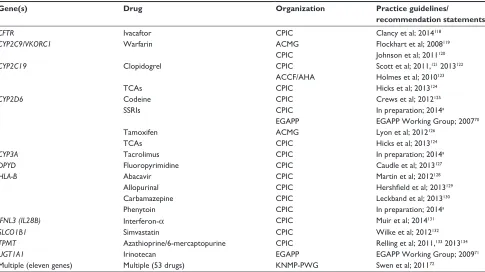
Many of the genes and variants noted above currently are being considered for clinical implementation or are already implemented at several medical centers. However, despite this enthusiasm, routine clinician uptake of available phar-macogenetic testing has been low, likely due to a number of factors including concerns over clinical validity/utility and insufficient evidence, a lack of professional education and guidelines, and other logistic, regulatory, and reimbursement issues.69 To specifically address the educational needs for
pharmacogenetic testing implementation, clinical practice guidelines that detail therapeutic options based on pharma-cogenetic test results are being developed by a number of organizations (Table 1). Although some guidelines evaluate the evidence and determine whether testing is warranted or not,70,71 others simply provide evidence-based recommended
clinical actions for when a patient’s genotype is already
known.2,72,73 Examples include the Royal Dutch
Associa-tion for the Advancement of Pharmacy-Pharmacogenetics Working Group (KNMP-PWG) guidelines that report on
53 drugs and eleven genes72 and the evidence-based gene/
drug guidelines reported by the Clinical Pharmacogenetics Implementation Consortium (CPIC) of the National Insti-tutes of Health’s Pharmacogenomics Research Network
Table 1 Candidate genes for pharmacogenetic implementation with available practice guidelines and recommendation statements
Gene(s) Drug Organization Practice guidelines/
recommendation statements
CFTR ivacaftor CPiC Clancy et al; 2014118
CYP2C9/VKORC1 warfarin ACMG Flockhart et al; 2008119
CPiC Johnson et al; 2011120
CYP2C19 Clopidogrel CPiC Scott et al; 2011,121 2013122
ACCF/AHA Holmes et al; 2010123
TCAs CPiC Hicks et al; 2013124
CYP2D6 Codeine CPiC Crews et al; 2012125
SSRis CPiC in preparation; 2014a
eGAPP eGAPP working Group; 200770
Tamoxifen ACMG Lyon et al; 2012126
TCAs CPiC Hicks et al; 2013124
CYP3A Tacrolimus CPiC in preparation; 2014a
DPYD Fluoropyrimidine CPiC Caudle et al; 2013127
HLA-B Abacavir CPiC Martin et al; 2012128
Allopurinal CPiC Hershfield et al; 2013129
Carbamazepine CPiC Leckband et al; 2013130
Phenytoin CPiC in preparation; 2014a
IFNL3 (IL28B) interferon-α CPiC Muir et al; 2014131
SLCO1B1 Simvastatin CPiC wilke et al; 2012132
TPMT Azathioprine/6-mercaptopurine CPiC Relling et al; 2011,133 2013134
UGT1A1 irinotecan eGAPP eGAPP working Group; 200971
Multiple (eleven genes) Multiple (53 drugs) KNMP-PwG Swen et al; 201172
Note:aBased on information available from Pharmacogenomics Knowledge Base website (http://www.pharmgkb.org/cpic/pairs), and K Caudle, CPiC Coordinator, personal
communication.
Abbreviations: TCA, tricyclic antidepressants; SSRi, selective serotonin reuptake inhibitors; ACCF, American College of Cardiology Foundation; ACMG, American College of Medical Genetics and Genomics; AHA, American Heart Association; CPiC, Clinical Pharmacogenetics implementation Consortium; eGAPP, evaluation of Genomic Applications in Practice and Prevention; KNMP-PwG, Royal Dutch Association for the Advancement of Pharmacy-Pharmacogenetics working Group.
Pharmacogenomics and Personalized Medicine downloaded from https://www.dovepress.com/ by 118.70.13.36 on 26-Aug-2020
Dovepress
Abul-Husn et al
(PGRN) (Table 1).2 In addition, evidence-based practice
recommendation statements for pharmacogenetic testing have also been published by the Evaluation of Genomic
Applica-tions in Practice and Prevention (EGAPP) Working Group,74
launched by the Centers for Disease Control and Prevention Office of Public Health Genomics (Table 1).
Clinical pharmacogenetic testing
and implementation
Clinical genetic testing regulation
In the US, CLIA regulations include federal standards appli-cable to all laboratories that test human specimens for health assessment or to diagnose, prevent, or treat disease. The CLIA program supports clinical laboratory quality by devel-oping technical standards and laboratory practice guidelines, conducting laboratory quality improvement studies, moni-toring proficiency testing practices, among other initiatives and resources. CLIA-certified laboratories can offer genetic tests using either validated laboratory-developed tests or commercially available products approved by the US Food and Drug Administration (FDA).
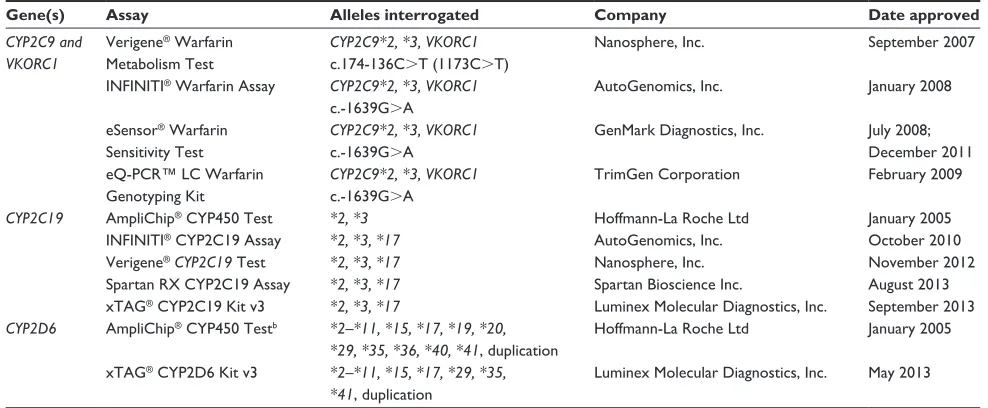
Table 2 summarizes the commercially available DNA-based pharmacogenetic tests that currently are US FDA-ap-proved for in vitro diagnostic testing. Clinical laboratories can also participate in the pharmacogenetic proficiency testing programs offered by the College of American Pathologists, which provides graded and educational surveys for CYP2C9
and VKORC1, CYP2C19, CYP2D6, and UGT1A1.75 To
address the need for quality control reference materials, the Coriell Cell Repositories and the Genetic Testing Reference Materials Coordination Program of the Centers for Dis-ease Control and Prevention have characterized a panel of commercially available cell lines for genes and variants
commonly interrogated by pharmacogenetic assays.76 An
expanded Genetic Testing Reference Materials Coordination Program pharmacogenomics reference material project is currently ongoing that is interrogating a much larger panel of genes and variants, using multiplexed targeted assays, genotyping microarrays, and next-generation sequencing gene panels.
Point-of-care genetic testing
A common challenge when implementing pharmacogenetic testing in a traditional health care environment is the frequent need for rapid return of results. In an effort to address this, biotechnology companies have been developing genotyping platforms that offer rapid sample-to-result assays for
pos-sible use at the point-of-care (POC).6,77,78 For example, the
reassessment of anti-platelet therapy using an individualized strategy based on genetic evaluation (RAPID GENE) trial successfully implemented POC CYP2C19*2 genetic testing for cardiac patients initiating clopidogrel therapy
follow-ing PCI.3 Patients were randomized to either CYP2C19*2
genotyping using a rapid POC cheek swab device or standard treatment with clopidogrel. Identified CYP2C19*2 carriers in the genotyping arm were treated with prasugrel while
Table 2 Pharmacogenetic tests approved by the US FDA for ivD usea
Gene(s) Assay Alleles interrogated Company Date approved
CYP2C9 and VKORC1
verigene® warfarin
Metabolism Test
CYP2C9*2, *3, VKORC1 c.174-136CT (1173CT)
Nanosphere, inc. September 2007
iNFiNiTi® warfarin Assay CYP2C9*2, *3, VKORC1
c.-1639GA
AutoGenomics, inc. January 2008
eSensor® warfarin
Sensitivity Test
CYP2C9*2, *3, VKORC1 c.-1639GA
GenMark Diagnostics, inc. July 2008; December 2011 eQ-PCR™ LC warfarin
Genotyping Kit
CYP2C9*2, *3, VKORC1 c.-1639GA
TrimGen Corporation February 2009
CYP2C19 AmpliChip® CYP450 Test *2, *3 Hoffmann-La Roche Ltd January 2005
iNFiNiTi® CYP2C19 Assay *2, *3, *17 AutoGenomics, inc. October 2010
verigene®CYP2C19 Test *2, *3, *17 Nanosphere, inc. November 2012
Spartan RX CYP2C19 Assay *2, *3, *17 Spartan Bioscience inc. August 2013
xTAG® CYP2C19 Kit v3 *2, *3, *17 Luminex Molecular Diagnostics, inc. September 2013
CYP2D6 AmpliChip® CYP450 Testb *2–*11, *15, *17, *19, *20, *29, *35, *36, *40, *41, duplication
Hoffmann-La Roche Ltd January 2005
xTAG® CYP2D6 Kit v3 *2–*11, *15, *17, *29, *35, *41, duplication
Luminex Molecular Diagnostics, inc. May 2013
Notes:aAs listed on the US FDA ivD Product Database: http://www.fda.gov/MedicalDevices/ProductsandMedicalProcedures/invitroDiagnostics/default.htm;bthe CYP2D6
star (*) allele nomenclature for the AmpliChip® is based on the available nomenclature at the time of product release. The *41 allele reported by the AmpliChip® is not
consistent with the current *41 haplotype nomenclature as it does not interrogate the 2988GA variant that was discovered after the development of the Amplichip®.135 Abbreviations: FDA, Food and Drug Administration; ivD, in vitro diagnostic.
Pharmacogenomics and Personalized Medicine downloaded from https://www.dovepress.com/ by 118.70.13.36 on 26-Aug-2020
Dovepress Genetic testing in personalized medicine
noncarriers were treated with clopidogrel. As a proof of concept trial, no carriers in the genotyping arm had high on-treatment platelet reactivity at day 7 compared with 30%
of patients undergoing standard treatment.3
The success of RAPID GENE suggests that POC genetic testing can be performed effectively by nursing staff and that personalized antiplatelet therapy can reduce high on- treatment platelet reactivity in this patient population; however, this trial was not designed to test whether this strategy results in better clinical outcomes. A number of trials are underway to address this important question, including: the reassessment of anti-platelet therapy using an individualized strategy in patients with ST-segment elevation myocardial infarction (RAPID STEMI; ClinicalTrials.gov identifier, NCT01452139); the tailored antiplatelet therapy following PCI (TAILOR-PCI; NCT01742117), and the customized choice of P2Y12 oral receptor blocker based on phenotype assessment via point-of-care testing (PRU-MATRIX; NCT01477775).
Despite the support for POC genetic testing by the RAPID GENE trial, logistical and regulatory issues need to be con-sidered when implementing POC genetic testing into actual routine clinical care. Although the genotyping platform used in RAPID GENE has recently been approved by the US FDA (Table 2), it currently is not supported as a true POC device since it does not qualify for a CLIA waiver. Furthermore, because any genetic testing is broadly categorized by CLIA as high complexity testing, all pharmacogenetic POC testing platforms will likely not be amenable to CLIA waivers. As such, a CLIA-certified genetics laboratory will be required to oversee POC testing by managing performance, inter-pretation, quality control/assurance, and proficiency, which ultimately may diminish the inherent advantages of a POC genetic testing device. Nevertheless, the dramatic reduction in turnaround times of these platforms is undoubtedly a major benefit when implementing pharmacogenetic testing for selected clinical scenarios.
Another challenge for POC pharmacogenetic testing is the content of the assays. Some of the most robust phar-macogenetic associations with large effect sizes involve the aforementioned HLA alleles and flucloxacillin-induced
liver injury/abacavir hypersensitivity (HLA-B*5701)79
and carbamazepine hypersensitivity
(HLA-B*1502/HLA-A*3101).65,80 Unfortunately, HLA genotyping is beyond
the technical capacity of current POC platforms due to the extreme polymorphic nature of the HLA loci (including copy number variation) and the necessary requirement for highly multiplexed genotyping and/or sequencing. Additionally, other notable gene/drug examples will require
the interrogation of multiple variant alleles for clinical valid-ity in patient populations with diverse ancestries. As such, future POC genetic testing platforms ideally will need to be capable of multiplexed genotyping for alleles with clear clinical actionability and those that are prevalent in multi-ethnic patient populations.
Preemptive genetic testing
Another testing strategy that can circumvent some of the issues with both traditional external laboratory and POC pharmacogenetic testing is preemptive genotyping. Although this model also has inherent challenges for effective clinical implementation, preemptive pharmacogenetic testing recently has been deployed at selected academic medical centers (see the “Clinical pharmacogenetic implementation programs” section). This approach preemptively deposits genotype data into EHRs through prospective or biobank patient sampling and CLIA-certified genetic testing, and alerts prescribers at the POC through sophisticated electronic CDS when a drug is ordered for a patient with an at-risk genotype. The immediate knowledge of a pharmacogenetic interaction coupled with possible therapeutic options without significant disruption of routine clinical care is the clear advantage to this strategy. However, the necessary investments in infrastructure, infor-matics, health care provider participation and education, and preemptive testing in a CLIA-certified environment suggest that this mode of clinical pharmacogenetic delivery will be limited to large academic medical centers for the foresee-able future.
information technology and clinical
decision support
Genetic information is complex in nature, different to the other types of patient data that health care providers normally consider, and its significance to the individual patient changes frequently – all factors that today act as significant barriers to the widespread use of genetic information in clinical
care.81 In addition, the concept of genetic information
hav-ing clinical utility outside of the clinical genetics domain is new and, as such, most practicing providers have no formal education in its use.82
Health care information technology offers a potential solution to these barriers. Almost in parallel with the rise of genomic data, US health care has seen a surge in digitized clinical data through the incentivization and subsequent widespread implementation of EHRs. As noted previously, one of the quality improvement mechanisms offered by EHRs is the potential for POC clinical decision support (CDS).
Pharmacogenomics and Personalized Medicine downloaded from https://www.dovepress.com/ by 118.70.13.36 on 26-Aug-2020
Dovepress
Abul-Husn et al
The CDS provides clinicians with knowledge presented at appropriate times, typically through computerized alerts and
reminders.83 To date, much of this has centered on drug–drug
or drug–allergy interactions; however, with the emergence of disease-risk and drug response-associated genetic vari-ants, the CDS has the potential to consolidate and translate genomic knowledge and integrate this knowledge into existing clinical workflows that will allow clinicians to make genome-informed decisions at the POC. Importantly, this will remove the significant burden from providers of remaining current in a rapidly changing field, where the potential permutations of clinical decision rules far exceed what could be expected of clinical providers to remember.
Clinical pharmacogenetic
implementation programs
To identify and address barriers to implementing pharma-cogenetics, the PGRN recently established the Translational Pharmacogenomics Program comprised of six diverse
academic medical centers.1 For this initiative, each
imple-mentation step is being systematically evaluated to develop a practical evidence-based toolbox of best practices for implementing pharmacogenetics across a variety of health care systems. Other instruments that will be developed for dissemination through publication include a best practices manual for clinical pharmacogenetic testing, and question-naires and surveys to assess implementation metrics and effectiveness.
One of the first structured pharmacogenetics programs was a pharmacist-driven clinical service at St Jude Children’s Research Hospital that initially offered TPMT and UGT1A1
genotyping.84 The expanded St Jude PG4KDS program is
now migrating CYP2C19, CYP2D6, SLCO1B1, and TPMT
genotype data from a microarray-based panel85 into the
EHR as prospective patients are enrolled, and deploying CDS when an intersection between a prescription and an
at-risk genotype occurs.86 The Pharmacogenomic Resource
for Enhanced Decisions in Care and Treatment (PREDICT) program at the Vanderbilt University Medical Center is
preemptively genotyping CYP2C19 in ∼3,000 patients
scheduled for cardiac catheterization, depositing data into the EHR, and providing POC CDS when clopidogrel is
prescribed for patients with variant CYP2C19 genotypes.87
PREDICT is currently being expanded to include warfa-rin/CYP2C9-VKORC1 and simvastatin/SLCO1B1 drug/ gene pairs. Similarly, the University of Florida and Shands Hospital’s Personalized Medicine Program also is centered on clopidogrel and CYP2C19 for a pharmacogenetics pilot
program;88 however, their multiplexed genotyping panel also
includes a much larger number of genes and variants tested under research consent for storage in the EHR and possible use in future implementation efforts.89 The 1,200 Patients
Project at the University of Chicago is genotyping a large panel of germline pharmacogenetic variants among patients receiving outpatient medical care who are taking prespecified
prescription medications.90 Patient-specific results are then
made available to the enrolling provider through an online
genomic prescribing system.91
The Clinical Implementation of Personalized Medithrough Electronic Health Records and Genomics (CLIPMERGE)-Pharmacogenomics program at the Icahn School of Medicine at Mount Sinai is preemptively genotyping a panel of germline pharmacogenetic variants, storing data in an external data-management platform that interfaces with the EHR, and deliv-ering CDS at the POC through the EHR. However, unlike some of the other implementation programs, patient recruitment is accomplished through the Mount Sinai’s BioMe Biobank
Program, which currently includes ∼30,000 multi-ethnic
patients.92 Patients for the pilot program are selected based on
their regular attendance at Mount Sinai for their primary care and who are currently taking (or likely to take) clopidogrel, warfarin, simvastatin, tricyclic antidepressants, and/or selec-tive serotonin reuptake inhibitors. As part of the CLIPMERGE program, enrolled physicians have been extensively surveyed
regarding their views on genomic medicine and CDS.93 These
data have demonstrated that although physicians are generally familiar with and comfortable using CDS, there is a significant deficit in physician familiarity and comfort with interpreting
and utilizing genomic information.93 These insights suggest
that to achieve the promise of personalized medicine, educa-tion on genomics must be a priority for clinical providers at all stages of their careers, and mechanisms that efficiently integrate personalized medicine into POC workflows via CDS and the EHR must continue to be developed and refined.
The Coriell Personalized Medicine Collaborative (CPMC©)94 is a multi-institutional observational research
study evaluating the utility of personalized genomic risk information in health care.95 To interpret and report
phar-macogenetic variants to study participants, the CPMC© has
recently deployed the Pharmacogenomics Appraisal, Evidence
Scoring and Interpretation System.96 Guided by the expertise
of an advisory group and thorough assessment of available evidence, drugs, and genes are identified for potential clinical
utility, and selected drug/gene pairs are provided to CPMC©
participants using risk reports containing genetic results, interpretation, educational summaries, detailed information
Pharmacogenomics and Personalized Medicine downloaded from https://www.dovepress.com/ by 118.70.13.36 on 26-Aug-2020
Dovepress Genetic testing in personalized medicine
on genetic and nongenetic risk factors affecting drug response, and frequencies of drug response phenotypes in the population most relevant to the participant.
Personalized genetic testing results
and patient behavior
Common concerns when implementing genetic testing for personalized medicine are often centered on the infrastruc-ture, logistics, and other related issues noted previously; however, another important component that requires con-sideration is the perspective of the patient when receiving genetic test results.
Although an overview of genetic counseling is beyond the scope of this review, there are three key psychological questions to consider when implementing personalized medicine genetic testing:
1. Are patients open to and interested in receiving personal-ized genetic testing information?
2. What is the effect of personalized genetic testing informa-tion on psychological well-being?
3. Does personalized genetic testing information motivate patients to improve their health-related behaviors? All of these questions are of importance both because they speak to important ethical considerations, and because they speak to aspects of the potential utility of genetic testing information for improving health-related outcomes.
Patient interest in receiving
personal genetic results
Available evidence suggests that patients are more interested in receiving personal genetic results when the disease risk information has sufficient clinical utility to inform future preventative and/or therapeutic interventions that might
mitigate any potential increased genetic risk.97 Although the
uptake of genetic testing for a given disease is influenced by multiple factors, patients appear to be influenced by the clinical validity of genetic tests as well as the severity of the diseases being tested. For example, while the uptake of the clinical genetic testing for hereditary colon cancer ranges
from ∼50%–80%,98,99 the uptake of clinical genetic testing
for Huntington’s disease, which is a late-onset dominant disorder without any preventative intervention, is only
∼15%–20%.100,101 Similarly, patients are also generally less
interested in receiving personal disease risk information on more severe neuropsychiatric conditions, such as Alzheimer’s
disease.102 However, the observation that a minority of
patients do opt for genetic risk information even when clini-cal utility is low indicates that some people derive personal
utility from this information by enabling more educated future planning.103
Despite the ongoing research on the impact of DTC genetic testing on health care systems and patient behav-ior,104–107 few studies have reported on patient interest in
pharmacogenetic testing. However, recent data indicate that the general public generally has a high level of interest
in receiving pharmacogenetic information,108 suggestive
of positive public attitudes toward the implementation of pharmacogenetics in clinical care. Although it is likely that patients will be reasonably comfortable with personal pharmacogenetic testing, the extent to which patients will be involved in the decision to actually receive pharmacoge-netic information versus physicians making these decisions on their behalf is currently unclear. This is particularly rel-evant in the context of the preemptive genotyping strategies detailed previously where CDS is directed to the physician in the absence of a clinical geneticist or counselor. Given the inherent distinctions between pharmacogenetic testing and Mendelian disease genetic testing, formal genetic counseling for pharmacogenetic results is likely not going to be routine practice, underscoring the importance of continued education in pharmacogenetics for primary care and other providers so they are equipped to communicate these types of results.
Psychological outcomes
In the clinical genetics arena, the psychological harms from
genetic testing information are generally uncommon,97 which
is likely due to the extensive genetic counseling received and through self-selection, where patients who feel they could not cope with adverse genetic test results are more likely
to choose not to actually receive these results.109 Similarly,
available evidence suggests that the DTC genetic tests for common diseases and complex traits do not cause significant
psychological harm.105 Given the high benefit-to-risk ratio
with pharmacogenetic testing, it is likely that there will also be minimal psychological harms from this mode of genetic testing; however, the lack of available data suggest that further study on psychological outcomes following pharmacogenetic testing is warranted, particularly as related to managing
potential ancillary disease risk information.110
Behavioral outcomes
Studies on genetic testing for lung cancer risk suggest that personal genetic information does not independently have a significant impact on motivation to change behavior (eg, quit smoking).111,112 Similarly, DTC genetic testing has not
been shown to motivate people to make significant lifestyle
Pharmacogenomics and Personalized Medicine downloaded from https://www.dovepress.com/ by 118.70.13.36 on 26-Aug-2020
Dovepress
Abul-Husn et al
changes;104,105 however, it is possible that genetic information
may motivate people under certain circumstances. Psychologi-cal models of health behavior suggest that genetic information may motivate people to engage in healthier behaviors if the genetic information pertains to conditions or diseases that people feel threatened by, and when there is something they can do to reduce the disease risk. For example, in a study on
Alzheimer’s disease, 29% of APOE ε4 positive (higher risk)
participants started to take dietary supplements in an effort to reduce their disease risk, compared to only 8% in the APOE
ε4 negative (lower risk) group.113 This increased genetic risk
for Alzheimer’s disease has also been associated with a higher
likelihood of purchasing long-term care insurance.114
Although not well-studied, pharmacogenetic test results may have particular promise for influencing patient health behaviors. For example, recent data suggest that pharmacoge-netic testing may improve medication adherence by increas-ing patient confidence in the efficacy of their prescribed
medication and that their medication will work for them.115
If a patient believes that pharmacogenetic testing provides personally relevant information about a disease that is threat-ening to them, and that the test results might effectively lead to increased efficacy and/or reduced likelihood of adverse side-effects from a prescribed medication, then it is plausible that pharmacogenetic testing could have a positive impact on medication adherence.
Conclusion and future direction
Although many agree that the concept of personalized medicine is important and an essential field to be developed, there have been few examples where the incorporation of personal genetic information has led to robust improvements in clinical care. The identification of common disease risk variants has undoubtedly revealed new biology and poten-tial new avenues for therapeutic intervention; however, the modest effect sizes of most identified variants has resulted in personalized disease risk calculations with questionable clinical validity and utility. As such, testing for these variants is not common among clinical genetics laboratories and has largely been restricted to DTC genetic testing companies. Ongoing genome sequencing studies likely will identify rare variants that may improve the predictability for some diseases, but it is clear that further development of risk predic-tion algorithms is needed. In addipredic-tion to genomic sequence data, these algorithms could include other forms of clinical, demographic, epigenomic and environmental data, and could potentially utilize more sophisticated network-based
modeling approaches.116,117
The enthusiasm for pharmacogenetic testing and its potential utility has prompted a number of recent efforts to facilitate clinical implementation, including clinical practice guidelines for pharmacogenetic results, rapid turnaround time genotyping platforms, and institutional programs supporting preemptive pharmacogenetic genotyping with result return-ing and CDS at the POC. Together, these initiatives indicate that personalized medicine finally may be materializing at selected institutions through pharmacogenetics. However, these exciting advances for the field should be balanced by the clear needs for continued discovery research for variants and other factors that significantly influence drug response variability, particularly in populations from different racial groups and ethnicities, enhanced pharmacogenetics educa-tion for health care providers at all levels of their careers, and further development of information technology and other related mechanisms that can facilitate efficient implementa-tion of result returning without interrupimplementa-tion of routine clinical care. These exciting steps forward for personalized medicine are hopefully just the beginning of a future landscape where personal genomic information is routinely incorporated into health care for more informed and refined therapeutic decision making.
Acknowledgment
This work was supported in part by the National Institute of General Medical Sciences (NIGMS) of the National Institutes of Health (NIH), through grant K23GM104401 (SAS), and by the National Human Genome Research Institute (NHGRI) through the eMERGE Network grant U01HG006380 (AOO, SCS, OG, SAS; Principal Investigator: EP Bottinger).
Disclosure
OG is a co-inventor on patent applications related to personalized clinical decision support. The other authors report no conflicts of interest in this work.
References
1. Shuldiner AR, Relling MV, Peterson JF, et al; Pharmacogenomics Research Network Translational Pharmacogenetics Program Group. The Pharmacogenomics Research Network Translational Pharmacogenetics Program: overcoming challenges of real-world implementation. Clin Pharmacol Ther. 2013;94(2):207–210.
2. Relling MV, Klein TE. CPIC: Clinical Pharmacogenetics Implementation Consortium of the Pharmacogenomics Research Network. Clin Pharmacol Ther. 2011;89(3):464–467.
3. Roberts JD, Wells GA, Le May MR, et al. Point-of-care genetic testing for personalisation of antiplatelet treatment (RAPID GENE): a prospective, randomised, proof-of-concept trial. Lancet. 2012;379(9827):1705–1711. 4. Goldspiel BR, Flegel WA, DiPatrizio G, et al. Integrating pharmacoge-netic information and clinical decision support into the electronic health record. J Am Med Inform Assoc. 2014;21(3):522–528.
Pharmacogenomics and Personalized Medicine downloaded from https://www.dovepress.com/ by 118.70.13.36 on 26-Aug-2020
Dovepress Genetic testing in personalized medicine
5. Sanderson S, Zimmern R, Kroese M, Higgins J, Patch C, Emery J. How can the evaluation of genetic tests be enhanced? Lessons learned from the ACCE framework and evaluating genetic tests in the United Kingdom. Genet Med. 2005;7(7):495–500.
6. Koch WH. Technology platforms for pharmacogenomic diagnostic assays. Nat Rev Drug Discov. 2004;3(9):749–761.
7. King CR, Porche-Sorbet RM, Gage BF, et al. Performance of com-mercial platforms for rapid genotyping of polymorphisms affecting warfarin dose. Am J Clin Pathol. 2008;129(6):876–883.
8. Phillips E, Mallal S. Successful translation of pharmacogenetics into the clinic: the abacavir example. Mol Diagn Ther. 2009;13(1):1–9. 9. Burt T, Dhillon S. Pharmacogenomics in early-phase clinical
development. Pharmacogenomics. 2013;14(9):1085–1097.
10. Meyer UA. Pharmacogenetics – five decades of therapeutic lessons from genetic diversity. Nat Rev Genet. 2004;5(9):669–676.
11. Dean CE. Personalized medicine: boon or budget-buster? Ann Pharmacother. 2009;43(5):958–962.
12. Welter D, MacArthur J, Morales J, et al. The NHGRI GWAS Catalog, a curated resource of SNP-trait associations. Nucleic Acids Res. 2014;42(Database issue):D1001–D1006.
13. Abrahams E, Ginsburg GS, Silver M. The Personalized Medicine Coalition: goals and strategies. Am J Pharmacogenomics. 2005;5(6): 345–355.
14. Edwards AO, Ritter R 3rd, Abel KJ, Manning A, Panhuysen C, Farrer LA. Complement factor H polymorphism and age-related macular degeneration. Science. 2005;308(5720):421–424.
15. Ratnapriya R, Chew EY. Age-related macular degeneration-clinical review and genetics update. Clin Genet. 2013;84(2):160–166. 16. Awh CC, Lane AM, Hawken S, Zanke B, Kim IK. CFH and ARMS2
genetic polymorphisms predict response to antioxidants and zinc in patients with age-related macular degeneration. Ophthalmology. 2013;120(11):2317–2323.
17. Singal DP, Blajchman MA. Histocompatibility (HL-A) antigens, lym-phocytotoxic antibodies and tissue antibodies in patients with diabetes mellitus. Diabetes. 1973;22(6):429–432.
18. Noble JA, Valdes AM, Cook M, Klitz W, Thomson G, Erlich HA. The role of HLA class II genes in insulin-dependent diabetes mellitus: molecular analysis of 180 Caucasian, multiplex families. Am J Hum Genet. 1996;59(5):1134–1148.
19. Barrett JC, Clayton DG, Concannon P, et al; Type 1 Diabetes Genetics Consortium. Genome-wide association study and meta-analysis find that over 40 loci affect risk of type 1 diabetes. Nat Genet. 2009;41(6): 703–707.
20. Concannon P, Rich SS, Nepom GT. Genetics of type 1A diabetes. N Engl J Med. 2009;360(16):1646–1654.
21. Clayton DG. Prediction and interaction in complex disease genetics: experience in type 1 diabetes. PLoS Genet. 2009;5(7):e1000540. 22. Cho JH, Gregersen PK. Genomics and the multifactorial nature of human
autoimmune disease. N Engl J Med. 2011;365(17):1612–1623. 23. Manolio TA. Genomewide association studies and assessment of the
risk of disease. N Engl J Med. 2010;363(2):166–176.
24. Manolio TA, Collins FS, Cox NJ, et al. Finding the missing heritability of complex diseases. Nature. 2009;461(7265):747–753.
25. van der Sijde MR, Ng A, Fu J. Systems genetics: From GWAS to disease pathways. Biochim Biophys Acta. Epub May 2, 2014.
26. D’Agostino RB Sr, Vasan RS, Pencina MJ, et al. General cardiovascu-lar risk profile for use in primary care: the Framingham Heart Study. Circulation. 2008;117(6):743–753.
27. Easton DF, Bishop DT, Ford D, Crockford GP. Genetic linkage analysis in familial breast and ovarian cancer: results from 214 families. The Breast Cancer Linkage Consortium. Am J Hum Genet. 1993;52(4): 678–701.
28. Wooster R, Neuhausen SL, Mangion J, et al. Localization of a breast cancer susceptibility gene, BRCA2, to chromosome 13q12–13. Science. 1994;265(5181):2088–2090.
29. ACOG Committee on Practice Bulletins. Hereditary breast and ovarian cancer syndrome. Gynecol Oncol. 2009;113(1):6–11.
30. Seddon JM, Reynolds R, Maller J, Fagerness JA, Daly MJ, Rosner B. Prediction model for prevalence and incidence of advanced age-related macular degeneration based on genetic, demographic, and environmen-tal variables. Invest Ophthalmol Vis Sci. 2009;50(5):2044–2053. 31. Dvoskin R. GPPC releases updated list of DTC genetic testing
compa-nies [press release]. Washington, DC: The Genetics and Public Policy Center; August 11, 2011. Available from: http://www.dnapolicy. org/news.release.php?action=detail&pressrelease_id=145. Accessed March 30, 2014.
32. Kalf RR, Mihaescu R, Kundu S, de Knijff P, Green RC, Janssens AC. Variations in predicted risks in personal genome testing for common complex diseases. Genet Med. 2014;16(1):85–91.
33. Ng PC, Murray SS, Levy S, Venter JC. An agenda for personalized medicine. Nature. 2009;461(7265):724–726.
34. Chua EW, Kennedy MA. Current State and Future Prospects of Direct-to-Consumer Pharmacogenetics. Front Pharmacol. 2012;3:152. 35. Vogel F. Moderne Problem der Humangenetik. [Modern problems
of human genetics]. Ergeb Inn Med Kinderheilkd. 1959;12:52–125. German.
36. Mahgoub A, Idle JR, Dring LG, Lancaster R, Smith RL. Polymorphic hydroxylation of Debrisoquine in man. Lancet. 1977;2(8038):584–586. 37. Owen RP, Sangkuhl K, Klein TE, Altman RB. Cytochrome P450 2D6.
Pharmacogenet Genomics. 2009;19(7):559–562.
38. Sim SC, Ingelman-Sundberg M. The Human Cytochrome P450 (CYP) Allele Nomenclature website: a peer-reviewed database of CYP variants and their associated effects. Hum Genomics. 2010;4(4):278–281. 39. Van Booven D, Marsh S, McLeod H, et al. Cytochrome P450
2C9-CYP2C9. Pharmacogenet Genomics. 2010;20(4):277–281.
40. Scott SA, Sangkuhl K, Shuldiner AR, et al. PharmGKB summary: very important pharmacogene information for cytochrome P450, family 2, subfamily C, polypeptide 19. Pharmacogenet Genomics. 2012;22(2): 159–165.
41. Aithal GP, Day CP, Kesteven PJ, Daly AK. Association of polymorphisms in the cytochrome P450 CYP2C9 with warfarin dose requirement and risk of bleeding complications. Lancet. 1999; 353(9154):717–719. 42. Owen RP, Gong L, Sagreiya H, Klein TE, Altman RB. VKORC1
pharmacogenomics summary. Pharmacogenet Genomics. 2010; 20(10):642–644.
43. Limdi NA, Wadelius M, Cavallari L, et al; International Warfarin Pharmacogenetics Consortium. Warfarin pharmacogenetics: a single VKORC1 polymorphism is predictive of dose across 3 racial groups. Blood. 2010;115(18):3827–3834.
44. Klein TE, Altman RB, Eriksson N, et al; International Warfarin Phar-macogenetics Consortium. Estimation of the warfarin dose with clinical and pharmacogenetic data. N Engl J Med. 2009;360(8):753–764. 45. Finkelman BS, Gage BF, Johnson JA, Brensinger CM, Kimmel SE.
Genetic warfarin dosing: tables versus algorithms. J Am Coll Cardiol. 2011;57(5):612–618.
46. Pirmohamed M, Burnside G, Eriksson N, et al; EU-PACT Group. A randomized trial of genotype-guided dosing of warfarin. N Engl J Med. 2013;369(24):2294–2303.
47. Kimmel SE, French B, Kasner SE, et al; COAG Investigators. A phar-macogenetic versus a clinical algorithm for warfarin dosing. N Engl J Med. 2013;369(24):2283–2293.
48. Zineh I, Pacanowski M, Woodcock J. Pharmacogenetics and coumarin dosing – recalibrating expectations. N Engl J Med. 2013;369(24): 2273–2275.
49. Shuldiner AR, O’Connell JR, Bliden KP, et al. Association of cyto-chrome P450 2C19 genotype with the antiplatelet effect and clinical efficacy of clopidogrel therapy. JAMA. 2009;302(8):849–857. 50. Mega JL, Simon T, Collet JP, et al. Reduced-function CYP2C19
genotype and risk of adverse clinical outcomes among patients treated with clopidogrel predominantly for PCI: a meta-analysis. JAMA. 2010;304(16):1821–1830.
51. Lee A, Ezzeldin H, Fourie J, Diasio R. Dihydropyrimidine dehydroge-nase deficiency: impact of pharmacogenetics on 5-fluorouracil therapy. Clin Adv Hematol Oncol. 2004;2(8):527–532.
Pharmacogenomics and Personalized Medicine downloaded from https://www.dovepress.com/ by 118.70.13.36 on 26-Aug-2020
Dovepress
Abul-Husn et al
52. Wang L, Pelleymounter L, Weinshilboum R, et al. Very important pharmacogene summary: thiopurine S-methyltransferase. Pharmacogenet Genomics. 2010;20(6):401–405.
53. Barbarino JM, Haidar CE, Klein TE, Altman RB. PharmGKB summary: very important pharmacogene information for UGT1A1. Pharmacogenet Genomics. 2014;24(3):177–183.
54. Link E, Parish S, Armitage J, et al; SEARCH Collaborative Group. SLCO1B1 variants and statin-induced myopathy – a genomewide study. N Engl J Med. 2008;359(8):789–799.
55. Oshiro C, Mangravite L, Klein T, Altman R. PharmGKB very important pharmacogene: SLCO1B1. Pharmacogenet Genomics. 2010;20(3):211–216.
56. Crowley JJ, Sullivan PF, McLeod HL. Pharmacogenomic genome-wide association studies: lessons learned thus far. Pharmacogenomics. 2009;10(2):161–163.
57. Motsinger-Reif AA, Jorgenson E, Relling MV, et al. Genome-wide association studies in pharmacogenomics: successes and lessons. Pharmacogenet Genomics. 2013;23(8):383–394.
58. Daly AK. Genome-wide association studies in pharmacogenomics. Nat Rev Genet. 2010;11(4):241–246.
59. Ge D, Fellay J, Thompson AJ, et al. Genetic variation in IL28B predicts hepatitis C treatment-induced viral clearance. Nature. 2009;461(7262):399–401.
60. Treviño LR, Shimasaki N, Yang W, et al. Germline genetic variation in an organic anion transporter polypeptide associated with methotrexate phar-macokinetics and clinical effects. J Clin Oncol. 2009;27(35):5972–5978. 61. Tantisira KG, Lasky-Su J, Harada M, et al. Genomewide association
between GLCCI1 and response to glucocorticoid therapy in asthma. N Engl J Med. 2011;365(13):1173–1183.
62. Cooper GM, Johnson JA, Langaee TY, et al. A genome-wide scan for common genetic variants with a large influence on warfarin maintenance dose. Blood. 2008;112(4):1022–1027.
63. Takeuchi F, McGinnis R, Bourgeois S, et al. A genome-wide association study confirms VKORC1, CYP2C9, and CYP4F2 as principal genetic determinants of warfarin dose. PLoS Genet. 2009;5(3):e1000433. 64. Daly AK, Donaldson PT, Bhatnagar P, et al; DILIGEN Study; International
SAE Consortium. HLA-B*5701 genotype is a major determinant of induced liver injury due to flucloxacillin. Nat Genet. 2009;41(7):816–819. 65. McCormack M, Alfirevic A, Bourgeois S, et al. HLA-A*3101 and
carbamazepine-induced hypersensitivity reactions in Europeans. N Engl J Med. 2011;364(12):1134–1143.
66. Kalow W. Ethnic differences in drug metabolism. Clin Pharmacokinet. 1982;7(5):373–400.
67. Kalow W, Bertilsson L. Interethnic factors affecting drug response. Adv Drug Res. 1994;25:1–53.
68. Georgitsi M, Viennas E, Gkantouna V, et al. Population-specific docu-mentation of pharmacogenomic markers and their allelic frequencies in FINDbase. Pharmacogenomics. 2011;12(1):49–58.
69. Scott SA. Personalizing medicine with clinical pharmacogenetics. Genet Med. 2011;13(12):987–995.
70. Evaluation of Genomic Applications in Practice and Prevention (EGAPP) Working Group. Recommendations from the EGAPP Work-ing Group: testWork-ing for cytochrome P450 polymorphisms in adults with nonpsychotic depression treated with selective serotonin reuptake inhibitors. Genet Med. 2007;9(12):819–825.
71. Evaluation of Genomic Applications in Practice and Prevention (EGAPP) Working Group. Recommendations from the EGAPP Work-ing Group: can UGT1A1 genotypWork-ing reduce morbidity and mortality in patients with metastatic colorectal cancer treated with irinotecan? Genet Med. 2009;11(1):15–20.
72. Swen JJ, Nijenhuis M, de Boer A, et al. Pharmacogenetics: from bench to byte – an update of guidelines. Clin Pharmacol Ther. 2011;89(5):662–673.
73. Becquemont L, Alfirevic A, Amstutz U, et al. Practical recommendations for pharmacogenomics-based prescription: 2010 ESF-UB Conference on Pharmacogenetics and Pharmacogenomics. Pharmacogenomics. 2011;12(1):113–124.
74. Teutsch SM, Bradley LA, Palomaki GE, et al; EGAPP Working Group. The Evaluation of Genomic Applications in Practice and Prevention (EGAPP) Initiative: methods of the EGAPP Working Group. Genet Med. 2009;11(1):3–14.
75. Wu AH. Genotype and phenotype concordance for pharmacogenetic tests through proficiency survey testing. Arch Pathol Lab Med. 2013;137(9):1232–1236.
76. Pratt VM, Zehnbauer B, Wilson JA, et al. Characterization of 107 genomic DNA reference materials for CYP2D6, CYP2C19, CYP2C9, VKORC1, and UGT1A1: a GeT-RM and Association for Molecular Pathology collaborative project. J Mol Diagn. 2010;12(6):835–846. 77. Dobson MG, Galvin P, Barton DE. Emerging technologies for
point-of-care genetic testing. Expert Rev Mol Diagn. 2007;7(4):359–370. 78. Buchan BW, Peterson JF, Cogbill CH, et al. Evaluation of a
microarray-based genotyping assay for the rapid detection of cytochrome P450 2C19 *2 and *3 polymorphisms from whole blood using nanoparticle probes. Am J Clin Pathol. 2011;136(4):604–608.
79. Mallal S, Phillips E, Carosi G, et al; PREDICT-1 Study Team. HLA-B*5701 screening for hypersensitivity to abacavir. N Engl J Med. 2008;358(6):568–579.
80. Chen P, Lin JJ, Lu CS, et al; Taiwan SJS Consortium. Carbamazepine-induced toxic effects and HLA-B*1502 screening in Taiwan. N Engl J Med. 2011;364(12):1126–1133.
81. Lesko LJ, Schmidt S. Clinical implementation of genetic testing in medicine: a US regulatory science perspective. Br J Clin Pharmacol. 2014;77(4):606–611.
82. Feero WG, Green ED. Genomics education for health care professionals in the 21st century. JAMA. 2011;306(9):989–990.
83. Osheroff JA, Teich JM, Middleton B, Steen EB, Wright A, Detmer DE. A roadmap for national action on clinical decision support. J Am Med Inform Assoc. 2007;14(2):141–145.
84. Crews KR, Cross SJ, McCormick JN, et al. Development and imple-mentation of a pharmacist-managed clinical pharmacogenetics service. Am J Health Syst Pharm. 2011;68(2):143–150.
85. Fernandez CA, Smith C, Yang W, et al. Concordance of DMET plus genotyping results with those of orthogonal genotyping methods. Clin Pharmacol Ther. 2012;92(3):360–365.
86. Hicks JK, Crews KR, Hoffman JM, et al. A clinician-driven automated system for integration of pharmacogenetic interpretations into an elec-tronic medical record. Clin Pharmacol Ther. 2012;92(5):563–566. 87. Pulley JM, Denny JC, Peterson JF, et al. Operational implementation
of prospective genotyping for personalized medicine: the design of the Vanderbilt PREDICT project. Clin Pharmacol Ther. 2012;92(1): 87–95.
88. Johnson JA, Elsey AR, Clare-Salzler MJ, Nessl D, Conlon M, Nelson DR. Institutional profile: University of Florida and Shands Hospital Personalized Medicine Program: clinical implementation of pharmacogenetics. Pharmacogenomics. 2013;14(7):723–726. 89. Johnson JA, Burkley BM, Langaee TY, Clare-Salzler MJ, Klein TE,
Altman RB. Implementing personalized medicine: development of a cost-effective customized pharmacogenetics genotyping array. Clin Pharmacol Ther. 2012;92(4):437–439.
90. O’Donnell PH, Bush A, Spitz J, et al. The 1200 patients project: creating a new medical model system for clinical implementation of pharmacogenomics. Clin Pharmacol Ther. 2012;92(4):446–449. 91. Ratain MJ. Personalized medicine: building the GPS to take us there.
Clin Pharmacol Ther. 2007;81(3):321–322.
92. Gottesman O, Scott SA, Ellis SB, et al. The CLIPMERGE PGx Program: clinical implementation of personalized medicine through electronic health records and genomics-pharmacogenomics. Clin Pharmacol Ther. 2013;94(2):214–217.
93. Overby CL, Erwin AL, Abul-Husn NS, et al. Physician Attitudes toward Adopting Genome-Guided Prescribing through Clinical Decision Support. J Pers Med. 2014;4(1):35–49.
94. Keller MA, Gordon ES, Stack CB, et al. Coriell Personalized Medicine Collaborative®: a prospective study of the utility of personalized
medicine. Per Med. 2010;7(3):301–317.
Pharmacogenomics and Personalized Medicine downloaded from https://www.dovepress.com/ by 118.70.13.36 on 26-Aug-2020