Page 291 www.ijiras.com | Email: [email protected]
Medicinal Ferns Of Eastern Ghats With Special Reference To
Ahobiolam Reserve Forest Of Kurnool District, Andhra Pradesh,
India
Shaik Khaleel Basha
Associate Professor of Botany, Osmania Degree and PG College, Kurnool, India
Dalazak Niaz Parveen
Assistant Professor of Botany, Osmania College for Women, Kurnool, A.P. India
I. INTRODUCTION
India is a mega biodiversity country not only with rich source of medicinal plants, but also with valuable information on traditional medical practices. Medicinal plants and Traditional medicine plays an important role in the health care system of most developing counties. Plants are used as medicine in many countries and also act as a source for many potent drugs. (Mahes 2008). The history of herbal medicine starts from the ancient human civilization. The wealth of India is stored in the enormous natural flora which has been gifted to Indians (Dixt 1974). A large number of medicinal plants and their purified constituents have shown therapeutic activities (Janakiraman 2012).India is blessed with is still a tradition adopted by ethnic communities who are living in undulating plains and at foot hills of dense forest. Traditional medicine is practiced in many part of the world, especially in Autralia, Africa, Bangladesh and India. The importance of medicinal plants to the human livelihood is unexplainable. Medicinal plants are the fundamental necessities to human health care needs since the beginning of human civilization. The Indian traditional medicine is based on different systems
such as Ayurveda, Siddha and Unani used by various tribal communities (Gadgil 1996).
Tribal (Chenchus and Sugalis) people of Ahobilam Reserve Forest possess wealth of knowledge of plants of their surroundings forest. People living in forest and far-flung areas depend completely on forest resources for maintaining their day-to-day needs like medicine, food, fuel and household articles.
Pteridophytes are the pioneer colonizers of land, the antiquity of which can be traced to some 400 million years back. Pteridophytes are an integral component of world flora, representing about 225 -230 genera containing some 12000 species all over the world (Kamer 1990). Pteridophytes have an important role in the earth’s biodiversity. The Pteridophytes are moisture and shade loving vascular plants. Most of the indigenous people are not well known about the uses of Pteridophytes since it is not easily available like flowering plants. They make as important contribution to the earth’s Plant biodiversity. Pteridophytes are used in Homeopathic, Ayurvedic and Unani medicines and provide insecticides, antibiotics, food and ornamentation (Hynniewta et al., 2008).
Ahobilam, one of the famous temple sanctity area of South
Abstract: The present investigation was carried out during January 2016 to December 2016 for the documentation of medicinal uses of Pteridophytes by indigenous people of Ahobilam reserve forest of Nallamalais forest of Eastern Ghats of Kurnool district of Andhra Pradesh, India. Ethnomedicinal information n was gathered through questionnaire from the tribal and non-tribal people. We have reported 8 species of medicinally important Pteridophytes belonging to 6 families distributed in 7 genera. Our study concluded that, the wealth of indigenous ethnomedicinal knowledge of Pteridophytes may also points to a great potential for research in the discovery of new drugs to fight diseases and other new uses. Their conservation is urgently required.
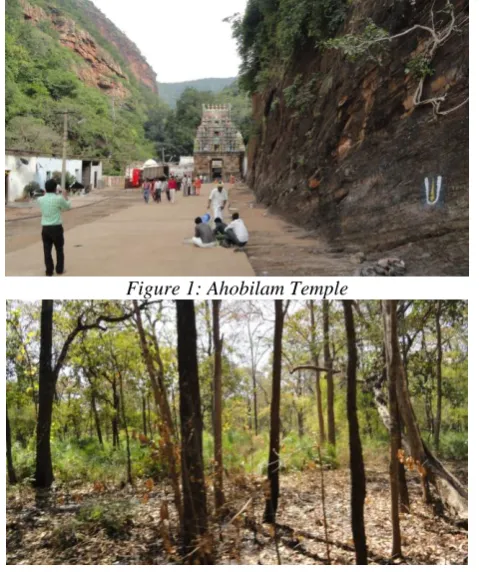
Page 292 www.ijiras.com | Email: [email protected] India (Fig.1), is located in Andhra Pradesh. The Ahobilam
forest is divided into upper and lower Ahobilam. It is situated between long. 78°23’— 78°56’E and lat. 14°55’—15°24’N. It has an average elevation of 327 meters (1076 feet) Rainfall averages about 90 cm and is concentrated in the months of the South West Monsoon (June–Sept).According to Hindu mythology, Lord Narasimha is present in nine forms in nine temples which are on the hill ranges of Ahobilam forest. Ahobilam is a catchment area of the Nallamalais Reserve Forest of the Eastern Ghats. It attracts several devotees from different states. The forest is rich in floristic diversity. The Ahobilam forest is a dry deciduous forest about 800 m, luxuriant in vegetation and enriched with many Chenchus tribal community ise one of the oldest, traditional knowledge nomadic tribes who have settled down in the thick forest of Nallamalais .Their villages called Gudems. The historical evidences reveal that they associated themselves with the forest which provides them all their day-to-day requirements.
II. MATERIALS AND METHODS
An Ehnomedicinal survey of pteridophytes was carried out in Ahobilam Forest (Fig.2) of Kurnool district The Ahobilam Reserve forest are a part of Eastern Ghats. Plant specimens have been collected from all over Ahobilam Reserve forest through several field trips covering all seasons during 2016–2017.Herbarium voucher specimens are deposited in Department of Botany at Osmania UG & PG College, Kurnool Aandhra Pradesh, India. The Medicinal ferns were identified by the local people with their vernacular names, photographed and sample specimens were collected for the preparation of herbarium. The Flora of Kurnool (Raju 1997) was used to ascertain the nomenclature. Emphasis has also been given to the economically important species particularly the medicinal plants used as primary health-care.
Figure 1: Ahobilam Temple
Figure 2: Ahobilam Reserve forest
III. RESULTS & DISCUSSION
Botanical Name Family, Botanical description and Medicinal Uses are enumerated
A. ACTINIOPTERIS RADIATA (SW.) LINK.
ACTINOPTERIDACEAE (FIG.6)
BOTANICAL DESCRIPTION
Plants are 8-25cm height, rooting in the crevices of rock or moist and shady places. The rhizome is oblique to horizontal, 1.5 to 2.0cm in length, densely covered by scales and leaf bases. The young leaves (fronds) show circinate venation and lamina flabellate, semicircular or wedge-shaped. Fronds flabellate, dichotomously divided into linear segments, sometimes dimorphic with fertile and sterile
CHEMICAL COMPOSITION
Actinopteris is rich source of phytoconstituents such as sugar, alkaloids, phenolic compounds, flavonoids, anthroquinones and amino acid (Hungund 1971).
MEDICINAL USES
The juice extracted from the stem is taken orally twice a day to treat diarrhoea and fever. Plant used as a styptic and anthelmintic also used in bronchitis and gynecological disorders. The dry leaves are used in tuberculosis and typhoid. Plant used as a styptic and anthelmintic also used in bronchitis and gynecological disorders. The dry leaves are used in tuberculosis. The whole plant paste mixed with cows, s milk is given for the treatment of piles and leucorrhoea. Plant used as a styptic and anthelmint ic also used in bronchitis and gynecological disorders. The dry leaves are used in tuberculosis and typhoid (Bhatnagar 1973).
B. LYGODIUM FLEXUOSUM (L.) LYGODIACEAE (FIG.10)
BOTANICAL DESCRIPTION
Large terrestrial climbing ferns are common everywhere on low lands in fairly open places. The dwarfed branches are up to 3-mm long It is slightly pubsent, substerete, flattened on one side, narrowly winged or tetragonous. Rhizomes are short, creeping, underground, dichotomously branched, young regions clothed by stiff brown hairs and producing a single row of climbing leaves Rhizomatous perennial fern, with climbing rachis has up to 2.5-mm thickness.
CHEMICAL COMPOSITION
Page 293 www.ijiras.com | Email: [email protected]
MEDICINAL USES
From the past decades this plant is used as an expectorant. Fresh roots are boiled with mustard oil and used in external applications for rheumatism, sprains, scabies, eczema and cut wounds, they are reported to be particularly useful for carbuncle (CSSIR 2001). The rhizome and root is ethnomedicinally useful in the treatment of jaundice. The leaf paste is applied all over the body for 7 days to cure jaundice by Chenchus of Nallamalais Forest. The ash of plant is used for treating herpes this plant is used to feed domestic animals to treat foot and mouth diseases. Leaf is ground into paste with turmeric and applied over the affected places to heal wounds; Juice made from the plant is taken orally along with pepper to get relief from cough used in the Indian system of medicine. C. MARSILEA QUADRIFOLIA L.MARSILEACEAE
AARAKKEERAI (FIG.9)
BOTANICAL DESCRIPTION
It is widely distributed in tropical and temperate regions. This herb has a creeping rhizome, quadrifoliate leaves and bean shaped sporocarps. It is found throughout India usually at the edges of ponds, irrigation canals and as a weed in wet fields.
CHEMICAL COMPOSITION
Phytochemical analysis revealed the presence of steroids, phenols, resins, tannins, flavonoids, terphenoids, carbohydrates, amino acids, protein in the leaves extracts (Sivagurunatham 2014).
MEDICINAL USES
In some places it has been used as food for more than 3000 years. The plant is anti-inflammatory, diuretic, depurative, febrifuge and refrigerant. It is also used to treat snakebite and applied to abscesses. Handful of leaves are mixed with pepper and garlic and ground into paste. The paste is taken orally to treat cold and cough. The paste is mixed with turmeric and applied over the affected places to cure skin diseases. A juice made from the leaves of M. quadrifolia possess anti-inflammatory, anti-diuretic and febrifuge activities and also used to treat snakebite and abscesses. M. quadrifolia is also used to treat cough, bronchitis, diabetes, psychiatric diseases, eye diseases, diarrhea and skin diseases (Ashwini et al., 2012).
D. ADIANTUM CAPILLUS-VENERIS.ADIATACEAE (FIG.5)
BOTANICAL DESCRIPTION
It is a tufted fern. Stipes wiry, suberect, 10-23 cm long, polish, blackish; fronds bipinnate, with a short terminal pinna and numerous erect-patent lateral ones on each side, the lowest slightly branched again; segments 1.25-2.5 cm broad, the base cuneate, the outer edge rounded, deeply lobed; sori
roundish or obreniform, placed in the roundish sinuses of the crenations.
CHEMICAL COMPOSITION: Astragalin, isoquercitrin,
nicotiflorin, kaempferol-3-glucuronide, rutin and querciturone has been isolated from the plant. The plant also contains mixture of esters, ketone, a diol, a nortriterpene-adiantone, and a triterpene epoxide-adiantoxide, characterized as 3α, 4α-epoxyfilicane (Rastogi 1990).
MEDICINAL USES: The plant is pectoral, expectorant,
astringent and diuretic; used as a popular cough medicine in Europe. It is also used in throat affections and bronchial disorders. The leaves along with pepper are given as a febrifuge; prepared with honey they are used in catarrhal affections.
The rhizome is used to get relief from respiratory diseases. Decoction of the leaves cures stomach pain. Fresh juice is taken with sugar or honey in irregular menstruation. It is used as an stimulant, febrifuge, expectorant, purgative, demulcent, emollient tonic and hair tonic. It has ant cancerous, hypoglycemic, aphrodisiac, antibacterial, antifungal and antiviral properties (Manickam 1992). Fresh leaves and rhizomes are said to be effective for cough and as a diuretic also.
E. ADIANTUM INSISUM FORST.FL.AEGYPT,
ADIANTACEAE (FIG.4)
Botanical description
It is a tufted fern. Stipes 5-10 cm long, tufted, wiry, spreading, dark chestnut-brown, tomentose; fronds 15.25-30 cm long, simply pinnate, often elongated and rooting at the extremity, pinnae 12-18 mm long, 6 mm deep, dimidiate, the lower line straight and horizontal, the upper rounded, more or less cut, often deeply and repeatedly; sori roundish or transversely oblong on the edge of the lobes.
CHEMICAL COMPOSITION: The fern contains
triterpenoids (including adiantone, isoadiantone) and flavonoids (including rutin and isoquercetin), hentriacontane, 16-hentriacontanone, adiantone, isoadiantone, ß-sitosterol and fernene (Rastogi 1990).
MEDICINAL USES
Fresh or dried leaves are powdered or crushed into paste. It is efficient to check hair fall. The leaves are used as a cure for cough, fever and chest affection. They are also employed for diabetes and externally the leaf paste is used to cure skin diseases. It has antibacterial properties also (Manickam 1992)].
F. CHILANTHUS FARINOSE (FOOST), PTERIDACEAE. (FIG.7)
BOTANICAL DESCRIPTION
Page 294 www.ijiras.com | Email: [email protected] marginal, confluent with a false indusium of reflexed margin
of the lamina; annulus of 14-30 thickend cells; paraphyses absent; spores tetrahedral, smooth; exine granulose or raticulate.
CHEMICAL COMPOSITION: alkaloids, phenolic
compounds, flavonoids, saponins and tannins are present (Pandnya et al., 2015).
MEDICINAL USES
The decoction of leaves is used orally to treat irregular menstruation (Rastogi 1993). Whole plant decoction is taken once or twice a day during chest pains. Roots are used to treat eczema and stomachache; fronds are used to treat menstrual disorders (Sing 2013). It is used to treat skin disorders also possessed strong anti-inflammatory and anti-nociceptive properties.
G. SELAGINELLA REPENDA SPRING,
SEALGINELLACEAE (FIG.9)
BOTANICAL DESCRIPTION
Terrestrial herbs with decumbent stem, 5-35 cm long, 1-2 mm thick, cylindrical, branched from base. Branches many from basal part, erecto-patent, compound. Rhizophores few towards basal portion, 2-5 cm long, slender, cylindrical. Leaves pale green, heteromorphic, closely arranged in four rows on branches.
CHEMICAL COMPOSITION: Selaginella contains a
variety of secondary metabolites such as alkaloids, phenol, flavonoids, tannins, saponins, and terpenoids triterpene, steroi (Chikmawati 2008).
MEDICINAL USES
Root paste is applied on white patches in case of leprosy, Paste of fresh leaves is taken orally against amenorrhea (Sing 1999).
Page 295 www.ijiras.com | Email: [email protected]
Figure 4: Adiantum incisum
Figure 5: Adaintum capillus–veneris L
Figure 6: Actinopteris radiate
Figure 7: Chilanthus farinose (foost)
Fig.8. Selagenella repanda (Desv. Ex.)
Page 296 www.ijiras.com | Email: [email protected]
Figure 10: Lygodium flexuosum (L.)
IV. CONCLUSION
Nature has been a source of medicinal agent for thousands of years and an impressive number of modern drugs have been isolated from natural sources. Plants have the ability to produce a large variety of secondary metabolites such as saponins, tannins, phenols, alkaloids, triterpenoids and phytosterols. In recent years, secondary plant metabolites are extensively investigated as a source of medicinal agents. Pteridophytes make as important contribution to the earth's plant diversity. They form a significant sometimes, dominants component of many plant communities. The present study provides a base for enhancing scientists’ attention towards consideration of ethnomedicinally important Pteridophytes which were screened for various biological activities are not adequate, because of the insufficient information available in the literature about the medicinal uses of Pteridophytes. At present a number of taxa in ferns and fern allies species have been eradicated or lost due to deforestation and by setting fire to the forest in Ahobilam forest. It is concluded that Ahobilam forest is rich in wild Pteridophytes and the tribal communities in remote areas are still dependent on indigenous knowledge for health care. The existing deforestation and habit fragmentation would pose a serious threat to the growth of wild plants. Efforts should be made to conserve them in nature so that they can be used for the benefit of human welfare.
ACKNOWLEDGEMENTS
The authors are thankful to the Madam Azra Javeed Secretary and Correspondent, Principal of Osmania college for their encouragement and permitting us to carry on this exploration work. We are also expressing our sincere thanks to the Forest Department who helped us in tracing out the tribal villages and accompanying in the forest.
REFERENCES
[1] Mahesh B, Satish S. Antimicrobial activity of some important medicinal plant against plant and human Pathogens. World J Agric Sci. 2008; 4(S): 839-843. [2] RD Dixit. J. Res. Ind. Med., 1974, 9, 59-68.
[3] Janakiraman N, Johnson M, Sahaya Sathish S. GC-MS analysis of bioactive constituents of Peristrophe bicalyculata (Retz.) Nees. (Acanthaceae). Asian Pac J Trop Biomed. 2012; S46-S49.
[4] Gadgil M. (1996), Western Ghats: A Lifescape.Journal of the Indian Institute of Sciences, 76: 495-504.
[5] Karmer, K. U. and Green, P. S. (eds) (1990). Pteridophytes in Kubitski (ed), The families and Green genera of vascular plants pteridophytes and gymnosperms 404 Springer Verlag, Berlin Heidelberg.
[6] Hynniewta SR, Kumar Y: Herbal remedies among the Khasi traditional healers and village folks in Meghalaya. Indian J Tradit Knowl. 2008, 7: 581-586.
[7] Raju RRV, Pullaiah T. Flora of A.P Scientific Publishers Jodhpur, 1997, 3.
[8] Hungund BL. Pathak CH: A survey of plants in Gujarat, India for alkaloids, saponins and tannins, 1971; 201. [9] Bhatnagar LS. Singh VK. Pande G: Medico-botanical
studies on the flora of Ghatigaon forests. 1973; J. Res. Ind. Med. 8(2): 67-100.
[10] S ingh H.B. 1999. Potential medicinal pteridophytes of India & their chemical constituents. J Econ Tax Bot(1):63 -78
[11] New Delhi: CSSIR(2001); Anonymous, ―The Wealth of India, Raw Materials‖, Publication and Information Directorate; pp. 199–200
[12] Sivagurunatham and Xavier. Phytochemical Analysis and Antimicrobial Efficiency of Marsilea quadrifolia linn (Aquatic Fern) (2014). International Journal of Pharmaceutical Resercah scholar Vol.3,1-2
[13] Ashwini G, Pranay.P, Thrinath.G, Karnaker Reddy. Giri Prasad.V. Pharmacological evalution of Marsilea qudrifolia plant extracts against Alzheimer’s disease. International Journal of Drug Development & Research, 2012; 4
[14] Rastogi, R. and Mehrotra, B.N. (1990). Compendium of Indian Medicinal plan ts. Vol. 1.
[15] Central Drug Research Institute, Lucknow and National Institute of Science Communication, New Delhi, India. [16] Manickam VS and IrudayarajV (1992).Pteridophytes flora
of the Western Ghats-South India, BI., Publications, New Delhi.
[17] Pradnya et al.,2015 . Phytochemical analysis of bioactive components chelanthus farninosa Rastogi RP, Mehrotra BN. Compendium of Indian Medicinal Plants, Central Drug Research Institute, Lucknow,1sted., Vol. II, 1993, pp. 52.
[18] Singh, S. and Singh, R. (2013). Utilization of pteridophytes of Achanakmar Amarkantak Biosphere Reserve, Central India in woman health and body care products. IRJP 4(1)
Page 297 www.ijiras.com | Email: [email protected] Plants with Protein Sequence Information Current
Bioinformatics. 8.524-529.
[20] Chikmawati T, Setyawan AD, Mift ahudin. 2008. Phytochemical content of Selaginella plant extracts on the island of Java. 8th Seminary and Congress of Indonesian Association of Plant Taxonomy (PTTI). Cibinong Science
Center, Bogor-Indonesia, 21-23 October 2008. [Indonesia]