R E S E A R C H
Open Access
Implementation and acceptability of
a heart attack quality improvement
intervention in India: a mixed methods
analysis of the ACS QUIK trial
Kavita Singh
1,2, Raji Devarajan
1,2, Padinhare P. Mohanan
3,4, Abigail S. Baldridge
5, Dimple Kondal
1,2,
David E. Victorson
5, Kunal N. Karmali
5, Lihui Zhao
5, Donald M. Lloyd-Jones
5, Dorairaj Prabhakaran
1,2,6,
Shifalika Goenka
1,2,7, Mark D. Huffman
5*and on behalf of the ACS QUIK Investigators
Abstract
Background:The ACS QUIK trial showed that a multicomponent quality improvement toolkit intervention resulted in improvements in processes of care for patients with acute myocardial infarction in Kerala but did not improve clinical outcomes in the context of background improvements in care. We describe the development of the ACS QUIK intervention and evaluate its implementation, acceptability, and sustainability.
Methods:We performed a mixed methods process evaluation alongside a cluster randomized, stepped-wedge trial in Kerala, India. The ACS QUIK intervention aimed to reduce the rate of major adverse cardiovascular events at 30 days compared with usual care across 63 hospitals (n= 21,374 patients). The ACS QUIK toolkit intervention, consisting of audit and feedback report, admission and discharge checklists, patient education materials, and guidelines for the development of code and rapid response teams, was developed based on formative qualitative research in Kerala and from systematic reviews. After four or more months of the center’s participation in the toolkit intervention phase of the trial, an online survey and physician interviews were administered. Physician interviews focused on evaluating the implementation and acceptability of the toolkit intervention. A framework analysis of transcripts incorporated context and intervening mechanisms.
Results:Among 63 participating hospitals, 22 physicians (35%) completed online surveys. Of these, 17 (77%) respondents reported that their hospital had a cardiovascular quality improvement team, 18 (82%) respondents reported having read an audit report, admission checklist, or discharge checklist, and 19 (86%) respondents reported using patient education materials. Among the 28 interviewees (44%), facilitators of toolkit intervention implementation were physicians’support and leadership, hospital administrators’support, ease-of-use of checklists and patient education materials, and availability of training opportunities for staff. Barriers that influenced the implementation or acceptability of the toolkit intervention for physicians included time and staff constraints, Internet access, patient volume, and inadequate understanding of the quality improvement toolkit intervention.
(Continued on next page)
* Correspondence:[email protected]
5Department of Medicine, Northwestern University Feinberg School of Medicine, 680 N. Lake Shore Drive, Suite 1400, Chicago, IL 60611, USA Full list of author information is available at the end of the article
© The Author(s). 2019Open AccessThis article is distributed under the terms of the Creative Commons Attribution 4.0
International License (http://creativecommons.org/licenses/by/4.0/), which permits unrestricted use, distribution, and
(Continued from previous page)
Conclusions:Implementation and acceptability of the ACS QUIK toolkit intervention were enhanced by hospital-level management support, physician and team support, and usefulness of checklists and patient education materials. Wider and longer-term use of the toolkit intervention and its expansion to potentially other cardiovascular conditions or other locations where the quality of care is not as high as in the ACS QUIK trial may be useful for improving acute cardiovascular care in Kerala and beyond.
Trial registration:NCT02256657
Background
India is estimated to have the largest number of fatal acute myocardial infarctions in the world because of its combination of relatively high incidence and case fatality rates and its large population [1]. In high-income coun-try settings, implementation of guideline-based treat-ment has been associated with improvetreat-ments in clinical outcomes. For example, the CRUSADE (Can Rapid Risk Stratification of Unstable Angina Patients Suppress Adverse Outcomes With Early Implementation of the American College of Cardiology (ACC)/American Heart Association (AHA) Guidelines) National Quality Improvement Initiative demonstrated that a 10% higher adherence to clinical performance measures across 350 hospitals studied between 2001 and 2003 (n= 64,775 pa-tients) was associated with a 10% lower adjusted odds of in-hospital mortality [2]. In countries like Brazil and China, randomized trials have demonstrated improve-ments in process measures using quality improvement toolkit interventions that include clinician education, re-minders, and case manager training [3–5]. However, these trials were not powered to demonstrate improve-ments in clinical outcomes.
In the Indian context, data collected from 2007 to 2009 for the Kerala ACS Registry (n= 25,748 patients) demon-strated gaps in optimal medical care as well as inappropri-ate care, such as delayed thrombolysis for patients presenting with non-ST-segment elevation myocardial in-farction [6,7]. Although pilot studies have demonstrated potential benefits of implementing quality improvement strategies [8], large-scale studies have not been carried out in India until recently. To address this gap in knowledge, the Acute Coronary Syndrome Quality Improvement in Kerala (ACS QUIK) cluster randomized, stepped-wedge trial was designed to develop, implement, and evaluate a quality improvement toolkit intervention to improve pro-cesses of care and clinical outcomes for patients with acute myocardial infarction [9]. The ACS QUIK trial dem-onstrated improvements in process of care measures but did not demonstrate a reduction in the 30-day rate of major adverse cardiovascular events, defined by all-cause mortality, reinfarction, stroke, or major bleeding, in the context of improving background care during the trial.
There was expected heterogeneity in the primary outcome across the participating hospitals.
We performed a mixed methods process evaluation of the ACS QUIK trial to improve the understanding of the contextual factors that affected implementation, the rela-tive usefulness of the toolkit intervention, and how the interaction of these influenced study outcomes. Mixed methods research employs rigorous quantitative and qualitative research involving multiple types of data (survey questionnaire, in-depth oral interviews, text-messages) to maximize the strengths and counterbalance the weaknesses of each data type and aids in real-life contextual understanding of a research problem from multi-level perspectives [10, 11]. Process evaluations using mixed methods are useful in multicenter trials in-volving complex interventions to explore physicians’ views of the intervention, understand which components of the intervention worked, and evaluate variation of the intervention effects among sub-groups. Exploring the context and potential mechanisms of action and relating these data with trial outcomes provide further evidence on the potential utility of the toolkit intervention. This has relevance for potential adaptation of the ACS QUIK toolkit intervention in other low-resource settings given the contextual differences and challenges in implement-ing the guideline-based treatments, which have been shown to be effective in high-income country settings.
This paper presents the development, implementation, acceptability, sustainability, facilitators, barriers, and context of the ACS QUIK toolkit intervention using the United Kingdom’s Medical Research Council framework for evaluating complex interventions [12]. Our aim was to understand key findings from the ACS QUIK trial from the perspectives of physicians:
1. How was the toolkit intervention developed? 2. What facilitators, barriers, and context were
important for the toolkit intervention’s implementation and local applicability? 3. What was the acceptability of the toolkit
intervention among physicians?
(i.e., how and why the toolkit intervention
improved process of care measures but not clinical outcomes?)?
Methods Overview
This mixed methods study included pre-trial toolkit intervention development (March 2011) using semi-structured interviews and focus group discussions and withtrial online survey data and semi-structured in-terviews with physicians (November 2015–December 2016) involved in the ACS QUIK trial. The analysis used both survey and interview responses to identify key fac-tors influencing the success of the toolkit intervention components and to understand the interactions (under-lying mechanisms) among the toolkit intervention com-ponents, local context, and trial outcomes.
Research setting
The ACS QUIK study methods have been described [9]. In brief, the trial evaluated the effect of a quality improve-ment toolkit intervention based on American Heart Asso-ciation’s Get With the Guidelines program across 63 participating hospitals in Kerala, India, using a cluster ran-domized, stepped-wedge trial design. Participating hospi-tals included private (n= 42, 67%), government (n= 9, 14%), and nonprofit (n= 12, 19%) hospitals. Each hospital identified at least two members of the quality improve-ment team to participate in this trial. Between November 2014 and November 2016, 21,374 eligible patients present-ing with acute myocardial infarction were enrolled in the study. The primary outcome was the rate of major adverse cardiovascular events, defined as all-cause mortality, re-current myocardial infarction, stroke, or major bleeding, at 30 days between the intervention and control groups, adjusted for clustering and temporal trends.
Design and implementation of the ACS QUIK toolkit intervention
Formative work for toolkit intervention development To develop the ACS QUIK toolkit intervention, we con-ducted semi-structured interviews and focus group dis-cussions with cardiologists and physicians who participated in the Kerala ACS Registry in English be-tween May 2012 and November 2012. We purposely sampled and recruited 44 physicians or care providers (73% male; 43% cardiologist) using telephone and email invitations seeking a range of clinical experience and practice setting. Interviews and focus group discussions explored facilitators and barriers in the context of opti-mal ACS care in Kerala and were led by a cardiologist (MDH) and qualitative researchers (SG, DV). The audio recordings were transcribed, iteratively coded by two au-thors (MDH, KNK) until kappa > 0.8 to ensure
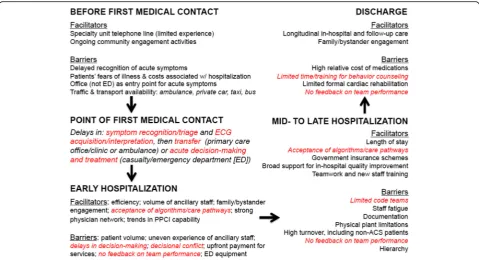
agreement, and analyzed using Dedoose software v4.12 (Manhattan Beach, USA). The framework method [13] was used to create a contextualized critical pathway for patients with acute myocardial infarction with opportun-ities for intervention highlighted (Fig.1).
We used high-quality systematic reviews [14–16] to in-form adaption and implementation of previously reported strategies along with the results of the semi-structured in-terviews and focus group discussions to design the ACS QUIK toolkit intervention with the goal of improving pro-cesses of care and outcome measures [9]. The toolkit intervention included (1) a monthly audit and feedback reporting system based on key data elements used by the American Heart Association and American College of Cardiology [15, 17], (2) standardized admission and dis-charge order checklists [14], (3) translated and culturally adapted patient education materials related to tobacco cessation, dietary advice, and physical activity, and (4) ac-cess to free online quality improvement training through the Institute for Healthcare Improvement and linkage to emergency cardiovascular care training because of the low prevalence of code teams among the participating hospi-tals. These teams included code blue teams to respond to patients with cardiac arrest or respiratory failure and rapid response teams to treat patients who are acutely decom-pensated but have not developed cardiac arrest or respira-tory failure. We also created telephone messaging groups via WhatsApp Messenger (WhatsApp, Inc., Mountain View, USA) within each cohort to facilitate communica-tion among hospitals randomized to the same interven-tion step. We sent quarterly newsletters to all site investigators to provide general trial updates.
We generated monthly audit and feedback reports through the trial’s customized electronic data capture system (Data Template, Bangalore, India) with input from the research team for specifications and iterative testing. These reports were sent monthly via email to site investigators and included site-specific measures on performance, as well as hospital-level performance rat-ings compared to other hospitals in each cohort and all hospitals in the trial. A template of audit and feedback report is provided as online appendix.
ACS QUIK training at site initiation visits
coordinators from Northwestern University, USA, Centre for Chronic Disease Control (CCDC), India, and Westfort Hi-Tech Hospital Ltd., India. Training focused on strategies to decrease inappropriate thrombolysis, in-crease use of inexpensive essential cardiovascular medi-cations, and minimize delays in selection of reperfusion strategy among patients with ST elevation myocardial infarction based on formative research (Additional file1: Figure S1). Each hospital’s audit and feedback report was reviewed in detail by the trial and site teams with train-ing related to organiztrain-ing and leadtrain-ing monthly quality improvement team meetings. The goal of the training was to increase the use of evidence-based treatment and to provide sites with the training and flexibility to adapt and implement the toolkit intervention to maximize local utility. Additional training to new staff or refresher training to existing staff was provided by one of three zonal project coordinators during the study period who provided local training, monitoring, and support for the trial. Onsite monitoring visits and central statistical monitoring were performed during the trial to ensure data quality and completeness.
Post-toolkit intervention physician acceptability surveys and interviews
Surveys and interviews were performed at least 4 months after sites crossed over to the intervention period.
Online surveys
Between June 2015 and December 2016, online surveys were sent to all 63 hospitals’ investigators at least 4 months after the site had crossed over from the control period to the intervention period to explore perceived benefits and overall satisfaction after a learning period. The instrument captured (1) whether the participating hospital had established cardiovascular quality improve-ment teams, (2) frequency of quality improveimprove-ment meet-ings, and (3) familiarity, use, and adaptation of the individual toolkit intervention components.
Physician interviews
duration ranged from 10 to 30 min. The audio recordings were transcribed verbatim.
Analysis
Survey data analysis
Online survey data were summarized using descriptive statistics. The mean and standard deviation are reported for continuous measures and frequency and percentages for categorical variables.
Interview data analysis
Using a thematic framework analysis approach [13], a codebook was developed through line-by-line reading of every interview transcript and categorization of transcript sections into emergent themes. Coding was completed by two authors (KS, RD) using qualitative data analysis soft-ware (MAXQDA, VERBI GmbH, Berlin, Germany). The descriptive codes were revised as grouped into prevailing themes, and data segments within each of the codes com-posing a given theme were thematically analyzed. Emer-ging categories were compared within and between respondents in an iterative process. The patterns identified in the analysis formed an analytical framework; thematic saturation of the emerging framework was reached as we found fewer differences arising in patterns.
Results of the thematic framework evaluation were set alongside results from the ACS QUIK trial to draw fur-ther inference about trial results. Physicians’ interview data, representing acceptability of toolkit intervention components (hospitals implementing all four toolkit intervention components were assigned a toolkit imple-mentation score of 4, and those implementing any three, two, or one toolkit intervention components were assigned a score of 3, 2, and 1, respectively), were com-pared with changes in processes of care measures and clinical outcomes which occurred during the trial period. We performed an exploratory analysis of the trial’s pri-mary outcome by restricting the sample to the 27 sites who participated in the process evaluation interviews. Mixed effect logistic regression was used to estimate the effect of the toolkit intervention on process measures and outcomes adjusted for cluster, temporal trends and high (three or four out of four toolkit intervention com-ponents) versus low or no (two or fewer toolkit inter-vention components) usage of the implementation toolkit intervention. For statistical analyses, Stata (ver-sion 15.0, Stata Corp), SAS (ver(ver-sion 9.4, SAS Institute Inc.), and R (version 3.3.0, R Foundation) were used.
Using a thematic framework analysis, we summarized the established relationships between the toolkit inter-vention components, underlying context, mechanisms, and related trial outcomes to offer a middle range con-ceptual model that is likely generalizable and could be tested in future studies.
Ethical considerations
We received institutional ethics committee approval for the study from Northwestern University, Centre for Chronic Disease Control, participating hospitals, and the Cardiological Society of India-Kerala chapter (CSI-K) for hospitals without local ethics boards. All physicians pro-vided written, informed consent prior to completing on-line survey and participating in in-depth interviews.
Results
Physician demographics
Of the 63 participating hospitals, 22 physician site investi-gators (35% response rate) completed the online survey. We also interviewed 28 physicians (44%) from 27 hospitals who were selected from different cohorts with different hospital size and patient recruitment. Physicians’ mean (SD) age was 52.5 (11.1) years, 96% were men, 84% had sub-specialty training in cardiology, and 33% worked at the government hospitals. Fourteen (45%) physicians who responded in the survey or interview were from small size hospitals (hospital size by patient recruitment < 200 pa-tients), followed by 26% from medium (201–500 patients), 19% from large (501–1000 patients), and 10% from extra large (> 1000 patients) size hospitals.
Online survey results
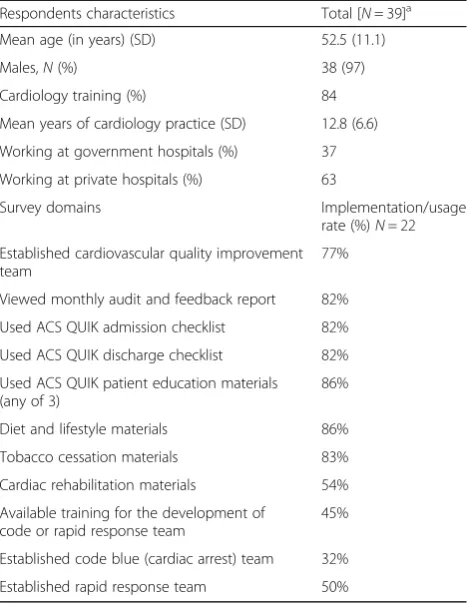
Table1 reports the summary of online survey responses from trial physicians. Of the 22 site physicians who com-pleted the survey, 17 (77%) reported that their hospital had a cardiovascular quality improvement team. ACS QUIK toolkit intervention components were used by the quality improvement team, including physicians, at each participating hospital. Most (n= 18, 82%) respondents had read an audit report, admission checklist, or dis-charge checklist and reported using patient education materials (n= 19, 86%). However, low implementation of establishing code blue team (32%) was reported.
Physician in-depth interview results and triangulation of ACS QUIK trial qualitative interview data
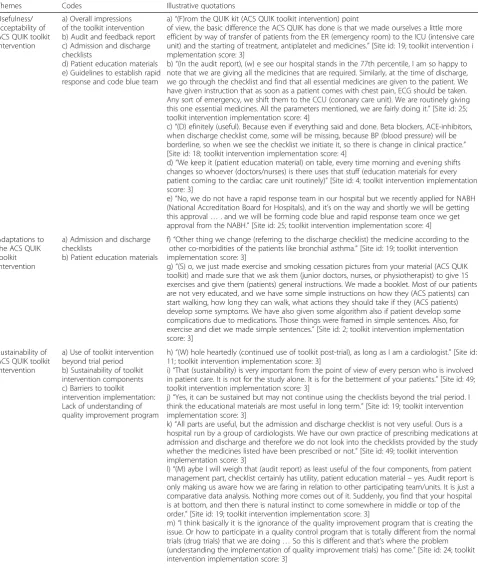
Analysis of physicians’ interview data revealed four major themes (utility of ACS QUIK toolkit intervention, adaptations to the existing toolkit intervention, sustain-ability, and recommendations for future use). Summary of key themes along with physicians’ quotes as support-ing evidence are provided in Table2.
Utility of ACS QUIK toolkit intervention (by each component)
their scope for impact was reduced due to high patient volume and patients’concomitant family needs. Check-lists were perceived as the next most useful component by respondents. Hospitals that could not coordinate or deploy a cardiac arrest or rapid response team reported that this was due to lack of coordination or support from different departments. Some physicians reported that the toolkit intervention made them more alert and efficient during transitions of care.
Audit and feedback report
Audit and feedback reports were sent via email to the hos-pitals’site investigator every month but were reviewed by a minority of physicians (example report in the Appendix). Physicians expressed that, if the final study results demon-strated that a large proportion of patients were not pre-scribed optimal medical care, then an audit report might be helpful for physicians to investigate why these drugs were not prescribed. Physicians accepted that these re-ports added potential value in reviewing how their hos-pital performed compared with others in the study. When reviewing the audit report, physicians generally reviewed what proportion of patients received medical treatments and delays in treatment.
(In the audit report, we usually see) what (proportion of ) patients are receiving the treatment, delay in treat-ment, we are concentrating more (to improve treatment practice), some aspects are difficult to change, we are ac-tually trying to improve our resuscitation timing and im-prove our drug therapy. [Site ID: 2; Toolkit intervention implementation score: 3]
Hospitals that were more likely to review the audit and feedback reports were also more likely to understand their relative performance compared with their peer institutions.
Yeah definitely (useful), I just want to know where we stand in comparative (in the audit report). [Site ID: 15; Toolkit intervention implementation score: 4]
I think they (quality improvement team members) are absolutely happy we are able to be in the top quarter most of the time (in the audit report). [Site ID: 13; Tool-kit intervention implementation score: 3]
The most common reasons mentioned by the physi-cians for not reviewing the audit report were time con-straints, delegating responsibility to junior physicians, no patients enrolled in the study over the past 3 months, and slow Internet connectivity leading to a lag in data entry to make reporting contemporary. Physicians also expressed concern that their prescription rates for angiotensin-converting enzyme (ACE) inhibitors and angiotensin receptor blockers were generally low com-pared to global reports due to a perceived high preva-lence of contraindications. Few physicians requested re-training of their hospital site staff to enable them to read, understand, and take corrective or proactive action by review of the audit reports.
Admission and discharge checklists
All (n= 28) physicians reported that checklists were con-sidered important for overall team performance. Some re-spondents reported using their own hospital-specific checklist (treatment protocol) or discharge summary tem-plate or adapting the checklist to suit their setting.
… most useful, discharge checklist because if some-thing is missing, we are aware at discharge that we are aware and we check lot of things in that. [Site ID: 18; Toolkit intervention implementation score: 2]
Others reported that checklists made minimal difference in their clinical practice. Some physicians asserted that even in the absence of checklist, they closely followed clin-ical practice guidelines in prescribing optimal medclin-ical care. Checklists appeared to be more helpful for less-experienced physicians, including trainees.
Patient education materials
Most physicians reported that patient education materials related to diet, physical activity, and tobacco cessation were displayed in the hospital and were routinely Table 1Physicians’(respondents) characteristics and use of ACS
QUIK toolkit intervention components: online survey results
Respondents characteristics Total [N= 39]a
Mean age (in years) (SD) 52.5 (11.1)
Males,N(%) 38 (97)
Cardiology training (%) 84
Mean years of cardiology practice (SD) 12.8 (6.6)
Working at government hospitals (%) 37
Working at private hospitals (%) 63
Survey domains Implementation/usage
rate (%)N= 22
Established cardiovascular quality improvement team
77%
Viewed monthly audit and feedback report 82%
Used ACS QUIK admission checklist 82%
Used ACS QUIK discharge checklist 82%
Used ACS QUIK patient education materials (any of 3)
86%
Diet and lifestyle materials 86%
Tobacco cessation materials 83%
Cardiac rehabilitation materials 54%
Available training for the development of code or rapid response team
45%
Established code blue (cardiac arrest) team 32%
Established rapid response team 50%
SDstandard deviation
a
Table 2Qualitative themes, codes, and illustrative quotes (ACS QUIK toolkit intervention implementation facilitators and barriers are summarized separately in Tables3and4(below))
Themes Codes Illustrative quotations
Usefulness/ acceptability of ACS QUIK toolkit intervention
a) Overall impressions of the toolkit intervention b) Audit and feedback report c) Admission and discharge checklists
d) Patient education materials e) Guidelines to establish rapid response and code blue team
a)“(F)rom the QUIK kit (ACS QUIK toolkit intervention) point
of view, the basic difference the ACS QUIK has done is that we made ourselves a little more efficient by way of transfer of patients from the ER (emergency room) to the ICU (intensive care unit) and the starting of treatment, antiplatelet and medicines.”[Site id: 19; toolkit intervention i mplementation score: 3]
b)“(In the audit report), (w) e see our hospital stands in the 77th percentile, I am so happy to note that we are giving all the medicines that are required. Similarly, at the time of discharge, we go through the checklist and find that all essential medicines are given to the patient. We have given instruction that as soon as a patient comes with chest pain, ECG should be taken. Any sort of emergency, we shift them to the CCU (coronary care unit). We are routinely giving this one essential medicines. All the parameters mentioned, we are fairly doing it.”[Site id: 25; toolkit intervention implementation score: 4]
c)“(D) efinitely (useful). Because even if everything said and done. Beta blockers, ACE-inhibitors, when discharge checklist come, some will be missing, because BP (blood pressure) will be borderline, so when we see the checklist we initiate it, so there is change in clinical practice.” [Site id: 18; toolkit intervention implementation score: 4]
d)“We keep it (patient education material) on table, every time morning and evening shifts changes so whoever (doctors/nurses) is there uses that stuff (education materials for every patient coming to the cardiac care unit routinely)”[Site id: 4; toolkit intervention implementation score: 3]
e)“No, we do not have a rapid response team in our hospital but we recently applied for NABH (National Accreditation Board for Hospitals), and it’s on the way and shortly we will be getting this approval…. and we will be forming code blue and rapid response team once we get approval from the NABH.”[Site id: 25; toolkit intervention implementation score: 4]
Adaptations to the ACS QUIK toolkit intervention
a) Admission and discharge checklists
b) Patient education materials
f)“Other thing we change (referring to the discharge checklist) the medicine according to the other co-morbidities of the patients like bronchial asthma.”[Site id: 19; toolkit intervention implementation score: 3]
g)“(S) o, we just made exercise and smoking cessation pictures from your material (ACS QUIK toolkit) and made sure that we ask them (junior doctors, nurses, or physiotherapist) to give 15 exercises and give them (patients) general instructions. We made a booklet. Most of our patients are not very educated, and we have some simple instructions on how they (ACS patients) can start walking, how long they can walk, what actions they should take if they (ACS patients) develop some symptoms. We have also given some algorithm also if patient develop some complications due to medications. Those things were framed in simple sentences. Also, for exercise and diet we made simple sentences.”[Site id: 2; toolkit intervention implementation score: 3]
Sustainability of ACS QUIK toolkit intervention
a) Use of toolkit intervention beyond trial period b) Sustainability of toolkit intervention components c) Barriers to toolkit intervention implementation: Lack of understanding of quality improvement program
h)“(W) hole heartedly (continued use of toolkit post-trial), as long as I am a cardiologist.”[Site id: 11; toolkit intervention implementation score: 3]
i)“That (sustainability) is very important from the point of view of every person who is involved in patient care. It is not for the study alone. It is for the betterment of your patients.”[Site id: 49; toolkit intervention implementation score: 3]
j)“Yes, it can be sustained but may not continue using the checklists beyond the trial period. I think the educational materials are most useful in long term.”[Site id: 19; toolkit intervention implementation score: 3]
k)“All parts are useful, but the admission and discharge checklist is not very useful. Ours is a hospital run by a group of cardiologists. We have our own practice of prescribing medications at admission and discharge and therefore we do not look into the checklists provided by the study whether the medicines listed have been prescribed or not.”[Site id: 49; toolkit intervention implementation score: 3]
l)“(M) aybe I will weigh that (audit report) as least useful of the four components, from patient management part, checklist certainly has utility, patient education material–yes. Audit report is only making us aware how we are faring in relation to other participating team/units. It is just a comparative data analysis. Nothing more comes out of it. Suddenly, you find that your hospital is at bottom, and then there is natural instinct to come somewhere in middle or top of the order.”[Site id: 19; toolkit intervention implementation score: 3]
distributed and discussed with patients. Physicians re-ported that organized services for cardiac rehabilitation were not available at their site, which limited their use of cardiac rehabilitation materials that included home-based cardiac rehabilitation. Some hospitals employed a physio-therapist during the trial, but these service lines have yet to be fully developed for these patients in Kerala.
Guidelines for development and deployment of code and rapid response teams
Most (n= 24, 86%) respondents reported that their hos-pitals had not yet operationalized a cardiac arrest or rapid response team.
Toolkit intervention components that were less useful Tertiary care hospitals that were staffed by senior car-diologists, residents, and physician assistants were less likely to find checklists useful. One physician criti-cized that there was no provision to add details on surgical procedures or angioplasty on the discharge checklists, which referred only to myocardial infarc-tion or stroke.
ACS QUIK toolkit intervention adaptations
There were no major suggestions to modify the current toolkit intervention components, other than additional local adaptations to discharge checklists and dietary and exercise education materials. For ex-ample, one site added details of the surgery or other intervention procedures performed in the discharge checklist. Few sites modified the patient education materials to include information on the starting dose and step-up dose of exercise post-discharge and diet-ary recommendations on salt intake. Of the 28 physi-cians interviewed, 29% (n= 8) reported either use of existing materials or local adaptations of the ACS QUIK toolkit intervention to contextualize its compo-nents. The patient education materials and discharge checklists were most commonly modified.
One physician reported implementation of other quality improvement measures during the study period, such as informal meetings in the department to review difficult cases, as well as random reviews of patient discharge summaries prepared by residents.
Physicians also reported adaptation of the discharge checklist by expanding it to include medications for co-morbidities.
Sustainability
All respondents agreed that hospitals should follow standard treatment protocols and guidelines for acute myocardial infarction treatment and management, in-cluding through the use of checklists. However, sites sought additional support from the coordinating center to help them implement the toolkit intervention com-ponents more consistently and reported that provision of educational materials would be the easiest compo-nent to sustain. Sites received payments for participa-tion in the ACS QUIK trial (up to INR 750/US$12 per patient). Whether data collection and toolkit interven-tion implementainterven-tion would continue without site pay-ments remains uncertain. Some respondents identified the inherent nature of their clinical work as physicians as being an important driver for sustainability.
Recommendation to other hospitals and continued use post-trial
Physicians supported the toolkit intervention concept and expressed interest in using the toolkit intervention component beyond the trial duration and were willing to recommend the toolkit intervention to other practi-tioners/hospitals, including in rural settings.
Those (hospitals) who are not following this, I think they are missing a point. Because when we see discharge summaries from some other hospitals or some other consultants, we see that there is deficiency from many aspects. So, going through the (check) list and somebody prompting them helps. [Site ID: 15; Toolkit intervention implementation score: 4]
Physicians had already shared the patient education materials that were given as part of the toolkit interven-tion to other consultants in a neighboring hospital.
(D) efinitely (recommend to other hospitals). In fact, I gave some of your material to neighboring hospital Table 2Qualitative themes, codes, and illustrative quotes (ACS QUIK toolkit intervention implementation facilitators and barriers are summarized separately in Tables3and4(below))(Continued)
Themes Codes Illustrative quotations
Recommendation to use toolkit intervention to other hospitals (Scale-up)
d) Tertiary care government and private hospitals e) Secondary care settings
n)“(Recommend to other hospitals)...100%, then only when others will use it, they (hospitals) will also understand the importance.”[Site id: 11; toolkit intervention implementation score: 3] o)“(Y) eah of course, that (use of toolkit components in long-run) will definitely change the pattern of the treatment…so I would strongly recommend that toolkit to be implemented in other hospitals also.”[Site id: 61; toolkit intervention implementation score: 0]
who is practicing good cardiology. [Site ID: 5; Toolkit intervention implementation score: 2]
Facilitators and barriers to implementation of toolkit intervention
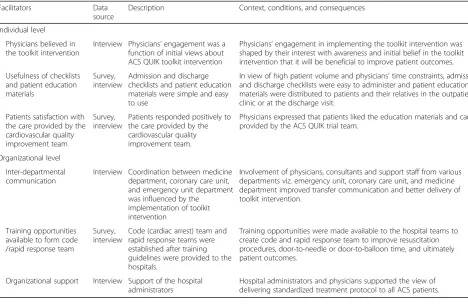
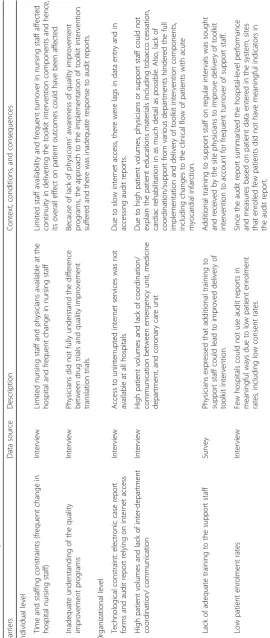
Tables3and4demonstrate the barriers and facilitators to ACS QUIK toolkit intervention implementation following synthesis of survey and qualitative interview data. Physi-cians’ belief and support from hospital administrators,
usefulness and ease-of-use of checklists, and trial patient satisfaction with the care provided by the cardiovascular quality improvement team were the main facilitators iden-tified. Hospitals that could not implement the toolkit intervention components reported problems such as change in hospital staff who were previously handling the program implementation and Internet connectivity prob-lems. Figure2displays the conceptual framework for im-plementation, acceptability, adaptation, and sustainability of the ACS QUIK toolkit intervention.
Integrating results of the process evaluation with ACS QUIK trial outcomes
Among ACS QUIK patients (n= 12,686) enrolled by the 27 hospitals that participated in this mixed methods imple-mentation evaluation, patients in the intervention phase were older, had a higher body weight, had higher fasting glucose and prevalence of diabetes, had lower rates of to-bacco use and health insurance, were less frequently trans-ferred from a different hospital, and had lower troponin, LDL cholesterol, creatinine, and hemoglobin compared to patients in the control phase (Additional file 3: Table S1). Sites that participated in the process evaluation, demon-strated lower major adverse cardiovascular event (MACE) rates in the intervention phase compared to the control phase, although the effects were attenuated after adjust-ment for cluster, temporal trends, and degree of toolkit intervention implementation (Additional file 4: Figure S2 and Additional file3: Table S2). Sites that implemented 3 or 4 out of 4 toolkit intervention components demonstrated higher rates of process measures in the intervention group compared to control (Additional file4: Figure S2 and Additional file3: Table S3), and sites that implemented two or fewer toolkit intervention components had similar rates between the intervention and control groups (Additional file 4: Figure S2 and Additional file 3: Table S4).
Table5demonstrates the toolkit intervention, contextual, and mechanistic factors that could have influenced the
study outcomes, which are further categorized as either ob-served, implied, or anticipated based on this mixed methods evaluation. The key findings observed were improvements in processes of care measures, such as reperfusion among patients with ST-segment elevation myocardial infarction and prescription of in-hospital and discharge cardiovascular medications (aspirin, statins, and blood pressure-lowering agents) associated with the use of admission and discharge checklists. Since the ACS QUIK trial results were unknown during the conduct of process evaluation, we have only hy-pothesized contextual and underlying mechanisms, which could be tested in future studies.
Discussion Summary of results
This mixed methods evaluation of the ACS QUIK trial processes sought to describe the contextual development of the toolkit intervention, evaluate experiences and per-ceptions of physicians while implementing the trial, and explore facilitators, barriers, and context for implemen-tation, acceptability, adapimplemen-tation, and sustainability of the toolkit intervention. Our findings suggest that the pres-ence of cardiovascular quality improvement teams, regu-lar review of audit and feedback reports, checklists, reguregu-lar quality improvement meetings and wider dissemination of patient education materials resulted in improved processes of care. However, a relatively high level of care at baseline Table 3Facilitators to the implementation of the ACS QUIK toolkit intervention
Facilitators Data
source
Description Context, conditions, and consequences
Individual level
Physicians believed in the toolkit intervention
Interview Physicians’engagement was a function of initial views about ACS QUIK toolkit intervention
Physicians’engagement in implementing the toolkit intervention was shaped by their interest with awareness and initial belief in the toolkit intervention that it will be beneficial to improve patient outcomes.
Usefulness of checklists and patient education materials
Survey, interview
Admission and discharge checklists and patient education materials were simple and easy to use
In view of high patient volume and physicians’time constraints, admission and discharge checklists were easy to administer and patient education materials were distributed to patients and their relatives in the outpatient clinic or at the discharge visit.
Patients satisfaction with the care provided by the cardiovascular quality improvement team
Survey, interview
Patients responded positively to the care provided by the cardiovascular quality improvement team.
Physicians expressed that patients liked the education materials and care provided by the ACS QUIK trial team.
Organizational level
Inter-departmental communication
Interview Coordination between medicine department, coronary care unit, and emergency unit department was influenced by the
implementation of toolkit intervention
Involvement of physicians, consultants and support staff from various departments viz. emergency unit, coronary care unit, and medicine department improved transfer communication and better delivery of toolkit intervention.
Training opportunities available to form code /rapid response team
Survey, interview
Code (cardiac arrest) team and rapid response teams were established after training guidelines were provided to the hospitals.
Training opportunities were made available to the hospital teams to create code and rapid response team to improve resuscitation procedures, door-to-needle or door-to-balloon time, and ultimately patient outcomes.
Organizational support Interview Support of the hospital administrators
in the control group hospitals (e.g., > 95% rate of discharge aspirin use), incomplete toolkit intervention implementa-tion with a corresponding modest effect on process of care measures, and favorable temporal trends (i.e., background improvements in clinical care over the study period) limited the effect of the toolkit intervention on clinical outcomes.
Explanation of results
This mixed methods implementation evaluation of the ACS QUIK trial provides insights into the interaction be-tween the toolkit intervention and its external context. We identified themes related to the quality improvement toolkit intervention’s integration of new activities into existing ac-tivities that changed behavior and performance through regular review. These findings may help explain both how the toolkit intervention operated and the mixed results of the trial. Mixed methods evaluation based on Medical Re-search Council’s framework provided a useful theoretical framework for this process evaluation by allowing a specific focus on context. Although complex interventions might appear“out of control”due to their varied manifestation in different situations, context-sensitive process evaluations can help identify interventions’key functions.
Our findings also indicate the need for concurrent in-vestment in improving the structural capacity of hospitals to achieve optimal outcomes [18]. The responsiveness of the pre-hospital environment [19,20] and capacity of hos-pitals' emergency cardiovascular care services, essential structural prerequisites to deliver optimal acute myocar-dial infarction care, varied considerably among ACS QUIK trial hospitals. Lack of standardization of emergency car-diovascular care, limited funding, and insufficient num-bers of qualified emergency staff have been identified as contributing to such variation. Similarly, systems and re-sources to support quality improvement varied across par-ticipating hospitals, including existing data capture systems, dedicated quality officers, effective management, and buy-in among hospital leadership. Future quality im-provement initiatives will need to address these structural limitations without which substantial improvement in care is unlikely to be achieved.
Results in context
Our study provides unique data on the implementation factors, acceptability, adaptation, and sustainability of an acute myocardial infarction quality improvement toolkit intervention within a low- and middle-income country context. The mixed methods evaluation explored the context and the extent of adherence to the delivery of the ACS QUIK toolkit intervention and trial outcomes, the results of which suggest that higher implementers (three or four toolkit intervention components) had higher rates of process of care measure improvements but similar rates of the study’s primary outcome. These
variations could be driven by differences in what was imple-mented (type of toolkit intervention component) and to what degree that led to meaningful change in outcomes, as well as differences in the sites (hospital size, resources), their teams, patients, baseline process of care and major ad-verse cardiovascular event rates, the way in which sites im-plemented the toolkit intervention (or not), or chance.
One study from Brazil reported improvements in medica-tion use and reperfusion among patients with ST elevamedica-tion myocardial infarction with increased use of evidence-based treatment [3]. However, this study did not evaluate the ac-ceptability of the toolkit intervention from various stake-holders (providers, patients, or hospital administrators) perspective including physicians, patients, or hospital ad-ministrators. Another quality improvement trial among ACS patients in China (CPACS-2) performed qualitative evaluation and found that system-level barriers affected the ability of clinical pathways to change practice [4,5]. A simi-larly designed trial in China that is powered to detect a po-tential difference in clinical outcomes has been completed and may help place results from ACS QUIK into broader context [21]. Our results are consistent with these findings in highlighting the role of hospital administrators and lead-ership support for implementing quality improvement tool-kit interventions. However, further research is required to understand how to evaluate and improve hospital manage-ment and leadership support and performance in low- and middle-income countries [22].
Strengths and limitations
Our study also has important limitations. Low partici-pation rates in the online survey to assess acceptability of toolkit intervention provide a limited view on the overall acceptance rates and strategies to further im-prove toolkit intervention implementation. The process evaluation may also have been subject to social desirabil-ity bias among trial physicians. Measures were taken to reduce this likelihood, including (1) assuring confiden-tially and anonymity, (2) assuring respondents that their candid views would help towards improving the inter-vention in the future, and (3) their candor was critical for the larger cause of improving cardiovascular quality and safety in Kerala. Another limitation of our process evaluation was restricted to physicians, which is relevant since other healthcare workers may influence acute car-diovascular care quality and safety. Also, we did not have the trial results when undertaking the interviews, which may have limited the ability to probe for specific results and even response rates. Follow-up interviews with phy-sicians after knowing the trial outcomes might have led to investigating specific drivers for neutral results and to exploring the factors that have influenced the study re-sults. On the other hand, results may have biased physi-cians’ perceptions. Lastly, in our post hoc quantitative analyses, there could be potential unmeasured con-founding between sites, site investigators, toolkit inter-vention implementation, and clinical outcomes, which are difficult to quantify or control.
Conclusions
Implementation and acceptability of ACS QUIK toolkit intervention was enhanced by the hospital-level manage-ment support, clinical team enthusiasm, and ease of using checklists and patient education materials but was limited by time and staff constraints and understanding of quality improvement programs. Wider use of a similar toolkit intervention to other acute or chronic cardiovas-cular conditions (e.g., heart failure and stroke) or other locations where the quality of care is not as high as in the ACS QUIK trial may be useful for improving acute cardiovascular care in India and other low- and middle-income country settings.
Additional files
Additional file 1:Figure S1.Reperfusion decision-making framework in
patients with ST-segment elevation myocardial infarction in Kerala. (DOCX 2569 kb)
Additional file 2:Sample interview guide. ACS QUIK Process Evaluation
Interview Guide (DOCX 18 kb)
Additional file 3:Table S1.Baseline characteristics in ACS QUIK
patients by intervention and control group among 12,688 patients enrolled by 27 hospitals participating in the process evaluation interviews.Table S2.Unadjusted and adjusted primary and secondary trial outcomes using mixed effect logistic regression models that account
for within-hospital clustering and clustering, temporal trends and implementation of the toolkit intervention.Table S3.Unadjusted and adjusted primary and secondary trial outcomes using mixed effect logistic regression models that account for within-hospital clustering and clustering and temporal trends among sites that implemented three or four ACS QUIK toolkit intervention components.Table S4.Unadjusted and adjusted primary and secondary trial outcomes using mixed effect logistic regression models that account for within-hospital clustering and clustering and temporal trends among sites that implemented two or fewer ACS QUIK toolkit intervention components. (DOCX 45 kb)
Additional file 4:Figure S2.Rate of major adverse cardiovascular
events at 30 days in the intervention and control groups within the ACS QUIK trial, as well as adjusted difference and adjusted odds ratio (95% confidence intervals) stratified by sites by participation in process evaluation interviews and number of quality improvement toolkit intervention components implemented (DOCX 111 kb)
Acknowledgements
Group Information:
Cardiological Society of India Kerala Chapter Advisory Committee: G. Vijayaraghavan, Kerala Institute of Medical Sciences; Ashokan Nambiar, Baby Memorial Hospital; Geevar Zachariah, Mother Hospital; Rajan J. Manjooran, Pushpagiri Medical College; S. Sivasankaran, Sree Chitra Tirunal Institute of Medical Science and Technology.
Trial Steering Committee: Dorairaj Prabhakaran (co-chair), Centre for Chronic Disease Control/Public Health Foundation of India; Donald M. Lloyd-Jones (co-chair), Northwestern University; K. Srinath Reddy, Public Health Foundation of India; S. Harikrishnan, Sree Chitra Tirunal Institute of Medical Science and Technology; Robert O. Bonow, Northwestern University; Darwin R. Labarthe, Northwestern University; Sidney C. Smith, Jr., University of North Carolina.
Data and Safety Monitoring Board:Brahmajee Nallamothu (chair), University of Michigan; Thomas Alexander, Kovai Medical Center and Hospital; Karla Hemming, University of Birmingham; Simon Thom, Imperial College London; K.R. Sundaram, Amrita Institute of Medical Sciences; Lawton Cooper, National Heart, Lung, and Blood Institute.
Operations Committee:Mark D. Huffman, Northwestern University; P.P. Mohanan, Westfort Hi-Tech Hospital, Ltd.; Raji Devarajan, Centre for Chronic Disease Control Abigail S. Baldridge, Northwestern University; Dimple Kondal, Centre for Chronic Disease Control; Lihui Zhao, Northwestern University; Mumtaj Ali, Public Health Foundation of India.
Zonal Project Coordinators:Divin Davies, WestFort Hi-Tech Hospital; Prasad Arumugan, Caritas Hospital, Aneesh T.C., P.R.S. Hospital.
ACS QUIK Trial Sites, Investigators (email:
[email protected]), and Coordinators:
Site Investigator(s) Coordinator(s)
Amala Medical College, Thrissur
Dr. Rajesh Anoop P.T.
Amrita Institute of Medical Sciences & Research Center, Ernakulam
Dr. Natarajan Mr. Sujith Raj
Anathapurai Hospital, Thiruvananthapuram
Dr. Bahuleyan Mr. Jinbert
Aswini Hospital, Thrissur Dr. Pramod Mr. Vineesh Varghese
Baby Memorial Hospital, Kozhikode
Dr. Nambiar Dr. Bindu
Bharath Heart Institute, Kottayam
Dr. Kathalankal Mrs. Susamma
Bishop Benziger Hospital, Kollam
Dr. Renga Ms. Alphonsa
C.H. Memorial Hospital, Valanchery
Dr. Ibrahimkutty Dr. Ibrahimkutty
Caritas Hospitals Dr. Joseph Mr. Tony
(Continued)
Daya Specialty Hospital, Thrissur
District Hospital, Palakkad Dr. Siar Pravya P.
District Hospital, Kollam Dr. Syam Mrs. Sajitha
Dr. Damodaran Memorial Hospital, Kollam
Dr. Robby Mrs. Prasanna
Elite Mission Hospital, Thrissur
Dr. Manikandan Lekha M.P.
E.M.S. Hospital Perinthalmana Dr. Somanathan Dr. Somanathan
Gokulam Medical College, Thiruvananthapuram
Dr. Abilash & Dr. Binu
Mr. Aneesh
Government Medical College Thrissur
Dr. Mathew & Dr. Andrews
Mr. Arun Gopi
Holy Cross Hospital, Kottayam Dr. Chacko Mr. Libin
Indira Gandhi Cooperative Hospital, Ernakulam
Dr. Abraham Ms. Alphonsa Rony
Irinjalakuda Co-operative Hospital
Dr. Ullas Mr. Midhun George
Jubilee Mission Hospital, Thrissur
Dr. Govindanunny Mr. Lance Frank William
Kannur Medical College, Kannur
Dr. Raveendran Ms. Athira
Kerala Institute of Medical Science, Thiruvananthapuram
Dr. Vijayaraghavan Mrs. Kavitha
K.M.C.T. Heart Institute, Manassery
Dr. Saleem Mr. Joshy
Koyili Hospital, Kannur Dr. Kumar Ms. Alpha
K.V.M. Hospital, Cherthala Dr. Venugopal Mr. Vipin
Lakshmi Hospital, Palakkad Dr. Jayagopal Devaki
Lakshmi Hospital, Ernakulam Dr. Sasikumar Dr. Sasikumar
Lal Memorial Hospital, Irinjalakuda
Dr. Madhu Dr Madhu
Lisie Hospital, Ernakulam Dr. Abdullakutty, Dr. Mathew
Ms. Serrin
Little Flower Hospital, Angamaly
Dr. Joseph Mr. Rajesh
Lourdes Hospital, Ernakulam Dr. Sujith Kumar Mrs. Ria Sandeep
Medical College Hospital, Kozhikode
Dr. Haridas Mrs. Deepa
Medical College Hospital, Alappuzha
Dr. Sivaprasad, Dr. Sreenivas, Dr. Gagan
Dr. Sreenivas
Medical College Thiruvananthapuram
Dr. Koshy Dr. Raji
Medical College, Kottayam Dr. Jayaprakash, Dr. Brijesh
Dr. Brjesh
Metro International Cardiac Centre, Kozhikode
Dr. Mustafa Ms. Anooja
M.I.M.S. Heart, Kottakkal, Malappuram
Dr. Tahsin Mr. Pradeesh
Modern Hospital, Kodungallur Dr. Ukken Ms. Teena Sudheer
M.O.S.C.M. Hospital, Ernakulam Dr. Punnoose Mr. Binoy Kurian
Dr. James Dr. James K.J.
(Continued)
Mother Hospital, Limited, Thrissur
N.I.M.S. Hospital, Thiruvananthapuram
Dr. Sreedharan Mrs. Anju Mohan
Pariyaram Medical College, Kannur
Dr. Sebastian Mr. Robin
P.R.S. Hospital, Thiruvananthapuram
Dr. Nair Mr. Aneesh
Pushpagiri Medical College, Thiruvilla
Dr. Manjooran Mr. Jacob
P.V.S. Memorial Hospital, Ernakulam
Dr. Blessan Mrs. Nisha
Rajah Hospital, Guruvayoor Dr. Showjad Dr. Dhamoadharan
Ramdas Nursing Home, Perinthalmana
Dr. Ramadas Mr. Jobson
S.K. Hospital, Thiruvananthapuram Dr. Suresh Mrs. Divy
S.H. Medical Centre Hospital, Kottayam
Dr. Chacko Mrs. Saranya
Samaritan Hospital, Pazhangad Dr. Eapen Mrs. Sindhu
Santhi Nursing Home, Punnayoorkulam
Dr. Shaji, Dr. Krishnan
Dr. Shaji
Sree Chitra Tirunal Institute of Medical Sciences & Technology, Thiruvananthapuram
Dr. Harikrishnan, Dr. Ajit
Mr. Suresh
Sree Narayana Institute of Medical Science, Ernakulam
Dr. Menon Mrs. Nisha
St. James Hospital, Chalakudy Dr. Mathew Dr Jubil Mathew
St. Joseph Hospital, Dharmagiri Dr. Thomas Sr. Betto
St. Martin De Porres Hospital, Cherukunnu
Dr. Muralidharan Dr. Muralidharan
St. Mary’s Hospital, Thodupuzha Dr. Abraham Dr. Mathew Abraham
Sukuppuram Hospital, Edappal Dr. Narayanan Dr Narayanan
Tellicherry Co-operative Hospital, Thalassery
Dr. Kumar Dr. Manoj
Thangam Hospital, Palakkad Dr. Jayakumar Mr. Sagar Thampy
Travancore Medical College, Thiruvananthapuram
Dr. Abhilash Mr. Santhosh
WestFort Hi-Tech Hospital, Limited, Thrissur
Dr. E.B. Manoj Mr. Divin Davies
Funding
This project was funded by the National Heart, Lung, and Blood Institute (R00 HL107749) with support from the Cardiological Society of India–Kerala Chapter, Centre for Chronic Disease Control, Northwestern University Global Health Initiative, and Northwestern University Clinical and Translational Science Institute (UL1TR001422).
Availability of data and materials
Role of the funder/sponsor
The funder had no role in the design and conduct of the study; collection, management, analysis, and interpretation of the data; preparation, review, or approval of the manuscript; or decision to submit the manuscript for publication.
Authors’contributions
KS, SG, RD, PP, DP, and MH conceptualized and designed the study. KS wrote the first draft of the manuscript. AB, LZ, and DK performed the statistical analysis. MH, PP, KK, DV, DLJ, AB, LZ, DP, SG, RD, and DK contributed significantly in the revision of the manuscript. All authors have approved the submission of this version of the manuscript.
Ethics approval and consent to participate
This study was approved by applicable institutional review board and ethics committees. Also, written informed consent was obtained from the study patients and providers prior to the data collection.
Consent for publication
All authors approved the submission of this manuscript for publication to BMC Implementation Science.
Competing interests
Mark Huffman (MH) has received support from the World Heart Federation to serve as its senior program advisor for the Emerging Leaders program, which is supported by unrestricted educational grants from Boehringer-Ingelheim and Novartis and has been previously supported by BUPA and AstraZeneca for work unrelated to this paper. MH also received support from the American Heart Association, Verily, and AstraZeneca for work unrelated to this paper. Dorairaj Prabhakaran (DP) has received support from the National Heart Lung and Blood Institute, Fogarty International Centre, National Cancer Institute, Wellcome Trust, Indian Council of Medical Research and research support from several pharmaceutical companies, but none that is directly related to this submission. The other authors declare that they have no competing interests.
Publisher’s Note
Springer Nature remains neutral with regard to jurisdictional claims in published maps and institutional affiliations.
Author details
1
Centre for Chronic Disease Control, New Delhi, India.2Public Health Foundation of India, Gurgaon, India.3Westfort Hi-Tech Hospital, Ltd, Thrissur, India.4Cardiological Society of India–Kerala Chapter, Kerala, India. 5Department of Medicine, Northwestern University Feinberg School of Medicine, 680 N. Lake Shore Drive, Suite 1400, Chicago, IL 60611, USA. 6London School of Hygiene and Tropical Medicine, London, UK.7Indian Institute of Public Health-Delhi, New Delhi, India.
Received: 12 June 2018 Accepted: 16 January 2019
References
1. Roth GA, Johnson C, Abajobir A, Abd-Allah F, Abera SF, Abyu G, et al. Global, Regional, and National Burden of Cardiovascular Diseases for 10 Causes 1990 to 2015. J Am Coll Cardiol. 2017;70(1):1–25.
2. Peterson ED, Roe MT, Mulgund J, DeLong ER, Lytle BL, Brindis RG, et al. Association between hospital process performance and outcomes among patients with acute coronary syndromes. JAMA. 2006;295(16):1912–20. 3. Berwanger O, Guimaraes HP, Laranjeira LN, Cavalcanti AB, Kodama AA,
Zazula AD, et al. Effect of a multifaceted intervention on use of evidence-based therapies in patients with acute coronary syndromes in Brazil: the BRIDGE-ACS randomized trial. JAMA. 2012;307(19):2041–9.
4. Du X, Gao R, Turnbull F, Wu Y, Rong Y, Lo S, et al. Hospital quality improvement initiative for patients with acute coronary syndromes in China: a cluster randomized, controlled trial. Circ Cardiovasc Qual Outcomes. 2014;7(2):217–26.
5. Ranasinghe I, Rong Y, Du X, Wang Y, Gao R, Patel A, et al. System barriers to the evidence-based care of acute coronary syndrome patients in China: qualitative analysis. Circ Cardiovasc Qual Outcomes. 2014;7(2):209–16.
6. Huffman MD, Prabhakaran D, Abraham AK, Krishnan MN, Nambiar AC, Mohanan PP. Optimal in-hospital and discharge medical therapy in acute coronary syndromes in Kerala: results from the Kerala acute coronary syndrome registry. Circ Cardiovasc Qual Outcomes. 2013;6(4):436–43. 7. Mohanan PP, Mathew R, Harikrishnan S, Krishnan MN, Zachariah G, Joseph J,
et al. Presentation, management, and outcomes of 25 748 acute coronary syndrome admissions in Kerala, India: results from the Kerala ACS Registry. Euro Heart J. 2013;34(2):121–9.
8. Prabhakaran D, Jeemon P, Mohanan PP, Govindan U, Geevar Z, Chaturvedi V, et al. Management of acute coronary syndromes in secondary care settings in Kerala: impact of a quality improvement programme. Natl Med J India. 2008;21(3):107–11.
9. Huffman MD, Mohanan PP, Devarajan R, Baldridge AS, Kondal D, Zhao L, et al. Acute coronary syndrome quality improvement in Kerala (ACS QUIK): rationale and design for a cluster-randomized stepped-wedge trial. Am Heart J. 2017;185:154–60.
10. Creswell JW. A concise introduction to mixed methods research. Thousand Oaks: SAGE; 2015.
11. Gallo JJ, Lee SY. Mixed methods in behavioral intervention research. In: Gitlin LN, Czaja SJ, editors. Behavioral intervention research: designing, evaluating, and implementing. New York: Springer; 2015. p. 195–211. 12. Moore GF, Audrey S, Barker M, Bond L, Bonell C, Hardeman W, et al. Process
evaluation of complex interventions: Medical Research Council guidance. BMJ. 2015;350:h1258.
13. Gale NK, Heath G, Cameron E, Rashid S, Redwood S. Using the framework method for the analysis of qualitative data in multi-disciplinary health research. BMC Med Res Methodol. 2013;13:117.
14. Rotter T, Kinsman L, James E, Machotta A, Gothe H, Willis J, et al. Clinical pathways: effects on professional practice, patient outcomes, length of stay and hospital costs. Cochrane Database Syst Rev. 2010;3:CD006632. 15. Ivers N, Jamtvedt G, Flottorp S, Young JM, Odgaard-Jensen J, French SD,
et al. Audit and feedback: effects on professional practice and healthcare outcomes. Cochrane Database Syst Rev. 2012;6:CD000259.
16. Ko HC, Turner TJ, Finnigan MA. Systematic review of safety checklists for use by medical care teams in acute hospital settings--limited evidence of effectiveness. BMC Health Serv Res. 2011;11:211.
17. Hicks KA, Tcheng JE, Bozkurt B, Chaitman BR, Cutlip DE, Farb A, et al. 2014 ACC/AHA key data elements and definitions for cardiovascular endpoint events in clinical trials: a report of the American College of Cardiology/ American Heart Association Task Force on Clinical Data Standards (Writing Committee to Develop Cardiovascular Endpoints Data Standards). Circulation. 2015;132(4):302–61.
18. Rowe AK, Rowe SY, Peters DH, Holloway KA, Chalker J, Ross-Degnan D. Effectiveness of strategies to improve health-care provider practices in low-income and middle-low-income countries: a systematic review. Lancet Glob Health. 2018;6(11):e1163–75.
19. Patel A, Prabhakaran D, Berendsen M, Mohanan PP, Huffman MD. Pre-hospital policies for the care of patients with acute coronary syndromes in India: a policy document analysis. Indian Heart J. 2017;69(Suppl 1):S12–9. 20. Patel A, Mohanan PP, Prabhakaran D, Huffman MD. Pre-hospital acute
coronary syndrome care in Kerala, India: a qualitative analysis. Indian Heart J. 2017;69(1):93–100.
21. Li S, Wu Y, Du X, Li X, Patel A, Peterson ED, et al. Rational and design of a stepped-wedge cluster randomized trial evaluating quality improvement initiative for reducing cardiovascular events among patients with acute coronary syndromes in resource-constrained hospitals in China. Am Heart J. 2015;169(3):349–55.