C O R R E S P O N D E N C E
Open Access
Promoting improved utilization of laboratory
testing through changes in an electronic medical
record: experience at an academic medical center
Matthew D Krasowski
1*, Deborah Chudzik
1,2, Anna Dolezal
1, Bryan Steussy
1, Michael P Gailey
1, Benjamin Koch
1,
Sara B Kilborn
1, Benjamin W Darbro
3, Carolyn D Rysgaard
1and Julia A Klesney-Tait
4Abstract
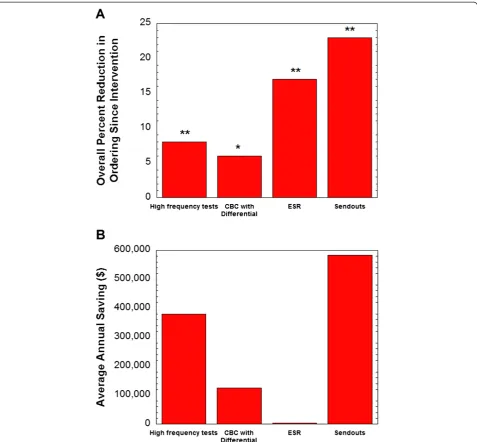
This case study over time describes five years of experience with interventions to improve laboratory test utilization at an academic medical center. The high-frequency laboratory tests showing the biggest declines in order volume post intervention were serum albumin (36%) and erythrocyte sedimentation rate (17%). Introduction of restrictions for 170 high-cost send-out tests resulted in a 23% decline in order volume. Targeted interventions reduced mis-orders involving several“look-alike”tests: 1,25-dihydroxyvitamin D, 25-hydroxyvitamin D; manganese, magnesium; beta-2-glycoprotein, beta-2-microglobulin. Lastly, targeted alerts reduced duplicate orders of germline genetic testing and orders of hepatitis B surface antigen within 2 weeks of hepatitis B vaccination.
Keywords:Blood cell count, Electronic health records, Medical informatics, Serum albumin, Vitamin D
Introduction
Laboratory testing is an integral part of modern medi-cine, with test results influencing diagnosis, prognosis, and management of disease [1,2]. With increasing con-cerns about the overall rising costs of healthcare, a num-ber of studies have analyzed utilization of laboratory testing. Inappropriate laboratory utilization (‘ misutiliza-tion’) may include underutilization (not ordering clinic-ally indicated testing) and overutilization (ordering tests too often), as well as ordering incorrect testing [3-15]. Laboratory testing contributes significantly to the overall cost of hospitalization. Moreover, misutilization of labora-tory testing can potentially result in substantial down-stream effects including iatrogenic blood loss, patient angst, invasive procedures, follow-up testing, and un-necessary specialist referrals [3,8,16-20].“Defensive” medi-cine practice is one factor underlying misutilization that can contribute substantial downstream costs including excess hospitalization [21].
Over the last several decades, a number of studies have described efforts to improve laboratory utilization
[4,7,22-26]. The interventions depend on the particular type of testing being targeted. Routine, automated la-boratory tests such as electrolyte and complete blood count (CBC) panels have been identified in multiple studies as being prone to overutilization, particularly in the inpatient setting where such testing may be ordered daily or even more often without strong clinical indi-cation [22,27]. Interventions to tackle overutilization of automated tests include limits on repetitive ordering, posting pricing of laboratory testing in the order entry system, and providing information to ordering providers on their ordering patterns relative to other providers [12,28-31]. To normalize data and reduce variability across patient populations, provider ordering patterns may be compared within specific diagnosis classifications (e.g., using diagnosis-related groups, DRGs, in the United States) or with patient data normalized to a variety of available severity index classifications [8,17].
Another category of laboratory testing that is frequently targeted in an effort to improve laboratory utilization are low-volume but high cost tests such as panels for genetic testing or autoantibodies [3,20,32,33]. In some cases, these panels may have direct costs of thousands of dollars (sometimes paid directly to external reference laboratories by hospitals, clinics, or laboratories) yet have poor * Correspondence:[email protected]
1
Department of Pathology, University of Iowa Hospitals and Clinics, Iowa City, IA 52242, USA
Full list of author information is available at the end of the article
reimbursement by payers. Some reference laboratory panels also include reflex algorithms that may generate substantial costs beyond the base charges. Inappropriate utilization of high cost, high complexity testing can have undesirable downstream effects that include unneeded additional testing, invasive procedures, and patient dis-tress for borderline abnormal results. Analogous to phar-macies, some institutions have developed“laboratory test formularies” that place tiered restrictions on ordering of certain tests [34,35]. Restrictions for specific testing can include need for pre-approval by pathology or another designated group prior to ordering or limitation of order-ing of certain tests to specific specialties (e.g., esoteric co-agulation tests by hematology/oncology specialists).
The widespread use of electronic medical records (EMRs) and computerized provider order entry (CPOE) systems has an impact on laboratory test utilization. Pro-viders working with computerized systems can poten-tially access thousands of possible laboratory tests from online test menus [23,24,29,36-38]. Available options for test order frequency and educational prompts may influ-ence ordering patterns. Moreover, similarly named tests may be confused, resulting in misutilization.
We present a case study over time of EMR-based strat-egies to optimize laboratory test utilization efforts at a 711 bed academic medical center in the United States. These included efforts targeted at high-cost reference laboratory tests, duplicate genetic tests, high-volume automated tests, and look-alike tests. These data add to the cumula-tive literature on methods to promote better utilization of clinical laboratory testing.
Methods
The data described in this manuscript involved multiple projects with University of Iowa Institutional Review Board (IRB) approval. These included IRB identification numbers 201311748 and 201407791(improving lab test utilization), 201404755 and 201208751 (drug of abuse testing), 201210797 (automation in clinical laboratory), and 201210796 (vitamin D testing). Some of the initiatives originated with quality improvement/management pro-jects by pathology residents and fellows. The University of Iowa Hospitals and Clinics (UIHC) is a 711 bed state aca-demic medical center that serves as a tertiary/quaternary care center. The medical center includes intensive care units (neonatal, medical, pediatric, surgical/neurologic), an emergency treatment center, and outpatient clinics. The electronic medical record (EMR) for the UIHC system changed to Epic (Epic Systems Inc., Madison, WI, USA) in May 2009, with uploading of historical data from paper charts and the previous EMRs back to 1996. All interven-tions described in this study occurred after the change in EMR in May 2009. The retrospective analysis covers the time period from May 2, 2009 until July 22, 2014.
Organization of information systems and pathology testing
Throughout the entire period of retrospective study, com-puterized provider order entry (CPOE) within the UIHC system (including hospital units and outpatient clinics) was available in Epic to licensed independent providers. Add-on orders can also be placed within Epic. The labora-tory information system (LIS) was Cerner (Kansas City, MO, USA)“Classic”, version 015, for all pathology testing. The EMR and LIS are managed by University of Iowa Hospitals Computing and Information Services. For pro-vider orders sent on paper or transmitted verbally (e.g., by phone), laboratory-initiated orders were placed by clinical laboratory staff in the Cerner LIS. The UIHC core la-boratory uses Data Innovations (South Burlington, VT) Instrument Manager (“Middleware”) for interfacing of in-struments and for control of reflexive rules for automated tests [39]. Duplicate cancellation of testing was done within the Cerner LIS.
Pathology services at UIHC are primarily provided by clinical laboratories within the Department of Pathology (core chemistry/hematology laboratory, microbiology/ molecular laboratories, DeGowin Blood Center, two crit-ical care laboratories, and anatomic pathology laborator-ies). Send-out testing to reference laboratories is managed by the Department of Pathology. A hospital subcommittee (the Diagnostics Services Subcommittee) provides over-sight of laboratory and radiology testing. This subcom-mittee reports to the Hospital Advisory Comsubcom-mittee and includes physicians and administrators from the Depart-ment of Pathology, DepartDepart-ment of Radiology, and multiple clinical departments (e.g., Department of Medicine, De-partment of Pediatrics, and DeDe-partment of Surgery). In the time period of retrospective study, the Diagnostic Services Subcommittee and Hospital Advisory Committee supported initiatives to improve utilization of laboratory testing. This included formation of working groups to address specific issues such as management of very high-cost genetic laboratory testing.
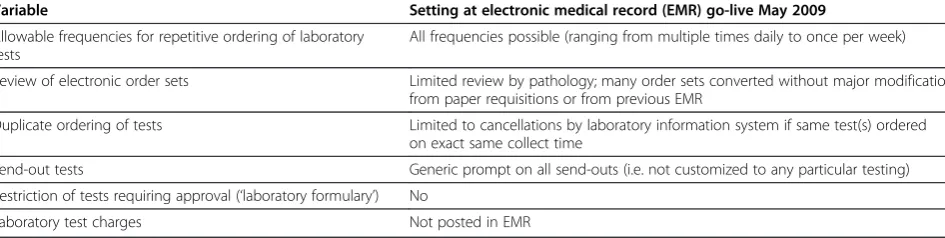
Original settings of the EMR
plasma sodium ordered on same accession number as the basic metabolic panel, which also included a plasma sodium). There were few prompts specific to tests. All send out testing had a generic warning stating that such testing should have approval of the attending physician of record. Pricing of laboratory testing was not available at EMR go-live; this was a change from the prior EMR, which included the Medicare charges for most labora-tory testing.
Statistical and cost analyses
Statistical analysis was done in SPSS (PASW Statistics 18, Chicago, IL, USA). Non-parametric Mann–Whitney tests were used for comparison of utilization between pre- and post-intervention periods. Data were normalized to number of patient days.
Cost savings of interventions within the EMR were es-timated based on direct costs of testing, using decreases in testing post-intervention compared to the previous year pre-implementation. The cost analysis of in-house testing included labor (e.g., bench technologists, labora-tory assistants) and reagents/supplies (calibrators, con-trols, pipettes, dilution tubes, etc.). The direct costs of reference laboratory testing included labor and reagents/ supplies to process specimen for send-out and the invoice costs paid by UIHC to the reference laboratory.
Results
Interventions put in place
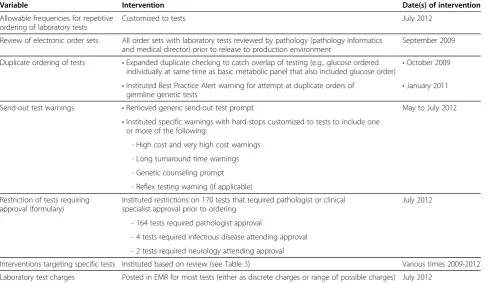
Over the 3 years following installation of the new EMR in 2009, interventions were put in place to promote bet-ter, more cost-effective utilization of laboratory testing. The broad changes are summarized in Tables 2, 3, 4 and 5 and included: limitations on selectable frequency of ordering of laboratory testing, expanded duplicate check-ing, removal of the generic send out testing warncheck-ing, introduction of a variety of targeted test warnings based on data analysis, posting of laboratory test charges in CPOE order entry, and implementation of a send out test formulary. Additional file 1 details the maximum allow-able frequency for specific tests that could be placed in a single order (Additional file 1A) and also details restrictions
on selected send-outs (Additional file 1B). Additional file 2 contains the specific verbiage found in warning prompts and best practice alerts. These interventions occurred at various time points; in some cases, multiple interventions affected a single test. The following sections summarize the effects of these interventions.
Restrictions on send out testing
Beginning in July 2012, a total of 170 send out tests became restricted (Table 2, Additional file 1B), requiring approval from a pathologist (164 tests), an infectious dis-ease attending (4 tests), or a neurology attending (2 tests). Post implementation, orders for restricted send outs decreased overall by 23% with an overall annual insti-tutional savings in direct costs of approximately $600,000 (Figure 1). The tests with the largest reduction in ordering were (summarized as average tests/month pre-intervention to tests/month post-intervention): serum paraneoplastic autoantibody panel (8.0 to 2.3 tests/month), vitamin B12
panel (as opposed to a single vitamin B12level; 8.7 to 2.1
tests/month), cerebrospinal fluid paraneoplastic autoanti-body panel (3.8 to 1.7 tests/month), and Fibrospect II® (3.8 to 1.8 tests/month). These four tests required pathologist approval. Analysis of the calls received by pathology resi-dents and faculty related to approval of restricted send out tests over a twelve month period showed that 41% of the calls were seeking approval for the paraneoplastic autoan-tibody panels. Overall, 60% of requests for approval of re-stricted send out tests were not granted. Our analysis does not capture providers who started to order the test but did not attempt to seek approval after seeing warnings and/or the need for approval.
Of the four HIV tests requiring infectious disease attending approval (HIV Genotyping, HIV-1 Proviral DNA, HIV-2 Proviral DNA, HIV Phenotyping), overall orders rose by an average of 0.3 tests per month, which appeared to be driven by an increase in HIV genotyping orders, mainly directly ordered from Infectious Disease outpatient clinics. An analysis of ordering patterns showed these tests were ordered appropriately and re-flected an increase in the HIV-positive population treated at the medical center. Other than HIV Genotyping, orders Table 1 Original settings in electronic medical record
Variable Setting at electronic medical record (EMR) go-live May 2009
Allowable frequencies for repetitive ordering of laboratory tests
All frequencies possible (ranging from multiple times daily to once per week)
Review of electronic order sets Limited review by pathology; many order sets converted without major modification from paper requisitions or from previous EMR
Duplicate ordering of tests Limited to cancellations by laboratory information system if same test(s) ordered on exact same collect time
Send-out tests Generic prompt on all send-outs (i.e. not customized to any particular testing)
Restriction of tests requiring approval (‘laboratory formulary’) No
for the other 3 restricted HIV tests all dropped post inter-vention, and none showed evidence of misutilization. The two tests that required neurology attending approval, MUSK Antibody Panel and Myasthenia Gravis Reflexive Panel, decreased by 0.8 and 0.4 tests/month, respectively.
Impacts on high-volume testing
The major interventions that targeted high volume la-boratory tests were introduction of electronic duplicate test cancellation and modification of the allowable op-tions for repetitive frequency that could be selected in a single electronic order (Table 4, Additional file 1). Prior to the introduction of automated electronic duplicate
test cancellation in October 2009, a warning prompt fired to warn the ordering provider of duplicate ordering and provided option for test cancellation. Data following EMR go-live in May to September 2009 showed that this warning prompt system was ineffective and overridden more than 95% of the time. The intervention on select-able test frequencies in July 2012 did not prevent pro-viders from placing multiple separate orders at different points in time to accomplish the same frequency.
Overall, the order volume of high-frequency tests (adjusted for patient days) declined by 8% following the changes in test order frequency in the EMR ordering menus (Figure 1). The laboratory tests that showed the
Table 3 Examples of specific interventions within electronic medical record order entry system
Test(s) Problem Intervention Date of intervention
1,25-Dihydroxyvitamin D Mis-orders (25-hydroxyvitamin D intended) •Specific warning prompt October 2009
•Education
•Correction of order sets Manganese Mis-orders (usually erroneously ordered
for magnesium)
•Specific warning prompt November 2009
Hepatitis B surface antigen False positives due to recent administration by hepatitis B vaccine
Best Practice Alert if testing ordered within two weeks of recent vaccination
September 2011
Beta-2-microglobulin Mis-orders for beta-2-glycoprotein, particularly
in obstetrics •
Specific warning prompt June 2010 •Correction of order sets
Complete blood count (CBC) with differential
Repetitive over-ordering of CBC with differential when CBC alone would suffice
Restricted repetitive ordering options of differential to once daily
June 2012 Table 2 Changes to electronic medical record affecting laboratory test ordering
Variable Intervention Date(s) of intervention
Allowable frequencies for repetitive ordering of laboratory tests
Customized to tests July 2012
Review of electronic order sets All order sets with laboratory tests reviewed by pathology (pathology informatics and medical director) prior to release to production environment
September 2009
Duplicate ordering of tests •Expanded duplicate checking to catch overlap of testing (e.g., glucose ordered individually at same time as basic metabolic panel that also included glucose order)
•October 2009
•Instituted Best Practice Alert warning for attempt at duplicate orders of
germline genetic tests •
January 2011
Send-out test warnings •Removed generic send-out test prompt May to July 2012
•Instituted specific warnings with hard-stops customized to tests to include one or more of the following:
- High cost and very high cost warnings
- Long turnaround time warnings
- Genetic counseling prompt
- Reflex testing warning (if applicable)
Restriction of tests requiring approval (formulary)
Instituted restrictions on 170 tests that required pathologist or clinical specialist approval prior to ordering
July 2012
- 164 tests required pathologist approval
- 4 tests required infectious disease attending approval
- 2 tests required neurology attending approval
Interventions targeting specific tests Instituted based on review (see Table3) Various times 2009-2012
biggest changes in order volume post intervention were serum albumin (36% decline) and erythrocyte sedimen-tation rate (ESR) (17% decline). Orders of a differential with a CBC declined 6%. The overall savings in direct costs was estimated at slightly less than $400,000 an-nually (Figure 1; see Methods for details). The de-crease in albumin ordering was consistent with data prior to intervention showing that 19.6% of albumin orders were repeats within one day of a prior result and 29.9% were repeats within one week of prior order in a nine month period spanning 2009–2010. The decrease in ESR ordering was also consistent with pre-intervention data showing that 25.1% of ESR orders were repeats within 48 hours of a previous order in a six month period in 2009.
Duplicate genetic tests
In January 2011, a Best Practice Alert (BPA) was put into effect to catch attempts at ordering a germline genetic test that had been previously ordered and resulted in the EMR. This BPA did not apply to genetic testing for som-atic mutations (such as in cancer testing) and gave the ordering provider a warning that the test had already been performed and gave the option to cancel the testing or to provide a reason why the testing should be re-performed. The duplicate genetic testing BPA was ef-fective in preventing 99 orders, 59 of which were attempted orders for a combined panel of Factor V Leiden/prothrombin mutations and 20 were for hemo-chromatosis mutation analysis. Additional duplicate gen-etic tests prevented by the BPA included FMR1 (fragile X mutation analysis, n = 9), cystic fibrosis mutation analysis (n = 4), and SMN1 (spinal muscular atrophy,n = 2), along with five additional tests that were prevented one time each (CYP21A2, FBN1, MEN1, RET, SCN1A gene se-quencing panels). Of note, eight of the duplicate orders prevented would have exceeded $1,000 each in direct ref-erence laboratory costs to the institution. Seven duplicate genetic test BPAs were overridden. Of these cases, five were due to the testing having changed (e.g., more exten-sive mutation analysis now available or a significant change in test analytical methodology) since the original testing performed.
Hepatitis B surface antigen orders
In September 2011, a BPA was put in place to pre-vent ordering of laboratory testing for hepatitis B sur-face antigen within two weeks of administration of a dose of hepatitis B vaccine (either individual formula-tions of the vaccine or formulaformula-tions combined with hepatitis A vaccine). The basis for this BPA was pub-lished in a retrospective study showing that recent administration of hepatitis B vaccine was a frequent cause of weakly positive hepatitis B surface antigen results at UIHC, particularly in the adult dialysis po-pulation [40]. The findings at UIHC were similar to previous published reports on this phenomenon [41-46]. Since the September 2011 go-live of the hepatitis B BPA, 68 orders were prevented. This dropped the overall rate of laboratory testing of hepatitis B surface antigen within two weeks of a vaccine dose from 2.0/ month (before intervention) to 0.3/month (post inter-vention). Of the 68 orders that were prevented, 23 were on inpatient units, 19 were in solid organ trans-plant clinic, 10 were in primary care clinic, and five were in dialysis clinic. Six of the patients were in-fants age 13 months or younger at time of order, and there were an additional five pediatric patients between the ages of two years and 14 years at the time of ordering.
Table 4 Maximum repetitive order frequencies available by single order
Maximum repetitive frequency allowed in a single order
Examples of tests in this category
Once CBC differential
Blood smear morphology review by technologist or pathologist
Albumin
Alpha-fetoprotein
Amylase
Angiotensin converting enzyme
C-Peptide
C-Reactive Protein
CA-125
Epstein-Barr virus serologies
Hemoglobin A1C
Hemoglobin electrophoresis
Lipase
Lipids (cholesterol, high-density lipoprotein, low-density lipoprotein, triglycerides)
Molecular pathology (e.g., Factor V Leiden genotyping)
Phosphorus
(Most) Send-out testing
Thyroid stimulating hormone
Every 72 hours Erythrocyte Sedimentation Rate
Serum free light chains (kappa/lambda)
Daily Basic metabolic panel
Electrolyte panel
Once per week Aspergillusgalactomannan Histoplasma antigen
“Look-alike”laboratory tests
Two quality improvement projects within the Department of Pathology focused on mis-orders of laboratory tests with similar looking names. These analyses revealed two pairs of tests which were getting frequently confused: magnesium and manganese; 2-glycoprotein and beta-2-microglobulin. Analysis of manganese orders estimated that 9.2% of orders were errors in which magnesium was the intended order. This was evident in chart review where no evidence could be found of why manganese was ordered. At UIHC, the most frequent intended orders for manganese were either related to nutrition (most often issues with parenteral nutrition, in which manganese over-load can occur in specific populations such as in pre-mature infants [47,48]) or specific workup of possible manganese toxicity, such as may occur in individuals whose occupation can involve manganese exposure (e.g., welding) [47]. To prevent mis-orders of manganese, a warning prompt was put in place in November 2009. This intervention was highly effective with only a single mis-order identified post intervention.
For beta-2-glycoprotein and beta-2-microglobulin, possible mis-orders were noted by clusters of orders for beta-2-microglobulin for obstetric patients in 2009 and 2010. The main clinical utility for serum beta-2-microglobulin is in the workup of multiple myeloma [49] and this would be an unusual order in the ob-stetric population. In a period of 10 months, at least 11 mis-orders for beta-2-microglobulin occurred in obstetric patients. In all 11 patients, the workup at the time of the outpatient encounter was for hypercoagulable disorder (including antiphospholipid antibody syndrome) as a possible explanation of recurrent pregnancy loss, with
the intended order being beta-2-glycoprotein, a factor known to be associated with recurrent pregnancy loss in the setting of antiphospholipid antibody syndrome [50]. Identification of this problem led to the discovery that an order set for recurrent pregnancy loss used by Obstetrics/ Gynecology erroneously had beta-2-microglobulin instead of beta-2-glycoprotein. Correction of the order set, provider education, and a warning prompt for beta-2-microglobulin orders was highly effective in prevent-ing future mis-orders. Since the introduction of the warning prompt in June 2010, only 3 mis-orders for beta-2-microglobulin have been noted for obstetric patients. These were sporadic mis-orders by 3 different providers and not temporally associated with one another or with use of an order set.
Vitamin D mis-ordering
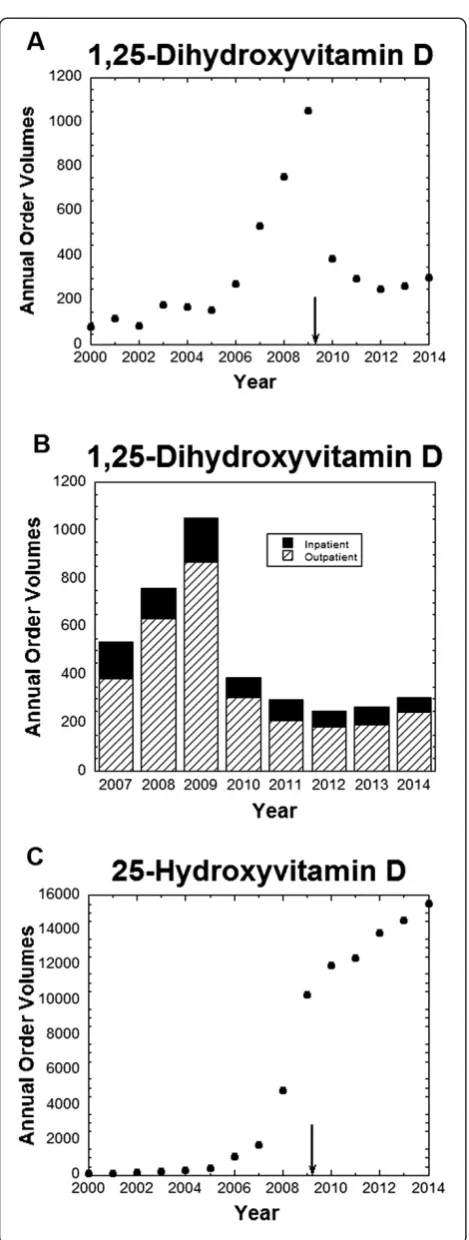
An example of mis-ordering with much higher magni-tude occurred with vitamin D testing. Following the switch to the new EMR in 2009, ordering of 1,25-dihy-droxyvitamin D (calcitriol) increased substantially. Total annual orders for this send-out test were higher in 2006–2008 compared to 2000–2005 and reached their highest levels in 2009 (Figure 2A). 1,25-Dihydroxyvitamin D is the more biologically active form of vitamin D, but is not the appropriate test for routine nutritional screening of vitamin D status, for which 25-hydroxyvitamin D is preferred [51,52]. In fact, 1,25-dihydroxyvitamin D can change throughout the day for a patient and may provide a misleading measure of overall vitamin D status.
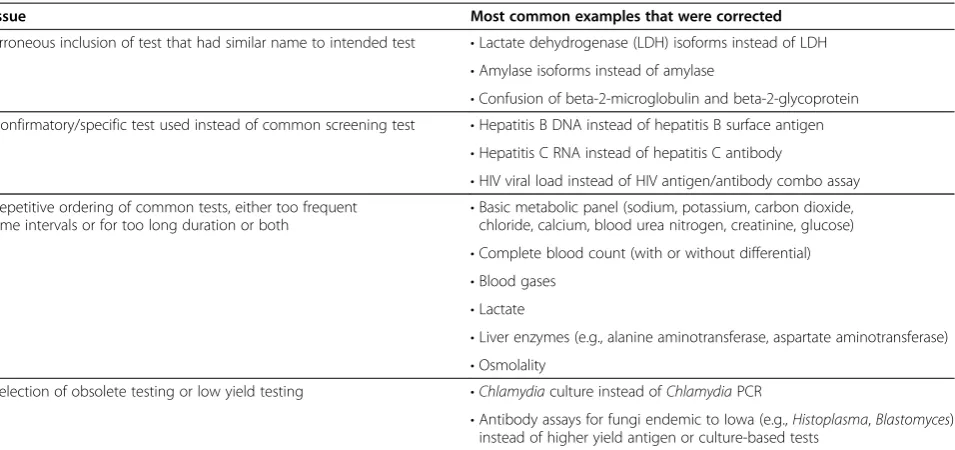
Analysis revealed that 43 EMR order sets had been constructed in 2009 that only contained 1,25-dihy-droxyvitamin D and not 25-hy1,25-dihy-droxyvitamin D in the Table 5 Most common issues detected by and subsequently corrected following pathology review of draft EMR order sets
Issue Most common examples that were corrected
Erroneous inclusion of test that had similar name to intended test •Lactate dehydrogenase (LDH) isoforms instead of LDH •Amylase isoforms instead of amylase
•Confusion of beta-2-microglobulin and beta-2-glycoprotein Confirmatory/specific test used instead of common screening test •Hepatitis B DNA instead of hepatitis B surface antigen
•Hepatitis C RNA instead of hepatitis C antibody
•HIV viral load instead of HIV antigen/antibody combo assay Repetitive ordering of common tests, either too frequent
time intervals or for too long duration or both
•Basic metabolic panel (sodium, potassium, carbon dioxide, chloride, calcium, blood urea nitrogen, creatinine, glucose) •Complete blood count (with or without differential) •Blood gases
•Lactate
•Liver enzymes (e.g., alanine aminotransferase, aspartate aminotransferase) •Osmolality
Selection of obsolete testing or low yield testing •Chlamydiaculture instead ofChlamydiaPCR
list of laboratory tests. In 10 cases, the order for 1,25-dihy-droxyvitamin D was pre-selected; in 3 cases, the order was pre-selected and could not be unselected if the order set were utilized. Discussion with the providers assigned “ownership”of these 43 order sets revealed that the intent in every case was routine screening of vitamin D status, and thus the 1,25-dihydroxyvitamin D was not appro-priate. All 43 order sets were corrected and a specific warning prompt was put in place for 1,25-dihydroxy-vitamin D. Further interventions included a system-wide broadcast and targeted education efforts by
pathology and endocrinology. These efforts were highly effective in limiting 1,25-dihydroxyvitamin D orders, which returned to ordering volumes similar to those in 2006 (Figure 2A). Breakdown of the 1,25-dihydrox-yvitamin D orders by location of order showed that increased ordering of 1,25-dihydroxyvitamin D in 2007– 2009 occurred in both outpatient clinics and inpatient units (Figure 2B). In contrast to 1,25-dihydroxyvitamin D, orders for 25-hydroxyvitamin D have continued to in-crease through 2014 (Figure 2C), as we have noted in a previous study [53].
Figure 1Changes in laboratory test ordering.Data is broken down into high frequency tests (core laboratory chemistry and hematology testing excluding CBC with differential), CBC with differential, erythrocyte sedimentation rate (ESR), and restricted send-out testing with effects on
Discussion
A number of published studies have described efforts to improve laboratory test utilization [4,7,22-26]. Routine, automated tests such as electrolyte panels have been consistently identified as being overutilized, especially on inpatient units [22,27]. Moreover, this repetitive testing can lead to significant iatrogenic blood loss [16,19]. Our study found that the menu of choices for repetitive ordering of testing has a direct impact on ordering pat-terns. In particular, the largest impact was on albumin and ESR, two tests that change slowly (over the course of days and not hours) and thus should rarely need to be monitored daily or more often. The “default” configur-ation for the EMR at our institution was to have a wide range of frequency choices available for every laboratory test. For many tests, repetitive testing has no clinical justification and should not be available as an option.
Our case study over time adds to the published litera-ture that active utilization efforts can impact low-volume, high-cost reference laboratory testing [3,20,32,33]. Some of these efforts are similar to the formularies used by pharmacy to manage medication usage [34,35]. In terms of decreased ordering, the biggest impact in our insti-tution on restricted send-out testing was on the paraneo-plastic autoantibody panels (serum and CSF) and an expanded vitamin B12panel.
The issue of “look-alike” medications is an issue that has been actively targeted by pharmacies because of the potential for patient harm [54,55]. Our study uncovered several pairs of look-alike laboratory tests that were con-fused: 1,25-dihydroxyvitamin D and 25-hydroxyvitamin D; manganese and magnesium; beta-2-glycoprotein and beta-2-microglobulin. Of these, vitamin D mis-ordering was of the greatest magnitude and caused in part by dozens of electronic order sets that erroneously had 1,25-dihydroxyvitamin D instead of 25-hydroxyvitamin D in the list of laboratory tests. These results illustrate the importance of careful review of order sets prior to release to the production environment of the EMR. Poorly constructed order sets have the potential to magnify errors and even consolidate confusion (“if it is in an order set, it must be correct”).
Lastly, we found that targeted BPAs were successful in reducing duplicate ordering of germline genetic testing and preventing orders of hepatitis B surface antigen within 2 weeks of hepatitis B vaccination. Germline gen-etic tests should rarely need to be repeated unless there is concern of inaccurate test results (in which case the laboratory should be contacted to investigate) or the methodology and/or scope of testing have changed in a manner that warrants retesting in specific patients. The du-plicate genetic test BPA most often prevented repeat testing of factor V Leiden/prothrombin and hemochromatosis mutation analyses.
The main limitation of our case study is that the ana-lysis is retrospective and that multiple interventions were done over time that could impact laboratory test orders. The interventions put in place were not done as part of a controlled research study but evolved over time to improve clinical care. There is also the possibility that other factors not measured impacted laboratory test order. Nevertheless, it is hoped that the results described here provide useful experience for other institutions attempting to manage laboratory test utilization.
Conclusions
Relatively simple changes in CPOE within EMR can have a significant impact on laboratory test utilization. Our case study is consistent with previous studies showing that development of utilization management for high cost, specialized laboratory testing is an effective tool.
Additional files
Additional file 1:Maximum Allowable Test Frequencies and Restricted Send-outs.Spreadsheet with complete data on allowable test frequencies per single order and details on restrictions of selected send-out tests.
Additional file 2:Details on Prompts in the Electronic Medical Record.File contains the verbiage of prompts for specific purposes in the electronic medical record.
Abbreviations
BPA:Best practice alert; CBC: Complete blood count; CPOE: Computerized provider order entry; DRG: Diagnosis-related group; EMR: Electronic medical record; ESR: Erythrocyte sedimentation rate; UIHC: University of Iowa Hospitals and Clinics.
Competing interests
The authors declare that they have no competing interests.
Authors’contributions
MDK, DC, and JAK-T were involved in the study concept and design, analysis and interpretation of the data. AD, BS, BWD, and MPG performed analysis of reference laboratory test ordering. CDR performed the analysis of the hepatitis B surface antigen ordering patterns. SBK performed analysis of erythrocyte sedimentation rate ordering patterns. BK performed the analysis of“look-alike”laboratory tests. MDK drafted the manuscript. All authors have read and approved the final manuscript.
Acknowledgements
The efforts to improve utilization of laboratory tests at our institution occurred over the course of years and would not have been possible without the hard work of many people in multiple departments. The authors gratefully acknowledge support from other current and former members of the Department of Pathology (Jeff Kulhavy, Sue Zaleski, Sue Dane, Joshua Christain, Robert Rotzoll), Hospital Computing Information Systems (especially Karmen Dillon, Nick Dreyer, Dean Aman, Julie Fahnle, Kathy Eyres, Kevin Cano, Sarah Hacker). The authors also express gratitude to Dr. Ronald Feld (emeritus faculty member, former medical director of the core chemistry laboratory) for being a champion of early laboratory utilization efforts at Iowa. MDK thanks Drs. Peter Sims (University of Rochester School of Medicine) and Brian Jackson (University of Utah School of Medicine, ARUP Laboratories) for helpful discussions on efforts to improve laboratory utilization at other institutions.
Author details 1
Department of Pathology, University of Iowa Hospitals and Clinics, Iowa City, IA 52242, USA.2Department of Anesthesia, University of Iowa Hospitals
and Clinics, Iowa City, IA 52242, USA.3Stead Family Department of Pediatrics, University of Iowa Hospitals and Clinics, Iowa City, IA 52242, USA.
4
Department of Internal Medicine, University of Iowa Hospitals and Clinics, Iowa City, IA 52242, USA.
Received: 6 October 2014 Accepted: 4 February 2015
References
1. Benson ES. The responsible use of the clinical laboratory. Clin Biochem. 1986;19:262–70.
2. Fang C, Otero HJ, Greenberg D, Neumann PJ. Cost-utility analyses of diagnostic laboratory tests: a systematic review. Value Health. 2011;14:1010–8.
3. Dickerson JA, Cole B, Conta JH, Wellner M, Wallace SE, Jack RM, et al. Improving the value of costly genetic reference laboratory testing with active utilization management. Arch Pathol Lab Med. 2014;138:110–3. 4. Huck A, Lewandrowski K. Utilization management in the clinical laboratory:
an introduction and overview of the literature. Clin Chim Acta. 2014;427:111–7.
5. Kim JY, Dzik WH, Dighe AS, Lewandrowski KB. Utilization management in a large urban academic medical center: a 10-year experience. Am J Clin Pathol. 2011;135:108–18.
6. Kumwilaisak K, Noto A, Schmidt UH, Beck CI, Crimi C, Lewandrowski K, et al. Effect of laboratory testing guidelines on the utilization of tests and order entries in a surgical intensive care unit. Crit Care Med. 2008;36:2993–9. 7. Lewandrowski K. Managing utilization of new diagnostic tests. Clin Leadersh
Manag Rev. 2003;17:318–24.
8. Melanson SE. Establishing benchmarks and metrics for utilization management. Clin Chim Acta. 2014;427:127–30.
9. Snozek C, Kaleta E, Hernandez JS. Management structure: establishing a laboratory utilization program and tools for utilization management. Clin Chim Acta. 2014;427:118–22.
10. Van Cott EM. Laboratory test interpretations and algorithms in utilization management. Clin Chim Acta. 2014;427:188–92.
11. van Walraven C, Naylor CD. Do we know what inappropriate laboratory utilization is? A systematic review of laboratory clinical audits. JAMA. 1998;280:550–8.
12. Wang TJ, Mort EA, Nordberg P, Chang Y, Cadigan ME, Mylott L, et al. A utilization management intervention to reduce unnecessary testing in the coronary care unit. Arch Intern Med. 2002;162:1885–90.
13. Warren JS. Laboratory test utilization program: structure and impact in a large academic medical center. Am J Clin Pathol. 2013;139:289–97. 14. Werner M. Appropriate utilization and cost control of the hospital
laboratory: panel testing and repeat orders. Clin Chim Acta. 1995;233:1–17. 15. Yeh DD. A clinician's perspective on laboratory utilization management.
Clin Chim Acta. 2014;427:145–50.
16. Branco BC, Inaba K, Doughty R, Brooks J, Barmparas G, Shulman I, et al. The increasing burden of phlebotomy in the development of anaemia and need for blood transfusion amongst trauma patients. Injury. 2012;43:78–83. 17. MacMillan D. Calculating cost savings in utilization management. Clin Chim
18. Rao SK. Utilization management in the changing health-care environment. Clin Chim Acta. 2014;427:109–10.
19. Shaffer C. Diagnostic blood loss in mechanically ventilated patients. Heart Lung. 2007;36:217–22.
20. Sluss PM. Reference laboratory utilization management. Clin Chim Acta. 2014;427:167–72.
21. Rothberg MB, Class J, Bishop TF, Friderici J, Kleppel R, Lindenauer PK. The Cost of Defensive Medicine on 3 Hospital Medicine Services. JAMA Intern Med. 2014, In press.
22. Ezzie ME, Aberegg SK, O'Brien Jr JM. Laboratory testing in the intensive care unit. Crit Care Clin. 2007;23:435–65.
23. Fryer AA, Smellie WS. Managing demand for laboratory tests: a laboratory toolkit. J Clin Pathol. 2013;66:62–72.
24. Jackson BR. Managing laboratory test use: principles and tools. Clin Lab Med. 2007;27:733–48.
25. Larsson A, Palmer M, Hulten G, Tryding N. Large differences in laboratory utilisation between hospitals in Sweden. Clin Chem Lab Med. 2000;38:383–9.
26. Rao GG, Crook M, Tillyer ML. Pathology tests: is the time for demand management ripe at last? J Clin Pathol. 2003;56:243–8.
27. Ng VL. Utilization management in the core laboratory. Clin Chim Acta. 2014;427:154–7.
28. Calderon-Margalit R, Mor-Yosef S, Mayer M, Adler B, Shapira SC. An adminis-trative intervention to improve the utilization of laboratory tests within a university hospital. Int J Qual Health Care. 2005;17:243–8.
29. Emerson JF, Emerson SS. The impact of requisition design on laboratory utilization. Am J Clin Pathol. 2001;116:879–84.
30. Miyakis S, Karamanof G, Liontos M, Mountokalakis TD. Factors contributing to inappropriate ordering of tests in an academic medical department and the effect of an educational feedback strategy. Postgrad Med J. 2006;82:823–9.
31. Tierney WM, Miller ME, McDonald CJ. The effect on test ordering of informing physicians of the charges for outpatient diagnostic tests. N Engl J Med. 1990;322:1499–504.
32. Kotzer KE, Riley JD, Conta JH, Anderson CM, Schahl KA, Goodenberger ML. Genetic testing utilization and the role of the laboratory genetic counselor. Clin Chim Acta. 2014;427:193–5.
33. MacMillan D, Lewandrowski E, Lewandrowski K. An analysis of reference laboratory (send out) testing: an 8-year experience in a large academic medical center. Clin Leadersh Manag Rev. 2004;18:216–9.
34. Jackson BR. Laboratory formularies. Clin Chim Acta. 2014;427:151–3. 35. Jackson BR, Krasowski MD, Sims PJ. Laboratory diagnostic oversight
committees and the profession of laboratory medicine. Am J Clin Pathol. 2013;139:273–4.
36. Durand-Zaleski I, Rymer JC, Roudot-Thoraval F, Revuz J, Rosa J. Reducing unnecessary laboratory use with new test request form: example of tumour markers. Lancet. 1993;342:150–3.
37. Levick DL, Stern G, Meyerhoefer CD, Levick A, Pucklavage D. Reducing unnecessary testing in a CPOE system through implementation of a targeted CDS intervention. BMC Med Inform Decis Mak. 2013;13:43. 38. Shirts BH, Larsen N, Jackson BR. Utilization and utility of clinical laboratory
reports with graphical elements. J Pathol Inform. 2012;3:26. 39. Krasowski MD, Davis SR, Drees D, Morris C, Kulhavy J, Crone C, et al.
Autoverification in a core clinical chemistry laboratory at an academic medical center. J Pathol Inform. 2014;5:13.
40. Rysgaard CD, Morris CS, Drees D, Bebber T, Davis SR, Kulhavy J, et al. Positive hepatitis B surface antigen tests due to recent vaccination: a persistent problem. BMC Clin Pathol. 2013;12:15.
41. Bernstein SR, Krieger P, Puppala BL, Costello M. Incidence and duration of hepatitis B surface antigenemia after neonatal hepatitis B immunization. J Pediatr. 1994;125:621–2.
42. Brodersen HP, Beckers B, Kohler H, Dahlmanns C, Kruska L, Larbig D. The test for hepatitis B surface antigen is transiently positive after vaccination with recombinant vaccine. Nephrol Dial Transplant. 1997;12:2756–7.
43. Dow BC, Munro H, Frame D, Yates P. Several assays show hepatitis B positivity soon after vaccination. BMJ. 1998;316:311.
44. Janzen L, Minuk GY, Fast M, Bernstein KN. Vaccine-induced hepatitis B surface antigen positivity in adult hemodialysis patients: incidental and surveillance data. J Am Soc Nephrol. 1996;7:1228–34.
45. Lunn ER, Hoggarth BJ, Cook WJ. Prolonged hepatitis B surface antigenemia after vaccination. Pediatrics. 2000;105:E81.
46. Ly D, Yee Jr HF, Brezina M, Martin P, Gitnick G, Saab S. Hepatitis B surface antigenemia in chronic hemodialysis patients: effect of hepatitis B immunization. Am J Gastroenterol. 2002;97:138–41.
47. Levy BS, Nassetta WJ. Neurologic effects of manganese in humans: a review. Int J Occup Environ Health. 2003;9:153–63.
48. Zlotkin SH, Atkinson S, Lockitch G. Trace elements in nutrition for premature infants. Clin Perinatol. 1995;22:223–40.
49. Dimopoulos M, Kyle R, Fermand JP, Rajkumar SV, San Miguel J, Chanan-Khan A, et al. Consensus recommendations for standard investigative workup: report of the International Myeloma Workshop Consensus Panel 3. Blood. 2011;117:4701–5.
50. Heilmann L, von Tempelhoff GF, Pollow K. Antiphospholipid syndrome in obstetrics. Clin Appl Thromb Hemost. 2003;9:143–50.
51. Holick MF. Vitamin D deficiency. N Engl J Med. 2007;357:266–81. 52. Krasowski MD. Pathology consultation on vitamin D testing. Am J Clin
Pathol. 2011;136:507–14.
53. Genzen JR, Gosselin JT, Wilson TC, Racila E, Krasowski MD. Analysis of vitamin D status at two academic medical centers and a national reference laboratory: result patterns vary by age, gender, season, and patient location. BMC Endocr Disord. 2013;13:52.
54. Filik R, Purdy K, Gale A, Gerrett D. Labeling of medicines and patient safety: evaluating methods of reducing drug name confusion. Hum Factors. 2006;48:39–47.
55. Lambert BL. Predicting look-alike and sound-alike medication errors. Am J Health Syst Pharm. 1997;54:1161–71.
Submit your next manuscript to BioMed Central and take full advantage of:
• Convenient online submission
• Thorough peer review
• No space constraints or color figure charges
• Immediate publication on acceptance
• Inclusion in PubMed, CAS, Scopus and Google Scholar
• Research which is freely available for redistribution