R E V I E W
Open Access
Distribution- and anchor-based methods to
determine the minimally important
difference on patient-reported outcome
questionnaires in oncology: a structured
review
Ahmad Ousmen
1*†, Célia Touraine
2†, Nina Deliu
3, Francesco Cottone
3, Franck Bonnetain
1,4, Fabio Efficace
3,
Anne Brédart
5,6, Caroline Mollevi
2,4,7and Amélie Anota
1,4Abstract
Background:Interpretation of differences or changes in patient-reported outcome scores should not only consider statistical significance, but also clinical relevance. Accordingly, accurate determination of the
minimally important difference (MID) is crucial to assess the effectiveness of health care interventions, as well as for sample size calculation. Several methods have been proposed to determine the MID. Our aim was to review the statistical methods used to determine MID in patient-reported outcome (PRO) questionnaires in cancer patients, focusing on the distribution- and anchor-based approaches and to present the variability of criteria used as well as possible limitations.
Methods: We performed a systematic search using PubMed. We searched for all cancer studies related to MID determination on a PRO questionnaire. Two reviewers independently screened titles and abstracts to identify relevant articles. Data were extracted from eligible articles using a predefined data collection form. Discrepancies were resolved by discussion and the involvement of a third reviewer.
Results: Sixty-three articles were identified, of which 46 were retained for final analysis. Both distribution- and anchor-based approaches were used to assess the MID in 37 studies (80.4%). Different time points were used to apply the distribution-based method and the most frequently reported distribution was the 0.5 standard deviation at baseline. A change in a PRO external scale (N= 13, 30.2%) and performance status (N= 15, 34.9%) were the most frequently used anchors. The stability of the MID over time was rarely investigated and only 28.2% of studies used at least 3 assessment timepoints. The robustness of anchor-based MID was questionable in 37.2% of the studies where the minimal number of patients by anchor category was less than 20.
Conclusion:Efforts are needed to improve the quality of the methodology used for MID determination in PRO questionnaires used in oncology. In particular, increased attention to the sample size should be paid to guarantee reliable results. This could increase the use of these specific thresholds in future studies.
Keywords:Patient-reported outcomes, Minimally important difference, Anchor-based approach, Distribution-based approach
* Correspondence:[email protected]
†Ahmad Ousmen and Célia Touraine contributed equally to this work.
1Methodology and Quality of Life in Oncology Unit (INSERM UMR 1098),
University Hospital of Besançon, Besançon, France
Full list of author information is available at the end of the article
Introduction
The use of patient-reported outcomes (PRO), including health-related quality of life (HRQOL), in cancer clinical trials has substantially increased over the years [1]. PROs are critical to fully understand overall treatment effect-iveness and to establish the benefit of a given experi-mental drug over the standard of care in a particular cancer population [2, 3]. Thus, assessment and analysis of PRO data must be carried out in compliance with a rigorous and appropriate methodology to ensure robust interpretation of the results [4].
The interpretation of PRO scores and their clinical im-portance is a major challenge, in terms of both clinically relevant score differences between two measurement times and two treatment arms [5]. A statistically signifi-cant result may not be clinically relevant, as it should also reflect changes or differences that are meaningful for the patient, i.e., they should take into account a min-imally important difference (MID). The MID was de-fined by Jaeschke et al. as “the smallest change in an outcome that a patient would identify as important” [6]. Hence, the determination of the MID is crucial in order to assess the effectiveness of health care interventions, as well as for sample size calculation when HRQOL is the primary or co-primary endpoint in clinical trials.
Different methods have been proposed to determine the MID. These methods are generally grouped into two categories, namely anchor-based and distribution-based approaches [7, 8]. The anchor-based approaches use an external indicator, called an “anchor”, and differences can be determined either cross-sectionally (differences between clinically-defined groups at one time point) or longitudinally (change in the scores of a single group over time). The anchor can be either an objective meas-ure (e.g., Karnofsky or ECOG performance status) or a subjective measure, generally reflecting the patient’s point of view, which is of interest (for example, the pa-tient rating of change). Distribution-based approaches are based on statistical criteria from the PRO scores. These approaches include fractions of the standard devi-ation (SD) of PRO scores, the effect size [9], and the standard error of measurement (SEM) [10] as estimates for the MID. Distribution-based approaches have the ad-vantage of simplicity of use, since they do not require an external criterion. However, they produce similar MID results for both deterioration and improvement. This simplifies the interpretation but may be questionable, since a larger MID is often observed for deterioration than for improvement [11].
Some recommendations have been proposed regarding the best method to apply, depending on the design of the study. For instance, analysis must rely primarily on relevant patient-based and clinical anchors [12]. More-over, both distribution- and anchor-based approaches
remain the most commonly used methods to determine the MID [13]. However, robust and reliable determin-ation of the MID remain challenging. In fact, due to the longitudinal design often used in MID analyses, a poten-tial response shift effect may bias the results. The impact of the response shift effect on the longitudinal analysis of PRO is well established and has been widely studied [14]. However, studies investigating the impact of re-sponse shift effect on MID determination remain sparse [15]. Another important possible limitation of studies aiming to determine the MID is the sample size. Indeed, most studies aiming to explore the MID on a given PRO questionnaire use data from an existing cohort or ran-domized clinical trial. Thus, the volume of available data may not be sufficient to provide a reliable MID, in par-ticular due to the number of possible categories for the anchor.
To date, longitudinal studies in oncology generally used the thresholds proposed by Osoba et al. in 1998 [5] for HRQOL for the interpretation of results, i.e. an MID of 5 or 10 points. However, these thresholds were ob-tained only on data collected with the European Organ-isation for Research and Treatment of Cancer (EORTC) QLQ-C30 cancer-specific questionnaire. A more recent meta-analysis proposed specific thresholds for each HRQOL scale of the EORTC QLQ-C30, and for each direction, i.e. improvement or deterioration [16]. Other studies proposed MID for specific cancer site question-naires, such as the EORTC QLQ-BN20 for brain cancer [17], but few studies use these specific thresholds to in-terpret HRQOL results.
In this context, the objective of this structured review was to assess the most common practices used by the distribution and anchor-based approaches to determine the MID for PRO questionnaires in oncology, as well as the characteristics and the possible limitations relative to each approach.
Methods
Search and selection strategy
summary score. All non-cancer studies were excluded as well as reviews and meta-analysis. The following search strategy was used:
(MCID OR MID OR MCIDs OR MIDs OR “minimal
clinically important”OR“minimum clinically important” OR “minimally clinically important” OR “minimal im-portant”OR“minimally important”OR“clinically mean-ingful” OR “meaningful change” OR “meaningful changes” OR “meaningful difference” OR “meaningful differences” OR“cutoff score”OR “cutoff scores”) AND (“quality of life” OR QoL OR “patient-reported out-comes” OR “patient-reported outcome” OR PRO OR PROs OR HRQOL OR symptom OR symptoms) AND (“anchor-based” OR “distribution-based” OR anchored OR anchor) AND cancer AND (“2000/01/01”[Date -MeSH]:“2018/05/31”[Date - MeSH])
Data extraction
Two reviewers (A.O., C.T.) independently screened first titles and abstracts and secondly full paper to identify relevant articles. Then, they independently extracted in-formation from eligible studies using a predefined data extraction form (DEF). All discrepancies were resolved by mutual consensus. In case of disagreement, a third author (A.A.) was consulted to reach a final consensus.
This literature review was performed according to the Preferred Reporting Items for Systematic Reviews and Meta-Analysis (PRISMA) statement guidelines [18] and the following details were extracted:
– General items, namely, year of publication, number of patients, disease stage, type of study (randomized clinical trial, prospective cohort, or other), study location, international and multicenter study or not. – Items regarding the PRO assessment, including the
name of the PRO questionnaire for which the MID was determined, the time windows and number of measurement times considered for the MID determination.
– Items regarding the MID determination, including the term used for the MID designation (e.g., minimal important difference or minimal clinically important difference), name and number of PRO scales analyzed, level for statistical significance if appropriate, type (e.g. distribution or anchor based approach) and number of approaches used (1 or 2), and the design considered (cross-sectional or longitudinal). Regarding the anchor-based approach, information on the number and type of anchors used, the threshold considered to qualify the minimal important change, whether the correlation between the anchor and HRQOL/PRO scores was assessed, and the minimum number of patients included in each category of the anchor were collected. For the distribution-based
approach, different criteria were extracted. Finally, whatever the method(s) used, we also recorded the recommendations proposed for the MID to be used in future studies, the limitations highlighted by the authors, and the potential risks of bias (for instance, missing data, bias in the selection population and bias in the statistical analysis (e.g. correlation between anchor and HRQOL score not assessed for longitudinal studies)).
Data analysis
A descriptive analysis of eligible publications was per-formed. Qualitative variables were summarized by tabulating frequency distribution and percentages and quantitative data by median and interquartile range (IQR). Analyses were performed using SAS version 9.3. (SAS Institute Inc., Cary, NC, USA).
Results
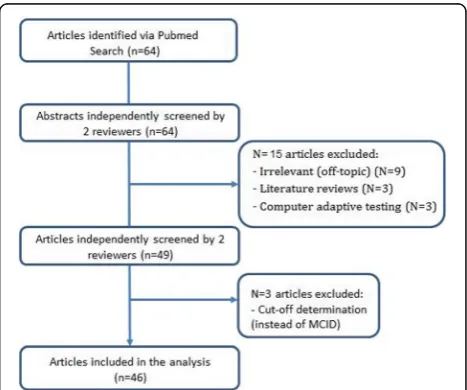
The initial search identified a total of 64 studies (Fig.1). After screening of the title and abstract by the 2 re-viewers, 15 studies were excluded because they were not relevant to the subject (N= 9), were not original papers (N = 3) or reported computer adaptive testing (N = 3). After reading the full text of the remaining 49 articles, three additional articles were excluded as they explored cut-off scores and not MID. Thus, a total of 46 studies were finally included in this review [13,17,19–62].
Characteristics of the studies included
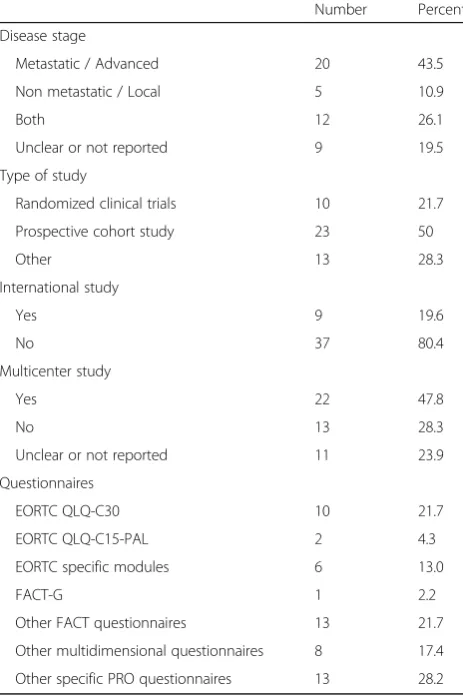
The sample sizes of the studies included ranged from 50 to 3770. The general results are presented in Table 1. Among the 46 articles retained for analysis, 20 (43.5%) enrolled patients with metastatic or advanced cancer, 5 (10.9%) included patients with localized cancer, and 12
(26.1%) included both. The majority of studies were pro-spective cohort studies (N = 23, 50%) and 10 were ran-domized clinical trials (21.7%). Eighteen studies (39%) assessed the MID of an EORTC questionnaire, specifically, the EORTC QLQ-C30 questionnaire (N= 10, 21.7%), the QLQ-C15-PAL (N = 2, 4.3%) and EORTC specific mod-ules, such as the EORTC QLQ-BN20 brain cancer module (N= 6, 13%). Thirteen studies (26.1%) evaluated the MID of a Functional Assessment of Cancer Therapy (FACT) questionnaire, of which 8 (61.5%) used a FACT question-naire specific to the cancer site, including the FACT-M for melanoma patients (N= 2, 4.3%).
Other questionnaires assessed a specific PRO domain such as pain or fatigue. For example, 4 studies explored the MID of fatigue PRO questionnaires, such as the FACT-F (N = 1, 2.3%), the Multidimensional Fatigue Inventory-20 (MFI-20) (N = 1, 2.3%), the Multidimen-sional Fatigue Symptom Inventory-Short Form (MFSI-SF) (N= 1, 2.3%) and 1 study (2.3%) used three different in-struments (the cancer fatigue scale (CFS), the Schwartz Cancer Fatigue Scale-revised (SCFS-r), and the fatigue symptom inventory (FSI)). Two other studies (4.4%) ad-dressed the MID of the Brief Pain Inventory or its short
form. Finally, 5 studies (10.9%) assessed the MID of gen-eric questionnaires for cancer patients, for example the EuroQoL EQ-5D (N= 3, 6.5%).
Statistical analysis of the MID
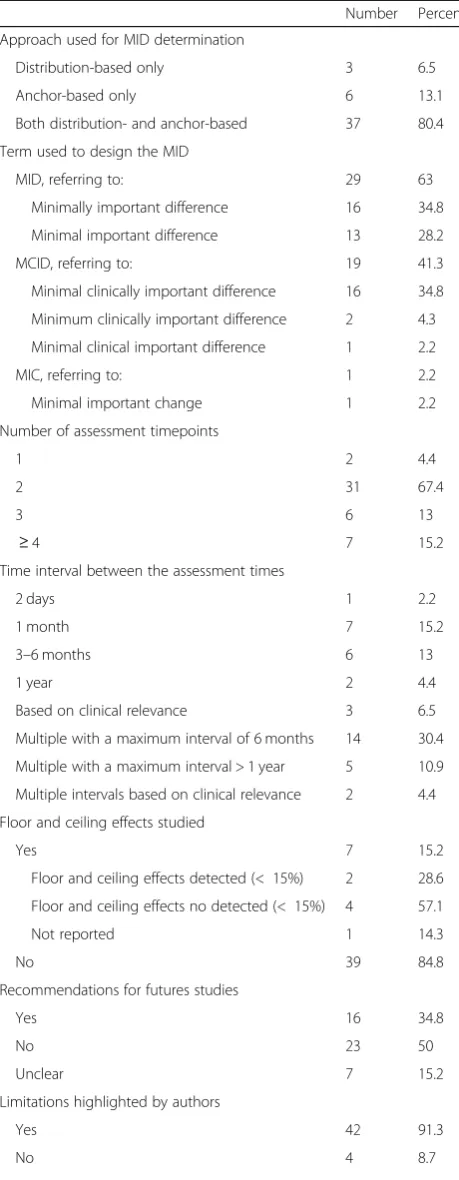
General results regarding the MID determination are presented in Table2. Several terminologies were used to identify the MID. The MID was the most used acronym t with 29 studies (63%), and referring to“Minimally im-portant difference” (N= 16, 34.8%) or“Minimal import-ant difference” (N = 13, 28.2%). The second used term was the MCID referring to“Minimal clinically important difference” in 16 studies (34.8%), to“Minimum clinically important difference” in 2 studies (4.3%) and to “ Min-imal clinical important difference” in one study (2.2%). The last used term was the MIC referring to “Minimal important change”in only one study (2.2%).
Three studies (6.5%) used only the distribution-based approach, 6 studies (13.1%) used only the anchor-based approach, and 37 studies (80.4%) used both. Concerning the number of assessment times, 2 studies (4.4%) used only one measurement time for the determination of the MID, 31 studies (67.4%) used two measurement times and 13 studies (28.2%) used at least three measurement times. Only one study explored the impact of the occurrence of the response shift effect on the MID de-termination over time. The time interval between two assessment times varied from 2 days (N = 1, 2.5%) to more than 1 year (N= 5, 12.5%). For most of the studies, the time interval between two assessment was between 1 and 6 months (N= 27, 58.7%). Floor and ceiling effects are studied in 7 studies (15.2%). For 4 studies (57.1%), the range of floor and ceiling effects is < 15%. For only 2 studies (28.6%), the range was≥15% and not reported in one study (14.3%).
Distribution-based approach
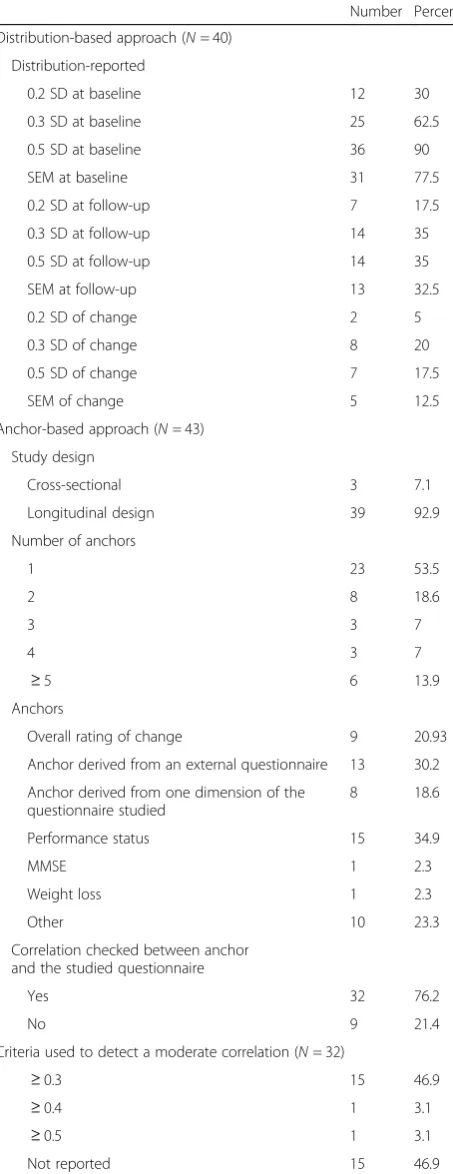
Results of distribution- and anchor-based approaches are presented in Table3. A total of 40 studies (87%) used distribution-based approaches. The reported criteria (fraction of SD or SEM) were extracted: at baseline, after follow-up and between two measurement times. The most commonly used distribution was the 0.5 SD at baseline (N= 36, 90%) followed by the SEM at baseline (N = 31, 77.5%). Twenty-five studies (62.5%) reported the 0.3 SD at baseline and 12 studies (30%) used the 0.2 SD at baseline. Among the other reported criteria, the 0.3 or 0.5 SD at follow-up was reported by 14 studies (35%) and the 0.3 or 0.5 SD of a change by respectively 8 (20%) and 7 studies (17.5%).
Anchor-based approach
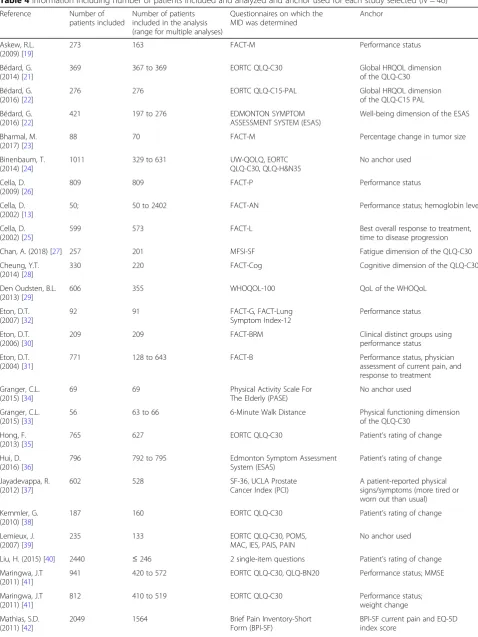
Forty-three studies (93.5%) used the anchor-based ap-proach to estimate the MID. Among them, 39 studies Table 1General information for all studies selected (N= 46)
Number Percent
Disease stage
Metastatic / Advanced 20 43.5
Non metastatic / Local 5 10.9
Both 12 26.1
Unclear or not reported 9 19.5
Type of study
Randomized clinical trials 10 21.7
Prospective cohort study 23 50
Other 13 28.3
International study
Yes 9 19.6
No 37 80.4
Multicenter study
Yes 22 47.8
No 13 28.3
Unclear or not reported 11 23.9
Questionnaires
EORTC QLQ-C30 10 21.7
EORTC QLQ-C15-PAL 2 4.3
EORTC specific modules 6 13.0
FACT-G 1 2.2
Other FACT questionnaires 13 21.7
Other multidimensional questionnaires 8 17.4
(92.9%) used a longitudinal design regarding the anchor while only 3 studies (7.1%) used a cross-sectional design. The correlation between the anchor and the PRO scores was assessed in 32 studies (74.4%). The most used threshold to detect a moderate correlation between an-chor and HRQOL scores was 0.3 in 15 studies (46.9%). Every dimension with a correlation greater than this threshold (|r|≥0.3) was retained for the MID determin-ation. For 15 studies (46.9%), the correlation has been calculated but there was no specified threshold for the retained scales that have been used in the MID deter-mination. The minimal number of patients analyzed by category of anchor was less than 20 in 16 studies (37.2%). For instance, 13 and 7 patients were used for one category of the anchor to qualify deterioration and improvement respectively in two studies.
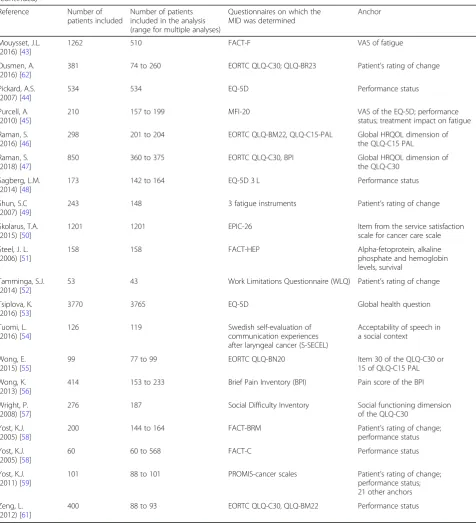
Twenty-three studies (53.5%) used only one anchor, while the other studies used from 2 (18.6%) to more than 5 anchors (13.9%). The median number of anchors used was 1 (IQR 1–3). Various anchors were used to as-sess the MID. Some were subjective, i.e. patient centered and reflecting the patient’s perception of change or HRQOL, while others were more objective, reflecting clinical or biological measures or the physician’s assess-ment of change. A total of 28 studies (65.1%) used at least one patient-centered anchor and 15 studies (34.9%) exclusively used some objective anchors (Table4).
Regarding patient-centered anchors, 9 studies (20.9%) used the patient’s overall rating of change in HRQOL, or a specific domain, while 18 studies (41.9%) used an anchor derived from a PRO questionnaire. This could either be a PRO scale from the same questionnaire on which the MID was determined (N = 8, 18.6%), or an external question-naire (N= 13, 30.2%). For example, the global HRQOL di-mension or overall QoL item of the EORTC QLQ-C30 or QLQ-C15-PAL questionnaire was used as an anchor in 5 studies (11.6%), while the MID was determined on other dimensions of the EORTC QLQ-C30 or QLQ-C15PAL. An external item or scale derived from another question-naire was also used as an anchor in 13 studies (30.2%). For example, a visual analogue scale of fatigue was used in one study as an anchor to determine the MID on the FACT-Fatigue questionnaire. The fatigue dimension of the EORTC QLQ-C30 was also used as an anchor in one study to determine the MID on the MFSI-SF questionnaire. Table 2General results regarding the minimally important
difference (MID) determination (N= 46)
Number Percent
Approach used for MID determination
Distribution-based only 3 6.5
Anchor-based only 6 13.1
Both distribution- and anchor-based 37 80.4
Term used to design the MID
MID, referring to: 29 63
Minimally important difference 16 34.8
Minimal important difference 13 28.2
MCID, referring to: 19 41.3
Minimal clinically important difference 16 34.8
Minimum clinically important difference 2 4.3
Minimal clinical important difference 1 2.2
MIC, referring to: 1 2.2
Minimal important change 1 2.2
Number of assessment timepoints
1 2 4.4
2 31 67.4
3 6 13
≥4 7 15.2
Time interval between the assessment times
2 days 1 2.2
1 month 7 15.2
3–6 months 6 13
1 year 2 4.4
Based on clinical relevance 3 6.5
Multiple with a maximum interval of 6 months 14 30.4
Multiple with a maximum interval > 1 year 5 10.9
Multiple intervals based on clinical relevance 2 4.4
Floor and ceiling effects studied
Yes 7 15.2
Floor and ceiling effects detected (< 15%) 2 28.6
Floor and ceiling effects no detected (< 15%) 4 57.1
Not reported 1 14.3
No 39 84.8
Recommendations for futures studies
Yes 16 34.8
No 23 50
Unclear 7 15.2
Limitations highlighted by authors
Yes 42 91.3
No 4 8.7
Table 2General results regarding the minimally important difference (MID) determination (N= 46)(Continued)
Number Percent
Possible risk of bias
Missing data on the HRQOL/PRO measures 16 40
Bias in the selection of the population 17 42.5
Regarding clinical anchors, the performance status (ei-ther Karnofsky or ECOG) was used in 15 studies (34.9%). Weight loss and the Mini-Mental State Examin-ation (MMSE) score were both used in one study (2.3%). Studies using the same anchor did not necessarily use the same threshold to qualify the minimal change for the anchor. For example, among the 5 studies using the global HRQOL dimension or its items individually as an anchor, 2 studies used a 10-point difference in the global score as a minimal change and 3 studies used only one item of the overall QoL scale by considering a change of two units (N = 2) or one unit (N = 1) as the minimal change. When these single items are standardized on a 0 to 100 scale, a change of one unit corresponds to a change of 16.7 points and a change of two units corre-sponds to a change of 33.3 points. Regarding studies using physicireported performance status as an an-chor, they generally used a 10 point difference for the Karnofsky index and change of one category for the ECOG as a clinically relevant change.
To complement these results, we summarized the infor-mation collected for the main questionnaires used in our review, namely the EORTC QLQ-C30 and the FACT questionnaire in the Additional file 1: Table S1. Among the 23 studies using either the EORTC QLQ-C30 or the FACT questionnaire, 18 (78.3%) used both distribution and anchor-based method to determine the MID. Among the 21 studies that used the anchor-based approach to de-termine the MID for either EORTC QLQ-C30 or FACT questionnaires, 4 studies (19%) determined the MID with-out distinction between improvement and deterioration.
Sixteen studies (34.8%) proposed recommendations for MID for use in futures studies. In the majority of studies (N = 42, 91.3%), some limitations were reported by the authors. Regarding the possible risk of bias, 16 studies (43.2%) were impacted by the occurrence of missing data on the PRO measures; in 17 studies (47.2%), the selec-tion of the populaselec-tion could be subject to a risk of bias, and for 5 studies (19.2%) there was a risk of bias due to the statistical analysis.
Discussion
The objective of this structured review was to assess the most common practices used by the distribution and Table 3Results of distribution and anchor based approaches
(N= 46)
Number Percent
Distribution-based approach (N= 40)
Distribution-reported
0.2 SD at baseline 12 30
0.3 SD at baseline 25 62.5
0.5 SD at baseline 36 90
SEM at baseline 31 77.5
0.2 SD at follow-up 7 17.5
0.3 SD at follow-up 14 35
0.5 SD at follow-up 14 35
SEM at follow-up 13 32.5
0.2 SD of change 2 5
0.3 SD of change 8 20
0.5 SD of change 7 17.5
SEM of change 5 12.5
Anchor-based approach (N= 43)
Study design
Cross-sectional 3 7.1
Longitudinal design 39 92.9
Number of anchors
1 23 53.5
2 8 18.6
3 3 7
4 3 7
≥5 6 13.9
Anchors
Overall rating of change 9 20.93
Anchor derived from an external questionnaire 13 30.2
Anchor derived from one dimension of the questionnaire studied
8 18.6
Performance status 15 34.9
MMSE 1 2.3
Weight loss 1 2.3
Other 10 23.3
Correlation checked between anchor and the studied questionnaire
Yes 32 76.2
No 9 21.4
Criteria used to detect a moderate correlation (N= 32)
≥0.3 15 46.9
≥0.4 1 3.1
≥0.5 1 3.1
Not reported 15 46.9
Table 3Results of distribution and anchor based approaches (N= 46)(Continued)
Number Percent
Minimum N by anchor category
≤20 16 37.2
> 20 18 41.9
Not reported 9 20.9
anchor based approaches to determine the MID for PRO questionnaires in oncology, and to present the variability of criteria used as well as possible limitations relative to each approach. We limited our research to year 2000 be-cause we think a review of papers published since almost two decades would be reasonable and enough to con-duct this review. Eligible studies included original arti-cles aiming to determine the MID of self-administered questionnaires in cancer, using distribution- and/or an-chor based approaches.
Using both the distribution and anchor-based ap-proaches, as was the case in the majority of studies (80%), makes it possible to compare results for consistency, to highlight the strengths and weaknesses of each method, and to retain the most appropriate MID value or range to apply in further studies [12].
For the distribution-based approach, several criteria were reported at different assessment times. As already highlighted in previous reviews [63], the most frequently reported criterion was 0.5 SD at baseline, reported in 90% of studies using the distribution-based method. Despite the simplicity and the widespread use of this ap-proach in the determination of the MID, no distinction can be made between improvement and deterioration.
Regarding the anchor-based approach, most studies used a longitudinal design (92.9%). Various anchors were applied, and were either patient- or physician-reported measures, as well as clinical or biological measures with clinical relevance. The most commonly used anchor was a PRO score or item, derived from the questionnaire of interest or from another questionnaire (41.9%). When this anchor was derived from the questionnaire for which the MID was being determined, then the MID on the corresponding dimension could not be assessed. This is the case for example when the overall HRQOL score is used as an anchor to estimate the MID on the QLQ-C30. Moreover, this requires to fix a threshold to qualify the clinically meaningful change on one dimen-sion of the studied questionnaire. Finally, the choice of this kind of anchor could be questionable since the property of external criteria for the anchor is not entirely respected.
Another frequently used patient-centered anchor (used in 20.9% of the studies using the anchor-based approach) is the patient’s overall rating of change. This anchor re-flects the patient’s perception of change, but it needs to be planned in the design of the study.
A large proportion of studies also used physician-reported measures such as performance status or MMSE score. These anchors could be considered as objective evaluations of the patient’s health status. However, they may not be ap-propriate for the assessment of the MID on all HRQOL di-mensions. Given that performance status reflects the physical condition of the patient, it is generally correlated to
the physical dimensions of HRQOL. Similarly, the MMSE is mostly correlated with the cognitive dimension of HRQOL. Thus, these anchors preclude assessment of the MID for more physiological or emotional dimensions of HRQOL [17]. This also means that several anchors are needed to ac-curately assess the MID and to check the robustness and complementarity of the results obtained using different an-chors [12]. In our review, half the studies (53.5%) using an anchor-based approach used only one anchor. For the ma-jority of the studies, the correlation between the anchor and scores of the studied questionnaire has been checked. The threshold of 0.3 was the most used criteria to detect a mod-erate correlation. On the other side, an important frequency of studies (46.9%) from those who checked correlation did not reported the criteria to identify a moderate correlation. Generally, checking correlation is important to know to what extent the anchor used is linked to HRQOL measure. Hence, the correlation between the anchor and the PRO scores must be assessed and only dimensions that are significantly correlated with the anchor (correlation coeffi-cient |r| > 0.3) should be analyzed. In this review, 76.2% of the studies using an anchor-based approach verified this correlation.
The majority of the studies with a longitudinal design (58.7%) used a time interval between 1 and 6 months be-tween two consecutive assessments. However, wide vari-ation was observed between studies. A standard period remains to be determined, and further research is war-ranted to determine a suitable time window. This point is particularly important when the patient’s overall rating of change is used as an anchor, since long periods be-tween assessments could induce a recall bias.
The majority of studies (71.7%) used one or two meas-urement times to determine the MID, but the stability over time was rarely investigated. For example, a change in PRO score of 5 points could be insignificant for the patients at the time of diagnosis, whereas it might be highly relevant after surgery. Therefore, it is strongly recommended to assess the MID with more than two measurement times [62]. This change in the patients’ perception of HRQOL change over time could reflect the occurrence of a response shift effect [64]. In our re-view, only one study investigated the impact of the oc-currence of response shift on the MID determination using the patient’s overall rating of change as the anchor. However, the response shift effect could differentially impact on the results of the MID depending on the an-chor used. Future studies are warranted to investigate this possible risk of bias and take it into account in the MID determination [15].
Table 4Information including number of patients included and analyzed and anchor used for each study selected (N= 46)
Reference Number of
patients included
Number of patients included in the analysis (range for multiple analyses)
Questionnaires on which the MID was determined
Anchor
Askew, R.L. (2009) [19]
273 163 FACT-M Performance status
Bédard, G. (2014) [21]
369 367 to 369 EORTC QLQ-C30 Global HRQOL dimension
of the QLQ-C30
Bédard, G. (2016) [22]
276 276 EORTC QLQ-C15-PAL Global HRQOL dimension
of the QLQ-C15 PAL
Bédard, G. (2016) [22]
421 197 to 276 EDMONTON SYMPTOM
ASSESSMENT SYSTEM (ESAS)
Well-being dimension of the ESAS
Bharmal, M. (2017) [23]
88 70 FACT-M Percentage change in tumor size
Binenbaum, T. (2014) [24]
1011 329 to 631 UW-QOLQ, EORTC
QLQ-C30, QLQ-H&N35
No anchor used
Cella, D. (2009) [26]
809 809 FACT-P Performance status
Cella, D. (2002) [13]
50; 50 to 2402 FACT-AN Performance status; hemoglobin level
Cella, D. (2002) [25]
599 573 FACT-L Best overall response to treatment,
time to disease progression
Chan, A. (2018) [27] 257 201 MFSI-SF Fatigue dimension of the QLQ-C30
Cheung, Y.T. (2014) [28]
330 220 FACT-Cog Cognitive dimension of the QLQ-C30
Den Oudsten, B.L. (2013) [29]
606 355 WHOQOL-100 QoL of the WHOQoL
Eton, D.T. (2007) [32]
92 91 FACT-G, FACT-Lung
Symptom Index-12
Performance status
Eton, D.T. (2006) [30]
209 209 FACT-BRM Clinical distinct groups using
performance status
Eton, D.T. (2004) [31]
771 128 to 643 FACT-B Performance status, physician
assessment of current pain, and response to treatment
Granger, C.L. (2015) [34]
69 69 Physical Activity Scale For
The Elderly (PASE)
No anchor used
Granger, C.L. (2015) [33]
56 63 to 66 6-Minute Walk Distance Physical functioning dimension
of the QLQ-C30
Hong, F. (2013) [35]
765 627 EORTC QLQ-C30 Patient’s rating of change
Hui, D. (2016) [36]
796 792 to 795 Edmonton Symptom Assessment
System (ESAS)
Patient’s rating of change
Jayadevappa, R. (2012) [37]
602 528 SF-36, UCLA Prostate
Cancer Index (PCI)
A patient-reported physical signs/symptoms (more tired or worn out than usual)
Kemmler, G. (2010) [38]
187 160 EORTC QLQ-C30 Patient’s rating of change
Lemieux, J. (2007) [39]
235 133 EORTC QLQ-C30, POMS,
MAC, IES, PAIS, PAIN
No anchor used
Liu, H. (2015) [40] 2440 ≤246 2 single-item questions Patient’s rating of change
Maringwa, J.T (2011) [41]
941 420 to 572 EORTC QLQ-C30, QLQ-BN20 Performance status; MMSE
Maringwa, J.T (2011) [41]
812 410 to 519 EORTC QLQ-C30 Performance status;
weight change
Mathias, S.D. (2011) [42]
2049 1564 Brief Pain Inventory-Short
Form (BPI-SF)
accurately the maximum number of articles needed for future analysis.
A frequent limitation was the small sample size in the anchor categories. If the number of patients in each category of anchor is not sufficient, then the resulting MID cannot be reliable and the robustness in this case is thus questionable. Only one study de-termined the sample size specifically for the MID
analysis. This sample size calculation must be system-atically performed for MID determination, even if the analysis is not the primary objective of the study, for example when data from a randomized clinical trial are used. Calculating an appropriate sample size per category will ensure the robustness of the results. Furthermore, the occurrence of missing data can also bias the MID analysis. Therefore, it is also important Table 4Information including number of patients included and analyzed and anchor used for each study selected (N= 46) (Continued)
Reference Number of
patients included
Number of patients included in the analysis (range for multiple analyses)
Questionnaires on which the MID was determined
Anchor
Mouysset, J.L. (2016) [43]
1262 510 FACT-F VAS of fatigue
Ousmen, A. (2016) [62]
381 74 to 260 EORTC QLQ-C30; QLQ-BR23 Patient’s rating of change
Pickard, A.S. (2007) [44]
534 534 EQ-5D Performance status
Purcell, A. (2010) [45]
210 157 to 199 MFI-20 VAS of the EQ-5D; performance
status; treatment impact on fatigue
Raman, S. (2016) [46]
298 201 to 204 EORTC QLQ-BM22, QLQ-C15-PAL Global HRQOL dimension of
the QLQ-C15 PAL
Raman, S. (2018) [47]
850 360 to 375 EORTC QLQ-C30, BPI Global HRQOL dimension of
the QLQ-C30
Sagberg, L.M. (2014) [48]
173 142 to 164 EQ-5D 3 L Performance status
Shun, S.C (2007) [49]
243 148 3 fatigue instruments Patient’s rating of change
Skolarus, T.A. (2015) [50]
1201 1201 EPIC-26 Item from the service satisfaction
scale for cancer care scale
Steel, J. L. (2006) [51]
158 158 FACT-HEP Alpha-fetoprotein, alkaline
phosphate and hemoglobin levels, survival
Tamminga, S.J. (2014) [52]
53 43 Work Limitations Questionnaire (WLQ) Patient’s rating of change
Tsiplova, K. (2016) [53]
3770 3765 EQ-5D Global health question
Tuomi, L. (2016) [54]
126 119 Swedish self-evaluation of
communication experiences after laryngeal cancer (S-SECEL)
Acceptability of speech in a social context
Wong, E. (2015) [55]
99 77 to 99 EORTC QLQ-BN20 Item 30 of the QLQ-C30 or
15 of QLQ-C15 PAL
Wong, K. (2013) [56]
414 153 to 233 Brief Pain Inventory (BPI) Pain score of the BPI
Wright, P. (2008) [57]
276 187 Social Difficulty Inventory Social functioning dimension
of the QLQ-C30
Yost, K.J. (2005) [58]
200 144 to 164 FACT-BRM Patient’s rating of change;
performance status
Yost, K.J. (2005) [58]
60 60 to 568 FACT-C Performance status
Yost, K.J. (2011) [59]
101 88 to 101 PROMIS-cancer scales Patient’s rating of change;
performance status; 21 other anchors
Zeng, L. (2012) [61]
to determine the profile of missing data, and consider imputing missing data using the appropriate method.
Using only one electronic database (PubMed searches) was the main limitation of this work. Unfortunately, due to lack of resource, we could not use other databases to perform this review. A risk of bias could thus be ob-served since other interesting papers may not be cap-tured in this database. Hopefully, a manual research conducted to the same papers obtained via our algo-rithm in Pubmed.
This review must be expanded in future studies to address all methods that have been used to determine the MID either if they are including or not including in distribution-based or anchor-based methods (i.e. minimal detectable change, Receiver operating charac-teristic (ROC) curve, Item Response Theory, etc.).
In light of these results, greater attention should be paid to the methodology in future studies investi-gating the MID of a given PRO questionnaire, in order to ensure reliable results. This will also make it possible to use the MID for sample size determin-ation when designing clinical trials with HRQOL or PRO as a primary endpoint, as well as for facilitating interpretation of the results. In the context of clical trials in oncology, the MID is rarely used to in-terpret results in a clinically meaningful way. In a recent review of phase III trials in non-small cell lung cancer including a PRO endpoint, only 20% of studies interpreted the results in light of the MID [65]. The time-to-HRQOL-deterioration is a recently proposed method to analyze longitudinal HRQOL data [66]. One advantage of this method is to in-corporate the MID in the definition of the event to qualify the deterioration. This guarantees the clinical significance of the results, but the choice of the MID is crucial since it has a direct impact on the results of the analysis.
Conclusions
Further research is mandatory to improve the quality of the methodology used to determine the MID in HRQOL questionnaires used in oncology. In particu-lar, the choice of an appropriate anchor(s) when using the anchor-based approach, or appropriate criteria when using the distribution-based approach is essen-tial. The sample size should also be taken into ac-count to produce reliable results. This could increase the use of these specific thresholds in future studies.
Additional file
Additional file 1:Table S1.Information about Minimal important difference determination of the most used questionnaires (EORTC QLQ-C30 and FACT) (DOCX 32 kb)
Abbreviations
EORTC:European organization for research and treatment of cancer; FACT: Functional assessment of cancer therapy; HRQOL: Health-related quality of life; MID: Minimally important difference; MMSE: Mini-Mental State Examination; PRO: Patient-reported outcome; SD: Standard deviation; SEM: Standard error of measurement
Acknowledgments
The authors thank Fiona Ecarnot (EA3920, University Hospital Besancon, University of Franche-Comté, Besançon, France) for editorial assistance. We acknowledge also the Professor Woronoff-Lemsi (University Hospital Besancon, University of Franche-Comté, Besançon, France) for supporting this work.
Funding
This work was supported by a grant from the“Institut National du Cancer (INCA_10846)”. The study sponsor had no role in the conception, the design of the study, the data acquisition and analysis or in the manuscript preparation.
Availability of data and materials
Please contact author for data requests.
Authors’contributions
AO and CT contributed equally in the statistical analyses and the writing of the manuscript. AA coordinated the study and participated in writing the manuscript. All authors: ND, FC, FB, FE, AB, CM, and AA read and approved the final manuscript.
Ethics approval and consent to participate
Not applicable
Consent for publication
Not applicable
Competing interests
None of the authors have competing interests in relation to this manuscript.
Publisher’s Note
Springer Nature remains neutral with regard to jurisdictional claims in published maps and institutional affiliations.
Author details
1Methodology and Quality of Life in Oncology Unit (INSERM UMR 1098),
University Hospital of Besançon, Besançon, France.2Montpellier Cancer Institute (ICM)–Val d’Aurelle, University of Montpellier, Montpellier, France.
3Italian Group for Adult Hematologic Diseases (GIMEMA), Data Center and
Health Outcomes Research Unit, Rome, Italy.4French National Platform
Quality of Life and Cancer, Besançon, France.5Institut Curie, Supportive Care Department, Psycho-Oncology Unit, Paris, France.6University Paris Descartes,
Psychopathology and health process laboratory EA 4057,
Boulogne-Billancourt, France.7IRCM, University of Montpellier, ICM, INSERM,
Montpellier, France.
Received: 4 July 2018 Accepted: 28 November 2018
References
1. Efficace F, Fayers P, Pusic A, Cemal Y, Yanagawa J, Jacobs M, la Sala A, Cafaro V, Whale K, Rees J, et al. Quality of patient-reported outcome reporting across cancer randomized controlled trials according to the CONSORT patient-reported outcome extension: a pooled analysis of 557 trials. Cancer. 2015;121:3335–42.
2. Beitz J, Gnecco C, Justice R. Quality-of-life end points in cancer clinical trials: the U.S. Food and Drug Administration perspective. J Natl Cancer Inst Monogr. 1996:7–9. 3. Vodicka E, Kim K, Devine EB, Gnanasakthy A, Scoggins JF, Patrick DL.
Inclusion of patient-reported outcome measures in registered clinical trials: evidence from ClinicalTrials.gov (2007-2013). Contemp Clin Trials. 2015;43:1–9.
5. Osoba D, Rodrigues G, Myles J, Zee B, Pater J. Interpreting the significance of changes in health-related quality-of-life scores. J Clin Oncol. 1998;16:139–44.
6. Jaeschke R, Singer J, Guyatt GH. Measurement of health status. Ascertaining the minimal clinically important difference. Control Clin Trials. 1989;10:407–15.
7. Crosby RD, Kolotkin RL, Williams GR. Defining clinically meaningful change in health-related quality of life. J Clin Epidemiol. 2003;56:395–407. 8. Lydick E, Epstein RS. Interpretation of quality of life changes. Qual Life Res.
1993;2:221–6.
9. Kazis LE, Anderson JJ, Meenan RF. Effect sizes for interpreting changes in health status. Med Care. 1989;27:S178–89.
10. Wyrwich KW, Tierney WM, Wolinsky FD. Further evidence supporting an SEM-based criterion for identifying meaningful intra-individual changes in health-related quality of life. J Clin Epidemiol. 1999;52:861–73.
11. Cella D, Hahn EA, Dineen K. Meaningful change in cancer-specific quality of life scores: differences between improvement and worsening. Qual Life Res. 2002;11:207–21.
12. Revicki D, Hays RD, Cella D, Sloan J. Recommended methods for determining responsiveness and minimally important differences for patient-reported outcomes. J Clin Epidemiol. 2008;61:102–9.
13. Cella D, Eton DT, Lai JS, Peterman AH, Merkel DE. Combining anchor and distribution-based methods to derive minimal clinically important differences on the functional assessment of Cancer therapy (FACT) anemia and fatigue scales. J Pain Symptom Manag. 2002;24:547–61.
14. Hamidou Z, Dabakuyo TS, Bonnetain F. Impact of response shift on longitudinal quality-of-life assessment in cancer clinical trials. Expert Rev Pharmacoecon Outcomes Res. 2011;11:549–59.
15. Kvam AK, Wisloff F, Fayers PM. Minimal important differences and response shift in health-related quality of life; a longitudinal study in patients with multiple myeloma. Health Qual Life Outcomes. 2010;8:79.
16. Cocks K, King MT, Velikova G, de Castro GJ, Martyn St-James M, Fayers PM, Brown JM. Evidence-based guidelines for interpreting change scores for the European organisation for the research and treatment of Cancer quality of life questionnaire Core 30. Eur J Cancer. 2012;48:1713–21.
17. Maringwa J, Quinten C, King M, Ringash J, Osoba D, Coens C, Martinelli F, Reeve BB, Gotay C, Greimel E, et al. Minimal clinically meaningful differences for the EORTC QLQ-C30 and EORTC QLQ-BN20 scales in brain cancer patients. Ann Oncol. 2011;22:2107–12.
18. Moher D, Liberati A, Tetzlaff J, Altman DG, Group P. Preferred reporting items for systematic reviews and meta-analyses: the PRISMA statement. PLoS Med. 2009;6:e1000097.
19. Askew RL, Xing Y, Palmer JL, Cella D, Moye LA, Cormier JN. Evaluating minimal important differences for the FACT-melanoma quality of life questionnaire. Value Health. 2009;12:1144–50.
20. Bedard G, Zeng L, Zhang L, Lauzon N, Holden L, Tsao M, Danjoux C, Barnes E, Sahgal A, Poon M, Chow E. Minimal clinically important differences in the Edmonton symptom assessment system in patients with advanced cancer. J Pain Symptom Manag. 2013;46:192–200.
21. Bedard G, Zeng L, Zhang L, Lauzon N, Holden L, Tsao M, Danjoux C, Barnes E, Sahgal A, Poon M, Chow E. Minimal important differences in the EORTC QLQ-C30 in patients with advanced cancer. Asia Pac J Clin Oncol. 2014;10: 109–17.
22. Bedard G, Zeng L, Zhang L, Lauzon N, Holden L, Tsao M, Danjoux C, Barnes E, Sahgal A, Poon M, et al. Minimal important differences in the EORTC QLQ-C15-PAL to determine meaningful change in palliative advanced cancer patients. Asia Pac J Clin Oncol. 2016;12:e38–46.
23. Bharmal M, Fofana F, Barbosa CD, Williams P, Mahnke L, Marrel A, Schlichting M. Psychometric properties of the FACT-M questionnaire in patients with Merkel cell carcinoma. Health Qual Life Outcomes. 2017; 15:247.
24. Binenbaum Y, Amit M, Billan S, Cohen JT, Gil Z. Minimal clinically important differences in quality of life scores of oral cavity and oropharynx cancer patients. Ann Surg Oncol. 2014;21:2773–81.
25. Cella D, Eton DT, Fairclough DL, Bonomi P, Heyes AE, Silberman C, Wolf MK, Johnson DH. What is a clinically meaningful change on the functional assessment of Cancer therapy-lung (FACT-L) questionnaire? Results from eastern cooperative oncology group (ECOG) study 5592. J Clin Epidemiol. 2002;55:285–95.
26. Cella D, Nichol MB, Eton D, Nelson JB, Mulani P. Estimating clinically meaningful changes for the functional assessment of Cancer
therapy--prostate: results from a clinical trial of patients with metastatic hormone-refractory prostate cancer. Value Health. 2009;12:124–9.
27. Chan A, Yo TE, Wang XJ, Ng T, Chae JW, Yeo HL, Shwe M, Gan YX. Minimal clinically important difference of the multidimensional fatigue symptom inventory-short form (MFSI-SF) for fatigue worsening in Asian breast Cancer patients. J Pain Symptom Manag. 2018;55:992–7 e992.
28. Cheung YT, Foo YL, Shwe M, Tan YP, Fan G, Yong WS, Madhukumar P, Ooi WS, Chay WY, Dent RA, et al. Minimal clinically important difference (MCID) for the functional assessment of cancer therapy: cognitive function (FACT-cog) in breast cancer patients. J Clin Epidemiol. 2014;67:811–20. 29. Den Oudsten BL, Zijlstra WP, De Vries J. The minimal clinical important
difference in the World Health Organization quality of life instrument--100. Support Care Cancer. 2013;21:1295–301.
30. Eton DT, Cella D, Bacik J, Motzer RJ. A brief symptom index for advanced renal cell carcinoma. Health Qual Life Outcomes. 2006;4:68.
31. Eton DT, Cella D, Yost KJ, Yount SE, Peterman AH, Neuberg DS, Sledge GW, Wood WC. A combination of distribution- and anchor-based approaches determined minimally important differences (MIDs) for four endpoints in a breast cancer scale. J Clin Epidemiol. 2004;57:898–910.
32. Eton DT, Cella D, Yount SE, Davis KM. Validation of the functional assessment of cancer therapy--lung symptom index-12 (FLSI-12). Lung Cancer. 2007;57:339–47.
33. Granger CL, Holland AE, Gordon IR, Denehy L. Minimal important difference of the 6-minute walk distance in lung cancer. Chron Respir Dis. 2015;12:146–54.
34. Granger CL, Parry SM, Denehy L. The self-reported physical activity scale for the elderly (PASE) is a valid and clinically applicable measure in lung cancer. Support Care Cancer. 2015;23:3211–8.
35. Hong F, Bosco JL, Bush N, Berry DL. Patient self-appraisal of change and minimal clinically important difference on the European organization for the research and treatment of cancer quality of life questionnaire core 30 before and during cancer therapy. BMC Cancer. 2013;13:165.
36. Hui D, Shamieh O, Paiva CE, Khamash O, Perez-Cruz PE, Kwon JH, Muckaden MA, Park M, Arthur J, Bruera E. Minimal clinically important difference in the physical, emotional, and Total symptom distress scores of the Edmonton symptom assessment system. J Pain Symptom Manag. 2016;51:262–9. 37. Jayadevappa R, Malkowicz SB, Wittink M, Wein AJ, Chhatre S. Comparison of
distribution- and anchor-based approaches to infer changes in health-related quality of life of prostate cancer survivors. Health Serv Res. 2012;47:1902–25. 38. Kemmler G, Zabernigg A, Gattringer K, Rumpold G, Giesinger J,
Sperner-Unterweger B, Holzner B. A new approach to combining clinical relevance and statistical significance for evaluation of quality of life changes in the individual patient. J Clin Epidemiol. 2010;63:171–9.
39. Lemieux J, Beaton DE, Hogg-Johnson S, Bordeleau LJ, Goodwin PJ. Three methods for minimally important difference: no relationship was found with the net proportion of patients improving. J Clin Epidemiol. 2007;60:448–55. 40. Liu H, Tan AD, Qin R, Sargent DJ, Grothey A, Buckner JC, Schaefer PL, Sloan
JA. Comparing and validating simple measures of patient-reported peripheral neuropathy for oncology clinical trials: NCCTG N0897 (Alliance) a pooled analysis of 2440 patients. SOJ Anesthesiol Pain Manag. 2015;2. 41. Maringwa JT, Quinten C, King M, Ringash J, Osoba D, Coens C, Martinelli F,
Vercauteren J, Cleeland CS, Flechtner H, et al. Minimal important differences for interpreting health-related quality of life scores from the EORTC QLQ-C30 in lung cancer patients participating in randomized controlled trials. Support Care Cancer. 2011;19:1753–60.
42. Mathias SD, Crosby RD, Qian Y, Jiang Q, Dansey R, Chung K. Estimating minimally important differences for the worst pain rating of the brief pain inventory-short form. J Support Oncol. 2011;9:72–8.
43. Mouysset JL, Freier B, van den Bosch J, Levache CB, Bols A, Tessen HW, Belton L, Bohac GC, Terwey JH, Tonini G. Hemoglobin levels and quality of life in patients with symptomatic chemotherapy-induced anemia: the eAQUA study. Cancer Manag Res. 2016;8:1–10.
44. Pickard AS, Neary MP, Cella D. Estimation of minimally important differences in EQ-5D utility and VAS scores in cancer. Health Qual Life Outcomes. 2007;5:70.
45. Purcell A, Fleming J, Bennett S, Burmeister B, Haines T. Determining the minimal clinically important difference criteria for the multidimensional fatigue inventory in a radiotherapy population. Support Care Cancer. 2010;18:307–15.
QLQ-BM22 and EORTC QLQ-C15-PAL modules in patients with bone metastases undergoing palliative radiotherapy. Qual Life Res. 2016;25:2535–41. 47. Raman S, Ding K, Chow E, Meyer RM, van der Linden YM, Roos D,
Hartsell WF, Hoskin P, Wu JSY, Nabid A, et al. Minimal clinically important differences in the EORTC QLQ-C30 and brief pain inventory in patients undergoing re-irradiation for painful bone metastases. Qual Life Res. 2018;27:1089–98.
48. Sagberg LM, Jakola AS, Solheim O. Quality of life assessed with EQ-5D in patients undergoing glioma surgery: what is the responsiveness and minimal clinically important difference? Qual Life Res. 2014;23:1427–34. 49. Shun SC, Beck SL, Pett MA, Richardson SJ. Assessing responsiveness of
cancer-related fatigue instruments: distribution-based and individual anchor-based methods. Oncologist. 2007;12:495–504.
50. Skolarus TA, Dunn RL, Sanda MG, Chang P, Greenfield TK, Litwin MS, Wei JT, Consortium P. Minimally important difference for the expanded prostate Cancer index composite short form. Urology. 2015;85:101–5.
51. Steel JL, Eton DT, Cella D, Olek MC, Carr BI. Clinically meaningful changes in health-related quality of life in patients diagnosed with hepatobiliary carcinoma. Ann Oncol. 2006;17:304–12.
52. Tamminga SJ, Verbeek JH, Frings-Dresen MH, De Boer AG. Measurement properties of the work limitations questionnaire were sufficient among cancer survivors. Qual Life Res. 2014;23:515–25.
53. Tsiplova K, Pullenayegum E, Cooke T, Xie F. EQ-5D-derived health utilities and minimally important differences for chronic health conditions: 2011 Commonwealth Fund survey of sicker adults in Canada. Qual Life Res. 2016; 25:3009–16.
54. Tuomi L, Johansson M, Andrell P, Finizia C. Interpretation of the Swedish self evaluation of communication experiences after laryngeal cancer: cutoff levels and minimum clinically important differences. Head Neck. 2016;38:689–95.
55. Wong E, Zhang L, Kerba M, Arnalot PF, Danielson B, Tsao M, Bedard G, Thavarajah N, Cheon P, Danjoux C, et al. Minimal clinically important differences in the EORTC QLQ-BN20 in patients with brain metastases. Support Care Cancer. 2015;23:2731–7.
56. Wong K, Zeng L, Zhang L, Bedard G, Wong E, Tsao M, Barnes E, Danjoux C, Sahgal A, Holden L, et al. Minimal clinically important differences in the brief pain inventory in patients with bone metastases. Support Care Cancer. 2013;21:1893–9.
57. Wright P, Marshall L, Smith AB, Velikova G, Selby P. Measurement and interpretation of social distress using the social difficulties inventory (SDI). Eur J Cancer. 2008;44:1529–35.
58. Yost KJ, Cella D, Chawla A, Holmgren E, Eton DT, Ayanian JZ, West DW. Minimally important differences were estimated for the functional assessment of Cancer therapy-colorectal (FACT-C) instrument using a combination of distribution- and anchor-based approaches. J Clin Epidemiol. 2005;58:1241–51.
59. Yost KJ, Eton DT, Garcia SF, Cella D. Minimally important differences were estimated for six patient-reported outcomes measurement information system-Cancer scales in advanced-stage cancer patients. J Clin Epidemiol. 2011;64:507–16.
60. Yost KJ, Sorensen MV, Hahn EA, Glendenning GA, Gnanasakthy A, Cella D. Using multiple anchor- and distribution-based estimates to evaluate clinically meaningful change on the functional assessment of Cancer therapy-biologic response modifiers (FACT-BRM) instrument. Value Health. 2005;8:117–27.
61. Zeng L, Chow E, Zhang L, Tseng LM, Hou MF, Fairchild A, Vassiliou V, Jesus-Garcia R, Alm El-Din MA, Kumar A, et al. An international prospective study establishing minimal clinically important differences in the EORTC QLQ-BM22 and QLQ-C30 in cancer patients with bone metastases. Support Care Cancer. 2012;20:3307–13.
62. Ousmen A, Conroy T, Guillemin F, Velten M, Jolly D, Mercier M, Causeret S, Cuisenier J, Graesslin O, Hamidou Z, et al. Impact of the occurrence of a response shift on the determination of the minimal important difference in a health-related quality of life score over time. Health Qual Life Outcomes. 2016;14:167.
63. Norman GR, Sloan JA, Wyrwich KW. Interpretation of changes in health-related quality of life: the remarkable universality of half a standard deviation. Med Care. 2003;41:582–92.
64. Sprangers MA, Schwartz CE. Integrating response shift into health-related quality of life research: a theoretical model. Soc Sci Med. 1999;48:1507–15.
65. Fiteni F, Anota A, Westeel V, Bonnetain F. Methodology of health-related quality of life analysis in phase III advanced non-small-cell lung cancer clinical trials: a critical review. BMC Cancer. 2016;16:122. 66. Bonnetain F, Dahan L, Maillard E, Ychou M, Mitry E, Hammel P, Legoux